
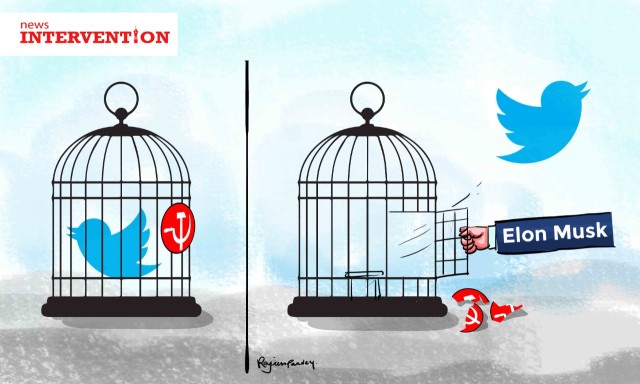
Billionaire Elon Musk has freed Twitter from the clutches of radical Leftists by buying out the micro-blogging site for $44 billion.
Prof. Sam Vaknin on Science and Reality

Prof. Shmuel “Sam” Vaknin(YouTube, Twitter, Instagram, Facebook, Amazon, LinkedIn, Google Scholar) is the author of Malignant Self-love: Narcissism Revisited (Amazon)and After the Rain: How the West Lost the East(Amazon) as well as many other books and ebooks about topics in psychology, relationships, philosophy, economics, international affairs, and award-winning short fiction. He was Senior Business Correspondent for United Press International (February, 2001 — April, 2003), CEO of Narcissus Publications (April, 1997 — April 2013), Editor-in-Chief of Global Politician (January, 2011 -), a columnist for PopMatters, eBookWeb, Bellaonline, and Central Europe Review, an editor for The Open Directory and Suite101 (Categories: Mental Health and Central East Europe), and a contributor to Middle East Times, a contributing writer to The American Chronicle Media Group, Columnist and Analyst for Nova Makedonija, Fokus, and Kapital, Founding Analyst of The Analyst Network, former president of the Israeli chapter of the Unification Church’s Professors for World Peace Academy, and served in the Israeli Defense Forces (1979–1982). He has been awarded Israel’s Council of Culture and Art Prize for Maiden Prose (1997), The Rotary Club Award for Social Studies (1976), and the Bilateral Relations Studies Award of the American Embassy in Israel (1978), among other awards. He is Visiting Professor of Psychology, Southern Federal University, Rostov-on-Don, Russia(September, 2017 to present), Professor of Finance and Psychology in SIAS-CIAPS (Centre for International Advanced and Professional Studies)(April, 2012 to present), a Senior Correspondent for New York Daily Sun (January, 2015 — Present), and Columnist for Allied Newspapers Group (January, 2015 — Present). He lives in Skopje, North Macedonia with his wife, Lidija Rangelovska. Here we talk about science and reality.
*Previous interviews listed chronologically after interview.*
Scott Douglas Jacobsen: Reality — all that is, ever was, or ever will be, what defines it, to you?
Prof. Shmuel “Sam” Vaknin: “Reality” is the name we give to our aggregate experiences, both of ourselves (“consciousness”) and of not-ourselves (the “world out there”).
We assume that a world exists independent of our perception of it or interaction with it because we maintain an intersubjective agreement with all other human beings.
The high correlation between the contents of our mind and the self-reports of others leads us to deduce that we must be sharing something distinct from our observations and experiences.
Of course, this commonly shared “theory of reality” is full of holes and easily refuted. But we tend to ignore this fact and impute “reality” even to simulated worlds — simply because they trigger reactions in our brains.
Jacobsen: What defines science?
Vaknin: Scientific Theories
All theories — scientific or not — start with a problem. They aim to solve it by proving that what appears to be “problematic” is not. They re-state the conundrum, or introduce new data, new variables, a new classification, or new organizing principles. They incorporate the problem in a larger body of knowledge, or in a conjecture (“solution”). They explain why we thought we had an issue on our hands — and how it can be avoided, vitiated, or resolved.
Every scientific theory and many pillars of the scientific method are founded on metaphysical principles.
Evolution Theory hails from the metaphysical assumption that individual organisms as well as entire species aim or are geared to survive. Survival is the hermeneutic and organizing principle.
The Special Theory of Relativity is based on the Cartesian separation between observer and observed.
Popper’s principle of Falsifiability is founded on a tautology (for a theory to be considered scientific, it must be falsifiable — but we can apply falsifiability only to scientific theories). Add to this the fact that the languages we use to communicate science — mathematics and geometry, for instance — are not neutral. They constrain in large measure what can and cannot be said, they shape content via context, and they provide language elements as theoretical entities.
There are two types of ideas: synoptic and prescriptive.
Synoptic ideas shed light on the interconnectedness of apparently disparate phenomena or concepts. These insights are titillating, fascinating, or even mind-boggling. But, with the exception of a few specialists and eggheads, they are usually of fleeting interest, akin to intellectual fireworks and pyrotechnics, a form of entertainment that fizzles out and is rendered tedious by repetition.
Synoptic ideas are deep and intertwined, so people tend to tune out and wander off (or fall asleep) in mid-sentence. Interdisciplinarity requires discipline and rigor that few have, not even the majority of scholars (witness the crowd dynamics in academic conferences).
In contradistinction, prescriptive ideas focus on proposed solutions based on cumulative data and experience or on theories and rules of derivation. They are highly relevant to their consumers because they aim to better their lives and resolve their problems. Religion, science, technology, and most of philosophy are prescriptive.
A public intellectual whose output is strictly synoptic won’t remain public for very long: he will fall out of favor and be ignored and overlooked. Prescriptive thought leaders and change agents thrive and prosper the more anomic, disrupted, dysfunctional, and pathologized society is. The more lost, disoriented, anxious, and depressed people are, the more they seek prescription to extricate them from their predicament.
Scientific theories invite constant criticism and revision. They yield new problems. They are proven erroneous and are replaced by new models which offer better explanations and a more profound sense of understanding — often by solving these new problems. From time to time, the successor theories constitute a break with everything known and done till then. These seismic convulsions are known as “paradigm shifts”.
It is interesting to note that paradigm-shifting work is often produced by non-specialist outsiders, gifted amateurs, and laymen (such as Da Vinci, Steno, Mandel, Freud, and, to some extent, Einstein). As Thomas Kuhn noted, run of the mill scientists are vested and invested in the status quo and normally generate paradigm-sustaining theories and discoveries.
Contrary to widespread opinion — even among scientists — science is not only about “facts”. It is not merely about quantifying, measuring, describing, classifying, and organizing “things” (entities). It is not even concerned with finding out the “truth”. Science is about providing us with concepts, explanations, and predictions (collectively known as “theories”) and thus endowing us with a sense of understanding of our world.
Scientific theories are allegorical or metaphoric. They revolve around symbols and theoretical constructs, concepts and substantive assumptions, axioms and hypotheses — most of which can never, even in principle, be computed, observed, quantified, measured, or correlated with the world “out there”. By appealing to our imagination, scientific theories reveal what David Deutsch calls “the fabric of reality”.
Like any other system of knowledge, science has its fanatics, heretics, and deviants.
Instrumentalists, for instance, insist that scientific theories should be concerned exclusively with predicting the outcomes of appropriately designed experiments. Their explanatory powers are of no consequence. Positivists ascribe meaning only to statements that deal with observables and observations.
Instrumentalists and positivists ignore the fact that predictions are derived from models, narratives, and organizing principles. In short: it is the theory’s explanatory dimensions that determine which experiments are relevant and which are not. Forecasts — and experiments — that are not embedded in an understanding of the world (in an explanation) do not constitute science.
Granted, predictions and experiments are crucial to the growth of scientific knowledge and the winnowing out of erroneous or inadequate theories. But they are not the only mechanisms of natural selection. There are other criteria that help us decide whether to adopt and place confidence in a scientific theory or not. Is the theory aesthetic (parsimonious), logical, does it provide a reasonable explanation and, thus, does it further our understanding of the world?
David Deutsch in “The Fabric of Reality” (p. 11):
“… (I)t is hard to give a precise definition of ‘explanation’ or ‘understanding’. Roughly speaking, they are about ‘why’ rather than ‘what’; about the inner workings of things; about how things really are, not just how they appear to be; about what must be so, rather than what merely happens to be so; about laws of nature rather than rules of thumb. They are also about coherence, elegance, and simplicity, as opposed to arbitrariness and complexity …”
Reductionists and emergentists ignore the existence of a hierarchy of scientific theories and meta-languages. They believe — and it is an article of faith, not of science — that complex phenomena (such as the human mind) can be reduced to simple ones (such as the physics and chemistry of the brain). Furthermore, to them the act of reduction is, in itself, an explanation and a form of pertinent understanding. Human thought, fantasy, imagination, and emotions are nothing but electric currents and spurts of chemicals in the brain, they say.
Holists, on the other hand, refuse to consider the possibility that some higher-level phenomena can, indeed, be fully reduced to base components and primitive interactions. They ignore the fact that reductionism sometimes does provide explanations and understanding. The properties of water, for instance, do spring forth from its chemical and physical composition and from the interactions between its constituent atoms and subatomic particles.
Still, there is a general agreement that scientific theories must be abstract (independent of specific time or place), intersubjectively explicit (contain detailed descriptions of the subject matter in unambiguous terms), logically rigorous (make use of logical systems shared and accepted by the practitioners in the field), empirically relevant (correspond to results of empirical research), useful (in describing and/or explaining the world), and provide typologies and predictions.
A scientific theory should resort to primitive (atomic) terminology and all its complex (derived) terms and concepts should be defined in these indivisible terms. It should offer a map unequivocally and consistently connecting operational definitions to theoretical concepts.
Operational definitions that connect to the same theoretical concept should not contradict each other (be negatively correlated). They should yield agreement on measurement conducted independently by trained experimenters. But investigation of the theory of its implication can proceed even without quantification.
Theoretical concepts need not necessarily be measurable or quantifiable or observable. But a scientific theory should afford at least four levels of quantification of its operational and theoretical definitions of concepts: nominal (labeling), ordinal (ranking), interval and ratio.
As we said, scientific theories are not confined to quantified definitions or to a classificatory apparatus. To qualify as scientific they must contain statements about relationships (mostly causal) between concepts — empirically-supported laws and/or propositions (statements derived from axioms).
Philosophers like Carl Hempel and Ernest Nagel regard a theory as scientific if it is hypothetico-deductive. To them, scientific theories are sets of inter-related laws. We know that they are inter-related because a minimum number of axioms and hypotheses yield, in an inexorable deductive sequence, everything else known in the field the theory pertains to.
Explanation is about retrodiction — using the laws to show how things happened. Prediction is using the laws to show how thingswillhappen. Understanding is explanation and prediction combined.
William Whewell augmented this somewhat simplistic point of view with his principle of “consilience of inductions”. Often, he observed, inductive explanations of disparate phenomena are unexpectedly traced to one underlying cause. This is what scientific theorizing is about — finding the common source of the apparently separate.
This omnipotent view of the scientific endeavor competes with a more modest, semantic school of philosophy of science.
Many theories — especially ones with breadth, width, and profundity, such as Darwin’s theory of evolution — are not deductively integrated and are very difficult to test (falsify) conclusively. Their predictions are either scant or ambiguous.
Scientific theories, goes the semantic view, are amalgams of models of reality. These are empirically meaningful only inasmuch as they are empirically (directly and therefore semantically) applicable to a limited area. A typical scientific theory is not constructed with explanatory and predictive aims in mind. Quite the opposite: the choice of models incorporated in it dictates its ultimate success in explaining the Universe and predicting the outcomes of experiments.
To qualify as meaningful and instrumental, a scientific explanation (or “theory”) must be:
- All-inclusive (anamnetic)– It must encompass, integrate and incorporate all the facts known.
- Coherent– It must be chronological, structured and causal.
- Consistent– Self-consistent (its sub-units cannot contradict one another or go against the grain of the main explication) and consistent with the observed phenomena (both those related to the event or subject and those pertaining to the rest of the universe).
- Logically compatible– It must not violate the laws of logic both internally (the explanation must abide by some internally imposed logic) and externally (the Aristotelian logic which is applicable to the observable world).
- Insightful– It must inspire a sense of awe and astonishment which is the result of seeing something familiar in a new light or the result of seeing a pattern emerging out of a big body of data. The insights must constitute the inevitable conclusion of the logic, the language, and of the unfolding of the explanation.
- Aesthetic– The explanation must be both plausible and “right”, beautiful, not cumbersome, not awkward, not discontinuous, smooth, parsimonious, simple, and so on.
- Parsimonious– The explanation must employ the minimum numbers of assumptions and entities in order to satisfy all the above conditions.
- Explanatory– The explanation must elucidate the behavior of other elements, including the subject’s decisions and behavior and why events developed the way they did.
- Predictive (prognostic)– The explanation must possess the ability to predict future events, including the future behavior of the subject.
- Elastic– The explanation must possess the intrinsic abilities to self organize, reorganize, give room to emerging order, accommodate new data comfortably, and react flexibly to attacks from within and from without.
Scientific theories must also be testable, verifiable, and refutable (falsifiable). The experiments that test their predictions must be repeatable and replicable in tightly controlled laboratory settings. All these elements are largely missing from creationist and intelligent design “theories” and explanations. No experiment could be designed to test the statements within such explanations, to establish their truth-value and, thus, to convert them to theorems or hypotheses in a theory.
This is mainly because of a problem known as the undergeneration of testable hypotheses: Creationism and intelligent Design do not generate a sufficient number of hypotheses, which can be subjected to scientific testing. This has to do with their fabulous (i.e., storytelling) nature and the resort to an untestable, omnipotent, omniscient, and omnipresent Supreme Being.
In a way, Creationism and Intelligent Design show affinity with some private languages. They are forms ofartand, as such, are self-sufficient and self-contained. If structural, internal constraints are met, a statement is deemed true within the “canon” even if it does not satisfy external scientific requirements.
The Life Cycle of Scientific Theories
“There was a time when the newspapers said that only twelve men understood the theory of relativity. I do not believe that there ever was such a time… On the other hand, I think it is safe to say that no one understands quantum mechanics… Do not keep saying to yourself, if you can possibly avoid it, ‘But how can it be like that?’, because you will get ‘down the drain’ into a blind alley from which nobody has yet escaped. Nobody knows how it can be like that.”
R. P. Feynman (1967)
“The first processes, therefore, in the effectual studies of the sciences, must be ones of simplification and reduction of the results of previous investigations to a form in which the mind can grasp them.”
J. C. Maxwell, On Faraday’s lines of force
“ …conventional formulations of quantum theory, and of quantum field theory in particular, are unprofessionally vague and ambiguous. Professional theoretical physicists ought to be able to do better. Bohm has shown us a way.”
John S. Bell, Speakable and Unspeakable in Quantum Mechanics
“It would seem that the theory [quantum mechanics] is exclusively concerned about ‘results of measurement’, and has nothing to say about anything else. What exactly qualifies some physical systems to play the role of ‘measurer’? Was the wavefunction of the world waiting to jump for thousands of millions of years until a single-celled living creature appeared? Or did it have to wait a little longer, for some better qualified system … with a Ph.D.? If the theory is to apply to anything but highly idealized laboratory operations, are we not obliged to admit that more or less ‘measurement-like’ processes are going on more or less all the time, more or less everywhere. Do we not have jumping then all the time?
The first charge against ‘measurement’, in the fundamental axioms of quantum mechanics, is that it anchors the shifty split of the world into ‘system’ and ‘apparatus’. A second charge is that the word comes loaded with meaning from everyday life, meaning which is entirely inappropriate in the quantum context. When it is said that something is ‘measured’ it is difficult not to think of the result as referring to some pre-existing property of the object in question. This is to disregard Bohr’s insistence that in quantum phenomena the apparatus as well as the system is essentially involved. If it were not so, how could we understand, for example, that ‘measurement’ of a component of ‘angular momentum’ … in an arbitrarily chosen direction … yields one of a discrete set of values? When one forgets the role of the apparatus, as the word ‘measurement’ makes all too likely, one despairs of ordinary logic … hence ‘quantum logic’. When one remembers the role of the apparatus, ordinary logic is just fine.
In other contexts, physicists have been able to take words from ordinary language and use them as technical terms with no great harm done. Take for example the ‘strangeness’, ‘charm’, and ‘beauty’ of elementary particle physics. No one is taken in by this ‘baby talk’… Would that it were so with ‘measurement’. But in fact the word has had such a damaging effect on the discussion, that I think it should now be banned altogether in quantum mechanics.”
J. S. Bell, Against “Measurement”
“Is it not clear from the smallness of the scintillation on the screen that we have to do with a particle? And is it not clear, from the diffraction and interference patterns, that the motion of the particle is directed by a wave? De Broglie showed in detail how the motion of a particle, passing through just one of two holes in screen, could be influenced by waves propagating through both holes. And so influenced that the particle does not go where the waves cancel out, but is attracted to where they co-operate. This idea seems to me so natural and simple, to resolve the wave-particle dilemma in such a clear and ordinary way, that it is a great mystery to me that it was so generally ignored.”
J. S. Bell, Speakable and Unspeakable in Quantum Mechanics
“…in physics the only observations we must consider are position observations, if only the positions of instrument pointers. It is a great merit of the de Broglie-Bohm picture to force us to consider this fact. If you make axioms, rather than definitions and theorems, about the “measurement” of anything else, then you commit redundancy and risk inconsistency.”
J. S. Bell, Speakable and Unspeakable in Quantum Mechanics
“To outward appearance, the modern world was born of an anti religious movement: man becoming self-sufficient and reason supplanting belief. Our generation and the two that preceded it have heard little of but talk of the conflict between science and faith; indeed it seemed at one moment a foregone conclusion that the former was destined to take the place of the latter… After close on two centuries of passionate struggles, neither science nor faith has succeeded in discrediting its adversary.
On the contrary, it becomes obvious that neither can develop normally without the other. And the reason is simple: the same life animates both. Neither in its impetus nor its achievements can science go to its limits without becoming tinged with mysticism and charged with faith.”
Pierre Thierry de Chardin, “The Phenomenon of Man”
I opened with lengthy quotations by John S. Bell, the main proponent of the Bohemian Mechanics interpretation of Quantum Mechanics (really, an alternative rather than an interpretation). The renowned physicist, David Bohm (in the 50s), basing himself on work done much earlier by de Broglie (the unwilling father of the wave-particle dualism), embedded the Schrödinger Equation (SE) in a deterministic physical theory which postulated a non-Newtonian motion of particles.
This is a fine example of the life cycle of scientific theories, comprised of three phases: Growth, Transitional Pathology, and Ossification.
Witchcraft, Religion, Alchemy and Science succeeded one another and each such transition was characterized by transitional pathologies reminiscent of psychotic disorders. The exceptions are (arguably) the disciplines of medicine and biology. A phenomenology of ossified bodies of knowledge would make a fascinating read.
Science is currently in its Ossification Phase. It is soon to be succeeded by another discipline or magisterium. Other explanations to the current dismal state of science should be rejected: that human knowledge is limited by its very nature; that the world is inherently incomprehensible; that methods of thought and understanding tend to self-organize to form closed mythic systems; and that there is a problem with the language which we employ to make our inquiries of the world describable and communicable.
Kuhn’s approach to Scientific Revolutions is but one of many that deal with theory and paradigm shifts in scientific thought and its resulting evolution. Scientific theories seem to be subject to a process of natural selection every bit as organisms in nature are.
Animals could be thought of as theorems (with a positive truth value) in the logical system “Nature”. But species become extinct because nature itself changes (not nature as a set of potentials — but the relevant natural phenomena to which the species are exposed). Could we say the same about scientific theories? Are they being selected and deselected partly due to a changing, shifting backdrop?
Indeed, the whole debate between “realists” and “anti-realists” in the philosophy of Science can be settled by adopting this single premise: that the Universe itself is not immutable. By contrasting the fixed subject of study (“The World”) with the transient nature of Science anti-realists gained the upper hand.
Arguments such as the under-determination of theories by data and the pessimistic meta-inductions from past falsity (of scientific “knowledge”) emphasize the transience and asymptotic nature of the fruits of the scientific endeavor. But such arguments rest on the implicit assumption that there is some universal, invariant, truth out there (which science strives to asymptotically approximate). This apparent problematic evaporates if we allow that both the observer and the observed, the theory and its subject, are alterable.
Science develops through reduction of miracles. Laws of nature are formulated. They are assumed to encompass all the (relevant) natural phenomena (that is, phenomena governed by natural forces and within nature). Ex definitio, nothing can exist outside nature: it is all-inclusive and all-pervasive, or omnipresent (formerly the attributes of the divine).
Supernatural forces, supernatural intervention, are contradictions in terms, oxymorons. If some thing or force exists, it is natural. That which is supernatural does not exist. Miracles do not only contravene (or violate) the laws of nature, they are impossible, not only physically, but also logically. That which is logically possible and can be experienced (observed), is physically possible.
But, again, we are faced with the assumption of a “fixed background”. What if nature itself changes in ways that are bound to confound ever-truer knowledge? Then, the very shifts of nature as a whole, as a system, could be called “supernatural” or “miraculous”.
In a way, this is how science evolves. A law of nature is proposed or accepted. An event occurs or an observation made which are not described or predicted by it. It is, by definition, a violation of the suggested or accepted law which is, thus, falsified. Subsequently and consequently, the laws of nature are modified, or re-written entirely, in order to reflect and encompass this extraordinary event. Result: Hume’s comforting distinction between “extraordinary” and “miraculous” events is upheld (the latter being ruled out).
Extraordinary events can be compared to previous experience — miraculous events entail some supernatural interference with the normal course of things (a “wonder” in Biblical terms). It is by confronting the extraordinary and eliminating its “abnormal” or “supernatural” attributes that science progresses as a miraculous activity. This, of course, is not the view of the likes of David Deutsch (see his book, “The Fabric of Reality”).
Back to the last phase of this Life Cycle, to Ossification. The discipline degenerates and, following the “psychotic” transitional phase, it sinks into a paralytic state which is characterized by the following:
All the practical and technological aspects of the dying discipline are preserved and continue to be utilized. Gradually the conceptual and theoretical underpinnings vanish or are replaced by the tenets and postulates of a new discipline — but the inventions, processes and practical know-how do not evaporate. They are incorporated into the new discipline and, in time, are erroneously attributed to it, marking it as the legitimate successor of the now defunct, preceding discipline.
The practitioners of the old discipline confine themselves to copying and replicating the various aspects of the old discipline, mainly its intellectual property (writings, inventions, other theoretical material). This replication does not lead to the creation of new knowledge or even to the dissemination of old one. It is a hermetic process, limited to the ever decreasing circle of the initiated. Special institutions govern the rehashing of the materials related to the old discipline, their processing and copying. Institutions related to the dead discipline are often financed and supported by the state which is always an agent of conservation, preservation and conformity.
Thus, the creative-evolutionary dimension of the now-dead discipline is gone. No new paradigms or revolutions happen. The exegesis and replication of canonical writings become the predominant activities. Formalisms are not subjected to scrutiny and laws assume eternal, immutable, quality.
All the activities of the adherents of the old discipline become ritualized. The old discipline itself becomes a pillar of the extant power structures and, as such, is condoned and supported by them. The old discipline’s practitioners synergistically collaborate with the powers that be: with the industrial base, the military complex, the political elite, the intellectual cliques in vogue. Institutionalization inevitably leads to the formation of a (mostly bureaucratic) hierarchy.
Emerging rituals serve the purpose of diverting attention from subversive, “forbidden” thinking. These rigid ceremonies are reminiscent of obsessive-compulsive disorders in individuals who engage in ritualistic behavior patterns to deflect “wrong” or “corrupt” thoughts.
Practitioners of the old discipline seek to cement the power of its “clergy”. Rituals are a specialized form of knowledge which can be obtained only by initiation (“rites of passage”). One’s status in the hierarchy of the dead discipline is not the result of objectively quantifiable variables or even of judgment of merit. It is the outcome of politics and other power-related interactions.
The need to ensure conformity leads to doctrinarian dogmatism and to the establishment of enforcement mechanisms. Dissidents are subjected to both social and economic sanctions. They find themselves ex-communicated, harassed, imprisoned, tortured, their works banished or not published, ridiculed and so on.
This is really the triumph of text over the human spirit. At this late stage in the Life Cycle, the members of the old discipline’s community are oblivious to the original reasons and causes for their pursuits. Why was the discipline developed in the first place? What were the original riddles, questions, queries it faced and tackled? Long gone are the moving forces behind the old discipline. Its cold ashes are the texts and their preservation is an expression of longing and desire for things past.
The vacuum left by the absence of positive emotions is filled by negative ones. The discipline and its disciples become phobic, paranoid, defensive, and with a faulty reality test. Devoid of the ability to generate new, attractive content, the old discipline resorts to motivation by manipulation of negative emotions. People are frightened, threatened, herded, cajoled. The world is painted in an apocalyptic palette as ruled by irrationality, disorderly, chaotic, dangerous, or even lethal. Only the old discipline stands between its adherents and apocalypse.
New, emerging disciplines, are presented as heretic, fringe lunacies, inconsistent, reactionary and bound to regress humanity to some dark ages. This is the inter-disciplinary or inter-paradigm clash. It follows the Psychotic Phase. The old discipline resorts to some transcendental entity (God, Satan, or the conscious intelligent observer in the Copenhagen interpretation of the formalism of Quantum Mechanics). In this sense, the dying discipline is already psychotic and afoul of the test of reality. It develops messianic aspirations and is inspired by a missionary zeal and zest. The fight against new ideas and theories is bloody and ruthless and every possible device is employed.
But the very characteristics of the older nomenclature is in the old discipline’s disfavor. It is closed, based on ritualistic initiation, and patronizing. It relies on intimidation. The numbers of the faithful dwindle the more the “church” needs them and the more it resorts to oppressive recruitment tactics. The emerging discipline wins by default. Even the initiated, who stand most to lose, finally abandon the old discipline. Their belief unravels when confronted with the truth value, explanatory and predictive powers, and the comprehensiveness of the emerging discipline.
This, indeed, is the main presenting symptom, the distinguishing hallmark, of paralytic old disciplines. They deny reality. They are rendered mere belief-systems, myths. They require the suspension of judgment and disbelief, the voluntary limitation of one’s quest for truth and beauty, the agreement to leave swathes of the map in a state of “terra incognita”. This reductionism, this schizoid avoidance, the resort to hermeticism and transcendental authority mark the beginning of the end.
Jacobsen: How are the mentally ill disconnected from reality in various ways?
Vaknin: Mental illness is about opting out of the intersubjective agreement: disagreeing with most other people about what constitutes “reality”. In various periods in history, the mentally ill were considered to be in possession of privileged or exceptional access to a more fundamental stratum of reality, beyond commonly shared experiences.
Is there a way to tell “objective” reality from dreams or mental illness? No, there isn’t. To decide which version of reality is widely accepted, we use statistics (a polling of all the participants in any given worldline) or measures of efficacy (if it works, it must be real or it is based on a correct assessment of reality).
Jacobsen: Why is psychology not science, though following the forms?
Vaknin: Are psychological theories scientific theories by any definition (prescriptive or descriptive)? Hardly.
First, we must distinguish between psychological theories and the way that some of them are applied (psychotherapy and psychological plots). Psychological plots are the narratives co-authored by the therapist and the patient during psychotherapy. These narratives are the outcomes of applying psychological theories and models to the patient’s specific circumstances.
Psychological plots amount to storytelling — but they are still instances of the psychological theories used. The instances of theoretical concepts in concrete situations form part of every theory. Actually, the only way to test psychological theories — with their dearth of measurable entities and concepts — is by examining such instances (plots).
Storytelling has been with us since the days of campfire and besieging wild animals. It serves a number of important functions: amelioration of fears, communication of vital information (regarding survival tactics and the characteristics of animals, for instance), the satisfaction of a sense of order (predictability and justice), the development of the ability to hypothesize, predict and introduce new or additional theories and so on.
We are all endowed with a sense of wonder. The world around us in inexplicable, baffling in its diversity and myriad forms. We experience an urge to organize it, to “explain the wonder away”, to order it so that we know what to expect next (predict). These are the essentials of survival. But while we have been successful at imposing our mind on the outside world — we have been much less successful when we tried to explain and comprehend our internal universe and our behavior.
Psychology is not an exact science, nor can it ever be. This is because its “raw material” (humans and their behavior as individuals and en masse) is not exact. It will never yield natural laws or universal constants (like in physics). Experimentation in the field is constrained by legal and ethical rules. Humans tend to be opinionated, develop resistance, and become self-conscious when observed.
The relationship between the structure and functioning of our (ephemeral) mind, the structure and modes of operation of our (physical) brain, and the structure and conduct of the outside world have been a matter for heated debate for millennia.
Broadly speaking, there are two schools of thought:
One camp identify the substrate (brain) with its product (mind). Some of these scholars postulate the existence of a lattice of preconceived, born, categorical knowledge about the universe — the vessels into which we pour our experience and which mould it.
Others within this group regard the mind as a black box. While it is possible in principle to know its input and output, it is impossible, again in principle, to understand its internal functioning and management of information. To describe this input-output mechanism, Pavlov coined the word “conditioning”, Watson adopted it and invented “behaviorism”, Skinner came up with “reinforcement”.
Epiphenomenologists (proponents of theories of emergent phenomena) regard the mind as the by-product of the complexity of the brain’s “hardware” and “wiring”. But all of them ignore the psychophysical question: what IS the mind and HOW is it linked to the brain?
The other camp assumes the airs of “scientific” and “positivist” thinking. It speculates that the mind (whether a physical entity, an epiphenomenon, a non-physical principle of organization, or the result of introspection) has a structure and a limited set of functions. It is argued that a “mind owner’s manual” could be composed, replete with engineering and maintenance instructions. It proffers a dynamics of the psyche.
The most prominent of these “psychodynamists” was, of course, Freud. Though his disciples (Adler, Horney, the object-relations lot) diverged wildly from his initial theories, they all shared his belief in the need to “scientify” and objectify psychology.
Freud, a medical doctor by profession (neurologist) — preceded by another M.D., Josef Breuer — put forth a theory regarding the structure of the mind and its mechanics: (suppressed) energies and (reactive) forces. Flow charts were provided together with a method of analysis, a mathematical physics of the mind.
Many hold all psychodynamic theories to be a mirage. An essential part is missing, they observe: the ability to test the hypotheses, which derive from these “theories”. Though very convincing and, surprisingly, possessed of great explanatory powers, being non-verifiable and non-falsifiable as they are — psychodynamic models of the mind cannot be deemed to possess the redeeming features of scientific theories.
Deciding between the two camps was and is a crucial matter. Consider the clash — however repressed — between psychiatry and psychology. The former regards “mental disorders” as euphemisms — it acknowledges only the reality of brain dysfunctions (such as biochemical or electric imbalances) and of hereditary factors. The latter (psychology) implicitly assumes that something exists (the “mind”, the “psyche”) which cannot be reduced to hardware or to wiring diagrams. Talk therapy is aimed at that something and supposedly interacts with it.
But perhaps the distinction is artificial. Perhaps the mind is simply the way we experience our brains. Endowed with the gift (or curse) of introspection, we experience a duality, a split, constantly being both observer and observed. Moreover, talk therapy involves TALKING — which is the transfer of energy from one brain to another through the air. This is a directed, specifically formed energy, intended to trigger certain circuits in the recipient brain. It should come as no surprise if it were to be discovered that talk therapy has clear physiological effects upon the brain of the patient (blood volume, electrical activity, discharge and absorption of hormones, etc.).
All this would be doubly true if the mind were, indeed, only an emergent phenomenon of the complex brain — two sides of the same coin.
Psychological theories of the mind are metaphors of the mind. They are fables and myths, narratives, stories, hypotheses, conjunctures. They play (exceedingly) important roles in the psychotherapeutic setting — but not in the laboratory. Their form is artistic, not rigorous, not testable, less structured than theories in the natural sciences. The language used is polyvalent, rich, effusive, ambiguous, evocative, and fuzzy — in short, metaphorical. These theories are suffused with value judgments, preferences, fears, post facto and ad hoc constructions. None of this has methodological, systematic, analytic and predictive merits.
Still, the theories in psychology are powerful instruments, admirable constructs, and they satisfy important needs to explain and understand ourselves, our interactions with others, and with our environment.
The attainment of peace of mind is a need, which was neglected by Maslow in his famous hierarchy. People sometimes sacrifice material wealth and welfare, resist temptations, forgo opportunities, and risk their lives — in order to secure it. There is, in other words, a preference of inner equilibrium over homeostasis. It is the fulfillment of this overwhelming need that psychological theories cater to. In this, they are no different to other collective narratives (myths, for instance).
Still, psychology is desperately trying to maintain contact with reality and to be thought of as a scientific discipline. It employs observation and measurement and organizes the results, often presenting them in the language of mathematics. In some quarters, these practices lends it an air of credibility and rigorousness. Others snidely regard the as an elaborate camouflage and a sham. Psychology, they insist, is a pseudo-science. It has the trappings of science but not its substance.
Worse still, while historical narratives are rigid and immutable, the application of psychological theories (in the form of psychotherapy) is “tailored” and “customized” to the circumstances of each and every patient (client). The user or consumer is incorporated in the resulting narrative as the main hero (or anti-hero). This flexible “production line” seems to be the result of an age of increasing individualism.
True, the “language units” (large chunks of denotates and connotates) used in psychology and psychotherapy are one and the same, regardless of the identity of the patient and his therapist. In psychoanalysis, the analyst is likely to always employ the tripartite structure (Id, Ego, Superego). But these are merely the language elements and need not be confused with the idiosyncratic plots that are weaved in every encounter. Each client, each person, and his own, unique, irreplicable, plot.
To qualify as a “psychological” (both meaningful and instrumental) plot, the narrative, offered to the patient by the therapist, must be:
- All-inclusive (anamnetic) — It must encompass, integrate and incorporate all the facts known about the protagonist.
- Coherent — It must be chronological, structured and causal.
- Consistent — Self-consistent (its subplots cannot contradict one another or go against the grain of the main plot) and consistent with the observed phenomena (both those related to the protagonist and those pertaining to the rest of the universe).
- Logically compatible — It must not violate the laws of logic both internally (the plot must abide by some internally imposed logic) and externally (the Aristotelian logic which is applicable to the observable world).
- Insightful (diagnostic) — It must inspire in the client a sense of awe and astonishment which is the result of seeing something familiar in a new light or the result of seeing a pattern emerging out of a big body of data. The insights must constitute the inevitable conclusion of the logic, the language, and of the unfolding of the plot.
- Aesthetic — The plot must be both plausible and “right”, beautiful, not cumbersome, not awkward, not discontinuous, smooth, parsimonious, simple, and so on.
- Parsimonious — The plot must employ the minimum numbers of assumptions and entities in order to satisfy all the above conditions.
- Explanatory — The plot must explain the behavior of other characters in the plot, the hero’s decisions and behavior, why events developed the way they did.
- Predictive (prognostic) — The plot must possess the ability to predict future events, the future behavior of the hero and of other meaningful figures and the inner emotional and cognitive dynamics.
- Therapeutic — With the power to induce change, encourage functionality, make the patient happier and more content with himself (ego-syntony), with others, and with his circumstances.
- Imposing — The plot must be regarded by the client as the preferable organizing principle of his life’s events and a torch to guide him in the dark (vade mecum).
- Elastic — The plot must possess the intrinsic abilities to self organize, reorganize, give room to emerging order, accommodate new data comfortably, and react flexibly to attacks from within and from without.
In all these respects, a psychological plot is a theory in disguise. Scientific theories satisfy most of the above conditions as well. But this apparent identity is flawed. The important elements of testability, verifiability, refutability, falsifiability, and repeatability — are all largely missing from psychological theories and plots. No experiment could be designed to test the statements within the plot, to establish their truth-value and, thus, to convert them to theorems or hypotheses in a theory.
There are four reasons to account for this inability to test and prove (or falsify) psychological theories:
- Ethical — Experiments would have to be conducted, involving the patient and others. To achieve the necessary result, the subjects will have to be ignorant of the reasons for the experiments and their aims. Sometimes even the very performance of an experiment will have to remain a secret (double blind experiments). Some experiments may involve unpleasant or even traumatic experiences. This is ethically unacceptable.
- The Psychological Uncertainty Principle — The initial state of a human subject in an experiment is usually fully established. But both treatment and experimentation influence the subject and render this knowledge irrelevant. The very processes of measurement and observation influence the human subject and transform him or her — as do life’s circumstances and vicissitudes.
- Uniqueness — Psychological experiments are, therefore, bound to be unique, unrepeatable, cannot be replicated elsewhere and at other times even when they are conducted with the SAME subjects. This is because the subjects are never the same due to the aforementioned psychological uncertainty principle. Repeating the experiments with other subjects adversely affects the scientific value of the results.
- The undergeneration of testable hypotheses — Psychology does not generate a sufficient number of hypotheses, which can be subjected to scientific testing. This has to do with the fabulous (=storytelling) nature of psychology. In a way, psychology has affinity with some private languages. It is a form of art and, as such, is self-sufficient and self-contained. If structural, internal constraints are met — a statement is deemed true even if it does not satisfy external scientific requirements.
So, what are psychological theories and plots good for? They are the instruments used in the procedures which induce peace of mind (even happiness) in the client. This is done with the help of a few embedded mechanisms:
a. The Organizing Principle — Psychological plots offer the client an organizing principle, a sense of order, meaningfulness, and justice, an inexorable drive toward well defined (though, perhaps, hidden) goals, the feeling of being part of a whole. They strive to answer the “why’s” and “how’s” of life. They are dialogic. The client asks: “why am I (suffering from a syndrome) and how (can I successfully tackle it)”. Then, the plot is spun: “you are like this not because the world is whimsically cruel but because your parents mistreated you when you were very young, or because a person important to you died, or was taken away from you when you were still impressionable, or because you were sexually abused and so on”. The client is becalmed by the very fact that there is an explanation to that which until now monstrously taunted and haunted him, that he is not the plaything of vicious Gods, that there is a culprit (focusing his diffuse anger). His belief in the existence of order and justice and their administration by some supreme, transcendental principle is restored. This sense of “law and order” is further enhanced when the plot yields predictions which come true (either because they are self-fulfilling or because some real, underlying “law” has been discovered).
b. The Integrative Principle — The client is offered, through the plot, access to the innermost, hitherto inaccessible, recesses of his mind. He feels that he is being reintegrated, that “things fall into place”. In psychodynamic terms, the energy is released to do productive and positive work, rather than to induce distorted and destructive forces.
c. The Purgatory Principle — In most cases, the client feels sinful, debased, inhuman, decrepit, corrupting, guilty, punishable, hateful, alienated, strange, mocked and so on. The plot offers him absolution. The client’s suffering expurgates, cleanses, absolves, and atones for his sins and handicaps. A feeling of hard won achievement accompanies a successful plot. The client sheds layers of functional, adaptive stratagems rendered dysfunctional and maladaptive. This is inordinately painful. The client feels dangerously naked, precariously exposed. He then assimilates the plot offered to him, thus enjoying the benefits emanating from the previous two principles and only then does he develop new mechanisms of coping. Therapy is a mental crucifixion and resurrection and atonement for the patient’s sins. It is a religious experience. Psychological theories and plots are in the role of the scriptures from which solace and consolation can be always gleaned.
Jacobsen: If psychology is not a science, what are the ultimate odds of the development of a true taxonomy of mental illness (and mental health)?
Vaknin: Taxonomy is not synonymous with science, nor does it have to rely on it. It could be descriptive-literary, for example.
The classificatory texts in psychology — such as the DSM and the ICD — are extensive and ample. They capture the gamut of manifested and observable human behaviors coupled with self-reported states of mind.
Jacobsen: How does science pierce the veil of reality, and give a modicum of comprehension and insight about reality?
Vaknin: It is a common misconception that science is about “reality” (whatever this fuzzy concept may mean).
Science is about science. The texts of science provide self-referential allegories, metaphors, symbols, similes, and synecdoches. These texts build on each other in a hermetic loop of hermeneutics.
Ultimately, science is a methodology of constructing algorithmic narratives that enhance our efficacy in our environments through technologies. Good science is never teleological or tautological — and so, it is never explanatory.
Our uncanny ability to translate science to technology misleads us to believe that science endows us with a grasp of reality. It doesn’t. Technology is merely the manipulation of symbols to yield “real life” outcomes. Science is the confluence of texts which often resolve into technology.
Jacobsen: Cranks, Creationism, cults, Intelligent Design advocates, non-falsifiable theoretical constructs, pseudoscience, religious fundamentalism, quack medicine, socio-political dogmatisms, the god concept, woo, and the like, are hindrances to a more full and robust comprehension of reality, by more people — an accurate view of the world. How does delusion play into science, as delusion plays into human psychology, as human psychology plays an implicit part in the scientific process?
Vaknin: By far the most pernicious and hubristic delusion in science is the belief that it ultimately captures the “truth” or “reality” however incrementally or asymptotically.
The other, equally pervasive delusion, is the confusion between language and the scientific method. Many disciplines — most notably psychology and its close kin, economics — erroneously believe that the use of mathematics and statistics renders them “scientific”.
Jacobsen: Will there ever be a true Grand Unified Theory (GUT), if not a Theory of Everything (ToE)?
Vaknin: Elusive and tedious as the process may be, I have no doubt that we will end up having a TOE. Simply because both the mind and the universe are unitary. Eastern teachings are right: “reality” is nothing but illusory appearance. Underneath it all, there is a single engine of meaning.
How do I know that? Parsimony, Occam’s razor. In all disciplines, even as we have been multiplying our knowledge, we have witnessed a massive reduction in the number of theoretical constructs and entities required to account for this ever proliferating cornucopia of observations.
Jacobsen: Will we need new principles of scientific methodology to construct a more comprehensive image of reality?
Vaknin: No. The crowning achievement of the human mind is the scientific methodology as it stands today. I see no need to tinker with it.
We may, however, gain a new understanding of how to use it best. Popper’s principle of falsification is an example of such an evolution in thinking.
We should also avoid all kinds of fads and fashions that masquerade as the scientific method or abuse it.
Finally, we should never confuse the use of language (maths) with the algorithmic nature of the scientific method (for example: the requirement that experiments be replicable).
There are no limits to the applicability of the scientific methodology. I wholeheartedly disagree with attempts to exclude any aspects of reality or existence from its remit.
Jacobsen: Is reality bound to full comprehension in principle or to asymptotic understanding while never reaching capital “T” Truth by some operators in the universe (e.g., human beings)? Of course, we can include an apparent statistical phenomenon: Mean knowledge of all human beings oscillating within and between the epochs of human history.
Vaknin: Though I accept that reality exists, albeit beyond our access, I reject the notion of “truth”. The only measure is efficacy in any given environment. The kind of narrative that allows us to be efficacious and is conducive to survival is science. It has no truth value.
The extent of confusion that reigns when we discuss the concept of truth is evident in the film “The Invention of Lying”. The movie takes place in a world where people are genetically unable to lie. When one of them, presumably an aberrant mutant (his son inherits his newfound ability), stumbles across the art of confabulation, his life is transformed overnight: he becomes rich, a celebrity, and marries the girl of his dreams (who scorned him before).
But, this clever piece of comedy is philosophically muddled. The denizens of this dystopian cosmos (yes, the truth hurts) not only respond veraciously when prompted — they actually and often sadistically share their innermost thoughts, opinions, and observations. The film fails to realize that volunteering the truth is not the same as being truthful.
What’s worse, the characters in the movie take all statements about the future to be true. Yet, statements about the future can be and often are false even in a world where lying is unknown. As Aristotle has put it: nothing we say about the future has a truth value (can be confidently and rigorously determined to be true or false). We can lie only by making statements that we know with certainty to be false, but such certainty exists only with regard to the past and the present. We can make statements about the future that may be false, or that are probably false, or that we believe to be false — but we can never be sure that they are false. Therefore, we can never lie (or tell the truth!) about the future.
Still, it is not as simple as that. Truth must also be possible (there is no such thing as an impossible truth, though, of course, there are many improbable truths). Yet, the very concept of possibility has to do with the future. Moreover: only facts are possible. If something is not possible it is also not factual and nothing that is a fact is impossible.
Consider the following:
Thought experiments (Gedankenexperimenten) are “facts” in the sense that they have a “real life” correlate in the form of electrochemical activity in the brain. But it is quite obvious that they do not relate to facts “out there”. They are not true statements.
But do they lack truth because they do not relate to facts? How are Truth and Fact interrelated?
One answer is that Truth pertains to the possibility that an event will occur. If true — it must occur and if false — it cannot occur. This is a binary world of extreme existential conditions. Must all possible events occur? Of course not. If they do not occur would they still be true? Must a statement have a real life correlate to be true?
Instinctively, the answer is yes. We cannot conceive of a thought divorced from brainwaves. A statement which remains a mere potential seems to exist only in the nether land between truth and falsity. It becomes true only by materializing, by occurring, by matching up with real life. If we could prove that it will never do so, we would have felt justified in classifying it as false. This is the outgrowth of millennia of concrete, Aristotelian logic. Logical statements talk about the world and, therefore, if a statement cannot be shown to relate directly to the world, it is not true.
This approach, however, is the outcome of some underlying assumptions:
First, that the world is finite and also close to its end. To say that something that did not happen cannot be true is to say that it will never happen (i.e., to say that time and space — the world — are finite and are about to end momentarily).
Second, truth and falsity are assumed to be mutually exclusive. Quantum and fuzzy logics have long laid this one to rest. There are real world situations that are both true and not-true. A particle can “be” in two places at the same time. This fuzzy logic is incompatible with our daily experiences but if there is anything that we have learnt from physics in the last seven decades it is that the world is incompatible with our daily experiences.
The third assumption is that the psychic realm is but a subset of the material one. We are membranes with a very particular hole-size. We filter through only well defined types of experiences, are equipped with limited (and evolutionarily biased) senses, programmed in a way which tends to sustain us until we die. We are not neutral, objective observers. Actually, the very concept of observer is disputable — as modern physics, on the one hand and Eastern philosophy, on the other hand, have shown.
Imagine that a mad scientist has succeeded to infuse all the water in the world with a strong hallucinogen. At a given moment, all the people in the world see a huge flying saucer. What can we say about this saucer? Is it true? Is it “real”?
There is little doubt that the saucer does not exist. But who is to say so? If this statement is left unsaid — does it mean that it cannot exist and, therefore, is untrue? In this case (of the illusionary flying saucer), the statement that remains unsaid is a true statement — and the statement that is uttered by millions is patently false.
Still, the argument can be made that the flying saucer did exist — though only in the minds of those who drank the contaminated water. What is this form of existence? In which sense does a hallucination “exist”? The psychophysical problem is that no causal relationship can be established between a thought and its real life correlate, the brainwaves that accompany it. Moreover, this leads to infinite regression. If the brainwaves created the thought — who created them, who made them happen? In other words: who is it (perhaps what is it) that thinks?
The subject is so convoluted that to say that the mental is a mere subset of the material is to speculate
It is, therefore, advisable to separate the ontological from the epistemological. But which is which? Facts are determined epistemologically and statistically by conscious and intelligent observers. Their “existence” rests on a sound epistemological footing. Yet we assume that in the absence of observers facts will continue their existence, will not lose their “factuality”, their real life quality which is observer-independent and invariant.
What about truth? Surely, it rests on solid ontological foundations. Something is or is not true in reality and that is it. But then we saw that truth is determined psychically and, therefore, is vulnerable, for instance, to hallucinations. Moreover, the blurring of the lines in Quantum, non-Aristotelian, logics implies one of two: either that true and false are only “in our heads” (epistemological) — or that something is wrong with our interpretation of the world, with our exegetic mechanism (brain). If the latter case is true that the world does contain mutually exclusive true and false values — but the organ which identifies these entities (the brain) has gone awry. The paradox is that the second approach also assumes that at least the perception of true and false values is dependent on the existence of an epistemological detection device.
Can something be true and reality and false in our minds? Of course it can (remember “Rashomon”). Could the reverse be true? Yes, it can. This is what we call optical or sensory illusions. Even solidity is an illusion of our senses — there are no such things as solid objects (remember the physicist’s desk which is 99.99999% vacuum with minute granules of matter floating about).
To reconcile these two concepts, we must let go of the old belief (probably vital to our sanity) that we can know the world. We probably cannot and this is the source of our confusion. The world may be inhabited by “true” things and “false” things. It may be true that truth is existence and falsity is non-existence. But we will never know because we are incapable of knowing anything about the world as it is.
We are, however, fully equipped to know about the mental events inside our heads. It is there that the representations of the real world form. We are acquainted with these representations (concepts, images, symbols, language in general) — and mistake them for the world itself. Since we have no way of directly knowing the world (without the intervention of our interpretative mechanisms) we are unable to tell when a certain representation corresponds to an event which is observer-independent and invariant and when it corresponds to nothing of the kind. When we see an image — it could be the result of an interaction with light outside us (objectively “real”), or the result of a dream, a drug induced illusion, fatigue and any other number of brain events not correlated with the real world. These are observer-dependent phenomena and, subject to an agreement between a sufficient number of observers, they are judged to be true or “to have happened” (e.g., religious miracles).
To ask if something is true or not is not a meaningful question unless it relates to our internal world and to our capacity as observers. When we say “true” we mean “exists”, or “existed”, or “most definitely will exist” (the sun will rise tomorrow). But existence can only be ascertained in our minds. Truth, therefore, is nothing but a state of mind. Existence is determined by observing and comparing the two (the outside and the inside, the real and the mental). This yields a picture of the world which may be closely correlated to reality — and, yet again, may not.
Jacobsen: Thank you for the opportunity and your time, Professor Vaknin.
Vaknin: Thank you for your excellent questions.
Previous Electronic ‘Print’ Interviews (Hyperlinks Active for Titles)
“An Interview with Professor Sam Vaknin on Narcissistic Personality Disorder”
(In-Sight: Independent Interview-Based Journal: June 22, 2020)
“Interview with Sam Vaknin and Christian Sorensen on Narcissism”
(News Intervention: June 23, 2020)
“Prof. Sam Vaknin on the Philosophy of Nothingness”
(News Intervention: January 26, 2022)
“Prof. Sam Vaknin on Narcissism in General”
(News Intervention: January 28, 2022)
“Prof. Sam Vaknin on Cold Therapy (New Treatment Modality)”
(News Intervention: January 30, 2022)
“Prof. Sam Vaknin on Giftedness and IQ”
(News Intervention: February 2, 2022)
“Prof. Sam Vaknin on Religion”
(News Intervention: February 11, 2022)
Previous Interviews Read by Prof. Vaknin (Hyperlinks Active for Titles)
“How to Become the REAL YOU (Interview, News Intervention)”
(Prof. Sam Vaknin: January 26, 2022)
“Insider View on Narcissism: What Makes Narcissist Tick (News Intervention)”
(Prof. Sam Vaknin: January 29, 2022)
“Curing Your Narcissist (News Intervention Interview)”
(Prof. Sam Vaknin: January 31, 2022)
“Genius or Gifted? IQ and Beyond (News Intervention Interview)”
(Prof. Sam Vaknin: February 3, 2022)
Image Credit: Sam Vaknin.
Indian Army to conduct seminar on ‘Raksha Atmanirbharta’
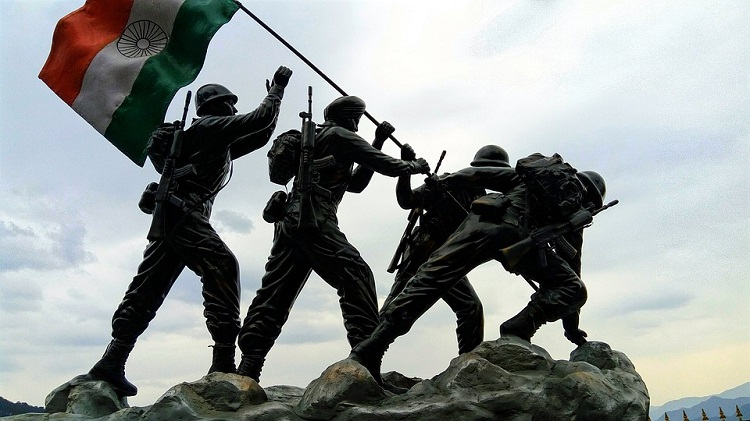
Being responsible for maintaining sanctity of both the tenuous Indo-Pak and Sino Indian borders in J&K and Ladakh regions, Udhampur based Headquarters Northern Command of Indian Army is most unique in terms of fronts, terrain, weather and operational challenges.
While J&K is witnessing a full-blown proxy war being sponsored by the Pakistan Army, the belligerent attitude of People’s Liberation Army’s [PLA] in Ladakh is showing no signs of abating. Pakistan Army has unabashedly been arming terrorists to the teeth and of late has also been using drones to drop weapons and other warlike stores to supply them with arms and equipment to attack security forces and civilians. In such an environment where collusivity cannot be ruled out, threats and challenges get compounded many fold.
In February this year, Indian Army troops carrying out counter-infiltration operations along the LoC recovered sophisticated weapons and night-vision equipment of US make from terrorists killed while attempting to enter J&K. A senior army officer revealed that “… from the weapon and equipment which were recovered, we realised that there was a lot of spill-over of hi-tech weapons, night-vision devices and equipment, which were left over by the Americans in Afghanistan, now finding their way towards this side.” This concern has also been emphatically expressed by Army Chief Gen MM Naravane during the recently concluded Raisina Dialogue.
Since the number of such advanced US weaponry and equipment abandoned in Afghanistan runs into hundreds of thousands and is being provided by Pakistan Army to terrorists, it poses a serious threat to peace in J&K and a big challenge to the security forces. Several attempts by the Pakistan Army to tranship weapons and ammunition across the LoC using drones have also been thwarted. However, as the rugged and heavily forested terrain along the LoC makes it very difficult to detect drones, this becomes an area of serious concern.
Similarly, with the PLA building up defence-oriented infrastructure on its own side [but near] the Line of Actual Control [LAC] in Ladakh region and the setting up of advanced communication and allied facilities, the threat of intrusions and other such hostile actions has increased substantially. Collusive Sino-Pak threat, which was more of an academic issue in the past, has today become a stark reality.
While the Indian Army is capable of handling these emerging threats, there’s a definite need to further ‘sharpen’ its cutting edge, by acquiring state of art weaponry and equipment. While there’s no dearth of sophisticated weapons and equipment available in the international market, off-the-shelf purchases have three very serious shortcomings.
One, besides being a cost prohibitive option, the defence equipment available doesn’t fully meet all the specific requirements of the forces, and two, re-supply, advanced-maintenance and timely upgradation are not guaranteed. Lastly, since technology transfer is seldom forthcoming in such purchases, it invariably ends up in the buyer becoming a victim of ‘enforced dependency’. Even defence equipment purchased from reliable allies are prone to delays and run the risk of being stalled due to diplomatic sanctions.
Hence, ‘Raksha Atmanirbharta’ [Defence self-dependency] is the only viable alternative to ensure assured availability and high functionality rate of weapons and equipment and India has got down to ensuring this in a big way. From an enhanced budget and assigned target for procurement of indigenously produced defence equipment as well as earmarking 25 percent of the R&D budget for facilitating defence R&D by private players, the center has created a conducive environment for indigenisation of defence equipment.
However, being a relatively recent development, there are teething problems and the road map to ‘Raksha Atmanirbharta’ is in its trailblazing stage. To address these issues holistically, Headquarters Northern Command is conducting a ‘North Tech Symposium’ in Udhampur on May 6-7.
This symposium will include a seminar, during which both military and civil experts will discuss various aspects of the ‘Raksha Atmanirbharta’ project and will be followed by an exhibition of indigenized products and technologies the next day in which about 150 renowned innovators who are actively involved in India’s ‘Raksha Atmanirbharta’ programme will be displaying their indigenised defence related innovations.
Besides increasing awareness regarding the quantum progress that has been in this field, this symposium will also ignite young army minds and by providing an interface between the innovator and the actual end users, help in creating a broad-based data bank of practical and innovative ideas and suggestions, which would be of immense help to those involved in indigenisation of defence equipment.
While the audience will gain requisite knowledge about the nuances of this scheme and how this novel idea is proposed to be implemented and impediments overcome, the expert speakers will benefit from out-of-the-box ideas and practical suggestions coming from those in the field who would be the end users of indigenously manufactured defence equipment. Such an interactive meeting of planners, facilitators, manufacturers and users will certainly go a long way in accurately identifying the qualitative requirements of the indigenised equipment.
How can Emmanuel Macron’s victory benefit India?

No doubt, it was better for Indian interests that Emmanuel Macron be re-elected as President of France, rather than Mrs Le Pen, who wants a France for the French, and jobs for the French. The US, and many other European countries, do the same when they restrict working visas, so that their own people can secure jobs, and so unemployment goes down. Mrs Le Pen is thus rather xenophobic, even if 45% of France voted for her, not a mean number — and India might not have been one of her priorities.
We keep hearing about ‘Indo–French strategic partnership’ or ‘Indo–French friendship’, and Shri Narendra Modi, who is going to Paris to meet his ‘friend’ Emmanuel Macron on 2 May, will unquestionably issue a warm and positive statement, once the visit ends. But, will it give any tangible results that make a DIFFERENCE to India? I am not sure. We will see the usual token French support for Indian membership of the Security Council in the United Nations; but this is an empty pledge, because France knows very well that China—who has veto power, being one of the Five Members—will always oppose it.
There are many other areas where India will need more practical and forceful support—in Kashmir for instance. France has never recognised India’s rightful sovereignty over Kashmir, whereas, on the one hand, it has accepted China’s claim over Taiwan, and on the other hand, France itself has strongly asserted for long ownership on Corsica, an island, which was once under Italian control, and has fought various independentist movements, some of them being violent.
I have written several times that one way that France would earn a deep and lasting relationship with India would be to dissociate itself from Pakistan — an undemocratic country which has exported Islamic terrorism all over the world — and stop supplying them goods and weapons, that are then turned towards India, especially in Kashmir. But France, here, has always followed the U.S. and U.K. lead, which believes that Pakistan is an ally in the Far East because it embodies a “moderate Islam”.
There is another domain where France could make a lot more effort is economy. France, whatever Macron and the Quai d’Orsay say, continues to invest ten times more in China than it does in India. No doubt, it is easier to do business with China, being a dictatorship, where orders are followed under duress, and one can relocate millions of people to build a dam or a six-lane highway, in a matter of days. No doubt, it is more difficult in India, where there is bureaucracy, some corruption, and obsolete visas, banking, and FCRA laws that need to be reformed. But, in the long run, India being a democracy, home to a Western-loving people, whose upper and middle class speak English, isn’t investing in India a better bet? This is what I have been claiming for a long time, but without great results.
The third area where France needs to make an effort is defense. There is no need to speak about strategic partnership, when the whole world knows that the ambition of China is not only to economically dominate the world (via the new Silk Road that is being traced in the Himalayas, going through Pakistan), but also in a military and nuclear manner: China got Hong Kong, they will eventually get Taipei, and they claim big chunks of Indian territory, like Arunachal Pradesh. India is the ONLY nation which has the army, the manpower, and the physical proximity to effectively act as a BUFFER against Chinese hegemony. Macron, rather than launching the Atma nirbhar Bharat project, which certainly has its advantages—like manufacturing air independent propulsion submarines and high thrust aircraft engines—should furnish India ON CREDIT Rafale planes, as well as nuclear submarines, so that India is able to stop the Chinese thrust for domination in the maritime channels between the China Sea and the Indian Ocean.
India is a reasonable nuclear nation: it did detonate two underground nuclear devices, but is only using its nuclear missiles as a deterrent against both Pakistan and China. Thus, France should support India becoming a member of the exclusive Nuclear Club, which again has the same five members as the UN Security Council: US, UK, France, Russia, and China— instead of clubbing India along with North Korea and Pakistan, two rogue countries, ‘as a nation in possession of nuclear weapons’.
Finally, with regards to the Russia–Ukraine war, India is unnecessarily dragged into it by the US and Great Britain. Ukraine is physically far from India, with a mostly white Caucasian people, and with which India has a very small political and economic relationship. Whereas, India has had a long friendship with Russia, received from them weapons that the US and Europe denied, and today, India depends on precious Russian oil that will fuel its energy needs. Mr Biden is waging a proxy ego-war on Russia, when the real enemy is China, using Europe and NATO. While the US arms manufacturers are selling to their government tens of thousands of machine guns, drones, planes, smart bombs to give to Ukraine, thereby boosting the American economy, Europe is going to suffer an economic recession, and a dramatically transformed European map, because of this unnecessary conflict. Why should India care? Mr Macron should understand that and put pressure on UK and USA to ease on Delhi.
Sri Aurobindo said that France is the country of his heart—not the UK, where he spent fifteen years of his life. It is true that there is a sentimental link between these two countries—the whole of India could even have become French, if King Louis XV had not recalled Dupleix, the then brilliant governor of French India, he who had taken Madras and whose army had come to the gates of Bombay. Even after the Indian Independence of 1947, France dragged its feet to surrender Pondicherry and its four other insignificant comptoirs, and Nehru had to threaten to send the Indian Army for the French to finally leave in 1954.
Mr Macron and Mr Modi must therefore strike, while the iron is hot, and aim for more far-reaching and long-lasting agreements, economic, military, nuclear, geographical , even if it is against the wishes of the US.
Over 78,000 Indians wave Tricolour, create Guinness world record

India created a world record by simultaneously waving 78,220 Tricolour on the 23 April 2022. India thus marked its name in the Guinness Book of World Records. In order to create history, thousands of people gathered together and raised the tricolour for five minutes and sang the national anthem Vande Mataram, simultaneously at the “Veer Kunwar Singh Vijayotsav” programme in Dulaur Ground of Jagdishpur in Bhojpur district of Bihar. Union Home Minister Amit Shah was present at the record making historical event. The attempt was witnessed by representatives of the Guinness World Records and attendees were asked to wear bands for tehir physical identification. The complete event is documented in a video and manual form.
“Most people waving flags was achieved by Ministry of Home Affairs and Ministry of Culture, Government of India (India), to celebrate Azaadi ka Amrit Mahotsav‘ at Jagdishpur, Bhojpur, Bihar, India on 23 April, 2022.” reads the Guinness World Certificate. Earlier, the world record for waving the maximum number of national flags at a time was held by Pakistan. Around 18 years ago 57,000 Pakistanis waved their national flag at Lahore.

In his address at Jagdishpur, Home Minister Amit Shah said that Prime Minister Narendra Modi has envisioned that by 2047, India should lead globally and this can be “our true tribute to all brave freedom fighters like Babu Veer Kunwar Singh”. Amit Shah said that Babu Veer Kunwar Singh fought his last battle near Jagdishpur on 23 April 1858. In the battle, he defeated the East India Company. Singh took down the British Union Jack from Jagdishpur Fort before sacrificing his life for the motherland.
Amit Shah added, “Babu Kunwar Singh was also a great social reformer and he had placed the idea of welfare of the backward and downtrodden before the nation at that time. History has been unjust to Babu Kunwar Singh as he was not given the place he deserved, based on his valour, merit and sacrifice.”
Union Minister of State for Home Affairs Mr. Nityanand Rai appreciated the people of Bihar for achieving this feat. “At the programme as many as 78,220 people waved the national flag under the leadership of Home Minister Amit Shah. This is a new world record for waving national flags. Waving such huge number of flags at one place voluntarily by the people of Bihar is commendable.” Union Ministers R.K. Singh, Ashwini Choubey and leaders from Bihar BJP were also present during the programme.
Senator Hawley urges Elon Musk to make Twitter’s censorship tricks public
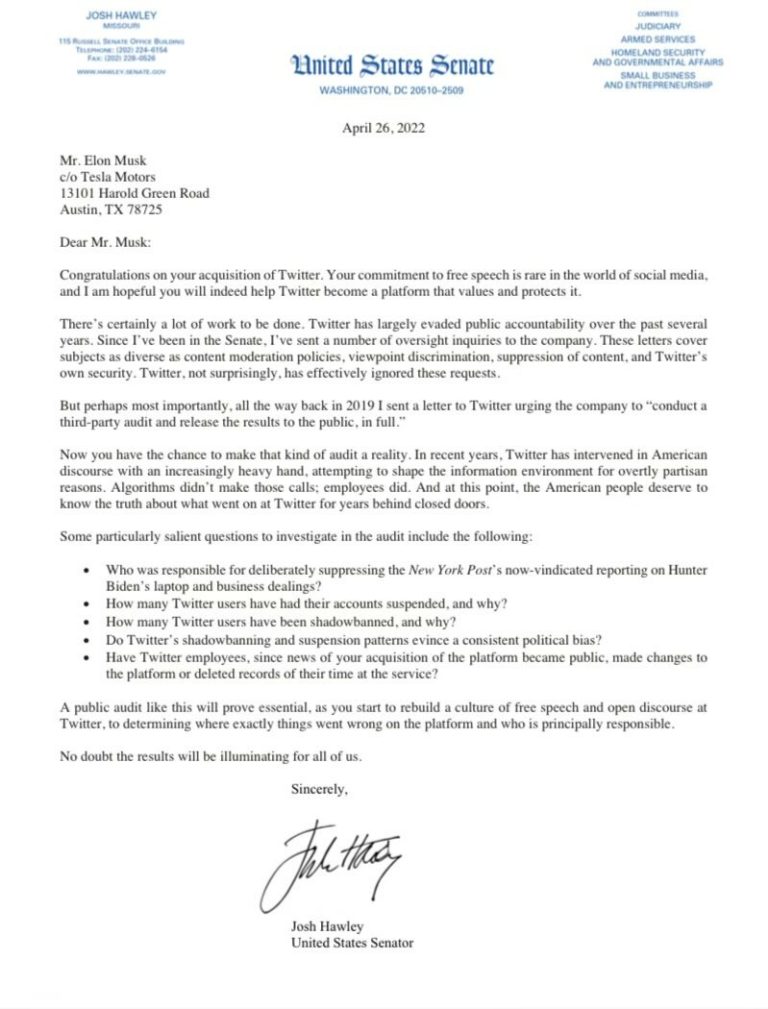
Days after Elon Musk’s announcement to acquire Twitter, Josh Hawley the U.S. Senator wrote a letter to Elon Musk on 26 April (Tuesday) urging him to conduct an audit of Twitter and make public its efforts to censor and shadow ban individuals. In his letter to Elon Musk, Hawley said, “Your commitment to free speech is rare in the world of social media and I am hopeful you will indeed help Twitter become a platform that values and protects it.”
Senator Josh Hawley informed Musk that he had written to Twitter in 2019 to conduct a third-party audit and release the details of the report to the public, which was ignored by Twitter. He also asked him to reveal details of past censorship attempts made by Twitter.
Hawley accused Twitter of being ‘partisan’ and pointed out, “Algorithms didn’t make those calls; employees did. And at this point, the American people deserve to know the truth about what went on at Twitter for years behind closed doors.” He proposed 5 important questions for Twitter to probe during the said third-party audit.
- Who was responsible for deliberately suppressing the New York Post’s now-vindicated reporting on Hunter Biden’s laptop and business dealings?
- How many Twitter users have had their accounts suspended and why?
- How many Twitter users have been shadow banned and why?
- Do Twitter’s shadow banning and suspension patterns evince a consistent political bias?
- Have Twitter employees, since news of your acquisition of the platform became public, made changes to the platform or deleted records of their time at the service?
Josh Hawley concluded that a public audit like this would be important in rebuilding a culture of free speech and open discourse at Twitter, to review where exactly things went wrong on the platform and who is principally accountable.
Following the letter to Musk by the U.S. Senator, on Wednesday (April 27), Twitter’s top notch lawyer Vijaya Gadde was slammed by Musk over the “incredibly inappropriate” censorship of Hunter Biden’s laptop story. Vijaya Gadde who is the chief legal officer and general counsel of Twitter has also played an imperative role in terminating ex-President Donald Trump’s account on Twitter. In a tweet, Musk wrote, “Suspending the Twitter account of a major news organization for publishing a truthful story was obviously incredibly inappropriate.” Elon Musk was talking about the 2020 New York Post’s story on Biden’s son Hunter Biden’s laptop.
Shari Baloch attacks China in Karachi Univ, galvanizes revolutionaries across Balochistan

It’s the mother who takes a nation to greater heights. It’s the mother who leads a revolution. Shari Baloch, alias Bramsh, is one such revolutionary mother who blew herself up at the gates of Karachi University killing three Chinese officials and seriously injuring another.
This wasn’t a suicide attack, mind you. Shari Baloch was a proud mother of two children and a caring wife. A post graduate, Shari was pursuing M.Phil. and could have made a great career for herself. Yet she chose to be a revolutionary, became the first female fidayeen for the Majeed Brigade of Baloch Liberation Army (BLA) and attacked China in Karachi.
Why? Asks the civilized world.
Yes it’s indeed a tragedy that a well-educated Baloch mother had to blow herself up at Karachi University for the civilized world to take note of inhuman atrocities being committed by Pakistan and China across Balochistan.

Over seventy thousand innocent Baloch men, women and children have been abducted by Pakistani security forces and intelligence agencies across occupied Balochistan. The hapless family members know nothing about the whereabouts of their loved ones who have just ‘disappeared’. More than ten thousand Baloch have been ‘killed and dumped’ by Paki forces during the last decade. And these aren’t blank statistics, rather a humungous tragedy.
Entire indigenous Baloch population is being steadily wiped out and the world doesn’t even know about it. Baloch genocide must have been the top international news every day. Isn’t it? Do we see any debate, discussion and/or op-ed pieces on Baloch massacre? No. None.
In 2020 widespread protests erupted across occupied Balochistan after cold- blooded murder of Hayat Baloch. Hayat was a college student and was returning home after studies when he was shot dead by Pakistani forces. The only ‘weapons’ found in his possession were pen and books! In any part of the world cold-blooded murder of a student by security forces would have raised a furore, but not in Pakistan-occupied Balochistan. Information flow and news emanating from Balochistan is strictly regulated. Hardly anyone in the ‘civilized world’ has heard about Hayat Baloch’s brutal murder. All five-star human rights activists continue to maintain a deafening silence.

Hayat Baloch was not the only one who was murdered by Pakistanis. Taj Bibi, Naz Baloch, Karima Baloch, Shahid Hussain… the list of Baloch slaughtered by the Pakistanis seems endless. There have been instances when Paki forces have sent mutilated dead bodies to Baloch mothers on Eid, with‘Eid Mubarak’ inscribed on the dead son’s chest.
Ironically the civilized world never dared to question Pakistan or China over Baloch genocide. Worse, it seems they don’t care about Balochistan. Part of this indifference stems from West’s appeasement policy towards Chinese dictator Xi Jinping.
“We have now got used to picking up the dead bodies of our loved ones,” a Baloch mother said poignantly at a discussion forum held recently. When faced with such catastrophe the only option left with Baloch mothers is to retaliate and revolt. And this is precisely what Shari Baloch did on April 26 when she turned herself into a human bomb.
Shari Baloch targeting the Chinese officials of Confucius Institute at Karachi was the result of deep thought.
“Targeting director and officials of Confucius institute, the symbol of Chinese economic, cultural and political expansionism, was to give a clear message to China that its direct or indirect presence in Balochistan will not be tolerated. BLA has warned China several times to refrain from looting Baloch resources and aiding Pakistan militarily and financially in carrying out Baloch genocide. However, China continues to be involved in its expansionist designs in Balochistan,” reads the media statement of Baloch Liberation Army (BLA).

Shari Baloch had joined BLA’s Majeed Brigade two years ago and voluntarily signed up for self-sacrificing (fidayeen) mission. As per BLA Majeed Brigade’s established procedure Shari Baloch was given time to revisit her decision. “During these two years, Shari rendered her services in different units of Majeed Brigade. Six months ago she confirmed that she continues to stand by her decision of carrying out a self-sacrificing attack. After that she was actively involved in her mission,” BLA explained in its statement.
And this is just the beginning. Within a span of three months BLA’s Majeed Brigade has carried out three high profile attacks that has dented the morale of Pakistan Army. On Feb 2 this year, sixteen highly motivated BLA fidayeens attacked Pakistan’s military bases at Panjgur and Nushki killing more than 190 Pakistani soldiers, several of which were Pak’s elite SSG commandoes. On April 26, Shari Baloch attacked China, Pakistan’s partner in Baloch genocide, at Karachi.

(Photo: News Intervention)
It would do good to the civilized world if it makes efforts to understand the underlying reasons that led a Baloch mother to leave her family and lay down her life for the larger good of Balochistan. It’s only when the civilized world acts deaf and dumb that the revolutionaries are forced to shed blood.
A revolutionary’s success is measured by the deep psychological impact created by his/her actions on the masses. And here lies Shari Baloch’s accomplishment. A fatal attack on Chinese officials at Karachi by a Baloch woman has shattered several glass ceilings. Apart from Balochistan, Shari Baloch has galvanized other oppressed people such as the Sindhi, Pashtuns and Hazaras as well, who have been at the receiving end of Pak-China tyranny.
Pak’s sinister gambit of targeted killings and violence in Kashmir

The cold-blooded murder of Manzoor Ahmad Bangroo in Pattan area of South Kashmir is the latest incident of ongoing targeted killings by terrorists in Kashmir. The deceased was a sarpanch [an elected village-level functionary who acts as an interphase between the government and village community], and his killing serves as a grim reminder of how in the garb of waging ‘armed struggle’, Pakistan backed terrorists are hell bent on converting what is otherwise considered paradise on earth, into a living hell.
Both the terrorists and separatists alike, contend that the so called ongoing ‘armed struggle’ is necessary and unavoidable for the well being and brighter future of Kashmiris. However, those who support terrorism have never cared to explain as to how exactly will senseless killing of innocent Kashmiris by Kashmiris achieve this objective? So, it’s time the common Kashmiri who is bearing the brunt of this destructive menace started asking the pro-Pakistan lobby in Kashmir some hard questions. However, as no reply will be forthcoming, let’s try to do so ourselves.
Can killers of innocents be called ‘mujahideen’?The Holy Quran mentions that “Whosoever killed a person … it shall be as if he had killed all mankind [5:32].” Unfortunately, those who indulge in such killings have the impertinence to proudly proclaim themselves ‘mujahideens’ [holy warriors]. I’m not a Muslim, but while speaking on this issue with some of my learned friends who follow Islam, and all of them opined that that a killer of innocents can never be considered a ‘mujahideen’ by any stretch of imagination.
Are vested interests using targeted killings to further their own agendas?Yes. That’s why rather than univocally condemning the unpardonable act of taking innocent human lives, terrorist commanders and separatist leaders either maintain a stoic silence on such murders, or even worse, indirectly ‘legitimise’ such misdeeds by glorifying even those slain terrorists complicit in the killing of innocent people. Sponsors of terrorism and their proxies use targeted killings as propaganda props to project the erroneous impression that people of Kashmir are up in arms against the establishment and killing of elected members like sarpanches is a manifestation of public ire.
Similarly, the response of Kashmir’s political class is most pathetic as they view such tragic incidents solely as golden opportunities for shamefully furthering their own self-serving interests. For example, after offering condolences on Bangroo’s murder in the most perfunctorily manner, PDP president Mehbooba Mufti used this tragic incident to take a swipe at the center by adding, “There seems to be no end in sight to the bloodbath in Kashmir. Yet nothing seems to move GOI [Government of India] enough to change its approach towards J&K”.
What are terrorists achieving by targeted killings? This is the question that every Kashmiri should be asking because killing sarpanches, members of Kashmir’s minority communities and migrants is in no way furthering either the self-determination campaign or the so called ‘armed struggle’. On the contrary, perpetrating such indefensible acts of violence create an atmosphere of fear and uncertainty due to which tourism suffers and outsiders are wary of setting up industry or investing in Kashmir. So, separatists and the pro-Pakistan lobby should tell the people of Kashmir as to why terrorists creating a hostile environment and thus dissuading outsiders from undertaking employment generating projects in J&K?
However, those who support or sympathise with terrorists won’t give a reply as they know that an honest answer would expose Pakistan’s duplicitous Kashmir policy and their own brazen perfidy. The bitter truth behind the ongoing cycle of targeted killings and orchestrated unrest in Kashmir is as clear as day, provided one has the courage to face reality. Everyone knows that Kashmir has tremendous scope for commercial activities and in January this year, J&K Lieutenant Governor Manoj Sinha led a team that visited the Dubai Expo to attract foreign investment. J&K’s Principal Secretary of Industries and Commerce, Ranjan Prakash Thakur, who was part of this team disclosed that though many companies were keen to invest in J&K, but “Most of them had doubt that the situation there [in Kashmir] is not very good, that it is a conflict zone.”
The apprehension in the minds of foreign investors regarding widespread killings and unrest in Kashmir is exactly what those sponsoring terrorism here want!
Doesn’t discouraging foreign investment by targeted killings harm the interests of Kashmiris?It most certainly does. In fact, J&K’s Principal Secretary of Industries and Commerce admits that in order to dispel security related apprehensions expressed during the Dubai Expo by prospective investors, “We invited them so that they see for themselves and understand the situation”. It was only after being convinced that several major UAE business houses like LuLu Group, Al Maya Group, MATU Investments LLC, GL Employment Brokerage as well as LLC & Noon Group signed major investment deals with J&K’s Lieutenant Governor.
Currently, besides members from the Gulf Cooperation Council [GCC] countries – Sharjah, Dubai, Abu Dhabi, investors from Hong Kong and Saudi Arabia have also visited J&K to explore investment opportunities. Foreign investors have shown keen interest in real estate, development of the hospitality sector, infrastructure development, food processing and agriculture, which will provide immense employment opportunities. The capital pledged by investors is mind boggling, with Dubai-based financial consultancy firm Century Financial alone planning to invest $100m. Foreign investments in J&K which stood at Rs 15,000 crore last year, is expected to rise to a whopping Rs 70,000 crore this year.
So, if terrorists succeed in frightening away foreign investors through barbaric acts of violence, the employment and marketing opportunities which projects worth Rs. 70,000 crore would have created for the people of J&K will no longer be available to them. Thus, in case foreign investors decide to pull out of J&K due to violence perpetrated by terrorists, the only losers would be the people of Kashmir!
So, why are terrorists and pro-Pakistan lobby against foreign investment in Kashmir?Investment creates employment which in turn brings prosperity, improves the quality-of-life and enables people to achieve their aspirations. Hence, logically speaking, there shouldn’t be any opposition to investment and infrastructural development as it’s a win-win situation for all. However, there’s a perverse flip side to it- once prosperity comes and people start reaping the rich dividends of peace, it would be very difficult to indoctrinate youth to pick up guns and this is what the pro-Pakistan lobby in Kashmir fears the most.
The fact of the matter is that the grand show of filial affection exhibited by the separatist camp for Pakistan isn’t guided by either ideology or religion, because, had this been the case, then Hurriyat leaders and terrorist commanders would have definitely persuaded their own sons to become ‘mujahideens’. However, barring an odd case or two, the children of almost all separatist leaders and terrorist commanders are leading comfortable lives, far removed from the ongoing terrorism in Kashmir.
What do separatists and terrorist leaders gain by orchestrating unrest in Kashmir Valley?For the pro-Pakistan camp, terrorism is an industry that provides them easy money from its sponsors living across the Line of Control [LoC] and this isn’t just an unsubstantiated inference. All that one who thinks otherwise has to do is follow the fortunes of this group and note how their modest homes have since turned into mansions and of how children of pro-Pakistan lobbyists with meagre income are moving around in high end cars, living it up in metros and even studying abroad.
As mentioned earlier, the pro-Pakistan lobby can only flourish as long as Kashmir is burning, because that’s what those sponsoring terrorism here are paying for. After its dismal failure to garner support of the UNSC and the international community for its puerile anti-Article 370 theatrics, Islamabad is well aware that its Kashmir dream is over and so, it’s taking perverse vicarious delight to see India being bled here.
Islamabad is unlikely to end its proxy war in Kashmir because it’s the most cost-effective way of bleeding India ‘through a thousand cuts’. Since it’s using Kashmiri youth to attack Indian security forces and target innocent civilians, both sides keep killing each other and hence Rawalpindi is achieving its aim without exposing the Pakistan Army to any danger. However, while Pakistan is undoubtedly guilty of ushering terrorism into Kashmir the main culprit responsible for the sorry state of affairs here is the Pro-Pakistan lobby, which for pecuniary gains is ever ready to facilitate and defend violent acts of terrorism and cause death and inflict pain on their own brethren!
Pak: Beware the knuckle duster wearing general who talks peace

Every seminar on global peace and harmonious coexistence invariably has two things in common. One, all speakers wax eloquence in projecting their own countries as unconditional champions of peace, while portraying an unfriendly state as the fountainhead of evil, and responsible for the existing sorry state of affairs. Two, every speaker displays remarkable magnanimity, making reconciliatory offers to mend fences with estranged nations, carefully concealing a host of unilateral and impractical preconditions under a barrage of gibberish.
Hence, the discourse during such seminars tends to become both unimaginative as well as repetitive, as was evident from what Pakistan Army Chief Gen Qamar Javed Bajwa had to say during the ‘Islamabad Security Dialogue’ seminar 2022 on “Comprehensive Security: Reimagining International Cooperation”. He said that “Pakistan continues to believe in using dialogue and diplomacy to resolve all outstanding issues including the Kashmir dispute and is ready to move forward on this front, if India agrees to do so.”
Readers may recall that during the inaugural session of ‘Islamabad Security Dialogue’ last year, Gen Bajwa made a very bold announcement, saying, “We feel it is time to bury the past and move forward”. However, rather than “walking his talk” by taking the first step forward, he instead conveniently passed the buck to New Delhi by adding, “Our neighbour will have to create a conducive environment, particularly in occupied Kashmir [sic].” While Gen Bajwa didn’t elaborate on what he actually meant by “creating a conducive environment” in reference to Kashmir, Pakistan’s wish list in this regard is [to put it mildly], a classic example of wanting to have the cake and eat it too!
So, let’s see what an apparently munificent Islamabad wants New Delhi to do to create a “conducive atmosphere” for dialogue. Firstly, it wants New Delhi to allow Kashmiris to exercise their right to self-determination as mentioned in UN Resolution 47, which on the face of it, sounds reasonable. However, Pakistan itself continues to brazenly violate this very UN resolution by its failure “To secure the withdrawal from the State of Jammu and Kashmir of tribesmen and Pakistani nationals not normally resident therein who have entered the State for the purpose of fighting, and to prevent any intrusion into the State of such elements and any furnishing of material aid to those fighting in the State.”
So, even though Pakistan by its brazen disregard for UN resolutions on Kashmir has lost the legal and even moral right to accuse India for not implementing the same, it still keeps blaming New Delhi of inaction and then cries ‘foul’ when the UN and international community doesn’t pay heed to its irrational demand. However, the irony doesn’t end here. Needless to say, New Delhi’s failure to highlight this aspect to expose Pakistan’s duplicity as regards honouring UN resolutions on Kashmir has unfortunately conveyed an erroneous message to the international community that India has skeletons in its cupboard.
Furthermore, while Pakistan wants India to conduct the self-determination exercise in J&K, PoK’s Interim Constitution 1974, specifically denies this opportunity to those living in Pakistan occupied Kashmir [PoK]. Section 7[3] of PoK constitution states “No person or political party in Azad Jammu and Kashmir [PoK] shall be permitted to propagate against, or take part in activities prejudicial or detrimental to, the ideology of the State’s accession to Pakistan.” So, while Islamabad keeps accusing India of not complying with UN resolutions on Kashmir, it is Pakistan’s obduracy which is solely responsible for the J&K logjam- a classic example of the pot calling the kettle black!
The second precondition laid down by Pakistan is even more hilarious- it wants New Delhi to restore Article 370 of the Indian Constitution. Beleaguered Pakistani Prime Minister Imran Khan is adamant that “Pakistan is ready to maintain friendship with India, but only after it brings justice to Kashmiris. We will resume talks only after they restore the special status of Kashmir, which was illegally revoked on August 5, 2019 [Emphasis added].” Perhaps it’s for the first time in world history that the Prime Minister of a nation has demanded that another sovereign country should undo an amendment in its own Constitution. The fact that Islamabad’s request for intervention by UNSC and the international community on this issue cut no ice with either, just goes to show how ridiculous this demand is!
It may be argued that since it’s Rawalpindi and not Islamabad that calls the shots in Pakistan, Khan’s tirade is of no relevance and so, what Gen Bajwa says ultimately matters. If one goes by this logic and takes what the Pakistan Army Chief says at face value, then there are all the reasons to be optimistic. In fact, his emotional “It is time to extend hand of peace in all directions” statement in February 2021, followed by the LoC ceasefire three weeks later [which is still enduring], made him a poster boy for the Nobel Prize for peace. However, despite all his sweet talk, show of sincerity and avowed commitment towards amity, Gen Bajwa is no peacenik, and just like all members of the Pak armed forces, both past and present, he openly follows an obdurate policy on Kashmir.
While previous Pakistan Army Chiefs were discreet while talking on the issue of ISI sponsoring proxy war in J&K, Gen Bajwa is the one who has unapologetically, come out openly on this issue by declaring that “Pakistan Army firmly stands by the Kashmiris in their just struggle to the very end. We are prepared and shall go to any extent to fulfil our obligations in this regard.” Coming from the horse’s mouth itself, isn’t this statement a damning indictment of Pakistan Army’s role in fuelling terrorism in J&K? Bajwa apologists would surely contend that he had the self-determination campaign and not ongoing terrorism in J&K in mind when he talked about his army’s “obligations.”
However, this justification isn’t convincing because except for providing military training, supplying arms, other warlike stores as well as combat logistical support, there’s precious little an army can do to help a political movement in a different country. So, Gen Bajwa needs to explain as to what are the other “obligations” towards Kashmiris that the Pakistan Army is honour-bound to fulfil? Sadly, even though Gen Bajwa’s admission that “We are prepared and shall go to any extent to fulfil our obligations in this regard,” is an undisguised statement of hostile intent, it has unfortunately been overlooked by most analysts.
However, the tragedy is that incurable optimists in India seem to be so enamoured by any peace related offer emanating from across the Radcliffe Line [even if it smacks of insincerity], that they end up ignoring reality. Those enamoured and carried away by the Pakistan Army chief talking peace with India during the ‘Islamabad Dialogues’, have unfortunately failed to notice that the very hand with which Gen Bajwa has extended an olive branch to India is also armed with a knuckle duster!
ISIS Khorasan fires rocket missiles on Uzbekistan

ISIS-affiliated Islamic extremist group Khorasan has claimed responsibility of the rockets fired at Uzbekistan. This is the first attack of this kind from Afghanistan on an East Asian country. ISIS Khorasan said in a statement that it had fired ten rockets targeting a military base in the Uzbek town of Tirmuz. The area is located near the Afghan border. Uzbek authorities did not immediately respond to ISIS’s claim.
According to reports, the attacks on Uzbekistan were carried out from Hairatan area in the northern Afghan province of Balkh. The group has also released photos and video of rocket missiles as proof of its claim. The ISIS Khurasan group has stepped up its attacks across the country since the withdrawal of the US-led foreign military alliance from Afghanistan in August last year. The group has also carried out a number of attacks in neighboring Pakistan. The latest attack took place last month in the form of a suicide attack on a Shia mosque in Peshawar. In this attack 60 Shia worshipers were killed and injured several others. Pak officials said the suicide bomber was an Afghan refugee allegedly trained in Afghanistan.