The inevitability of Taliban control over the whole of Afghanistan within
a year or two of the US leaving the country was quite well appreciated. What
was not appreciated was the speed with which it happened.
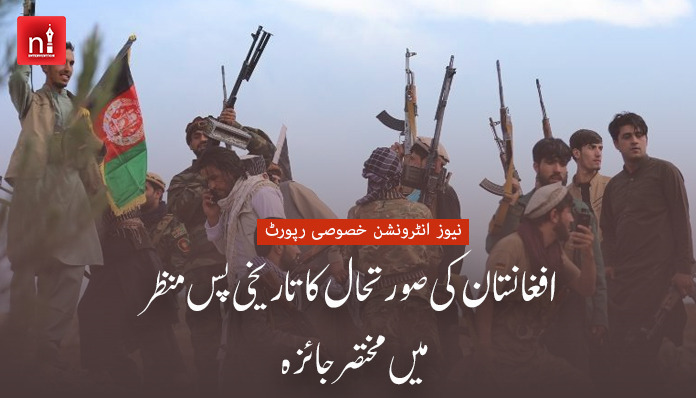
Taliban is already on the hot seat of Kabul. Mazar-e-Sharif, the fourth-largest city in Afghanistan, is also in full control of the Taliban; the Afghan Army soldiers and local warlords located there have fled to neighbouring Uzbekistan. This situation has come about even before the complete withdrawal of the US that is supposed to culminate officially on August 31, even though there is very less left to withdraw any more.
There is a scramble in the
Embassies to vacate even despite the insurgents giving an assurance to
“protect life, property and honour (of foreigners and Afghan civilians)
and create a peaceful and secure environment.”
Afghan President Ashraf Ghani addressed the nation through a televised speech. He did not have much to offer except a commitment to remobilise the armed forces which does not seem to be feasible any longer. He spoke of being in consultation with local leaders and international partners, but here again not much support for him or his government is expected to come by.
President Biden has made it quite clear that he is unlikely to change his decision of complete withdrawal. He has, in fact, authorised the deployment of 5,000 troops to help evacuate citizens and ensure a safe “drawdown” of US personnel in Afghanistan, according to Reuters. “Look, we spent over a trillion dollars over 20 years. We trained and equipped over 300,000 Afghan forces. Afghan leaders have to come together…… They’ve got to fight for themselves, fight for their nation,” he asserted.
There is a lot of truth in what the US President has said. The moderate elements in Afghanistan had more than two decades to politically marginalise the Taliban and build a healthy democracy. The Afghan government has also been provided with all wherewithal, money and training to build well equipped armed forces and other security forces. It has, sadly, failed to make the necessary progress. It is quite surprising and shameful that a 300,000 plus trained and well equipped army would succumb to a motley and ill-organised group of militants in such a short time span.
A lot many fingers are pointing towards Pakistan as the main reason behind the Taliban resurgence. It is said that there are more than 30,000 troops of the Pakistan Army operating in Afghanistan along with the Taliban. They are also providing the military leadership and tactical planning for the offensive. Pakistan is an expert in camouflaging its regular army troops and sending them to fight as civilian mercenaries. It did so in 1947-48, 1965 and the Kargil war against India. In Afghanistan too it has done so earlier when the Russians were in control of the country. The possibility of it having done so again in Afghanistan is not beyond the realm of reality.
The rebuttal to these allegations is coming from the abrasive Foreign Minister of Pakistan, Shah Mahmood Qureshi. “The lack of will to fight, the capitulation that we are seeing in Afghanistan… Can we be held responsible for that? No, we cannot,” Qureshi said in an interview to Reuters, adding that Pakistan supported a political solution to bring peace to Afghanistan.
What Qureshi is conveniently sidelining is that Pakistan, for long, was the conduit from where the aid went to Afghanistan. How much of it was siphoned off is something that can only be speculated. Pakistan has also been responsible for giving shelter to the Taliban when it was most vulnerable. Dubious business rackets of the Taliban like drugs and arms trade, kidnapping and extortion etc. have been run from Pakistani soil. A lot that is going wrong in Afghanistan is due to its “Islamic” neighbour.
What Pakistan is not realising is that getting involved in Afghanistan is something that it can ill afford given its own fragile economic condition, unless of course its misadventure is being financed by China. The situation is ideal for what China does best – “wait and watch till an opportunity advantageous to it comes by and then pounce.” However, the euphoria with which Pakistan and Taliban are defying the US and the rest of the world due to dependence upon China is something that they will pay a heavy price for.
The strategic decision of President Biden to stay away can be accepted on merit but the world cannot stay aloof to the humanitarian tragedy that is unfolding in the country. There are reports of lakhs of Internally Displaced People (IDPs) running from war zones. With the fighting shifting to urban centres the situation is becoming all the more critical, soon Kabul will be in no position to sustain the wave of humanity seeking safety and sustenance. Something will have to be done by the international community, the US, in particular, is honour bound to take lead in the initiative.
The evolving situation is not in favour of India which stands to lose its considerable economic assets created in Afghanistan over time. India has already evacuated from Mazar-e-Sharif and has advised its nationals to get back before the commercial flights stop. The strategic and security concerns which come with a Talibanised and inimical Afghanistan wholly under the tutelage of China and Pakistan are also very much alive now.
The country will be called upon to play a crucial role when the world
starts grappling with the humanitarian crisis in Afghanistan. India has always
helped humanity in distress and will definitely play a proactive role now too.
Strategically speaking it may become imperative for the West to get nearer to Afghanistan to keep an eye on the country, this will be feasible only if India reclaims its territories of Gilgit-Baltistan now under illegal occupation of Pakistan. It is time to look at this option closely. It is, therefore, not the end of the road for India, the work has in fact just begun.
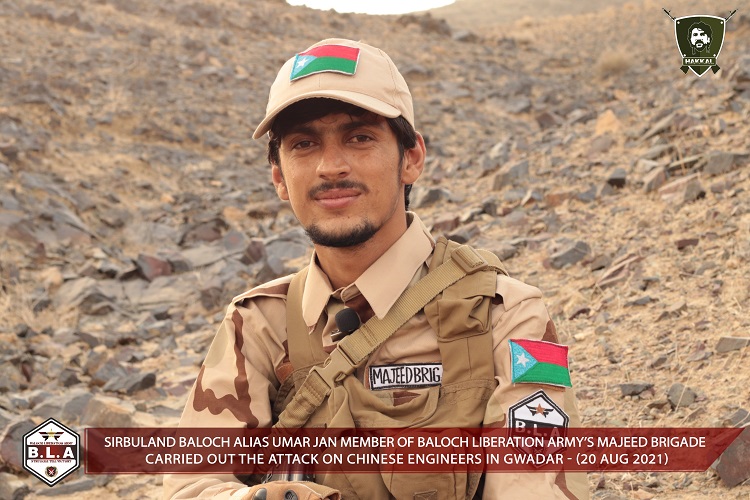
The self-sacrificing brigade (Majeed Brigade) of the Baloch Liberation Army (BLA) carried out a massive attack against Chinese installations at port city Gwadar on Friday, killing “at least nine Chinese”.
“BLA carried out a self-sacrificing operation against a convoy of Chinese engineers in Gwadar, Balochistan. At least 9 Chinese engineers were killed and several were injured in the attack,” said the BLA (Baloch Liberation Army) in its media statement.
The self-sacrificing attack on Chinese installations at Gwadar was carried out by BLA Majeed Brigade’s member Sirbuland Baloch alias Umar Jan.
Balochistan attained its independence from British colonial rule on August 11, 1947. However, Balochistan’s independence was short lived and Pakistan captured it on March 27, 1948. Since then Pakistan has been looting Balochistan’s resources and the Baloch had been fighting for their independence.
At the turn of this century, imperialist China joined the bandwagon with Pakistan to loot Balochistan through the CPEC (China-Pakistan Economic Corridor). Gwadar is an important nodal centre of CPEC through which China transports all the mineral wealth looted from Balochistan to other parts of the world, while the Pakistani regime conducts all kinds of atrocities on Balochistan.
Friday’s attack on Chinese convoy at Gwadar by the BLA’s Majeed Brigade is part of the Baloch revolutionary movement for Balochistan’s independence.
Bilal Ahmad hails from a financially poor family. Bilal was 18-year-old when he met a person who offered him all possible help to make financial things better at home. As he was struggling in his life, he accepted the offer and was told he can earn around Rs 15,000 in a month. The job, Bilal was told, was to help militants in Kashmir with logistical support.
For five months Bilal earned over Rs 70,000. Then one day he was caught along with a group of militants and was also killed in an encounter. This shattered all the dreams of his parents who wanted him to become a teacher. Now his parents and two sisters have no one to look after him.
The money is pumped into Kashmir through various means like Hawala transactions by Pakistan.
In Kashmir Valley, there is an adequate pool of disgruntled unemployed youth both educated and uneducated for recruitment by anti-national elements. Besides poverty, radicalisation seems to be another reason for bringing the youth into militancy. One of the reasons for the youth’s getting radicalized is misuse of social media. There are some social media handlers who use social media to ensure youth get radicalized.
Recently, the Secretary of Srinagar Municipal Corporation was arrested for intimidating social activists, political leaders, government officers and journalists on a website and social media.
It has been seen that individuals booked under Public Safety Act (PSA) of J&K and who spend time in jails with hardcore terrorists provide an ideal breeding ground for potential recruits.
The more resilient and motivated youth are assigned jobs of more serious nature like grenade throwing and snatching of weapons.
Who are OGWs (Over Ground Workers) ?
OGWs (Over Ground Workers) are people who help militants with logistical support, cash, shelter, and other infrastructure. OGWs play a vital role in militant attacks, providing real-time information and support to the tactical elements. OGWs have diversified into other roles such as stone-pelting, mob-rioting, ideological support, radicalisation and recruitment of militants. OGWs also provide real-time information to the militant groups to carry out tactical operations.
Previously, OGWs were primarily involved in logistics support and intelligence gathering for the militant groups operating in Kashmir Valley. Of late the distinction has blurred considerably with OGWs also capable of carrying out small scale strikes while retaining the capability to mix rapidly with the population. OGWs also become a significant tool for strategic communication and recruitment by their handlers in J&K.
Types of Over Ground Workers (OGWs): OGWs for Logistic Support (OGWLS) to strike teams, OGWs managing funding (OGWF), OGWs providing ideological support (OGWIS), OGWs providing radicalisation Support (OGWRS), OGWs for Recruitment of Terrorists (OGWR), OGWs generating negative Perception and Sentiment amongst the general population (OGWPS).
The National Investigative Agency (NIA) had established links between terrorists, Hurriyat and stone pelters, tracking the flow of funds, which led to charge sheeting.
These workers are omnipresent in all walks of life. They could be sympathisers, belonging to families of killed militants, teachers, religious teachers, separatists, members of larger networks like Al-Qaeda Pakistani proxy war agents or even the disgruntled elements of society.
Taliban are just “normal” guys says Prime Minister Imran Khan And that’s they’ve been given safe havens in Pakistan They are people with immense piety On a mission to banish all evils from society For them, music, art and watching television are taboo Because these the Devil has created only to seduce you!
In the Taliban’s truly pious land People who steal will lose their hand And should they dare to do so again They’ll end up losing a foot in the bargain! But, that ‘men will be men’, the Taliban seems to accept So the idea of disciplining them, they outrightly reject!
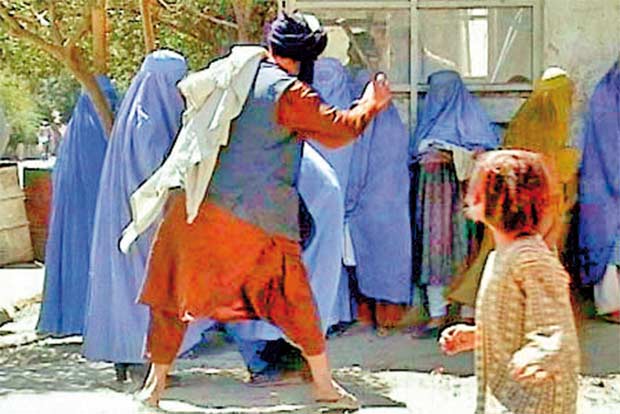
Instead, to prevent men from casting lustful eyes What Taliban has decreed is extremely ‘wise’ Women will have to cover themselves from head to toes No matter if they suffocate in the sun or look like crows And should a man still fall prey to a women’s charm He can be rest assured of coming to no harm!
Instead, publicly flog the woman concerned- for shame and pain Is necessary so that she doesn’t dare to ‘tempt’ a man ever again! In the Taliban’s ‘New Afghanistan’ intoxicants, there will be none But poppy cultivation for narcotic trade will continue to be officially done Because while you may get paradise through piety in afterlife, On earth, it’s hard cash that one needs in order to survive!
So, welcome to the ‘New Afghanistan’ Specially created for salvation by the Taliban!
Media
persons working in any conflict zone face a host of hazards ranging from the
ever-looming threat of bodily harm, to serious psychological infirmities such
as ‘post-traumatic stress disorder’. Scribes who strongly believe in objective reporting run the additional
risk of retribution as their reportage ends up riling feuding entities. This phenomenon
was quite common in the Kashmir Valley during the early 90s, and manifested
itself in the form of open threats and brazen attacks by infuriated terrorist
groups on media houses and journalists.
Similarly,
the establishment ‘punished’ media houses that did not toe the official line by
starving them financially through the age-old tactics of directing government
departments not to place official advertisements in the ‘errant’ newspapers. However,
by the mid-nineties both the establishment and terrorist groups in J&K
seemed to have realised that image building by intimidating the media was
proving to be counterproductive and so they made some amends.
Media
houses and journalists in Kashmir Valley too realised that under the existing
circumstances, it was best to be ‘practical’ while reporting on terrorism
related incidents in a manner that didn’t offend the establishment or the
terrorists. So, it’s not strange that while terrorist-initiated incidents of
targeted killings and attacks resulting in loss of life or limb of innocent
civilians are invariably attributed to “unidentified gunmen”, news
of successes against security forces never fails to mention the identity of the
terrorist group responsible for the attack!
Ask anyone who remains abreast with what’s happenings in J&K and you’ll be told that in the ongoing ‘battle’ to win ‘hearts and minds’, the pro-Pakistan lobby led by All Parties Hurriyat Conference [APHC] has fared much better that the Indian establishment. While conventional apathy and red tape are undoubtedly largely responsible for lackluster performance of India’s establishment on the media front, the main reason for this sorry state of affairs is New Delhi’s antiquated mindset and refusal to adapt itself to the fast-changing situations.
Consequently, India’s polity and bureaucracy both fail to appreciate that the phenomenal increase in domestic anti-India tirade on the Kashmir issue is actually part of a much bigger gambit of ‘perception warfare’ being orchestrated from across the Radcliffe Line. The harsh reality is that despite clear indicators, New Delhi doesn’t seem to be prepared to fight fire with fire by adopting a more proactive and aggressive media outreach to thwart the devious designs of inimical forces.
This is
extremely unfortunate, as some so-called ‘rights activists’ openly adopt a
patently motivated anti-India stance. Everyone appears to be in awe of famous
personalities like Arundhati Roy and Gautam Navlakha, who have all the time and
energy to rave and rant on what they perceive to be institutionalised excesses
against Kashmiris. However, no one questions the bald-faced selectivity and stoic
silence of rights activists on the issue of innocent civilians being
mercilessly killed by terrorists even when terrorist groups upload videos
showing brutal Islamic State like executions and have the gall to proudly
accept responsibility for such cowardly acts!
Similarly,
no one ever seems to question these self-anointed human rights crusaders as to
why does their untainted conscience and unassailable convictions conveniently
desert them when they read about civilians being killed by terrorists? How come
their heart doesn’t bleed for the teenaged Kashmiri girl who can be seen being mercilessly
shot multiple times even as she pleads for mercy with folded hands? Due to lack
of credible evidence, to assign ulterior motives to such shamelessly selective
display of concern for human rights, would be incorrect. But then, how does one
explain such an irrational behavior coming from people who are highly respected
for their professed sensitivities, empathy and compassion? How can death of
self-confessed terrorists involved in killing unarmed civilians become a
humungous human tragedy, but the cold blooded and gruesome murder of civilians
by terrorists on unproven charges of being informers be treated as a non-issue by
them?
With a
former Pakistani High Commissioner to India admitting that he was able to “convince”
a well-known Indian writer to write “an article in
the newspaper for Kashmiris’ right to self-determination,” the
suspicion that some well-known personalities may be taking an anti-India
position on this issue for reasons other than purely their personal convictions,
whether intentionally or unwittingly, definitely gains more strength.
Furthermore, the former High Commissioner’s triumphant encore that this writer “wrote at the end of her article, ‘Now the time has come to resolve the Kashmir issue once and for all through a plebiscite’,” does suggest that Islamabad is definitely following an ingenious ‘mind-control’ campaign to seduce influential literati, activists and civil society members in India to work as fifth columnists to further Pakistan’s contrived Kashmir narrative! This covert campaign has permeated into every nook and corner of society in Kashmir.
In 2019, a student of journalism named Adil Farooq was arrested under the Public Safety Act [PSA] for having links with terrorists. One of the charges on which he was booked pertained to “transportation of illegal arms and ammunition through unconventional routes and away from the security forces.” However, no sooner had Farooq been taken into custody, there was a public outrage against his arrest and the well-oiled pro-Pakistan propaganda lobby along with its proxies took to social media with vengeance, accusing the Indian establishment of using strong arm tactics to muzzle the media in Kashmir.
Senior Hurriyat ‘leader’ Mirwaiz Umar Farookh was one amongst the many who spoke up for the detained student studying journalism. In his tweet, Mirwaiz wrote- “Strongly condemn the arrest of Adil Farooq, a journalism student at Central University of Kashmir who been falsely booked under Public Safety Act (PSA) and shifted to Kot Bhalwal jail in Jammu. It seems the govt is hellbent upon ruining the careers of students and youth by implicating them in fake cases, we demand his immediate release.” With a widely revered preacher like Mirwaiz claiming that the student of journalism had been framed, anti- government sentiments in Kashmir hit the roof.
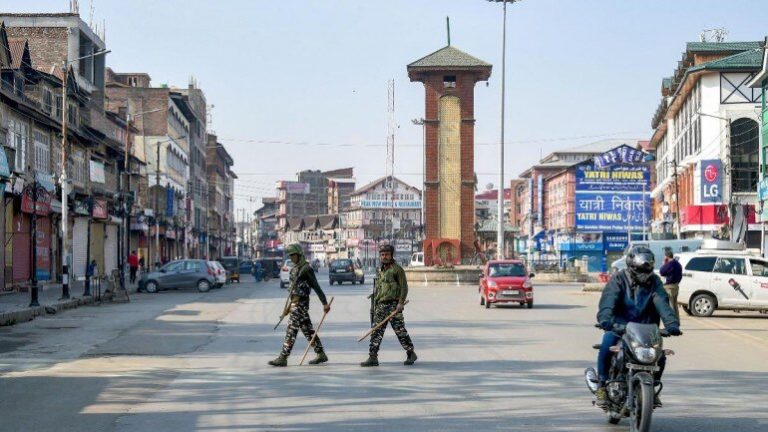
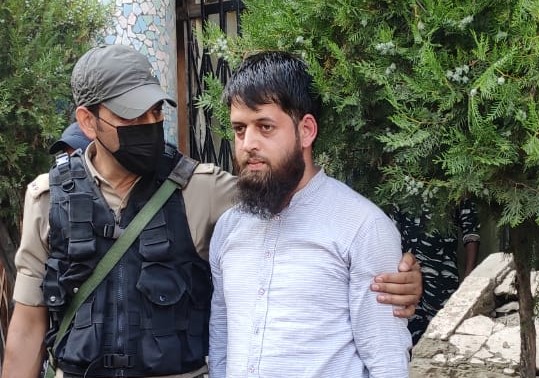
However, the saying that every lie has a ‘shelf life’ came true on last Tuesday when Farooq was once again arrested, and this time, not on suspicions but red-handed. During routine check of pedestrians in the Lal Chowk area of Srinagar on that day, J&K police recovered two live hand grenades from Farooq’s possession.
Coming within hours of a grenade attack in the same area that had left 10 civilians injured, and just before Independence Day, this very important find possibly averted twin major disasters. However, what’s really disquieting is the fact that in spite of being a member of the journalist fraternity and currently working as sub-editor of CNS News Agency in Srinagar, Farooq chose to indulge in such an act that has brought disrepute to the highly respected profession of journalism.
Whereas Farooq’s motivation is not clear, but the one issue which can’t be disputed is that being a media person working in a conflict zone, he was well aware of both what colossal damage grenades can cause and how terrorists are using these in Kashmir. Even without referring to precise data on grenade casualties in Kashmir, one can say with full confidence that since terrorists use these to target security forces in crowded areas, the number of fatalities and injuries caused by grenades to civilians in here are far greater than those suffered by security forces. This is why there can be no justification for Farooq’s despicable misdemeanour.
Therefore, those who consider themselves conscience-keepers
of society or champions of human rights need to decide whether they want to
support a criminal caught in flagrante with two grenades- a lethal munition
which terrorists invariably use in crowded places, or, stand up for the
innocent Kashmiris, who unwittingly get killed or injured by such grenades,
which in Kashmir, have an inexplicable propensity of missing their intended
targets.
Most importantly, it would be interesting to hear what Mirwaiz has to say this time about the detention of his namesake scribe. Even if Farooq chose to ferry the grenades for ideological reasons, the fact that the same could kill, maim or injure locals present at the site where they would be used makes him an accessory to an unpardonable crime against his own people. Hence it would not be presumptuous to regard fourth estate member Adil Farooq as a fifth columnist!
When a
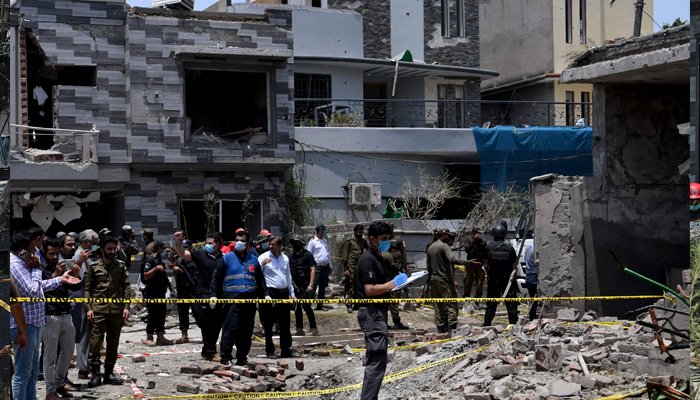
massive blast shook Allah Hu boulevard, an upscale residential area of Jauhar Town in Lahore on 23
June killing three persons and injuring 21 others, no one knew for sure who was
behind this attack. Neither was it clear who the intended target was.
However, Punjab’s
Inspector General of Police [IGP] Inam Ghani was quick to confirm two
things- one, that the it was an act of “terror”, and two, it was
orchestrated by a “hostile” intelligence agency. Though he didn’t
name who exactly the person in the crosshairs of the assassins was, but while highlighting
how a “major loss” had been averted, because “there was a
police picket outside the high-value target’s house”, he revealed that
the person concerned was someone who really mattered.
It subsequently turned out that the person IGP Ghani was referring to as the “high value target”, who if harmed would have been a “major loss”, was none other than Lashkar-e-Taiba [LeT] co-founder, Jamaat-ud-Daw [JuD] chief and 2008 Mumbai attack mastermind Hafiz Saeed. Normally, for a high-ranking police official to address a UN designated terrorist serving a prison term on terror financing charges as a “high value target”, would besomething unheard of. But, in a country where the Prime Minister refers to 9/11 mastermind Osama bin Laden a “martyr” on the floor of National Assembly, for a lowly IGP to address to Saeed thus, is nothing unusual!
However, since Saeed is currently supposed to be serving out
his jail sentence in Lahore’s Kot Lakhpat Jail, the Punjab IGP’s couched
reference to him being the intended target of the Jauhar Town bomb blast made
no sense. Similarly, even though this blast occurred near his house, the IGP’s
claim of a “major loss” being averted seemed farfetched. How
could the LeT co-founder who was lodged in a Kot Lakhpat Jail be harmed by a
bomb that exploded outside his house more than 4 k.m. away? Unless of course, Saeed
was present at his home that Wednesday morning when the blast took place.
While there was no official confirmation of IGP Ghani’s revelation about Hafiz Saeed being the intended target of the bomb attack, surprisingly, there wasn’t any official rebuttal either, and so, even the ‘politically correct’ Pakistani media widely reported that the JuD chief was indeed the intended target. So, it’s obvious that instead of serving out his time in jail, Hafiz Saeed was instead staying at home with his family. Though the very thought of a convict spending time at home instead of a jail may sound ludicrous, but in Pakistan there’s nothing unusual about this. Readers may recall that another 26/11 mastermind and senior LeT commander Zaki-ur-Rehman Lakhvi fathered a child while he was ‘officially’ incarcerated in Pakistan’s high security Adiala jail after the 2008 Mumbai attacks!
During a joint press conference five days after this attack,
Punjab Chief Minister [CM] Usman Buzdar and IGP Ghani reconfirmed that an “anti-Pakistan
intelligence agency” was involved, without disclosing its
identity. But this wasn’t necessary because by stating that the “basic
target of the Lahore blast was the FATF conference,” it was crystal
clear that Buzdar was referring to India’s Research and Analysis Wing [RAW]. However,
a non-related but most impressive part of this conference was his disclosure
that “The Counter-Terrorism Department [CTD] of the Punjab Police
has unearthed the network of all Pakistani and international suspects involved
in the blast within 16 hours of the incident”.
In a subsequent press briefing held on 4 July, Pakistan’s
National Security Adviser [NSA] Dr Moeed Yusuf stated that “Today I can
tell you, with full confidence, and without any ambiguity, that this whole
attack is directly connected to India’s sponsorship of terrorism against
Pakistan.” He even claimed that “We have identified the main
mastermind and the handlers of this terrorist attack, and we have absolutely no
doubt or reservation in informing you that the main mastermind belongs to RAW,
the Indian intelligence agency, is an Indian national and is based in India.”
However, like always, Islamabad failed to disclose the identity of this ‘RAW
agent’ of Indian origin, even though IGP Ghani claimed that as far as the
Lahore blast was concerned, “the telephone calls, WhatsApp calls, the
whole record, everything [related to the attack] is with us.”
Many consider Punjab CM’s claim of having “unearthed
the network of all Pakistani and international suspects involved in the blast
within 16 hours of the incident,” just an attempt to salvage the
reputation of Punjab Police. But fresh inputs suggest that this could well be true
since the authorities got wind of this attack at least two weeks before it took
place. In a piece titled “Lahore blast: The man who knew the plot,”
[The News International, 3 August 2021], Umar Cheema has quoted a
counter terrorism department [CTD] official telling ‘The News’ that:
A person named Naveed who was part of the bomb
attack plot changed his mind and spilled the beans regarding this devious plan
to policemen at the police picket outside Jamaat-ud-Dawa [JuD] chief Saeed’s
house on June 7. The CTD official revealed that police in turn had shared this
information with JuD officials.
Naveed lived in Dubai before returning to
Pakistan, where he may have met fellow Pakistanis and co-conspirators Peter
Paul David [who bought the car used in the blast] and another conspirator named
Sajjad Shah.
An Afghan national named Eid Gul settled in
Pakistan was the one who fitted explosives in the car and drove it to the blast
site.
This plot was financed by one Samiul Haq, who had
shifted from Dubai to Turkey.
The CTD official also confirmed that Naveed was questioned
both by security agencies as well the Criminal Investigation Agency [CIA]. However,
the most intriguing part is that despite being an invaluable asset who could
identify the conspirators, Naveed was subsequently released! This inexplicable
development raises a very disturbing question- even if Naveed was released as a
favour for him exposing the plot against the JuD chief, when the identities of
conspirators were known to law enforcement and intelligence agencies, why weren’t
the potential plotters taken into preventive custody? Needless to say, had this
basic security measure been instituted, the loss of three precious lives and
serious injuries to 21 others, could have been avoided.
So, the only plausible explanation for such a humungous and
incomprehensible security oversight on Islamabad’s part is that in all
probability, this incident was in essence, a novel ‘false flag’ operation’
orchestrated by Pakistan’s intelligence agencies aimed at serving two purposes.
One, to buttress Islamabad’s unproven but oft repeated allegations that New
Delhi was manipulating international terror financing watchdog Financial Action
Task Force [FATF] to ensure that Pakistan remained on its grey list a semblance
of credibility. Simultaneously, by timing this attack when FATF was in the
final stages of deciding whether to retain or remove Pakistan from its grey
list, Islamabad probably reckoned that it could use this contrived bomb blast
to earn the international terror financing watchdog’s sympathy by projecting
itself as a ‘victim’ of terror unleashed by its Eastern neighbour!
Some may opine that the inference of Pakistani intelligence
agencies orchestrating the Lahore bomb blast just to malign India is too
farfetched. While there’s no doubt that this argument does sound a bit outlandish,
but then, what else does one infer when despite getting prior information of a plot
supposedly hatched by RAW, from the very horse’s mouth itself, Islamabad does
nothing to prevent it? Secondly, why did ISI squander the golden opportunity to
substantiate Foreign Minister Shah Mehmood Qureshi’s allegation of New Delhi
being involved in “planning as well as promotion and financing of
terrorist activities” inside Pakistan by failing to roundup the entire
gang of so-called RAW operatives who were planning this bomb attack? Lastly, if
it really has clinching evidence of India’s role in the Lahore blast [as Qureshi,
Pakistan’s NSA and Punjab IGP claim], then why is Islamabad dithering over
making the same public?
With Islamabad displaying such a callous and uncharacteristically
passive response to what it now claims to be a terror attack orchestrated by
its nemesis RAW, there are all the reasons to suspect that there’s much more to
the Lahore bomb blast than what meets the eye. Yet, the one thing which is
certain is that whether it is by omission or commission, the Lahore blast
indisputably falls well within the realms of a ‘false flag operation’!
Westminster model
democracy takes a long time to strike its roots deep in the psyche of the
people. The British democracy is more than a millennia and the American
democracy is nearly 250 years old. The survival of democracy, as we glean from
the example of two countries mentioned above, depends on how pragmatic these
are with the inbuilt capacity of adjusting with new imperative that appears
rapidly in an age of scientific and technological advancement.
The beauty of the
system is that it has the capacity of an assured mechanism in the form of parliamentary
debates and vote. The usual practice is of obtaining a majority vote in favour
or against a tabled proposition. To go by the majority decision is a vital
attribute of democracy.
The much debated aspect of the Westminster module of democracy, which India chose after her independence, is under intensive debate in the political circles and the intellectual class of the civil society. No governance module including the Westminster type of democracy is without a flaw. Everybody thinks so. But the module of democracy which we have borrowed from Great Britain is the one that is less harmful to the governed in comparison to other arrangements. In other words democracy is the lesser evil.
The decisive factor for
the Constituent Assembly to opt for the Westminster type of democracy in 1949 was
the heterogeneity of the Indian nation. That is why some political scientists
call India a mosaic and a sub-continent. Extensive debates on the nature and
depth of multi-faceted diversity of our society has taken place among the
historians and political scientists in our country. The British colonialists
invariably threatened the senior leaders of the Indian freedom movement with a
warning that the type of democracy they visualized for free India was bound to
lead to the fragmentation of the country at the end of the day. Pandit Nehru
countered this unhelpful trend by secularizing the vitiated politics of divide
and rule, and Sardar Patel, taking strength from a clear vision of united India
consolidated the fragmented India bequeathed by the colonialists.
At the root of India opting for secular democracy lay the rich civilizational fund inherited by the Indians from their illustrious forefathers. The ancient philosophical literature of India, in whatever form it is, in reality is the storehouse of wisdom, compassion and peaceful coexistence. In a lucid and objective article titled ‘Beware Zombie Democracy’ (Print Magazine of 12 August) Ram Madhav has summed up in a beautiful paragraph the concept of democratic culture conceived by the Buddha 2,500 years ago.
The socio-political
aberrations that sadden us today are not because of any shortcoming in the
inherited moral and ethical fund but because of our inability to bring about
acceptable synthesis in our socio-political cum economic dynamics in an age of
science and technology.
The nagging issue confronting contemporary democracies is that of “majoritarian-ism”. It has taken an uglier turn in India in particular though as a matter of principle no democracy in the world can be called uniform on cultural, religious or other counts. Believing that the democracy is the game of numbers, all political parties focus their attention on how to win a majority vote on national or regional level. In India, as of today, this has given rise to “mobocracy” and the disillusioned populace has begun to overlook the distance between democracy and mobocracy. Shaheen Bagh episode and the “fish-market” of Rajya Sabha are the examples.
A majority vote means power and authority over the state organs and finally the institutions. The question, no doubt ugly and embarrassing, lies in the behavioural evolution of democracy and democratic mindset. We are not showing maturity and sensibility. In normal conditions, the political parties and especially the mainstream parties make their selves as the beneficiaries and not the people in whose name they want to become attain popularity.
An Indian educationist once happened to visit UK where he was scheduled to interact with the students of 8th standard. Out of curiosity he put a question to his pupils seeking their views on democracy and democratic form of government. One among the students stood up and said, “Sir which democracy are you referring to, the British or the Indian”? That is the crux of the issue.
The reason why the early stalwarts of independent India did not pay full attention to the latent irritants was that subsequent to hard-earned freedom the element of moral imperative supervened in all major policy matters of governance. The nation at that time was not only responsive but also responsible. The plank of morality and ethical conduct in this country are of long standing and service. Satyagraha, an ideology anchored in our moral ethos had become an article of faith with Gandhi Ji and its spirit percolated down to various political and social spectra.
Somehow not too serious an attention was paid to the fallout of the advancement of scientific and technological age from which India could not remain distanced any more. When Nehru said that the dams and hydropower generating projects were the temples of new India, it meant there was a vision of future development and that did happen even if it was not on a mind-bogging scale as we find in China. India could not divorce her civilizational fund and make a violent shift to modernity because it is an agricultural country with agriculture as its mainstay. And Indian farmers are conservatives of a type. That is the reason why when the tractor was first introduced, Dr. Rajendra Prasad, the then President of India cautioned the country about the possible negative consequences of mishandling the soil. Today, we are faced with the problems of blind use of chemical manure and pesticides.
With the onset of the era of advanced scientific and technological activity with deep and wide impact on life pattern and life standard, there gradually surfaced the idea of identity in its various forms and manifestations. As India began to wriggle out of abject poverty and illiteracy through a massive programme of bringing education literacy and scientific temperament to the masses of people especially the rural India, the urge for assertion of identity became sharper. The downtrodden classes and the economically weaker sections of population anticipated a new world opening before them. The question was to provide conditions that would help them absorb the impact of a changing India. In due course of time a clash of interests began to shape and the elements that lent support to emerging aspirations. Indigenous cultural traits began receiving a fillip and people of India, who had known one leader and one party throughout the freedom movement, now pandered to local leadership, local issues and local solutions. Emergence of regional parties with regional agenda should have been dovetailed to the mainstream politics and political trends in the country. Skill and deftness were needed.
A very peculiar phenomenon of contemporary Indian political scenario is that the voter draws a clear line between his regional and national perceptions and votes accordingly. Not wooing the regional parties by the mainstream parties is unfortunately becoming a bane for the health of our democracy. Most of the ills that we find today steering into the eye of nationalist leadership are the misuse and misguidance of regional vote banks. This is a clear indication of degraded political ethics.
In final analysis all that we need to think about seriously is that should we work for ourselves and our parties or for the nation. No service is sincere and honest if it is not accompanied by a strong ethos of renunciation. Now that we are entering the 75th year of our independence, we must make some introspection and say with frankness that we have faltered and fallen. We need to rise, gave our stereotype a shaking and move forward with all India embracing vision.
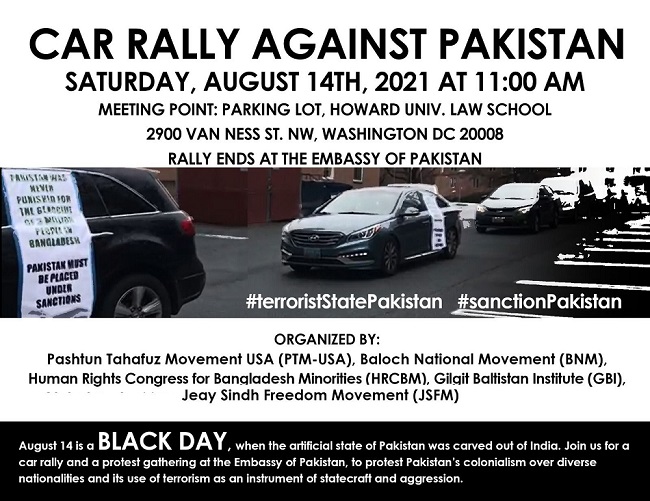
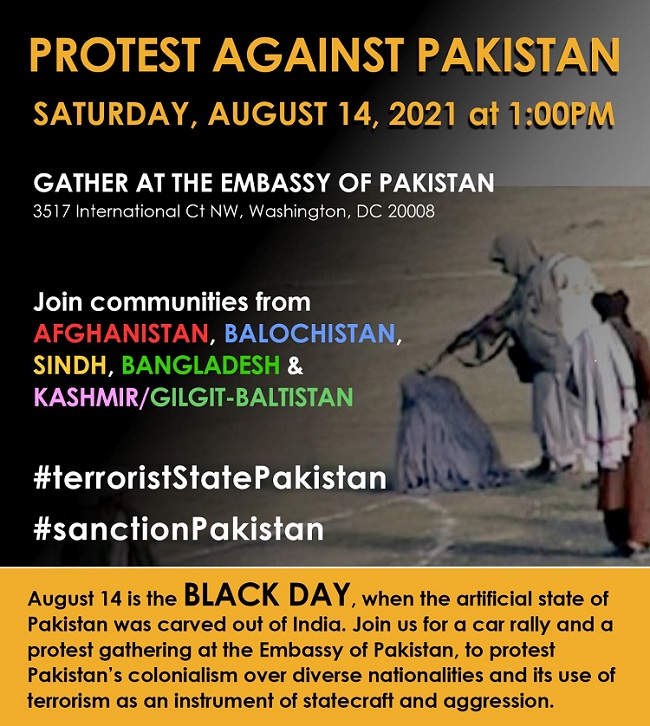
Human Rights Activists from Balochistan, Sindh, Pashtunistan, Pakistan-occupied Kashmir (POK), Gilgit-Baltistan and Bangladesh will organize a car rally at Pakistan Embassy in Washington DC on August 14 to protest the inhuman atrocities by Pakistani regime. This rally will have trucks with giant screens wherein photographs and videos of the savagery and brutalities committed by Pakistani security forces will be broadcast to enable the world to see the actual ground realities in Pakistan.
The Baloch National Movement (BNM), Jeay Sindh Freedom Movement (JSFM), Pashtun Tahafuz Movement US Chapter (PTM- USA), Kashmiri, Gilgit Baltistan and Bangladesh human rights activists have joined hands for this car rally and protest at the Pakistan Embassy in Washington DC.
“We have chosen August 14 as the day for our car rally because the Pakistani regime celebrates this day as Yaum-e-Azadi, but we want the world to see for themselves the brutal atrocities committed by Pakistani soldiers on occupied Balochistan and other regions under their forceful occupation,” said Nabi Baksh Baloch, member foreign committee BNM.
#SanctionPakistan
“Since it’s creation on August 14, 1947 Pakistan has become a headache for the neighboring countries, region and the whole world because ISI started nurseries of radical Islamist elements. By sheltering international terrorist groups/ organizations and sending them across the world to terrorize innocent people, Pakistan has become the state sponsors of terrorism,” said Zafar Sahito, founder and central chief organizer Jeay Sindh Freedom Movement ( JSFM).
Except the Punjab province of Pakistan all other regions continue to be forcefully occupied by Pakistani regime. Balochistan, Sindh, Pashtunistan, parts of Kashmir and Gilgit-Baltistan have been kept under illegal Pakistani occupation through the barrel of a gun. Even East Pakistan that attained its independence in 1971 (now, Bangladesh) has seen overt interference in its domestic affairs by the Pakistan Army and ISI. It is for this reason that Bangladeshi human rights activists have also joined hands for the August 14 car rally in Washington DC.
“August 14 is a Black Day for all historical nations. Sindhi, Baloch, Pashtun and Kashmir/ Gilgit Baltistan are enchained in the slavery of Pakistan. Our car rally is being organized by oppressed nations of the region to protest Pakistan’s use of terrorism as an instrument of statecraft and aggression,” explained Zafar Sahito.
The Baloch community
is present in Iranian Balochistan spreading across Kerman, Elam and Gilan to Afghanistan-administered
areas including Rabat, Helmund, Nimroz and Farah and in Pakistan-occupied
Balochistan, Sindh and Punjab.
The region
is also called Greater Balochistan, which was mapped by the erstwhile great
Baloch ruler Naseer Khan Noori. Later, Mir Abdul Aziz Kurd and other Baloch
historians such as Sardar Khan, Farooq Baloch and Dr. Inayatullah Baloch agreed
on it. If we look at the archaeological artefacts discovered in India, we also
find an element of Baloch culture in them, so it would not be wrong to say that
the ethnic lineage of the Baloch nation has historic roots. And Balochistan is one
of the oldest civilizations.
The Qambrani
Baloch Surab and other Baloch tribes living in its suburbs and in the year 1410
laid the foundation of the government by making Nagaar, an area in Sorab as the
base of the throne. In order to expand the government, Qambrani Baloch gradually
defeated the Baloch tribes living in Jhalawan and made the whole of Jhalawan a
part of this new Baloch state. This was much needed as it brought all the
Baloch areas under one umbrella. The Baloch, therefore, initiated the process
of uniting the scattered forces of their tribes. They first began incorporating
those areas into their state where large resistance was not expected, which also
strengthened the Baloch government to some extent.
After ruling
Surab and Jhalawan for 120 years, the Baloch invaded Kalat in 1530 under the
leadership of Mir Umar Mirwani. Kalat was ruled by Arghoons during those days. After
the conquest of Kalat, Mir Umar Mirwani attained the status of King and sat on
the throne. After 1666, the state of Kalat passed from the Mirwanis to another
branch of the Qambrani Baloch whose first ruler was Mir Ahmad Khan I.
Mir Ahmad
Khan I is the ancestor of the Ahmadzai family and that is why all the inheritors
of Mir Ahmad Khan are called Ahmadzai.
After the
death of Mir Hassan Khan Mirwani in 1666, the sovereignty of the Baloch state
was handed over to Ahmad Khan I. Ahmad Khan I soon realized that if the
military strength of Baloch nation was not strengthened, then Shah Jahan, the
then Mughal ruler at Delhi would try to invade and conquer Kalat.
Ahmad Khan I
made active efforts to strengthen the Baloch military and when Baloch military
was satisfactorily strengthened, he started the struggle to bring all Baloch
areas under the control of a single state. That is why we see the 29 year regime
of Ahmad Khan I as full of wars, wherein he fought 18 battles against the Barozais
to make Sibi and its suburbs a part of the Baloch nation, after which the Barozais
never dared to fight. He also fought against the Jats and Mughals.
Most
significant was the battle against Mughals at Khad Mastung in which Mughals
suffered a crushing defeat at the hands of Ahamd Khan I. After this defeat the
Mughals never ever tried to capture Balochistan.
Mir Ahmadyar Khan during his reign brought Kalat under Baloch umbrella, and Ahmad Khan I included the entire area up to Karkh and Dara Mulla under the administration of the state of Kalat in Balochistan. When Mir Ahmad Khan died in 1695 the Baloch state had spread over a vast area, but there were still some Baloch areas, which had to be brought under one state.
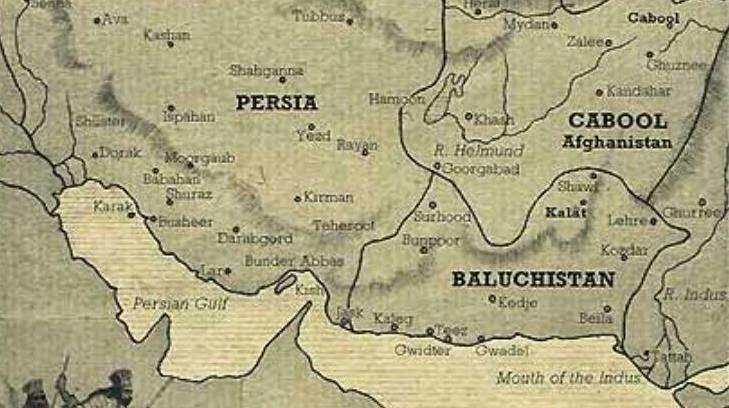
Map of Balochistan during earlier times.
After the death of Mir Ahmad Khan, Mir Mehrab Khan I, the eldest son and crown prince of Mir Ahmad Khan was entrusted with the responsibility of Balochistan. Mir Mehrab Khan’s reign was very short as he was wounded in a battle against the Kalhoras at Karkh and passed away three days later. This battle was actually fought over a Baroze girl who had been abducted by the Kalhora rulers. Since the area of the Barozais was now part of the Baloch state so when a girl from Barzoi family was abducted by the Kalhoras, Mir Mehrab Khan fought against the Kalhoras and defeated them at Karkh. After defeat, the Kalhora leaders were imprisoned. However Mir Mehrab Khan was injured and soon passed away.
After the martyrdom of Mir Mehrab Khan, the Mughal rulers, acting as mediators during the reign of Mir Samandar Khan, gave the administration of the port of Karachi to the state of Balochistan.
Mir Abdullah Khan
After Mir Samandar Khan, Mir Ahmad Khan became the ruler of the second state, but he was soon killed by his younger brother Mir Abdullah Khan after which Mir Abdullah Khan became the ruler of the state of Kalat. The reign of Mir Abdullah Khan is a shining chapter in Baloch history who made the Baloch nation a leading force in martial arts and made valiant efforts to further expand the Baloch state. He was engaged in several wars. Abdullah Khan’s militant nature kept him engaged in adventures from Kachhi, Kandahar and Dera Jat to Bandar Abbas. One of the other reasons for these wars was also to meet the economic needs of state.
It would not
be wrong to say that it was the Baloch King Abdullah Khan who played a pivotal
role in making Greater Balochistan a reality.
Abdullah Khan is remembered by the people of Sindh as the mountain eagle, and the British call him as ‘Abdullah Khan– the Conqueror’, which is enough to indicate his greatness and valour.
During his tenure Abdullah Khan focused on strengthening Baloch areas. However, in order to establish his dominance in the border areas of the state, he also fought battles against the Afghan and Sindh rulers. Abdullah Khan’s goal was to include all those areas in the state of Kalat where the Baloch lived. Abdullah Khan could not realise his dream during his life, and in the last battle which was fought against the Kalhora rulers, he attained martyrdom. After his martyrdom the whole area was given to the state of Kalat under an agreement, and Kalhora became a part of Balochistan. So with his blood Abdullah Khan finalized the border line of the Baloch state with Sindh.
Ironically, for eighteen years after the martyrdom of Abdullah Khan, the Baloch state suffered from several issues due to incompetent rulers until Naseer Khan Noori ascended the throne.
Naseer Khan Noori
During the
reign of Naseer Khan Noori, the Baloch areas such as Bandar Abbas in the west,
Dera Ghazi Khan and some areas of Dera Ismail Khan in the east, and Jalugir
(located on the outskirts of Kuchlak) in the north, Jacobabad in the southeast,
and Sahil Makran in the south and west were brought under the Baloch rule.
Naseer Khan Noori’s era is of key importance in Baloch history where he expanded the Baloch state on the one hand while on the other, kept Baloch independence on the basis of Balochistan’s policies under the 1758 agreement. Noori Naseer Khan’s tenure is the brightest chapter in Baloch history as this great ruler not only brought all the areas inhabited by Baloch under one rule but also asserted his power with neighbouring powers that looked Balochistan with lustful eyes.
Naseer Khan Noori defeats Ahmad Shah Abdali
Noori Naseer
Khan had ascended the throne in 1749. Naseer Khan’s determination led him to
revolt against the tyranny of others, which we see in the history of wars
between Noori Naseer Khan and Ahmad Shah Abdali. After two battles Ahmad Shah
Abdali realized that it was not possible for him to include Balochistan into
his conquests, and so after the second war, Ahmad Shah Abdali lost heart and
agreed to the 1758 agreement with the state of Kalat. This is known as the Agreement
of Kalat and the Agreement of Non-Interference.
The complete independence of the Baloch state is also acknowledged by the Indian author Ganda Singh in his book “Ahmad Shah Abdali” wherein he describes Balochistan as an independent country while describing the Battle of Panipat. Ahmad Shah Abdali thanked the brave and determined Baloch ally Naseer Khan Hakim Kalat for his military cooperation. But Naseer Khan laid down some conditions which included the annexation of Quetta to the state which was immediately accepted. Besides, Ahmad Shah handed over Chenab, Multan Jhang and the entire Dera Jat to Naseer Khan but Naseer Khan and his army flatly refused to include these areas in his state, writes Ganda Singh in his book while describing the Battle of Panipat.
Naseer Khan and his followers were clear that the Baloch state should cover only Baloch areas, and he told Ahmad Shah Abdali, “The borders of Balochistan exist till the place Balochi is spoken.”
This region is the map on which Mir Abdul Aziz Kurd, Dr. Inayatullah Baloch, Prof. Dr. Farooq Baloch and most Baloch intellectuals and political leaders agree.
Naseer Khan expanded the Baloch nation-state to such an extent that it still reflects Naseer Khan’s political vision. This is the map presented by Mir Abdul Aziz Kurd in 1942, on which most Baloch historians and political leaders agree.
British stratagems in Balochistan
Sixteen years after Naseer Khan’s death, British spies turned towards Balochistan. The British started their conspiracies to dismember Balochistan that Naseer Khan had so painstakingly brought together. British sent a man named Sarwar to find out the situation in Balochistan. Sarwar reported about the then weak Baloch government and an atmosphere of mutual distrust. Since the objectives of British were of military in nature, therefore they selected Lieutenant Henry Pottinger, Captain Christie, Captain Grant and other such soldiers who had successfully led British military campaigns.
Prof. Dr.
Farooq Baloch narrates these incidents in his book “Balochistan and
British Historians” as follows: “In the days to come, Britain would have
to formulate its own strategy based on the information provided by these spies.”
Unfortunately, due to the incompetence of Baloch rulers during this era, the whole Baloch nation seemed to be in disarray. The nation that Naseer Khan cared for and sewed together was in serious disarray. Issues began to crop up about social aspects as well.
During the
reign of Khan Mehrab Khan, the British were trying to set foot in Afghanistan
using a route through Balochistan, but they feared that stepping in Balochistan
without the permission of the Baloch would be a threat to their forces. In
1838, Sir Alexander Burns entered into a treaty with Khan Mehrab Khan.
Immediately after this agreement, the British invaded Afghanistan.
But in the days to come, the fear that British caravans were not safe in Balochistan, proved to be absolutely right. Suddenly the Murree warriors attacked the British troops. The attack was so severe that it uprooted the British. Due to these losses in Balochistan, the British were defeated in the first Afghan Anglo War in 1838. The main reason for their loss being the Murree warriors against the British and the resistance of Baloch.
This Baloch resistance caused the British to retreat on Afghan soil and also forced them to think about the conquest of Kalat because the British now knew that the conquest of Kalat was the first condition for their success in Afghan war.
The other important reason for the British conquest of Kalat was the threat to their rule from France, Germany and Russia as these powers might get a chance to set foot in Kalat.
And so in 1839, the British army, led by General Wilshire attacked the central city of Kalat. Khan Mehrab Khan, the ruler of the state, and his allies resisted the British invasion, but the British army, armed with modern weapons could not be stopped. The British colonialists succeed in capturing Kalat. At the time of the fall of Kalat, it was Henry Pottinger the commander of the Indus sector of the British army who sent a message to General Wilshire to attack Kalat. This further reinforces the fact that in any case, the British had to occupy Balochistan and block the passage of other powers to the South Asian region.
The importance of the Baloch region was also pointed out by many other British officials, including the then British Commissioner Sir William Marie Weathers, who wrote a letter in 1872 to Colonel Ferry, the political superintendent of Upper Sindh. “The Baloch own a region whose geographical importance is of great importance to the British government. The region can be secured by the British government only if there are friendly relations with the local people,” he said. If the British government succeeds in its plan, the path of other world powers including France, Germany and other major powers can be easily blocked. Besides, the region is not only an excellent corridor to India but also to Peshawar and as far as Afghanistan is concerned, our interests are in that region.
After the
martyrdom of Shaheed Khan Mehrab Khan on 13 November 1839, the Balochs fought
wars in different periods in defense of the Baloch homeland. Even after the
fall of Kalat, they succeeded in getting the British out of Kalat very soon,
but these successes did not prevent the Baloch from falling prey to the
insidious policies of British.
During this time there were various treaties between the Baloch and British, including the Non-Intervention Treaty of 1854. From a political point of view, all such treaties were bits of paper because the occupying forces sign such kinds of agreements only to capture newer territories.
Similarly, despite numerous agreements by the British colonialists with the Baloch state in different time periods and their recognition of the independent status of Balochistan, the Pakistani regime forcefully occupied Balochistan.
After the fall of Kalat, historical resistance began in Kohistan-e-Marri, Makran, Jhalawan, Sarawan and Rakhshan, Dera Bugti and adjoining areas.
Baloch victory against British
The Baloch succeeded in defeating the British by invading Kalat for the second time in 1840 under the leadership of Khan Naseer Khan II and regained control of Kalat. Sovereignty did not last long. But his rule over Kalat lasted for a few months and on November 3, 1840, when the British received military aid from Afghanistan, they recaptured Kalat and appointed Colonel Stacey as their political agent.
The British did recapture Kalat but there were periodic revolts against them across Balochistan. After this the British signed the Treaty of Mastung. The Treaty of Mastung signed on 13 July 1876 dealt a major blow to the independence of Baloch state. After this agreement, the British became the masters in Balochistan and this strategy of the British came to be known as Forward Policy.
British conquest of Balochistan
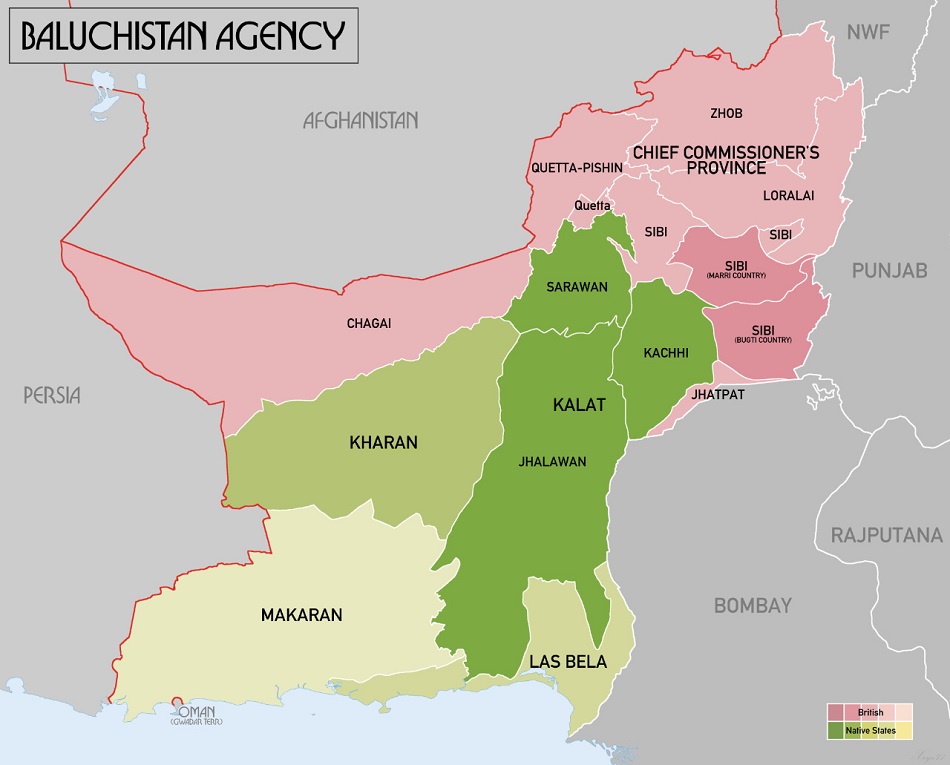
Balochistan thus came into the hands of the British. Along with Kalat, many Baloch areas including Sibi, Murree, Bugti, Khetran, and Quetta were incorporated into British India by the British through a resolution on 18 November 1887, establishing a new province called British Balochistan.
The first
geographical division of the Baloch state was made possible under the Forward
Policy. After the intervention in these areas of Balochistan, Sandeman turned
to Makran in 1890 and also deployed a contingent of British troops in Makran
under Major Mayer. Thus the practical intervention of the British government
became possible till Makran and thus British began exploiting the whole region.
The
twentieth century is called the century of the modern political system. By the
turn of the century, the thinking of political parties had become ingrained in
Baloch society, so for the first time in Balochistan, in 1920, Mir Abdul Aziz
Kurd formed a secret organization called “Young Baloch” which became
a party in 1931. Anjuman-e-Ittehad also came to the fore in the form of Baloch, which later emerged in the form of the Kalat State National Party.
The Baloch
nation adopted modern politics during this period in which they achieved
success at the grassroots level but the geographical importance of Balochistan
intensified after the First World War. The Russian, German and French threats
increased. In addition, the mineral-rich region became a matter of life and
death for the world powers.
Jinnah’s devious games with the Khan of Kalat
Jinnah recognized Khan of Kalat as the national ruler of independent nation Balochistan. Your country is one of the most important regions not only in India but also in Asia from a political, geographical and economic point of view, Jinnah told Khan of Kalat.
Jinnah’s words send a clear message that how can Pakistani regime ignore such an important region. And so Jinnah’s desire to take over Balochistan has been existing since day one. Jinnah also played the Islmaic card and said, “I am going to tell you in clear words that the time is coming when all Islamic countries will unite in the form of a federation according to Islamic principles. The most important position will be for Baloch and Balochistan.”
In order to further develop this thinking, Jinnah asked the Khan of Kalat to organize Muslim League in Balochistan.
Lord Azme, Legal Adviser to the Viceroy of India, Khan Kalat, Liaquat Ali Khan, Muhammad Ali Jinnah, Prime Minister Kalat Muhammad Aslam Khan and Legal Adviser Sultan Ahmed were also present. “The government of Pakistan recognizes the state of Kalat as an independent state, which has had relations with the British government and its status is different from the rest of the Indian states,” it said.
Consultations were being held as to whether the agreements made between the British government and the government of Kalat on all occupied territories can be inherited by Pakistan. Under Article 7 of the British Government’s Freedom Act, all treaties were automatically terminated and the occupied territories were to be restored to their former status.
However, attempts are being made to implement this illegal act, which is a black spot on the British government. The important thing to understand is that the British did not physically occupy Balochistan but their occupation was through certain agreements.
This, of course, reinforces the fact that the British government not only wanted to divide India, but also provided the means to divide Afghanistan and enslave Pakistan along with the Baloch homeland.
It’s due to these nefarious British policies that even after the declaration of Balochistan’s independence on August 11, 1947 by the British government it could last for only seven months and fifteen days. The Pakistani regime invaded Balochistan and occupied it on March 27, 1948, which continues till date. The Baloch resistance that started since the moment Pakistani forces entered Balochistan continues till this time. Balochistan’s independence struggle shows that the Baloch will rest only after winning their freedom from illegal Pakistani occupation.
Two Indian warships heading for a major joint exercise with the United States, Japan and Australia at the US base of Guam, have docked in Brunei, flagging New Delhi’s “Act East” policy and naval assertion in the Indo-Pacific.
The two naval ships at Guam, a key base and headquarters of the US Indo-Pacific command, will be joined by warships from countries that form the QUAD. Together, the quartet comprising India, US, Australia and Japan will hold Malabar-21 naval exercises within the range of China’s DF-26 B“Guam killer” missiles.
Analysts point out that the manoeuvres were meant to demonstrate the intent of QUAD partners to ensure the safety of key shipping lanes which are used for the conduct of international trade. They have a message of deterrence for China.
Hoping to demonstrate its heft as a rising great power, China is flexing its military muscles in the Indo-pacific region by showcasing its willingness to use force in order to exercise control over most of the South China Sea (SCS). China also has a dispute with Japan over the Senkaku islands in the East China Sea—a claim that is bringing Beijing at loggerheads with Tokyo. The friction between the two has surged after Japan has shown its military intent to support Taiwan. Littoral states of the South China Sea, including Brunei, Vietnam, Malaysia and the Philippines are unwilling to accept China’s claims as well as unremitting sabre rattling in the SCS.
Ties between India and China have also gone south on account of their military standoff in eastern Ladakh and Chinese assertion in the Indian Ocean and South Asia.
Apart from Malabar exercise, European powers are also crowding into the Indo-Pacific region, again, in a signal of opposition to China. Germany has despatched a frigate, Bayern for the SCS , while British aircraft carrier Queen Elizabeth is already present in these waters.
The German frigate on its seven-month voyage to Australia, Japan, South Korea and Vietnam. As the Bayern set sail from its home-base of Wilhelmshaven, German defence minister Kramp-Karrenbauer made it plain that Germany wanted that the “existing law to be respected, sea routes to be freely navigable, open societies to be protected and trade to follow fair rules”.
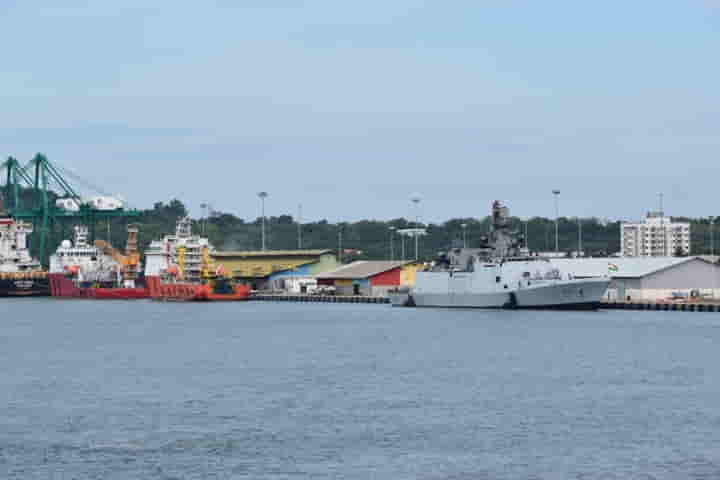
During their stay in Brunei, the Indian ships will participate in an exercise with ships of the Royal Brunei Navy.
“Indian Naval Ships Shivalik and Kadmatt arrived at Muara, Brunei as part of their deployment to South East Asia on August 9, 2021. The exercise will provide an opportunity to both the navies to enhance inter-operability, gain from best practices and develop a common understanding of procedures for Maritime Security Operations,” India’s defence ministry said in a statement.
Both the ships belong to the Indian Navy’s Eastern Fleet. Based in Visakhapatnam under the Eastern Naval Command, the fleet has acquired high importance in tune with India’s ASEAN-centric Act East policy which can flourish only if the sea lanes heading to the straits of Malacca, in the Bay of Bengal and the Andaman Sea are fully protected. The ships will head to Guam once these exercises in Brunei are completed.
(This article was first published in India Narrative)
We use cookies on our website to give you the most relevant experience by remembering your preferences and repeat visits. By clicking “Accept All”, you consent to the use of ALL the cookies. However, you may visit "Cookie Settings" to provide a controlled consent.
This website uses cookies to improve your experience while you navigate through the website. Out of these, the cookies that are categorized as necessary are stored on your browser as they are essential for the working of basic functionalities of the website. We also use third-party cookies that help us analyze and understand how you use this website. These cookies will be stored in your browser only with your consent. You also have the option to opt-out of these cookies. But opting out of some of these cookies may affect your browsing experience.
Functional cookies help to perform certain functionalities like sharing the content of the website on social media platforms, collect feedbacks, and other third-party features.
Performance cookies are used to understand and analyze the key performance indexes of the website which helps in delivering a better user experience for the visitors.
Analytical cookies are used to understand how visitors interact with the website. These cookies help provide information on metrics the number of visitors, bounce rate, traffic source, etc.
Advertisement cookies are used to provide visitors with relevant ads and marketing campaigns. These cookies track visitors across websites and collect information to provide customized ads.
Necessary cookies are absolutely essential for the website to function properly. These cookies ensure basic functionalities and security features of the website, anonymously.
Cookie
Duration
Description
cookielawinfo-checkbox-analytics
11 months
This cookie is set by GDPR Cookie Consent plugin. The cookie is used to store the user consent for the cookies in the category "Analytics".
cookielawinfo-checkbox-functional
11 months
The cookie is set by GDPR cookie consent to record the user consent for the cookies in the category "Functional".
cookielawinfo-checkbox-necessary
11 months
This cookie is set by GDPR Cookie Consent plugin. The cookies is used to store the user consent for the cookies in the category "Necessary".
cookielawinfo-checkbox-others
11 months
This cookie is set by GDPR Cookie Consent plugin. The cookie is used to store the user consent for the cookies in the category "Other.
cookielawinfo-checkbox-performance
11 months
This cookie is set by GDPR Cookie Consent plugin. The cookie is used to store the user consent for the cookies in the category "Performance".
viewed_cookie_policy
11 months
The cookie is set by the GDPR Cookie Consent plugin and is used to store whether or not user has consented to the use of cookies. It does not store any personal data.