Home Blog Page 31

Punjabi Pak Army arrests & tortures Pashtun activists amid Loralai crackdown

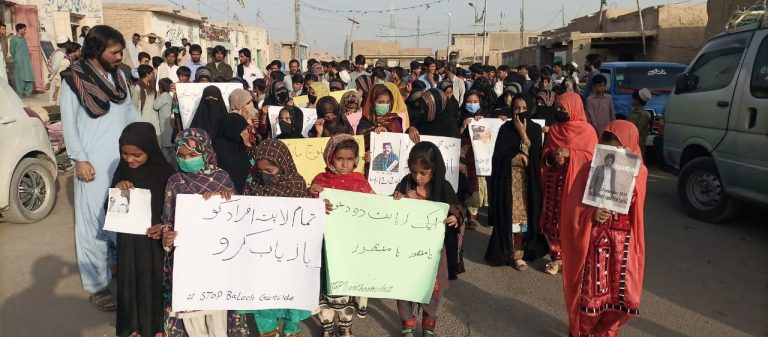
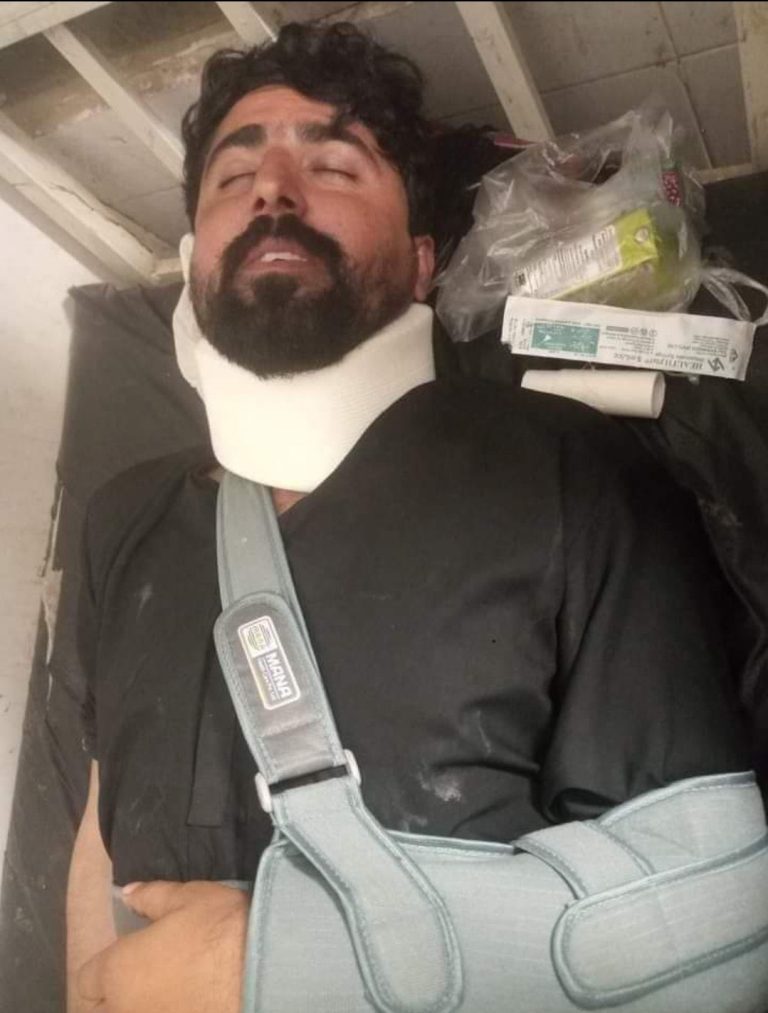
The Punjabi Pak Army-state’s campaign of terror against Pashtuns has intensified, as peaceful protesters in Loralai face brutal repression for demanding justice. Among those targeted is Asmat, a worker of the Pashtun Tahafuz Movement (PTM), who was tortured and arrested along with other activists for protesting the inclusion of PTM members in the Fourth Schedule. Despite sustaining injuries and being granted bail, they have been detained again under the draconian Maintenance of Public Order (MPO) law—an act of occupied-state terrorism aimed at crushing any resistance.

The crackdown reflects the Paki establishment’s strategy of silencing dissent through violence and arbitrary detentions. Loralai police, acting on three MPO warrants, arrested Asmat and others, detaining them for four days without justification. The detention of activists even after securing bail, exposes how the Army-state misuses its power to punish those who dare to challenge its oppressive policies. This relentless assault on PTM workers is a clear attempt to stifle the growing movement that demands accountability, justice and respect for Pashtun rights.

The PTM, which has long demanded justice for enforced disappearances and extrajudicial killings, has emerged as one of the most vocal critics of the Punjabi Pak Army atrocities in Pashtun regions. For years, the Army has treated the Pashtun population as pawn in their game at first and then enemies later, imposing collective punishment through military operations, harassment, and forced displacements. These repressive tactics, now extending to peaceful movements like PTM, reveal the Army’s desperation to maintain control by silencing any voice for justice.

Pak Army abducts Baloch school students across Pak-occupied Balochistan

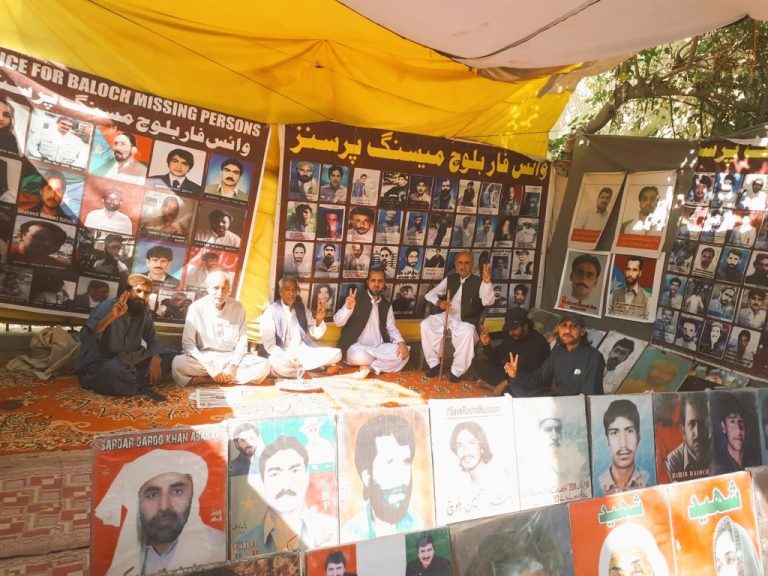
In yet another display of brutality, Pakistan Army abducted a young student, Attaullah, son of Jumma Khan, from his home in Kali Jumma Khan, Quetta, on September 5. The 14-year-old boy, an eighth-grade student attending classes regularly, has been missing ever since, with no information about his whereabouts. On October 19, Pak forces abducted another student, 17-year-old Qadeer Ahmed, son of Lal Bakhsh, from the Pasni area of POB.

This forced disappearance is part of the ongoing campaign of repression in Pak-occupied-Balochistan, where the Pakistan Army has been systematically silencing Baloch voices through abductions, torture, and extrajudicial killings. The boy’s family is no stranger to the occupied-state’s tyranny. A relative, Muhammad Ali Chapar, was abducted by Pak forces in Kalat, only to be found dead later—an example of the infamous “kill-and-dump” policy frequently employed by the military to crush Baloch community.

For decades, Baloch families have been living under the shadow of fear, targeted by military-backed death squads and subjected to forced disappearances. The Paki establishment’s colonial mindset has treated Baloch lives as disposable, with children like Attaullah becoming the latest victims of a occupied-state apparatus that operates with complete impunity.

The abduction of a schoolboy underscores how deep the military’s oppression runs in POB, where even children are not spared from being pawns in the Army’s violent campaign to subjugate the region. It is a reflection of the systematic atrocities inflicted on the Baloch people since Pakistan’s forceful occupation of the region in 1948.

Imaan Mazari, prominent critic of Paki regime, taken into custody by Islamabad police

Islamabad police have arrested renowned lawyer and activist Imaan Mazari along with her husband, citing interference in official duties.

The arrest took place following an altercation at the Zero Point Interchange, where roads had been blocked to facilitate the England cricket team’s movement to the stadium. Reports suggest that Mazari and her husband violated traffic routes, prompting police action. A case was registered against the couple for their actions at the scene.

The confrontation escalated when Mazari allegedly pushed officers and used abusive language. She and her husband were also seen removing barricades placed by traffic police.

Imaan Mazari is widely recognized for her outspoken activism against Pak Army’s enforced disappearances and violence against women. Known for her critical stance toward the military establishment, Mazari has repeatedly called out the authorities over their involvement in disappearances. Her criticism has previously resulted in arrests, reflecting the tense relationship between the activist and Paki regime.

Attack on Pak Army’s exploitative dam project in Pak-occupied Balochistan

In POB’s Panjgur district, armed fighters launched a targeted assault on personnel guarding an under-construction dam in the Prom Tehsil, near Daz Gut. The personnel are comprised of members of a notorious Army-backed militia, referred to as a “death squad”, tasked with protecting Pak Army’s agenda in the occupied-region.

The use of such militias reflects the Pakistan Army’s long-standing strategy of outsourcing repression to local proxies, often comprised of criminals and mercenaries, to suppress dissent and control resources. These so-called death squads are involved in terrorizing Baloch civilians, silencing opposition, and eliminating activists under Army’s directives.

Intense gunfire was exchanged between the armed assailants and the militia. However, no official information about casualties or damages has been released.

The attack comes at a time when Baloch nationalist groups continue to resist Pakistan’s exploitative projects, which are tools for plundering POB’s natural wealth while the region’s indigenous people remain impoverished. The incident once again exposes the Pak regime’s failure to impose control over POB, despite resorting to brutal tactics including enforced disappearances, extrajudicial killings, and the use of death squads.

No group has claimed responsibility for the attack yet, but Baloch freedom fighters have intensified their campaigns against Army-backed projects, as they are the instruments of colonial exploitation by Paki establishment.

Punjabi Pak Army abducts journalist Khan M. Shar and his family

In a chilling incident highlighting the brutality, journalist Khan M. Shar and his family have been abducted by Punjab Police in Rahimyar Khan, Punjab (Pak). Their whereabouts remain unknown, raising alarm among human rights advocates and journalists who fear for their safety. This comes on the heels of a recent extrajudicial killing of a student by the same police force, underscoring a disturbing pattern of violence and repression.

The plight of the Sindhi community has been further exacerbated by the tragic case of Saajan Malookani, a Sindhi law student who was forcibly disappeared 14 months ago by the Pakistan Army. In a horrific twist, Malookani was later killed in a staged encounter by Punjab Police, a tactic often employed to cover up Army-sponsored violence. This brutal act serves as a grim reminder of the lengths to which the military establishment will go to eliminate dissent and intimidate those who challenge their authority.

The Pakistan military’s systematic approach to enforced disappearances and extrajudicial killings reveals a deliberate strategy to crush ethnic and nationalist movements in Sindh. By fostering a culture of fear and oppression, Pak Army operate with impunity, shielded from the rule of law and accountability. Malookani’s assassination starkly illustrates the ruthlessness of the Paki establishment, where a colonial mindset drives efforts to silence any voice.

Punjabi Pak Army advises officers to stay home over fears of Pashtun retaliation

The Paki regime’s reckless policies in Pashtun regions continue to spiral out of control as Dera Ismail Khan’s Deputy Commissioner issued a notification advising all government officers to remain at home due to “threats” to their safety—despite these officers being well-guarded and equipped with all necessary amenities.

This circular highlights the growing insecurity in Khyber Pakhtunkhwa, a result of the Punjabi Pak military’s flawed strategy to rule the Pashtun lands through a hand-picked organizations under the guise of “reforms.” Rather than stabilizing the region, these policies have empowered and employed rogue elements and left the local Pashtun population to bear the brunt of unchecked militancy and administrative collapse.

Adding to the hypocrisy, while occupied-government officers retreat into safety, the Paki establishment has cracked down mercilessly on peaceful activists. Last month, numerous members of the peaceful Pashtun Tahafuz Movement (PTM) were arrested and detained in various jails under the Maintenance of Public Order (MPO) ordinance, despite their nonviolent activism. This targeting of PTM—known for opposing Punjabi Pak Army high-handedness—reflects the Punjabi Army elites’s fear of accountability and its attempt to silence Pashtuns.

Pakistani Taliban kidnap Russian blogger from Khyber Pakhtunkhwa

In yet another sign of the deteriorating security situation in Pakistan, the Russian Embassy in Islamabad has announced it is verifying claims that a Russian travel blogger has been abducted by the Hafiz Gul Bahadar faction of the Pakistani Taliban in Khyber Pakhtunkhwa.

The militant group released a statement on October 26, 2024, along with a photo of the captive, identifying him as a “Russian soldier” kidnapped during an operation by Ghazwatul Hind Mujahideen—an affiliate of the Bahadar faction that operates across Pakistan’s North Waziristan and Afghanistan’s Khost region. This group has worked closely with the Tehrik-e-Taliban Pakistan (TTP) since 2021, jointly carrying out attacks in Dera Ismail Khan, Khyber district, and Balochistan.

The Pakistan Army dismissed the kidnapping claim as “unsubstantiated and fake,” with local authorities in Dera Ismail Khan denying knowledge of the incident. However, sources close to the Russian Embassy confirm that the missing person could be Igor Babko, a travel blogger from St. Petersburg known online as Vasya Shchupaltse, who went silent after entering Dera Ismail Khan on October 24. Two days later, his family sounded the alarm.

The Russian Embassy, in a post on X on October 29, stated that it is still in the process of verifying the reports.

This incident reflects the worsening security landscape in Pakistan, where rogue militant groups, once nurtured by the Pakistan Army, have slipped beyond its control. The Hafiz Gul Bahadar group, originally aligned with the Paki establishment, now operates with impunity, leaving civilians and foreign nationals vulnerable to abductions and attacks. The collaboration between the Bahadar faction and the TTP further exposes the military’s failure to manage the very terror networks it once cultivated.

The Pak Army’s reliance on these in-bred militant factions has backfired spectacularly, with attacks spilling beyond tribal areas into key districts like Dera Ismail Khan, Khyber and even Balochistan. These terror outfits, now functioning autonomously, pose a direct threat not only to Pashtuns but also to foreign visitors.

Pakistan Army shuts down schools in Pak-occupied J&K

In a shocking display of hypocrisy, Pakistan has shut down schools for Kashmiri children. The closure of the Kashmir Model Public School in Bagh highlights the oppressive tactics employed by the occupied-Pak authorities against those advocating for an independent Jammu and Kashmir. The school’s managing director, who champions the cause of self-determination, has faced the brunt of this crackdown, demonstrating the regime’s intolerance toward dissenting voices.

Despite the oppressive environment, dedicated teachers are continuing to provide education to their students under the open sky, showing an inspiring commitment to learning amid adversity. This resilience starkly contrasts with Pakistan’s deceptive promises to the people of Pakistan-occupied Jammu and Kashmir (POJK) that they would have the power to choose their own destiny. Instead, the Paki regime has encroached upon their territory, revealing that its intentions regarding Kashmir are driven more by vengeance and hostility toward India than any genuine concern for the welfare of the Kashmiri people.

After 75 years of manipulation and neglect, the residents of Kashmir are increasingly aware of this reality. The lack of political representation further underscores the absence of any authentic concern for the everyday lives of citizens. Locals in POJK have begun to refer to their authorities as mere puppets of the Islamabad regime, only serving to fill the treasury in the capital while ignoring the pressing issues faced by their own constituents.

The region is trapped in a complex web of historical grievances, administrative hurdles, socio-economic challenges and enforced disappearances that continue to hinder its development and deteriorate the quality of life for its residents. In this oppressive climate, anyone who dares to demand social rights or raise their voice against Pak Army’s atrocities is labeled a traitor and faces brutal reprisals.

This cruel approach only serves to exacerbate the suffering of the Kashmiri people and reveals the Paki establishment’s true nature: a regime that prioritizes control and retribution over the basic rights and freedoms of its citizens.

Pak regime blacklist Baloch activists to stifle voices of freedom

The Baloch Yakjehti Committee (BYC) has condemned Pakistan for its blatant use of anti-terrorism laws against political activists in Pak-occupied-Balochistan without any credible evidence, as the occupied-state is deliberately conflating peaceful activism with terrorism. In a scathing statement, the BYC criticized the Paki establishment for adopting colonial tactics to crush dissent and perpetuate racial discrimination against the Baloch and Pashtun communities.

The committee highlighted that the Pak Army has targeted hundreds of political leaders, activists, teachers, and students by adding their names to the “proscribed persons list”. Individuals on this list are denied their fundamental constitutional and international rights, such as freedom of speech, movement, association, and employment—rights guaranteed under the Universal Declaration of Human Rights (UDHR) and the International Covenant on Civil and Political Rights (ICCPR).

The statement underscored the addition of BYC leaders Dr. Mahrang Baloch and Sibghatullah Shah Ji Baloch to the IV Schedule, a list maintained by the National Counter-Terrorism Authority (NACTA), labelling them as “proscribed persons”. The BYC called this move a reflection of the growing paranoia over political mobilization in POB, as these activists have been at the forefront of peaceful protests against Pakistan’s atrocities, including enforced disappearances and extrajudicial killings.

Pak Military Crackdown on Baloch Activists

Dr. Mah Rang Baloch, now an internationally recognized human rights activist, has been vocal about Pakistan’s brutal policies in POB, exposing the occupied-state’s complicity in abductions and the operation of military-backed death squads. These squads, often working under the cover of law enforcement agencies, are known to carry out the infamous ‘kill-and-dump’ policy that has left a trail of mutilated bodies across the province. These extrajudicial killings are part of the Pak Army’s genocidal campaign to erase Baloch identity.

International human rights organizations, including Amnesty International and the UN Human Rights Council (UNHRC), have raised serious concerns over the misuse of anti-terror laws against political activists. They have called on Pakistan to immediately remove the names of activists from the banned list and respect their fundamental rights. However, the Paki establishment, driven by its colonial mindset and military ambitions, shows no signs of reversing its oppressive policies.

The Pakistan’s military establishment sees any form of political dissent as a threat to its authority. The Army’s unchecked powers in POB have turned the region into a battlefield, where anyone demanding rights or justice is labeled a terrorist. The Pak Army’s obsession with suppressing the Baloch movement reflects not just fear but desperation, as it faces growing internal and external pressure over its atrocities.

Despite the military’s relentless oppression, the Baloch struggle for survival continues unabated. “History shows that colonial powers may succeed temporarily, but peaceful resistance and justice eventually triumph,” the BYC asserted. They vowed that the Baloch nation’s fight for survival and dignity would persist until their basic right to existence is guaranteed.

POB:BLA attacks Pak Army convoy in Dukki, vows to continue resistance

The Baloch Liberation Army (BLA) launched a targeted attack on a convoy of the occupying Pak Army in Dukki, reiterating its commitment to resisting the military’s presence in POB. In a statement to the media, BLA spokesperson Jeeyand Baloch confirmed that their fighters executed a remote-controlled IED attack, inflicting casualties on the Army.

According to the spokesperson, the attack took place at Mande Tuk in Dukki, where the BLA fighters ambushed a Pakistan military vehicle. “The explosion resulted in the deaths of two soldiers on the spot, while four others sustained injuries,” the statement read. Among the injured are Naib Subedar Akhtar, Lance Naik Muhammad Asghar, Sepoy Saqib, and Sepoy Tahzeeb.

The BLA declared that the attack was part of its broader strategy to target Pakistan military forces occupying Balochistan. “We take full responsibility for this operation. Our struggle will continue relentlessly until the complete withdrawal of the Pakistani military from our homeland,” the spokesperson emphasized.

The Baloch Liberation Army, a nationalist group fighting for independence, has launched resistance against the Pak military of committing atrocities in Balochistan, including enforced disappearances, extrajudicial killings, and resource exploitation. The attack in Dukki underscores the group’s ongoing efforts to push back against the colonial occupation.