Home Blog Page 336

Kashmir: Self appointed, self serving leadership now in self preservation mode

0

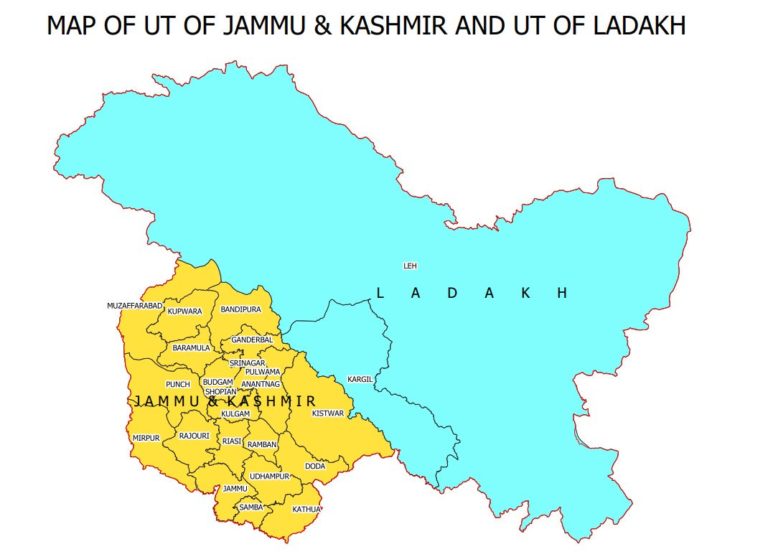
In the wake of the bifurcation of the state of Jammu and Kashmir and abrogation of Article 370, the political structures in Kashmir that were aligned with separatism and soft separatism have been left without viable agendas.

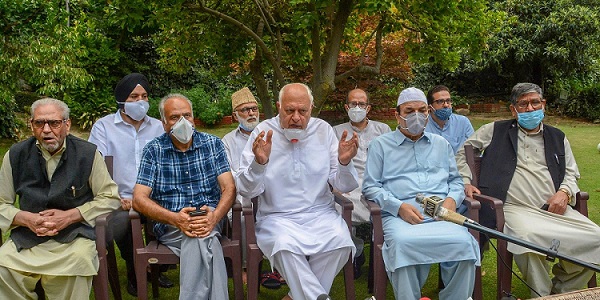
Articulation on the subject can draw a lead from the “Gupkar Declaration” of August 4, 2019. The declaration, named as such since it was taken at Gupkar, Srinagar residence of Farooq Abdullah, and it was made by the senior Kashmiri leadership. The big names present were Mehbooba Mufti and Muzaffar Hussain Beg of PDP; Sajad Lone of JKPC; Taj Mohiudin of JKPCC; MY Tarigami of CPI(M) and the Abdullahs among many others. All participants resolved to protect and defend what they termed as “the identity, autonomy and special status of Jammu and Kashmir.”

Once the new status was put in place, it was insinuated, especially by Pakistan, that the political voice in Kashmir had been stifled by detention of the senior leadership. Now, all leaders, except for Mehbooba Mufti, have been released. Farooq Abdullah was released on March 13, this year and Omar Abdullah on March 24. Even so, the inherent contradictions within the Kashmir leadership are palpable.

National Conference (NC) is witnessing an internal churning with its president Farooq Abdullah and vice president Omar Abdullah giving different versions of the party’s strategy. “Now if you are asking me whether the NC will take this battle to the streets, I think the time for that has passed. When in the immediate aftermath of what happened on August 5, 2019 the battle didn’t go out into the streets, why would it go down to the streets one year later. So we will fight it politically, legally,” Omar Abdullah said on June 30. “I have been leader of the assembly of the state. In its time the most empowered assembly. I cannot and will not be a member of what is now one of the most disempowered assemblies in the country. It’s as simple as that,” Omar stated about a month later in July.

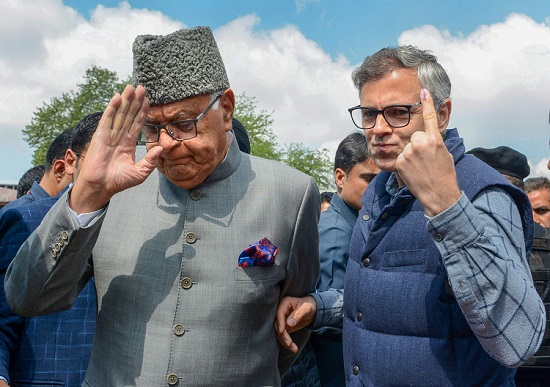
National Conference President Farooq Abdullah with his son and former Chief Minister of Jammu & Kashmir, Omar Abdullah. (Photo: PTI)

Omar has earned the ire of his party through his aforementioned statements, whereby he has confirmed that he would not be contesting elections till J&K is not given statehood and not mentioned restoration of the special status of the state under Article 370 as an essential caveat of the same decision. His father, Farooq Abdullah, is now in full damage control mode. An opportunity came his way as he prepared to attend the monsoon session of the Parliament in his capacity of being a Member of Parliament from the Srinagar constituency. Before entering Parliament he has reiterated the “Gupkar Declaration” as the basis for launching what he called, “a struggle for the restoration of the special status of J&K.” How he puts his words into action in Parliament remains to be seen. Notably, Abdullah has said that he does not expect anything from the Parliament on Jammu and Kashmir and has pinned all hopes on the Supreme Court where the revocation of Article 370 has been challenged by the National Conference and other parties. It is an indication that his interventions will be rather muted.

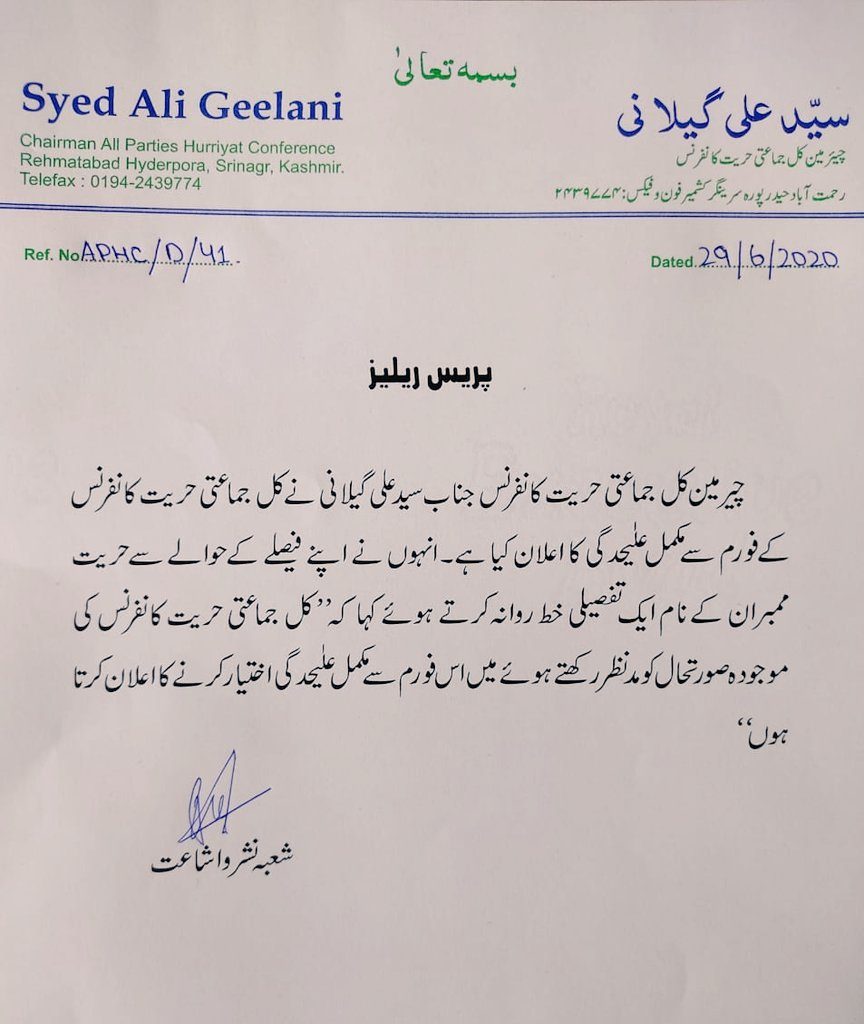
This disarray is quite visible in the Hurriyat too. Syed Ali Geelani resigned from all posts in June, 2020. He listed a number of grouses against the organisation as reasons for his resignation. Significant among them was an inability to get together a movement against the above mentioned change in the status of the state in August, 2019.

Syed Ali Shah Geelani's resignation letter quitting from Hurriyat Conference
Syed Ali Shah Geelani’s resignation letter quitting from Hurriyat Conference

It was against the backdrop of Geelani’s resignation that some Hurriyat leaders met in July under the chairmanship of Mirwaiz. These include Prof Abdul Gani Bhat, Maulana Abbas Ansari, Bilal Lone and a few others. Post the meeting Hurriyat stated that the Kashmir dispute has to be resolved peacefully among the three stakeholders – India, Pakistan and the people of J&K. What is significant here is that immediately after the resignation of Syed Geelani the Hurriyat has rid itself of his rigid stands on Azaadi (freedom) and amalgamation with Pakistan. The Hurriyat now realises that coming out of the existing morass of political irrelevance is possible only through a conciliatory approach that keeps open an option of dialogue with the centre at some time in the future. Hence, theAzaadi movement is all but history so far as the Hurriyat is concerned. There is also no talk of restoration of Article 370.

The reality is that some segments of the Kashmiri leadership have been busy selling the very soul of Kashmir for the last 70 years. The elements have been acting as agents of forces that had inimical designs towards the region and its people. They leveraged the environment of violence created by foreign sponsored terrorism to retain control over the people. They fed a doomsday narrative to successive governments in the centre and paralysed them. As a result, hard decisions that were so essential for the complete integration of the state with the nation and very much in the good interest of the people were not taken. They further used the special status to keep the people away from India and in the absence of accountability bred the worst form of corruption in the state. The lack of good governance kept the people in a constant state of agitation.

The dynamic changes that have come about post the restructuring of the state and abrogation of Article 370 have exposed the nexus and the dirty games that were being played by it. The environment has been further invigorated by the almost complete decimation of the cult of terrorism thorough relentless efforts of the security forces with the Indian Army in the forefront.

The fear of their dark web getting totally exposed is now eating up the self appointed, self serving so-called leadership of Kashmir. It is now “clutching at straws.” That the call for restoration of Article 370 is no more than a whispering campaign is something that is not going unnoticed.

Time for UNSC to strike off ‘India-Pakistan question’ as an agenda item

0

The United Nations Security Council (UNSC) on January 6, 1948 took up an agenda item termed as “India-Pakistan question,” that related with the Jammu and Kashmir issue. It is now more than 72 years and the agenda continues to remain unresolved, mainly because Pakistan is unwilling to accept the reality that it is in forcible occupation of Indian territory that formed a part of the erstwhile princely state of Jammu and Kashmir and acceded to the Indian nation in a legal manner post independence from British rule.

The UNSC had set up the United Nations Military Observers Group in India and Pakistan (UNMOGIP) sometime after 1949. Its mandate was to maintain sanctity of the ceasefire line drawn between India and Pakistan after the war of 1947-48. India has, since long, ceased to give to the UNMOGIP any report or data but Pakistan does so assiduously. It is so because the country wants the organisation to remain in order to exploit it as and when required.

In September 2016 India formally accepted that it has carried out surgical strikes in POJK as a riposte to the terrorist attack in Uri. Again in February, 2019, India declared that it has carried out air strikes on terrorist camps located deep inside Pakistan as a riposte to the Pakistan-sponsored terrorist attack at Pulwama. In both instances there was no reaction forthcoming from UNMOGIP. The situation reinforced the Indian perception, given voice as far back as 2014, that the UNMOGIP had outlived its utility.  It seems that the UNSC is also thinking on the same lines since the budget of the organisation has been slashed by more than 11 percent in recent times.

UNSC’s “India-Pakistan question” has not really seen much movement since 1965. It did come up in UNSC in 1971 as a consequence of the India-Pakistan war but the discussion was mainly on the East Pakistan front and not on Jammu and Kashmir.

It is notable here that way back in November 2010 Jammu and Kashmir was removed from the United Nations list of unresolved disputes. This came as a big setback for Pakistan which moved all diplomatic means, mainly China, to get back in the reckoning.

However, in recent times, Pakistan has resorted to some vigorous invocation of the agenda in the wake of August 2019 constitutional decision taken by the government of India to bifurcate the state of Jammu and Kashmir into two Union Territories and abrogate Article 370. In this attempt Pakistan is relying on the complete support of its all weather ally, China.

On January 15, 2020, China called for a third meeting on J&K in less than a month. “Because we want to work for de-escalation and work for regional peace and stability, this is out of goodwill. However, if the Indian side interprets it in other way, that will be a wrong interpretation,” said Chinese spokesperson Geng Shuang in defence of this move. The methodology adopted was to raise the Kashmir issue under “other matters” during closed consultations in the Security Council Consultations Room. Other members of the Council did not support China and the country was compelled to use its veto power to push things through. In August 2020, on the first anniversary of the change of status of Jammu and Kashmir, China again called for a discussion in the Security Council under ‘Any Other Business’.

All these meetings have ended without any outcome. It is so because other members of the UNSC hold a firm view that Jammu and Kashmir is a bilateral matter between India and Pakistan and have underlined this viewpoint in all closed door discussions. China somehow is not relenting from its efforts mostly because it is in no position to abandon “good friend” Pakistan.

UNSC has also confirmed in written statements by the Secretary General that the India-Pakistan question has not been considered by the Council in a formal meeting. Yet, the Foreign Minister of Pakistan, Shah Mehmood Qureshi, is taking great pains to assert otherwise. It is quite apparent that Pakistan is making desperate attempts to leverage the UNSC in its attempt to once again internationalise the Kashmir issue and thus change its accepted bilateral character. It is a clear indication of Pakistani desperation.

India has taken great pains to keep its diplomatic channels open with China despite the very disturbing attempts being made by the country to put India on the back foot with respect to the Kashmir issue. Despite a very successful dialogue between Prime Minister Narendra Modi and President Xi Jinping at Wuhan in 2018, the Chinese chose to call for the aforementioned UNSC briefings on Jammu and Kashmir in 2019; the outcome of the meeting, as explained above, was a considerable source of embarrassment for China. Despite this, India went ahead with another meeting of the two leaders at Mamallapuram only to be stabbed again with  a series of calls for more meetings from December 2019 onward.

It is very apparent that Pakistan will innovate new ways of raking up the “India-Pakistan question” in the UNSC and more so with the assistance of China. The idea is not to find a solution from the forum that has already given its mind in favour of bilateral talks but to keep the matter alive in international circles. Under the circumstances the best option is the permanent removal of the matter from the agenda of the UNSC.

India is conscious of the need to change the status quo in UNSC and has already called for removal of the “question” on grounds of “irrational exuberance” having no takers in a dignified world. So far as Pakistan’s attempt to pressurise UNSC are concerned India has hinted that Pakistan wishes to, “re-brand itself as contributing to international peace, but unfortunately fails to recognise that it is globally known for being the fountainhead of international terror and the hub for terror syndicates.” Experts feel that active pursuance of this line of thought would be a step in the right direction.

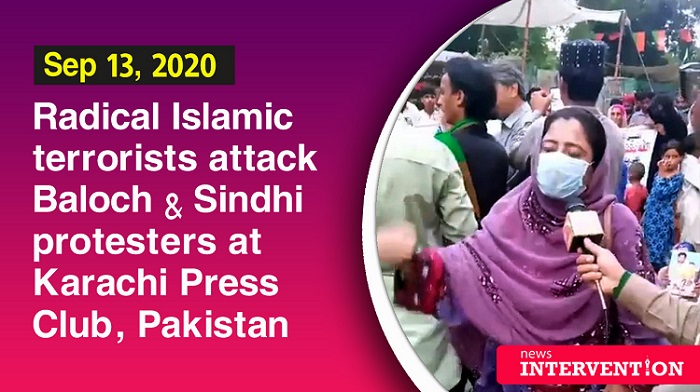
Why did Jamaat-ahle-Hadis terrorists attack Baloch & Sindhi protesters at Karachi Press Club?

What happened on September 13, 2020 at the Karachi Press Club? Why did the radical Jamaat-ahle-Hadis terrorists attack peaceful Baloch & Sindhi protesters at the Karachi Press Club?
Watch this news report to understand the full story.

Click on this YouTube link to watch our news report

Pakistan’s war crimes continue unabated in POK

0

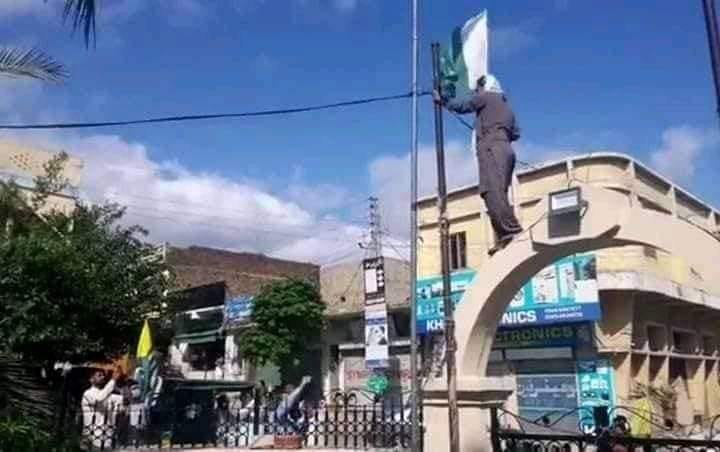
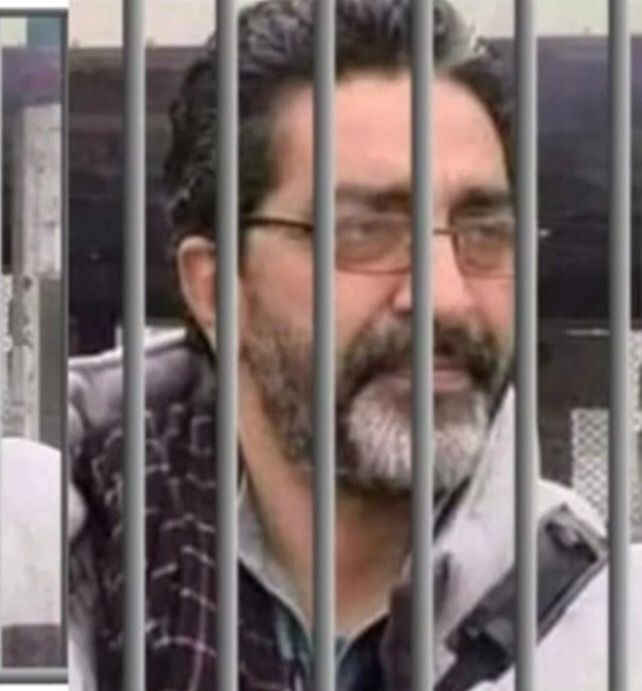
The arrest of senior journalists Tanveer Ahmed and Safeer Kashmiri for taking down the Pakistani flag at Dadyal, Pakistan-occupied Kashmir (POK) is not the first nor the last. These tactics of the occupying state of have been going on for seven decades and as long as the occupiers are determined to continue their occupation, the freedom fighters will continue with their struggle.

Our freedom struggle will continue despite occupier Pakistan’s policy to arrest, torture, kill and kidnap the Kashmiris. The worst situation during a nation’s slavery arises when its people silently endure the slavery and let the occupiers plunder their nation’s resources. When voice against looting and occupation begins to be raised, the occupier suppresses that voice with all its might. A ruthless and murderous state like Pakistan, is doing the same in areas of Jammu and Kashmir that are under its occupation.

The looting of Kashmir’s resources by Pakistan continues unabated, but the arrest of Tanveer Ahmed and Safeer Kashmiri is a step further in this state repression and terrorism. In addition, Pakistan continues the brutal killings of young students who are keen to study and dream for the freedom of Pakistan-occupied Kashmir (POK) and Gilgit-Baltistan. Several political prisoners have been sentenced to 70 years in prison and brutal state violence continues against peaceful protesters. The people are beginning to know the real intentions of the occupying state of Pakistan. They now understand that whenever the struggle for freedom is organized, the oppression of the occupying state of Pakistan intensifies.

Click on the YouTube link to watch this news analysis

Arif Shahid, president of the Liberation Front National Liberation Conference, was shot dead in the neck by occupying forces in Rawalpindi using silencer weapons. Sarfraz Ahmed was shot dead by Pakistani Rangers at Clifton Chowk, Karachi. The officers were arrested after the video went viral, but on August 14, the President of Pakistan ordered the release of the officers, although the case was still in court. Similarly, Moaz Ali’s body was found in Lahore by Ashiq Hussain.

Dozens of students on their way to Islamabad for their education were either found dead or publicly murdered. Last year Hamza Imtiaz was killed by the son of an army general. These incidents clearly point to the fact that the intentions of Pakistan is to stop the students of Pakistan occupied Kashmir and Gilgit-Baltistan from getting acquainted with the glorious history of the state. If the students of POK and Gilgit-Baltistan know the history of Kashmir then the protests against Pakistani’s illegal occupation will multiply manifold.

The occupying Pakistani forces forcibly abducted some youth in Neelam and Khowai Ratta areas adjacent to the ceasefire line, but left them in an unknown location due to public protests. These incidents expose the ruthless state’s intentions. If a national liberation movement starts in Pakistan-occupied Kashmir then a series of enforced disappearances will also start here like it happens in occupied Balochistan.

In the areas near ceasefire line, women are also subjected to sexual harassment but the media does not approach it. Such incidents do not come in the limelight due to the fact that the people in these areas are forced to live under military pressure. Last year, a young girl was raped by soldiers at Holar Kotli. The brave young girl raised her voice against the rape. The military post was then removed from Holar as a result of mass protests.

Over the past five years, there has been a sharp rise in violence in POK against the people and political organizations that have raised their voice against slavery and for basic people’s democratic rights through peaceful political struggle. This only suggests that grip of occupier’s nation on POK. As the movement becomes more organized and strong, the repression of the occupying state will intensify.

A horrific demonstration of state violence was staged in Muzaffarabad-Rawalkot-Mirpur against students who raised their voice for student rights. Students were beaten, tortured and charged with tear gas shells. In addition to the baton charge, bullets were also fired at the JKLF’s peaceful march in Rawalpindi, seriously injuring dozens of peaceful protesters and martyring the long-time JKLF activist Naeem Butt.

In October 2019, thousands of people had gathered in Muzaffarabad on the call of People’s National Alliance (PNA). The peaceful march from the university to the assembly was stopped, protesters were charged with batons and clashes between the protesters and security agencies continued throughout the day. Bullets and shells rained down, seriously injuring dozens of people and martyring one civilian. Three dozen workers were arrested and subjected to inhumane torture. Around 80% of the occupying Pakistan Army soldiers came in police uniforms and inflicted inhuman torture on the peaceful protesters. In the darkness of the night, when the PNA leadership was holding a press conference, the Pakistan military commandos carried out a murderous attack. The brave journalists stood firm and became the shield of the leadership, otherwise the entire leadership present there would have been killed that day.

The occupying forces of Pakistan have laid siege to every city in the ten districts of Pakistan occupied Kashmir from all sides. At the beginning and end of each city, there are military brigades and checkpoints, which indicate heavy occupation aimed at any city. All these military forces are to suppress the voice of common people against the occupier Pakistan.

In addition, the agency is still in power in Gilgit-Baltistan. Violence against those seeking rights is commonplace. Iftikhar Karbala Baba Jan and a dozen of his associates were arrested in the name of the struggle for civil rights and false and baseless cases were lodged against them. Baba Jan has been sentenced for seventy years. He is being denied access to medical treatment and hospital.

Other liberal leaders and activists are completely banned from political activity under black laws such as Schedule IV and cannot leave their district without the permission of the DC.

Pakistan’s brutal state has no qualms about crimes such as massacres, enforced disappearances, dumping of mutilated corpses, but there is no such protest movement within the state that raises its voice and all dissenting voices are easily suppressed. If the occupier’s occupation is hurt, the occupier will increase the intensity of repression and violence, and this occupier Pakistan is so filthy, cruel and painless that it does not bring any international law to mind. In the past Pakistan has committed atrocities in Bangladesh and is now committing atrocities in Balochistan and Waziristan, so we have clear examples of this, from which we need to learn. The people of the state of Jammu and Kashmir have to learn from the Baloch movement and organize themselves, because from the assassination of Arif Shahid the state terrorism of Pakistan has continued to grow. This will only increase with the passage of time and the common people of POK need to raise their voice against Pakistan.

COVID has awakened sleeping EU: ‘Real Politik’ will dictate Indian Relations

Prelude
Europe has been a geo-political non-entity since the 1990s. With the largest economy in the world, 450 million people, and defense spending comparable to Russia’s, the continent could be a colossus. Yet Europe has never come close to equaling the combined clout of its constituent countries. Beset by chronic economic, political, and institutional limitations and crises, the European Union (EU) has for the last three decades exerted remarkably little influence on global affairs.

Europe’s most powerful member states, meanwhile, have either seen their sway diminish, as France has, or, like Germany, resisted taking up the mantle of international leadership. Analysts have come to see European fecklessness as a given. Not only has Brussels disappointed by refusing to share more of the burden of collective security but it has punched well below its diplomatic weight on matters of global import. The EU for geo-political observers has always been fragmented, and restrained by a hybrid political system; part federal state, part multilateral organization. The main weakness in the organization was that EU Head Quarter was not empowered. Once empowered (rarely did all 27 members agree unanimously) they were effective like playing a big role in regulating the global markets, but consensus vital to respond to a global/European crisis including foreign policy decisions, was always missing. 

Uncharacteristic Posturing Post-COVID
The COVID-19 pandemic appears to have awakened the continent from its decades long economic and political slumber and reinvigorated the EU integration project. Jean Monnet, one of the founding architects of the European Union, famously said that “Europe will be forged in crises.” A more confident and assertive EU wants her legitimate place on the world stage. After a disastrous start, EU and its member states largely handled COVID effectively, and started speaking in one voice. In recent months, EU has made a series of uncharacteristically assertive moves; condemned China unequivocally by calling China’s new national security law on Hong Kong ‘deplorable’[i], banned exports to Hong Kong of all sensitive technology and equipment specially those usable for surveillance; in July 2020, imposed cyber-sanctions on China, Russia, and North Korea; in August, condemned the fraudulent election in Belarus and are pressuring Russia aimed at forestalling Russian intervention.

A Crisis Coalesces EU
EU members have understood the dictum ‘perform collectively or perish individually’ in this multi-polar, multi-domain, volatile and insecure world (especially after USA refused to police the world, and other illiberal contenders like Russia and China emerged to fill the vacuum). They took a momentous step of passing a $2 trillion economic recovery package, which closed the chapter on a decade of crushing economic austerity, which gave rise to populism, reduced support for the EU, and put the euro perpetually on the verge of economic crisis. Combined with the enormous stimulus spending of individual European states, the rescue package puts Europe on course for a strong economic recovery. It will act as the ‘magic mantra’ to ensure expansion of EU’s federal powers. EU can now borrow, tax, and spend like an actual state; and most importantly generate resources to respond to any future crisis.

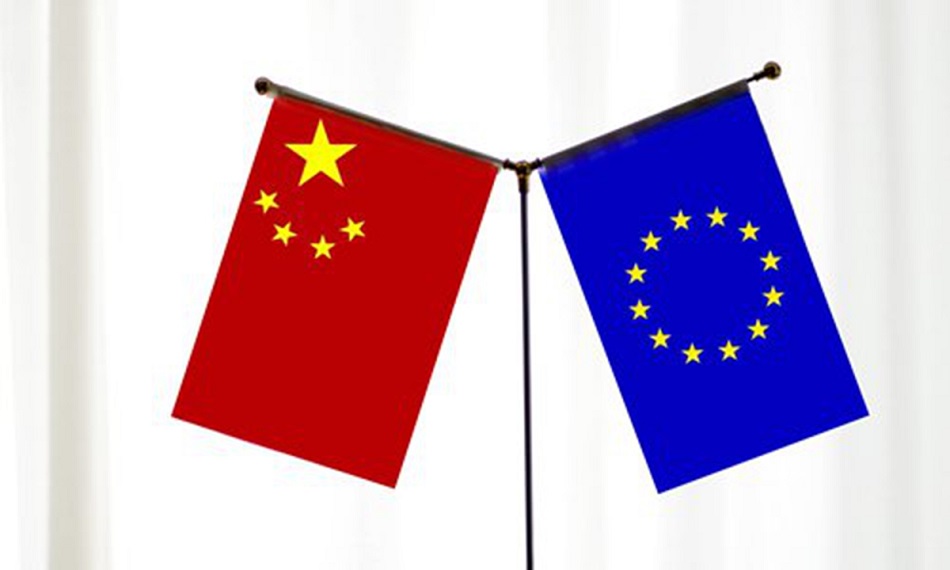
Flags of China (left) and European Union (right)

New Frontiers and Opportunities
Leaders especially of the larger nations want to reinterpret EU rules, like seek a ‘qualified majority’ against an ‘unanimous verdict’ hitherto fore required. As Josep Borrell, the EU’s foreign policy chief, explained, “It would be better to adopt a strong and substantial position by a majority rather than unanimously adopting a weak position with little substance.” While this has not been formalised, COVID crisis has made it realistically attainable. Germany’s Merkel and France’s Macron are already clamouring for major reforms within the EU.

Its Obvious: EU Needs to Look After Herself
US President Donald Trump unequivocally verbalized the obvious, that USA would no longer protect Europe, which necessitated the implementation of ‘strategic autonomy’ which calls for Europe to defend its sovereignty and advance its interests independently from the United States.

For EU too, China is the Game Changer
Like most nations, EU viewed China through the economic prism and hoped that openness and trade would lead to political liberalisation and even to democratisation. In actuality, China became more illiberal, imposed harsher internal rules, indulged in unfair trade practices; but the decisive turning point was COVID-19. China’s aggressive behaviour using all domains of PDIME (political, diplomatic, intelligence and influence, military and economic operations) needs no elaboration and has put the world on notice. It has certainly alarmed EU and created conflict of interests between economic cooperation and ideological differences, with a looming prospect of an emerging dominant illiberal hegemon who does not conform to established protocols of the existing democratic world order.

Chinese domination could derail the dream of EU converting into a federal union, with fresh internal challenges, impetus to populist politicians and extreme rightists; increasing economic asymmetry between north and south, and encouragement to illiberal policies and mind sets. Concurrently, EU emerging more cohesive post COVID leading to a stronger global player, is good news for the USA, India and the world.

EU will have to play a stellar role for continuance of liberal democratic values (effective diplomacy, largest economy, rising joint military power and influence). President Xi’s actions post COVID may achieve the dubious feat of alienating the Europeans faster and further than even President Donald Trump. China’s strategy is to prevent the European Union and the US from ganging up against China. Xi is hoping to make a breakthrough during the EU-China summit scheduled on September 20, for which he despatched Foreign Minister Wang Yi to five EU nations to do the preparatory spade work. The visit did not proceed as expected (cold receptions compared to platitudes and eager voices for economic reasons), and to top it all, during his stopover in Berlin, he was outraged at the president of the Czech Senate, Milos Vystrcil’s visit to Taiwan on August 30, and thundered in a joint press council that Czech Republic would “pay a heavy price,” and that the Czech’s “betrayal” made him “an enemy of 1.4 billion Chinese people[ii].” The attending German Foreign Minister responded strongly condemning the threats, which was quickly supported by most EU countries.

EU Strives for Strategic Autonomy
The days of looking the other way at Chinese human rights abuses of Uighurs, wolf diplomacy, bullying in world institutions and forums, unfair trade practices, intellectual property theft, Hong Kong law, belligerence in China Seas, is over, as the list had become too long, and EU’s strategic autonomy was at stake. EU like USA, India, Australia and few others have started restricting China. However, ‘real politik’ is the final arbiter, on how far EU is willing to go against China. EU is not yet ready to decouple from China like USA but diversify. EU understands the need for cooperation with China for global common challenges (climate change, disasters) as also bilateral and collective economic benefits. EU ultimately wants to create its own meaningful space in the multi-polar world.

India-EU Relations and EU Reactions on LAC Standoff
As per the Department of Commerce, EU was India’s largest trading partner in 2018-19. India’s bilateral trade in 2018-19 stood at US$ 115.6 billion with exports valued at US$ 57.17 billion and imports worth US$ 58.42 billion. In 2018, EU released a new strategy for cooperation with India, ‘calling it a geopolitical pillar in a multi-polar Asia, crucial for maintaining the balance of power in the region’. Paris and Brussels have been actively pushing Europe to see India as a strategic partner. EU’s statement on the current India-China faceoff calls for peaceful resolution which is crucial for regional and global stability.

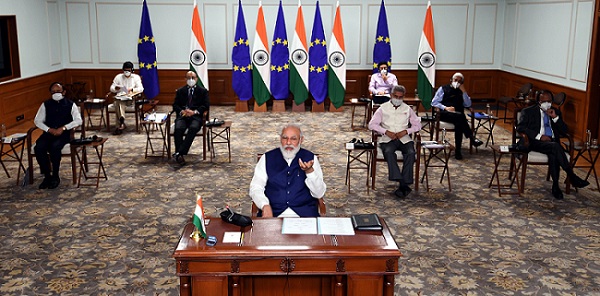
Highlights of 15th EU-India virtual Summit held on July 15, 2020
Some of the important takeaways based on a sound relationship being natural partners are–

  • Countering China: EU can be a reliant partner for India to counter China. EU is an important market for China and can effectively use its influence to moderate Chinese belligerence.
  • The EU has its own connectivity strategy, providing around €414 billion in aid globally, and is already partnering with Japan and the US to provide alternatives to BRI. India can form a partnership.
  • India must exploit the opportunity to approach European Investment Bank specially for its growing infrastructure expenditure and expertise needs.

NATO, China and India-China Standoff
NATO’s views will be synonymous with EU’s, and  reacting to Chinese belligerence, NATO’s Secretary-General Jens Stoltenberg on June 20, warned about China’s increasing influence in geopolitics that has led to a fundamental shift in the global balance of power, and that China is coming ever closer to Europe’s doorstep, and exhorted NATO allies to face the challenge collectively[iii].” India cannot expect anything substantial from NATO except for calls to de-escalate tensions.

The Way Forward for India: Pragmatism and Realism
Mr Bhanu Pratap Mehta in a recent article[iv] summed up the current realism in global geopolitics succinctly when he said “It is an odd moment in global affairs, where there is recognition of a common challenge emanating from China, but no global appetite to take concerted action.” Though China is currently everyone’s favourite villain, few countries are going to put their money where their mouth is. In all probability the international community will throw platitudes regarding the India-China conflict as they don’t perceive direct stakes. USA and her allies currently want ‘China down and cut to size’ based on their own national interests, and India must exploit this global outrage. The more belligerent China gets or attempts to escalate the LAC standoff, India must not hesitate to collar world opinion in words and deeds to stymie China. India has to handle both China and Pakistan on its own, and must build its CNP (comprehensive national power; all domains to include economic, military, diplomatic) accordingly.


[i] ‘European leaders condemn China over ‘deplorable’ Hong Kong security bill’, The Guardian, 30 Jun 20, Link- https://www.theguardian.com/world/2020/jun/30/european-leaders-condemn-china-over-deplorable-hong-kong-security-bill

[ii] Europe Just Declared Independence from China; Bloomberg Opinion, by Andreas Kluth, September 5, 2020

[iii] NATO Targets China; Says ‘China Is On Our Radar More Than Ever Before’ in Eurasia Times on June 18, 2020.

[iv]Explained Ideas: Why India can’t depend on the US and EU to counter China’ by Bhanu Pratap Mehta for Indian Express, June 29, 2020.

Possibility of a united armed freedom struggle in Pashtunistan, POK & Balochistan?

How are three different news from Pashtunistan, POK and Balochistan interlinked? Arrest of Tanveer Ahmed in POK, Detention of Mohsin Dawar in Pashtunistan and Martyrdom of Hayat Baloch in Balochistan. Vivek Sinha, Editor-in-Chief News Intervention joins the dots and analyses the possible fallout in this second episode of South Asia Affairs. The panelists are Habib-ur-Rehman, former Spokesperson of Jammu Kashmir National People’s Party (JKPNP) Pakistan-occupied Kashmir (POK), Najeeb Kakad, leader Pashtun Tahafuz Movement (PTM) and Kamal Baloch, ex Vice Chairman BSO-Azad, Balochistan.
Click on the YouTube link to watch this news show.

Click on the YouTube link (above) to watch second episode of South Asia Affairs.

2 Al-Badr militants arrested in Awantipora, cash seized

Srinagar/ September 15: Militants managed to escape after a brief gunfight in Pulwama district of south Kashmir on Tuesday, however two militants were arrested in Awantipora with lakhs of rupees. After the militants’ escaped, operation was called off. “The search operation which was launched after a brief exchange of fire has been called off,” J&K Police said.

The search operation was launched by joint team of forces including 50 RR, CRPF and Pulwama Police on specific inputs about the presence of militants in Marwal village of Pulwama district.

Police said that when the search operation was being launched, militants fired upon security forces which was retaliated triggering an encounter in which two army soldiers were injured. However, the officials said that militants managed to flee from the spot.

In Awantipora area of Pulwama, the J&K Police arrested two militant associates of Al-Badr militant outfit along with Rs 6 lakh cash at Ladhoo Crossing. Police said they were acting on a specific information and the Awantipora Police and security forces arrested two militant associates of Al-Badr outfit in the wee hours on Tuesday who were travelling on a Scooty from Southern district of Shopian to Khrew area of Pulwama.

The two militants arrested have been identified as Rayees-ul-Hassan resident of Gadikhal, Awantipora and Mushtaq Ahmad Mir, resident of Dadsara, Awantipora Pulwama district, the official said.

“Incriminating material of Al-Badr outfit have been recovered from their possession which includes Rs 6 lakh (six lakh) cash meant for militant funding of Al-Badr outfit. The Scooty bearing registration number JK-01 AC-4035 used for the crime has also been seized,” the official said, adding that “Case FIR number 55/2020 under relevant sections of Unlawful Activities Act has been registered in Police Station Khrew. “Further investigations are on,” J&K Police said.

China’s Nationalism: Could China Be Defeating Itself?

The geo-political landscape has been changing since 9/11 but this has accelerated since COVID-19. We are part of a multi-polar world with USA still donning the mantle of ‘first amongst equals’. Many nations are trying to carve their own pathway within the regional sphere, but China has broken out and has announced its intent to become and be acknowledged as a global power. By 2017, the US in its National Security Strategy has already acknowledged China as a peer competitor, and along with Russia proclaimed the two nations as adversaries.

The International Geo-Political Environment
A glimpse of global events from the changed socio-politico-economic dynamics in USA, a hundred mutinies (conflicts) in Africa, EU and NATO in flux along with rising tide of right-wing sentiments, irreconcilable Middle East, emergence of Asia and Indo-Pacific as economic hubs, coupled with the rise of the Middle Kingdom China with resurgent Russia, multi-domain competition are changing the very concept of security, and challenged the traditional ways of protecting sovereignty and integrity of nations, and the methodology, space and time paradigms of prosecuting military operations. In addition, diminishing comprehensive national power (CNP) and power projection capabilities of USA starting the slide to a multi polar world; authoritarian governments like Philippines, North Korea, Syria, Turkmenistan; emerging powers with regional aspirations like Iran, Saudi Arabia, South Africa, Nigeria, Turkey, India; rise of religious Islamic fundamentalism with a twist of occupying territory and establishing a caliphate like the IS; global warming and climate change indicators; demographic and economic disparities; transnational MNCs, drug cartels and international crime syndicates sans borders with their own self-serving agendas, rapid urbanisation of the world with its unique challenges, have changed the worldscape.

New Aggressive Demonstrative China
State controlled narratives leading to signs of ultra-nationalism is one of the fallout of the emerging geo-political landscape[i], however, China was always a restrained player, following Deng Xiaopeng’s dictum of “ hide your strength, bide your time”.  That restraint is a thing of the past as under President Xi Jingping, China has launched an aggressive political, ideological, economic and military competition and confrontations globally which is already becoming a major driver of instability and conflict in Asia and around the world.

In the months since the global COVID-19 pandemic began in Wuhan, China’s leaders have turned increasingly nationalistic. They have boasted to both domestic and foreign audiences about the superiority of China’s system when it comes to combating the disease. They have peddled conspiracy theories about the US origins of the novel Coronavirus. They have embraced “wolf warrior” diplomacy, brashly attacking foreign critics and using social media and other platforms to highlight foreign shortcomings. They are demanding action from global institutions like UN, WHO to suit Chinese interests; they are resorting to arm twisting and threatening to use extreme measures even against prosperous Western nations like USA, UK, Australia (Huawei, trade restrictions), if their actions directly impact China in any domain. In the military and security sphere a surge of confrontationist manoeuvres has been set in motion in the South and East China Sea, Indian Ocean Region (IOR) and military standoff along the LAC with India in East Ladakh.

Chinese Nationalism Unleashed
Most economic experts and security analysts perceive that many of the actions are meant to assuage/divert the attention of the domestic audience from the rather fragile economic condition and its fallout, as also the poor handling of the COVID crisis, and simultaneously drum up support for the Chinese Communist Party (CCP). US-China relations have hit a historic low, and being election time both the Republican and Democratic parties will want to showcase their toughness against US Adversary No. 1 ‘China’. Trump after his initial coziness with Xi Jinping has pulled out all the stops against China, and Biden does not have alternate options at least till elections. Each side has tried to outdo the other in shifting blame and avoiding accountability for its handling of COVID-19. The tit-for-tat rhetoric has already accelerated a race to the bottom in US-China relations and hindered cooperation in fighting the pandemic. But over the long term, it is bound to hurt China more than any other nation[ii].

A Chinese policeman on guard as an Uighur Muslim family passes by in Urumqi, Xinjiang region. (File photo: AFP)

While India-China have their own bilateral dimensions including a long outstanding boundary dispute (apart from being two contiguous powers sharing the same strategic space), in geo-political terms China’s focus remains its adversarial relationship with USA, and it has started viewing most developments relating to Asia and Indo-Pacific region through the US prism with a focus on security. The US factor is currently intrinsic to India-China relations as China views US actions as opportunistic to try and align India towards it to balance a rising China. China does not view US as neutral in the LAC standoffs, and Trump’s offer to mediate has been rejected by China. Fact is, many in China till now, did not view India as a challenge to its security interests, but coupled with USA, especially in the security realm, they see India as a potential geo-strategic concern/threat. China knows that India has so far maintained ‘strategic autonomy’, but if situation worsen it could catalyse India towards US alignment. CCP is watching Indian manoeuvres closely for any sign of a strategic alliance, and the public too are being suitably primed accordingly. The behaviour of Chinese media and its spokespersons pre-Galwan and post-Galwan makes for interesting analysis.

Chinese Media and East Ladakh
Chinese diplomats, junior leaders and media have been unusually aggressive post-COVID on all issues concerning China in the international geo-political domain, a la ‘wolf diplomacy’. However, when it came to the East Ladakh standoff at the LAC, it has been observed that the Chinese media did not report in one voice, which is usually the case. Global Times which is published by the People’s Daily, the official newspaper of China’s ruling Communist Party has been extra aggressive before the Galwan incident of June 15, 2020, but moderated/mellowed its stand post that. Some of the statements from Global Times are bulleted below–

  • One editorial said that the “arrogance and recklessness” of India is the main reason for the consistent tensions along China-India border.
  • New Delhi, has adopted a tough stance on border issues in recent years and it has resulted from two misjudgments.“It believes that China does not want to sour ties with India because of increasing strategic pressure from the US, therefore China lacks the will to hit back provocations from the Indian side. In addition, some Indian people mistakenly believe their country’s military is more powerful than China’s. These misperceptions affect the rationality of Indian opinion and add pressure to India’s China policy.”
  • China does not want to clash with India and hopes to peacefully deal with bilateral border disputes. “This is China’s goodwill, not weakness. How could China sacrifice its sovereignty in exchange for peace and bow to threats from New Delhi?” 
  • Chinese side did not disclose the number of casualties of the Chinese military, a move that “aims to avoid comparing and preventing confrontational sentiments from escalating”. This was reiterated by Hu Xijin, the Editor-in-Chief of Global Times.
  • Clash happened after Indian troops “crossed the border to conduct illegal activities and launched provocative attacks against Chinese personnel”. This led to physical self-defence measures from Chinese troops, it added, which reportedly caused the deaths of one Indian Army Colonel and two soldiers (initial report).
  • Quoting Chinese experts the paper said “aggression is an intentionally staged, enhanced military action aimed at capturing Chinese territories that India has long sought, and is an egoistic move by India to shift away enormous domestic pressure caused by social problems including Covid-19.”

However, the state-run media as per the consensus of international and national China experts and watchers has generally buried the India-China standoffs including the Galwan incident which was the worst clash on the India China border in 50+ years. State-run news agency Xinhua only seemed to have one straight news story on the Chinese military spokesperson’s statement. It quoted Zhang Shuili, spokesperson for the Western Theater Command of the PLA, as saying that the “Indian side should strictly restrain their frontline troops and return to the correct track of dialogue and negotiations to resolve the differences”. CGTN carried a similar copy, which said that China’s military voiced strong dissatisfaction and opposition to India’s “provocative actions” on Monday in the Galwan Valley. The military, it said, urged India to go back to the “right track” in properly managing disputes.

China’s state broadcaster CCTV’s daily Xinwen Lianbo evening news broadcast made no mention of the border confrontation on Tuesday, according to AFP. People’s Daily and PLA Daily, the official papers of the Party and PLA respectively, has not mentioned news of the deadly clashes. The foreign ministry’s official transcripts of its Tuesday press briefing redacted remarks from its spokesperson about the clashes.

Kewalramani, who is a Fellow, China Studies at The Takshashila Institution has pointed out that since the standoff began there has been no mention of it in any Chinese publication, except for The Global Times. He further observed that the “People’s Daily has not covered the standoff at all since last April-early May, whenever the first reports came and they continue to not cover it. This is unlike what they did during Doklam. There was a lot of rancour then”.

From the above it appears that Chinese perception of Indian polity and Armed Forces has undergone a shift, and it appears that they acknowledge the stiffening of posture, intent and action on the part of India. This is directly related to shifting posturing in nationalism which CCP has the ability to control/switch on and off. CCP does not want nationalistic fervor against India to be ramped up for numerous reasons; their game plan probably is not to escalate beyond a point; difficult to retract/negotiate specially when it comes to LAC issues which may show CCP and PLA in poor light; vulnerabilities/incidents which show PLA in bad light like casualties, withdrawal from ground positions once known, may provoke public opinion and force unwilling reactions from CCP.

Indian Nationalism and East Ladakh Standoffs
It was business as usual with the Indian media and social media as it should be, in a liberal democracy where people and media are free. While this is not the focus of this paper, undoubtedly there was a spate of anti-China sentiment in social media and PM Modi and Defence Minister Rajnath Singh did make expected nationalistic statements about ‘no compromise on India’s sovereignty and integrity’ and ‘status quo will be restored’, which is expected of the executive head and Defence Minister. Indian media while holding innumerable heated debates on Chinese intentions, Indian response as also glorifying Indian Army’s response specially at Galwan, acted fairly responsibly and maturely, and did not carry out unnecessary war mongering/chest thumping or deliberately arouse national anger against China. In fact, a fair amount of coverage of Indian nationalism is by China Global Times in a negative manner, and a couple of international media/newspapers in a positive light. Some headings/views are listed below:-

  • Rising Indian nationalism will harm business ties, Global Times on June 18, 2020; Indian nationalism may sink trade with China over 30% by Global Times on June 29, 2020.
  • ‘China’s PLA has provoked Indian nationalist tiger’, “Beating 20 Indian soldiers to death Monday evening, China’s People’s Liberation Army has provoked the Indian nationalist tiger,” Journalist Tom Rogan wrote in an opinion piece in Washington Examiner.
  • BBC article also said the incident is likely to “trigger a fresh wave of anti-China sentiments in India”.

Nationalism will prove even more of a hindrance to Beijing’s ambitions, since it undermines Chinese efforts to attract international support and show global leadership. Wolf warrior diplomacy might appease Chinese nationalists at home, but it will limit China’s appeal abroad. And xenophobia and repression in the name of national stability, whether toward African migrants in Guangzhou, Central Asian minorities in Xinjiang, or ethnic Chinese in Hong Kong, have given the lie to Chinese efforts to project a benevolent and magnanimous image. Ironically, Beijing may well have shot itself in the foot, because now if it wants to temper/moderate its actions, it will prove costly, although not impossible for the Chinese leadership to constrain the nationalism it has unleashed.

Nationalism sets a chain reaction in motion
The CCP has projected two images to its public; one of a confident resurgent Middle Kingdom which is superior to all other nations, including its decisive handling of the COVID crisis and now is a guide, mentor and help to the rest of the World, despite its critics internally, and whose time has come to grasp the moment to ascend to its destined pre-eminent position in the World; and concurrently, the hurdles and challenges thrown by its adversaries mainly USA and its allies to stop its rise at any cost, by carrying out hostile actions close to mainland China and its maritime boundaries, as also prevent its growth and trade, and collectively shackle/stall its rise.

The more an issue resonates with nationalist sensitivities and fervour among the Chinese public and elites, the more likely foreign threats and actions will provoke rather than deter. The CCP enjoys substantial leeway to shape public opinion through its propaganda and education system, allowing it to reduce the costs of compromise and restraint. But popular nationalism often provides the spark for international confrontation as Chinese netizens go global in their efforts to defend China, like the mass protests against Japan after collisions between Chinese fishing trawlers and Japanese coast guard vessels, and when NBA Houston Rockets general manager tweeted support to Hong Kong protestors in 2019 (the coach had to apologise after fierce criticism from Chinese fans, sponsors and commercial partners, showcasing Chinese economic and viewership power to the US and the world). Once mobilized, nationalism creates pressure for the government to talk tough and placate domestic audiences, increasing the costs of restraint. CCP ironically may find itself riding a nationalistic tiger which it may find difficult to let go without harming itself (some alarmists even call this ride existential).

CCP Controls/Tempers Nationalism
To some extent, Beijing has already tempered its most aggressive nationalist rhetoric in the face of domestic and international push back in recent weeks. Foreign Ministry spokesperson Zhao Lijian has denied that China is trying to export its Coronavirus response model. Leading military hawks have cautioned Chinese nationalists against using force to reunify with Taiwan. Censors have shuttered social media accounts promoting “fabricated and misleading” claims about India, Kazakhstan, and Vietnam. But despite this modest tamping down of nationalist rhetoric, even China’s internal reporting suggests that global anti-Chinese sentiment is at its highest point since the 1989 crackdown at Tiananmen Square.

However, more assertive nationalism is likely to remain a feature of Beijing’s rhetoric and diplomacy, with significant implications for the rest of the World especially India which is directly impacted economically and militarily. The more the CCP prioritises nationalism and public stability relative to economic growth as sources of domestic legitimacy, the less leverage other outside powers have, particularly on issues of central importance to China’s leaders, such as territorial integrity. Take Hong Kong, where Beijing has feared both democratic contagion and a separatist threat to national sovereignty. Threats of economic sanctions have been ineffective at deterring Beijing from pushing through new national security legislation that effectively ends Hong Kong’s autonomy.

India must understand this dynamic inside China and parse the often mixed messages coming from Beijing. In some instances, the Chinese government’s aggressive rhetoric has outpaced its actual behavior. When tensions escalated with Japan in 2013, Beijing used fiery words and demanded that foreign aircraft identify themselves and comply with Chinese instructions when flying over the East China Sea, yet it avoided any real show of force; but in contrast it encouraged nation wide street protests after a NATO airstrike hit the Chinese embassy in Belgrade in 1999. Nationalism inevitably raises the costs of restraint, which even India should acknowledge. Another example is when the US restarted and increased the frequency of naval freedom-of-navigation patrols in the South China in 2019, statistical inputs confirm that the days following the patrols, there was substantial public disapproval (in terms of social media outpourings) of the Chinese government, which did not use force to intercede or harass US patrols. These results suggest that although the Chinese government chose to exercise restraint in the moment, it did so at some domestic cost. China has managed to control public opinion and costs of inaction through bluster, including rhetorical denunciations and pronouncements but this tactic may give Beijing short-term flexibility, it also risks tying CCP’s hands in the long run, as repeatedly invoking historical grievances may bolster the public’s desire for future vindication.

Riding the Nationalism Tiger has its own Perils
When the people of a nation have been aroused with nationalistic fervour, moves to force/persuade restraint may actually backfire and harden public opinion. Sometimes Chinese leadership’s calculus may be driven more by domestic insecurity. As such, India and especially USA should beware of counterproductive forms of international pressure. In crafting strategies to deter or punish Beijing, policymakers may end up increasing domestic Chinese demands for tough retaliation, including multi-domain countermeasures. This is by far more applicable to nations which China and its public perceives as weaker. Currently by all indications, China does not consider itself weaker to any nation including USA in its own strategic backyard in South and East China Sea, South and East Asia and South Asia. 

Conclusion
Currently, the CCP seeks security, regional dominance, and a global order that makes room for and reflects Chinese values and interests. However, USA and allies, and India fear it will not stop there, and China aspires for global hegemony with Chinese characteristics, which the USA wants to prevent an ALL and ANY cost. The more the CCP leans on nationalism, the less worried the world and India should be about China becoming a global hegemon anytime soon. While retaining strategic autonomy, India is playing its cards well with maturity, statesmanship, firmness and flexibility. She has tremendous goodwill and support from the international community which will influence Chinese future manoeuvres against India. India must be prepared to tackle China and its collusive partners alone, take it as a challenge and turn it on its head into an opportunity to emerge as a ‘pivotal balancing power’ of the World.


[i] There is lot of online material on the subject with renewed focus on this trend including in China. Have drawn ideas from numerous sources. The important ones are listed. ‘Nationalism’ in Wikipedia; ‘Is Nationalism on the Rise? Assessing Global Trends, by Florian Bieber, You Can’t Defeat Nationalism, So Stop Trying’ by Stephen M Walt, 04 Jun 2019, Foreign Policy. ; ‘The Problem of Nationalism’ by Kim R Holmes, PhD, 13 Dec 2019,

[ii] China’s Self-Defeating Nationalism, Brazen Diplomacy and Rhetorical Bluster Undercut Beijing’s Influence’, by Jessica Chen Weiss, 16 Jul 2020, Foreign Affairs

Shaheena Shaheen was murdered by her husband Mehrab Gichki on Lashkar-e-Khorasan’s order

Shaheena Shaheen, a 28-year-old social activist, journalist and woman rights activist from Makran, was shot twice in a government colony in Turbat, the capital of Kech on September 5. Shaheena’s husband Mehrab Gichki took her to the hospital where she was declared dead. Mehrab Gichki is also the son of Nawabzada Muhammad Amin Gichki and a resident of Shahi Tump.

Mehrab Gichki reached the ‘teaching’ hospital along with a heavily bleeding Shaheena Shaheen but she was dead by then. The doctors said that Shaheena’s death was due to deep wounds and excessive bleeding. After that, Mehrab Gichki left Shaheena’s dead body in the ‘teaching’ hospital and fled.

This teaching hospital in Turbat is a government institution. Police and Frontier Corps (FC) personnel are always on duty and the hospital remains heavily guarded round the clock.

Shaheena Shaheen Baloch recording her video byte for PTV Bolan. Shaheena was also the Editor of Baloch magazine Dajgohar, an artist and women rights activist.

On September 5, when Shaheena Shaheen Baloch’s body was brought to the hospital, two police officers and the Frontier Corps personnel went ahead to investigate the incident according to the information received from the emergency ward. Shaheena’s body was brought to the hospital at 12 noon, but in an attempt to suppress the real cause of her murder and to help the murderer flee from the spot, Shaheena’s body was handed over to her family only in the evening. The main reason for this delay was to give her murderer husband Mehrab Gichki a chance to escape.

Background of Mehrab Gichki

Mehrab Gichki is the grandson of Nawab Bayan Khan — the man who in his greed took unilateral decision about the future of independent state of Makran in favour of Pakistan without consulting the people.

Nawab Bayan Khan was the guardian of Makran. After the formation of Pakistan, he went to Karachi without taking the people into confidence and struck a deal with Pakistan. The Pakistani state has since been paying a monthly stipend to Nawab Bayan Khan’s family and they have a special protocol. Mehrab Gichki, son of Nawabzada Aminullah Gichki and grandson of Bayan, fell in love with Shaheena Shaheen five months ago and married her. After the marriage, Shaheena was told not to talk about it and keep the marriage secret.

Mehrab Gichki is an important member of ISI-backed Death Squad that operates in Turbat, occupied Balochistan.

In PTCL Colony Turbat, a man named Akbar Gichki, who is working as Deputy Director in the PTCL department, is Mehrab Gichki’s closest relative. Mehrab Gichki and Shaheena Shaheen shifted to Akbar Gichiki’s house and stayed at his official residence till Shaheena’s murder.

After her marriage, Shaheena disappeared from public life, her phone numbers were blocked and all her social and art related activities ended. No one knew where was she. Even Shaheena’s mother and sisters in the family were not allowed to contact her even though they were aware of the marriage. According to a source in Shaheena’s family, Mehrab Gichki had strictly forbidden Shaheena and her mother to meet or talk about their marriage and threatened to kill Shaheena’s mother, four sisters and relatives if they talked about the marriage.

The blood of Shaheena Shaheen on her camera. Shahina Shaheen was murdered at Turbat, Balochistan on September 5, 2020.

Mehrab Gichki’s role in Shaheena’s muder

Mehrab Gichki’s first cousin Didag Gichki runs the Death Squad with a famous Maulvi Mufti Shah Mir Aziz. They have training centers near Shahi Temp and Koshkalat where Mufti Shah Mir Aziz and Mullah Ghulamullah recruit and train regularly for Lashkar-e-Khorasan.

Didag Gichki is the state head of Pakistan’s intelligence agency ISI-backed Death Squad and Mehrab Gichki is a key figure in this squad. Mufti Shah Mir Aziz, Maulvi Gulamullah and Didag Gichki are jointly involved in kidnapping and killing Baloch political activists and social activists.

The same network has abducted and killed hundreds of Baloch people, the most famous of which is the kidnapping of exiled political activist Haider KB, who was released three years later. Two of Haider KB’s associates were also abducted by the same Death Squad. At the same time, political activist Abul Hassan Karim Bakhsh was martyred, and the Death Squad group also killed two other activists near Pidarak. Mehrab Gichki is an important member of this group.

Mehrab Gichki stage managed this drama of marrying Shaheena Shaheen to kill her by giving it a color of domestic violence or family honor because according to this group Shaheena’s social activities were secular and unacceptable. Lashkar-e-Khorasan led by Mufti Shah Mir did not consider it appropriate to assassinate Shahina in public and make a big fuss about her death. They thought it was much easier to somehow get Shaheena married to Mehrab Gichki and then eliminate her in the name of domestic violence, as Shaheena was not ready to give up her cause and good work. In fact, Shaheena Shaheen was preparing to provide a platform to talented young girls by holding a grand art exhibition in October, later this year. She had been preparing for the show since February, but had to wait because of the Corona pandemic.

Mehrab Gichki was with his family for two days after Shaheena’s murder, where he regularly met people and talked over phone.
For the next three days, he stayed with his relatives in a village called Shahrak, which lies 25 km east of Turbat. Police were notified about Mehrab Gichki’s presence and yet he was not arrested.

When Shaheena’s family met with district police officer Najib Pendrani and demanded the arrest of the killer, district police officer not only admitted that the killer Mehrab Gichki was very influential but also said that his family’s relationship extends to Iran and Afghanistan and his arrest is not possible.

Hayat Baloch’s martyrdom has galvanized Balochistan freedom struggle

1

A careful study of the history of the United Nations will reveal a number of events that have not only become an important part of history, but have also had a profound effect on human life. Nations come into being only through changes in history or a struggle against these changes.

Circumstances sometimes change beyond consciousness, such as storms, epidemics, earthquakes etc, and insensitive nations suffer from these changes like animals. They become extinct but the brave nations face these changes and become prosperous. In the same way, human beings, on the basis of their greed and greediness, deprive other human beings of their rights and turn the situation according to their right. Yet, by changing me, I can pull human beings like myself from the dark well of backwardness and prevent my nation from becoming a slaves in such situations.

If the occupied nations or human beings remain steadfast in their conviction, they may perish but with courage. And brave nations or the backward and subjugated people struggle against these difficult conditions and turn the tide of history in their favour and change them in their own name.

However, in order to change these conditions, blood sacrifices have to be made. And thanks to these sacrifices, precious moments, events take place in the lives of nations or struggling human beings who have a distinct identity. French revolution, Irish Bloody Sunday, Jallianwala Bagh and revolution of 1857 for the Indians are some examples. The Baloch nation is a nation that has always been in the eyes of the world because of its territory but because of its rebellious nature. It has been a part of the ongoing struggle against the situation. Many places and moments have become prominent during this struggle, but we will only mention August, which has a prominent position in the Baloch national struggle.

Click on the YouTube link to watch our video report.

Hayat Baloch’s bloodied dead body has made the month of August even more prominent in the pages of Baloch history. It is the only month that brings a combination of sadness and happiness to the Baloch independence movement and for the Baloch nation at the same time. Sadness is due to the fact that the Baloch nation lost thousands of their children in the cause of liberation of this land during this month, while the joy is that the great sacrifices of the Baloch children have strengthened the Baloch independence movement and made it internationally accepted.

The month of August will always be remembered in Baloch history as a symbol of the invincibility of the Baloch land. The situation in August 2020 was similarly devastating in terms of state repression, with military aggression continuing throughout the month across the districts of Ketch, Awaran, Washuk, Panjgur and Bolan, but especially in the hilly areas of Gachak. Repression continues, with dozens missing and two people reported missing. More than 400 houses were set on fire and looted in these mountain ranges of Gachak and Draski. Similarly, more than 100 houses were burnt in the military operations in Soorgar mountain range of Jhao. Poisoning the spring waters has killed hundreds of cattle.

Similarly, a devastating operation of Pakistan Army is still going on in Dasht, Mazanband area of ​​Ketch district. Apart from these operations, the shocking assassination of Hayat Baloch united the entire Baloch nation and provoked a strong reaction in this regard. Protests and demonstrations were held across occupied Balochistan as well as in Karachi and abroad.

Hayat Baloch's pen soaked in his blood. Pakistan Army fired eight bullets to kill the unarmed Hayat Baloch who was carrying books and pen. (Photo: News Intervention)
Hayat Baloch’s pen soaked in his blood. Pakistan Army fired eight bullets to kill the unarmed Hayat Baloch who was with his books and a pen. (Photo: News Intervention)

Hayat Baloch was dragged in front of his parents by the occupying Pakistan Army and shot eight times in a row. The photo of his parents with the body of martyr Hayat Baloch has gone viral on social media and shook the whole world but the occupier and their follower parliamentarians did not care to notice.

The picture of Hayat Baloch’s parents has shaken the throne of Pakistani establishment, the mother cries out to the sky, the father touching the forehead of his beloved son has shaken the entire Baloch nation. Hayat Baloch with his blood has reminded the Baloch nation that it is still a slave country! And that the Baloch nation needs to fight for its independence.

Hayat Baloch was martyred at Absar on August 13, 2020. On August 17, Irshad Baloch was crushed and injured by a Pakistani Army vehicle in Turbat. On August 18, the Coast Guard attacked Othello motorcyclists, killing five Baloch. Similarly, on August 25, the Pakistani Army crushed and martyred Dr. Iqbal in Gwadar.

Occupied Balochistan state tensions were high in August, with forces conducting more than 75 operations and abducting 98 people. While 13 bodies were recovered this month, in which nine Baloch children were martyred by forces while one body could not be identified and three could not be found. During these operations, the Pakistani Army looted more than 400 houses and set them on fire.

In August, the occupying state forces carried out a bloody operation in Gachak, Draski and surrounding areas. Gunship helicopters were also used along with the ground forces. The military operation is also underway in different areas of Ketch district and Jhaoo.

In these operations, the Pakistani Army mixed poison in the waters of natural springs, which killed hundreds of cattle. According to the initial report, more than a thousand cattle have died due to the shelling of gunship helicopters and poisonous water.

It needs to be noted that due to control of Pakistani establishment over media in Balochistan, the Pakistan Army has become completely out of control and has committed crimes without heeding to any international humanitarian and war laws.