Home Blog Page 361

The Decline and Fall of the Southern Baptists

The largest Protestant denomination in the United States is 2% smaller than in 2018. The South Baptists believe “that the Bible is God’s revelation of Himself to mankind, with His ultimate revelation being the Gospel message of redemption through Jesus Christ,” i.e., a fundamentalist religious denomination one can find in the United States.

With the release of the 2019 membership rolls of the Southern Baptist Convention last Thursday, there has been a decline by as many as 287,000 members of the South Baptists. Their total membership went from 14.8 million to about 14.5 million. This amounts to the thirteenth year of continuous decline in the numbers. This matches many trends on many, many faiths or religions in the richer societies, even in the highly religious outliers seen almost uniquely in the United States.

A professor at Duke University and a director of the National Congregations Study, Mark Chaves, said, “…consistent with national trends we’ve been seeing for a while now, mainly driven by generational differences… Younger people are less likely than older people to attend religious services and to be religious. That’s true across the board.”

With a strong commitment to evangelism, other important things for the measurement of commitment to the fundamentalist faith is baptism. They have noted an 11,000 baptism decrease with only 235,748 performed in 2019. In many ways, the clear trend for more than a decade will mean either a death of the faith or a significant decline followed by some stoppage or an asymptote.

Southern Baptist Executive Committee President Ronnie Floyd stated, “…it is clear that change is imperative. … We have to prioritize reaching every person with the Gospel of Jesus Christ in every town, every city, every state, and every nation.”

In an attempt to pivot on the recent numbers coming out of the data, Floyd “criticized the way the church data is collected,” according to The Associated Press.

Floyd continued, “We cannot possibly know how best to meet the needs of our 47,500 churches when we only receive needed data from just 75 percent of them.”

The overarching trends for the Southern Baptists would appear to be plural – from data coming out to leadership. The director of the Billy Graham Center at Wheaton College, Ed Stetzer, remarked that the decline might be slowed in the Southern Baptists if they stopped the consistent fighting within the leadership and the churches that can be a driver of the decline in the numbers.

The executive committee of the denomination stated that a formation of a task force in order to examine some of the policies of the Sothern Baptist Convention and the speaking roster with some inclusion of “non-Southern Baptists and a female teaching pastor.”

The Associated Press stated, “Stetzer formerly presided over the SBC’s annual church reporting. More than a decade ago, when he first started warning that the denomination’s membership was going to decline year after year, many Southern Baptists dismissed his numbers. Once the trend became irrefutable, they were alarmed. Now, he said, ‘I do think Southern Baptists are becoming used to decline. That should not be normal. It should be cause for great concern and change.’”

With files from The Associated Press.

Photo by Joshua Rodriguez on Unsplash

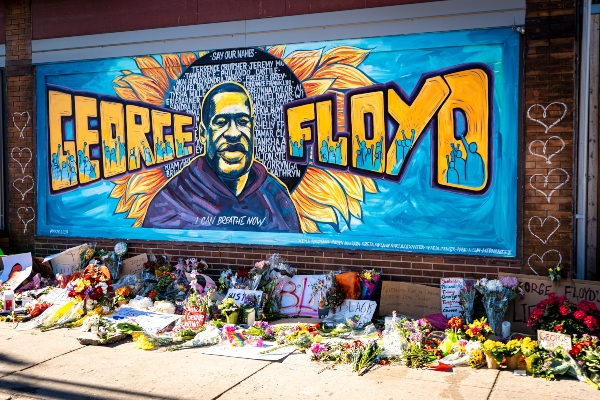
Nonviolent Protests Continue Over Killing of George Floyd

The largely nonviolent protests have continued onwards for over a week in the United States of America now.

These have been some of the largest protests in the history of the United States with an enormous amount of pressure put on public officials, law enforcement, and fellow citizens in America and then around the world with a cascade of largely nonviolent protests in reaction to the murder of African American George Floyd. Within 8 to 9 minutes, one can watch Floyd murdered, undeniable brutality.

Many African Americans have been considered lesser-than for a long time by the nature of ethnic heritage and dint of skin colour. It shows up in the educational statistics, in the criminal justice system, in the average wealth disparities between ethnic groups in the United States, and in disproportionate use of excessive force by police officers against black Americans with an emphasis on black men. By implication, the internal narrative of the United States is black bodies mean less, equal less, and become more disposable than others.

On May 25, it may have been the largest single-day mobilization of protests in the entire history of the United States while the coronavirus pandemic still rages, which every well-informed citizen is knowledgeable about here. In that, the masks were worn, sure, but the risks would be high for anyone taking part in large protests with implied close proximity with other protestors or even police officers. People braved the pandemic to make a point – to have a more just society.

There have been some spats of arson, assault, and various smash-and-grab raids. However, this is neither a trend nor the majority of protests. In fact, these are more the outliers based on more authoritative reportage. Some of the protests, in fact, included police officers and protestors marching together in solidarity.

As has been some of the complaints, recently, some trends have arisen out of a common response woodwork with #AllLivesMatter and #BlueLivesMatter as an ill-considered attempt to respond to the #BlackLivesMatter movement founded by three black queer women: Alicia Garza, Patrisse Cullors, and Opal Tometi.

When reading #BlackLivesMatter,  some can read this as  #OnlyBlackLivesMatter, which can be one reading, though incorrect, of the movement; however, with some more thought, we can see the rejection of the “only” as part of the hashtag because of the emphasis on black lives rather than the exclusion of other lives. In that, we come to the straightforward “aha!” of the movement meaning an emphasis on black lives due to the disproportionate violence, state and otherwise, against black bodies, African American citizens.

If there was a movement of every life mattering, what would be the traction? Of course, this ground zero for standard ethics without a Divine Right of Kings, slaves and slave masters/owners, and grounded in a modern day ethic with international (secular) human rights. Everyone acquires equal human rights, in theory, based on birth as a human being, not some God-given or asserted divine rights. They don’t exist universally as human rights exist universally. In this sense, modern ethical guidelines exist more generally in human cultures and international institutions than the purported God-given rights from the faiths of the world, including the major faiths covering about half of the population of the Earth in Christianity and Islam. Thus, it seems a straightforward observation that “transcendent” or “God-given” rights are, in fact, human constructed, human-given, and more parochial (and less justifiable) than international human rights. All life matters; and, we’ve known this for a long time, especially institutionally and with the formalization of universal rights with international secular human rights applicable to everyone, in principle.

The other misunderstanding or improper response comes from #BlueLivesMatter. As someone cut from the same cloth as me, Dave Chappelle, pointed out, it’s a blue suit, neither an ethnic heritage nor a skin colour. If you don’t like the situation, then you can change the job and can get a new suit.

With some of these clarifications, I am heartened to see protestors and police alike using masks to keep safe during protests over the murder of George Floyd and in making a modern global movement for criminal justice reform.

In spite of the largely peaceful protests, some of the violent incidents have been with clashes in London and in Marseille, France, even flash bang devices and pepper spray used to disperse protestors, while the protestors were hurling bottles and rocks with some “improvised explosives” too.

Some of the largest protests have taken part in Washington with protestors pouring into the streets closed off to traffic. Some turned the area into a dance floor. Pamela Reynolds, a 37-year-old African American teacher said that she wants a federal ban on chokeholds and body cameras as mandatory on police officers while on duty.

At the White House, new fencing and security measures were put into place, while President Donald Trump argued for a crackdown on the unrest, or the protestors, all the time downplaying the demonstrations themselves.

In Virginia, a Confederate statue was toppled.  It was up since 1891. There is some reportage of urination on the statue after being toppled. It was on its pedestal in Monroe Park and was of Gen. Williams Carter Wickham. Descendants of Wickham argued for taking down the statue in 2017.

As The Associated Press stated, “Tens of thousands of protesters marched worldwide in what could be the biggest one-day mobilization against racial injustice since a white Minneapolis police officer pressed a knee into Floyd’s neck for several minutes. Even after a week of the most significant protests the U.S. has seen in a generation, Saturday’s crowds stood out. Protesters held signs with slogans saying “Black Lives Matter” and “No Justice No Peace” during marches that were peaceful, sometimes even festive, after previous days had devolved in chaos. Police sometimes joined protesters, kneeling in a show of solidarity.”

So it goes.

With files from The Associated Press.

Photo by munshots on Unsplash

Operation Blue Star: An ill-conceived operation with devastating ramifications

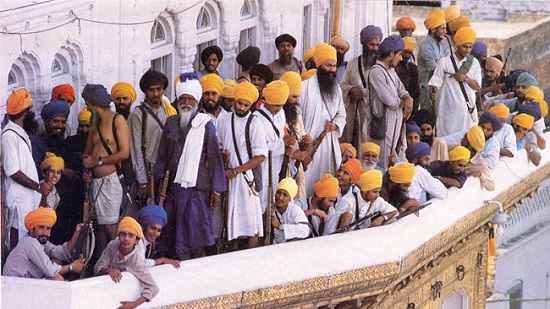
A military assault, code-named Operation Blue Star was carried out by the Indian security forces on the holiest Sikh Temple, Harmandir Sahib (Golden Temple, Amritsar) over seven days from June 1, to June 7, 1984. It is referred to by the Sikhs as the Teesra Ghallughara (Third Genocide/holocaust of the Sikhs), the first two having taken place in 1746 and 1762 respectively when the Afghans encircled Sikhs, including women and children and massacred then without remorse.

Purportedly, the assault was carried out to clear the Golden Temple of Sikh militants led by the religious leader, Sant Jarnail Singh Bhindranwale, who had taken refuge there. It was said that the attack was imperative in view of political pressure with members of both houses of Parliament demanding his arrest.

It is now being argued that there was no case against Sant Bhindranwale in any court and nor there was any chargesheet filed against him, hence, such drastic action and unprecedented violence to arrest him was extra-constitutional, illegal and unwarranted.

Two additional factors stand out in the unfortunate attack. First, the misplaced confidence of the Indian Army that it would be able to extricate Sant Bhindranwale and his followers within a short period of time with negligible casualties. Second, the belief held by Sant Bhindranwale that the government of India would not dare to order an attack on the holy Harmandir Sahib. Both parties were terrible wrong in their assessment and the result was utter destruction and devastation.

Sant Bhindranwale and his followers holed up inside the temple were killed, as were many innocent civilians who had gone to pay obeisance at the Temple and were stuck there when the action started.

The near total destruction of the holy precincts and the many casualties left a deep negative impact on the psyche of Sikhs who already harboured great distrust and suspicion against the incumbent government.

Instead of resolving the problem, the assault created a bigger issue. Within five months came the gruesome assassination of the then Prime Minister Indira Gandhi on October 31, 1984 by her Sikh bodyguards, Satwant Singh and Beant Singh and the absolutely terrible anti-Sikh riots across the country that followed. Militancy in Punjab continued for many years and took lives of thousands of young Sikh boys, security force personnel and innocent civilians before abating.

It is not without reason that the assault is referred to as a holocaust by the Sikhs, total reconciliation continues to evade them even after 36 years of the incident having taken place.

The assault on Harmandir Sahib was a by-product of the Khalistan movement, a Sikh nationalist initiative that aspired to create an independent state for Sikh people. A few years before the operation, militancy as a part of the Khalistan movement had gained firm roots in Punjab and Sant Bhindranwale was its most prominent face, mainly due to his vituperative utterances and extreme views. Initially, he set an agenda of getting the the Anandpur Sahib Resolution passed, but, here he met with a road block since the Indira Gandhi government considered it to be a secessionist document. Having failed in the political mission, Sant Bhindranwale declared creation of Khalistan by use of force if necessary as the primary aspiration of all Sikhs.

On April 24, 1980, Baba Gurbachan Singh, the chief of the Nirankari sect was murdered. His sect had, for long, been at loggerheads with the Damdami Taksal headed by Sant Bhindranwale. On September 9, 1981 Lala Jagat Narain, the founding editor of the newspaper Punjab Kesari, was murdered. He was viewed as a supporter of the Nirankari sect and had written several editorials that had condemned the acts of Bhindranwale.

While Sant Bhindranwale was within the Harmandir Sahib, violent activities in Punjab remained unabated. On April 23, 1983 Punjab Police Deputy Inspector General AS Atwal was shot dead by a gunman from Bhindranwale’s group as he left the Harmandir Sahib compound. On May 12, 1984 Ramesh Chander, son of Lala Jagat Narain and Editor of the Hind Samachar Media Group, was murdered by pro-Bhindranwale militants.

The government was keen to see Sant Bhindranwale arrested and necessary orders, whose sanctity continues to be questioned, were passed on July 19, 1982. Bhai Amrik Singh, the President of the All India Sikh Students Federation from Damdami Taksal and one more associate were also to be arrested along with him. These orders led to a Dharna (protest) by many Sikhs outside the residence of Deputy Commissioner, Amritsar.

In order evade arrest and on recommendation of Akali leaders like Harchand Singh Longowal, Sant Bhindranwale came into Harmandir Sahib Complex and took residence in Guru Nanak Niwas with about 200 of his well armed followers. Every day a group of 51 Sikhs would go to the government offices and court arrest. By August 4, 1982 the Akali Dal had also joined this movement and it got the shape of a “religious war.” The group changed many facets from July 19, 1982 to June 1, 1984 when the assault on the holy shrine took place. Some Sikh leaders like Harchand Singh Longowal did attempt to negotiate the arrest of Sant Bhindranwale but they did not succeed due to inflexible positions taken by both sides.

The government looked at several options including a possible covert operation to abduct Sant Bhindranwale from the Temple premises and sending a senior politician, PV Narasimha Rao, as a negotiator to work out the arrest of the Sant. The efforts did not bear any fruit. On May 26, 1984 senior Akali leader Gurcharan Singh Tohra informed the government that he had failed to get Bhindranwale to agree to a peaceful resolution.

Another big reason for the government to take such a drastic decision was that Pakistan was steadily increasing its involvement in the state, in the military as well as the psychological domain. Intelligence reports suggested that Pakistan was poised to render help not only in provision of weapons and ammunition but also manpower smuggled across in the garb of freedom fighters.

It is widely believed that the aforementioned factors cumulatively became the trigger to the plan to assault the Temple to flush out Sant Bhindranwale and his followers. Of course, the confidence exuded by the Army of flushing out the “rabble” in a short period of time with little casualty played a major role in convincing Prime Minister Indira Gandhi to give a green signal.

The manner in which the environment was evolving made it very clear to the militants holed up in the Temple complex that they would need to protect themselves, at least, till the time that Sikhs across the country rose up in revolt and a truce could be negotiated. The Temple complex was therefore converted into a veritable modern day fortress. The job was done primarily by a Sikh General of the Indian Army, Major General Shabeg Singh, who had been cashiered from service. He was known to be the military mastermind behind the training of Bangladeshi revolutionaries (Mukti Bahini). The senior military commanders who planned the assault should have kept this very significant factor in mind, which sadly, they did not. Requisite armament, including anti-Tank weaponry, was procured from Pakistan and smuggled into the complex over time. Sant Bhindranwale and his followers were, as such, absolutely ready for what the Indian Army would throw at them.

There are many versions of the sequence of events that followed the launch of Operation Blue Star. One version in the open media domain is given here. It may or may not be totally authentic but is considerably acceptable.

The overall operation was sub-divided into three parts–

• Operation Metal: To take out the militants including Bhindranwale from the Golden Temple complex.

• Operation Shop: To raid extremist hide-outs throughout Punjab state and mop up the militants remaining in the countryside.

Operation Woodrose: To seal the border with Pakistan and clear other Gurdwaras in Punjab of militant elements.

In the preliminary phase, about seven division of the Army were involved in the operation in Punjab itself. These included troops already in defensive posture along the border and necessary augmentation for sealing against a Pakistani misadventure in support of the militants. Sealing was also done all along the LOC and with the border with Pakistan.

The Meerut-based 9 Division under command of Major Gen. KS Brar (popularly known as Bulbul Brar) was literally rushed in for the actual assault (Operation Metal). Lt Gen K Sundarji was the Army Commander Western Command and in overall command of Operation Blue Star. The Chief of Army Staff was General AS Vaidya.

The operation was carried out under complete media blackout, local curfew and suspension of local transport. Rail, road and air services in Punjab were suspended. Foreigners and NRIs were denied entry. Electricity and water was also cut off in the last few days.

The operation started on June 1, 1984 with an attack on ‘Guru Ram Das Langar’ building inside the Golden Temple. Surprisingly, despite being poised for the assault, permission was given to civilians to enter the Temple on June 3, to commemorate the martyrdom day of the fifth Sikh Guru– Guru Arjan Dev Ji. In the evening they were told to leave. It is widely believed that all civilians could not leave the Temple premises when the vacation order was given; they were possibly detained by the militants to be used later as human shields. Who left instead were the Sikh criminals and communists who were earlier holed up but then did not have a stomach for the fight.

The final assault took place over two days from June 5 to June 7, when the complex was declared free of militants and the killing of Sant Jarnail Singh Bhindranwale announced.

What was supposed to be an assault by professional Infantry soldiers against “rabble” ultimately saw tanks, artillery and commandos also being deployed. The return fire from militants holed inside came from anti-tank rocket propelled grenades. The Akal Takht where Sant Bhindranwale was located was literally razed to the ground by tank fire. The tank stood at close range on the doorway of the Temple complex.

The ill-conceived assault left 493 dead and 236 wounded. The Army suffered a casualty of 83 killed (4 officers and 79 soldiers). It is widely felt that the death toll was much more than what was declared. Not only this, once the Temple complex was declared free of militants, President Zail Singh came for a visit and was shot at by a militant hiding within the complex. The bullet hit an army Colonel who was accompanying him.

The operation elicited condemnation by many countries, worldwide criticism and many complaints by Human Rights organisations. The Sikhs across the world were left devastated. That the operation was carried out during the very poignant period when Sikhs were commemorating the martyrdom of their fifth Guru was even more galling for them. Many Sikh soldiers deserted their units and eminent Sikh personalities returned awards that they had received from the state.

Five years later, the Temple complex was once again cleared of militants by adopting a “blockade approach” as conceived by then Director General of Punjab Police, KPS Gill. The success of the operation, code named Operation Black Thunder, proved that there were alternatives to the outright assault carried out by the army.

Many books and documentaries have been made on the operation. A significant lesson is to try out all possible options before using force against our own people and when absolutely necessary, limit it to the barest minimum. Better political and military judgment laced with patience while working on a graduated response will always pay better dividends. An incremental use of force compounded by frantic decision making is not the sign of a great and mature nation.

Ladakh: Disinformation & Misinformation bigger issues than India’s face off with China

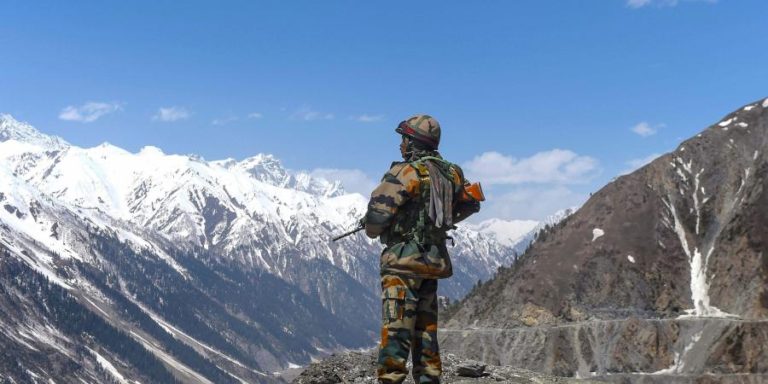
India is grappling with a confrontation with China along the Line of Actual Control (LAC). The government is pursuing a mature policy involving both diplomatic as well as military channels, while taking all precautions to ensure that the matter does not escalate to an unacceptable level. The international community is keenly monitoring the situation. There is a universal consensus with regard to the righteousness of the Indian posture.

Ajai Shukla, a self proclaimed journalist and so-called defence and security analyst, has been consistently critical of the Indian efforts towards countering China’s misadventure in Ladakh. Being an Army veteran one would have expected him to, at least, stand by his comrades-in-arms if not the government. Instead, he is openly talking of irretrievable occupation of Indian strategic real estate by China due to mismanagement by Indian Army. To make matters worse, he has no concrete evidence to substantiate his atrocious claims.

In his blog he has written as many as five articles on the subject since May, 26. Surprisingly, these articles are also being carried by a business-centric magazine named Business Standard in which Shukla has a syndicated column. While carrying articles related to defence weaponry and procurement in a magazine of this nature is understandable, its interest in a subject of strategic nature does point towards a vested interest.

This apart, Ajai Shukla has been consistently tweeting on the subject. Most of the tweets are designed to embarrass the government and the Army. They are following the line laid out by a particular party in the opposition.

At every stage Shukla has launched personal attacks against those who are responsible to manage the situation. On June 1, he tweeted, “In a repeat of Kargil, PLA troops occupying positions in Galwan that overlook Shyok road to Daulat Beg Oldi can cut it off at will. Growing talk in army circles of replacing the Leh corps commander and the northern army commander for being caught napping.”

Ajai Shukla’s tweets have been creating confusion about Ladakh face off

It seems that the political leadership has more faith in the military leadership than veteran Ajai Shukla since the two officers are firmly in command and control. Shukla’s incorrect predictions about the future of the senior officers make him liable to being sued for defamation by them. The damage caused by such utterances to the ongoing effort to contain the Chinese is incalculable and, as such, they border on sedition.

On June 6, Lieutenant General ranking military officers of both countries are scheduled to meet; already six to seven officer level meetings have been held, this would be at the most senior level so far. All through June 5, Shukla remained hype-active in giving negative predictions about the meeting. “China hanging tough on proposed military meeting. Silent on accepting invitation, no discussion of Galwan. My fear: To hide its debacle, govt might leave key positions with China, accept token withdrawal, and declare victory — to applause from bhakts,” he tweeted on the morning of June 5. One does get an impression that he had a well laid out agenda to disrupt and derail the meeting and was compelling the Chinese, through his posts, to adopt a stringent course of action. Can this not be termed as an act that goes against the strategic interest of the nation?

Earlier, he made fun of Prime Minister Narendra Modi. “The most shocking aspect of the Chinese intrusions is this: Many Indians clearly love @narendramodi more than they love their country. They would close their eyes and allow China to capture chunks of Indian territory, rather than admit such a thing had happened on Modi’s watch,” he tweeted. While his right to criticise the prime minister and the government is undeniable but he needs to understand that there is a time and place to do so and indulging in mud-slinging when the nation is facing a crisis is not a part of journalistic protocol.

Most military writers, even retired Army Commanders, are writing on the face off. Their articles are generic in nature since nobody really knows the ground situation. Shukla, on the other hand, is giving minute details and writing as if he is sitting right where the action is. What he basically wishes to say, along with certain cronies of the BBC and people like Sashank Joshi, is that the People’s Liberation Army (PLA) has come deep into Indian territory and built tracks as well as defences in a manner that would leave the Shyok-Daulet Beg Oldie (DBO) road vulnerable. He further wishes to prove that the Indian government has remained in denial mode (much like Pakistan after the surgical strikes – according to him).

One would like to know as to where he is getting this information from and how has he built such expertise having never served in the area. How does he know that the Chinese are dominating Shyok-Daulet Beg Oldie (DBO) with well prepared defences? He could be using material circulating in social media or open source intelligence (OSINT) handles, but, considering his confidence it would be worthwhile to interrogate him with respect to his sources.

Ajay Shukla is just one of the many Indian journalists, columnists, social media activists, television speakers who are totally preoccupied in weakening India’s position by shelling out half truths or complete lies laced with doomsday predictions. Definitely there are much larger numbers of sane voices giving sound analysis and good suggestions as also multitudes of common people who stand firmly by their government. It is however, these disrupters dealing in misinformation and disinformation who give to the enemy ammunition to continue with his evil designs. One has only one suggestion to give to them, “if you have nothing positive to say then keep your mouths shut.”

WEF-Reuters: Systemic Racism as a Global Problem

The World Economic Forum and the Thomson Reuters Foundation published an article by Lola-Rose Avery entitled “Why systemic racism is not just an American problem.”

In it, there is reasonable argumentation around and coverage of the murder or death of George Floyd due to asphyxiation after several minutes with, at least, half of the weight of a police officer pressed on his neck. Subsequent to this, there have been massive numbers of protests against the individuals who suffer under disproportionate police brutality.

Avery said, “As Brits have taken to the streets in protest, many have been vocally disdainful about it because, in their eyes, we don’t have the problem with racism that America has. Ironically, a lot of people have been angry about the anger. Others have likely acknowledged the injustices quietly to themselves but decided not to speak out at all.”

Even as there are proper claims as to a massive decline in violence and in racist sentiment and actions, it can be tone deaf to a particular moment with some of the largest protests of the modern era arguing for criminal justice reform and a direct addressing of grievances as such. Thus, the basis for immediate social actions build on long-term trends with both the inertia of history – not as some inexorable or mystical force – and the ramping up of change in some systemic areas disproportionately impacting blacks is important, especially as modern technology permits open cataloguing of the incidents.

The bar should not be set to what was yesterday, while the bars of prior generations can stand as a point of appreciation as to the hard work, dedication, and moral striving of prior generations because of the civilizing effects upon the societies of the social and civil rights revolutions and movements. Indeed, when we look at the assessments coming from some feminist circles about the need to curb male violence, the arguments by some activists across ethnic groups looking for justice for the murder of black men and women out of proportion to the general population, and the Steven Pinker-Humanist vision of a long-term trend of Enlightenment values infusing the society for the better, we come to the, at a minimum, triplet foundation of mutual disagreement belying a common theme. The disagreement is superficial while the common theme unites them.

When we look at the long-term historical trends, certainly, things have been improving over these periods due to technology, science, and values emergent from Humanism and the Enlightenment and a decline in fundamentalist religion. As well, we continue to see the disproportionate treatment of women in a number of domains, as the brilliant Rebecca Traister shows; in addition, we continue to see, as the illustrious Dr. Sikivu Hutchinson has noted, the disproportionate impacts of black bodies, especially black men’s bodies, by authorities. I will go out on a limb and state, “All three are mutually supportive of one another and integrate to a more coherent framework for comprehension of the issues facing us now, because all three frames of analysis matter and have validity.”

Now, as per the lead of Avery on this, I do not mean to make the argument of the weighing of different negatives, as in the least racist option of several is the best, i.e., no racism is ideal and best, but these arguments require buttressing with a mutual reinforcing tripartite framework provided above, in abridged conceptual presentation, and the facts before us with the possibility with further change now.

“A study published in 2019 in the journal Frontiers in Sociology suggested that Britain is one of the least racist countries in Europe,” Avery said, “But as the rapper Dave said during his performance at the Brit Awards in February 2020, referencing the study: ‘the least racist is still racist.’ He received widespread backlash from furious viewers who said he was wrong and ungrateful.”

As Avery continues to note, the issue isn’t the improving trends; it is the low bars relative to yesterday held. We can be grateful for all advancements for a civilizing effects upon the populations while taking into account the bar should be as high as possible within the context of now. Otherwise, we’re daydreaming, while recognizing the negative effects upon people, by accident of birth, are being discriminated against based on skin colour by racists, whether racist slurs hurled at an individual, racist violence, or discrimination in police brutality in the “use of force” or in hiring.

Avery is very candid about personal experience too, “The truth is that I have experienced racism at every stage of my life. My earliest memories of this are from as young as three years old. This continued into my school years, where increased vocabulary meant that the name-calling ramped up a gear and I was called things such as “Lola the black cola” as well as being kicked and punched on the playground and around my neighbourhood at home.”

Here, we have a country far less racist than its past while still racist by improved standards with verbal and physical violence inflicted upon an innocent and bright woman working hard to find her way into society; indeed, she’s working into one of the most coveted positions in the society, as she notes. For individuals in societies around the world, even those amongst the least racist by historical and current standards, there should be a focus on not only focusing on a rhetoric and social set of action against the least worst mentality and the idea of simply being silent on racism. In that, “silence is complicity,” as Avery affirms.

In many ways, this is true; context is important and discerning meaning & intent in borderline cases is extremely important, but, in general, I would endorse this statement.

“There is a long history of black people being compared to dark-coloured animals. I had my turn when I was compared to a horse on multiple occasions by a group of people whilst I was at university,” Avery stated, “Social media was established by that point and this meant people could also create fake accounts, anonymously messaging me more extreme racial abuse.”

She experienced a series of more covert racism, by her recollection, with comments considered offensive due to direction at specific minorities. Therefore, Avery notes this is not an isolated-to-America issue, but, rather, a larger one. The fact of the conversation happening publicly and open calls for the change in some of the sociocultural, and institutional, contexts for this to happen is a strong positive.

Avery concluded:

My experiences are a microcosm of the racism we have here in Britain: the blatant, yes, but also the more subtle, which insidiously infiltrates every aspect of our society and which can go unseen by anyone who is not on the receiving end, anyone who is not a black or minority ethnic person.

The systemic racism that lead to George Floyd’s death is also at our doorstep. It’s not an American problem. It’s not isolated incidents.

Being quietly ‘not racist’ is not enough. White people, who are the beneficiaries of this system, must educate themselves as to how and to call it out with the same vehemence as black and minority ethnic people if it is to be dismantled. Silence is complicity.

In these contexts of gratitude for the progress made, with a realization of the overt and covert forms of racism and sexism, and the ways in which to capitalize on positive trends, social movements, and the advancement of the morality of human rights, we can make a better world for all. And why not? So it goes.

Photo by Helena Lopes on Unsplash

Satire: Speed Breaker Country!

Have you ever seen an Indian walk? Well, they walk with a peculiar jerk (not insinuating anything but merely describing our gait) which is unusual, but unique to each region. Strangely this jerk is less prevalent on rural folks who are sans vehicle. I have always wondered why, then it hit me the way a speed breaker does that, it’s because of the permanent fixture of speed breakers (also called speed bumps/humps) at frequent but irregular intervals in all roads of India, be it urban or rural which we drive on.

‘Build speed breakers and bung in a road’ seems to be the administrative policy on roads. People dealing with this business such as the surface transport ministry officials, local civil authorities and traffic police attend specialised capsules with only the top of their batch getting selected to attend. Even contractors who build roads on speed breakers are looked at with awe and given special privileges when awarding contracts. They can charge twice a year for maintenance due to heavy tear and wear (naturally not much compassion is shown to the vehicle owners or victims of accidents!).

In India anybody can create a speed breaker, one just needs a little mud, stones, tar or cement (even big pipes or uneven grilled structures will do), which can be obtained/or stolen from a contractor. People will willingly help like we do with anybody who wishes to build a place of worship; but that is another story altogether.

The intensity, ferocity and periodicity of vertical and numerous 3D jerks is directly proportional to the frequency, height, inclination, composition, health of road including number of potholes, and whether the speed breaker is marked or unmarked. Multiple jerks of varying intensity due to multiple or multi-layered speed breakers is common (will call them breakers hereon, for sake of simplicity and truth). There are a group of people however, who promote it passionately like the orthopaedics specially spine surgeons, physio-therapists, quacks who quickly seize upon this back-breaking opportunity and lastly the Godmen and pandits whom people turn to when everything else fails. I will not be surprised if India has the maximum back and muscle ache population and consequently the healers.

Like we attribute a particular cuisine, habit, language, slang, diction to a specific region or city, like dosa to Tamil Nadu or colourful topi to a pahari, we possibly could attribute a particular type of jerky walk to a region like the Calcutta or Kanpur jerk, or fix his residence close to the national highway if the jerk frequency is low. Experts may even venture to guess if state of road has improved or deteriorated by a person’s walk!!!. ‘Has the state of roads in Ferozepore / Tanjore improved, or the number of speed breakers increased’ may be a query after identifying his typical walk with minor variation. So do we arrive at a natural deduction that every Indian is a jerk!

Police Commissioner (Traffic) rather than taking offence about people taking matters of speed into their own hands feels honoured. It will not surprise me to hear them boasting to each other about the number of breakers in their jurisdiction or putting up signposts like ‘Maximum Speed Breakers Street’, such as San Francisco proudly proclaims ownership of the ‘World’s Crookedest street’ with maximum hairpin bends. Soon our cities, towns and villagers will try to outdo each other to establish more and more breakers. Their structures have no consistency, and the more brutal they are the more credit the locals get. The fact that these structures have actually caused more accidents even death, and breakdown of motor vehicles is a cause for attributing more accolades and celebrations to the proud locals and justifies tougher to negotiate breakers.

It is a matter of principle that they will never be marked, lit up or warning boards put up, so that drivers are surprised violently. Delight is expressed if it catches more drivers unawares, more accidents occur and more people die, both in and out of the vehicle. This leads to more breakers of course and the vicious cycle continues. Another interesting trait observed is that the person who most vociferously protests against speed breakers is the first to demand a speed breaker outside his home/office. To make it more exciting breakers are thrown in for good measure along national highways specially after lulling drivers into supine, jerkless journeys causing mayhem and pileups especially in inclement weather and poor visibility conditions.

Post accidents/pile up reports and media have never blamed speed breakers for the horrific accidents, since remedial measures ‘make no news’. It is highly probable that the term ‘Breaking News’ came from speed breaker accidents like ‘Breaking News- 100 cars and 1000 bones broken in yet another pileup along NH 1’. In fact, penchant for higher percentage of breakers in some states or towns is born out by the fact that there are more ‘break ups’ between couples in those areas, and some even travel interstate to traverse such roads to signal their intent and literally break the news to their unwary partner. 

When some locals have had enough and protest strongly for a breaker audit, immediately a committee is set up which strenuously debates every technical and traffic detail. It is a fact that their report starts by strongly condemning speed breakers, and after detailed analysis recommends at least 50% more speed breakers but with different structures, dimensions and potency which can demolish any vehicle (I fear even tanks) on one traverse of the road. The committee even puts up notices on all new breakers proclaiming their ingenuity and degree of difficulty construction them. This one product is truly ‘Made in India’ and will soon be exported world-wide due its tremendous success and innovative-ness.

Could this speed breaker syndrome be an Indian trait? The cautious Indian hates innovation, ingenuity, excellence and meritocracy and consequently adores mediocrity, hates speed/ progress/ development, and loves speed breakers in life. Maybe, not in his own but in all other people’s lives. ‘Sharma ji is doing much better than me and contributing in all spheres, let’s throw a breaker at him’ is a common refrain. Rarely would you find a speed breaker-less road or an Indian, thus making it a road less travelled! Not surprisingly, it has been mastered into a fine art by our politicians to gain/or retain power, who don’t work for national interests and party political goals, but focus on throwing breakers on opposition party routes without realising that it slows down their own and national aspirations.

So fellow citizens and netizens, arise and remove the speed breakers in your roads and minds and see our ‘India Flying’. Zoom India is a better choice, but under present circumstances may not be appropriate!.

Nisar Ahmad on Pakistan, Afghanistan, War, Displacement, Rzgar Hama

Scott Douglas Jacobsen: How was family life growing up for you?

Nisar Ahmad: After migrating to Pakistan due to civil war in Afghanistan, life was hard for all Afghans in general. My father started working for an NGO far from our home, and would come only once a week. My mother took care of me and my other siblings. Life became very hard when my mom passed away when I was about 9 years old. My father working far away from home and with no mother, my older siblings were taking care of me. My father couldn’t find a job nearby, and it was hard for Afghans to find jobs. So he had no option. We couldn’t move to the place he worked because the city we lived in was cheaper.  It was really hard to grow up like that. Though everyone was showing love and care to me, I felt like being pitied. I felt inferior and eager for real love and care, and not just receiving care and love for not having a mother. I felt lonely and started to avoid people even from childhood. I went to school in Pakistan, and due to being reserved, I passed my time reading books. So I was a bright introvert student since my childhood. I remained topper in almost all years of my academic life.

Jacobsen: What has been the impact of war and displacement for you?

Ahmad: I was born in war. Like literally in war, in falling RPGs and bullets! So the effect of war is in my sub-conscious whether I like it or not. We lived in Pakistan as refugees far from our home and place of birth. I never felt at home at any time of my life. In Pakistan showing the identity as an Afghan meant inviting many kinds of hate, racism and discrimination. I felt like I had done a sin that was unforgivable. Being displaced meant that I lacked something very important that would make me human.

Jacobsen: How has education been a consistent story for you? Something stable in spite of all the instability?

Ahmad: As explained in the first paragraph, I felt very lonely and started avoiding people. Though I studied in government schools in Pakistan where the education standard is negligible, I was taking interest in every book that I came across. I read books, watched TV and kind of self-educate myself. As a refugee, I was a hard worker like other refugees. The difference was, they started selling shopping bags in the bazaar, and became good business people with time, and I put my efforts in academia.

Jacobsen: How did you come to meet Rzgar Hama?

Ahmad: When I lived in the shelter, near Vancouver Public Library in downtown Vancouver, I saw an advertisement on the library notice board while searching for job vacancies. It was about storytelling. So it attracted my interest and I emailed Rzgar.

Jacobsen: Why did you accept to take part in “My Home is a Suitcase”?

Ahmad: I took interest in “My Home is a Suitcase” because I wanted my story to be heard as my story is the story of millions of refugees that the world doesn’t know about. At first, telling my story, I felt like I was self-pitying, but then it became a goal of my life to raising my voice for all the refugees in the world. 

Jacobsen: Thanks so much, Nisar.

Photo by WantTo Create on Unsplash

A sword of Damocles on Franklin Templeton

Dark clouds of suspicion are hovering over Franklin Templeton and its plans to wind up six debt funds through an e-voting process. Many are calling it just the tip of the iceberg.

Let’s re-check some facts. India’s entire mutual fund industry has investments of approximately ₹25 lakh crores from the public of which ₹12 lakh crores is in debt. Hypothetically, if other debt funds fall in the same category as Franklin Templeton, and the unit holders do not raise their voice, they would lose a minimum of ₹7.2 lakh crores out of the ₹12 lakh crores.

At the heart of the controversy is six debt schemes and why Franklin Templeton was openly legitimising the erosion of these unit holders by putting a stamp of approval on the process. In  short, there is no logic in the move because Franklin Templeton had taken a line of credit to pay the investors. Now, the interest is borne by existing investors for the outgoing investors.

Now what is interesting is that Franklin Templeton has itself said the recovery of monies will take upto five years. Given the fact that the six schemes had ₹28,000 crores worth assets under management, average loss to the unitholders — taking 20% as average realisation – would be ₹22,400 crores.

In short, the entire principal amount is wiped off.

This is serious because in contrast to the equity schemes, debt schemes are considered more secure where the principal amount of the unit-holder is almost assured like deposits in the banks. Yet, there is no commitment either from Franklin Templeton or SEBI that at least the principal amount of all Unit-holders is secure and shall be repaid.

No wonder Securities and Exchange Board of India (SEBI) has also drawn flak, the market regulator coming under pressure from many investors who took to social media to ask why it was turning a blind eye to such a huge impact on the investors. Many even reminded SEBI about its preamble: To protect the interests of investors in securities and to promote the development of, and to regulate the securities market and for matters connected therewith or incidental thereto.

Securities and Exchange Board of India (SEBI)–the market regulator

The market regulator has initiated a forensic audit and hired Choksi & Choksi, a top chartered firm, which will submit its report within a month. There are many charges hanging on Franklin Templeton, including if a whopping ₹4000 crores was moved out a day before their fund did the closure for redemption. Many are even asking SEBI if the lost cash was mostly structured to be handled outside. If this happens actually, clients may not object as they cannot seek legal remedy due to the nature of the cash or investment running into a whopping ₹20,000 crore plus. Many schemes have largely invested in one or few companies which means the borrower and the lender knew the arrangement and also had created alternate recourse.

There are other issues as well. Franklin Templeton ran the schemes as credit risk funds, which have a majority of investments in papers with lower credit rating. It was done by fund managers only because SEBI specified the duration of the securities but not credit ratings for debt scheme papers. It is quite possible that large portions of investments in the funds in question actually consisted of bonds and securities issued by companies belonging to certain business groups. Worse, the schemes had sizable exposure to unlisted papers. Franklin Templeton managers did not take care of credit risk. And eventually, when COVID-19 hit India, Franklin Templeton was unable to sell the papers in a market that froze in the wake of COVID-19.

“We are in receipt of the audit notice from the Regulator and continue to provide information as required,” said a Franklin Templeton Spokesperson.

Choksi & Choksi is likely to investigate if there were collusion between the fund house and bond-issuing corporates, and if there were instances of conflicts of interest of directors or senior officials, and if there were transactions that were prejudicial to the interest of investors in the schemes, and if there were any regulatory violations. The scope of investigation, in short, is unlimited. Franklin Templeton will have to answer all questions, the most important being whether there has been circumvention of rules on fund management.

On paper, the wound-up schemes which are no longer available for redemption after 23 April, 2020, include: Franklin India Ultra Short Bond Fund, Franklin India Short Term Income Fund, Franklin India Credit Risk Fund, Franklin India Low Duration Fund, Franklin India Dynamic Accrual Fund and Franklin India Income Opportunities Fund.

But the process of investigation is easier said than done. For the records, the Gujarat High court has stayed the e-voting process following a plea from 83 year-old Arzeen Piruz Khambatta, his wife Persis Khambatta and Khambatta family trust of soft drink major Rasna against Franklin Templeton alleging that the winding up of six debt schemes is improper, arbitrary, taken in haste and illegal. The total investment of these three entities in Franklin Templeton schemes is to the tune of  ₹6.55 crore. The family members also made Securities and Exchange Board of India (SEBI) and Ministry of Corporate Affairs (MCA) a party to the case. The matter will be next heard on 12 June.

Franklin had issued e-voting notices to 30,000 unit holders’ seeking authorisation to monetise the underlying securities set aside on May 28, 2020.

The Khambatta family alleged that the bona fide and innocent unit holders are being arm-twisted to accept the decision of winding up which is detrimental to them and taken solely to hide the acts of mismanagement of funds by Franklin Templeton.

The family said Franklin Templeton has not been run to the ground due to COVID-19 crisis but by conscious acts of mismanagement. These investments were neither prudent nor in-line with disclosures made in scheme related documents. “Public money has been misused for personal gains instead of making safe investments in tradable and investment grade securities,” the plea said, adding the fall in assets managed by these schemes between the lockdown announcement till winding up decision was  ₹5,200 crores or 17% of the AUM (assets under management). However, for the rest of the industry fall in AUM for the same category of funds was  ₹2,596 crore.

The abrupt winding-up of debt schemes is also under the lens of Madras High Court which directed to issue notices to Santosh Kamath (CEO), Sanjay Sapre (President), other key management people and trustees. The court also sought a status report from SEBI. An online petition is being planned for www.change.org to showcase unity & solidarity amongst unit-holders / investors which shall then be forwarded to Franklin Templeton Investments in the United States and also the Prime Minister’s Office (PMO). The plea was filed by Chennai Financial Markets Accountability (CFMA), a society in Chennai to protect the interest of investors.

Tough times for Franklin Templeton.

Pak media is hiding army’s ugly face by misreporting Dannuk incident: Akhtar Nadeem Baloch

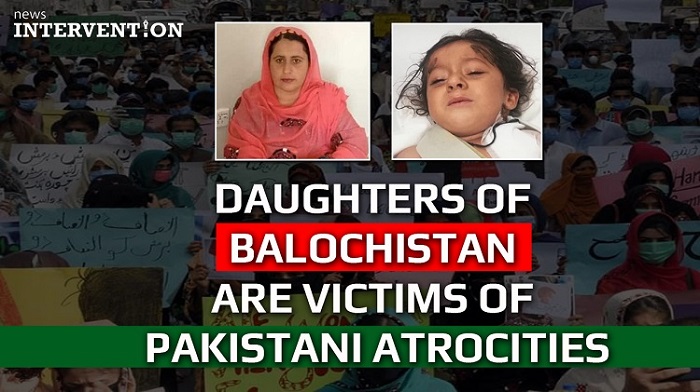
Pro-independence Baloch leader Akhtar Nadeem Baloch said that the Pakistani media is trying to hide the ugly face of Pakistan Army by misrepresenting the Dannuk incident. He explained that Pakistani TV channel ARY and several other state-controlled media channels are broadcasting a picture of 4-year old Bramsh Baloch saying that the girl was killed in alleged domestic violence in Rawalpindi.

Akhtar Nadeem Balcoh in his statement said that it’s not difficult to gauge that the Pakistani state and Pak Army are afraid of the historic protests across Baloch nation on the martyrdom of Bibi Malik Naz, and the assassination attempt of innocent little girl Bramsh Baloch. “Despite all their tactics the Pakistani state and the Pakistan Army have failed to suppress the protests. Now they are trying to misrepresent the incident through their controlled media,” said Akhtar Nadeem Baloch.

Sameer Safzal, Death Squad commander with Pakistan Army officers. This Death Squad is responsible for killing Malik Naz and seriously injuring her 4-year old daughter Bramsh.
Sameer Safzal, Death Squad commander with Pakistan Army officers. This Death Squad is responsible for killing Bibi Malik Naz and seriously injuring her 4-year old daughter Bramsh at Dannuk in occupied Balochistan on May 25.

He further explained that Pakistan’s state controlled media was trying to distort the facts only because pictures of Death Squad thugs with Pakistani parliamentary leaders and their military officers have been circulating in the media, and these photographs are evidence that all the Death Sqaud culprits involved in the Dannuk incident were on the payrolls of the Pakistan Army. “Therefore, the Pakistani media is engaged in an attempt to clear the Pakistan Army of its heinous acts,” said Akhtar Nadeem Baloch.

Historic protests against the Dannuk incident across occupied Balochistan has instilled a fear with the Pakistani establishment. “That is why the Pakistani soldiers accompanied by Pakistani TV channel reporters tried to hijack the public protest in Buleda by entering the procession and threatening them. People were intimidated and harassed but the Baloch nation is aware of the real killers.”

Akhtar Nadeem urged Balochistan and other oppressed nations that they should unite against the naked aggression of the occupying Pakistan Army and expose the bullying of this army in front of the world. “Martyr Malik Naz has given a new dimension to resistance and her martyrdom has shown that a gun is not always necessary to resist the oppressor, but an unarmed person can also destroy the oppressor with passive resistance.”

National Center for Science Education, Role in Promoting Race Equity

Two of my favourite people in the world, Ann Reid and Kenneth R. Miller/Ken Miller/Kenneth Miller, have issued a statement on behalf of the National Center for Science Education. Ann Reid is the Executive Director and Kenneth Miller is the Board Chair. Both have been doing, and are part of, a noble tradition for the proper education of the public on matters of science.

As the late and beloved Dr. Carl Sagan noted, we live in a world built on science and technology, where the discoveries of science build the frameworks for comprehension of the natural world from which the engineering and technology can emerge in the first place. Technology is science applied for some purpose or function, typically relevant to a human need or want – for frivolity or necessity.

The note from Reid and Miller opened:

Today, in all corners of our nation, attention has been focused on a long-standing problem that pervades all of American society, including its educational and scientific institutions — the problem of embedded, structural racism. Our nation is gripped by protests against the latest in a long and shameful history of incidents of racist violence against black Americans. We grieve with our fellow citizens who have had to live with fear, oppression, and injustice for centuries. All of us at NCSE are inspired by the tens of thousands of Americans putting their bodies at risk to raise their voices in protest.

I am inspired by the level of solidarity expressed by several organizations on the educational front with a forthright statement as to the facts of the matter and the expression of the core issue in a cogent presentation. The purpose of the National Center for Science Education is the provision of real education and information on the sciences to the public. Indeed, one of the main areas of emphasis has been the evolution versus creationism sociopolitical, not educational, controversy over the development of life.

“The overriding goal of the National Center for Science Education is to ensure that every student in every American school has access to an effective, accurate, and inspiring education in the sciences. Many obstacles have stood in the way of this goal,” Reid and Miller said, “including unreasoning and doctrinaire opposition to the findings of many branches of science. Throughout its history, NCSE has fought to remove these obstacles and ensure that all students learn to think critically about evidence and reject flawed and misleading arguments.”

As has been said in many contexts by others and myself, and not original to me, but to the scientists and the science educators, previous eras of science support the idea of race while modern science advanced to state “racism is based on a lie — the lie that there are meaningful biological differences among humans that correspond to the color of our skin. While we acknowledge that there are real biological consequences to the lived experience of race, evolution reminds us that the genetic variation within groups we designate as races is significantly larger than the variation between those groups. Evolution tells us that we are 99.9% the same at the level or our DNA.”

In short, the proper framing of a lot of the issues facing us: species. We are an evolved product of a naturalistic process and a natural universe. Science has been used, at times, for divisive purposes. However, the full arsenal of science would seem to support a more unifying framework to plug modern human rights notions into them. In that, we can build a more equitable and just society as we deem fit rather than not – and one of the bases for this is the modern theory of evolution and, therefore, the work of the National Center for Science Education, as they conclude:

Science education can be a force for good; for unifying rather than dividing. Towards that end, we at NCSE resolve to support educational and scientific professionals fighting racism and educational inequality at every level of our society. Specifically, we commit to expanding our efforts to provide science teachers with the resources and learning opportunities needed to help their students dismantle misconceptions about race. Our common future depends upon it.

Photo by Arthur Lambillotte on Unsplash