The Jehovah’s Witnesses have issues with modern medical information because this is seen as against the tenets of the religious faith. In particular, they, for the most part or by theology, have an issue with blood transfusions.
As per the attempts to reduce the negative effects of Covid-19 to medical patients affected by Covid-19, the FDA or the Food and Drug Administration of the United States of America issued recommendations or guidelines for healthcare investigators and providers. It is based on some studies into convalescent plasma collected from Covid-19 patients who have recovered from the ill-effects of the virus.
Even with the experimental nature of the treatment, there are some circumstances under which the treatment can be considered well-advised based on some scientists and doctors using it. However, the ones for this treatment would be serious or critical cases along with the symptomatology of Covid-19.
For those with critical case symptomatology themselves or individuals with family members who are, unfortunately, suffering under the suffocating ravages of Covid-19 (coming from SARS-CoV-2), these kinds of potential treatments could – literally – save your life or the life of a loved one, or just save a life of another human being. It becomes incumbent upon us to support science, medicine, and the appropriate application in order to “do no harm.” It’s both a principle of medical professionals and civilized society, i.e., reflective of a common drive of human beings when not driven into insane circumstances.
Unfortunately,
while many religious principles reflect some universal sentiments in human
beings, at the time, others come out as pre-scientific understandings or
rejection of modern medicine capable of helping individuals who may be
suffering. One particular group, the Jehovah’s Witnesses, have been known to
reject blood transfusions, as these stand against their stipulated principles
of The Watchtower Bible and Tract Society. The Watchtower Bible and Tract
Society is the governing or legislating body of the Jehovah’s Witnesses. This
has been a strict policy since 1945.
The
basis for the claim is that blood transfusions go against some divine law or
ethical precepts derived from their understanding of the oughts of the world
through their religious lens. Now, with the recent possibilities for critical
or severe cases to be helped by the experimental treatments, the Jehovah’s
Witnesses have been directed (or commanded by the legislative body) to not use
them. More directly, they’re strictly forbidden, as this is Convalescent Plasma
Therapy or a treatment using transfusion.
The
directive from the Jehovah’s Witnesses stated:
The Blood Issue: There’s talk about the FDA
allowing doctors to treat critically ill COVID-19 patients with “convalescent
plasma therapy.” It would be wise to advise the publishers that it’s understood
that this is giving the patient the whole plasma of the person who has
developed the antibodies which would be unacceptable for Jehovah’s Witnesses.
However if the antibodies were extracted from the plasma (fractions/immunoglobulins) and then given to the patient, it would be a conscience matter for Jehovah’s Witnesses. Some doctors may view plasma as a fraction. Therefore the publisher may need to explain their personal decision not to accept any of the blood’s four main components, one of them being plasma. (Source: JWsurvey, based on work of Mark O’Donnell in “Jehovah’s Witnesses Denied Plasma Treatment Amid Coronavirus Pandemic” – click for article title for link)
This is a serious public
health issue for which the lives of some members of the public religion becomes
a public health hazard. As we see with the prevention within the directives
(theological and faith-based in character), individuals cannot use the
treatments, as they are forbidden, without consequence. If they use it, then
the fear of the wrath of the legislative body, as representative of God, can
come down like a ton of bricks. It is, as James Randi noted to me, based on fear. If an individual uses the blood or
plasma, then they will become “Disassociated” from the community and will not
be permitted contact from their own families.
As India and China continue with their face-off at multiple points along the Line of Actual Control (LAC) it becomes imperative to revisit the various agreements and protocols that guide the management of the LAC. There are “five pacts” that both sides, over time, have agreed upon to maintain “peace and tranquility” along the borders. These five pacts are–
The 1993 Agreement on Maintenance of Peace and Tranquility along the Line of Actual Control (LAC) in the India-China Border Areas.
The 1996 Agreement on Confidence Building Measures in the Military Field along the LAC.
The 2005 Protocol on Modalities for the Implementation of the Confidence Building Measures in the Military Field along the LAC.
The 2012 Agreement on the Establishment of a Working Mechanism for Consultation and Coordination on India-China Border Affairs.
The 2013 Border Defence Cooperation Agreement.
By the beginning of 21st century, the two sides had agreed not to let the border dispute affect bilateral engagements. Both nations have, on more than one occasion, reaffirmed the need to respect and abide by the LAC pending a resolution of the boundary issue. During the then Prime Minister Atal Bihari Vajpayee’s visit to China in 2003, the two sides agreed on the appointment of special representatives for consultations to arrive at a framework for a boundary settlement. This was inked in 2005 into the agreement on “Political Parameters and Guiding Principles for the Settlement of the India-China Boundary Question.”
The present government has remained engaged on the issue with many bilateral meetings and summits having taken place between Chinese President Xi Jinping and Indian Prime Minister Narendra Modi. Discussions with regard to the border dispute was always prominent during the meetings.
Despite all the efforts, China has not relented from back-stabbing India and flouting established norms. The last few years have witnessed, apart from small intrusions and ingress attempts, three major incidents. These are the three-week standoff in Daulat Beg Oldi in April-May 2013; the September 2014 faceoff in Chumar region of Ladakh and the Doklam imbroglio last year.
The Chinese pattern of operations is well established. First its troops move into a location in the form of patrols, this is followed by gradual build-up of infrastructure and creation of an impasse, then comes government to government arbitration. Finally, once the right noises have been made the Chinese troops move back and status quo is maintained.
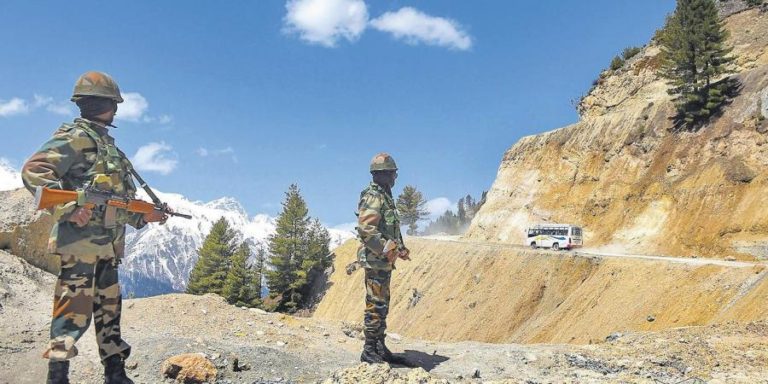
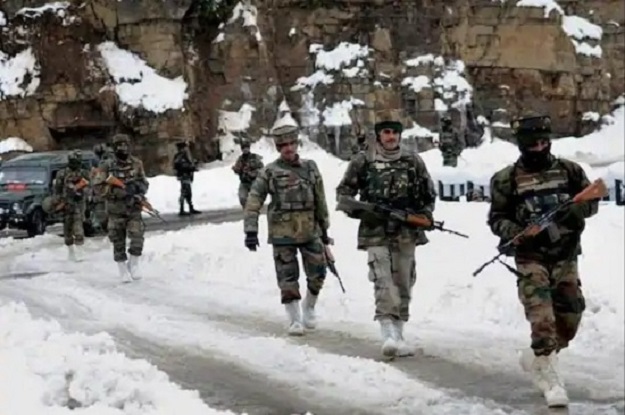
Troops of the Indian Army deployed along the LAC, on the other hand, scrupulously follow all protocols and guiding principles. They are well aware of the LAC alignment and have never transgressed upon Chinese land. It is so because China is a neighbour with whom India wants a relationship of trust and environment of peace. The problem lies in reciprocation of similar sentiments from the other side too.
The main reason behind the recent upsurge in Chinese incursions is India’s upgrading of border infrastructure. What China is conveniently sidelining is the fact that the Indian upgradation is in response to Chinese build-up of rail and road networks around the border.
Now a situation has arisen where US President Donald Trump has attempted to intervene in the faceoff. “We have informed both India and China that the United States is ready, willing and able to mediate or arbitrate their now raging border dispute. Thank you!” he tweeted on May, 27. The very next day he threw another bomb shell by implying that he had already spoken with Prime Minister Narendra Modi on the subject. “I can tell you; I did speak to Prime Minister Modi. He is not in a good mood about what is going on with China,” he said. India was first off the mark by strongly denying the conversation between US President and Prime Minister Narendra Modi having taken place. The very next day (Friday, 29 May) China rejected the US offer and reiterated that India and China have in place required communication mechanisms to resolve problems.
“Between China and India, we have existing border-related mechanisms and communication channels. We are capable of properly resolving the issues between us through dialogue and consultation. We do not need the intervention of the third party,” said Zhao Lijian, Chinese foreign ministry spokesperson while describing the situation at the border as “stable and controllable.”
India too has tacitly snubbed the mediation offer of the US President. “The two sides have established mechanisms both at military and diplomatic levels to resolve situations, which may arise in border areas, peacefully through dialogue and continue to remain engaged through these channels,” said Anurag Srivastava, spokesperson, Ministry of External Affairs (MEA). On US mediation he glossed over by saying, “as I’ve told you, we are engaged with the Chinese side to peacefully resolve this issue.”
By suggesting mediation President Donald Trump has jolted the Asian giants into the realisation that the whole world is looking towards them and they need to show maturity by resolving the impasse.
It is hoped that China will realise its mistake in heating up the LAC every now and then and thus opening the door of outside intervention as attempted by President Donald Trump. It is hoped that the two powerful and mature countries will abide by their well established protocols and diffuse the tension at the earliest. Not only this, they also need to work relentlessly towards a final resolution of the border that has dragged along for years on end and is now a source of embarrassment for both countries.
Ryan Faulkner-Hogg is the Founder of Atlas Geographica and a member of the team at Topical Magazine. Here we talk about the Atlas Geographica in the context of the other projects and work for Douglas.
Scott Douglas Jacobsen: Let’s start on the first major project, which is Atlas Geographica, the tag is “A Curiosity Blog.” What was the inspiration for the title Atlas Geographica and the tag with the title?
Ryan Faulkner-Hogg: The name Atlas Geographica is quite uninspiring, unfortunately. I wanted to call it WhatAboutWhen.Com, but the URL was taken. I was sitting in a room. It was Norway in a place called Hoddevik. It was along the countryside along the West Fjords. There was an atlas. It was written in Norwegian called Geographica. I put in Atlas Geographica in the URL finder. It worked. I always loved atlases. Also, Atlas Geographica gives a little whiff of international scope. That’s the foundation of the title. I am happy that this became the title because I consider this better than What About When. I am realizing more, and more, as I write more online blogs. The URL isn’t so important. It is the branding of the name. People can associate Atlas Geographica with the statue of Atlas, which is the logo of the site and the random curiosity-driven content.
The reason for starting it. Initially, I had the idea to commercialize online writing for affiliate income, affiliate-marketed income, for tour agents. I work for a software company, which empowers tour agents all across the world. I thought, “The way affiliate marketing is so synonymous with pushing Amazon’s books or various articles through online marketing. Nothing like this operates for tour operators.” I was in Finland sitting in a meeting with the CEO of a company, who do everything from a 50 Euro day-trip to a 5,000 Euro package. They don’t market nearly as effectively – no one in tourism does – as simple goods. So, I thought while sitting in this meeting, “Why doesn’t somebody write an article about this amazing trip through this company, put affiliate links throughout, then it is free marketing for the company and an income for everyone based on the links on the other end?”
I had this lofty goal to do that. It could still totally be a profitable business idea if someone wants to take it on. However, I quickly realized. For this to be functional, I required the company to code in an affiliate link specific to me. Just using them as one example, they were not interested in doing. This would have to be replicated across the board. All of the affiliate links would need to come from TripAdvisor. I have a sour relation with them. They are a pretty bad company. We realized this from where I am working now. You would be doing this marketing for TripAdvisor rather than the end-user, which would be the other company. This is a roundabout way of introducing it. After I took out the URL and started to write for it, I, originally, wrote three food tour blogs, which are no longer on the site. They were for Amsterdam, San Sebastian, and Rome. They give different images of food tours in these countries. I thought, “This doesn’t excite me at all. It may make a few dollars of income.”
I thought, “I have this URL. I have written
content, which I have done in the past. Because I have always enjoyed writing.”
I have always found if I enjoy something. The best way to have this in my head
and articulate this is to formulate and write it down. I have drafts and
written pieces, so I could start uploading them.
Jacobsen: Is the end goal to have a multimedia platform?
Faulkner-Hogg: Yes, it is. Again, it is an end goal, but purely out of interest. I’ve completely steered away from trying to make these media issues a monetizable thing, moved out of financial interest. It is out of interest. A media platform where I have a blog, an email list, and a YouTube channel. It is a way to put all creativity out there and to further legitimize myself if I look back on someday. I can show my parents or if I go into a job interview, “Look, here is my stuff, here is who I am.” Rather than storing it on a hard drive, storing it on the internet, I have romanticized knowing there is the chance of someone to stumble across this article and have it mean something for them. I am sure. You’re familiar with Tim Ferriss. He is an inspiring role model when I think about where I want to take media arms for me. Also, it is a very lofty goal. You will see the latest video put out was on the Tim Ferriss empire. All media arms are multimillion-dollar enterprises. I’m not bothered whether it makes $10 or $0. It is a place where all of my creativity can exist online.
Jacobsen: What do you think makes Tim Ferriss’ different arms of his octopus so functional and profitable? All of the branches built by him.
Faulkner-Hogg: I think the Tim Ferriss phenomenon is genius marketing by him. Before he does anything, he leverages his extensive network to create hype. He has SEO optimized all of the different legs. Also, it is the flywheel. All additional legs complement the others. Since he started the podcast with extremely famous and successful guests, who are people he met in a previous life as a venture capitalist and an author, he had a really good starting block. Also, he was one of the first movers in the podcast game. He quickly created one of the biggest business podcasts in the world, which boosted the blog and the email list. This reinforced authorship when he continues to publish books. His success is really outlier stuff because he has one of the highest-selling books of all time, one of the most listened to podcasts of in the world, one of the biggest email lists in the world, and one of the most read blogs in the world. He is winning on all fronts and an exceptional person.
There is not one thing to point out for success in all his media arms. But I can give an example. During the week, he released a “Tools of Titans” podcast. It is him piggybacking on one of the books that he has already written. He is probably not going to create any original new content. He is going to reformat from the content of the book. He will create a new podcast and have a new revenue stream through ad revenue and introduce new people who find the “Tools of Titan” podcast into the Tim Ferriss brand. They will become subscribers on the email list. They might subscribe to the “The Tim Ferriss Show.” Potentially, they might buy the books as well. He has this huge, huge network, which they can leverage as well.
Jacobsen: When you’re having the different platforms for yourself, as a
multimedia startup, are you intending something similar to that, where you have
mutually reinforcing programs and initiatives?
Faulkner-Hogg: Yes, it is definitely something that I am actively trying to create. This is why you see the different tabs of Atlas Geographica, which can take you to the YouTube channel, to the podcast channel, and also to a subscription list.
Jacobsen: If you’re looking at 2020/2021, what are your actionables? What are you looking at as targeted objectives?Faulkner-Hogg: I shouldn’t shy away from saying this publicly. However, once you say this publicly, you are subject to ridicule if you do not reach the goals. I launched the YouTube channel. End of 2020, I want the channel monetized, which is 1,000 subscribers and 4,000 hours of watch time. It is not like you monetize this immediately into a lot of money. Once it gets the tick of approval from YouTube, it will become recommended to non-subscribers more. For the blog, I would like to see – a very lofty goal – 100 unique visitors per day. I would like 100 subscribers to the email list. That’s 6 months from now.
Jacobsen: Have you looked into Patreon account, donations, grants, in
Australia for startup projects, especially during coronavirus times?
Douglas: I haven’t looked at any of it. The main reason is; I wouldn’t feel comfortable having people donating for the stuff produced by me. I am stoked if people get a kick out of reading the articles. There is no expectation for a monetary reward for it. In terms of grants, I do not consider the media enterprises as a business of mine. That’s why I haven’t considered that route. I haven’t looked at any of that. More for personal business, totally independent of media and looking like things like grants.
Jacobsen: Some areas of focus, they will be individually driven based on what is an interest at a given time for you. Some of the main areas have been on the environment, economics, and travel. What are some of the reasons for some of the touchpoints of the interest for you?
Faulkner-Hogg: Because it comes back to the point of the blog being something going to compliment personal interest rather than something targeted as a niche blog site to get more organic traffic. It is because these things happen to capture attention for me. I want to find out more about them. That’s why there is such a wide variety of unrelated content. If you take vagabonding, I really like Rolf Potts and the book Vagabonding. I wanted to expand on it. I found Tim Ferriss. I wanted to expand on that as well.
Jacobsen: Also, we are involved with some other projects with Topical Magazine. How are you looking to adapt some of the content and interests to a publication like Topical Magazine, and vice versa? Obviously, there will be a Venn diagram of overlapping interest in Atlas Geographica content produced there, and then future stuff coming out of Topical Magazine.
Faulkner-Hogg: Yes, I think Topical Magazine has a much more event-driven side to its content. So, I think Topical Magazine has more sophisticated takes on the events compared to Atlas Geographica. If we look at Ben David’s recent post of Nietzsche and the New Atheists, For instance, also, his recent Covid-19 and the enemy conspiracy theory one too. It is “Topical” “Magazine.” So, they want to touch on relevant time-stamped content. Whereas, Atlas Geographica is more than likely going to be time-specific and a little bit more ever-green as an introduction or a take on something that is an ongoing discussion or an ongoing theme/mood within society. For instance, if I look at the Christopher Hitchens and mortality post, which Atlas Geographica put out, recently, it is a piece of evergreen content. Whoever is interested in Christopher Hitchens, whether the beginning or the end of the relationship with Hitchens, it is there. What Ben did with Covid-19, the sophisticated part becomes the fact that he’s also breaking down what makes the conspiracy. Again, Scott, I’m sorry if I answered the question so indirectly.
Jacobsen: Any other areas to explore today?
Faulkner-Hogg: Not specifically, Topical Magazine and Ben, and being introduced to you, too, it is a compliment to Ben David to publish a piece in Topical Magazine and took an interest in Atlas Geographica. I think the story is quite funny how I met Ben David, Benji.
Jacobsen: Did you meet him in Norway?
Faulkner-Hogg: In Amsterdam.
Jacobsen: Of course, yes.
Faulkner-Hogg: I am working for this company. We have a bunch of people coming in for interviews. A lot of them coming into the interviews with who my manager likes. He asks, “What do you think about this guy?” I will give a shallow commentary on it. I never got to interview Ben. I gave an opinion from a quick look at him and the things the manager said. I saw. He was editor of Topical Magazine. Usually, we don’t get people with non-relevant experience.
Jacobsen: [Laughing].
Faulkner-Hogg: [Laughing] I was like, “That’s fantastic.” I went on the site and read an article on the Zizek and Peterson debate. I thought, “This guy is cool. I hope we hire him.” Ben and I had some business, I introduced the fact of writing for a small blog called Atlas Geographica. He taught a lot about the WordPress side of things, to make sure the site looks good. He invited me to publish some material on Topical Magazine. It is entitled “Forget Chernobyl and Don’t Listen to the Hippies.” We retitled for Topical Magazine to get more clicks. The story was about the fact that it boggles the mind that the left is so anti-nuclear power, when it is the greenest form of technology available to us. The article debunks the extreme outlier events like Chernobyl. It is a fun story about meeting Ben. I want to leave that as a compliment about Topical Magazine.
Shifting the goal post and use of diversionary tactics are basic tools used by battle weary empires in order to buy time for their recovery. China’s hyped ‘transgression’ inside Ladakh is of similar nature. The prospect of a global retribution against China for its role in spreading the COVID-19 pandemic is real and has left Beijing petrified to an extent that it’s desperately looking for an alibi.
Global ring-fencing coupled with its
fast deteriorating domestic economy has become too much for the mandarins of
CPC (Communist Party of China) to be able to comprehend. Corporate biggies have
begun to silently explore newer manufacturing bases in India, South East Asia
and Eastern Europe. In coming months several thousand companies that make smartphones,
automobiles, pharmaceuticals, textiles, electronic equipment, fertilizers,
steel etc. may either completely shift out of China or scale down their
production units within China. This effectively means that Chinese economy is
all set to go into a tailspin and Beijing’s crown as the world’s factory is
under direct threat. Unemployment is at a historic high and there’s a probability
of Tiananmen Square type of protests as the discontent amongst Chinese middle
class grows further.
Protests and discontent in Hong Kong
continue to grow bigger by the day, Taiwan has become the fresh flashpoint, and
the Baloch revolutionaries have ensured that the $62 billion CPEC (China-Pakistan
Economic Corridor) remains a non-starter.
It is in this backdrop that China decided to shift the goal post and nudged its soldiers in Ladakh to have a faceoff with the Indian Army. What could be a better alibi than shoving the PLA (People’s Liberation Army) to ‘transgress’ in Ladakh where there’s several hundred kilometres marked as ‘Areas of Differing Perception’ that have not been resolved for the last three decades.
Beijing’s gambit is simple. Order
PLA to ‘transgress’ and have a faceoff with the Indian Army and then get down to
perception management and spin doctoring to create a fear psychosis within
India.
Unfortunately, sympathisers of communist China within a section of Indian media swirled to the dragon’s hiss and dressed up the story about People’s Liberation Army (PLA) entering several kilometres inside the Indian territory. These spin doctors screamed about the “possibility of Indo-China war”, “disadvantages of India vis-à-vis China”, “India caught unawares” etc. etc. In fact, more than the transgression in Ladakh, this psychological war being waged by China at the behest of its sympathisers in Indian media is far more serious.
And yes, let’s be clear. China is
not in a position to fight a war with India. We need to bury the ghosts of
1962. This is 2020.
But before I talk about China’s
weaknesses, let me first explain the ground realities in Ladakh which continues
to be misreported.
Reality of Chinese “Transgressions”
Transgressions by the PLA (People’s
Liberation Army) have primarily taken place in Galwan Valley and North Bank of
the Pangong Tso Lake in Ladakh. While the presence of PLA troops at Galwan
Valley is strictly within their side of the LAC (Line of Actual Control) where there
is no transgression, the one at North Bank of Pangong Tso is within Indian side
of the claim line. Now, this did raise red flags within the Indian Army and it
responded with appropriate measures like commander level talks and director
level talks. Even Indian soldiers were sent in as reinforcement. However, as commander
and director level talks between India and China were still on, a section of
Indian media sympathetic to communist China began drumming up the fear
psychosis. Articles, opinion columns, tweets, sound-bytes everything was geared
up to make it appear as a repeat of 1962 and was painted in a manner to show
that New Delhi and Indian Army commanders were caught napping while China just
walked inside.
This is absolute rubbish.
There’s a basic difference between
LOC (Line of Control) and LAC (Line of Actual Control). LOC is used in context
of Pakistan with specific reference to Jammu and Kashmir. LOC is a single and
well identified line along the geographical features that are known and
accepted by both sides. Any attempt to cross the LOC or occupy an area is taken
as an act of war. It warrants a counter action to evict. At LOC, troops occupy
important geographical features in eye ball to eye ball mode and dominate the
area along LOC by observation and/or firing. Presence of enemy is unacceptable at
all for any amount of time.
On the contrary, border with China
is either in the form of International Border (IB) or LAC (Line of Actual
Control). At most of the places LAC is accepted by both sides as a single line,
however at number of other places there are different perceptions of the LAC by
India and China. Areas bound by two claim lines (India’s Claim Line and China’s
Claim Line) are called as “Areas of Differing Perceptions”.
And the current standoff with China
is in these “Areas of Differing Perceptions”.
Areas of
Differing Perceptions (ADP)
There are a number of such Areas of
Differing Perceptions all along the LAC and efforts have been on for last three
decades to resolve them and define the LAC by a common and mutually acceptable
line which can be respected by both India and China. In fact, over 20 meetings
between ‘Special Representatives’ of both countries have been held but no
common ground has been achieved as yet. Based on agreements in 1993, 1996, 2005
and BPMs (Border Personnel Meetings) several guidelines and mechanisms have been
evolved for peace time management of the ADPs. These mechanisms also spell
out the ways and means or protocols for surveillance through patrolling and
resolution of frictions if any. Patrols are sent by both sides into these
areas.
Whenever PLA patrol crosses the
Indian Claim Line or vice-versa, it is called as ‘transgression’. Similarly,
when patrols of both sides come across each other or meet, it is called as ‘faceoff’.
Transgressions and Faceoff have been happening very frequently and were resolved
amicably by both sides without any aggression or use of force. The differences
that crop up during patrols, due to construction activities or activities that
are taken upon as transgression or not permissible under the agreements are
taken up through Border Personnel Meetings (BPMs). These meetings happen at two
levels–delegation level meetings and highest commander level meetings. In case
these issues are not resolved through these meetings, the meeting levels may be
increased or taken up through the diplomatic channels.
“It needs to be understood that Indian and Chinese perceptions about the LAC (Line of Actual Control) are different. There has been no agreement between India and China on the maps of LAC. Except in the Middle sector where maps were briefly shown to each other, there has been no exchange of maps of the LAC. For the last three decades, the Chinese have not shown any inclination whatsoever to even demarcate the LAC, let alone solve the boundary issue,” explained Dr Arvind Gupta, Director Vivekananda International Foundation (VIF) and former Deputy National Security Advisor (NSA). He added that due to these misperceptions about the actual LAC, patrolling parties of India and China often come face-to-face that results in local standoffs. “This happened at Depsang in 2013, Chumar in 2014, and is happening now at the Galwan Valley and Pangong Lake in Ladakh.”
Background of the
Current Transgression
Even as concentration of PLA troops
in Galwan Valley was on, Indian Army patrols were actively operating in all the
Areas of Differing Perceptions (ADPs) and a strict vigil was being maintained. However,
on the 10/11th May, an Indian patrol operating at North Bank of
Pangong Lake came across a PLA patrol at Finger 4. The banner drills were
executed as per the norms but PLA patrol refused to move. Hence both patrols
took their positions. All this while the Indian Army kept maintaining a
constant vigil through all types of intelligence resources. And India’s intelligence
wings IB, RAW and NTRO were also vigilant over the developments.
Subsequently, PLA brought in more
troops along track from Finger 4 to Finger 8. Indian Army also responded by
increasing its troop strength in areas of face off and with a rise in PLA force
levels started moving reinforcements from outside. Mobilization of Indian
troops from within the Ladakh region was followed by induction from outside and
at each stage there were more number of acclimatized combat ready Indian troops
than the PLA. Also, ever since first face off on the night of 5/6th May,
Indian Army was aware about what was happening on the other side and kept
mirroring force build up in terms of foot soldiers, artillery and armour.
“…there are well laid out, mutually agreed mechanisms and definite Do(s) and Don’t(s) for militaries at both sides of the LAC to handle such situations. Further, the military and diplomatic channels are functional and are working to resolve this issue. Higher-level channels can also be used to resolve the issue, if need be,” Dr Arvind Gupta, Director Vivekananda International Foundation said. “…it’s true and a matter of concern that these skirmishes have occurred for 3-4 times over the last few years but the current situation is not a build-up to an Indo-China war, as is being made out in certain quarters. That is being too alarmist. No doubt, India will stand firm and resolute in this crisis too. It must. But, the situation is delicate and we have to be very cautious on how we handle it. The government should have a proper communication strategy to keep public opinion informed,” explained Dr Arvind Gupta.
China’s
domestic problems
China’s current unemployment is estimated at around 10%, which is its highest over the last several years. Chinese economy contracted by 6.8% in the first three months of 2020 when compared with the same period in 2019. This degrowth compares with a 6% growth in the October-December quarter of 2019. Further, China’s industrial sector growth has dropped 9.6%, services sector fell by 5.2% and the primary sector went down 3.2%. Car production dropped in the negative and was down to (-)44.6%.
Economists point out that China’s GDP
contraction is an indicative of the severity of damage caused by COVID-19 pandemic
to its economy.
And to add to China’s misery, there have been reports that
New Delhi is in talks with thousands of companies to set up their manufacturing
units within India. In this scenario PLA’s transgression into Ladakh is nothing
but Beijing’s tired tactic of putting a psychological pressure upon New Delhi
to stop wooing the manufacturers by abandoning the entry barriers and to stay
away from Taiwan. But this is Beijing’s way of bullying.
A resurgent and confident India must
brush away these irritants. India Army is responding in the way that it should.
Indians, on their part, must not fall for Chinese propaganda of multiplying the
fear psychosis that ultimately weakens the nation’s resolve to stand up to a bullying
neighbour. Much like Chinese products the Chinese propaganda is not going to
last long.
Adeline Sede Kamga is the Founder/CEO of FabAfriq Media Group, a Creative and Innovative Marketing and communication agency with offices in the UK and Cameroon operating both in Europe and Africa. A change leader and inspirational speaker with over fifteen years of experience. She has expertise working across different areas in the corporate, business and community world. She is committed to delivering quality projects in Corporate PR and Communications, Change management, Executive Coaching. She has a BA in Corporate Communications, MA in Human Resource Management at Coventry University UK and professional qualifications such as CIPD, PRINCE2 & Dip in Business Administration.
Adeline is an expert in Corporate communications
and PR, including digital communication and eventing. As a trained executive
coach, she has worked with blue chip companies from varied sectors, helping
them gain visibility across Africa and the rest of the world. Her previous
experience in HR, gave her hands-on experience working in different HR projects
with one of the largest employers in Europe (Birmingham City Council) &
subsequently as a consultant. Amongst some of her expertise are change management,
People Management, T & D and Strategic HR. She has led on many strategic
and restructuring projects, leading to successful change management system
& implementations.
Adeline is also a founding member of FEPPSAC
(Women editors of Central Africa), a UN Central Africa Office initiative to
work with women in the print magazine industry. This group seeks to help drive
the United Nations mandate of women, peace and security in Central Africa. She
is dynamic, innovative, and tenacious. Gifted with a sharp mind and innate
ability to connect with others and an insatiable thirst for excellence.
In 2016, Adeline launched a Pan Excellence In
People Management initiative for change called The Corporate Awards & The
Corporate Women in Leadership program. Adeline invests in inspiring and
empowering young leaders through speaking engagements and mentoring programs.
Scott
Douglas Jacobsen: What have been some of the things that you’ve done to raise
awareness about coronavirus?
Adeline Sede
Kamga: The coronavirus pandemic has taken a huge
toll on the whole world and I must say this has caused lots of mishaps, losses,
panic, fear, anxiety, depression and you can name it. One of the things I do on
a daily base is communication, so I used this skill to raise awareness via
social media. Due to the sensitive nature of COVID-19, I had to be very
accurate in providing such information, so I sourced from reliable institutions
such as WHO, CDC, Medical News Today, and others.
As the Founder of Corporate Women in Leadership (CWILS), an initiative that seeks to increase the presence of women in the boardroom through inspirational career development projects. I started an online series for personal development amidst the lockdown. Our speakers are corporate experts in different fields from different countries. Through these sessions, we have touched more than 50,000 viewers and 12,000 participants.
My team and I launched “How I Stay Safe
Campaign,” geared towards implementing the different measures to help curb the
spread of COVID-19. Participants shared videos and key messages, which were
shared on our social media platforms.
Through Fabafriq Media Group, we ran numerous
campaigns for our clients and managed Corporate Social Responsibility projects.
This of course involved using influencers and local communities to drive key
messages.
FabAfriq Magazine, also launched a sensitization campaign whereby celebrities and high profile personalities in our communities sent images and messages of encouragement to our editorial team. These are used to design very attractive digital banners and are shared amongst their platforms.
Jacobsen:
What are some organizations individuals can garner some assistance from now?
Kamga: It is no news that COVID-19 has affected most people, either psychologically or physically. As individuals, nonprofits and businesses grapple with the economic impact, many funders are stepping up to provide support through microgrants, hardship relief, and loan programs. It is truly amazing to see that many such organizations have adapted their giving policies to include people affected by COVID-19. We cannot give an exhaustive list but the following could be explored by people looking for funds. GlobalGiving, International Women’s Media Foundation, United Way, Candid, Prudential Beneficial Insurance, Ecobank Africa, and many others.
Jacobsen:
How can ordinary citizens work together to deal with the coronavirus?
Kamga: Scott, it is remarkably interesting that you asked. Through FabAfriq Media Group, we have taken on initiatives that call on everyone’s participation towards dealing with Coronavirus. We have been lucky to have our national celebrities join us in a national sensitization campaign through our social media platforms. We need to continue encouraging people to observe preventive measures like social distancing, wearing masks, etc. Without the right information, this virus is only going to keep spreading. Together, we have to educate as many people as possible about staying safe. I also encourage individuals, companies & leaders to facilitate the less privileged by donating what they can to help ensure safety. Coronavirus is our fight, and together we all can beat it!
Jacobsen:
What have been some of the more important areas of empowering women across
Africa through the work of FabAfriq Media Group?
Kamga: We started the group as an initiative to help
share the stories of African Women in Africa and the diaspora. We launched our
online platform in 2009, where we have interviewed and published inspirational,
educative and innovative stories. Our print magazine, launched one year after
the website has also featured some of the most amazing women making a
difference in the African community. We believe through our storytelling, we
have empowered and impacted more lives around the world.
Six years ago, FabAfriq Media Group started a
Pan African movement called The Corporate Women In Leadership. Over the last 6
years, we have hosted Conferences and summits in different African countries, Gabon,
Senegal & Cameroon, and Cote d’Ivoire. Through this summit, we create a
stage for women in the boardroom to share their experiences and provide mentorship
to aspiring leaders. Moving forward, I see a bigger network of women empowering
girls, women empowering women & women empowering the next generation
At a much lower level, we work with underprivileged women in the communities. FabAfriq Media Group has partnered with some NGOs dealing in domestic violence, incest, women with Albinism conditions, videos, and teenage mothers. We support these set of women to adapt and achieve their full potential in life.
Jacobsen:
What are the more vulnerable populations of women, i.e., the sectors of the
population and specific nations underperforming on the empowerment of women?
Kamga: This may get me in trouble, but I’m just going to say it [Laughing]. In my honest opinion, I think the Muslim community is still very shy about gender equality & female empowerment. We have Muslim communities in every part of the world, but the heavily concentrated communities are in North Africa, Middle East & Asia, and in some of these parts women still can’t dress freely, speak freely, study freely, talk less of practice in careers of their choice. There has been a change, but it takes time, of course. In terms of sectors, I would say the architectural market continues to see few practicing women, aviation & why not women at the highest position of power in a country, i.e., Presidency.
Jacobsen:
What will be the programs and initiatives rolled out in the second half of
2020?
Kamga: Scott like every other company in the world
right now, we are just re-strategizing while fighting COVID-19 together.
However, the plan is to continue hosting our on-site conference and mentorship
programs. We had planned to host our annual Corporate Awards in London. This is
an HR initiative we launched to celebrate excellence in people management and
to help create a benchmark for companies. This year, FabAfriq Media group
celebrates its 10th Anniversary, so we are currently working on the anniversary
issue and plan. We are, however, skeptical, as mentioned above.
Jacobsen: FabAfriq Magazine relaunched on June 8th,
2020. What happened to the magazine before?
Kamga: To be honest, with the rise of digitalization, many magazines saw a decline in sales across the world. The last decade has seen the world evolve more into a global village forcing print to fade away while tablets, phones & the internet blossomed. This made most of the print magazines, including FabAfriq management team, put a stop to its print version and focus on the digital version.
Now, it feels like the perfect time to come back
with FabAfriq Magazine print because
there is a high demand for quality lifestyle information. We have also grown a
huge client/readership network and truth be told; there’s nothing like that
glossy feeling when you turn a page after an amazing read.
Jacobsen:
Why relaunch in June of 2020?
Kamga: Well, the idea was to release this edition on
the 29th of May, coinciding with my birthday…but unfortunately, COVID-19 did
not make that happen, pushing it one week apart. The reason I set this date was
because I wanted to combine and celebrate the things that matter in life for me
– offering a platform to share real and inspiring stories. FabAfriq Magazine print was launched at my prime, and seeing this
vision growing bigger each day, simply means there is a need for this to stay.
The entire team at FabAfriq Media Group joined the business because they
believed in the dream, part of this dream is the print magazine and this is
exactly one of the reasons they are with the business. We cannot sell a lie; we
have to make sure whatever we sell is what we give. I am glad everyone is
excited about this relaunch. I truly think this will create a great sensation
in the office
Jacobsen:
What is its vision and set of targeted objectives for the rest of 2020 and
2021?
Kamga: Our vision is to provide results-oriented media and communication services to clients. Being a growth-oriented company, we are looking at growing our client base, extending our service offerings and providing more employment opportunities.
In 2020
& 2021, We would focus on sharing more corporate stories through videos and
images. We believe our expertise in sharing corporate stories has a valid
objective. We hope to attract more businesses looking at using this service.
One of our objectives at the beginning of the year was to celebrate our 10th anniversary. This plan is not really set because of the outbreak of COVID-19. This activity has to happen. So if we do not achieve it this year, we will do it next year.
As mentioned above, we have a flagship program called The Corporate Award. The corporate awards, research and recognize companies who invest in their staff. Our intention in 2021 was to invite past participants for a 3-day program in the UK. The objective of this is to exchange knowledge with UK based corporations and gain other skills where needed.
Jacobsen:
Thank you for the opportunity and your time, Adeline.
Kamga: The pleasure was all mine, Scott, thank you for
talking with me. Please do not forget to check out our work via our website www.fabafriq.com.
On May 29, 2011 Pakistani journalist Syed Saleem Shahzad, was scheduled to participate in a talk show being conducted by Duniya News channel in its Islamabad studio at 6 PM. He was well known for his uncanny ability to interview reticent commanders of various terrorist groups including al-Qaida; one of his notable scoops being an interview with a Pakistani terrorist named Ilyas Kashmiri who had left Kashmir ‘jihad’ and aligned himself with al-Qaida. What made this interview so special was that Ilyas Kashmiri had been officially declared ‘dead’ by the US, having purportedly being ‘droned’ some months earlier!
But it was Shahzad’s
explosive report revealing that al-Qaida had carried out the daring May 22 attack
on PNS Mehran, a heavily guarded high security Pakistani naval base in
Karachi which made him a media sensation. Though this claim appeared
preposterous because al-Qaida had no known reasons for targeting the Pakistani
defence establishment, but Shahzad gave an extremely vivid and equally convincing
account of the developments leading upto and culminating in this attack. It was
this very report by him on this incident that was the topic for discussion on
Duniya TV that day.
In his report published a few days earlier, Shahzad had revealed
that Pakistan Navy had unearthed a cell of al-Qaida sympathisers within PNS
Mehran base and had arrested about 10 serving naval personnel who were its
members. al-Qaida sought their release and had even despatched its representative
named Abdul Samad Mansoor to negotiate the same with naval authorities.
Surprisingly, the Pakistan Navy gave Mansoor an audience and
negotiations did take place but after its refusal to set the prisoners free, an
enraged al-Qaida retaliated by attacking PNS Mehran.
Whereas the revelation that Pakistan Navy entertained al-Qaida’s
demand for negotiations was in itself extremely embarrassing, Shahzad’s
disclosure that some naval ratings posted at this base had assisted the
attackers by providing them with maps and secret information regarding the
security setup within PNS Mehran only added to discomfiture of the armed
forces. This report couldn’t be denied as it was obvious that the heavy security
forces’ casualties (18 dead and 16 injured) and lost 2 P3C Orion aircrafts
could have only been since the attackers had ‘inside’ information!
But TV viewers who were anxiously waiting to hear Shahzad drop
yet more ‘bombshells’ regarding the May 22 attack were in for a big
disappointment when he failed to turn up for the show. Subsequent inquiries
revealed that he had left home in his car at about 5.30 PM but when Duniya New
contacted him at 5.42 PM, his mobile was switched off and the mystery of
Shahzad suddenly disappearing while travelling on a busy road during the rush
hour in the country’s capital only deepened with the passage of time.
Despite the news of his inexplicable disappearance going viral, no news of Shahzad was forthcoming till June 1, when his brother-in-law Hamza Ameer received a phone call from Margalla Police Station that Shahzad’s abandoned car had been found parked on the bank of Upper Jhelum canal. After reaching the police station, Ameer was also informed that Shahzad’s dead body had been recovered from the canal near Mandi Bahauddin town on May 31, which is about 120 km from Islamabad.
What made this entire incident even more suspicious was that
despite the news of Shahzad gone missing making headlines, the police had
declared him ‘lawaris’ (unidentified and hence unclaimed) and after post
mortem, the body had already been buried by Eidhi Foundation on police
directions. Even after nine years, no one has been able to give any plausible
explanation as to how Shahzad ended up 130 Kms away from his destination, and
why was he buried with such undue haste?
Dr Farrukh Kamal who headed the three-member autopsy team
confirmed that “There were at least 17 wounds, including deep gashes…The ribs
from the left and right sides seemed to be hit with violent force, using a
blunt object. The broken ribs pierced Shahzad’s lungs, apparently causing the
death,” establishing beyond any doubts that this was a homicide. It took the Pakistan
government more than two and a half weeks to institute a commission of inquiry but
when its report was released six months later, no one was any wiser.
So, who could have killed Shahzad and why?
The Shahzad Commission Report has concluded that “in all
likelihood, the motive behind the incident was provided by the writings of
Saleem (Shahzad). What is not so clear is the question of who had that motive
and actually acted upon it.” But, besides his writings, Shahzad had left behind
a vital clue as he had sensed that something could go ‘wrong’ and just nine
days before his abduction and murder, Shahzad had told ‘The New Yorker’
correspondent Dexter Filkins “Look, I’m in danger, I’ve got to get out of
Pakistan.”
Human Rights Watch (HRW) has acknowledged that “Shahzad had
previously complained of threats by ISI agents for his reporting on links
between the ISI and al-Qaeda. In October 2010, Shahzad sent an e-mail to Human
Rights Watch outlining a recent meeting he had with the ISI and asking for the
e-mail to be released if he or his family were harmed. Shahzad asked Human
Rights Watch to make details of the meeting public “in case
something happens to me or my family in future.”
Human Rights Watch also revealed that “…On October 19, 2010 Shahzad
sent an email informing Human Rights Watch that he had been threatened by the
ISI at an October 17 meeting at the ISI headquarters in Islamabad with the
Director-General of the Media Wing of the ISI, Rear Admiral Adnan Nazir, and
another ISI official, Commodore Khalid Pervaiz. Shahzad wrote that the meeting
ended with the following comment from Rear Admiral Nazir, which Shahzad
construed as a death threat: I must give you a favour. We have recently
arrested a terrorist and recovered a lot of data, diaries and other material
during the interrogation. The terrorist had a list with him. If I find your
name in the list, I will certainly let you know.”
Since Hameed Haroon, publisher ‘Dawn’ and President of the
All Pakistan Newspapers Society, was also a recipient of this email, he
presented full details of the same during his deposition before the inquiry
commission. But if Shahzad had thought that his revelation would help nail his
murderers, he was sadly mistaken. In fact, by noting that “The commission’s
failure to get to the bottom of the Shahzad killing illustrates the ability of
the ISI to remain beyond the reach of Pakistan’s criminal justice system,” HRW’s
Asia Director Brad Adams has aptly summarised the sorry state of human rights
and institutionalised violence against media persons in Pakistan.
But instead of cleaning its own house, ISI resorted to a
smear campaign, which only added greater credence to the allegations of it
having orchestrated Shahzad’s abduction and murder. Some snippets from ISI
representative Brig Zahid Mehmood Khan’s deposition before the commission that exposes
ISI’s desperation.
Purported telephonic
transcript of Nawaz Khan, an internal al-Qaida operative (who was supposedly in
contact with Shahzad) and Ilyas Kashmiri’s front man revealed that the latter
had “cursed Saleem (Shahzad) for the damage that he had done to their (terrorist)
network and remarked that a bad man had only met his fate.” Brig Khan said that
this “speaks volumes of the Ilyas Kashmiri group’s enmity with Saleem and
provides evidence for al-Qaida’s possible involvement.”
An ISI statement before the
commission reads, “Why in this case – from President Obama to every man worth a
name in the US felt disturbed? Was he (Shahzad) a pawn who could be used at an appropriate
time to further use the US objectives and create a wedge between (the) establishment
and other segments of society?”
In his deposition, Brig
Khan also said, “Though I do not have any concrete evidence, but Saleem Shahzad
in my presence stated that he was approached by Indian Intelligence Agency
(RAW) and now he has to present a paper in UK on which he wanted the inputs of
ISI. He also stated that he is in contact with the intelligence agency in UK…”
While clarifying on the
threat issued by him to Shahzad, Rear Admiral Adnan
Nazir of ISI said, “it is correct that the above quotation (about a ‘hit list’
being found on the person of an arrested terrorist) is a part of this e-mail,”
which the Rear Admiral admitted had also been received by him. He went on to
say,” I did not respond to this e-mail. Though I found that the quotation
portion of the e-mail was wrong and false, but I did not find it expedient to
respond.”
From the above it’s apparent that ISI wants people of
Pakistan to believe that Shahzad was an al-Qaida sympathiser, an American
‘pawn’, a RAW operative and even an agent of UK’s intelligence agency- all rolled
into one, and so could have been killed by either the al-Qaida, CIA, MI-5 or
RAW but certainly not the ISI. It wants the public to believe that Shahzad was
not summoned by ISI but it was he who insisted on coming over to have a cup of
tea with them, which was odd that the ISI was breaking bread with an al-Qaeda
sympathiser who was also an American pawn and associated with the spy agencies
of UK and India!
But while the people may or may not empathise with ISI, the
inquiry commission has in its report has shown great sympathy by noting that
ISI “bore the brunt of blame (for Shahzad’s murder) right from the day one.” No
wonder that even after six months of deliberations, the commission opined that “It
does not allow us to safely conclude that the ISI was the culprit behind this
incident.”
With this, yet another commission of inquiry on a
journalist’s death in Pakistan has once again determined (to use HRW’s Asia
Director Brad Adams words), that “just about anyone could have killed him!”
Tailpiece: While the ISI may be excellent at the
cloak and dagger game, but when it comes to storytelling, they’re downright
awful!
Christian is a Philosopher that comes from Belgium. What identifies him the most and above all is simplicity, for everything is better with “vanilla flavour.” Perhaps, for this reason, his intellectual passion is criticism and irony, in the sense of trying to reveal what “hides behind the mask,” and give birth to the true. For him, ignorance and knowledge never “cross paths.” What he likes the most in his leisure time, is to go for a walk with his wife.
Scott
Douglas Jacobsen: What is a proper definition of gifted?
Christian
Sorenson: I feel that “gifted,” is “someone with different and
superior cognitive capacities,” that leads him to “see and interpret” the “surrounding
world,”
including
itself, and the “problems” that these offer, from a “unique perspective,” and
therefore formulates “creative” and “simple irreducible responses,” in front of
“complexities of any nature.”
Jacobsen:
What are the levels of gifted?
Sorenson: In my opinion the “levels” are respectively of moderate, high, very high,
exceptional, profound, and incommensurably gifted.
Jacobsen:
What should one expect in each level of giftedness?
Sorenson: I believe, there is a “turning point” with “profound giftedness,” since
up to that level only exists the ability to solve “increasingly complex
problems.” Therefore, from this last, besides that it is also possible to solve
them in their “maximum depth,” and in a “more integrative-related way,” it is
factible to arrive to “levels of consciousness” that are beyond “three
dimensions.”
Jacobsen:
What are the types of issues of the various levels of gifted?
Sorenson: In general, up to the level of the “exceptionally gifted,” they are “highly
successful” academically and occupationally speaking, and for that reason, they
are also “socially valued.”
The problem begins with the “profounds,” since they
are socially “very discriminated and rejected,” for being seen usually as “strange
individuals.” They tend to have “low academic performance,” normally are “undervalued”
in their abilities, almost “never integrate” normally into the world of work,
and used to be also “unsuccessful” in their personal lives.
Jacobsen:
What are the most accurate, reliable measurements of intelligence now?
Sorenson: I think that those “measurements” that are carried out by “professionals,”
psychologists and psychiatrists through “mainstream test” such as Wechsler and
Stanford-Binet scales, which in other arrive to valid, reliable and “realistic
IQ scores.” The rest are “games,” without any “professional psychometric basis,”
that yield “fanciful and inflated results,” which apart from creating “false
expectations and parallel realities,” are far above “mainstream tests,” and “rather
closer to god.”
Jacobsen:
How can parents provide for the advanced intellectual needs of the gifted?
Sorenson: I feel that first of all “not being scared,” and giving a family
environment of “much affection and understanding” to them. And secondly, worrying
about “integrating them” into an means of children with “similar capacities,”
since in that way they will able to develop at their own rhythm their “full
cognitive potential” and thus mature emotionally in “freedom and harmony.”
Jacobsen:
What happens when needs of the gifted aren’t met?
Sorenson: “Failure” occurs, a feeling of “frustration arises,” and “low
self-esteem” is reached.
Jacobsen:
What are stellar programs and organizations that parents can look towards?
Sorenson: I think it is a good idea to look for “special schools” for gifted
children, “conservatories” of music and art, and psychological therapy of “family
systemic orientation.”
Jacobsen:
Mensa International, Intertel, Triple Nine Society, Prometheus Society, and
Mega Society are listed as the most reliable high-IQ societies. What other
communities can exist for the gifted and talented?
Sorenson: Schools that promote fine arts, literature, and science, and
organizations with specific sports disciplines.
Jacobsen:
Any recommended books on the subject from beginner to advanced?
Sorenson: From my point of view, rather they would be two movies “Good Will
Hunting” with Matt Damon and “Rebel Without a Cause” with James Dean, and the
book “The Name of the Rose” of Umberto Eco.
Jacobsen:
Thank you for the opportunity and your time, Christian.
Mullah Hibatullah Akhundzada, Chief of Taliban, could be dead due to the novel Coronavirus infection in Afghanistan, a senior Taliban insider told News Intervention. The Taliban insider added that soon after contracting COVID-19, Mullah Hibatullah had developed severe respiratory complications.
“It may be possible that Taliban could keep Mullah Hibatullah Akhundzada’s death under wraps for some time before a formal announcement,” the Taliban insider added. He further explained that delaying a formal announcement could be tactic to prevent a power struggle among the senior Taliban fighters.
Taliban group has not made any formal announcement about Mullah Hibatullah Akhundzada. Ironically, local reports within Afghanistan say that Mullah Omar’s son Mullah Yakub has been appointed as the interim leader of Taliban. Just last month Mullah Yakub was appointed as the military chief of Taliban after a reshuffle in Taliban’s top leadership.
After the death of Mullah Omar, who was Taliban’s former chief and a close associate of terrorist Osama bin Laden, Taliban has been riddled with factionalism. Infighting among its senior fighters to grab control of this fundamentalist organisation has been a common occurrence.
The riots in United States have spread across the nation. From Minneapolis to Dallas, Los Angeles to Atlanta, New York to Portland, 40 cities are under curfew. National Guard have been called out in Washington DC and 15 other states. Today is just one week since George Floyd was murdered.
Innocents are confused at the clockwork precision of multiple riots. All four concerned police officers were fired the next day. The offending police officer with his knee on George’s throat has been charged with third-degree murder and second-degree manslaughter. The Federal Bureau of Investigation (FBI) is holding its own investigations. Yet the violence has bubbled over.
The United States suffers from racial discrimination. That’s a truth. Blacks might be up to 40% of the entire population but they carry little weight. That’s a truth. Most jailed in the US prisons are blacks. That’s a truth. But could we call it spontaneous riots when pallets of bricks, of same size and standard, shape and colour, are spotted across the rioting cities?
Donald Trump’s government has gone public in naming the alleged conspirator. Trump has blamed the riots on “Antifa and the Radical Left”. Attorney General William Barr, in a statement, has claimed that the “violence (is) instigated and carried out by Antifa and other similar groups.” National Security Adviser Robert O’ Brien has told CNN that the violence “is being driven by Antifa.” Anti-Fascists in short is Antifa.
The principal funding of Antifa, and Black Lives Matter groups, is by George Soros and his Open Society Foundations in which he has stuffed $38 billion for operations in 120 countries. He has been funding terror activities and disruption of government around the world for decades. He pledged one billion dollars last year against “resurgent nationalism” and openly named India’s Narendra Modi as the man on his radar. This was in the wake of the Citizenship Amendment Act (CAA).
Everything you want to know about George Soros you could find in this article of mine I penned early this year. His alleged role in overthrowing elected governments; the prime ministers and presidents who have openly accused him of coup d’etats; and his control on media as revealed in Wikileaks, among others. This man, in essence, is part of global cabal which through bankers control the world governments and sees existential threat in “nationalism” which runs counter to their “profits and profits only” agenda of free trade. They fear the likes of Modi and Trump, like darkness would to light.
Invariably they succeed. They succeeded in Libya and Iraq; Ukraine and Egypt; those Arab Spring revolutions; countless Latin American and African countries; and nearly succeeded in Syria. The “pro-democracy” movement in Hong Kong is one such manifestation. The “anti-CAA protests” in India, before it was halted by Covid-19, is another.
The standard method is to bring people on streets, make police duck, splash it in media they control and bring the elected government on its knees. This is what’s being attempted against Trump now. This is what surely would be resumed on Modi after Covid-19. They work on a country’s fault lines which exist in every country of this world. In US, its’ Whites vs Blacks. In India, it’s Hindus vs Muslims. Before long the country is torn asunder.
Trump has moved swiftly. He has announced his intention to declare Antifa as a domestic terrorist organization. Barr has announced a similar resolve. Once done, Antifa and Open Society Foundations would be prosecuted and the assets of their backers seized. The international banking system could be cut off to Soros and his octopus of affiliated groups.
More importantly, the alleged tie-ups between Antifa and the Democrat party could be laid bare in public. It’s apt to remember that Minneapolis is run by the Democrats. And that Democrat-candidate Joe Biden and his campaign staff have made donations to the Minnesota Freedom Fund. The group donates to pay bail fees for those who are arrested in Minneapolis, a city of Minnesota. President Trump’s campaign finds it “disturbing” that Biden’s team “would financially support the mayhem.” He has called upon Biden to condemn the riots. Biden incidentally is for free-trade or is pro-China compared to hawkish Trump who openly berates the Middle Kingdom
The US presidential elections are slated for November 3. Minnesota is critical. In the 2016 elections, Hillary Clinton had won narrowly by a 1.5 per cent margin. Trump had struggled to attract African-American voters. Only 8% of this group had voted for him in 2016.
Knowing how Trump is raising trade barriers against China; and how it could win him another presidential term this year; and how Modi could follow his best friend in raising the stakes against China; which is important for these pirates of “open trade” there is little wonder that US cities are burning.
Or that similar would be the fate in India after Coronavirus.
The year 2020 is like living the sequences of a horror movie. Fear of World War-III, Delhi riots, Coronavirus pandemic, lockdown, locust attack, the list seems to go on and on. We have also witnessed the demise of Hindi Cinema’s two brilliant actors, Irrfan Khan and Rishi Kapoor, and now there’s news about the death of music composer Wajid Khan, one of the Sajid-Wajid duo. The sudden demise of Wajid Khan due to a kidney infection came as a rude shock to music lovers.
It was hard to believe that Wajid Khan who worked along with his brother in Hindi film’s music industry is no more with us. He gave numerous hit songs to Hindi film industry which are unforgettable. Wajid Khan was also known for his always smiling face which gave positivity to others and encouraged them. From his first track, ‘Pyar kiya toh darna kya’ in 1998 to his last known track, ‘Tajdar- e-haram‘ in 2018 he made a lasting impression and place in people’s hearts.
I still remember how people went crazy on the title track of Dabang-1 that was ‘hud hud dabang dabang’, a song that gave so much energy and positive vibes that people of all age groups loved this track.
People have expressed their grief and
condolences through tweets in memory of Wajid Khan. Akshay Kumar remembered Wajid
Khan as “talented and ever smiling”. “Shocked at the passing of Wajid Khan. A bright
smiling talent passes away. Duas, prayers, and condolences,” tweeted Amitabh Bachchan.
Abhishek Bachchan wrote in his tweet: “Rest in harmony, my friend. Had pleasure
of working with both Sajid-Wajid most loving and brilliant.”
Priyanka Chopra tweeted: “Terrible news. The one thing I will always remember is Wajid bhai’s laugh. Always smiling. Gone too soon. My condolences to his family and everyone grieving. Rest in peace my friend. You are in my thoughts and prayers.”
Karan Johar wrote: “Wajid Khan, your music will always live on.” Preity Zinta tweeted: “I will miss you and our jam sessions forever. Till we meet again.” It’s believed that Wajid Khan sent a voice note to Mika Singh saying ‘dua krein mere liye’ (pray for me) before his death. It is hard for us to believe that we will never see this amazing musician duo together ever again. It is indeed a bad year for the Hindi film industry.
We use cookies on our website to give you the most relevant experience by remembering your preferences and repeat visits. By clicking “Accept All”, you consent to the use of ALL the cookies. However, you may visit "Cookie Settings" to provide a controlled consent.
This website uses cookies to improve your experience while you navigate through the website. Out of these, the cookies that are categorized as necessary are stored on your browser as they are essential for the working of basic functionalities of the website. We also use third-party cookies that help us analyze and understand how you use this website. These cookies will be stored in your browser only with your consent. You also have the option to opt-out of these cookies. But opting out of some of these cookies may affect your browsing experience.
Functional cookies help to perform certain functionalities like sharing the content of the website on social media platforms, collect feedbacks, and other third-party features.
Performance cookies are used to understand and analyze the key performance indexes of the website which helps in delivering a better user experience for the visitors.
Analytical cookies are used to understand how visitors interact with the website. These cookies help provide information on metrics the number of visitors, bounce rate, traffic source, etc.
Advertisement cookies are used to provide visitors with relevant ads and marketing campaigns. These cookies track visitors across websites and collect information to provide customized ads.
Necessary cookies are absolutely essential for the website to function properly. These cookies ensure basic functionalities and security features of the website, anonymously.
Cookie
Duration
Description
cookielawinfo-checkbox-analytics
11 months
This cookie is set by GDPR Cookie Consent plugin. The cookie is used to store the user consent for the cookies in the category "Analytics".
cookielawinfo-checkbox-functional
11 months
The cookie is set by GDPR cookie consent to record the user consent for the cookies in the category "Functional".
cookielawinfo-checkbox-necessary
11 months
This cookie is set by GDPR Cookie Consent plugin. The cookies is used to store the user consent for the cookies in the category "Necessary".
cookielawinfo-checkbox-others
11 months
This cookie is set by GDPR Cookie Consent plugin. The cookie is used to store the user consent for the cookies in the category "Other.
cookielawinfo-checkbox-performance
11 months
This cookie is set by GDPR Cookie Consent plugin. The cookie is used to store the user consent for the cookies in the category "Performance".
viewed_cookie_policy
11 months
The cookie is set by the GDPR Cookie Consent plugin and is used to store whether or not user has consented to the use of cookies. It does not store any personal data.