Home Blog Page 365

Efforts to brand Coronavirus as ‘natural’ falls flat, scientific evidence points to bio-engineering

There is ongoing censorship, even in the scientific literature, to restrict publication of information contrary to the accepted narrative that COVID-19 is naturally-occurring. What follows is not an analysis of motivations or an indictment meant to assign blame, but a history of scientific investigation that eventually led to COVID-19.

A recent news article published in the scientific journal Nature noted, that while it is important to find the origin of COVID-19 to prevent reinfection, it has been difficult pinpointing the source. “It is quite possible we won’t find it. In fact, it would be exceptionally lucky if we land on something,” said Lucy van Dorp, a geneticist from University College London.

It may indeed be impossible to identify a natural source, if COVID-19 was the product of bio-engineering. Although there are hundreds of scientific publications on Coronavirus, a few relevant to the present discussion will be highlighted.

Coronavirus research did not begin with the Severe Acute Respiratory Syndrome Coronavirus (SARS, SARS-CoV or SARS-CoV-1) epidemic of 2002-2004, but it was certainly accelerated by it. Additional impetus for studying Coronaviruses arose after the 2012 outbreak of Middle East Respiratory Syndrome (MERS or MERS-CoV).

Much of the scientific inquiry related to those two diseases has centered on a particular component of Coronaviruses called the spike glycoprotein, which carries the ability for the virus to attach itself to a human cell and gain entry. Obviously, understanding and interfering with the processes initiated by the spike glycoprotein could have prophylactic or therapeutic value.

Most of that research effort focused on the cascade of events regulated by the protein part of the spike glycoprotein, or S-protein, which has two sections, S1, primarily responsible for binding to the human cell and S2, driving fusion with the cell membrane and entry.

The S1 section contains a sequence of amino acids, the building blocks of proteins, called the receptor binding domain (RBD), which defines the Coronavirus’ ability to bind to specific receptors, whether they be human or animal.

Sequence mutations occur frequently in Coronaviruses, which can, gradually over time, produce a new RBD structure capable of transmission between different animals or between animals and humans.

That has been the consensus scientific opinion both for SARS and MERS, that it may have originated in bats, traveled through an intermediate animal host, civets and camels, respectively, and, along the way, acquired the ability to infect humans.

If such a contention is scientifically valid, then it is initially logical to presume that COVID-19 “jumped” from animals to humans in a similar fashion.

That notion was not lost on investigators of the initial SARS epidemic, who focused on the RBD within the S1 section of the spike glycoprotein in order to understand better the origin of the outbreak.

In 2003, the human attachment point for the SARS–RBD was found to be the receptor for angiotensin converting enzyme-2 (ACE2), present in the lungs, kidneys, intestines and blood vessels.

As stated earlier, SARS may have originated in a bat population, but it was not the direct source.

In a 2008 bioengineering study designed to elucidate the origin of SARS, scientists “spliced” the SARS RBD onto a non-human-infecting bat Coronavirus, thereby, producing a new viral entity of bat origin capable of infecting humans.

In a 2014 publication subsequent to the 2012 MERS outbreak “to understand how bat Coronaviruses transmit to humans,” scientists discovered that not only was S1 binding important for human infection, but a “cleavage” or slicing of the S protein at the S1/S2 junction was an important event in the S2-mediated membrane fusion and cell entry process.

That is, the cascade of receptor binding, cleavage and membrane fusion determined by the structure of S protein are important factors regulating human transmissibility and pathogenesis.

It is now known that COVID-19, like SARS, uses ACE2 as its receptor and has a cleavage site at the S1/S2 junction.

According to the present conventional wisdom, a COVID-19 precursor, while circulating in a bat population mutated, acquiring the ability to infect humans, perhaps through an intermediate host, which was then transmitted to people either visiting or working in the Wuhan Seafood Market.

That conclusion is not as scientifically solid as some would like you to believe.

It was already known by the end of January 2020, that the initial patients hospitalized between December 1-10, 2019 had not visited the market and bats were not sold there.

The Nature article, “The proximal origin of SARS-CoV-2,” widely cited to support the theory that COVID-19 is naturally-occurring also raises some not so widely cited doubts: “Given the similarity of SARS-CoV-2 to bat SARS-CoV-like Coronaviruses, it is likely that bats serve as reservoir hosts for its progenitor. Although RaTG13, sampled from a Rhinolophus affinis bat, is about 96% identical overall to SARS-CoV-2, its spike diverges in the RBD, which suggests that it may not bind efficiently to human ACE2.”

In fact, COVID-19’s RBD is nearly identical to that of pangolins (scaly anteater), not bats, but pangolins have been ruled out as the intermediate host for COVID-19.

One could be forgiven for concluding that COVID-19 has a bat structural “backbone,” but a pangolin-like RBD, something so far inexplicable according to the naturally-occurring theory.

Furthermore, COVID-19’s S1/S2 furin polybasic cleavage site, a distinctive feature widely known for its ability to enhance pathogenicity and transmissibility in Coronaviruses, does not appear in any of 45 bat, 5 human SARS, 2 civet, 1 pangolin and 1 racoon dog Coronaviruses, that have S1/S2 junction structures otherwise identical or nearly identical to COVID-19.

That same study noting the absence of the S1/S2 cleavage site in other related Coronaviruses compared to COVID-19 also clearly describes the techniques for inserting cleavage sites artificially.

The fact that no natural source of COVID-19 has been identified, that scientific evidence exists suggesting bioengineering and the clear ability to do so, all demand an expanded investigation as to its origin.

(This article was first published in WION. It is being re-published in News Intervention with Author’s permission)
This is how tea workers gained life, kept Covid out of plantations

Thanks to a silent, unique programme initiated by UNICEF and Indian Tea Association (ITA), plantation workers in Assam and Bengal have successfully managed to keep the dreaded Coronavirus out of gardens which produce some of the world’s most expensive tea. Across Assam and Bengal, not a single tea garden worker has been impacted by the deadly virus because the UNICEF-ITA programme for almost four months has pushed workers to enroll into mandatory hygiene programmes and increase their sanitation levels.

What is interesting is that the UNICEF-ITA combine alerted the tea garden workers way back in February 2020, when information about the then anticipated outbreak of this pandemic was slowly filtering across India, and in the world.

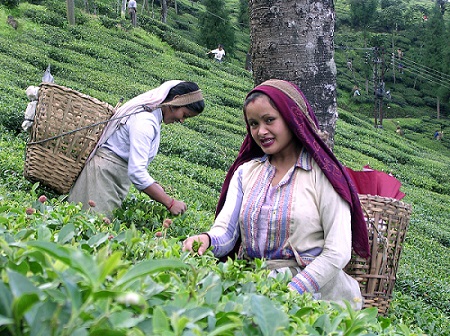
Plantation workers, a closely knit community, were told that their presence in the workplace is a safe option from the point of view of social distancing and protection from Coronavirus. Workers in tea gardens always work with a gap of more than a metre. What is interesting is that the tea bushes are so aligned that the workers can maintain safe distance while plucking leaves.

“We have ensured their rations, and told them to stay put inside the gardens. They live close to the gardens. So they are not coming out, nor anyone is going inside the gardens,” Sandip Ghosh, a senior functionary of ITA, said in an interview.

Ghosh said for convenience of plucking freely without any hindrance and subsequently for weighments, the relative positions and movements of individual workers are sufficiently apart. “Not just in the gardens, workers in the tea factories are sufficiently abreast of the safety and distancing related protocols and they are adhering to these requirements. Hand washing or sanitising before and after work, sanitising of labour lines were initiated well in advance. And it has worked wonders in the tea gardens,” adds Ghosh.

The UNICEF-ITA programme has also pushed the workers to maintain sanitising norms at the time of payment of wages and distribution of concessional ration. “Workers have stopped crowding up for rations long ago. And it is now doing wonders because the workers have become habituated in queuing in marked boxes or circles, spaced a metre to ensure social distancing,” says Ghosh.

The tea garden formula has been noticed by physicians handling Covid-19 victims across India. Some of the doctors have even visited the tea gardens to check for themselves how the workers — who normally live cheek by jowl — were maintaining social distancing.

Due to the COVID-19 pandemic, tea planters in Assam have suffered losses to the tune of Rs 1,218 crore. (Representative photo)

In the Indian Capital, experts told this reporter that efforts of the workers in the tea garden to maintain sanitising norms and social distancing should be implemented in all farm-related work across India. “The fact that UNICEF and ITA warned the workers way back in February 2020 was a unique move,” said a senior government functionary.

The nationwide lockdown induced by COVID-19 which came into force from midnight of 24th March, 2020 had suspended operations in the tea gardens of Assam, West Bengal and Tripura. Subsequently, from the 2nd week of April, the operations have resumed following exemption of the tea industry and plantations by the Home Ministry. Currently, tea estates are functioning with deployment of 100% workforce in Assam and 50% workforce in West Bengal.

Following the COVID-19 pandemic, tea planters in Assam have suffered losses to the tune of Rs 1,218 crore.

North Eastern Tea Association (NETA) said the gardens in Assam, Bengal and Tripura have lost almost the entire crop of March 2020 which is estimated to be about 30 million kgs. As per Tea Board of India figures, the harvesting of tea in Assam in March 2019 was 4.6% of Assam’s annual production in 2019 (Jan to Dec) which was 715.79 million kgs.

“Human lives are more important than anything else,” says Ghosh, adding there has been a general welcome from workers concerned. “In fact a lot of pictures have gone around showing how social distancing has been maintained in the plucking and manufacturing.”

Tea garden workers with no land or other means of survival are dependent on the companies that employed them. Assam and West Bengal account for 80% of the country’s tea production. The lockdown came around the time when the first flush, or the best quality tea leaves, were to be plucked.

The planters are pushing the Central government to initiate measures to increase the auction price of the tea since the crop that fetches the highest price is lost.

That is a separate story. As of now, beating the deadly virus is uppermost on the agenda of UNICEF-ITA combine.

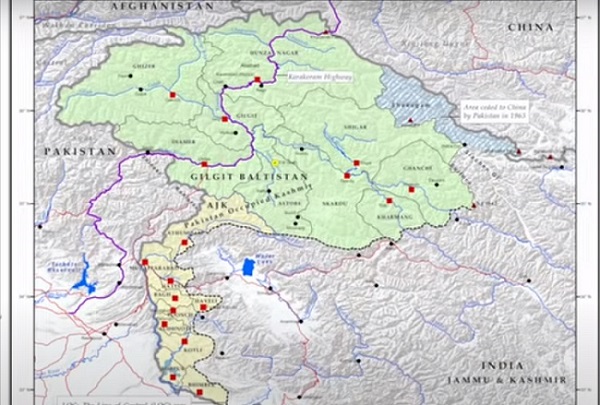
Documentary: The Invisible People of CPEC, Part-1 Gilgit-Baltistan

“The Invisible People of CPEC” is a documentary series which is the labour of three years of research. I embarked on a journey to explore Jammu and Kashmir when I was just 21 years old and did The Abandoned Cranes on exodus of Kashmiri Pandits back in 2013.

After my first documentary, I got to explore Laddakh and its history and during my trip to Laddakh, I decided to venture into research about Gilgit- Baltistan and the CPEC (China-Pakistan Economic Corridor). The history of Gilgit-Baltistan is fascinating and not much of research has happened academically from Indian stand point. We just call it as an integral part of India without understanding the geographic and ethnic complexities of the area.

It took me three years to culminate this project as I did balancing with my Legal career. The film has been shot at Kargil, Kashgar, Dras, Laddakh Skardu and London. I got footage of Skardu from my friend Goba Ali who is featured in this film and recently visited Gilgit. What I have released now is the first part of documentary series and other parts on Xinxiang and Balochistan will be released on upcoming Saturdays. The documentary is an attempt to understand the issues and concerns of people living around the corridor and how Pakistan illegally captured Gilgit-Baltistan which is an integral part of India.

The documentary also depicts human right violations in Gilgit-Baltistan and the demographic transitions due to CPEC in this region. Also, the Diemer Basha Dam which is proposed to be constructed will further increase the demographic transition.

Apart from unfolding various truths and facts, film salutes the bravery of Indian Soldiers who sacrificed their lives to protect the region. The story of Turtuk and Siege of Skardu are the battles which are least talked about. The film is an effort of individuals and not backed by any organization. Mr. Pragnesh podar, who is my mentor is the backbone of the film. Mr. Vivek Bansal helped me with digital strategy and ensured wider circulation so that it reaches out to a large number of people. Mr. Anuj Saini and his company Shutter Stories has handled the camera work, editing and post production to whom I am extremely thankful. Last but not the least Mr. Shailesh Pandey and Vinod Tikoo who were a guiding force. The film is incomplete without the names mentioned above.

Big officialdom, a handful of figures

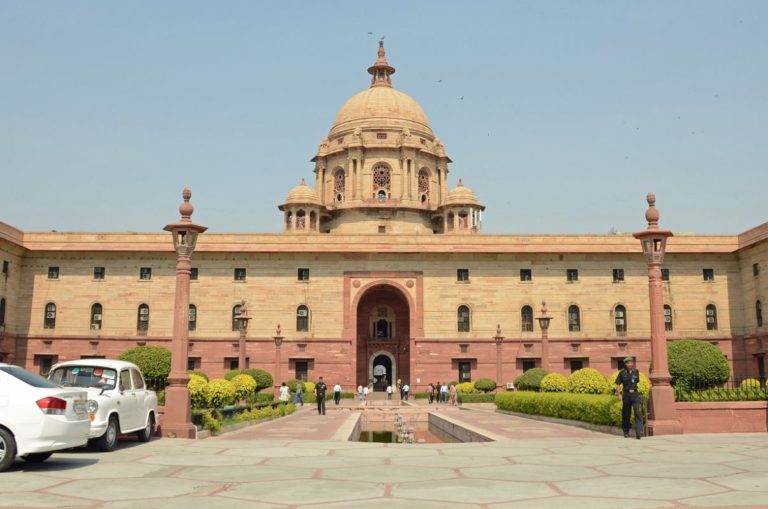
In Covid-struck India, everyone is discussing cash. More importantly, everyone wants to know if the government has enough cash at its disposal to fund some of the mega projects recently announced by Finance Minister Nirmala Sitharaman.

At the core of this debate is not just cash but also the way the government collected revenue for 2019-20. Hence, it is important to take a realistic look at India’s revenue generation.

In 2019-20, the government’s estimated direct tax revenue was ₹13,35,000 crore. Around 58% of this direct tax revenue was expected to be collected in the form of Corporation Tax or Income Tax that is levied on the income of companies operating in India. In 2018-19, out of the total actual collection of direct tax revenue of ₹11,36,574 crore, an estimated ₹6,63,571.62 crore – approximately 58% – was collected from companies.

The income tax return statistics of CBDT for the year 2018-19 show that 8,41,942 companies filed income tax returns in the year 2018-19. These companies declared a total income of ₹13,34,792 crore. Out of these 800,000 lakh plus companies, only 1,504 companies that were 0.18% of the total number of companies declared taxable income of over Rs.100 crore. These 1,504 companies declared taxable income of ₹9,55,601 crore or approximately 72% of the total collection.

So what are we getting to see? That a handful of companies declared bulk of taxable income. Similarly, 525 companies or only 0.06% of total companies paid 60% of the total corporation tax payable.

An analysis of individual taxpayers showed that 5,52,60,219 returns were filed by individuals declaring income of ₹29,69,745 crore on which tax of ₹3,17,845 crore was payable. A total of 4,44,976 or approximately 0.18% of the total individuals paid tax of over ₹10 lakh each. These 0.18% taxpayers paid approximately 45% of total income tax revenue paid by individuals.

The bottomline for a billion plus nation is that the bulk of income tax revenue is paid by only a handful of income tax assessees.

Now right after the introduction of GST, the nature of indirect tax collections of the government went through a sea change. The indirect tax revenue was collected in the form of Excise Duty on goods manufactured in India, Service Tax on services rendered in India, and Customs Duty on goods imported into India.

The Customs Duties consisted of Basic Duty of Customs, Additional Duty of Customs and Special Additional Duty. Basic Duty was governed by WTO guidelines on tariff, and the government’s fiscal policy had little room for adjustment within the bound tariff rates laid down by WTO. Additional Duty of Customs was commonly known as Countervailing Duty, and was collected at rates equal to those of Excise Duty to equalize imported goods with goods produced locally. Similarly, Special Additional Duty of Customs was imposed to equalize imported goods with VAT imposed on local goods. Now, Additional Duty of Customs and Special Additional Duty have been merged into and replaced with IGST or Integrated Goods and Service Tax.

Similarly, Excise Duty was collected at varying rates on different commodities manufactured or produced in India. Service Tax was collected at a uniform rate on all services. Both Excise Duty and Service Tax have been merged into and replaced with the Goods and Services Tax.

Earlier, the Ministry of Finance played an important role in determination of rate of duty on various commodities. But now, the Finance Ministry has little role, as the power to determine rates of duty lies with the Goods and Services Tax Council chaired by the Hon’ble Minister for Finance of the Government of India, and consisting of Finance Ministers of various states as its members. Therefore, the earlier day to day work of determination of rate of duty has lost its relevance in the Ministry of Finance.

Many say this is a problematic zone and needs to be rectified.

It may also be pointed out that Excise Duty is still collected on petrol and petroleum products that are not under GST regime. The collection of Union Excise Duties on petroleum and petroleum products was estimated to be approximately ₹3,00,000 crore in the Budget Estimates of 2019-20. This was estimated to be approximately 12% of total tax revenue and 23% of indirect tax revenue of the government. This tax on petroleum is paid by a handful of companies.

Now what is little distressing is that there is no analysis of GST taxpayers available in the public domain to show as to which commodities or which taxpayers pay the bulk of the revenue, but the income tax analysis already shows that bulk of the income and profit is declared by a handful of companies.

It is apparent that even GST revenue is paid by these handful of assessees. As already mentioned, 23% of tax revenue is paid by a handful of companies engaged in the petroleum products sector, and most of these companies are public sector companies.

There was a time when the Tax Research Unit of CBEC used to publish excise paid by 312 top Companies. And 84% of excise revenue was paid by these companies.

Now if you exclude petroleum accounting for 23% of revenue, the balance of 312 must be still accounting for 61% of GST.

Enlarging the Field to 5000 assessees in Customs/ GST/ VAT/ Income Tax, the tax paid by them would account for 95% of the revenue. This revenue will come irrespective of an officer being present or absent.

As a result, successive cadre restructuring has led to bloated bureaucracy across India. In 1977, The Class 1 Cadre of CBEC was 700. Today it is over 10,000. And the total staff strength is way over 70,000.

The situation is worse in CBDT.

The expenditure to accommodate and service all these — offices, houses, cars, travel — is more than the salary bill of the Revenue Department. If the government is spending over Rs 35,000 crores to collect equivalent amounts, the resultant gains are not sufficient to warrant such bureaucracy.

Baloch freedom fighters kill 10 Pakistani soldiers in 2 days

Baloch freedom fighters have intensified their fight against the Pakistan Army in occupied Balochistan. During the last 48 hours, Pakistan Army was attacked at least six times and its ten soldiers were killed across different areas of occupied Balochistan. Different pro-independence Baloch combat groups fighting in occupied Balochistan have taken responsibility for these attacks.

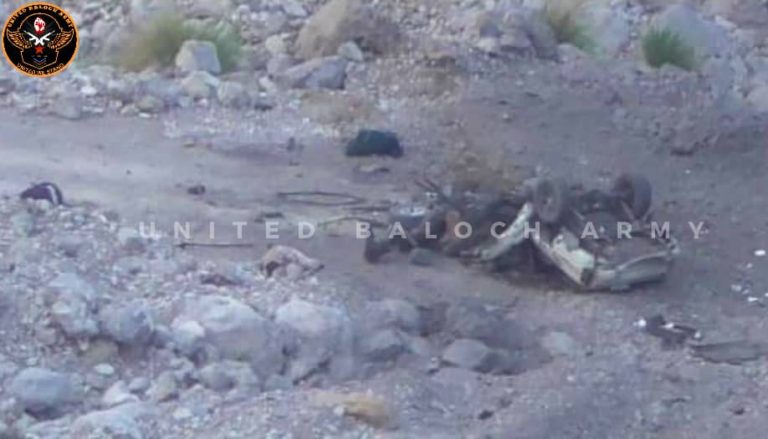
On Monday, for instance, the security convoy of an oil and gas exploration company was targeted by IED (improvised explosive device) at Peer-Ghaib area of Bolan. This attack was claimed by the United Baloch Army (UBA). Mureed Baloch, spokesman for the United Baloch Army, said in a statement from an undisclosed location that the UBA’s freedom fighters hit a convoy of Pakistani security forces escorting an oil and gas exploration company with a remote-controlled bomb at Peer-Ghaib in Bolan. “The attack completely destroyed the Pakistani forces’ vehicle, after that our fighters also attacked other vehicles with rockets and automatic weapons,” he added.

Mureed Baloch added that several personnel of the Pakistani security forces were killed in this attack. Later on it was reported that six Pakistani soldiers were killed in this attack. In the statement, Mureed Baloch has also warned foreign companies to stop investing in Balochistan. He added that similar attacks would continue till the independence of Balochistan.

In another attack, the snipers of Balochistan Liberation Front (BLF) attacked Pakistani forces during the last two days in Kech district of occupied Balochistan.

Gwahram Baloch, BLF spokesperson said that two Pakistan Army personnel were killed in a sniper attack on Sunday morning. He said the attack was carried out on a checkpost situated at Sangastan Kandag, in Mand. The second attack, BLF spokesman claimed was carried out in Tump Aziyan area, on Monday. “At around 12 noon on Monday, a Pakistani Army officer was killed by our sniper at the Aziyan military post in Tump area of Kech district,” Gwahram Baloch added.

Similarly, the Baloch Republican Army (BRA) said it had also carried out attacks over the last two days. BRA spokesman, Beebagr Baloch said in a statement that “…on Monday morning, our freedom fighters attacked the Pakistan Army’s checkpost over River Chokap in Mand area of Kech district. The attack was carried out when Pakistan Army personnel were building new pickets… two army personnel were killed and one was injured in this attack.”

According to the residents of Kech in occupied Balochistan, there has been a surge in military operations and “enforced disappearances” by Pakistan in the Kech district after recent attacks by pro-independence Baloch combat forces, especially after the attack on May 8 in which killed six Pakistan Army personnel, including their Major Nadeem was killed. According to sources, more than a dozen people have been abducted by the Pakistan Army in just two weeks from Kech district. A large majority of these abductees are students. 

Also, over the last one month Pakistan Army has intensified its military operations across Balochistan using heavy artillery and helicopter gunships. During April more than 100 military operations were carried out by the Pakistan Army’s death squads that have abducted and tortured innocent Baloch civilians including women and children. These attacks by the Baloch freedom fighters on various Pakistan Army convoys, their bunkers and checkposts is their retaliation to unprovoked military raids on the hapless Baloch people.

Covfefe-19 Conspiracy, Deary, A Tilt-a-Whirl to Unfurl

Humanists International is kicking behinds again, doing great work, taking names, and building membership, and a unified global movement for science and human rights. This time, they’ve been working on an important educational campaign to counter misinformation and to provide appropriate information about the Covid-19 crisis emergent from SARS-CoV-2. Something “probably” (there you go, Andrew! – “likely,” ugh) coming from bats, where many types of coronaviruses fester, and then transmitted across species into a human being, i.e., from a non-human animal to a human animal. Now, here we are, with all the clumsy conspiracy theorizing, racist navel-gazing to ignore the plight of those less well-equipped to deal with the virus, End Times fearmongering as a form of collective infantile escapism, scripturally inadequate pulpit mouth-foaming, and run-of-the-mill dismissal of expert analysis and scientific information for comprehension of an international emergency – not to mention Alex Jones’ epic repetitive rant of eating his neighbour’s “ass” (we got the point the first time, Mr. Jones, thanks – now known as someone who would shout bombastic flummeries to entice his neighbour’s reluctant anal cavity), this educational campaign is incredibly important in this context.

Not only has this pandemic shown the standard structural inadequacies of several international networks, but it also exacerbates or makes bold the profoundly ignorant, and then highlights some of the extent and influence of the stupefying blank mental cartridges active throughout the globe when it’s not a drill. All grounded in low-tide respect for science across nations and regions, insufficient educational standards in critical thinking and the base theoretical frameworks from the sciences to know the natural world, and inequitable distribution of the quality curricula materials with intersects in religious dogma/fundamentalism and sexist blockading of educational progress.

That’s why the work of global democratic Humanism becomes a necessity rather than an option moving forward because the problems facing the world require international solutions rather than individualist-nationalist ones. The philosophical system may evolve to meet future problems, but this is precisely the required system at this moment in time. One in which the Amsterdam Declaration 2002 becomes part of the global democratic Humanist discourse and the international efforts for greater justice. The Board – Andrew Copson (President), Anne-France Ketelaer (Vice-President), Boris van der Ham (Treasurer), Rebecca Hale (Board Member), Gulalai Ismail (Board Member), Kristin Mile (Board Member), Roslyn Mould (Board Member), Uttam Niraula (Board Member, and David Pineda (Board Member) – and the staff – Gary McLelland (Chief Executive), Elizabeth O’Casey (Director of Advocacy), Jean Zong (Financial Administrator), Giovanni Gaetani (Membership Engagement Manager), and Mahalet Tadesse (Intern), Emma Wadsworth-Jones (Humanists at Risk Coordinator), and Lillie Ashworth (Advocacy Officer) – and volunteer representatives – Kacem El Ghazzali, Margaretha Jones, John Wagner, and Renate Bauer – of Humanists International have been doing amazing work in their countries, in their institutions, and globally through the global democratic collective voice of Humanists International. Everybody has a place; each person has a part.

Members and Associates around the world of global democratic Humanism have been working intensely to spread the word about several ongoing cases, whether the important work of Gulalai Ismail of Pakistan with Saba Ismail through Aware Girls on the empowerment of women and girls, the international campaign to free Mubarak Bala in northern Nigeria, working on the erasure of witchcraft allegations from Africa by 2030 under leadership of Dr. Leo Igwe, reporting on the scrapping of the death penalty in Sudan, bringing attention to the abolition of the blasphemy law from Scotland, calling for the release of Iranian prisoners of conscience, working to protect Mohammed Ismail in Pakistan, and so much more only in early 2020. To the particular focus of this coverage, the issue is the cross-section of politics, science, international relations, and critical thinking. We have seen a failure of politics, a denial of science, a rejection of internationalism, and a lack of critical thought about issues of existential concern to ordinary citizens world-round. Covid-19 was the hammer striking the cracked church bell called global order. All the while, global warming and nuclear catastrophe as potential looming tragedies to befall the human species. I do not deny all the positive aspects of modern life compared to decades ago. However, problems are problems for a reason and require more urgent and rapid responses than solved problems, which, by definition, are not problems anymore and can be put on the backburner of appreciation, gratitude, and the checked-off portions of the bucket list.

With a variety of multilingual memes, coloured and well-designed for presentation to the public, the languages are extremely diverse and represent a great effort of the international humanist community’s work in the development of the memes for different nationalities’ consumption. Some of the listed examples had languages of Bangla, English, French, Hindi, Ki-Swahili, Persian, Portuguese, Sinhala, Spanish, Tagalog, Tamil, and Urdu. Thank you to the nearly 200 members and associates of Humanists International for the work in the development of the members and in such a wide array of languages, too, the reported targeted objective is millions of people reached around the world.

While the targeted objective remains for the individuals who believe in conspiracy theories, superstitions, and fake news, as this becomes an educational campaign, it becomes part of a consistent increased effort in the education in the public through the global information and communication networks. One of the foundations of the efforts comes from targeting irrational beliefs and the application of skepticism towards particulars with the empiricist and modernist lens on them. Misinformation can lead to bad outcomes. Individuals who have the privilege and the opportunity to ignore the plight of the coronavirus may, and in fact often do, neglect the inability of others to isolate, physically distance, have access to emergency funds, acquire respirators, and have adequate medical attention. Resources in abundance to some not considered “resources” inasmuch as rights, as if the water one swims. As several others have noted, we can note the exaggerated health disparities in the cessation of life in the critical/severe cases for African Americans compared to European Americans. Even in spite of this, incompetent and inadequate response to the crisis is leading to disproportionate American deaths compared to much of the rest of the globe. It is driven by the conscious and automated spread of ‘knowledge’ or false information designed to misinform, or simply grounded in a deep lack of scientific understanding.

Thus, as Dr. Leo Igwe noted in an interview in the #GlobalHumanismNow series, the misinformation “virus” can make the spreading of the coronavirus worse. In a manner of speaking, if one knowingly spreads false information, and if demographic outcomes exist in these contexts, then one not only harms the general population, but, also, vulnerable populations disproportionately – making known disparities even worse. Humanists International – and its Board, staff, and representatives – are doing a fantastic job in ramping up international efforts to reduce the spread of lies and misinformation, and countering medically dubious and scientifically questionable treatments amounting to the unsupportable to the dangerously farcical.

This comes, mainly, in the form of the COVID-19 #MythBusters, i.e., memes displaying evidence-based messages in some of the aforementioned languages to improve the efficacy of the work. As Giovanni Gaetani, Humanists International’s Membership Engagement Manager, states:

Our goal is to… reach out to a wider global audience, on a larger scale than we have ever done so before…

…The amount of coordination and support coming from our Members and Associates is astonishing. In just one week we managed to translate the memes into 15 languages, including some of the most spoken languages around the world like Hindi, Spanish, French, Bengali, Portuguese, etc. We are literally talking about potentially reaching millions of people…

…As I speak, we keep receiving new translations and we are working to create further series of memes. Members and Associates all around the world are sharing the memes everywhere. Not only on social media, but also on Whatsapp groups, newsletters, etc. It’s hard to estimate accurately how many people we are reaching worldwide, but the feedback we are receiving is great.

…This is a great example of global humanist cooperation in the name of reason, science and solidarity.

Global Humanism can assist in the endeavour to reduce some of the issues inherent in the developments of the modern communications networks, including the first global telephone system called The Internet. We feel as if this becomes an insurmountable challenge. However, as we should remain diligent and conscious, we have larger looming issues apart from rights abuse, international humanitarian law violations, and the re-rise of an ignorant sub-culture with some modicum of prominence only appearing large-and-looming; we have the issues of anthropogenic climate change, or human-induced global warming, and the threat of nuclear catastrophe.

Once we begin to overcome, as many are, this cavalcade of a clown parade, we have the more serious issues needing intense work. Our ancestors have overcome their own challenges; we can overcome ours. It merely requires proportionate proactive, assertive, and constructive counter-response, as per the work of Humanists International.

Photo by Fer Nando on Unsplash

Sheikh Abdullah had no role in J&K’s accession to India. Period.

In early 1947, the British understood that it was untenable for them to continue ruling over vast Indian subcontinent that was a “jewel in the crown”. They knew that any prolonged stay in the country teeming with hostile natives was extremely unsafe. Of course, being butchered to pieces here, there and everywhere in the countryside was a real threat they faced.

Simultaneously, events had created situations in which the huge country was to be divided into two parts, the Dominion of India and the Dominion of Pakistan. It was one parting shot and deep wound they inflicted on this land and its people.

At that time, there were hundreds of Princely States in what was India then. Some areas were directly ruled by the British and they wielded considerable influence on others.

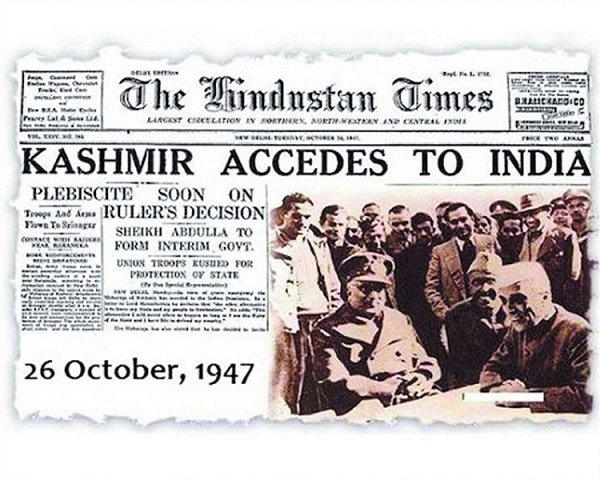
Instrument of Accession (IoA) was a standard document that was devised for transfer of power. The RULERS of the then Princely States had to sign this legal instrument for joining either the Dominion of India, or Pakistan.

In which school of thought (as opposed to a school of education) people who peddle false narratives about Sheikh Abdullah’s role in it have been educated? They have “learned” to falsify all history shamelessly. Brazenly. Without batting an eyelid. Doing that consistently too!

Let us talk of Abdullah “political dynasty” the foundation of which was first laid by Maharaja Hari Singh on March 5, 1948, when he made Sheikh the “Interim Administrator” of J&K. Yes, Sheikh was an appointee of the sovereign and drew all his legal powers from this order.

Check recent history of J&K from January 1947 to May 2020 please. In case you have some doubts.

Sheikh was given unceremonious marching orders on August 9, 1953, by another royal, Sadr-e-Riyasat Karan Singh, at the behest of and with the consent of Nehru. Incidentally, it was Nehru who had forced Maharaja Hari Singh’s hand in March 1948. These orders remain in force and operating “practically” till 1975.

Farooq Abdullah became the head of Sheikh’s dynasty on September 8, 1982. The next in line is Omar Abdullah.

Now talk of the Dogra dynasty founded by Gulab Singh in March 1846. Between March 1846 and March 1948, the time of emergence of Sheikh’s dynasty, there’s a gap of 102 years.

Maharaja Hari Singh drew strength and powers of the legal foundations from something that could be traced back to March 1846, events that unfolded over 101 years. He alone was the AUTHORISED person to sign the Instrument of Accession for J&K. Nobody else had an ounce of legal position to decide about that.

Sheikh Saheb had not inherited J&K from his filial elders’ places like Gilgit-Baltistan, Mirpur, Muzaffarabad, Palandri, Minsar, and several other places which were a part of J&K in July 1947. Let us not talk about moral standing and all that, and stick to facts, just the legal facts.

All these areas were consolidated into one kingdom of J&K by the Dogra rulers. The foundation for Gulab Singh’s kingdom was laid by Maharaja Ranjit Singh on the banks of Jia Pota in Akhnoor two decades before 1846!

Maharaja Hari Singh had this right of signing the Instrument of Accession because of events going back to March 1846. Even earlier!

Only those who peddle falsehoods talk of Sheikh’s role in signing the Instrument of Accession! How could he play any role in an entirely legal process on October 26, 1947, when he became an “Interim Administrator” only on March 5, 1948?

Goebbels is the inspiration of this school of falsehoods. It is just like the “facts” taught in Pakistan society regarding the foundation of Pakistan laid in 712 AD. They can jump from August 14, 1947, to events associated with Raja Dahir of Sindh dating back to 712! It is a leap of faith for them. A leap of falsehood of historical facts of 1200 years!

So why can’t Pakistani fake narrative peddlers take factual liberties with events of October 26, 1947? Predate Sheikh’s rise in power in (by then a truncated J&K) from March 5, 1948, by at least five months. And therefore start preaching that it was Sheikh’s dynasty founded on March 5, 1948 that signed the Instrument of Accession of J&K on October 26, 1947!!

Pak Army’s Major Nadeem was killed along with ‘Death Squad’ members in Balochistan

What Director General (DG) of Pakistan Army’s media wing Inter Services Public Relations (ISPR) told us about the improvised explosive device (IED) attack on a Frontier Corps vehicle on May 8 in Kech district of occupied Balochistan was that it had claimed the lives of six Pakistan Army men (including an officer identified as Major Nadeem Abbas Bhatti). What DG-ISPR didn’t mention was that besides these six security force personnel, three minors who were travelling in the same vehicle were also killed in the IED blast and we learnt of this from none other than Dr Allah Nazar Baloch, the current chief of Balochistan Liberation Front (BLF) an armed rebel group fighting against occupational Pakistan Army in Balochistan.

For the social media savvy ISPR, which never fails to exploit even the most insignificant incident in order to either score a point or berate its opponents, its stoic silence on this horrific ‘collateral damage’ is rather intriguing. Three young lives being extinguished so brutally would most certainly generate widespread public rage against the perpetrators as well as evoke sympathy for both the deceased army men and the young boys. So, one would have expected the ISPR to cash on the killing of civilians in this blast, but inexplicably, it didn’t do so. On the other hand, for the BLF chief to admit that besides killing the army personnel, the IED triggered by Baloch fighters had also claimed three young lives of local Balochs too is equally surprising, because on the face of it, this admission of civilian casualties by the BLF chief amounts to shooting oneself in the foot!

But things get clear from the tweet of another BLF commander Akhter Nadeem that reads “Army is using the jobless & junkies as cannon fodder in Balochistan. Those got blown up with Maj Nadeem are a clear example. If they were killed otherwise there would’ve been an outrage.” This explains why DG-ISPR chose to avoid any mention of the three young boys killed in the IED blast and also confirms the existence of ‘death squads’ created by Pakistan Army to target dissidents in Balochistan through its infamous ‘kill and dump’ policy. According to local sources, during his year-long Balochistan tenure, Maj Nadeem had created ‘regional death squads’ and let them loose to not only attack rebels but also their families and relatives.

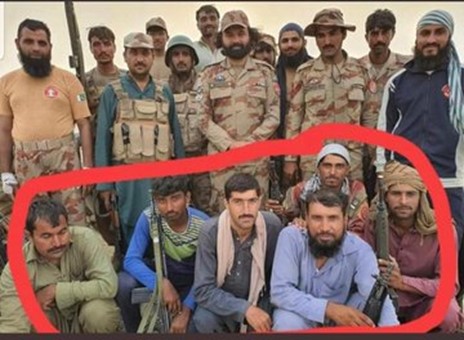
Normally, one would have rejected such claims, especially since they are coming from the Baloch people who could well have an axe to grind with the deceased Major. But the allegation of him having ‘death squads’ is confirmed by a photograph in which he can be seen posing with gun toting civilians. What’s interesting to note is that while two of them are holding Heckler and Koch (H&K) G3 rifles, which are the standard issue army rifles produced by Pakistan Ordnance Factory, one civilian is armed with a H&K MP5 sub-machine gun (again a regular Pakistan Army issue weapon). Even a novice will realise that this photograph wasn’t snapped randomly as it was a calculative move to bolster Major Nadeem’s image as a ruthless commander amongst the locals!

However, it would be unfair to portray Major Nadeem as the original ‘sinner’ or devil incarnate especially when he’s no more there to defend himself or explain his actions. Furthermore, neither is he the first now the only Pakistan Army officer who resorted to use extrajudicial means for combating Baloch fighters. He was only following what had been happening all along, and there’s no doubt that Pakistan Army will continue to use repressive measures like “enforced disappearances” and its abhorrent “abduct- torture-kill and dump” policy in an effort to subjugate the people of Balochistan. If the army is not involved in any wrong doings in Balochistan, then why did it prevent members of Human Rights Commission of Pakistan from visiting the mass graves sites discovered near Tootak village in Khuzdar district of occupied Balochistan in 2014, that contained more than 100 dead bodies?

Just last year, the then DG-ISPR Maj Gen Asif Ghafoor made a brutally frank admission about Pakistan Army’s professional ethos for which he deserves due credit. During a press conference, while replying to a question on missing persons posed by senior journalist Hamid Mir of Geo TV, the DG-ISPR replied, “We don’t want any person to go missing but where there is a war, you have to do a number of (undesirable) things. It’s said that everything is fair in love and war. War occurs to be ruthless”? Unfortunately, despite coming from a serving two-star General of Pakistan Army, this honest confession doesn’t seem to have been taken as seriously by the international community as it should have been because no one has asked Islamabad to rein-in the army.

In which democracy (other than Pakistan) does one find an army equating an armed uprising by its own citizens as ‘war’? Rawalpindi’s gross mindset that “We don’t want any person to go missing but where there is a war, you have to do a number of (undesirable) things,” is reflected in its shameful act of “disappearing” 54 Indian combatants who had been taken Prisoners of War during the 1971 Indo-Pak conflict. But even during a full-scale war, which other army in the world sanctions the “enforced disappearance” of soldiers or even civilians? Lastly, besides Pakistan’s military, which other civilised modern-day army follows the perverse ‘all is fair in love and war’ doctrine?

Whereas indiscriminate exploitation of Balochistan’s natural resources by Pakistan without caring for the welfare of its people has provided the Baloch people a very strong ideological foundation to oppose Islamabad’s undemocratic practices, but it’s Pakistan Army’s excesses against innocent Baloch people and ill treatment of their womenfolk and children that has forced peace-loving Baloch people to pick up guns. The case of two young Baloch (Shahdad Baloch and Ehsan Baloch) who attained martyrdom on May 1 while fighting the Pakistan Army shows how even industrious and well-educated youth are being compelled to abandon their academic pursuits and join the ‘armed struggle’ against the oppressive Pakistan Army.

Shahdad was a diligent student, who after completing his Master’s Degree in Defence and Strategic Studies at Quaid-e-Azam University (QAU), Islamabad had enrolled in the M Phil program at the National Institute of Pakistan Studies. Though he did participate in university level political activities, he was a docile person by nature who abhorred violence and strongly believed that dialogue was the only way to resolve issues. Even though he had been abducted in 2015 and held in secret custody during which he was severely tortured by the ISI, Shahdad still did not turn to violence. But the continuing repression of Baloch people forced him to join Balochistan Liberation Army (BLA) in 2019.

Ehsan too had completed his Master’s Degree in Gender Studies from QAU, Islamabad. In addition, he also held a Master’s Degree in English Literature from Turbat University, Kech Balochistan and like Shahdad, he too was an assiduous student with no inclination towards violence. But after realising that Islamabad wasn’t interested in talking to Baloch people and believed in use of brute force through the army to intimidate the poor people of Balochistan, Ehsan too joined the BLA. Though both may have been martyred, but with highly educated boys like Shahdad and Ehsan joining BLA, Pakistan Army’s big fat lie that rebel groups are recruiting gullible youth by emotionally blackmailing them and luring dregs of society by inducements, has once again been exposed!

Tailpiece: Human Rights Watch World Report 2019 (Pakistan) states, “During counter terrorism operations, Pakistani security forces often are responsible for serious human rights violations including torture, enforced disappearances, detention without charge, and extrajudicial killings, according to Pakistan human rights defenders and defense lawyers. Counter terrorism laws also continue to be misused as an instrument of political coercion. Authorities do not allow independent monitoring of trials in military courts and many defendants are denied the right to a fair trial.”

So, a simple question to all those who do not approve of the path taken by Shahdad and Ehsan, under such hopeless conditions, what would you do?

Remembering Tanveer

It could only have been divine providence that brought us together; how else does one explain the accidental meeting of two completely unknown individuals desperately needing each other. It was 2010, and I was walking down the road in the heart of city when I accidentally bumped into a young man who was walking ahead and had suddenly stopped for some reason.

However, the fault was entirely mine as I was the one who was walking absentmindedly being preoccupied with the anxieties that haunt a man trying his hand at a new venture. In my case things appeared to be a bit more serious because even though I was trying to live out my childhood dream of publishing my own newspaper, I had no inkling of how exactly to go about doing this job. Even before I could apologize, the young lad respectfully begged forgiveness and enquired if I was feeling fine. Due to some bitter experiences in the past, I had my own misgivings about the younger generation and felt they were ill-mannered, selfish and insolent.

Seeing this young boy behave so politely was quite unexpected but was also a welcome shock and I asked the stranger who he was. He introduced himself as Tanveer-ul-Ahad and as we both started walking besides each other, I struck a conversation with him talking about mundane things that people usually discuss. As we came close to ending our conversation, I casually asked Tanveer what he did for a living and to my utter surprise he told me that he was a ‘newspaper designer’ and was looking for a job. I was really dumbstruck!

Just imagine, here I was blaming bad fortune for my inability to get hold of a newspaper designer despite vigorously searching for one, and the person I was looking for so desperately happened to be walking right beside me. I told him that I intended to a start a newspaper and he boosted my sagging morale by not only assuring me that he was willing to join me but also use his contacts in the media to promote my newspaper.

We met again and teamed up together and thanks to Tanveer’s indefatigable spirit, I was able to launch my newspaper (Brighter Kashmir news daily) on September 10, 2010. As time passed, our association became stronger than ever and soon we had gone much beyond the level of formal employer-employee relations. Being new to media, the initial going for me was far from smooth and there were times when I felt that I couldn’t handle the multifarious challenges and threats that a newspaper publisher has to face.

It was during such depressing times that Tanveer stood by me and became my pillar of strength. I can never forget that I and Tanveer spent upto twenty hours together on several days. Tanveer’s strong point was that besides being far more mature than people of his own age, he had exceptional clarity of thoughts and an uncanny ability for putting things in the correct perspective. I strongly believe that the version of all parties involved in any event or incident should be honestly presented, but doing so in a conflict zone can at times prove to be risky. It was in such situations that Tanveer used to jokingly tell me, “we may be able to swim or we may sink, but we’ll do so together!”

Tanveer’s support gave me the courage to cover news, views and opinions of every colour and hue. As time went by, Tanveer also proved his expertise in news reporting with an innate ability to elicit news from even the most tight-lipped officials and public personalities. Seeing his extraordinary skills, I suggested that he should consider fulfilling his dream of having a New Agency of his own. He accepted my suggestion and by putting his whole heart and mind into this job, was able to establish his own news agency which he named ‘Global News Service’ (GNS). Due to his diligence and eye for detail, GNS came to be widely respected as one of the most credible news aggregators in J&K.

Almost every newspaper, whether big or small, relies on GNS for news because of its accuracy and the wide range of news coverage of J&K. But despite this success, Tanveer decided to put his excellent journalistic skills to the ultimate test by starting his own newspaper and beating all odds succeeded in publishing his own daily named ‘Kashmir Glory’. Within no time this newspaper earned its name and is considered amongst the leading dailies being published from the Kashmir Valley. If there was anything that exceeded his professional abilities, it was his character qualities and his genuine desire to help others.

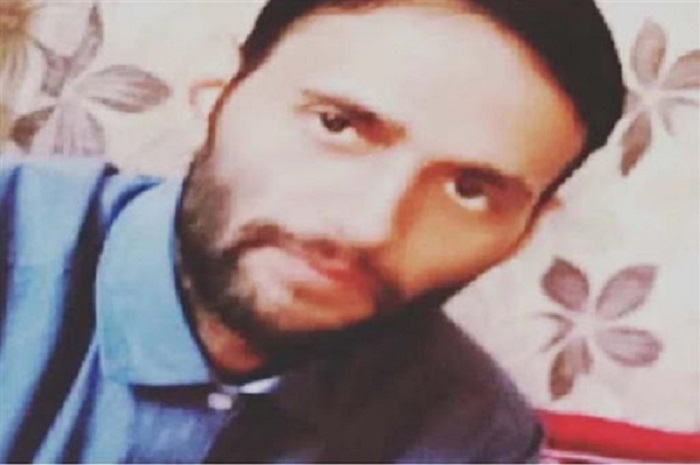
Tanveer came from a remote village named Muqam Shahwali in Kupwara and his spectacular achievements reflected his sustained struggle and passion for fair and objective reporting. He served as a source of inspiration for others. He also helped and guided numerous budding journalists who shall always remain indebted to him. Tanveer’s untimely demise on May 11, 2020 came as a big shock for news readers of Kashmir in general and to the journalist community of the Kashmir Valley in particular. For me, it’s not the loss of a former employee or colleague but that of a real brother which can never be made good and there will be many in the Valley who would be feeling the same way.

But along with heaping accolades, let’s also pledge to keep Tanveer’s memory alive by following his cherished ideals of truthful reporting and taking a principled stand even it was likely to invite the wrath of wrongdoers on both sides of the fence. Tanveer, I will always miss you. May your soul rest in eternal peace.

Oh Please! Spitting is Not a Sport

Unity in Diversity
We all agree that India is a unique country. It showcases unity in diversity; we have multiple languages, cultures, cuisine, religions, colours, diversity of terrain and thought. It thrives, resonates, is chaotic, funny, noisy, polluted, developing and finally things get done with ‘jugaad’ and ‘adjust madi’ as they say in Kannada! We eat on banana leaves with hands, we squat and use water after answering nature, we stare and ogle at anything which moves and we are ever ready with unsolicited advice.

Spit and Polish
One truly endearing habit which a large number of Indians instinctively adopt and are proud of due to its exclusivity and originality, and which we proclaim as our USP is SPITTING! We are Masters at it; if ever a PhD is awarded for it we will have a billion doctors! We spit anything and everything, solids, liquids, mixtures, phlegm, tobacco in varied colours, composition, volumes, digested, undigested; you name it, and we spit it.

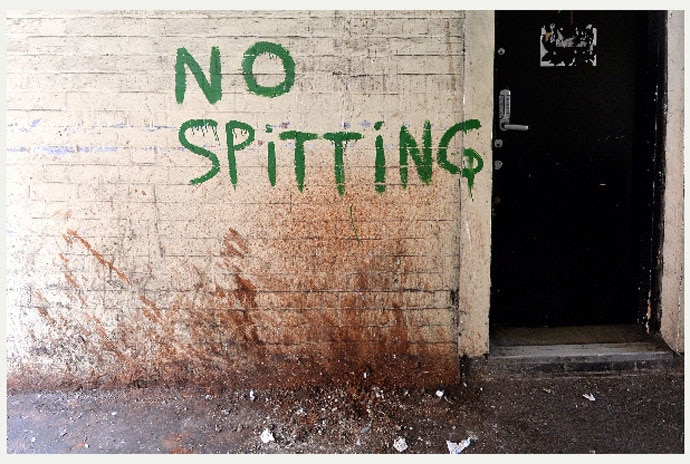
Mainly we spit paan with or without tobacco. Nobody is surprised when a true artist asks the paanwaala for ‘gimme red or maroon’ or ‘20 footer dena’ signifying the colour of extract or distance one can fire based on viscosity, volume and calibre of artist. Well, we even use spit to polish (including shoes) which gave rise to the popular saying in Army about ‘spit and polish’! Does it mean we consider our Nation as a spittoon, I guess so, except for our homes. Homes are a strict NO NO, but wait, it’s only for the spitter’s home. Anybody else’s is a great target and opportunity! We pride ourselves in creating art on all available walls, posters, roads, malls, cinema halls everywhere. Nothing and nobody is sacrosanct! Did I say nobody meaning humans; yes I did, because the art of spitting requires one to generally spit without looking with gusto and noise from anywhere. The higher the platform like a rooftop, bus, car or a hilltop, the better the distance spread, spray of spit with its multi-coloured multi-layered contents that by the way are permanent. They can’t be washed away or dry cleaned. Humans are fair game, in fact the best game. Those of you who wonder why some of us move around outside our homes in raincapes and umbrellas even when it is not raining have got your answers.

Olympic Sport!
We are also known as a secular and tolerant country, but we have slowly started spitting venom! Do not worry, we are not snakes but love to spit venomous gossip. Thank God, we are pretty upfront when it comes to spitting, blatant and in your face with a wide grin and finesse. Wonder why the Indian Olympic Association does not demand its inclusion in Olympics. It will not be accepted as we are universally accepted as world beaters. Nobody can touch us with spit, as ‘we can out-spit all’. How can they compete as its banned in all countries and people generally follow rules, traditions and customs whether they are under scrutiny or not.

Maybe we can make a start with inter-state championships and draw world attention. Start with paan and then move onto more potent, colourful and esoteric substances. We can have two categories, one with and one without tobacco. After all we need to encourage the non-tobacco user. Initially folks from Benaras (now Varanasi) may have an edge, if local legend of its class is true, but soon the Hyderabadi, Uttarkhandi or Bihari (do not get offended if your state is not specifically mentioned; I include all) will fine tune their product and compete with gusto. The average accuracy, consistency and distance achieved of spitting is anyway legendary. Localities can boast of their heroes spitting into a thimble from twenty feet without any diffusion or spray. The spray spitting competition will be equally colourful and the radius and perimeter covered enormous; maybe in times to come a tennis court or even a football ground- who knows with time–!!!

Overseas is a different ballgame
However, there is one strange phenomenon, a departure from our profligate spitting ways; we only spit in India! We literally swallow our spit and pride everywhere outside Indian mainland and remain spitless. All the spotless white walls, shirts or humans are left alone. We swallow and move on.

Enter COVID-19
Will COVID-19 initially restrict and slowly erase our collective memory of spitting, or will it actually increase our intent and capabilities due to ‘Social Distancing’ (we need to gain more distance and accuracy to hit our objective) and apprehension of ingesting the dreaded virus. Only time will tell.

Major Thrust towards Swachh Bharat
Our hobby and specialisation needs to be contained in tune with the national calling of ‘Mera Bharat Mahaan’ (my India is great) and ‘Swachh Bharat’ (clean India). So citizens, lets spit fire on those who eye our territorial integrity and prosperity, and no spitting venom and other substances in India or on each other.