Home Blog Page 370

Will the ‘rich big boy’ China emerge as ‘class topper’ in post-Corona world?

The most interesting and complex classroom is the world that comprises of a large number of boys of various hues, temperaments, sizes, wealth, strengths and ages with differing backgrounds, history and upbringing. I often wonder who has the greater advantage, the biggest boy in class or the richest. On reflection, I realised that especially in today’s environment both ‘big and rich’ are equally important to have an edge in the class. By mutual consensus, China is the fastest growing rich big boy in class, as existing biggest boy, who’s also the Headboy (USA), is no longer growing fast (some would say it has stopped growing). The rest of the class comprises of one large boy (Russia) who was once a peer contender of USA, few mid-sized and many smaller boys that are mainly poor and individually don’t pose much competition. Some mid-sized and small boys have formed a boy’s fraternity club (EU), with the aim of projecting a richer and bigger size than their individual personas.

The biggest boy has attracted large number of other boys including the fraternity club on his side with a mix of help, persuasion, coercion and his approachable friendly nature. He has also influenced the ‘Management’, ‘Principal’ and most ‘Teachers’ (Bretton Woods institutions, UN and its associated institutions, WTO etc.) who think they set the rules in the school and class. In reality, the biggest boy and to some extent the fraternity club have actually set the rules and traditions, but allow the management to think otherwise. To ensure domination, the Headboy has strategically made friends with groups and even individual boys with the assurance of mutual help whenever required.

China, the fastest growing rich big boy has always been different from his birth; low key, unconventional, treading his own path to the consternation of the majority. In spite of being a loner and introvert, he had the advantage of being born to an old illustrious family with a rich history and tradition. His quiet determination and focus have been rewarded handsomely by increasing wealth (maximum savings) and becoming the second strongest boy in class. From his usual reticent self, he is slowly transforming into a confident, abrasive, aggressive boy and feels it is time to step out of the shadow of USA, and dominate his side of the class.

Russia, the original bad boy, who had a special dislike for USA for being the Headboy has stopped growing and is actually shrinking, is now another interesting student. Due to his nuclear arsenal and oil he can still play the spoilsport by influencing some boys and exploit any eventuality / opportunity which comes his way. A few upstarts, small but ambitious (North Korea, Pakistan, Iran, Venezuela and some more), want to create space for themselves both by association and being even more unconventional (willfully rogue or irrational), and generally gravitate towards China after initially being enamoured by Russia.

Change being the only constant, like declining fortunes of Russia at present, the US and China are battling it out to be the Headboy in the world’s 2020s class. China, also referred to as ‘Dragon’ has friends and a permanent coterie by providing generous assistance to mainly unconventional boys, and Russia got a spurt of energy (literally speaking), and both found that with intelligent manoeuvres and friendships and exploiting situations they can walk taller. Maybe they could even become true friends, which is unlikely given their ambitions, uncompromising nature as also past frictions. This collection of disparate students makes for a fairly noisy, feisty, argumentative and unruly batch with frequent one-upmanship, petty quarreling, monopolizing resources, sharing discriminately, using tricks to subdue adversaries with rare moments of harmony. Even if they did appear to get along for a common cause the big boys made sure to create enough centripetal force to ensure their friends stayed close to them.

Let’s be clear, the democratic, capitalist strongest boy USA was by no means ‘ever benevolent’. To ensure he remains the Headboy, he too would resort to any means, democratic or otherwise. He never hesitated to make strong friendships with the headstrong, even unstable boys (Pakistan, Iran, Iraq, Israel, Saudi Arabia, even China till very recently) to achieve his aims. In fact, the onus of making China strong vests solely on him, as he created conditions for making China the counterbalance to rival Russia.

Remaining as the Headboy takes its toll specially on wealth and strength, and a new inconsistent, immature and some would say unreliable USA slowly started losing interest, wealth and thus clout due to his continues manoeuvring to remain on top, allowing other boys to occupy the strategic space vacated. His new philosophy of ‘America First’, ironically has impacted even his closest friends let alone the groups he promised to protect (UK, EU, Japan, South Korea) making them feel vulnerable and cheated. This has impacted their stance and reactions towards China (irrespective of their inclinations).

America always had his favourite adversaries, but the current villain China has become a peer competitor and is threatening the status quo. For the first time ever, his dominance in the world and homeland America is being challenged (he likes to say threatened) credibly. The established class order and structures are unstable, and all the boys need to dynamically adjust their relationships. An apprehensive USA realises that his holding on to the post of Headboy is slippery, and he has two options open to him– First, to continue fighting his main rivals Russia and China in every way possible; Second, to allow them their spheres of influence and friends and reach some sort of understanding of rules of engagement/conduct where all three maintain status quo within their zones. Secretly, all three, especially the US knows that the second option is unworkable/unrealistic as allowing space will only embolden each of them to manoeuvre and increase their influence leading to degradation of other rivals. This open and discreet juggling has led to further instability.

Within this class, there was also a quiet, innocuous, disciplined, economically poor but big boy India with a rich history and culture, who was considered insignificant, except to provide some succour or seek help purely to make up numbers. India sermonised peace and chose to be neutral like Switzerland and formed a very small peaceful non-aligned group. He did surprise the big powers by firmly resisting to take sides. He did what everyone else including the US and China are doing now; ‘a fine balancing act’. Initially, India didn’t count for much, but his non-partisanship, maturity and consistency became noticeable to many, and what impressed and surprised them was India’s readiness to help everybody irrespective of group and without an agenda, providing him formidable soft power (ironically this softness has also caused him many a hardship!). Status of a nuclear weapon state also supplemented his strength.

Unfortunately, at least initially, India failed to make good friends of the bench mates around him (immediate and regional neighbourhood), as he was much bigger but also perceived as harmless. We all know that boys do not think much of other boys who are perceived as weak, meek or harmless. Two benchers China and Pakistan, for many reasons were perpetually implacable to India and are constantly trying to bring him down, by not allowing him any space. China seeing a potential threat to his ambitions, and Pakistan being born of the same mother but being ‘different and small’. Naturally, they became steadfast friends with a common cause of stymieing India’s rise. Fortunately, a more confident, decisive and focussed India has emerged, who has learnt to ‘run with the hare and hunt with the hounds’.

Suddenly, into this unstable cauldron of a class came a new dangerous virus and the disease called ‘COVID-19’ by the end of 2019 which is threatening to totally upend the class, its dynamics, the tenuous relationships and even ravage death and destruction (in all ways including economic) if not fought both collectively and individually. There are serious differences in the class (leaders, organisations, medical authorities and even citizens) on how to deal with the pandemic. One fact which has emerged is that it will not go away in a hurry and can only be stalled once a vaccine is introduced. Even the methodology of control varies, but the most discussed and analysed aspect is the lockdown, both inter and intra-state. The desperation is heightened by the fact that while lockdown would establish some degree of control over the virus, it would concurrently destroy the economy in varying degrees within the class, which in turn could totally change the dynamics and power structure of the class.

Naturally the class has got seriously disrupted and disunited instead of getting together to fight and defeat this COVID-19. China is emerging as ‘the bad boy’ for creating/or being willfully instrumental in creating a dangerous virus and the pandemic. Many rumours and theories are doing the rounds causing pandemonium amidst the growing pandemic. A truly disturbing rumour that a lab created the virus in China and/or China kept hidden vital information about the virus from the class to ensure that all get infected and thus weaken them, with the strategic aim of becoming the dominant boy of class is sounding increasingly tenable. China, having stemmed the onslaught of the virus through self-discipline appears to be surging ahead in helping others in many ways, which boys suspect is not truly altruistic. This is causing severe heartburn to the US who naturally is not pleased, and is making loud threatening noises but is presently battling the Coronavirus which has hit it particularly harshly due to a mix of poor leadership and mismanagement.

India, the ponderous elephant of the class, has surprisingly done well so far by acting early, with focus under a strong leadership and with a public willing to cooperate. India understood far-reaching implications both in terms of the pandemic and the strategic space that would result if it handles the crisis well.

Many observers and self-styled experts watching the class, both passionately and dispassionately are predicting many outcomes and making numerous recommendations based on their observations / perceptions / biases and alliances on how the class will fare, who will come out on top, what new alignments will take shape, which ideology will emerge dominant, who will be winners and losers, how the class composition will be like, or whether China will emerge the dominant player. The future is uncertain and nobody can predict with surety. One aspect is certain, the class will change irrevocably, it’s an opportunity for India to play its cards well and emerge more confident and stronger with a respected standing in the class. Only time will provide the answers.

‘Missing’ Journos Sajid Hussain & Saleem Shahzad and their ‘Watery Graves’

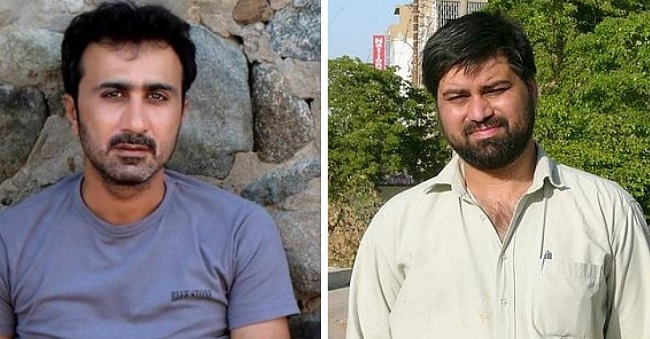
The news of Swedish police recovering the dead body of a 39-year old, Sajid Hussain, a Baloch journalist, outside Uppsala about 60 kilometres north of Stockholm on April 30, brings back a strong sense of déjà vu as one is overwhelmed by bitter memories of another 40-year old Pakistani journalist named Saleem Shahzad whose body was recovered in Punjab province of Pakistan, nine years ago. Whereas it’s incorrect to try and place two different incidents into the same template, but since there are such strong similarities in these two cases, comparison becomes inevitable!

For one, both journalists went missing when they were on their way for some work; while Shahzad was driving down to a TV station for an interview on May 27, 2011, Sajid Hussain had on March 2, 2020 taken a train to Uppsala for collecting the keys of his new apartment there. Secondly, despite both journalists disappearing in broad daylight and that too from busy places, there’s not even a single witness to any of these abductions. Thirdly, the dead bodies of both the journalists were found dumped in water bodies–that of Hussain was fished out from Fyris river near Uppsala, barely 60 km from Stockholm and that of Shahzad from Upper Jhelum canal in Mandi Bahauddin district of Punjab Province in Pakistan.

It can always be argued that the above mentioned similarities mean nothing and one could even mock the same by saying that there’s yet another similarity– that forenames of both the deceased start with the alphabet ‘S’! But the similarity in both these cases goes far beyond cosmetic; there is irrefutable proof that the reportage of both journalists had antagonised Pakistan Army and the ISI. Shahzad wrote extensively on widespread infiltration of jihadis into the armed forces of Pakistan and the nexus between the country’s deep state and terrorist outfits; Sajid Hussain exposed the inhuman ‘kill and dump’ policy being followed by Pakistan Army and ISI in Balochistan. Another similarity was that since both the deceased journalists based their reports on factual details and never retracted their reports, it embarrassed the military and intelligence agencies to no end.

But the most telling similarity was that Sajid Hussain as well as Shahzad had been receiving threats from the ISI and both knew that their lives were in danger. In a piece written for ‘The New Yorker’ (Letter from Islamabad; The Journalist and the Spies, September 19, 2011 Issue), award winning American journalist Dexter Filkins, who had met Shahzad just nine days before his mysterious disappeared writes, “… And then Shahzad changed the subject. What he really wanted to talk about was his own safety. “Look, I’m in danger,” he said. “I’ve got to get out of Pakistan.” He added that he had a wife and three kids, and they weren’t safe, either. He’d been to London recently, and someone there had promised to help him move to England.”

Filkins goes on to recount, “The trouble, he (Shahzad) said, had begun on March 25th, the day that he published the story about bin Laden’s being on the move. The next morning, he got a phone call from an officer at the ISI, summoning him to the agency’s headquarters, in Aabpara, a neighbourhood in eastern Islamabad. When Shahzad showed up, he was met by three ISI officers. The lead man, he said, was a naval officer, Rear Admiral Adnan Nazir, who serves as the head of the ISI’s media division.” Filkins adds, “They were very polite,” Shahzad told me. He glanced over his shoulder. “They don’t shout, they don’t threaten you. This is the way they operate. But they were very angry with me.” The ISI officers asked him to write a second story, retracting the first. He refused.”

However, the scariest part of this report is Shahzad’s account of his previous meeting with ISI officers, five months ago. He told Filkins that “After a tense meeting with two ISI officers about the article (regarding apprehended Taliban commander Abdul Ghani Baradar having been secretly released by ISI), Shahzad called Ali Dayan Hasan, the director of Human Rights Watch in Pakistan. Hasan suggested that Shahzad make notes of the meeting. Shahzad did so, and sent a copy of them to Hasan.

Shahzad wrote that he was met at headquarters by two ISI officials—Commodore Khalid Pervaiz and Rear Admiral Nazir, the same officer who gave him the warning in March. Nazir and Pervaiz were courteous as they asked him to reveal his sources for the Baradar story. Shahzad refused. They asked him to publicly retract the story, and Shahzad refused to do that, too. The ISI officers did not push him, he wrote. But at the very end of the conversation Nazir made an ominous remark. He said, “We recently arrested a terrorist and recovered a lot of data-diaries and other material-during the interrogation. The terrorist had a hit list with him.” He then added, “If I find your name on the list, I will certainly let you know.”

Unfortunately, before he could escape from Pakistan, Shahzad disappeared and his badly battered dead body was recovered subsequently. However, Sajid Hussain was much luckier as he chose to flee the country immediately after his damning reports on ‘forced disappearances’ and rampant human rights violations by the Pakistan Army and ISI in Balochistan resulted in the police raiding his house and interrogating his family members. Working his way through Dubai, Oman and Uganda, Hussain finally reached Sweden and was eventually granted asylum. True to his profession, he continued to highlight the persecution of Balochis by Pakistan’s deep state through Balochistan Times. So, when he went missing on March 2, the needle of suspicion naturally pointed at the ISI as no one else had anything to gain from his death.

There can be only two explanations for the inability of Swedish police to trace out Hussain for three weeks– one, its lack of professional proficiency, and two, the extraordinary precautions taken by his abductors to avoid detection. Since Swedish police has an impressive track record, one can safely rule out the former possibility. So, it’s quite likely that Hussain’s disappearance is no ordinary kidnapping but a meticulously planned covert mission (which in intelligence parlance is referred to as a ‘snatch operation’) carried out with perfection by an experienced spy agency. But with the Swedish police declaring that “The autopsy has dispelled some of the suspicion that he was the victim of a crime,” it appears that an effort is being made to prepare grounds for declaring this death as an accident or even suicide.

Given the accentuating factors discussed above, ascribing Sajid Hussain’s death to an accident or suicide doesn’t make any sense whatsoever. Sajid Hussain had left by train for Uppsala with the specific purpose of obtaining the keys for his new apartment and not for sightseeing or exploring the riverside. So, since there was no reason for him to have gone anywhere near Fyris river, it’s implausible that he ended up falling into it by accident. As far as the suicide theory goes, why should a man who wishes to end his life take all the trouble to take a 60-km train ride and then jump into a river, when he can find other less agonizing and equally effective ways to end his life while sitting right at home?

Furthermore, if he did intend on committing suicide, then he would have at least left a suicide note for his wife or colleagues– being a journalist, sending a tweet, message or email would be the first thing that would have come to his mind. That’s why the apparent haste being shown by Swedish police only raises more suspicion that there seems to be much more than what meets the eye!

Tailpiece: The coroner’s report on the approximate date and time of Sajid Hussain’s death will provide an important clue– if it emerges that Hussain died 24 hours after going missing, then it’s absolutely clear that there’s some foul play involved. Because a man who’s left his wife aback home and has gone on a trip solely for collecting his apartment keys won’t end up accidentally drowning himself in a river. Similarly, if a man has taken a train ride to reach a pre-decided place where he intends to commit suicide, then he won’t sulk around for 24 hours before plunging into the river.

Dissidents face threat of extinction from the government or deep state of their parent countries and since Sweden is considered a safe place, it’s a popular destination for the persecuted. Sajid Hussain too thought so and that’s why it becomes the moral responsibility of the Swedish government to leave no stone unturned in its efforts to track down his assailants! 

Handwara: India pays homage to her fallen heroes

In Handwara, Kashmir, five sons of India from different parts of the country, different security forces (Indian Army and JK Police), different castes and communities, different ranks and responsibilities, found common cause in meeting a hero’s death for the singular objective of upholding the sanctity and security of their country. By their gallant act they have sent shivers down the spines of the enemies of India.

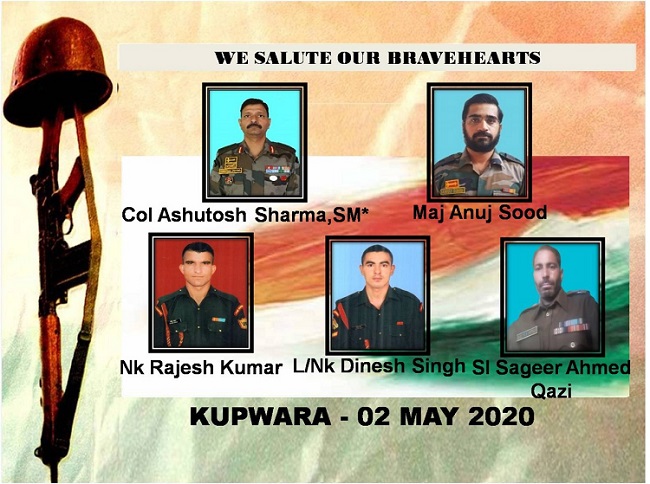
India is united in paying homage to her fallen heroes —  Colonel Ashutosh Sharma, Sena Medal and Bar, Commanding Officer 21 Rashtriya Rifles (RR), Major Anuj Sood, Naik Rajesh Kumar and Lance Naik Dinesh Singh all serving the 21 RR, an elite counter-insurgency unit of the Indian Army. Accompanying them as an integral part of their mission was Sub Inspector Shakeel Qazi of the Jammu and Kashmir Police who also embraced a hero’s death in service of the nation and for the safety of his people.

Reports and inputs received suggest that the operation had been going on for a few days in the dense Rajwara forest of District Kupwara in Kashmir. Initially, the terrorists managed to slip out by using civilians as human shields, which is to be expected since their leader was a Godless Pakistani terrorist named Haider and these Pakistani terrorists are unconcerned about civilian casualties. They have no compunction is using civilians as human shields, this in fact is their preferred form of defence.

The same group of terrorists was once again located at a house in Changimulla, Handwara. A joint operation of 21 RR and JK Police was launched immediately. Once again the terrorists chose to use civilians as human shields and it was under these conditions that a team comprising of the five brave soldiers, led by Colonel Ashutosh Sharma personally went into the house to evacuate the civilians.

“The team of Army and J&K Police personnel entered the target area and successfully extricated the civilians. However, during the process, the team was subjected to a heavy volume of fire by the terrorists. In the ensuing firefight, two terrorists were eliminated and the team of five Army and J&K Police personnel comprising of two Army officers, two Army soldiers and one J&K Police Sub Inspector attained martyrdom,” a statement from the Indian Army said.

Thus, the team succeeded in getting the civilians out, but themselves embraced a hero’s death. Saving civilians under all costs is a firmly embedded ethos of the Army and its units. The team, therefore, took the correct decision as the situation demanded. Colonel Ashutosh Sharma has been decorated for gallantry twice, he was a dreaded name among the terrorist cadre of the valley and very high on their hit list. He was also very well liked by the civilian population and was a cult like figure for his command. 21 RR, comprising of soldiers from the elite Brigade of the Guards, is one among the best and most successful counter-insurgency units operating in the Kashmir Valley.

The big consolation is that the evil terrorists also met their justified end and died a dog’s death in complete ignominy. Haider was a terrorist of Pakistani origin and a senior commander of the Pakistani terrorist organisation, Lashkar-e-Toiba (LeT). He was known as a scourge due to his activities involving extortion from poor and innocent civilians, molestation of  women and wanton killing. The region therefore will be safer and stronger than before, the sacrifice of our heroes has not gone in vain.

The courage and spirit that is being exhibited by the families of the heroes is mesmerizing. Smt. Pallavi Sharma, the wife of Colonel Ashutosh Sharma, Sena Medal and Bar, exhibited commendable composure and fortitude while speaking to some media channels. “Instead of mentioning loss let us start with mentioning his passion, his dream and his priority and his love for the uniform and nothing can match that,” she said. “This loss is unbearable and irreparable but what he did for his nation, for his unit’s pride for his men’s safety, for safety of civilians. I have no words and I am proud of my husband,” she added.

While speaking about the encounter she said that going into the house was totally Col. Ashutosh Sharma’s choice and his decision taken with the confidence about his family being in a position to manage after him. “I have no regrets, it was totally his choice, his decision and it matters a lot to me,” she said.

The young company commander, Major Anuj Sood, is an alumnus of Punjab Public School, Nabha, Punjab. A brilliant student, he was selected to join the Indian Institute of Technology (IIT), but opted to go to the National Defence Academy (NDA) to pursue a family tradition and his passion for the uniform. “He has made a supreme sacrifice. It was part of his duty and what he was trained for. I feel sad for his wife as they were married 3-4 months back. He was meant to save lives,” said Brig Chandrakant Sood, the proud father of Late Major Anuj Sood.

In an Instagram post a little while back Major Anuj Sood wrote, “When you are older you will realise that the only thing that matters– the only thing– that you had courage and honour. Lose these things and you will not die any quicker. But you will be less than the dirt on your boots.” It is not difficult to understand where his courage came from.

One has no doubt about the courage and commitment of the remainder three fallen heroes. They too have a magnificent story to tell and soon will become folklore. Not one among this team was an ordinary human being.

India while being in grief, is pouring out tributes. “Tributes to our courageous soldiers and security personnel martyred in Handwara. Their valour and sacrifice will never be forgotten. They served the nation with utmost dedication and worked tirelessly to protect our citizens. Condolences to their families and friends,” said Prime Minister Narendra Modi in a Tweet.

This unprecedented chronicle of courage and commitment should serve as a lesson for such forces that cast an evil eye upon India. While the nation will continue to find strength in its heroes, these evil powers will suffer ignominy as their Godless tool Haider did. In death, as in life, he will remain cursed.

Pak Army fires & kills cancer patient in Balochistan

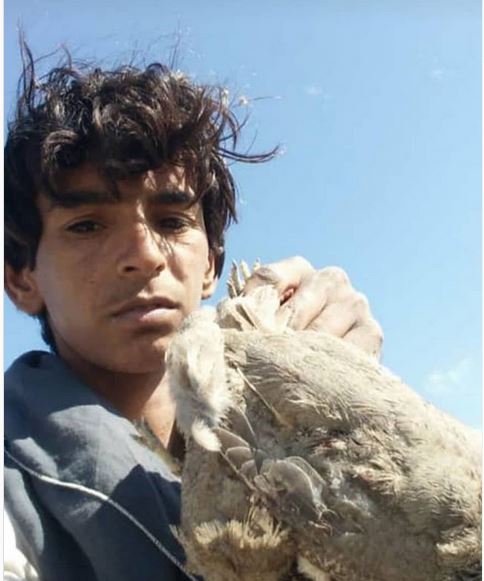
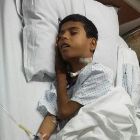
A teenage boy who was battling cancer, lost his life due to incessant and unprovoked firing by the Pakistani forces in Balochistan. Sources told News Intervention that the adolescent victim, Imam son of Sher Mohammed, was traveling along with his uncle and younger brother when Pakistan Army soldiers opened fire on the vehicle in Aapsikan area of Mand in Kech.

Imam was fatally injuries in this firing and his brother was taken away by the Pakistani forces. As per the reports, Imam died due to intense bleeding as the Pakistani forces kept him under their custody for a very long time without medical treatment.

Later the Pakistan Army personnel handed him over to their military wing and he was also kept there for some hours. At last when he was taken to the hospital, it was too late.

The young boy Imam was already battling cancer and was receiving financial help from the Baloch locals for his treatment.

Imam was a cancer patient who was under treatment. Pakistan Army fired upon him and killed him.


Imam was a cancer patient who was under treatment in Balochistan. Pakistan Army fired and killed him.

Many cases of collective punishment in the past by Pakistan Army have been reported in this region of Balochistan.

Due to the insurgency in the region and skirmishes between Pakistan Army and Balochistan’s pro-independence forces, the Pakistan Army indiscriminately targets innocent Baloch civilians.

This is the fifth freedom struggle in Balochistan that has been going on for the last two decades. Over the last 72 years Balochistan is under illegal occupation of Pakistan.

Pakistan’s dishonoring the dead bodies of Baloch freedom fighters shows its lack of human dignity: BNM

Khalil Baloch, Chairman of Baloch National Movement (BNM) and Dr Murad Baloch, Secretary-General BNM in their joint statement paid tributes to the martyr Major Noora and his companions. They said that the Pakistan Army martyred them in ground and aerial military operation in the Parom area of Panjgur. After killing the martyrs their bodies were despoiled and dishonored. This act of Pakistani Army reflects that Pakistan and its soldiers lack human dignity and proves Pakistan’s inherent hatred towards the Baloch nation.

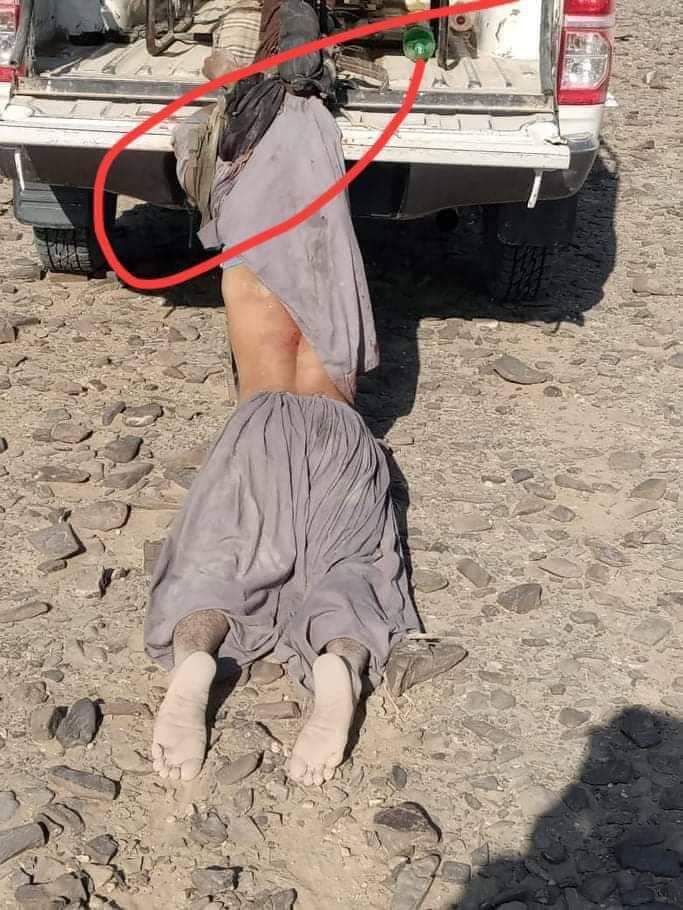
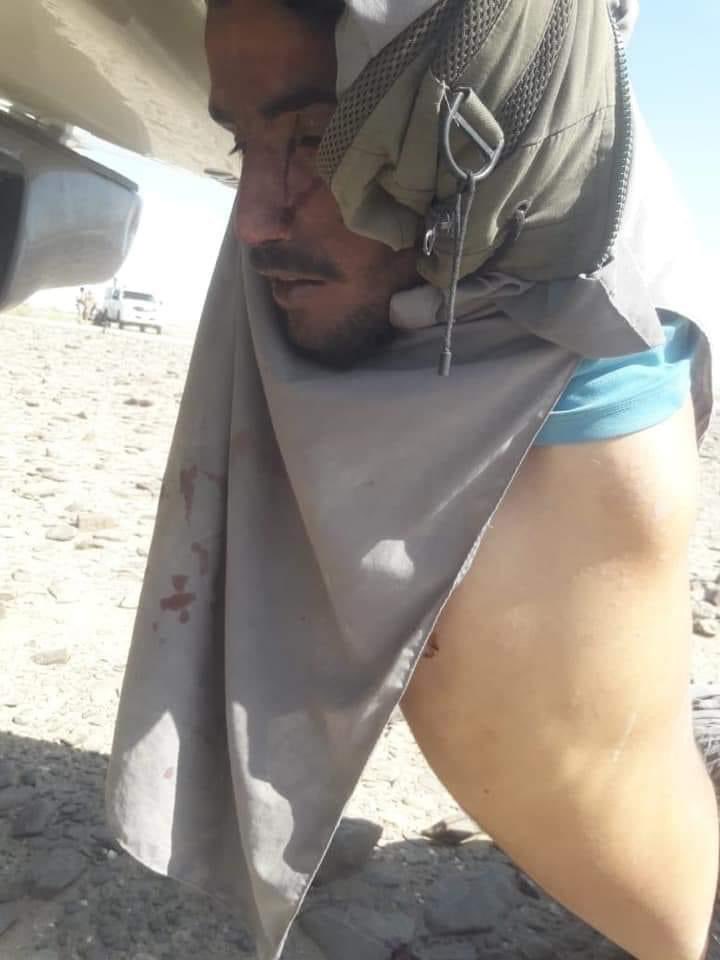
Pakistan Army flouted human dignity, war ethics and international laws by tying the bodies of Baloch martyrs and dragging them behind a vehicle. Such brutal acts and tactics of “outrage upon personal dignity” display Pakistan’s hatred against the Baloch nation.

Such crimes by the Pakistani Army have also taken place in previous instances such as in Mashkay, when the Pakistan Army committed a similar barbaric act of despoiling the bodies of Master Safar Khan and martyr Sulaiman. “We also brought that war crime to the notice of international organizations and world powers but they failed to take any noticeable step. As a result, Pakistan keeps enjoying impunity in violating international laws,” said Khalil Baloch and Dr Murad Baloch in their joint statement.

They further added that Major Noora and his three friends with their bravery, valor and sacrifice have written a new chapter in Balochistan’s war for freedom and justice. “These brave sons of the soil with their courage, bravery and blood had created history that would perpetually be remembered by the coming generations of Baloch nation,” the joint statement added.

They further added Momin Jan, who was also among the martyrs of Parom, Nawaz Jan and his brother Abdul Malik embraced martyrdom in this military operation. They opted for the path of martyrdom in defense of their right to freedom rather than surrendering before the enemy. The Baloch nation would never forget the sacrifices they made for the nation. The sacrifices of Baloch martyrs have always motivated the youth to resist the invading and occupying enemy. 

Martyrs of the Balochistan Liberation Front (BLF) being dragged by Pakistan Army.

They added, “the international bodies must send their peacekeeping mission in war-affected Balochistan in order to ensure that international rules of law are being followed. Pakistan is on top of the list at violating international laws and committing war crimes, but the crimes are being ignored due to the dual policies of several organizations, countries and international political interests.”

The leaders of BNM stated that the history of Balochistan is rich with bravery and valor. The sons of soil have been defending their motherland from times immemorial. Major Noora was associated with the Baloch national struggle as a peaceful student activist. He was a member of the Baloch Students Organization (BSO). The state felt threatened by his ideology and his student politics. He was abducted and “enforced into disappearance” from Lahore in July 2010 while he was a student at one of Pakistan’s top universities i.e King Edward University. He was tortured by the ISI during his “enforced disappearance”. The ISI later forced him to conduct a press conference in Lahore in an attempt to absolve ISI of his and other Baloch activists’ “enforced disappearance”. The brutal torture and humiliation of Noora forced him to discontinue his education and join ranks with BLF. He chose to continue his struggle for freedom with the help of a gun rather than surrendering to Pakistan’s policy of abduction and humiliation of peaceful political activists. He remained on this path until he embraced martyrdom on April 26, 2020.

Khalil Baloch and Dr Murad Baloch in their joint statement remarked that Major Noora had not only defied Pakistani enemies on the ground but also on battlefield at the time of his martyrdom. Before being killed he sent his last message to Baloch nation. Defiant as always, he conveyed a clear message to the enemy and to the Baloch people that the enemy might kill us but would not suppress the voice of Baloch nation for national freedom. “The way Major Noora looked into the eyes of death and fought the occupying forces is itself a history which will be remembered forever.”

Sweden must explore ISI hand in Sajid Hussain’s death: Dr Abdullah Haiwad

Dr Abudullah Haiwad, President of the Afghanistan Governor’s Assembly, has urged the Swedish Ambassador in Afghanistan to investigate possible links of Pakistan’s Inter-Services Intelligence (ISI) in the death of Baloch journalist Sajid Hussain. “We are shocked to hear that Mr Sajid Hussain, a Baloch national from occupied Balochistan residing in Sweden was picked up by unidentified people and disappeared ….his dead body was found in a rive in Uppsala, the city where he lived,” Dr Abdullah Haiwad wrote in his letter to the Swedish Ambassador in Afghanistan.

Sajid Hussain, was the Chief Editor of Balochistan Times who was abducted from Uppsala in Sweden on March 2, 2020. The Swedish authorities initially refused to register a case of abduction saying it was natural for people in Sweden to go in isolation. It was more than a month later, after massive protests by journalists and human rights activists across the world that the Swedish authorities registered a case to find Sajid Hussain. However, on April 29, Swedish authorities found the dead body of Sajid Hussain along a river side in Uppsala.

“Although we know the Swedish government will investigate this issue but we emphasize all options be explored including state sponsored terrorist acts such as by the ISI (Inter Services Intelligence of Pakistan),” wrote Dr Abdullah Haiwad in his letter to the Ambassador of Sweden in Kabul Afghanistan. Dr Abdullah Haiwad is also the founder of Afghanistan Naween Research & Studies Organization, which is an independent Afghanistan-based research NGO. “We as supporters of Pashtuns and Baloch living under the aggression of Pakistani oppression are deeply concerned and we wish to see the perpetrators are brought to justice,” Dr Abdulah wrote in his letter.

Dr Abdullah Haiwad’s letter to the Ambassador of Sweden in Afghanistan. Dr Abdullah Haiwad is President of Afghanistan Governor’s Assembly, which is an association of 66 former and present Governors of Afghanistan. 

Pakistan has been targeting intellectuals, human rights activists and journalists in Balochistan by abducting and killing them to silence the demand for Balochistan’s independence. Sajid Hussain was forced to flee Pakistan in 2012 leaving behind his wife, daughter and son. For the next couple of years he took refuge in Dubai, Oman and Uganda and finally sought asylum in Sweden in 2017.  It was in Sweden that Sajid Hussain started Balochistan Times to write and report about the atrocities in Balochistan.  But Pakistan’s ISI that has spread its tentacles across several countries abducted him from Uppsala in Sweden, killed him and later on dumped his body.

It’s Business: Funeral procession of militants in Kashmir

Large crowd turnout at funeral procession of militants, killed by security forces in Kashmir, makes news headlines at a regular frequency. Recently there was news of a large body of people attending the funeral procession of three local militants killed in the Keran Sector of Kupwara, Kashmir in April 2020. It was then that I decided to write about the Jinaza-e-Karobar—the underlying machinations of the funeral procession of terrorists in Kashmir.

Sometime during February this year, I developed a desire to get first-hand experience of attending the funeral processions of a militant. I had heard all kinds of stories about these funeral processions that ranged from “death of a militant causes martyrdom frenzy among people across age groups” at one extreme, to the extreme where it was being said that “it’s just one of the many businesses in Kashmir such as protests and stone pelting that thrive during conflicts”. Between these two extremes, there were plenty of explanations and question such as Why was a particular methodology adopted? Why is the dead body draped in green? Why always do a particular group of youth or maulvis are visible? Why women beat their chests in a particular manner or sing songs of blood and valour?

Since a majority of these questions and explanations therein were beyond the scope of my logic, I shared the desire for attending a few of these processions with my close friend Iqbal. Iqbal lives in Kashmir Valley, is an activist by nature but a critique of violence and conflict. He empathised with my interest to know and understand these issues. Iqbal advised that I grow my beard. Iqbal also said that in the intervening period before I could actually attend a funeral procession he would explain me about the various contributing components in the procession.

A few weeks later, on 13th March, after hearing the news that Mudasir Ahmad, a militant from Shutloo, village Rafiabad in Baramulla was killed by the security forces, Iqbal told me that he will take me to another village Rahama which is in the vicinity of Shutloo, this was the village from where the slain militant belonged.

I was anxious and curious to understand about what I would witness. Iqbal explained that we would go to the house of Mukhtar (name changed), one of the locals who was his close family friend and who would not mind sharing facts and truth. Few hours after we reached, a Jamat-e-Islami activist called Nasir (name changed) came to his house and informed that Namaz-e-Janaza of the martyr will start and at least two members from each family must attend.

Pakistan flags being waved at the funeral procession of Hizbul Mujahideen militant Burhan Wani. (Photo: PTI)

Soon after the Jamat-e-Islami activist left, Mukhtar told us as to what was the diktat given by him. I asked him whether he would abide by the directive. Mukhtar said that he can’t avoid because someone sitting at a shop next doors or at some another corner will be taking note of who is going to attend the procession and who is not.

“Those who don’t attend the funeral procession of the militant, will face retribution,” Mukhtar said.

I got curious and tried to seek more information about the credentials of the messenger. I soon learnt that this “activist” from Jamat-e-Islami was some sort of a contractor who had been paid to generate crowds from the village.

“These contractors or persons on payroll of Jamat-e-Islami use threat and action by militants, religious punishment or social pressure against the people to mobilize them for funeral procession,” Mukhtar explained.

There was a network of hundreds of other Nasir(s) who work like the parts of a well-oiled machine to ensure that crowd gathering at funeral procession of slain militants in Kashmir Valley looks like a natural and voluntary phenomenon. I was startled at the revelation. “But who pays for it and why?” I asked. I was promptly told that the Jamat-e-Islami is a key element of the Kashmiri separatist movement. Processions being an extremely vital part of the effort to keep the Azadi sentiment alive, it was very critical that this ‘cause’ is seen as just and youth keep getting incited to join militancy and above all, an element of honour is attached with Jihad.

These efforts are well funded by the ISI (Inter-Services Intelligence) of Pakistan, local religious bodies and even business community that owes allegiance (either forced or coerced) to the cause.

During yesteryears, when sentiment of Azadi was genuinely high, large crowd gathering for procession could have been natural. But, with the passage of time, people are no more interested in wasting time on a youth who has gone astray and tend to avoid funeral processions. Moreover, this has now become lucrative business because there are contractors and sub-contractors. So there are ‘Funeral Brigades’ comprising groups of men and women who coordinate crowd gathering, specific procedures, sloganeering, chest-beating and crying out loud, thereby presenting a good sight for videos recordings. These videos are then fed to Pakistani social media handles for propaganda. As these layers peeled off, my curiosity was multiplied manifold and I wanted to be a part of such funeral procession.

The occasion came soon. My friend Iqbal indicated that he would take me to Shutloo from where the procession of slain militant Mudasir was due to take off. We reached the village well before time, when even the dead body had not been handed over to the family by local police. So, as a mourner, I got a chance to sit next to the father and mother of Mudasir and could listen to the conversation. The air was filled with sadness and people were remorse.

Like any other parent who had lost their son, Mudasir’s parents also recalled the lifetime of their son. How Mudasir grew as a child, how the environment played on his psyche of Mudasir, how radicalisation in society affected his mind at an impressionable age, and so on. Mudasir’s mother blamed her husband about how he as Mudasir’s father failed to check him when he started to get attracted towards fundamentalist thoughts of some ulemas. She also quoted an instance when she had picked up a fight for asking Mudasir’s father to stop him from meeting separatist leaders who were corroding sanity from his mind.

Mudasir’s mother said that if he had played the role of a strong father, their son would have been alive. She even quoted the instance when their son broke the news about his wish to join the Azadi tanzeem. How she had pleaded with her son Mudasir and his father to leave Kashmir Valley forever and settle down somewhere else so that Mudasir gets out of the clutches of Azadi movement but they didn’t pay any heed to her calls.

Listening to these talks, there was no doubt in my mind that parents remain parents after all. So what if the son is a militant. Their hearts bleed for the child and they are as helpless as anyone else. By now, there was no doubt left in my mind about the reasons why young men pick up guns. It had nothing to do with the Azadi movement, it had nothing to do with the conscious call, and rather it had everything to do with the emotional fallout of what is played before them. It is all to do with false sense of manhood that they acquire by holding guns and it has all to do with lack of hope and dream. 

Women mourners at the funeral of a slain militant in Kashmir. (Representational picture)

While I was engrossed in my thoughts, people kept trickling in slowly. A sense of loss prevailed in the environment and till now there were no Azadi slogans, no martyrdom or even religious purpose of death. It was pure mourning because those who were around, were real well wishers, genuine friends and relatives.

Soon the time came for the dead body to arrive. Minutes before the police brought the body, a group of around fifteen youth and adults arrived. They carried a special aura around them, and there was a feel of professionalism. Few of them reached out to Mudasir’s parents, whispered into their ears (I later on learnt that the parents were being directed as to how they have to behave and what they have to say during the course of preparation and actual procession), few others reached out to friends and relatives while the rest got into the act of making a makeshift platform high enough to be visible to maximum people who had congregated. My friend Iqbal whispered into my ear that these ‘people’ were part of the ‘Funeral Brigade’ meant to orchestrate entire proceeding, while adding the effect and emotions about Azadi

The likes of Nasir were busy pushing people from the adjoining hundreds of villages and townships. The crowd started to swell. Soon the ambulance carrying the mortal remains of the militant arrived, which was duly escorted by police. The crowd made way for the body so that it can be taken to the newly built platform. Suddenly, a loud voice thundered “hamei chahiye”? (what do we want). “Azadi”,was the reply.The response was faint and this annoyed the leader of the “Funeral Brigade”.

Strong gestures were made by one individual, who looked like the gang leader of Funeral Brigade towards the other members of Brigade to ensure high intensity sloganeering. The effect was immediately visible in terms of pitch, intensity and the acerbic content. This was quickly followed by the arrival of a group of veiled women and some other young men. The body language of these newly arrived veiled women and the already present group of Funeral Brigade indicated that all of them were part of the same Brigade.

The men from this group pushed through the jostling crowd and reached the body of militant to kiss the militant’s forehead, touch his feet and rub their hands on their body while women started crying in loud voices with extreme emotional outpouring. It was quite evident that while the men were busy giving some kind of reverential treatment to the militant, the women were making it appear as a feeling of personal loss to those present at the funeral. Soon these women started chest thumping with loud cries that was so strong that even the most dissociated person like me felt some kind of an impact. 

The crowd continued to swell with every passing minute. Slogans of Azadi was turning more aggressive and with every passing minute, the environment was getting charged up. Soon, a group of teenagers took to the microphone, exhorting mourners to continue their “azadi struggle” by singing songs of defiance. The mood had changed into a “celebration of martyrdom.”

I then drifted towards the place where the militant’s parents were sitting. I could clearly make out that the members of ‘Funeral Brigade’ were constantly putting words into their mouth, thereby changing the entire line of expression. Poor parents were not even allowed to mourn the death of their child in peace.

The funeral procession was being deliberately delayed, perhaps in the wait for more crowd to gather. The policemen on duty were constantly urging the slain militant’s parents to start the procession. Perhaps they had orders from their bosses to ensure an early funeral.

Finally, the funeral procession started. ‘Funeral Brigade’ was in full action. People mobilized by the Jamat-e-Islami keep joining en-route and the crowd kept swelling. I could clearly see the local village people making gestures and communicating through silent shrugs saying that who the hell wants to be part of such engineered events when they had their own issues to attend to.

Members of the ‘Funeral Brigade’ remained busy clicking photographs and videos that they forwarding to their masters for further propagation. A local villager who seemed to have insights about the conflict dynamics explained to me that “…these visuals are also the proof for Funeral Brigade to claim their remuneration for the job well done. They send them to masters within Kashmir, who in turn send these visuals to people sitting across the border as proof for payment and for propaganda to the audiences within Pakistan, OPEC countries and rest of the world.” Amidst these Azadi slogans, praise for Pakistan, abuses for the occupational forces and all sorts of filthy phrases for India the procession finally reached the burial ground. 

At the burial ground, a yet another strange activity drew my attention. A fat middle-aged woman, draped in ‘burqa’ appeared at the funeral site of the militant. She had a green polythene bag under her arm and claimed to have come from some far-off place just to say goodbye to her militant son (anyone who is a militant becomes her son, I learnt). Such stories of devotion towards those who lay down their lives for Azadi, draws a lot of media attention and sympathy from people. All the acts put together, enough mileage is generated among youth and they get drawn towards joining militancy. 

I verified from the near and dear ones of slain militant, this lady was not even remotely related to the militant biologically, yet she claimed that she had breastfed him when he was an infant. I also learnt that this act was also part of the many machinations constituting the Jinazah-e-Karobar or the business of funeral procession. The optics such as withered plastic sandals, tired look justifying long distance walk and expressions indicating how tormented she was on hearing the news about the militant’s killing, add immense value to the Azadi propaganda.

As if the members of Azadi or funeral brigade knew about her and were waiting for her arrival, they lost no time and lifted her onto their shoulders and carried her to the militant’s bullet-hit body. Once there, she kissed his bullet-pocked, deformed face, took a handful of candies from the bag and threw them on his body, a tradition observed when Kashmiri grooms return home with their brides.

She then addressed the crowd.

“Would you like to become a doctor?” she began, to which the angry crowd chanted back, No, we won’t!”
“Would you like to become a Police Officer?” she shouted, the crowd responded back “No, we won’t!”
“Would you like to become a militant?” she continued.
“Yes, we will,” the crowd roared back in response.
“Would you like to become Tiger?” she said, referring to an infamous Kashmiri militant Burhan Wani, also known as Burhan Tiger, who was killed in 2016.
“Yes, we want to!” the crowd responded.
“Then say it loudly,” she shouted.
Azadi!” the crowd responded.

Iqbal, my friend, helped me meet a few other reasonable people who explained that this was almost common to all the funerals undertaken anywhere in Kashmir, particularly South Kashmir.

The larger objective of the funeral processions into which ISI and Kashmiri separatists invest heavily is to create role models and heroes for imitation by the young generation of Kashmir Valley. This gives them courage to start defying law and order, pelt stones and stand in front of Indian Army vehicles to block their movement. They block roads and by-lanes when militants are cordoned by the security forces and then they resort to violence and agitations to obstruct the conduct of operations. Any untoward incident, generates further anger and violence. Often, an act of firing from among someone who is part of the crowd sparks and fuels the spiral of deadly violence.

Militant Burhan Wani’s death in a gun battle with security forces in July 2016 initiated a long drawn violence in the Kashmir Valley. The impact of such processions is so quick that a young boy joins the militant rank and even gets killed in operation within few days of recruitment. One often hears or reads that a militant was just a few days old when he was killed, which was the case in this case as well. Mudasir had joined militancy just eight days back and was killed.

Everything that happens in Kashmir is twisted to suit the narratives of the Azadi nexus, be it political decision, social activity or a ritual. Everything culminates into a demand for Azadi. The machinations are well crafted and coordinated. But everything has a cost. It doesn’t matter who pays and for what. As long as the money flows, these mechanisms will continue to thrive. It’s for daily wage for those who execute and business for those who orchestrate. As long as the ISI is funding, lives and deaths will continue to remain a Karobar (business).

Tribute to Sajid Hussain will be to continue writing about human rights violations in Balochistan

“Missing” may be a simple English word for everyone else in the world, but in Balochistan this word sends shivers down the spine. Baloch understand that “Missing” is a euphemism for cold-blooded murder by Pakistan’s rogue intelligence agency ISI (Inter-Services Intelligence). This belief has been proved correct, yet again, when Sajid Hussain, Chief Editor of Balochistan Times was found dead at a river side in Uppsala, Sweden on April 30. Incidentally, Sajid Hussain went “Missing” from Uppsala on March 2 this year.

Baloch human rights activists and journalists had been fearing for Sajid’s life ever since it came to light that he had gone “Missing”. And since then there had been a relentless campaign to urge the Swedish authorities to take active steps to ensure his safety and well being. But the Pakistani deep state has spread its tentacles so deep within the Western world that it has the wherewithal to silence any critic anywhere.

In fact, Sajid Hussain Baloch had been on Pakistan’s radar since the day he started writing and reporting about Baloch “missing” persons, “enforced disappearances” and the notorious “kill and dump” policy of Pakistan’s deep state. He was forced to flee Pakistan in 2012 leaving behind his wife, daughter and son. For the next couple of years he took refuge in Dubai, Oman and Uganda and finally sought asylum in Sweden in 2017. Sajid thought that Sweden was the safest country, respected freedom of speech and journalists could write without the fear of their pens being silenced.

It was in Sweden that Sajid Hussain started Balochistan Times to write and report about the atrocities in Balochistan. His writings were sharp and incisive and shook the conscience of the complacent West. How could a simple English word “Missing” sends shivers down the spine in Balochistan was explained to the Western world by Sajid Hussain through his columns in Balochistan Times. He also chronicled atrocities being committed by the ISI and Pakistan Army by exposing their “kill and dump” policy that exposed Pakistan to the Western world.

Guns cannot silence a pen. Never.

Sajid Hussain became the eyesore of Pakistani deep state due to his pen. The sugar-coated narrative built by Pakistan Army about fighting terror modules was deftly exposed by incisive writings of Sajid. And that’s when they decided to silence Sajid Hussain.

Ironically, human rights champions all around the world will hardly discuss and berate Islamabad or Rawalpindi about this cold blooded murder. World’s mainstream media will write Sajid Hussain’s obituary as a news brief. Just one more addition to the 30,000 “missing” Baloch persons hardly makes any difference for the high and mighty. This has been a trend for the last several decades.

Not this time.

We will not let the world forget Sajid Hussain or his writings or the ideals that he stood for. Journalists and writers across the world will continue to write with renewed zeal about human rights violations and atrocities in Balochistan. Guns cannot silence a pen. Never.

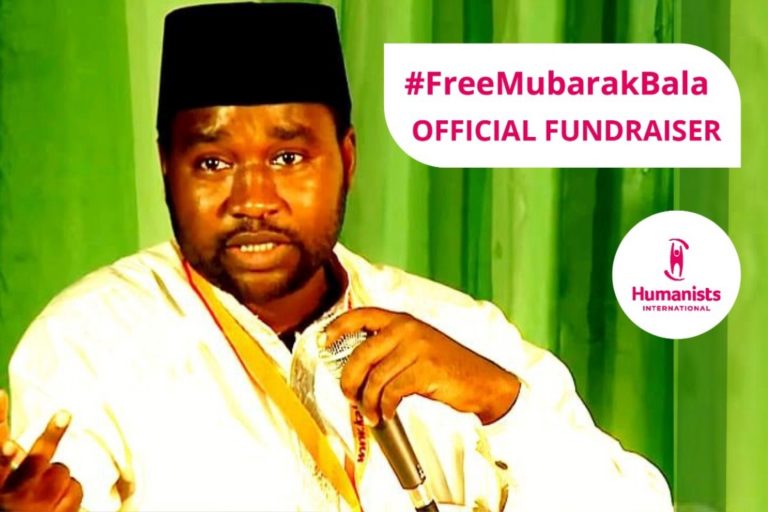
Mubarak Held Incommunicado in Kano

By Leo Igwe 

While the police authorities in Kano have confirmed that Nigerian Humanist Mubarak Bala is in their custody, they have not granted him access to a lawyer. He has been held incommunicado. The police arrested Mubarak in Kaduna three days ago following a complaint of insulting prophet Muhammad that some lawyers in Kano filed at the State Police Command.

Mubarak was detained in Kaduna for a night before being transferred to Kano two days ago. Since taken to Kano, the police authorities have not allowed him to see his lawyer. The police authorities have been blocking efforts to understand the details of the complaint. This is in breach of Mubarak’s human rights.

There are reports that Mubarak is being beaten and tortured while in detention. There are also concerns over the state of his health, especially with the outbreak of a strange disease and the coronavirus in Kano. In the last 48 hours, there has been no independent confirmation that Mubarak is alive and well, there is no confirmation that he is not being maltreated and that his rights are not being violated. Given the nature of the allegation, there are serious concerns over Mubarak’s health. According to family sources, Mubarak is hypertensive. Many people are worried that Mubarak could be killed while in detention given the several death threats that he has received.

Please kindly help draw the attention of the Nigerian authorities to the case of Mubarak. Ask the police authorities to grant Mubarak access to his lawyer today.

Urge the police to charge him in court formally or release him unconditionally.

Image Credit: Leo Igwe.

Pakistan hasn’t reined in terrorists even during the Holy Ramadan month

Ramadan is a sacred month when Muslims across the world observe a month of fasting, an activity regarded as one of the five pillars of Islam. This year the month of Ramadan commenced on April 23 and will culminate on May 23. During this month, Muslims are decreed by Allah to emphasise on acts of “Deen” (religion) rather than worldly matters. Ramadan is not only about fasting, it is also about being humble, modest and above all, free of all animosities. It is about discipline, self control, self reflection and reformation, a time when the believer ponders over spirituality and piety and brings about a change in his own self for the better. Eid-ul-Fitr, a festival of joy, is a befitting celebration and thanksgiving that marks the end of the holy month of Ramadan.

It becomes very difficult to come to terms with the cult of violence and hatred that has, ever since advent of terrorism in Kashmir Valley, become a characteristic in the month of Ramadan. This year too, the terrorist cadre has remained active despite their drastically reduced numbers. Terror masters have increased efforts towards recruitment and are giving huge monetary incentives to the Kashmir youth to join the self destructive path of terrorism. It is so because infiltration of foreign mercenaries from Pakistan has been curtailed drastically by the vigilant Indian Army and, as such, internal recruitment is the only option left.

In the hinterland of Kashmir, terrorists, at the behest of their foreign masters, are hitting out during the holy period of Ramadan. The security forces are responding incisively. Relentless counter terrorist operations are being carried out in a professional manner. More than 30 terrorists have been killed in the month of April alone, of which, more than 15 have been eliminated in the last few days since the holy month has commenced. Through this year, terrorists have suffered a back-breaking loss of nearly 60 fatal casualties.

On April 22, a day before the holy period of Ramadan commenced, four terrorists were killed in Shopian. On April 23, a terrorist named Shakir Alie and affiliated to the Hizbul Mujahedeen was apprehended in Kulgam; three days later, on April 27, four terrorists were killed in Kulgam. On April 26, in two separate and successful operations security forces killed two terrorists in Pulwama and two in Anantnag. On April 29, three more terrorists were eliminated in a joint operation in Shopian, the operation went on for two days. Terrorists were of the view that they would get a free run during the holy period, bu the Indian security forces have put paid to such a thought process.

Despite being an Islamic state and despite being in a critical situation due to unfettered spread of the Coronavirus across the country, Pakistan has not stopped its consistent cease fire violation along the line of control during the month of Ramadan. It has, in fact, increased the pressure drastically. Border villagers of Nowshera, like Village Pukharni, where the Muslim community resides, have been observing the sacred month of Ramadan under shelling by Pakistan. A ground report prepared by a local newspaper Daily Excelsior says, “…one of the villagers Mohammad Altaf got injured due to bullet from Pakistan side, when he was sitting inside his house. Although he was treated but the bullet could not be taken out from his body.” Similarly, Pakistan has also been shelling in Bhawani, Shermakri areas. The same conditions prevail all along the LOC including the Kashmir sector.

There were two occasions when New Delhi took a decision to “suspend operations” during the holy month of Ramadan. The first initiative was taken by the Atal Bihari Vajpayee-led NDA government in 2000. It was termed as Non Initiation of Combat Operations (NICO). NICO was fuelled by an intense desire that Prime Minister Vajpayee nurtured to put an end to violence in Jammu and Kashmir. The noble policy failed to produce the desired results despite being in place for five long months.

As an end result the number of terrorists operating in the state increased drastically, resulting in intense counter-terrorist operations in 2001 and 2002 to neutralise the added numbers. Pakistan-based terrorist organisations like the Jaish-e-Mohammad got an opportunity to invigorate their cadre and this led to the attack on the Indian Parliament, which took the two countries to the brink of war.

The second such attempt was made by the NDA-led Union Government in 2018. A request for “ceasefire” was made by the then chief minister of the state and agreed to by the Union Government. The noble initiative hit a roadblock right from the word go. “Ceasefire is not an option. We deem it as sin to the sacrifices rendered in the freedom struggle. We are the heirs of martyrs and opting for such choice is treachery to their blood,” said Abdullah Ghazanwi, spokesperson of the terrorist organisation Lashkar-e-Taiba (LeT). Even as the ceasefire announcement was being made, terrorists opened fire on an Indian Army patrol in Shopian district of South Kashmir.

Not to be left behind, the Hurriyat leadership came up with its own brand of statements. Mirwaiz Umar Farooq said that a month of no action is nothing more than a “farce” while the chairman of the Jammu and Kashmir Liberation Front (JKLF), Yasin Malik, described the decision as a “Mazaak” (Joke).

The sad truth is that the people of Union Territory of Jammu & Kashmir and the security forces have to contend with an ignoble enemy who will not relent from his malicious objectives even on the most holy religious occasions. Hence, Ramadan and the fight against Coronavirus will perforce have to go hand in hand with the fight against Pakistan-sponsored terrorism and violence. The security forces, on their part, are very alert and vigilant to ward off terrorist attacks. It is for this reason that the terrorists are not getting the type of success that they are looking for despite making numerous attempts.