Home Blog Page 38

Israel executes Hamas leader Yahya Sinwar in targeted operation in Rafah

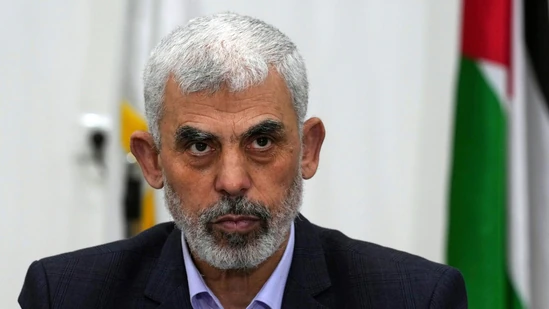
Yahya Sinwar, the mastermind behind the October 7, 2023 attack that ignited the ongoing Gaza war, was killed on Thursday in an Israeli military operation in Rafah, located in southern Gaza.

The announcement came from Israeli Foreign Minister Israel Katz, confirming Sinwar’s death after hours of speculation. The Israeli military initially reported that it was investigating whether Sinwar was among the militants killed during the operation. Dental images and DNA analysis were used to identify his body.

“Mass murderer Yahya Sinwar, responsible for the massacre and atrocities of October 7, was killed today by IDF soldiers,” Katz said in a press release.

Following the operation, Israel’s security cabinet members were briefed on the assassination, and U.S. military officials were also informed. Israel shared photographic evidence believed to show Sinwar’s body to American counterparts.

Sinwar’s death is considered a significant victory for Israel, particularly for Prime Minister Benjamin Netanyahu, amid Israel’s ongoing campaign of targeted killings against high-profile figures within Hamas and other militant groups. This campaign has seen the elimination of several leaders in recent months, weakening the leadership infrastructure of Israel’s adversaries.

Sinwar had risen to prominence after the assassination of Ismail Haniyeh in Tehran in August. His whereabouts had remained a mystery since the October 7 attack, with speculation suggesting he was hiding within Gaza’s intricate network of tunnels.

The killing of Sinwar follows a series of strategic strikes by Israel. Hasan Nasrallah, leader of Hezbollah, was killed recently, along with key figures in the group’s military wing. Additionally, Hamas military commander Mohammed Deif was targeted in July, and his deputy, Marwan Issa, was eliminated in March. In January, a drone strike on southern Beirut killed Saleh al-Arouri, a top Hamas figure and founder of the Qassam Brigades.

The conflict began after Hamas launched a surprise attack on Israel on October 7, resulting in the deaths of approximately 1,200 people and the capture of over 250 hostages. Israel’s retaliatory campaign has devastated Gaza, claiming over 42,000 lives and displacing much of the population. Large parts of Gaza lie in ruins, with humanitarian conditions deteriorating rapidly.

Manzoor Pashteen declares Khyber Jirga as start of Pashtun resistance

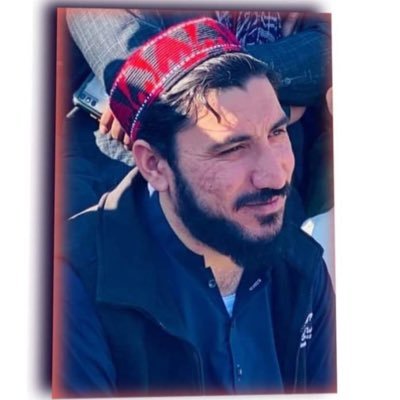
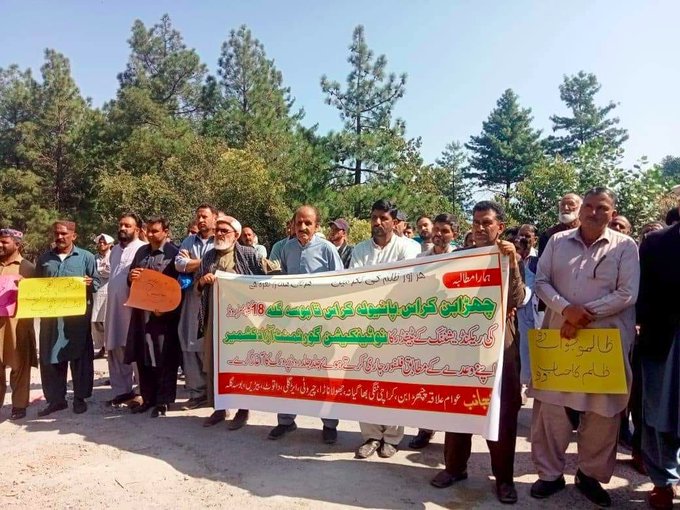
In a powerful address, Manzoor Pashteen, a prominent leader of the Pashtun Tahafuz Movement (PTM), reflected on the events of October 11, when a peaceful assembly known as the Khyber Jirga was violently disrupted. Pashteen said that this gathering was not an end but rather a new beginning for the Pashtun struggle for justice and peace.

“We were gathering for peace under the banner of the Pashtun National Court, but the oppressors responded with overwhelming force to thwart our efforts,” Pashteen said, highlighting the Punjabi Pak Army’s brutal response to a peaceful assembly aimed at advocating for Pashtun rights. The violence erupted when Pak Army forces clashed with peaceful participants, resulting in the tragic deaths of at least four Pashtuns and leaving many others injured. Additionally, hundreds were arbitrarily detained, illustrating the severe crackdown on dissent by the Punjabi Army elites.

Pashteen’s remarks underscore the ongoing plight of the Pashtun community, which has faced systemic oppression for decades. “This is how the Pakistan Army deals with those who seek peace,” he said. “The Army generals are allergic to peace, fearing the unity and strength of a people who have long been marginalized.”

The Khyber Jirga was intended as a platform for dialogue and reconciliation, yet the heavy-handed tactics employed by the Army forces served as a stark reminder of the challenges faced by those advocating for peace and justice in Pakistan.

Mahrang Baloch calls Pakistan’s judges puppets of the Army at Karachi Lawyers’ Convention

In a recent event organized by the Karachi Bar Association, prominent activists Dr. Mahrang Baloch and Sammi Deen Baloch voiced strong criticism against judges in Pakistan, as they have become mere spokespersons for the Pak Army instead of upholding justice for the citizens of the country.

During the program, officials disrupted proceedings by cutting off electricity in the hall, prompting lawyers to chant slogans in support of the two activists. Following the disruption, Mahrang Baloch and Sammi Deen were invited to address the audience, where they highlighted the growing discontent among Baloch mothers who have lost their children to Pak Army violence.

Mahrang Baloch said, “Judges sitting in these courts, who were supposed to provide justice to the citizens, have become spokespersons for the military.” She said that the blatant aggression and brutality of the Pak Army in Pak-occupied-Balochistan, emphasizing that no amount of funding can obscure the bloodshed that has plagued the region.

https://twitter.com/AsadAToor/status/1846470889241555322

She lamented the situation of grieving mothers, saying, “Today, the Baloch mothers, whose children have been murdered by Army institutions and discarded as mutilated corpses, do not ask for justice or punishment for their children’s killers. They only seek confirmation on whether the remains belong to their child.”

Mahrang described the current state of the judicial system as a tragedy, asserting that judges should reflect on their diminished credibility, noting that even the mothers of victims are no longer asking them for justice. Instead, she warned that “Baloch mothers will seek their own justice.”

Dr. Mahrang Baloch emphasized that Baloch women are engaged in a struggle in POB that is poised to evolve into a significant movement in the future. She reiterated that for over fifteen years, mothers of Baloch, Sindhi, Pashtun, and other ordinary citizens have been pleading before judges for the return of their missing sons, yet their cries remain unheard.

This critique of the judiciary comes amidst growing concerns over human rights violations and the lack of accountability for violence in Pakistan, particularly in POB, where the military’s influence has been deeply entrenched.

Doctors in POGB to protest if Pak authorities ignore service regularization demands

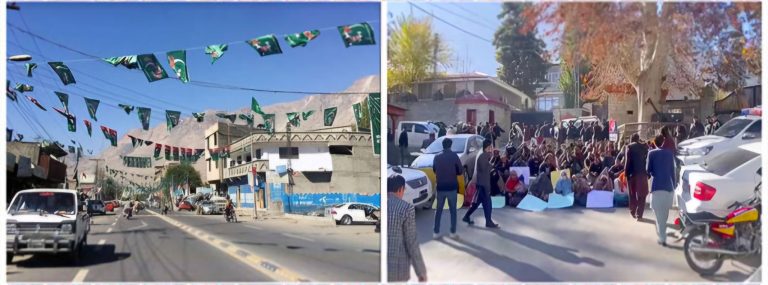
Doctors in Pakistan-occupied Gilgit-Baltistan have announced they will begin protests in 15 days if their demands for service regularization and promotions are not met. They said that the occupied-Pakistan authorities are ignoring their grievances, further deepening the frustration within the region’s already marginalized healthcare sector.

The doctors complain about stagnant career paths and the denial of promotions, and the neglect faced by the region under Pakistan’s control. Despite playing a critical role in healthcare delivery, medical professionals in the area are treated unfairly, and local authorities have made little effort to address these issues.

The crisis in healthcare reflects the broader challenges faced by POGB, a region that remains one of the most underdeveloped under Pak Army control. Residents lack access to proper roads, healthcare, education, and other essential services, with corruption and mismanagement compounding their difficulties. The continuing neglect threatens the future of the region, which already suffers from limited economic opportunities and persistent poverty.

The roots of POGB’s plight date back to 1949, when Pakistan forcefully incorporated the region into the Kashmir issue without the consent of its people. From the start, locals were considered incapable of self-governance and subjected to the oppressive Frontier Crimes Regulation (FCR), a colonial-era law that denied basic civil rights.

It wasn’t until the early 1970s, under the government of Zulfiqar Ali Bhutto, that the FCR was abolished. However, even after this reform, the region has remained in a state of chronic underdevelopment and political marginalization. Despite being promised greater autonomy, residents still struggle with socio-economic challenges, exacerbated by the Paki establishment’s disregard for their needs.

Punjab (Pak) police murders Sindhi student Saajan Malookani in fake encounter

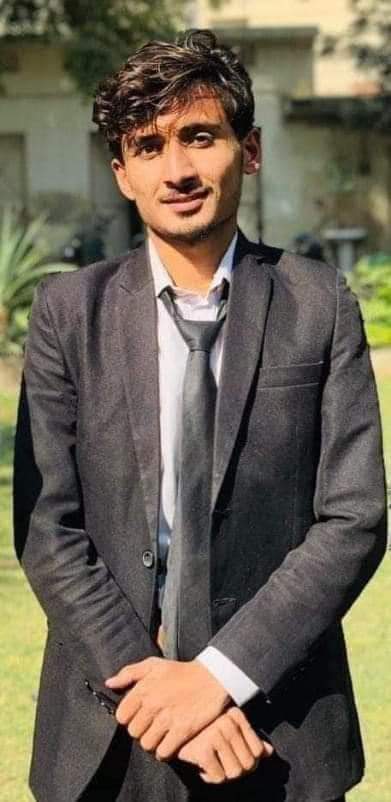
Saajan Malookani, a Sindhi law student forcibly disappeared 14 months ago by Pakistan Army, has been killed in a staged encounter by Punjab Police.

According to the Jeay Sindh Students Federation (JSSF), Malookani was abducted by Pak security forces on September 1, 2023, while returning home from the Old Campus of Sindh University, Hyderabad (Pak). Despite multiple protests, legal petitions and appeals to human rights organizations, authorities failed to provide any information on his whereabouts. On October 6, 2024, Punjab Police declared him killed in a “police encounter” in Rahim Yar Khan’s riverine area, falsely labelling him a dacoit.

Malookani’s killing has reignited accusations of Army-backed repression in Sindh, with the Pak Army’s involvement in enforced disappearances coming under renewed criticism. The military operates with impunity, orchestrating the abduction of activists and students as part of a campaign to suppress Sindhi nationalist movements.

The Pak Army’s “death squads” operate through proxy law enforcement agencies, using police encounters as a convenient cover to eliminate those they want, no reason asked.

Extrajudicial Killings and Crackdown on Minorities

Despite protests across Sindh and a constitutional petition filed by Malookani’s mother in the Sindh High Court, Pak authorities failed to secure his release. The Forum for Missing Persons of Sindh repeatedly warned that Malookani would be executed under the guise of a police operation, just as other had been.

Malookani was targeted alongside two other missing activists, Shaukat Malookani and Naeem Malookani, who remain unaccounted for. The Counter-Terrorism Department (CTD) in Hyderabad is also abricating charges against the three men, setting the stage for their arrests and staged killings.

The Pak military’s pattern of enforced disappearances and extrajudicial killings reflects a systematic strategy to stifle ethnic and nationalist movements in Sindh. The military has created a culture of oppression, with security forces operating beyond the reach of law or accountability. Malookani’s killing is a stark reminder of the ruthlessness of the Paki establishment, where the Army’s colonial mindset drives efforts to eliminate any form of dissent.

BLA attacks Pak Army convoy in Kalat, executes nine

Fighters from the Baloch Liberation Army (BLA) ambushed a convoy of the occupying Pakistan Army in Kalat, reportedly eliminating nine personnel and injuring at least five others.

The attack occurred in the Dasht Mehmood area, where BLA fighters used a remote-controlled improvised explosive device (IED) to target a pickup vehicle from the convoy. All five personnel in the vehicle were killed instantly. Following the initial blast, BLA fighters unleashed a hail of gunfire on other vehicles in the convoy, resulting in four additional deaths and multiple injuries.

This ambush marks another chapter in the ongoing conflict between the Baloch nationalist movement and the Pak military, for its heavy-handed tactics and disregard for Baloch rights. The military’s operations in the region are often marked by brutality and oppression, leading to increased resistance from pro-independence groups like the BLA.

“The continuous disregard for Baloch lives and resources has pushed our people to resist,” said Jeeyand Baloch, a spokesperson for the BLA. He emphasized that such operations will continue until the Baloch people are granted their rights. The BLA’s declaration of responsibility highlights the group’s determination to escalate attacks against the “occupying” forces of the Pakistan military.

The Pakistan Army’s ongoing operations in Pak-occupied-Balochistan have drawn widespread condemnation, not only for their violent methods but also for exacerbating the suffering of civilians in the region. The conflict has led to countless enforced disappearances, extrajudicial killings, and a complete disregard for the socio-economic conditions of Baloch communities.

Iranian guards kill over 300 Afghan migrants fleeing Pak; Pashteen condemns Iran’s hypocrisy

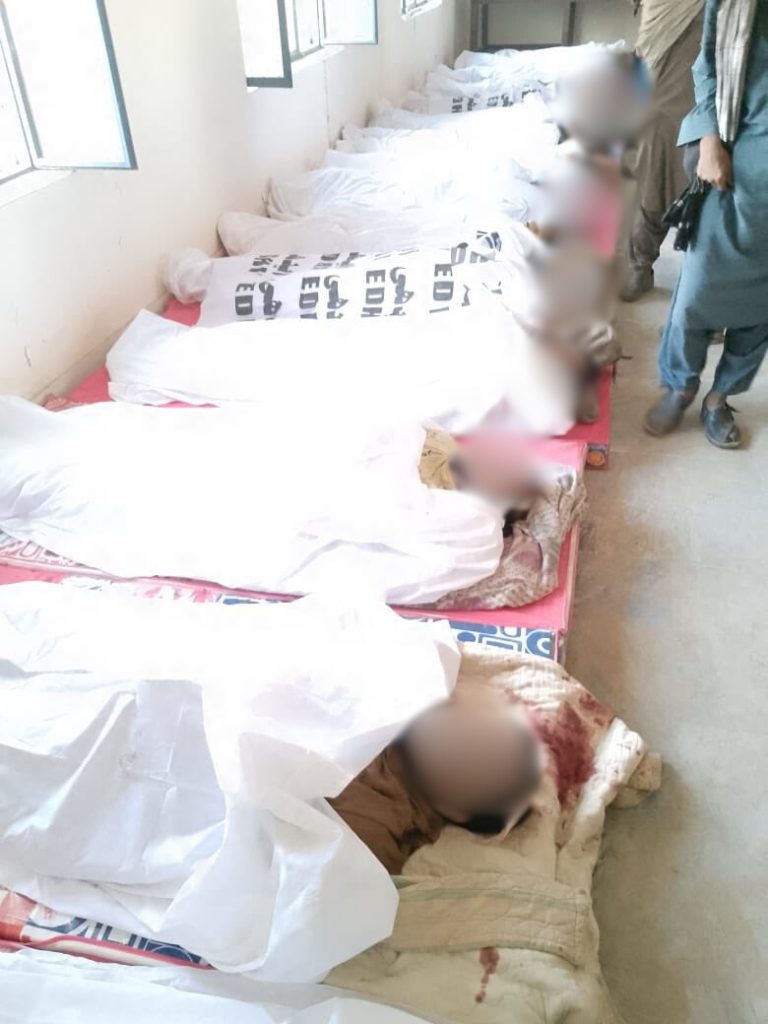
The Taliban authorities have launched an investigation into reports that Iranian border forces killed and injured dozens of Afghan civilians attempting to enter Iran illegally from Pakistan. The incident, which took place on Sunday in Iran’s Sistan-Baluchistan province, has sparked concern over the treatment of Afghan migrants.

Hamdullah Fitrat, the deputy spokesperson for the Taliban government, announced on Wednesday that “various governmental bodies” and Afghan diplomatic missions are conducting “comprehensive investigations” into the reported deaths and injuries. However, the details are yet to be confirmed.

The probe follows an initial report from Halvash, an Iranian rights group, which claimed that Iranian guards had attacked a group of 300 Afghan migrants attempting to cross the border. The assault resulted in multiple fatalities and injuries.

Iranian authorities have denied the allegations of large-scale killings. Hassan Kazemi Qomi, Iran’s special envoy and ambassador to Kabul, issued a statement on X, rejecting reports of dozens of deaths. He referenced the Saravan border region, which lies adjacent to Washuk district in Pakistan’s Baluchistan province, as the site of the alleged incident.

“As of now, reliable sources confirm that the news about the deaths of dozens of illegal citizens at the Saravan border is not true,” Qomi said. He stressed that every country has the right to respond “legally” to unauthorized border crossings and warned that Iranian guards are obliged to prevent illegal entries.

Qomi also emphasized the importance of shared responsibility in border management, urging Afghanistan and Pakistan to fulfill their obligations to prevent such crossings. He reiterated that Tehran is determined to return undocumented asylum seekers and deal firmly with illegal migrants.

Border Tragedy

Locals in Pakistan’s Washuk district have also reported hearing about the attack, though they could not provide specific casualty figures due to the remoteness of the area. Pakistani authorities have so far not issued any comments on the matter.

Manzoor Pashteen, leader of Pakistan’s Pashtun Tahafuz Movement (PTM), condemned the violence against Afghan migrants, calling out the hypocrisy of Iran. “Iran opposes the ongoing oppression of Muslims in Palestine and Lebanon. But on the other hand, even today, hundreds of Afghan Muslims have been martyred with great oppression. This is injustice,” Pashteen said.

He criticized the continuation of such incidents, demanding an end to violence against Afghans. “These incidents have been happening for a long time and should be prevented. Everyone should raise their voices to reach the authorities of Iran to stop oppressing Afghans and take action against the perpetrators of this incident,” Pashteen added.

Iran and Pakistan currently host millions of Afghan refugees, both documented and undocumented, with many fleeing hardship and persecution following the Taliban’s return to power in Afghanistan in 2021. Deportations of undocumented individuals from both countries have continued at a steady pace.

According to the International Organization for Migration, nearly 100,000 Afghans were deported from Iran and Pakistan in September alone. Humanitarian organizations warn that deportees often face dire conditions upon their return, adding to the ongoing humanitarian crisis in Afghanistan.

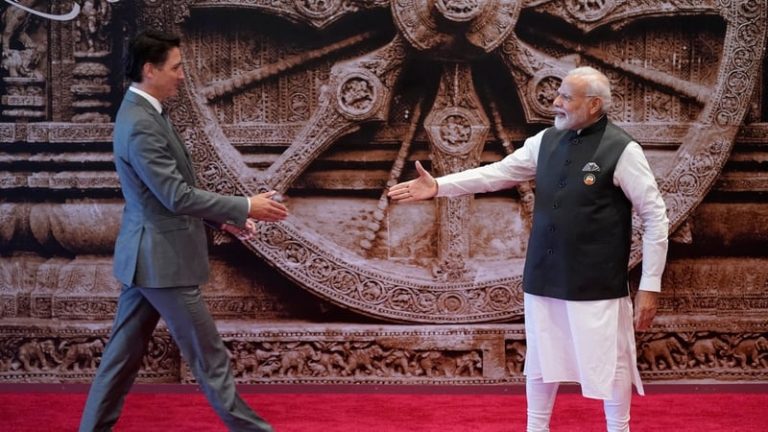
Trudeau faces criticism for escalating India-Canada dispute

As relations between India and Canada hit a historic low, Canadian media and analysts are sharply criticizing Prime Minister Justin Trudeau for making allegations against Indian diplomats without substantiating them with credible evidence. The diplomatic fallout follows Ottawa’s identification of Indian diplomats as “persons of interest” in the investigation into the murder of Khalistani terrorist Hardeep Singh Nijjar.

In a scathing article published by The National Post, senior journalist and author John Ivison argued that Canada has allowed Sikh extremism to “flourish” within its borders. Ivison criticized Trudeau for allowing diaspora politics to influence foreign policy, saying the Prime Minister’s approach has harmed Canada’s international standing. He also called out the Royal Canadian Mounted Police (RCMP) for making serious accusations against India without offering any proof.

The RCMP accused Indian agents of engaging in “serious criminal activity” in Canada, calling it an “extraordinary situation” while dismissing India’s claims of a political smear campaign and accusations that Canada harbors violent extremists. It was a “highly unusual public statement,” calling the allegations “remarkable” given the lack of evidence. “It is very much to be hoped that the RCMP has not allowed itself to be used for such blatantly partisan purposes,” Ivison warned.

Justin Trudeau again fails to provide compelling evidence to the public after escalating tensions with India. The economic risks Canada faces, and that the dispute has escalated to the expulsion of diplomats. This diplomatic rift could cost Canada billions in trade, as the crisis may be driven by political motivations to appease Khalistani ministers like Jagmeet Singh.

In an analysis of the broader implications, the issue goes beyond the Modi government, Khalistanis are separatists, not just opponents of Modi. Critics said that, “This is not what allies do. Canada is aligning itself with separatists, undermining its relationship with India.”

Canada-India Relations Plummet

Canada’s interests are not served by being at odds with New Delhi, like in recent instances where Sikh extremism went unchecked—such as a 2023 parade in Toronto featuring a float glorifying the assassination of former Indian Prime Minister Indira Gandhi.

The India-Canada crisis, simmering for the past 18 months, erupted in September 2023 after Canadian Prime Minister Justin Trudeau accused “agents” of Delhi of being involved in Nijjar’s killing, claiming “credible information” had been shared with intelligence partners, including the U.S. However, India has stated that it has not been presented with evidence to support these charges.

The September accusation led to tensions that included a fierce response from the Indian side, including Prime Minister Narendra Modi, and a tit-for-tat expulsion of diplomats. This week, relations soured further after the RCMP claimed that Indian government “agents” had colluded with organized criminal elements, particularly the Lawrence Bishnoi gang, to “target (Canada’s) South Asian community… specifically pro-Khalistani elements.”

Following these claims, Trudeau held a press conference backing the police charges and criticized what he termed a “fundamental error”—that India thinks it can “engage in supporting criminal activity against Canadians, here on Canadian soil.” He asserted that Canadian police had spoken to Indian government officials but had been rebuffed.

The Canadian federal police’s claims resulted in another round of diplomats being expelled from both sides; this time, Ottawa identified India’s High Commissioner, career diplomat Sanjay Kumar Verma, as a ‘person of interest’ in an ongoing criminal investigation and removed him. In retaliation, India expelled Canada’s acting High Commissioner, Stewart Wheeler, and five of his staff while formally recalling Verma and his team over security concerns.

Nijjar, the mastermind behind the banned terror outfit Khalistan Tiger Force, was on Delhi’s list of ‘most wanted’ terrorists for multiple crimes, including the murder of a Hindu priest in Punjab. The National Investigation Agency (NIA) had offered a ₹10 lakh reward for information leading to his capture.

Akhtar Mengal slams Pak Army for harassing BNP party members & families

Sardar Akhtar Mengal, chief of the Balochistan National Party (BNP), has said Pakistan Army backed- agencies are harassing his family members and party senators, underscoring the persistent persecution faced by Baloch leaders. In a post on the social media platform X, Mengal said that despite his resignation from the Assembly, the harassment by these agencies has not ceased.

“Even after my resignation, the agencies continued to harass my two senators and family members. The only option I have left is to demand the senators’ resignations. You [the occupied-state] have left us with no other path,” Mengal said.

Mengal revealed that he resigned from the Assembly due to the occupied-government’s exploitative treatment of Pak-occupied-Balochistan, marking yet another chapter in the province’s long struggle against systemic neglect and repression. “I stepped down because of the way this occupied-government and those in power have treated POB,” he explained, signaling frustration with Islamabad’s continued betrayal of its promises.

This public denunciation highlights the entrenched colonial mindset of Paki establishment towards POB. Despite participating in electoral politics, Baloch leaders, including Mengal, are increasingly marginalized through surveillance, intimidation, and targeted harassment.

The military establishment, which has maintained an iron grip on POB since its forced annexation in 1948, continues to suppress nationalist movements through disappearances, extrajudicial killings, and political interference. Mengal’s resignation is emblematic of the deepening rift between Baloch leaders and the Pak Army-occupied- state, where participation in mainstream politics offers little relief from military-backed oppression.

BLF executes 17 Pak Army & death squad personnel in Barkhan operation

The spokesperson for the Baloch Liberation Front (BLF), Major Gwahram Baloch, issued a statement to the media, saying that 17 personnel from the Pakistan Army and allied death squads were killed, with several others wounded, during an operation in Barkhan. The BLF paid tribute to their fallen comrade, Imran Lango, also known as Marine, who belonged to an allied organization and was martyred in the operation.

According to the spokesperson, on the night of September 21, BLF sarmachars attacked a military post and a mobile tower in the Uchri area of Barkhan. The fighters set the tower and its equipment on fire. Immediately after the attack, death squad members rushed to the scene and began indiscriminate firing.

A group from the armed death squads pursued the BLF fighters, unaware that the fighters had already prepared an ambush.

Major Gwahram further explained that these occupied-state-backed death squads have been patrolling the area for a long time, engaging in extortion and harassing the Baloch population. The BLF attack on the Army post and mobile tower aimed to disrupt the activities of these squads, operating under the leadership of Chief Minister Sarfraz Bugti and his brother Aftab Bugti. The goal was to drive them out of their secure zones and punish them for their extortion, which the BLF have successfully achieved.

The spokesperson said that after the operation, the fighters strategically waited at a secure location for the death squad members to pursue them. As expected, the squads followed, only to be ambushed by the waiting fighters.

Barkhan Operation

The confrontation began on the night of September 21 and continued into September 22. During the clash, 11 death squad members were killed, with many others injured, including Aftab Bugti, the brother of Sarfraz Bugti. Another skirmish took place on September 23, in which one more death squad member was killed. On September 24, two more death squad personnel were killed in a separate encounter.

The statement highlighted the involvement of fighters from allied groups, including the Balochistan Liberation Army (BLA) and the Baloch Republican Guards (BRG), who supported the BLF fighters throughout the operation. After completing the operation, the fighters retreated to a safe hideout. However, on September 27, Pak forces and death squads attempted to surround the fighters in the Chathri Gorchani area, leading to another clash. In this engagement, three more security personnel were killed, but the BLA fighter Imran Lango, known as Marine, was martyred. The organization expressed deep respect and tribute for his sacrifice.

Major Gwahram Baloch described Imran Lango as a brave and patriotic warrior who had been part of the BLA for the past year and a half. He successfully blocked the enemy’s path, ensuring the safe escape of his comrades. Following the principle of “the last bullet,” he fought until the end and embraced martyrdom.

The spokesperson criticized Sarfraz Bugti, accusing him of trying to frame the BLF operation as a tribal conflict by aligning the Musuri Bugti tribe with the death squads. The BLF urged the Musuri Bugti tribespeople to distance themselves from Sarfraz Bugti and his associates, warning against becoming complicit in their crimes. The BLF emphasized that its fight is for the liberation of Balochistan and is not directed against any individual or tribe. However, any group or individual, Baloch or non-Baloch, collaborating with the occupying Pakistan military or intelligence agencies, will be treated as an enemy.

Major Gwahram Baloch concluded by asserting that the BLF fighters draw their strength from the people. He emphasized that the success of every BLF operation is made possible through public support, expressing confidence that, with continued public backing, Balochistan will achieve independence.