After covering economy and finance
for over 20 years, when Vivek Sinha, Editor of News Intervention asked me to
moderate a session on women I was not only reluctant but also nervous. The
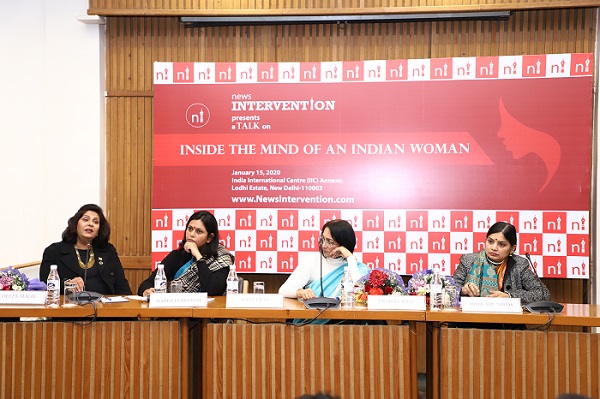
topic –“Inside the Mind of an Indian Woman” was as intriguing with a sterling
panel- Padma Shri and Khel Ratna awardee Deepa Malik, former IPS officer and
now a social activist Prabha Rao and Dr Bijayalaxmi Nanda, Principal of Miranda
House, a top women’s college in Delhi University.
Nonetheless I accepted the challenge
and the close-to-two hour session on Wednesday, January 15, was one of the most
enriching experiences.
It couldn’t have been a better platform for learning and unlearning– touching upon a wide spectrum of issues including women trafficking, patriarchy, top-down approach in policy making, safety, menstrual hygiene, handling rape cases and justice, especially in context of the “Nirbhaya” gang rape incident and trust deficit between the police and people at large.
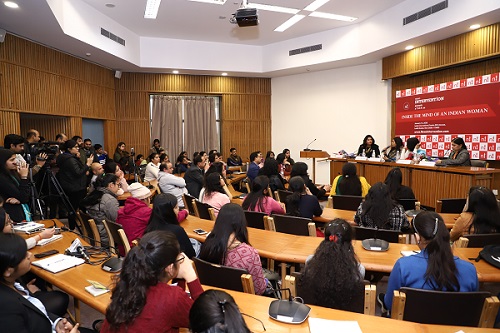
Full House at the News Intervention Talk — “Inside the Mind of an Indian Woman”
In a country where on an average 90
rape cases are reported every day with a sharp rise in women trafficking and
pornography viewing, it is time we looked at advocacy and dialogue with
relevant stakeholders.
As Dr Nanda put it that rarely is the Indian woman’s mind celebrated, the focus has typically been on her body. What was shocking was Malik’s painful revelation that an eminent ad-film maker once told her that nobody would be interested in seeing her in product endorsements. Reason? Her age and disability.
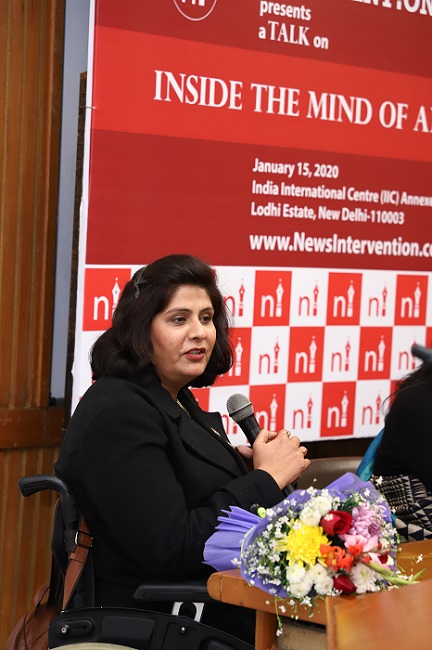
Padma Shri Deepa Malik at the News Intervention Talk — “Inside the Mind of an Indian Woman”
In fact Dr Nanda, who has worked in areas of selective abortion and human rights added that congenital abnormality in the Indian society even today meant being a female. As the author of several books, she further added that the obsession to have a male child was not just a rural phenomenon, the urban and prosperous middle class too suffer from the same trait.
Dr Bijayalaxmi Nanda, Acting Principal, Miranda House, University of Delhi at the News Intervention Talk– “Inside the Mind of an Indian Woman”
Are we then making the cardinal
mistake of framing laws and chalking out rules without even understanding what
the over 90% of the Indian women and even men want? Have we even given them a
patient hearing? No, we haven’t.
How much importance does the
government accord to the ministry of women and child development?
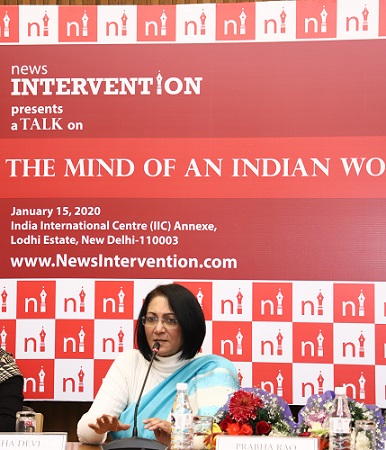
Prabha Rao, who runs an NGO — Encourage India, which helps in empowering and rehabilitating rural women and victims of trafficking, pointed out that in the pecking order the women and child development ministry is nowhere in the top.
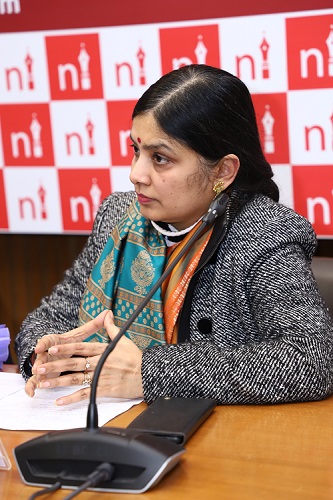
Ms. Prabha Rao, retd. IPS and Intelligence Officer at the News Intervention Talk — “Inside the Mind of an Indian Woman”
Recounting her experience, Prabha Rao
underlined the need to focus on menstrual health. She explained that after the
issue was brought up, sanitary pads were randomly distributed in the rural
areas. Rao noted how sanitary napkins were thrusted upon women without even
consulting them. Without proper disposal facilities in the rural areas, these
pads with scattered plastic sheets occupied the landfill where cows ate them
creating more menace and eventually turning into breeding grounds for dengue
and other germs.
Prabha Rao underlined the need to
focus on the quality of primary education. In India, anyone who can read and
write even without any basic knowledge of any other relevant subject is
considered literate. This creates problems in job creation, Rao opined.
Needless to say, safety and delayed
justice must be another priority area without doubt. India must act on this. It
is shameful that a chunk of money from the Nirbhaya Fund goes unutilised, Rao
pointed out.
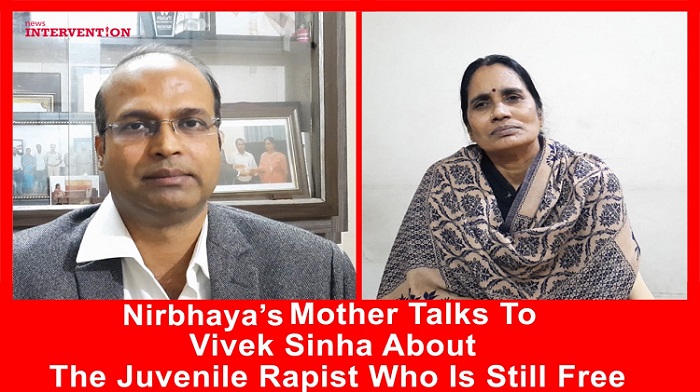
Asha Devi, women rights activist and “Nirbhaya’s” mother, who was slated to join the panel but eventually could not due to pressing court matters relating to the on-going rape case, in an interview with Vivek Sinha said how the delayed justice and closure to the case was leading to an erosion of trust on the legal system and this could further spruce instances like the much-debated Hyderabad encounter. Asha Devi has been almost single-handedly fighting for justice for her daughter for the last seven years.
Malik’s endless arduous struggle with
her illness and extraordinary achievements is nothing less than an epic.
However, she confessed that the Nirbhaya rape case was so disturbing that as a
mother, she lost her never-say-die spirit to restrict her daughters from
venturing out.
In fact, Malik pointed out that lack
of safety for girls was one of the prime reasons for them not taking up sports
as a profession.
While there is no dearth of
government schemes and legal provisions on women’s safety and protection, there
is little awareness on the ground.
What is urgently required is a
mechanism to create awareness among the masses, dialogues and consultations
with women in the remotest areas and also allow those who are actively involved
in the Panchayats to be heard and understood.
While a section of the society has
spoken against patriarchy, it continues to flourish. Dr Nanda, interestingly,
pointed out that patriarchy not only has impacted women, it has impacted men
too. After all the society demands men not to cry, not to be sensitive, they
can only play the role of protectors.
After all, if we need to glorify a
man for his contribution for bringing changes in menstrual habits as we saw in
the Akshay Kumar starrer Padman, we are sub-consciously promoting patriarchy.
For the
J&K Police, which till now was being lauded for its resolute anti-militancy
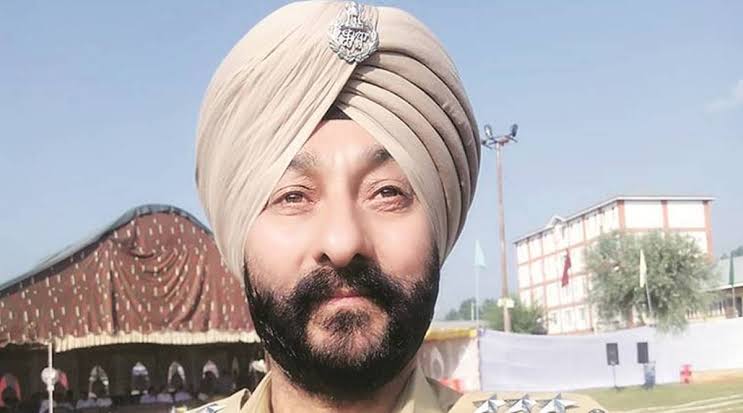
operations despite being targeted by terrorists, Deputy Superintendent Police
(DySP) Davinder Singh being caught red-handed while ‘escorting’ two
high-profile Hizbul Mujahideen (HM) terrorists out of the Kashmir Valley has
come as big shock and embarrassment. Singh deserves no mercy for his shameful
act as he has betrayed the trust reposed in him both by the police force as
well as the public and that’s why the decision of the authorities to treat him
as a terrorist is appropriate and quite reassuring.
But while
J&K Police deserves credit for having a robust counterintelligence mechanism
in place that facilitated Singh’s apprehension, there are many who believe that
the police has a lot to explain for the delay in being able to ‘home-on’ to
this traitor and there are reasons for this. There is no doubt that Singh has
had a very shady past that saw him being accused of various illegal acts
ranging from illegal sale of confiscated narcotics to the carjacking a timber
laden truck and selling the wood it was carrying.
In 2004, Parliament attack convict Afzal Guru wrote a letter to his lawyer in which he made a startling disclosure naming Singh as being the one who had directed him to take a non-Kashmiri speaking person named Mohammad to New Delhi and arrange lodging for him there. Incidentally, this man turned out to be one of the assailants who was subsequently shot dead by security forces during the Parliament attack. However, since Dy SP Davinder Singh was never booked for any of his misdemeanours, it’s but natural for one to suspect departmental inefficiency, organisational complicity or even a conspiracy in this case.
Now that Davinder
Singh has been caught with the smoking gun, it’s very easy to cast all sort of
aspersions, but to do so without understanding the ruthless nuances of
militancy related maneuverings would lead to missing the wood for trees. The
intention here is neither to defend the government or J&K Police, but only
to expose how some Kashmiris are playing with the lives of their own people
just for their selfish interests so that the people of Kashmir realise how
they’re being fooled by both the separatists and terrorists alike.
Anyone with
even a casual knowledge of the happenings in Kashmir will know that there are many
people here who sympathise with armed groups and surreptitiously work for them but
ensure that they remain within the ambit of law. Known as ‘over-ground workers’
(OGWs), such people take a high moral ground by proclaiming that they are
supporting the terrorists for ideological reasons but everyone knows that they
do so only because it gets them easy money and power. They are the ones who
keep a close eye on the government and security forces and take to the streets as
well as keep petitioning various rights organisation and groups whenever they commit
a mistake.
But then, there
are exceptions!
The
separatists and OGWs identify pliable individuals serving in the establishment
and by giving them an image ‘makeover’ to appear as epitomes of professional
integrity. For example, whereas the All Party Hurriyat Conference (APHC) is
very prompt and vocal in bringing out even the smallest and unintentional
lapses of J&K Police, but when Singh sold narcotics seized from a smuggler,
there was no outcry on this double crime (one, the illegal act itself and two, selling
drugs that ended up in the hands Kashmiri youth). Similarly, not a word of
resentment was forthcoming when this police officer disposed timber belonging
to someone else and pocketed the money.
Most importantly,
the APHC didn’t even bother to call for an investigation into Guru’s allegations
of Dy SP Davinder Singh having coerced him into assisting a terrorist who later
took part in the Parliament attack. Though legal experts contend that even if
his allegation was proven right, it would have made no difference in the death
sentence awarded to Guru, but atleast a campaign led by APHC to show public
solidarity would have atleast provided him some much-needed psychological
solace.
But the APHC’s
inexplicable silence on Guru’s complaint was not an oversight, it was
intentional; the pro-Pakistan camp, which was painstakingly building Davinder Singh’s
‘tough cop’ image chose to turn a blind eye to his misdeeds and that’s why Guru
was abandoned when alive and remembered only after he was executed! Infact, a US
cable released by Wikileaks in 2011 mentions how a “moderate Hurriyat leader”
had told the US political office “that his faction of political separatists was
remaining as quiet as possible about the issue because they do not feel
strongly that India should pardon Afzal.” So, isn’t it likely that
Guru ended up becoming a ‘sacrificial lamb’ just to boost Dy SP Davinder Singh’s
image?
It’s not yet clear as to how did he avoid coming under the
scanner even after Guru made serious charges against him. Probably they
believed his version (as shared with journalist Parvaiz Bukhari in 2006) that “I
am being victimised for having worked in SOG, for being very nationalistic.
What am I getting in return? Bad name and a conspirator.” His counter claim was
that he was being framed as Guru “wants clemency and he wants to gain sympathy
of Kashmiri public and government of India by giving this story.” The AHPC’s intentional
silence on Guru’s accusation apparently paid rich dividends as it seems to have
fooled the police and intelligence agencies into accepting Singh’s version.
Few local
policemen in J&K can afford to openly admit to torturing terrorists and
their sympathisers; still fewer can boast that “nobody would ever forget
having been interrogated by me.”
But Dy SP Davinder Singh was an exception, who in his 2006 interview,
boastfully told Bukhari, “I
had a reputation for torture, interrogation and breaking suspects. If anybody
came out of my interrogation clean, nobody would ever touch him again. He would
be considered clean for good by the whole department.” Such was the awe-inspiring
gumption of this man- till he was himself caught red-handed while attempting to
smuggle two high profile Hizbul Mujahideen (HM) cadres out of Kashmir Valley.
In short, thanks to the APHC’s and OGWs’ silence, Davinder Singh
became a hero of sorts!
Besides using
Kashmiris as ‘sacrificial lambs’ another associated harsh reality is that in
Kashmir it’s not ideology but money that’s propelling militancy and one has to
only look around to see how true this claim is. Take for example the quantum
upgrade of the houses belonging to certain separatist leaders and humungous
increase in their personal assets ever since militancy erupted here. Why go
far- in the Singh case itself, there are reports of him owning atleast three
residential properties, including a sprawling mansion which is under
construction and his daughter undertaking a medical course in Bangladesh.
Everyone
knows that with the pay of a Dy SP rank officer, it is absolutely impossible to
acquire multiple properties as well as for meeting expenditure on foreign
education of children. In addition, there is a mention of him being paid Rs 12 lakh
by the terrorists to ensure their safe passage out of Kashmir Valley. APHC
should tell the common Kashmiri as to where did this money come from? As far as
one knows, the terrorists in Kashmir aren’t indulging in extortion and nor are
they or their sympathisers undertaking any fund-raising drives. The APHC also denies
receiving any funds from any sources, both internal or external. So, it’s
obvious that this money has come from somewhere else and it’s not very hard to
identify the source!
So, as long
as muscle power, manipulation and money dominate militancy in Kashmir, it’s
only an illusion of victory that is being force-fed to the masses by APHC. The
real result is that while a select few are getting richer, it’s the young boys
indoctrinated by them to pick up arms who are dying for a struggle that has
dubious credentials!
I will explain every reason why you
should Never-Ever give up in life, no matter what you’re going through. And I will
explain this through my life’s story.
As a little girl, I imagined a
smooth sailing life with my family and friends. Little did I know that I was God’s
“chosen one”, entrusted to experience more than I could have ever imagined myself
to be capable of.
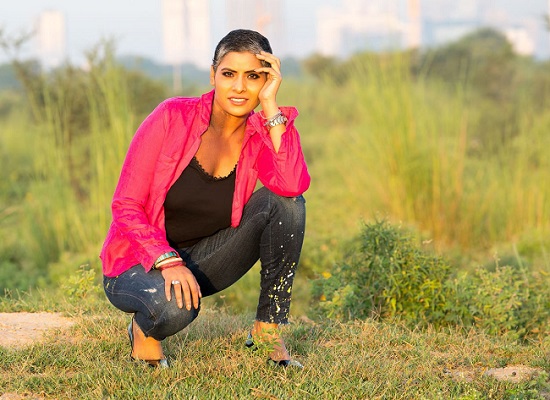
I am Anchal Sharma and this is my
story.
Initial Days
We were a family of six people (my parents, two brothers and two sisters) living in a single room house that was inherited from our grandfather. My father was an auto rickshaw driver, so for a very long time we were barely able to make our ends meet. In a hope to improve the family’s financial condition my father sold off his auto rickshaw and invested in a van with which he would pick and drop kids from the nearby school.
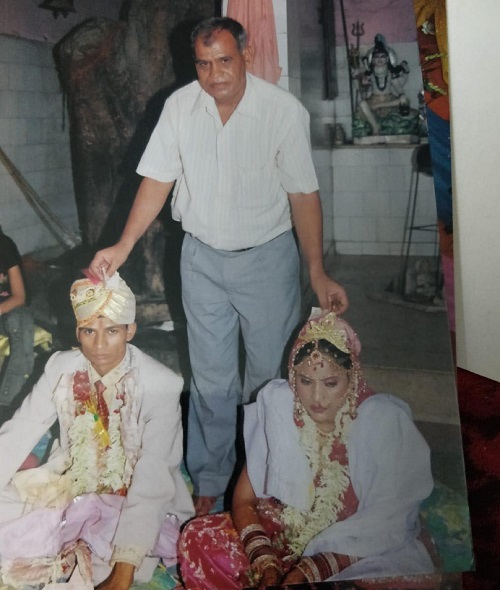
Anchal Sharma (in blue dress) with her parents and siblings. Anchal’s father was an auto rickshaw driver and her mother worked at a Delhi-based export house where her job was to cut threads.
But as luck would have it, he lost that job due to an unfair reason. Just as one sees in movies, my father’s job loss led him to alcoholism to the point of no return. He would return home inebriated and beat up my mother for anything and everything.
With an alcoholic husband and four kids
to feed, my mother put her foot down and decided to work. She took charge of
the situation and started working in a factory for a very small amount of money.
Every mother is God’s reflection to her children, and so was my mother. Her job
was to cut threads in an export house based in Delhi. It often required her to
stand all day and cut as many threads as possible. She worked hard and often
got extra money as bonus.
But the stars were not in our favour,
and one day my mother lost her job. There were days when we would starve all
day, on some days we were lucky enough to manage chapattis with red chilies to satiate
our hunger.
Circumstances forced me and my brother to leave school in class 8th and 9th respectively and search for jobs. My brother joined a garage as a mechanic and I started working as a receptionist at a stock market trading firm for a salary of Rs. 4000.
First Job
But the money wasn’t good enough to sustain the family, hence I had to switch my job to an export house where I worked as a sampler. This job gave me some exposure and I met a lot of helpful and influential people at work. Through these interactions, I came to know that the real estate offered good opportunity to earn better. I switched my job, once again.
The real estate business demanded more time and effort. I would start my day at 7:30 AM, travel to Gurgaon from Delhi in public transport busses and spend eight hours standing outside the building of real estate firm to close business deals. My efforts paid off and I started making decent money, only until fate intervened! I was cheated by the company’s broker and he siphoned off my incentives of around two lakh fifty thousand rupees.
Shattered yet determined, I joined another real estate brokerage firm as a receptionist. I may have demoted myself at this point, but I respected my job and never stopped working hard and learning more. The owner of the company acknowledged my hard work and hired me as a broker on profit share basis. This was the first time in my life when things were falling into place for us and I was able to finally move my family out of that crowded single room house to a rented apartment in Saket, New Delhi.
Sister’s Murder
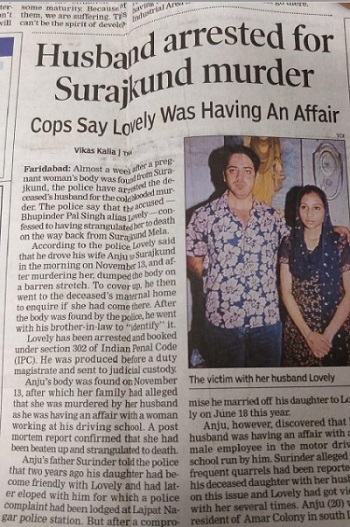
Things were starting to take shape until June 2006, when I got my younger sister married off to the man she loved against my family’s will. But as luck would have it, her husband’s love for her fizzled out soon after the marriage. Before my sister could realize how much she was hated by her own husband, she was murdered.
Anchal’s sister married against her family’s wishes. She was soon murdered by her husband.
Yes, you heard it right. It was like
everything in our lives had sworn to never fall into a proper place. Life dragged
us on a threshold of yet another sad chapter. My sister’s husband murdered her
in November 2006, barely five months after the wedding.
As my family had already disowned her at the time of her marriage as they were strongly against it, I took it upon myself to fight for her justice. It was a torture, both mental and physical, to run around seeking punishment for my sister’s murderer, but the fighter that I had become by now, I never gave up. I got open threat calls and messages, I was warned and promised consequences if I didn’t back off from the case. But I didn’t stop and got my sister’s murderer convicted, and imprisoned for life.
My Marriage
My sister’s demise had a deep impact
on my family, they had the typical worries, ‘Who will marry Anchal, now that we
are scarred for life?’ Needless to say, the relatives constantly made comments
on my life and future, they brainwashed my family into believing that I was
deemed to die unmarried because of the social stigma due to my sister’s death.
In haste, and under a lot of pressure, I was married off to a handicapped man from Jharsa village in Gurgaon. My relatives and society had convinced my family that due to our recent past, no normal person would marry me.
Anchal was hurriedly married off to a handicapped man from Jharsa (Gurgaon) against her wishes. Her husband was abusive and kept demanding dowry. Anchal later on divorced this man.
Despite being physically challenged,
the man and his family were extremely demanding and greedy. They asked for a
car in dowry, among many other things, and we gave in to all their demands.
After marriage, my in-laws had their
eyes only on my money as I was earning a decent money by this time. However, a lot
of my earnings were used in my sister’s court case, which my husband and his
family were strictly against.
When I refused to give them more
money, my husband resorted to physical abuse. My poor family, petrified of the
thought of having a divorced daughter at home just after the murder of another daughter,
forced me to stick it out with my husband and adjust.
One day the physical abuse exceeded to the point that I became unconscious. This is when I gave up on everything that was holding me back and filed for a divorce. In 2008, I was a free woman again.
Demolition of home sweet home
I got back to my regular life and
decided to build a house for the family on a small piece of land I had bought. The
happiness I experienced while constructing that house was unimaginable for a
person like me. It was too good to be true.
And indeed, it was a bubble!
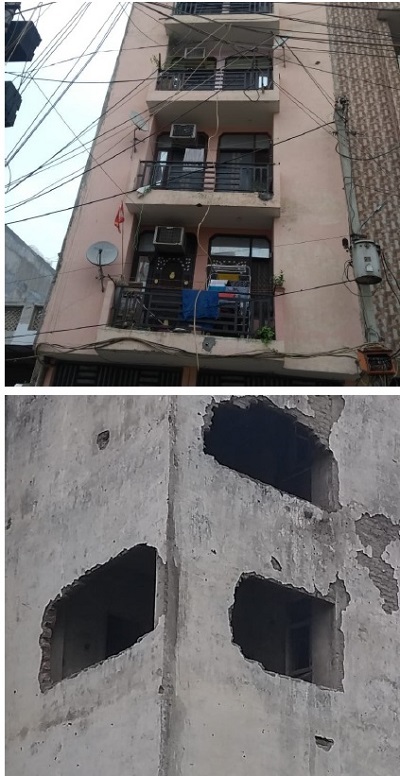
Anchal’s dream home was demolished by MCD right in front of her eyes. She had used all her life’s savings in the construction.
As if fate hadn’t had enough of me,
the house was demolished by MCD right in front of my eyes and the property was sealed.
All my savings were blown in the air with that demolition and I was broke once again.
I was back to square one.
But wait, the universe wasn’t
satisfied yet, so it threw another blow at me immediately thereafter. My mother
was diagnosed with cabbage worm in her brain that paralyzed her right hand for a
couple of months.
Her treatment took two and a half
years. During her treatment, my elder brother got married but that too didn’t
turn up well.
My sister-in-law ill-treated and
tortured my mother constantly, due to which my mother, who was already weak and
brutally tormented by life’s circumstances, had to be hospitalized several times.
Eventually, my brother had to get a divorce from her wife.
Then came the year 2015, a new year
and newer challenges for me. My father hadn’t been keeping well and I could
constantly hear him coughing. This went on for a long time until one day when
we were on a visit to our grandmother’s house, he fell terribly sick with high temperature
and heavy coughing.
I had become so distant with my
father due to his alcoholism, irresponsible behaviour, domestic violence etc. that
I completely ignored the fact that he too is a human, and like all of us, he also
needs care, after all, he was getting old.
We took him to a doctor and found that
he was suffering from tuberculosis. It took him more than a year to recover and
lead a normal life again.
While I was busy picking up the pieces for my family, my body was struggling to cope up with the stress internally and then came a point where it could not take it anymore.
Battle with Cancer
I had just finished my birthday celebrations when I noticed a lump in my breast. I got a little nervous and did not share this with anyone. This lump created a swelling in my arms due to which I had to halt all kinds of sports, including tennis, which I used to play regularly.
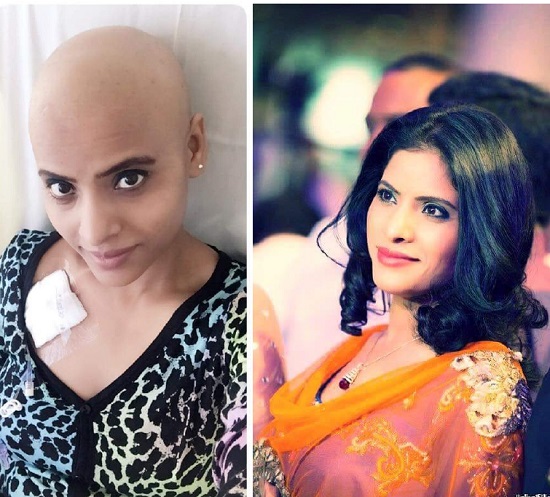
Anchal Sharma was diagnosed with third stage cancer and had to undergo chemotherapy sessions for its cure.
In order treat the problem, I starting
taking homeopathy medicines but the pain worsened, and slowly I started giving
up on my regular lifestyle activities.
But, a dear friend, who noticed that
I was strongly bothered by something, asked me to open to up. After some prodding,
I confided in her.
She instantly got me an appointment
in a hospital, where few tests brought out the shocking news to me. I was
afraid. I got diagnosed with third stage of breast cancer.
This is the time when even the protagonist
gives up in most stories, right? I mean, how much can a hero take, after all? So
I thought to myself, “But I am yet to live my life. This can’t be it.”
And it wasn’t. I must add that the
chemo therapies and endless surgeries were extremely daunting, but I held on to
hope and tried to live a normal life.
I used to dress up even for my chemo
sessions, because why not? It was a difficult journey but I refused to live
through it with fear.
It was during this time when one day
I was stuck at a traffic signal, and I noticed a bunch of kids begging. I refused
to give them money and instead offered them some food. The kids agreed and I
took them to a restaurant. Due to the social stigma, some of the guests at that
restaurant left after seeing these kids dining at the same place as them.
Disgusted, I sat down with the poor kids and talked to them about their life and how they survive.
Meals Of Happiness (MOH)
That afternoon inspired me to do something for these kids, and I started an NGO by the name of Meals Of Happiness (MOH).
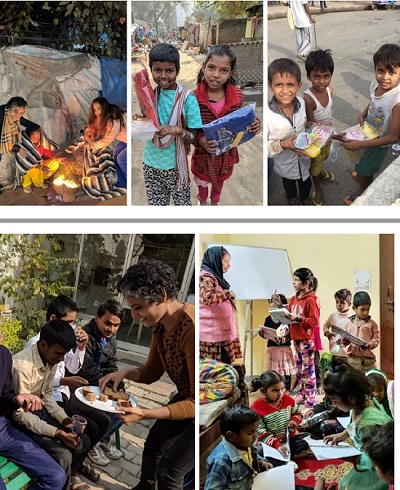
Anchal with the slum kids. Her NGO Meals Of Happiness (MOH) feeds slum kids.
Initially, I used to cook meals at
home with my mother’s help and distribute it to slums kids. Soon people noticed
my persistence in helping these kids and offered support in the form of money
or volunteering. I realized that the magnitude of hunger was too big to be
taken care of from my home’s kitchen.
It was at this point that I
officially started my NGO, registered with the government, and began seeking
donations from people. In just a couple of months, I was able to feed over 200
kids on a daily basis.
Till date, MOH has successfully
accomplished meal distribution to over lakh people. On several occasions, MOH
has raised funds for medical needs of people living in slums and has also
helped poor girls get married.
Today, I am grateful to God for
every hurdle that life threw in my way. My circumstances transformed me into
the woman I am today. I care for the society and wish to eradicate hunger and malnourishment
among the slum kids.
I have a purpose, and it is this
purpose that makes me stronger by the day.
I knew I had no time to ask God, “why me?”, and I also knew that I had a family to feed and sustain, so I knocked every door of opportunity that came my way and made the most of it.
We often get so exhausted in our own miseries and in questioning God over privilege and luck that we do not realize how much mettle we have inside ourselves to cope up with life’s difficulties. I focused on my potential, on my substance, because that is all I had control over. I couldn’t control luck, chance or my circumstances, but I had complete control over what I was willing to protect myself and my dear ones.
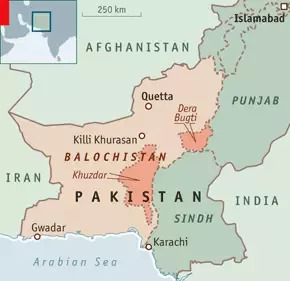
Some ten years ago, there was a newspaper in Balochistan, the
daily “Asap”. After Pakistan government’s intervention its publication stopped in
2000. However, the newspaper decided that a selection of articles and opinions
once published in its editorial pages on the issues of Balochistan should get re-published
in the form of booklets. This was a decade back. I was Editor of the newspaper’s
editorial page during those days and so this task was assigned to me.
The ten year selection was compiled in the form of around sixty
books. Each book comprised of two hundred pages. Unfortunately, only thirty to
thirty three of them were published and then the newspaper and later the
institution itself, inhaled its last breath.
Well, it happened that when the first eight books were
compiled, our Editor-in-Chief (the well-known Baloch intellectual and former
bureaucrat Jan Mohammad Dashti Saheb), who had been writing in English
for a certain time of period, was enthusiastic that some of the selected
articles would be translated into English so that the Baloch case reaches to foreigner
readers as well. The task was then entrusted to his brother Dr. Naseer Dashti,
who had returned from London after completing his PhD in health. He selected
twenty to twenty five articles and translated them into English, which appeared
in a compilation of two books. This was during the period of 2008. The province
was ruled by the Pakistan People’s Party.
A few months after the books were published, the government
imposed ban on them. One of our contemporary journalist friends, Malik Siraj
Akbar, interviewed Dr. Naseer Dashti for the newspaper “Aaj Kal”. Dr
Naseer Dashti laughed over a question at him and said, “It’s a weird
spectacle. The articles of this book were published in a newspaper years ago.
These articles have been available in the market in Urdu in a book format all
these years. To ban the English translations of these books indicates that the
government either doesn’t read or is intimidated of it being accessed by the
foreigner readers about the Baloch case.” Later on, Dr. Naseer Dashti moved to
London to seek political asylum.
Recently, the Urdu translation of a famous English book by
the prominent novelist Mohammed Hanif was banned. Its English version was
published some eleven years ago.
It is astonishing that English translations of several Urdu books
are readily available and accessible in Pakistan and also the copies of
original English novels are still easily available in this market. On the other
hand, English translation of Urdu writings in Balochistan become banned.
However, the original Urdu books are still available today.
Well, what did this prove?
Nevertheless, it has proved that the attitude of the Pakistan
government fluctuates and varies in relation to Balochistan. Pakistanis only
want to keep the alternative commentary and critical point of view out of the
reach of the reader abroad.
Why?
This is because most of the people in Pakistan view Balochistan’s
problems as the dominant power of Pakistan.
Remember, the same Muhammad Hanif who wrote his first document on the missing persons of Balochistan, which was translated into Urdu by Wassatullah Khan titled “Gaibistan Main Baloch, Baloch in the Missingistan,” was not considered to be banned. Pakistan’s mainstream media likewise narrates the narration of authorized power in concerns especially with Balochistan and their endurable case.
In Balochistan, if anyone screams, shouts intensively and cries either in Urdu or Baluchi, then it’s like a situation in a jungle where no one witnesses a peacock’s dance. Also, if anyone screams, agitates and shouts angrily in Pakistan about the Balochistan issue then it doesn’t seem much difficult to shut him off. However, it reminds everyone in Pakistan that this sound should not get out of the boundaries of the country.
So that you will see, the alternate narrators in Balochistan
in regard of English version will either get out of the country, or go abroad.
If you stay longer in the country you will go “missing”. And if you are alive,
you will be put into the list of declared traitors or agents.
To bring contemporary issues of societal concern on a public
platform for comprehensive discussion, News Intervention is organising a
‘Conversation Series’. The first talk in the series, “Inside the Mind of an
Indian woman” will be organised on January 15th at India
International Centre (IIC), Annexe in New Delhi.
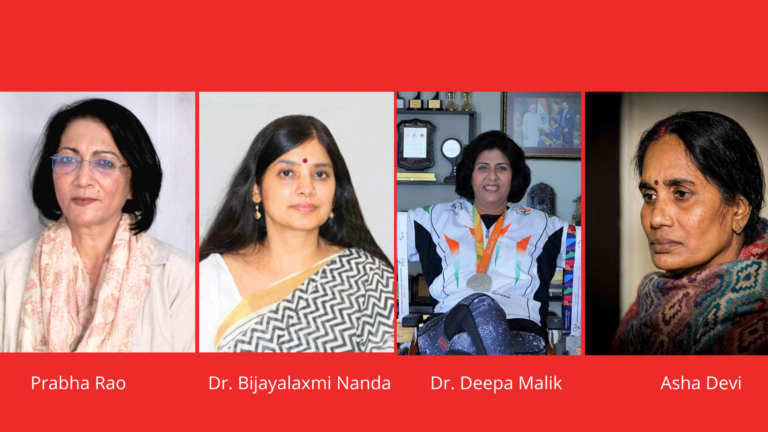
Key speakers in the talk are Ms. Prabha
Rao (Retd. IPS and Intelligence Officer), Dr. Bijayalaxmi Nanda (Acting
Principal, Miranda House), Padma Shri Deepa Malik (Khel Ratna Awardee), Mrs. Asha Devi (Social activist and mother of ‘Nirbhaya’).
Their brief profiles are given below:
Ms. Prabha Rao, Retd. IPS officer and Intelligence Officer
Ms. Rao started her career as a journalist with Indian Express and later joined the IPS in 1982, Karnataka cadre. She served in various intelligence and law and order postings in the state. She also went on a deputation to cabinet secretariat and served in several locations abroad. She has also worked as a Distinguished Scholar in IDSA and has started a Foundation for skilling victims of trafficking and LWE called ‘Encourage Foundation’.
Dr. Bijayalaxmi Nanda, Acting Principal, Miranda House
Dr. Nanda joined Miranda House in 1993 and is an Associate Professor in the Department of Political Science. She is currently the acting Principal of the college. She received her Ph.D from the Centre for Political Studies, JNU. She is currently working on the issues around declining child sex ratio, sex selection, gender, policy and governance. She is a recipient of the ICSSR Doctoral fellowship and the Delhi University Vice Chancellor’s Teacher’s Excellence Award in 2017. She is actively associated with a number of government and non-government organisations as advisor on gender, policy and advocacy programmes for the youth. She has also assisted various state governments in drafting policy related to women and girl child.
Padma Shri Deepa Malik, Khel Ratna Awardee
Braving chest-below paralysis and spinal tumour treatment for almost 20 years; Deepa is on a mission – Ability Beyond Disability. She is an international sportsperson par excellence and recipient of Five Prestigious President of India Awards & honours – Padma Shri, Arjuna Award, President’s National Role Model Award, Women Transforming India Award and ‘First Ladies Award’ as well as 5 state governments’ honours. With a count of 23 international medals and 68 national & state level medals in swimming, javelin, shotput & discus events, she has been listed as one of the 10 most inspirational women para-athletes of the world by International Paralympic Committee. She is the first Indian to receive the International Women’s Day Recognition from the International Paralympic Committee (awarded each year to one woman from all over the world), for her contribution to advancing disability sports for women in India.
Mrs. Asha Devi, Social activist and mother of ‘Nirbhaya’
Since 2012, Asha Devi has been a relentless crusader for women rights in the country. Her 23-year-old daughter, a paramedic student, referred to as Nirbhaya, was gangraped and brutally assaulted on the intervening night of December 16-17, 2012 inside a moving bus in south Delhi by six persons before being thrown out on the road. This gruesome incident shook the conscience of the country. It was due to Asha Devi’s sustained efforts for seven long years that the four rapists could reach to the gallows. She is now synonymous with sheer grit and determination and is the symbol of every woman’s fight against discrimination, injustice and the humiliation.
News
Intervention TALK on “Inside the Mind of an Indian Woman” will be organised on
January 15th, 2020, 2pm – 5pm at India International Centre
(Annexe), New Delhi. Entry is Free.
Thanks to the social media revolution, any discordant note gets
quickly highlighted. Even television media lives off the noise prevailing
there. Not many in media want to talk about good and positive happenings as
that requires genuine knowledge and hard work to make them attractive. On the
other hand, negativity, fake and selective reporting is simple, although
disgusting.
These days, media has found a goose that gives golden eggs
without any efforts. And that’s harping about: “Muslim Identity and How Majority
Hindus Treats Them”. Convenient to most politicians seeking to wrest their lost
power and celebrities fulfilling social obligations of looking concerned by
just posing with someone. Idle intellects also find it a lucrative opportunity
to become relevant. All of them gain, excepting the nation!
Growing up during the 60’s and 70’s era many of us
(depending on where we lived) might not have even bothered about religious
clashes in our country. Other than obvious differences such as, Sikhs wearing turban
at all times, mosques looking different from temples, the concept of society
seemed all encompassing, as one large family. Yet, Hindu-Muslim riots broke out
from time to time in certain parts of the country; Sikhs were killed en-masse
post Indira Gandhi’s assassination in 1984. Furthermore, wars and clashes with
Pakistan remain a constant reminder of partition and Hindu-Muslim discord.
But all this seemed to be a distant, something to be avoided
in general discourses.
Not anymore!
People who personally did not suffer the agony of partition
in 1947, wonder: How Hindus mistreated Muslims? And some Muslims feel how they are
responsible for the acts of Muslims who partitioned India? Majority of young
India falls in this category.
The good thing is that as an Indian born in current times,
who may not know much of history and yet has conviction, integrity and humanity,
is compelled to go through a crash course and take a stand.
One realizes that there were Muslims in India, who believed
in two-nation theory and insisted that Muslims needed a separate nation, and
they got it. Hindus, not wanting any division of their motherland had to agree
to create two nations: one for Muslims, and another for all religions. But now
we know that Muslims who lived in Kashmir drove around 3.5 lakh Kashmiri Hindu Pandits
out of their own homes in Kashmir. Gosh! How many of us were even aware about
their tragedies. No one bothered. No government, no public, no intellectuals
and no celebrities!
Now suddenly we hear from some Muslims and even some Hindus
that Hindus have not been fair to Muslims living in India. All these times I
have had so many Muslim friends from childhood, growing with me side by side. I
start wondering… Wasn’t Dilip Kumar every Indian’s hero all these years?
Naushad, Mohammed Rafi, Majruh Sultanpuri, Shakeel Badayuni….this list goes on.
Didn’t we all cherished and appreciated them equally along with Raj Kapoor, Dev
Anand, and Shankar-Jaikishan? Could one imagine a Ravi Shankar on Sitar without
Allah Rakha on Tabla. And what about Shehnai maestro Bismillah Khan, whose day
did not begin without prayers to the Hindu God, Hanuman?
So, where are the seeds of distrust coming from? From Muslim
religious leaders, whose survival depends upon harping on Muslim identity to
keep them under control; or, Hindu politicians, who create fears in the Muslim
minds about other Hindus who never favoured division of India, and now seek
uniform civil code for all Indian citizens?
Imagine India a hundred years from now. What do we like to
see? A strong nation, where every child feels empowered, aspiring and
fulfilling one’s dream, or India broken into pieces in false images of freedom,
at war with each other? Situation can be better understood by an analogy with a
family, which learns to remain united through mutual trust and love versus one
which is disintegrated due to selfishness of a few.
I am not pessimistic at all, nor do I want you to be.
India’s ancient wisdom is still alive in majority of masses especially in
simple ordinary folks, who may stay silent while negative forces create ruckus.
But, time and again, the spiritual force rises from within as one to begin
submerging core negativities at one stroke. As it happened against dictatorial
tyranny under the leadership of JP (Jai Prakash Narayan) in 1977; or, more
recently, against the menace of corruption by Anna Hazare andolan (movement)
in 2011. Next one lies in the rise of wisdom, which is justice with clarity!
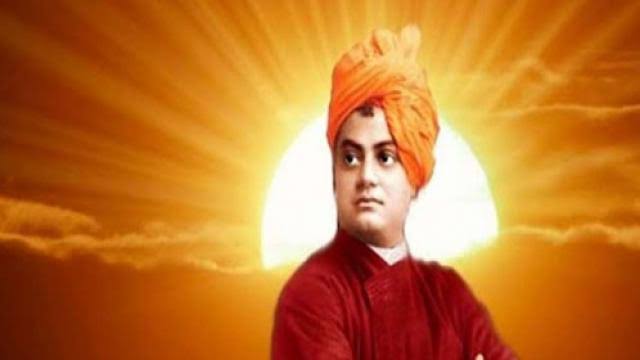
On the birthday of Swami Vivekananda, it is pertinent to recall these historical words uttered in Chicago on September 11, 1893, addressed by Swami ji to future generations: “Sectarianism, bigotry, and its horrible descendant, fanaticism, have long possessed this beautiful earth. They have filled the earth with violence, drenched it often and often with human blood, destroyed civilization and sent whole nations to despair. Had it not been for these horrible demons, human society would be far more advanced than it is now. But their time is come; and I fervently hope that the bell that tolled this morning in honour of this convention may be the death-knell of all fanaticism, of all persecutions with the sword or with the pen, and of all uncharitable feelings between persons wending their way to the same goal.”
As per the latest data released by the Society of
Indian Automobile Manufacturers (SIAM), the automobile industry recorded its
worst-ever sales decline in two decades in 2019, with an unprecedented slowdown
hampering vehicle offtake across segments.
According to SIAM all vehicle segments reported
de-growth last year as low consumer sentiments, weak rural demand and economic
slowdown took toll on demand.
Overall wholesale of vehicles during the year
across categories, including passenger vehicles, two-wheelers and commercial
vehicles, saw a decline of 13.77 per cent in 2019 at 2,30,73,438 units as
against 2,67,58,787 units in 2018. This is the worst fall in sales since the
industry body started recording monthly and yearly sales data in 1997. The
previous lowest was recorded in 2007 when overall sales had declined by 1.44
per cent.
Similarly, total passenger vehicle sales during
2019 declined by 12.75 per cent to 29,62,052 units as compared with 33,94,790
units a year ago. This is the worst performance in the segment since 2013 when
sales witnessed a dip of 7.49 per cent.
Two-wheeler sales also saw a dip of 14.19 per cent
last year to 1,85,68,280 units as compared with 2,16,40,033 units in 2018.
Likewise, total commercial vehicles saw a dip of 14.99 per cent to 8,54,759
units as against 10,05,502 units in 2018.
The auto industry body also said the positive
sentiment that was witnessed during the festive season has not sustained with
retail sales in December coming back to negative. In December, domestic
passenger vehicle sales declined 1.24 per cent to 2,35,786 units in December
from 2,38,753 units in the year-ago period.Domestic car sales were down 8.4 per
cent to 1,42,126 units as against 1,55,159 units in December 2018, according to
SIAM.
Motorcycle sales last month declined 12.01 per cent
to 6,97,819 units as against 7,93,042 units a year earlier. Total two-wheeler
sales in December declined 16.6 per cent to 10,50,038 units compared to
12,59,007 units in the year-ago month.
In two-wheeler segment, Hero MotoCorp posted a
decline of 5.63 per cent at 4,12,009 units in December. Honda Motorcycle and
Scooter India (HMSI) saw its sales drop by 2.26 per cent at 2,30,197 units,
while TVS Motor Co witnessed a decline of 25.09 per cent at 1,57,244 units.
Sales of commercial vehicles were down 12.32 per
cent to 66,622 units in December, SIAM data showed. Vehicle sales across
categories registered a decline of 13.08 per cent to 14,05,776 units from
16,17,398 units in December 2018, it added.
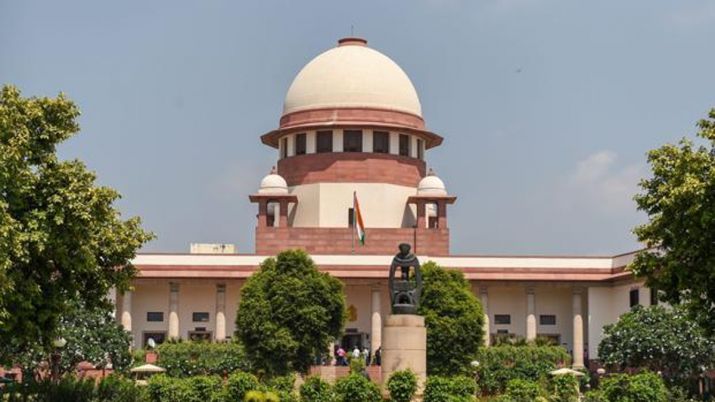
In a significant ruling the Supreme Court has said that
access to the Internet is a fundamental right under Article 19 of the
Constitution, and asked the Jammu and Kashmir administration to review within a
week all orders imposing curbs in the Union Territory.
A 3-judge bench, headed by Justice N V Ramana, also
said that Section 144 CrPC (prohibitory orders) cannot be used indefinitely to
suppress freedom of speech and expression and difference of opinion. The bench,
which also comprised justices B R Gavai and R Subhash Reddy, asked the J-K
administration to restore Internet services in institutions providing essential
services like hospitals and educational places. The bench further said that
freedom of press is a valuable and sacred right.
The verdict came on a batch of pleas which
challenged the curbs imposed in Jammu and Kashmir after the Centre’s abrogation
of provisions of Article 370 on August 5 last year. These pleas were different
from another set of petitions which have challenged the constitutional validity
of abrogation of Article 370, being heard by a sperate 5-judge Constitution
bench which will resume its hearing on January 21.
The 3-judge bench had reserved the judgement on
removal of curbs on November 27 last year. On November 21, the Centre had
justified restrictions imposed in Jammu and Kashmir after the abrogation of
provisions of Article 370 and said that due to the preventive steps taken,
neither a single life was lost nor a single bullet fired.
The need for a dynamic leadership to chart out the course of new Jammu and Kashmir emerging post reorganisation has been spoken of by many academicians and intelligentsia. In fact, one of the objectives of intensive grass root level elections that have been held in the state for the panchayats, municipal corporations and even at the block level is to throw up a new, young and vibrant leadership. However, this emerging leadership will, first and foremost, need to look back to realise how politics of divisiveness and engineered violence pulled back the region for decades on end and brought about the unfortunate state of affairs that are now prevalent. There were such so-called “leaders” in the region who carried out indescribable crimes at the behest of foreign powers and put a permanent blot on the age old culture and ethos of the enlightened Kashmiri society.
Ethnic
extermination of Hindus was the first strategic objective given by Pakistan to its
paid leaders about three decades back in late 1980’s. To provide support to the
so-called leaders, Pakistan used the porous border of the times to infiltrate the
rank and file of barbaric terrorists that formed the vanguard of evil Jihad
to wrest Jammu and Kashmir from India. That was
a dark period in the history of Kashmir when people simply vanished due
to evil machinations of Pakistan carried out through its client leadership.
The Pandits of
Kashmir became targets of one of the most savage ethnic cleansing pogroms ever
to be inflicted as the terrorists in concert with these “leaders”, went about
fructifying their unholy agenda in a surgical manner. In less than six months thousands
of hapless and dumbstruck Kashmiri Pandits were killed in the most brutal and
savage manner. The killing was accompanied by torture and atrocities of a kind
unheard of in the annals of history.
Brij Nath Shah of
Kupwara was kidnapped on April 27, 1990; two days later he was found hanging
from a tree with his lips stitched together. Sham Lal of Anantnag was kidnapped
in May 1990; his hands and feet were chopped off and his skull battered. Brij
Nath Kaul of Shopian and his wife were tied to a speeding vehicle; their mangled
bodies were found ten kilometers away from their homes. Hundreds died and an
equal number were reported missing with no guesses required about their fate. The
killings were conducted irrespective of age, profession and above all their political
affiliations.
The local population
with whom Kashmiri Pandits had co-existed for generations did not come forward
to assist them. How could they when their leaders had forbidden them from doing
so with open threats and intimidation. The most horrendous diktats of terrorists
were adhered to in letter and spirit; Hindus were denied treatment in
hospitals; the kith and kin of those dead were not even allowed to perform
their last rites in the manner prescribed by their religion. The Pakistani
design of engineering mass exodus of Hindus from Kashmir thus became
successful.
Over the years, this small but very
diabolical leadership was built upon by Pakistan’s Inter-Services Intelligence
(ISI) to keep the pot boiling in Kashmir. With Hindus out of the way it was now
the turn of Muslims to bear the brunt of Pakistan sponsored savagery. Frenzy was
regularly whipped up by these people who specialised in creating an environment
of unmitigated rage through invocation of religious and wholly skewed
nationalist sentiments. The coffers of these leaders ticked even as normal families
struggled to come to terms with the loss of their loved ones due to terrorist
generated violence.
The inimical leadership looked upon
the youth as a prime constituency for their objective of destabilising the region.
They came up with various means to attract the youth and then exploited them
for their evil ends. Many among those who got recruited as terrorists had little
understanding of the ideals for which they put their future and their very
lives in danger. They did not understand the evil intentions of Pakistani
motive of subjugating and colonising the region as in the case of Pakistan-Occupied
Jammu and Kashmir
The so-called leaders emotively showcased their sacrifices while their children received the best possible education through facilities provided by the very government that they spent a life time opposing. Progenies of these so-called leaders are now pursuing lucrative professions across the world, far from the miseries of Kashmir.
This duplicitous, self serving
leadership of Kashmir has been marginalized by the people with rare courage and
will power. Having done so, the people are now looking for a change. They want
a leadership that is, above everything else, honest, genuine and also dynamic
and new age. They want the new leaders to give primacy to the region, unlike
what has been happening for decades on end. What
is more important is that the new leadership sheds the baggage of the past and
thinks differently.
The new leadership will need to shun politics of agitation and negativity that was designed to pressurize New Delhi into giving out doles. Jammu and Kashmir is rich in human resource capital, with a well educated and hard working pool of people available; it has abundant natural resources, great natural beauty and a very significant geo-strategic location. There is no reason for the Union Territory to lag behind. The new leadership, therefore, should strive for economic self-sufficiency and an environment where the Union Territory gains, by merit, its rightful place within India as a premier and progressive region.
The people deserve a leadership that
is strong, decisive, forward looking and capable of changing the debilitating
status quo by learning from past mistakes and refusing to be manipulated by
external forces; a leadership that has the ability to contest the evil policies
that are constraining the march of their people towards peace and development.
We use cookies on our website to give you the most relevant experience by remembering your preferences and repeat visits. By clicking “Accept All”, you consent to the use of ALL the cookies. However, you may visit "Cookie Settings" to provide a controlled consent.
This website uses cookies to improve your experience while you navigate through the website. Out of these, the cookies that are categorized as necessary are stored on your browser as they are essential for the working of basic functionalities of the website. We also use third-party cookies that help us analyze and understand how you use this website. These cookies will be stored in your browser only with your consent. You also have the option to opt-out of these cookies. But opting out of some of these cookies may affect your browsing experience.
Functional cookies help to perform certain functionalities like sharing the content of the website on social media platforms, collect feedbacks, and other third-party features.
Performance cookies are used to understand and analyze the key performance indexes of the website which helps in delivering a better user experience for the visitors.
Analytical cookies are used to understand how visitors interact with the website. These cookies help provide information on metrics the number of visitors, bounce rate, traffic source, etc.
Advertisement cookies are used to provide visitors with relevant ads and marketing campaigns. These cookies track visitors across websites and collect information to provide customized ads.
Necessary cookies are absolutely essential for the website to function properly. These cookies ensure basic functionalities and security features of the website, anonymously.
Cookie
Duration
Description
cookielawinfo-checkbox-analytics
11 months
This cookie is set by GDPR Cookie Consent plugin. The cookie is used to store the user consent for the cookies in the category "Analytics".
cookielawinfo-checkbox-functional
11 months
The cookie is set by GDPR cookie consent to record the user consent for the cookies in the category "Functional".
cookielawinfo-checkbox-necessary
11 months
This cookie is set by GDPR Cookie Consent plugin. The cookies is used to store the user consent for the cookies in the category "Necessary".
cookielawinfo-checkbox-others
11 months
This cookie is set by GDPR Cookie Consent plugin. The cookie is used to store the user consent for the cookies in the category "Other.
cookielawinfo-checkbox-performance
11 months
This cookie is set by GDPR Cookie Consent plugin. The cookie is used to store the user consent for the cookies in the category "Performance".
viewed_cookie_policy
11 months
The cookie is set by the GDPR Cookie Consent plugin and is used to store whether or not user has consented to the use of cookies. It does not store any personal data.