Home Blog Page 393

Balochistan Massacre: When world doesn’t care about human rights violations

On December 9, Pakistani security forces set free four Balochi women whom they had picked up from their homes in Awaran district on November 30. But the real reason behind this release wasn’t compassion or magnanimity by the government of Pakistan on the eve of International Human Rights Day 2019. It was only because Sardar Akhtar Mengal, the chief of Balochistan National Party (Mengal) that is a coalition partner of the ruling Pakistan Tehreek-e-Insaf party, had personally intervened and sent out an unambiguous warning that “We do not see the point of being a partner of this government if it refuses to address our genuine concerns.”

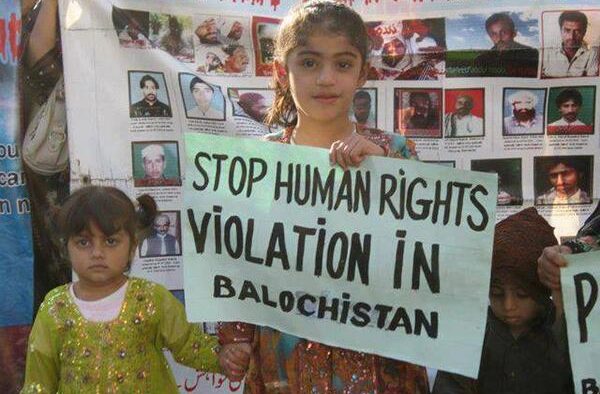
These four women were indeed very lucky because Balochistan is infamous for what Unrepresented Nations & Peoples Organisation (UNPO) refers to Pakistan’s “kill and dump” policy and this traumatising phrase is no exaggeration. Human Rights Commission of Pakistan (HRCP)-2013 report states that there are “credible reports of continued serious human rights violations, including (enforced) disappearances of people, arbitrary arrests, torture and extrajudicial killings.” The same things are echoed in Human Rights Watch (HRW) World Report 2019 on Pakistan, which observes that “During counter-terrorism operations, Pakistani security forces often are responsible for serious human rights violations including torture, enforced disappearances, detention without charge, and extrajudicial killings, according to Pakistan human rights defenders and defense lawyers.”

Unfortunately, human rights violations by Pakistani security forces and law enforcement agencies operating in Balochistan are neither rare aberrations nor restricted to lower echelons within the establishment. Au contraire, the 2019 HRW report notes that “counter-terrorism laws also continue to be misused as an instrument of political coercion. Authorities do not allow independent monitoring of trials in military courts and many defendants are denied the right to a fair trial.” The report presents a harrowing picture by stating that “…From the public point of view, enforced disappearances is still the biggest issue in Balochistan. Incidents of disappearance continue unabated and, in most cases, victims’ families are afraid of communicating their cases to the authorities. The fact that Dr Abdul Malik Baloch who was the Chief Minister of Balochistan from 2013 to 2015 has gone on record to say that “When the army is attacked, it will hit back,” just goes to prove how formidable and vengeful Pakistan’s deep state is!

Another insight into how well entrenched and institutionalised human rights violations are in Balochistan can be gauged from HRW’s Pakistan report 2011. In it there is a mention of 76 year old Secretary General of the Baloch Republican Party Bashir Azeem who during his “unacknowledged detention” was told by a Pakistani official that, “Even if the President or Chief Justice tells us to release you, we won’t. We can torture you, or kill you, or keep you for years at our will. It is only the Army Chief and the (ISI) Chief that we obey!” This report also notes that “These (enforced) disappearances take place in a province in which armed militants, particularly Baloch nationalist armed groups, have attacked security forces and military bases throughout the province” and this makes it evident that Pakistan Army is using the strategy of ‘enforced disappearances’ both to deter attacks and as an institutionalised form of vendetta!
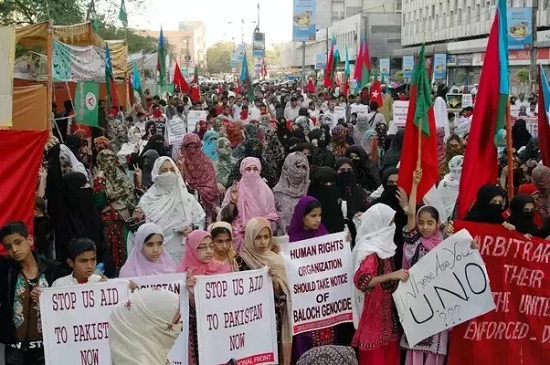
Baloch women protest against the "kill and dump" policy of Pakistan Army.
Baloch women protest against the “kill and dump” policy of Pakistan Army.

One of the most disturbing instances of ‘enforced disappearance’ came to light in January 2014 when a shepherd stumbled upon a mass grave in Totak area of Khuzdar district in Balochistan, which according to media reports contained about 100 dead bodies. The judicial inquiry that probed this case not only gave the Pakistan Army and intelligence agencies a clean chit but also failed to identify the killers. The pathetic part is that instead of displaying investigative and deductive skills, the judicial inquiry admitted that it had arrived at its conclusion just because “No one has recorded any statement against the armed forces and security agencies.” No wonder Human Rights Commission of Pakistan (HRCP) Chairperson Ms. Zohra Yusuf told reporters that “The government has also not allowed the HRCP mission to visit the site, despite several written and verbal requests” and attacked the government by calling this “just another” judicial report. Eight years have gone by, but the perpetrators who murdered the Balochis whose remains were found in the mass grave have not yet been identified and the reason is not hard to guess!

A report published by BBC News in 2016 contains shocking data of ‘kill and dump’ incidents. A few of these are:

  • Pakistan’s Federal Ministry of Human Rights has confirmed that at least 936 dead bodies have been found in Balochistan since 2011.
  • The Voice for Baloch Missing Persons (VBMP) has recorded 1,200 cases of “dumped bodies,” but this list is not exhaustive as it does not include people who have been victims of ‘enforced disappearances” and whose remains haven’t yet been found.
  • A political activist named Jalil Reki, who lived in the Saryab neighbourhood of Quetta was arrested from his residence in 2009. No one knew where he was taken but two years later, his bullet ridden body with fractured arms and cigarette burns on his back were found in Mand area (near the Iranian border) which is at a distance of more than 1000 km from Quetta (from where he was arrested)!

Balochistan has been bleeding continuously for the last seven decades but the world doesn’t seem to have either the time or inclination to do something to ameliorate the sufferings of its oppressed people who are hapless victims of state-sponsored terrorism. By resorting to aerial bombardment of Balochi settlements, the Pakistan Army has declared an all-out war against its own people while its complicity in orchestrating ‘enforced disappearances’ and active pursuance of the ‘kill and dump’ policy is in gross violation of human rights and international law.

The mission statement of the Office of the United Nations High Commissioner for Human Rights (OHCHR) is “to work for the protection of all human rights for all people” and while doing so, “give priority to addressing the most pressing human rights violations, both acute and chronic, particularly those that put life in imminent peril.” So, any further inaction on the part of the international community in forcing Pakistan Army to end atrocities on innocent civilians in Balochistan will only make the OHCHR defunct! The whole world accepts that instances of ‘enforced disappearances’ as well as ‘kill and dump’ cases are common place in Balochistan, but yet, these unspeakable atrocities have failed to stir the collective conscience of the international community and this is shameful.

How many more people must die in Balochistan before the OHCHR wakes up to this humungous human tragedy?

Postscript- In his tweet to the ‘umma’ (entire Muslim community), Prime Minister Imran Khan wrote “On international Human Rights Day, Muslims need to remember that the message of equality, justice & protection of human rights for all was given more than 1,400 years ago by our Prophet (PBUH).” Whereas this reminder is a very noble gesture, but the question everyone would like to ask PM Imran Khan is, “In Balochistan, when will the Pakistan Army start following the message of justice and protection of human rights given by the Prophet (PBUH)?
Balochistan needs to fight Pakistan with collective force: Dr. Allah Nazar


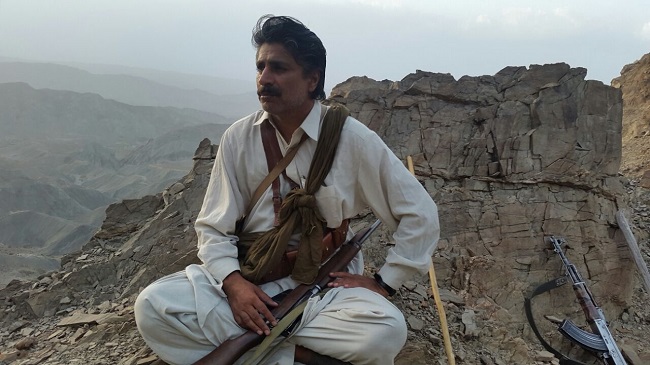
Dr. Allah Nazar Baloch, pro-independence leader of Balochistan, has condemned the kidnapping of Baloch women from Quetta and said that the occupying state of Pakistan is targeting the Baloch women after facing defeat at the hands of Baloch freedom fighters. “Pakistan is committing war crimes in broad daylight and before the eyes of the world. We do not ask our enemy to release the freedom fighters and political workers, but we have always said that the world should bind Pakistan to respect the laws of war. We have repeatedly appealed to the world to force Pakistan to abide by the laws of war, but in return, we are getting our women, children and the elderly abducted and killed by Pakistan’s armed forces,” Dr Allah Nazar Baloch said in a statement

He further added, “The kidnapping and disappearance of women, little children and the Baloch elderly from Quetta is a clear sign of the continuation of the collective punishment policy by Pakistan through guns which shows its utter disregard for international laws of war.” Dr Allah Nazar further explained: “When we talk of any law, it should not be limited to the creation of the law, but it is the creators’ responsibility to enforce it. Similarly, when we talk of war laws or United Nations’ conventions, it is the UN’s responsibility to bind the signatories to enforce those laws. But surprisingly, the international community with regard to Pakistan, including the United Nations, is clearly oblivious of its duties, which is costing the Baloch people with their lives, livelihood and honor.” He added that under the policy of collective punishment, not only women from different areas are taken away from their homes but they also suffer the torture at secret prisons for a long time. Occasionally a few are released, and in most cases, they are kept as prisoners forever.

Seven year old Amin (son of Haji Dost Ali Bugti), Izzaton Bibi (daughter of Malha Bugti), Murad Khatoon (daughter of Nizgho Bugti), Mahnaz Bibi (daughter of Fareed Bugti), 60-year-old Haji Dost Ali (son of Malook Bugti) and 80-year-old Farid Bugti were abducted and their only crime was that they were Baloch. “Being a Baloch is a crime punishable by death and torture in Pakistani military camps according to the constitution of Pakistan. Sadly we use the term “missing person” while knowing clearly where the people really are. We have to stop using such words. Because all people with brains have no doubt that they are imprisoned in the illegal slaughterhouses of the Pakistani Army. And only those people can know what they are enduring in those dungeons,” the statement from Dr Allah Nazar reads further.

He asserted, “The kidnapping of women and children is a policy of collective punishment. Under this policy Pakistan is trying to crush the Baloch national movement forever by destroying the Baloch nation. Thousands of Baloch have gone missing in the hands of Pakistan and thousands have already been martyred. Women, children and the unarmed people are protected under every law of the world in any situation. But Pakistan is an unnatural state which is based on lies. That is why the Baloch have to fight against the brutality of Pakistan with collective force.”

Dr Allah Nazar Baloch’s statement further adds: “Pakistan neither has its own culture nor any specific identity. Also till date we have not seen any historical or any great personality in Pakistan who has supported the truth against its state policies. Ironically, whom they call a great leader was a salaried professional lawyer of the Baloch state who deceived his client and issued a decree to occupy Balochistan. It is merely wishful thinking to hope for justice from such a state. It is the responsibility of the international community to take practical steps to keep Pakistan at bay from committing obvious war crimes in Balochistan.” 

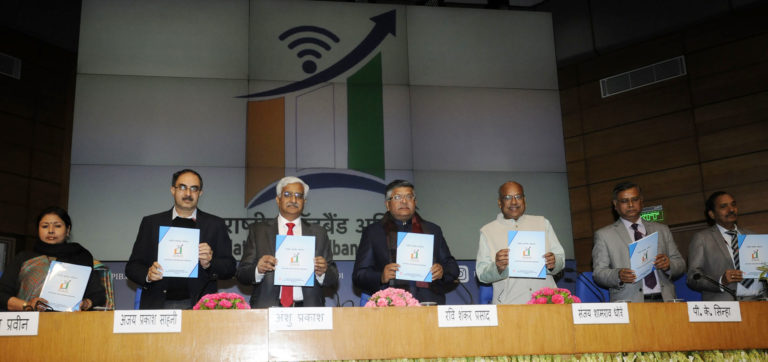
National Broadband Mission launched; All villages in the country will be covered by 2022

The Minister for Communications, Law & Justice and Electronics and Information Technology, Ravi Shankar Prasad has said that the National Broadband Mission is to fulfill all aspirations of the people and enables fast track growth of digital communication infrastructure. He was addressing the gathering after launching the National Broadband Mission (NBM). The Minister of State for Communications, Human Resources Development and Electronics & Information Technology, Sanjay Shamrao Dhotre, the Secretary (Telecom), Anshu Prakash and other senior officials were present on the occasion. A large number of representatives from the telecom industry, officers from various Ministries of the Government of India, various State Governments and senior officers of the Department of Telecommunications participated in the event.

Ravi Shankar Prasad also launched the Logo of the NBM, and a  Booklet on this occasion.

The vision of the NBM is to fast track growth of digital communications infrastructure, bridge the digital divide, facilitate digital empowerment and inclusion and provide affordable and universal access of broadband for all. Some of the objectives of the Mission which is structured with strong emphasis on the three principles of universality, affordability and quality are:

  • Broadband access to all villages by 2022
  • Facilitate universal and equitable access to broadband services for across the country and especially in rural and remote areas
  • Laying of incremental 30 lakhs route km of Optical Fiber Cable and increase in tower density from 0.42 to 1.0 tower per thousand of population by 2024
  • Significantly improve quality of services for mobile and internet
  • Develop innovative implementation models for Right of Way (RoW) and to work with States/UTs for having consistent policies pertaining to expansion of digital infrastructure including for RoW approvals required for laying of OFC
  • Develop a Broadband Readiness Index (BRI) to measure the availability of digital communications infrastructure and conducive policy ecosystem within a State/UT.
  • Creation of a digital fiber map of the Digital Communications network and infrastructure, including Optical Fiber Cables and Towers, across the country
  • Investment from stakeholders of USD 100 billion (Rs 7 Lakh Crore) including Rs 70,000 crore from Universal Service Obligation Fund (USOF)
  • Address policy and regulatory changes required to accelerate the expansion and creation of digital infrastructure and services
  • Work with all stakeholders including the concerned Ministries / Departments/ Agencies, and Ministry of Finance, for enabling investments for the Mission

Veteran actor Shriram Lagoo passes away at 92

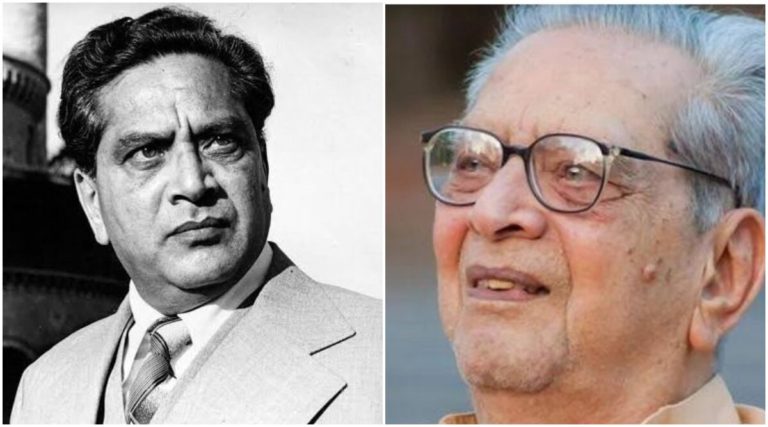
Versatile actor and one of the biggest faces of the Marathi theatre Shriram Lagoo passed away on Tuesday in Pune. He acted in over 200 films including Hindi and Marathi films as well as Hindi, Marathi and Gujarati plays, and directed over 20 Marathi plays. He was considered one of greatest actors of Marathi stage during the second half of twentieth century. He was also very vocal and active in furthering progressive and rational social causes.

Shriram Lagoo was born in Satara district, Maharashtra to Balakrishna Chintaman Lagoo and Satyabhama Lagoo, and was the eldest of four children. After receiving a degree in medicines from the University of Mumbai in the fifties, Lagoo practiced as a doctor for some years before totally devoting his life to plays and films.  Infact he started acting in plays while attending the Medical College. Once bitten by theatre bug, he continued his dramatic activity through a group “Progressive Dramatic Association”, which he started with like-minded senior friends like Bhalba Kelkar.

He started his career as actor in films with projects like Aahat, Pinjra, Mere Saath Chal and Samna. These films released in the early seventies but made filmmakers realise Lagoo’s talent as a character artist. During the eighties and nineties, he became a very familiar face for the viewers of Hindi and Marathi cinema as he acted in more than five dozen films during this period. He started taking up less projects after 1990 but was very active on the theatre front.

He earned many awards during his long career. In 1978, he received Filmfare Best Supporting Actor Award for his work in Gharaonda. He was also a recipient of the Kalidas Samman in 1997. He was given the Master Dinanath Mangeshkar Smruti Pratisthan in 2006. He was given the Sangeet Natak Akademi Fellowship in 2010.

Dr. Lagoo also wrote a book, an autobiography titled Lamaan, which means “the carrier of goods”.

Philosophical and Historical Foundations of American Secularism 14 – Constitutionally Wrought Freethought

0

Dr. Herb Silverman is the Founder of the Secular Coalition for America, the Founder of the Secular Humanists of the Lowcountry, and the Founder of the Atheist/Humanist Alliance student group at the College of Charleston. He authored Complex variables (1975), Candidate Without a Prayer: An Autobiography of a Jewish Atheist in the Bible Belt (2012) and An Atheist Stranger in a Strange Religious Land: Selected Writings from the Bible Belt (2017). He co-authored The Fundamentals of Extremism: The Christian Right in America (2003) with Kimberley Blaker and Edward S. Buckner, Complex Variables with Applications (2007) with Saminathan Ponnusamy, and Short Reflections on Secularism (2019).

Here we talk about the American Constitution.

Scott Douglas Jacobsen: When we look at the well-made human document called the American Constitution, some questions arise for the freethought community, potentially, or, at least, some in it. What parts before amendments best exemplify freethought and secularism? What amendments improve upon the original document in terms of the specific content of secularism and the freethinking ability of individual citizens?

Dr. Herb Silverman: The framers of the United States Constitution wanted no part of the religious intolerance, holy wars, and bloodshed they saw in Europe. In declaring independence from England, Americans also rejected the claim by kings, crowned by bishops, that they had been vested with a God-given authority to rule through “divine right.”

The U.S. framers wisely established the first government in history to separate religion and government. They formed a secularnation whose authority rests with “We the People” (the first three words of the U.S. Constitution) and not with “Thou the Deity.” They created a Constitution in which the government acknowledged no gods, the better to ensure freedom of conscience. We the people are free to worship one, many, or no gods. As Thomas Jefferson said, “It does me no injury for my neighbor to say there are twenty gods or no god. It neither picks my pocket nor breaks my leg.”

There are only two references to religion in the U.S. Constitution, and both are exclusionary. One is in Article 6: “No religious test shall ever be required as a qualification to any office or public trust under the United States.” I know Article 6 quite well. When I discovered in 1990 that our South Carolina state constitution prohibited atheists from holding public office, an obvious violation of Article 6, I challenged that provision in the state constitution by running for governor as “the candidate without a prayer.” In 1997 I won a unanimous decision in the South Carolina Supreme Court, invalidating the unconstitutional provision and recognizing that atheists have the right to hold public office in South Carolina.

The other exclusionary mention of religion is in the First Amendment to the Bill of Rights: “Congress shall make no law respecting an establishment of religion, or prohibiting the free exercise thereof.” This guarantees the right to practice any religion or no religion. The federal government cannot favor one religion over another, or believers over non-believers. No one’s religious liberty is threatened when the wall of separation between religion and government is kept strong.

As wonderful as the U.S. Constitution is, no American would call it an infallible document, as some claim about the Bible. The framers understood the need for future changes in the Constitution, and set forth mechanisms for change through amendments. Scientific and humanistic advances make it desirable to incorporate new information and adjust our worldview and behavior. The Constitution condoned slavery until the 13th Amendment ended it in 1865. Women were not granted the right to vote until 1920 when the 19th Amendment passed. On the other hand, the unamended Bible written by misogynistic men condones slavery. You will also not find any support in the Bible for respecting people who have different or no religious beliefs.

While the U.S. federal government was never considered to be a Christian nation, initially there was no prohibition against states establishing their own state churches. Some early state constitutions limited public office to Christians—or even to the correct Christian denomination. Such provisions represented a more intolerant time in our history. States with government-favored religions gradually began moving toward separating religion and government. The 14th Amendment, passed in 1868, ended state-sponsored religion.

Those who claim the United States is a Christian nation need to read the Constitution. You will not find the words Christian, Jesus, or God in it. Our framers were careful and thoughtful writers. Had they wanted a Christian nation, it seems highly unlikely that they would somehow have forgotten to include their Christian intentions in the supreme law of the land. In 1797, the Treaty of Tripoli was ratified unanimously by the United States Senate. This trade treaty stated in part: “The government of the United States is notin any sense founded on the Christian religion.” I wonder what part of “not” those who believe we are a Christian nation don’t understand.

Nevertheless, Christian-nation advocates continually try chipping away the “secular,” often with symbols like “In God We Trust” and “One Nation Under God.” They also try to legislate the posting of the Ten Commandments on public buildings. Most Americans believe that the Ten Commandments are among the finest guidelines for a virtuous life. Interestingly, hardly anyone can actually state them all. So I will, along with my commentary.

The First Commandment, “Thou shalt have no other gods before me,” conflicts with the First Amendment of the U.S. Constitution that guarantees freedom of religion—the right to worship one, several, or no gods. The next three Commandments (no graven images, not taking God’s name in vain, keeping the Sabbath day holy) refer to specific kinds of worship directed toward a God who punishes several generations of children if their fathers do not worship appropriately. These first four commandments are religious edicts that have nothing to do with moral or ethical behavior. They describe how to worship and pay homage to a jealous and vindictive God.

The Fifth Commandment, about honoring parents, should not be so unconditional as to condone child abuse. There is no commandment about parents honoring their children or treating them humanely. 

The next four commandments (proscriptions against murder, adultery, stealing, and lying) obviously have merit, and existed in cultures long before these commandments appeared in Exodus 20. Yet even these are open to interpretation. Is abortion murder? What about euthanasia? War? Capital punishment? Reasonable people can disagree and respect other opinions, unless convinced they are acting as God’s messenger.

The Tenth Commandment, “Thou shalt not covet thy neighbor’s house, wife, slaves, ox, donkey, or any other property,” condones slavery and treating women as property.

The Ten Commandments, meant to be the cornerstone of an ethical and moral life, are notable for what they omit. Why not condemn slavery, racism, sexual assault, child and spouse abuse, and torture? Most people could come up with a better set of rules to live by.

I propose a simple solution that both honors our democratic principles and reminds us of the curbs on governmental abuse of power. Why don’t we display our American Bill of Rights on public buildings? We would still be posting ten, and we Americans can all support and celebrate these ten. Or can we?

Jacobsen: Thank you for the opportunity and your time, Dr. Silverman.

Photo by John Bakator on Unsplash

Bangladesh Liberation: Let’s travel again on Jessore Road

Mohan Guruswamy, fondly called India’s Benjamin Button, reminded India it is time the nation celebrates its greatest military victory after World WarII – the war against Pakistan in 1971 and the birth of Bangladesh.

Guruswamy wrote on December 16, 2019, on Facebook, around the time boisterous students took to streets across India to fight cops and protest against what many claim is the contentious Citizenship Amendment Act (CAA). he said India lost an estimated 3400 soldiers, and another 4,000 were wounded in the war against Pakistan. India took 93,000 prisoners, very few know that the rifle and bayonet at the Amar Jawan memorial – many call it the India Gate memorial – in the heart of the Indian Capital belong to an unknown Indian soldier who died in Jessore town that lies close to the Bangladesh border in Bengal. It was 48 years ago, India under Indira Gandhi displayed courage and defied both Washington – then ruled by US President Richard M Nixon and the UN – and led India to its greatest victory in less than a fortnight. Atal Behari Vajpayee called her a Durga, the ten hand goddess who rides a tiger and slays demons. Strangely, very few in India remember Vijay Diwas. At an internal class XII examination in the Indian Capital, students drew blank — nearly 98% in the class — when asked about Vijay Diwas.

Several thousands of people were displaced across Bangladesh before the Indo-Pak war started on December 3, 1971.

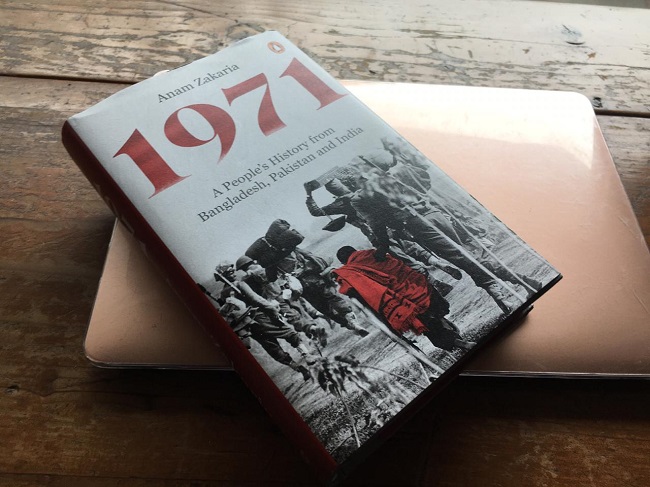
And now, Anam Zakaria’s brilliantly researched book, appropriately titled 1971, has hit the stands and offers a great opportunity for many to revisit those days of blood, horror and death, mostly in the country’s eastern sector. The book will help Indians understand how the war was fought and eventually won. Zakaria writes how Indian soldiers fought a two-front conventional military engagement under the leadership of the redoubtable Field Marshal Sam Manekshaw. And let’s not forget, reminds Zakaria, how Manekshaw staved off repeated demands for an immediate war in early 1971 despite the situation turning very, very tense and grim in East Pakistan. The big boss of the Indian Army reminded politicians of his demand for more cash for defence and argued a war in the summer of April and May will destroy all standing wheat crop in Western India and the nation could plunge into a food crisis and that a war in June-August would cause trouble for moving troops due to floods in Eastern India and East Pakistan. The war finally broke out on December 3, 1971.

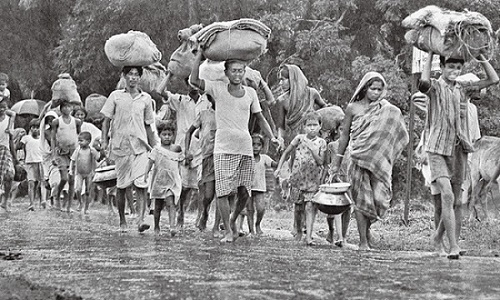
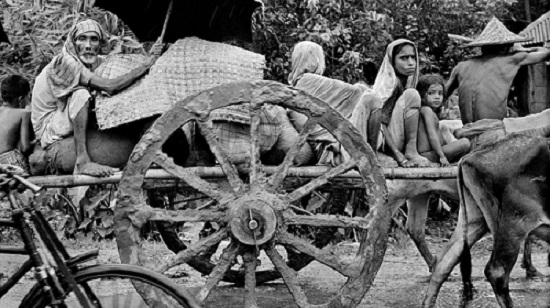
People from East Pakistan (now Bangladesh) fleeing away from their homes to escape the atrocities committed by Pakistan Army.

Manekshaw’s restraint worked, the book explains how, India gained both tactical advantage and was able to explain to the world the situation in East Pakistan where Sheikh Mujibur Rahman, father of the current Bangladesh PM Sheikh Hasina Wajed, was illegally denied his electoral victory in 1970 by Pakistan’s ruling coterie influenced by Zulfiqar Ali Bhutto. Thanks to interviews Zakaria conducted with witnesses and victims, the book explains how the crisis hit a point of no return in March 1971. The Pakistan Army unleashed a reign of terror on the hapless Bengalis, an estimated one million crossed over to Bengal. The eventual figure is over 10 million, the influx denting the economy of the state beyond control.

I remembered having read a British Broadcasting Corporation report on an article that was published on June 13, 1971 in UK’s Sunday Times exposing the brutality of the Pakistani Army in East Pakistan. The Sunday Times copy – written by Anthony Mascarenhas – was described by the BBC as one of the most influential pieces of South Asian journalism of the past half century. The Bangladesh government says an estimated three million lost their lives. And there’s little doubt, claimed the BBC,  that Mascarenhas’ reportage played its part in ending the war, helped turn world opinion against Pakistan and encouraged India to play a decisive role.

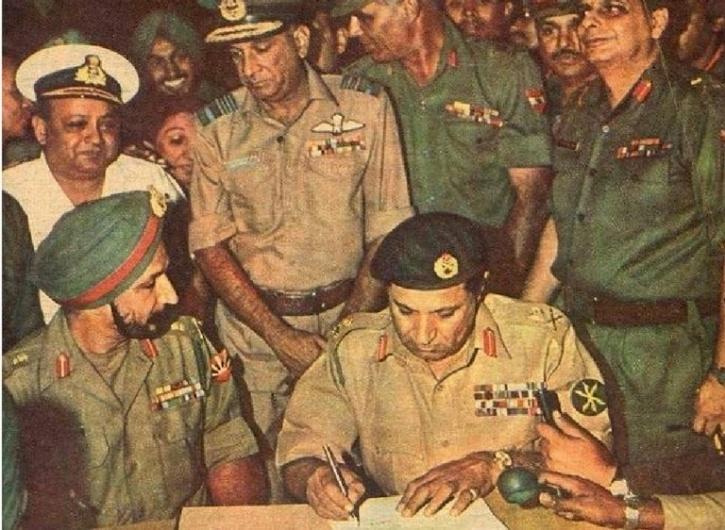
Pakistan’s Lt. Gen. Amir Abdullah Khan Niazi (right) surrenders to India after losing the 1971 Indo-Pak War. Lt Gen. Jagjit Singh Aurora (left) received command of entire Pakistan’s Armed Forces in Bangladesh.

Zakaria’s book needs to be read in the same perspective because she travelled both to Lahore and Dhaka to understand the impact of the war. This is a brilliant effort, unlike those who write it from the eyes of either Dhaka or Islamabad and mess up the whole narrative. I liked the chapter when Zakaria brilliantly interviews students and asks them about the war and those deaths. All remembered, it seemed (to me) many wanted to move on in life because the war was nearly five decades old and that some were . Some in Bangladesh even discussed cricket and blamed India for being arrogant, and denying Bangladesh waters of the Teesta river. Some even blamed India (read BCCI) for not allowing Indian cricketers play in the Bangladesh cricket leagues. Time and again in the book the author displayed her grasp over the subject, I have a feeling it helped her because she was born and groomed in Lahore and understood the sensitivities of the people of Pakistan and Bangladesh. 

Zakaria worked like a very good reporter.

Many Zakaria interviewed for the book admitted that the conflict was sparked by elections, which were won by the Awami League, an East Pakistani party, which wanted greater autonomy for the region. The book also highlights a very important fact: That many Bengalis were convinced that West Pakistan was deliberately blocking their ambitions. The Army launched a pre-emptive strike against the Awami League on March 25, 1971. Some of the supporters of the Awami League, the country’s intelligentsia and the Hindu community – it made up about 20 percent of the province’s 75 million people – were also targeted.

One of the fascinating chapters of the book is the one titled Pakistan’s War where the author combines grit, determination and knowledge to pen reactions of those who followed the war as civilians and also members of the Pakistani army. For an author it’s important to dig. I liked her interview with an army major who said something interesting, and something that flows much against the tide. That the first fireworks started when the Mukti Bahini opened fire on the soldiers from the Jagannath Hall of the Dhaka University and then, in retaliation, the soldiers opened fire which was “excessive”. And then, the retired major told Zakaria: “The firing had to be excessive under those circumstances.” 

If the book is about war, both sides must find mention. 

I think it would be a great project if Zakaria travels through the Jessore road once again and reaches the crowded Bangladesh city. She could do a great film on what could be called The Journey In Reverse. Let this book be a standard manual in all Indian universities. All we need is to get some Vice Chancellors push their pens and open files so that the students can also read this very, very brilliant book.

Canada: Division over role of religion in Canadian society

0

Canadians remain mixed in their views on the role of religion in society based on a new study by the Angus Reid Institute. One-third of Canadian citizens want to see a more secular nation. The study, though, was conducted in partnership with Cardus, which is a Christian think-tank.

6 in 10 Canadians find the freedom of religion a virtue in Canadian society. That which contributes to the society rather than detracts from it. Only 1 in 10 citizens in Canada think the opposite.

The research presented some other interesting findings about Canadians. Presumably, this is in line with other research on Canadians and the nature of religion as more of a private than a public matter. Indeed, as stated, “…a premium placed on freedom of religion exists alongside limitations as to how far that faith should extend in public life.”

4 in 10 Canadians disagree with the claim of faith improving equality and human rights. Indeed, this may seem paradoxical or counterintuitive. However, the traditional demographic categories of age, gender, and political persuasion do not count as the major deciding factors in the differentials of responses to the questions in the survey.

As reported, “The Angus Reid Institute used 17 different variables to categorize Canadians across a Public Faith Index to create three groups: The Public Faith Proponents, the Uncertain and the Public Faith Opponents.”
Each grouping had a different idea of the role of faith in public life while having a consistently diverse set of backgrounds, including in the aforementioned variable categories.  The Angus Reid research is important because of the insight into the nature of the questions on religion in Canadian society moving further into the 21st century.

What do Canadians think about faith? What do Canadians feel about religion? How should these thoughts and emotions influence the nature of public policy and political life in Canadian society? All important questions, where all this research can become a point of further information on the matter.

Approximately equal numbers were found within the Public Faith Proponents and the Public Faith Opponents, i.e., a split on an important subject matter to Canadians. Still, 3 in 10 Canadians remain on the fence.

From October 24 to November 1, 2019, a representative randomize sample survey was conducted on 2,057 Canadian adults who are Angus Reid Forum members. There may be a self-selection effect there.

This sample size produces a margin of error of 2 percentage points, plus or minus, 19 times out of 20.

Half of Canadian citizens belief the faith communities as a practical reality harbour a mixed outcome – good and bad – to Canadian society. 1 in 5 Canadians believe Canada keeps the faith and values talk from the public arena with a further 1 out of 3 seeing room for their faith and values expressed in the public sphere.

Photo by Paul Zoetemeijer on Unsplash

Rank matters in life or death for Pakistan Army

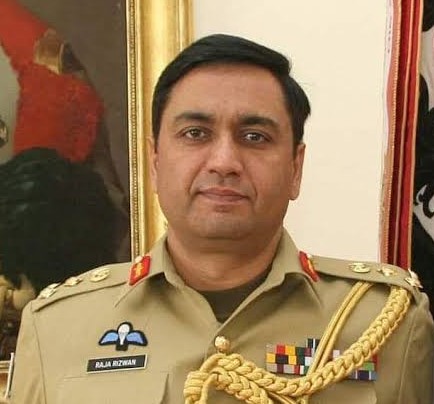
Last fortnight, social media was abuzz with the news that Pakistan Army Brig. Raja Rizwan Ali Haider had been hanged. Handed down the death penalty by a military court for “espionage/leakage of sensitive information to foreign agencies with prejudice to the national security.” Brig. Haider is the highest-ranking army officer of Pakistan Army to be awarded capital punishment. Betraying one’s own country is universally considered to be a highly despicable and extremely serious offence and when the traitor is the one who is charged with the sacred duty of protecting the nation and its people from external threats, this crime becomes no less than blasphemous!

Along with Brig. Haider, Lt. Gen. (retd.) Javed Iqbal Awan and Dr Wasim Akram (who as per ISPR was working for a “sensitive organisation”) have been found guilty for being involved in espionage activities but DG ISPR Maj. Gen. Asif Ghafoor insists that these are not related. So, even though one wouldn’t expect many tears to be shed as and when Brigadier Haider and Dr Akram are executed, yet these executions will definitely continue to haunt even those with an iota of conscience. This is because once stripped off hyper-nationalistic emotions that it evokes and is considered purely on merit, it becomes evident that there’s much more than what meets the eye.

Abduction

Since espionage cases concern leakage of sensitive and classified information, investigation leading to the arrest of those leaking such details perforce have to be shrouded in secrecy so that the entire spy network can be rounded up. Similarly, even after a suspect has been arrested, there’s a need to withhold this information for a brief period when the suspect is under initial interrogation so that the accomplices named by him can be ‘picked up’ before they fly the coop. So, the Pakistan Army is well within its rights of not disclosing details regarding Brig. Haider’s arrest immediately on occurrence as maintaining secrecy initially in this regard for aforesaid reasons is understandable.

But it certainly can’t be forgiven for continuing to keep this arrest a secret for five months. Isn’t it downright stupid to expect that the spy agency for whom Brig. Haider was working would be so naïve as to remain unaware of the dramatic disappearance of its high-grade ‘source’? Wouldn’t Brig. Haider’s handlers immediately go into a damage control mode and in order to avoid their arrest, take the basic precautionary step of ensuring that the other spy ring members go underground within hours of Brig. Haider’s disappearance?

Brig. Haider had been abducted by the counter-intelligence wing of ISI from a busy market place on October 10, 2018 but the world only came to know about his arrest in February 2019. Perhaps his arrest would have continued to remain under wraps had his son not filed a habeas corpus petition in Islamabad High Court (IHC) and if Justice Aamer Farooq who heard this petition hadn’t sought a report from the authorities forcing the army to admit that Brig. Haider was in its custody. The five month long unavoidable mental trauma suffered by family members of Brig. Haider due to the inordinate delay in disclosing his whereabouts is something the Pakistan Army hasn’t given any reasons for and this raises several questions on the Pakistan Army’s sincerity regarding this case.

Disparity in quantum of punishment

Next comes the question regarding the quantum of punishment awarded to Brig. Haider. Armies all over the world have provisions for awarding capital punishment to those found guilty of espionage and Pakistan Army is no exception. But death sentence is the maximum and not the mandatory punishment for espionage as is evident from the fact that of the three persons tried for espionage, while Brig. Haider and Dr. Akram have been awarded the death penalty, Lt. Gen. Awan has got away with a prison term of just 14 years!

Though Maj. Gen. Ghafoor has specified that “These were three separate cases,” he has also admitted that all of them pertained to “espionage/leakage of sensitive information to foreign agencies (with) prejudice to the national security.” DG ISPR also clarified that “Punishment awarded to the officers is of maximum degree in the law corresponding to their respective offence.” As per media reports, Lt. Gen. Awan and Brig. Haider were tried under Pakistan Army Act, 1952, while Dr Akram was tried under Official Secrets Act, 1923 and in both these Acts that carry the maximum punishment of death penalty.

Even if we take Maj. Gen. Ghafoor’s words as gospel of truth that these cases aren’t correlated and there is no “network as such,” they are still similar in every way. Firstly, all three have been tried for the same offence (espionage). Secondly, as per DG ISPR, all the accused have been awarded punishment that “is of maximum degree in the law corresponding to their respective offence.” So, the million-dollar question is: Why has death penalty been awarded to a scientist and a Brigadier while a Lt. Gen. has managed to get away with only a 14-year prison term for the same crime?

It’s obvious that the punishment awarded to the trio isn’t the “maximum degree in the law corresponding to their respective offence,” as claimed by Maj. Gen. Ghafoor. So, could it be that when it ultimately boils down to deciding the quantum of punishment to be awarded by a military court, instead of the gravity of the offence, it’s actually the rank of the accused that matters?

Why US-Taliban Talks Won’t Fructify in Afghanistan

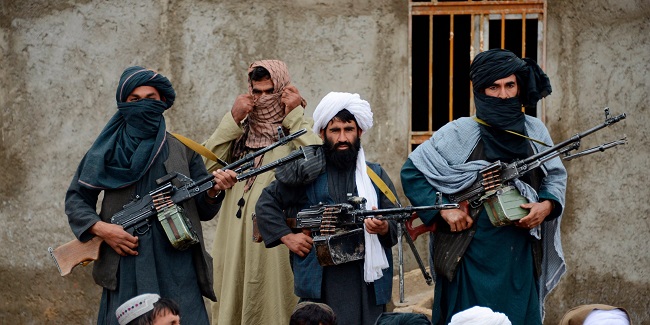
With the Taliban ready to negotiate and Washington desperate to get out of Afghanistan, there shouldn’t have been any problems in working out a deal. But what’s surprising is that despite both sides being willing and with Pakistan playing mediator, the dialogue process doesn’t seem to be making any headway. Though Washington keeps accusing the Taliban leadership of insincerity and blames them for breakdown of talks, which to some extent is right, the entire responsibility for the Taliban’s blow-hot blow-cold behaviour cannot be entirely apportioned on this terrorist group alone.

The West has been projecting the Taliban leadership as a group of uncouth fanatics, incapable of rational thinking that’s possessed with a perverse proclivity for settling disputes through the gun. But this portrayal is far from true. The reality is that Taliban leaders have been born and brought up in an environment that’s always been very prone to fierce tribal loyalties with generations old feuds and rivalries as well as infested with an acute obsession with honour, wealth and power. Sheer survival instincts have endowed the Taliban elders with not only extraordinary negotiating skills but also an uncanny guile necessary to subsist in the merciless and violent world they live in.  

If one applies the old Urdu adage “Jab Miya Biwi Razi toh kya karega Qazi” (When the husband and wife are in mutual agreement, then what’s left for a judge to do) to this situation, then the Taliban’s flipflop on the issue of conducting dialogue becomes inexplicable. But anyone with even rudimentary knowledge of Taliban-Pakistan relationship won’t find this behaviour perplexing at all, because these negotiations aren’t just a simple case of two parties who are equally anxious to negotiate. Even though Pakistan claims that it’s only playing the role of a neutral facilitator with the sole objective of bringing peace to the region and has no vested interests, the reality is just the opposite.

That it was the Pakistan Army which created terrorist groups to fight in Afghanistan and Jammu and Kashmir is no secret. Former Pakistan President Asif Ali Zardari has admitted that “militants and extremists emerged on the national scene and challenged the state not because the civil bureaucracy was weakened and demoralised but because they were deliberately created and nurtured as a policy to achieve short-term tactical objectives.” Gen. Pervez Musharraf who has been both Pakistan’s President and army chief too has proudly owned up that “We poisoned Pakistani civil society for 10 years when we fought the Soviets in Afghanistan in the 1980s. It was jihad and we brought in militants from all over the world; with the West and Pakistan together in the lead role.”

Some may argue that since the aforesaid statements pertain to events that occurred more than three decades ago, quoting them to buttress the current argument is incorrect and in order not to disappoint such readers, one would like to give them the benefit of doubt. But having done so, it would be pertinent to remind them that it was as late as 2016, when Sartaj Aziz, who was then the Adviser to Prime Minister Nawaz Sharif on Foreign Affairs, himself admitted that “We have some influence on them (Taliban) because their leadership is in Pakistan and they get some medical facilities; their families are here,” adding that, “So, we can use those levers to pressurise them to say ‘come to the table’!” But what’s more important is his revelation that Islamabad had continuously “hosted” the Taliban for 35 years!

The irony is that even though Washington knew this all along, it did nothing that would force Pakistan to stop providing safe sanctuaries to the Taliban on its soil. All it did was to intermittently castigate Islamabad (like Hillary Clinton’s making the ‘snakes in the backyard’ remark) and suspend financial aid temporarily. But on assuming office, one expected that things would finally change after US President Donald Trump tweeted that “The United States has foolishly given Pakistan more than 33 billion dollars in aid over the last 15 years, and they have given us nothing but lies and deceit, thinking of our leaders as fools. They give safe haven to the terrorists we hunt in Afghanistan, with little help. No more!”

There is no doubt that Pakistan was really hit hard by suspension of US financial aid. But instead of responding positively by taking action against the Haqqani network and other factions of Taliban who are fighting against the US led International Security Assistance Force (ISAF) in Afghanistan, the Pakistan Army chief Gen. Qamar Javed Bajwa decided to brazen it out, declaring that what Pakistan expected from the US was “respect and confidence” and not financial aid. Even though this decision triggered the country’s downward economic spiral, Gen. Bajwa still stuck to his guns because for Rawalpindi, saving its ‘strategic assets’ was of paramount important. In fact, with Gen. Bajwa’s blessings, Foreign Minister Khawaja Asif even went to the extent of warning Washington that its war on terrorism “can’t be won by excluding or confronting Pakistan.”

Rather than take a strong view of Pakistan’s intransigence, the Trump administration threw in the towel and like always, Pakistan Army’s ‘strategic assets’ proved to be the proverbial ‘ace’ of spades that has even ‘trumped’ POTUS (President of the United States). Pakistan Army is well aware that the moment they get rid of the terrorist groups that further its agenda in Afghanistan, Washington will demand the dismantling of its ‘strategic assets’ fighting in Jammu & Kashmir and this they can’t afford to do. So, in order to have the cake and eat it too, Rawalpindi is pretending to be a dedicated mediator but is covertly ensuring that no breakthrough is achieved and the continuing attacks on ISAF (International Security Assistance Force) by the Taliban is a clear indication of this!

Tailpiece — Though Trump may appear to be a hard nut to crack, but it seems that, just like his predecessors, political expediency is forcing him to make another Faustian deal with Pakistan. Seeing this sorry state of affairs, the following lines of a song (‘The Grave’) from the 70s, written and sung by Don Maclean come to my mind:
“When the wars of our nation did beckon
The man, barely twenty, did answer the calling
Proud of the trust
That he placed in our nation
He’s gone
But eternity knows him
And it knows what we’ve done!

Chilla-e-Kalan in Kashmir and the Indian Army’s Role

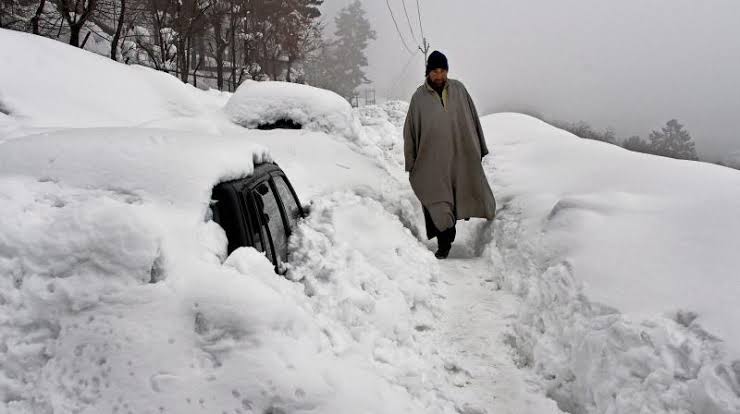
This winter is likely to be particularly harsh for the Union Territory of Jammu and Kashmir. The coldest night of the season was recorded on 9th December, and the cold wave has not relented since then as the minimum temperature continues to hover several degrees below the season’s average. The national highway has already witnessed closure for the last few days, something that normally happens in January. The freezing of water bodies and taps has already set in.

In Kashmir such extreme cold conditions are referred to as Chilla-e-Kalan, a period normally registered from December 21st to January 31st, which represents the harshest 40 days of winter in the Valley. It has already begun before time.  

The people of the region prepare well for Chilla-e-Kalan. The administration also makes special efforts to keep essential services like electricity and water supply going, the latter being a major problem due to freezing of supply lines and taps. Disruption of supplies due to road blockage at many places also needs to be catered for with adequate stocks and emergency communication facilities. This year the road blocks have already started.

The Indian Army, traditionally, plays a very big role in overcoming winter problems across the region and more so in Kashmir. It is the remote areas, where communication is a challenge and the administration finds it difficult to respond to problems, where the Army concentrates maximum effort. Health and communication are the most important areas where assistance is forthcoming from the Indian Army.

There was a time, during the period of peak terrorism, when no doctor or nursing assistant was ready to man the Primary Health Centres (PHC’s) across the region what to talk of the remote areas. At that stage, Indian Army used to put in tremendous efforts to ameliorate the sufferings of the people. Now, with efficient governance in place, things are a bit better. The  PHC’s are in place and they are functioning well, but still, the capacity of the PHC’s to function independently in the winters remains limited due to a host of administrative and climatic challenges. The army, therefore, has been continuing with its support to the medical infrastructure in the state.

Indian Army prepares its medical assistance plan for the civilian general public well in advance and very meticulously. The first stage of preparation entails holding of medical camps before the onset of winters. This is done under the ambit of its humanitarian and development oriented scheme – Operation Sadbhavna. As the winter progresses, the troops deployed in remote areas maintain a good stock of medicines over and above their own requirement and the deployment of army doctors is kept at an enhanced level. Army doctors visit the villages and small towns that fall in their areas and it’s the responsibility of their units to see that everything is all right. During this period, medicines are also disbursed free of cost to the local civilians.

There are standard operating procedures in place to carry out medical evacuation of emergency cases both by road and by air. Fully equipped army ambulances and other vehicles are ready for this purpose. Special attention is being paid to remote areas like Gurez Valley where air evacuation is the only option.

The winters are also a time when nature’s fury is at its peak in snow bound areas of Kashmir. Destruction and break down due to avalanches and extreme weather conditions are quite common. In such times of emergency, the army puts to use it entire resources for rescue and relief. It sends out expert teams for avalanche rescue of civilians when required and search parties when news of some break down comes in. Army teams open roads and communications and provide food and shelter to stranded people; the list of assistance is long since requirements change with the situation.

Every year there are several instances where civil administration of Kashmir approaches the Indian Army for assistance. Such requests come from all level, starting from village panchayats to the highest administrative offices. The army is always forthcoming in providing assistance wherever and however it can; most of the time the assistance is given voluntarily and spontaneously, without specific orders from higher headquarters. This year too, the conditions seem to be such that the need will arise. It is best for all to remain well prepared for the same.

Indian Army does all this since it has the capacity and wherewithal to help under critical circumstances. It remains forthcoming on grounds of both humanity and a duty towards the citizens of the country. It is sad that some look upon the assistance being provided as a vested interest and try to play cheap politics. The people, however, understand that this is a manifestation of the close bond between the Army and the people of Kashmir. The harsh conditions are equal to all and survival of all is at stake and this brings the locals and soldiers close to each other. The biggest gratitude comes in the form of the happy faces of those who benefit from the humanitarian gestures of the security forces.

The goodwill of the army, however, should not lead to complacency in the new government of the Union Territory. It will need to ensure that there is adequate wherewithal, infrastructure and finance available to meet all possible emergencies. Extensive use of technology will need to be resorted, and more people put on to the task of responding to all emergencies. There are many countries across the world that face such weather related challenges, their methods and procedures need to be studied, modified for local conditions and implemented. Of course, the Army, as is the tradition, will extend all assistance and facility to the administration but this should be seen as a force-multiplier and not the first recourse to an emergency as was the case earlier.

The new administration under Lt. Governor Girish Chandra Murmu, an administrator known for his efficiency and drive, would need to remain poised to meet the first winter challenge that the newly formed Union Territory will face.