Home Blog Page 392

Canada: Interview with Pastor Josh Loeve – Lead Pastor, Centre Church

0

Pastor Josh Loeve is the Lead Pastor of Centre Church. Here we talk about Christianity, Centre Church, and more about Canadian society and religious faith.

Scott Douglas Jacobsen: So, let’s start on a fundamental issue within Christian doctrine or theology across denominations, what is the truth and the orientation around that within a Christian context for Centre Church and yourself? In other words, what is truth? How does your church live this out?

Pastor Josh Loeve: What is truth? Let’s talk about this in the religious sense, the Christian sense, we see, ultimately, Jesus is embodying Grace and Truth. When I speak about grace in the context of the church, I would speak of the person of Jesus.

In terms of science and all of that, I don’t know if I will touch on all that. In the context of Christianity, it is the death and resurrection of Jesus, and forgiveness of sin. To me, it is the highest truth.

That is what Christianity is, basically, hinging on: Did Jesus die? Did he rise again? If no resurrection, then there is no Christianity. So, really, the truth hinges on that pivotal part of history.

For me, when we speak of truth and the Christian landscape, that is what we are talking about.

Jacobsen: In Centre Church, what are the theological implications of this? What are the implications for community?

Loeve: Wow – those are huge questions [Laughing].

Jacobsen: [Laughing].

Loeve: The implications for the community are huge. Our purpose in the community is to lead people into a life centered on Jesus. The implications of that truth is that we believe when a person centers their life on Jesus and are forgiven.

Things like shame go away. There is a community of putting Christ at the center of our lives or first in our lives. We put him first. We model his life. What that means, it affects the relationships that we have; it affects the way we interact with the community around us.

It affects the way that we use our money and lead our homes. It affects every area of our lives. The implication of that truth is that we extend forgiveness, as this is a great gift. So, we are generous to the world around us.

From that position of centering Jesus on our life, we are able to model that out to other people of the grace that He extended and gave to others. It has implications in every area.

I could exhaust that list. For me, it has implications in every area.

Jacobsen: If we are looking at an ordinary Sunday service, how is this fundamental basis of theology and scriptural reading built into the things that are spoken about in an ordinary service? Also, the in-between things and the before and after of a service.

As anyone who has gone to a church or been part of a church community knows.

Loeve: I know there is a high emphasis on Sunday service. But what do the other 6 days of the look like? How that impacts our Sunday service and that truth, it is that everything that we do on weekend service is about Jesus.

Again, it hinges on the death and resurrection of Jesus. So, every Sunday, we give people an opportunity to hear that message. We challenge people to live out that reality. So, Jesus is the central theme of all of our services.

In particular, the sermons on a weekend. He is the central message of the sermons. We have a commitment to connect the Message of Jesus to those who have never heard the Message, or those who are seeking, starting, or returning.

Someone seeking answers for God that we want to get everything out of the way as to what Jesus looks like. Those who are wanting to start again. They are starting a journey with Jesus again. We want to empower them.

Or those who are returning. Those who want to return after 20, 30, 40 years. That is the implication. We want to bring that to as many people as possible.

At Centre Church, the focus is on people who are seeking, starting, or returning.

Jacobsen: Within Centre Church, what are some other derivative fundamentals of the faith for the community and you?

Loeve: Fundamentals, we have some values that we have built. These are biblical values. That we rely on. One of them is authentic community. So, I will work that into the community.

Centre Church is small groups. We meet in homes throughout the week to discuss the weekend’s message or different books about the Bible and contextualizing scripture. Things like that.

Then we have another values intent on discipleship. Discipleship is this process of helping people to grow to be more like Jesus. We need that through our serving teams.

We are a portable church. On a week, we have about 40 to 45 volunteers who do everything from run the kids’ classes to set up the environment as we are a portable church, to leading us in music, or to production teams, and small group leaders.

So, that is our intentional discipleship. Through that, we want people to serve each other, as Jesus served others. Those are 2 of our values out of 5. We live through those values.

Jacobsen: For many churches leaders in North America, they lament the lack of men within the church. How was this manifested in some of the churches that you’ve seen in the Lower Mainland [Ed. British Columbia, Canada]?

Loeve: Personally, I am not looking at those stats. I am not lamenting those things. We have a healthy contingency of both men and women in our church.

We empower both men and women into positions of leadership. So, we’re not trying to – or I am not trying to – be more edgy, cynical, or abrasive to bring more men into the doors of a Sunday service.

We believe God calls people into church through invitations to our church. I don’t think that I am lamenting. As a matter of fact, I think we see mostly men who are coming through the doors looking for purpose, looking for meaning, and addressing the truths about who God is.

Since day 1, we are a 4-and-a-half-year-old church. Not once have I thought, “Gosh, I wish we had more men here.”

Jacobsen: [Laughing].

Loeve: But we are having a healthy contingency of men and women. It is really exciting. It is really on God and on us. He has brought the right people through the door to connect with us.

I cannot speak to other churches. I do not really hear that discourse happening amongst other pastors. I think there is a lot of pastors who have seen an influx in Cloverdale into their churches. They are having to lead and pastor them.

Not once have I said, “Are they men? Or are they women?” [Laughing]

Jacobsen: [Laughing].

Loeve: I felt people are coming through the doors looking for meaning and purpose and wondering who God is. I think there is a lot of people in process who belong to different churches.

Jacobsen: There are a lot of different definitions of God. There are many, many gods on offer. What definition of a god or God makes most sense to you – either emotional appeal or philosophical solidity to you?

Loeve: I believe in the Trinitarian God of the Bible. God the Father, God the Son, and God the Holy Spirit, one God in three persons. I hold to the biblical text in terms of my view of who God is, and, in terms of the emotional appeal, when I was 17-years-old; I had a profound about something we spoke about in our earlier [Ed. pre-interview] conversation.

I had a transcendent experience with God. That was in a much more charismatic church than we are today. There was emotion attached to that. But, for me, I look at the biblical text, “Who is God defined there?”

A lot of my perspectives of who God is and the fleshing out of who God is, is defined by the biblical text, which is, as I said, the Trinitarian God.

Jacobsen: What have been atheist and theist counters to those? How do you respond to them?

Loeve: I think in terms of an atheistic response to that. I have heard a lot of criticism against my beliefs. But one of the things, too, is that part of the Christian perspective is that God is the one who opens up the eyes and ears of those around us while we carry the Message.

Our responsibility is to carry the Message. Yes, there are many different countering messages against the person of Jesus or against the death & the resurrection, against the validity of the Bible, and the list goes on, and on, and on.

So, we can wrestle with them and Christians still wrestle with those questions. To me, though, it rests on the Death and Resurrection of Jesus. When it comes to criticism against the Bible, I bring it back, “What about the resurrection of Jesus?”

We can take a historical perspective and in Gospel accounts of Matthew, Mark, Luke, and John if the New Testament. To me, if a critique outside of that, as a first conversation, typically, I start here because Christianity hinges on the Resurrection.

I focus on it, as Christianity hinges on it. That is the “truth” that we talked about in the beginning of this. It affects all of our churches. It is the truth that Christianity hinges on. Again, I, generally, field criticism around that.

I think that’s what people really should be having conversations around.

Jacobsen: How do you make a split between sacred and secular values in Canada now?

Loeve: A lot of the Christian worldview was a part of Canada, as it was formed as a nation. So, yes, the lines are, definitely, blurred. I think what I can say about that. We love the benefits of the Judeo-Christian worldview, but just don’t love all the things about it.

I think there is still a lot of benefits. Some of those benefits are focused on the family, the sovereignty of the individual. These are Christian values that come out of that worldview. I think that’s, maybe, one of those sacred values that had become one of the benefits for the secular community.

Where I think there is a great contrast between the secular and the sacred is in general belief in God, often, I see this in the idea of hope for the future, where people place their hope. Seculars tend to place hope in science and human determination.

The sacred is placing their hope in a God who controls the universe. So, it is where we place our hope, where we place our trust, it is one of the areas. The idea of hope with competing values of sacred and secular.

There are a lot of different areas where relationally. I see this often. There is a separation between sacred and secular, whether divorce and remarriage, or views around sexual orientation. This is where we see secular and sacred competing with each other as well.

Jacobsen: Within the domain of the sacred, there are the formally or the anti-divine within most Christian theologies. Those have to do with things like angels and fallen angels, and demons, and the Devil, and so on.

How does this fit into your general framework for understanding the world? For example, if you’re taking into account a God who controls the world, maintains and manifests the world, what of these other forces more or less counter to that?

Loeve: First of all, I would say, “Yes.” You are, in some ways, explaining a supernatural world that interacts with our world. I don’t know all specific examples in how that plays out. I think C.S. Lewis tried to play a little bit with that in The Screwtape Letters.

In terms of “hell,” for instance, a lot of people question whether hell is a literal place. I think for most of us as human beings; hell is a real place of suffering, cancer, relational separation. So, I would say that we see some of that evil itself. We see the effects of evil.

We see the effects of good. However specifically each one of those interacts with the world around us, I am not really sure. However, that is one of the effects of evil on the world. I do see the effects of good in the world.

I can share story after story of the effects Jesus has had on people in our church. That would be the divine interacting with the natural world. I don’t know, specifically when and how all those moments happen.

I do know good exists. I do know evil exists. I do see them interacting with our world. In terms of how, I know we talked earlier in our conversation about if this is just a figment of our imaginations as human beings. I would say, “Human beings can be quite evil, quite malicious, to one another. But I do think there is a driving force behind evil and a driving force behind the good.”

I think that’s what we are obsessed with as a culture. I think that’s why Avengers, Marvel comics, and Star Wars, and all this stuff.

Jacobsen: [Laughing].

Loeve: We are so fascinated by it because we love that story. We love and we hate it at the same time.

Jacobsen: [Laughing].

Loeve: I always find that fascinating. Why do we want the good to win? I do think that these ideas are not just constructs of the human imagination. They seem to have permeated – the ideas of good and evil – thought, and have permeated cultural norms.

I think there is a cause for that. That morality was placed in human beings, which is a Christian perspective. God created the world and created human beings with that type of moral compass, and gave option and allowance to evil.

Jacobsen: What one or two examples, as a closer to the conversation today, come to mind in terms of this, as per the argument, of the intervention of the divine or the supernatural into the natural, or the anti-divine or the demonic into the natural?

Loeve: [Laughing] an example that comes to mind is a couple that came to our church a few years back. He was struggling with addiction. Their marriage was done. She came to church. Her friend invited her. It happened to be the church in an elementary school.

She was a teacher at the elementary school and felt comfortable enough to come. She was, as far as I know, not an agnostic and would probably identify as an atheist. She connected with Canada Service with the sermon preached on the Sunday morning, and felt the love and support of the community.

She said, “I have not met people who have loved and supported me this way before.” We began to mention the Message of Jesus to her. Her husband came a couple weeks later. She was mad about it. Because this was her thing.

But when you’re going through a separation, [Laughing] you’re not always wanting to see the other person.

Jacobsen: [Laughing].

Loeve: But he heard the Message and began to get over some of his addictions. They did begin to move back together. They have been part of the community for 2 years. They are part of a small group and serve on a team.

I am going to have the privilege of marrying them.

Jacobsen: Congratulations.

Loeve: When I look at all these events that had to happen, and all the different components, the right timing and the church being in a school that had to be comfortable for her to come. I look at all these events.

It is hard for me to say, “I cannot deny God having a hand in that.” I can hardly pick a Netflix show.

Jacobsen: [Laughing].

Loeve: Yet, I see this relationship rise from the dead. This is where I see the effects of the divine and Jesus working in our church, and in the people or the lives of the people within our church.

Jacobsen: Any recommended authors, speakers, or organizations?

Loeve: Yes, I really enjoy Ravi Zacharias. I appreciate his choice to what we call Apologetics and Christianity. He is answering the questions rather than debating or speaking at people. Ravi Zacharias is one of those people.

There is a local pastor in the area who wrote The Problem of God named Mark Clark. I think he is a very smart guy. He grew up in an atheist home and had a radical transformation with Jesus. Village Church is the name of that church.

Jacobsen: It is a fast growing one.

Loeve: He is abrasive. He’s solid in his doctrine, but he just loves people as well. I think that’s just a great guy. I would probably recommend some of his resources. Those two guys in terms of Apologetics and talking about atheists, what we’re talking about right now, too.

There are a lot of others, like William Lane Craig [Laughing]. He is another guy out there. He is a pretty interesting guy. But that is just within the Apologetics landscape.

Jacobsen: Any final feelings or thoughts in conclusion based on the conversation today?

Loeve: If someone is reading this, and if they are truly searching for answers, I think there are places to wrestle with competing opinions and beliefs. There are churches that can be places of refuge, and not just places of opposition.

I think it is really important in these conversations. I don’t think the church is as closed to conversations and questions as they are pegged as. I work at Centre Church. I know a lot of other churches, where there is a lot of good dialogue and pastors willing to step up to answer the questions.

I would encourage people reading this or listening to it. To know that there are places that pastors are willing to have conversations like this, to hear different and competing opinions and ideas, there’s also just places where we would love to pray and walk alongside people.

I think more than being right and wrong. There’s also an element of being human together. We can find solidarity together. I want people to know that there are places where they can come and wrestle with life’s big questions.

There are a lot of pastors wrestling with these.

Jacobsen: Thank you very much for the opportunity and your time, Pastor Josh.

Photo by Edwin Andrade on Unsplash

HR crisis waiting to erupt at India’s state-run banks

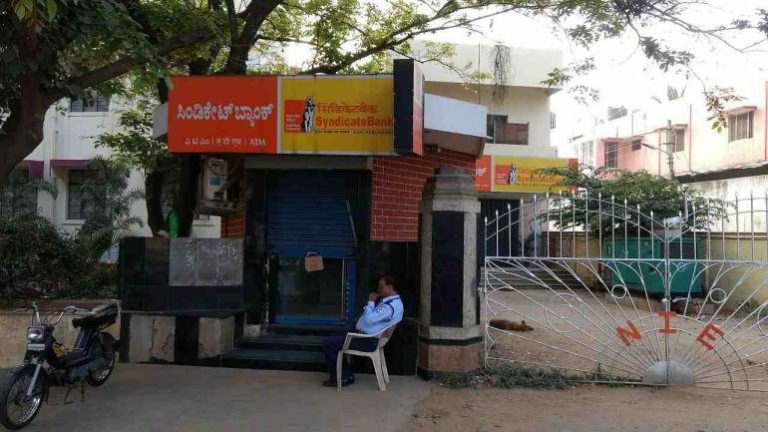
At a time when several public sector banks have been hit by scams leading to fire-fighting by the government and the Reserve Bank of India, a full-blown human resources (HR) crisis is waiting to erupt. And nobody seems to be giving it any serious thought.

While finance minister Nirmala Sitharaman has chalked out a merger plan for public sector banks to bring in much-needed reform measures in these banks, precious little is being done to fix issues relating to HR practices and retention of talent.

Harsh truth that nobody seems to be talking about

There are few competent leaders in these banks, who can steer through the troubled and challenging times. More importantly, these banks and their heads come under the ambit of the Central Vigilance Commission and the Central Bureau of Investigation. Bankers have pointed out that most leaders are unwilling to take any concrete measures to steer clear of any possible controversy.

What is worrisome is the fact that most of the over 8 lakh employees at these public sector banks are “unhappy and frustrated” that negotiations on wage revisions remain inconclusive even after over 30 rounds of talks. Though the government decided to pay a part of the arrears as a Diwali bonanza, it failed to bring cheer.

In August, Sitharaman announced the merger of 10 state-owned banks to create four big lenders. While the merger exercise cuts the total number of banks to 12 from 27, critical questions on leadership and competent staff who can steer these newly formed amalgamated lenders remain unanswered.

“You need even more deft handling and very able teams to ensure that the exercise goes on smoothly… After all, you are talking about public money,” a senior bank official told News Intervention.

Three officials from different mid-level public sector banks that News Intervention spoke to echoed similar sentiments — the worst affected are smaller and mid-level banks.

“Many people who are experts in their domains are being taken on board on contract but they are limited to the big lenders such as the State Bank of India or Punjab National Bank. Nobody is willing to join the smaller brands and that is a scary thought,” a retired official said.

Former finance minister Arun Jaitley had floated an idea to hire talent directly from the country’s business schools. Needless to say, there has been no progress in this direction. 

Bank Unions

Bank unions have called for a strike on January 8 to oppose the merger. C.H. Venkatachalam, general secretary, All India Bank Employees’ Association (AIBEA), said the merger of these banks will lead to more havoc. “What was the need to merge… We need more banks and more branches; with a merger, we will land up closing many bank branches,” he said.  In a statement, he said, “Withdraw the decision on merger of Banks: Recently Government has announced merger of 10 banks into 4 banks thus closing down 6 nationalised Banks. This is a wrong step and will affect customer service, employment and jobs. This will not help to recover the bad loans in the banks.” 

Bank Board Bureau and its role

The Bank Board Bureau (BBB) was set up in 2016 to address these HR issues with a thrust on chalking out schemes for recruitment and better pay packages. Besides the board was to look into ways that would ensure enhanced professionalism with growth opportunities for the existing staff.

Its first chairman Vinod Rai underlined the need to improve pay packages for talent retention. Issues relating to employee stock ownership plan (ESOP), out of turn promotions and ways to increase overall pay packages to ensure retention of talent have been discussed from time to time but no concrete steps have been taken.  

Immediate attention needed, bring in HR reform

Jobs at these banks no more attract bright competent youngsters as they did even a couple of decades ago. Reason? The relatively lower salary scale, the work environment and lack of career path.

Reforms need to start with people to ensure the health of these banks already groaning under the weight of huge non-performing assets. Gross non-performing assets in public sector banks crossed Rs 10 lakh crore in March 2019, up from Rs 2. 2 lakh crore in 2014.

Sitharaman and her team need to fix this on a priority basis or else state-owned banks will keep struggling and drawing talent will be a tall ask.

Modi govt must assuage Muslim fears on the Citizenship Amendment Act

0

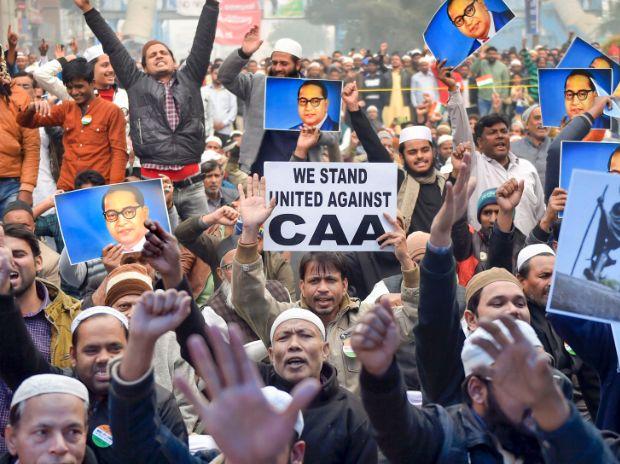
In order to ensure that the wellbeing of its citizens as well as national interests aren’t compromised, every country in the world formulates its own citizenship policy and in this regard one of the main ingredients common to all nations are laws that prevent illegal influx of migrants. Recently, the Indian government passed the Citizenship (Amendment) Act 2019 or CAA, which makes select religiously persecuted minorities belonging to certain neighbouring countries eligible to seek citizenship of India. The CAA applies to Hindus, Christians, Sikhs, Parsees, Buddhists and Jains belonging to Pakistan, Afghanistan and Bangladesh who have entered India on or before December 31, 2014 and stayed in the country for five years.

Is CAA a good or bad legislation, legal or illegal, is something that I would not delve into. Yet, as a very ordinary and average person, my personal reaction to the CAA controversy was defensive. However, after getting rid of my emotions, I realised that it was unusual haste with which the CAA has been passed that has given rise to apprehensions that it will be used in conjunction with the National Register of Citizens (NRC) to target Indian Muslims, who are India’s largest minority and declare them “illegal immigrants.”

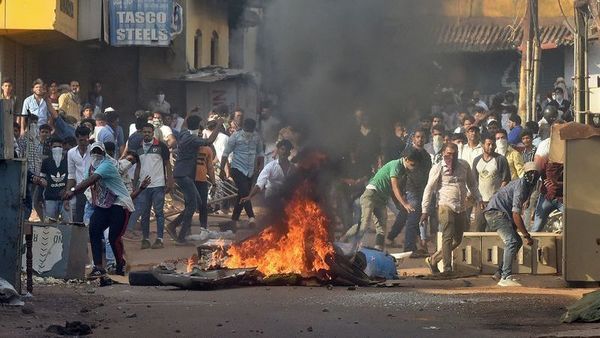
The failure of the government to explain the rationale behind CAA and NRC in practical terms has resulted in widespread agitations across India and this is very unfortunate because if the government had shown a little patience and taken all communities into confidence, the violence that we are witnessing today wouldn’t have taken place!

At its core, the NRC is an official record of those who are legal Indian citizens and includes demographic information about all those individuals who qualify as citizens of India as per the Citizenship Act, 1955. The register was first prepared after the 1951 Census of India and since then it has not been updated until recently. Along with the Constitution of India, the Citizenship Act 1955, is the exhaustive law relating to citizenship in India. The original Act has been amended at various times by the Citizenship (Amendment) Acts of 1986, 1992, 2003, 2005, 2015 and 2019. The 2003 amendment mandated the government of India to construct a National Register of Citizens (NRC).

The Citizenship Act of 1955 (promulgated by the then Congress government) provides for compulsory registration of every citizen of India and issuance of National Identity Card to him. The Citizenship Rules of 2003 (promulgated by the NDA government led by Atal Bihari Vajpayee) was framed to prescribe the manner of preparation of NRC to facilitate the implementation of the provisions of the Act of 1955.

It therefore emerges that while the CAA is meant to grant Indian citizenship only to those who are eligible, the NRC is aimed at drawing a distinction between genuine registered Indian citizens and illegal immigrants who have entered the country through dubious means. Thus, NRC is nationality specific and not religion specific In fact, these two laws are as different as an apple and an orange.

The government has clarified that “CAA has nothing to do with NRC and it does not apply to Indian citizens, including Muslims. It applies to only six religious communities facing persecution in Pakistan, Bangladesh and Afghanistan.” It has also been clarified that no migrant will automatically become citizen of India as per the CAA, and each eligible person will have to apply online; the refugees will have to fulfil all other conditions for registration and naturalisation as Indian citizen. This Act does not take away the citizenship of an Indian national of any religion. When the draft of the proposed law on pan-India implementation of the NRC is prepared, it would be discussed and it will come before the people.

Regardless, a nation found on the principles of secularism and on the concept of “unity in diversity” is at the cusp of turning into a majoritarian, ethnocratic state. The challenge, we are being told, is to save the secular fabric of the country and the ‘soul’ of the constitution from the unconstitutional assaults of few, but it looks like the country is moving in a new direction, whether for good or bad, we will get to know later.

The Narendra Modi government has abolished many laws like the Article 370, which granted special status to the erstwhile state of Jammu and Kashmir. Apprehending large scale violence in Kashmir after abrogation of Article 370, New Delhi took stringent measures to prevent any loss of life and property and its proactive actions proved beneficial. However, just the opposite happened in the case of NAA and NRC due to which violence has erupted across India in which more than two dozen lives have been lost and property worth thousands of crore rupees destroyed.

When well-informed, the public acts very responsibly and this is evident from the support that all sections of society, irrespective of the community gave to the Triple Talaq annulment bill as it was a positive step towards empowering women.

Babri Masjid verdict is another example of how the minority community behaved responsibly. While some sections tried to turn it into a communal issue, the majority of Muslims accepted the court directive and this made this minority community stand tall.

However, NRC and CAA have upset the applecart and it remains to be seen how the centre navigates its way through these challenges and brings everyone together to fulfil the dream of an inclusive, peaceful and prosperous society. Though India and Pakistan were partitioned on religious lines, the patriotism of Indian Muslims has always been unquestionable and possibly this is what upsets those with vested interests who are trying to further their communal agenda.

So, if the government of India is really serious about its slogan of “sab ka saath, sab ka vikas” (with everyone (and) for everyone’s betterment), then it needs to take appropriate measures to assuage fears of the Indian Muslim that neither he, nor Islam is being unfairly targeted by the laws being enacted by the government.

Philosophical and Historical Foundations of American Secularism 15 – Scientific Skepticism and the Emergence of Modern Secularism

0

Dr. Herb Silverman is the Founder of the Secular Coalition for America, the Founder of the Secular Humanists of the Lowcountry, and the Founder of the Atheist/Humanist Alliance student group at the College of Charleston. He authored Complex variables (1975), Candidate Without a Prayer: An Autobiography of a Jewish Atheist in the Bible Belt (2012) and An Atheist Stranger in a Strange Religious Land: Selected Writings from the Bible Belt (2017). He co-authored The Fundamentals of Extremism: The Christian Right in America (2003) with Kimberley Blaker and Edward S. Buckner, Complex Variables with Applications (2007) with Saminathan Ponnusamy, and Short Reflections on Secularism (2019).

Here we talk about scientific skepticism and modern secularism.

Scott Douglas Jacobsen: Some of the pillars of American freethought have been individuals including H.L. Mencken, Carl Sagan, Paul Kurtz, or Martin Gardner, or in the everyday world of needed problem-solving in Parade Magazine with Marilyn (Mach) Vos Savant. 

Whether in the acerbic and sardonic writings of Mencken or in the ordinary American household language of Vos Savant, the wide-ranging philosophizing by Gardner or Kurtz, or the popularization of advanced scientific concepts to a lay audience in the case of Sagan, a delivery of wide-ranging scientific skepticism as a retort to the wide-spread irrationalism in American life. 

How have some of the larger figures of American scientific skepticism been helpful in providing another area of critical thinking for the public against common supernaturalisms? How have those, in turn, helped the cause of furtherance of secularism in the United States?

Dr. Herb Silverman: You mention famous American freethought individuals, some of whom might be acerbic, sardonic, read by ordinary Americans, philosophers, popularizers of science, or debunkers of irrationalism. I think all such people are useful to a freethought movement because they often represent different constituencies. I’m a “big tent” atheist who welcomes all to come out of their atheist closets to help normalize freethought in America.

I’ll describe my personal journey to atheism with four examples.

As a youngster, I was influenced by the movie The Wizard of Oz, where the gatekeeper told Dorothy that nobody had ever seen the great Wizard. Dorothy replied, “Then how do you know he exists?” The curtain is later pulled back to reveal that the “Wizard” is an elderly man operating machinery and speaking into a microphone. So the Wizard didn’t exist, and Dorothy was on her own. That sounded to me a lot like what I was beginning to think of God.

I was also influenced by the Bible. I “knew” as a trusting child that the Bible was God’s word. But after many of my biblical questions went unanswered, I became an example of what Isaac Asimov observed, “Properly read, the Bible is the most potent force for atheism ever conceived.”

At age 16, in 1958, I hadn’t told anyone that I no longer believed in God, thinking I might be the only one in this country with that opinion. Then I discovered Bertrand Russell’s Why I Am Not a Christian in the public library. I felt better about myself after learning that Russell was more than just not a Christian. He was as many “nots” as I was, and brave enough to say so. Russell transformed the lives of many in my generation. For the first time we heard articulate arguments that confirmed and gave voice to our own skepticism and doubts. Even some true believers were led on a thoughtful journey toward altered religious states. Learning that Russell was a logician and mathematician at least partially inspired me to become a mathematician.

When I read George Orwell’s 1984, I thought the character “Big Brother” appeared to be an omnipotent, omniscient, eternal, authoritarian figure who demanded absolute obedience. I didn’t know at the time that Orwell was an atheist. Here’s what Orwell said about Big Brother: “In 1984, the concept of Big Brother is a parody of God. You never see him, but the fact of him is drilled into people’s minds so that they become robots, almost. Plus, if you speak bad against Big Brother, it’s a Thoughtcrime.”

You also asked why there might now be more critical thinkers in America, helping to further the cause of secularism in the United States.

In “The Last Taboo: Why America Needs Atheism,” published in the New Republic in 1996, Wendy Kaminer wrote, “Atheists generate about as much sympathy as pedophiles. But, while pedophilia may at least be characterized as a disease, atheism is a choice, a willful rejection of beliefs to which vast majorities of people cling.” I have one slight disagreement: Atheism is not a “choice.” For me, the only choice is whether to be open about my atheism or pretend to believe in a deity for which there is not a scintilla of evidence.

The situation in the United States has improved significantly since Kaminer’s piece appeared twenty-three years ago. Much has been written about atheism, including best-selling books by Richard Dawkins, Christopher Hitchens, Sam Harris, Daniel Dennett, Susan Jacoby, and others. A number of popular blogs now promote atheism and secularism. In the Internet age, people hear about many worldviews, not just the one in which they were raised. Every new national survey shows a rapid increase of atheists, agnostics, and those who claim no religious affiliation (called “nones”). Many “nones” broke from conservative religion because it is anti-LGBTQ, anti-women’s rights, and anti-science. Pedophilia has also discouraged people from maintaining their church affiliation. 

Fivethirtyeight, which takes its name from the number of electors in the U.S. electoral college, is a website that focuses on opinion poll analysis. A recent piece, “Millennials Are Leaving Religion and Not Coming Back,” pointed out that 40 percent of millennials are religiously unaffiliated. And there’s mounting evidence that today’s younger generations may be leaving religion for good. Changing views about the relationship between morality and religion also appear to have convinced many young parents that religious institutions are simply irrelevant or unnecessary for their children. A majority (57 percent) of millennials agree that religious people are generally less tolerant of others, compared to only 37 percent of Baby Boomers.

The Christian conservative movement warns about a rising tide of secularism, but the strong association between religion and the Republican Party may be fueling this divide. And as more members of the Democratic Party become secular, the rift between secular liberals and religious conservatives will be exacerbated. I’m hoping we will return to the day when Republicans identify as economic conservatives who want less government interference, rather than identify with the Christian religion as so many now do. I would still be a Democrat, but at least I’d understand that the Republican Party had a legitimate point-of-view.

When it comes to voting, 60 percent of Americans say they prefer a candidate who believes in God and only 6% say they prefer a candidate who doesn’t.  However, this preference for candidates who believe in God nearly disappears when policy positions are included in the question. The percent who say they would vote for a well-qualified atheist has steadily risen from 18 percent in 1958 to 58 percent in 2015. The Congressional Freethought Caucus, formed in 2018 with 4 members, is a forum for secular members of Congress who promote evidence-based public policy. It now has 12 open members, with more likely to join. There are also more than 50 state legislators who identify with the atheist and humanist community.

While our community is growing rapidly, we are still severely underrepresented in politics. We need to encourage more members of our freethought community to run for public office, and also encourage elected officials to acknowledge their nonbelief. Here are some of our important issues: protecting a strict separation of religion and government, addressing climate change, advancing human rights and civil liberties (including disparities in incarceration rates, easy access to register to vote, women’s rights), health and safety (vaccines, death with dignity), and promoting religious freedom abroad (opposing blasphemy and apostasy laws). We need our atheist and humanist community to become more visible and welcomed by participants in the electoral arena. I hope for a day when every political party at every governmental level will embrace our constituency.

Jacobsen: Thank you for the opportunity and your time, Dr. Silverman.

Photo by Luke Stackpoole on Unsplash

Canada: Minor Economic Shrinkage in October, 2019

0

As reported by the CBC News, the economic of Canada reduced by a tenth of one percent in October of 2019.

The economic condition for Canadians remains quite strong with the 10th largest economy in the world, according to Business Insider. Not only this, its oil reserves may exceed the Middle East. (However, this may become less relevant into the future with the rather rapid and predicted transition into renewable energy sources in the 2020s, 2030s, and further into the future.

With a shrinkage of the real Gross Domestic Product of GDP of the Canadian economy, based on reportage by Statistics Canada, this will be the first decline in the last 8 months of either economic stabilization, as in July, or growth, as see in, for example, May, June, August, and September with growth percentages of 0.3%, 0.2%, 0.1%, and 0.1%.

The economy, how ever slight, appears to show a several month slowing of the growth rate of the economy. The projection was a 0.0% growth rate of the Canadian economy in October in September. This did not play out.

With the manufacturing sector in Canada down for the 4th time in 5 months, this impacted the growth of the Canadian economy.

As reported, “The United Auto Workers (UAW) strike in the U.S. caused Canada to scale back production contributing to the decline. Retail trade declined 1.1 per cent—it’s largest decline in three years, while wholesale trade declined one per cent.”

However, oil production increased by 0.1% and real estate by 0.7%. So, we had a rapid growth in real estate, minor growth in oil production, and an overall decrease in the economy where a prediction was for a halted economy for October.

Photo by Markus Spiske on Unsplash

State Election Lessons: When will the BJP Learn?

0

One more election loss for the Bharatiya Janata Party (BJP) in Jharkhand after Maharashtra, Rajasthan, Madhya Pradesh, Chhattisgarh and barely scraping through in Haryana.

It seems that losing elections at the states has become a habit that the BJP is not being able to reverse. State leaders keep satisfying themselves by saying that they are the “largest party” in the state. Justifying performance with an increased or similar vote share is relevant only if you are the victor, otherwise it seems like “sour grapes”.

BJP state leaders must remember the old adage that “no one remembers who came second”.

Nothing is more brutal or painful than coming second in politics.

It will do well for the BJP leadership at the state level, while going through their chintan baithaks” to analyse the reasons for consistently not making it past the winning post in the last several elections despite a resounding victory in the 2019 Lok Sabha elections.

Let us look at some of the reasons the BJP has been losing the plot in so many state elections.

Lok Sabha Elections are different from State Assembly Elections

The message that is coming through loud and clear after the various state elections is that the Indian voter has now become far more discerning than the politicians thought they were. The voters are now willing to recognise that they want a leader who addresses national issues at the Centre. However, they want a different leader who addresses their local issues, who can help resolve their daily challenges. State chief ministers cannot keep talking about national security issues, Pakistan, India’s international reputation or India’s large foreign exchange reserves.

The chief ministers have to perform. Too much reliance is being placed on Prime Minister Narendra Modi and the Home Minister Amit Shah. Yes, they are leaders of the BJP, and their presence definitely boosts the party’s prospects, but their charisma can do very little with the voters if the state leadership is not performing. This is evident from several sitting chief ministers of the BJP losing the elections.

At the end of the day we are back to who addresses the basic needs of the people which are simply – Roti, Kapda aur Makaan. It is a pity that these 3 basic requirements have still not been met across the entire country after 72 years post-independence. This commitment is to be delivered to the people no matter what it costs, irrespective of which party that maybe in power in a state.

Is Corruption Back in the States?

Voters have trusted Prime Minister Narendra Modi with his famous comment “na khaunga na khane dunga”. The voters trust him and know that he is absolutely clean. This is why they have reposed their trust with an unprecedented second term with a larger mandate.

While BJP government at the centre is seen to be cleanest in the country after a very long time, the same story is clearly not being heard in the several states where the BJP has lost power in the last few elections. There are talks of corruption at states and the general comment is that the BJP government in the state is no different from earlier Congress or regional governments led by other parties.

If corruption is back, then the election results should not be a surprise.

Anti-Incumbency

Anti-incumbency is always one of the reasons why parties lose elections. But when the loss is wiping out the significant games that the party has seen at the national level then the reason for this loss goes beyond anti-incumbency.

It would be interesting to analyse the performance of all the sitting MLAs who have lost the elections. Have all these local leaders delivered on the promises they made to their constituencies in the previous elections? Have they remained in touch with their voters? Or did they, like most politicians, starting pontificating and blaming from their ivory towers once they were elected?

Only when their elected representatives are not performing will any voter take the decision to vote for someone else. This is the harsh reality and must be accepted by all.

Opposition Coming Together

Opposition parties are coming together and though their ideologies are completely different, most of them are willing to bury the hatchet, forget their diverse ideologies and come together on a single platform of defeating the BJP at all costs. They have realised that a united opposition could create the wedge they have been looking for to prise open the ranks of the BJP.

To all these parties, delivering on the promises made in the diverse manifestos of these parties is not relevant at this stage. These parties know that their differences will certainly become an issue in the next few years. However, they would have achieved their short-term objective of slowing the BJP juggernaut.

What will this do to the governance in states that are now being run by coalition governments is yet to be seen. But that is another subject altogether.

Infighting in the BJP

Infighting in the BJP is clearly increasing.

It is a pity that state leaders, instead of working together are busy destroying their opponents. If this is happening at the top, then it is certainly percolating down the ranks.

Are these differences cropping up because the BJP has, indiscriminately admitted various opposition leaders who simply wanted to “jump ship” and join the rising star of the BJP? It would be interesting to see what happens when most of these leaders who had crossed over now look for opportunities to go back. Once they are back in their original party, they will become a thorn in the side of the BJP.

Or is it because, like the Congress and other opposition parties, BJP leaders have also become prima donnas? Are these BJP leaders also forgetting that they too are mere mortals who can be defeated if they don’t perform?

Clearly, the voter is turning away from the BJP not because they have changed loyalties to other parties who they had rejected in the past. They are doing this because they are disappointed with the BJP leadership at the state. Unless this changes, the saffron colour from the map of India will keep reducing.

Can the BJP reinvent itself in the states, as it has done at the centre, fast enough for the forthcoming elections in Delhi, Bihar and West Bengal?

Will the voter see BJP as the party with a difference, with very different standards of ethics or will they see the party as just another party that can be tossed aside if they are not performing.

Only time will tell.

Green mobility startup eBikeGo eyes 1 million users by 2020

With the government giving a major push to promote green mobility options in the country, it’s an opportune time for Electric Vehicles (EVs) startups to take the big leap forward. Niti Aayog has proposed to push for full conversion to electric vehicles (EVs) for internal combustion engine three-wheeler by 2023, and two-wheeler (engines with or below 150 cc capacity) by 2025. This indicates that the government will definitely go the extra mile to boost Electric Vehicles (EVs) with adequate policy measures and incentives.

For first-time entrepreneur, Irfan Khan, co-founder and CEO of electric bike rental and e-mobility startup eBikeGo, it’s the perfect time to spread their wings. “During the last two years, eBikeGo has grown from 640 users in 2017 to 18,000 users in 2019 and we are eyeing to have a million users by 2020, and also reduce 5 to 6% of the carbon monoxide in some cities by 2022,” Irfan Khan told News Intervention.

The startup recently raised $300,000 as part of a major funding round led by Startup Buddy. The round also saw participation from other investors like singer Sukhbir Singh, Rajesh Sawhney (co-Founder of Innerchef), Rohit Chanana (Founder, Sarcha Advisory), Siddartha Ahluwalia (Founder of 100x Entrepreneur), Boudhik Ventures, Milind Garud, Arun Gholap, Shantanu Vinekar and other senior corporate executives.

At the time when eBikeGo had started its initial operations, there were no big competitors in the EV segment. However, the scenario has changed now. Nonetheless, they still feel that they have a first mover advantage and want to capture 0.1% of the 3 crore two wheeler market in the delivery ecosystem. “Making the change from fossil fuel to electric vehicles require a lot of adapting in terms of registration, insurance etc. We at eBikeGo thought we will help to bridge the gap by providing e-bikes on rent therefore making adaptation to electric vehicles easier and we have had a tremendous response. Since we are first in the market and have a lucrative rental model and innovative mobility solution, we don’t have a competitor as such,” Irfan shared. The startup which was initially launched in Amritsar in 2017, has now expanded to Delhi, Amritsar, Jaipur, Jalandhar, and Agra in 2019 and is planning to expand to 8 cities by the end of 2020.


Since we are first in the market and have a lucrative rental model and innovative mobility solution, we don’t have a competitor as such,” Dr. Irfan Khan, co-founder and CEO, eBikeGo

eBikeGo is providing their bike services to prominent delivery companies including Zomato, Delhivery, Big Basket and several others. By 2020 they hope to increase tie-ups with 69 companies deploying 30,000 EVs in the market. Irfan feels it’s a win-win situation for delivery companies as well as those looking for employment in this sector. “eBikeGo is creating numerous job opportunities for people wanting to work in the delivery business but couldn’t due to lack of a bike or not being able to afford bikes due to high fuel prices. eBikeGo provides delivery boys an eco-friendly and low-cost solution to speed up deliveries in the area. Our bikes provide ‘smiles for miles’ that are extremely economical at 20p/ km. They have the best in class loading capacity of 150 kg and best in class speed of 55 km/hr, so one can explore more with eBikeGo’s bikes which can run upto 100 km per charge,” Irfan added. As part of its rental services eBikeGo is providing end-to-end solutions like service, maintenance and roadside assistance along with inbuilt technology which makes the delivery person’s ride hassle free.

For companies, it could mean a significant improvement in the quality of the candidates hired. “During the selection procedure companies give preference to boys who own a two-wheeler. Other criteria like educational qualifications, soft-skills are not taken care of. As now, we are entering into direct deals with the companies for bike rentals, they can hire better candidates even if they don’t own two-wheelers,” Irfan shared, while elaborating on the plans to expand its network in different cities to provide a sustainable solution for the customers and business partners using electric two-wheeler.

Hemant Soren to return as Jharkhand CM as JMM-Congress defeats BJP

Jharkhand Assembly election results came out as another setback for BJP after loosing elections in Rajasthan, Madhya Pradesh and Chhattisgarh to the Congress last year, while Maharashtra slipped out of its hands this November. In Jharkhand the coalition led by the Jharkhand Mukti Morcha (JMM) and also comprising the Congress and Rashtriya Janata Dal (RJD) cleared the majority mark of 41 in the 81-member assembly of the tribal-dominated state.

The BJP has attributed its loss in the Jharkhand assembly polls to “local issues”, and said “internal strife” also appeared to have a significant impact in the state, Party spokesperson G V L Narasimha Rao said the lack of an alliance against a united opposition also had a role. “Inability of local leadership to convince the electorate for repeat of the mandate and internal strife within the party also appeared to have a significant fall out. A detailed analysis will be done,” he said.

Chief Minister Raghubar Das conceded defeat in the Jharkhand assembly elections on Monday as he lost not just the chief minister’s chair but also his MLA seat. He later tendered his resignation from the post to Governor Draupadi Murmu, at Raj Bhavan in Ranchi.

Prime Minister Narendra Modi congratulated Hemant Soren and JMM-led alliance for the victory. “Congratulations to HemantSoren Ji and the JMM-led alliance for the victory in the Jharkhand polls. Best wishes to them in serving the state,” tweeted Prime Minister Modi. I thank the people of Jharkhand for having given BJP the opportunity to serve the state for many years. I also applaud the hardworking Party Karyakartas for their efforts. We will continue serving the state and raising people-centric issues in the times to come,” he tweeted.

Hemant Soren thanked Narendra Modi after the Prime Minister congratulated him and JMM-led alliance for their victory in the Jharkhand assembly elections. “Thank you Prime Minister Narendra Modiji for your wishes. Your coordination is very valuable to the poor population of Jharkhand,” Soren said in a tweet.

BJP president Amit Shah has said his party respects the mandate of Jharkhand voters. In a tweet, Shah also expressed his gratitude to the people of Jharkhand for giving the BJP a chance to govern the state for five years and asserted that his party remains committed to its development. He also lauded BJP workers for their “untiring” efforts in the assembly polls.

Punjab calls for seamless implementation of CAA

Col. (Retd.) Jaibans Singh expressed great concern about the violent agitations in the aftermath of the Citizenship Amendment Act (CAA) passed through a constitutional procedure by the Parliament of the country. Col. Jaibans Singh was speaking at a seminar on the Citizens Amendment Act, 2019 that was organised by the Vishwa Samwad Smiti at Jalandhar on Monday.

Col. (Retd.) Jaibans Singh said that while protest was the legitimate right of the people of the country the high level of violence that accompanied the protest has the signature of the same being engineered by professional elements at the behest of anti-national forces. He said that the unrest was being contained by police and security forces with great restraint and maturity which was a very positive development.

He expressed confidence that the government would seriously consider the sentiments expressed by the moderate protesters and ensure that the same are implemented on merit. He added that the concept of giving citizenship to minorities persecuted in Islamic countries was accepted by all political parties, leaders and people of the country right from the time of partition of the country. Many from Mahatma Gandhi to Pandit Jawaharlal Nehru and on to Dr. Manmohan Singh had spoken clearly in favour of the initiative.

The courageous action by the present government to apply this sentiment on ground needs the highest praise and admiration. Certain forces were creating “disinformation through misinformation.” The same needs to be identified and exposed.

Col. (Retd.) Jaibans Singh (sitting left, in blue turban) at the seminar on Constitutional Amendment Act 2019 at Jalandhar on Monday.

He further elaborated that the amendment was time bound and restricted to benefit a certain segment of unfortunate persecuted people who had sought refuge in the country up to 31st. December 2014. Singh emphatically stated that the CAA was, in no way, associated with the process of preparing a National Register of Citizens (NRC) and disinformation in this regard needs to be seriously contested. It is unnecessarily causing a state of insecurity and distrust where none should exist.

CAA will, in no way, affect the liberal policy already legislated to giving refuge to those in need refuge already legislated, so, those looking for citizenship under existing laws have nothing to worry about

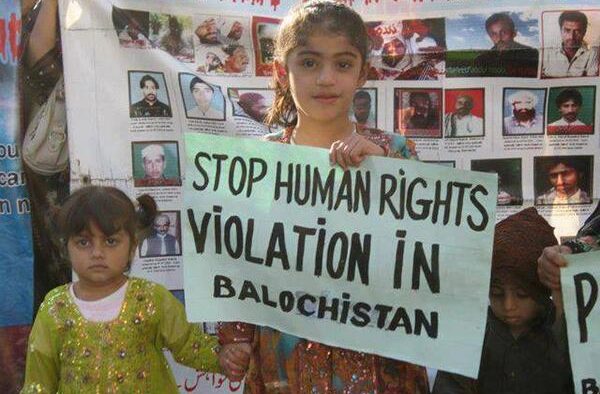
While speaking about the atrocities being heaped on minorities in Afghanistan, Bangladesh and especially Pakistan, the speaker said that not only India but the entire world should take cognisance of the same since it entails the worst form of human rights violation. It is for the reason that the number of people in minority community in these nations has reduced to an almost negligible level. There is every reason for the world to join India in the tryst to ameliorate the suffering of the unfortunate people.

Col. Jaibans Singh culminated his talk with the assertion that CAA is here to stay being a righteous and justified legislation, in tune with the highest tenet of humanity that is the benchmark of Bharat. He applauded the support given to the legislation by Punjab despite certain statements to the contrary by the Chief Minister. He exhorted all nationalist forces to stand together and remove all apprehensions that are being spread by false rumours.

He called for special facility in seamless application of the Amendment especially so since those affected continue to be abysmally poor and illiterate in many cases, they would not know how to proceed with the documentation etc and would, as such, require assistance. 

Col. (Retd.) Jaibans Singh is a writer, columnist author and commentator. He maintains a keen interest in issues of national importance in the social geo-political and geo-strategic domain. He runs an active blog Defenceinfo.com and is the Director at the Centre for Socio-Cultural Studies, Punjab.

Jharkhand reminds BJP to prop up its high integrity politicians

0

This is loss of BJP and so a win for opponents by default. Yes, the Bharatiya Janata Party (BJP) has lost the 2019 assembly elections in Jharkhand. The key reason why Narendra Modi rose to power in 2014, can once again be seen at play in Jharkhand. And, wise people in BJP should not feel surprised.

Seeds of this public decision lies in the womb of Anna Hazare andolan (movement). It’s time to recall that great day and then attempt to understand the apparent contradictions between greater second victory of Modi in May 2019, followed by three state election losses within a short time. And the three state election losses before May 2019, in late 2018.

We need to assess public decisions more precisely, rather than use meaningless terms like anti-incumbency etc. In any election there is bound to be some winner that does not necessarily mean public likes them. What needs to be understood after election results is, whether the winner won public confidence, or the loser lost public confidence. These are two different reasons in any elections, more pertinent now in the internet era, where public has greater clarity on finer points through endless information flow. Falsehoods cannot remain buried for too long anymore by any politician in power, from any political party. If corrupt from a party still win, it’s because the one in power became corrupt too, and has lost public confidence.

BJP lost Jharkhand assembly elections to the public, BJP’s opponents did not win. Responsibility squarely lies with the BJP. Ironically, it’s the people of Jharkhand who will ultimately be the biggest losers, as they will now have to bear the corrupt ones they had rejected last time.

In order to find the reason, let’s look back to the day of Anna Andolan (movement). This movement awakened the nation’s spirit from within to shed off dishonesty from governance. Experiencing deep rooted corruption in daily lives, witnessing political class blatantly misusing power for personal and family benefits nation was absolutely fed up. It was in this background that nation lost hopes from Congress and other family driven parties and latched on to new faces who gave them hope. This was the reason Arvind Kejariwal won people’s heart in Delhi at that time, and Narendra Modi of the nation as whole! Modi has proven himself so convincingly that nation gave him a bigger mandate for a second time, in May 2019.

Yet the problem remains with BJP as a political party. Why are they not able to find clean and courageous leaders like Narendra Modi in every state, in every district, in every town and village? This is the real question. After all, Modi cannot be everywhere and Modi cannot live forever. Is there a deliberate effort by the not-so-clean politicians in BJP to prevent old or fresh blood with conviction for absolute integrity in personal and public life?

To be fair to the BJP, they did try a new face in Maharashtra and the state gave a strong second mandate to them. It was a different matter that their partner cheated on them. Actually, it was clear to all ground level BJP workers that had BJP chosen to fight alone, without Shiv Sena, public would have given them a definite majority. How the BJP leadership lacked to grasp this changing reality in Maharashtra is beyond the comprehension of common man.

So, the reason for BJP’s loss in state elections is that the not-so-clean politicians are not being replaced by a new breed of high integrity individuals. Jharkhand elections is just another reminder. Why else public elected Saryu Roy as an independent candidate by defeating the sitting Chief Minister of Jharkhand Raghubar Das?

If BJP is unable to see this simple truth and fails to undertake complete overhaul from within, the nation would find itself in a deeper ditch which will be the second gravest tragedy after losing faith in corrupt Congress.