Home Blog Page 403

Philosophical and Historical Foundations of American Secularism 9 – The British

Dr. Herb Silverman is the Founder of the Secular Coalition for America, the Founder of the Secular Humanists of the Lowcountry, and the Founder of the Atheist/Humanist Alliance student group at the College of Charleston. He authored Complex variables (1975), Candidate Without a Prayer: An Autobiography of a Jewish Atheist in the Bible Belt (2012) and An Atheist Stranger in a Strange Religious Land: Selected Writings from the Bible Belt (2017). He co-authored The Fundamentals of Extremism: The Christian Right in America (2003) with Kimberley Blaker and Edward S. Buckner, Complex Variables with Applications (2007) with Saminathan Ponnusamy, and Short Reflections on Secularism (2019).

Here we talk about the British and the Americans, and the American Revolutionary War.

Scott Douglas Jacobsen: The British Empire produced some of the prominent Western philosophers, empiricists, and others. Obviously, the Americans and the British had a strained relationship for some time. What were some of the statements and ideas of the freethinkers on the American and the British sides during the American Revolutionary War? What were the different reactions to the American Revolution of the 13 colonies and the British Empire? What happened to the secular, men and women, during this time of war – common in American history?

Dr. Herb Silverman: The term freethinker emerged towards the end of the 17th century in England to describe people who stood in opposition to Christian churches and literal belief in the Bible. These people believed that they could understand the world through consideration of nature. In the United States, freethought was an anti-Christian and anti-clerical movement to make an individual politically and spiritually free to decide for himself on religious matters.

John Toland, an Irish philosopher and freethinker in the 18th century, was the first person called a freethinker (by George Berkeley, a Bishop in Ireland). Toland wrote over a hundred books, mostly dedicated to criticizing ecclesiastical institutions. In Christianity Not Mysterious, the book for which he is best known, Toland challenged not just the authority of the established church, but all inherited and unquestioned authority. Because of this book, he was prosecuted by a grand jury in London. The Parliament of Ireland proposed that he should be burnt at the stake, and in his absence three copies of the book were burnt by the public hangman.

British deists and freethinkers including John Toland, Anthony Collins, and Matthew Tindal focused on the human roots of Judaism, Christianity, Islam and ancient Paganism. They advocated tolerance and freedom of thought and fought against the influence of Christian doctrine on political and social life. They also denied the supernatural foundations of Christianity and analyzed the Bible with the aim to promote the free search for truth. They helped bring about Enlightenment views of religion and the secularization of Europe.

John Locke, who was British, inspired both the American and French revolutions. His arguments concerning liberty and the social contract motivated written works by Alexander Hamilton, James Madison, Thomas Jefferson, and other founding fathers of the United States. One of Locke’s passages is reproduced verbatim in the Declaration of Independence, the reference to a “long train of abuses.” Thomas Jefferson wrote, “Bacon, Locke, and Newton. I consider them as the three greatest men that have ever lived.”

Locke’s theory of the “social contract” influenced the belief of many founders that the right of the people to overthrow their leaders was one of the “natural rights” of man. He also argued that all humans were created equally free, and governments therefore needed the “consent of the governed.” Many scholars trace the phrase “life, liberty, and the pursuit of happiness” in the American Declaration of Independence to Locke’s theory of natural rights. At the time of the American revolution, the belief that rights came from God was widespread. British citizens believed in the divine right of kings.

Unlike many American founders, Locke was not a deist or a freethinker. He was a theist who accepted the cosmological (first cause) argument for the existence of God. Had Locke been born in our time, he might well have been an atheist.

Locke also had a strong influence on the French deist Voltaire, who called him “le sage Locke.” Voltaire’s major contribution to our founding fathers was his tireless quest for civil rights and his support for freedom of religion as well as separation of church and state. Voltaire’s reasoning may be summed up in his well-known saying, “Those who can make you believe absurdities can make you commit atrocities.” But my favorite quote of Voltaire is, “I have never made but one prayer to God, a very short one: ‘O Lord make my enemies ridiculous.’ And God granted it.”

Many Americans at the time of the Revolution were attracted to “secular millennialism,” a belief that we would someday be transformed into a utopian world of peace, justice, prosperity, and fellowship. The focus is on “worldly” transformation as opposed to “other-worldly” promises of spiritual salvation after death. Such predictions of America’s destiny came from people like Thomas Paine and his enormously influential pamphlet Common Sense. The pamphlet’s millennial-style passages include “We have it in our power to begin the world over again.” Paine added, “The birthday of a new world is at hand.” In Paine’s view this new world would be far from theocracy, grounded not on ecclesiastical authority, but on the principles of a democratic republic and equal rights.

While religious ideology was an important inspiration for many Americans, the military of the new American nation had no religious policy. Soldiers mostly appeared to have been indifferent to the religious consequence of the Revolutionary War. The war was over the birth of a new nation, rather than a new nation-with-church. Both the British and American sides tried to recruit Americans from every background for their cause. For many Americans, the ecclesiastical tyranny of tax-supported religious establishments was another form of oppression they were fighting against

The American Revolution hurt the Church of England in America more than any other denomination because the King of England was the head of that church. Anglican priests in America swore allegiance to the King. The Book of Common Prayer offered prayers asking God to give the king victory over all his enemies. In 1776, the King’s enemies were American soldiers and loyalty to that church could be construed as treason. So, Anglicans in America revised The Book of Common Prayer to conform to political realities, eliminating allegiance to the king.

The Franco-American Alliance brought thousands of French troops onto American soil, exposing American soldiers to advanced forms of freethinking and anticlericalism. The American Declaration of Independence, Bill of Rights, and Constitution of the United States also inspired the French revolutionaries of 1789, offering an example of liberty for the world and an example for modern constitutional democracies. The French Revolution motivated people to put irreligious ideas of the Enlightenment into practice and later extended beyond France to other European countries, and to the American colonies. For Americans at that time, irreligion more often took deistic rather than an atheistic form.

Jacobsen: Thank you for the opportunity and your time, Dr. Silverman.

Photo by freestocks.org on Unsplash

Bedi’s “The Secret Life of Frogs” to be screened at Woodpecker International Film Festival

It’s not every day that you get to see a frog that uses dance moves to seduce its mate, or the ‘potter frog’ that gently encases his eggs in clay to protect from predators.Even forAjay & Vijay Bedi, award-winning filmmakers, photographers, and wildlife conservationists, who have been filming, researching and exploring in India for many years, it wasn’t an easy affair. It took them 3-long years deep in the swampy rainforests of India, to understand and document frogs smaller than a thumbnail. They wanted to captures species that have their own unique story to tell.

Through “The secret life of frogs” they wanted to draw attention to these tiny creatures as old as dinosaurs yet still a mystery to science. Sadly, more than 80% of the 400 species of amphibians found in India are already on the endangered list. Some have not been seen from 18 to 170 years. The figures are dire when one considers that about 60 percent of amphibians are endemic to the sub-continent. The documentary throws up behavioral facts hitherto unknown to science, documenting for the first time the entire life cycle of the highly endangered, rare purple frog that emerges from the underground for just one day of the year to breed.

“India conservation policy focuses on big cats and mammals. So the idea, therefore, is to pronounce the Purple frog as an ‘umbrella species’ much like the tiger so that the habitat as well as other species, living in the same diversity, can be indirectly protected. Unless we act quickly, amphibian species will continue to disappear, resulting in irreversible consequences to the planet’s ecosystems and to humans. When we save the frogs, we are protecting all our wildlife, our resources, our ecosystems, our planet and ultimately all humans,” the directors said in a statement.

Beautifully shot in the rainforests of India every sequence leaves the viewer awestruck by how little we know about these delightful creatures. In the land of tigers, rhinos and elephants, amphibians of India are croaking for our attention. Told in an easy lyrical way, the filmmakers hope to draw attention to fossorial creatures that seldom receive conservation attention. The film is an ode to amphibians it is also a plea to save them. There is hope, while some species are adapting to changes in their habitat, others can be protected with simple management interventions, provided we show we care for life in the undergrowth.

The Bedi Brothers; Vijay & Ajay Bedi are the third generation of wildlife filmmakers in their family. They are youngest Asians to have won the Green Oscar for their films and also the only Indians to have won a nomination at the television highest awards at Emmy Academy of Television Arts & Sciences.

The Bedi Brothers; Ajay & Vijay Bedi are the third generation of wildlife filmmaker and photographer in a family that has a long history of expertise in this highly specialized field. They are youngest Asians to have won the Green Oscar for their films and also the only Indians to have won a nomination at the television highest awards at Emmy Academy of Television Arts & Sciences for their film “Cherub of the Mist”, based on highly endangered Red Panda.

Bedi brothers along with scientists working in the area, have also submitted a proposal to Kerala government for making Purple Frog a state frog which would help boost its conservation. “The purple frog is considered an important species globally and it is endemic to Kerala and we believe that the Purple frog can be an ideal ambassador for the ecosystem that makes up the Western Ghats,” the directors said.

“The Secret Life of Frogs” will be screened at 7th Woodpecker International Film Festival on November 30, 2019, 4:30 pm at Siri Fort Auditorium.

Imran Khan’s call for jihad in Kashmir is maliciously dangerous

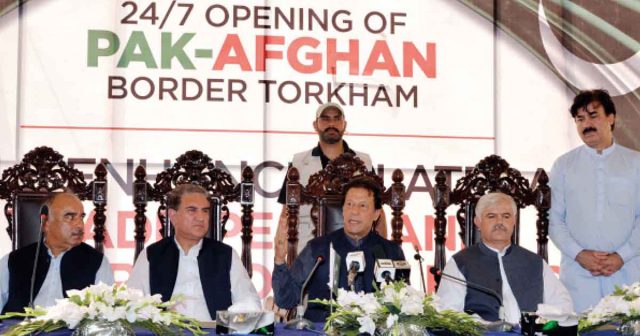
Talking to media after inaugurating the Torkham Terminal at Pak-Afghan border before leaving for New York to attend the UNGA (United Nations General Assembly) session, Pakistan PM Imran Khan warned his people that, “If anyone from Pakistan goes to India to fight ‘jihad’ (Holy war), he will be the first to do an injustice to Kashmiris; he will be the enemy of Kashmiris.” Pacifists and supporters of Khan considered this paradigm shift in Pakistan’s Kashmir policy of packaging and presenting terrorism in Kashmir to the international community as “freedom struggle” a clear indicator that he was finally breaking away from the country’s dubious past record of patronising terrorism. But pragmatists viewed this announcement as a well-timed ploy just before the UNGA session aimed to mislead the international community by giving the false impression that Islamabad no longer had any truck with terrorism.

In his UNGA address, Khan spoke of how in the 80s, “Pakistan trained the then “mujahedeen” at the behest of the Americans” and while “the Soviets called them ‘terrorists’, the Americans had then called them as ‘freedom fighters’. He went on to mention that after Pakistan “had to join the US and tell the same indoctrinated people this is now not a “freedom struggle” but “terrorism”. They (mujahideens) suddenly saw us as collaborators; it became a nightmare and they turned against us.” His admission that even if sponsored by the state, violent activities by armed groups could no longer be passed off as “freedom struggle” seemed to vindicate those who believed Khan’s assurance of ‘zero tolerance’ for all types of terrorist activities in his “Naya (new) Pakistan.” This belief was reinforced when in his UNGA address Khan also mentioned that “when we came into power; we decided to disband all militant groups; and this was a decision taken by all political parties.”

At that time, it really seemed that after realising how the country and its people had suffered due to the self-debilitating state policy of patronising terrorist groups, Khan had finally given Pakistan Army’s ‘strategic asset’ strategy a ‘thumbs down’. But, just two days after Khan had waxed eloquent at the UNGA, the pragmatists who had all along accused him of trying to mislead the international community by taking the high moral ground against terrorism were proved right in their assessment. Khan admitted that he was “disappointed” on finding no worthwhile support from the international community on his Kashmir narrative even after he did his best to “forcefully present the Kashmir case like never before at the UNGA session.” So, in a complete reversal of his stand on terrorism at UNGA, the first thing that the “disappointed” Khan did upon his return home from the US was to talk about ‘jihad’ (holy war) in Kashmir by saying, “It (standing by Kashmiris) is ‘jihad’. We are doing it because we want Allah to be happy with us.”

Though New Delhi did condemn Khan’s ‘jihad’ call, it has (as is its wont), let him off very lightly by not acquainting the international community with the dangerous consequences of his remarks. Khan’s bid to give the Kashmir issue a communal flavour and inciting Muslims all over the world is something that cannot be overlooked. In fact, his actions are reminiscent of former Pakistan President and army chief Gen Pervez Musharraf’s candid admission during an interview given to Der Spiegel, a reputed German magazine, in 2010. Readers may recall that he openly spoke of how “we (Pakistan Army and ISI) poisoned Pakistani civil society for 10 years when we fought the Soviets in Afghanistan in the 1980s. It was ‘jihad’ and we brought in militants from all over the world, with the West and Pakistan together in the lead role.”

With Islamabad’s attempt to internationalise the Kashmir issue falling flat at the UNSC (United Nations Security Council), its inability to garner international support on Kashmir at UNGA and the plan to knock on the doors of the International Court of Justice making no headway, one doesn’t have to be a rocket scientist to comprehend that Pakistan has decisively lost the diplomatic battle for Kashmir. All these setbacks left Khan with no other option but to violate established canons of diplomatic behaviour and civility by brazenly using the venerated podium of UNGA to spew vitriol in an attempt to polarise the world on communal lines and subsequently call for ‘jihad’ in Kashmir just in order to replicate the Afghanistan ‘jihad model’ here.

As far as the Kashmir issue is concerned, the situation for both Islamabad and Rawalpindi is desperate and since desperate times call for desperate measures, Khan’s ‘jihad’ call and Pak Army chief Gen Qamar Javed Bajwa’s willingness to “go to any extent” for the sake of Kashmir need to be taken very seriously as these certainly aren’t empty threats. Again, one is reminded of Gen Musharraf, who during an interview given to Pakistan’s Duniya TV in 2015 unabashedly admitted that “We gave Lashkar (Lashkar-e-Toiba) terrorists a heroic welcome. We trained and supported them. They were our heroes. They fought very well in Kashmir.” He also went on to mention that “We introduced ‘religious militancy’ to flush out Soviets. We brought Mujahideens from all over the world. We trained Taliban, gave them weapons and sent them for war and they (militants) were our heroes. Osama bin Laden and Haqqani were our heroes.” 

Even though Khan has declared that “We are the first government that has started disarming militant groups,” but by admitting that “we still have about 30,000-40,000-armed people who have been trained and fought in some part of Afghanistan or Kashmir,” he’s made it clear that Pakistan still retains the capability of creating trouble both in Kashmir and Afghanistan. Furthermore, by making false allegations of excesses and saying that had he been in Kashmir he would have picked up a gun, Khan is openly playing with emotions of young Kashmiris and pushing them into the abyss of terrorism. This is precisely the reason why his unambiguous call for ‘jihad’ in Kashmir, complemented by Gen Bajwa’s ominous assurances of “going to any extent,” need to be taken far more seriously not only by New Delhi, but by the entire global community as well because who knows when Pakistan might create another Osama bin Laden!

Indo-China relation is a ‘work in progress’

Prime Minister Narendra Modi and President Xi Jinping are world leaders of great repute. They are also seasoned politicians who keep the interest of their respective countries above everything else. Against this backdrop, the “Informal Summit” between the two leaders at the Indian coastal town of Mamallapuram, Chennai, certainly had more on the cards than building a personal friendship with a liberal dose of art and culture thrown in.

The two leaders are gravitating towards each other to offset growing challenges that they both are facing domestically and in the international arena. Domestically, both are looking at an economic downturn in their respective countries. Internationally, China does not wish to see India leaning towards the United States and India does not want China to aid Pakistan, especially so, in the matter of Kashmir. It seems that there was some positive interaction between the two at Wuhan which has resulted in taking the conversation forward.

That it had the required effect becomes apparent from the rushed visit of Pakistani Prime Minister Imran Khan to China before President Xi Jinping’s visit to India. Such was the anxiety being felt by the Pakistani establishment that Khan was accompanied by the Army Chief, General Qamar Bajwa. Many, of course, would suggest that Prime Minister Imran Khan had accompanied his Army Chief to China, the latter having a need to allay fears about China’s position on Kashmir. The Pakistan Army is well aware that it cannot survive without Chinese support in this matter.

The prelude to this informal summit witnessed flare up of tensions between the troops of India and China, which by now, has become a tradition. This time round the action took place on 12th September and the venue was the northern bank of the 134-km-long Pangong Tso Lake in Eastern Ladakh. The mater died down after the necessary theatrics had been performed. What does China gain from such infantile posturing, especially when the visiting dignitary is of the stature of President Xi Jinping is anybody’s guess. The matter, as usual, was ignored by the leaders in their conversations.

Coming back to the takeaways from the summit, on the flip side, no progress was made with regard to the longstanding border dispute between the two countries. As a result, India needs to continue with a high state of vigilance and remain prepared in view of the burgeoning military might of the neighbouring country. 

On Kashmir, there has been a thaw in the hard position adopted by China. Certain statements emanating through diplomatic channels of the country are terming the issue as a “bilateral dispute between India and Pakistan, to be resolved by the two sides through negotiations.” Official sources confirmed that Kashmir was not discussed by the two leaders, even as they agreed to work together to deal with the challenge of terrorism.  The new position adopted by China constitutes a significant departure from the earlier posture and is possibly a result of New Delhi allaying certain fears that China harbours with regard to the borders. Pakistan would be quite disconcerted by this unexpected turn of events which further weakens their position on Kashmir.

Trade and economics predictably dominated the talks! Prime Minster Modi went well prepared and determined to get certain concessions that would lead to a reduction in the ever increasing trade deficit between the two countries. President Xi Jinping responded positively with assurances of increase in tourism, pharmaceuticals etc. There was agreement to establish a “High-Level Economic and Trade Dialogue to deepen economic cooperation; achieve enhanced trade and commercial relations and better balance of bilateral trade.”

China, on its part, is looking for permission for its companies, especially Huawei, to invest in India, and also wishes to see India joining the China-led Regional Comprehensive Economic Partnership (RCEP). Experts are of the belief that India cannot afford to ignore an Asia centric free trade agreement and hence the Modi government may accede to the demand in time.

It is notable here that China has launched a huge propaganda war against the United States that is largely centric to the Indian sub-continent. Islamic nations like Pakistan and Bangladesh are terming news of Chinese repression of its Muslim population as a product of US engineered misinformation. “As a part of the propaganda war, they (US) have now employed the media outlets to make the Islamic world hostile towards China by spreading fake news of so-called Muslim oppression in the country,” says Mohd Enamul Hassan in an article published in the Global Times. Hassan is a Bangladeshi journalist who has done a fellowship at the Beijing-based Communication University of China.

India will need to be vigilant to not fall in a similar propaganda trap laid out by China and will need to nurture the good relationship with the US alongside the positive developments on the Chinese front. The US, on its part, would do well to understand the emerging dynamics in the South Asian region. In case it wishes to get assistance from India to balance out China then it will need to show more compliance in trade talks and other concerns that India may have about China.

Notwithstanding the growing bonhomie with China there is much for India to be wary about. First and foremost is the Chinese reluctance to ease out on the borders; India simply cannot reach out to China as a friend till the border dispute is not settled in letter and spirit. Chinese support to Pakistan has an element of flip-flop diplomacy that continues to generate unreliability in the relations between the two Asian giants. The fact that Pakistan continues to get Chinese assurances of a “Harmonious Relationship” along time tested lines is something that India cannot ignore.  An acid test will come by with the Chinese reaction to Pakistani mischief after the reorganisation of J&K into two Union Territories. The manner in which things play out will indicate the success or failure of the Mamallapuram Summit.

The last word here is that India needs to continue resisting Chinese attempts to dominate Asia while building a relationship based on equality with the country. To summarise, though the Mamallapuram Summit had a positive spin-off much needs to be done to get Indo-China relations on to a desirable level.

Sunny Leone to feature in Indian classical dance show

Sunny Leone is all set to perform in Indian classical dance show in Broadway style, “Abhimanyu”, choreographed by Sandeep Mahavir.

Touted as “one of its kind play”, “Abhimanyu” combines Kathak and hip-hop into an grand dance show.

“I love experimenting with the work I do and this time I am learning Kathak with a blend of hip-hop. When Sandeep came to me with the concept, I was taken aback since the concept is unconventional. I am ecstatic to be a part of it,” Leone said in a statement.

Mahavir said “Abhimanyu” chronicles the journey of a dancer, shown through different authentic dance forms and music.

“The unique element of the musical is that the content part and storyline is very convincing and relatable. The artistes are real-life masters of their art forms and not just actors imitating it.

“The music score is completely original and no cover tracks are used. Without Sunny Leone this wouldn’t have been possible because no one else could do justice to the character,” Mahavir added.

The musical Broadway would first flag off in Ahmedabad and would be taken forward as a global tour.

Commemorative coin to mark Guru Nanak’s 550th anniversary issued by Pakistan

Pakistan has issued a Rs 50 commemorative coin to mark the 550th birth anniversary of Guru Nanak Dev, the founder of the Sikh religion in November.

In a Facebook post, Prime Minister Imran Khan shared a picture of the coin. “Pakistan issues commemorative coin to mark the 550th anniversary of Guru Nanak Devji,” Khan said in the post. Sikh pilgrims visiting Gurdwara Kartarpur Sahib to celebrate the birth anniversary of their religious founder, will be able to buy the commemorative coin.

The coin comes ahead of the inauguration of the landmark Kartarpur Corridor by Prime Minster Khan on November 9, three days before the 550th birth anniversary celebrations of Guru Nanak.

The year 2019 marks the 550th birth anniversary year of Sikhism founder Guru Nanak, whose birthplace is Sri Nankana Sahib in Pakistan. Earlier this week, Imran Khan also laid the foundation stone of Baba Guru Nanak University in Nankana Sahib.

Postage stamps having the image of Gurdwara Janam Asthan will also be issued, which will be worth Rs 8 and could be used commonly.

Last November, both India and Pakistan agreed to set up the Kartarpur Corridor to link the historic Gurdwara Darbar Sahib – the final resting place of Guru Nanak – in Pakistani town of Kartarpur with Dera Baba Nanak in Punjab’s Gurdaspur district. Kartarpur Sahib is located in Pakistan’s Narowal district across the river Ravi, about four kilometres from the Dera Baba Nanak shrine. India and Pakistan last week signed the agreement on the Kartarpur Corridor that will allow Indian pilgrims to undertake visa-free visit to Gurdwara Darbar Sahib, the shrine of the Sikh religion’s founder Guru Nanak in Pakistan. The agreement will allow 5,000 Indian pilgrims daily to visit Gurdwara Darbar Sahib where Guru Nanak spent last 18 years of his life.

Indian School of Business (ISB) and Ministry of Railways enters into strategic partnership

Ministry of Railways and the Indian School of Business (ISB) have signed a Memorandum of Understanding (MoU) today for a strategic partnership. It was signed by Vinod Kumar Yadav, Chairman, Railway Board and Professor Rajendra  Srivastava, Dean, ISB, in the presence of Railway Board Members & faculty members of ISB.

The comprehensive MoU covers several aspects including executive education programs, developing research opportunities, developing case studies and pedagogical materials, and creating of a future-ready leadership pool for the Indian Railways.

Speaking on the occasion, Vinod Kumar Yadav, Chairman, Railway Board said “I am very pleased to formalize this partnership with the Indian School of Business. This strategic partnership will allow Indian Railways to build leadership talent in a rapidly changing competitive environment. The MoU will also facilitate research in areas of importance to the Railways and make the Railways an innovation and technology driven future-ready organization.”

Speaking on the occasion, Professor Rajendra Srivastava, Dean ISB said, “The extended partnership between the Indian Railways and ISB is going to create an important milestone in the country’s developmental processes. It is important for the Railway officials to comprehend the nuances of managing the future transformations, and it is here that ISB could offer appropriate learning interventions, develop thought leadership and initiate research programmes to bring up win-win scenarios. I am sure the collaboration between the Railway Board and ISB will go a long way and will benchmark such partnerships”

Through its Centre for Executive Education (CEE), ISB has been training the Indian Railway officers for their mid-career training requirements. To further strengthen its collaboration, the Railway Board and ISB will also jointly conduct research in areas of mutual interest and develop case studies. ISB will initiate an ‘Executive in Residence’ Programme and involve senior executives of Indian Railways to participate. Select ISB Faculty will be made available to advise the Railway Board in areas of mutual interest.

Transforming India into a Digital Healthcare Economy

Urging the stakeholders to work towards implementing the National Digital Health Blueprint (NDHB) in a time bound manner, Union Minister of Health and Family Welfare Dr. Harsh Vardhan has said that “Government of India is committed to ensuring high quality healthcare, accessible to all upto the last mile. The digital health interventions are accelerating this transformation and have a huge potential for supporting Universal Health care.” The final NDHB report was submitted to Dr. Harsh Vardhan by J. Satyanarayana, former Chairman, UIDAI and Chairman of the National Digital Health Blueprint (NDHB) Committee.

J. Satyanarayana also provided a brief overview of the efforts that have gone into preparation of NDHB report and made a brief presentation on the overall framework as proposed in NDHB. He said that the priorities of Government of India in health care were included in the National Health Policy 2017 and this recommendation report by Ministry of Health and Family Welfare has shown the implementation angle for achieving the same.He further added that this may be considered as the biggest leap of GoI towards achieving the goal of Universal Healthcare Coverage (UHC) with impetus on Digital Healthcare component.

Dr. Harsh Vardhan said that “The need of the hour is to create an ecosystem which can integrate the existing disparate health information systems and show clear path for upcoming programmes. There is a need to ensure convergence across these IT systems to monitor and provide health services in a robust and efficient manner. Ministry of Health and Family Welfare has initiated efforts in the direction of a comprehensive, nationwide integrated e-Health system under National Digital Health Blueprint.”

NDHB will help in providing a common platform for integration of existing applications in health domain and data which has existed in silos, either in public health facility, or, in private healthcare facility, in India. It was also updated that building on the initial document of “National Health Stack” (NHS) by Niti Aayog, Ministry of Health and Family Welfare has defined clear timelines, targets and the resources required for this digital convergence of Healthcare programmes in India.

Speaking at the event, Dr. Harsh Vardhan referred to vision of Prime Minister Narendra Modi, to reach each individual of this country with services at their doorstep under Digital India Programme and hoped that implementation of NDHB with programmes of Ministry of Health and Family Welfare would benefit every individual.

He congratulated Ms Preeti Sudan, Secretary, Ministry of Health and Family Welfare and Sh. J.Satyanarayanafor this extensive exercise which would transform India into a Digital healthcare economy and urged all stakeholders to work towards implementing the blueprint in a time bound manner. Dr. Neeta Verma, DG, NIC, Alok Kumar, Advisor (Health), NITI Aayog and senior officials of the Ministry were also present at the event.

Kerala to have India’s 1st Water Metro

The Centre has given the environment clearance for Rs 819 crore water metro project that aims to provide better connectivity of islands around Kochi with the mainland, according to official document. The Union Environment Ministry has given the final environment clearance to the proposed project after taking into account the views of its green panel. Kerala is now set to have to have India’s 1st water metro.

Kochi Metro Rail Ltd (KMRL), a joint venture firm of the Centre and Kerala government, is the implementing agency of the proposed project.

As per the proposal, the project will cover 15 identified routes in Kochi connecting 38 terminals across 10 island communities across 78.2 km channel length and two boatyards.

KMRL has proposed to take up development of 7 additional terminals (Info Park, Vaduthala, Njarackal, Mulavukad View Point and Embarkation jetty) as a social initiative, the document added.

The cost of the proposed project is pegged at Rs 819 crore and about 9.51 hectare of land to be acquired for it.

According to KMRL, the proposed metro project aims to provide easy access to scenic islands around the mainland Kochi besides will enhance overall employment opportunities.