Home Blog Page 402

Kashmir’s transformation is momentous and righteous, but challenges exist

1

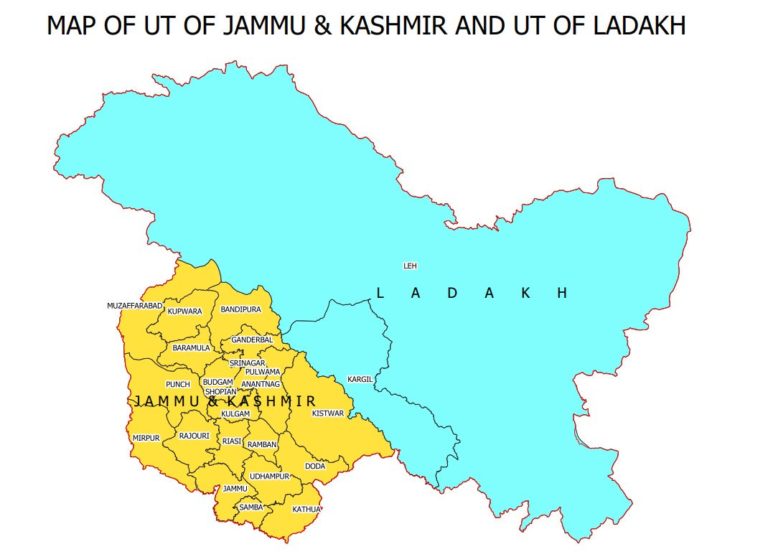
On October 31st, as the Diwali festivities culminated, our nation embarked on a historic and path breaking transformation. The state of Jammu and Kashmir emerged with a new Avatar of two union territories. The union territory of Jammu and Kashmir comprises of 22 districts including areas of Muzaffarabad and Mirpur. The union territory of Ladakh comprises two districts of Kargil and Leh that includes the Pakistan Occupied territories of Gilgit-Baltistan. The Indian Union is now formed of 28 states and nine union territories as against 29 states and seven union territories earlier.

Thus the parliamentary legislation of August 5th, for re-organisation of the state of Jammu and Kashmir into two union territories has been implemented. Also, the repressive provisions of Article 370 that have kept the state deprived of basic democratic rights have cease to be effective.

Across the nation, there was an environment of breathless anticipation with regard to this historic transformation. It was the favourite topic of discussion in congregations and was widely commented upon by the media. Social media was also abuzz with opinions and comments. The peaceful and seamless implementation of this dispensation has come as a big relief; it also gives hope of an era of peace and prosperity being ushered in.

The run up to the great day, from August 5th when the legislation was passed to the present, has been quite disappointing for all those who were opposed to this historic correction of India’s constitutional status. Such elements, within the country and out of it, who did not wish to see this transformation come by, have not been able to galvanise the kind of public disruption and international support that they desperately desired. This, by itself, is a clear indication of the uprightness of the action being taken and its legal justification in the eyes of the nation and the international community.

In real terms the change will have no negative impact on any region or segment of the society across the state. On the other hand, it will correct many wrongs that were being perpetrated under the garb of the misconceived special status granted by Article 370. Those like the refugees who came from Pakistan during partition and chose to settle in J&K and those of the Valmiki Samaaj who have been in J&K for generations on end will get great relief on being given complete citizenship. The biggest beneficiaries will be the women who will get complete property rights hitherto-fore being denied to them. The list of benefits that will come by due to the new constitutional order is long; the naysayers are completely devoid of any credible argument. 

Most significantly, with this change coming by, a historic wrong that was sticking out as an aberration to the core principles of democracy and freedom enshrined in our constitution, will be set right.

There is, however, little space for felicitations and back-slapping. The very existence of forces aligned against this absolutely righteous action is now at stake, for which reason, they will leave no stone unturned in defeating this noble cause. These forces are strong, determined and vicious; they cannot be taken lightly.

The manner in which Pakistan is fluttering about is a true indication of the things to come. The country has lost out in all avenues that it leveraged to offset the move. It failed in its diplomatic effort, it failed in its efforts to instigate the locals into open revolt and it failed in engineering violence through its terrorist base in Kashmir. Yet, it is not ready to give up!

The unsuccessful attempt to smuggle weapons and warlike stores meant for Kashmir through drones in Punjab and the recent attempt at large scale infiltration from terrorist launch pads in the Jura, Athmuqam and Kundalsahi in Pakistan-Occupied Kashmir (POK) shows that Pakistan is not likely to relent from trying out all means to seize the initiative again.

The obtuse and graceless twitter attack on Indian political leadership, military leadership and media by the Inter Services Public Relations (ISPR)–the propaganda wing of the Pakistan Army, post the failed infiltration attempt is another clear indication of the total frustration being felt by the military hierarchy of Pakistan at its own impotence. These Pakistani Generals have inflated egos and a strong self-view and they are unlikely to take things lying down.

It is very important to remain absolutely vigilant for repeated onslaughts by the enemy. The bottom line is that we need to remain ever vigilant for a massive military and security backlash.

For more than a millennium Kashmir has remained a vassal state of Afghans, Mughals and the Sikhs among others. The landlocked nature of the region and its small size precludes the option of surviving on its own. The merger with India provides this region its first opportunity in millenniums for a free existence as part of a democratic dispensation. There is no reason for the region to not accept and enjoy such a gift of freedom and democracy. It is time for the Kashmiri people to realise that their aspiration for freedom can be met only by remaining aligned with the Indian Union. They, therefore, need to reject the falsehoods and perfidies of those who wish to control their very life and existence. The other options include succumbing to the suzerainty of Russia, China or Pakistan; in fact, proxy control by the United States or Britain is also a distinct possibility.

Every Indian is a part of the process designed to strengthen the integration of the country and uphold its democratic values that are respected the world over. To this extent, the people of the country stand firm with their fellow citizens in J&K and Ladakh. The challenges and the difficulties envisaged are, by no means, inhibiting the determination of the government and the people of India, including citizens of J&K to ensure the success of the initiative and usher a new era of peace, prosperity and absolute freedom.

Congress can emerge sans Gandhis, indicate Haryana, Maharashtra polls

The Haryana and Maharashtra election results speak that Congress can do without the Gandhis, regional parties have their sheen and dominant castes have strong minds and clear strategies. More importantly the results have shown that the economy certainly is in the minds of voters. Even a villager is now weary of the sinking banks, NBFCs, the financial sector and agrarian woes.

The results also surprised pollsters – the survey companies. They are completely off the mark. The reason is obvious. They are in business of TRP and not disseminating news. Any observer can predict poll results with 98 to 99% accuracy if he travels through constituencies, meets people, just not leaders, talk to them, have data and is devoid of bias or a tilt. The pollsters instead are for quick money.                

The voter is discerning. They want parties and their governments to deliver to their needs. They want them to provide jobs, proper wages, right prices to farmers and just not doles of a yearly Rs 6,000 pension with strings attached.

Rising charges and eroding security for bank deposits —  ridiculous Rs 1 lakh ‘insurance” in case there is a crisis-like situation as we saw in the case of PMC Bank have hit the voters.

The voters also do not want to part with their 10 or 15-year-old vehicles, a draconian rule that is not followed anywhere in the world, including the advanced economies such as US and UK. If governments are apathetic, retribution of the people is natural. The message is clear – government cannot work against the interest of the people on pseudo-environment issues.

The present polls also indicate that public memory is not so short that voters forget their daily woes, increasing cost of living, problems of complicated taxes, tolls, fess and arrogance of their representatives. No wonder eight of 10 cabinet ministers lose in Haryana. Maharashtra also saw eight ministers losing.

Many who lost now rue distancing themselves from the people – voters. 

The World Bank Ease of Doing Business (EDB) index shows an improvement in ranking to 63 from 77 among 190 countries. But people seem to read beyond. India has done poorly in EDB on four heads – enforcing contracts, registering properly, starting business and paying taxes. The latest scores do not show any change. On enforcing contracts, India retains its 163rd rank, on registering property 154th; lowly on starting business at 136; as for paying (capability) taxes 115.

This reflects high stamp duties and goods and services tax (GST) for many items. Besides, it shows that resources required for starting businesses are still not easily accessible.

The BJP came to power on pro-people promises. It has to recall all those and act accordingly. Frequent polls are a measure to keep the faltering rulers on track. It has to rethink on shrill slogans and nationalistic projections.

The embarrassment over the hunger index does not help. Poverty technically might have come down but disparity has increased. In many cases, the so-called middle class is just on the edge of poverty. Getting elected and empowered is fine but making mockery of the abysmal conditions of the people may cost dear.

Voters show that they can vote differently in the assembly and parliamentary elections. The euphoria over national issues like abrogation of Article 370, 35-A, Balakot and nationalism, will not last forever. People finally want leaders to address local issues like jobs, connectivity of villages, farm distress and healthcare.

The issue in poll everywhere has been the basics of economy and overall well-being. That is the winning formula for any political party.

U-Special International Campus Film Festival concludes with screening at Lady Irwin College

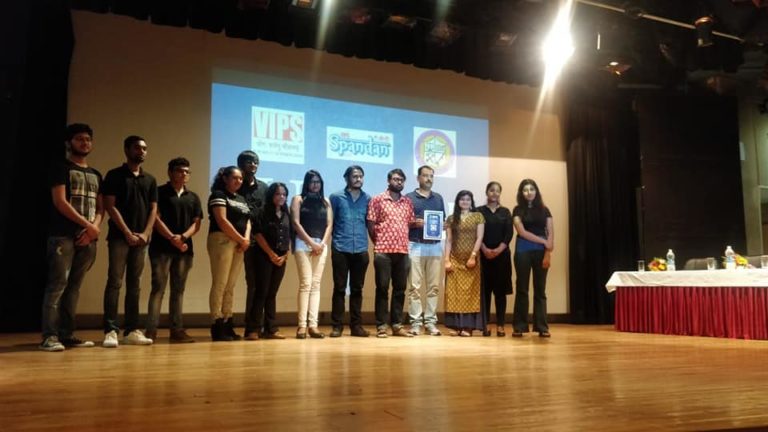
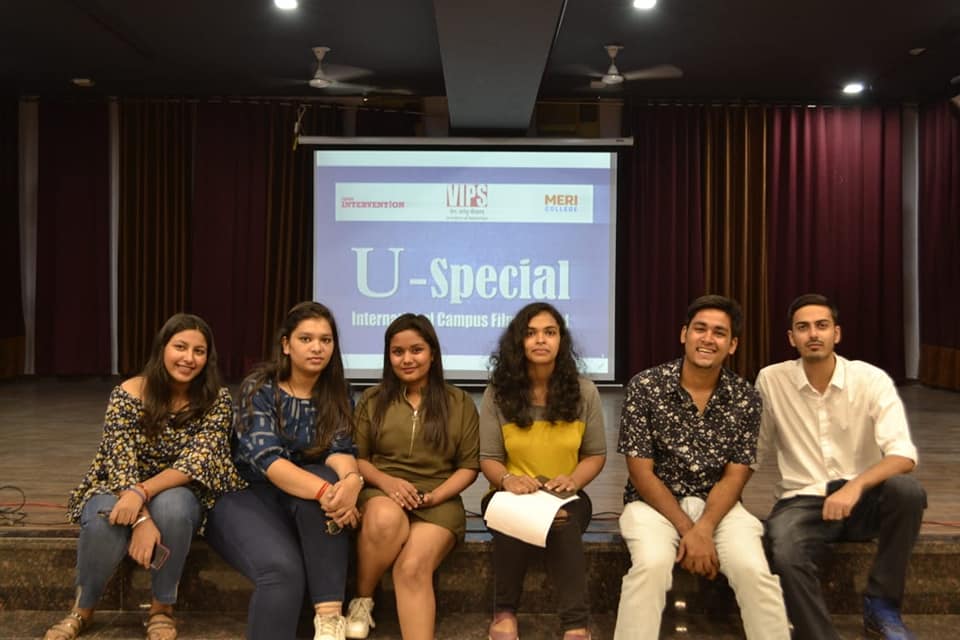
It’s curtains down for the biggest campus film festival in India, after a stupendous run in several colleges across Delhi. The 3rd edition of U-Special International Campus Film Festival was organised from September 23rd till Nov 5th, 2019. A youth centric festival, it was organised across campuses by a group of 30 Campus Ambassadors from Vivekananda Institute of Professional Studies (VIPS), affiliated to Guru Gobind Singh Indraprastha University.

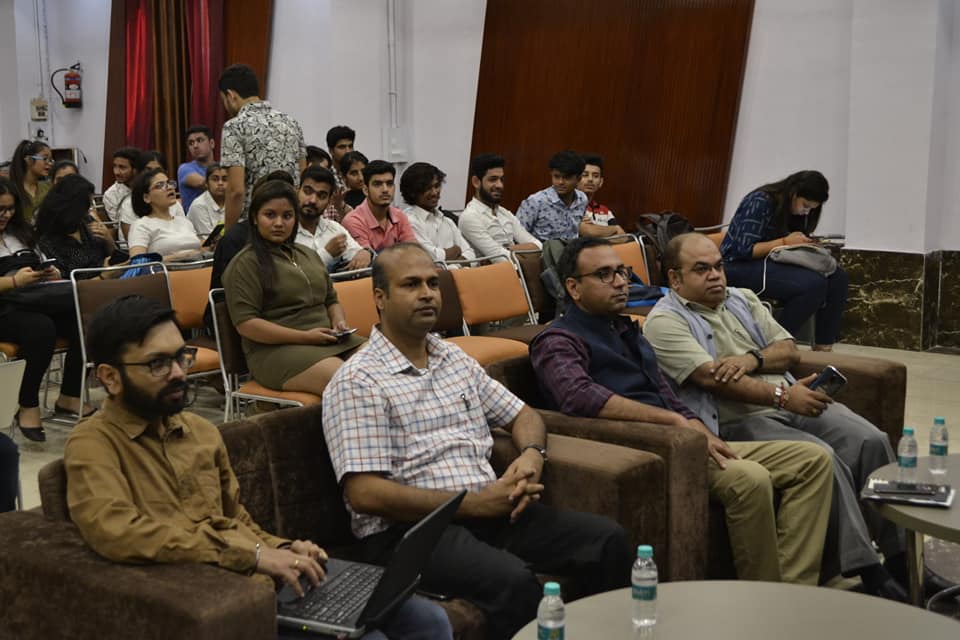
The festival saw the screening of 41 student films from 17 countries. Campuses and Institutions where screenings were organised included Delhi School of Journalism (DSJ), MERI College, Lingayas Lalita Devi Institute of Journalism and Mass Communication, Zakir Hussain College, Institute of Home Economics, Shaheed Bhagat Singh College, and Lady Irwin College.

Prominent universities which had their films in the festival includes Rochester Institute of Technology, New York, Sri Aurobindo Centre of Arts & Communication, University of the West of England – UWE Bristol, National Institute of Design, Symbiosis Centre for Media & Communication (SCMC), Whistling Woods International, Kyoto University, Sussex County Technical School, Central Washington University, Scottsdale Community College, School of Art and Design Kassel, Curtin University, University of Portsmouth, Marmara University, DePaul – College of Computing and Digital Media, New York Film Academy, University of Gothenburg, Napier University, University of Music and Performing Arts, EICAR, The International Film and Television School of Paris, Beijing Film Academy, Istanbul Sehir University and Iranian Youth Cinema Society.

It is worth noting that U-Special International Campus film festival is India’s only global campus film festival, promoting student films. The festival was launched in 2016 by Kirorimal College alumni and journalist Rao Narender Yadav, to provide a credible platform to student filmmakers from all across the globe. According to Rao, “This fest is a creative platform for the next generation of filmmakers to tell their stories, inspire hope and provoke change through filmmaking. Providing an exciting opportunity to various genres of young filmmakers this fest is poised to become the largest congregation of young minds in India.”

“U-Special remains one of the most unique film festivals globally with its focus entirely on the creative work done by college students through the audio-visual medium. Films from several prominent Indian and International universities and institutions were screened this year giving a good opportunity to students to understand the kind of creative trends emerging globally,” he further added.

The festival director acknowledged and expressed his gratitude to the students, faculty and management of Vivekananda Institute of Professional Studies (VIPS), particularly Prof. Sidharth Mishra, Adjunct Professor, Media Studies for making this year’s edition a grand success.

Myanmar: India secures release of Indian Nationals abducted by Arakan Army

Timely intervention by Government of India has ensured release of five abducted Indian nationals, a Member of Myanmar Parliament and four other Myanmar nationals from Arakan Army in the Rakhine State of Myanmar, in the early hours of November 4, 2019.

On November 3, these five Indian nationals, along with a Member of Myanmar Parliament, two local transporters and two speedboat operators were abducted by Arakan Army on way from Paletwa in Chin State to Kyauktaw in Rakhine state in Myanmar.  The abducted Indians were currently engaged in building the Kaladan road project in Myanmar.

Unfortunately, one of the Indian national died in custody of Arakan Army due to heart attack.  According to information available, he was a chronic diabetes patient. The released Indian nationals, alongwith the dead body of the deceased, have reached Sittwe and will be leaving for Yangon today for onward journey to India.

During the last one decade, militant ethnic separatism has been on the rise among indigenous Buddhists in Myanmar’s Rakhine State. The Arakan Army was set up in 2009.

Air Pollution Emergency: PMO directly monitoring measures taken to improve situation in Delhi/NCR

With Delhi again turning in to a gas chamber, Prime Minister’s Office (PMO) has now decided to directly get involved. The Principal Secretary to Prime Minister, P.K Mishra is reviewing the measures taken by the States of Punjab, Haryana and Delhi to tackle air pollution. Mishra has sought to know the details of additional measures taken to check fresh cases of fire and stubble burning in these States during the last 24 hours.

The Chief Secretary, Punjab stated that he is personally monitoring the situation with Deputy Commissioners of various districts where hotspots have been identified. He added that FIRs are also being registered for violation of The Air (Prevention and Control of Pollution) Act, 1981. The State Government is taking strict action by enforcing the necessary fines for incidents of violation of the said Act.

The Chief Secretary, Haryana stated that the Chief Minister has directed all concerned to reduce the cases of stubble burning in the State at the earliest.  She mentioned that the teams are in the field round the clock to control the cases of air pollution.

The Chief Secretary, Delhi stated that water sprinkling has been intensified, and identified hotspots and corridors are being focussed upon to improve the situation. Open dumping of garbage in the city has been stopped and maximum fine is being imposed and collected from the violators of these norms.

India Meteorological Department indicated that weather conditions are likely to remain favourable over the next few days.

The Principal Secretary to the Prime Minister emphasized the importance of pre-emptive action, as necessary. He said there is need to establish a mechanism for immediate action. He appreciated the efforts being taken by all concerned and mentioned that after taking short-term measures, a system will be put in place for a permanent long-term solution.

The Principal Advisor to the Prime Minister P. K. Sinha, Cabinet Secretary, Secretary, Environment, Forest and Climate Change, Secretary, Agriculture, Chairman, Central Pollution Control Board, Director General of India Meteorological Department and Chief Secretaries of Punjab, Haryana and Delhi along with other senior officials, were part of the deliberations.

Cash hoarding will increase if credibility of banking system is not restored

Narendra Modi government must work towards re-instating the credibility of Indian banks at the earliest in order to arrest growing fear among customers and discourage them from hoarding cash.

The Punjab and Maharasthra Co-operative (PMC) Bank scandal has thrown up some harsh realities about the Indian banking system. Indians have typically trusted their banking system – that faith was reinforced especially after the lenders stood tall during the 2008-09 financial crisis. That was then. Today the mood is changing fast and the trust deficit between banks and its customers is increasing.

Result? Hoarding of cash—not only by people who want to skirt the system and churn black money but also by the “aam admi” (common man) who is now cynical about keeping his/her money in banks.

Conundrum of the DICGC (Deposit Insurance and Credit Guarantee Corporation

Close on the heels of RBI’s (Reserve Bank of India) capping the withdrawal limits for PMC Bank customers, an old fine-printed clause put up by another private bank surfaced on social media platforms. This clause essentially stated that bank account holders can get a maximum of only up to Rs 1 lakh in case their bank went bust. People, naturally, were panic stricken as rumours started floating about the safety of their bank deposits. They were pacified only when bankers revealed that this fine-printed clause was an insurance cover to their deposits with the bank.

And this insurance cover to bank deposits had come into effect through an RBI circular dated June 22nd, 2017 that mandated all banks to inform the account holders about the limited ‘deposit insurance cover’. So, in this ‘Deposit Insurance and Credit Guarantee Corporation (DICGC)’ which is under the RBI, an account holder in a bank is insured only up to a maximum of Rs 1 lakh, in case of an adverse crisis situation where the lender (bank) goes bust and its license is cancelled.

But then all this has raised some pertinent concerns about our “robust” banking system.

Several reports suggest that the Rs 1 lakh insurance cover is one of the lowest in the world, though bankers maintain there is no need to press the alarm button. Their reassurance stems from the fact that in most cases the government along with RBI would thrash out a bail-out formula as was the case in the erstwhile Global Trust Bank. The Ramesh Gelli-promoted bank was in the middle of a stock market scam in the early 2000s and after the central bank found that its net worth had turned negative, the ailing lender was merged with the government-owned Oriental Bank of Commerce. However, bankers also point out that such default cases are typically handled on a case-to-case basis and there is no one formula to revive the situation. 

Importantly, the DICGC covers only the money deposited with the bank. The gold or jewellery kept in bank lockers are not covered under this scheme. The RBI has made it clear that while the banks will ensure safety of your lockers, they will not be made responsible for any loss in case of theft.

So, as things stand neither your money is safe in your banks nor your jewellery. The DICGC’s scheme of Rs 1 lakh compensation is too less as average account holders keep far greater amounts as deposit in their respective banks.

Now let us look at what could be the consequences. First – it will boost large scale hoarding of cash. It defeats the purpose of demonetisation. The Narendra Modi government in its first term went ahead with the demonetisation exercise and came down heavily on those found hoarding cash. One of the main poll promises of Prime Minister Modi was to weed out black money. The government also undertook the Pradhan Mantri Jan Dhan Yojana—opening bank accounts for the poor and un-banked to encourage them to put their money in the banks.

But if RBI and the government cannot guarantee safety of bank deposits, can they have any moral authority to direct people to park their money in banks? Can they, with authority, penalise those hoarding cash, gold or jewellery? In fact, hoarding of cash and churning out of black money will only increase in the months to come until the rules are changed.

The Modi government must resurrect the credibility of the country’s banking system. This includes all banks — whether public sector, private or co-operatives. At a time when the government is harping on the need to have more banks, such draconian rules can do damage not only for the country’s banking system but also for the image of the ruling party. After all, the state assembly election results in Maharashtra and Haryana reflect that there is a growing discontent among the voters.

Ram Janmabhoomi is an opportunity for minority Muslims to earn Hindu majority’s goodwill

1

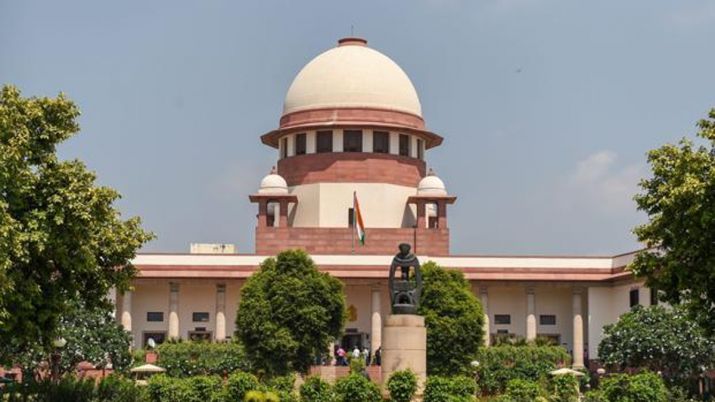
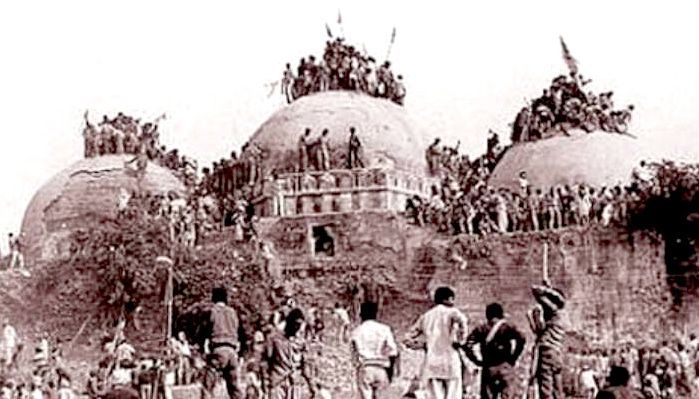
It is only natural for Muslims in India to be a little anxious as the country awaits the Supreme Court verdict on the Babri Masjid-Ram Janam Bhoomi dispute at Ayodhya to be delivered in a few days. A variety of rumours are floating which do not bear repetition in any responsible section of our media. But these are making many Muslims restive.

However, every challenge is also an opportunity. The demolition of Babri masjid on 6 December 1992 presented Muslims with an opportunity. Now that the masjid was no more and Muslims do not worship bricks and mortar or plots of land, they could have forgiven the miscreants who demolished the mosque and moved on, gifting the land for building a temple. I made this point in an article entitled “Opportunity for Muslims,” published by The Hindustan Times, New Delhi, on 13 Jan 1995. This was reproduced on NewAgeIslam.com on July 1, 2009.

Let me give you here some relevant excerpts from this article written almost 25 years ago.

“… This brings me to my main plea—forgiveness. Forgiveness is the essence of both the Muslim and Hindu spiritual traditions. It is the only way out of the vicious and very debilitating grip of bad karma. It is our belief that one has to always pay individual or collective karmic debts in this or any subsequent incarnations or on the Day of Judgement. Both Hindu and Muslim spiritual traditions consider God as the greatest teacher, this world a great school, the events that involve us in this mayajaal (illusionary world) as messages.

“What could this Great Teacher be teaching us in this section of the school through the great Babri Masjid-Ram Janambhoomi drama? Perhaps the all-important lesson of forgiveness. It may take us years, decades, centuries or millennia to learn this lesson. But learn we will. There is no escaping. God is a very determined teacher. We have the option to learn the lesson now. Let us exercise it.”

Then I had gone on to conclude: “…. If this mutual forgiveness and reconciliation does not take place — and if present Hindu and Muslim leaders are considered representatives of their respective communities, it is not likely to happen — ordinary people of both communities must make their presence felt and come out openly for peace at all costs. If that too does not happen, we Muslims should thank God for providing us with this unique opportunity to exercise our option of forgiveness and making a gift of a piece of God’s land on the specific condition that it be used for nothing but building a place of worship, so that its sanctity is maintained.

I know this is not going to be easy. Forgiveness is never easy, except for the spiritually evolved. But I don’t think we have any other option. We have many things, important things to do. We cannot afford to remain embroiled in inconsequential disputes. The renowned Islamic scholar, Maulana Ali Mian Nadwi had reacted to the opening of Babri Masjid locks (for all Hindu worshippers by Rajiv Gandhi government on 1 February 1986) the following day in these very sensible words: “Many mosques are in the possession of other people.” And indeed, they are.

 “There were many mosques in East Punjab of the pre-Partition days? But very few are left as mosques today? A Punjabi Hindu friend of mine complained of so many mosques having been converted into gurudwaras and temples. His Muslim friend (not me, some great soul) reacted: “But they are still places of worship. There is only one God, after all. No matter what you believe in, you cannot but worship the same God.” Amen.”

However, guided by short-sighted, self-styled leaders as they are, Muslims did not take that opportunity. Now another opportunity beckons. The highest court in the land is about to give its final judgement. First of all, Muslims should make it clear that they would abide by the judgement and accept it willingly no matter what the verdict is. This is what our leaders have already done. But this bears repetition, particularly in view of the divisive, almost Rwandan nature of most of the media, print, electronic and social that has taken control of nearly all means of communication in north India. Unfortunately, some ignorant, greedy Mullahs too participate in the cockfights at prime time that go in the name of television debates, giving legitimacy to the palpable efforts to divide the society. The very least Muslims could have done to combat this national security threat was to socially boycott those treacherous Jahils who are respectfully called Ulama by our media. But this is a subject for another day. The silver lining in these darkening clouds is that the secular, pluralistic foundations of Indian society are too deep to be shaken by these charlatans who are projected by the media as representatives of the Muslim community. The credit for pluralism in our society, I must add, goes largely to the broadmindedness of Hinduism that is willing to accommodate all religions.

Another reason Muslims should reiterate their faith in the Supreme Court now is that they have already committed once the cardinal mistake of pressurising a government to overturn a Supreme Court judgement delivered on 23 April 1985, based on the compassionate nature of Islam as the judges understood our religion. The Supreme Court invoked Section 125 of Code of Criminal Procedure, which applies to everyone regardless of caste, creed, or religion to rule that a divorced Muslim lady with no means of sustenance, 70-year-old Shah Bano, be given maintenance money, similar to alimony. Supreme Court concluded that “there is no conflict between the provisions of section 125 and those of the Muslim Personal Law on the question of the Muslim husband’s obligation to provide maintenance for a divorced wife who is unable to maintain herself.”

Considering the Holy Quran as the greatest authority on the subject, the court held that there was no doubt that the Quran imposes an obligation on the Muslim husband to make provision for or to provide maintenance to the divorced wife. But the Muslim leadership, both Mullah and non-Mullah, refused to accept it.

With this background, it is imperative that Muslims reiterate repeatedly their faith in the Supreme Court and declare that they will accept the judgement even if it goes against them, as this is the highest court in the land.

This also accords well with the exhortations in Quran and Hadith. All schools of Islamic thought accept that Islam requires Muslims to be loyal to their country’s institutions, regardless of the ruler’s faith. The Holy Quran states, “O ye who believe, obey Allah and obey the Prophet and obey those in authority from among you” (4:60). Prophet Muhammad declared, “Who so obeys the ruler obeys me, and who so disobeys the ruler disobeys me” (Muslim); “Listen to and obey your ruler, even if you [despise him]” (Bukhari).

Prophet Muhammad and his few followers endured bitter persecution for about 12 years in Mecca. But they did not defy the Meccan Establishment. They peacefully left Mecca, following the Quranic ruling, “Create not disorder in the earth” (2:13). Indeed, Islam not only requires Muslims to obey their government, but also to love their country. In a well-known Hadith, Prophet Muhammad instructed, “Love of one’s country is a part of faith” (Sakhavi; Safinat al-Bihar, vol. 8, pg. 525; Mizan al-Hikmah, Hadith # 21928).

Secondly, it is time Muslims use the next few days to introspect and consider what they would do if the judgement comes in their favour. It’s not just that they will find it impossible to build a mosque on that plot of land in the present atmosphere of heightened tensions and shrill Hindu demands and preparations to build a temple on that plot of land where the masjid stood for nearly five centuries. The important question is: Is it even necessary for Muslims to do so? Babri mosque was a heritage building. Like the Bamiyan Budhas in Afghanistan, it is now lost forever. It simply cannot be rebuilt. So common sense dictates that Muslims donate this piece of land for the building of the temple that our Hindu brothers and sisters want so badly. The argument that the faith in Lord Rama having been born exactly on that spot is a manufactured faith does not hold water. It doesn’t matter how a faith has taken hold. Now it is the Faith, and as Muslims themselves demand that their Faith, even the irrational parts of it, is given due deference, they too should respect the Faith of others regardless of its historical validity.

(This article was first published in New Age Islam)

Religious Education in Greece: Privileges and Recent Controversies

By Angelos Sofocleous and Scott Douglas Jacobsen

Religious Education (RE) classes in Europe can spark controversies in a number of ways. One is the endorsement of a particular religion or life philosophy in the process of teaching the materials to a diverse student body coming from a variety of different faiths and cultures. Another can be the outing of students’ individual faith or parents’/household faith of the student in the context of discrimination or prejudice within the larger culture or in the school for children of other faiths.

A further controversy may occur with the standard educational reason for insufficient teaching of the RE curriculum for various reasons, akin to skimming over evolutionary biology because of the legitimate fear of backlash from religious-creationist parents. A more obscure one, but not necessarily uncommon, can happen when the education minister and theologians come into conflict with one another. In Greece, recently, the controversy centred on the need for parents to submit a Solemn Declaration for their children to opt-out of the RE class.

The National Secular Society reported on a recent case in some depth. The NSS stated that five Greek students and parents brought forth a case to challenge the requirement of a solemn declaration for opting out of RE classes. They would be required to stipulate that they – the students – were not Orthodox Christians in the request for opting out of the RE class. This can carry social risks with 81-90% of the population self-identifying as Greek Orthodox Christian.

The students, if required to stipulate their faith tradition differing from the Greek Orthodox Church, may be exposed to intrusion and coercion from the school authorities and their classmates. In addition to this, the exemption viewed individual belief structures as bound to belief groups and, therefore, neglected the rights of individuals in the light of the freedom of religion and freedom of belief. Both amount to sovereign individual rights, not collective rights seen in the assumption of belief groups as homogeneous as if one mind.

More importantly, making it necessary for students to reveal their religious beliefs in order to receive an exemption from Religious Education classes is unconstitutional. In a unanimous ruling, on Thursday the 31st of October, the European Court of Human Rights (ECHR), Europe’s top human rights court, ruled that Greek authorities do not have the right to oblige students to reveal their religious beliefs for any reason. “The authorities did not have the right to intervene in the sphere of individual conscience, to ascertain individuals’ religious belief or to oblige them to reveal their beliefs,” the ECHR’s ruling said.

The Education Minister of Greece, Niki Kerameus, pledged to abide by the ruling of the European Court of Human Rights and alter the ways in which RE classes take place in Greece as well as revise the procedure to ask for an exemption from the course. This ruling essentially puts in practice changes which the former Minister of Education, Nikos Filis, under the left-wing SYRIZA government, sought to make. In particular, Filis attempted to make RE in Greek schools more secular, diverse, and less focused on Christianity.

As it is currently the case, the nature of RE classes is catechistic and indoctrinates students in the Greek Orthodox religion. Because of this, Nikos Filis put forward certain proposals through which he hoped to modernize RE and enable students to learn about religions other than Christianity. However, the proposed changes were deemed unconstitutional by Greece’s Council of State on the grounds that the government’s plan “distorted the purpose of [religious] teaching, which is, according to the Constitution, to develop pupils’ Orthodox Christian conscience”. The Council of State’s stance and its focus on developing “pupils’ Orthodox Christian conscience” is not surprising given the fact that Greece is one of the few countries in Europe which has a state religion.

In fact, religion plays a major role not only in the everyday lives of Greek people and in the political scene but also in the education system. It is common for schools in Greece to have compulsory morning prayer, religious icons in classes, to take trips of religious context, or to host ‘blessing rituals’ at the start of the academic year. Sometimes, it takes regional human rights cases to bring this to light.

In the end, Article 2 of Protocol 1 of the European Convention on Human Rights was ruled as breached in the ECHR court case with Article 2 of Protocol 1 protecting the right to an education. It states:

No person shall be denied the right to education. In the exercise of any functions which it assumes in relation to education and to teaching, the state shall respect the right of parents to ensure such education and teaching in conformity with their own religious and philosophical convictions.

The NSS stated, “The article requires states to ‘respect’ parents’ rights to ensure education and teaching is “in conformity with their own religious and philosophical convictions… The court ruled that the declaration requirement risked ‘placing an undue burden on parents’ and exposing ‘sensitive aspects of their private life.’”

The intervention portion from the NSS was drafted by Professor Ronan McCrea of UCL with input from Harry Small and Sadikur Rahman. With the efforts of the students and the parents, and the support of the NSS and its drafters of the NSS intervention, individual religious and belief rights have remained more respected than before.

Photo by iSAW Company on Unsplash

Ashutosh Gowariker’s ‘Panipat’ to have Kriti Sanon in lead role

Based on the third battle of Panipat that took place in 1761, Ashutosh Gowariker’s upcoming project ‘Panipat’ to have Kriti Sanon in the lead role. Kriti says she was surprised when filmmaker Ashutosh Gowariker offered his ambitious period drama “Panipat” to her, but she took it as an opportunity to experiment.

“Panipat” is Kriti’s first historical period drama and she is excited about the project.

“It is a great story that needs to be told. I like the character of Parvati Bai, especially the way Ashu sir has written it. It did attract me as I have never done something like this before. I was initially confused like how come he thought of me to play this Marathi girl because I am a North Indian, Punjabi.

“I was a little surprised. But I did not want to let go of the opportunity to do a period film with a director, who is a legend in that space. It is very different from what I have done and so it becomes exciting and challenging at the same time. That is how you break certain barriers,” Kriti told PTI.

The film’s cast also includes Arjun Kapoor, Sanjay Dutt, Mohnish Bahl, Padmini Kolhapure and Zeenat Aman. Arjun plays the role of Maratha leader Sadashivrao Bhau, while Dutt is portraying Ahmad Shah Durrani.

“Panipat” produced by Sunita Gowariker and Rohit Shelatkar’s company Vision World, is scheduled to release on December 6.

Five Powerful Films on Women Issues in 7th Woodpecker International Film Festival

Woodpecker International Film Festival (WIFF), India’s best known film festival on issue-based cinema is back with an an engaging line up of films and documentaries. Here are five must watch films on women issues in the upcoming edition of the festival.

Film: Hell and Hope, Director: Amish Srivastava

Islamic State militants abducted, raped, tortured and sold thousands of girls. A few girls risked their lives to escape. What happened to them? This documentary follows those girls. This film not only reflects the horrific experience that these young women suffered, but also shows how their lives have been changed. This is one of the first testimonies showing the world what it takes for ISIS victims to start the process of healing.

Film: Mother, Daughter, Sister, Director: Jeanne Marie Hallacy

Amae, Thamee, Ama (Mother, Daughter, Sister) gives voice to Kachin and Rohingya women calling for an end to sexual violence in conflict. The film revolves around the stories of four women: Shamima, a volunteer counselor working with survivors of military rape in the Rohingya refugee camp in Bangladesh, Dil Kayas, a teenage survivor and San Lung and Lu Ra, the sister and mother of two Kachin school teachers brutally raped and killed in 2015, allegedly by the Burmese military. Powerful testimonies from survivors, witnesses and activists explore the far-reaching impact of sexual violence and trauma upon communities, woven with stories of courageous women calling for justice and an end to impunity.

Film: Mamatva, Director: Kirti

In a village in Western Uttar Pradesh state of India, a woman who belongs to a lower caste used to be the mid wife of the village. When her younger sister in law gives birth to a son, the wish to have her own child becomes stronger in her. In this period, living in a family where she is seen as a curse, faces more and more discrimination for not being a mother. All this while, the darker forces inside her come to live and she plans to do a ritual which involves taking bath by sitting on the baby to attain motherhood. She abducts the baby but could not perform the ritual as while holding the baby in her arms true motherhood evokes within her and she fights the darkness within her. She returns with the baby while nobody now believes her. The family disintegrates and the baby is separated from her as she sings lullaby for him from far away.

Film: Womeniya, rhythm of change, Director: Aakash Arun

The documentary highlights the life and journey of a group of women in the Dhibra village near Patna who have organised themselves to form a musical band. The village which falls in the Punpun block of the state capital of Bihar, India and has been a witness to a silent revolution pioneered by these women belonging to the socially backward castes.

Film: Posharini, Director: Sreecheta Das

Driven by circumstances to take to hawking in the local trains, Gauri comes of her own after overcoming professional challenges, acute territorial jealousy from her peers and her own hesitation and lack of confidence.

7th Woodpecker International Film Festival will be organised form November 29-December 1, 2019 at Siri Fort Auditorium, New Delhi. Entry is Free in the Festival.