Home Blog Page 406

Philosophical and Historical Foundations of American Secularism 7 – Presidents and Religious Affiliation

Dr. Herb Silverman is the Founder of the Secular Coalition for America, the Founder of the Secular Humanists of the Lowcountry, and the Founder of the Atheist/Humanist Alliance student group at the College of Charleston. He authored Complex variables (1975), Candidate Without a Prayer: An Autobiography of a Jewish Atheist in the Bible Belt (2012) and An Atheist Stranger in a Strange Religious Land: Selected Writings from the Bible Belt (2017). He co-authored The Fundamentals of Extremism: The Christian Right in America (2003) with Kimberley Blaker and Edward S. Buckner, Complex Variables with Applications (2007) with Saminathan Ponnusamy, and Short Reflections on Secularism (2019).

Here we talk about American freethinker, or not, presidents.

Scott Douglas Jacobsen: Over time, I have heard or more often read repeated mumblings and murmurings from some American freethinkers of the possibility of major leaders, including presidents, of the United States being closet atheists or agnostics. However, most of the former presidents lived in even more religious times than America now. In that social climate, they remained quiet because citizens – a hunk of them – vote via political affiliation in association with religion. 

If a Christian candidate, and open about it, a large sector of Americans seem to vote for them, as a Christian, as a Christian seen as a good person, and so on. How has the secular and philosophical landscape of Americans been influenced, impacted, by the voting records on religion? How many presidents, statistically, in American history were or are, probably, atheists or agnostics? What would be the fate of an open atheist or agnostic president for their political life? I recall the retort if you won the governorship, “Demand a recount!”

Dr. Herb Silverman: Religious beliefs of American presidents are difficult to determine, perhaps indeterminable. We can learn what they profess to believe and what church they attend, but I am often skeptical about what they truly believe. Let’s look at the last two presidents, Barack Obama and Donald Trump, both of whom are professed Christians.

Barack Obama had an atheist father and was raised by a secular humanist mother whose values he embraced. He used to say he was an agnostic, but he became a Christian when he ran for public office. At least Obama embraces some positive values of Christianity, like concern for immigrants and the poor, caring about your neighbor, honesty, and respect for the environment.

What Christian principles does Donald Trump embrace, unless you consider it Christian to nominate judges put forth by conservative white evangelicals? I know he disagrees with Luke 6:29: “If someone slaps you on the cheek, offer your other cheek.” I couldn’t find a biblical passage that says, “Slap him back ten times harder.” Nor does Trump follow Luke 14:1: “He who exalts himself will be humbled, and he who humbles himself will be exalted.” Many of us wish Trump would heed Proverbs 12:15: “The way of a fool is right in his own eyes, but a wise man listens to advice.”

Trump refused to disclose his tax returns because he claims they are under audit. He added, “Maybe I get audited so much because I’m a strong Christian.” Really? How much faith does that statement require? I think Donald Trump is an atheist because I can’t picture him believing in a power higher than himself. On the other hand, Trump might think that he is a god.

Given that presidents are usually smart and thoughtful people, I would think that quite a few who called themselves Christians did not believe most of the doctrines of their faith. There are at least 18 non-Christian presidents: George Washington (Deist), John Adams (Unitarian), Thomas Jefferson (Deist), James Madison (Deist), James Monroe (Deist), John Quincy Adams (Unitarian), John Tyler (Deist), Millard Fillmore (Unitarian), Abraham Lincoln (probably Deist), William Howard Taft (Unitarian), Dwight D. Eisenhower (no church until he became president). Many Unitarians also considered themselves Deists. Unaffiliated presidents are Ulysses S. Grant, William Henry Harrison, Andrew Johnson, and Rutherford B. Hayes. Probable nonbelievers include Martin Van Buren, Zachary Taylor, and Chester A. Arthur. If you include Quakers as non-Christian (which many Christians do), we can add Herbert Hoover and Richard Nixon.

Should the religious beliefs of a politician matter? They should if the person’s religious faith interferes with the duties and oath of office. I like what John F. Kennedy, the only Catholic president, said during his campaign: “I believe in an America where the separation of church and state is absolute.” And Kennedy governed as if he were an atheist, which I suspect he might have been because it appeared that he did nothing more than follow certain rituals. While I would like to see President Trump impeached and convicted, I worry about his successor. It would be Christian fundamentalist VP Mike Pence. At the Republican national convention, Pence said, “I’m a Christian, a conservative, and a Republican in that order.” This sounds like he would govern by imposing some of his unconstitutional Christian values on the rest of us.

When now-Senator Jamie Raskin (D-MD) testified at a Maryland State Senate hearing in 2006 in support of gay marriage, Republican State Senator Nancy Jacobs said: “Mr. Raskin, my Bible says marriage is only between a man and a woman. What do you have to say about that?” Raskin replied: “Senator, when you took your oath of office, you placed your hand on the Bible and swore to uphold the Constitution. You did not place your hand on the Constitution and swear to uphold the Bible.”

I would much rather see a non-religious American president than a religious one, who might pledge his or her highest allegiance to religion instead of to the oath of office. Religious conviction must never interfere with the purely secular responsibilities associated with holding the highest office in America.

While politicians are reluctant to come out of the closet as atheists, there have been some non-religious gains. A Congressional Freethought Caucus was formed in 2018. This was a milestone for nonreligious Americans in our continual struggle for inclusion in the political process and recognition as a constituency. The Caucus promotes public policy formed on the basis of reason, science, and moral values. It protects the secular character of our government by adhering to the strict separation of church and state. It opposes discrimination against atheists, agnostics, humanists, seekers, religious and nonreligious persons, and champions the value of freedom of thought and conscience worldwide. The Caucus also provides a forum for members of Congress to discuss their moral frameworks, ethical values, and personal religious journeys. The Caucus started with four members, and now has twelve, with more likely to join.

For people who want to contribute financially to local and national candidates who support secular values, there is now a Freethought Equality Fund PAC, which helps increase the number of nonreligious Americans running for public office. See http://freethoughtequalityfund.net

Scientific advancement isn’t just making people question God. It’s also connecting those who question. There are many atheist, agnostic, and humanist groups, along with Internet discussion groups and Meetups. “Nones,” those with no religious affiliation, is the fastest growing “religious” group in America, especially among younger Americans. The latest survey shows that over  23 percent of Americans are “Nones,” a higher percentage than for either Catholics or evangelicals.

In August 2019, the Democratic National Committee passed a resolution acknowledging the “value, ethical soundness, and importance” of non-religious Americans. The resolution mentioned that we advocate for rational public policy based on sound science and universal humanistic values. In addition, Sarah Levin, Director of Governmental Affairs of the Secular Coalition for America, was recently elected as a Co-Chair of the DNC Interfaith Council (not representing the nonpartisan Secular Coalition). In 2020, Democrats will need all the votes they can get, and they understand that they have more to gain by embracing the growing number of secular Americans than worrying about who might complain if they do.

There have been at least seven democratically-elected world leaders who have been atheists: Julia Gillard, former Prime Minister of Australia; Alexis Tsipras, Prime Minister of Greece; Francois Hollande, President of France; Zoran Milanovic, Prime Minister of Croatia; John Key. Prime Minister of New Zealand; Elio di Rupo, former Prime Minister of Belgium; Milos Zeman, President of the Czech Republic. Perhaps in the not-too-distant future we will have an American president who is an open atheist. Skeptical? Did you really expect to see a black American president in your lifetime?

Jacobsen: Thank you for the opportunity and your time, Dr. Silverman.

Photo by Sammie Vasquez on Unsplash

Balochistan leader Dr Allah Nazar condemns Turkey, supports Kurds

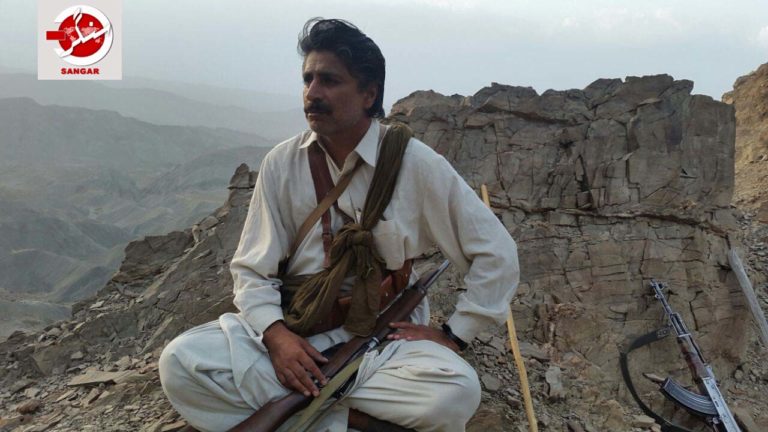
“As a nationalist, I believe that the Kurds will continue to fight for their land and national dignity with or without the USA and international support, but the shameful betrayal of the United States and other Western nations will echo throughout history,” said Dr Allah Nazar Baloch, leader of the pro-independence of Balochistan.

Dr. Allah Nazar Baloch condemned Turkey’s attack on the Kurds in the Syrian-administered areas, saying that the Kurds did not fight for Western arms and aid, rather to defend their national values and soil. “As a nationalist, I believe that without international or US assistance, the Kurds will continue to fight for their land and national dignity, but history will know the US and other Western countries as indebted to the Kurds,” he said.

Dr. Allah Nazar said that the Turks are an aggressive force and the Kurds are fighting to defend their land and values. When states like Iraq and Syria were disintegrating against ISIS, it was the Kurds who went ahead and repulsed ISIS by sacrificing their eleven thousand sons and daughters. They played an undeniable role in protecting the world.

The Kurdish mainland may also have been influenced by ISIS, because in terms of the balance of power and backing of some countries, ISIS was stronger than the Kurds in all respects. It was the powerful spirit of nationalism that defeated ISIS and proudly maintained humanity and human dignity in that area.

Elaborating further, Dr. Allah Nazar Baloch said: “I do not consider the Kurds as a coalition of West in the Middle East but the vanguard of human dignity and nationalism.” He added that the Kurds are fighting against the axis of evil including Turkey and their ideology of Daesh to safeguard human dignity.

When the West was helpless in front of ISIS, the Kurds fought a historic battle and defeated ISIS. Had the Kurds not had a strong frontline based on human rights, liberty and respect for humanity in the Middle East, the religious terrorists of ISIS would have not only engulfed the Middle East but all of mankind could have been at their mercy of ISIS and suffered in some way, he explained.

Dr. Nazar Baloch said that the world powers, including the United States, should immediately review their policies regarding the Kurds. If the United States left the Kurds alone, it would certainly hurt the Kurds but this brave nation will continue to face any aggression, including Turkey, but most of all it will be a greater loss for world peace and humanity. Thus the whole of humanity will have to suffer its consequences. Nationalists and freedom-seeking forces throughout the world would now think a thousand times before they become part of any alliance with the US and the West against terrorism.

He said the ban on sale of weapons to Turkey by some European countries is a good development but it is insufficient. Despite continued reservations and links to ISIS, soft conduct towards Turkey will lead to further complications in the future. Support for the sale and transportation of ISIS oil by close family members of Turkish President Tayyib Erdogan has become a global media buzz, but the reaction from global powers has been null. This has only emboldened Turkey in its recent attack on Kurdish populations. Over the last five days, thousands have been displaced and hundreds have been killed and injured. Although Turkey’s hatred and revenge against the Kurds is not new, as a major nation of the world, they (Kurds) have every right to statehood in accordance with global principles and this will also further guarantee peace in the region.

The Baloch Pro-Independence leader said that Pakistan’s support for Turkey’s aggression is not surprising as both countries have a historical kinship in adopting and supporting religious extremism along with occupying and subjugating other nations with complete disregard for human lives. They both had always been in bed with Islamic fanatics and extremists. Turkey is the backbone of a global terrorist organization like ISIS and Pakistan is the creator and current facilitator of various religious fanatic terrorist organizations. The world powers must take immediate and drastic actions against such countries instead of facilitating their crimes.

This news was first published in Sangar Publication.

With 2,000 crore investment Flipkart to set up unit for food retail in India

E-commerce giant Flipkart has announced the setting up a new local entity – Flipkart Farmermart – that will focus on food retail in India, as it looks to take on arch-rival Amazon in the segment.

According to sources, Flipkart is expected to invest about Rs 2,000 crore initially in the business and pump in more funds as required as it scales up supply chain, storage and logistics.

“In line with the Government of India’s FDI policy, which allows 100 per cent foreign direct investment (FDI) in food retail for food produced and manufactured in India, Flipkart is applying for appropriate licenses from the government,” Flipkart Group CEO Kalyan Krishnamurthy said in a statement.

This newly registered local entity ‘Flipkart Farmermart’ will focus on food retail and is an important part of the company’s efforts to boost Indian agriculture as well as food processing industry in the country, he added.

“We’ve secured all internal approvals for the same already. We’re looking forward to invest more deeply in local agri ecosystem, supply chain and working with lakhs of small farmers, Farmer Producers Organisations (FPOs), food processing industry in India, helping multiply farmers’ income and bring affordable, quality food for millions of customers across the country,” Krishnamurthy said.

The company did not comment on the investments planned for the new venture.

Interestingly, Amazon had received the government’s nod for its USD 500 million investment proposal for retailing of food products in India in 2017. The American retailer – through Amazon Retail India – now procures and sells grocery items like packaged foods, cooking and other items.

Grocery segment accounts for a significant portion of the unorganised retail segment in the country. Estimates suggest the market to be worth about USD 200 billion in India.

Over the last few years, players like BigBasket and Grofers have expanded their presence in the online grocery segment in the country as people became comfortable buying even milk and bread online. Flipkart and Amazon are also betting heavily on the online grocery segment that is projected to witness a strong growth over the next few years in India.

According to a report by Franchise India, the online grocery market is expected to be Rs 2.7 billion market by 2018-19. One of the sources privy to the development said, Flipkart – through Flipkart Farmermart is looking at operating a full-fledged food retail business that will operate in the online space.

Flipkart will also look at cashing in on Walmart’s expertise in the food retail segment that accounts for a major chunk of the American firm. Walmart already runs a cash-and-carry business in India and has partnerships with farmers in the country.

Massive wildfire chocks Lebanon and Syria

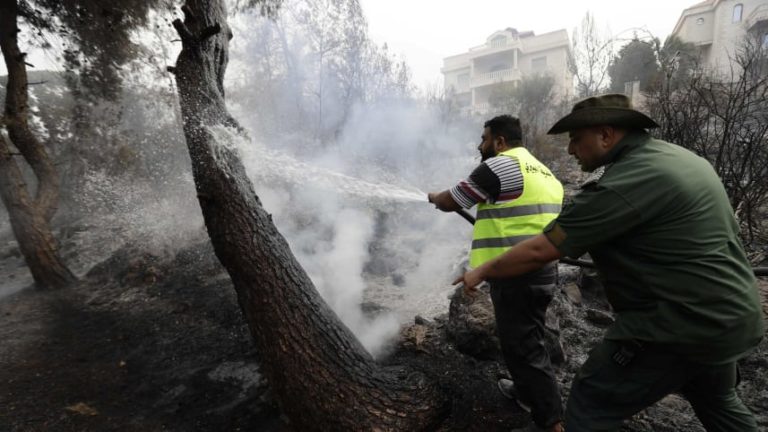
Strong fires spread in different parts of Lebanon forcing some residents to flee their homes in the middle of the night as the flames reached residential areas in villages south of Beirut. A heat wave hitting the region and strong winds helped intensify the fires in pine forests around Lebanon and three provinces in neighboring Syria.

Fire engines were overwhelmed by the flames in the Mount Lebanon region early Tuesday, forcing the Interior Ministry to send riot police engines equipped with water cannons to help. Two small aircraft were sent from the nearby Mediterranean island of Cyprus and are helping in putting out the fires.

The state has been widely criticized by residents because Lebanon bought three aircraft several years ago to be used in extinguishing fires but they have been parked at Beirut’s airport with no money to maintain them.

Lebanon’s Prime Minister Saad Hariri said that if the fires turn out to be intentional those behind it “will pay a price.

To connect smaller towns Indian Railways launches ‘Sewa Service’ Trains

Indian Railways has launched 09 ‘Sewa Service’ Trains to connect smaller towns around major cities.  These services were launched by the Minister of Railways and Commerce & Industry Piyush Goyal along with Minister for Health and Family Welfare, Science and Technology and Earth Sciences, Dr. Harsh Vardhan and Minister of Petroleum & Natural Gas and Steel, Dharmendra Pradhan, from New Delhi by inaugurating Delhi-Shamli passenger train. Other trains were flagged off through video-conferencing connected to the terminal stations where these trains are to start. Minister of State of Railways, Suresh C. Angadi, MP, Lok Sabha, MeenakshiLekhi and other dignitaries were also present on the occasion. These nine trains are:

Vadnagar – Mahesana DEMU (6 days a week) – Gujarat

Asarva  –Himmatnagar DEMU (6 days a week)- Gujarat

Karur – Salem DEMU (6 days a week)- Tamil Nadu

Coimbatore – Pollachi Passenger (6 days a week)- Tamil Nadu

Coimbatore – Palani Passenger (Daily)- Tamil Nadu

Yesvantpur – Tumkur DEMU (6 days a week) – Karnataka

Murkongselek – Dibrugarh Passenger (Daily) – Assam

Bhubaneswar – Nayagarh Express (Daily) – Assam

Delhi – Shamli Passenger (Daily)

Of 09 ‘Sewa Service’ trains in eight states, four trains will run on a daily basis and other five, 6 days a week.

Speaking on the occasion, Minister of Railways and Commerce & Industry, PiyushGoyal said, these trains will provide connectivity to the far-flung areas where stoppages of premiere trains was not possible. These trains will act as link trains to serve the common man of the country. The Minister recalled the connect of Mahatma Gandhi to the Railways.  Remembering Dr. APJ Abdul Kalam, on the occasion of his birth anniversary today, Goyal said that the former President during his childhood in Rameswaram had memorable experience with Indian Railways.

Goyal pointed out that it is a unique concept to start these 09 Sewa trains with layover/ spare rakes as a part of ‘sweating of assets’ initiative by the Indian Railways.  This was part of strategies of Indian Railways to have better utilization of the rolling stock without any requisition for new rolling stock. He further added that Railways has taken transformational steps like Cleanliness campaign in Railway premises across the country, Wi-Fi facility at 5000 Railway stations, Installation of Bio toilets in coaches to clean the tracks, Ayushmann Bharat facility in Railway hospitals across the country.

These trains will run on the “Hub and Spoke” Model, thereby facilitating passengers to use these trains to reach the “Hub” for availing onward journey to other major stations. Indian Railways plans to run more trains on similar model to serve the passengers of smaller towns and cities. These measures are also expected to boost the earnings of the Indian Railways to help in strengthening the economy.

Philosophical and Historical Foundations of American Secularism 6 – African-American History/Black History is American History

Dr. Herb Silverman is the Founder of the Secular Coalition for America, the Founder of the Secular Humanists of the Lowcountry, and the Founder of the Atheist/Humanist Alliance student group at the College of Charleston. He authored Complex variables (1975), Candidate Without a Prayer: An Autobiography of a Jewish Atheist in the Bible Belt (2012) and An Atheist Stranger in a Strange Religious Land: Selected Writings from the Bible Belt (2017). He co-authored The Fundamentals of Extremism: The Christian Right in America (2003) with Kimberley Blaker and Edward S. Buckner, Complex Variables with Applications (2007) with Saminathan Ponnusamy, and Short Reflections on Secularism (2019).

Here we talk about African-American and American History.

Scott Douglas Jacobsen: African-American history, akin to the creation of Native American history after the creation of The United States of America, is American history. Certainly, as far as I can tell, it is a distinct facet of American history, making American history a pluralistic affair. Nonetheless, as we covered some of the Native American pre-American and American history in the US, let’s cover some African-American secular history. 

Certainly, we can see several prominent and respected black freethinkers in the United States tackling on-the-grounds issues and others now. They did not emerge out of the aether. What is the history of freethought in America? How did some of this link to other freethought movements in America? Who were the important players? How did these individuals provide a context in which the African-American community could free themselves from the shackles of fundamentalist ideologies? At the same time, how did the church give some refuge for them?

Dr. Herb Silverman: I should first acknowledge some positives for African-American churches. Aside from giving people hope, they have often been a center for civil rights activism and a place that blacks could gather in large numbers without being harassed. I live in Charleston, South Carolina, just three blocks from Mother Emmanuel AME church, now internationally known because nine African Americans were murdered there by white nationalist Dylann Roof. This church was once a secret meeting place for African-Americans who wanted to end slavery at a time when laws in Charleston banned all-black church gatherings.

Some slaveowners and white Christian ministers in the nineteenth century read biblical verses to slaves as part of the worship services they allowed them to attend. They wanted to show that the Bible condones and supports slavery. The biblical curse of Ham (Genesis 9:25), one of the sons of Noah, was for Ham to be a servant to his brothers. This curse was used to justify slavery of black Americans on the ground that black Americans were descendants of Ham.

Other biblical justifications for slavery and why slaves should obey their masters include:

(1 Peter 2:18) Slaves, submit yourselves to your masters with all respect, not only to those who are good and considerate, but also to those who are harsh.

(Ephesians 6:5) Slaves, obey your earthly masters with respect and fear, and sincerity of heart, just as you would Christ.

(Colossians 3:22) Slaves, obey your earthly masters in everything; and do it, not only when their eye is on you and to win their favor, but with sincerity of heart and reverence for the Lord.

(Titus 2:9) Teach slaves to be subject to their masters in everything, to try to please them, not to talk back to them.

And here’s how they thought they were showing mercy to slaves, because of possible punishment to the slave owner: (Exodus 21:20-21) When a man strikes his male or female slave with a rod so hard that the slave dies under his hand, he shall be punished.  If, however, the slave survives for a day or two, he is not to be punished, since the slave is his own property. 

The experience of slavery and the degradations of proslavery Christians led some enslaved blacks to varieties of unbelief. The most influential African American at that time was Frederick Douglass, who devoted his time, talent, and boundless energy to ending slavery and gaining equal rights for African Americans. After escaping from slavery in Maryland, he became a national leader of the abolitionist movement in Massachusetts and New York, noted for his oratoryand incisive antislavery writings. He was described by abolitionists as a living counter-example to arguments of slaveholders that slaves lacked the intellectual capacity to function as independent American citizens.

Of his escape from slavery, Douglass said, “I prayed for twenty years but received no answer until I prayed with my legs.” He said of pro-slavery Christian clergymen: “Welcome infidelity! Welcome atheism! Welcome anything! In preference to the gospel as preached by those divines! They convert the very name of religion into a barbarous cruelty.”

Frederick Douglass was a good friend of the agnostic orator Robert Green Ingersoll. Douglass once remarked that Ingersoll and Abraham Lincoln were the only white men in whose company “he could be without feeling he was regarded as inferior to them.”

Believing that all people are equal, Douglass supported the women’s suffrage movement in addition to black emancipation. In 1848, he spoke at the Woman’s Rights Convention in Seneca Falls, New York, which sparked the nineteenth-century woman’s suffrage movement. Douglass was the only male to speak at the convention, drawing parallels between black men and American women as equally disenfranchised. 

Here are a few other African American leaders who were also freethinkers:

W. E. B. Du Bois was a historian, civil rights activist, and a founder of the NAACP.  His books include The Souls of Black Folk and Black Reconstruction in America. When he became head of the department at historically black Atlanta University in Georgia, the engagement was held up because he refused to lead a prayer. He also said, “I refused to join any church or sign any church creed.”

James Baldwin was an American novelist, playwright, and activist. He described himself as not religious. Baldwin accused Christianity of “reinforcing the system of American slavery by palliating the pangs of oppression and delaying salvation until a promised afterlife.” He wrote, “If the concept of God has any use, it is to make us larger, freer, and more loving. If God can’t do that, it’s time we got rid of him.” 

Yosef Ben-Jochannan was an American writer and historian, author of 49 books. He said, “The churches can’t help the people when the chips are down because their interest is with the power structure.” He added, “The black man has called upon Jesus Christ for so many years in America, and now he starts calling on Mohammed, and there are many who are calling on Moses, and in no time within this period has the black man’s situation changed, nor has the black man any freedom. It is obvious that someone didn’t hear his call or isn’t interested in that call, either Jesus, Mohammad, or Moses.”

Alice Walker, civil rights activist and author of The Color Purple, said, “The only reason you want to go to heaven is that you have been driven out of your mind and off your land.”  She also said, “All people deserve to worship a God who also worships them. A God that made them, and likes them. That is why Nature, Mother Earth, is such a good choice. Never will Nature require that you cut off some part of your body to please It; never will Mother Earth find anything wrong with your natural way.”

Actress Butterfly McQueen, who played an enslaved maidservant in Gone with the Wind, was an atheist, saying in 1989, “As my ancestors are free from slavery, I am free from the slavery of religion.”

Though Martin Luther King, Jr. was religious, he advocated for the separation of religion and government, and supported the Supreme Court’s decision to prohibit government-sponsored prayer in public schools. He also said, “I would be the last to condemn the thousands of sincere and dedicated people outside the churches who have labored unselfishly through various humanitarian movements to cure the world of social evils, for I would rather a man be a committed humanist than an uncommitted Christian.”

Bayard Rustin, who helped organize freedom rides, the Southern Christian Leadership Conference, and King’s March on Washington for Jobs and Freedom, was an atheist. So was A. Philip Randolph, who also helped organize the March on Washington, where King gave his “I have a dream” speech. Randolph said, “We consider prayer as nothing more than a fervent wish; consequently, the merit and worth of a prayer depend upon what the fervent wish is.”

Other black freethinkers who also played significant roles in the Civil Rights movement include leaders James Forman, Eldridge Cleaver, and Stokely Carmichael, all of whom rejected Christianity.

Anthony Pinn is the author/editor of over 30 books, including numerous volumes related to African American humanism. He received the 1999 African American Humanist Award from the Council for Secular Humanism and the 2006 award for Harvard University Humanist Chaplaincy Humanist of the Year.

And, of course, there is Neal deGrasse Tyson, well-known astrophysicist and science popularizer. He calls himself an agnostic, and said, “There is no common ground between science and religion. Religion only starts where scientific knowledge ends.”.

In 1989, Norm Allen Jr. founded African Americans for Humanism, the first explicitly secular organization for blacks. Then came Black Atheists of America and Black Nonbelievers Inc., as well as local groups such as Black Skeptics of Los Angeles. Black atheists today are not content to personally reject religion, but instead have a goal of spreading freethought to the broader black community. For example, author Sikivu Hutchinson and Mandisa Thomas, founder of Black Nonbelievers, argue that religion hurts the black community by promoting sexism, patriarchy, and homophobia.

In addition to denying the existence of God, encouraging the teaching of evolution in schools and fighting for the separation of church and state, black atheists want to find solutions to practical problems. Many have embraced Black Lives Matter, a secular movement unaffiliated with black religious institutions and ideology. They look for ways to improve the situation for blacks, and also to promote a more just, democratic, and less racist American society.

Jacobsen: Thank you for the opportunity and your time, Dr. Silverman.

Photo by Thomas Kelley on Unsplash

India to invest $60 billion for gas infrastructure development

India has set its eyes on increasing the share of natural gas in its energy base to 15% by 2030 and in order to realise this target an investment of around $60 billion will be done towards developing the required infrastructure to facilitate gas supply and distribution.

At present natural gas comprises 6.2% of the country’s energy consumption.

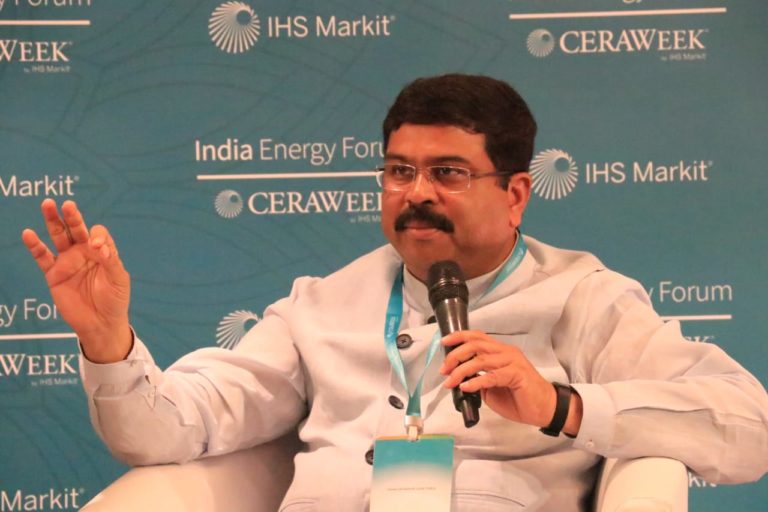
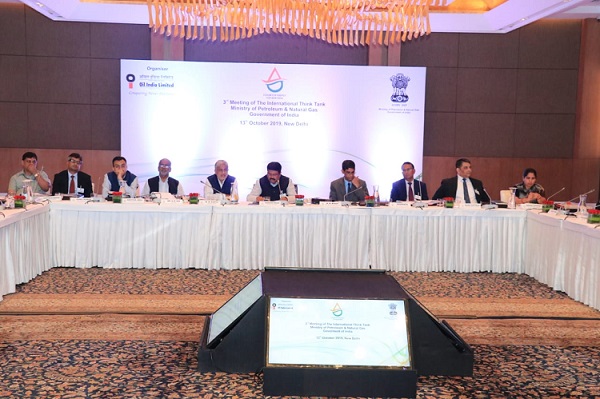
Speaking at the third International Think Tank Meeting (ITT), oil minister Dharmendra Pradhan, said that global challenges and uncertainties could have “enormous impact on India’s energy security” and also the “economic, budgetary and investment dimensions.”

“Natural gas, gradually but surely, becoming a bridging fuel for low carbon economy in India,” Pradhan said, adding that the government is giving special impetus to develop gas infrastructure across the country.

He underlined the importance of the private sector–both domestic and global—in bringing investments with necessary innovations for future energy landscape of the country.

Global oil markets have remained volatile with US sanctions on Iran and Venezuela besides the recent attacks on Saudi oil processing units and unrest in the Middle East. Iraq, Saudi Arabia and Iran are the top suppliers of crude oil to India. Besides these three, UAE and Venezuela have also supplied a large chunk of crude to India. The US-China trade war has also added to the problem.

India’s domestic oil production has also slowed down in the last five years. From 37.5 million metric tonnes (MMT) that India produced in 2014-15, production fell to 35.7 (MMT) in 2017-18.

India imports over 84% of its total need for crude oil and 45% of natural gas.

“Going forward, it is expected to increase further. Such excessive import dependency does make us vulnerable to external developments more than ever before,” Pradhan said.

He added that the hydrocarbon sector was under enormous scrutiny for ‘sustainable’ aspects. “The associated challenges of COP (Conference of the Parties) 21 commitments, improving air quality etc., are to be borne in mind,” Pradhan said.

New Delhi also aims to provide piped gas to over 1 crore households as part of its overall efforts to increase the share of natural gas in the total energy base.

“The City Gas Distribution network development in India is going to cover half of India’s geography and would serve 70% of India’s population through availability of low carbon and cheap natural gas,” the minister pointed out.

Post UNGA, can Imran Khan fly with his clipped wings?

“The Modi-led Bharatiya Janata Party is bent upon turning India into a Hindu state and taking on any enemy in line with the fables of the Mahabharata. We need to watch out for this thinly-veiled, religion-based, Hindu-nationalism inspired, Hindutva-centred animosity towards Muslims and other minorities,” says Inam ul Haq, a noted Pakistani journalist.

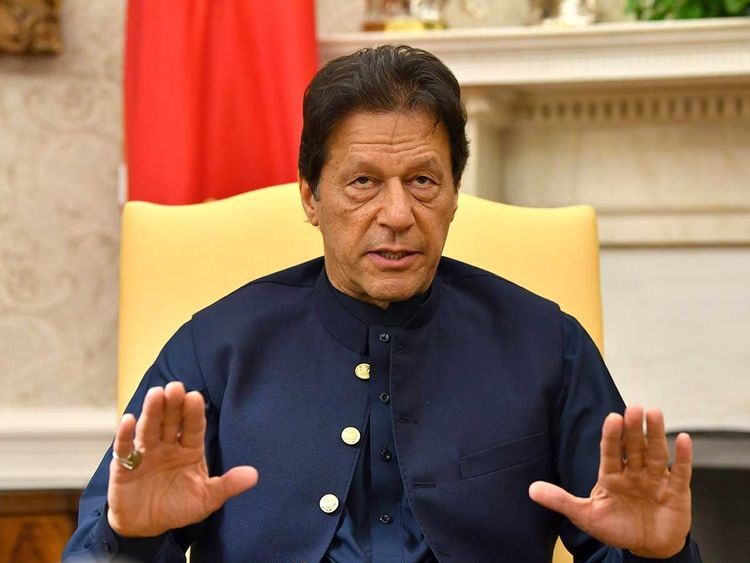
It’s the thought process of this nature, supplemented by a huge media campaign orchestrated by the Pakistan Army to whip up anti-India rhetoric post reorganisation of the Indian state of Jammu and Kashmir that played a crucial role in formulation of the disastrous speech by Prime Minister Imran Khan in the United Nations General Assembly (UNGA). To add to Pakistan’humiliation, he parroted the same lines word to word in all avenues where he got a chance to speak.

The diplomatic faux pas’ has been most aptly summarised by Aneela Shazad, another noted Pakistani journalist. “The Prime Minister has become the first contemporary Muslim leader to exalt the cult of Jihad that had acted at the personal or syndicate level, and was akin to the Kharijite concept and alleged to be terrorism – of the wider and credible meaning of Jihad that is performed under a legitimate state authority,” she says. “Has he not been too swift in going from an “ambassador of Kashmir” to a war-fanatic?” she further queries.

In comparison, Prime Minister Narendra Modi, while in the United States, set out a wide agenda of strengthening global alliances, building bonds and placing his country in its rightful position within the comity of nations. The “Howdy, Modi” rally in Houston attended by US President Donald Trump was indicative of the strong position that India, under Prime Minister Modi, enjoys at the world level today. 

The difference of approach between India and Pakistan is so palpable. For India, Kashmir is an internal issue; Prime Minister Narendra Modi made only a passing reference during his entire visit. The entire world has, by and large, accepted India’s position on the matter. Pakistan, on the other hand, attempted to force its own narrative on Kashmir to the world, but found no takers for the same.

Thus, the two prime ministers, Narendra Modi and Imran Khan, have had different takeaways from the diplomatic carnival in New York. While Prime Minister Narendra Modi approached events with the confidence of a world leader who has all to gain and nothing to lose, Prime Mister Imran Khan was there with an agenda that was lost from the word go.

Now, the stunned Pakistan Army is feeling helpless due to complete absence of support from the international leadership on their policy on Kashmir. Their attempts to escalate violence threshold in Kashmir by enhanced ceasefire violations and pushing of terrorists have also come to a naught. The violent reaction by local Kashmiris’ that could have given to Pakistan the leverage to move international and domestic opinion has also not been forthcoming.

It is also notable here that even after becoming prime minister, Imran Khan is viewed as a novice in politics by the well entrenched political establishment of the country, he has failed to garner even minimum acceptance as a leader from the parliamentarians in Pakistan, let alone a universal recognition. In Pakistan, their Army has a complete say in choosing the Prime Minister and it is, quite naturally, on the lookout for a fall guy. Any prime minister facing revolt or protest is usually side lined by the Pakistan Army. It is, therefore, no wonder that Imran Khan, within one year of becoming prime minister finds himself in political wilderness with the proverbial “Sword of Damocles” hanging over his head. The talk of an ignominious ouster at the hands of the very Army that propelled him into the position has gained momentum the minute he returned from the US.

The danger seems to have gone down a bit but the Pakistan Army is definitely getting into the driver’s seat more and more. During his recent visit to China, Imran Khan, was accompanied by the Army Chief, General Qamar Bajwa, who was present in all meetings with the top Chinese hierarchy including the Chinese President and Prime Minister.

The visit to China was to save the tottering China Pakistan Economic Corridor (CPEC) and also to convince China to stand by Pakistan on the Kashmir issue. “They are again falling back on China to handle the Kashmir issue after the US and other countries refrained from openly supporting Pakistan and putting pressure on India,” says the Gulf News while quoting an unnamed diplomat. It looks as if the Pakistan Army Chief does not have much faith in his own boss.

On the economic front, the Financial Action Task Force’s (FATF) “Grey listing” is a ghost that simply refuses to go away. In a desperate bid to curry favour ahead of the crucial plenary meeting of the Paris-based watchdog scheduled to be held in Paris from October 12 to October 15, Pakistan’s law enforcement agencies have arrested the “top four leaders” of the banned LeT/JuD and close aides of Hafiz Saeed on charges of terrorism financing.

Clearly, Imran Khan has much more to contend with than Kashmir. The very critical economic situation of the country, disaffection in all other provinces except Punjab, worries about CPEC and China and the tenuous political situation are haunting him. In real terms, these aspects are challenging the very existence of Pakistan and his too, while Kashmir is an abstract narrative.

The only way Imran Khan can face up to this challenge is by adopting an approach that looks more to internal issues than the external environment. By doing so he can shed the Army off his back and attain the stature of a tall leader concerned about his people more than anything else. He needs to shed his preoccupation with Kashmir and understand as to where his priorities should lie. If he does so he may still be able to fly notwithstanding the clipped wings.  

Rejig the whole tax structure to boost demand, not just Corporate Tax

Rising costs led by an increase in bank, power and fuel charges; high taxes and loss of jobs have led to a fall in demand and this needs to be addressed immediately. It is an induced inflation, whatever the indices might say, amid perceptible slowdown. Commodity prices are rising, incomes are falling and policies like the new Motor Vehicle (MV) Act, atrocious banking policies and transport tariff– whatever the officials may say — are adding to the problem.

The rising power charges in states like Uttar Pradesh (UP) are causing price rise and slowdown, even in agriculture.

The Non-Banking Financial Companies (NBFCs), which are the key lenders to the micro small and medium enterprises (MSME) are in the middle of a severe cash crunch owing to a massive loan default by the road toll collectors of IL&FS. Officially it lost Rs 91,000 crore in 2018. This, in turn, has dealt a huge blow to the micro-financing institutions.

Now, the virtual closure of the Punjab & Maharashtra Co-operative (PMC) Bank exposes the threat in co-operative sector as well. The modus operandi is almost similar to that of IL&FS.

The latest Asian Development Bank (ADB) assessment has further brought down its projections for India’s economic growth rate. From a 7% estimate, it has brought down the growth estimates to 6.5% for the current financial year.

During the April to June quarter of this financial year, GDP growth rate touched 5% — lowest in six years.

Prime Minister Narendra Modi is trying his best to lure investors. In his recent tour to the US, he met several American CEOs and other leaders to boost investments. One needs to understand that these measures will take time to get translated in action.

Even the country’s richest are melting, according to Hurun India Rich List 2019, their cumulative wealth dropped by Rs 3,72, 800 crore. It says 344 individuals or almost third witnessed wealth reduction and another 112 could not meet the cut-off of Rs 1,000 crore, about half of last year.

The list indicates tough competition among the rich as also that they are hit by the slowdown.

In short, the slowdown is more encompassing.

Finance minister Nirmala Sitharaman, despite defending policies finally agreed to reduce corporate tax rates to 25.17% from an effective 35%.

It is a welcome move but has come a bit too late.

Overall the Indian corporate sector had been paying 48.3% taxes, according to OECD, including tax on dividends it pays to its shareholders, who also pay another tax on it. It’s tax on tax and it continues.

The problem is individuals falling in the high income group still have the highest rate of tax at about 42.5%. With other indirect taxes including the Goods and Services Tax, an individual pays over 70% of their income as taxes. Could the economy do better with less than 30% of earnings citizens are left with?

Atrocious tolls, parking charges, passenger taxes add to the woes. There are also extortions on the road – it is by the insurgents in Nagaland and some other North-Eastern states or “suvidha shulk” by law enforcing authorities in other places. Somewhere the country is unable to understand its economics. The government expenditures increase and business gasps for its inability to recover the basic cost.

Despite easing of norms, no poor can dare do a simple business unless he can create the warmth for the law enforcers – municipal, panchayat or state. This is despite efforts by Modi to root it out. The sufferers says that his stringency has only led to rise in rates as “risk for perpetrators grow”. Even the corporate or even small businesses or educational institutions are not free from it.

Naturally the crisis continues. The latest RBI annual report 2018-19 (FY 19) confirms the difficult path. The supposed relief of Rs 1.45 lakh crore that the government received from Reserve Bank of India is mere academics.

The collapse of industries such as automobile, textile and diamond with a lack-lustre performance by the IT sector, rising non-performing assets (NPAs), tightening of banking charges and norms, failing manufacturing sector and sluggish consumer demand leads to deceleration. As eight core sector growth slowed, wage losses have become more pronounced.

In short, there is cash crunch. It is affecting the rural, farm and wholesale sectors. The forced government rules of transacting through banks is delaying deals and adding to the cash crunch.

India has not learnt from either the European or the US sub-prime crash of 2007-8.

The Indian system needs cash lubrication, which in the wake of demonetization has been drying up. Shubhada Rao, chief economist of Yes Bank recently said that people need to have cash for the supply-side changes to yield benefits. She noted that the spree of job losses along with high unemployment has led to the fall in demand. This is the key reason for the current economic slowdown.

Expecting demand to pick up in such a scenario is a wishful thinking.

A cocktail of short and long-term measures are critical at this stage to boost demand pick-up. The mix has to include easing of taxes as also a detailed discussion with all stakeholders, including members of the opposition parties and the common man. The opposition party members too need to be more responsible and mere government bashing would not do.

The NITI Aayog has to take a lead in generating new thoughts and formulate a people-oriented policy. It is important to include more and more people from the industry to not only reflect the problems but also for revival prescription.

Yes, it is a tough situation but then with right policy measures it has to be revived. Deliberations followed by well-thought out policy measures will put things back on track. It is not too late.

(The opinion expressed in this article is that of the writer and does not reflect the policies of News Intervention)

PMC Bank scam is indication of the systemic rot in India’s financial sector

The scam in PMC Bank is not the first and will definitely not be last, unless issues plaguing the banking sector are addressed. This article spells out dynamic prescriptions for safeguarding our banks’ resources and grievance redressal.

Background

PMC (Punjab and Maharashtra Co-operative Bank) was founded in 1984, and has grown into a multi-state bank with over 137 Branches and a deposit base of Rs 11,600 crores and reported advances of Rs 8,383 crores as on 31st March 2019.

On the fateful morning of 23rd September 2019, account holders of this mid-sized, Mumbai head-quartered Co-operative Bank –- which has no previous history of serious default, no strictures passed by RBI or Government -– hit the headlines for all wrong reasons. Newspapers reported on their front page that RBI had placed operating restrictions on PMC Bank for a period of six months, but allowed it to remain functional.  Payment transactions by account holders were restricted to a mere Rs 1,000, later enhanced to Rs 25,000 in a phased manner. Barring this concession, money of all depositors and account holders stand entirely inaccessible to them until further notice.

Needless to say, this has resulted in grave hardship to account holders. There was the usual public outrage, media coverage, even threats of suicide by grief-stricken individuals. As expected, electronic messages of assurance by PMC Bank officials that their money was safe was sent to all concerned, notably sent by its erstwhile Managing Director, Joy Thomas – a wily, reticent long timer with PMC.

Joy Thomas, former Managing Director of PMC Bank. He has now been suspended. (File Photo)

The days that followed unravelled the grave crisis, initially brushed aside and played down by RBI as “nothing serious”. 

Positives of PMC: One of India’s top Urban Co-operative Bank

PMC Bank has been a compact, useful, service-minded institution, with a young and competent workforce, whose employment must be safeguarded at any cost. The Bank has moved with the times in terms of progressing towards electronic banking and value-added services, which match the best that PSU (Public Sector Undertaking) and large private banks provide. The staff are known to be efficient, friendly, helpful and service minded. 

There is always a functionally advantageous role for such co-operative banks pan-India, bridging as they do, the gap between shadow banking and the large PSU and private banks. The sad act of wrong-doing by a few dishonest people does not – and must not – undermine the valuable role of such banks in a progressive and growing economic environment.

Event and Scale of Damage in this scam

The direct loss resulting from the HDIL (Housing Development and Infrastructure Limited) linked fraud is presently placed at Rs 4,355 crores but it could be higher. The value of loss of PMC Bank’s reputation assiduously built over 35 years is hard to estimate and not easy to rebuild; the agony and inconvenience to customers whose money is blocked is incalculable. The uncertainty over their future employment looming large over the dedicated bank staff is bound to take its toll on them.

The Deeper Malaise

The simple prima facie diagnosis is that the top management of the PMC Bank discovered various systemic loopholes in the working of the bank and exploited them to the advantage of a select group of large and  unethical customers, and in turn, to their own.

The Board of any organisation is mandated to ensure that all major decisions concerning the conduct of business are taken collectively by the elected Directors with care and responsibility, thus precluding the likelihood of ad hoc decisions by those vested with operational powers to misuse them.  This role has, sadly, been compromised.

Who are to be held responsible and brought to Justice

Evidently, the scheming masterminds and abettors of the damage include–

  • the active Board Members led by the now infamous Chairman and his complicit Directors for their direct role in scheming to defraud their own  PMC Bank and its depositors
  •  the wily Managing Director for his skilful, clandestine criminal role to systematically defraud the PMC Bank wilfully over a prolonged period of 6-7 years as admitted by him in writing to the RBI
  •  the senior executives of the PMC Bank for their support role to carry out and fulfil the unlawful directions of the above Directors
  •  the management and senior staff of beneficiary organisations, most importantly HDIL (Housing Development and Infrastructure Ltd) — for their direct role in collaborating with the Directors of the PMC Bank to defraud PMC and its depositors
  • The Inspectors and other concerned officials of RBI responsible for periodic audit and statutory reporting of the PMC Bank’s performance supported by key records, for their complicity and for not promptly alerting RBI of serious discrepancies noticed during their audit
  • The statutory and concurrent Auditors of the PMC Bank — as well as of the HDIL — for their collusive role in certifying false annual accounts, consistently year after year
  • The Independent Directors (if any) of the PMC Bank – as well as of the HDIL — for their apparent abetment and not discharging their duties as whistle-blowers
  • The working level PMC Bank staff (to a lesser extent) who chose to remain silent and not discreetly report (to RBI) the fraud-in-progress perpetrated by the MD and other executives over a period of several years, and for their support role in opening and operationalising nearly 21,500 bogus accounts discarding all stipulated norms of KYC (Know Your Customer) etc.  How they managed to systematically generate, collate and aggregate the names, addresses, ID proof, address proof, phone numbers, PAN Cards, photographs, signatures, other supporting documents of such a staggering number of people and commercial entities -– followed by covert operation of such accounts and maintaining secrecy over long periods of time, maintaining a holy facade all along, beats one’s imagination. Their exemplary “team-work” in this devious achievement truly deserves “praise” and even a mention in the Guinness Book of Records (pun intended).

Urgent Corrective Measures and Future Safeguards Recommended for ALL Banks – Co-operative or otherwise

The recent statement issued soon after the event by Mr Shaktikanta Das, Governor, RBI on PMC Bank, in which he states with unwarranted bravado that “Banking System, including Co-operatives safe, sound” is indeed incorrect and unfortunate.  There is great and urgent need for improving governance systems of our banks and financial institutions which are undeniably vulnerable and constantly susceptible to fraud, as later sections of this article validate.  A report in The Economist points towards this malaise.

Reserve Bank of India. (Representational image)

On the ground, the following series of important measures are therefore recommended for urgent and serious action by the Government and RBI, covering ALL Banks and FIs (Financial Institutions). These recommendations lay bare the extant faults, loopholes and weaknesses in our country’s financial systems and regulatory process, and provide the prescriptive ingredients to expeditiously develop a robust regulatory framework henceforth.

  1. RBI should create a new, empowered Oversight Body to closely monitor the performance of all Co-operative Banks, NBFCs (Non-Banking Financial Company) etc. Ensure, Stringent Monitoring of Bank Operations by Independent Entities reporting to the above Body with Quarterly Audit of all Branches and pre-audit of all loans approvals exceeding a defined threshold.
  2. Introduce new set of effective Oversight Systems and Controls. This could include a new cadre of empowered officials above RBI’s Inspectors to ensure the diligent performance of their enshrined duties.
  3. New Corporate Governance Systems needs to be implemented with duly empowered trained, certified and licensed Nominee Directors placed by RBI on the Boards and Committees of Boards of ALL Banks, with annual rotation.
  4. Develop a new system of handsomely rewarding diligent staff who spontaneously report incidents of real fraud-in-progress to RBI via new discreet, no-names basis  reporting mechanism via direct hotline to a designated senior watchdog official in RBI, upon veracity of report being ascertained.
  5. Institute a new Mandatory Annual Asset Disclosure Procedure by all Directors and senior executives of Banks, in new format. All assets of those declared guilty to be appropriated, sold and proceeds applied to pay affected parties, pro rata, from a pool of such realisations.
  6. RBI to utilise PMC Bank’s SRR (Statutory Reserve Requirement) funds to repay depositors and direct the Promoters and Directors of this Bank to recapitalise the Bank or face take-over following IBC (Insolvency and Bankruptcy Code) route.
  7. Name and shame practice to be initiated, and permanently bar all such persons from accessing any Bank or other commercial credit facilities in future. Enhance punitive provisions for RBI officials and CA firms found guilty of collusion is bank frauds, following a fast-track process. RBI should compensate depositors for lapses in their regulatory role in not detecting and forestalling such loss in time by their Inspectors and other concerned officials for evidently side lining laid down Inspection and Reporting (I&R) practices set out in its Manuals.
  8. Amend existing Deposit Insurance Schemes to effectively safeguard depositors with the assurance of expeditiously settlement of claims.  Present relief limit of Rs 1 lakh is insignificant.  The Insurance Premium in this behalf can also be paid in pre-approved proportion by RBI from source recommended at para 15 below.
  9. Fix upper limits for single account / group exposures restricted to less than 3% of Bank’s total Deposit base or Rs 250 /500 crores (in the case of Urban Co-operative Banks), whichever is higher.
  10. Fix well-defined sectoral lending caps, industry-wise, geography-wise, reviewed and reset annually. Curtail discretionary lending powers of Bank officials and Directors.Appoint one nominee Director from among the Bank’s large depositors on the Board to safeguard their interests.
  11. Constant cross verification of all high value transactions, especially instruments of Documentary Credit which value-wise, do not correlate to the borrower’s reported income and GST and IT returns. Documentary credit are letters of credit and bank guarantees and letters of comfort, which have been brazenly misused by people like Nirav Modi and others. Random check of borrower’s books of account to understand end use progression and realisation of revenues resulting from such payments.
  12. Improve loan evaluation process — including hiring outside domain experts to provide their expert professional inputs and unbiased views on each major loan proposal — and strengthen pre-release audit practices.
  13. Enhance internal intelligence system of working of Bank branches and controlling offices to detect and preempt fraud-in-process within the organisation, on any scale. Strengthen Bank’s external intelligence network. Competitors, employees, ex-employees and vendors of borrowers are valuable sources of information concerning covert malpractices which are not available anywhere else.
  14. RBI to prescribe Standard Operating Ratios, monitoring and reporting accuracy and quality  of which would strictly form part of the new role of its Inspectors on quarterly basis.
  15. RBI to apply money held in its custody received by way of penalties collected from various errant Corporates,  Banks and Financial Intuitions each year, and provide a portion of it to aggrieved parties following a phased time-frame and priorities for those who are more troubled than others by the  misdeeds of those in charge. Future profits of the concerned Bank can also be similarly applied.

PMC is not the last Case

Judging by the numerous large-scale and widespread frauds detected in India’s banking and finance sector during the last several years resulting in massive write-offs, it is evident that the rot is very deep in India’s Financial System. Beyond doubt, replication of several PMC-type frauds are already in the making, perhaps on a larger scale.  Yes Bank is a classic example of misuse of bank resources, as their own records acknowledge.  Their shares have lost 96% of recent market value.

A recent report mentions a staggering loss of nearly Rs 32,000 crores in just one quarter of FY 2019-20 collectively in 18 PSU Banks. A total of 2,480 cases of fraud were detected.  Is this a small amount? Isn’t the latest claim by the RBI Governor that “all is well in our banking system” wholly falsified?

Political Parties not responsible for Bank Misconduct

It would be inane to connect the present bank fraud with any political party. Dishonesty, like its twin corruption, is a human weakness inbuilt in the psyche of the vast numbers of unethical people in positions of authority or financial power.  As stated above, frauds of varying magnitude in banks and financial institutions throughout the country have thrived and enlarged since Independence.  Unless prevented via a series of strong deterrent measures, they are very likely to recur.

State Machinery Adequate for Redressal

The State machinery ought to deliver justice within a maximum of six months, following a compressed timeframe using a specially designated fast track court, with day-to-day hearings. 

The State law enforcement and judicial authorities are certainly competent and well-equipped to deal with such relatively small scale and compacts of fraud.

End Note

Acts of unbridled greed are wont to turn aspirations of Joy to lives of unmitigated, enduring Sorrow, which, it is hoped, will be valuable lessons and deterrents for others perhaps busy sketching similar fraudulent actions in other parts of our great motherland.

Finally, PMC as an Institution and the employment of its loyal and trusting employees who helped built the Bank to its leading position it enjoyed must be saved.

The co-operative banking sector must be well supported by the Government, RBI and the public to grow and serve millions of small, micro and medium size customers.

© CSS Rao 2019 All rights reserved.