Home Blog Page 408

Building the women power in Union Territories Jammu-Kashmir and Ladakh

0

“I am confident that the recent changes made in Jammu-Kashmir and Ladakh would be of immense benefit to those regions. They will enable the people to access and enjoy the same rights, same privileges and same facilities as their fellow citizens in the rest of the country,” said President Ram Nath Kovind in the address on the eve of the 73rd Independence Day.

He was referring to the decision taken by the parliament of the country, on 05 August, to modify the provisions of Article 370 and Article 35-A in a manner that would facilitate complete integration of the Jammu & Kashmir state with the Indian Union. The parliament also approved bifurcation of the state into two Union Territories comprising of Jammu-Kashmir and Ladakh respectively.

Among the many benefits listed as an outcome of this monumental decision, women empowerment has been given the maximum significance. It is so because women, under the Constitution of Jammu and Kashmir and due to provisions of Article 35-A, were being denied full-fledged rights to land and property in the state.

To put it simply, such women who were state subjects but married a person who was not a state subject forfeited legal and ancestral rights to their own property in the state. This was because of the definition of a “permanent resident” of Jammu and Kashmir as given Article 35-A of the Constitution.

The legislation passed by the parliament on 05 August, sets aside this proviso and gives to the women of the state who are married and settled in other parts of the country and even abroad full right on their land, and property. They also have the right to transfer their property within and outside their family.

“Today, I am an equal with the men of J&K. Now, my children also are entitled to property. Despite 2002 legislation, there were still problems. This is a historic day that I will forever remember,” said Manu Khajuria, an activist who for long asked the government to amend the gender bias.

The foregoing definitely constitutes good tidings for the women of the state but it addresses only the tip of the iceberg so far as the problems being faced by them are concerned; problems that have accrued due to the turmoil and unmitigated violence that the region has witnessed over the past many decades. 

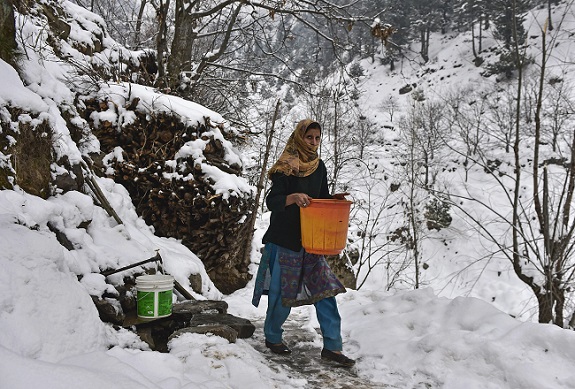
Women, along with their children, are the most vulnerable victims of the environment of foreign sponsored terrorism and militancy; they have witnessed the degeneration of their otherwise enlightened society leading to a perceptible increase in domestic violence, humiliation and harassment. So many women have been widowed due to the terrorist initiated violence, others who were forced to marry the foreign terrorists have been left as “half widows” to fend for themselves and their children.

Education of women and their work potential has also taken a big hit. Whenever there was prolonged turmoil it was the girl student who was removed from school. This further led to the women remaining unemployed and dependent. All of the above has resulted in serious health issues and latent depression among the women.

The Army very well understood the trauma being faced by the women of the state due to the debilitating shadow of terrorism. In response it has given, for more than three decades now, special attention to their needs though the medium of its welfare initiative –Operation Sadbhavna. Women Empowerment Centres, where women are imparted skills like stitching, knitting, making pickles and other canned stuff, computer training etc. are being run by the Army across the state. This apart, women are given special medical treatment in Army medical camps, especially during pregnancy. The Army Schools running across the state provide admission to girl students; young girls are also motivated to actively take part in sports and other cultural activities.

Now, as an outcome of the change in status of J&K, all central schemes for women initiated by the ruling NDA government will be seamlessly applicable in both Union Territories.

The government has already declared women empowerment as a priority area in its overall development plan for the two Union Territories. Benefit and empowerment for women is bound to flow from the flagship schemes like Beti Bachao, Beti Padhao; Sakhi, also known as the One Stop Centre Scheme initiated from the Nirbhaya fund; Swader Greh, for rehabilitation of women; Ujjawala, to stop trafficking and other women centric initiatives being run as part of digital India, Skill India etc. 

While leveraging the aforementioned schemes, the government needs to take a leaf out of the work done by the army in keeping the women of the state in equilibrium during the times of terrible violence and disruption and build up upon the same on priority.

Women safety and security has to be ensured in full measure, along with education, including adult education, skill development and vocational training. The National Rural Health Mission (NRHM) already implemented in the state needs to be given a big impetus so far as women are concerned. Employability of the women needs to be enhanced by giving a boost to the spirit of entrepreneurship through provision of micro credit schemes. Women need to move out to work for which provision of working women hostels is a must. An end has be put to debilitating social practices like early marriage, lack of decision making in family and society affairs that have gaining traction due to the environment of turmoil.

It is time to remove the pain and sorrow that has been heaped upon the women of Jammu and Kashmir due to no fault of theirs. The scars are deep and will take a long time to fill, however, a sincere and sensitive effort will hasten the healing process.  Adversity has given to these courageous women a unique strength which now needs to be leveraged for their early rehabilitation.
National Rural Sanitation Strategy for next decade launched

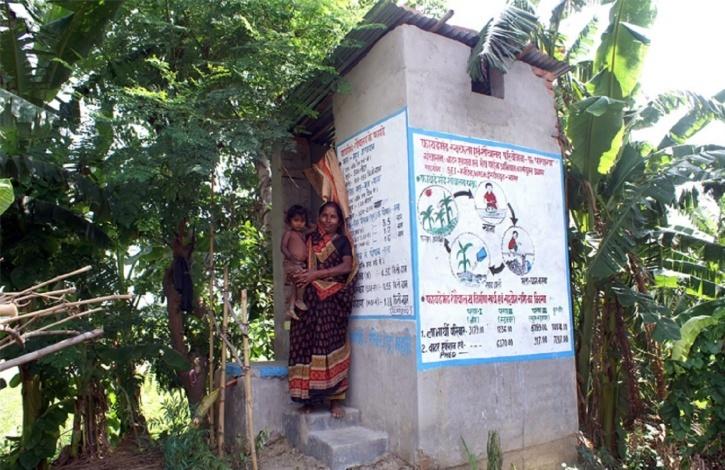
The Department of Drinking Water and Sanitation (DDWS), Ministry of Jal Shakti, GoI has launched the 10 Year Rural Sanitation Strategy (2019-2029), which focus on sustaining the sanitation behavior change that has been achieved under the Swachh Bharat Mission Grameen (SBM-G), ensuring that no one is left behind, and increasing access to solid and liquid waste management.

Since the launch of the SBM-G in 2014, over 10 crore toilets have been built in rural areas; over 5.9 lakh villages, 699 districts, and 35 States/UTs have declared themselves Open Defecation Free (ODF). This strategy has been prepared by DDWS, in consultation with State Governments and other stakeholders, and it lays down a framework to guide local governments, policy makers, implementers and other relevant stakeholders in their planning for ODF Plus, where everyone uses a toilet, and every village has access to solid and liquid waste management.

Gajendra Singh Shekhawat, Union Minister, Jal Shakti Mantralay, launched the strategy and said, “This strategy book is a framework to sustain the efforts of the SBM-G. The country has demonstrated unprecedented progress and all States and Union Territories have declared their rural areas open defecation free (ODF) – a befitting tribute to Mahatma Gandhi on his 150th birth anniversary. I’d like to express my gratitude towards the State Governments for their efforts to achieve this goal. It is because of the SBM-G that India is now an inspiration, in terms of sanitation, for other countries.”

Parameswaran Iyer, Secretary, Department of Drinking Water and Sanitation, said “India has seen a sanitation revolution, and the SBM-G transformed itself into a jan andolan (a people’s movement).The 10 year strategy focuses on the need for States/UTs to continue their efforts to sustain the gains of the mission through capacity strengthening, IEC (Information, education and communication), organic waste management, plastic waste management, grey water management and black water management. ”

The strategy also speaks about potential collaborations with development partners, civil society and inter-government partnerships. It also highlights innovative models for sanitation financing.

Imran Khan and his Kashmir theatrics is driving Pakistan to the edge

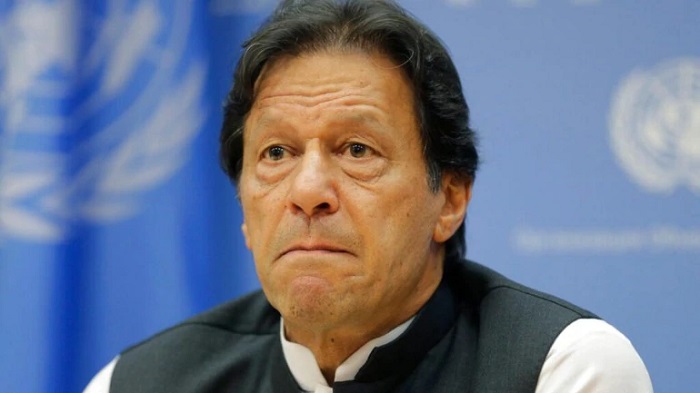
As the world was anxiously waiting to hear Prime Minister Imran Khan “forcefully present Kashmir issue like never before at the UNGA session” he himself seems to have thrown in the towel by saying that that he was “disappointed” by the international community for not pressurizing India on Kashmir. The way things panned-out after Islamabad got a cold shoulder at the UNSC (United Nations Security Council), it’s almost certain that at UNGA (United Nations General Assembly), Khan will not be able to live up to the expectations that he has himself raised. Therefore, one can always empathise with him as well as overlook his attempts to shift blame for his own failure on others as this is a common human phenomenon. But the moment one resorts to allegations that cast unsubstantiated aspersions on all and sundry, it sounds as the whining voice of a sore loser!    

Khan asserts that the international community’s silence on Kashmir is because “People look upon India as a market of 1 billion people” and has philosophised how human values are being compromised by the lure of material gains. While Khan may be right to some extent, but why should this upset him so much? Hasn’t his government done just the same thing by maintaining stoic silence on Beijing’s religious persecution of Muslims Uighurs of Xinjiang? Furthermore, his statement that the world would have reacted with more urgency on the issue of Kashmir had it been a case of eight million Europeans, Jewish people, or Americans being under siege is rather in a poor taste as it is both racial in character and communal in nature.

The reason why no one appears to be agreeing with what Khan has to say on Kashmir is because rather than relying on facts, he is banking solely on rhetoric and skewed interpretation of details. Even the dullest student of civics will tell you that a democratically elected government amending the country’s constitution is purely an internal matter, but Khan thinks otherwise. Unfortunately, despite Islamabad’s abysmal failure to convince the UNSC that revocation of Article 370 violated UNSC resolutions on Kashmir, he continues to believe that his logic-deficit argument on Kashmir will win him the ‘world cup’!

Imran Khan tried to bowl a ‘googly’ by alleging that New Delhi has revoked Article 370 of the Indian constitution for “ensuring that Muslims of India would remain as second-class citizens” and temporary restrictions imposed in Kashmir have been imposed to facilitate “genocide” and “ethnic cleansing.” But since the international community is also watching the situation in Kashmir very closely, it has very valid reasons for disagreeing with Khan’s alarmist views as it was actually a ‘no ball’.

Even the Taliban, which enjoys patronage of the Pakistan Army hit out at an attempt by Pakistan’s opposition leader Shahbaz Sharif when he drew a comparison between Kashmir and Afghanistan in Pakistan’s Parliament. Taliban hit back saying, “Linking the issue of Kashmir with that of Afghanistan by some parties will not aid in improving the crisis at hand because the issue of Afghanistan is not related (to Kashmir).” So, while Khan may feel that the international community is prejudiced and not fulfilling its moral responsibility, he should consider himself lucky that it hasn’t censured him for inciting pan-Islamism ideology by saying “People will rise against India (for abrogating Article 370), and it is not just about Indian Muslims, there are 1.25 billion Muslims around the world. They all are watching this.”

On September 27, while Khan is going to “forcefully present Kashmir issue like never before at UN General Assembly session,” back at his backyard in Pakistan, people will be observing Kashmir ‘solidarity’ day once again. While one would like to wish him well, but since the odds are heavily stacked heavily against Khan, all the sound and fury at UNGA as well as ruckus on the streets of Pakistan is not going to be of much help because the country’s army has already pushed Pakistan into an irretrievable position by a series of mindless acts.

Khan has rightly stated that it was the ISI that invited and trained terrorists from all over the “Muslim world” to wage ‘Jihad’ (holy war) against the Soviets in Afghanistan. This happened when Gen Zia ul Haq was ruling Pakistan. Again, it was during his rule that Gen Pervez Musharraf joined the US in its war on terror after 9/11 and started targeting those very terrorists who were indoctrinated by ISI into believing that “fighting foreign occupation is jihad.”

Khan’s admission that “we still have about 30,000 to 40,000-armed people who have been trained and fought in some part of Afghanistan or Kashmir” reveals the Pakistan Army’s dubious role that has brought the country on the brink of being blacklisted by the Financial Action Task Force (FATF) for its inability to curb terror financing. Lastly, by saying that Islamabad “did not tell the US exactly the truth on the ground” and part of the reason for this was that successive governments in Pakistan “were not in control,” Khan has fully exposed the massive damage that Rawalpindi has inflicted upon the nation.

One feels sad about Khan for being in an unenviable position of having the onerous responsibility of the nation on his shoulders without either the power or authority to set things right. But the flip side is that there are many who say that unlike his predecessor Nawaz Sharif, since Khan willingly accepted becoming a puppet and being manipulated by the Pakistan Army he deserves no sympathy. Seeing a desperate Imran Khan indulging in public self-flagellation by confessing that Pakistan has been hand-in-glove with terrorist groups just to gain credibility but ending up being side-lined by the international community must be quite embarrassing for any self-respecting Pakistani. Similarly, at home it must be equally galling to hear Pakistan Army chief Gen Qamar Javed Bajwa and even a relatively junior ranking officer like DG ISPR Maj Gen Asif Ghafoor speaking more on the political aspects concerning Kashmir than PM Imran Khan or his team of ministers.

Tailpiece

An unsolicited advice to PM Imran Khan- expressing solidarity with Kashmiris is a very easy thing to do because all it requires is collecting a crowd, raising placards, chanting slogans and burning effigies. But getting down to seriously resolve the Kashmir issue is an entirely different thing altogether as it requires statesmanship not dramatics.

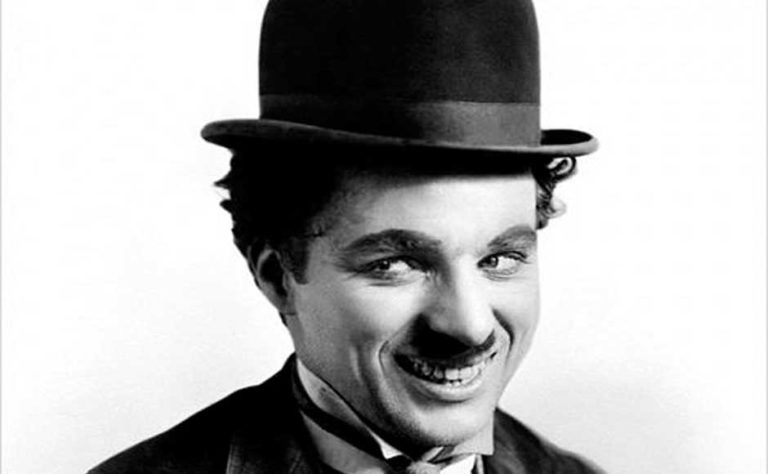
Charlie Chaplin‘s granddaughter to make a film on him

Filmmaker-actor Carmen Chaplin is set to direct a theatrical documentary feature on her grandfather Charlie Chaplin. Titled “Charlie Chaplin, a Man of the World”, the film will shed light on a barely explored new facet to Chaplin, his Romani roots and heritage, reported Variety.

The film will be made in association with France’s MK2 which owns rights to Chaplin’s movies. Production starts in early 2020. This is the first time that the Chaplin family is involved at a deep creative and industrial level in a movie about the creator of the Tramp.

It is produced by Madrid-based Wave of Humanity’s Stany Coppet, Dolores Chaplin and Ashim Balla, Remirez at San Sebastian’s Kanaki Films and Nano Arrieta and Silvia Mart nez at Madrid’s Atlantic Pictures.

The documentary “radically reinterprets Chaplin’s oeuvre from a Romani perspective and examines the persecution of gypsies through his lens”.

“Determined to subvert audience expectations of a documentary on the silent film master, the storytellers envisage a dynamic fusion of animation, film excerpts, interviews with artists and Chaplin’s children, and cinema verite footage of Roma life today coming together to a soundtrack of new interpretations of Chaplin’s original compositions,” the filmmakers said.

Chaplin revealed in his autobiography that his parents were half-Romani. He did not have a birth certificate. He kept a letter, discovered in 2012 by daughter Victoria Chaplin, locked in his bedside table which he received late in life claiming that he was born in a Gypsy caravan at Black Patch Park in Smethwick, Staffordshire in the UK.

SC wants Centre to urgently make guidelines curbing social media misuse

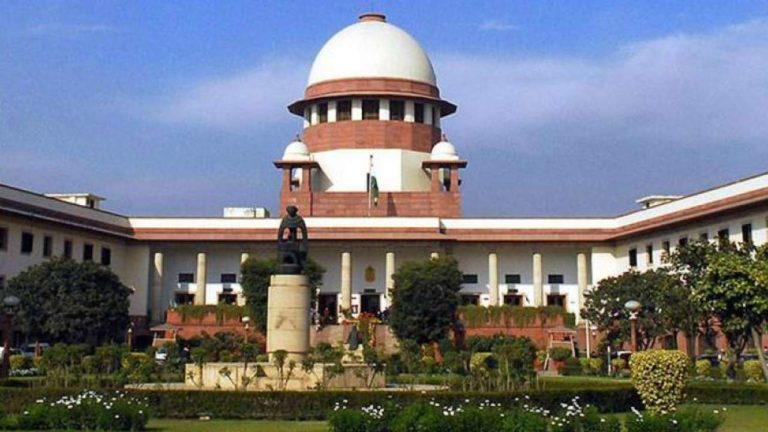
The Supreme Court has observed that technology has taken a “dangerous turn”, and has asked the Centre to apprise it within three weeks about the time-frame needed to come up with guidelines to curb misuse of social media in the country.

A bench of justices Deepak Gupta and Aniruddha Bose expressed serious concern over some social media platforms not being able to trace the originator of a message or an online content, and asked the government to urgently step in. Neither the apex court nor the high court is competent to decide this scientific issue and it is for the government to come up with appropriate guideline to deal with these issues, the bench said.

The top court had earlier asked the Centre to clarify whether it was contemplating forming guidelines or a framework for linking social media accounts of users with their 12-digit biometric unique identifier Aadhaar. The court had said the matter, to help trace the originator of a content, needs to be decided at the earliest. It had said that it would not go into the merits of the case and would only decide the plea filed by Facebook Inc, which is seeking transfer of cases related to Aadhaar linking pending before high courts of Madras, Bombay and Madhya Pradesh to itself. The Centre told the court that it had no objection to transfer of the cases as considerable judicial time has been spent by high courts on such cases.Facebook and instant messaging app WhatsApp, had said they have filed two appeals against Madras High Court orders.

On August 20, the apex court had sought response from the Centre, Google, WhatsApp, Twitter, YouTube and others on Facebook Inc’s plea seeking transfer of cases, related to linking of social media accounts with Aadhaar, pending in high courts to the apex court.

The top court had asked social media companies including Facebook and WhatsApp to explain what would be the effect of recent amendments in Aadhaar Act by which the 12-digit unique identity number could be shared with the private party for larger public interest.

Deconstructing “Howdy Modi”

Everyone, barring a few opposition politicians in India and most politicians and journalists in Pakistan, is acknowledging the fact that speech by Prime Minister Modi at Houston, Texas is a game changer for India.

Almost everybody seems to have written about the speech of US President Donald Trump followed by the speech of Prime Minister Modi, but no one seems to have commented on the opening speech given by Prime Minister Modi to introduce President Trump. Let us start with the introduction made by Mr Modi before we start to deconstruct the many points that were made by the two leaders.

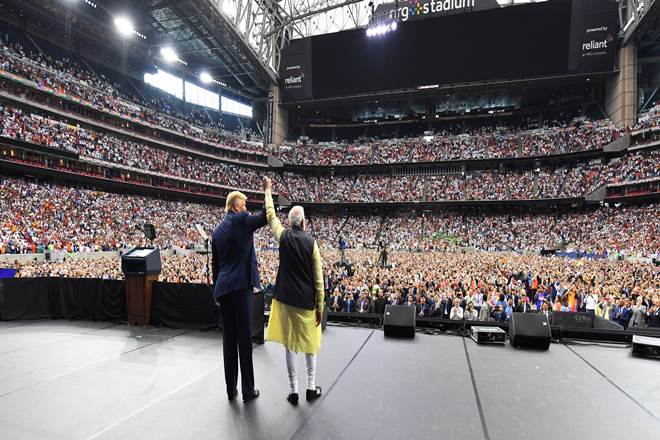
The two leaders arrived on the stage with Mr Trump’s arm around the shoulder of Mr Modi. This was the third time these leaders had met in a short period of time in 2019 and their bonhomie was evident from their body language.

Prime Minister Modi was the visitor and not the host at the Houston, Texas event. He was introduced and felicitated by various US leaders before the arrival of President Trump. Once the President arrived, Mr Modi took on the responsibility of introducing President Trump as if Mr Modi was the host at this event. His well-prepared introduction had the President smiling and acknowledging the various points Mr Modi spoke about.

Mr Modi recounted that during his first meeting with President Trump he had been introduced to the Trump family and he said it was now his turn to introduce the President to his family as he reached out to the entire audience in the stadium introducing them as his family to loud cheers of “Modi Modi.” This truly represented what he has always spoken about Vasudhaiv Kutumbakam (the World is one family) as the philosophy of India.

His comments of “Make America Great Again” and “Abki Baar Trump Sarkar” (this time Trump government) may have been misunderstood and misinterpreted by the opposition leaders in India who are always looking to score a point without thinking. What they chose not to hear was that Mr Modi was referring to President Trump’s election campaign in 2016. Mr Modi also carefully prefaced these words with “Candidate Trump.” These words struck the right chord with Mr Trump who was standing next to Mr Modi during this introduction.

Prime Minister Modi clearly knew what he was going to be speaking about, and one must appreciate the incredible amount of preparation and thinking that must have gone into preparing his communication. In one speech, he was addressing multiple constituencies:

  • The large number of Indian Americans who had waited to hear him for over five hours along with the 4 million Indian Americans who have been giving him a lot of support since they see in Mr Modi a strong leader who will make them proud of the country of their origin.
  • The President of America who stayed throughout his speech.
  • The multiple representatives and leaders of both Republican and Democratic parties present in the stadium.
  • The millions of Indians who stayed up to listen to his speech even though it was very late at night. Among them were certainly leaders of the opposition parties who must have recognised the gap widening with each passing comment.
  • The audience in Pakistan for whom Mr Modi had some tough comments in the presence of the US President.

After making the introduction of President Trump, Prime Minister Modi was escorted to the edge of the stage by Mr Trump so that Mr Modi could take his chair to hear the President.

Mr Trump was very expansive and generous in his comments and he more than once talked about the true friend India had in the White House. The President recognised the incredible appeal Prime Minister Modi has amongst 4 million Indians in America. At the back of his mind Mr Trump must have remembered that 77% of the Indian Americans voted for Hilary Clinton, the Democratic aspirant in the last US elections. It would certainly help if he could swing the large number of these voters to his side if he was able to convince them that he would support India.

While President Trump spoke about combating Islamic terrorism what was particularly interesting was his mention of the tri-force defence exercises between America and India, a first for these two nations.

Mr Modi was then invited to the stage by President Trump. It was interesting to see that there was no third party between these two world leaders. Mr Modi spoke about the accomplishments of his government at length, understandably to invite investments from American business, but his key communication was about Pakistan and Kashmir.

Mr Modi is an outstanding orator and in his own inimical style he kept asking questions about 9/11 and 26/11 and the people behind these attacks without naming the country or its leader, getting an overwhelming response from the crowd. This certainly made a strong impression on President Trump because he repeated the response of the large crowd in his press conference with Imran Khan. Prime Minister Modi was scathing in his attack on terrorism and his comment that time had now come to take decisive action against the perpetrators reverberated with everyone in the large audience and received a standing ovation.

When it came to the subject of Article 370, Prime Minister Modi very clearly stated that in accordance with democratic principles this was debated at length by both houses of the Indian Parliament in televised debates which was watched around the world, and it was only after these debates that the law was passed with two thirds majority. In multiple languages, in a matter of fact way, Mr Modi communicated to Mr Trump and other leaders that “all is well” in India. This was also a communication to the few leaders who have been “parroting” the Pakistan line of thinking.

At the end his speech, Mr Modi walked across to Mr Trump and holding his hand, took the President for a victory lap around the stadium.

This was Mr Modi’s way of demonstrating the soft power of India with the most powerful man in the universe and getting his implied assent on the various points that PM Modi raised in his speech. I would not be surprised if we see President Trump and the First Lady of US as Chief Guests at India’s Republic Day Parade on 26th January 2020.

Clearly Mr Modi has staked a lot on building very strong bonds with America and Mr Trump. Assuming that Mr Trump will be elected again, he can become for India what Nixon was to China. If that happens, India will be well on its way to becoming a US $10 trillion economy and all of us will have Mr Modi to thank for.

In his second term Prime Minister Modi is a man in a hurry to take all the tough decisions early in his term. Whether we love him or hate him, he has more than 56 months before he seeks election again for a third term. This is enough time to implement and see the results of all the changes he has made since 2014 to Make India Great Again!

It’s high time India goes for Pakistan’s Jugular on Kashmir

0

On the 27th September, both the Prime Ministers of India and Pakistan would address the United Nations General Assembly (UNGA) and like always, there will be no dearth of fireworks in the form of accusations and heated verbal exchanges, mainly on the issue of Kashmir. In purely material terms, whatever is said at UNGA matters little, but for Pakistan an opportunity to wax eloquent to a captive audience means a lot because the rhetoric it dishes out here serves as the annual dose of its pipe dreams to beguile simple Kashmiris into believing that Pakistan’s self-serving Kashmir narrative will someday and somehow still be able to alter international consensus of Kashmir being a bilateral issue that India and Pakistan need to mutually resolve without any third party intervention.

Coming close on the heels of New Delhi’s decision to revoke Article 370 of the Indian constitution that provided special status to J&K, the upcoming 74th UN General Assembly meet is bound to generate more sound and fury than ever before and Islamabad’s ‘curtain raiser’ does promise a lot of action and excitement. Prime Minister Imran Khan has already added the stimulating element of mystery by announcing that he would “forcefully present the Kashmir case like never before at the UNGA session.” Unable to subdue her penchant for histrionics, Pakistan’s permanent representative to the United Nations, Ambassador Maleeha Lodhi has also hailed Khan as being “the voice of the Kashmiri people at the UN” and declared that the UNGA session is “Mission Kashmir for the Prime Minister and for Pakistan.”

If Islamabad’s past track record of its discourse on the Kashmir issue is any indicator about the shape of things to come, then it’s almost certain that the pompous proclamations made by Khan and Ms Lodhi will (like always), end in a damp squib. But what’s more important for India is that instead of adopting a predominantly defensive stance, it needs to take a cue from Khan’s boast to “forcefully present the Kashmir case like never before at the UNGA session.” With the UN Security Council outrightly rejecting Islamabad’s claim that abrogation of Article 370 violated Security Council’s resolutions on Kashmir and explicitly ruling out any intervention in Kashmir, New Delhi is diplomatically in a very advantageous position. The timing is perfect and Prime Minister Narender Modi is just the right man who can decisively go for Pakistan’s jugular by demolishing its fallacious representation of the Kashmir issue.

Here’s what Modi could do —

  • Apprise the world of the reality that while Islamabad keeps harping that New Delhi is not implementing UN Security Council’s resolutions on Kashmir, it’s Pakistan, which by refusing to vacate Pakistan-occupied Kashmir (PoK) under its illegal occupation as stipulated in UNSC resolutions, has scuttled the implementation of the same.
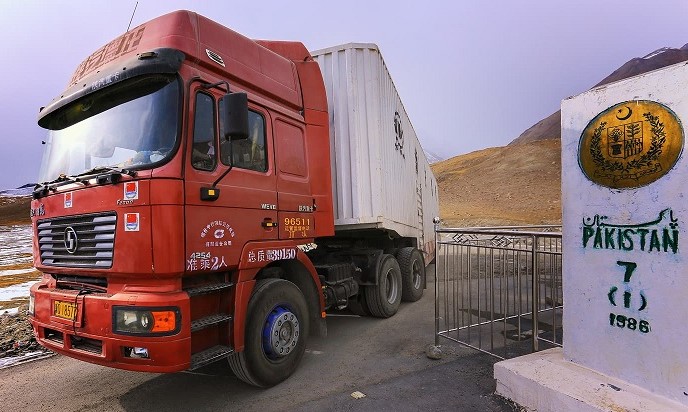
  • Highlight the fact that if Pakistan genuinely considers J&K to be ‘internationally recognised disputed territory’ in wake of the UNSC resolutions, then under what legal authority has it unilaterally ceded a portion of this area to China? If UNSC considers J&K as disputed territory, then how Pakistan entered into the Sino-Pak joint CPEC (China-Pakistan economic Corridor) venture through PoK without seeking UN Security Council’s permission and when India, which is a party to this so called ‘dispute’, has in no uncertain terms disapproved of this project?
  • Remind the international community that it’s not New Delhi’s obduracy but Islamabad’s policy of convenience on the issue of Kashmir due to which the Security Council resolutions have permanently lost their relevance.
  • Reiterate that consequent to its unprovoked aggression aimed at seizing control of J&K in 1965 and its attempt to alter alignment of the Line of Control (LoC) by infiltrating troops in Kargil sector in 1999, Pakistan has lost all moral rights to talk about resolution of the Kashmir issue in accordance with UNSC resolutions.
  • Unmask Pakistan’s devious designs of taking the high moral ground by talking of resolving the Kashmir issue through “peaceful means” and at the same time sponsoring cross-border terrorism and then having the audacity of justifying it as a “legitimate freedom struggle.”
  • The international community should also be reminded that Pakistan is the only country in the world that has the dubious distinction of issuing a postal stamp in honour of a terrorist!
  • While Pakistan says there are no terrorist sanctuaries or infrastructure on its soil, Prime Minister Imran Khan has as recently as just two months ago admitted that “when you talk about militant groups we still have about 30,000-40,000 armed people who have been trained and fought in some part of Afghanistan or Kashmir.” With the Pakistan Army saying that it is targeting terrorists of “all hue and colour,” Islamabad needs to explain to the world as to how on earth is such a humungous body of undesirable persons still moving around freely in Pakistan and how are they sustaining themselves.

In his address, Khan will surely make allegations of rampant human rights violations in Kashmir after Article 370 abrogation and project the temporary restrictions imposed purely as a precautionary law and order measure as a ploy to keep the world in the dark about atrocities being committed there. Therefore, it may be prudent to remined the international community that no one less than Barrister Khawar Qureshi who represents Pakistan in the International Court of Justice (ICJ) has himself admitted that there is no credible evidence of genocide being perpetuated by New Delhi in Kashmir, due to which “it is extremely difficult for Pakistan to take this case to the ICJ.”

Similarly, Khan will certainly accuse New Delhi of adopting an aggressive stance and vitiating the peaceful environment by indulging in provocative acts. Such accusations need to be effectively dispelled with facts and the international community needs to be reminded that it is Pakistan that has been displaying blatant belligerence by–

  • Unilaterally suspending cross-border trade, suspension of the Samjhauta Express train service and even going to the extent of downgrading diplomatic ties with India.
  • Closing its air space to the Indian civil aviation sector and even denying PM Modi the permission to use Pakistani air space while proceeding to the US.
  • Issuing provocative statements like calling for ‘jihad’ (holy war) in Kashmir and issuing veiled threat about the possibility of war in case New Delhi doesn’t restore Article 370.
  • Inciting communal passions in India as well as globally by referring to developments in Kashmir as “genocide of Muslims”and saying that this “should raise alarm bells around the world that illegal occupation of Kashmir is part of a larger strategy against Muslims”
  • The army chief Gen Qamar Javed Bajwa beating war drums by announcing that “Pakistan Army firmly stands by the Kashmiris in their just struggle to the very end” and saying, “we are prepared and shall go to any extent to fulfil our obligations.”

Despite whatever Islamabad may feel or say, the fact is that Kashmir’s accession to India is perfectly legal and non-negotiable. Unfortunately, for reasons unknown, India’s approach to Kashmir in the past has not only been overly cautious and defensive, but downright apologetic as well. However, with the current dispensation in New Delhi widening the scope of debate on Kashmir by extending it to the issue of Pakistan’s illegal occupation of PoK, Islamabad is already on the backfoot.

India finally has Pakistan by its jugular and to let go now would be as detrimental to national interests as taking Kashmir to the UN Security Council was!

Tailpiece : India may be a peaceful nation, but when it comes to the question of territorial integrity there’s no other option but to take off the gloves of civility and take the threat by its horns. Let’s hope that Modi’s UN General Assembly address conveys the message to the international community in general, and Pakistan in particular, that on the issue of Kashmir, when push comes to a shove, India will not hesitate to exercise its legitimate right to preserve national interests in any manner that it deems fit.

Army roots for a new and vibrant Ladakh post reorganisation

0

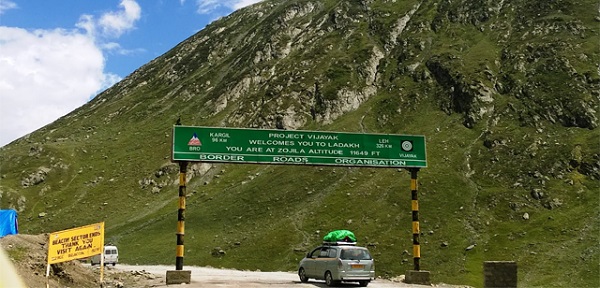
The monumental decision taken by the government of India to revoke Article 370 of the constitution and simultaneously reorganise the state of Jammu and Kashmir into two Union Territories (UTs) has remained the flavour of Indian media ever since the bill was passed in Parliament on 5th August, 2019. Volumes have been written and spoken on the subject. Overwhelming focus has remained on the reaction forthcoming from the Kashmir region. The second UT, Ladakh, which constitutes almost 80% landmass of Jammu and Kashmir has remained in media oblivion.

This lopsided preoccupation with Kashmir Valley points towards the lack of strategic awareness in the country. The reorganisation of Ladakh and its separation from Jammu and Kashmir has bigger strategic significance for the nation. Its location as a frontier region sharing borders with very critical neighbours, potential as a communication hub, vast natural resources (especially water) and cultural importance as a seat of the Buddhist religion seems to hold no value to the Indian intelligentsia, opinion makers, politicians and media.

The importance of the reorganisation is, happily, not lost to the Indian Army that looks upon the region as a prime area of interest. Accordingly, the Northern Command is making a special efforts to ensure that the transition is smooth and happily accepted by the people. The seriousness with which the Army is looking at this sensitive region can be gauged by the recent visit of Army Commander Northern Command, Lt. General Ranbir Singh to Ladakh.

The senior commander held a detailed and extensive interaction with prominent members of civil society in Ladakh which he described as an attempt to, “…share thoughts about the initiative the defence is taking in Ladakh which would improve the quality of lives of the citizens and also to enquire specific requirements and major issues that were felt by them so that the army and people could together work towards addressing those special requirements.”

The Army Commander further elaborated on the situation evolving in the wake of the changed geo-political status and described it as being positive and beneficial for the people. “The Army and people (of Ladakh) share a very special relationship, it is a very unique relation and both have respect for each other. We are very happy that removal of Aricle 370 will address the aspirations of the people of Ladakh. A large number of government initiatives have already been announced. It is primarily with the view to carry out development in Ladakh, create additional employment and improve the quality of life of the citizens in Ladakh. As far as the Army is concerned, we too are going to contribute as a part of the overall government effort towards creation of employment by having recruitment rallies, by development of large defence infrastructure which will be able to meet the needs of the local people also. I am sure in days to come Ladakh will be a good progressive state  with lot of development, lot of employment and the happiness quotient will certainly go up,” the Army Commander told the news agency ANI.  “I am sure it is a two way process and our exercise of continuous interaction, continuous working together will lead to overall development and overall confidence building in Ladakh,” he added.

It is very clear from the statement of the Army Commander that he looks upon the Army as a major contributor to the Government’s effort towards ushering the much needed development and prosperity to the region. It is a correct thought process in the context of the Army’s unique bond with the people built over generations. The Army has a presence in such remote areas where the administrative machinery finds it difficult to reach; this is one area, among many others, where the Army can help the government realise its objectives and projects.

The people of Ladakh are quite happy to be rid of what the term as slavery to Srinagar. “Ladakh feels liberated after 185 years of slavery and coercion. The demand for a separate state of Ladakh has been pending since 1947, older than the demand for Telangana,” says Punchok Stobdan, a prominent Ladakhi who has held ambassadorial assignment under Indian Ministry of External affairs.

The happiness, however, comes with some apprehension about danger to the unique culture of the land due to the possible ingress of outsiders. It is due to this apprehension that the region is demanding Tribal Status under Article 244 of the Constitution. The demand has been placed in writing by the Member of Parliament of the region, Jamyang Tsering Namgyal, to the union Ministry of Tribal Affairs.  

While rooting for development it is most important to maintain an ecological balance in the very sensitive region that cannot take human habitation and intervention beyond a point. A spurt in tourism can strain the fragile eco-system of the region with devastating effects.

Another important issue is the security of the region given its proximity to two belligerent neighbours. There are regular transgressions along the Line of Actual Control with China. Kargil and Siachen need to stay ever vigilant against misadventures planned by the Pakistan Army. The Indian Army is well poised to meet the twin threats. While a Kargil war type misadventure by Pakistan is no longer feasible, the LAC with China is also boosted with the latest and most sophisticated equipment to include Armour, Artillery Helicopters, Drones, Electronic Surveillance and of course the highly trained, motivated and well equipped Infantry. A validation exercise named Exercise Changthang Prahar was conducted recently in eastern Ladakh where all basic armaments and force multipliers were put to use most effectively. It was witnessed by the Army Commander, Lt. General Ranbir Singh, who expressed complete satisfaction at the state of military readiness.

Ladakh is poised to set a new, vibrant course post the reorganisation. This can be given a boost by seamless coordination among all elements that would be involved, be it the people, the political leadership, local administration, the Army and the Centre. A well structured plan will do wonders here.

Interview with Deniece Cornejo on Gender Equality in the Philippines

0

Deniece Milinette Cornejo is the CEO at Demico Global Solutions, Chairman at the National Congress for Young Filipinos, National Project Director at Miss Tourism Philippines, Regional Development Council Chairman at Junior Chamber International Philippines, a Goodwill Ambassador, Senior Vice President for Southeast Asia at AI Trades, Ambassador at the International Martial Arts Academy, and President at Association of Women’s Rights Advocates.

Here we talk about gender equality within the Philippines.

Scott Douglas Jacobsen: Your work for women’s rights tends to remain important in Canadian society and to, probably, most non-religious or secular people throughout the country.  What differentiates the SEA region’s concerns with gender equality compared to North America and Western Europe or the “West’s”?

Deniece Cornejo: I am inspired and grateful to learn that my work is able to contribute to our society. In the Southeast Asian region, recent years show that the number of women holding public office has increased, especially in local government. So far, only in the Philippines has female representation in national government risen above 10 per cent. When women do manage to enter the political arena, they often find themselves marginalized in a male-dominated culture, with real power remaining in men’s hands. The few individuals who have attained the highest political offices (such as President in the Philippines and Indonesia) have done so because they are the daughter or wife of a famous man. There was a time when it was difficult to become advocates of women’s issues, for this would risk alienating their male colleagues or the male electorate. Today, more and more advocates have risen from the comforts of their own homes. Be it in the West or Asia, greater female involvement in politics is impeded by the way candidates are recruited as well as inculcated attitudes that see women’s primary role as that of wife and mother. Gender stereotypes that favor males over females are often reinforced in school textbooks and are sometimes encouraged by religious teachings. Against this backdrop, it is clear that discrimination against women, especially in the economic sector and in the case of violence against women, is still persistent in every country.

Jacobsen: What issues on gender equality and women’s rights has the Philippines gotten right and wrong on gender equality? 

Cornejo: One issue the Filipinos got right on the grounds of gender equality is that advocates are lobbying for more opportunities for women. This implied that we are fighting for more jobs, more freedom, more budget allocations and for more acceptance as an equal in the society. One misconception that Filipinos always have when it comes to discussing gender equality is that when we say “women’s rights,” they automatically think that it means less rights for men. I want to emphasize that more rights for one gender does not mean less rights for the other side of the scale. It’s not a pie. No receives less when the share or division is fair. It’s a situation where both male and female receive equal opportunities and advancement of interests.

Jacobsen: What has the West gotten correct and incorrect on women’s rights? 

Cornejo: As I mentioned before, our Western neighbors practice a more liberal and democratic thinking where everybody is free to express their thoughts at their own will with less hindrances. The disadvantage is with more liberalism comes judgement and ridicule. I believe the answer for this question is the same as the above because whether we are in the Western or Eastern arena, the society is plagued with the same misconceptions on women’s rights. I believe both hemispheres of the globe are lobbying for access to similar opportunities.

Jacobsen: What may be a means by which either region – SEA and previously defined West – learn from one another?

Cornejo: The most effective means I deem fit is to engage in a meaningful conversation especially during the ASEAN Summit, G7 summit and the like. If they may invite us a seat at the table for discussion, it will be incredibly monumental. It is during these international conferences or conventions that the most powerful countries come together to discuss matters like this. This could be an opportunity to exchange healthy dialogues on the issues of advancing the interests of women.

Jacobsen: How can the Roman Catholic Christian faith provide a unique framework for gender equality? How can the hierarchs of the Roman Catholic faith learn from the laity, and vice versa?

Cornejo: The Philippines is a predominantly Catholic country. I suppose the Church can refine their views to make the theories and ideals of equality more accessible and understandable for everyday Filipinos. The time is fast-changing and if adjustments could be made, it would be easier without necessitating rallies or demonstrations.

Jacobsen: How can a secular or non-religious framework provide a unique vision of gender equality? How can the secular leading intellectuals and social organizers learn from ordinary secular people, and vice versa?

Cornejo: The non-religious sector of our society can address issues and present their vision of a modern approach to equality by, as most political sectors do, establishing or supporting organizations whose mission and vision they identify themselves with. I previously mentioned how an organization like the UN women has inspired me to found an organization of my own, the AWRA (Association of Women’s Rights and Advocates) that seeks to spread awareness and prevent violence and all forms of abuse against women. The answer to this always begins at the grassroots level. It is by supporting these organizations at a humble manner or by educating ourselves and by taking the initiative so we can ask the right questions that the secular intellectuals and ordinary people can learn from one another.

Jacobsen: Thank you for the opportunity and your time, Ms. Cornejo.

Cornejo: Once again, thank you for your time as well. It has been an honour and privilege to give you my thoughts on this matter. I believe the quest for accessing equal opportunities for women does not end here. The fight continues even after this interview.

Photo by Cris Tagupa on Unsplash

Kashmiri Pandits lend support to PM Modi in Houston

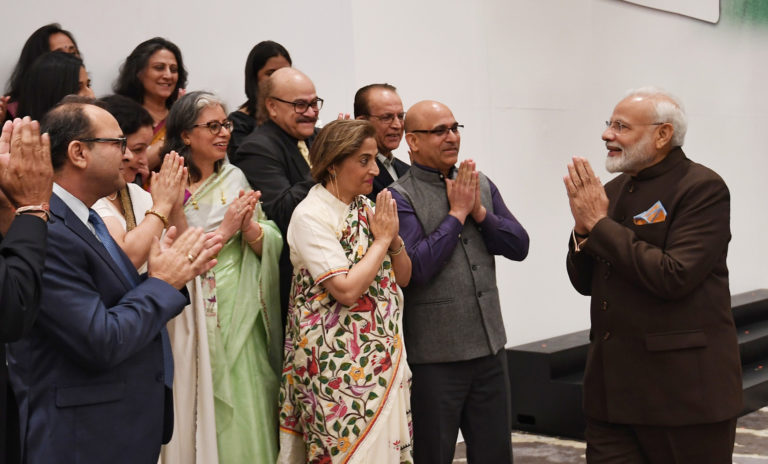
Prime Minister Narendra Modi had a special interaction with a delegation of Kashmiri Pandits in Houston and assured them of “building a new Kashmir” which would be for everyone.

The 17-member delegation, which included Kashmiri Pandits from across the US, met Prime Minister Modi on his arrival in Houston as part as part of his week-long visit to the US.

“Kashmir mein naee hava bah rahee hai (New winds are blowing in Kashmir) and we will all build a new Kashmir together that will be for everyone,” he told the delegation. Modi also thanked the community for their patience for over 30 years.

“I had a special interaction with Kashmiri Pandits in Houston,” Prime Minister Modi later tweeted.

Earlier, MEA Spokesperson Raveesh Kumar tweeted that the Kashmiri Pandits expressed support for the steps taken by the Indian government for the progress of India.

“In Houston, a delegation of the Kashmiri Pandit community met the Prime Minister. They unequivocally supported the steps being taken for the progress of India and empowerment of every Indian,” he tweeted.

The delegation thanked the Prime Minister for the move and said that their 700,000 community members were “indebted” to his government.

The delegation also presented a memorandum to Modi, requesting him to set up a task force under the Indian Home Ministry to bring the community together, develop the region and repatriate Kashmiri Pandits.