Following the vision of the Prime Minister Narendra Modi of
development of tourism in Ladakh and under the leadership of Union Minister of
State for Tourism & Culture (Independent Charge) Prahlad Singh Patel, the
Indian Institute of Skiing & Mountaineering (IISM) Gulmarg, Ministry of
Tourism, Government of India in association with Indian Institute of Travel
& Tourism Management (IITTM) an autonomous body under the Ministry of
Tourism has organised an Adventure Tourism Training Courses in Trekking.
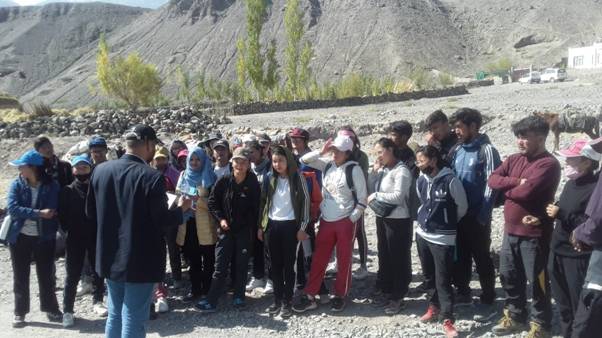
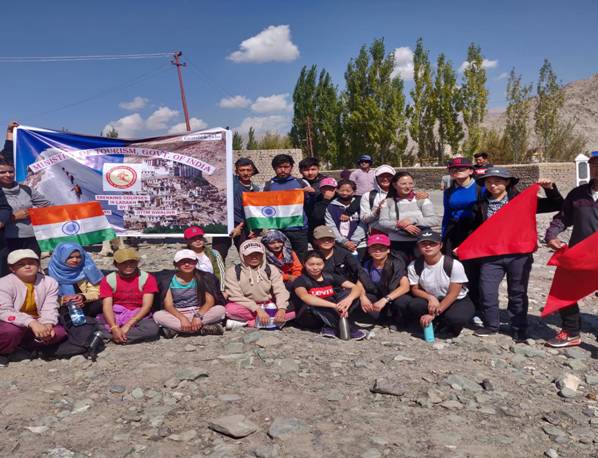
The first of its kind in the region, this 10 days training
course trains local youth in various aspects of mountain trekking and also
gives them hands on experience. Over 30 local youth enrolled in the first batch
which started on 24th September 2019. Approximately 90 local youth will be
trained in three batches.
The trekking programme starts with a briefing and the
participants cover places like Spithuk, Then, Zinchen, Rumbak, Stok la Base,
Stock within 10 days and will return to Leh. This training program is aimed at
developing the basic skills of Trekking in the youth who can later use these
skills for becoming guides or entrepreneurs in future.
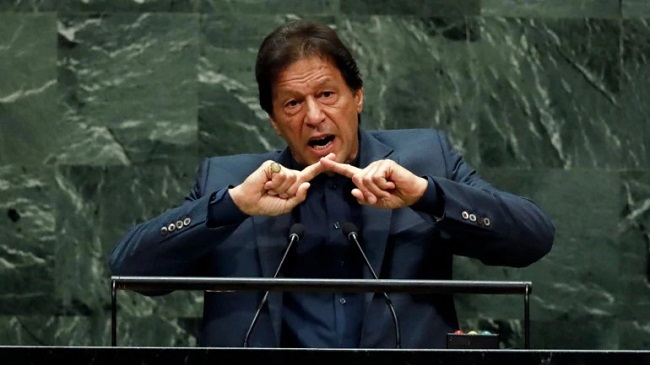
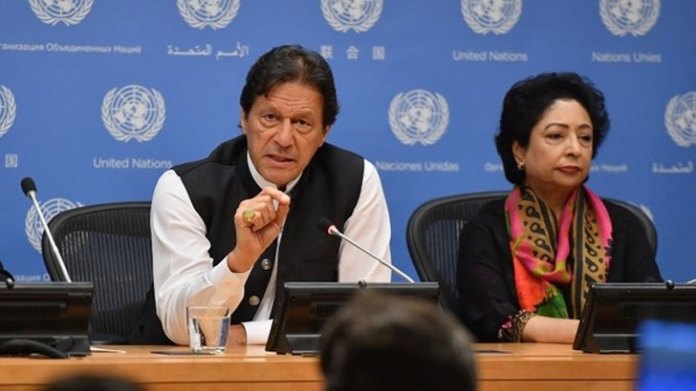
The Pakistani premier, Imran Khan, went to New York to
participate in the proceedings of the United Nations General Assembly (UNGA)
with a single point agenda of spreading anti-India sentiments. He kept
haranguing on the decision of India to reorganise the state of Jammu and
Kashmir into two Union Territories as also abrogating Art 370 of the Indian Constitution.
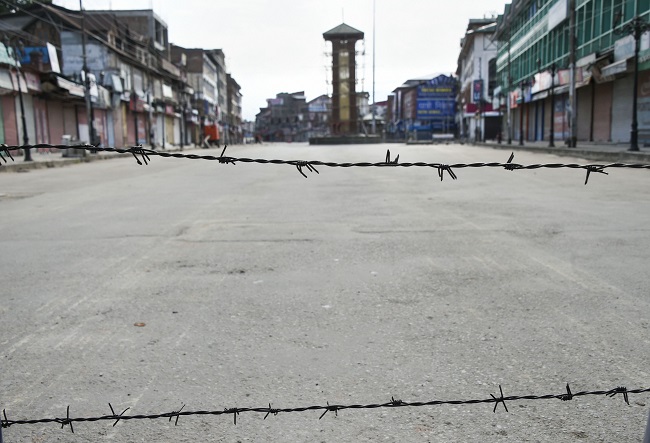
Prime Minister Imran Khan predicted a huge uprising in Kashmir the “moment the curfew is lifted.” He was perhaps unaware that there was no blanket curfew imposed in Jammu and Kashmir; limited restrictions were put in place in some parts of the state to prevent miscreants from fomenting trouble and these too were relaxed in less than a week’s time. In the present context the entire state is free of restrictions; free movement is seen everywhere with accessibility across the state to all including citizens, outsiders, journalists etc.
According to reports, the National Highway connecting Jammu to
Srinagar and onwards to Kargil and Leh continues to function normally with over
1000 vehicles traversing the route everyday carrying food, fuel, medicines and
other supplies to the valley and onwards to Ladakh, and carrying back products including
apples and handicraft products to the rest of India.
“It is a myth being propagated that there is a virtual clampdown
in J&K. Nothing could be further from the truth. This is proven by the traffic
visible on roads with traffic jams, passenger air traffic, normal functioning
of hospitals, availability of essential civil supplies, and the free access of journalists.
The very fact that all highways remain open, all air operations are normal and
traffic is plying normally is sufficient to prove the “clampdown theory” is the
vestige of imagination of a neighbour who has been dismayed to find that there
the situation in J&K has remained peaceful with not a single live bullet
being fired,” an official spokesperson said.
All essential services be it electricity, water supply,
sanitation and civil supplies have been functioning normally since August 5,
2019. Over 85,000 LPG refills were home-delivered to consumers in Srinagar.
Similarly 1.2 lakh quintals of rice were also distributed among consumers in
the same period through the Public Distribution System. Banking and ATM
facilities have remained normal and functional. Over 730 ATMs were operating
normally in the valley and cash being regularly replenished. Nearly Rs 800
crore were withdrawn in the first two weeks after August 5 which is slightly
higher than normal withdrawal figures.
District hospitals and specialized health care institutions have been functioning regularly and normally in Kashmir since August 5, and continue to do so. Nearly 15 lakh patients visited Out Patient Department (OPD) in Kashmir hospitals during August-September 2019. Healthcare institutions successfully performed over 80,000 major and minor surgeries. The government has claimed that nearly 11 lakh lab investigations and over 10,000 deliveries were conducted. All 376 notified medicines and 62 essential medicines are available in sufficient quantity. Over 5000 retail chemists and 3000 wholesale chemists are open in the valley. Nearly 5 lakh units of various variants of baby food items have been sold to the retail outlets.
Over 200 internet points are functional across the valley and are being extensively used by public including contractors, students and government officials. For the limited period that communication was unavailable, more than 300 communication points were established across the valley.
The limited restrictions currently imposed on mobile and
internet communication are a consequence of deliberate, known attempts from
across the border to conduct attacks through militants supported by them. The
mobile restrictions are to handicap militants and their movement and also to
restrict the attempts to create civil disturbance through patently false
information being spread around by Pakistan and its proxies.
The efforts of security forces to ensure that no innocent life
is lost due to threats being posed by militants to civilians is being subjected
to a false narrative attempt about some imaginary troop build-up and human
rights violations where there are none. Genuine aspirations of the local
population who want to resume normal life are being ignored.
A strong coercive influence is being exerted on ordinary Kashmiris through overt and covert threats to desist from resuming normal activities and businesses. A 4-year old girl child has recently been shot merely because her family wanted to carry out their normal economic activity. A 65-year old shopkeeper has been killed because he opened his shop to earn a living. Pakistan remains very vocal about the rights of trouble creators, militants and thugs, but it does not have anything to say for those Kashmiris who are subjected to atrocity and death by militants sent to the Kashmir Valley merely for wanting to open their shops and businesses. In any case, not much can be expected from a country where minorities, including certain Muslim sects, have alarmingly shrunk from 23% to 3% in less than 75 years.
It is a fact that detentions have been made by the government but these are under prescribed laws, subject to strict judicial review and with a purpose of ensuring that the normal life is not disrupted due to vested political interests.
There is no need to give credence to Pakistani propaganda or the incessant anti-India diatribe of its prime minister as witnessed in the United Nations and other forums in America and Saudi Arabia. It must be remembered that Pakistan being home to 130 UN-designated terrorists and 25 terrorist entities listed by the UN has no legal or moral locus-standi to speak on any issue- whether it be terrorism, human rights or Kashmir.
Now that
annual Indo-Pak war of words at the UNGA (United Nations General Assembly) is
over and each side is claiming to have outdone the other, it’s time to analyse
as to who really ‘won’ and who actually ‘lost’. Both sides entered into the
arena with handicaps; in Indian PM Narendra Modi’s case it was imposition of
restrictions in Kashmir after abrogation Art 370 and Art 35A of the Constitution
while for Pakistan PM Imran Khan it was the international terror financing
watchdog Financial Action Task Force (FATF) putting Pakistan on its
‘grey-list’.
But while Modi kept his cards close to his chest, Khan went to town boasting of how he would “forcefully present the Kashmir issue like never before.” The result was that while the Indian media could only speculate on what Modi was likely to say in his UNGA address, Pakistan media hyped Khan’s statement as a defining moment in the country’s history. Pakistan’s Representative to the United Nations Maleeha Lodi went a step further to declare that for PM Khan and Pakistan, the 74th UNGA meet was “Mission Kashmir.”
That Khan had bitten off more than he could chew became
apparent even before he was scheduled to deliver his “like never before”
address on the issue of Kashmir when he told the media in advance that he
wasn’t optimistic of accomplishing anything by his speech at the UN. To
add to his woes, while Modi who preceded him pitched strongly for coordinated
global efforts against terrorism, but by making no reference whatsoever to
Pakistan, he denied Khan the opportunity to use Modi’s Pakistan-bashing to build
his Kashmir narrative of justifying terrorism by calling it a ‘freedom
struggle’.
Yet, instead of modifying the tone and tenor of his speech to
counter Modi’s effective use of the indirect suggestion technique, Khan relied on
the ‘buckshot approach’ of firing a salvo of unproven allegations in the hope
that at least an odd one would find its mark! What followed was a litany of
accusations that ranged from the pedestrian to the absurd. By presenting Modi as
a person “blinded by arrogance” who being a “life-member” of an organisation that
is “inspired by Hitler and Mussolini” and “believes in the racial superiority
of Hindus” with intense “hatred for the Muslims and Christians,” Khan tried to
portray the Art 370 abrogation decision as the deed of an evil and racist mind.
Going on to give a communal colour to the Kashmir issue, Khan
went on to lament how “…The phrase Islamic terrorism
allows India to dismiss human rights and further increase cruelty on the people
of Kashmir.” Predicting that Kashmir will witness a “bloodbath,” he proceeded
to embellish the communal angle with a global dimension by saying that all Muslims
were watching that “this (atrocity) is only happening to Kashmiri Muslims.” He
also tried to set the cat among the pigeons by claiming that the present
developments in Kashmir will “radicalise” the 1.3 billion strong Muslim
community the world over!
By likening the international community’s silence on Kashmir to “appeasement (of Nazi Germany) like that in 1939 in Munich,” Khan stepped into the realm of the absurd. But he didn’t stop here but instead went to openly accuse the international community of being unconcerned about the sufferings of Kashmiris just because they happened to be Muslims, conveniently forgetting that the international community had displayed a similar attitude when Kashmiri Pandits were driven out of Kashmir by JKLF (Jammu Kashmir Liberation Front) and Hizbul Mujahideen terrorists in 1990. Turning into a prophet of doom, Khan proceeded to warn the world that if UN didn’t intervene, then Kashmir would become the flashpoint for a conventional Indo-Pak conflict, which would inevitably culminate in a nuclear exchange since Pakistan would fight to the end!
Imran Khan had started making noise immediately after New
Delhi abrogated Art 370 and had anointing himself as the “Kashmir’s ambassador.”
He promised to raise the Kashmir issue at every international forum including
the UN. In contrast, Modi’s silence was conspicuous. But even as Islamabad’s perfunctory
diplomatic offensive to isolate New Delhi on the issue of Art 370 abrogation failed
to make any headway at both the OIC (Organisation of Islamic Cooperation) and
UNSC (United Nations Security Council), New Delhi’s diplomatic outreach sans
any flourish triumphed. The very fact that save China, Turkey and Malaysia, no
other country stood by Islamabad sums up as to who won and who lost at the UNGA!
Tailpiece
Pakistani media went overboard by heaping praises on Khan
for his UNGA address and the people there are celebrating what they have been
told is a spectacular victory. But related developments don’t seem to suggest
so. Foreign Minister Shah Mehmood Qureshi lauded Ms. Maleeha Lodhi by saying
that she “served Pakistan with distinction and commitment and organised
the prime minister’s successful UNGA visit with skill and dedication.” However,
if this is really true, then what explains her abrupt sacking just two days
after the UNGA session? Furthermore, if Khan’s UNGA visit was really
successful, then why did he on returning home tell the people that “Whether
the world stands with Kashmiris or not, Pakistan is standing by them”?
With such a pessimistic note coming from the horse’s mouth,
isn’t it amply clear as to was the winner at UNGA?
Hypocrisy has been the
hallmark of Indian political discourse. It had never been as glaring as in the
case of Jammu and Kashmir. Since 1947, we had been blaming Pakistan, Abdullahs,
Muftis, Gilani and their surrogates for bloodshed in the state. But the truth is,
successive political leaderships in Delhi led the Kashmiris on to this bloodied
path either by conspiring with them or remaining an onlooker to their refusal
to accept India as their home. The idea that they were ‘special’ and different from
the rest of the country was solely our own construction.
Unlike 567 princely states that merged their identity with India after independence, Kashmiris were actually encouraged to believe that they had a choice to merge either with India or Pakistan at their will. Though Maharaja Hari Singh, the then ruler of J&K, had acceded his state to the Dominion of India on 26 October, 1947, Nehru chose not to accept his offer as a fait accompli and approached the United Nations.
The rest is history, how Nehru
rushed to the UN in January 1949, complaining about Pakistan’s aggression in
1948 and how he agreed to the UNSC (United Nations Security Council) resolution
that provided for UN-supervised plebiscite to decide J&K’s final accession.
Wish, Nehru had waited for an opportune time to legitimately integrate occupied
areas of J&K from China and Pakistan rather than fall for the UN’s
mediation.
The reference of Kashmir to the UN had three troubling implications. One, J&K became a disputed territory, enabling Pakistan to be a party to its resolution. No wonder, Abdullahs, Muftis, Hurriyat leaders and liberal elites always insisted on holding dialogue with Islamabad for a final settlement. Second, before the plebiscite would be held under the UN supervision, Pakistani forces were to be withdrawn from Jammu & Kashmir (Pakistan-occupied Kashmir–POK). We did make noises that since Pakistan was the invader they should withdraw from PoK unconditionally, but UN never took a cognizance of our position, which was milked by Pakistan to its advantage. Third, the provision of plebiscite emboldened Kashmiris to imagine that they had a fundamental right to decide whether to stay with India or Pakistan.
The right to self-determination had two far reaching consequences; Kashmiris began claiming that no settlement could be reached unless they were also involved in the negotiating process. Second, religion emerged as a key factor that would determine the outcome of the plebiscite. Islamabad rightly grabbed this window of opportunity and began Islamizing J&K. The result was the rise of Wahhabism that led to the genocide of thousands of Kashmiri Pandits and flight of five lakh of them to India and abroad as refugees. This was followed by a larges cale conversion of Buddhists whose population went down from 81% in 1981 to 40% in 2018, while Muslim population recorded an unprecedented annual growth of 23.7%. Not only that, 3 lakh Hindu refugees– mostly from the scheduled caste – who came from Pakistan after partition and settled in J&K, were deliberately denied of voting and all other rights of a J&K citizen.
Nehru’s pandering of Sheikh Abdullah
It was not just the idea of plebiscite that played the devil. New Delhi also took a series of fatal initiatives that ingrained separatism in Kashmiris. From day one, Nehru pandered Sheikh Abdullah. Hoping to seal Sheikh’s fidelity, he allowed J&K to have its own constituent assembly in 1951 to formulate its own constitution which restricted the jurisdiction of Indian parliament and union government to miniscule and provided for a president, prime minister, a separate flag and power to frame its laws to decide as to who will be its permanent residents.
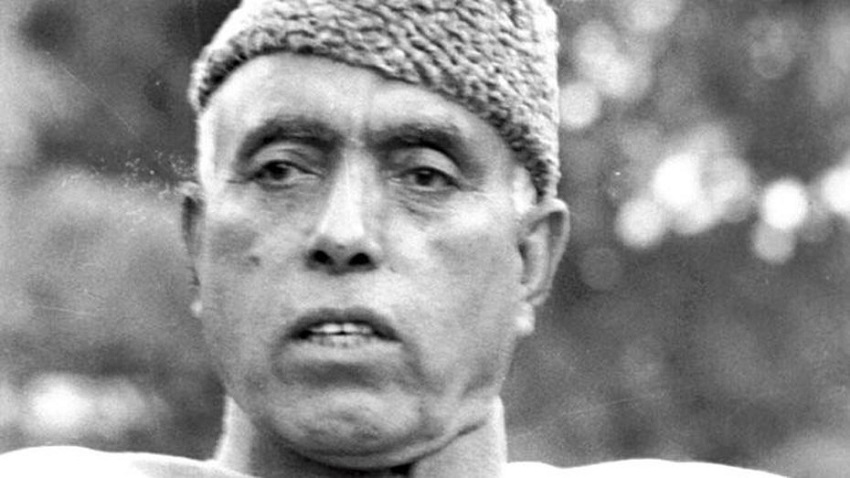
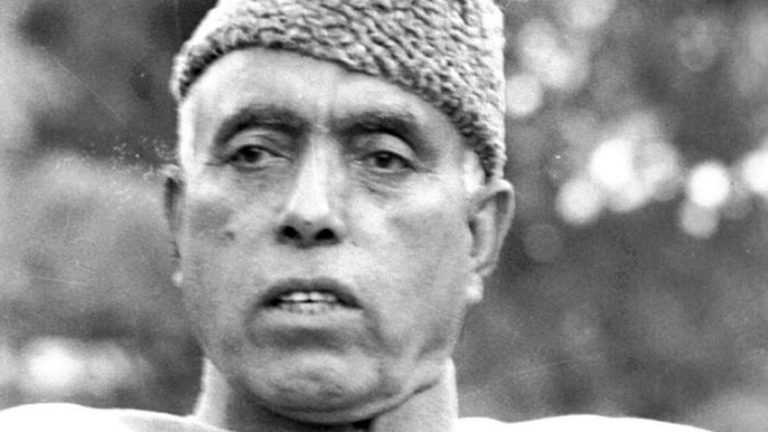
Sheikh Abdullah, founder of the political outfit National Conference that has a presence in certain pockets of the Kashmir Valley. (File Photo)
Nehru’s molly-cuddling did not
end there. Under Part 21 of the Indian constitution, Article 370 was
incorporated giving J&K a quasi-independent status, meaning that the state
could now deal with all matters except for finance, defense and foreign
affairs. Worse, Nehru then got a Presidential Order inserted in the
constitution in 1954 as Article 35A, that clearly defined a separate set of
laws governing citizenship, permanent residency, property and fundamental
rights. In doing so, he virtually conceded to J&K a constitutional status, befitting
a nation unlike any other state and union territory of India. One mischievous manifestation
of this dispensation was Farooq Abdullah’s refusal to implement delimitation of
the parliamentary and assembly constituencies. His fear was that it might give Jammu
region a majority in the J&K Assembly based on its population (14, 689,775)
vis-a-vis Kashmir (12, 500,000) and threaten his divine rulership by someone
who was not from the Kashmir Valley.
These constitutional freebees inspired
Kashmiris to keep weighing the benefits of their loyalty to Pakistan or India.
The question now was which of the two would pay more – India in terms of
financial resources and Pakistan in terms of helping them harden their
bargaining position by carrying out terror attacks and subverting Kashmiri
youths. It no longer made any sense to Kashmiris to abandon brinkmanship when Delhi
was ever eager to appease and splurge to earn their allegiance. During past 16
years alone, New Delhi has pumped in ₹1.14 lakh crores which
is 10% of all central grants earmarked for the remaining states and union
territories for a state with barely 1% of India’s population. In simple terms, New
Delhi spent ₹91,300 rupees per annum on each individual Kashmiri
whereas UP with 25% of country’s population, received a meagre ₹4,300 per person annually.
Interestingly, despite this financial bonanza 80% Kashmiris continued to be deprived of education, water, electricity, health benefits etc, while the political and separatist leaders prospered disproportionately. The reason was compelling. If people could be kept uneducated and economically backward, Jamaat and Hurriyat would find it easier to radicalize Kashmiris for merging with Pakistan, whereas the likes of Abdullahs and Muftis will try to extract New Delhi’s last pound of flesh.
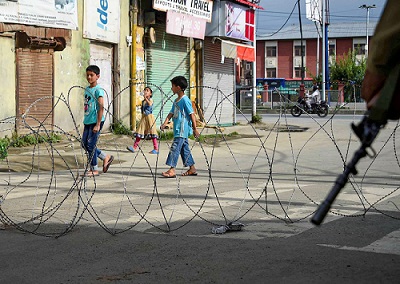
Children walk past the concertina wire in Srinagar during restrictions after the abrogation of Article 370. (Photo: PTI) (Representational picture)
Appeasement of Kashmiris — The Colossal Cost
The cost of New Delhi’s hypocrisy in appeasing Kashmiris has been colossal. Nearly 57,172 persons have been killed since 1988, including 19,903 civilians, 28,745 terrorists and 8,524 services personnel. 8,000 civilians and 2,600 men in uniform have been injured and 784 working days lost to strike, violent agitations and forced shutdown of shops and schools. Besides, separatists organized relentless stone-pelting at the security forces on 7,443 occasions in last three and half years alone. The sheer repetitiveness of these incidents of violence had started taking a toll on Indian psyche. People were exasperated at what was happening in the state and wondered if it was worthwhile retaining J&K. The nation could no longer afford the pervasive cynicism and it had to tell Kashmiris bluntly that their future lay with India.
However, journalists who have
been rendered irrelevant by the ruling NDA (National Democratic Alliance), liberal
elites, leaders of opposition political parties and human rights activists would
have still preferred walking on blood-stained streets of J&K for the
vacuous liberty of a few. Obviously, their hypocrisy in applying individual
morality to define responsibility of the state had clouded their understanding of
real issues at stake. Even today, like Pak PM Imran Khan, they imagine that if
they can step up and sustain their lies and noise a bit longer, the August 5
decision to de-operationalize Article 370 and 35A can be reversed. Taking this
hope forward, they have been whining that, ‘…….J&K is under Army’s
‘occupation,’ there is no civil liberty and absolutely no freedom of
communication, movement and speech, thousands of political leaders and
activists are kept in jails where conditions are worse than those under Nazis, the
state has been turned into a ghetto controlled by vultures in uniform, administration
has collapsed, patients are dying, schools are closed, markets are deserted and
farm produces are rotting.’ J&K, they say, is now ‘like a ghost town where
people are either dead or dying, fear stalks everywhere with human rights
abuses being committed daily on a scale that is unprecedented in human history’.
And, then comes their forecast of what is going to happen next – ‘whatever hope
India had of holding on to J&K is gone forever.’ ‘Majority of Kashmiris who
had some sympathy for India and disliked Pakistan and terrorists are waiting to
rise in a massive revolt in the name of Islam, once security restrictions are
lifted.’ Their propaganda could not have been more bizarre.
However, their catcalls may not reflect the ground realities but will surely excite Imran Khan, Labour party in Britain, New York Times, BBC, a few Democrat congressmen in the US, Turkey and China that are notorious for human rights abuses against Kurds and Uighur Muslims respectively. It is no surprise that even 600 scientists and academicians got swayed by their propaganda and wrote to PM Modi, based on their peripheral understanding of the complexity of the problem. Being professionals, they should have realized that in the absence of experience in handling insurgency, this matter must be left in the hands of experts and political leadership.
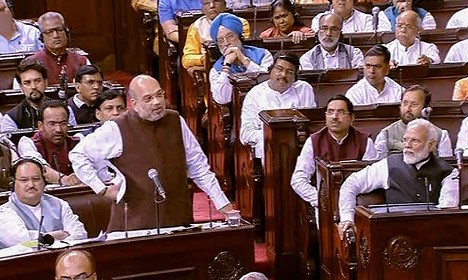
Home Minister Amit Shah places “The Constitution (Application to Jammu and Kashmir) Order, 2019” in Rajya Sabha on August 5, 2019 for revocation of the contentious Art 370 and Art 35-A from the Indian Constitution. (Photo: PTI)
Impatience has no room in history. Since August 5, when Art 370 was revoked, it has been barely sixty days which is too little a time for complete normalcy to return to J&K. Let’s not forget that the state had remained a battlefield for seventy years. A decade, therefore, is a reasonable period to put the state back on the path to peace and progress. Since the foremost priority is to restore law and order, restrictions can only be removed slowly and in phases. Pak Army that faces an existential crisis in the wake of this development, is not going to give up easily. Wresting Kashmir, ‘it’s jugular vein’, had been its raison d’etre for positioning itself as the final arbiter of Pakistan’s politics and security. Short of declaring a war, Pak Army will, therefore, spare no effort to keep the pot boiling in J&K. Infiltration of terrorists and Jihadis, ceasefire violations and relentless subversive propaganda are among the tools it will employ for this purpose. Indian security forces have indeed their role neatly worked out. They have to dig in their heels for a long haul till Pakistan pays heavily for its suicidal mis-adventurism.
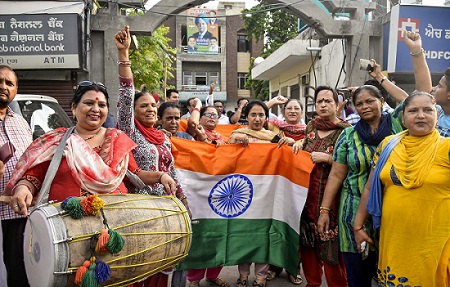
There has been widespread celebrations across India after the revocation of contentious Art 370 and Art 35-A from Indian Constitution that gave special status to Jammu and Kashmir. (Photo: PTI)
Let’s also not kid ourselves that Ram Rajya will dawn in J&K in a few months or years. To expect that nearly three generations of Kashmiris who were born, groomed and indoctrinated in Wahhabism and told to fight Indians till their last breath for independence will suddenly have a change of heart and accept the new reality. In any case, secessionism and insurgency are not something India has not been combating effectively to sustain its integrity. It took 67 years to quell the Naga insurgency, 20 years to bring Mizos in the national mainstream and 32 and 13 years to tame the ULFA (United Liberation Front of Assam) and PLA (People’s Liberation Army of Manipur) respectively. The Naxalite movement that began in 1967 in West Bengal continues to defy the lawful authority with guns and bombs in eight states of India. Significantly, leaders and activists of these outfits had also been trained, funded, armed and provided sanctuaries by Pakistan and China and their common objective was also to fight for a sovereign independent nation. J&K case is no different from theirs. But with an outpouring of nationwide support for the dilution of Article 370, and a stable, strong and decisive central government in place, there is no reason why Kashmiris cannot be made to understand the utter futility of living outside the Indian mainstream for a happier and prosperous future.
The moment the word “separatist” is
used in India, it conjures the image of Syed Ali Shah Geelani, Mirwaiz Umar
Farooq and their colleagues at the All Party Hurriyat Conference (APHC) in
Kashmir, who subscribe to this ideology. Use of the ideology of “separatism” as
a political tool in Kashmir, however, goes as far back as 1931 when some Muslim
pressure groups based in Lahore unleashed a fierce propaganda against the
ruling monarchy in Jammu and Kashmir with Maharaja Hari Singh at its helm. The
propagandists found in Sheikh Abdullah an able conduit to further their
activities. He was, at that stage, a budding revolutionary and leader of the
Muslim Conference.
In fact, Sheikh Abdullah realised, all
too soon, that the people of Jammu and Kashmir could not be made subservient to
the Sunni Muslims since the state constituted of great political and cultural
diversities with many other religions, cultures, dialects etc. The secular bonds
simply could not be broken. He, therefore, changed the name of his political
organisation from Muslim Conference to National Conference and opposed the idea
of Pakistan.
It is notable that all through the
Pakistan-sponsored tribal invasion of Jammu and Kashmir, the people of the
region supported the Indian Army to repel this attack. In fact, the Kashmiri
people were very anti-Pakistan because of the brutal atrocities that the invading
hordes of Pakistani mercenaries heaped upon them.
Sheikh Abdullah, as chief minister of
the state and with a brute majority in the state assembly started speaking in
1953 about revocation of Jammu Kashmir’s accession, which was a good six years
after Jammu and Kashmir had been firmly embedded as an integral part of India. This
was due to Sheikh Abdullah’s personal ambition and not because of any demand
from the people. Jammu Kashmir had acceded to India on 26October,
1947.
Sheikh Abdullah could not get what he
wanted and he was arrested. His arrest did not cause much disruption in the
state including the Kashmir Valley. This gave a clear indication of the people
not being with him on the issue of secession from the Indian Union.
The current situation of separatism
came by in 1987 due to the self-serving politics of new and emerging leadership.
It was limited only to the Kashmir Valley and followed the political model set
by Sheikh Abdullah.
Thus, the “ideology of separatism” has
always been the handiwork of a few local political players in their attempt to
gain power and has always been used for playing dirty, self-serving politics at
the local level in the Kashmir Valley.
The fatuousness of the current separatist
ideology becomes apparent from the disparate demands that are made under its
ambit. Some separatist leaders want freedom while others wish to align with
Pakistan. None have a practical road map for running of the state under any of
the said options. The entire ideology reeks of anarchism.
Separatists have dissected the people
of Kashmir into small sub- groups: Sufi versus Wahhabi; Shia versus Sunni
versus Pahaari; Urban versus Rural etcetera. The number of groups
existing now are too many to count.
It’s good that most of the separatist leaders are now under
scrutiny of the National Investigation Agency (NIA) for terror funding. Many
like Yasin Malik, Asiya Andrabi, Shabir Shah, Masrat Alam have been arrested
while others like Mirwaiz Umer Farooq, Syed Geelani are being questioned. These
leaders have admitted to the formation of a Joint Resistance Leadership (JRL)
that illegally extorted funds from the people, especially the business
community. The investigation process
has received a boost in recent days by the arrest of one Zahoor Watali who is
the kingpin for Hawala transactions of the separatists for foreign funding. Crucial
electronic and documentary evidence is now available to establish the pattern
of raising, collection, transfer and use of funds for terrorist and separatist
activities.
The money received has been utilised to spearhead violent agitations in the Kashmir Valley by issuing
“Protest Calendars” leading to economic shut down for months on end. It
has also been established, that these leaders have misused the funds for
personal purposes like funding the education of their children abroad. They
have been confronted with evidence of their investment in many properties and
commercial ventures mostly Benaami
(on names of others).
The misfortune of the Kashmir Valley is
aggravated by “separatism” being exploited as a political tool by foreign
powers to fan divisive and disruptive activities. All terrorist groups
operating in the state have maintained affiliations with some separatist group.
Dissatisfaction with the democratic
processes is the product of deliberate propaganda. It is given wind by
misrepresentation of facts. In actuality, the people want democracy and vouch
for it in all elections from grass roots upwards.
It becomes quite apparent from the
foregoing that the Indian Union has had little role to play in the basic ills
of corruption, nepotism, and political brinkmanship on the basis of which
secession is sought through the ideology of separatism.
The arrests, charges and choking of
funds have caused a state of complete disarray in all sections of the separatist
conglomerate. True to form, the so-called leaders have thrown ideology to the
winds and have got into self preservation mode. Those screaming against India
the loudest have suddenly become most accommodative.
It can be said with a fair degree of
confidence that the myth of separatism in Kashmir now stands broken for all
times to come. Democracy is gaining firm roots in the state inclusive of the
Kashmir Valley. Today, the word “separatist” evokes a feeling of dreadfulness
and dismay among the common, normal and hardworking people of Kashmir. This is
because they look upon separatists as a set of people whose only contribution
to their society is disruption and divisiveness leading to terrible economic
loss and social suffering.
With the separatists in doldrums,
Pakistan has been divested of its political control in the Kashmir Valley, the
resultant effect is quite visible from the desperate utterances of Prime
Minister Imran Khan at home and in foreign shores. Fortunately, the
international community is fully aware of the ground situation and is not
paying any heed to his diatribe. It is high time Imran Khan too reads the writing
on the wall and divert his energy to issues more critical for his nation like
economy, internal security etc.
World leaders and policymakers are finally feeling the pressure as talks on climate change gain ground especially in the wake of the Global Climate Strike. It is indeed worrisome as environmentalists and scientists warn of regular droughts and floods besides deadly storms as a result of rising sea levels, melting ice and severe heat waves.
The Population Council in one of its papers earlier
said that “…climate change and climate induced disasters pose a significant
challenge to poverty reduction, health and development in many developing
countries, including India.” Many have warned that the floods in Kerala, Orissa,
Assam and Bihar have been caused due to climate change and in the years to come
the situation will only worsen.
While the issue of climate change first gained
momentum in the late 1970s, precious little has been done so far. The landmark
Paris Agreement in December 2015 — represented by leaders around the globe –
was thrashed out seeking to reduce global greenhouse gas emissions. The journey
on this path, as we all know, has not been smooth.
It is time we analysed why we have failed. The fault
lies in the way our discourse has taken shape. It has always been made to feel
that economic development and nurturing environment can never go hand in hand.
In India, environmentalists and industrialists have often been at loggerheads.
Recently I noticed several of my friends on social
media take a pledge not to buy new clothes and start reusing their old clothes
to preserve nature. Many others are trying to change their eating habits—turn
vegetarian or even vegan, where one does not consume milk or milk products.
In my hometown Kolkata, a city known for food
especially its fish, a vegan movement has caught much attention. The Kolkata
Vegans, as they call themselves, urged the Bengali community to give up eating
fish. Now nobody would want to change her eating habit all of a sudden.
Let me talk about another incident. There have been
protests by farmers and non-governmental organisations (NGO) over the proposed Greenfield
international airport at Greater Noida in the Delhi-NCR (National Capital Region).
While the farmers’ compensation issue has been resolved and the Allahabad High
Court has even dismissed the dispute cases, the more pressing one relating to
environmental hazards needs to dealt with delicately and effectively.
Let me note here that the environmental issues
cannot have such knee jerk solutions or top down approach. What we discuss in
air-conditioned seminar halls in the country’s big cities needs to be resonated
in the remotest corners of the country. It needs deliberations and well formulated
holistic approach.
All stakeholders including environmentalists,
policymakers and economists need to be brought on one platform to thrash out a
solution that is acceptable to all. Why can’t our policymakers follow a simple
drill — for example, if we need an airport around Delhi, the decision-makers
can seek help of the environment scientists in identifying the plot of land,
which can be developed into an airport yet will have no negative bearing on
environment. Why do our babus and political leaders go in for
environment clearances at a later stage? Does it not require to be done just
after conception?
Environmentalists including activists, scientists
and policymakers need to have regular interactions to chalk out the best
possible path for economic development while preserving Mother Earth. We need
to do that to ensure that thousands in our country get jobs while nurturing the
environment simultaneously. Environmentalists, industrialists and policymakers
need to be on the same page and not confront one another as a routine
exercise.
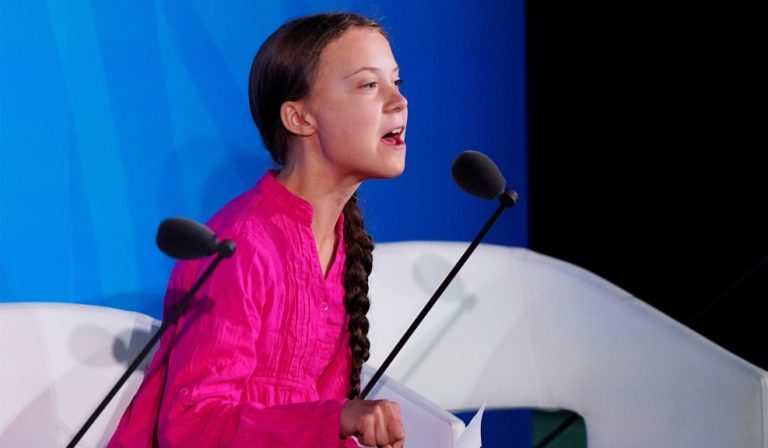
And just a thought before I wind up. While the 16 year old Swedish environmental activist Greta Thunberg’s speech has shaken the world and her anger is justified, we need to nurture and respect our own nameless and voiceless environmentalists who toil to nurture nature in their own small way. Build awareness across the spectrum.
Advocacy of human rights with a carefully cultivated “holier
than thou” persona has become the focus for Pakistan’s Prime Minister Imran Khan.
Amidst ranting of a nuclear holocaust his heart bleeds constantly for the
“atrocities being committed by the fascist Indian state” on the people of
Kashmir.
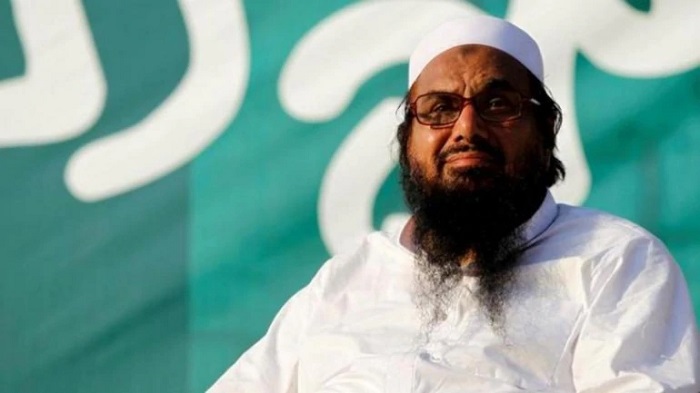
While the world has refused to take his ranting seriously, what is becoming more apparent is his hide-and-seek game with the international community as far as Mumbai terror attack mastermind and Jamaat-ud-Dawah chief Hafiz Saeed is concerned. Within a month of Counter Terrorism Department (CTD) arresting Saeed in connection with a terrorism financing case on July 17 this year, Pakistani authorities swiftly moved the United Nations to allow him to use his bank account for his family’s “basic monthly expenses.” It is baffling to figure out the purpose behind Pakistan writing a letter to the United Nations Security Council (UNSC) which, quite appallingly, approved its request as no objections were raised by member countries by the deadline of August 15.
Nevertheless, Pakistan has scored a self goal by approaching the
United Nations in a blatant show of its apathy for a terrorist. The recent
development has not only left its foreign policy mandarins shamefaced, but also
exposed their shady character.
This comes at a time when Imran Khan is beseeching the
international community against possible blacklisting of his almost bankrupt
country by the inter-governmental Financial Action Task Force (FATF). Pakistan,
has been placed on the grey list of countries whose domestic laws are
considered weak to tackle challenges of money laundering and terrorism
financing and has time till mid this month to get the decision revoked. The
Paris-based body is holding its week-long plenary meeting from October, 13 when
Pakistan’s fate will be sealed. Pakistan, which has been reeling under
double-digit inflation, high interest rates and massive discontentment as unemployment
rises, will be dealt a major body blow if it is blacklisted by FATF.
It should be recalled that the Asia Pacific Group (APG) under
the Financial Action Task Force (FATF) during its meeting in Bangkok last month
had placed Pakistan in the Enhanced Expedited Follow-Up List (Blacklist) for
its failure to meet 21 of the 27 action parameters. Out of 118 UN- designated
terrorists, Pakistan could show action against only five, including Hafiz
Saeed. The agency noted that no demonstrable action could be shown against
individuals like Masood Azhar, Rauf Azhar and Zakiur Rehman Lakhvi or groups
such as Lashkar-e-Taiba, Jaish-e-Mohammed, Falah-e-Insaniat, Haqqani network or
Daesh (Islamic State).
Last year also, Pakistan had made a mockery of its so-called avowed
commitment to the implementation of the United Nations Security Council 1267
sanctions regime on terrorists when it freed Saeed from the purported “house
arrest” with the lame excuse that the Lahore court did not merit his detention.
If that was not enough, Pakistan allowed Saeed to open the first office of his
political group Milli Muslim League (MML) in Lahore.
What makes Saeed such a formidable force that Pakistan wants to protect the UN-designated terrorist, who carries a $10 million American bounty on his head for terror activities? Well, Saeed is an important asset for Pakistani establishment which uses his influence to carry out terror activities in Kashmir and elsewhere. Whilst LeT remains banned in Pakistan, the political arm of the group, Jamaat-ud-Dawah (JuD) continues to function unhindered.
Saeed enjoys the support of the powerful Pakistan Army and ISI as
well. In fact, Pakistan Army chief Gen Qamar Javed Bajwa had come in full
support of him when he appeared before a parliament forum last year and said that
Saeed, like every other Pakistani, had the right to raise the Kashmir issue.
Approaching the UN Security Council is nothing but a false show
by Pakistan that it has choked all funds to Saeed who desperately needed money
to meet his expenses. In the letter, Pakistan has described Saeed, a designated
global terrorist, as an assistant professor of engineering and technology in
Lahore. In its overzealousness in garnering support for Saeed, Pakistani
foreign ministry officials convincingly forgot that the establishment had only
a few months ago arrested him on charges of terror financing. The latest
development is another concrete proof of the deepening nexus between the
establishment and the terrorists and terrorist organizations in Pakistan.
Pakistan’s steadfast support to terrorists like Saeed and his
ilk, that too when the FATF meet is scheduled next month, is something hard to
digest. Either it is not aware of the impending dangers or it is confident that
it will manage to extricate itself out of the mess. In the event of Pakistan being
downgraded further and blacklisted by FATF, not only will it lose its power to
approach major international banks for loans, no country or institution will be
permitted to invest in the country. Can Pakistan afford this? In the 36-member
FATF, Pakistan needs at least 15 votes to escape the humiliation and getting
blacklisted, which looks highly unlikely.
It is high time the global community sees through the
shenanigans of Pakistan whose Prime Minister Imran Khan has proudly claimed to
be hosting 30,000 to 40,000 terrorists and has threatened nuclear war with
India. Khan also boasted that “40 different militant groups” were
operating from Pakistan. What more evidence does the international community
need when the Prime Minister of Pakistan has himself claimed that his country
is the hub of terrorists! The world’s major powers have time and again
failed to practice what they preach in their so-called war against terrorism.
The problem is every country looks at terrorism through its own prism. For
example, Iran is a ‘number one nation of terror’ according to President Donald
Trump who carefully avoids a question on Pakistan as a terrorist country.
One is left with a feeling that some powerful countries don’t
really want an end to terrorism! Until and unless the world comes round
the view that terrorism offers the biggest challenge to the mankind and
requires concerted action, the war against terrorism is not going to succeed.
After the recent UN fiasco,
Pakistan’s Prime Minister Imran Khan has removed Pakistan’s permanent
representative to the United Nations, Maleeha Lodhi. The development came a day
after Prime Minister Khan returned from New York, where he faced widespread
criticism for his maiden address to the UN General Assembly last week. The
Pakistan Foreign Office gave no reason for Lodhi’s removal in a statement on
Monday.
Replacing Maleeha Lodhi, Munir
Akram, known for his hard anti-India stand, has been appointed as Pakistan’s
new permanent representative to the United Nations. “Ambassador Munir
Akram has been appointed as the Permanent Representative of Pakistan to the
United Nations in New York, in place of Dr. Maleeha Lodhi,” the Foreign
Office said.
“It has been an honour to
serve the country & am grateful for the opportunity to do so for over four
years. Representing Pakistan at the world’s most important multilateral forum
was a great privilege. I had planned to move on after UNGA following a
successful visit by the PM,” Lodhi said in a tweet.
However, Munir Akram’s track record has been quite dubious. Known for his hard anti-India stand, Akram, 74, earlier served as the Permanent Representative of Pakistan to the UN from 2002 to 2008. He was dismissed by the then president Asif Ali Zardari over his disagreement in presenting the case of assassination of Benazir Bhutto to the United Nations. Bhutto, who was assassinated in 2007, was Zardari’s wife. Akram had also courted controversy after he was accused of domestic violence by his partner Marijana Mihic in December 2002 while serving as Pakistan’s ambassador to the UN. The case was reportedly settled out of the court and he was not charged with the crime due to his diplomatic immunity. The Foreign Office statement said Akram is likely to join soon and would be stationed at the UN’s New York headquarters.
Among other transfers approved by Imran Khan include appointment of Khalil Ahmad Hashmi, presently serving as Director General (UN) at Ministry of Foreign Affairs (MoFA), as Permanent Representative of Pakistan to the UN in Geneva.
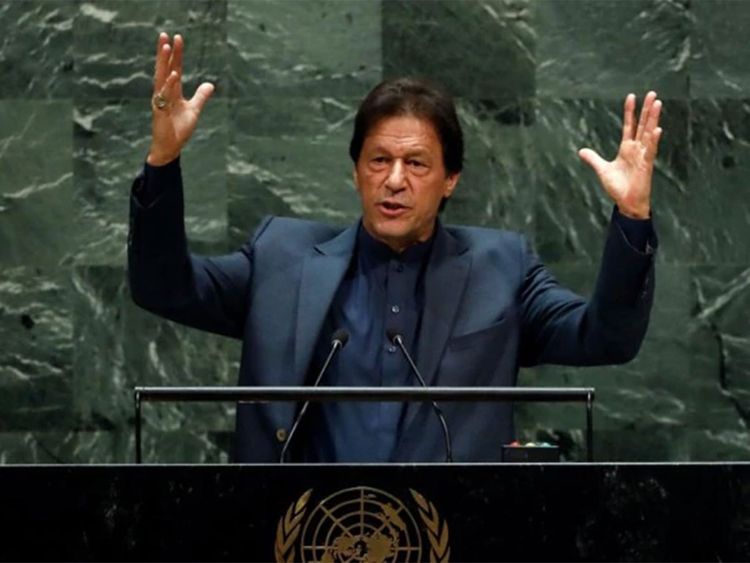
Earlier, Khan delivered his
maiden speech at the 74th UN General Debate on Friday and in his almost
50-minute address, devoted half of his time to India and Kashmir, drumming up
hysteria over nuclear war.
India exercised its right of
reply to the statement made by Khan later on Friday and fend off the
allegations made by the Pakistan PM. Strongly
hitting back at Pakistan Prime Minister Imran Khan’s rant at the UN General
Assembly, India has said its citizens do not need anyone else to speak on their
behalf and “least of all those who have built an industry of terrorism
from the ideology of hate.”
“Every word spoken from the
podium of this august Assembly, it is believed, carries the weight of history.
Unfortunately, what we heard today from Prime Minister Imran Khan of Pakistan
was a callous portrayal of the world in binary terms. Us vs Them; Rich vs Poor;
North vs South; Developed Vs Developing; Muslims vs Others. A script that
fosters divisiveness at the United Nations. Attempts to sharpen differences and
stir up hatred, are simply put – ‘hate speech’,” First Secretary in
India’s Permanent Mission to the UN Vidisha Maitra had said.
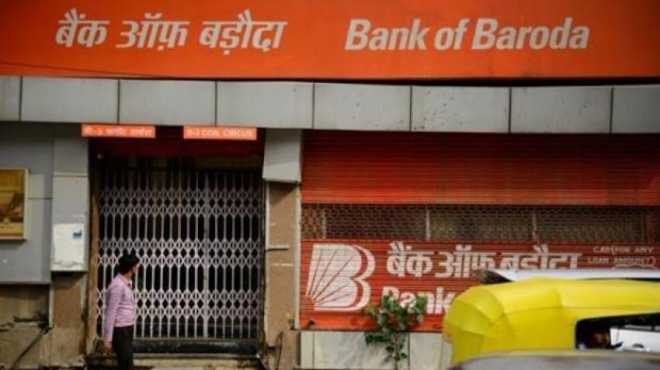
Indian Army and Bank of Baroda, the 2nd largest Public
Sector bank, have entered in a Memorandum of Understanding (MoU). This MoU lays down the basis on which banking
services would be provided by Bank of Baroda to serving and retired personnel
of the Indian Army. The ceremony was
chaired by Lieutenant General Ashwani Kumar, Adjutant General. The MoU was signed by Lt Gen Harsha Gupta,
Director General (Manpower and Personnel Services) and Shri VS Khichi,
Executive Director, Bank of Baroda in presence of Shri PS Jayakumar, Managing
Director, Bank of Baroda.
Some salient features of this MoU include Free Personal
Accident Insurance (Death & Permanent Total Disability) cover of Rs 30
lakhs, Free Air Accident Insurance (AAI) cover of Rs 15 lakhs to Rs 50 lakhs
and overdraft facility upto three times of monthly net salary. The features are also applicable for
pensioners of Indian army upto the age of 70 yrs.
Bank of Baroda has extensive national and international
presence having 9500+ domestic branches and presence in 24 countries. Through this MoU, bank has assured a new and
customized banking experience for serving and retired personnel of Indian Army.
The United Nations
General Assembly (UNGA) week is over, and theatrics of the “selected Prime
Minister of Pakistan” Mr Imran Khan can now be analysed. So much desperation, so much bluster and open nuclear threat
in the speech from Imran Khan at the UN General Assembly is unprecedented and
deserves condemnation from everyone.
What was Imran Khan’s real agenda and what was he trying to talk about? Who was he addressing in his rambling speech littered with so much abuse, so much rhetoric, and so much frustration and anger? Someone summarised that in Mr Khan’s speech he used Narendra Modi 12 times, Kashmir 25 times, Terrorism 28 times and Islam 71 times! Using terms like bloodbath is unacceptable.
Leaders of Pakistan and the Congress party have realised
that when nothing works, blame the RSS. Raising the matter of RSS at United
Nations was ridiculous since Mr Khan and his band of merry men have absolutely
no understanding of the work being done by the RSS. They are simply parroting
what they hear from the leaders of the Congress party in India.
Talking about Hitler and Mussolini and comparing them to the
RSS and warning the international community from the most haloed podium of the
United Nations General Assembly went down very poorly with most world leaders.
Everyone was surprised to see the Prime Minister of a country raving and
ranting well beyond his allotted time, trying to plead for help while
threatening the world.
Khan has openly encouraged the terrorists being supported by
his Army in Pakistan to indulge in Jihad and has therefore justified and given
permission and encouragement to the terrorist organisations and the Pakistan
Army to start sending terrorists into India. At the same time, he is also
making an impartial appeal about how Islam is a religion of peace and how
Pakistan has been the biggest sufferer of the war against terrorism.
When
did Jihad, an Arabic word which literally means striving or struggling,
especially with a praiseworthy aim become a term synonymous with terrorism,
destruction, revenge and death?
What is interesting is the way Mr Khan tried to take the
position of a leader of Islam in the world when he tried to explain, in a
desperate tone, how people who follow Islam get offended when the world says
anything against their religion. It is another thing that everyone who is not a
believer is a kafir. Not once did he say that it is necessary for people who
follow the religion to make any changes to themselves. He has conveniently put
the entire blame of all the problems of 9/11 and thereafter on the rest of the world.
He strongly condemned the use of the words radical Islamic terrorism but did
not even once suggest that the responsibility for reining in the jihadists lies
with leaders like himself.
His speech the previous day at the Asiatic Society was the
same as the one he made in the General Assembly and to be fair to him, he did
say that the Asiatic Society speech was a practice speech. He had nothing new
to talk about except Kashmir, Islam and how the world needs to so much more for
the religion.
Earlier, Imran Khan, sitting with his tasbih while
talking to President Trump is a picture worth thinking about. His body language
gave away his nervousness. He was appealing to the most powerful man in the world
while praying to Almighty God hoping that there would be a miracle. He was
desperate for a positive comment that he could take back home something like
“winning the World Cup” after his first meeting with President Trump that was
apparently set up at the request of the Crown Prince of Saudi Arabia.
Not once did he talk about the incredible poverty of
Pakistan, the major shortage of power, water, fuel and food supplies. He chose
not to speak about the illiteracy and the very poor health record of his
country. He ignored the impassioned pleas of Balochistan and the other
suppressed minorities in Pakistan. He did not speak about the bankruptcy his
nation is facing because of corruption and mismanagement and conveniently laid
the blame for Pakistan likely to be blacklisted by the Financial Action Task
Force (FATF) on India.
Imran Khan has returned to Pakistan empty handed. His
supporters and that large number of journalists were expecting a miracle from
his trip to the US. He had assured them that nothing short of a revocation of
Article 370 would be acceptable to him! Not only did he not get anything from
the world leaders who did not believe a word that he spoke with but also his
borrowed plane from Saudi Arabia refused to take him back owing to a technical
error and he had to fly home on a commercial plane.
While lending a plane to Mr Khan, Saudi Arabia also assured
India that they will ensure that India will not face a shortfall of a single
drop of oil. To add insult to injury Saudi Arabia has just announced a US$100
billion investment package in India (Mr Khan would have happily sold the entire
Pakistan for 25% of this amount to Saudi Arabia).
Imran Khan needs to stop terrorism once and for all, which
will be tough, now that he has unleashed these forces. He needs a buy in from Pakistan
Army which still seems to be motivated by Bhutto’s threat of hurting India with
a “thousand cuts.” If the Pakistan Army is on his side, he needs to shut down
his factories of terrorism. Not only will the world heave a sigh of relief but
also his own people, who by his own admission have been the biggest sufferers.
If Imran Khan truly wants to attain the stature as a world
Leader he must work for the people of Pakistan. He must focus on building his
country and bring back the credibility his country used to enjoy in the world around
three decades back. He must work towards normalising relations with India
rather than keep competing with and threatening India. A supportive India can
do a lot for his broken and impoverished country. Trade must be resumed, and
people-to-people interaction must be improved. A safe Pakistan can open the
doors to millions of tourists who would love to visit Pakistan. The economy of
Pakistan must be revived.
Is Imran Khan the “selected”
Prime Minister being propped up by Pakistan Army? Or the leader of the Muslim world?
Or the leader of the Radical Islamist movement? Or the playboy who won the Cricket
World Cup and built a cancer hospital? Or the leader of Tehreek-e-Insaaf who
Pakistan had thought would deliver them from all the challenges of the previous
leaders? Or is he simply
“Imm the Dim” as he is popularly called by some political
commentators?
Will the real Imran
Khan please stand up to be counted?
We use cookies on our website to give you the most relevant experience by remembering your preferences and repeat visits. By clicking “Accept All”, you consent to the use of ALL the cookies. However, you may visit "Cookie Settings" to provide a controlled consent.
This website uses cookies to improve your experience while you navigate through the website. Out of these, the cookies that are categorized as necessary are stored on your browser as they are essential for the working of basic functionalities of the website. We also use third-party cookies that help us analyze and understand how you use this website. These cookies will be stored in your browser only with your consent. You also have the option to opt-out of these cookies. But opting out of some of these cookies may affect your browsing experience.
Functional cookies help to perform certain functionalities like sharing the content of the website on social media platforms, collect feedbacks, and other third-party features.
Performance cookies are used to understand and analyze the key performance indexes of the website which helps in delivering a better user experience for the visitors.
Analytical cookies are used to understand how visitors interact with the website. These cookies help provide information on metrics the number of visitors, bounce rate, traffic source, etc.
Advertisement cookies are used to provide visitors with relevant ads and marketing campaigns. These cookies track visitors across websites and collect information to provide customized ads.
Necessary cookies are absolutely essential for the website to function properly. These cookies ensure basic functionalities and security features of the website, anonymously.
Cookie
Duration
Description
cookielawinfo-checkbox-analytics
11 months
This cookie is set by GDPR Cookie Consent plugin. The cookie is used to store the user consent for the cookies in the category "Analytics".
cookielawinfo-checkbox-functional
11 months
The cookie is set by GDPR cookie consent to record the user consent for the cookies in the category "Functional".
cookielawinfo-checkbox-necessary
11 months
This cookie is set by GDPR Cookie Consent plugin. The cookies is used to store the user consent for the cookies in the category "Necessary".
cookielawinfo-checkbox-others
11 months
This cookie is set by GDPR Cookie Consent plugin. The cookie is used to store the user consent for the cookies in the category "Other.
cookielawinfo-checkbox-performance
11 months
This cookie is set by GDPR Cookie Consent plugin. The cookie is used to store the user consent for the cookies in the category "Performance".
viewed_cookie_policy
11 months
The cookie is set by the GDPR Cookie Consent plugin and is used to store whether or not user has consented to the use of cookies. It does not store any personal data.