Home Blog Page 41

POJK: Pak Army launches violent crackdown on students in Rawalakot

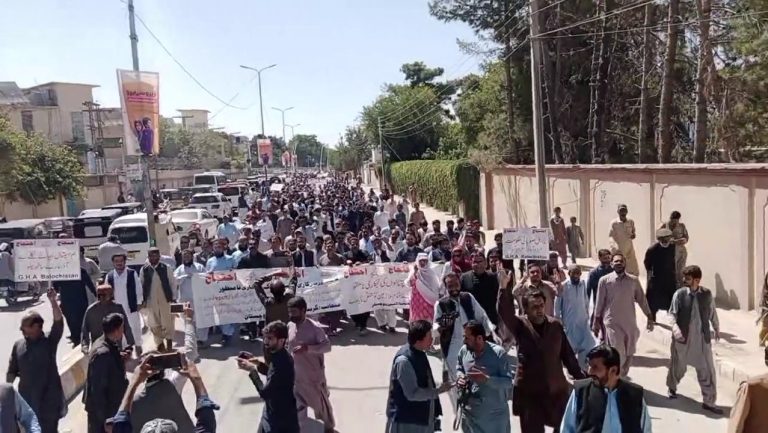
In a powerful video message, Shokat Nawaz Mir, a core member of the Pakistan-occupied-Jammu Kashmir Joint Awami Action Committee, voiced his condemnation of the brutal violence inflicted upon students in Rawalakot during a peaceful protest. The students were demonstrating against the Mirpur Board’s unjust marking in the first year part 1 exam results. In an alarming display of occupied-governmental repression, the administration responded with violence, underscoring the ongoing crisis in Pakistan-occupied Jammu & Kashmir where student rights are routinely trampled.

Students from Rawalakot have issued a three-day ultimatum for their demands to be met, warning that if their voices remain unheard, they will escalate their protests to involve students from across the state.

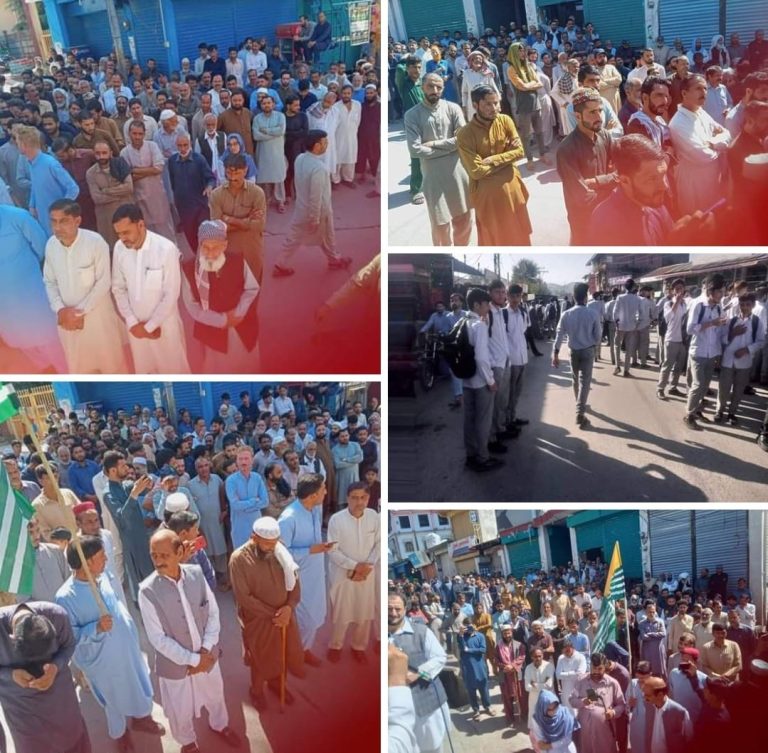
The protests are not isolated to Rawalakot; student organizations have also taken to the streets in Abbaspur, where demonstrators gathered at Milad Chowk to condemn the occupied-administration’s violent crackdown on unarmed students. The incident highlights the dire state of governance in the region, where the Punjabi Pak Army’s brutal tactics further suppress dissent and silence those advocating for fundamental rights.

Students from Jamia Kashmir University have also condemned the occupied-administration’s actions, calling for an immediate cessation of such low tactics against peaceful students. “We will not tolerate the brutal treatment of our fellow students,” a representative said, vowing to initiate a state-wide protest if the violence continues.

This incident serves as a stark reminder of the ongoing struggles faced by students in POJK, where the Paki establishment resorts to violence to quell dissent. The failure of the Mirpur Board and the oppressive tactics employed by the Pakistan Army illustrate a broader pattern of neglect and brutality.

Armed assailants attack female deputy commissioner’s vehicle near Zhob

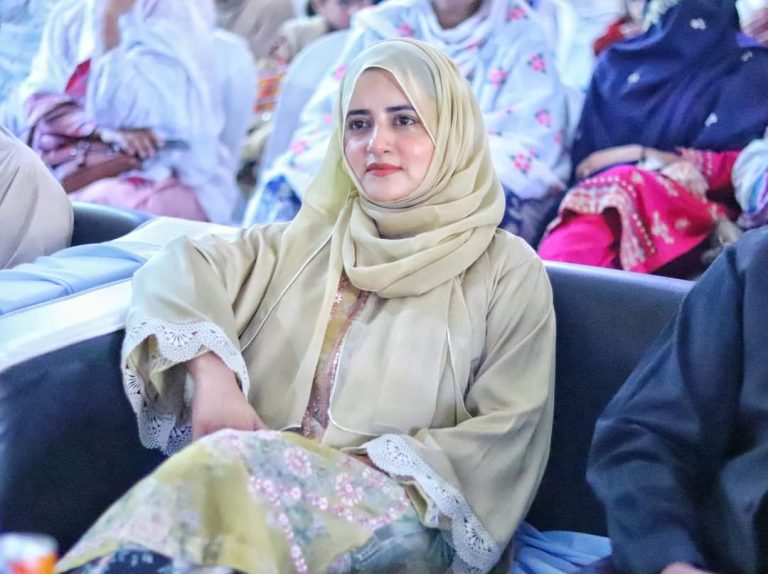
Armed assailants targeted the vehicle of Sherani’s Deputy Commissioner, Sana Mah Jabeen Umrani, as she traveled from Quetta to Sherani. The ambush occurred near Zhob, where the attackers opened fire on her vehicle.

The bullets hit the vehicle, but quick retaliation from security personnel forced the attackers to flee the scene. Levies officials confirmed that the deputy commissioner and her staff escaped the incident unharmed.

No group has claimed responsibility for the attack so far, and the authorities have launched an investigation.

Pakistan Army launches large-scale operation in Kolwah

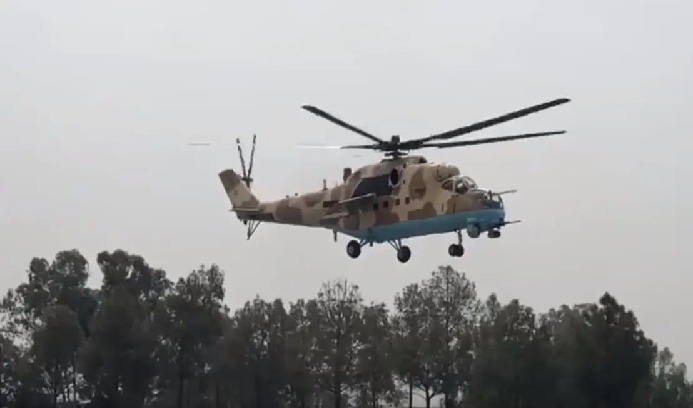
In yet another demonstration of its heavy-handed tactics, the Pak Army has launched a large-scale military operation in the Kolwah area of Kech district, Pak-occupied-Balochistan. Since Thursday, there has been a significant movement of troops and vehicles, as well as the deployment of gunship helicopters, signaling an escalation in military activity against the local population.

Reportedly, a large contingent of Pak forces advanced into Kolwah and neighboring areas in several military vehicles. The arrival and departure of three military helicopters have intensified operations in this remote and troubled region.

While the Pak Army remains stationed in multiple locations, occupied-authorities have provided no official details regarding the nature or objectives of the operation. This lack of transparency has raised concerns about the safety of civilians, especially given the Army’s notorious track record in POB, where enforced disappearances, extrajudicial killings, and other brutal suppression tactics have been commonplace for decades.

The military’s ongoing presence and actions continue to fuel the resentment of a population that has long resisted Pakistan’s efforts to silence their voices and marginalize their identity.

Civilians caught in crossfire as Pak Army turns POB into a warzone

Four people, including a police officer, were killed, and five others injured in separate incidents of gunfire in Dera Murad Jamali and Khuzdar. These violent events highlight the deepening chaos in a region already destabilized by decades of Pak Army interference and brutality, where even daily activities have become life-threatening for civilians.

In Dera Murad Jamali, unidentified armed men opened fire on a prisoner van at the gate of the District Jail, killing a prisoner and a suspected attacker. The attack left three police officers and another prisoner injured, with the officers’ conditions reported as critical. Heavy police forces were deployed to the scene, swiftly transporting the wounded to Dera Murad Jamali hospital.

Meanwhile, in Khuzdar, at the Jalawan Complex, an exchange of gunfire between the police and alleged robbers left a police officer and a suspected robber dead. One robber was arrested, and a passerby was also injured in the crossfire.

These deadly confrontations come at a time when Pak-occupied-Balochistan is already teetering on the edge of collapse, thanks to the destabilizing role of the Pakistan Army. The military’s oppressive tactics and brutal suppression of dissent have created a hostile environment in the region, where violence is not only directed at occupied-state forces but also spills over into the lives of innocent civilians. The Army’s heavy-handed presence has turned the region into a battleground, where the corrupt establishment launches indiscriminate terror both on civilians and freedom fighters.

These recent incidents underscore the fact that for many in POB, the threat of violence is an everyday reality—whether it comes from the occupied-state, Army-backed-armed groups, or criminals taking advantage of the lawlessness. The region remains a symbol of Pakistan’s forceful occupation, its failed policies, where the military’s unchecked power has not only exacerbated internal strife but also driven the innocent into a cycle of violence from which they cannot escape.

Pak Army tries hard to suppress Pashtun resistance ahead of Jirga

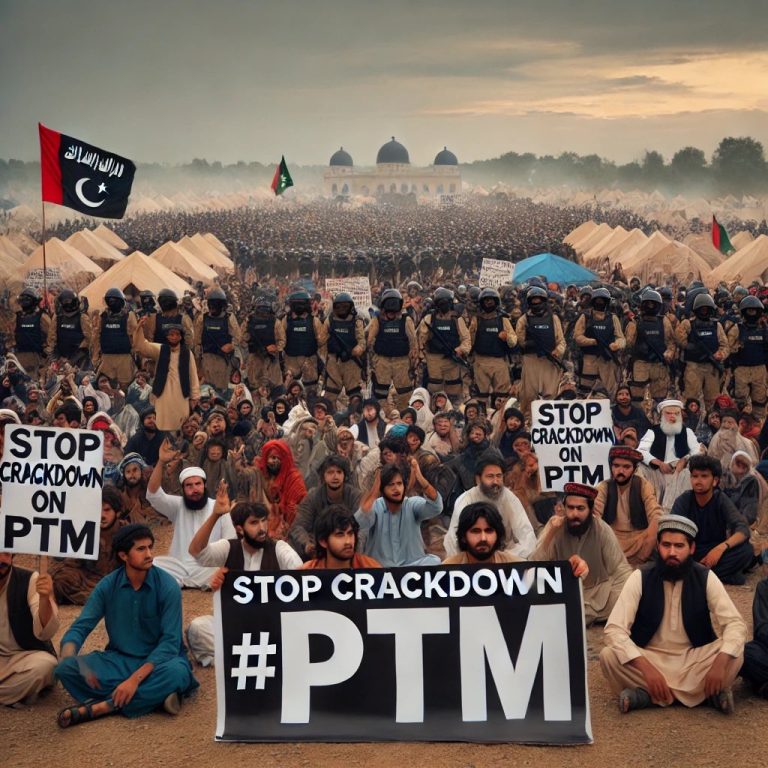
The Punjabi Pak Army has launched a brutal crackdown on Pashtuns who were preparing for a peaceful gathering on the plains of Khyber. The peaceful deliberations, organized by the Pashtun National Jirga/Court (PNC), were met with a violent police crackdown, including excessive force, tear gas shelling, and the destruction of encampments.

The PNC Organizing Committee strongly condemned the actions of the Army and police, saying that the crackdown reflects Pakistan’s deep-seated fear of any form of Pashtun unity. The abduction of the Peshawar coordinator of the Pashtun Tahafuz Movement (PTM) is a further indication of the occupied-state’s strategy to silence critical voices.

As Pashtun leaders rally against the oppressive actions of the Paki establishment, Mishar, a key figure in the PNC, announced that the gathering would continue tomorrow, vowing to resist any further attempts to stifle their efforts. “If the police or Army officials dare to come again, we will take up arms against them,” Mishar said.

This heavy-handed response is not an isolated incident but part of a larger, calculated move by the Paki establishment to provoke unrest among Pashtuns. By pushing them towards armed resistance, Pakistan aims to manipulate the narrative on the global stage, portraying itself as a victim of terrorism while seeking aid. The Paki establishment’s ultimate goal is to frame the Pashtun community as insurgents, using these incidents to justify their ongoing military operations under the guise of counter-terrorism.

The timing of these arrests is telling. The Pashtun National Court, a significant political event, is set to take place on October 11, yet the occupied-state is already targeting PTM workers to disrupt any organized efforts for Pashtun self-determination. Meanwhile, the protest planned at D Chowk in Islamabad by other factions—likely tied to the federation’s own agenda—faces no such suppression. This selective enforcement underscores the occupied-state’s willingness to suppress movements that challenge its hegemony, while turning a blind eye to other protests that may align with its interests.

By framing the Pashtuns as a threat, the Punjabi Pak Army seeks to create a façade of legitimacy for its violent suppression, while drawing in international support under the pretext of fighting terrorism. In reality, the occupied-state’s fear lies in the potential unity and power of Pashtun voices—voices that continue to challenge the deeply flawed and oppressive nature of the Paki establishment.

National gathering turns violent as Pak Army shoots & injures Baloch worker

On July 28, 2024, the Baloch Raaji Muchi in Gwadar, intended as a peaceful assembly for Baloch rights, descended into violence, exposing yet again the brutal tactics of the Paki establishment. The Baloch Yakjehti Committee reported that the gathering was violently disrupted by Pak Army, who blocked roads and opened fire on peaceful participants.

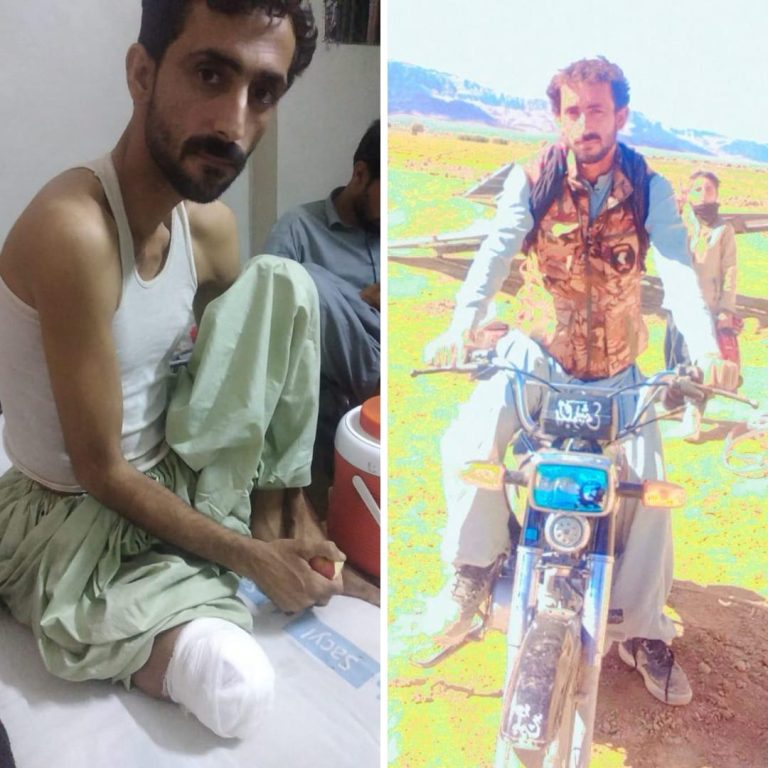
During the incident, Abdul Sattar, a 27-year-old laborer from Girisha Nal in Khuzdar, was shot in the leg by Pak forces at the Talar checkpoint, leaving him permanently disabled. The targeting of Abdul Sattar underscores the systematic oppression of the Baloch people, where even those participating in peaceful national events face life-altering violence.

The Committee further highlighted that Abdul Sattar’s condition deteriorated due to road blockades, internet shutdowns, and limited medical assistance, all of which exacerbated his injuries. These actions reflect the occupied-Pak state’s continued neglect of the welfare and basic rights of the Baloch people, where access to healthcare and information is routinely restricted.

Baloch Gathering Met with Gunfire

Adding to the tragedy, Abdul Sattar has been subjected to constant harassment by Paki intelligence agencies. He has been repeatedly summoned for questioning regarding his participation in the national gathering, facing threats to his life and his family’s safety. This harassment is emblematic of the Paki establishment’s broader strategy to silence dissent and intimidate those who dare to demand their rights.

The Baloch Yakjehti Committee has warned that if any harm comes to Abdul Sattar or his family, the responsibility will lie squarely with the Paki state and its agencies.

While the Pak Army claims to uphold law and order, its actions reveal a colonial mindset aimed at silencing Baloch voices through violence, intimidation, and neglect. The violent crackdown on peaceful assemblies, coupled with harassment of participants, is the strategy to suppress the legitimate aspirations of the Baloch people, who have long been demanding autonomy and respect for their rights.

Pasni Sit-In: Families demand recovery of missing Baloch youths

Residents of Pasni, a coastal town in Pak-occupied-Balochistan, have staged a sit-in near Pasni Zero Point, demanding the recovery of two individuals, Dar Muhammad Shafqat and Abdul Salam Baqi, who have been forcibly disappeared. Their families and local residents have taken to the streets, blocking the highway to all traffic in a show of solidarity and frustration over the ongoing crisis of enforced disappearances in the region.

The protest has led to significant traffic disruptions, with long queues of vehicles and dozens of cars stranded due to the blockage. The demonstrators asserted that both individuals were taken into custody by Pak forces on April 13 of this year and have since been missing after being transferred to an undisclosed location. This raises grave concerns about the Paki establishment’s disregard for the rights and safety of Baloch citizens.

The protesters have demanded the immediate recovery and presentation of Dar Muhammad Shafqat and Abdul Salam Baqi, warning that their protests will intensify if their demands are not met. The occupied-authorities are accountable for their ongoing plight and they urged human rights organizations to take action and raise awareness about these injustices.

Protests Erupt Across POB

The situation in POB reflects a broader pattern of occupied-state violence against the Baloch populations, where enforced disappearances have become alarmingly common. It is a tragic reminder of the oppressive tactics employed by the Pak military and intelligence agencies to silence dissent and stifle the voices of those demanding their rights.

Protests against enforced disappearances are also taking place in three other cities across POB. In Khuzdar, families of four young men—Amanullah Muhammad Hasni, Aminullah, Irshad Ahmad, and Dawood Baloch—who disappeared earlier this month, continued their sit-in for the fifth consecutive day, alongside political and social organizations, highlighting the urgent need for accountability.

Furthermore, the protest for the recovery of two brothers, Saber Noor and Abid Noor, who vanished from Panjgur, has also entered its second day. The relatives of the missing individuals held a press conference on Tuesday, giving the administration until 2 PM to locate the brothers. Since their failure to meet this deadline, the relatives have blocked the CPEC road, demanding justice and accountability for the ongoing violations against the Baloch people by the Pak regime.

Pak Army attacks peaceful PTM gathering with tear gas and live fire

In a brazen display of repression, the Pakistan Army-backed police and ISI forces launched a violent midnight attack on the site of the Pashtun National Court in Khyber. This unprovoked crackdown targeted members of the Pashtun Tahafuz Movement (PTM) who had gathered peacefully to prepare for the National Court, set to take place on October 11. What was meant to be a platform for peaceful assembly and discourse quickly turned into a scene of chaos as police forces unleashed tear gas, opened fire, and dismantled tents under the cover of darkness.

Despite promises of security from Khyber Pakhtunkhwa Chief Minister Ali Amin Gandapur, the reality unfolded with brutal force, showing once again the Paki establishment’s disdain for Pashtun rights. Activists and supporters of the PTM, who had come to organize and advocate for peace, were instead met with violence — an all-too-familiar tactic from a occupied-state that repeatedly stifles minority voices while selectively enforcing laws to protect its own interests.

Pakistan’s crackdown on Pashtun activists

This latest assault on the Pashtun National Court site is a clear demonstration of the colonial mindset that persists within the Paki establishment. The heavy-handed tactics — using live ammunition and tear gas against unarmed civilians — echo the state’s approach toward other ethnic communities.

Pashtun activists at the scene reported that the attack came without warning, with shots fired indiscriminately into the crowds. The injured have been rushed to Peshawar’s Hayatabad Medical Complex.

The timing of this assault raises serious questions about the power dynamics within the occupied-authority. Just days before, PTM leader Manzoor Pashteen had held a detailed meeting with Chief Minister Ali Amin Gandapur, who assured full security for the event. Yet, in the face of such violence, it is clear that these promises were hollow.

A Nation at War with Itself

The events in Khyber suggest that the orders of the civilian leadership are being openly disregarded by the military and police forces. If a Chief Minister cannot control the actions of his own security forces, his authority is nothing more than a facade. This incident not only undermines Gandapur’s leadership but also exposes the deeper rot, where the military consistently operates above the law, pursuing its agenda with little regard for civilian oversight.

The violence unleashed on the Pashtun National Court gathering mirrors the broader unrest plaguing Pakistan. In Pak-occupied-Balochistan, thousands of women protest the state’s brutal tactics every day. In Punjab, there is simmering anger over electoral fraud and political disenfranchisement. Yet, instead of addressing these legitimate grievances, the Pak Army continues its cycle of violence, hoping to quash any movement that dares to question its authority.

The Pashtuns, who have long suffered under the yoke of military repression, will not be silenced. Their demands for peace, dignity, and justice will only grow louder in the face of such blatant tyranny.

Iran launches over 180 missiles at Israel, Israel & U.S. promise strong retaliation

Iran announced on Wednesday that its largest-ever missile assault on Israel had concluded, barring further provocations. This comes after Tehran launched over 180 ballistic missiles at Israeli military targets on Tuesday night, marking a significant escalation in the ongoing conflict. Despite calls for a ceasefire from the United Nations, the United States, and the European Union, fighting between Israel and Hezbollah continued, raising fears of a broader regional war.

On Wednesday, Israel resumed its bombardment of Beirut’s southern suburbs, a stronghold of the Iran-backed Hezbollah group. At least a dozen airstrikes hit what Israel described as Hezbollah targets, sending plumes of smoke billowing over the area. The strikes followed new evacuation orders from Israel, as the suburbs had largely emptied after days of heavy bombardment.

Hezbollah claimed it repelled Israeli forces attempting to infiltrate the Lebanese town of Adaisseh early on Wednesday, forcing them to retreat.

Iran’s ‘Defensive’ Attack

Tehran described its missile barrage as a defensive move aimed solely at Israeli military facilities, responding to recent Israeli operations that killed senior leaders of Hezbollah and Hamas. Iranian state media confirmed that three Israeli military bases were targeted in Tuesday’s attack.

“Our action is concluded unless the Israeli regime decides to invite further retaliation. In that scenario, our response will be stronger and more powerful,” Iranian Foreign Minister Abbas Araqchi stated in a post on X (formerly Twitter) early Wednesday.

Israeli Prime Minister Benjamin Netanyahu vowed swift retaliation, declaring, “Iran made a big mistake tonight – and it will pay for it.” Netanyahu convened an emergency security cabinet meeting following the missile assault, signaling that a response was imminent.

The United States, Israel’s key ally, quickly pledged support, with U.S. Secretary of Defense Lloyd Austin assuring that Washington was “well-postured” to defend its interests in the Middle East. Austin confirmed that U.S. Navy warships had launched interceptors against Iranian missiles targeting Israel and promised to remain in close coordination with Israeli defense officials.

“Nearly 200 missiles were launched at Israel, and the U.S. defense coalition played a crucial role in intercepting them,” Israeli Rear Admiral Daniel Hagari said. He called the missile attack a “severe and dangerous escalation.”

While Iran boasted that 90% of its missiles hit their targets, Israel claimed that most of the projectiles were intercepted. Iran’s Revolutionary Guards reported using hypersonic Fattah missiles for the first time in the conflict, signaling the sophisticated nature of the assault.

International Calls for Ceasefire

Despite calls for restraint, tensions in the region continue to mount. French President Emmanuel Macron strongly condemned Iran’s missile attack and confirmed that France had mobilized military resources in the Middle East to support Israel’s security.

At the United Nations, Israel’s U.N. Ambassador Danny Danon warned that Iran would soon “feel the consequences” of its actions. “The response will be painful,” he said, while the White House echoed similar sentiments, promising “severe consequences” for Tehran.

U.S. President Joe Biden backed Israel, describing Iran’s attack as “ineffective,” but warned that the U.S. would act if necessary to defend its interests. Vice President Kamala Harris also underscored Washington’s commitment to standing by Israel, warning that Iran would face repercussions for its actions.

Israel’s ground operations in southern Lebanon, which began earlier this week, have resulted in mounting casualties. Lebanese government statistics show nearly 1,900 people killed and over 9,000 wounded in nearly a year of cross-border fighting, with most of the casualties occurring in the past two weeks.

The United Nations Security Council scheduled an emergency meeting to address the escalating conflict, while the European Union called for an immediate ceasefire to prevent further bloodshed.

Families block CPEC road in Panjgur after Pak Army abducts Baloch brothers

In a bold act of defiance, the families of two brothers abducted by Pak Army have blocked the CPEC Road in Pak-occupied-Balochistan’s Panjgur district, protesting the Pak military’s continued reign of terror in the region. The brothers, Sabir Noor and Abid, were forcibly taken into custody during a raid in the Tar Office area of Panjgur, further inflaming local resentment against the oppressive tactics of the Pak Army.

The families, along with local supporters, staged a sit-in at the Zam Zam Hotel in Panjgur’s Saradak area, bringing the crucial CPEC route to a standstill. This protest comes after a press conference earlier on Monday, where the families gave authorities until 2 p.m. to release the brothers. When no action was taken, the families followed through on their threat, blocking the road and drawing attention to the brutal tactics employed by the occupied-state.

This incident is just the latest in a long string of abductions carried out by the Pakistan Army, which has been wreaking havoc in POB for decades. The Army has systematically targeted Baloch civilians, abducting and forcibly disappearing them to show their dominance in the region. The disappearance of Sabir Noor and Abid highlights the military’s unchecked power, as local families are left helpless against the might of the Paki establishment.

Since its forceful occupation of Balochistan in 1948, the Pakistan Army has terrorized the local population, using fear and violence to suppress dissent. Today’s abductions and the subsequent protest underline the urgency of addressing the ongoing human rights abuses in the region. The continued abductions, forced disappearances, and violent crackdowns by the military are creating a climate of fear and instability, turning POB into a battleground of occupied-state-sponsored terror.