On the 27th September, both the Prime Ministers of India and Pakistan would address the United Nations General Assembly (UNGA) and like always, there will be no dearth of fireworks in the form of accusations and heated verbal exchanges, mainly on the issue of Kashmir. In purely material terms, whatever is said at UNGA matters little, but for Pakistan an opportunity to wax eloquent to a captive audience means a lot because the rhetoric it dishes out here serves as the annual dose of its pipe dreams to beguile simple Kashmiris into believing that Pakistan’s self-serving Kashmir narrative will someday and somehow still be able to alter international consensus of Kashmir being a bilateral issue that India and Pakistan need to mutually resolve without any third party intervention.
Coming close on the heels of New Delhi’s decision to revoke Article 370 of the Indian constitution that provided special status to J&K, the upcoming 74th UN General Assembly meet is bound to generate more sound and fury than ever before and Islamabad’s ‘curtain raiser’ does promise a lot of action and excitement. Prime Minister Imran Khan has already added the stimulating element of mystery by announcing that he would “forcefully present the Kashmir case like never before at the UNGA session.” Unable to subdue her penchant for histrionics, Pakistan’s permanent representative to the United Nations, Ambassador Maleeha Lodhi has also hailed Khan as being “the voice of the Kashmiri people at the UN” and declared that the UNGA session is “Mission Kashmir for the Prime Minister and for Pakistan.”
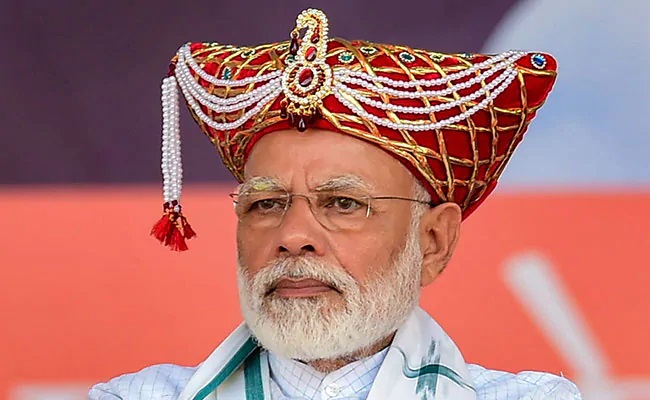
If Islamabad’s past track record of its discourse on the Kashmir issue is any indicator about the shape of things to come, then it’s almost certain that the pompous proclamations made by Khan and Ms Lodhi will (like always), end in a damp squib. But what’s more important for India is that instead of adopting a predominantly defensive stance, it needs to take a cue from Khan’s boast to “forcefully present the Kashmir case like never before at the UNGA session.” With the UN Security Council outrightly rejecting Islamabad’s claim that abrogation of Article 370 violated Security Council’s resolutions on Kashmir and explicitly ruling out any intervention in Kashmir, New Delhi is diplomatically in a very advantageous position. The timing is perfect and Prime Minister Narender Modi is just the right man who can decisively go for Pakistan’s jugular by demolishing its fallacious representation of the Kashmir issue.
Here’s what Modi could do —
- Apprise the world of the reality that while Islamabad keeps harping that New Delhi is not implementing UN Security Council’s resolutions on Kashmir, it’s Pakistan, which by refusing to vacate Pakistan-occupied Kashmir (PoK) under its illegal occupation as stipulated in UNSC resolutions, has scuttled the implementation of the same.
- Highlight the fact that if Pakistan genuinely considers J&K to be ‘internationally recognised disputed territory’ in wake of the UNSC resolutions, then under what legal authority has it unilaterally ceded a portion of this area to China? If UNSC considers J&K as disputed territory, then how Pakistan entered into the Sino-Pak joint CPEC (China-Pakistan economic Corridor) venture through PoK without seeking UN Security Council’s permission and when India, which is a party to this so called ‘dispute’, has in no uncertain terms disapproved of this project?
- Remind the international community that it’s not New Delhi’s obduracy but Islamabad’s policy of convenience on the issue of Kashmir due to which the Security Council resolutions have permanently lost their relevance.
- Reiterate that consequent to its unprovoked aggression aimed at seizing control of J&K in 1965 and its attempt to alter alignment of the Line of Control (LoC) by infiltrating troops in Kargil sector in 1999, Pakistan has lost all moral rights to talk about resolution of the Kashmir issue in accordance with UNSC resolutions.
- Unmask Pakistan’s devious designs of taking the high moral ground by talking of resolving the Kashmir issue through “peaceful means” and at the same time sponsoring cross-border terrorism and then having the audacity of justifying it as a “legitimate freedom struggle.”
- The international community should also be reminded that Pakistan is the only country in the world that has the dubious distinction of issuing a postal stamp in honour of a terrorist!
- While Pakistan says there are no terrorist sanctuaries or infrastructure on its soil, Prime Minister Imran Khan has as recently as just two months ago admitted that “when you talk about militant groups we still have about 30,000-40,000 armed people who have been trained and fought in some part of Afghanistan or Kashmir.” With the Pakistan Army saying that it is targeting terrorists of “all hue and colour,” Islamabad needs to explain to the world as to how on earth is such a humungous body of undesirable persons still moving around freely in Pakistan and how are they sustaining themselves.
In his address, Khan will surely make allegations of rampant human rights violations in Kashmir after Article 370 abrogation and project the temporary restrictions imposed purely as a precautionary law and order measure as a ploy to keep the world in the dark about atrocities being committed there. Therefore, it may be prudent to remined the international community that no one less than Barrister Khawar Qureshi who represents Pakistan in the International Court of Justice (ICJ) has himself admitted that there is no credible evidence of genocide being perpetuated by New Delhi in Kashmir, due to which “it is extremely difficult for Pakistan to take this case to the ICJ.”
Similarly, Khan will certainly accuse New Delhi of adopting an aggressive stance and vitiating the peaceful environment by indulging in provocative acts. Such accusations need to be effectively dispelled with facts and the international community needs to be reminded that it is Pakistan that has been displaying blatant belligerence by–
- Unilaterally suspending cross-border trade, suspension of the Samjhauta Express train service and even going to the extent of downgrading diplomatic ties with India.
- Closing its air space to the Indian civil aviation sector and even denying PM Modi the permission to use Pakistani air space while proceeding to the US.
- Issuing provocative statements like calling for ‘jihad’ (holy war) in Kashmir and issuing veiled threat about the possibility of war in case New Delhi doesn’t restore Article 370.
- Inciting communal passions in India as well as globally by referring to developments in Kashmir as “genocide of Muslims”and saying that this “should raise alarm bells around the world that illegal occupation of Kashmir is part of a larger strategy against Muslims”
- The army chief Gen Qamar Javed Bajwa beating war drums by announcing that “Pakistan Army firmly stands by the Kashmiris in their just struggle to the very end” and saying, “we are prepared and shall go to any extent to fulfil our obligations.”
Despite whatever Islamabad may feel or say, the fact is that Kashmir’s accession to India is perfectly legal and non-negotiable. Unfortunately, for reasons unknown, India’s approach to Kashmir in the past has not only been overly cautious and defensive, but downright apologetic as well. However, with the current dispensation in New Delhi widening the scope of debate on Kashmir by extending it to the issue of Pakistan’s illegal occupation of PoK, Islamabad is already on the backfoot.
India finally has Pakistan by its jugular and to let go now would be as detrimental to national interests as taking Kashmir to the UN Security Council was!
Tailpiece : India may be a peaceful nation, but when it comes to the question of territorial integrity there’s no other option but to take off the gloves of civility and take the threat by its horns. Let’s hope that Modi’s UN General Assembly address conveys the message to the international community in general, and Pakistan in particular, that on the issue of Kashmir, when push comes to a shove, India will not hesitate to exercise its legitimate right to preserve national interests in any manner that it deems fit.