Home Blog Page 411

US fines Japan Airlines USD 300,000 over long flight delays

There have been several instances in India where passengers have been trapped inside a plane for hours and yet no action has been taken against the airlines. However, setting a precedent, the US government is fining Japan Airlines USD 300,000 for delays that trapped passengers on two grounded planes for hours.

Under an agreement with the Transportation Department, the airline gets credit for USD 60,000 spent compensating passengers, and USD 120,000 will be waived if the airline avoids similar incidents for one year.

The department says that after bad weather forced a January 4 flight from Tokyo to New York to land in Chicago, airline staff needed to help passengers off the plane didn’t show up for more than four hours.

On May 15, a Tokyo-New York flight diverted to Dulles Airport near Washington, where passengers were stuck on board for five hours because of refueling and crew members reaching the end of their shift.

The airline blamed the delays on weather-related airport congestion. If a similar approach is adopted in India, airlines would be more careful while keeping passengers as ‘hostages’ inside their planes

Air Pollution: Odd-even scheme to be implemented in Delhi from November 4 to 15

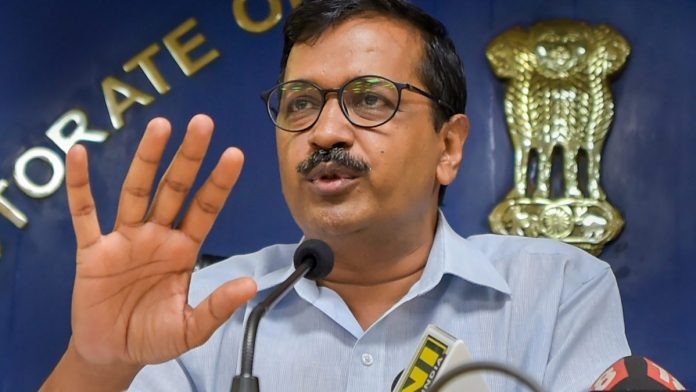
Delhi Chief Minister Arvind Kejriwal has announced that the odd-even road rationing scheme will be implemented in Delhi from November 4 to 15.

Kejriwal said the move was aimed at combating high levels of air pollution in winters when crop burning takes place in neighbouring states.

However, just minutes after Delhi chief minister Arvind Kejriwal announced that the odd-even car rationing scheme will be reintroduced in the capital to combat pollution, union minister for road transport Nitin Gadkari said there was no need for it right now.

“There is no need for it now….in next 2 years, Delhi will be pollution free. It’s their decision, let them do whatever,” Gadkari said.

Kejriwal announced the odd-even scheme as part of the seven-point ‘Parali Pradushan’ action plan that also includes mass distribution of anti-pollution masks, mechanised sweeping and water sprinkling on the roads, tree plantation, and special plans for 12 pollution hotspots in the city.

During the 12-day scheme, vehicles will ply alternately on odd and even dates as per their registration numbers. In the previous two experiments in January and April in 2016, a fine of Rs 2,000 was imposed on the violators of the rule.

Kejriwal said the details of the scheme will be shared with people in coming days.

In the past, two-wheelers and female commuters were exempted from the rule.

According to the graded response action plan (GRAP) devised by the Central Pollution Control Board, the odd-even scheme for private vehicles is implemented when the pollution level at ‘severe plus’ category persists for 48 hours or more.

The air pollution level in Delhi remains low in 11 months of a year but picks up in November due to stubble (parali) burning in the neighbouring states. Dense cloud of smoke covers Delhi, which becomes a gas chamber, the chief minister said.

“The Centre, and governments in Punjab and Haryana are making their efforts to prevent crop burning and the Delhi government will extend all possible help to them,” he said.

Talking about the impact of odd-even scheme, Kejriwal said studies have shown that it could reduce air pollution by 10%-13%. The scheme was criticised by some sections including experts on the ground that effect on air quality was limited.

“We will utilise our experiences of implementation of odd-even schemes twice in the past in Delhi,” he said when asked about overcharging by cab aggregators after the scheme is implemented.

Kejirwal said under the long-term plans to improve air quality in the city to “good” category, the government will soon announce its bus aggregator and e-vehicle policy.

Kejriwal said over 1,200 suggestions were received from the people regarding ways to combat air pollution in Delhi during winters. He also received feedback of environmental experts and resident welfare associations based on which the action plan was prepared.

“The Delhi government will make large-scale procurement of around 50-60 lakh ‘best quality’ N-95 anti-pollution masks which will be distributed among the people in October month before the spike in air pollution in next month due to parali burning,” he said.

Sprinkling of water and mechanised sweeping of roads will be undertaken to curb dust pollution. Twelve major pollution hotspots will be dealt with special plans and measures, he said.

Burning of waste and garbage will be checked through deploying two ‘environmental marshals’ in each ward. Besides, the government will engage RWAs and people to prevent the practice.

Also, a “Delhi Tree Challenge’ campaign will be started by the government in which saplings will be home-delivered to people, he said.

A war room will be set up to deal with complaints on air pollution. Awareness will be created among schoolchildren and they will be roped in to motivate their parents to help in efforts to curb pollution, the chief minister said.

COP14 concludes with an ambitious statement of global action by each country

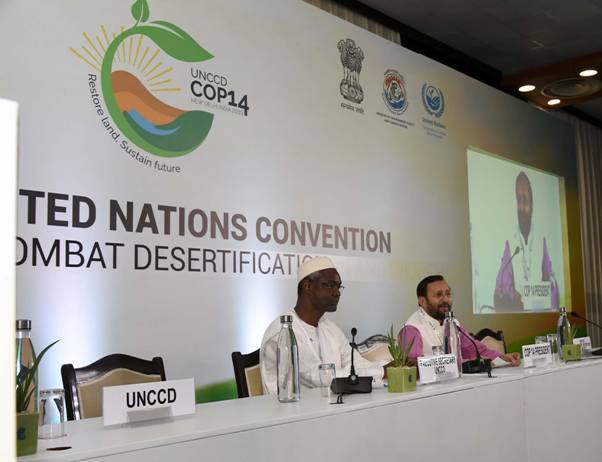
The 12-day long 14th Conference of Parties (COP14) to United Nations Convention to Combat Desertification (UNCCD) concluded with thought-provoking discussions on land management, restoration of degraded land, drought, climate change, renewable energy, women empowerment, gender equality, water scarcity and various other issues. India was the proud host of UNCCD COP14,which witnessed widespread participation from over 9000 participants from all across the globe at India Expo Centre & Mart, Greater Noida from 2nd to 13th September 2019.

Speaking at the Press Conference today on the outcomes of COP14, Union Minister for Environment, Forest and Climate Change (MoEF&CC), Prakash Javadekar exuded confidence that all three Rio conventions will work in synergy.

In an unprecedented global campaign to save productive land, country parties have agreed to make the Sustainable Development Goal target of achieving land degradation neutrality by 2030 a national target for action.

Javadekar reiterated India’s commitment to achieving land degradation neutrality by2030. He also committed to provide an effective leadership to the UNCCD during his two-year tenure of Presidentship.

Countries will address insecurity of land tenure, including gender inequality in land tenure, promote land restoration to reduce land-related carbon emissions and mobilize innovative sources of finance from public and private sources to support the implementation of these decisions at country-level.

The framework used for reporting action will be improved to ensure it captures key issues, such as gender equality, drought response and the influence of consumption and production patterns and flows on land degradation. Through the Delhi Declaration, ministers expressed support for new initiatives or coalitions aiming to improve human health and well-being, the health of ecosystems, and to advance peace and security. The Environment Minister stated “Delhi Declaration is an ambitious statement of global action by each country on how to achieve Land Degradation Neutrality”.

 “To my mind, this was the COP where we put people at the heart of what we do,” said Ibrahim Thiaw, Executive Secretary of UNCCD, with Parties adopting a breakthrough decision on land tenure rights and drawing on the unique voices, experiences of youth and women.

COP 14 also adopted a landmark decision to buttress global efforts to better mitigate and manage the risks of drought and to build resilience.

Thiaw also highlighted the contribution of COP 14 to the Climate Action Summit, stressing that land restoration, at scale, is one of the cheapest solutions to address the global crises of climate and biodiversity loss.

Attention was also drawn to the role, the private sector play in land restoration going forward, including through promoting sustainable value chains, as well as the incentives that will draw them in, such as the regulation in support of innovation for sustainable land management and rewarding conservation, restoration and sustainable use of resources.

COP14, ended today after 11 days of meetings, 11 high-level, 30 committee and over 170 stakeholder meetings, 145 side-events and 44 exhibitions.

Establish Supreme Court benches in different parts of the country: M. Venkaiah Naidu

Vice President M. Venkaiah Naidu has called for the expansion of Supreme Court and the establishment of more benches in different parts of the country, as per the recommendations of the Parliamentary Standing Committee on Law and Justice, to put an end to the inconvenience caused to litigants who travel long distances and spend a huge amount of money and energy to access justice. Saying that Election petitions and criminal cases against political leaders must be decided quickly by special benches of higher courts in a time-bound manner, Naidu called for setting up of separate benches to expedite such cases within six months or one year.

Naidu also called upon the three limbs of the state, the legislature, the executive and the judiciary to work together and inspire synergy to ensure all-round development of the nation. He opined that these organs of the state perform their duties best when they don’t transgress into each other’s territory.

Speaking after launching the book ‘Rethinking Good Governance’, authored by the former Comptroller Auditor General (CAG) Vinod Rai, in New Delhi, the Vice President said that decentralization of powers and responsibilities to local bodies must be implemented more efficiently and asserted that funds, functions, and functionaries must be transferred to these institutions. “This will bring governance closer to people and enhance its credibility and effectiveness,” he added

Opining that the welfare of the common man must be the enduring theme of our vision for transforming India, Naidu said that it was the pious responsibility of all to ensure that the fruits of democratic good governance reaches everyone, especially the ones who are at the farthest end of the development spectrum.

Stating that India was surging forward, fuelled by its vibrant economy and aided by a stable and progressive government, Naidu stressed that India’s far-reaching and path-breaking reforms must be further accelerated by citizen-centric, technology-oriented, robust, transparent, responsive, flexible and adaptable good governance practices.

Pointing out that the three important functions of legislatures were legislative, deliberative and accountability, the Vice President said that while some legislative bodies were functioning well, in many of them, there was certainly considerable room for improvement.

Saying that the constitution has vested the Parliament with sufficient instruments through which it could enforce accountability of the government, Naidu said that the efficacy of these instruments could only be as good as the Parliamentarians and political parties who deploy them.

Observing that the role played by an effective opposition in a Parliamentary democracy could never be undermined, Naidu said that it was up to the opposition to hold the government to account and to provide constructive criticisms and meaningful interventions in the legislative process as and when necessary. “Disrupting proceeding of the house is not the way forward,” he added.

Saying that today’s enlightened citizenry, especially the youth was watching actions of Parliamentarians very closely and questioning their actions, motives, and attitudes within and outside the House, Naidu asked Parliamentarians to always be mindful and respectful of the aspirations of the common man and advised them to carry on with rectitude and propriety, serving as model citizens of the country.

“We need legislators who are well informed and well intentioned and capable of articulating a well-presented viewpoint, not those who are eager to rush to the well of the House,” he said.

The Vice President asked political parties to adopt a code of conduct for their legislators and contribute to policymaking through informed decisions. He wanted Political parties to carefully choose candidates based upon their capacity, calibre, and good conduct and said that they must rise above the narrow considerations of caste and religion that seek to divide the society.

Calling for the need to constantly evaluate governance strategies and its outcomes, Naidu advised policymakers to be flexible and open enough to bring about course corrections whenever necessary.

He wanted them to accord priority to the quality of service delivery on all programs and schemes and ensure that the intended benefits of a programme must reach the people in time.

Expressing concern over the heavy pendency of cases in various courts in the country, the Vice President suggested reforming the system to eliminate judicial delays and also to improve its efficiency. 

Pointing that a number of civil and criminal cases have been pending for over 25 years, the Vice President  said that there was a need for division of the Supreme Court into a Constitution Bench at Delhi and Cassation benches in four regions – Delhi, Chennai / Hyderabad, Kolkata and Mumbai, as suggested the Law Commission

Expressing his agreement with the suggestions made by the Chief Justice of India to improve the functioning of the judiciary, he said that increasing the retirement age of high court judges and making tenure appointments to clear the backlog were pragmatic solutions.

China should forget Kashmir and focus on Hong Kong

China is not relenting from assisting Pakistan in its unsubstantiated posture on Kashmir. Chinese diplomats are making highly objectionable statements and attempting to raise the issue in international forums like the United Nations. China, further, is attempting to leverage the situation to once again highlight its covetous claims on Ladakh. Just a few days back, there has been a clash of patrolling parties of the Indian and Chinese Armies in Ladakh. The situation was, however, controlled at the local level by the military commanders on ground on both sides.

It is surprising that China, a responsible world power, is supporting Pakistani manipulations to interfere in the internal affairs of India despite most other nations refusing to get embroiled in what they perceive to be an internal matter for India. Alongside, it is also attempting to leverage such territorial claims over India that are both illogical and offensive.

In this melee, the more serious situation of China Hong Kong face off is going relatively unnoticed, especially so in India. It is quite incredulous to note that while China is supporting Pakistan’s blatant interference in the internal affairs of India so far as the state of Jammu and Kashmir is concerned it is using the most insidious methods to curb the liberties of the people of Hong Kong despite having given an assurance to respect the same. 

To recollect, more than two decades back in 1997, when Hong Kong was to be handed back to China by the British on expiry of a 99-year lease the then “Paramount leader” of China, Deng Xiaoping, assured application of a policy of “One Country, Two Systems” which meant that Hong Kong would continue to have a de facto constitution called “Hong Kong Basic Law”, which would assure a high degree of autonomy to the region. The law came into effect on 1 July 1997.

On paper this autonomy exists but, in line with the Chinese mastery of political double speak, the rights of the people of Hong Kong are being tampered with. The Chinese high command has successfully manipulated the elections and put in their puppets while sidelining those who favour democracy. There is talk of sudden disappearance of intellectuals, businessmen etc. who are seen as going against Chinese interests. Even visits by foreign media are being subjected to scrutiny. Mainland Chinese visiting Hong Kong are brutish and arrogant in their behavior.

The people of Hong Kong are unwilling to take all this lying down, while protests have been going on off and on since 1997 they have gained considerable momentum of late. Protestors are demanding the resignation of Hong Kong’s pro-Beijing executive and holding of free and fair elections. Hong Kong erupted at a mass level in June this year in protest against the Chinese attempt to strengthen its extradition powers. There were clashes at the Hong Kong International Airport. There was unprecedented and very embarrassing booing witnessed while the Chinese national anthem played in a football stadium. A song, “Glory to Hong Kong” written by a local musician has become the unofficial anthem of the city and is being sung openly in flash events in shopping malls etc; the lyrics include lines such as “Do you feel the rage in our cries? Rise up and speak up” and “persevere, for we are as one.” There are human chains being formed by as many as 200,000 people and the street protests are recording a turnover going to more than 1.5 million. The Hong Kong polices is hard pressed in containing this mass protest.

The Chinese authorities are looking at “threat of force” as an inhibitor for the spread of the movement. Chinese government has mobilised their Army towards Hong Kong and is now terming it as normal training activity. The malevolence, however, was not lost to anybody. While flexing muscle China is terming the protest activities as “atrocity” and “acts of terrorism.” This flexing of muscles, however, does not seem to be having any effect on the people.

Protest activists are attempting to create international awareness to their cause, especially so in Europe and the United States, much to China’s chagrin. The Hong Kong Diaspora is very active especially so in the United States where it is lobbying for Congress to pass a legislation that would enable US economic sanctions on China and the local government of Hong Kong.

President Donald Trump has remained reticent in speaking about Hong Kong but did tweet in August saying that if China wishes to reach a trade deal with the US it should treat Hong Kong humanely first. The Hong Kong protestors in Washington have considerably upped the ante by calling upon Trump to “liberate Hong Kong.” China has naturally issued a warning. “Foreign legislatures should not interfere in any form in the internal affairs of the island,” it says.

Chinese President Xi Jinping does not seem to be in any hurry to accede to the demands despite the protests getting into the 13th week now. He, however, will need to decide upon a concrete policy to deal with the situation. China has been prone to the use of force under such circumstances, as was seen at Tiananmen Square, but Hong Kong is a different ball game altogether. A break down there will have huge financial repercussions that will shake mainland China too. 

It would be so much better if China would desist from pontificating on Kashmir but, simultaneously, using brute force to subdue the legitimate claims of its own citizens. Such duplicity does not suit its stature as a world power. Pakistan is in no position to assist China in any manner and especially so far as Hong Kong is concerned, but India has a potential to play a crucial role. It is something that China should understand.

Philosophical and Historical Foundations of American Secularism 2 – Freethought Unbound by Geography, Nationality, and Ethnicity

Dr. Herb Silverman is the Founder of the Secular Coalition for America, the Founder of the Secular Humanists of the Lowcountry, and the Founder of the Atheist/Humanist Alliance student group at the College of Charleston. He authored Complex variables (1975), Candidate Without a Prayer: An Autobiography of a Jewish Atheist in the Bible Belt (2012) and An Atheist Stranger in a Strange Religious Land: Selected Writings from the Bible Belt (2017). He co-authored The Fundamentals of Extremism: The Christian Right in America (2003) with Kimberley Blaker and Edward S. Buckner, Complex Variables with Applications (2007) with Saminathan Ponnusamy, and Short Reflections on Secularism (2019).

Here we talk about the revisionist attempts on American history.

Scott Douglas Jacobsen: Another issue comes in the form of the historical revisionists in the current period from Evangelical Christian fundamentalists who amount to selective literalists with the intent to ‘correct’ the American historical record – from their point of view – into an Evangelical Christian ethos and framework for looking at the world. How far back does regressive activism exist in America? How can this obscure the American record? How has the history of America been damaged by this form and branch of fundamentalism? How did American fundamentalism erase some traces of pre-American, Native American, history, permanently, to the detriment of the possible knowledge base of the Americas about human history? Who might count as the first Native American freethinker who went against the grain of the traditions of the Native American religions or ways of life with supernaturalisms assumed in them, though different as described? Who might count as the first American freethinker at or after the founding of the nation?

Dr. Herb Silverman: Why do some Christian fundamentalists claim that our founders wanted America to be a Christian nation? Most efforts to connect the United States with Christianity rely on quotes and opinions from a few colonial-era statesmen who professed a belief in Christianity, but their statements of beliefs say nothing about Christianity as the source of the U.S. government.

Patrick Henry proposed a tax to help sustain “some form of Christian worship” for the state of Virginia, but Thomas Jefferson and other statesmen did not agree. In 1779, Jefferson introduced a bill for the Statute for Religious Freedom which became Virginia law. Jefferson designed this law to completely separate religion from government. None of Patrick Henry’s Christian views ever got introduced into law in Virginia or our national government.

Unambiguous language from our founders really should settle this debate over whether America is a Christian nation. In 1797, the Treaty of Tripoli was negotiated by George Washington, signed by John Adams, and ratified unanimously by the Senate. It stated in part: “The government of the United States is not in any sense founded on the Christian religion.” I wonder what part of “not” that Christian-nation advocates don’t understand.

There have always been people who erroneously believe the Founders intended to establish a Christian nation, but the framers were careful and thoughtful writers. Had they wanted a Christian republic, it seems highly unlikely they would somehow have forgotten to include their Christian intentions in the supreme law of the land. And I challenge anyone to find the words “God” or “Jesus” in the U. S. Constitution.

In debates I’ve had with those who think America was founded as a religious country, my opponents sometimes point to words in the Declaration of Independence as evidence of religious intent. However, the Declaration preceded the Constitution and does not represent the law of the land. The Declaration was a call for rebellion against the British Crown. The emphasis on people having inalienable rights was a way for our founders to distinguish us from an empire that asserted the divine right of kings. The Declaration mentions “the Laws of Nature and of Nature’s God,” and does not endorse Christianity or religion. “Nature’s” view of God agrees with the Deist philosophy. Thomas Jefferson, author of the Declaration, was a Deist and opposed to orthodox Christianity and the supernatural. 

Another argument I’ve heard supposedly supporting religion in government is the constitutional requirement that elected officials take an oath or affirmation before they can serve. Oaths are not necessarily a call to God. At that time, kings would swear oaths by their crowns and knights would swear oaths by their knighthood, so the concept of swearing an oath to something other than God goes back a long time and was well-known when the Constitution was adopted in 1787. Had our founders wanted officeholders to invoke God, they could have worded the oath to accomplish that objective. Instead, the oath or affirmation to uphold the Constitution contains no reference to God, need not be administered on the Bible and need not even be considered an oath. The option to either swear an oath or make an affirmation was written into our Constitution for the purpose of including those who did not feel comfortable swearing an oath to anything, let alone to God or some other deity.

An even weaker argument is that the Constitution was signed with the words “in the year of our Lord.” But that was a standard way of dating important documents in the 18th century. Its use was conventional, not religious, just as today we may use B.C. (Before Christ) or A.D. (Anno Domini, Latin for “the year of our Lord”) without having any religious intent.

While the federal government was not a Christian nation, it didn’t initially prohibit states from establishing their own state churches. Some early state constitutions limited holding public office to Christians or even to the correct religious denomination. Such provisions represented a more intolerant time in our history. States with government-favored religions gradually began moving toward separating religion and government, with the last state disestablishment occurring in Massachusetts in 1833.

The best-known Freethinker Founder was Thomas Paine. He influenced more early Americans than any other writer. In his pamphlet Common Sense, Paine made a case in clear and persuasive prose for independence from Great Britain, using arguments that had not yet been given serious intellectual consideration. Paine marshaled moral and political arguments to encourage common people in the Colonies to fight for egalitarian government. Common Sense was published at the beginning of the American revolution, and in proportion to the population of the colonies at that time (2.5 million), it had the largest sale and circulation of any book published in American history.

Nonetheless, Paine hasn’t received the credit he deserves, being mostly ignored in American history. The reason is because of his irreverentbook called The Age of Reason. In it he says, “I do not believe in the creed professed by the Jewish church, by the Roman church, by the Greek church, by the Protestant church, nor by any church that I know of. My own mind is my church.” And furthermore, “Of all the systems of religion that ever were invented, there is no more derogatory, more repugnant to reason, and more contradictory to itself than this thing called Christianity.” Many contemporary politicians sympathized with the views of Paine but didn’t openly support him for fear of the Religious Right of that day.

Years later, President Theodore Roosevelt referred to Paine as a “filthy little atheist” even though Paine considered himself a deist. Thomas Jefferson, who was sympathetic to Paine, got in trouble when he said, “It does me no injury for my neighbor to say there are twenty gods, or no God. It neither picks my pocket nor breaks my leg.” It is only recently, with more open Freethinkers today, that Thomas Paine’s accomplishments have been given the credit they deserve.

Another unknown leader in the American Revolution was Philip Freneau, recognized as the poet of the American Revolution, and America’s first atheist poet. See a fine article about him in Free Inquiry, August/September 2019. Freneau’s definition of theology is “the study of nothing.” He also said that the profession of priest is “little better than that of a slothful Blockhead.” Freneau denied the existence of an afterlife and viewed death as “a sleep that has no dreams.”

I know of no Native Americans promoting atheism, perhaps because there is no doctrine that they are expected to believe or follow. I think the belief that there are no gods began when theism began. On the day that humans invented religion, other humans invented atheism. 

A case can be made that the Christian brand of fundamentalism today is a consequence of the Bible Belt mentality during the Civil War. The Baptist denomination split as Baptists in the South broke away from the North and formed the Southern Baptist Convention, so they could continue to promote slavery within their religion. Slave owners did not want a religion that would make them feel guilty about the source of their riches. Their ministers preached a doctrine that their flock wanted to hear—the right of white men to own slaves who owed obedience in return, and a message that promoted the subjugation of women, Native Americans, and others. There are certainly passages of the Bible that condone slavery, and none that oppose it. The rich and powerful took their riches as a sign of God’s blessing on them. They were not interested in social justice.

In their pursuit of worldly power and dominion, conservative American churches today have thrown away the moral authority they once possessed. Now, as their prestige declines and their membership ebbs, they pursue government support. But as Benjamin Franklin said, “When a religion is good, I conceive that it will support itself; and, when it cannot support itself, and God does not take care to support, so that its professors are obliged to call for the help of the Civil Power, it is a sign, I apprehend, of its being a bad one.”

Congress mandated “In God We Trust” on all currency in 1955, and it was adopted as the national motto in 1956. The original U.S. motto, chosen by John Adams, Benjamin Franklin, and Thomas Jefferson, is E Pluribus Unum (Of Many, One), celebrating diversity, not theocracy.

Although we don’t have an official established religion, the Republican Party has tied Christianity tightly to a narrowly partisan and conservative set of policy priorities. They’ve spent the past several decades insisting that being Christian means politically opposing LGBTQ rights, reproductive choice, and supporting war and tax cuts for the rich. Many Christians want to bring back school-sponsored prayers and demand that sex education classes in public schools teach “abstinence only” instead of preparing teens to avoid pregnancy and disease. 

You will not find any support in the Bible for treating with respect those who have different or no religious beliefs. Scientific advances are particular targets. When a science book is found to be wrong, the mistake is corrected in subsequent books. But for biblical literalists, if the scientific evidence contradicts the Bible, it is the evidence that is thrown out.

In 2002, President George W. Bush said, “We need commonsense judges who understand that our rights were derived from God.” But “rights derived from God” is a belief, not an understanding, and judges are supposed to make decisions based on the rule of law, not on their personal religious beliefs. Similarly, President Trump recently said, “In America, we’ve always understood that our rights come from God, not from government.” These are examples of government leaders who want to turn our democracy into a theocracy. If Christian nation advocates were ever to have their way, this would no longer be the secular nation our founders so proudly formed.

Jacobsen: Thank you for the opportunity and your time, Dr. Silverman.

Previous entries in the educational series:

Philosophical and Historical Foundations of American Secularism 1 – Knowing History and Making History

Photo by Kupono Kuwamura on Unsplash

Dharmendra Pradhan wins hearts on Twitter, pitches in to help Octogenarian idli seller

Union Minister of Petroleum and Natural Gas and Steel Dharmendra Pradhan today won the hearts of Twitterati when he pitched in to help an octogenarian selling idlis in a village in Coimbatore get LPG connection. Kamalathal, the octogenarian lives in a village in Coimbatore and runs a small enterprise of selling idlis, that too for Rs. 1 a piece to make it affordable for workers of the village.

Story of Kamalathal was shared on Twitter by industrialist Anand Mahindra, who wrote “One of those humbling stories that make you wonder if everything you do is even a fraction as impactful as the work of people like Kamalathal. I notice she still uses a wood-burning stove. If anyone knows her I’d be happy to ‘invest’ in her business & buy her an LPG fueled stove.”

Dharmendra Pradhan, who is on tour to the Gulf nations to attend 8th Asian Ministerial Energy Roundtable Conference and bilateral meetings, took notice of the tweet. Taking time out of his busy schedule, he immediately directed officials to ensure Kamalathal gets LPG connection. Within a day, LPG connection was issued to Kamalathal. 

Sharing photo of Kamalathal receiving the LPG connection in a tweet, Minister Pradhan wrote, “Salute the spirit and commitment of Kamalathal. Glad to having helped her through local OMC officers in getting LPG connection. Society must empower such hard working people who defy all odds.”

This gesture received accolades on social media with people praising the gesture of minister.

New Delhi is determined to usher development in Jammu & Kashmir

1

“We as a nation, as a family, have taken a historic decision. A system due to which brothers and sisters of Jammu, Kashmir and Ladakh were deprived of many rights and which was a big obstacle to their development, that system has been done away with,” said Prime Minister Narendra Modi in his address to the Nation on August 8, 2019 post reorganisation of the state of Jammu and Kashmir into two Union Territories.

In saying so, the Prime Minister was referring to the deprivation as a result of certain anomalies that had come into existence due to the so-called “special status” given to the state by Article 370 and Article 35A, which now stands annulled. There were many socially relevant and development oriented legislations enacted by parliament and schemes initiated by the central government that were not applicable to Jammu and Kashmir due to the debilitating special status. Lack of audit scrutiny by the centre led to misuse of funds and corruption. The special status allowed a few families to dominate the political spectrum thus eroding evolution of democratic values in the state. There has been no major upheaval in the state post the decision of reorganisation. The change of status has, in fact, been welcomed by the people.

The question that arises here is: Will the NDA government under Prime Minister Narendra Modi be able to deliver on its promise of ushering democratic rights and development in the state as promised?

So far as the political aspects are concerned, New Delhi has promised early elections followed by a revision of the Union Territory status of Jammu and the Kashmir into a state. There exists no reason to doubt the will and determination of the government to stand by this promise. The timing will depend, to a great measure, on the manner in which political stability finds to roots in the region.

In areas of development the government has already taken many concrete steps to make good its promise. The Government of Jammu and Kashmir, under Governor’s rule, has been in a hyper-active mode to bring in projects and initiatives that will place the state at par with the rest of the country in the shortest period of time.

In an attempt to eradicate corruption, focus has been laid on ensuring empowerment at the grassroots. New Delhi has announced a grant of Rs. 366 crore to 4483 Panchayats for their development. Panchayats have been told to recruit 2000 accountants to maintain account books; the government has also decided to digitally connect 634 Panchayats, it is proposed to have two digital villages in each district and then spread the technology across the state. The government is conducting a mass reach to link all government schemes with Aadhaar and thus facilitate direct transfer of grants and subsidies. All these measures will go a long way in eradicating endemic corruption in the state.

The government has very rightly identified youth as the centre of gravity for ensuring progress and has proposed a special impetus for them. To ensure quality education at the school level, the process of making 43,000 teachers permanent under Sarva Shiksha Abhiyan has begun and honorarium of Anganwadi workers has been increased from Rs 3,600 to Rs 4,100. Also, 50,000 new jobs will be generated for the youth of J&K and focus will be on enhanced recruitment in central government jobs like paramilitary forces etc. Sports are an intrinsic part of child development; as such, a fund of Rs 250 crore has been set aside for building sports infrastructure; each Panchayat will soon have a playground. Juvenile Justice Board and Child Welfare Committee will be constituted in every district.

In the health sector, construction of AIIMS in Awantipora (Kashmir) and Vijaypur (Jammu) is underway. The number of MBBS seats has been increased from 400 to 900. A Cancer Institute is proposed to be built in Srinagar at a cost of Rs 120 crore. All grass roots Health Care Centres are being energised with manpower and equipment.

To give a perceptible boost to tourism, Phase 1 of Gulmarg Master Plan 2032 stands approved. Two wildlife sanctuaries are proposed at Tral and Kishanganga respectively. New tourist places are proposed to be developed in Leh and Kargil. Twelve new trekking routes across the region are being developed to promote eco-tourism.

Overall development is required to give a kick start economic activity in the state, in this regard effort is being made to maximise utility of the Rs 80,000-crore development package earlier announced for the state by Prime Minister Modi. Notably, implementation of this package remained slow and tardy under the PDP led state government.

The first phase of Jammu Ring Road will be completed by December, 2019; groundwork to provide 24/7 drinking water through pipes to 15 lakh homes is underway; survey of the rail link between Baramula and Kupwara has been ordered; work is on to beautify the Dal Lake in Srinagar by 2024, Srinagar will have a state-of-the-art Metro Rail.

To meet urgent requirements of housing and infrastructure nearly 50,000 homes in satellite towns are proposed to be developed in Srinagar and Jammu under Pradhan Mantri Gram Sadak Yojana, 1632 kms of roads are to be built in the state; construction of Industrial Bio-Technology Parks is underway in Kathua (Jammu) and Handwara (Kashmir). Two IT Parks, set up across 5 lakh sq ft land will come up in Jammu and in Kashmir.

To enhance social security, 66 villages included in the list of Backward Areas to be given special incentive and 85,000 farmers have been registered under PM crop insurance scheme. 40,000 people are to be included in Old Age Pension, Widow Pension Schemes. Financial assistance will be provided to Rs 5.5 lakhs refugees living in the state.

Prime Minister Modi has a reputation of standing by his word. If he has promised development and political change then he will spare no effort to ensure the same. If people give active support, the benefits envisaged will take root faster, otherwise, it will take time. There should be no doubt that change for the better will take place for sure. It is important that the people correctly asses the emerging situation and do not fall prey to such inimical voices that do not want to see the region prospering.

Tapsee Pannu to appear as Amrita Pritam in next film

After a series of insignificant roles in her last few films, Taapsee Pannu is all set to play a powerful character in Anubhav Sinha’s next film. Tapsee, who recently announced about her new film with “Mulk” director Anubhav Sinha, has now shared more details about her character in the project. She will be seen playing the role of acclaimed novelist late Amrita Pritam in the film ‘Thappad’.

Taapsee on Tuesday took to Instagram and wrote: “‘When a man denies the power of women, he is denying his own subconscious’ — Amrita Pritam. Moving from one Amrita to the other… Main tenu pher milangi…in theatres from 6th of March 2020.”

Along with the post, she uploaded an image in which she is seen reading a script donning a pink ethnic suit.

Pritam (1919-2005) was an acclaimed Punjabi poet-writer. She was born in Gujranwala (now in Pakistan) and is well-known for her poem “Ajj Aakhaan Waris Shah Nu” — a writing expressing the horrors and anguish of Partition. She is considered the first prominent female Punjabi poet, novelist, essayist and the leading 20th-century poet of the Punjabi language, who is equally loved on both sides of the India–Pakistan border.

Dharmendra Pradhan: Increasing energy consumption should be rooted in Energy Justice

Union Minister of Petroleum and Natural Gas & Steel Dharmendra Pradhan has said that the inevitable shift in global energy consumption to Asia is a reality. Addressing the opening session of the 8th Asian Ministerial Energy Roundtable in Abu Dhabi, he said that we now need to ensure that this change is rooted in Energy Justice, which was articulated by Prime Minister of India Narendra Modi as most important component of Energy Vision of India.

Pradhan said that the Emerging Asia will be driving the world economic growth in the coming 20 years. In the global context, developing economies will drive 80% of the incremental global growth, with India and China accounting for more than half of it.  He said “Energy access, higher standard of living and improved prosperity in developing countries will primarily drive the energy demand. It is important for the low income, low per capital energy consuming countries to have access to technology and capital when it comes to energy efficiency and clean technology. That will provide better energy security than short term interventions in fossil fuel supply and price.” He said that due to poor and imbalanced energy infrastructure, 400 million people in Asian region have no access to electricity, and rural residents have no access to clean electricity. Therefore, providing safe, stable, affordable and efficient energy has become an important task for governments of all countries.

Describing the Energy Vision of India, Pradhan said that it has been enunciated by Prime Minister Modi in 2016, and is based on four pillars i.e. energy access, energy efficiency, energy sustainability and energy security. “As part of our integrated approach towards energy planning during the last five years, India is placing enormous emphasis on energy access with energy justice as a key objective in itself,” he added. The Minister added that India has undertaken a number of path-breaking policies and initiatives during the last 5 years to realize energy justice for over 1.3 billion people in the country. 

Later, addressing the session on ‘Advancing Inclusive Access to Secure, Affordable, and Sustainable Energy Services’ in the event, Pradhan  said “In India, we have to improve availability of energy to over 1.3 billion people, whose per capita energy consumption is lower than the global average. Now, India is the third-largest energy consumer in the world, and its energy demand is growing faster than all major economies of the world. Our share of total global primary energy demand is set to double to 11% by 2040. We are preparing for such a growth path of energy demand in the country. This calls for making matching investments in the energy sector.”

Pradhan said “As part of our integrated approach towards energy planning, energy justice will be a key objective in itself. In this context, we are working towards the early realization of the UN Sustainable Development Goal (SDG) 7. A number of transformative policies and initiatives have been taken in India to realize the above objectives. We are significantly expanding our energy infrastructure – be it power generation, more renewables and gas-based infrastructure -pipelines, city gas network, LNG terminals. We launched a major campaign to improve access to clean cooking fuel under the Ujjwala Yojana scheme three years back, and Prime Minister Narendra Modi handed over the 80 millionth LPG connection couple of days back. A ‘Blue Flame Revolution’ is underway. LPG coverage has reached more than ninety percent from fifty-five percent five years ago. India attained universal electrification all villages. This year, India aims to achieve hundred per cent electrification of households, through SAUBHAGYA. Clean transportation is another area of high priority in India. We are jumping directly from BS-VI to BS-VI fuel by April 2020. India is moving towards a gas-based economy by increasing the share of gas from 6% to 15% in the energy mix by 2030. We have constructed over 16,000 km of gas pipeline and an additional 11,000 km is under construction. We have covered over four hundred districts and 70 percent of our population. There is already a cardinal shift to renewable energy sources. Our target is 175 GW by 2022, with solar target of 100 GW by 2022. We are promoting alternative fuels like ethanol and bio-diesel in a big way. A National Bio-Fuel Policy 2018 was unveiled, targeting 20% blending of ethanol in petrol and 5% blending of bio-diesel in diesel by 2030.” He informed the gathering that India joined the elite group of nations in August 2018 to operate a flight running on biofuel.

On the sidelines of the 8th Asian Ministerial Energy Roundtable in Abu Dhabi, Dharmendra Pradhan also held a series of bilateral discussions with leaders from other countries. He met his UAE counterpart Suhail Mohamed Faraj Al Mazrouei, Minister of Energy and Industry.