Home Blog Page 436

Approach of National Mission for Clean Ganga (NMCG) is to help polluters not Ganga: NGT

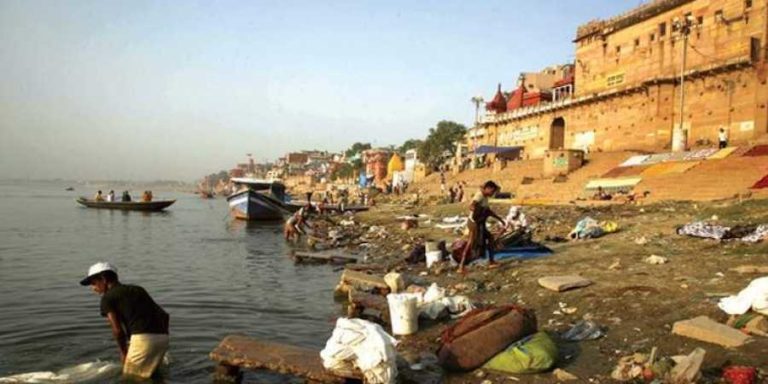
Even a drop of pollution in Ganga is a matter of concern and the attitude of all authorities should be stringent to protect the river, the National Green Tribunal (NGT) has said while seeking concrete action plan on the issue.

A bench headed by NGT chairperson Justice Adarsh Kumar Goel pulled up the National Mission for Clean Ganga (NMCG) over its action plan for Uttar Pradesh, Bihar, Jharkhand and West Bengal and said it does not show concrete plans with prompt timelines and effort in prohibiting pollution.

“The NMCG has not filed the precise information about the status of projects planned and executed between Kanpur to Ganga Sagar. Thus, the affidavit of the NMCG is of no assistance. The counsel appearing for the NMCG is not ready and is merely dependent on Praveen Kumar, Director (Technical), NMCG who is also not competent to assist this tribunal.

“During the interaction, we find his approach to be to help the polluters instead of remedying the pollution which is the mandate of law and the orders of this tribunal,” the bench, also comprising Justices S P Wangdi and K Ramakrishnan, said.

It asked the NMCG to take remedial action so that assistance of a suitable person is provided to this tribunal with precise information failing which the tribunal may consider coercive measures against it.

The tribunal also asked the concerned states to take the matter seriously and assist the bench with precise information either through senior officers or through counsel.

“We direct Uttarakhand, Bihar, Uttar Pradesh, Jharkhand and West Bengal to place the status of water quality in the respective states on their websites and update the same on a monthly basis indicating fitness of water at various places for drinking or bathing purposes.

The CPCB may indicate water quality of the Ganga river at boundaries of the said states on its website,” the tribunal said.

A tryst with Congolese food in India

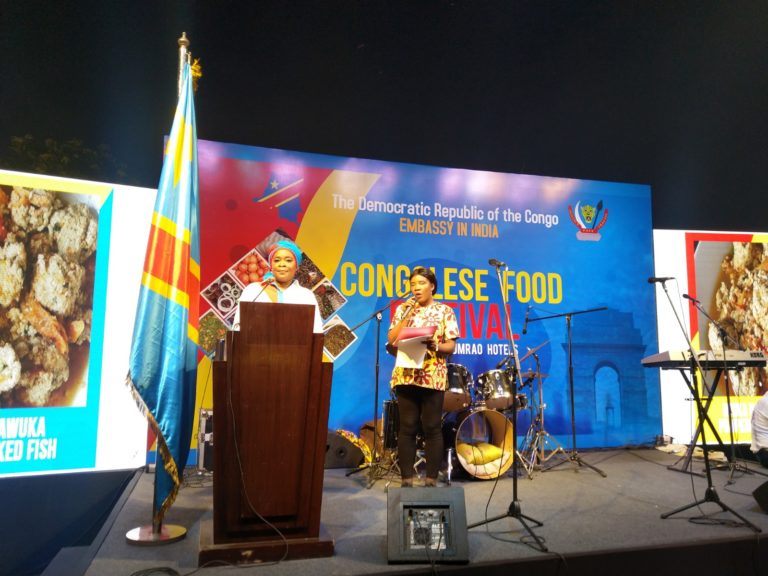
Food and Music together make an enchanting combo. Recently, the fascinating symphony of food and music, at the Congolese food festival, made the pleasant Delhi evening truly special. Hosted by the Embassy of Democratic Republic of Congo in India, it was a wonderful opportunity to discover, appreciate and explore different aspects of the Congolese culture through its food, music and dance. Food from several provinces of the Democratic Republic of Congo was served in the festival. This included Kinshasa, Kwilu, Kongo Central, Equateur, Kasaï-Oriental, Kivu, Katanga, and several others. Traditional recipes from different regions provided an eclectic range of cuisine to food lovers.

Inaugurating the wonderful evening, H.E. Mossi Nyamale Rosette, Ambassador of Democratic Republic of Congo in her speech said, “This kind of event testifies the existence of excellent relations of friendship and cooperation that unite different peoples around the world. It is an opportunity that allows us to come closer to benefit each other, by a better knowledge and mutual understanding of our different cultures.” She also conveyed the Congolese government’s gratitude to the Republic of India for the excellent bilateral relationship with Democratic Republic of Congo.

In the Democratic Republic of Congo, food is totally organic consisting of fish, meat, caterpillars that are rich in protein and vegetables, accompanied by the fufu, plantains, chikwange and rice. Congolese meals often consist of a starchy ingredient, cassava or corn flour called fufu or ugali along with vegetables and meat in the form of a stew like cassava leaves, tshitekutaku (a spinach-like plant), okra and mushrooms. A wide range of crops are grown in Congo, including maize, rice, cassava, sweet potatoes, yam, taro, plantain, tomatoes, pumpkin etc and together with other regional food items create an interesting and eclectic variety of cuisine.

Food items that were generously served to the invited guests in the festival included smoked fish with pumpkin seed, cassava and maize flour, roselle leaves, missile, sweet potatoes, beans, rice, wild spinach stew, butterfly larvae, mutton head and intestine, caterpillar, fingerlings, mashed bananas, braised chicken and several other traditional Congo food items. Renowned culinary historian, Ashish Chopra, whose favourite dishes in the festival were caterpillar and pork troters said, “Congo cuisine has traces of french Arabic and Asian influence. The food looks good and is delicious. As there are different ethnic communities in DR Congo, their cuisine is equally diverse. Congolese cuisine is dominated by farmland products together with meat and fish that makes it extremely nutritive. For example, edible caterpillars, which are quite popular, have high levels of protein and micronutrients like iron and zinc.”

The festival was attended several ambassadors, seasoned diplomats, senior officials and Congolese people here in India.

Taiwan’s Same-Sex Marriage Bill Passed

According to the South China Morning Post, there was a landmark decision on Friday regarding the equality of same-sex couples within Taiwan, which is a first for the Asian region, apparently.

On the next Friday, gay couples in Taiwan can legalize their marriages within government agencies. It has been hailed by Bruce Chu who campaigned for the passage of the bill as a historic moment and, indeed, a victory for Taiwan.

As the legislature in Taiwan voted in favour of the bill, there was “thunderous applause from some 40,000 supporters.” This, in essence, became an important moment for the legality of same-sex unions as a legal entity and the equality of homosexuals as individuals (and as a category) in Taiwan and, thus, in Asia.

It’s historic and exciting for those interested in equality and human rights. The chief coordinator for Marriage Equality Coalition Taiwan, views the legislation as imperfect but sufficient because this does not meet most of the needs of the same-sex couples.

Lu stated, “Taiwan is moving in line with the world’s trend as it echoes the universal call for rights equality… I believe the disputes over same-sex marriage will soon come to an end. People will find that the day is still bright and the Earth still moves after same-sex people start registering for marriage.”

Most of the rights in Taiwan granted to heterosexual unions in Taiwan will be provided to the homosexual or gay couples within the civil code of the country. In fact, one of the partners in the union can adopt a child who is a blood relative.

The reportage further stated, “In addition, the authorities will recognize marriage between a Taiwanese citizen and a foreign national if the home country of the foreign national has also legalized same-sex partnerships.”

This is in line with some recent changes to the context of Taiwan and marriage since a 2017 constitutional court ruling that stated the laws of the island denying the right for same-sex couples to marry is a violation of the constitution of the island. Some of the areas in discrimination for same-sex couples include the inability to file joint income tax declaration or the inability to give consent for any medical care for their intimate partner.

One legislator from the Democratic Progressive Party, Hsiao Bi-khim, stated, “They don’t need to worry about that any more…After today, there is no need for them to face discriminatory treatment from others.”

President Tsai Ing-wen said that this move shows “kindness and conscience” in Taiwan. Ing-wen stated, “I congratulate our gay friends for being able to win society’s blessing, and I also want to say thanks to those who have different beliefs.”

According to the reportage, the move is disliked by both conservative and Christian groups while also being a fulfilled campaign promise of Ing-wen.

“Opponents of the measure staged protests, some of which ended in violence, and threatened to withdraw support from legislators who back the legislation,” the article stated, “Opposition Kuomintang legislator Lai Shyh-bao and DPP legislator Lin Tai-hua tabled two other versions of the bill, both of which watered down protections for same-sex couples.”

The other alternative propositions failed in a second reading.

hoto by Elvin Ruiz on Unsplash

Merchants of Death

According to a recent report by the British Medical Journal, there is an often unethical misrepresentation of the work of corporations in the work for “social responsibility” or in their “social responsibility activities,” as these present a “sanitized and soft public image.”

This can be detrimental if not devastating to the work of corporations within the context of health and wellness, so wellbeing, of the general public.

Kamran Siddiqi, Professor in Global Public Health at the University of York, in the editorial, stated, “Among its many tactics, the tobacco industry has long been using corporate social responsibility activities to present a sanitized and soft public image while they continue to produce and promote their lethal products.”

This clean representation of that which is not clean creates a cloaked representation to the public compared to the complete reality of the situation. This could lead to “substantial damage to public health” based on the manipulation of public policy for corporate benefit without regard for the health of the general public.

A prime example is given with the Prime Minister (of Pakistan) Imran Khan offered a purported donation to fund a new dam for solving the energy and water crisis of the country.

Siddiqi said, “This happened a few days after the administration took a U-turn on their flagship policy of introducing ‘health levy’ on cigarettes as a way to increase public revenue and expenditure on health.”

About 20% of Pakistani adults consume tobacco on a regular basis. The definition or rate and extent of “regular” is not provided within the article. Nonetheless, this reported as leading to 160,000 deaths every year in Pakistan.

As a signatory of the World Health Organization’s Framework Convention to Tobacco Control (WHO FCTC), Pakistan put in place some measures in order to reduce the level of harm associated with tobacco.

“…including smoking ban in public places, restricting cigarette sale in packs of 20 only and increasing the size of pictorial health warning on cigarette packs,” Siddiqi explained, “However, the country has taken regressive steps on tobacco taxation, which is generally considered to be the most effective policy tool to curb tobacco use.”

Two years ago, the government of Pakistan implemented a three-level system of taxation. This permitted tobacco companies to alter the popular products from the higher tax to the lower tax, or the second tier to the third tier.

This is correlated with an increase in tobacco consumption by the general Pakistani public linked to more profits, by implication of increased sales, for the tobacco industry relative to Pakistan.

Siddiqi said, “Recently, the government has also allowed companies to start re-manufacturing cigarettes in packs of 10 for ‘export’ purposes, which might be brought back into the internal Pakistani markets, as many anti-tobacco campaigners fear.”

Thus, we come to the rather messy and not-so-clean image of the tobacco industry, in fact, compared to the one in the image. Now, the industry, the tobacco industry, is working to expand the “corporate social responsibility activities” into the Pakistani media, even further.

“These include offering cigarette gift packs to Pakistan Naval Forces and Prime Minister’s house, building a cigar lounge for members of parliament inside the Parliament House, setting up mobile hospitals and computer centers, launching tree plantation campaigns and sponsoring conferences and sign boards for public bodies,” Siddiqi stated.

The article concludes that the slowing progress on control of tobacco and its harmful effects on the public have begun to slow down. The recent legislation is working to increase the warning about the harms of tobacco.

There was a health levy, but this was regressed substantially. Leading to a response by the Federal Board of Revenue, it said the tobacco tax increases may increase the illicit tobacco trade.

More in the article listed in the reference.

Reference

Siddiqi, K. (2019, January 9). The hidden power of corporations. Retrieved from https://www.bmj.com/content/364/bmj.l4/rr-4.

Photo by Leonardo Yip on Unsplash

Staged or Not, Individual Instances Do Not Negate Hate Crime Trends

According to Ran Ukashi, National Director of the League for Human Rights or on behalf of B’nai Brith Canada, there was a purported antisemitic attack on the BerMax Caffé in Winnipeg, which turned out to staged.

As with the Jussie Smollett staged attacks and the African-American community, and as with the apparently staged attacks here, there should be, as per the note by Ukashi, a condemnation of the fabrication of a hate crime, especially in a period of a rise in hate crimes based on religion, ethnicity, and so on.

Ukashi stated, “Making false allegations of antisemitism does nothing to quell the rise of racism and discrimination in Winnipeg and across Canada and will embolden the conspiracy theorists and purveyors of anti-Jewish hatred who blame the entirety of society’s ills on the Jewish community.”

False attacks should not detract from the seriousness with which hate crimes on Jewish peoples, Muslims, African-Americans, and so on, are taken in the public discourse, as hate should never be tolerated against the general citizenry or individual citizens in this manner.

These false allegations make human rights work difficult for all human rights organizations, including B’nai Brith Canada and others. There is a unified effort to combat hate and bigotry in all its forms, as it arises, whether in anti-Muslim sentiment, in antisemitism, and others.

Photo by Annie Spratt on Unsplash

Phantom Threats Depend on Human Directionality

Nature reported on a pressing and prescient warning of the dangers of a neutral tool: artificial intelligence. What is the threat of a neutral tool?

Of course, the threat comes in the form of the uses or utility functions provided to the AI by human beings, either as individuals or collectives.

Nonetheless, Benkler reported on the ways in which private industry or industry in general continues to shape the ethic and, thus, the utility functions of a powerful and sophisticated hammer, artificial intelligence.

May 10, 2019, is the due date for letters of intent to the National Science Foundation of the United States constructed for a new funding program entitled Fairness in Artificial Intelligence.

This follows from the European Commission “Ethics Guidelines for Trustworthy AI.” It was described, byan academic member of the commission, as “ethics washing” with the utter industry domination of the content.

Google formed an AI ethics board in March, which fell apart in a week based on controversy. Even earlier, in January, Facebook invested 7.5 million USD into an ethics and AI centre at the Technical University of Munich, Germany.

What does this mean for the direction of the future of AI and its ethic schemata? It means the blueprints are being laid by the chickens of industry.

The input from industry, according to Benkley, remains crucial for the development of the future of AI. However, there should not be a monopolization of the power and the ethics.

Both governments and industry should be transparent and publicly accountable in the development of the ethical frameworks developed for AI.

Benkley stated, “Algorithmic-decision systems touch every corner of our lives: medical treatments and insurance; mortgages and transportation; policing, bail and parole; newsfeeds and political and commercial advertising. Because algorithms are trained on existing data that reflect social inequalities, they risk perpetuating systemic injustice unless people consciously design countervailing measures.”

He provided an example of artificially intelligent systems capable of predicting recidivism. Those who differentially affect black and white, or European and African heritage communities.

In addition, or similarly, this could impact policing and job candidacy of applicants. With the black box of the inclusion of algorithms and systems into an artificial intelligence, these could simply reflect the societal biases, which would be “invisible and unaccountable.”

“When designed for profit-making alone, algorithms necessarily diverge from the public interest — information asymmetries, bargaining power and externalities pervade these markets,” Benkley stated, “For example, Facebook and YouTube profit from people staying on their sites and by offering advertisers technology to deliver precisely targeted messages. That could turn out to be illegal or dangerous.”

More in the reference…

References

Benkler, Y. (2019, May 1). Don’t let industry write the rules for AI. Retrieved from https://www.nature.com/articles/d41586-019-01413-1?utm_source=twt_nnc&utm_medium=social&utm_campaign=naturenews&sf211946232=1.

Photo by Gregorius Maximillian on Unsplash

Kareena Kapoor Khan wants to do more socially relevant films

Kareena Kapoor Khan says she has taken a conscious decision to do films that are socially relevant.

Some of her recent outings such as “Udta Punjab”, “Ki and Ka”, “Veere Di Wedding” and her next two releases “Good News” and “Angrezi Medium” deal with various social issues like substance abuse, feminism, surrogacy and education.

“There is conscious effort to do movies that have social topic and subjects and stories that can touch hearts. Even if my part is smaller, I want to blend in films that are relevant.

“Films like ‘Veere Di Wedding’ broke boundaries in many ways, it was a story of four friends, no one addressed their issues in public domain. Similarly, ‘Udta Punjab’ talked about an important topic,” Kareena told PTI.

Her next release “Good News” with Akshay Kumar, Diljit Dosanjh and Kiara Advani is slated to release on December 27.

India positioned at Cannes as an attractive global filming destination

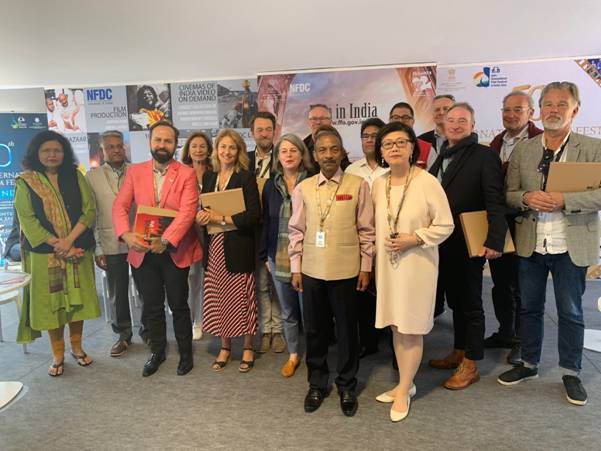
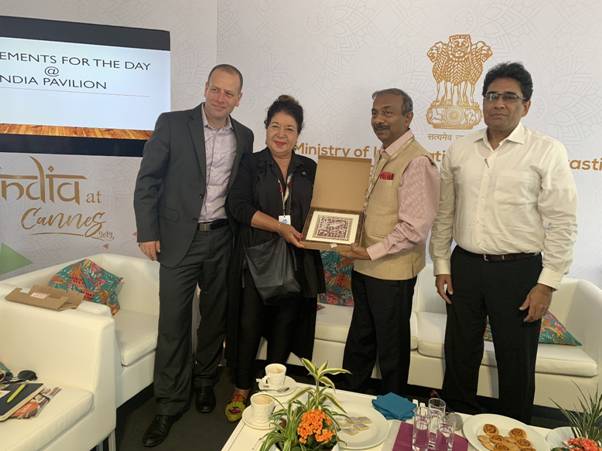
The Indian Delegation led by I&B Secretary Shri Amit Khare recently met Film Commissioners of participating countries at Cannes Film Festival. During the meeting, India was positioned as an attractive filming destination by highlighting the steps taken to easy the process of obtaining permissions for filming in India through the Film Facilitation Office which facilitates Single Window Clearance for film-makers. The steps taken by the India Government to combat film piracy were also discussed.

The Indian Delegation highlighted the opportunity of utilizing the abundant talent pool of skilled professionals and technicians and projected the possibility of India emerging as a major post production hub. The focus of the discussion was exploration of co-production opportunities with the participating countries and forage opportunities of collaborations for films with international production houses. The rebates and incentives being explored by the government to incentivize foreign filmmakers further to shoot in India were also highlighted.

During the discussions, Shri Amit Khare talked about the possibility of filmmakers of different countries coming together under bilateral co-production agreements which would also forge new markets and wider audiences by making India a hub for shooting world class international movies. He also talked about the opportunity of creative collaborations in terms of content exchange and explored the idea of cultural exchange through co-creation of content.

The key principles involved in the meeting were Cine Tirol Film Commission, Austria, Ms, Angelika Pagitz, Film Commissioner; Costa Rica Film Commission, Costa Rica, Mr, Castro, Costa Rica Film Commissioner; Film Commission Norway, Norway, Mr, Truls Kontny, Head of Film Commission Norway; Film Development Council Of The Philippines, Philippines, Ms, Mary Liza Dino, Chairperson / CEO; Italian Film Commissions, Italy, Ms, StefaniaIppoliti, President IFC; Location Austria – The National Film Commission, Austria, Mr, Arie Bohrer, Film Commissioner; Netherlands Film Fund / Netherlands Film Commission, Netherlands, Ms, Doreen Boone kamp, CEO; Swedish Film Commissions, Sweden, Mr, Marketing, Mikael Svensson, Certified Film Commissioner; Swedish Film Commissions, Sweden, Ms, Mia Uddgren, Film Commissioner; Taipei Culture Foundation – Taipei Film Commission, Taiwan, Ms, Jennifer JAO, Director; Telefilm Canada, Canada, Ms,  Marielle Poupelin, Director, International Promotion.

The Indian Delegation also met Mr. Marc Tessier, President, Film France. The Delegates talked about amendments in the already existing co-production treaty between India and France to include animation, gaming and visual effects. The idea of conducting workshops to further the deep cultural connection between the two countries was also discussed.

The Delegation further met Ms.Eti Cohen, Director of Film Department and Council, Ministry of Culture and Sports,Israel. During the meeting, Israel proposed India to be the focus country in Jerusalem Film Festival, 2020. The buzz created by the Hindi movie Newton in Israel was also highlighted by the Israeli Delegation. Israel also proposed the idea of making concept based films in India, with a focus on regional and small budget films.


Big diplomatic setback for Pakistan as US imposes visa curbs on senior officials

In a major diplomatic standoff between the two countries, the US has imposed visa sanctions on three senior Pakistani interior ministry officials. The stern action has been taken following a row between the two countries over deportation of dozens of Pakistanis in America for their visa overstay and other allegations.

Foreign Minister Shah Mehmood Qureshi on Tuesday informed the National Assembly’s Standing Committee on Foreign Affairs about that visa curbs by the US. The officials who are facing the visa restrictions are an additional secretary and a joint secretary of the interior ministry as well as the director general passports, the Dawn newspaper reported.

Qureshi said the US authorities intended to deport more than 70 Pakistanis, but the government had asked them to fulfil the legal requirements.

The US has over the past 18 months deported over 100 Pakistanis, all of whom were accepted back. It is the first time that Pakistani authorities have insisted on a verification of the credentials of the deportees.

Kangana Ranaut and Aditya Pancholi in legal battle

Actor Aditya Pancholi has filed an FIR against Kangana Ranaut, claiming Kangana’s lawyer threatened to file a rape case against him. The FIR filed by Aditya Pancholi is a counter application to a complaint which was filed by Kangana and her sister Rangoli which stated that the actor exploited and abused Kangana, a decade ago.

The complaint has been filed in Versova police station and Aditya has also submitted the videos and phone recordings as proofs as according to him rape is the worst kind of crime that can happen. According to a report in Mid-Day, Aditya Pancholi stated, “I have already filed a defamation case against the actor, which is sub-judice. Following the defamation case, her lawyer, on January 6 this year, threatened to file a rape case against me if I didn’t withdraw the defamation case against his client. Thankfully, I have recorded the 18-minute meeting with him. The video in the form of evidence has been submitted to the court and to the police as well.”

With the latest move, the fight between Aditya Pancholi and Kangana Ranaut is turning uglier with each passing day. Kangana Ranaut had earlier accused Pancholi of sexual and physical abuse in one of her old interviews.