Home Blog Page 461

Updates on the India-Pakistan stand-off

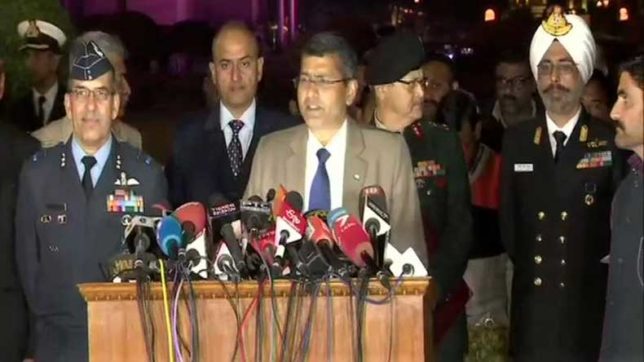
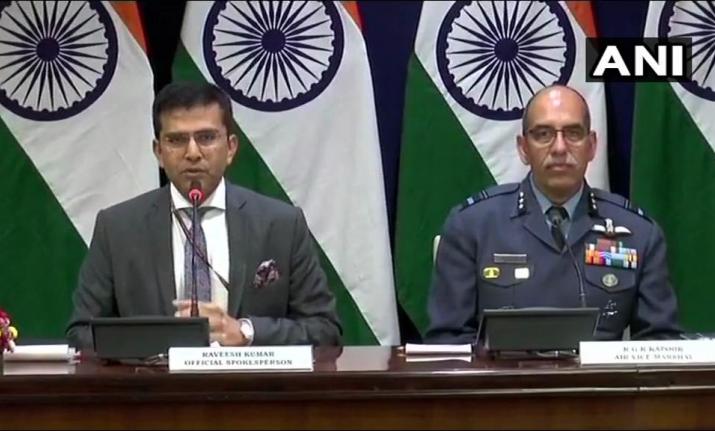
  • Amidst ongoing tensions between India and Pakistan all three defence services of the country, Indian Army, Indian Air Force and the Indian Navy will address a joint press conference today in New Delhi at 1700 hrs (5 pm IST). The spokesperson from the Ministry of External Affairs will also join this conference.
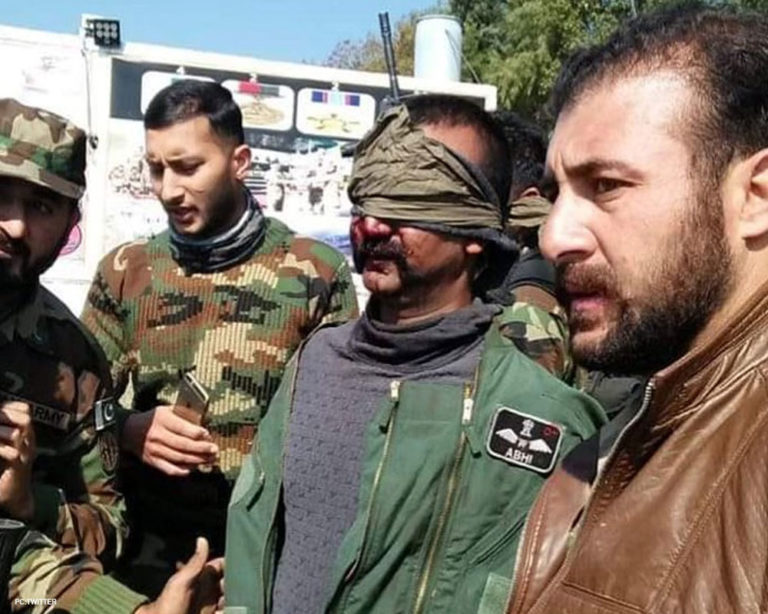
  • This joint press conference is expected to give clarity on the Indian Air Force pilot that has been taken as a prisoner of war (POW) by Pakistan. The IAF pilot was involved in a dogfight with Pakistani F-16 when it had intruded Indian airspace on Wednesday morning. The IAF pilot shot down Pakistan’s F-16 before his plane was hit. He had to eject and landed in Pakistan-occupied Kashmir and had since been in Pak Army’s custody.
  • Indian Prime minister Narendra Modi will chair a meeting of the Cabinet Committee on Security (CCS) later in the evening today, which will be followed by Union Cabinet meeting at his residence.
  • Pakistan has expressed its unhappiness over India’s invitation to attend the Organisation of Islamic Cooperation (OIC). It is yet not clear if Pak’s foreign minister Shah Mehmood Qureshi will attend the OIC meeting after he threatened to boycott the meet over invitation to External Affairs Minister Sushma Swaraj.
  • Pakistan’s Foreign Minister Shah Mahmood Qureshi has put a condition to return Indian Air Force (IAF) pilot— Wing Commander Abhinandan only if India helps ease the conflict. “We are willing to return the captured Indian pilot if it leads to de-escalation,” he was quoted as saying. He also said the Saudi foreign minister was expected to visit Pakistan with a special message from Crown Prince Mohammed Bin Salman, who visited both Pakistan and India earlier this month.
  • Sources within Indian government have said that India has not asked for any consular access to Abhinandan. “The IAF pilot has to be repatriated unconditionally and immediately, there is no question of any deal,” the Press Trust of India said.
  • United States President Donald Trump said earlier today that there would be some “reasonably decent news” on the conflict between India and Pakistan. “They have been going at it and we have been involved in trying to have them stop,” Trump said. “We have been in the middle trying to help them both out.”
  • Meanwhile, Pakistan has shut its airspace, forcing all commercial airlines to re-plan their aerial routes. Thai Airways International said that it has cancelled all flights to Pakistan and Europe that has left thousands of passengers stranded in Bangkok.

What Geneva Convention says about PoW?

As per the reports coming from Pakistan army, Indian Air Force’s Wing Commander Abhinandan Varthaman, in Pakistani custody after his plane was shot down on Wednesday, will be governed under the Geneva Convention of 1929. During the Kargil War, Flight Lieutenant Kambampati Nachiketa was captured after his MiG-27 suffered a flameout while destroying enemy positions in the Batalik subsector. He was captured by Pakistan on May 27, 1999 and remained in Pakistani custody for more than a week. He was repatriated to India on June 3 of that year, as per Geneva Convention.

Here’s what you should know about Geneva Convention:

The Geneva Conventions comprise four treaties, and three additional protocols, that establish the standards of international law for humanitarian treatment in war. The term ‘Geneva Convention’ usually denotes the agreements of 1949, negotiated in the aftermath of the Second World War (1939–45). The Geneva Conventions extensively defined the basic rights of wartime prisoners (civilians and military personnel), established protections for the wounded and sick, and established protections for the civilians in and around a war-zone. It asserted that PoWs be given humane treatment and adequate feeding, forbidding the belligerents to apply undue pressure on prisoners to supply more than a minimum of information. In 1977, the protocol to cover both civilians and combatants in the conventions was approved with the help of negotiations from the Red Cross.

The convention has the following aims:

1. Immunity from capture and destruction of all establishments for the treatment of wounded and sick soldiers and their personnel,

2. Impartial reception and treatment of all combatants,

3. Protection of civilians providing aid to the wounded, and

4. Recognition of the Red Cross symbol as a means of identifying persons and equipment covered by the agreement.

Current scenario and Geneva Convention:

If Wing Commander Abhinandan is officially declared as a PoW, then in accordance with Article 118, first paragraph, of the 1949 third Geneva Convention, “Prisoners of war shall be released and repatriated without delay after the cessation of active hostilities” and “unjustifiable delay in the repatriation of prisoners of war or civilians” is a grave breach of the Protocol.

Red alert sounded for Delhi Metro

Delhi Metro has been put on red alert by the authorities, as tensions between India and Pakistan escalated.  “As advised by security agencies, Red Alert has been imposed in entire DMRC netwok from 6 PM onwards today,” a statement by the Delhi Metro Rail Corporation or DMRC said.

“Under Red Alert, all station controllers are required to inspect entire station premises for any suspicious items/activity including parking lots and report to the Control Centre every two hours,” the statement further read.

Delhi metro sees a footfall of more than 2.5 million every day and on occasions where the safety of passengers may be at risk, security is strengthened in stations and on the trains.

The move came after the Pakistani Air Force violated Indian airspace and tried to target military installations. Earlier today, the air space north of Delhi had been temporarily shut by the authorities and services in nine airports were suspended.

Pakistan Deputy High Commissioner summoned

To lodge a strong protest over Pakistan Air Force’s bid to attack Indian military installations, India on Wednesday summoned Pakistan’s Deputy High Commissioner to External Affairs Ministry sources said.

According to sources, Pakistan Deputy High Commissioner Syed Haider Shah, who was summoned to the South Block here, also told Indian officials about capturing of an Indian pilot by Pakistani authorities.

India has accused Pakistan of using its Air Force to target Indian military installations on Wednesday morning in response to pre-dawn counter-terror strikes of Tuesday against Jaish-e-Mohammad camps in Pakistan.

In Islamabad, Pakistan’s foreign office also summoned India’s Acting High Commissioner Gaurav Ahluwalia and condemned what it called “unprovoked ceasefire violations” by the Indian forces along the LoC.

Shopian encounter: Two Jaish terrorists killed

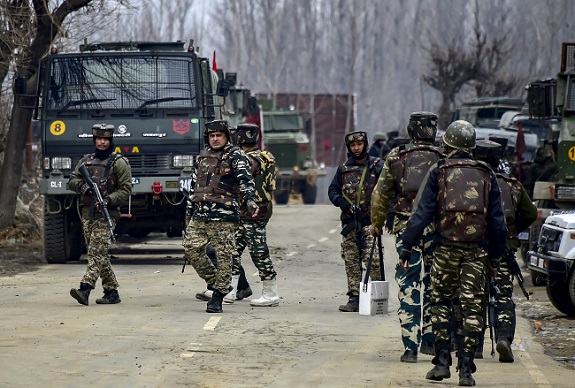
Amidst escalating tensions between India and Pakistan, two Jaish-e-Mohammed (JeM) terrorists, including a Pakistani national, were killed on Wednesday in an encounter with security forces in Shopian district of Jammu and Kashmir, the police said.

Security forces launched a cordon and search operation in Meemendar area of Shopian following information about presence of terrorists there, a police spokesperson said.They said the search operation turned into an encounter after terrorists opened fire towards the security forces, who retaliated.

The two terrorists were killed in the ensuing gunfight, he said. “Their bodies were retrieved from the site of encounter. Both were affiliated with proscribed terror outfit JeM,” the spokesperson said. One of the slain terrorist was identified as Suhail Nazir Mir, a resident of Saidapora Payeen area of Shopian and the other was identified as a Pakistani national.

Incriminating material, including arms and ammunition, was recovered from the site of the encounter, the spokesperson said, adding that the police has registered a case and initiated investigations.

India–Pakistan crisis: Pak F-16 shot down by IAF, one Indian pilot arrested

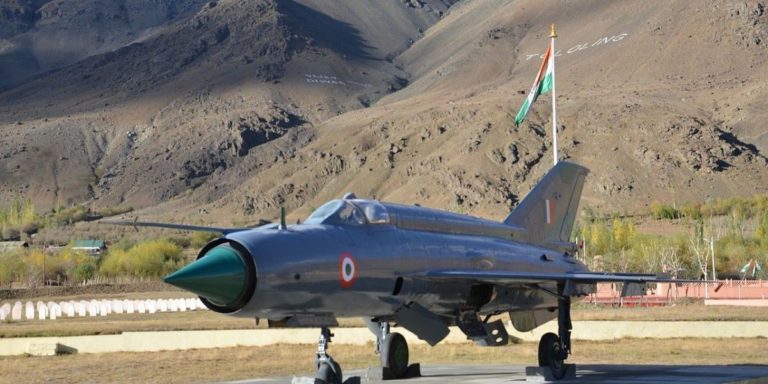
The Government of India informed that IAF has shot down a Pakistan fighter aircraft. “Pakistan responded to India’s counter-terrorism action this morning by using its Air Force. Due to our high state of readiness and alertness, Pakistan’s attempts were foiled successfully. In the aerial engagement, a Pakistan fighter aircraft was shot down by a MiG 21 Bison. The aircraft was seen by ground forces falling on the Pakistan side,” said MEA Spokesperson.

“We unfortunately lost one MiG 21 in this engagement and the pilot is missing. Pakistan claims the pilot is in their custody, however we are ascertaining the facts,” he said.

Official statement by India’s Ministry of External Affairs after today’s air attack by Pakistan on India

Pakistan, on the other hand, claimed on wednesday that it shot down two Indian military aircraft over Pakistani air space and arrested one of the pilots. Military spokesperson Major General Asif Ghafoor claimed in a tweet that one of the aircraft crashed in Pakistan occupied Kashmir while the other fell in Jammu and Kashmir.

Indian Air Strikes have eliminated Balakot Terrorists. It’s time to intensify War against Terrorism

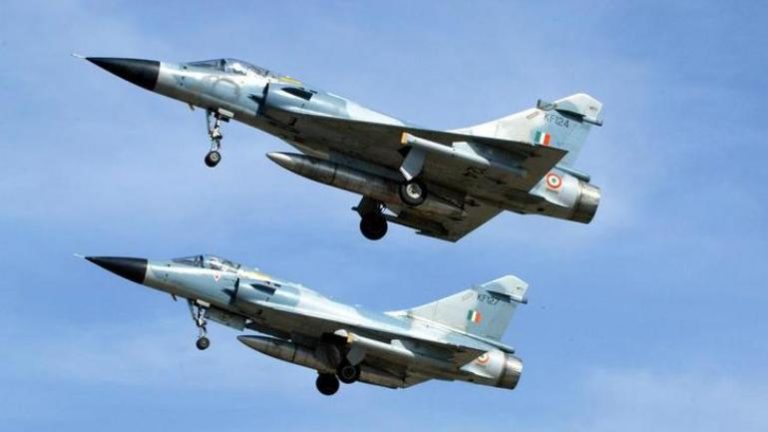
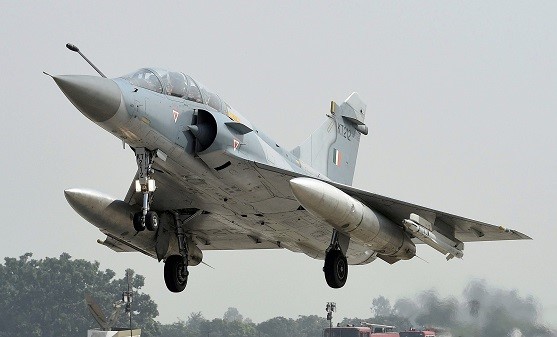
Tuesday, the 26th day of February 2019 will remain etched in the memories of Indians for a very long time. It is on this day that the nation flexed its muscles in airspace by deploying a squadron of Indian Air Force (IAF) that crossed the line of control across Pakistan, bombed pre-selected terrorist training camps with precision and came back safely. Capability to conduct such punitive air strikes has hitherto been the preserve of select super powers such as the United States, Russia, UK and their coalitions. India now joins this club.

The exact nature of devastation caused by the squadron of Mirage 2000s will be known only after a few days, but initial assessments suggest that over 350 terrorists from the Jaish-e-Mohammad’s tribe have been eliminated. This is the highest number of Islamic terrorists eliminated by India in a single strike on a single day, till date.

The Jaish training camp was tucked safely across the Pakistan-occupied Kashmir at Balakot in the Khyber Pakhtunkhwa province. It was a garrison depot that doubled up as the terrorist training camp replete with a huge cache of arms and ammunition. Most importantly it was the base station of top leadership of Jaish-e-Mohammad. The laser-guided bombs from Mirage 2000s have eliminated Jaish’s commander Maulana Ammar, Talha Saif, Ibrahim Azhar (brothers of Jaish chief Masood Azhar) and Yusuf Azahar (Masood Azhar’s brother-in-law) along with other Jaish terrorists. Ironically, except Masood Azhar, who had masterminded the Pulwama terrorist attack, his entire terror apparatus at Jaish has been wiped out.

More than military success, this air strike gives a distinct psychological victory to Indians, both for the armed forces and to the general populace. For too long our armed forces had remained sitting ducks, thanks to the spineless political leadership who just buckled under international pressure, earning India the sobriquet of being a soft state. This emboldened Islamic terrorists and their handlers in Pakistan who thought their strategy of bleeding India through a thousand cuts will indeed bring them that elusive victory in Kashmir.

Ordering the Indian Air Force to avenge Pulwama terror attacks have shown to the world that now there’s a decisive leadership in New Delhi who has spine, also has guts and is willing to take calculated risks.

In fact, targets chosen by the Indian Air Force were not civilian areas, nor were they Pakistani defence establishments, New Delhi rather chose to bomb at pin-pointed locations where Jasih-e-Mohammad had been running its terrorist training camp for several years.

In strategic terms, this air strike has placed Pakistan on a sticky wicket. It is caught in the classic bind of damned if you do and damned if you don’t. Consider this: If Pakistan starts beating its chest and goes ahead to tell the world about specific details of the damage and the list of all those slain terrorists, it will then mean a tacit acceptance on its part of harbouring terrorists in its backyard. Most of the terrorists killed in the air strike were on international watch list. Alternatively, if Pakistan does not tell the world and remains in a denial mode claiming there was no destruction due to bombings, then it will have no justifiable reason to launch a military offensive against India. In this scenario it cedes that psychological edge to India in this proxy war.

For India, this is just the beginning and such strikes deep within the Pakistani territory need to happen at a regular frequency, only then will there be a complete destruction of Islamist terrorist havens within Pakistani soil.

Of course, we have managed to neutralise over 350 terrorists at just one of the terrorist training schools. And this is no small number. The actual number of terrorists killed could be even larger when full details of the damage emerges.

However, in this euphoria we need to pause and reflect as to why these 350 terrorists were being trained by Jaish-e-Mohhamad. They had no personal enmity with India or Indian security forces, yet they were holed up at Balakot, had been indoctrinated and possibly over the next few days a few would have sneaked inside the Indian territory to blow themselves up. The motivation for all these terrorists is the Wahhabi interpretation of Islam and its cult-like virulent ideology that glorifies death. It’s this Wahhabi death-cult, which the likes of Masood Azhar and his ilk exploit to the hilt.

And this is where our war begins. A squadron of Mirage 2000 conducting air strikes, dropping 1000 kilogram bombs, flattening the entire terrorist training camp is just about winning one battle. Yes, more than the military victory it is indeed a psychological victory for us, there’s no denying this fact. Yet, India cannot afford to slacken its efforts in this proxy war against Islamic terrorism that has been going on for the last three decades. Rather, this is an opportune time to intensify our efforts when Islamists in Pakistan are on a back-foot.

In all the wars that India fought with Pakistan, whether the overt wars of 1947, 1965, 1971 or the limited Kargil War of 1999, India won decisively and Pakistan Army was decimated. The 1971 war resulted in splitting of Pakistan into two and the creation of a separate sovereign state — Bangladesh. All these facts are well documented, but despite this, the Pakistani Army and its stooge, ISI, have been shouting their lungs out to its gullible audience that Pakistan Army that comprises of the soldiers of Islam were on the verge of winning these wars against infidel India when international pressure forced them to abandon their war mid-way. It is this dubious narrative that the Pakistani Generals have successfully sold to its gullible populace and it is taken further by the Masood Azhars and the Hafiz Saeeds, who indoctrinate youngsters to rise and fight against an infidel India. These false narratives coupled with virulent Wahhabi ideology binds Islamists from different regions together. The adhesive strength of radical Islamism can be gauged from the fact that a Bangladeshi boy quickly forgets that it were these Pakistan Army soldiers (then West Pakistan) who had raped and killed millions of Bangladeshi women during the 1971 Bangladesh liberation war (then East Pakistan). He has no qualms in joining hands with Bangladesh’s erstwhile tormentors to wage jihad against an infidel India.

This is the nature of larger Islamic war that has been thrust upon India. This is how the numerous terrorism factories spread across Pakistan continue to have a steady supply of terrorists. India needs to factor these elements while strategizing further.

Yes, we have won the Balakot battle but the war against radical Islamists is still on. We just cannot afford to put our guards down.

Shah Faesal ‘mocks’ those cheering IAF action in Pakistan

Civil Servant turned politician Shah Faesal, who has been mostly towing the separatist line since his resignation from the Indian Administrative Services, on Tuesday put out several shocking posts on his twitter handle. Commenting on the widespread excitement in the country after the IAF attacked major terrorist camps in Pakistan, he tweeted “How can yesterday’s mourners become cheerleaders of today’s violence”.

In another tweet, on the issue of today’s surgical strike, Faesal raised questions on who would benefit from the strike. “A near-war situation between India and Pakistan… Possible electoral gains for RW (right wing) forces in India. Who lost and who gained?”

These shocking posts on social media, in a way question the stand India took by destroying terror camps in Pakistani territory.

Boney Kapoor: Sridevi’s ‘Mom’ to release in China on March 22

Sridevi’s last film “Mom” is set to hit the theatres in China on March 22, 2019. Sridevi’s husband, producer Boney Kapoor made the announcement Tuesday and said they wanted to showcase the actor’s “most remembered last film” in the neighbouring country. The announcement comes barely two days after the late actor’s first death anniversary.

“‘Mom’ is a film that has connected with both, mothers and audiences, from every region. This is Sri’s last film and our aim is to tell this beautiful story and showcase her most remembered last film to as many people as possible.  Zee Studios International has been a part of ‘Mom’s success since day one and I am glad to see them take this film to heights even two years after its release,” Kapoor said in a statement.

Sridevi was honoured posthumously with a Best Actress National Film Award for her performance in the 2017 film. The film marked the 300th screen appearance for the veteran actor, who passed away on February 24, 2018 due to accidental drowning at a Dubai hotel.