Home Blog Page 471

Islamists have perverted mega-sporting events. It’s time to act

Paris 2024 should promote universality of women’s rights against Islamic sexist requirements in the Olympics.

Why should NGOs fighting for women’s rights pay a special attention to sport in general and more specifically to Olympics? For two reasons: First, because athletes practice their discipline in public space and wear clothes adapted to their movements. This played a major role in women’s emancipation. Secondly, because the universality of sport is based on global regulations applied to everyone at the national and continental level. Moreover, sport is characterized by a pyramidal structure with the IOC (International Olympic Committee) and the International Federations at the top. There are no limits to their power. Which is not the case of the United Nations.

Unhappily, successful exemptions of rules based on principles of non-discrimination, and of the ban of political and religious exhibition, were achieved by the intensive lobbying of Iran, supported by international sport networks.

In order to include women who are supposed to be willing to reconcile their beliefs and their sporting activities, constraints imposed by Islamist theocracies on women’s sport were accepted. These included covering the entire female body, no participation in mixed gender activities, access permitted only to those sports compatible with Islamic law.

Discriminatory and segregationist ways in stadiums have become an “inspiring” model for Muslim women, whatever their country of origin.

Dorsa Derakhshani, Iranian chess champion, was sanctioned for having played in competitions without a headscarf.

All the more so that clothing manufacturers and even manufacturers of toys quickly caught on to the immensely profitable emerging market that was thereby opening up for them[1]. See Nike’s launching of the clothing line “Nike pro Hijab”, and Mattel, the American manufacturer of a “Hijab Barbie”, in the effigy of the woman fencer, Ibtihaj Muhammad, the first American athlete to be veiled and a bronze medal winner in 2016 at the Rio Olympics.

Paradoxical result of the will shown by international bodies to practice an inclusive policy in the field of sport was to relegate women and girls among the vulnerable groups. For example, the International Charter of physical education, physical activity and sport, revised in 2015, proclaims that: “Inclusive, adapted and safe opportunities to participate in physical education, physical activity and sport must be available to all human beings, notably children of pre-school age, women and girls, the aged, persons with disabilities and indigenous people”.

It’s high time that the Paris 2024 Organizing Committee reacts and applies all the universal principles in the Charter. These principles are: Non-discrimination, including that of sex (Principle N° 6)[2], neutrality such as stated in Rule 50 (“No kind of demonstration or political, religious or racial propaganda is permitted in any Olympic sites, venues or other areas”), the Olympic oath (“Granted the honour of becoming a member of the International Olympic Committee, (…) I undertake to keep myself free from any racial or religious consideration (…)”)

Yet, two countries — Iran and Saudi Arabia, still contravene both the letter and spirit of the Olympic Charter as they subject the participation of women in international competitions to considerations above mentioned that are in total contradiction to the terms of the Olympic Charter. Such archaic measures are among other humiliating ways sexual apartheid is imposed on their peoples by those political regimes[3].

How could the IOC accept such serious violations of the basic principles of the Charter when it excluded South Africa when racial apartheid was its rule?

The promotion of the concept of universality of human rights is an essential issue as it is too often criticized for the wrong reasons. The organization of the 2024 Paris Olympic and Paralympic Games offer a unique opportunity to demonstrate the necessity of a strict implementation of these principles as stated in the Olympic Charter.

It’s not too soon to draw the attention of the organizers to this issue as they are just launching programmes promoting the Olympic Values towards the so-called “2024 Generation”.  

We demand that the President of the 2024 Paris Games draw the IOC President’s attention to the incompatibility of sexual apartheid with the Olympic Charter. Furthermore, has not the IOC inscribed in its 2020 agenda the promotion of “gender equality” and “mixed gender teams events”[4] as a priority, as did the Paris Olympic Committee?

  • If you  accept to support the  APPEAL to the 2024 Organizing Committee, please send your answer here: appliquerlacharteolympique@gmail.com and tell us how you want your name to appear in the list of signatures. The objective is to obtain 2024 signatures.  

[1] The Research Institute Thomson-Reuters estimates that the « modest style » market will be worth 484 billion dollars throughout the world (quoted in Le Monde supplement of 30 April, 2016, « Style Sets Sail »).

[2] In conformity with international texts  (cf. particularly, the International Convention for the elimination of discriminations against women ( CEDAW)

[3] These theocraties institutionalized sexual apartheid in the 1960s (Saudi Arabia during the oil boom and  its Islamic renewal) and in 1979 (Iran during its Islamic Revolution).

[4] 2020 Olympic Agenda : Recommendation N°11.

#InterimBudget: Modi govt bats on front foot

Budgetary allocation for cow and middle class core voters; farmers and lower castes pandered; welfare schemes widened for all

It’s a budget for kisan, majdoor, cow, lower middle class – the core BJP voters. Bonanza is showered on them. Even foreign investors have been pandered to. They have been told that India is poised to be $5 trillion economy in five years and beyond that $10 trillion in eight years.

Will it change the 2019 poll dynamics? That is the hope of BJP and possible concern of the opposition, Congress included. BJP’s strategy is sharp and aimed at pan-India reach. The opposition has to redo theirs. It certainly makes the economy and politics interesting. Yes, Piyush Goyal and Arun Jaitley’s budget has thrown new challenges, raised new aspirations.

More so as Goyal in his post budget interaction tells the press that in the main budget, after the elections, the groups now left behind – the income taxpayers — may expect reliefs.

But that’s where the catch is. The I-T (income tax) sops are limited to those earning up to Rs 5 lakh. This is the consequence of the 10% reservation given to economically weaker sections having family income of up to Rs 8 lakh. It’s a wonder why the relief is not extended to the limit of Rs 8 lakh.

Beyond that the taxpayers have a gain of Rs 10,000 a year – Rs 850 a month – as standard deduction is raised to Rs 50,000 from the existing Rs 40,000. But they would pay tax at a minimum rate of 20%. They have other gain on interest accruals up to Rs 40,000 on bank deposits, as it will not be computed as earning and would also be free from TDS (tax deducted at source). Yet this would be added to their income in the tax returns. This is likely to increase tax disputes as the department acts often in a queer manner. Recently it has sent many pensioners unusual demands and has adjusted their refunds against such “demands”. Ideally the entire interest accrual should not be under tax net. Despite various pension provisions, a large section remains and would for long be without a pension. The savings only help them. Goyal’s budget has not taken care of this issue.

Possibly, it’s rightly so. As per government estimates those earning up to Rs 5 lakh constitute about three crore of taxpayers. They create an atmosphere of major gain and would now be out of tax net. Total taxpayer is 6.89 crore now against 3.69 crore a few years back. Once again the number would come down to the level of 3.89 cr.

The number of the higher I-T payer is far less though oppressed by a steep high tax rate but politically less important.

More important are the 12 crore farmers. Those owning up to 2 hectare of land would get Rs 6000 a year – Rs 500 a month– in the new Rs 75,000 crore PM- KISAN scheme retrospectively from December 2018 – a first in any budget.

It is the Telangana model and has paid rich dividends to Telangana chief minister K Chandrashekhar Rao’s Telangana Rashtra Samithi in the recently held assembly elections. The BJP has high hopes that it would change the rural voting scenario.

The southern states are also on the radar. About 1.45 crore fishermen are to have focused attention. They would have a new fisheries department and would have the facility of Kisan Credit Card (KCC) at low interest rate of 2%.

The KCC would also be extended to animal husbandry farmers. They would also benefit from the setting up of Rashtriya Kamdhenu Aayog for genetic upgradation of cow resources and enhance production and productivity of cows, a favourite theme of the Sangh Parivar. The message goes deeper. The allocation is only Rs 750 crore for the Gokul mission but the emotional appeal is deemed to be greater to the rural population.

The farm sector slowdown has caused rural problems. As farm production increases, prices have fallen creating a distressful situation. The new schemes are expected to change it. Many states, including Madhya Pradesh, Chhattisgarh and Rajasthan, where the Congress has recently formed governments upstaging the BJP, have announced loan write offs for farmers to tide over an income crisis.

The overall agriculture and farmers’ welfare budget has increased to Rs 1.29 lakh crore from Rs 67,800 crore, though agriculture research budget has seen marginal rise of Rs 1125.9 crore to Rs 8078.6 crore from Rs 7952.79 crore. This required a larger allocation.

Add to this another 42 crore labourers earning up to Rs 15,000 a month. They would get a pension of Rs 3,000 per month after 60 years of age in the proposed PM Shram-Yogi Maandhan. There is a catch. They have to enter at the age of 29 and pay Rs 100 a month to be eligible for the pension.

So it would not immediately benefit those who are in the age group of 40 to 59. It is, however, expected to create aspirations.

What has evaded attention is the doubling of gratuity limit to Rs 20 lakh. It is to cater to majority of the industrial workers in the organized sector. It is a much needed step and various trade unions have been seeking it. The impending elections have given them the desired benefit.

There has been Rs 14,000 crore hike, 35.6% increase in the allocation for welfare for the SCs and STs to Rs 76,801. It is to nullify their fears raised after introduction of the economically backward reservation. There were campaigns by some political parties that it was the step to end the SC/ST reservation. Of late, sizeable sections of these groups had come closer to the ruling party and it is an effort to retain their loyalty.

The increased tax base has been used to spread out to benefit a large base. Total expenditure rises from Rs 24.57 lakh crore in 2018-19 to Rs 27.84 lakh crore in 2019-20, a rise of Rs 3.26 lakh crore – 13.3%. The revenue base remains strong at Rs 25.52 lakh crore.

But fiscal deficit is likely to go beyond the projected 3.4%. The final budget to be presented after the elections would change many of the figures. Whatever presented now is subject to developing political situations. The next few months would see much acrimony.

The budget does not merely spell out figures. It weaves a dream for the future through ten-dimensional vision. Goyal says, “We will create an India where poverty, malnutrition, littering would be matter of the past”. One hopes Goyal emerges right but to make it happen a lot has to be done.

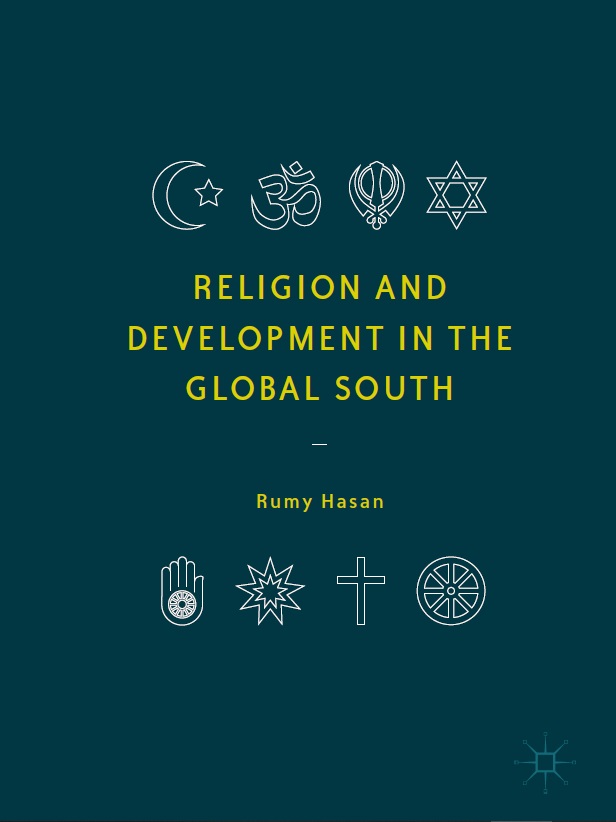
Book Review: Religion and Development in the Global South

With an estimated 84% of the world’s population being religiously affiliated, Rumy Hasan’s analysis of the nexus between religion and development was long overdue.  Hasan takes as his starting point Max Weber’s foundational argument for why capitalism originated among Protestants in Western Europe, a link propounded in his famous 1904 work, The Protestant Ethic and the Spirit of Capitalism.  Hasan asks whether Weber’s thesis might provide helpful insights for the present that could explain why development has been stagnant in large tracts of the post-colonial world and whether the culture and religion of the global south militates against an ethic akin to that of the Protestant work ethic.  The Weberian thesis is that religions and cultures that stress “other-worldliness” and spiritualism (Catholicism, Hinduism and Buddhism) act as a brake on economic development. Hasan makes the case that a similar reasoning can be applied to Muslim-majority countries that congregate at the lower end of the global socio-economic ladder (as evidenced in the Human Development Index, for example).

Consistent with Arthur Schopenhauer and historian Owen Chadwick, Hasan notes that Protestantism’s unintentional effect was to sow the kernel of secularisation in the nineteenth century that permeated the working classes and coincided with a more widespread resistance to religious authoritarianism. This, as well as Europe’s industrialisation, the expansion of print media and a set of philosophical ideas infused with universal principles coincided to advance education, human welfare and economic growth.

Hasan does not overlook the downsides of the rise of capitalism in Europe. The darkest hour of European modernity spawned colonialism and slavery and the unprecedented savagery of the Second World War. In a 1930 essay, Keynes made clear his own moral reservations against unbridled capitalism. He argued that, when the accumulation of wealth comes unhinged from its purpose as a means to the enjoyments of the realities of life, and instead becomes loved as a possession in itself, it becomes a semi-pathological propensity.

Nevertheless Hasan underscores Weber’s prescience in discerning that certain cultural values like trust, respect for others, individual effort, merit and a government that protects and facilitates these social traits correlated with higher per capita output and accelerated growth rates. The current that runs beneath Hasan’s trenchant study of this nexus in present-day Islam, Hinduism, Christianity, and Confucianism is that culture matters because it shapes human progress.  Ample evidence suggests an iron law: that as societies develop, education levels and living standards rise, and concomitantly, the influence of religion declines. Hasan’s book is nothing less than incontrovertible proof of the profound link between religion and work ethic at both the individual and societal level. 

First, at the individual level, Hasan notes that in most countries and notably in the developing world, religion is imposed on children to the extent that pressure to conform results in the individual’s primary identity being that of religion.  This limits the likelihood of conversions taking place.  The Jesuit motto, “Give me a child until the age of seven and I will give you the man” reflects the extent to which systematic indoctrination moulds individuals in conformity with the beliefs of parents, community and the wider society.  There is abundant evidence that poverty outcomes are greatly affected by social norms and customs that lead to – inter alia – the exclusion of women, and that religion is the main determining factor of said social norms and customs.  Despite this, there has been conspicuous silence in  government-funded national and international scholarly studies of development as to whether religion might be a limiting factor for development and economic growth. Hasan’s book therefore represents a historic breakthrough, in so far as it provides the first large-scale effort to redress this glaring omission.

There are many possible explanations as to why this deficiency exists.  One is that the prioritisation of diversity and differences (a manifestation of cultural relativism) sidesteps the question of whether some beliefs and cultures are more or less conducive to development. Moreover, the UN’s Sustainable Development Goals (SDGs) adopted in 2015 glossed over the issue with question-begging in Goal 9, where they state without evidence that “all cultures and civilizations can contribute to sustainable development.” This tautology is far less important than whether they actually do. Moreover, Hasan points out that their Goal 5 (which ostensibly supports the aim of achieving gender equality and empowering women and girls) leaves a glaring contradiction between these objectives and the cultural relativism implicit in Goal 9. Since much of the harm done to women and girls stems directly from certain cultures and especially religion, Goal 5’s objectives are obliterated by Goal 9’s.    

In the absence of a secular state, religion takes on a totalitarian form so that critical engagement with the central tenets, doctrines and customs is precluded.  Without secular institutions and laws, religion and its cultural accoutrements permeate every vestige of society and profoundly impact the determinants of development and growth.  This is particularly damaging with respect to women, since none of the major religions has a commitment to genuine gender equality. Hasan quotes John Stuart Mill’s famous essay of 1869 titled ‘The Subjection of Women’: “the principle which regulates the existing social relations between the sexes  – the legal subordination of one sex to the other – is wrong in itself, and now one of the chief hindrances to human improvement . . .”.  Indeed, in most of the Global South, the  legal and extra-legal subordination of women remains the norm, a situation in which religion is centrally implicated. Hasan has usefully completed the analysis by amassing detailed evidence that gender inequality hinders growth and development.   

Moreover, new research on corruption suggests that policies promoting gender equality can help clean up governments and businesses too (Engendering Development through Gender Equality in Rights, Resources, and Voice, World Bank 2001 report, pp. 73-74). Governments are less corrupt when women are more active in politics and the labour force. Likewise, household studies provide evidence that fertility reduction is one consequence of improvements in female education and consequent changes in women’s autonomy. Better educated women tend to have fewer children than less educated women  — a consequence of later marriages, better knowledge of birth control and the ability to make decisions about their own fertility and family planning. At the same time, there is little evidence that factors other than religion (or its attenuation) produce these key differences in women’s autonomy. Yet the World Bank’s major reports systematically fail to acknowledge any correlation between patterns of women’s autonomy and the degrees of religious belief in a culture.  It looks like a whitewash.

Varieties of Christianity, Islam and Hinduism are adhered to by some two-thirds of the Global South.  While their influence on development varies, Hasan’s overarching conclusion is that for Islam and Hinduism, it is almost entirely negative; for Christianity, it is a mixed picture though tending towards the negative with the proviso that aspects of Protestantism may have a positive influence. Confucianism, by contrast, given its human-centred and non-dogmatic doctrines, can realise a constructive impact.  In the Global South religion is the primary mark of identity and it profoundly shapes morals, values and folkways. From the evidence presented, two facts are unmistakeable. First, as countries develop the importance of religion the population-at-large declines. Secondly, in all the socio-economic indicators, developed countries occupy the highest rank.  Research also suggests, contrary to widely-held perceptions,  that high levels of religiosity also have a negative impact on morality.  In one survey (conducted across six countries) it was found that children from religious backgrounds were less altruistic and more punitive (Decety et.al. 2015).  Another survey by Gregory Paul found that, in general, higher rates of religious belief and worship correlate with higher rates of homicide, juvenile and early adult mortality, sexually transmitted disease infection rates, teen pregnancy, and abortion in the prosperous democracies. 

Study after study has shown that secularising culture and society is not only essential for the cognitive development of children but is also necessary for economic development and modernisation. This book provides compelling evidence to think that the environment in societies where religion plays an important role is a crucial determinant of the capacities, capabilities and skill formation of a population and that very high levels of religious beliefs in the Global South have suppressed the dynamic of growth, development and human flourishing.     

Rumy Hasan’s book “Religion and Development in the Global South” is available on Amazon online stores.

No Income Tax upto Rs 5 lakh

India’s incumbent BJP government woos middle class by raising income tax exemption limit upto Rs 5 lakh ($7,030) from the present Rs 2.5 lakh ($3,515).

#IndiaBudget2019-20

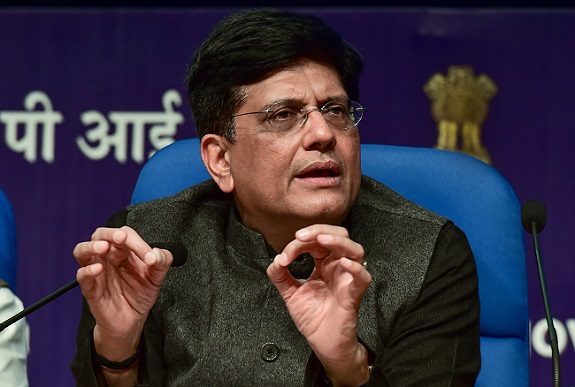
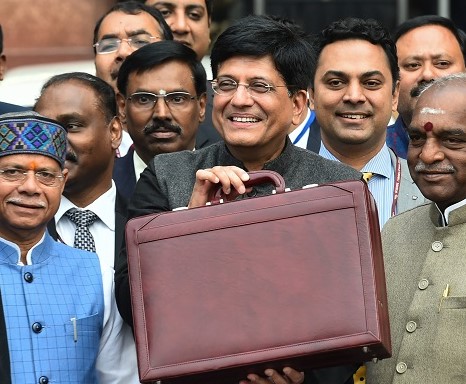
India’s Finance Minister Piyush Goyal doled out sops for salaried middle class in this year’s interim budget, by offering a full tax rebate on incomes upto Rs 5 lakh ($ 7,030). The current tax exemption limit is Rs 2.5 lakh ($3,515). The increased exemption limit is expected to benefit around 3 crore (30 million) income tax payers, mainly the middle class who form the core support base of the ruling Bharatiya Janata Party. The raise in income tax exemption limit was on expected lines, especially since 2019 being the year of General Elections and India’s middle class has been feeling alienated with the BJP for its economic policies.

Piyush Goyal, who was given additional charge of the finance ministry, had stepped in for Arun Jaitley who had not been in good health for a long time. Jaitley was unable to keep the Indian economy on track and discontent was growing that Narendra Modi government has not been able to keep Indian economy on its high growth path. Goyal stepped in after Jaitley’s illness had worsened making him unavailable to discharge his duties and present this year’s budget. Jaitley had undergone kidney transplant in May last year. While Jaitley is a lawyer, Goyal is a chartered accountant and could gauge the factors ailing Indian economy. Goyal understands that economic sentiment and economic growth are close cousins. Probably, the sops to farmers and raising income tax exemption limits are small tools to improve the economic sentiment in India.

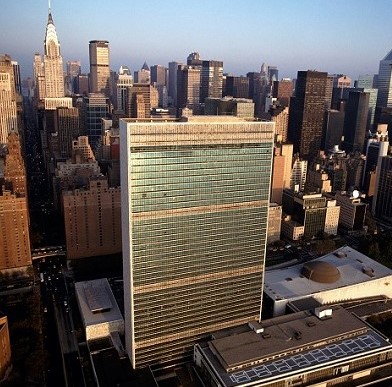
UN predicts global financial turmoil

Political changes apart, rural Indians may see more discrimination

The global economy is stagnating and income inequality is increasing concerns over growth as India enters vibrant political phase and pines for economic direction.

The phase is important and critical. The world economy stagnation in 2019 and 2020 as per UN’s prediction in its World Economic Situation and Prospects (WESP) 2019 has ramifications for India. Its efforts for economic recovery would be affected impacting its future budgetary provisions.

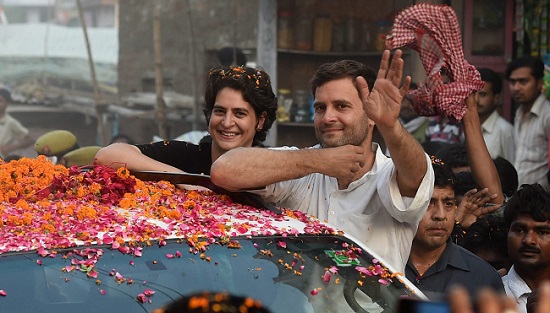
Will India’s political wisdom be able to address that? Would a Congress trying to fight on ‘front foot’ with Priyanka Gandhi being formally launched as AICC general secretary, and Rahul Gandhi as a sober campaigner be able to make difference? The crucial question – whether the Congress has a vision beyond Manmohanomics.

The Manmohanomics in 1991 did one good thing. It ushered partly in practice, more in theory, an era of liberalisation. The 1991 path has been followed willy-nilly by all successive governments, irrespective of the political colour.

All finance ministers after Manmohan Singh, followed his path. That was good – as there was a predictability of the course. But with years the supposed liberalisation that was talked in 1991, got lost somewhere. It has lead to a firmer grip by the bureaucracy or the government itself of the course and lives of the people and their businesses.

This has led to a certain level of GDP growth but the social distribution of wealth has been convoluted leading to severe concentration of wealth, as per OXFAM in 1% people and the growth of wealth of the multitude in most cases either has been minimal or reduced. The worst has happened to the daily wage labourers. Their earnings came down.

The WESP has noted the trend happening in different regions. Though it predicts a 3% annual growth till 2020 globally, but sees deceleration to 2% in the EU and the US, “as the impulse from fiscal stimulus in 2018 wanes. The Brexit or not has shaken the European economy”.

China is slowing down to 6.6%. Several parts of Africa, Western Asia, Latin America and the Caribbean are likely to see incomes stagnating.

Without mentioning India, WESP says, “Even where per capita growth is strong, economic activity is often driven by core industrial and urban regions, leaving peripheral and rural areas behind”. This is happening in Indian farms and rural areas. The political fall-outs marked the recent assembly elections.

The global slowdown has impact on Indian exports and can cause domestic discontent.

Peculiar to Indian scenario, the WESP says, there “is a confluence of risks with the potential to severely disrupt economic activity and inflict significant damage on longer-term development prospects. The risks include waning support for multilateral approaches; the escalation of trade disputes; financial instabilities linked to elevated levels of debts; and rising climate risks, as the world experiences an increasing number of extreme weather events”.

The prediction is pessimistic. India is suffering many of these. The growth is not being reflected in people’s happiness. That is the greatest challenge to the political contenders for the 2019 elections.

So far, no political party has shown that they have a grasp of the situation. Instead all of them are in a wilderness failing to understand the crisis.

The Indian voters need an answer. The opposition is vocal that the BJP does not understand it. True or not, do any of them understand? The recent assembly polls brought to the fore not only the crisis but also that if a Telangana government had brought a half-baked solution for increasing farmers’ income by paying them Rs 4000 (now Rs 5000) per acre of their hold, all others are considering this as an instant vote-catching mechanism.

The announcement of Priyanka Gandhi leading eastern UP, once a Congress citadel has warmed up politics. One would have liked to see if there was a firm economic pattern also. No regional or national party has shown that vision, concept or wisdom.

The parties are suffering from myopia. They have lost sight of the fundamental problems. Competitive rhetoric is raising doubts. People are in a quandary. They do not find a solution to joblessness, underemployment and falling incomes and a continuous rising inflation. The governments have lost will and control to correct the situation.

So the UN chief economist and assistant secretary-general Elliott Harris says, “Alongside various short-term risks, there is an increasing urgency to deal with much more fundamental problems”.

He does not find sustainable development goals being achieved or poverty elevated till 2030. So does not political parties in this country. They are busy in caste politics, religious divide and raking up parochial issues. All lead to ignoring the 2030 SDG goals. India does not seem to have yet found the path.

A country that was once led by its own economic wisdom of Chanakya, that followed Gandhian principles, Marx, Engels, socialism or Keynes, and now the market economy or Deen Dayal Updhyay’s integral humanism, today finds all of these have failed and now they do not have a model to follow.

The governments are only tightening financial conditions through the banks and other instruments of taxation or interest rates. The UN says it can lead to financial turmoil.

The WESP says “as global financial conditions tighten, an unexpectedly rapid rise in interest rates or a significant strengthening of the US dollar could exacerbate emerging market fragilities, leading to heightened risk of debt distress. This risk can be further aggravated by global trade tensions, monetary policy adjustment in developed economies, commodity price shocks, or domestic political or economic disruptions.”

That exactly is happening here. Large external financing needs and limited policy buffers are particularly vulnerable to financial stress.

Often it is said that the country should spend more on research. It is doing. Its research investment in theoretical non-productive research has grown phenomenally. Universities are producing more doctorates. But fundamental thinking is eluding.

This leads to uneven economic growth. The fears of incomes stagnating further would be real. It says double digit growth is required. That is also not a solution. Growth and amelioration of conditions are not synonymous.

So the government may continue or change for the present, ground realities may be disturbing and solutions half baked. Income inequality, as feared by the UN, is likely to aggravate. For a solution there has to be dialogues and political leadership has to be sagacious. A tall order!

Government forces loosing hold in parts of Afghanistan

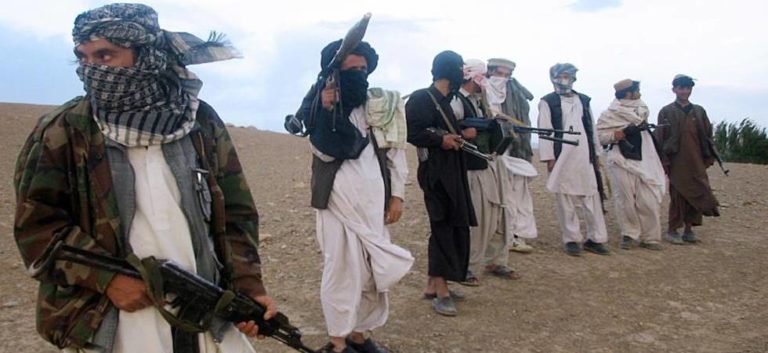
Afghan forces continue to suffer staggering losses since they assumed responsibility for their country’s security four years ago. President Ashraf Ghani last week said 45,000 security forces have been killed since he took office in September 2014. Moreover, Kabul government is steadily losing its grip over parts of Afghanistan, even as American forces intensify their air campaign against insurgent groups.

The latest grim assessment of Afghanistan’s security situation comes as the US pursues talks with the Taliban and urgently seeks a way out of the 17-year war. Numbers provided by Resolute Support, the US-led NATO mission in Afghanistan, show that as of October 31, only 63.5 per cent of Afghans are living in areas controlled or influenced by the Kabul government — down from 65.2 per cent the previous quarter.  According to the US Special Inspector General for Afghanistan Reconstruction (SIGAR), which compiled the data, the decrease came as Kabul’s control or influence over Afghan districts dropped. SIGAR said just 53.8 per cent of Afghanistan’s 407 districts are in government hands, and experts on Afghanistan say the number is lower still.

The strength of Afghan security forces has continued to dwindle, and currently stands at 308,693 personnel. That means only 87.7 per cent of positions are filled, the lowest level since January 2015.

Victory for BJP in Haryana’s Jind bypoll by over 12,000 votes

Giving a big boost to BJP, before the Lok Sabha elections, party candidate Krishan Middha defeated his nearest rival, Digvijay Singh Chautala of JJP, by a margin of 12,935 votes, in Jind bypolls. The BJP wrested the seat from the main opposition INLD, which was decimated in the by-election.

JJP was floated last month by Hisar MP Dushyant Chautala after a split in the INLD following a family feud. The Congress, which had fielded its senior leader Randeep Singh Surjewala, an MLA from Kaithal, ended up at the third spot.

Middha (48) is a BAMS doctor, whose father’s death necessitated the bypoll. After winning the election, Middha told ANI: “I would like to thank everyone who supported the party and me. It’s their victory. There were big leaders in the contest as well, but we have defeated them too. We will follow the schemes launched by PM and take them forward.”

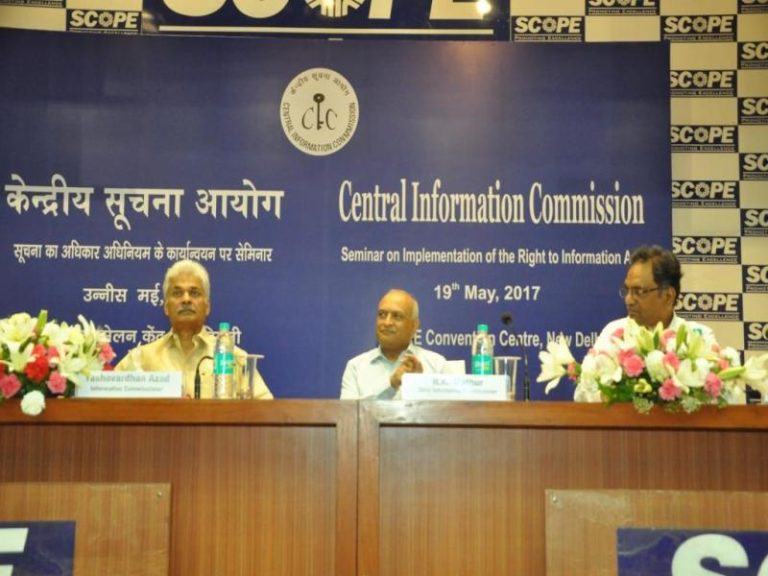
Babus selecting babus for appointment as information commissioners, observes SC

A bench of Justices A K Sikri and S Abdul Nazeer  in the Supreme Court asked the Centre as to why only retired or sitting bureaucrats were being shortlisted by the search committee for appointment as information commissioners. The bench also observed that the search committee comprises of civil servants only.

Additional Solicitor General (ASG) Pinky Anand, appearing for the Centre, said that search committee has recommended 14 names for consideration to the selection committee for appointing information commissioners. “In these 14 names, apart from bureaucrats (retired or sitting) is there anybody else?,” the bench asked. To this, the ASG said one of the 14 persons is a retired judge while rest are bureaucrats. “Their (petitioners) objection is that only civil servants are there. Ultimately, you do not find even a single person other than bureaucrats,” the bench told the ASG.

The apex court is hearing a plea filed by RTI activists Anjali Bhardwaj, Commodore Lokesh Batra (retired) and Amrita Johri who have claimed that over 23,500 appeals and complaints are pending with the CIC as posts of information commissioners are lying vacant. Advocate Pranav Sachdeva, appearing for the petitioners, said that the government was appointing only retired or sitting civil servants as information commissioners but names of persons like activists, scientists, journalists, lawyers and others should also be considered for appointment.

Socialist leader George Fernandes passes away

Former defence minister George Fernandes, who was suffering from Alzheimer’s disease and recently also contracted swine flu, passed away at the age of 88, on Tuesday. He was India’s defence minister in the NDA government headed by Atal Bihari Vajpayee and was the industry minister under the Jan Sangh government, which defeated Indira Gandhi in 1977.

Prime Minister Narendra Modi condoled the demise, saying he was frank and fearless, and never deviated from his ideology. “A visionary railway minister and a great defence minister who made India safe and strong. During his long years in public life, George Sahab never deviated from his political ideology. He resisted the Emergency tooth and nail. His simplicity and humility were noteworthy,” the PM said. Congress chief Rahul Gandhi expressed his condolences to Fernandes’ family and friends. “I’m sorry to hear about the passing away of former Parliamentarian & Union Minister, George Fernandes Ji,” he said in a Facebook post.

Colonisation of Gilgit-Baltistan: Imran Khan takes off from where Nawaz Sharif left

The Imran Khan-led Pakistan government is exhibiting great determination towards integrating Gilgit-Baltistan as the fifth province of the nation and, in this evil design, it has the complete support of the pliant judiciary. It may be recalled that Pakistan Muslim League (Nawaz)—PML (N) government led by Prime Minister Shahid Khaqan Abbasi had promulgated the Gilgit-Baltistan Reforms Order, 2018. It had the gumption of terming the order as an improved version of the Gilgit-Baltistan Empowerment and Self Governance Order of 2009 that was introduced by the Pakistan People’s Party (PPP) Government.

Legal experts, however, denounced the same as a blatant attempt to seize power of the Gilgit-Baltistan Council and entrust the Prime Minister (and through him the federal government) with undisputable authority.

The Imran Khan-led government is now attempting to strengthen this evil design. To cover up the falsity and duplicity the prime minister of Pakistan set up a high-level reforms committee to “look into the constitutional, administrative and governance reforms for Gilgit-Baltistan.” The committee carried forward the sham by recommending a provisional provincial status for the region with representation in the National Assembly and Senate to the tune of three seats each in both houses of parliament. Khan then convened a special cabinet meeting to discuss the recommendations of the committee and approved, in principle, a change in the status of Gilgit-Baltistan into an interim province as acceptance of the “recommendations of the committee.” All of his was done in a tearing hurry!

Since 2009, under pressure from China to legitimise control over Gilgit-Baltistan in order to safeguard the interests of the China-Pakistan Economic Corridor (CPEC), Pakistan has thrown caution to the winds and has been working towards amalgamation of the region as its integral Province. The first salvo was fired in the form of the Gilgit-Baltistan Empowerment and Self Governance Order of 2009, which was strongly opposed by the people. Then came the second salvo in the form of the above mentioned Gilgit-Baltistan Reforms Order, 2018 by Prime Minister Shahid Khaqan Abbasi just before remitting office and now the actions by Imran Khan to strengthen the control by application of the order on ground, in effect Imran Khan has effectively taken off from where Nawaz Sharif left.

The machinations clearly indicate that while the political parties in Pakistan remain at each other’s throats in the most debased manner, they remain on the same page so far as keeping Gilgit-Baltistan firmly under control of the federal government is concerned. This is because of the commonality of interest in bleeding the region of its natural resources, which is being done by all political leaders, army officers and big businessmen of the country. This is the worst form of colonisation ever witnessed. 

The Supreme Court of Pakistan has also jumped into the fray. On the appeal of a local MLA, it has quashed the Gilgit-Baltistan Reforms Order, 2018 and restored the Gilgit-Baltistan Empowerment and Self Governance Order, 2009. By doing so, it has established the legal validity of its jurisdiction over Gilgit-Baltistan. Now the situation is that while the Courts of Gilgit-Baltistan will not have any jurisdiction to deal with issues within Pakistan, the people of the region will be able to challenge the decision of these very Courts in the Supreme Court of Pakistan. In other words the Supreme Court has now taken overreaching powers by what it has termed as the “interest of the people.”  As a balm, it has passed directions that people of the region should be given fundamental human rights as provided by the proposed Constitutional Order. It has also directed that the constitutional status of Gilgit-Baltistan be determined through a referendum within 14 days, which would be a miniature version of what Pakistan has been seeking all this while and will be used to leverage its hold on the region. It is this direction of the court that Imran Khan seeks to exploit while taking the required steps to completely gobble up the region. All of this reeks of partisan interests involving all segments of the government machinery.

India has lodged a strong protest to Pakistan with regard to the series of interferences that are being engineered by the government and the judiciary to change the character of Gilgit-Baltistan and impair its disputed status. “The entire state of Jammu and Kashmir has been, is and shall remain an integral part of India,” reiterated India rather strongly to the High Commissioner of Pakistan to India. “Pakistan government or judiciary has no locus standi on territories illegally and forcibly occupied by it,” the statement further read.

The hapless people really do not know which way to turn. They protest as much as they can and have created an umbrella organisation, the Awami Action Committee as a united front. The protests, witness complete shutdowns of markets and business centres in major towns. There is also thin attendance in private and government offices and educational institutions, among others. The diaspora attempts to raise their problems in international circles, but the support falls short of exerting a direct pressure on Pakistan to mend its ways. The leaders from Gilgit-Baltistan are now seeking to integrate their struggle with that of the people of Pakistan-Occupied Kashmir (POK) to infuse more energy.

The high handed attitude adopted by the Pakistani authorities simply reinforces the perception that they are interested only in exploiting the rich natural resources of the region and looting the people in every conceivable manner without giving even a passing thought to their aspirations. Fed up with this blatant exploitation, the people are now exhibiting widespread resentment without fear of the inevitable reprisals that come in the form of illegal detentions and strange disappearances of those who protest.

The world in general and India in particular needs to wake up to the massive atrocities and human rights violations that the people of the region are being subjected to for no fault of theirs. The world needs to pressurise Pakistan towards revisiting its mistreatment of the beleaguered region. Without strong measures like sanctions or direct foreign intervention the Pakistani establishment is not likely to relent from its evil designs. The time to act is now, or it will be too late and the world will lose out on an entire civilization.