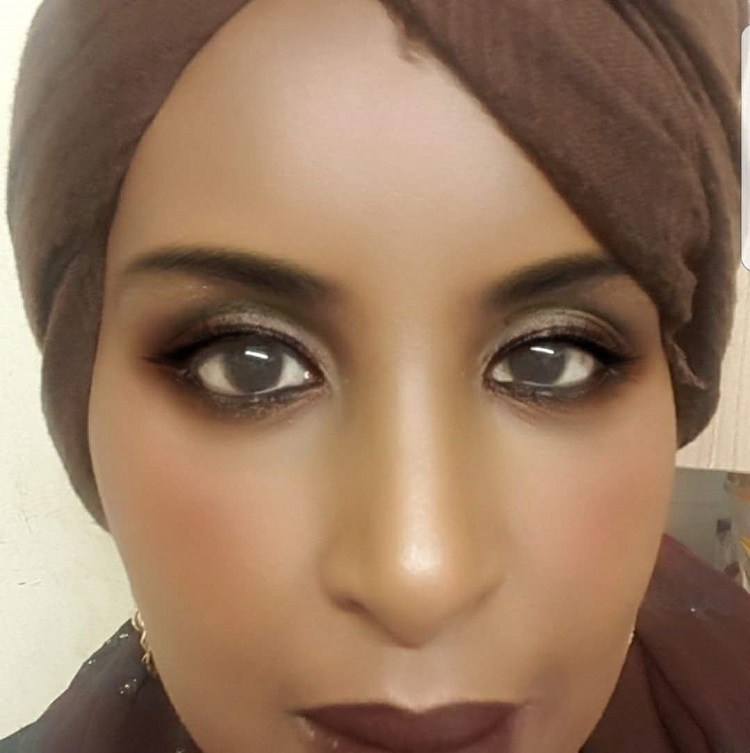
What started as an interview became a moving story that will make anyone want to read CUT, Hibo Wardere’s eloquent memoir of how she became an anti-FGM campaigner helping young girls whose families plan to take them abroad for a procedure that leaves them with devastating permanent health problems and psychological trauma. She has devoted the past ten years of her life to the campaign against FGM (Female Genital Mutilation) and vows to continue.
Terri: What prompted you to start campaigning against Female Genital Mutilation, or the FGM, in the first place?
Hibo Wardere: I was never going to talk about FGM to be honest with you… never in life, because it was too personal, too intimate; it just felt like I was never going to talk about it and I knew it was eating me up anyway. It’s just something that you normalised. You normalised how you felt: physical pain, emotionally drained, psychologically disturbing, hurting – you just normalised it because everybody else around you also normalised it.
But when my youngest went to school and I didn’t have anything else to do I went and I asked the Head Teacher if I could volunteer. And he said, “OK … we can do better.” And I was like, “What would you want?” and he said, “Your kids are very clever. What do you do with them?” He had a conversation with me and I said, “I dunno, I just sit with them every day after school. I go back over what you’ve taught them each day and they tell me what they did and that way I can get a bit of what they’ve learned. You know, I just sit down with them every day.” And he said, “Well, you could do that in the classroom and it’s called teaching assistants – you help the students.” And I said, “OK, but I don’t have any qualification. I’ve never done college or anything.” And he said, “It’s OK, we’ll train you. We’ll pay for you and we’ll train you.” And I was thinking ‘Oh my God, I haven’t touched a book or pen since I arrived in this country. How am I going to do that?’ And I was asking him, “What does it entail?” and he said, “You’re going to do a lot of writing, a lot of reading….” I have anxiety about seeing a lot of words; it really messes me up. And said, “OK, can I just do it without writing or reading?” I was just joking with him, but it turned out I enjoyed it. I really, really did enjoy it and I just excelled in it. I don’t know how, but I did.
After that, he said, you need to work with year six. They assigned me to year six and then assigned me particularly to one student. She was Somalian, a very scrawny little girl. She just reminded me of me. Instantly we bonded, and we became quite good friends. And then one day, the head teacher said, “I need you to come to the office. There’s a meeting happening. We just want you to observe. Don’t say anything. Don’t get involved. Just observe.” I was very intrigued. What kind of a meeting were they involving me in? I was very nervous. But then, when I went into the office and I was sitting with the two Deputy Heads and him, in walked her Mum. The penny dropped. For some reason the penny dropped for me; I just thought… ‘Surely not. Surely not! It’s not what I’m thinking that they’re thinking, is it?’ I just thought to myself ‘don’t let your imagination run wild, it could be something else’. They sat down and they were like, “Oh you can’t take her out. It’s April, she’s going to do exams in May. She needs to be coming back to get extra help during the break time.” But she was adamant: “No I need to go see my Dad, who’s very ill, dying… I haven’t got anyone to leave this child with.” But she did! She had two grown up daughters who were married already. And I was thinking, ‘I know your daughters. They are married. They have family. What do you mean you can’t leave her with them?’ But she was adamant that she didn’t want to leave her daughter. And then she left. And I knew what they were thinking about. And I was very upset because I just finished learning the policy and procedures and everything in the school, and there was no mention of FGM, not even in one single line: nothing about that. But all the other abuses were there.
So when she left, the headteacher said, “So what do you think?” and I said, “What do you want me to think?” He said, “Well, we’re thinking that she’s taking her to perform circumcision.” And I went, “OK, so what do you want me to say?” They said, “What’s your instinct? What do you think?” I really got mad and I said, “You really want me to tell you what I think, yes? I have no say in this.” And I walked out.
I walked out because I was fuming. This is a child I had bonded with and there was this thing hanging in the air and I knew what it was, so my emotions were all over the place. I went back home and I was literally fuming. I was telling my husband what happened today, so the next day I went back. The Head called me to the office and he said, “We really value your opinion.” I said, “Listen, first of all, why do think about FGM when there’s nothing in your books? How do you expect your teachers or the people who work with children to handle FGM? Have you ever given them training?” He said “No.” I said, “There’s nothing said about FGM but you have all the other abuses in your folders… but there’s nothing on FGM. And why do you think I have something to think about that?” And he replied, “You’re from that region…” But I thought, “That doesn’t qualify me, to know what this woman’s going to do, does it?” So I left.
I went home and there was one assignment left for my training that I needed to write. The assignment was to write about an abuse that I care about, whether I know, or I experienced it or somebody close to me has experienced it. And I thought, ‘I’m going to write about FGM.’ It was the perfect time to write it. I went back home. After I put my kids to sleep I took the laptop and I was just looking for stories online and my husband said, “What are you doing?” and I said, “I’m looking for stories.” And he said, “About what?” So I said, “About FGM.” And he said, “Why are you looking for stories?” and I said, “Why? I need to write something.” And he said, “Yeah, but why are you looking for stories? Why can you not write what happened to you?” I remember just looking at him and laughing and I said to him, “Are you mad? You want me to write about me? You do know these are the people I go out to dinner with, they think I’m ‘crazy, funny Hibo’… and you want me to write about my business … are you mad!?” And he just stopped at my shoulders and said, “I think it’s about time maybe for you to think about talking about it. You have been talking to me about it all the time we’ve been married.” And I just thought, “He’s mad.” For some reason, he knows how to get to me. He did. Afterwards, when I looked at the internet, I just closed my laptop and I thought ‘why?’ – what is it preventing me to go back to that day …. and to look at myself as a six year old, ….what is it?’ And I just started writing; I opened the laptop and I started writing and I remember just crying, silently at first. My tears were just streaming down, I couldn’t stop them, and I kept on writing and I started to whimper and I didn’t notice but my husband was under the stairs nearby, and every time he heard me cry he would come and hug me and just go back and come back and he didn’t sleep because all night I was writing.
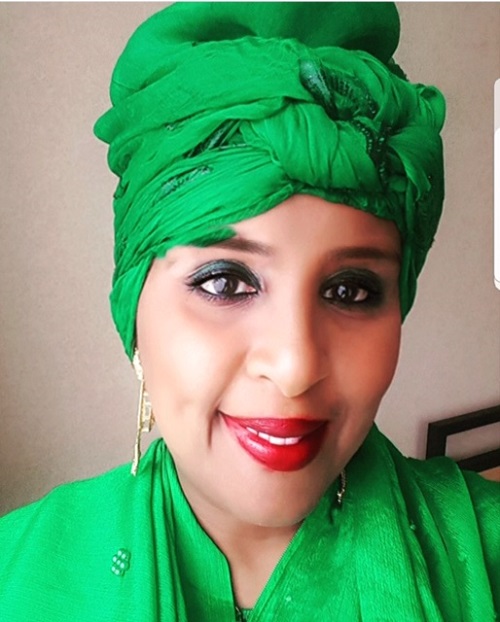
“…I do get men sometimes talking to me on the internet, Twitter: “Oh, you need to stop talking about the culture, you tarnish our culture”, and this and that. And I just ask, “OK, are you trying to tell me not to talk about what happened to me?” And there was one man in particular telling me, “You know what, you should stop talking about this.” And I said, “Are you married?” and he said “Yes.” “Is your wife cut?” “Yes.” “Do you think that’s a good thing?” “Yes.” “So, let’s chop up your penis and see what happens to you.” He didn’t say a word after that…”
—Hibo Wardere
The next morning I was so traumatised by what I did, because this was my first time ever actually confronting myself. I took the USB, went to the school, printed it out, and went to the Head’s office and I said, “You’re going to read this.” When he saw the title he said, “Can I give it to my Deputies, because they’re ladies?” I said, “No,” and I closed the door. “People are gonna talk. I’m not leaving, … until you read it.” He said, “I’ve got no choice have I?” And I said “No.” You could see it in my eyes, I was really traumatised and I was starting to cry. So I sat on a chair. He read it and afterwards he stood up and hugged me. He wouldn’t let go. He hugged me and he was crying, and he said, “You’ve changed my world today. And I am going to make sure this goes on the agenda, I’m going to make sure all staff are trained. I’m going to make sure everybody knows. But here’s the thing – you have to tell your colleagues.” And I went, “No, this is a private thing, and I wrote it for you, to help the other kids.” And I had actually done it for that little girl because I loved her so much. And I said, “No. You have to…. I’m not doing it.” So he said, “If you want a job, you have to do it.” [Laughing] He was kind of blackmailing me. He just said, “There’s bigger things than you. This is bigger than you. You need to think about that. You need to think about why…. You did it because you wanted to save the girl.” Which by the way, he said ‘yes’ to her Mom taking her and she took her and she never brought her back. He said, “imagine hundreds of other girls out there… I was ignorant. I didn’t know what I know today. Many schools. . . in fact”, he said, “all the head teachers I meet, nobody discusses FGM. But I’m going to change that. Next meeting I’m discussing it.” So I said I would think about it and I went home and discussed it with my husband and he said “Right. You need to talk, you need to tell them.”
My colleagues already knew I had written something and the whole school was on fire, because the assistant was not allowed to disclose what I’d written but people knew that I had written something that would change the school. So at lunchtime I said “I really want to see you all, it would be really good to see you all this afternoon if you are free.” I didn’t have to ask twice. The entire 120 of them turned up. All of them turned up! And I went to the hall and I remember looking and thinking ‘Oh my God!’ And I just said “You all turned up, I was expecting 2 -5 people. What are you all doing here?” I was so nervous. I was cracking horrible jokes. But I told them. For 45 minutes I just talked, cried, talked and cried – and they were all crying with me. And when I finished they just, … everyone was angry – they were very angry because some of the TA’s said they were definitely sure that children in their class had undergone FGM. In fact one of them was very courageous, and had gone to a head teacher and said something is going on with this child, and she was told, “Don’t worry because it is the culture they come from, the children are like this.” But they weren’t like that, I’m sure of it, they weren’t.
It snowballed from there – from me talking to my colleagues and them going and talking on FaceBook and everywhere else and the Head Teacher literally pimping me out in every meeting he attended: “I have a lady in my school who talks about FGM.” And Waltham Forest started me off in a big style after I told one councillor who was a friend of mine. And one Head booked me in a school without telling me first, and she said “We’re going to this school and you have only 35 people. Just talk about FGM.” I said, “Really?” She said, “Yes.” I went in there and it wasn’t 35 people. It was about 200+ — it was two schools — and she disappeared when we went to the school because she knew how nervous I was and thought I might just leave, so she disappeared somewhere in the building and left me there. But she came back when I was talking with a big grin at the back of the room and I thought “I’m going to kill you when I’m finished with this.” But it was kind things like that… my councillors were the most amazing people. Waltham Forest Council just scooped me up the minute I decided to talk about FGM, every single one of them, the councillors, the leader, everyone just scooped me up and ran with me and soon every school was banging on my door and I was going from one place to the other. So here I am today. It was that 10 year old who made me talk.
Terri: That’s an amazing story.
Hibo Wardere: It is. She touched me. She just literally reminded me of me – very scrawny, didn’t even like lunch hour… I used to go and sit with her so that she could eat. It was … I loved her to bits. To this day I don’t even know what happened to her. What we know is: The Mum took a secondary school student as well, without telling the school, and she never returned them back and we don’t know where they are.
Terri: One thing that strikes me is the difficulty for you of having to talk about something that is very private, very intimate, and yet, the whole reason why you kind of have to do so is that it is, as he said, bigger than you. Is it hard …? I guess you’ve already answered that question…
Hibo Wardere: It is extremely hard. Even now as I talk about it publicly, so many times over and over and over. Every time you talk about it, it has an impact on you. It does, because you’re feeling it when you’re talking about it. You are explaining to somebody and you want the person to understand, and to actually feel literally emotional about it and that takes a toll on you. But it’s something that we have to do. For me, in my head I always see that six year old. I see millions of other six year olds, I see even babies. I see that… and I feel like, I’m in that position where I can talk about it, I will continue to talk about it and there’s no choice in that.
Terri: Clearly this is an intimate part of your culture of birth. When did you first recognise that there was something problematic about the practice or about what had happened to you? Was it before this incident (of writing your story) or was it really at that moment when you started to write that paper that you realised?
Hibo Wardere: I actually didn’t know what it was. All I knew was that it was something that all the girls were proud of, because I got bullied at school because I wasn’t cut. It was something that everybody went through and I thought it was really lovely because, if these girls were so proud and bullying me about it, surely it must be something good. Then when it happened it was like, ‘No!’ – It wasn’t something good. It wasn’t something to be proud of. When I went back to the school they wanted to welcome me to their gang, and I said “no, no… I don’t want to be part of your gang. I was thinking in my head, ‘How can I bully another girl, knowing what I went through? Why would I wish that on another girl?’ I just felt ‘no’ and I was alone again. Even after I was cut I was a loner again and I didn’t want to communicate, or you know, be with this group that felt very proud. I didn’t. I just felt what happened was wrong. It was, ‘why did it happen?’ The nagging question in my head was why?
Terri: How long would you say you’ve been working on this issue (combating FGM)?
Hibo Wardere: I think about the last seven years, publicly. But personally, working on this issue I think it’s from the day it happened to me until now – working on that issue never stops. It’s part of your life, so you learn to live with it. You learn to cope with it, but it never leaves. It’s there. Physically it’s there, emotionally, psychologically . . . every aspect of your life is touched by it. You just learn how to cope with that and to get on with life, but it never disappears; it’s always there.
Terri: This is what a lot of survivors have told me… especially the medical consequences that go on and on. So, at what point in your work did you think, ‘I’m going to write a book about this’?
Hibo Wardere: I actually didn’t think ‘I’m going to write a book.’ Not in a million years. And then all of a sudden this ghost writer Tweets me. She’s like, ‘Hibo, I need to write to you a private tweet. Can you please follow me back?’ And I followed her back. She was like ‘Oh, I’ve been asked by Simon & Schuster to write a book.’ And I was like, ‘Who is Simon & Schuster?’ first. I Googled before I asked and found out they are publishers. She wrote me, ‘I need to write a book, about female genital mutilation, and I want you to write the book with me.’ And here I was telling her, ‘OK, sorry I’m not famous like Leyla Hussein. I gave her the names of the famous people who have worked to eradicate FGM: Nimko Ali and others. I asked her, ‘Why are you not talking to them?’ And she said, “Yes, I know but the way you talk is different. You talk so raw.” And I went, “Ohh, what do you mean by ‘so raw’?” She went, “You don’t mince your words. You are out there, you don’t talk like a professional. You talk like you.” And I was like, “OK, are you insulting me right now?” [laughing] She went, ‘No, no, no, not insulting you…it’s just that the way you talk touches people. The way you talk is something that everyone can stop and listen to and I want that.” So, I said “no” to her at first. But she kept on being persistent. She didn’t leave me alone. And I went, “OK, let’s see.” So she came and we spent three days together, where she asked me all kinds of things, while all kinds of emotions were going through me. She wrote a few chapters and said, “OK, I’m going to take these chapters and send them to Simon & Schuster and then we’ll know.” Within three days they replied. They said “We want this story. We need it now.” And I was thinking ‘Who’s going to buy a book about mutilation? People are afraid to talk about the vagina. Do they really want to know what happens to it?’ And I was having huge blocks – thinking that no one would want to know about this…. at all. And when we finished seven months later the book came out, and it became a sensation … (I have got no idea how that happened. I am really shocked sometimes when I look at Google and the amount of people who have left reviews, and how much it’s selling, it’s crazy.)
Terri: What was the response within the Somalian community and practicing communites? Or is the response mostly from outside communities?
Hibo Wardere: I have got no idea how Somalis reacted to this book. None of them said anything. I only know that outside the community people love my book. Inside the community, I haven’t had a word from them about the book. I do get men sometimes talking to me on the internet, Twitter: “Oh, you need to stop talking about the culture, you tarnish our culture”, and this and that. And I just ask, “OK, are you trying to tell me not to talk about what happened to me?” And there was one man in particular telling me, “You know what, you should stop talking about this.” And I said, “Are you married?” and he said “Yes.” “Is your wife cut?” “Yes.” “Do you think that’s a good thing?” “Yes.” “So, let’s chop up your penis and see what happens to you.” He didn’t say a word after that. So there are people like that, but nobody’s actually come out and said anything about my book yet. They’ve read it; I know they have. Many women have bought a lot of books but none of them has said anything publicly, to me or anyone else.
Terri: Well, let’s hope that your book can give them courage… because with you, people constantly had to draw you out and persuade you to talk about yourself and what happened to you. And although you were reluctant, every time you did so, it was sensational. So tell us about your book’s content. Is it mostly biographical or is it more about the issue, or both?
Hibo Wardere: It is both. It contains educational stuff as well. For me, it is a book about my memories, my stories, the struggles. It’s a book full of information, about teaching, and overall it’s an empowering book. For me it is an empowering book, not just for FGM survivors but for any kind of abuse. I want people to read it and — whatever is going on in their life – to think, “I can also come out from the darkness. I can come out through the other side, because this lady has, I can do it as well.” It is that kind of book for me. It is an empowering book.
Terri: You’ve focused so much energy on education. Why is this your preferred arena in combating FGM?
Hibo Wardere: Education for me is the must. It’s the biggest tool we have on the planet. Education for me … I didn’t know anything about FGM. I didn’t know what had happened to me. I didn’t know anything until I started reading about it when I had my son, and it took me one year to translate one book from English to Somalian – one full year – to translate and understand and everything. So for me, it gave me all the things that were missing: all the links that I was missing. I was reading about things that I was suffering with. Had I not read that, I would not have connected everything that was going on with FGM. So education is so important. People, when they don’t know something, they normally seek to find out. Seeking is education, and telling the women I’ve met, thousands of women in our area alone who have come to our clinic and love what I do, actually get some information for the first time. You can see when you talk to them and you say, “you know you went through this, and this and this..?” “Yeah.” “Where do you think it’s coming from?” The penny drops for them. You link them, through education, with what they are going through. They value that. So education is the key.
Plus, educating our youth – there is no comparison to that. Educating our youth is a must. We have to if we want to eradicate FGM. For me it’s that – as young as year two. We teach them about how nobody should touch your body, your body is yours, etc.. It’s the same thing about FGM. It’s about telling them, “Your body is yours.” Making them body conscious. Then they go to secondary school and you should not hide what you tell them. They ask me ‘Miss have you undergone FGM?’ and I tell them ‘yes’. If they ask me intimate questions, with kids you can never be economical with truth, you have to be honest with them. That has worked beautifully. The work that they do with me keeps me going every single day. That’s what propels me and I never get tired.
Terri: I was wondering where you get all this energy. Do you eat your spinach?
Hibo Wardere: I never get tired of going to school and teaching the youth. Some of them, you never know whether they’ve undergone FGM or not. You never know whether you’ve given them a clue about what was going on with them. But I did have a sixteen year-old who said, “Everything you’ve said, yes, I have gone through it. But my worry now is for my two younger sisters. I don’t want them to go through what I went through.” So you do get that. You do get people that have already undergone it, but they’re going to help their siblings. Or children who know nothing about FGM, and when they learn about they go, “Hang on, I am never going to go through this. I know what this is, and if my Mom tries it, I know how to seek help.” It’s all about equipping them; it’s a protection tool as well.
Terri: Has the book been translated into Somali?
Hibo Wardere: Not yet. It’s my wish actually. It’s my wish that one day it would be translated into Arabic as well as Somali. I know a lot of women would read it if it were in the Somali language because most of them have language barriers.
Terri: I agree, that needs to be done. What are some of the biggest obstacles that you’ve faced in your work?
Hibo Wardere: Families… especially um, some family members who don’t like what I do. But for me that is nothing. What I do is my life. It’s up to me. I’m not interfering in their work, so they shouldn’t interfere with mine. When your own family members turn on you, that’s the worst part of life. Others, you can tell them where to go, but family members … what do you do when they’re your family and they’re telling you, “Oh you shouldn’t be doing this, you shouldn’t be doing that, you shouldn’t be talking about this.” It’s all about protecting them, their family name, their family honour, etc. And for me that doesn’t exist if you can’t talk about something that’s traumatised you for life. What’s that got to do with the family honour? I have a right to talk about what happened to me. I’m not asking you not to talk about yours; don’t tell me not to do that. Family members sometimes can really make you stop and question yourself. But others, you can handle others. I don’t have a problem with this.
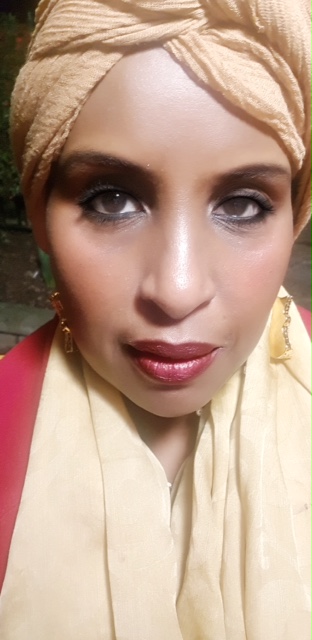
“…So I just started by saying, “We need to talk about vaginas and what happens to vaginas. Put that to one side and let’s think about what would happen if two hundred million penises and balls were chopped off. What would the whole world be doing right now?” You could hear men gasping and see some of them crossing their legs, and I’m going, “See? You’re closing your legs yet nobody required that of you, so why is it OK for us to accept two hundred million women mutilated like this?” That was, for me, a moment … because they were literally shocked….”
— Hibo Wardere
Terri: What would you say are your most notable success stories throughout all of this work?
Hibo Wardere: I don’t know… I went to Canada recently. That was the most amazing trip I’ve ever had. I gave a talk in the Canadian Parliament and it was so lovely and I was asked, ‘OK, there are a lot of MPs here. Do you want us to warn them?’ And I said, ‘No. You should not warn them. What are you warning them about? I’m just going to talk about vaginas. Why do you want to warn them?’ And they were like, ‘Exactly that’ And I was like, ‘No.’ I went there and I thought to myself, ‘How do I start the conversation, that I live with this every single day of my life, this memory that I will never forget even when they’re gone or in their eighties?’ So I just started by saying, “We need to talk about vaginas and what happens to vaginas. Put that to one side and let’s think about what would happen if two hundred million penises and balls were chopped off. What would the whole world be doing right now?” You could hear men gasping and see some of them crossing their legs, and I’m going, “See? You’re closing your legs yet nobody required that of you, so why is it OK for us to accept two hundred million women mutilated like this?” That was, for me, a moment … because they were literally shocked. And by the time I finished they couldn’t stop clapping for God knows how long. I had to beg them to stop clapping. Moments like that stick with me. Moments like the sixteen year old girl, who, even though she had already undergone FGM, wanted to protect her little sisters. That was a huge moment for me. I felt, ‘You didn’t even care that much for you. You just wanted to protect your two siblings.’ Talking to her about what happened to me created that – and it was a very special moment for me. And it was also very brave of her wanting to help her little sisters. Or another occasion when a girl in year nine stayed after and said, “I know I’ve had FGM but I don’t know what type I’ve had.” When I see things like that, I know I’m doing the right thing. Even if it is only one girl that comes forward, I know she’s going to get the help she desperately needs afterwards, because that’s the time you actually need all the help you can get. Lots of moments: My son telling me he’s the proudest son on earth, my kids telling me that, my family, friends who are very, very supportive. I am so blessed in so many was and that is what helps me to keep going on day in and day out.