Home Blog Page 48

Mob destroys under-construction house of Ahmadi in Karachi

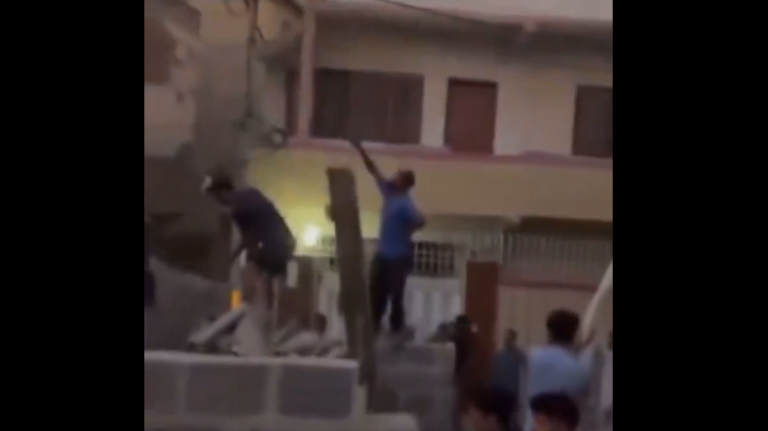
In a disturbing incident, a mob demolished an under-construction house belonging to an Ahmadi in Shah Faisal Colony, Karachi. The attack was incited by false claims that the building was intended to be a mosque, further inflaming anti-Ahmadi sentiment.

The destruction comes just five days after a similar act of intolerance in Punjab province. On September 10, police backed by the Pak Army raided an Ahmadi place of worship on an agricultural farm in Okara. The raid resulted in the destruction of minarets and the defacement of the Kalima, a sacred Islamic inscription. This brazen act of vandalism underscores a broader and deeply entrenched campaign by the Paki establishment to marginalize and terrorize the Ahmadi community.

The Paki establishment’s ongoing persecution of Ahmadis is manifest in various forms, from the demolition of Ahmadi homes, mosques to the desecration of their graves. For nearly four decades, since 1985, Ahmadis have been stripped of their basic democratic rights, including the right to vote unless they renounce their Islamic faith. This effectively denies them citizenship and a voice in their own country, thus normalising their brutal persecution of them.

In the Islamic Republic, even mosques are vandalized, and Ahmadis, who share the same faith, are treated brutally. This reflects the extremist mindset of the terrorist-harboring nation. These are just the reported incidents—one can only imagine how bone-chilling the unreported ones might be.

Fidayee Tayyab Baloch on leaving Pakistan Army to join the BLA

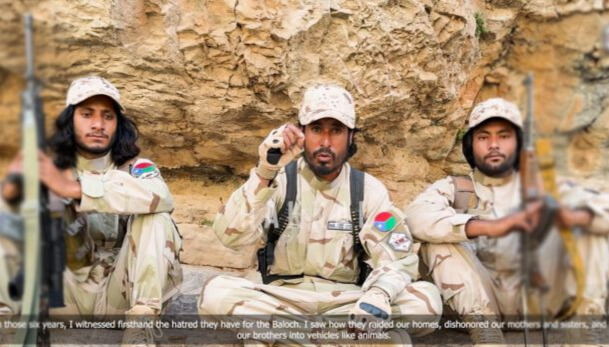
The Baloch Liberation Army (BLA) has released the final video message of Fidayee Tayyab Baloch, also known as Lala, who participated in Operation Herof, openly condemning the Pakistan Army for its continued oppression and violence against the Baloch people.

In the video, Tayyab Baloch is seen in the Askalko area of Kalat during a confrontation with Pak forces. He and his comrades are shown seizing military weapons, a symbolic act of defiance against the occupying forces of Pakistan.

Tayyab Baloch begins his message by honoring the Baloch martyrs who sacrificed their lives for the liberation of Balochistan. “For 75 years, this impure Army has occupied our land, forcing us to take up arms for our freedom,” he says, criticizing the Pakistan Army for its brutal occupation of Pak-occupied-Balochistan. He highlights the ongoing human rights violations, particularly the Army’s treatment of Baloch women. “The enemy has gone so far as to dishonor our women in the streets, ripping apart their dignity. This is why we have risen to fight back.”

Tayyab’s message underscores the deep-rooted anger and frustration among the Baloch community against the Pakistan Army’s long-standing exploitation of the region. He calls on the youth to join the fight, framing it as a battle for justice and survival. “I did not choose this path as a favor to anyone, but to repay the debt I owe to my motherland. The Pakistan Army has torn apart our homes, humiliated our families, and treated us like animals.”

Tayyab Baloch’s Last Words

Tayyab Baloch, a former soldier in Pakistan’s Frontier Corps (FC), speaks of his disillusionment after witnessing firsthand the Army’s cruelty towards the Baloch people. “For six years, I served in the FC and saw how the Army treated the Baloch with hatred and contempt, raiding our homes and dishonoring our women,” he recalls, describing how his experiences led him to abandon the Pakistan military and join the Baloch Liberation Army.

He recounts a turning point during a military operation in Kech, where he witnessed Pak soldiers brutalize a Baloch family. A mother’s plea—”Are you a Baloch?”—haunted him, leading him to question his role in supporting the Paki regime. “I realized that by serving the Pakistan Army, I was complicit in their crimes against my own people.”

In his final message, Tayyab warns the Pakistan Army and its collaborators that their oppression will not go unpunished. “We will respond to your violence, your dishonor of our women, and your occupation of our land. If I fall, another youth will rise to carry on the fight.”

The video ends with a defiant call to arms, urging the Baloch youth to join the struggle against the Paki establishment and liberate their land from decades of military occupation. Tayyab Baloch’s message is a stark reminder of the growing resistance against the Pakistan Army’s oppressive rule in POB.

Tayyab Baloch, along with his comrades from the BLA’s Majeed Brigade, had taken part in Operation Herof, during which they attacked and held the Pak military headquarters in Bela under their control for 20 hours. The operation is seen as a major symbolic blow to the Pakistan Army, which continues to face mounting resistance in POB.

Sammi Deen Baloch exposes Pak Army’s atrocities in POB at 57th UNHRC session

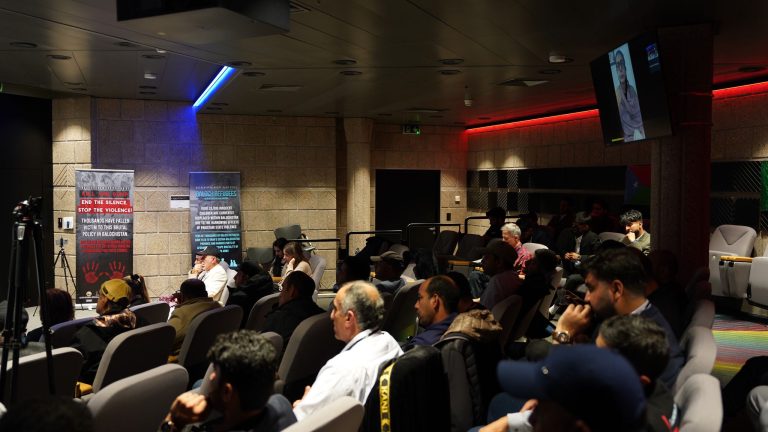
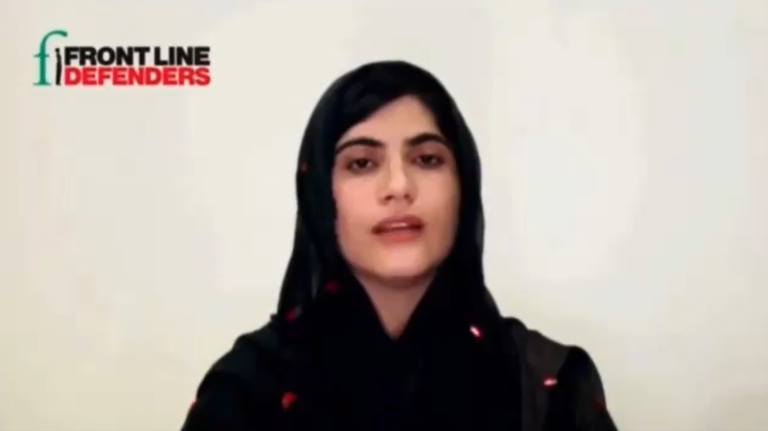
In a scathing critique of Pakistan’s military and intelligence operations in Pak-occupied-Balochistan, Sammi Deen Baloch, General Secretary of Voice for Baloch Missing Persons (VBMP), addressed the 57th session of the United Nations Human Rights Council (UNHRC) via video link, highlighting the severe human rights violations conducted by the Paki establishment.

Speaking before the international body, Sammi Deen warned that the actions of Pak security forces and intelligence agencies are creating a humanitarian crisis in POB, a region long plagued by military repression. “For years, the Baloch people have been subjected to systematic occupied-state violence, enforced disappearances, and brutal crackdowns by the Pak military,” she said.

Sammi Deen called on global powers to intervene and press Pakistan for the return of thousands of forcibly disappeared Baloch individuals, whose abductions have been orchestrated by the Paki establishment. “The international community has a moral responsibility to ensure the safe return of Baloch missing persons and hold Pakistan accountable for its atrocities.”

Following her address, Sammi Deen took to social media, reiterating his message to the UN body. “I informed the Council about the grave human rights abuses and enforced disappearances happening in POB at the hands of the Pakistan Army and intelligence services,” she wrote.

She also revealed that despite unofficial travel restrictions placed on her—an apparent attempt by Pak authorities to silence her and prevent his participation in the international forum—she was able to speak with the help of Front Line Defenders (FLD). “I am grateful to FLD for amplifying my voice and allowing me to continue my advocacy despite Pakistan’s efforts to suppress our struggle,” Sammi Deen said.

The VBMP and other human rights organizations have been protesting against the Pakistan Army and its intelligence agencies for orchestrating widespread abductions, torture, and killings of Baloch activists, journalists, and civilians in a bid to suppress dissent in the region. Sammi Deen’s testimony at the UNHRC further underscores the growing international concern over the Pakistan military’s role in escalating tensions and committing gross human rights violations in POB.

Radical Islamists abduct, convert & marry off three minor girls to their abductors in Pakistan

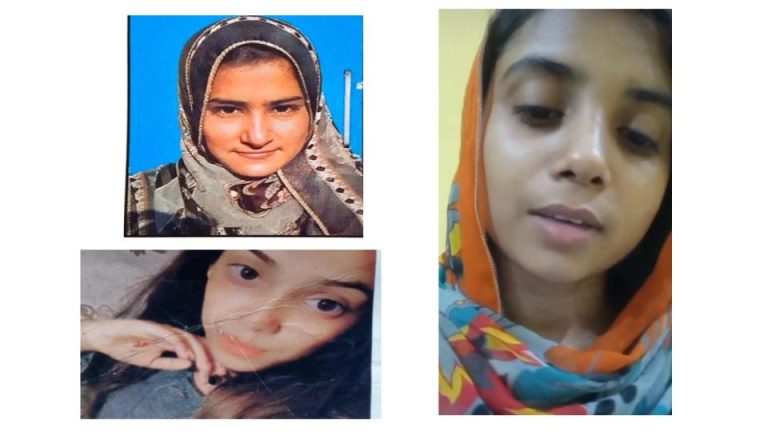
In Pakistan. Shifa Rafaqat, a 14-year-old girl from Sheikhupura, was taken from her home in November 2023. Shifa was taken by a neighbour, Najma Liaquat, who was later converted to Islam and married to 48-year-old Syed Shabbar Ali Gillani.

Disturbingly, when her father went to sought help to recover his daughter, a police officer said, “Your daughter will never return to you, Inshallah (if Allah wills)”.

During the court proceedings, Shifa’s abductor presented a conversion and marriage certificate falsifying that Shifa was 18 years old, despite her government-issued birth certificate indicating that she was only 14 years old. Even the cleric who solemnised the marriage denied officiating the marriage, indicating that the document was fabricated.

However, authorities have been denied to investigate the matter.

In another case, Monika, an 18-year-old Hindu Girl from Larkana Sindh was kidnapped from her house. Kidnappers entered the house with arms and picked the girl.

Furthermore, Meena Lohar, a 7th-grade Hindu girl from Digri city, has been forcibly married to a Muslim youth, Asif Kanhabar, following her abduction and coerced conversion to Islam. Despite multiple complaints lodged with local authorities, there has been a conspicuous lack of investigation or action from law enforcement.

Joseph Jansen, Chairperson of Voice for Justice, has said that around 25% of cases start as abduction cases, where girls between 11-15 years old are being abducted, converted to Islam, and married. If they are required to testify in court, they are subjected to heavy intimidation and threats, pressuring them to side with their abductors.

These girls are physically and sexually abused by one or multiple men, some are forced into prostitution while others are sold as sex slaves within Pakistan or abroad. 

These cases are distressing examples of how young girls are treated in Pakistan. It is nothing but “slow-motion ethnic cleansing.”

While Pakistan’s draconian blasphemy laws are weaponized to target minorities and to settle personal scores the severity of the charges has contributed to an environment where religious minorities face persecution with no protection from anyone.

Public uprising in Khyber Bara bazar against Pak Army oppression & terrorism

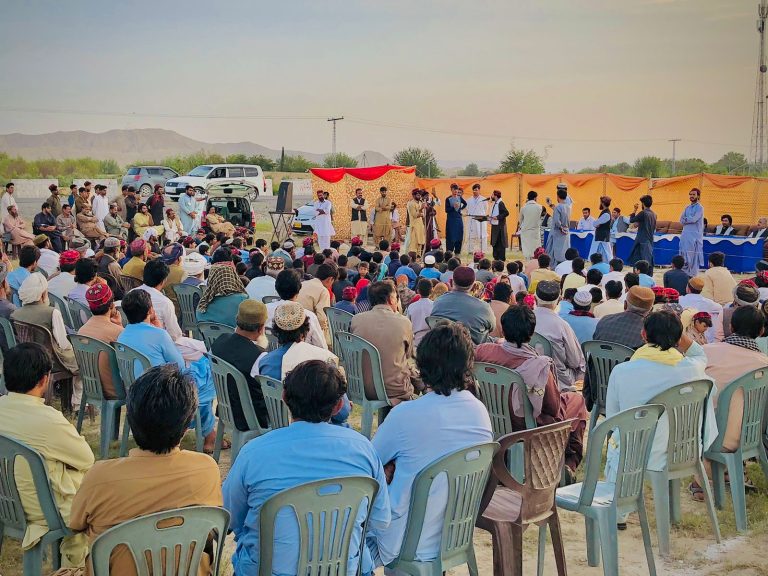
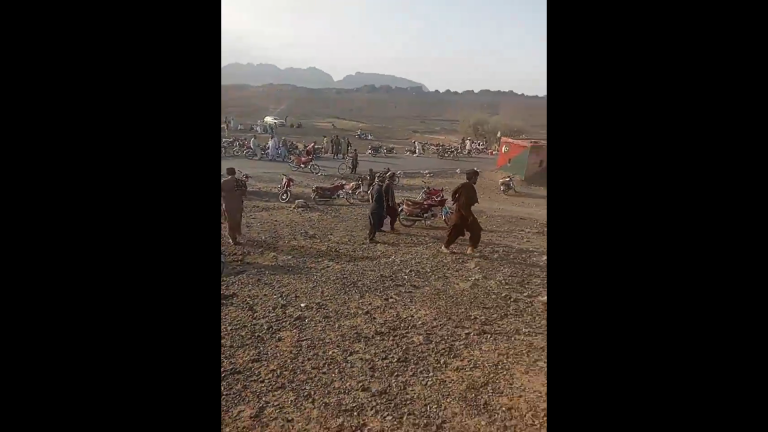
A significant public demonstration was held today in Khyber Bara Bazar district, with citizens voicing strong opposition to military-created terrorism and demanding an end to the Punjabi Pak Army’s oppressive tactics. The rally’s clear message was: “No more military-created terrorism!”

This protest underscores a long-standing grievance about the exploitation of Pashtun lands and people by the Paki establishment, since 1947. The demonstration raises serious concerns about the safety of activists and the future of Pashtuns in Pakistan amidst ongoing militarization and exploitation.

The Pak Army’s actions in Pashtun territories involve the extraction of mineral resources and the use of terrorism as a pretext to justify a heavy military presence. This has led to the establishment of security checkpoints, military camps, forced evacuations, and shellings that have taken many innocent lives. The military’s presence has resulted in numerous cases of abduction, enforced disappearance and extra-judicial killing of innocent youths, many of whom have no connection to activist activities.

Moreover, the military’s practice of laying landmines in residential areas has also led to tragic accidents, with children often being maimed or killed by explosions.

This public demonstration serves as a stern message to the Punjabi Pak Army: the Pashtuns will continue to resist to reclaim their freedoms from the clutches of brutal Paki establishment.

POB: Pak Army’s disguised agents attempt robbery in refugee camp

In a shocking incident, two men dressed in Pakistan’s Frontier Corps (FC) uniforms were caught red-handed in the Girdi Jungle refugee camp last night, attempting a robbery. Initially claiming to be narcotics officers, they later confessed to being officials of a secret intelligence agency. This incident has triggered widespread protests, with outraged locals gathering in front of the Jungle Levies check post, demanding justice.

As if the ongoing campaign of enforced disappearances, extrajudicial killings, and military raids that have targeted civilians and activists were not enough, the Army has now stooped so low that it is looting refugee camps, preying on poverty-stricken people who are already struggling for survival. This blatant act of theft by individuals underscores the sheer level of impunity with which the Pak forces operate in POB. The most vulnerable sections of society, including refugees, are now being victimized by the Paki establishment.

Incidents like last night’s robbery attempt by disguised operatives only further fuel the deep-seated resentment of a population subjected to unrelenting oppression.

Despite public outrage and widespread protests, the Paki establishment continues its campaign of brutality in POB, and, it resorts to framing legitimate protest movements as “anti-national” or foreign-sponsored, justifying the use of excessive force.

The great Gwadar ‘sell-out’

0

Beijing and Islamabad proudly refer to modernisation of Gwadar port in Balochistan as the “crown jewel” of the ambitious $ 62 billion China Pakistan Economic Corridor [CPEC] project that would bring about a quantum improvement in the quality of life of locals. However, instead of this happening, living conditions of Gwadar residents have paradoxically gone from bad to worse due to CPEC project activities and Chinese presence.

Gwadar is a sad story of brazen opportunism and ruthless exploitation by China compounded by Islamabad’s abject apathy that has forced its beleaguered residents to rise up in protest. However, rather than address their genuine grievances, the administration has come down on peaceful protesters with a heavy hand. With the Pakistan Army being in overall control, ongoing public protests in Gwadar have conveniently been dubbed anti-national activities sponsored by foreign agencies to justify use of excessive force leading to a cycle of unending violence.  
Gwadar Port Operations.

In 2007, Singapore port operator PSA International won the contract to operate Gwadar port for 40 years. Surprisingly, Pakistan’s “all weather friend” and “iron brother” Beijing didn’t participate in the bidding process. Even though this contract gave PSA several substantial concessions such as exemption from corporate tax, duty exemption on equipment and machinery for port development, it withdrew from this $750 agreement just five years later, and this time China willingly accepted the Gwadar port operating contract.

Two reasons were cited for PSA’s withdrawal from the Gwadar port operating contract-one, “security situation” in Balochistan, and two, “denial of land at Gwadar Port.” Being a global leader in port operations, PSA would definitely have carried out comprehensive risk analysis of the security threats before it decided to bid for the Gwadar port operating contract. Since there was no change in the security situation in Balochistan at the time PSA entered into the contract and when it decided to exit, this reason for its hurried departure isn’t very convincing. 

However, denial of land being an insurmountable impediment to the planned development of Gwadar port is certainly a plausible reason for PSA to have opted out. But what was the land allotment problem? Surprisingly, this was due to the Pakistan Navy’s refusal to hand over 584 acres of land at Shamba Ismail in its possession for development of Gwadar port. This high-handed action prompted the then Ports and Shipping Minister Babar Khan Ghauri to remark that the armed forces of Pakistan should not behave like “real estate companies.”

Land allotment for development of Gwadar port was also hampered by a stay order issued by Pakistan’s Supreme Court against allotment of land to a foreign company. However, many analysts opine that despite the Supreme Court’s injunction, an alternative arrangement could have been explored in overall national interests and wellbeing of Gwadar residents. Moreover, the Supreme Court had only issued a stay order and not a judgment against land transfer. So it appears that this reason was more of an excuse to divert attention from the Navy’s obdurate and self-serving stance.

Lopsided Development

Climatic disaster prone Gwadar is woefully lacking in basic amenities including proper drainage systems and clean water supply. Unfortunately, while executing development projects in Gwadar, Chinese planners have not only neglected to upgrade basic facilities but have also taken some shortcuts that have worsened the living conditions of locals. Due to indiscriminate infrastructure development activity, several passageways that facilitated natural drainage of rain water have been blocked causing frequent flooding as is being experienced in the Mulla Bundh area of Gwadar. Similarly, construction of the six-lane East Bay Driveway has reportedly blocked 4.3 Km of the coastline, limiting access of local fishing boats to the sea besides leading to water accumulation.

Many CPEC watchers however believe that not addressing the pressing requirement of providing basic amenities in Gwadar by the local authorities is intentional and aimed at indirectly putting pressure on those locals who had refused to vacate their traditional homes and lands for accommodating CPEC projects and security needs, to now do so.

The Sell-Out

The biggest worry concerning CPEC is the inexplicable lack of transparency that Islamabad has maintained on the terms and conditions of this project. This has rightly raised suspicions that this is because the agreements are heavily tilted in China’s favour, and there is credible evidence that buttresses this apprehension.

Some Examples:

1. In 2016, Islamabad permanently waived off the international competitive bidding condition for Chinese deals and awarded the construction contract for Eastbay Expressway to link Gwadar port with the coastal highway to one of three Chinese bidders.
2. On November 25, 2017, the then Pakistan’s Federal Minister for Ports and Shipping Mir Hasil Bizenjo informed the Senate that for the next 40 years, a whopping 91 percent of the revenues being generated from Gwadar port as part of CPEC would go to China while the Gwadar Port Authority of Pakistan would get only 9 percent.
3.  June 2021 saw large protests by locals against the grant of fishing licenses to Chinese trawlers by Pakistani authorities as being capable of large scale deep sea fishing, these sophisticated modern crafts leave little for local fishermen using small fishing boats. Since 65 percent of Gwadar’s population are fishermen, Chinese entry into their traditional fishing areas has rightly angered the locals.     4.  To placate local fishermen, the Pakistan Maritime Security Agency [PMSA] detained five Chinese trawlers laden with fish from Gwadar in July 2021. However, thanks to Islamabad’s preferential treatment towards anything Chinese, fishing by Chinese trawlers off Gwadar continues unabated and has become one of the key rallying points for Gwadar’s extremely popular “Haq Do Tehreek” [Give Gwadar its rights movement].
5.  While ensuring security of Chinese nationals and CPEC assets is essential, the Pakistan Army has definitely gone overboard by turning Gwadar into a virtual fortress and forcing locals to undergo the agony and humiliation of navigating through multiple check-posts on a daily basis. Even their houses are subjected to frequent security checks at ungodly hours.

Though Islamabad may deny it, but seeing how things are emerging and the way Beijing is calling the shots and having operational control over its port for 40 years, it’s abundantly clear that Gwadar has de facto become a part of China.

Former US Vice President Nelson Rockefeller had once opined that “The secret to success is to own nothing, but control everything,” and isn’t this exactly what China has done?

So, congratulations to Beijing on its Gwadar success story!

Iranian forces shoot dead two Baloch youths in western Balochistan

In yet another display of heavy-handedness, Iranian forces have shot and killed two unarmed Baloch youths in the border area of Shamsar. The victims, identified as Naveed, son of Abdeen, and Rasheed, son of Nawab—both residents of Haqabad Ziarat—were gunned down without provocation. Reportedly, the Iranian Mersad forces opened fire directly on the two youths around 4 p.m., once again highlighting the alarming levels of state-sanctioned violence against the Baloch people.

This incident is not isolated but part of a broader pattern of oppression against the Baloch community in Iran, particularly in Sistan and Baluchestan Province. In September 2022, at least 17 children were killed by Iranian forces in the region, with 15 people permanently losing their eyesight due to brutal crackdowns. These figures serve as a grim reminder of the Iranian regime’s continued targeting of the marginalized Baloch population.

One of the most notorious incidents occurred on September 30, 2022, when Iranian security forces opened fire on protesters in Zahedan. In a violent crackdown, later dubbedBloody Friday“, security forces shot at worshipers during Friday prayers at the Jameh Mosque of Makki, killing more than 100 people and injuring many more. The massacre left dozens of families mourning their loved ones and shattered the already fragile peace in the region.

This escalating violence has exacerbated tensions between Iran and Pakistan, with January’s missile strikes. Pakistan, in response, recalled its ambassador to Tehran, refused to allow Iran’s envoy to return to Islamabad, and cancelled all high-level diplomatic and trade engagements. The rocky relations between the two nations have only worsened, with Iran’s continued aggression fueling instability in border areas where the Baloch people live under constant threat.

Akhtar Mengal demands recovery of 2,000 missing persons for BNP-M backing of Constitutional Amendment

In a significant political development, Akhtar Mengal, leader of the Balochistan National Party (BNP-Mengal), has submitted his demands to the occupied-government concerning the proposed constitutional amendments. With BNP-Mengal’s two Senate votes gaining crucial importance, Mengal has positioned his party as a key player in the ongoing legislative process.

Reportedly, Prime Minister Shehbaz Sharif reached out to Sardar Akhtar Mengal via phone to discuss the constitutional amendment. During the conversation, Mengal requested a draft of the proposed amendments.

Sardar Akhtar Mengal has linked his party’s Senate votes to the immediate recovery of 2,000 missing persons, a longstanding issue in Pak-occupied-Balochistan, where enforced disappearances are a persistent concern.

Pakistani media have reported that Prime Minister Shehbaz Sharif has assured Mengal that discussions on his demands will take place, signaling potential negotiations between the two parties as the occupied-government seeks to pass the constitutional amendments in the Senate.

The BNP-Mengal leader’s demands highlight the ongoing issue of enforced disappearances in POB, a critical point of contention between the province and the Pak Army backed-central authority. The recovery of missing persons has been a core demand of the BNP-Mengal, and this latest political maneuver could put pressure on the occupied-government to address the matter.

Baloch youth Hikmatullah Baloch succumbs to injuries from Pak Army’s firing

Hikmatullah Baloch, a young Baloch activist, has succumbed to injuries sustained from indiscriminate firing by Pak security forces during a protest in Nushki on July 28. After enduring severe injuries to his throat, Hikmatullah passed away in a Karachi hospital on Sunday, approximately 40 days after the incident.

Sammi Deen Baloch, a prominent Baloch figure, paid her final respects to the martyr, emphasizing that Baloch’s sacrifice remains a beacon for the national movement.

Activists and Baloch rights organizations have sharply criticized the Pak forces for their violent actions against the Baloch community. The July 28 incident in Nushki, where Pak Army opened fire on protesters, is one among several cases where civilians have suffered fatal consequences due to the military’s aggressive tactics.

The Baloch Yakjehti Committee (BYC) reported on X that on August 2, the Frontier Corps (FC) opened fire on a sit-in for Baloch Raaji Machi in Nushki, resulting in the death of one youth and serious injuries to two others, including Hikmatullah Baloch. Baloch, who was critically wounded and had been receiving intensive care, was initially treated at the Quetta Trauma Centre before being transferred to Karachi. He eventually succumbed to his injuries.

The BYC lamented the Pak Army’s heavy-handed response to the Baloch Raaji Muchi movement, saying that the occupied-state resorted to brutality and oppression across various cities in POB. This crackdown resulted in three youths being martyred and around thirty others seriously injured. Many of those injured, including individuals from Mastung, are still in critical condition and receiving treatment.

The BYC’s statement condemned Pakistan’s use of force to suppress the Baloch movement, asserting that despite Army’s oppression and brutality, the spirit and morale of the Baloch people remain unbroken.