Home Blog Page 50

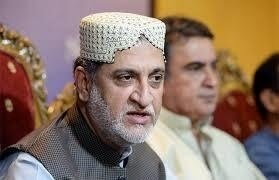
Akhtar Mengal demands recovery of 2,000 missing persons for BNP-M backing of Constitutional Amendment

In a significant political development, Akhtar Mengal, leader of the Balochistan National Party (BNP-Mengal), has submitted his demands to the occupied-government concerning the proposed constitutional amendments. With BNP-Mengal’s two Senate votes gaining crucial importance, Mengal has positioned his party as a key player in the ongoing legislative process.

Reportedly, Prime Minister Shehbaz Sharif reached out to Sardar Akhtar Mengal via phone to discuss the constitutional amendment. During the conversation, Mengal requested a draft of the proposed amendments.

Sardar Akhtar Mengal has linked his party’s Senate votes to the immediate recovery of 2,000 missing persons, a longstanding issue in Pak-occupied-Balochistan, where enforced disappearances are a persistent concern.

Pakistani media have reported that Prime Minister Shehbaz Sharif has assured Mengal that discussions on his demands will take place, signaling potential negotiations between the two parties as the occupied-government seeks to pass the constitutional amendments in the Senate.

The BNP-Mengal leader’s demands highlight the ongoing issue of enforced disappearances in POB, a critical point of contention between the province and the Pak Army backed-central authority. The recovery of missing persons has been a core demand of the BNP-Mengal, and this latest political maneuver could put pressure on the occupied-government to address the matter.

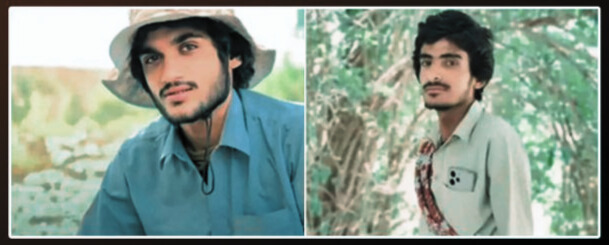
Baloch youth Hikmatullah Baloch succumbs to injuries from Pak Army’s firing

Hikmatullah Baloch, a young Baloch activist, has succumbed to injuries sustained from indiscriminate firing by Pak security forces during a protest in Nushki on July 28. After enduring severe injuries to his throat, Hikmatullah passed away in a Karachi hospital on Sunday, approximately 40 days after the incident.

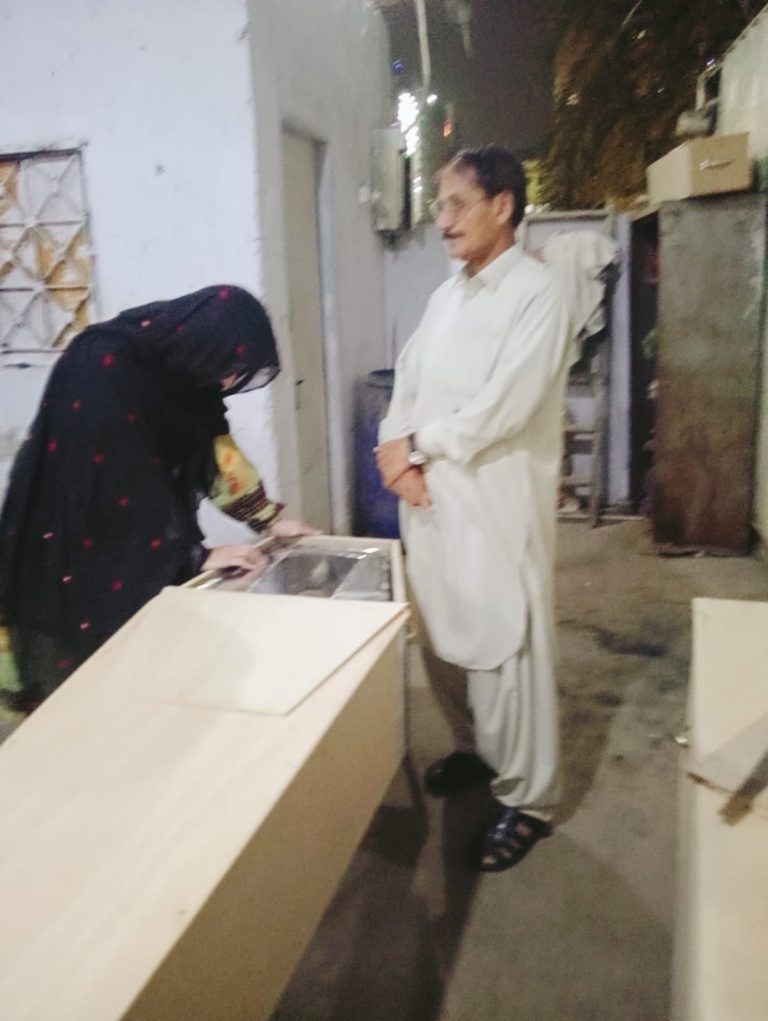
Sammi Deen Baloch, a prominent Baloch figure, paid her final respects to the martyr, emphasizing that Baloch’s sacrifice remains a beacon for the national movement.

Activists and Baloch rights organizations have sharply criticized the Pak forces for their violent actions against the Baloch community. The July 28 incident in Nushki, where Pak Army opened fire on protesters, is one among several cases where civilians have suffered fatal consequences due to the military’s aggressive tactics.

The Baloch Yakjehti Committee (BYC) reported on X that on August 2, the Frontier Corps (FC) opened fire on a sit-in for Baloch Raaji Machi in Nushki, resulting in the death of one youth and serious injuries to two others, including Hikmatullah Baloch. Baloch, who was critically wounded and had been receiving intensive care, was initially treated at the Quetta Trauma Centre before being transferred to Karachi. He eventually succumbed to his injuries.

The BYC lamented the Pak Army’s heavy-handed response to the Baloch Raaji Muchi movement, saying that the occupied-state resorted to brutality and oppression across various cities in POB. This crackdown resulted in three youths being martyred and around thirty others seriously injured. Many of those injured, including individuals from Mastung, are still in critical condition and receiving treatment.

The BYC’s statement condemned Pakistan’s use of force to suppress the Baloch movement, asserting that despite Army’s oppression and brutality, the spirit and morale of the Baloch people remain unbroken.

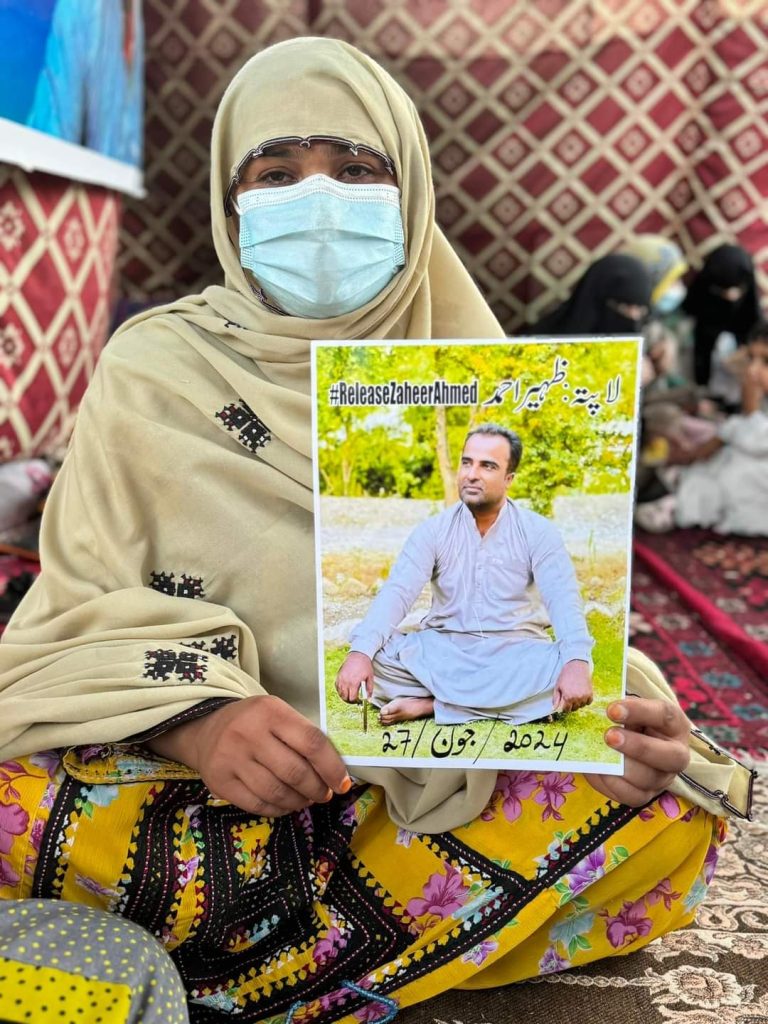
Protests erupt in Quetta over enforced disappearance of Zaheer Baloch by Pak Army

Quetta witnessed a large protest and rally by the family and supporters of Zaheer Ahmad Baloch, who was forcibly disappeared by Pakistan’s security forces in June. Zaheer, a occupied-govt’s employee with no political background, vanished on June 27 while traveling home from his office at the General Post Office in Quetta. Despite numerous appeals for his recovery, the authorities have turned a deaf ear, forcing his family to take to the streets.

Protesters gathered in significant numbers, holding pictures of their missing loved ones, calling for the immediate recovery of Zaheer and other Baloch individuals who have been victims of Pak Army’s notorious policy of enforced disappearances. This brutal tactic, primarily deployed by the Pakistan Army, has become a hallmark of its strategy to suppress the Baloch community, silencing dissent with violence and fear.

Zaheer’s family revealed that their home has been raided multiple times in the dead of night by security forces, adding to the trauma inflicted on the family. Zaheer’s wife also recounted how previous peaceful protests had been met with violence, and despite promises from authorities, no action has been taken to secure her husband’s release.

Quetta Rallies for Zaheer Baloch

The disappearance of Zahoor Baloch is just one of the countless cases in Pak-occupied-Balochistan, where the Pakistan Army, in collaboration with its intelligence agencies, has been running an aggressive campaign of abductions, indiscriminate shootings, and extrajudicial killings. The infamous “kill and dump” policy, where missing persons are later found dead, their bodies dumped in desolate areas, has left a permanent scar on POB’s landscape. Thousands of Baloch citizens, many of them students, political activists, and innocent civilians, have been abducted without any legal process, leaving their families to live in perpetual fear and uncertainty.

The rally was not just about Zahoor. Many families of other missing Baloch persons, along with political activists and students, joined the demonstration, highlighting the widespread issue of enforced disappearances in the region. The protestors called for an end to Pakistan’s draconian policies in POB, urging the international community to take notice of the blatant human rights violations taking place under the guise of national security.

BLF strikes Pak Army HQ in Awaran; kills four Pak soldiers & injures three

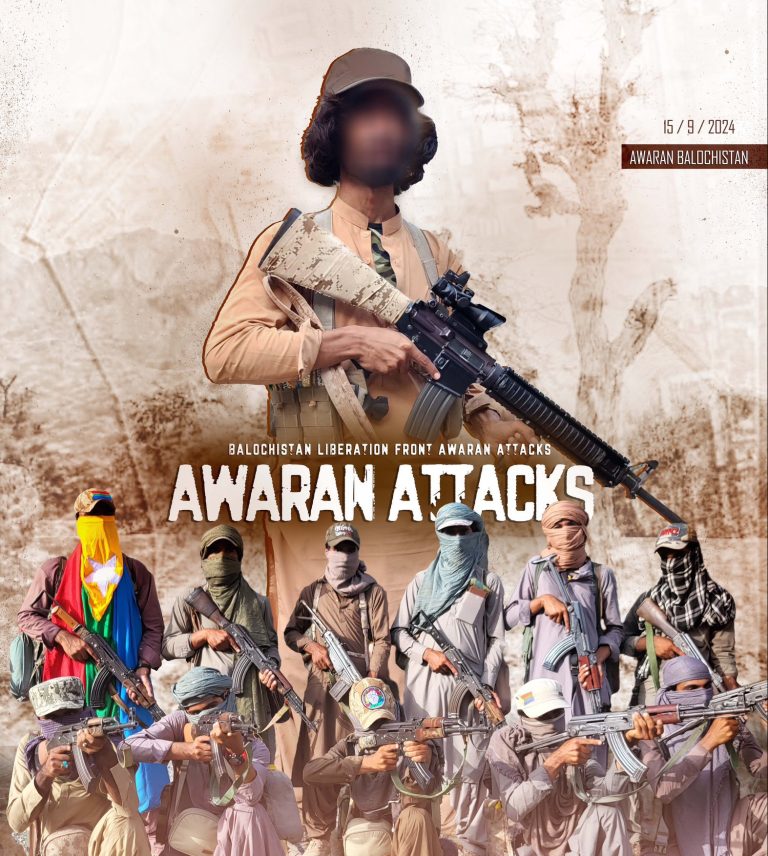
In a bold strike against the Pak military’s oppressive hold on Pak-occupied-Balochistan, the Balochistan Liberation Front (BLF) launched a coordinated attack on the Pak Army’s headquarters in Awaran on September 14. The armed assault, carried out by BLF fighters, known as “Sarmachars,” was aimed at pushing back the Pak military’s relentless campaign of suppression against the Baloch people. According to a statement from BLF spokesperson Major Gwahram Baloch, the attack lasted 20 minutes, during which four soldiers were killed and three others were severely injured.

According to the BLF, the attack on the Awaran headquarters was strategically timed when senior military officers, including Brigadier Hassan Mehdi, Deputy Commandant Ghazanfar Ali, and Colonels Adeel and Muneeb, were present. BLF intelligence reported their gathering at the base, which led to the fighters launching their assault while the officers and their personnel were engaged in recreational activities.

BLF spokesperson Major Gwahram Baloch said that this strike was part of a larger revolutionary movement to liberate POB from the stranglehold of the Pak military. He further revealed that on the morning of September 15, BLF fighters carried out another attack on security personnel assigned to the construction of the Awaran-Mashkay Link Road, killing one soldier and injuring another.

BLF Targets Pak Military Base

The BLF has made it clear that their actions are not just retaliatory but part of a broader fight for Baloch independence. The Pakistan Army, under the guise of national security, has turned POB into a war zone, where civilians are often the primary targets of military aggression. The region’s vast mineral wealth, including gas, gold, and copper, has been ruthlessly exploited by the Paki establishment, while the local population continues to suffer from extreme poverty and underdevelopment. The Baloch people, deprived of their resources and subjected to military oppression, have been left with little choice but to resist.

Brigadier Hassan Mehdi, who was specifically targeted in the attack, has been orchestrating brutal military operations in Awaran and surrounding areas. According to the BLF, Mehdi is responsible for burning down civilian homes, mobilizing death squads and drug traffickers to terrorize the local population, and blackmailing civil employees to undermine the Baloch national freedom movement. He is also linked to the recent arrest of several women in Awaran, further intensifying tensions between the military and the local population.

Following the attack, Pak forces sealed off the city of Awaran, imposing a strict blockade and harassing civilians in a failed attempt to regain control. Such tactics, however, have done little to quell the rising tide of resentment and resistance among the Baloch population. In fact, the Army’s brutal approach has only strengthened the resolve of pro-independence groups like the BLF, who see their struggle as a fight for liberation from decades of exploitation and tyranny.

The BLF has repeatedly called on the Baloch people to stand united against the Pak military and its efforts to crush their aspirations for freedom. The spokesperson emphasized that the BLF’s strength lies in the support of the Baloch people and that the fight for an independent and prosperous POB will continue until their homeland is liberated.

Mastung shooting incident kills two Levies personnel & three others

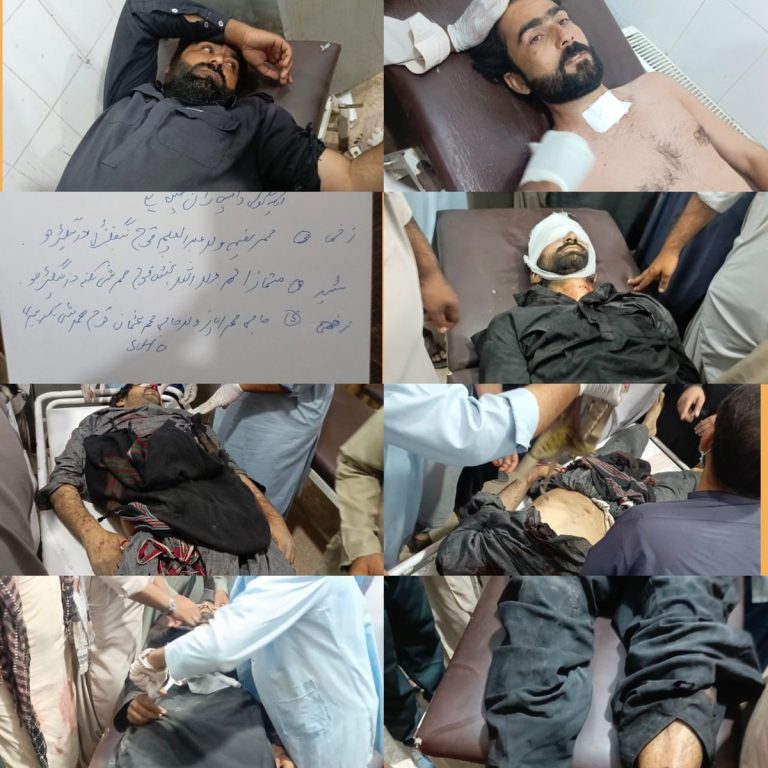
In a violent confrontation in Mastung’s Daringarh area, two Levies personnel and three other individuals were killed in a shooting incident. Additionally, three law enforcement officers, including the SHO, sustained injuries.

The clash occurred after the Levies force conducted an operation and detained an individual. The detainee’s associates, protesting for his release, blocked roads and staged demonstrations. To disperse the protesters, the Levies used force and engaged in a violent exchange of fire with them.

The incident resulted in the deaths of two Levies personnel and three civilians. The injured and deceased were transported to Nawab Ghaus Bakhsh Raisani Memorial Hospital. The deceased Levies personnel have been identified as Imtiaz Ahmed, son of Allah Bakhsh, and Babu Mazar Khan, son of Muhammad Bakhsh. The injured include SHO Haji Ayaz Ahmed, son of Muhammad Usman, and officials Muhammad Naeem, son of Abdul Aleem, and Habibullah, son of Sarfraz.

This latest incident adds to a growing list of cases where the Pak Army’s heavy-handed tactics have led to unnecessary casualties and heightened tensions. The continuous use of force against civilians reveals a disturbing pattern of Pak military aggression and suppression in the region.

Bannu police protest against Pak Army’s facilitation of Taliban forces

Bannu police have taken to the streets in protest against the Punjabi Pak Army’s facilitation of Taliban elements. The protest, held in front of the Bannu cantonment, has garnered significant attention, with PTM leader Hanif Pashteen joining the demonstration with slogans.

Pashteen’s modification of the protest chant—”Ye jo dehshatgardi hai uske pichhe vardi hai” (This terrorism is backed by the uniform)—has underscored the deep frustration with the Pak Army’s long-standing policies of violence, discrimination, and marginalization against the Pashtun people. Pashteen and other activists are openly criticizing the Punjabi-Pakistan Army for nurturing and sponsoring terrorist elements of the Tehrik-e-Taliban Pakistan (TTP), only to become the targets of the very groups they once supported.

Since 1947, the Pashtuns have been used by the Army for strategic purposes, only to be labeled as terrorists and subjected to severe repression when their utility has waned. The current militarization of the region has resulted in a grim scenario: enforced disappearances, extrajudicial killings of innocent Pashtun youths, and a proliferation of landmines that have tragically killed only children rather than the intended terrorists.

This rare public dissent from within law enforcement circles reflects a growing awareness and activism among Pashtuns regarding their harsh treatment.

Pak Army desecrates Quran and mosques in Khyber

In a brazen show of power, the Punjabi Pak Army once again violated the sanctity of religious institutions, this time entering a mosque in the village of Tangi in Tirah Maidan Zakhakhel. Soldiers stormed the mosque, desecrating the Holy Quran and abducting Maulana Mazghar and one of his disciples. Despite such acts of blatant blasphemy, the incident has barely sparked any outrage.

The Pak Army, under the guise of maintaining control, has regularly insulted the Quran, disrespected mosques, and abducted religious leaders. These acts of sacrilege go unchecked, reflecting the deep-rooted hypocrisy within Pakistan. The country that claims to uphold the sanctity of Islam seems to have two sets of rules: one for its military elites and another for everyone else.

While the desecration of holy sites by the military continues, mere accusations of blasphemy against minorities result in barbaric punishments. Innocent people from minority communities are killed in custody, hanged, or burned alive at the mere mention of blasphemy. This tragic cycle reveals a chilling reality: in Pakistan, the Army’s actions go unquestioned, while minorities are ruthlessly persecuted for nothing. The ruling establishment holds absolute power, and everything else — religion, law, and justice — is a facade.

There are no mob, no protests, no rallies, and no calls for accountability. This hypocrisy underscores the ugly truth of Pakistan double standards, where the Army is untouchable and everyone else is disposable.

J&K encounters kill two Indian Army soldiers and three Pak terrorists

In the lead-up to the first phase of Assembly elections, violence erupted in Jammu and Kashmir, leaving two Army personnel and three terrorists dead in separate encounters. The clashes come as security forces ramp up operations to curb terrorist activities in the region.

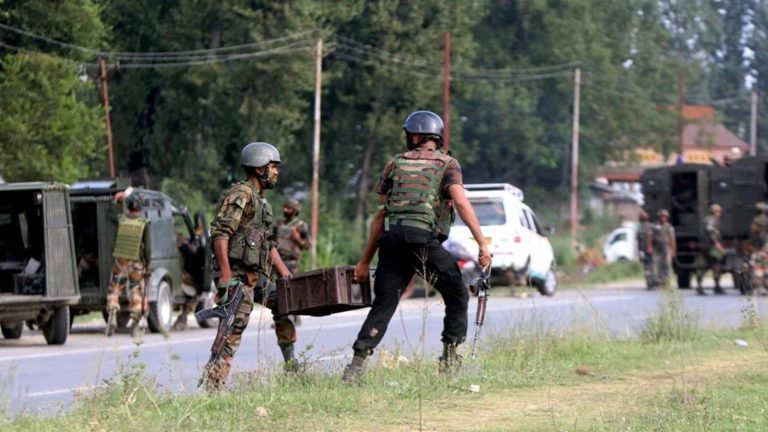
In Kishtwar district, two soldiers, including a Junior Commissioned Officer (JCO), were killed, and two others were injured during a gunfight with terrorists on Friday. The incident occurred when a joint team of Army personnel and local police launched a cordon-and-search operation in the Naidgham area, acting on intelligence inputs.

The terrorists, hiding in the dense Pingnal Dugadda forest, opened fire on the approaching security forces, triggering a fierce gun battle. Among the casualties were Junior Commissioned Officer Naib Subedar Vipan Kumar and Sepoy Arvind Singh, both of whom succumbed to their injuries after being airlifted to a hospital for treatment.

Simultaneously, a second encounter unfolded in the Baramulla district, where security forces successfully neutralized three terrorists who had taken refuge in a building in the Chak Tapper area. The operation concluded after hours of intense fighting, resulting in the elimination of the trapped terrorists.

The Union Territory has seen a surge in violent incidents as tensions rise ahead of the upcoming Assembly polls, the first in the region in a decade. The Indian Army has cordoned off both areas involved in the latest encounters, and operations are ongoing to ensure the elimination of any remaining threats.

Earlier in the week, two more terrorists were killed in an encounter in Basantgarh near the Kathua-Udhampur border. This was followed by an incident of unprovoked firing from Pakistan Rangers along the Line of Control (LoC) in Jammu’s Akhnoor sector, in which a Border Security Force (BSF) personnel was injured.

Punjab (Pak) police raid Ahmadi mosque, destroy minarets & deface Kalima

In yet another grim chapter of the ongoing persecution of Ahmadis in Pakistan, Punjab police, under the direction of the local DSP, raided an Ahmadi place of worship at an agricultural farm in Tehsil Depalpur, Okara on September 10. The Punjabi Pak Army-backed police force not only destroyed the minarets but also defaced the Kalima, a sacred Islamic inscription. This brazen act of vandalism, carried out by authorities, is part of a broader and deeply entrenched campaign to marginalize and terrorize the Ahmadi community in Pakistan.

Just two days earlier, Tehreek-e-Labbaik Pakistan (TLP) extremists blocked the burial of an Ahmadi in Kamiliya, a stark reminder of the violent impunity with which these terrorist groups operate. The Paki establishment, instead of upholding the rule of law, has enabled the rise of these radical groups, empowering them to act with brutality against religious minorities. From the destruction of Ahmadi mosques to the desecration of their graves, the Paki establishment has created an environment where religious minorities live in constant fear.

The sanctioned defilement of Ahmadi mosques and graves by both forces and terrorist groups sends a chilling message: not even death can bring peace to Pakistan’s religious minorities.

ISKP attacks Shia pilgrims in Afghanistan, kills 14 in Daykundi

The terrorists of Islamic State (IS) launched a brutal attack in central Afghanistan targeting Shi’ite pilgrims. The Islamic State-Khorasan (IS-K) released images on September 12 showing the aftermath of the massacre, which specifically targeted members of the Hazara minority, a group that has long been persecuted by the Sunni IS-K.

According to Hadi Rahimi Zada, a former council member in Daykundi Province where the attack occurred, 14 people were killed by unidentified gunmen. Reportedly, the assailants were armed men on motorcycles. The victims were part of a gathering organized to welcome pilgrims returning from Karbala, a Shi’ite holy site in Iraq. The pilgrims had recently returned to Firouzkoh from Karbala, and the attackers targeted the crowd of young men, resulting in 14 deaths and five injuries.

Abdul Matin Qani, a spokesperson for the Taliban’s Interior Ministry, confirmed the attack in Daykundi Province, stating that more details would be released later. The IS-K has been responsible for numerous attacks since the Taliban took power in August 2021, frequently targeting Taliban officials, foreign nationals, and the Shi’ite Hazara community.

Founded in Afghanistan in 2014 as a regional extension of the Islamic State, the ISKP seeks to expand its influence throughout South and Central Asia. The term “Khorasan” refers to a historical region encompassing parts of modern-day Afghanistan, Iran, and Central Asia.

Since the Taliban’s takeover in August 2021, ISKP has been actively orchestrating attacks across the country, denouncing the Taliban regime as “apostate” and exacerbating the violent conflict between the two groups.