Home Blog Page 54

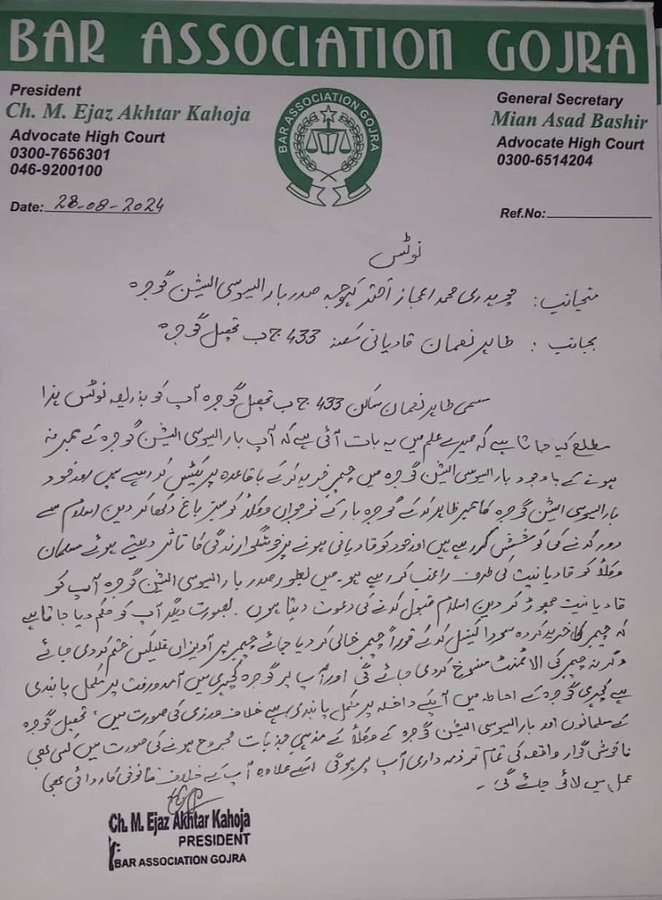
Islamabad:Gojra Bar Association orders Ahmadi lawyer to renounce faith or risk career

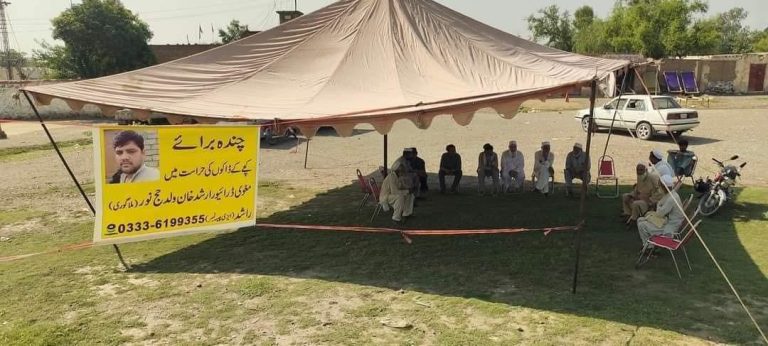
In a chilling letter sent to Ahmadi lawyer Tahir Nauman, the President of the Gojra Bar Association, Ejaz Akhtar Kahoja, has demanded that Nauman renounce his faith or face severe consequences, including the loss of his legal chamber and being barred from entering Gojra courts. This shocking ultimatum shows the intolerance towards the Ahmadiyya Muslim Community in Pakistan.

This is just the latest act in Pakistan’s long-standing, Army-backed campaign of persecution against Ahmadis, a minority Muslim sect. Since July 2024 alone, four Ahmadi Muslims have been brutally killed, targeted solely for their faith. Their places of worship have been desecrated, sacred mosques attacked, and even the graves of their loved ones have been violated in a systematic effort to erase their presence from the social fabric.

The Paki establishment-sponsored marginalization of the Ahmadis reaches deep into every aspect of life. For nearly four decades, since 1985, Ahmadis have been denied their basic democratic right to vote unless they renounce their Islamic faith, effectively stripping them of their citizenship and voice. The Paki establishment has institutionalized their persecution.

Pakistan’s constitution and laws have long suppressed the Ahmadiyya community, instigating the culture of hate and impunity for crimes against them. This is not just a religious issue; it is a gross violation of human rights. Pakistan’s actions reveal an ugly reality of systemic oppression against the Ahmadis, leaving them vulnerable and without recourse to justice.

Paki establishment increases militarization of PoJK to intensify control

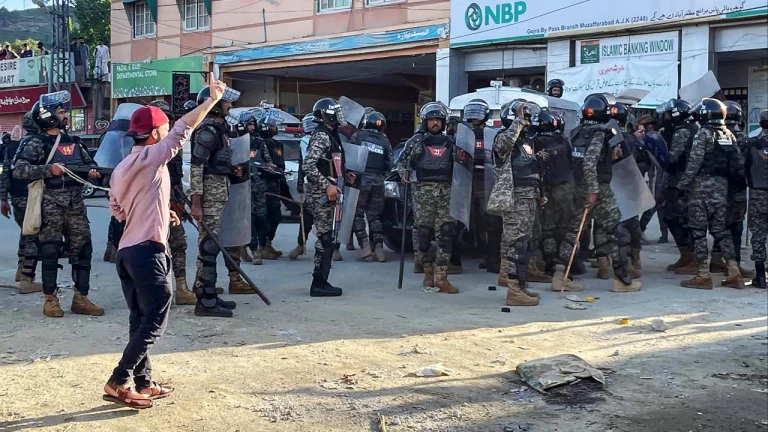
The recent establishment of the AJK Rangers force in Pakistan-occupied Kashmir (PoJK) shows the region’s heavy-handed surveillance and militarization. This move is a disturbing signal of Pakistan’s intentions to impose similar harsh conditions in PoJK as those in occupied-Balochistan, where military presence has led to prolonged unrest and conflict.

The introduction of the AJK Rangers is an effort to intensify control and militarize the region, exacerbating existing tensions among residents. This development is a blatant attempt by the Paki establishment to further entrench its dominance. The deployment of such forces is a means to stifle dissent and crush the burgeoning demands for rights and freedoms.

PoJK residents are being treated not as citizens with inherent rights but as subjects to be monitored and subdued. The local administration in PoJK, is a puppet of the Paki establishment, and has engaged in oppressive tactics, including registering fake FIRs against activists who challenge the status quo. These actions, carried out under the orders of the Pakistan Army, are efforts to silence voices demanding justice and development.

The region’s struggle for rights and better infrastructure has been met with severe repression. Peaceful demonstrations advocating for basic necessities and freedom have been ruthlessly suppressed by Pak forces.

The imposition of the AJK Rangers force is an attempt to further control and suppress the population, raising serious questions about the future of autonomy and stability in PoJK.

Clashes erupt between Pak Army & Afghan Taliban in Kurram

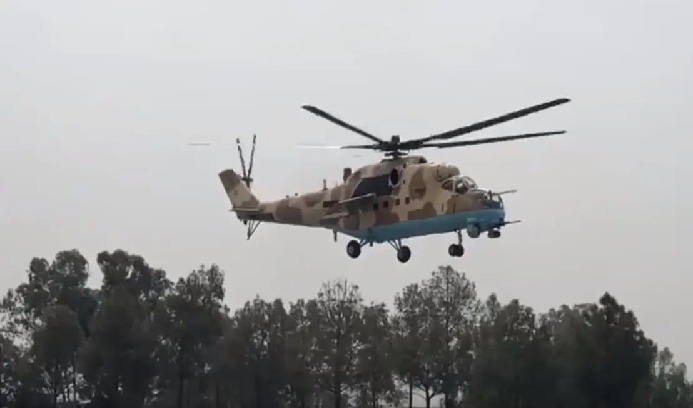
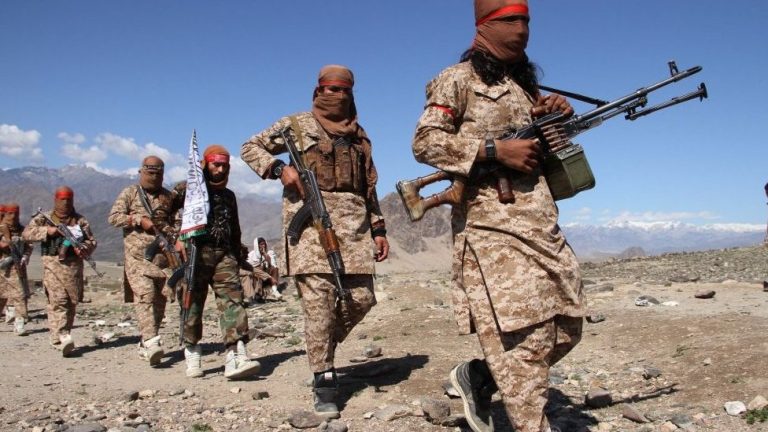
An intense exchange of gunfire between the Pakistan Army and the Afghan Taliban is currently underway in at least three different areas of the Kurram merged district in Khyber Pakhtunkhwa, which borders Afghanistan’s Khost province. Reports from both Pakistan and Afghan officials confirm casualties on both sides.

The Pak Army, with a long history breeding and nurturing terrorists for its own agenda, is now facing the blowback of its actions. Once used as strategic assets, these terrorists groups have now turned against their creators, leading to increased instability within Pakistan.

The military’s obsession with launching proxy wars, particularly against India, has not only backfired but is now causing significant internal strife. The Pakistan Army’s tactics have plunged both Afghanistan and Pakistan into further chaos.

Afghanistan, which had the opportunity to rebuild itself after years of conflict, continues to suffer from instability due to Pakistan’s sustained interference through the Taliban and other terror groups. The very forces Pakistan once supported are now wreaking havoc, not just across the border but also within Pakistan itself. This violent blowback serves as a grim reminder that the seeds of terror, once sown, will eventually bear bitter fruit.

PoJK: Pak Army abducts over twenty Kashmiris in 2024

Over 20 Kashmiris, including prominent figures like Raja Mudassir, have reportedly been abducted in 2024 by the Pak Army. These actions underscore a troubling disregard for the rights of PoJK residents, reinforcing the notion that the Pak military does not view them as equal citizens.

Families and activists have rallied to demand justice for the abducted, including Raja Mudassir, who has been forcibly missing for five months. Protests are scheduled for September 6th in Keran, Neelum Valley, where Raja Mudassir’s elderly mother, pregnant wife, and other family members led demonstrations. Additionally, a significant rally is planned outside the Islamabad Press Club at noon, drawing attention to the ongoing disappearances.

Activists involved in recent protests against the rising cost of electricity and the removal of essential subsidies have been systematically targeted. Reports indicate that student organizations and young political activists in cities like Muzaffarabad, Bagh, and Rawalakot have been abducted. Notable cases include Mis Asma Batoor and Raja Mudassir. Approximately 300 activists are reportedly missing, facing torture and illegal detention.

This revelations highlight a disturbing trend of abductions in Pakistan-occupied Kashmir (PoJK), casting a spotlight on the Pakistan Army’s repressive tactics aimed at stifling dissent and solidifying its control over the region.

The situation in PoJK shows that Pakistan’s judiciary, Parliament, and media, are accomplish in these grave human rights violations.

Armed men shoot dead senior Journalist Nisar Ahmed in Mastung

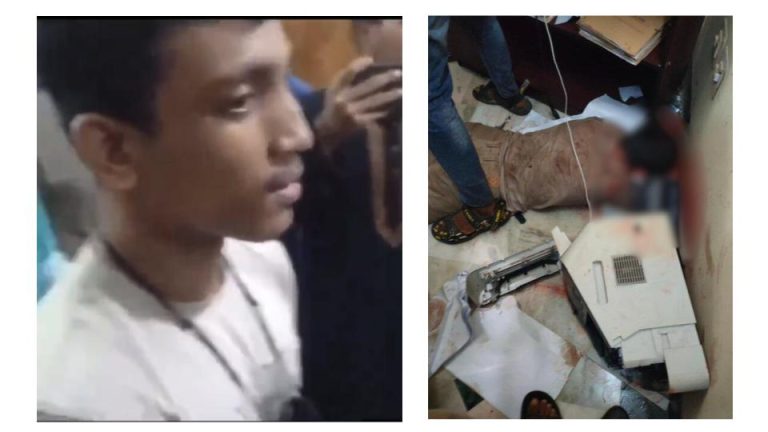
In a tragic incident, Nisar Ahmed Lehri, a senior journalist and official of the Sarawan Press Club, was shot dead by armed men in the village of Killi Gulkand on Wednesday morning. Lehri, who was also affiliated with the Online news agency, was reportedly en route to inspect his under-construction home in Mastung when he was attacked.

Reportedly, Lehri was targeted by gunmen who opened fire, killing him on the spot. His body was immediately transported to the Civil Hospital, where after completion of legal formalities, it was handed over to his family.

Initial investigations by local police suggest that the murder may be linked to a long-standing land dispute. Law enforcement agencies have launched raids in the area in an effort to apprehend the suspects responsible for the attack.

The Sarawan Press Club has strongly condemned the murder, urging authorities to swiftly arrest the culprits and calling for enhanced security measures to protect journalists in POB, who often face threats in the line of duty.

Kolkata switches off lights, massive candlelight vigil for justice against RG Kar rape-murder

One day after the Central Bureau of Investigation (CBI) arrested Sandip Ghosh, the alleged mastermind behind the corruption scandal at Kolkata’s RG Kar Medical College, the demand for justice sparked by the rape and murder of a young doctor continues to grow. Far from fading, the protest movement has gained renewed momentum.

On Tuesday, September 3, junior doctors leading the protest announced a city-wide candlelight vigil for tomorrow as part of the ‘Reclaim the Night’ movement. Dr. Kinjal Nanda, one of the prominent figures in the protest, said, “We are asking everyone to turn off their lights at 9 p.m on Wednesday, September 4, and join us on the streets with candles or diyas for a peaceful demonstration.”

Doctors at AIIMS Delhi, Safdarjung and Guru Teg Bahadur (GTB) Hospital, also carried out a candle protest on Wednesday.

The family of the murdered doctor has confirmed their participation in the protest, which will take place at the very hospital where the horrific crime occurred. The first ‘Reclaim the Night’ protest took place in Kolkata on August 14, but the movement has since gained traction across the city, drawing support from various sectors of society.

Government Suspends Ghosh

In a significant development late on September 3, the West Bengal government suspended Ghosh from the Health Department following his arrest. This action came after weeks of sustained pressure from both the medical community and civil society, who have been vocal in their demands for justice since the doctor’s rape and murder in the early hours of August 9. In addition to his suspension, Ghosh has been removed from the West Bengal Medical Council and various other health panels.

Earlier that evening, citizens formed a human chain stretching over 13 kilometers along the Eastern Metropolitan Bypass. The protest, which did not obstruct traffic, was described as an apolitical call for justice. Participants, including doctors, nurses, and everyday citizens, held posters, chanted slogans, and sang songs as a peaceful expression of outrage. The demonstration was largely driven by social media, which played a significant role in organizing the spontaneous, non-violent protest.

Police Commissioner Meets Junior Doctors

Kolkata’s Commissioner of Police, Vineet Goyal, finally agreed to meet a delegation of junior doctors after making them wait for 22 hours. The doctors had staged a sit-in protest that began on Monday afternoon, September 2, after being blocked from marching to the Kolkata Police headquarters by a double-layered barricade of iron guardrails.

The junior doctors’ primary demand remains the resignation of the police commissioner. According to Dr. Mahato, Goyal said he would only resign if directed to do so by higher authorities, adding that he was otherwise satisfied with the performance of his police force.

US gun violence continues as 14 year old kills four in Apalachee High school

Fourteen-year-old students and two teachers were killed in a mass shooting at Apalachee High School in Winder, Georgia, marking the deadliest school shooting in the U.S. this year. Nine others, including eight students and one teacher, were wounded in the attack and are expected to survive. The suspect, identified as Colt Gray, a 14-year-old student at the school, is currently in custody and will be charged as an adult. The gunman had been previously questioned by law enforcement after receiving anonymous tips about online threats, but no action was taken at the time due to a lack of probable cause.

The victims of the shooting were named as Mason Schermerhorn and Christian Angulo, both 14-year-old students, along with teachers Richard Aspinwall and Christina Irimie. Aspinwall was also an assistant football coach, and both teachers were well-known math instructors at the school.

Incident Timeline

The shooting unfolded around 10:20 a.m. Colt Gray had left his Algebra 1 class earlier and returned later, armed with an AR-15-style rifle, according to the Georgia Bureau of Investigation (GBI). Students described hearing gunshots and screams from the adjacent classroom as Gray opened fire. Law enforcement responded quickly, with a school resource officer confronting Gray, who surrendered without resistance.

Last year, Colt Gray and his father were questioned by the FBI and Jackson County Sheriff’s Office after receiving tips about threats to carry out a school shooting. However, the investigation did not lead to an arrest, and Colt was not monitored further. Authorities are now investigating how Gray obtained the weapon used in the shooting and whether any accomplices were involved.

Local residents and neighbors rushed to help, setting up makeshift stations with water, snacks, and granola bars for those stranded near the school. Chris Comfort, a nearby resident, recalled how cars and pedestrians lined up for miles as concerned parents rushed to check on their children.

State and Federal Investigations

The FBI, ATF, and local law enforcement are conducting a joint investigation. While initial reports suggested multiple schools might be targeted, authorities have found no evidence to support this. Schools across the district will remain closed for the remainder of the week as the investigation continues. Georgia Governor Brian Kemp praised the swift response of first responders, calling the incident “every parent’s worst nightmare.”

This shooting marks at least the 45th school shooting of 2024, a grim statistic that continues to spark debate about gun control and school safety measures across the USA.

Kohat traders protest over Pak Army-controlled Cantonment Board’s 400% rent surge

Traders in Kohat Cantonment, Khyber Pakhtunkhwa, took to the streets in a fervent rally, condemning a staggering 400% rent increase imposed by the Kohat Cantonment Board. The dramatic rent hike has led to the sealing of numerous stores, with traders saying that the board is leveraging its authority to inflict financial hardship and exploit local businesses.

The protest, organized by Mansoor Bagh, president of the cantonment traders’ association, highlighted the dire economic conditions facing the merchants. Bagh criticized the Kohat Cantonment Board for exacerbating their struggles through exorbitant rent increases at a time when traders are already burdened by soaring inflation, inflated electricity bills, and oppressive taxation. He further said that the board is engaged in its own business operations, which adds to the economic strain on local shopkeepers. “Despite paying PKR 40,000 to 60,000 in rent, shopkeepers are being harassed and their stores sealed arbitrarily,” Bagh said.

Shiraz Paracha, another leader of the protest, described the rent hike as an economic catastrophe. He said that efforts to negotiate a reduction with the cantonment board officials had failed, exacerbating the already volatile business climate. Paracha highlighted that rents in Kohat’s main bazaar remain considerably lower, ranging from PKR 25,000 to 40,000, emphasizing the stark contrast and unfair treatment faced by traders in the cantonment area. The protesters have appealed to the Kohat division commissioner, the deputy commissioner, and local security officials to intervene and address the unjust rent increases.

Earlier in the week, the Pakistan City Traders Association had also staged a protest against inflated electricity bills, rising inflation, and the controversial Tajir Dost Scheme—a new tax regime imposing an advance tax of PKR 60,000 per month on both registered and unregistered traders. The association demanded the cancellation of the scheme and the withdrawal of punitive notices issued to traders.

The situation in Kohat Cantonment reflects broader issues in Khyber Pakhtunkhwa, where traders face an exploitative environment characterized by economic instability, security concerns, and bureaucratic inefficiencies. The Punjabi Pakistan Army is exacerbating economic woes of the local Pashtuns and marginalizing their small businesses.

Balochistan National Paty-Mengal leader quits Parliament on father’s death anniversary

On the occasion of the third death anniversary of his father, Sardar Attaullah Mengal, Akhtar Mengal, Member of the National Assembly and leader of the Balochistan National Party-Mengal (BNP-M), announced his resignation from Parliament, dedicating the act as a tribute to his late father.

“The current situation in Balochistan has forced me to take this step,” Mengal said in a post on X. “Our province has been continuously neglected by this House. Every day, we are pushed further against the wall, leaving us with no choice but to reconsider our role.”

Mengal’s resignation is not just a personal decision but a powerful indictment of the systemic oppression faced by Pak-occupied-Balochistan at the hands of the Pakistan Army. For years, POB has been treated as a colony, its resources plundered, and its people silenced or branded as traitors if they dare to raise their voices. “Our province has been continuously neglected by this House. Every day, we are pushed further against the wall, leaving us with no choice but to reconsider our role,” Mengal said, emphasizing that the so-called representation of occupied-Balochistan in the assembly is nothing more than a façade.

In a scathing critique, Mengal said that the Pakistan Army of being the real power behind the curtain, controlling Balochistan’s fate from the shadows while the civilian government remains impotent. He revealed the truth behind the question, “What is the problem with Balochistan?” explaining that the “key” to solving the issue lies with the General Headquarters (GHQ) of the Pakistan Army, not with any elected government. “This ‘key’ is not the Punjabi word ‘ki’ but the English word ‘key,’ meaning a lock and key, which is kept in the GHQ, and no one is allowed to open it,” Mengal explained, pointing out the military’s stranglehold on occupied-Balochistan’s political and economic life.

Mengal’s decision to step down came after years of frustration with the ineffectiveness of parliamentary politics in addressing the real issues plaguing POB. He said that his presence in Parliament had not brought any meaningful change for his people, as their voices are systematically ignored. “It has become clear that our protests or expressions of opinion are always met with opposition. Our people are either silenced, branded as traitors, or worse, killed,” he remarked, underscoring the life-threatening risks faced by those who dare to speak out against the military’s occupation.

Baloch Leader Quits Parliament

Mengal also criticized the occupied-state’s refusal to engage with the true representatives of Balochistan—the freedom fighters who have taken to the mountains in defiance of the military occupation. He argued that the occupied-government’s attempts to stifle dissent through violence have only deepened the crisis. “If the occupied-state wants to talk, it should engage with those who have taken to the rugged mountains, as it is no longer in our control,” he said.

In his resignation, Mengal made it clear that Balochistan’s struggle is far from over, and the real fight is against the military’s dominance. He revealed that the ongoing conflict benefits those in power and certain Paki institutions that profit from the chaos, whether through so-called development projects, law and order measures, or border smuggling. Mengal warned that these profiteers have no interest in resolving the conflict, as their power and wealth depend on the continued suffering of the Baloch people.

Outside the assembly, Mengal further highlighted the atrocities committed by the military, recounting the recent discovery of four tortured bodies of young men from his constituency. Their eyes had been gouged out, a chilling reminder of the brutal tactics used to suppress dissent in POB. “Were they fighting without eyes?” Mengal asked, questioning the official narrative that these youths were killed in an encounter.

In a final, damning statement, Mengal said, “There is no shame or decency left in this country.” His resignation is a call to action for all those who oppose the Pakistan Army’s brutal occupation of Balochistan and a stark reminder of the ongoing struggle for justice and autonomy in the region.