Home Blog Page 55

POGB: Protests over Pakistan Army’s use of anti-terror & cyber Laws to stifle dissent

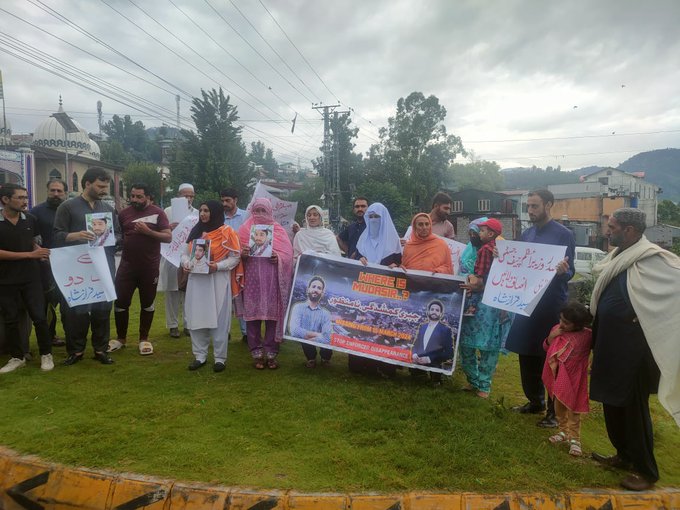
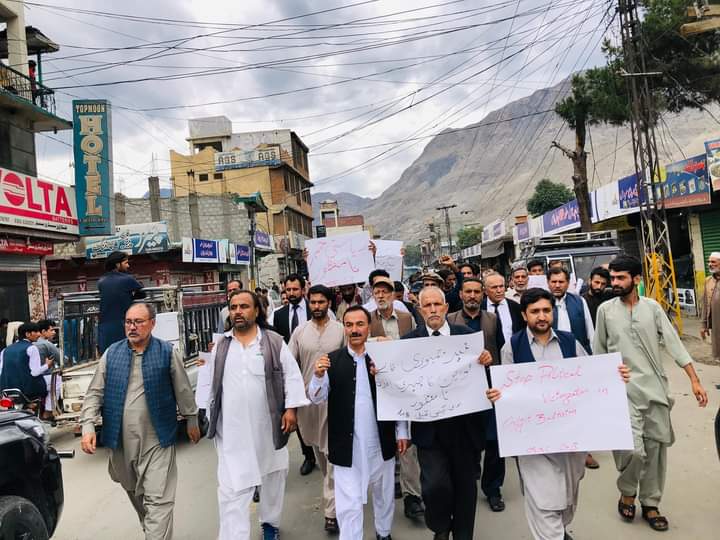
A protest rally organized by the Awami Action Committee in Pakistan-occupied Gilgit-Baltistan (PoGB) highlighted the Pakistan Army’s blatant misuse of anti-terrorism and cybercrime laws to suppress the region’s marginalized communities. The rally, which saw significant participation, was a direct response to the Army’s continued efforts to stifle any form of dissent against its oppressive policies in PoGB.

The protest, led by prominent leaders including PoGB Awami Action Committee Chairman Ehsan Ali, Baltistan Division President Najaf Ali, senior leader Baba Jan, and Mumtaz Nagri, underscored the increasing frustration among the local population. The protesters marched along River View Road, culminating their demonstration at the central press club of PoGB, where they vocally condemned the Pakistan Army’s role in perpetuating injustices under the guise of national security.

The rally’s organizers said that the occupied-government, under the heavy influence of the military, of weaponizing anti-terrorism and cybercrime laws to file baseless charges against political workers and leaders of the Awami Action Committee. These laws are being deployed not to protect the nation but to crush any opposition to the military’s exploitative practices in the region. “These coercive measures are a deliberate attempt to silence those who dare to speak out for local rights,” said Najaf Ali, who emphasized that the people of PoGB will not tolerate these abuses.

Pakistan Army’s Abuse of Anti-Terrorism Laws

The protesters voiced their grievances over the Army’s continued neglect of fundamental rights in PoGB, pointing out that the military-backed government has failed to address even basic issues like uninterrupted electricity and local land ownership. Instead of addressing these legitimate concerns, the Federal Investigation Agency (FIA), under the Army’s directives, has resorted to filing false cases against residents who challenge their authority.

Speakers at the rally also said that the glaring lack of political representation in PoGB, noting that local body elections have not been held for the past two decades—a situation that benefits the Pak Army by keeping the local population politically disenfranchised. The issuance of mineral exploration licenses to outsiders, without local consent, is another example of how the region’s resources are being looted by the powers that be, further marginalizing the local population.

A resolution passed by the protesters demanded the immediate withdrawal of all cybercrime notices issued to political activists and the dismissal of the unjust cases filed against the office-bearers of the Awami Action Committee. They also called for the Army to stop using legal mechanisms as tools of oppression.

The rally in PoGB serves as a powerful reminder of the ongoing struggle against the Pakistan Army’s exploitation of marginalized regions like occupied-Gilgit-Baltistan. The protesters’ defiance against these oppressive tactics signals a growing resistance to the military’s unchecked power and its relentless campaign to suppress any voices that challenge its authority. The people of PoGB, long subjected to the Army’s heavy-handed rule, are increasingly standing up against the systemic injustices and demanding the respect and rights that have long been denied to them.

POB: Armed attack on mineral transport trucks in Nushki

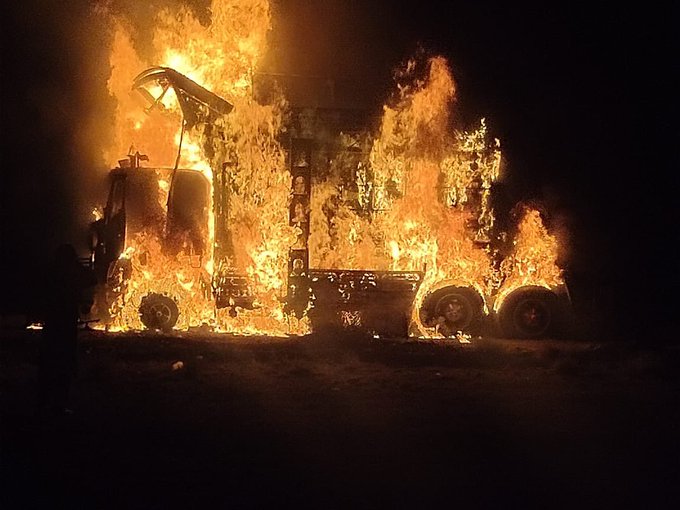
In a significant incident, armed individuals attacked trucks transporting minerals in the Nushki Mil area, setting one truck on fire.

Reportedly, the attack took place near the Sar Mal Killi Gorgij Jadid area of Nushki, where unknown armed men opened fire on trucks carrying marble along the main highway. One truck was torched, and the tires of another were punctured due to gunfire.

This incident highlights the growing resistance in the region, where Baloch freedom fighters are increasingly taking revolutionary measures against the brutal occupation by the Pakistan Army. These fighters target the Pak Army and its agencies for exploiting the region’s resources and suppressing the local population. The attack on the trucks may be seen as an act of defiance against the occupying forces.

Following the attack, the Levies Force was dispatched to the scene, but the armed individuals managed to escape. However, no casualties have been reported so far.

Pak Army forcibly abducts Sindhi activists

In a chilling display of state repression, Pak agencies have forcibly disappeared Abid Leghari, the brother of Talib Leghari, a patriotic national activist. The incident occurred following a raid on Talib Leghari’s house, where both the activist and his brother were interrogated by the authorities. This disappearance is just the latest in a series of enforced disappearances and extrajudicial killings that have plagued the Sindhi community for years.

The persecution of Sindhi activists extends beyond enforced disappearances. Earlier this week, a delegation from the Jeay Sindh Freedom Movement (JSFM) was attacked while returning home from visiting injured national workers at Hyderabad Civil Hospital. This violent assault underscores the systematic targeting of those who dare to speak out against the Pak Army’s injustices.

The Sindhi people, along with other marginalized communities in Pakistan, have long been subjected to brutal repression. Enforced disappearances, extrajudicial killings, and the suppression of religious minorities are common tactics used by the Paki establishment to silence dissent. Sindhi Hindus, in particular, face increasing discrimination, with their plight largely ignored by the wider society.

Pakistan’s national identity appears to be narrowly defined, prioritizing the interests of the Punjabi elite while sidelining the diverse ethnic and religious groups that also call the country home. This exclusionary mindset is one of the primary reasons peaceful organizations like JSFM, which rely on protests and demonstrations to voice their concerns, are relentlessly targeted by the Pak military and its allied forces.

Kabul: Suicide bombing kills six and injures thirteen

A suicide bomber detonated explosives in the Afghan capital on Monday afternoon, resulting in the deaths of six people and injuries to thirteen others. The attack occurred in the Qala-e-Bakhtiar area, near the Attorney General’s Office in Kabul’s southern outskirts.

The explosion has been confirmed by the Taliban regime’s Interior Ministry, though no immediate claim of responsibility has been made for the incident. Khalid Zadran, a Kabul police spokesman, reported that “a person wearing explosives on his body detonated”, with one of the fatalities being a woman. He assured that the injured were promptly transferred to hospitals and that investigations are ongoing.

Despite a general decline in violence since the Taliban’s takeover in 2021, Afghanistan continues to experience sporadic attacks. The regional chapter of the Islamic State remains active, contributing to ongoing instability. The last suicide attack claimed by this group occurred in March in Kandahar, a city long considered a Taliban stronghold. Officially, the Taliban reported only three fatalities from that attack, though hospital sources indicated the death toll was significantly higher.

Taliban authorities have repeatedly emphasized their commitment to security since their return to power following the chaotic withdrawal of foreign forces. However, while their security operations have reduced the number of militant challenges, the authorities often downplay or delay confirming the details of such attacks.

Taliban government spokesman Zabihullah Mujahid asserted last month that the Islamic State had been significantly suppressed. “No such groups exist here that can pose a threat to anyone,” he claimed. Despite these assurances, the ongoing presence and activity of the Islamic State and other militant groups continue to challenge the Taliban’s control and security claims.

TTP releases Pak Army colonel & family after ransom payment

Lieutenant Colonel Khalid Amir and his three relatives, who were kidnapped by the Tehrik-e-Taliban Pakistan (TTP), have been released following a ransom payment and the release of TTP detainees.

The Pak military has confirmed that Colonel Amir and his family members are now safely back home. According to the Inter-Services Public Relations (ISPR), the hostages were freed with the assistance of tribal elders who played a crucial role in mediating the release.

The abduction took place on August 28, when Colonel Amir and his brothers were seized while attending a family funeral in the Kalach area of Dera Ismail Khan District. The kidnapping was carried out by the TTP, which later claimed responsibility in a message, asserting that the hostages were in good health.

The incident follows the Pak Army’s recent decision to launch an operation against militant groups, including those crossing into Pakistan from Afghanistan. In the wake of the kidnapping, videos surfaced on social media showing the hostages pleading for the occupied-government to meet the Taliban’s demands to secure their release. Although the specific demands were not detailed in the videos, reports indicate that they included both a ransom payment and the release of key Taliban prisoners.

Faizan Usman, Khair Deen become latest victims of Pak Army’s enforced disappearances

On 5 July , 17-year-old Faizan Usman, a Baloch student, was forcibly disappeared by Pak intelligence agencies in Islamabad’s Green Avenue. Reportedly, military intelligence agencies initially raided Faizan’s family home while he was not present. Under intense pressure and threats, his family was coerced into surrendering him to the authorities.

Despite assurances from the agencies involved that Faizan would be released, it has now been over two months, and he remains missing. His family, under threat of severe consequences, was explicitly warned against protesting or reporting his disappearance. Despite the risks, they have courageously filed a First Information Report (FIR) accusing the Pak agencies of abducting Faizan.

This case is not an isolated incident but a disturbing example of the Pak Army’s long-standing tactics of enforced disappearances, extrajudicial killings, and the notorious “kill and dump” policy against the Baloch community. For decades, the Baloch people have endured systematic and clinical oppression under the rule of the Pak military, which has wielded its power with impunity.

Enforced Disappearances Continue

The Baloch community has been subjected to relentless persecution, with thousands of individuals, including students, activists, and intellectuals, forcibly disappeared, only to be found later as victims of extrajudicial killings. The military’s brutal tactics are designed to silence dissent and crush any movement for autonomy or rights within Pak-occupied-Balochistan.

Another recent victim of this grim reality is Khair Deen Baloch, who was abducted by Pakistan’s Counter Terrorism Department (CTD) personnel from his home on July 12, 2024. Like Faizan, Khair Deen’s whereabouts remain unknown, and his family continues to suffer in silence, fearful of the Pak military’s retaliation should they speak out.

Human rights organizations, including Paank, have repeatedly called on the Pak authorities to end the practice of enforced disappearances and to ensure the safe return of individuals like Faizan and Khair Deen. The right to liberty and security, as enshrined in international human rights law, must be upheld. However, in Pakistan, these rights are blatantly and routinely violated, with no accountability for the perpetrators.

BSAC blames Pak Army for fire fury at Science College Quetta

A devastating fire has consumed Science College Quetta, severely damaging the institution. The fire, which broke out late at night, has destroyed a significant portion of the college, including crucial facilities such as the central corridor and the vice principal’s office. The loss includes millions of rupees worth of furniture and other items, with initial investigations suggesting that an electrical short circuit might have been the cause.

However, the truth is different and under the wreckage. The central spokesperson of the Baloch Students Action Committee has condemned the fire as a “major educational disaster” and a “profound ethical betrayal.” They have said that the fire’s destruction was not merely an accident but a deliberate or inadvertent act aimed at stifling dissent and curbing the growing demand for independence in POB.

Pak Army’s Deliberate Arson

“The failure of occupied-government agencies to respond promptly allowed the fire to ravage the college”, the spokesperson said. “This is not just a building but a beacon of knowledge for Balochistan. The fact that no timely intervention occurred raises questions about whether this was a calculated move to suppress the increasing political and educational activism in the region.”

The spokesperson highlighted that Science College has been a cornerstone of student politics in POB, contributing significantly to political awareness and leadership among students. The college’s destruction aligns with a broader pattern of suppression aimed at curtailing the region’s rising demand for autonomy.

The Baloch Students Action Committee has called for immediate action from higher authorities, demanding the formation of an investigative committee to hold accountable those responsible for the incident. They said that the fire represents a strategic attempt by the Pak Army and occupied-government to undermine educational and political institutions that challenge their authority.

The destruction of Science College Quetta serves as a stark reminder of the Pak Army’s ongoing efforts to quell dissent and control the narrative in POB.

Pak backed terrorists attack Sunjwan Army camp near Jammu

A soldier sustained injuries after Pak-backed terrorists launched an attack on the Sunjwan army camp near Jammu Darbar in Jammu and Kashmir on Monday.

The attack occurred around 10:50 a.m. near the sentry post of the camp, which is under the jurisdiction of the 36 Infantry Brigade, according to the Army. The assailants targeted the sentry post, leading to the injury of one soldier.

In response, the Army has initiated a search operation in the area to locate the terrorists. The situation is still developing, and further details are awaited, as confirmed by an Army statement.

Last week, security forces successfully thwarted an infiltration attempt along the Line of Control (LoC) in the Gurez sector of Jammu and Kashmir’s Bandipora district on August 31. The operation involved a gunfight between the infiltrating terrorists and the Indian Army following the detection of terrorist movement near the LoC fence.

In a series of recent encounters, at least three terrorists were neutralized in Jammu and Kashmir’s Kupwara district. The Indian Army’s Chinar Corps reported that two terrorists were killed in an encounter in Kupwara’s Machil sector, while another was gunned down in the Tangdhar sector.

Heightened security ahead of elections

The tension between security forces and terrorists has intensified as the Union Territory prepares for Assembly elections, scheduled to begin on September 18. The elections will occur in three phases—September 18, September 25, and October 1—with results slated for announcement on October 4.

In the past three months, security forces have ramped up anti-terror operations in Jammu and Kashmir, and approximately 300 companies of paramilitary forces have been deployed in the region for election duties.

PTM leader Manzoor Pashteen mourns the murder of activist Umar Sherani

The brazen murder of Umar Sherani Murkai, a member of the National Democratic Movement’s (NDM) provincial organizing committee, has once again exposed the Pakistan Army’s relentless campaign of terror against those who dare to speak up for Pashtun rights. Manzoor Ahmed Pashteen, leader of the Pashtun Tahafuz Movement (PTM), visited Sherani’s home to express his grief and solidarity with the family. Sherani, a political activist known for his outspoken advocacy for Pashtun rights, was gunned down in cold blood just days ago in Dera Ismail Khan.

The PTM’s struggle against the heavy-handed and often brutal tactics of the Paki establishment has only intensified as the movement plans a significant national gathering on October 11. The PTM has been a vocal critic of the militarization of Waziristan through Operation Azm-e-Istehkam, and its condemnation of the occupied-govt’s inhumane policies has made it a prime target for Pak Army-sponsored violence.

The Pakistan Army’s systematic campaign of intimidation, abductions, and extrajudicial killings of activists is a clear violation of human rights and international law. This brutal crackdown not only reflects the Army’s long-standing disregard for the rule of law but also highlights its failure to respect the fundamental rights of the Pashtun people. Since the Army’s forceful occupation of the region in 1947, it has consistently trampled on the rights of the local population, using any means necessary to maintain its grip on power.

Paki establishment neglects PoGB, villagers die due to lack of medical infrastructure

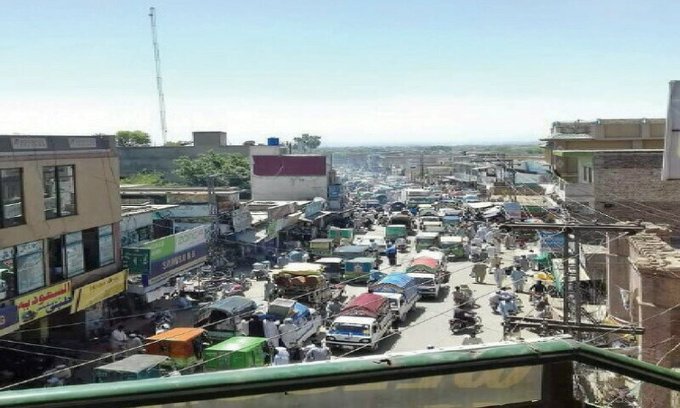
The Pakistan-occupied Gilgit Baltistan (PoGB) region continues to suffer under the neglect of the occupied-authorities, with countless lives lost in remote villages due to the complete absence of medical infrastructure and inaccessible roads.

The local village head, highlighted the devastating impact of the lack of medical facilities on their community. “Our community has been living here for more than 100 years. We have lost countless lives because we have no medical facilities. We are forced to use wooden stretchers to transport the sick and injured, often carrying pregnant women for miles. More often than not, either the mother or the child, or both, do not survive the journey,” he said.

The situation is so dire that the only medical personnel who occasionally visit the village come once every two to three months. The villagers, already struggling to survive, must scrape together donations amounting to approximately PKR 20,000 to cover the medical expenses.

But the lack of healthcare is only part of the problem. Another local resident emphasized that the dire state of education is just as alarming. “Zero medical infrastructure is just one part of the problem. Education is also a major concern. We barely have any educational facilities. The only school is kilometers away, with just one struggling teacher trying to educate the students in the valley,” he said.

In another damning report, a resident expressed deep frustration with the occupied-government’s total indifference to their plight. “The government is doing nothing for our valley. We haven’t seen any officials, nor have we received any assistance. It has become nearly impossible for us to afford even one meal a day. They are even cutting down our forests, leaving us with no resources. When we speak out against deforestation, we are threatened with imprisonment by government officials. We fear retaliation. Look at our conditions: there is no dispensary, and the roads are in terrible shape. The lack of proper roads creates numerous problems for us,” he added.

This neglect by the occupied-govt, particularly the Pakistan Army, which has a stronghold in the region, underscores the systematic abandonment of the PoGB by the very authorities who claim to govern it. Despite being under Pakistan’s control, the region has been left to deteriorate, with no investment in infrastructure, education, or healthcare. The Pakistan Army’s focus on militarization and exploitation of the region’s resources has left the local population in a state of perpetual despair, with their basic human rights ignored and their voices silenced.