Home Blog Page 53

Pak Army shuts down 542 more schools in Pak-occupied Balochistan

In a stark reflection of the ongoing crisis in Pak-occupied-Balochistan, the Department of Education has reported the closure of an additional 542 schools under the current administration, with more closures expected. This troubling development highlights the severe impact of the Pak Army’s exploitation and brutal repression on the region’s education system.

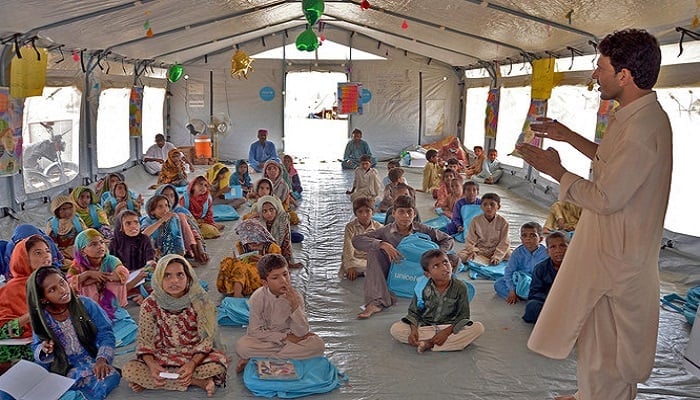
According to the latest report from the Balochistan Department of Education, the number of closed schools has surged to 3,694 across 35 districts as of September 2, up from 3,152 in May.

The Department of Education’s report reveals that reopening the closed schools would require the hiring of 16,000 teachers. The situation is dire, with schools in Pishin being the hardest hit, accounting for 254 of the closures, while Dera Bugti has the fewest, with 13 non-functional schools.

The lack of schools and teachers has led to a staggering number of children being out of school, with over 1.2 million children estimated to be out of education by 2021—more than 70% of the school-age population.

Not a week ago, the Baloch Doctors’ Forum raised concerns about the neglect of the health sector, citing months-long salary delays and vacant teaching positions in medical colleges. This reflects the systematic repression of the Baloch community. The Paki establishment is marginalizing the community and causing suffering due to a lack of basic necessities. Education and health are fundamental human rights, but they are being stripped away, leaving the community to live without basic decency.

Pak Army raids Balochistan National Party leader Mohammad Qasim’s home in Bela

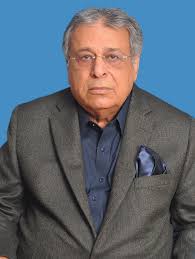
Pak forces raided the home of Balochistan National Party (BNP) leader and Senator Mohammad Qasim Ranjho in Bela. The raid occurred shortly after Senator Ranjho made notable remarks about Pak-occupied-Balochistan’s issues during a Senate session.

Sardar Akhtar Jan Mengal, the BNP’s chief, reported via social media that police and other security forces conducted the raid on Ranjho’s ancestral residence, known as White House, without any legal authorization. Mengal condemned the raid as a direct attack on the BNP and its leadership.

Following the raid, BNP leaders and activists began assembling at Ranjho’s home in protest. Sardar Mengal emphasized that Senator Ranjho had previously addressed POB’s grievances in a measured manner during the Senate session, expressing concern about the growing hostility towards the region. Ranjho had highlighted that the deep-seated animosity against POB has reached a point where Baloch people are regarded as infidels in Punjab.

In his remarks, Senator Ranjho criticized the occupied-Punjabi govt for treating POB as a colonial territory, and causing systemic neglect and exploitation.

As of now, authorities have not issued any official statement regarding the raid on Senator Ranjho’s home. This incident follows Sardar Akhtar Mengal’s recent resignation from the National Assembly of Pakistan, a move he made in protest against the parliamentary system’s failure to address POB’s issues.

BLA launches multiple attacks on Pak Army across Pak-occupied Balochistan

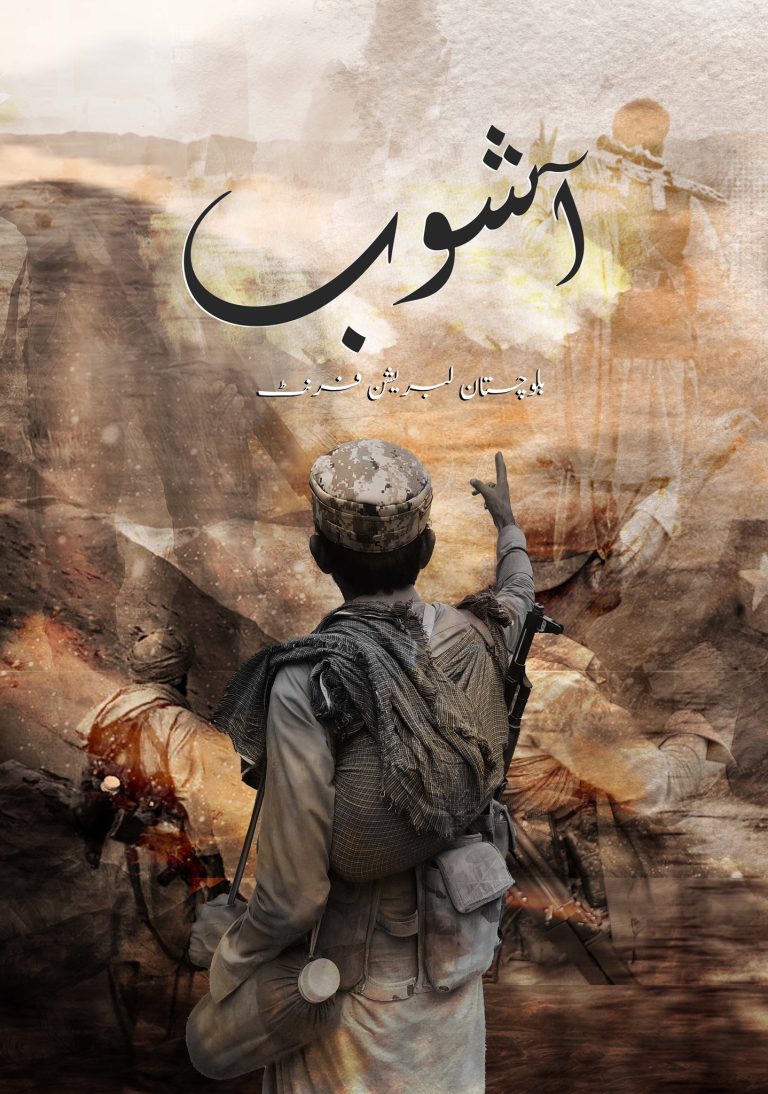
In a series of retaliatory operations, the Baloch Liberation Army (BLA) has launched a fresh wave of attacks on the occupying Pak forces and their economic ventures in Pak-occupied-Balochistan.

BLA spokesperson Jeeyand Baloch, said that BLA fighters targeted Pak military posts, mineral transport vehicles, Army collaborators, and communication infrastructure in Turbat, Nushki, Panjgur, and Barkhan. These coordinated actions reflect the deepening resolve of the Baloch people to resist a military force that has turned their homeland into a battlefield, enriching itself while oppressing the local population.

One of the most recent incidents occurred on Friday night when BLA fighters targeted a Pak Army post in Turbat, injuring several personnel in a grenade attack. In another operation, BLA fighters attacked vehicles transporting minerals from POB, setting fire to one and destroying another in Nushki.

The BLA also took a significant step against the Pak Army’s collaborators, capturing and executing a known informant, Murad alias Doli, who had been assisting the military in its brutal campaigns. His confession revealed the deep ties between local death squads and the Pakistan Army.

In addition to these attacks, BLA destroyed a communication tower of Ufone, a company complicit in enabling the Pak Army’s control over the region. These assaults highlight the pro-independence movement’s resistance to the systemic atrocities committed against the Baloch community, who have long suffered under the Pak military’s iron-fisted rule.

The Pak military’s strategy in POB has been one of brute force and terror. Thousands of Baloch activists, intellectuals, and civilians have been abducted, tortured, and killed. Military operations frequently target entire villages, burning homes and displacing families. The policy of collective punishment is used to intimidate the local population into submission.

This latest string of operations by the BLA is not just a tactical assault but a profound statement of resistance. It represents the growing determination of the Baloch people to reclaim their land, their resources, and their freedom from the clutches of an occupying force that has done nothing but exploit and brutalize them for decades.

Dacoits abduct Khyber driver, family left pleading for justice

In yet another shocking incident highlighting the lawlessness in Pakistan’s tribal regions, a poor driver from Khyber district has been kidnapped by dacoits operating in the Kacha area. The criminals have demanded a ransom, leaving the victim’s impoverished family with no hope for protection from the occupied-authority. The family, desperate to secure the driver’s release, has set up makeshift camps, pleading for help.

This incident is just one of many in a region where the rule of law has eroded to the point of collapse. For years, residents have been raising alarms about the unchecked activities of these dacoits, who terrorize the population with impunity. These criminal gangs operate under the protection of local warlord and are shielded by their deep political connections, allowing them to act without fear of repercussions.

What is most disturbing is the complicity of Pakistan’s establishment and law enforcement agencies. Instead of dismantling the criminal networks, the police and military seem more interested in preserving the status quo, often providing a protective shield for these powerful warlords. This leaves ordinary citizens, especially vulnerable communities like the Pashtuns, at the mercy of these criminals, who kidnap and extort with little to no intervention from the authorities.

BLF attacks Pak Army and mobile towers in Pak-occupied Balochistan

Major Ghulam Baloch, spokesperson for the Balochistan Liberation Front (BLF), has announced that the group’s freedom fighters have carried out multiple attacks against the Pak Army and mobile towers. In a series of coordinated strikes, the fighters targeted three different locations, setting machinery on fire following the assaults.

According to Baloch, the first attack occurred on Thursday, September 5, at 8:00 PM. The freedom fighters targeted Pak Army Nadeem, son of Ali Muhammad, at the main highway in Zohri’s Zik area. Nadeem was severely injured in the attack.

Baloch identified Nadeem as a Pak Army involved in the deaths of Shaheed Noor-ul-Haq alias Barg and Shaheed Zia-ur-Rehman alias Diljan. Nadeem was reportedly allied with the Pak Army and its associates, including Zafar Tarasani, Hafeez Tarasani, and Master Sanaullah Tarasani, during an operation on February 19, 2018, at Zohri Tarasani.

The spokesperson asserted that the BLF has identified all those who collaborated with the Pak Army in the February 2018 incident and vowed that these individuals will be targeted soon.

In a separate operation on September 3 at 8:00 p.m., the freedom fighters attacked a Ufone tower in the Baghau Barkhan area, setting it ablaze. Additionally, on September 4 at 5:00 p.m, they detonated a Telenor tower in the Kangri area of Mosa Khel and set the machinery on fire.

Major Baloch condemned the Pak Army and its agents as enemies of the Baloch nation. He declared that the BLF will continue to target all agents who have assisted in forcibly disappearing and killing Baloch people. Baloch also noted that the Paki establishment is attempting to track the freedom fighters through mobile phone networks in Balochistan using firewalls and geo-fencing. Despite these measures, the BLF’s intelligence department is actively working to thwart these tracking efforts.

The BLF has vowed to continue destroying any projects that exploit the Baloch nation until Balochistan achieves independence. The BLF’s long-standing struggle against the Pak Army, which has occupied the resource-rich region of Balochistan since 1948, aims to end the exploitation and severe attacks on the Baloch people. The group has vowed to intensify its efforts and seek retribution for the oppression faced by their nation.

Pak Army’s mortar shelling in Tirah maidan kills 15 year old girl

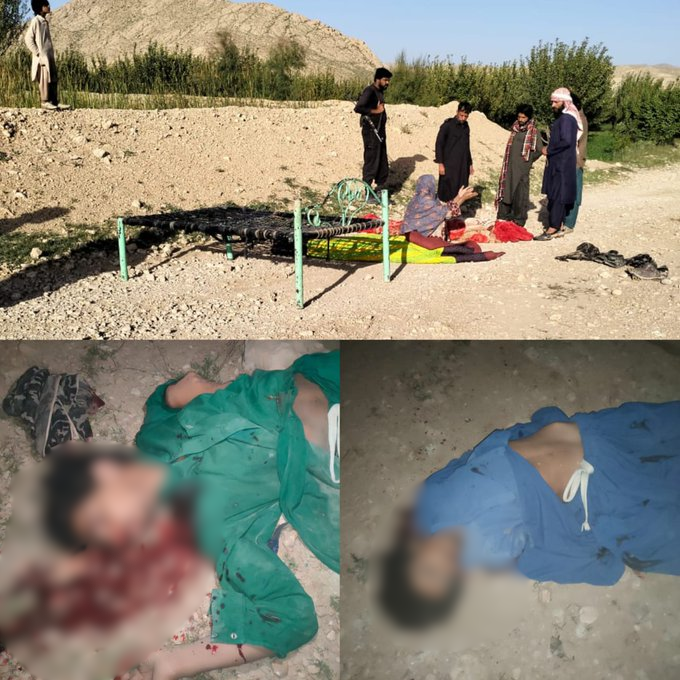
In a tragic escalation of violence, a 15-year-old girl was killed in shelling by a Pak Army gunship helicopter in the Tirah Maidan region, near the Afghan border. In April, in a similar tragic incident, the Punjabi Pakistan Army killed three more innocent Pashtuns, including two children. This underscores the continued brutality faced by the Pashtun community at the hands of the Pak military.

The Tirah Maidan area, heavily monitored by the Pak Army due to its proximity to Afghanistan, has once again become a site of tragic violence. The region has seen increased military activity in recent times, reflecting the deteriorating relationship between Pakistan and the Afghan Taliban.

In an alarming pattern, the Punjabi Pak Army has intensified its scrutiny of Pashtuns living on both sides of the border, using the pretext of security to justify aggressive tactics. This approach, however, has dire consequences for the local population. The heavy-handed actions of the Punjabi Pak Army, driven by ethnic biases and geopolitical tensions, have resulted to suffering and loss of life among innocent Pashtuns.

The situation in Khyber-Pakhtunkhwa is exacerbated by the historical exploitation and marginalization of the Pashtun community by the Punjabi-dominated Pak Army. Since the military’s occupation of the Khyber region in 1947, Pashtuns have endured relentless violence and exploitation. The Army’s tactics include indiscriminate shelling, abductions, extrajudicial killings, and staged encounters, all contributing to a pervasive climate of fear and instability.

Pakistan uses anti-terrorism amendments as a tool for repression & abuse

Paank, a prominent human rights organization, has vehemently condemned the recent amendments to Pakistan’s Anti-Terrorism Act, as the Paki establishment is granting unchecked powers to military and civil armed forces, which severely undermine human rights and the rule of law. These amendments, cloaked under the guise of national security, pave the way for arbitrary detentions, potential torture, and other abuses, representing a blatant violation of international human rights standards.

Among the most alarming aspects of the amendments is the provision allowing for the detention of individuals based solely on suspicion of potential terrorist activities. Such vague and sweeping powers contradict the basic tenets of liberty and security. By permitting arrests without substantive evidence, these laws provide a dangerous legal cover for the Pakistan Army and its intelligence agencies to target dissenters, critics, and anyone deemed a threat to their hold over power.

The Pakistan Army, notorious for its long-standing repression of marginalized regions of Pak-occupied-Balochistan, could now use these laws as an additional tool to suppress peaceful protests, political opposition, and freedom of expression. With the broad and ambiguous definitions of “terrorism” and “national security threats,” there is no doubt that these provisions could be weaponized to silence civil society activists, journalists, and political dissidents who dare challenge the Pak Army’s narrative.

Pakistan’s Draconian Anti-Terrorism Act

The amendments also shows the diminishing role of the judiciary in ensuring checks and balances against the abuse of power. The amendments effectively sideline judicial oversight, allowing the security forces to carry out investigations and detentions with little to no accountability. This reduction of judicial involvement erodes the fundamental right to a fair trial, which is essential for a functioning democracy. In a country where the military establishment already wields control over civil matters, this move further consolidates authoritarian rule at the expense of civil liberties.

The establishment of Joint Investigative Teams (JITs) comprising intelligence agencies, with limited transparency and public oversight, only exacerbates the potential for human rights violations. The involvement of these agencies, notorious for their history of extrajudicial actions and disregard for due process, heightens the risk of torture, forced disappearances, and other brutal practices. The amendments’ focus on rapid investigations under these JITs may appear efficient on paper, but in reality, they open the door to unchecked abuses by Pak Army sponsored actors such as CTD and death squads operating without transparency.

The Pakistan Army, which has long exploited the country’s laws to consolidate its control and suppress regions like POB and Pakistan-occupied Kashmir (PoJK), now has another legal instrument to crush resistance. These amendments will likely lead to even harsher crackdowns, arbitrary arrests, and Army-sponsored violence in regions already grappling with decades of military occupation, exploitation of resources, and inhumane treatment of their citizens.

Bangladesh: Mob brutally beats 15 year old inside police station

15-year-old Utsav Mondal was brutally beaten by a mob inside a police station in the Sonadanga residential area on the night of September 4. Mondal, a Hindu teenager, had been detained on accusations of making derogatory remarks about the Prophet Muhammad on social media. This alleged blasphemy ignited a firestorm of rage from local Islamists, leading to an unspeakable act of brutality.

Initial reports indicate that Mondal was brought to the office of the Khulna Metropolitan Deputy Commissioner (South) by students from Khulna’s Azam Khan Government Commerce College around 8 p.m. As news of the alleged offense spread, a violent mob estimated between 3,000 to 5,000 gathered outside the police station, demanding that Mondal be handed over to them. Despite police assurances that Mondal would face legal consequences through proper judicial channels, the mob’s demands were met with violent escalation.

In an unprecedented breach of security, the mob stormed the police station, overpowering the police, army, and navy personnel present. Mondal, held inside the station, was subjected to a savage assault by the enraged crowd, leaving him critically injured.

Local media initially reported that Mondal had succumbed to his injuries, but Khulna Metropolitan Police’s Deputy Commissioner (South), Mohammad Tajul Islam, later confirmed that the teenager was still alive and receiving medical treatment. Disturbingly, a viral video shows Mondal lying in a pool of blood, with attackers attempting to gouge out his eyes.

Despite Mondal’s dire condition, legal proceedings against him continue. The Inter-Services Public Relations (ISPR) confirmed that legal action has been initiated for “hurting religious sentiments,” and Mondal will be handed over to the police once his health allows.

However, Chief Adviser to Bangladesh’s interim government, Muhammad Yunus, dismissed these violent attacks on Hindus as “exaggerated” and attributed them to political fallout rather than genuine communal tensions. His comments starkly contrast with the harrowing reality faced by minorities in Bangladesh, underscoring the systemic failures and deep-seated prejudices within the nation’s institutions.

Kalat: Pak Army helicopters patrol areas; fear of military operation

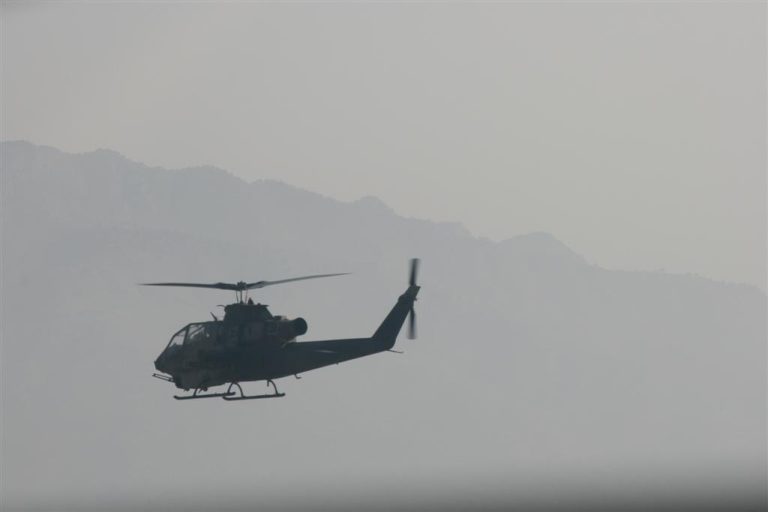
Concerns are mounting in Pak-occupied-Balochistan’s Kalat region after reportedly, Pak military helicopters conducting prolonged patrols over several areas on Wednesday. The helicopters were seen flying over Gozag, Jhukri, Surani, Nowhgar, and Lagani, adjacent to Koh Nagahi, for approximately an hour before heading towards Sibi.

Local residents have expressed fears of an imminent military operation, citing past experiences where such aerial activity preceded large-scale military actions. Previous operations in these areas have inflicted significant losses on local communities, both in terms of property and livelihood.

Residents said that during these military operations, civilian populations are often caught in the crossfire, with homes damaged and livestock looted by security forces. However, there has been no official statement from military authorities.

Baloch doctors’ forum condemn Paki establishment’s neglect of medical institutions

The Baloch Doctors Forum has denounced the continued suspension of salaries for medical college faculty and doctors, calling it unacceptable. The forum’s spokesperson warned that this neglect of medical institutions, particularly the newly established colleges in Makran, Jhalawan, and Loralai, will have a profoundly negative impact on both educational quality and public health in the province.

This salary suspension, however, is just one part of the broader exploitation that Pak-occupied-Balochistan has suffered under decades of oppressive rule by the Paki establishment.

The Baloch Doctors Forum highlighted that the few developmental projects claimed by the occupied-government remain mere lip service, failing to improve the dire situation on the ground. While the occupied-state apparatus continues to siphon POB’s wealth, its people are left without access to basic healthcare, proper educational facilities, or even their rightful wages. Medical colleges, crucial for the development of healthcare in the region, are left to deteriorate under the weight of indifference, with teachers and doctors facing financial instability due to months-long salary delays.

This systematic negligence is not just a reflection of administrative failure but a deliberate policy of suppression. The spokesperson of the Baloch Doctors Forum warned that the future of these colleges is at grave risk, with the development of medical education in POB coming to a halt unless immediate steps are taken. The occupied-govt’s proposed privatization of hospitals is another move that will further disenfranchise the already vulnerable Baloch population, serving only to deepen the existing crisis in the healthcare sector.

Doctors on the Frontlines of Neglect

The Paki establishment’s relentless focus on militarization in POB, rather than on addressing the region’s dire need for educational and health reforms, speaks volumes about its priorities. For decades, the Pak Army has used violence, coercion, and bloodshed as tools to subjugate the Baloch people, all while exploiting the province’s rich resources for its own gain. The people of POB have been treated as second-class citizens in their own land, with the healthcare and educational sectors being only the latest victims of this enduring Army-sponsored oppression.

The Baloch Doctors Forum called on the occupied-authorities to immediately fill all vacant teaching positions in medical colleges through the Balochistan Public Service Commission, a step that would not only alleviate the shortage of teaching staff but also address some of the fundamental issues plaguing the province’s healthcare education. The forum also warned of mass protests should the Army proceed with hospital privatization, emphasizing that the responsibility for any unrest would lie squarely with Islamabad and the senior officials of the health department.

The Baloch people, who have long struggled under the yoke of forceful occupation by the Pakistan Army, face daily injustices that go far beyond the educational sector. POB’s natural resources have been looted, its land plundered, and its communities subjected to a brutal reign of terror. The region’s citizens face inhumane treatment, economic marginalization, and rampant Pak Army-led atrocities, including forced disappearances, extrajudicial killings, and violent military raids on their homes.