Home Blog Page 58

Bangladesh crisis: Students clash with paramilitary force, injure over fifty

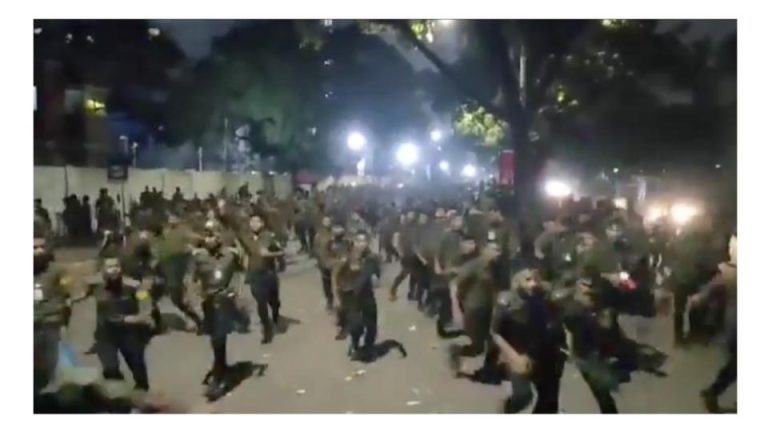
A brutal clash between students and security forces erupted in Dhaka, resulting in over 50 injuries. The violence began when students, many armed with sticks, marched toward the Secretariat where members of Ansar Bahini, a paramilitary force, were protesting.

The confrontation was triggered by students’ objections to the Ansar Bahini, accusing them of siding with the interim government led by Md. Yunus, which they claim is undermining student interests in favor of Ansar Bahini’s priorities. Coordinator Hasnat Abdullah has urgently called for public resistance against the Yunus government, alleging that the Ansar Bahini, a force of 6 million, is being used to suppress dissent and rig the upcoming elections.

Reportedly, Ansar Bahini members have been attacking students on the streets, with plainclothes police also participating in the crackdown. The Ansar Bahini, established on February 12, 1948, and operational from June 16, 1948, was previously deployed during the 1965 Indo-Pak war in the border outposts of what was then East Pakistan. Under Article 152 of the Constitution, the Ansar Bahini is an orderly force, but its aggressive actions are seen by some as part of a broader strategy to influence the upcoming elections and stabilize Yunus’ interim government.

Incident

The violence erupted after a lull of several days. Students, who had played a significant role in the recent protests leading to the downfall of the Sheikh Hasina government, confronted Ansar Bahini members at the Secretariat, calling them “agents of autocracy.” Initially, the Ansar members retreated but later returned to strike back with sticks and throw bricks.

The students were protesting against a longstanding tradition within the Ansar force, known as “rest tradition”, which mandates a six-month unpaid leave after three consecutive years of service. The students accused the Ansar Bahini of reneging on an agreement with the interim government to abolish this practice.

The clash escalated as both sides exchanged bricks. Police and military forces were deployed to restore order, but by then, tensions had already surged. The violence resulted in injuries to at least 50 people.

Dhaka’s Streets in Chaos

Student protest coordinator Hasnat Abdullah blamed former Ansar director general Maj Gen AKM Aminul Haque for the ongoing blockade of the Secretariat, despite the students’ demands being addressed. Abdullah accused the Ansar force of attempting a return to autocratic practices through the current protests.

In response, Maj Gen Abdul Motaleb Sazzad Mahmud, director general of the Ansar and Village Defence Force, denied that Ansar members were involved in the clashes. He claimed that the individuals involved were outsiders with ulterior motives.

The incident underscores the escalating tensions between students and paramilitary forces in Bangladesh, with both sides accusing each other of violence and ulterior motives. The interim government has promised to take legal action against those involved in the clashes, as the situation remains tense in Dhaka.
BLA revolutionaries launch massive attack across Pak-occupied Balochistan

A series of coordinated attacks and blockades have erupted across Pak-occupied-Balochistan, leading to significant disruptions and raising concerns over security in the region. The unrest, which began late Saturday night, has since spread to multiple districts, including Gwadar, Kech, Kalat, Sibi, and Dera Bugti, where armed groups have targeted infrastructure and security forces.

Blockades and Checkpoints

In Kech district, the main highway from Mand to Turbat has been surrounded by armed groups at the Hotabad location. These groups are conducting checks on all vehicles passing through, effectively controlling movement in the region. In Kalat, armed individuals have blocked the highway at Mahlubi, where they are also conducting thorough checks. Reportedly, in Kalat Levies personnel have been arrested by these groups, though further details on these incidents remain unclear.

Attacks on Infrastructure and Pak Army

In addition to these blockades, a series of violent attacks have targeted critical infrastructure and security forces across the province. In the Sibi district, a train track was blown up at Sibi Lumji, and force camps near Karak and Mithri Hotels were also attacked. Meanwhile, near Koh Sulaiman in Musakhel, BLA sarmachaars (revolutionaries) detained several travelers during a blockade; these individuals were reportedly en route from POB to Faisalabad in Punjab.

A particularly severe attack occurred in the Dera Murad Jamali area of POB, where unknown assailants launched an intense assault on a post manned by Pakistan Army at the Notal location. The sounds of gunfire and explosions reverberated throughout the city, underscoring the intensity of the conflict.

In another significant incident, a 36-inch gas pipeline in the Dera Bugti area of Sui, which supplies gas to Karachi, was destroyed by unknown individuals who planted explosives at the Beshapur location. This attack has disrupted gas supplies to Karachi, adding to the mounting crisis.

Additionally, in Balgatar, armed individuals have established a blockade on the CPEC road between Turbat and Panjgur, further exacerbating the already volatile situation.

Escalating Conflict

These coordinated attacks and blockades across POB highlight the escalating conflict in the region, with Baloch fighters increasingly targeting key infrastructure and Pak forces. The widespread nature of these incidents, from the coast of Gwadar to the mountainous areas of Kalat, underscores the growing incapacity of the Pak Army to control the region with iron fist and to pose challenge to the demand for independence by the freedom fighter groups.

Sindh: Hindu married woman forced to convert to Islam at Bharchundi Sharif Dargah

A married Hindu woman and mother of three daughters was forcibly converted to Islam after arriving at the residence of Pir Mian Javed Ahmad Qadri at the Bharchundi Sharif Dargah, a site notorious for its role in forced conversions. This alarming incident underscores the ongoing concerns surrounding the coercion faced by Hindu women in Sindh, where radical clerics like Qadri continue to operate with impunity, often targeting vulnerable Hindu individuals for conversion and marriage.

This case is part of a disturbing pattern of violence against minority girls in Pakistan, particularly Hindu girls who are frequently targeted. The abduction and forced conversion of minority women have been increasingly reported in recent years, reflecting a broader trend of religious persecution.

The incident highlights the severe physical and psychological trauma experienced by victims of forced conversions, as well as the systemic failures of authorities to protect minority communities. The lack of adequate response from the authorities has left many victims without justice or protection, exacerbating the already dire situation for religious minorities in the region.

This case sheds light on the critical and ongoing struggles faced by Hindu girls and other minority communities in Pakistan, where violence against ethnic and religious minorities remains widespread and largely unchecked.

Pak Army raid in Khyber fails, results in heavy casualties

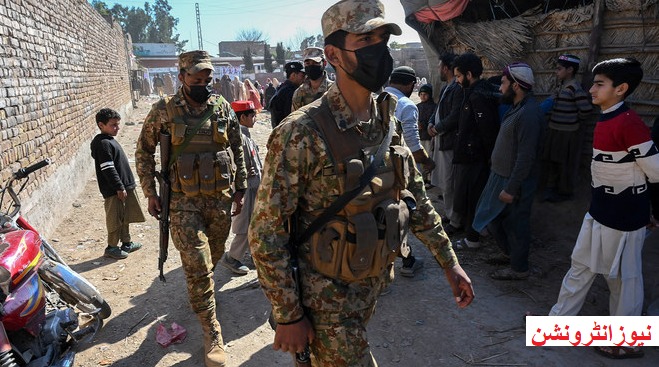
A raid by the Pakistan military targeting militants in the Tirah Valley region of Khyber Agency, including the Darpeir and Chh Chowk areas, ended in failure and resulted in significant losses for the Army.

Reportedly, the Tehrik-e-Lashkar-e-Islam Pakistan, through its spokesperson Salahuddin Ayubi, claimed that their fighters were prepared and ambushed the military forces with both light and heavy weaponry.

The confrontation, which started at 10 a.m. and lasted until the evening, saw intense fighting that inflicted substantial casualties and damage on the Pakistan military. Many soldiers’ bodies were left on the ground as the conflict unfolded. In response, the military deployed gunship helicopters to target civilian areas and forests in an attempt to recover the fallen soldiers.

The incident highlights the severe challenges faced by the Pakistan military in its operations against entrenched militant groups in the region, raising concerns about the ongoing instability and security situation of the civilians in the Khyber region.

Taliban tightens restrictions on women’s public voices and bans showing bare faces

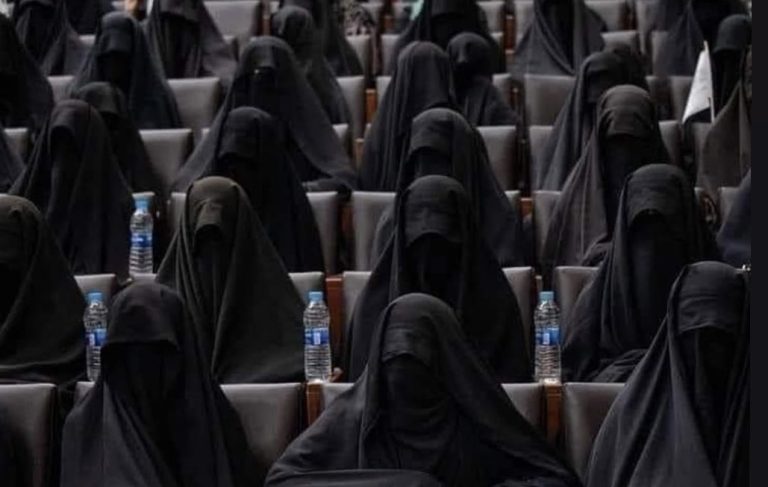
The Taliban has introduced new regulations in Afghanistan that impose severe restrictions on women’s public presence, including bans on showing their faces and having their voices heard. Announced on Wednesday, these measures mark some of the strictest controls imposed on women since the Taliban’s return to power in 2021.

The new laws, detailed in a 114-page document released by the Taliban’s Ministry for the Propagation of Virtue and the Prevention of Vice, reflect the group’s stringent interpretation of Islamic principles. Article 13 of the document mandates that women must cover their entire bodies, including their faces, in public to prevent “temptation.”

Additionally, the regulations prohibit women from speaking or singing in public, citing a woman’s voice as private and undesired in public spaces. The laws also forbid women from making eye contact with men who are not their relatives and ban the publication of images of living beings, which could further impact Afghanistan’s already struggling media landscape.

Taliban’s Latest Regulations

The new restrictions extend to banning music and solo travel by women, as well as prohibiting interactions between unrelated men and women. The laws also require both passengers and drivers to stop for prayers at designated times.

The United Nations has expressed deep concern over these developments, noting that the restrictions could exacerbate the difficulties faced by women and girls in Afghanistan. A recent UN report highlighted that the Taliban’s Ministry for the Propagation of Virtue and the Prevention of Vice is instilling fear and intimidation across the country, with potential serious consequences for Afghan society.

The international community has been criticized for its perceived lack of response to these escalating restrictions. Advocates and observers continue to call for greater action and support for Afghan women, emphasizing the urgent need for global intervention to address what many see as a grave violation of human rights and gender equality.

POB government enforces 90-day travel ban on PTM leader Manzoor Pashteen in POB

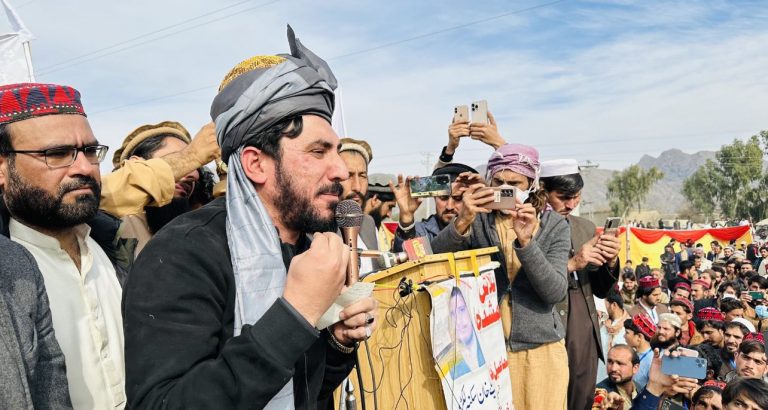
The occupied-Balochistan government has issued a 90-day ban on the entry of Pashtun Tahafuz Movement (PTM) leader Manzoor Pashteen into the province. The decision, formalized through a notification by the Balochistan Home Department, prohibits Pashteen from entering any district within POB during this period.

The ban has sparked criticism from PTM Balochistan leader Zubair Shah, who said that the occupied-provincial government, under the Pakistan Peoples Party, of attempting to prevent Pashteen from attending the Pashtun National Jirga scheduled for August 25. Shah said that the move is an indication of the Pak Army’s anxiety over the growing influence of the PTM.

Zubair Shah further highlighted that the Punjabi Pak Army and its institutions appear to be in a state of confusion, noting that a significant decision regarding the 77 years of oppression, coercion, and exploitation faced by the Pashtun community will be made at the Pashtun National Court on October 11.

He criticized the occupied-government’s notification as a futile attempt to hinder Manzoor Pashteen from engaging with leaders and supporters.

False blasphemy charges lead to Christian man’s execution in Sargodha

In a tragic escalation of religious violence in Pakistan, a Christian man has been tortured and hanged to death in Sargodha, Punjab, following allegations of blasphemy. This incident is part of a disturbing pattern of religious persecution where blasphemy laws are frequently exploited against minority communities.

The victim’s death underscores the ongoing plight of Christians in Pakistan, who face severe discrimination and are often relegated to low-status jobs, such as sanitation work, and subjected to derogatory terms like “Chuhra.” These workers are frequently targeted with abusive language and marginalized in society.

In addition to this, Christian communities are facing systemic injustices, including the refusal of police to file First Information Reports (FIRs) in cases involving the rape of Christian girls. Instead of pursuing justice, authorities have been known to threaten the victims’ families, exacerbating the already dire situation for religious minorities.

These recent events highlight the entrenched discrimination, violence, and denial of basic rights experienced by Pakistan’s Christian minority. Often, such abuses arise from perceived insults to the Muslim majority and occur with minimal accountability or protection for the affected communities.

POB: BRG destroys gas pipeline, cuts off supply to Uch power plant

The Baloch Republican Guards (BRG) have destroyed a major gas pipeline in Pak-occupied-Balochistan, which led to a complete shutdown of gas supply to the Uch Power Plant.

According to a statement released by BRG spokesperson Dostain Baloch, the group targeted a 24-inch diameter gas pipeline last night using explosive materials. The pipeline, which transports gas from Sui to the Uch Power Plant, was blown up in the Rabi area of Nasirabad district.

Dostain Baloch stated that the attack has effectively cut off the gas supply to the Uch Power Plant, disrupting its operations. The incident marks another escalation in the ongoing conflict between BRG members and the Pakistan Army, with infrastructure attacks being a common tactic used to undermine control in the region.

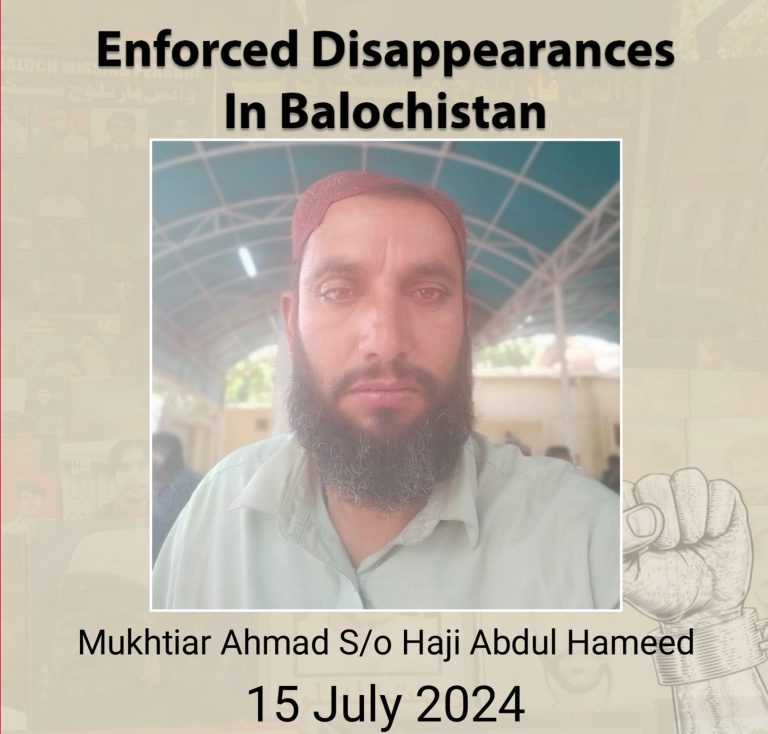
Shutter down protest in Kharan city over abduction of Mukhtiar Ahmed Mengal

Kharan city witnessed a complete shutdown as markets closed in response to a strike call demanding the recovery of Mukhtiar Ahmed Mengal, who was abducted more than a month ago.

The strike was followed by a protest rally at Chief Chowk, after which demonstrators began a sit-in at Kharan’s Red Zone. Protesters have vowed to continue their demonstrations until Mengal is safely returned.

Mukhtiar Ahmed Mengal was abducted in broad daylight on July 15 while traveling from Sarawan to Kharan. The kidnappers have reportedly demanded a ransom of 100 million rupees for his release, but occupied-authorities have yet to secure his return.

Protest organizers have issued an ultimatum, stating that if Mengal is not recovered, the sit-in will be moved to Quetta’s Red Zone. The protest, which had been ongoing at the local press club for the past 38 days, was relocated to Kharan’s Red Zone today to intensify pressure on the authorities.

Reportedly, Mengal’s abduction was carried out by a powerful group with ties to the occupied-government and Pak Army, raising concerns about the influence and reach of such groups in the region. Occupied-govt officials and secret agencies are believed to be directly or indirectly involved in the rampant theft, robbery, and kidnapping for ransom in Kharan.

All thieves and dacoits in the area operate with occupied-government support and backing. In some cases, officials from Punjabi agencies are reportedly involved in these criminal activities, which has led to the Kharan administration’s reluctance to take action against them. This perceived collusion has rightfully fueled further distrust and unrest among the local population.


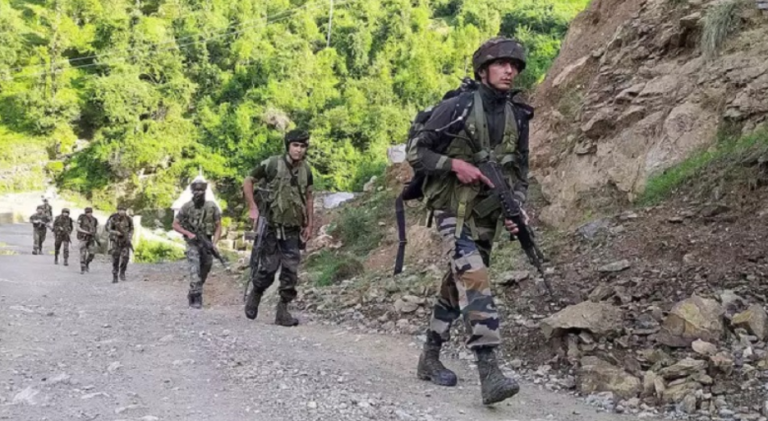
Kashmir: Suspected activity triggers search operation at Kathua border

On Thursday night, security forces initiated a large-scale search operation in the border region of Kathua district, Jammu and Kashmir, following suspicious activity reports. Officials stated that the action was prompted by intelligence suggesting the movement of two unidentified individuals in the area.

The operation centered in the Jandor belt of Kathua, involves a comprehensive cordon and search effort. As of the latest updates, the entire zone remains under strict surveillance, with the search operation still actively underway.

Authorities have not released further details about the nature of the suspected movement or the identity of the individuals involved. The situation continues to develop as security forces remain vigilant in this sensitive border area.