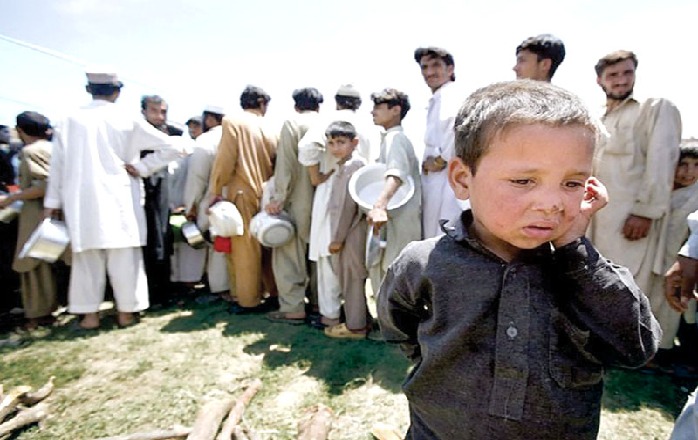
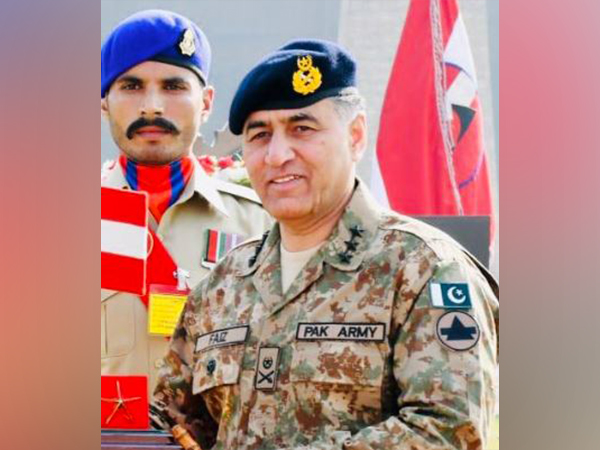
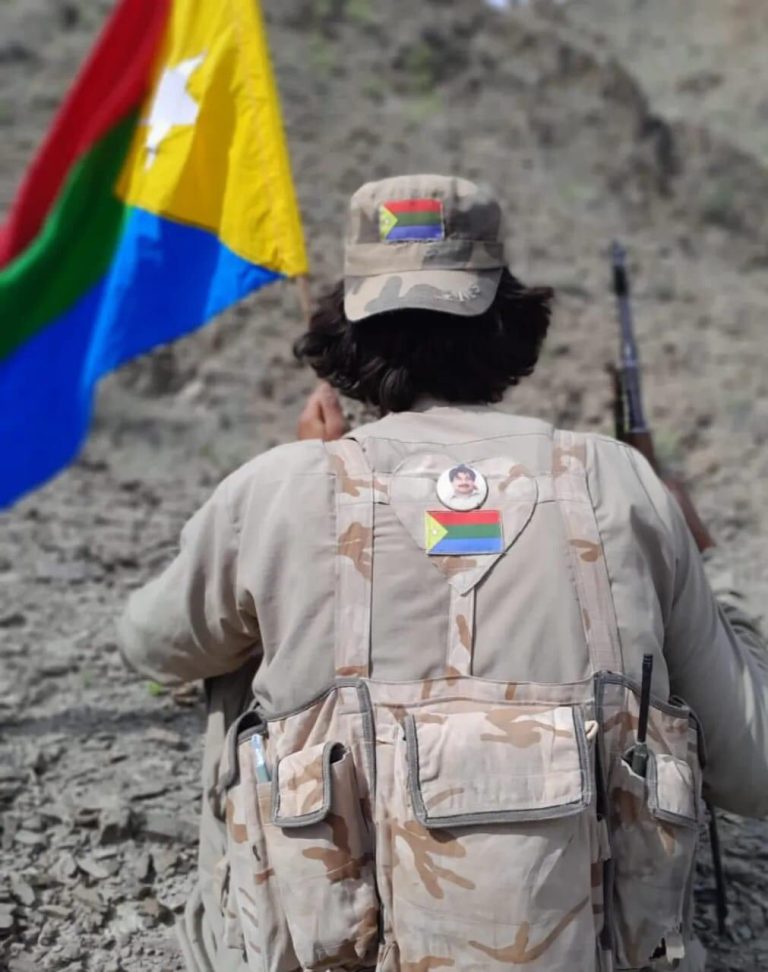
The Tehrik-e-Taliban Pakistan (TTP) has issued a strong condemnation of the recent forced displacement of residents in the Badr region and surrounding areas of South Waziristan, reportedly carried out by the Pak military.
The military’s actions have resulted in the brutal eviction of local communities from their homes. Mohammad Khurasani, the TTP spokesperson, criticized these operations, saying that they were motivated by financial gains, specifically to secure foreign aid in the form of dollars.
Khurasani also questioned the rationale behind the military operations, highlighting the frequent claims by the Interior Ministry, Foreign Ministry, and the Inter-Services Public Relations (ISPR) that TTP’s Mujahideen are based in Afghanistan. “If our fighters are in Afghanistan, then against whom are these operations being conducted in South Waziristan?” Khurasani asked. He asserted that the presence of TTP fighters within South Waziristan and other parts of Pakistan is evident, as they are engaged in what they consider a sacred struggle against the country’s security forces. He dismissed the occupied-government’s claims of the TTP’s presence in Afghanistan as false and misleading.
The TTP spokesperson further warned the military that such oppressive actions would only deepen public resentment against them. He called on the local communities to resist the military’s demands, protect their homes and families, and prevent the military from violating the sanctity of their properties.
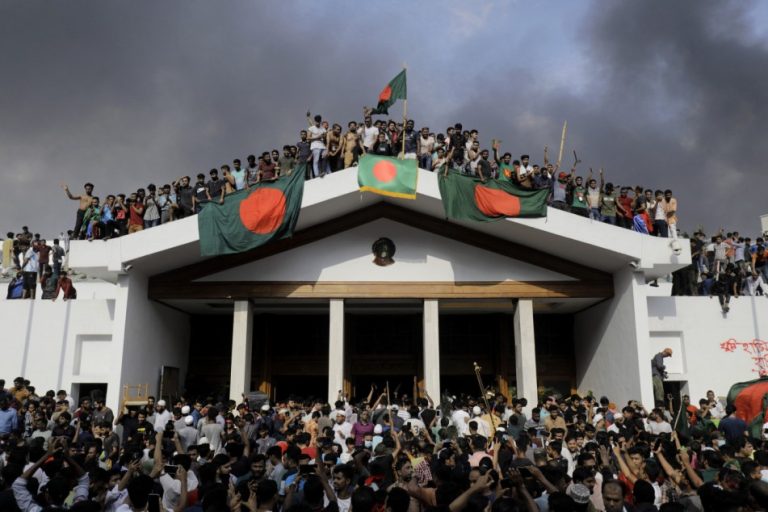
Following weeks of deadly protests which was started by students against the job quota reservation system that led to the resignation of Bangladesh’s Prime Minister Sheikh Hasina, the South Asian country is now under an interim government led by Nobel Peace Prize-winning economist Muhammad Yunus. Veteran Bangladeshi journalist Md. Sazzad Hossain who served as Acting Editor at Provati Khoborand shares his insights with Sabita Mishra, Special Correspondent of News Intervention on the challenges and opportunities ahead for the new administration.
Sabita Mishra: The interim government is tasked with restoring the independence of key institutions like the judiciary, civil service and media that were heavily politicized under the Hasina government. What are the biggest challenges in depoliticizing these institutions, and what specific steps should the interim administration take?
Md. Sazzad Hossain: I am not very optimistic about the depoliticization of the judiciary, civil service and media in Bangladesh. It appears to be a nearly-impossible task for the interim government led by Nobel Peace Laureate Dr. Muhammad Yunus as the three key sectors — the judiciary, civil service and the media – witnessed politicization not only during the past 15 years of Sheikh Hasina’s rule . . . the culture of politicization began with the country’s independence from Pakistan back in 1971.
The ousted Hasina government, however, set the worst examples during the past 15 years. Both in the judiciary and in the civil service, she placed the people of her choice in the key positions. The media experienced the worst possible level of politicization thanks to the direct influence of the Prime Minister’s Office in placing pro-Awami League journalists in the top management-level positions of all media outlets. Instances are also there that a good number of television channels, newspapers and online news portals, owned by Awami League leaders or pro-AL businessmen, even did not accept any news that would go against the interest of the government.
Politicization has been institutionalized here in Bangladesh.Even five or six of the incumbent interim government advisers have proof of their bias towards particular political parties. So how can you expect depoliticization? The interim administration can only try to streamline the sectors by bringing changes in the top positions. To get these sectors depoliticized you have to take at least a 10-year plan. Meanwhile, use of social media platforms by judges and their involvement with any type of organization should be restricted strictly while there should a complete ban on doing politics by civil servants and professionals like journalists, physicians and teachers.
Sabita MIshra : How concerned are you about the potential for violence and reprisals targeting Awami League members and supporters in the aftermath of Hasina’s resignation? What role can the military play in preventing such retaliatory attacks, and what are the risks of this involvement?
Md. Sazzad Hossain: The situation is much better now. Normalcy has returned to every sector. As soon as Hasina fled to India on August 5, people went unruly and resorted to violence targeting Awami League leaders and activists and their establishments, the police personnel, police stations and police vehicles to demonstrate the impact of the sheer anger and wrath the Hasina-led government ‘purchased’ over the past 15 years in exchange for the unbridled corruption and nepotism, ruthless torture of opposition activists, holding almost voter-less sham elections, politicization of all sectors, media gagging, snatching away the freedom of expression, plundering of banks and other financial institutions, laundering of hundreds of thousands of crores of taka (Bangladesh currency) and, in particular, using the police as a force to establish an absolute reign of terror across the country.
Here I want to mention that the violent activities were not a one-sided affair. Some mainstream Bangladeshi media outlets reported that AL activists also attacked their political rivals and went on the rampage at different places. The Army has so far done a very good job in preventing the recurrence of such incidents. They gave shelter to 626 ‘controversial’AL former ministers, leaders, judges, bureaucrats, police personnel and some of their families inside the cantonment to ‘save them from the people’s wrath’. Now the military should start returning to barracks as police personnel, barring some highly controversial senior officials, have already joined work and all 639 police stations across the country resumed operations.
Sabita Mishra: How significant is the role of student leaders who spearheaded the protest movement, and how can the interim government ensure their voices are meaningfully represented, given their lack of formal political experience? What are the risks of them being sidelined by more established political actors?
Md. Sazzad Hossain: Surely the student coordinators, who spearheaded the movement, had played and even now playing a pivotal role in the ouster of the Sheikh Hasina’s government. The interim government, especially its head Dr. Yunus, is giving priority to the two advisers picked from among the coordinators of the anti-discrimination student movement. Nahid Islam and Asif Mahmud, who were inducted into the interim government with the charge of one ministry each, were later given the responsibility of two more important ministries in an apparently bold move by Dr Yunus that displays his intention to put aside the lack of formal political experience of the two young university students.
The interim government has so far focussed more on the students’ demands and causes compared to other established political actors leaving little chance for them to be sidelined and their voices suppressed. Barring a few bold decisions, including removal of the representatives of all local government bodies, excepting those elected in union councils, the interim government has so far kept itself confined to some routine works belying the popular demand of taking immediate steps to hold the next general elections at the earliest. But the scenario will start changing with the government taking visible steps to hold the elections paving the way for established political actors to come to the limelight.
Sabita Mishra: Given Bangladesh’s strategic location and India’s historical influence, how might regional geopolitics shape the transition process? What are the risks of Bangladesh getting caught in a tug-of-war between India and China as it seeks to rebuild its democracy?
Md. Sazzad Hossain: In the present context, it will be a big challenge as well as a contentious issue for the Yunus-led government to deal with India and China as far as regional geopolitics is concerned. But I think that Dr Yunus will go by the Bangladesh’s foreign policy dictum “Friendship to all, malice towards none” leaving no room for other country/countries to act beyond diplomatic norms.
Despite that India’s role will be the key determining factor in this regard. There is every possibility that the regional geopolitics will get a new shape – from Indo-Bangla to Sino-Bangla — if India, to be specific Narendra Modi’s government, fails to warmly accept the ouster of Sheikh Hasina and tries to interfere on Bangladesh’s internal affairs. However, Modi’s warm relation with Hasina, her rivalry with Dr Yunus and his links with US may pave the way for China to strengthen its bonding with Bangladesh, and ultimately leave Bangladesh in a tug-of-war as you said.
Sabita Mishra: What are the potential long-term implications of this crisis for Bangladesh’s economic development, particularly its crucial garment export industry?
Md. Sazzad Hossain: I don’t find any scope of negative impact on the overall economic development, rather there is every possibility that the economy will rebound gradually. I firmly believe that before handing over power to an elected government, Prof Yunus will be able to recover the damages caused by Hasina’s government by guiding the economy towards its right direction.
The export-oriented garment sector faced challenges tougher than the current one at different times, especially during the COVID-19 coronavirus pandemic period when the factories remained closed for a long time. But during the recent movement production disrupted for as many as 15 days. So, there should be no long-term negative impact on the export-oriented garment sector as well as on the national economy.
Sabita Mishra : The resurgence of fundamentalist factions like Jamaat-e-Islami is seen in the wake of Hasina’s departure. What steps can the interim government take to prevent the rise of religious extremism?
Md. Sazzad Hossain: Sort of extremism – be it political or religious – should be dealt with an iron hand. The then government of Sheikh Hasina, in accordance with a decision made by the Awami League-led 14-party Alliance, on August 1 banned Bangladesh Jamaat-e-Islami, its student wing Islami Chhatra Shibir and all of its front organizations as political parties and entities under the Anti-Terrorism Act-2009. Just four days after its ban and immediately after the fall of Hasina’s government on August 5, Jamaat -e-Islami, along with other political parties excepting for the AL, civil society members and student representatives, was invited to a meeting convened by the Chief of Army Staff, General Waker-Uz-Zaman, to discuss the formation of interim government.
Although inviting Jamaat in the meeting surprised many, the party remained as a political partner or tool for both AL and BNP (Bangladesh Nationalist Party) since 1986. The Awami League first forged alliance with Jamaat in 1986 for taking part in elections during the autocratic HM Ershad regime, and again in 1995 for elections and movements against BNP government. Interestingly,BNP forged alliance with Jamaat in 1999 to wage movement against the then AL-government.
Therefore, the resurgence of Jamaat was obvious in the changed situation and the major political parties have to shoulder the responsibility for this. Also, other fundamentalist factions will reappear cashing in on the ongoing turmoil and it will be one of the biggest challenges for the interim government to prevent their rise. In this regard, the interim government, if necessary, has to be stringent and ensure that no person or party can do politics using religion as a tool.
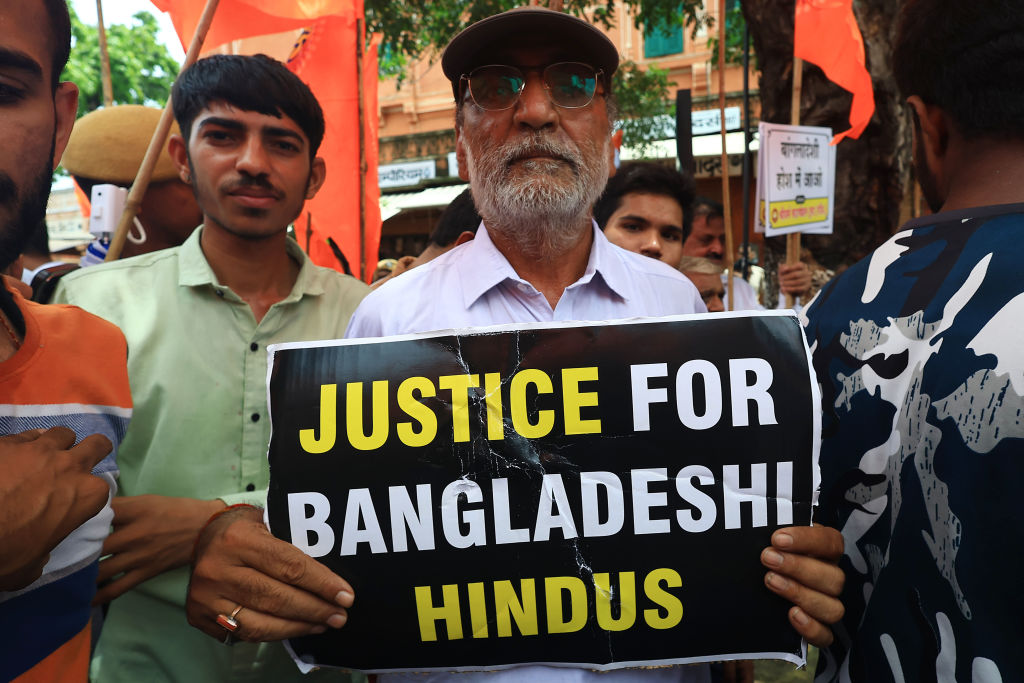
People are taking part in a protest march ‘Hindu Akrosh Rally’ over the violence against Hindus in Bangladesh after former Prime Minister Sheikh Hasina has resigned and fled the country amid violent protests over the government’s job quota system, in the walled city of Jaipur, Rajasthan, India, on August 14, 2024. (Photo by Vishal Bhatnagar/NurPhoto via Getty Images)
Sabita Mishra: The Hindus have traditionally supported the Awami League party led by the ousted Prime Minister Hasina. How might the rise of opposition forces like the Bangladesh Nationalist Party, with its alleged ties to hardline Islamist groups, impact the security and rights of Hindu communities going forward?
Md. Sazzad Hossain : The religious minority communities, the Hindu community in particular, were victims of targeted violence by BNP supporters after the 2001 general elections. On the other hand, at least 61 people — most of them Madrassa students — were killed and hundreds other were injured, mostly with bullet wounds, in a crackdown by the then Hasina government on the activists of Hefazat-e-Islam, an Islamic party, while they were holding a protest rally in Bangladesh’s commercial hub Motijheel on May 5 in 2013.
In March 2021, hundreds of members and supporters of the party were subject to arrest and torture for protesting a visit of Indian Prime Minister Narendra Modi to Bangladesh. People wearing long punjabis and keeping long beards, which in Islam calls Sunnahs, were subject to frequent torture and humiliation in the Muslim majority Bangladesh. All these are heinous acts… killing of and torture on people of any community and vandalism of their properties cannot be justified under any circumstance. Also, there is no scope to differentiate Hindu, Muslim, Christian or Buddhist as all are citizens of Bangladesh.
In the present context, as you wanted to know whether the Hindu community is safe and their rights are protected, I think everyone is safe and rights of every citizen irrespective of cast and creed are safeguarded. The recent attacks on some Hindus are neither communal nor religious, this is totally political to some extent. Many Muslims also came under attack which had no connection with religion. Most influential Muslim figures in the immediate past government also left the country or went into hiding to avoid people’s wrath.
Gana Bhaban, the ousted premier’s official residence, Bangabandhu Memorial Museum and houses of many ministers and advisers of the toppled government, AL and its alliance leaders were vandalized in an outburst of anger against the government. On the other hand, madrassa students joined volunteers at different places of the country to guard temples and other places of worship of the religious minorities.
Sabita Mishra: Beyond the current situation, what structural reforms or policy changes are needed in Bangladesh to better protect the rights and security of religious minorities like Hindus in the long run, regardless of which political party is in power?
Md. Sazzad Hossain: As a Muslim-majority country the state religion of Bangladesh is Islam, but the country’s constitution ensures equal status and equal right in the practice of the Hindu, Buddhist, Christian and other religions. Even after that if the religious minorities think that they need structural reforms and policy changes to better protect their rights and security, they can work on it and approach the government with their logical demands.
There are a good number of platforms of religious minorities, the largest one named “Hindu-Bouddo-Christian Okiya Parishad” (Hindu-Buddhist-Christian Unity Council), and they went to the government in many occasions with their various demands. Likewise, scopes are there for them to call on the interim government and raise their demands.
Sabita Mishra: What role does the CIA and other foreign elements played in the recent political upheaval in Bangladesh?
Md. Sazzad Hossain: I think overconfidence and stubbornness of Sheikh Hasina spelled the disaster for her as well as for her party and the government. Ruling a country for a long time usually makes the ruler a dictator to some extent and Sheikh Hasina was not an exception. Had Hasina accepted the students’ demand for revision of quota system in government jobs at the early stage and refrained from making derogatory comments on the agitating students, the situation would not take a turn for the worse and question of her resignation would not arise.
I think some anti-Hasina internal and external elements were the beneficiary of the student movement… there might have some provocations at the final stage of the movement, particularly when protestors came up with a one-point oust government movement.
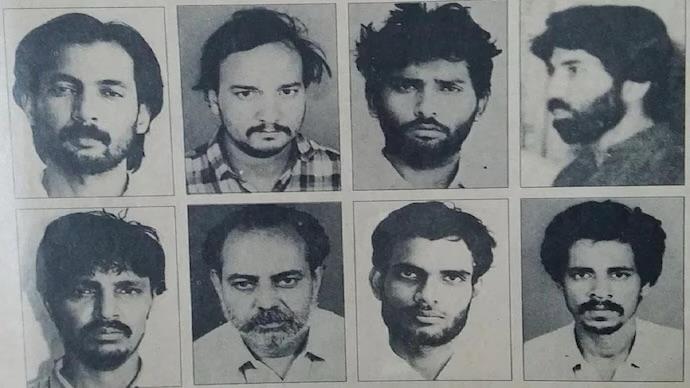
In a landmark verdict, six individuals involved in one of the largest sex scandals in India’s history, which erupted in Ajmer 32 years ago, have been sentenced to life imprisonment by the district court. Additionally, they have been ordered to pay a fine of Rs 5 lakh each. The convicted individuals include Nafees Chishti, Naseem alias Tarzan, Salim Chishti, Iqbal Bhati, Sohil Gani, and Syed Zameer Hussain. They were found guilty after a prolonged trial that spanned three decades. Twelve individuals were originally charged in connection with the Ajmer Sex Scandal of 1992.
Four other accused in the case have already been sentenced. The scandal implicated several individuals with political connections to the Congress Party. The main accused, Farooq Chishti, was the President of the Ajmer Youth Congress, while Nafees Chishti served as Vice President of the Ajmer Indian National Congress. Anwar Chishti was the Joint Secretary of the Ajmer Indian National Congress.
The Scandal
The scandal began with Farooq Chishti grooming and raping a female student from Sophia Senior Secondary School. He reportedly took objectionable photographs of the minor and threatened her to introduce other girls to him. These girls were then subjected to rape and blackmail.
At the time of the scandal, Farooq Chishti was the president of the Ajmer Youth Congress, and Nafees Chishti and Anwar Chishti held senior positions in the local Congress unit. Some of the accused were also Khadims (caretakers) of the Ajmer Dargah.
In April 1992, Ajmer was shocked by reports of the sexual exploitation of over 100 women aged 17 to 20, with some estimates suggesting up to 250 victims. Journalist Santosh Gupta’s report, published in Dainik Navjyoti, detailed how hundreds of schoolgirls were sexually exploited by the accused. The perpetrators recorded the assaults and used the footage to coerce the victims into bringing more girls.
The scandal’s reach extended to the daughters of prominent leaders in Ajmer, with a report headlined “Daughters of Big Leaders are Victims of Blackmail.” The accused were influential both financially and politically. Following the publication, efforts were made to destroy evidence and intimidate victims and their families into silence.
The involvement of influential Khadims from the Ajmer Dargah added to the scandal’s gravity.
Political and Administrative response
The scandal prompted a series of reports from Gupta, who revealed the CID’s prior knowledge of the issue and the involvement of Rajasthan’s then-home minister, Digvijay Singh, who had seen the obscene photographs before the scandal was made public. This led to heightened public outrage and pressure on the government.
Deenbandhu Chaudhary, editor of Navjyoti, acknowledged that local law enforcement had been aware of the scandal long before it was reported, but political interference had stalled investigations. The decision to publish the story was driven by a need to prompt action from the administration.
The state administration, led by then-Chief Minister Bairon Singh Shekhawat, took steps to address the scandal, including meeting with legal representatives and involving BJP leader Veer Kumar. The accused were eventually jailed under the National Security Act.
In 1992, the matter was transferred to the CID, leading to an FIR registered by Deputy Superintendent Hariprasad Sharma. The investigation, led by senior IPS officer NK Patni, uncovered the involvement of key figures including Farooq Chishti and Nafis Chishti, as well as others like photo studio manager Harish Tolani. Many victims had already committed suicide, and only a few continued to pursue the case.
Exploitation by the media
The scandal was further compounded by exploitation from local tabloids, which blackmailed victims with explicit images, demanding money to keep the photos hidden. Madan Singh, chief editor of ‘Lehron Ki Barkha,’ was known for blackmailing victims before being assassinated in 1992. His sons later avenged his murder in January 2023.
In 1998, some accused were sentenced to life imprisonment, but four were acquitted by the Rajasthan High Court in 2001. By 2003, the sentences for four others were reduced to 10 years. Out of 250 reported victims, only 12 filed complaints. It took 32 years for the remaining six culprits to be punished, with further appeals possible in higher courts. Farooq Chishti, initially declared mentally unstable, was convicted by a fast-track court in 2007. The Rajasthan High Court upheld this conviction in 2013, reducing the life sentence to the time already served.
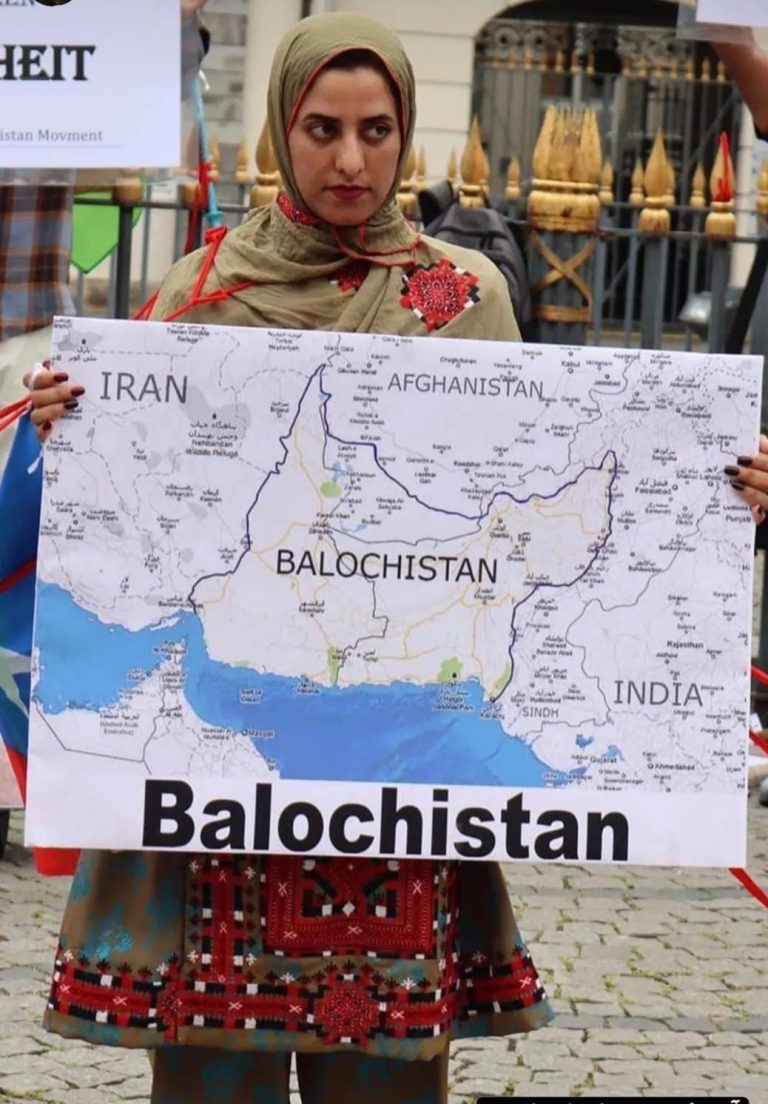
The Baloch Human Rights Council (BHRC) has raised alarm over Pakistan’s ongoing exploitation of occupied-Balochistan’s resources and the increasing encroachment by China, according to a written statement submitted to the United Nations Secretary-General through the Center for Gender Justice and Women Empowerment. The BHRC has called for immediate intervention by the UN to address the severe economic and humanitarian crises facing the region, as discussed in the 57th session of the UN Human Rights Council.
The statement points out that despite POB’s wealth of mineral resources and its valuable coastline, the region remains economically backward. It suffers from poor infrastructure, inadequate educational facilities, and insufficient healthcare services, resulting in widespread poverty and unemployment. The statement highlights that Pakistan’s systematic exploitation of POB’s natural resources, combined with China’s growing colonial involvement, has intensified these issues and imposed unprecedented suffering on the local population.
“Pakistan has handed over strategic control of the coastal city of Gwadar to China, enabling the activation of major projects such as the China-Pakistan Economic Corridor (CPEC). While these projects are marketed as development initiatives for the Baloch people, they primarily serve Pakistan and China’s economic and strategic interests, offering minimal benefit to the local population. The rollout of CPEC has caused large-scale displacement, environmental degradation, and heightened concerns about the erosion of Balochistan’s cultural identity, demographic balance, and autonomy,” the statement said.
BHRC Demands UN Action
The BHRC also said that China has extensively exploited POB’s resources, depleting valuable minerals such as gold, platinum, and uranium from Chagai District. In Gwadar, China has developed a deep-sea port and an international airport, surrounded by extensive fencing that has effectively converted some parts of occupied-Balochistan into restricted zones for the local people. The BHRC condemns the Pak military’s forced displacement and destruction of hundreds of villages to secure the CPEC route, resulting in the internal displacement of approximately one million Baloch residents.
The BHRC stresses that CPEC is not a developmental project but rather a “corridor of death and destruction” for the Baloch people. It represents the exploitation of resources through military aggression and stands as a modern example of colonialism. This exploitation and oppression are seen as direct violations of the United Nations Charter, which condemns all forms of colonialism.
“BHRC urges the United Nations to take immediate and decisive action to end the colonial exploitation of Balochistan’s resources and to restore the rights and dignity of the Baloch people,” the statement concludes.
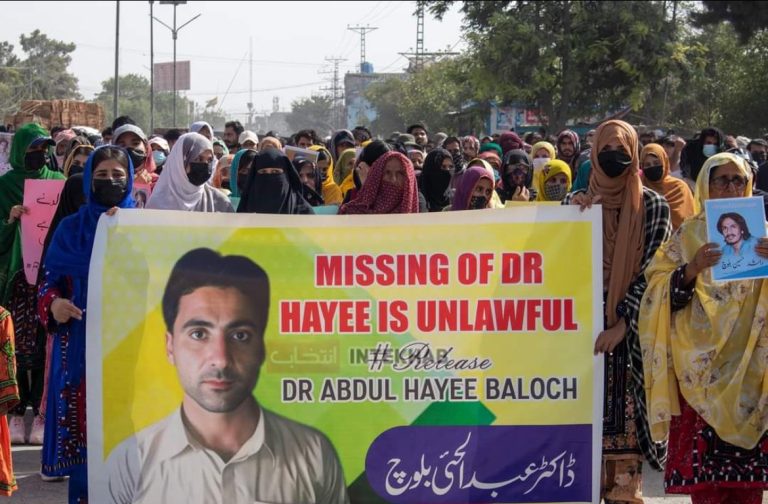
A rally and protest demonstration were held in Quetta by the family of Abdul Hay Baloch to voice their opposition to his forced disappearance.
On Tuesday, the family of Dr. Abdul Hai Baloch, a resident of Awaran, organized a rally starting from the University of Balochistan. The procession made its way through various roads and reached the Quetta Press Club, where the relatives of the missing individuals expressed their grievances.
The rally saw significant participation, including relatives of other forcibly disappeared persons. The demonstrators carried photographs of the missing individuals and chanted slogans condemning the forced disappearances.
During the rally, Bakhtawar Baloch, the sister of Dr. Abdul Hai Baloch, addressed the crowd, saying that her brother was forcibly disappeared by Pak Army forces on June 1, 2024. She said that despite three months having passed, there has been no information regarding his whereabouts.
Bakhtawar Baloch highlighted that her brother is an occupied-government employee working as an OT operating assistant at Awaran District Hospital. She said that the Pakistan security forces have abducted him from his clinic and demanded that if there are any allegations against him, he should be presented in court. She further demanded that if there are no charges, her brother should be released to spare the family further distress.
Additionally, the protest included relatives of other individuals who have been victims of forced disappearances in Pak-occupied-Balochistan. They called on the occupied-authorities and officials to bring their loved ones back into the public eye.
The protesters also criticized the Pak Army’s offer of monetary compensation in exchange for the recovery of their loved ones, describing it as an insult to their suffering. They have been struggling for years for the return of their missing family members and urged the occupied-authority to provide justice if it cannot offer anything else.
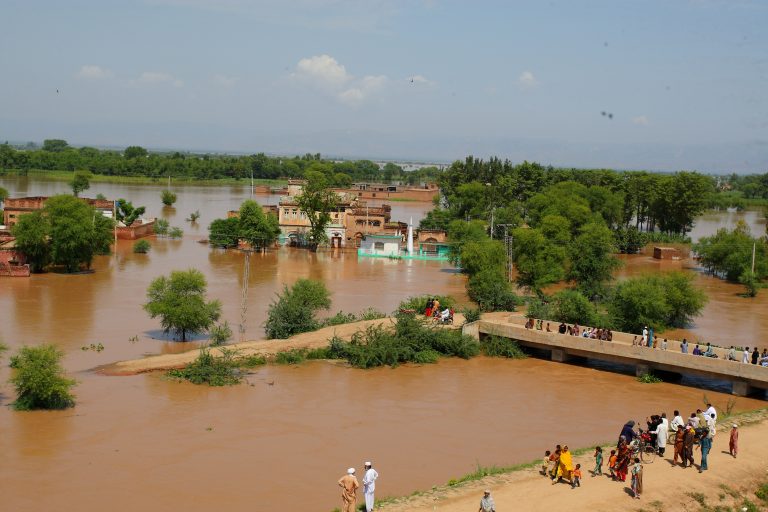
Flash floods have wreaked havoc in Ishokman Valley, located in northern Pakistan-occupied Gilgit-Baltistan (PoGB), leading to extensive damage and disruption across multiple regions.
The recent melting of the Badswat Glacier has resulted in severe damage. The floods have destroyed a temporary bridge and approximately 1,000 feet of road infrastructure in Badswat. This has isolated the areas of Ganjabad, Borth, Bazar Katu, Yazben, and Mutramdan by severing land connections between Badswat and Mutramdan.
As a result, around 400 households in these regions are facing significant difficulties in accessing essential services, including transportation and education for children. The current crisis has been exacerbated by drastic climate changes and inadequate local administrative response by the occupied-authorities.
Other villages in Ishokman, such as Center Kot and Faizabad Bala, have also suffered extensive damage. Land connections have been disrupted at three different locations, with the bridge in Kot Pain facing the risk of complete erosion by the river. Five residential houses have been damaged, and four shops and cattle sheds have also been partially affected. Major irrigation channels in Ishokman Proper have been damaged, raising concerns about the potential drying up of fertile lands due to interrupted water supply.
This disaster follows similar issues previously experienced in the Hunza Valley, where rapid glacier melting and river overflow destroyed numerous households and disrupted livelihoods. The lack of an effective local administrative response left many residents in distress.
Similar flood-like conditions were observed earlier on the outskirts of the Skardu and Shigar districts. However, inadequate rescue and assistance efforts from local authorities resulted in the destruction of private property and homes, particularly affecting poorer individuals.
In a recent crackdown on Sindhi political activists, police have arrested six individuals, including Javed Mangrio, Zahid Chano, and Sanwal. Reports indicate that the arrested activists were subsequently injured by police. Two others, Sajjad Chana and Farooq Abbasi, remain unaccounted for. They have been abducted by the Pak Army.
In a distressing video statement, Zahid Chano revealed that police had shot him in the leg, causing severe injury. Chano expressed skepticism about the Sindh occupied-government’s willingness to address their grievances but expressed hope that higher authorities would intervene.
The incident underscores the broader issue of systematic persecution faced by Sindhis, which includes enforced disappearances, extrajudicial killings, and the suppression of religious minorities. The plight of Sindhi Hindus has been exacerbated by the looting of local resources, further compounding their suffering.
Notably, this crackdown is not an isolated incident, earlier Sindhi nationalist and teacher Hidayat Lohar in Larkana was brutally killed. Lohar was murdered by elements of the Paki establishment while en route to his school, highlighting the ongoing violence and repression against those advocating for Sindhi rights.
The Pakistan Army’s brutal tactics against various ethnic groups have been a recurring issue, aiming to stifle dissent and suppress voices of opposition. The recent attack on peaceful activists is a stark reminder of the mercilessness of the Army and the urgent need for international attention and intervention to address these human rights abuses.
Shaukat Nawaz Mir, a prominent local leader from Pakistan-occupied Jammu Kashmir (PoJK), has raised alarm over the persistent inconsistencies in the region’s school curriculum, blaming the education department for its ambiguity.
Mir’s concerns echo a growing frustration among parents and students, who are struggling with the unclear curriculum that hinders both current academic progress and preparation for higher education.
“This issue has been ongoing for at least three years,” Mir said. “Previously, PoJK’s education system was governed by multiple education boards, including the Federal Board of Intermediate and Secondary Education, the Punjab Province education board, the Elementary & Secondary Education Department of Khyber Pakhtunkhwa, and the PoJK board.”
He further explained that the lack of a standardized education system led to schools using textbooks at their own discretion, with some boards, such as the Mirpur board, expressing dissatisfaction with the quality of the books.
PoJK Education System Under Fire
Following a court order, a decision was made to standardize the educational material, allowing only textbooks with No Objection Certification (NOC) from the PoJK board. However, Mir criticized the decision for its lack of clarity on the specific content to be taught in schools.
“I don’t understand why the education department isn’t concerned about the time being wasted for our children and the jeopardization of their futures,” Mir said. “The academic session is nearing its end, yet there is still no consistent pattern in PoJK’s textbooks. Parents are left confused about their children’s studies, and students preparing for higher education are uncertain about their study materials. Even the court’s decision has been vague and not straightforward. This lack of clarity, along with delays in book production and supply, is causing significant chaos.”
Additionally, a local businessman from PoJK highlighted the broader implications of the curriculum confusion. “The disarray among education boards is also affecting the business community,” he said. “We are stuck with large stocks of textbooks from various boards—federal, PoJK, and Mirpur. This uncertainty is not only problematic for students but also for us as we struggle to manage our inventories and predict if they will sell.”
The ongoing issues in PoJK reflect a broader neglect by the occupying authorities. The Pakistan Army’s lack of genuine concern for the people of PoJK is evident, as they prioritize exploitation and use of the region against India over addressing local crises. Essential infrastructure, including education and healthcare, is often overlooked by the occupied government, leading to widespread dissatisfaction.
While announcing Rawalpindi’s decision to try its own former spymaster Lt Gen Faiz Hameed [Retired] by a Field General Court Martial [FGCM], Pakistan Army’s media wing Inter Services Public Relations [ISPR] clarified that the same was done in compliance of orders from the Supreme Court “to ascertain correctness of complaints in Top City Case made against Lt Gen Faiz Hameed (Retd).”
The statement added that the accusations against the former Army spy chief were found to be true by a court of inquiry and “Consequently, appropriate disciplinary action has been initiated against Lt Gen Faiz Hameed (Retd), under provisions of Pakistan Army Act.” ISPR also mentioned that “multiple instances of violation of Pakistan Army Act [by Lt Gen Hameed] post retirement have also been established.”
ISPR’s failure to provide details of the nature of violations allegedly committed by the former Director General [DG] of Inter Services Intelligence [ISI] after his retirement has naturally raised suspicions that some other considerations were at play and the decision to court martial him has a political angle. This apprehension has gained further strength as former Prime Minister Imran Khan’s proximity to Lt Gen Hameed is no secret and leaders of the ruling parties have said as much in no uncertain terms.
Dawn has rightly opined that the “armed forces should dispel the impression being created in some quarters that the arrest is somehow a political one,” and astutely pointed out that “It ought to be asked why it took so long to investigate the former spy chief, especially when the armed forces claim to have deployed very strict internal controls to ensure accountability.”
Rawalpindi’s Power Play
With ISPR’s subsequent announcement that three retired Army officers have also been taken into military custody “in connection with the FGCM proceedings [against Lt Gen Hameed] for their actions prejudicial to military discipline,” the plot only gets thicker, because this section of The Pakistan Army Act is meant to be used only in cases where crime the committed doesn’t fall within purview of any specified offence.
However, by adding that “Further investigations of certain retired officers and their accomplices for fomenting instability at the behest of in collusion with vested political interests are continuing,” ISPR has left no room for any doubts. It’s evident that Rawalpindi is clearly trying to politically emasculate Khan completely by spinning its narrative of an anti-national nexus between Khan and his Pakistan Tehreek-e-Insaf [PTI] party and Lt Gen Hameed along with his coterie of retired Army officers.
That Pakistan Army chief Gen Syed Asim Munir has an axe to grind with both the PTI chief and former DG ISI is no secret-the former was responsible for his unceremonious ouster from the prestigious DG ISI appointment while the latter was the one Khan wanted for this job. The May 9 anti-Army riots in Pakistan gave Gen Munir an excellent opportunity to kill two birds with one stone, and he hasn’t wasted it.
There can be no two views that the current political crisis in Pakistan has been precipitated by Gen Munir’s reckless attempt to replicate his predecessor Gen Qamar Javed Bajwa’s stratagem of installing a “selected” prime minister. This he did by firstly manipulating the elections using every trick in the book to discredit Khan and the PTI party, followed by vote rigging and even manipulating results in favour of PML-N and PPP in several places.
Pakistan’s Military Establishment
The Friday Times editor-at-large Raza Rumi not only declared these elections “farcical,” but also warned that “The new coalition government led by Pakistan Muslim League-Nawaz[PML-N] and supported by the Pakistan People’s Party [PPP] will be haunted by a deepening economic crisis and issues of legitimacy,”– a prediction that’s come true.
But Rumi went wrong on one issue. Mentioning the fact that “the PTI had already declared on numerous occasions that he is willing to talk,” TFT editor-at-large had reckoned “that time may have arrived, and within a year or sooner, a negotiated settlement cannot be ruled out.” However, Gen Munir’s outright refusal to engage with Khan has foreclosed this constructive option that could well resolve the ongoing political crisis created by the Army chief himself!
Another related issue is the role played by the judiciary. It was the Supreme Court of Pakistan that directed the Top City Housing Scheme owner to seek remedy for his grievances against Lt Gen Hameed through relevant channels including the Ministry of Defence. This court order pertains to a case filed by the plaintiff in November 2023 regarding an incident that purportedly occurred on May 12, 2017.
The Supreme Court’s decision to accept the petitioner’s plea even after a lapse of more than six years is indeed commendable. However, what defies comprehension is the apex court’s order of September 13, 2023 in which it cited the delay factor as a reason that in itself was good enough to merit rejection of an appeal.
Political Vendetta
This case pertains to an appeal filed by two Pakistan Army officers in 2000 against their conviction and prison term of four years awarded by a FGCM in 1996 on legal and technical grounds. The two officers along with 40 others were found guilty of conspiring to overthrow the Benazir Bhutto Government and eliminate the Army’s top by attacking the corps commanders’ conference venue where they were scheduled to congregate on Sep 30, 1995.
On September 12, 2023, the Supreme Court rejected the issues raised by the petitioners on merit, while observing that the petitioners “could not give sufficient reason as to why they remained silent for years and did not invoke the constitutional jurisdiction well in time, therefore, on this score alone, their constitutional petitions are liable to be dismissed.” [Emphasis added].
Since the revision petition was filed in 2000, the convicted officers would have by then either already completed or were near completing their sentences, and so, what they were seeking was obviously the restoration of their honour and undoing the ignominy of being branded mutineers. So, while the Supreme Court graciously admitted the Top City Housing Scheme owner’s plea after a lapse of more than six years, why did it comment adversely on a four year delay by two aggrieved Army officers?
Major Ghwaram Baloch, the spokesperson for the Balochistan Liberation Front (BLF), has issued a stern warning to the timber mafia operating in the Dazht region, urging them to halt their deforestation activities immediately or face severe repercussions. In a recent statement, the BLF emphasized that individuals involved in illegal logging could face arrest, hefty fines, and both financial and personal harm.
The BLF’s warning comes after a close monitoring of ongoing deforestation activities. The organization has identified all parties involved, including non-local contractors and influential backers. According to Major Baloch, the BLF has repeatedly asserted that it will not tolerate the exploitation of occupied-Balochistan’s resources, deforestation, large-scale commercial timber use, or wildlife hunting. The timber mafia has been given a final warning to cease their criminal activities without delay.
The spokesperson revealed that public complaints have highlighted extensive deforestation in areas such as Kanchti, Basholi, Kohk, and Kadan, extending up to Jan Muhammad Bazaar. Both non-local and local contractors have been engaged in deals for tree cutting. Major Baloch emphasized that occupied-Balochistan’s forests are a national heritage, not the property of any individual or tribe. The BLF will not allow any part of these forests to be cut down for commercial purposes. He warned that those treating Balochistan as abandoned and turning this illegal activity into a ‘business’ should remember that there are institutions defending Baloch national interests.
Timber Mafia in Dazht
The BLF, representing the collective strength of the Baloch people, aims to use this power in accordance with public aspirations for Baloch national interests. The organization expressed its desire that this national power not be diverted or fragmented. In light of this, the BLF has called upon all conscious individuals to unite in the protection of Pak-occupied-Balochistan’s forests, wildlife, and environment to avoid the necessity of using force to halt these activities.
Major Baloch highlighted that climate change presents a global challenge, with visible effects in POB evident in annual flood events during the rainy season. He warned that deforestation will exacerbate these issues. Environmental experts have observed a significant decline in tree planting within POB. The Pak military, he said, is also involved in burning forests and acts as a major patron of those engaged in deforestation.
The BLF concluded with a final warning to the timber mafia: cease deforestation activities immediately, or face accountability for financial and personal damages.
We use cookies on our website to give you the most relevant experience by remembering your preferences and repeat visits. By clicking “Accept All”, you consent to the use of ALL the cookies. However, you may visit "Cookie Settings" to provide a controlled consent.
This website uses cookies to improve your experience while you navigate through the website. Out of these, the cookies that are categorized as necessary are stored on your browser as they are essential for the working of basic functionalities of the website. We also use third-party cookies that help us analyze and understand how you use this website. These cookies will be stored in your browser only with your consent. You also have the option to opt-out of these cookies. But opting out of some of these cookies may affect your browsing experience.
Functional cookies help to perform certain functionalities like sharing the content of the website on social media platforms, collect feedbacks, and other third-party features.
Performance cookies are used to understand and analyze the key performance indexes of the website which helps in delivering a better user experience for the visitors.
Analytical cookies are used to understand how visitors interact with the website. These cookies help provide information on metrics the number of visitors, bounce rate, traffic source, etc.
Advertisement cookies are used to provide visitors with relevant ads and marketing campaigns. These cookies track visitors across websites and collect information to provide customized ads.
Necessary cookies are absolutely essential for the website to function properly. These cookies ensure basic functionalities and security features of the website, anonymously.
Cookie
Duration
Description
cookielawinfo-checkbox-analytics
11 months
This cookie is set by GDPR Cookie Consent plugin. The cookie is used to store the user consent for the cookies in the category "Analytics".
cookielawinfo-checkbox-functional
11 months
The cookie is set by GDPR cookie consent to record the user consent for the cookies in the category "Functional".
cookielawinfo-checkbox-necessary
11 months
This cookie is set by GDPR Cookie Consent plugin. The cookies is used to store the user consent for the cookies in the category "Necessary".
cookielawinfo-checkbox-others
11 months
This cookie is set by GDPR Cookie Consent plugin. The cookie is used to store the user consent for the cookies in the category "Other.
cookielawinfo-checkbox-performance
11 months
This cookie is set by GDPR Cookie Consent plugin. The cookie is used to store the user consent for the cookies in the category "Performance".
viewed_cookie_policy
11 months
The cookie is set by the GDPR Cookie Consent plugin and is used to store whether or not user has consented to the use of cookies. It does not store any personal data.