Home Blog Page 62

Quetta: Protesters in Quetta decry genocide & enforced disappearances by Pak Army

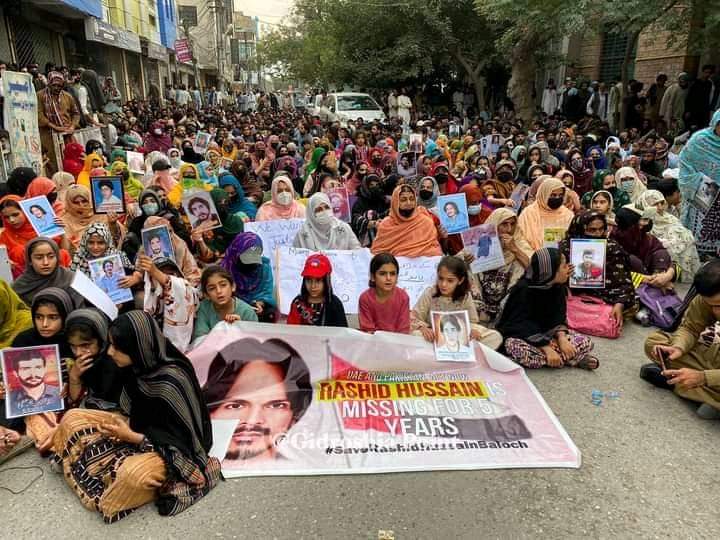
A rally was held in Quetta, the capital of Pakistan-occupied Balochistan, on Sunday by the family of Rashid Hussain, who has been missing for over five years. The protest was joined by a large number of political activists and families of other forcibly disappeared persons, highlighting the ongoing crisis of enforced disappearances in the region.

Participants carried pictures of their missing loved ones and banners, chanting slogans against enforced disappearances and the genocide of the Baloch people.

Rashid Hussain’s mother, who has been fighting for her son’s return, revealed that her son was arrested by secret agencies of the United Arab Emirates on December 26, 2018, and subsequently transferred to Pakistan. She said that her son was forcibly disappeared from the UAE at the behest of the Pakistan Army, with both Pakistan and UAE intelligence agencies were involved in the abduction.

Ongoing Crisis of Enforced Disappearances

For the past five years, Rashid Hussain’s family has been seeking justice, approaching courts and commissions tasked with investigating missing persons. However, instead of finding justice, they have faced harassment, with their legal cases being dismissed by the courts. The situation remains grim, as the High Court recently halted hearings on their case and postponed it indefinitely.

The family has made an urgent appeal to human rights organizations and the international community, urging them to question the Pakistan authorities about Rashid Hussain’s whereabouts and to help bring an end to their prolonged agony.

Meanwhile, another enforced disappearance was reported in Awaran district, where Khan Muhammad, son of Wahid Bakhsh, was taken into custody by the Pakistan military on August 15 from the Jhao Kohru area. His family, who has received no information about his whereabouts, is appealing to political, social, and human rights organizations to assist in his recovery.

These incidents are part of a disturbing pattern of enforced disappearances in Pakistani-occupied Balochistan, where such abductions and extrajudicial actions have been used as tools of oppression since the region’s forcible capture in 1948. While the area’s resources have been exploited, the local population continues to face severe human rights abuses, including enforced disappearances, marginalization, and extrajudicial killings, as a means of maintaining control over the Baloch community.

PoJK activist condemns Pakistan for no development in occupied regions

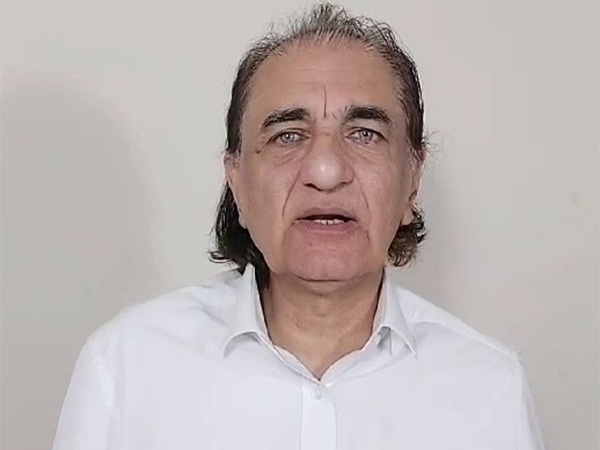
Amjad Ayub Mirza, an activist from Pakistan-occupied Jammu and Kashmir (PoJK), released a statement on Thursday highlighting the severe developmental challenges plaguing the region. He accused Pak occupied-government of deliberately keeping PoJK underdeveloped to maintain control over the local population, thereby perpetuating systemic abuses without facing resistance.

Mirza’s statement harshly criticized the governance in PoJK, asserting that the Muzaffarabad Legislative Assembly functions merely as a puppet controlled by Pakistan’s home ministry and the Inter-Services Intelligence (ISI). Despite the region’s pressing needs, Mirza said, there has been no significant effort to stimulate economic growth or improve infrastructure.

The region remains economically and infrastructurally stagnant, with no progress in industrial development or tourism, sectors that are tightly controlled by Pakistan’s military forces. Mirza also highlighted the dire state of infrastructure in PoJK, pointing out the frequent power outages that can last up to 23.5 hours a day. He questioned how any industry could thrive under such conditions and decried the acute shortage of clean drinking water.

PoJK’s Grim Reality

Residents are often forced to rely on river water, despite the region’s abundant natural water resources, exposing them to significant health risks. Additionally, Mirza condemned the poor state of roads in both PoJK and Pakistan-occupied Gilgit-Baltistan (PoGB), citing numerous fatal accidents resulting from unsafe road conditions.

“The condition of roads is pathetic. People often die from falling into deep valleys because the government has failed to build safe roads in PoGB and PoJK,” Mirza said, describing the hazardous infrastructure. He also criticized the healthcare system, saying that many hospitals lack basic amenities, qualified doctors, and essential medications, with military hospitals being the only facilities properly maintained.

The educational sector fares no better, according to Mirza, with government schools and colleges in a deplorable state. Many institutions suffer from a shortage of classrooms, teachers, and resources, leaving students with limited educational opportunities. Private schools, meanwhile, are often financially out of reach for average families.

Pak Army kills seven TTP militants in Kurram operation

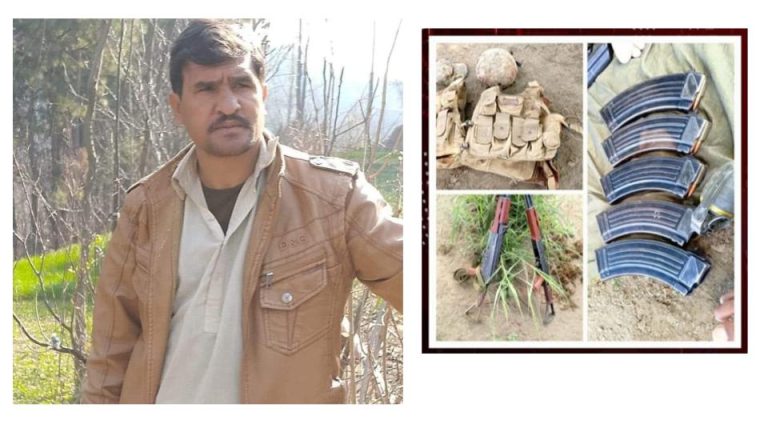
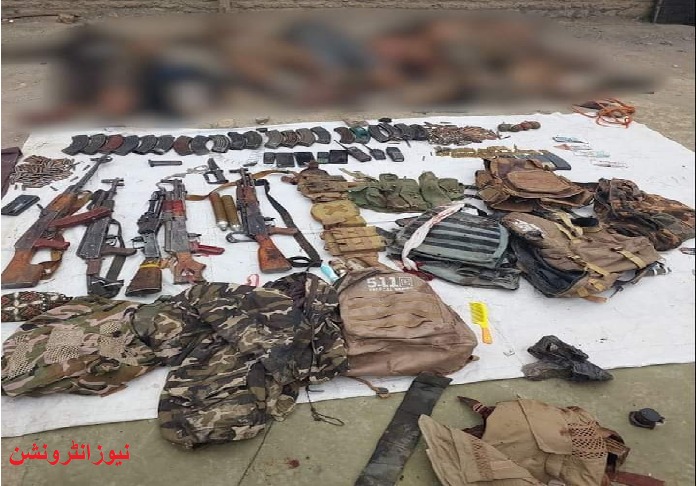
In a significant operation, Pakistan security forces have eliminated seven militants belonging to the banned Tehrik-e-Taliban Pakistan (TTP) in the Kurram district.

Acting on intelligence, the security forces launched an operation in the area, resulting in the deaths of seven TTP militants and the injury of five others. A substantial cache of weapons and ammunition was also seized during the operation.

Reportedly, these militants had been terrorizing the region, instilling fear among the residents and extorting money. Those who refused to comply with their demands were reportedly shot.

This operation marks a significant blow to the TTP’s activities in the region, where the group had been actively involved in spreading terror and violence.

Lahore High Court orders police to locate abducted YouTuber Aun Ali Khosa

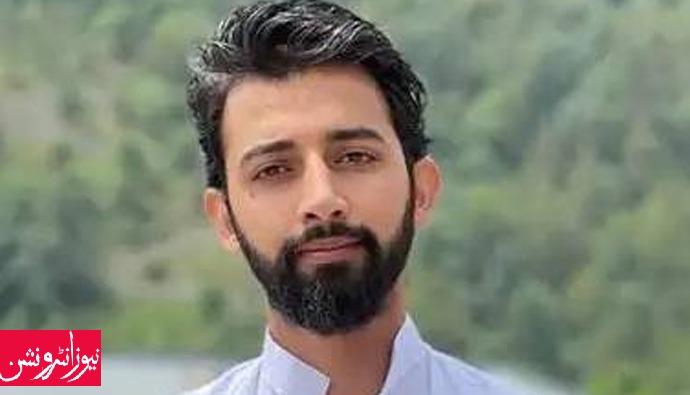
The Lahore High Court (LHC) has instructed the police to locate the missing YouTuber and artist Aun Ali Khosa by August 20. The court’s directive comes amidst concerns following Khosa’s abduction by unidentified armed men late Wednesday night.

A petition filed by Khosa’s wife, Binish Iqbal, says that her husband is being held unlawfully by law enforcement authorities. The petition raises fears for Khosa’s safety and suggests that he may be a victim of enforced disappearance.

Justice Shahbaz Ali Rizvi, who presided over the petition, has ordered the Capital City Police Officer (CCPO) Lahore to produce Khosa in court by the specified date.

Deputy Inspector General (DIG) Operations Lahore, Faisal Kamran, has said that the police had not received any formal complaints regarding Khosa’s abduction. He added that an investigation will be launched once a formal complaint is filed.

Lahore Abduction

The petition details that Khosa, a well-known digital content creator with 137,000 YouTube subscribers, was forcibly taken from his apartment by a dozen police officers and individuals in plain clothes. The armed men reportedly broke down his door, confiscated his phone, laptop, computer system, digital camera and departed in a Fortuner and a Black Revo double-cabin vehicle.

A solicitor who attempted to follow the abductors was manhandled and pushed into a Black Vigo before the vehicles drove away. The solicitor reportedly inquired about the reason for the detention but received no explanation.

On August 15, Khosa’s brother, Ali Sher Khosa, urged the public to pray for his safe return and to raise awareness about the incident. The Human Rights Commission of Pakistan (HRCP) has expressed concern over the possible connection between the abduction and Khosa’s work as a satirist. Khosa had recently released a song titled “Bill Bill Pakistan” on his YouTube channel, which addressed issues of high electricity bills. The song has since been deleted.

The YouTuber is known for his satirical videos and criticism of the current occupied-government on social media. The HRCP has called for his immediate recovery, highlighting the incident’s troubling implications for freedom of expression in Pakistan.

BNM proclaims Abdul Khaliq a martyr after activist’s killing by Pak Army

The Baloch National Movement (BNM) has condemned the killing of Master Abdul Khaliq, a party member, by the Pak Army. In a statement released to the media, the BNM described Khaliq as a dedicated political activist engaged in social and political work under the party’s directives.

Master Abdul Khaliq, son of Dost Mohammad, was a resident of Cheeri Malar, Awaran. He was officially granted party membership in 2018, in accordance with the BNM constitution. The party highlighted his role as a committed supporter of the Baloch liberation movement and his efforts to assist fellow freedom fighters. As a staunch supporter for the Baloch freedom movement, Master Khaliq consistently stood at the forefront, aiding his comrades in the struggle for liberation.

The BNM reported that Khaliq was shot and killed by Pakistan forces on August 13, 2024, while working in his fields in Malar. The party has labeled him a martyr of the Baloch liberation struggle and paid tribute to his dedication and sacrifice.

Since its forcible annexation of Balochistan in 1948, the Pak Army has consistently employed military force to suppress the Baloch people’s struggle for independence. This oppressive occupation has led to decades of human rights abuses, including enforced disappearances, extrajudicial killings and widespread violence against civilians.

Pak Army carries out helicopter operations in Quetta

Pak Army helicopters have continued their flights over the outskirts of Quetta, with ongoing operations reported in the regions of Zargoon, Shaaban, Suresh, Wali Tangai and Tor Shar since Friday.

Local authorities have not yet provided details about the nature or purpose of these flights. Additionally, regional sources have reported that shelling occurred in the area on Saturday. However, there are no available details on the extent of any damage or casualties resulting from the shelling.

The situation remains under observation as local residents and officials await further information from the authorities.

Balochistan, home to several freedom fighter groups, has seen an increase in attacks on the Pakistan Army. These groups have been actively opposing the brutality, oppression of the Pak Army and the China-Pakistan Economic Corridor (CPEC) have further fuelled discontent.

The frequency of attacks has risen following the Pak Army’s attempt to celebrate August 14 as Independence Day, aiming to project an image of peaceful annexation of Balochistan in 1948—a narrative contested by Baloch community. In response, there have been protests, marches and attacks on Paki establishments to counter this portrayal. The Army’s helicopter activity appears to be an attempt to control the escalating situation caused by the Baloch freedom fighters.

Pak Army opens fire on peaceful protestors in north Waziristan

The Punjabi Pak Army and Frontier Corps (FC) forces have fired upon peaceful protestors in North Waziristan, a region known for its rich deposits of metals and minerals. The incident left several people injured, including two members of the Pashtun Tahafuz Movement (PTM).

In the Dossali area of North Waziristan, the military and Frontier Corps (FC) detained several locals during the previous night. When residents united in protest on Saturday, demanding the release of those detained, the Punjabi Pak Army reportedly opened fire on the crowd, resulting in numerous injuries.

The incident follows the arrest and subsequent release of many locals, which occurred after intense resistance from the community. North Waziristan has been under increased scrutiny as Marri Petroleum and the Frontier Works Organization (FWO) continue extensive extraction activities. Furthermore, the internet network in the area has also been shut down to facilitate these extraction operations.

The Punjabi Pak Army treats north Waziristan as its private domain due to the region’s abundant natural resources. The Pakistan Army is exploiting the resources of the Pashtun community, using tactics such as shelling and the placement of landmines to instil fear and silence any dissent. Rather than providing security, these actions are an effort to conceal the military’s exploitation of the area.

The Army is fostering terrorist entities within Pakistan and scapegoating the Pashtun community to divert attention from their own actions. The ongoing exploitation of resources in the Khyber-Pakhtunkhwa highlands is depriving local inhabitants of their rightful ownership.

Kalat DC penalizes officers absent from August 14 celebrations with notices

The Deputy Commissioner of Kalat has issued notices to district officers who failed to attend the August 14 Independence Day celebrations, demanding explanations for their absence. These officials, including engineers and education heads, have been instructed to provide reasons for their absence within three days.

The notice stated that the absence of these officers from the August 14 celebrations could be viewed as a neglect of national duties. The Deputy Commissioner warned that disciplinary action might be taken if satisfactory explanations are not provided.

Copies of the notice have also been sent to higher authorities in Quetta. This move has sparked discussions suggesting that the Baloch community’s absence from the event reflects broader discontent with the Pak Army. On the other hand, August 14 was declared as a Black Day for Pak oppressed communities

The Baloch community’s decision to abstain from the celebrations is a silent protest against the Pakistan Army’s long-standing exploitation of the region. The Baloch people have been vocal about their grievances, challenging the narrative that they are content with the current state of affairs. Instead, their absence is a stand against decades of oppression and the Army’s attempts to portray a false image of unity and satisfaction in occupied-Balochistan.

The notices issued by the Kalat DC are now being viewed by many as evidence of this underlying tension, with the community increasingly refusing to participate in a celebration of a freedom they have never truly experienced.

Nationwide strike by doctors to protest Kolkata doctor’s horrific rape & murder

In response to the brutal rape and murder of a 31-year-old trainee doctor at RG Kar Medical College in Kolkata, doctors across India have launched a nationwide strike. The Indian Medical Association (IMA) has called for a 24-hour withdrawal of non-emergency health services, starting from 6 a.m. today, to demand justice and improved safety for medical professionals.

While essential services and casualty units will remain operational, routine outpatient departments (OPDs) and elective surgeries have been halted. The strike, endorsed by the IMA, spans all sectors where modern medicine is practiced, underscoring the widespread anger and demand for action within the medical community.

The horrific incident, which occurred over a week ago, has sparked outrage not just within the medical fraternity but across the nation. Protests have erupted in various cities, with medical professionals and women’s groups voicing their concerns over the increasing violence against women and the failure of existing laws to provide adequate deterrence.

The situation remains tense as the Central Bureau of Investigation (CBI) intensifies its probe into the crime. Forensic experts from RG Kar Medical College have been summoned for questioning, and digital mapping of the crime scene is currently underway. The parents of the victim have reportedly provided the CBI with names of individuals they suspect may be involved, further complicating the investigation.

Protests are not limited to Kolkata. Resident doctors in Panaji, Goa, Ahmedabad, and Rajkot have also staged demonstrations, expressing solidarity with their colleagues in Kolkata. The IMA’s five-point demand includes the enactment of stronger legislation to protect doctors and hospitals, declaring hospitals as safe zones, and overhauling the working conditions for resident doctors.

Union Minister Kiren Rijiju has commented on the situation, emphasizing that this is a nationwide issue that affects all citizens. Meanwhile, West Bengal Governor CV Ananda Bose has criticized the state government, holding it accountable for the worsening safety conditions and urging immediate action.

Wazir Jirga orders removal of gas pipeline in Waziristan

The Wazir Jirga has issued a directive demanding the removal of a gas pipeline laid by the Punjabi Pakistan Army, which is being used to siphon gas from Waziristan to supply Punjab. Jirga has mobilized the Wazir Lashkar, comprising 3,000 men, to excavate and dismantle the pipeline. This move is part of ongoing resistance against the exploitation by the Punjabi-Pak military since 1947.

Meanwhile, in response to the systematic abuses by the Pak Army, thousands of residents in North Waziristan took to the streets in a major protest. The demonstration was organized by local leaders from the Utmanzai Jirga, the Pakhtun Tahafuz Movement (PTM), and other community groups. The rally was accompanied by a complete shutter-down strike, reflecting widespread solidarity with the victims of the human rights violations.

Protesters voiced their condemnation of the targeted killings and human rights abuses perpetrated by the Punjabi Pak Armed Forces in their region.

This latest development comes amid a long-standing history of tension and conflict between the local Pashtun population and the Punjabi Paki establishment. The issue of military abuses in Khyber Pakhtunkhwa has been a recurring point of contention and protest, with local leaders and activists calling for justice and accountability.