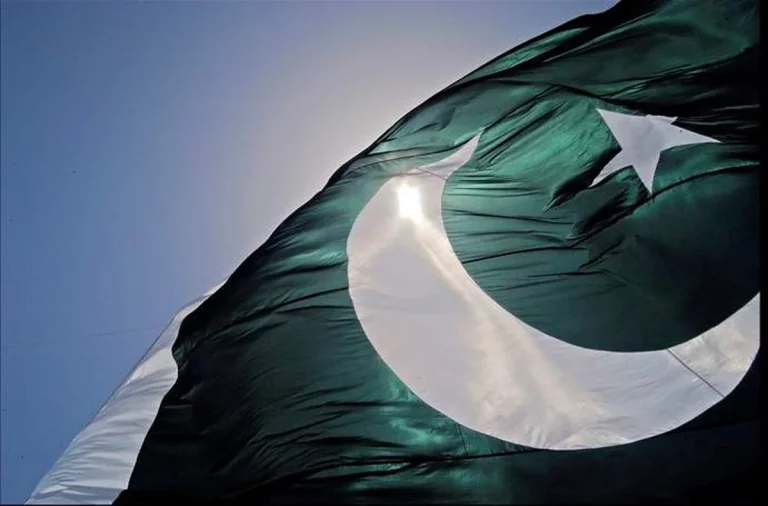
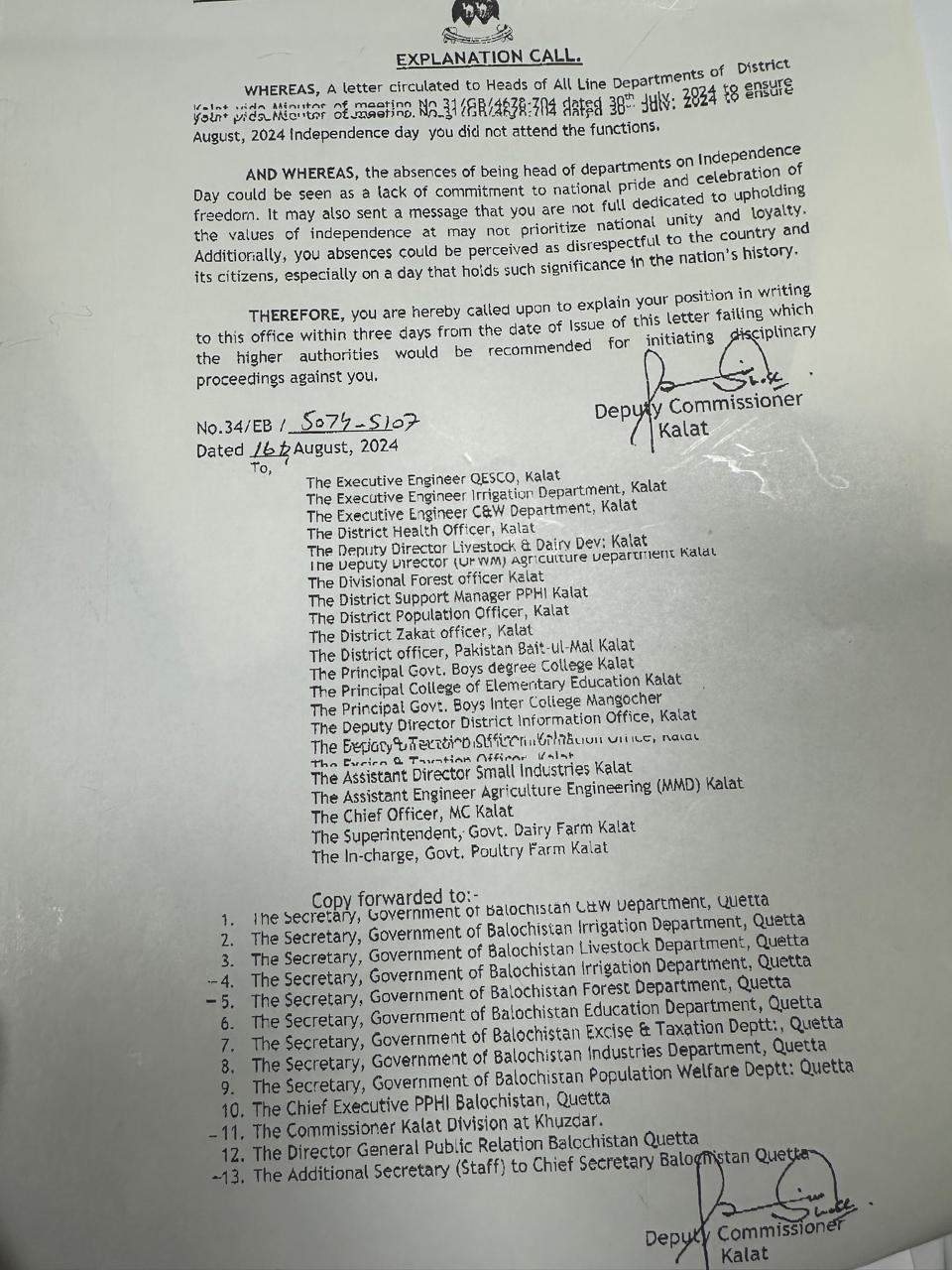
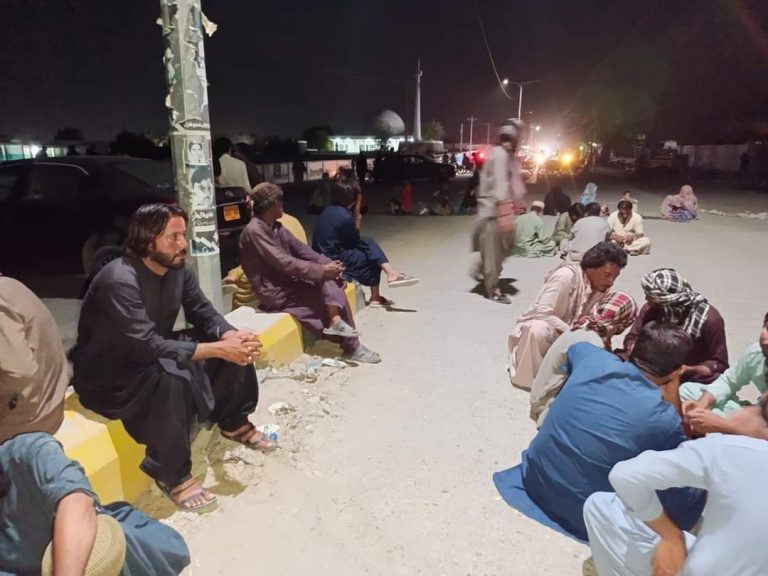
The Deputy Commissioner of Kalat has issued notices to district officers who failed to attend the August 14 Independence Day celebrations, demanding explanations for their absence. These officials, including engineers and education heads, have been instructed to provide reasons for their absence within three days.
The notice stated that the absence of these officers from the August 14 celebrations could be viewed as a neglect of national duties. The Deputy Commissioner warned that disciplinary action might be taken if satisfactory explanations are not provided.
Copies of the notice have also been sent to higher authorities in Quetta. This move has sparked discussions suggesting that the Baloch community’s absence from the event reflects broader discontent with the Pak Army. On the other hand, August 14 was declared as a Black Day for Pak oppressed communities
The Baloch community’s decision to abstain from the celebrations is a silent protest against the Pakistan Army’s long-standing exploitation of the region. The Baloch people have been vocal about their grievances, challenging the narrative that they are content with the current state of affairs. Instead, their absence is a stand against decades of oppression and the Army’s attempts to portray a false image of unity and satisfaction in occupied-Balochistan.
The notices issued by the Kalat DC are now being viewed by many as evidence of this underlying tension, with the community increasingly refusing to participate in a celebration of a freedom they have never truly experienced.
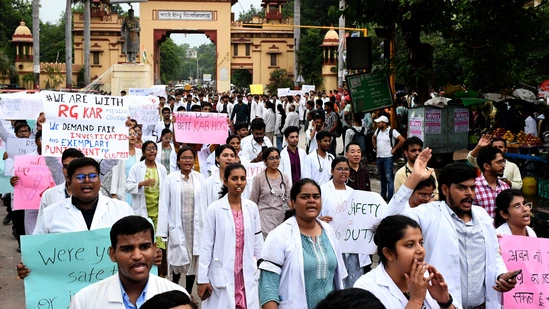
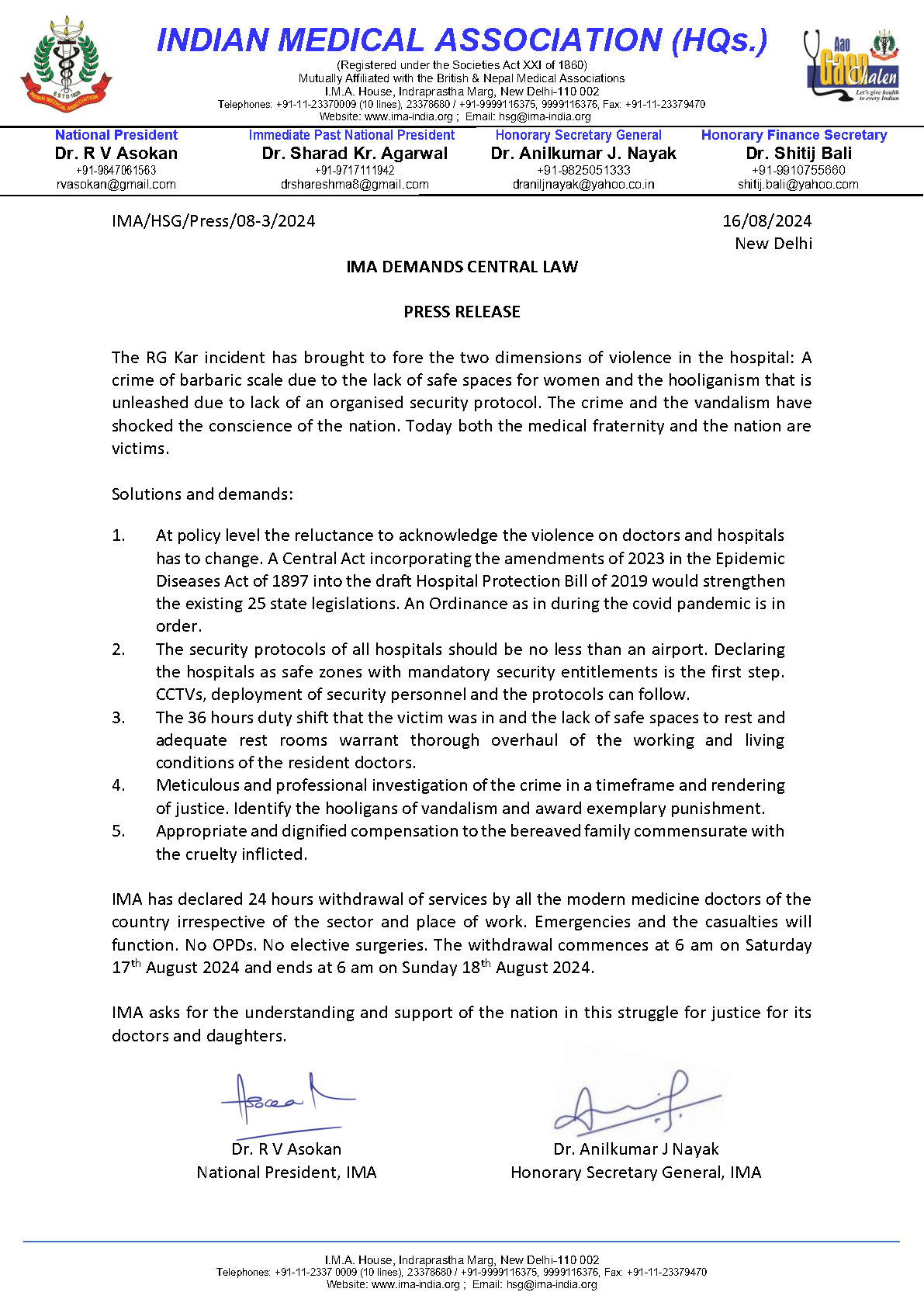
In response to the brutal rape and murder of a 31-year-old trainee doctor at RG Kar Medical College in Kolkata, doctors across India have launched a nationwide strike. The Indian Medical Association (IMA) has called for a 24-hour withdrawal of non-emergency health services, starting from 6 a.m. today, to demand justice and improved safety for medical professionals.
While essential services and casualty units will remain operational, routine outpatient departments (OPDs) and elective surgeries have been halted. The strike, endorsed by the IMA, spans all sectors where modern medicine is practiced, underscoring the widespread anger and demand for action within the medical community.
The horrific incident, which occurred over a week ago, has sparked outrage not just within the medical fraternity but across the nation. Protests have erupted in various cities, with medical professionals and women’s groups voicing their concerns over the increasing violence against women and the failure of existing laws to provide adequate deterrence.
The situation remains tense as the Central Bureau of Investigation (CBI) intensifies its probe into the crime. Forensic experts from RG Kar Medical College have been summoned for questioning, and digital mapping of the crime scene is currently underway. The parents of the victim have reportedly provided the CBI with names of individuals they suspect may be involved, further complicating the investigation.
Protests are not limited to Kolkata. Resident doctors in Panaji, Goa, Ahmedabad, and Rajkot have also staged demonstrations, expressing solidarity with their colleagues in Kolkata. The IMA’s five-point demand includes the enactment of stronger legislation to protect doctors and hospitals, declaring hospitals as safe zones, and overhauling the working conditions for resident doctors.
Union Minister Kiren Rijiju has commented on the situation, emphasizing that this is a nationwide issue that affects all citizens. Meanwhile, West Bengal Governor CV Ananda Bose has criticized the state government, holding it accountable for the worsening safety conditions and urging immediate action.
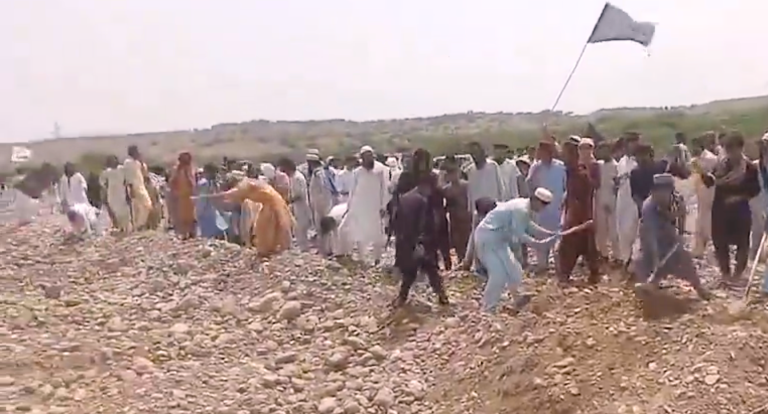
The Wazir Jirga has issued a directive demanding the removal of a gas pipeline laid by the Punjabi Pakistan Army, which is being used to siphon gas from Waziristan to supply Punjab. Jirga has mobilized the Wazir Lashkar, comprising 3,000 men, to excavate and dismantle the pipeline. This move is part of ongoing resistance against the exploitation by the Punjabi-Pak military since 1947.
Meanwhile, in response to the systematic abuses by the Pak Army, thousands of residents in North Waziristan took to the streets in a major protest. The demonstration was organized by local leaders from the Utmanzai Jirga, the Pakhtun Tahafuz Movement (PTM), and other community groups. The rally was accompanied by a complete shutter-down strike, reflecting widespread solidarity with the victims of the human rights violations.
This latest development comes amid a long-standing history of tension and conflict between the local Pashtun population and the Punjabi Paki establishment. The issue of military abuses in Khyber Pakhtunkhwa has been a recurring point of contention and protest, with local leaders and activists calling for justice and accountability.
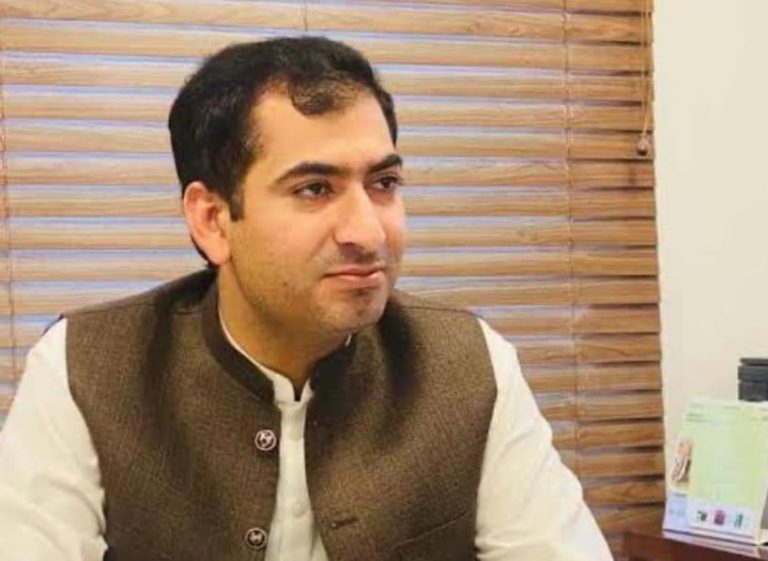
The Baloch Liberation Army (BLA) has categorically denied any involvement in the recent attack on Zakir Baloch, Deputy Commissioner of Panjgur, which resulted in his death. The BLA asserts that Zakir Baloch was never on their list of targets and condemns the attempt of Pak Army and its occupied-govt to link their group to the incident.
In a recent statement, BLA spokesperson Jeeyand Baloch said that the Pakistan military and occupied-local government of spreading propaganda to falsely associate the BLA with the attack. The group emphasized that it publicly claims responsibility for its actions through official channels, and any incidents not claimed by the BLA should be considered unrelated to their organization.
The BLA condemned the military for its deceitfulness and hypocrisy, contrasting this with the BLA’s commitment to revolutionary ethical standards.
Zakir Baloch’s Death
The attack on Zakir Baloch occurred in the context of discussions about the Baloch Yakjehti Conference (BYC) sit-in in Panjgur. During these discussions, Zakir Baloch said, “I am the representative of the Baloch nation, not the government” and had previously condemned violence and the crackdown on peaceful protesters.
DC Panjgur Zakir Kannar Baloch's speech during discussions on BYC sit-in in Panjgur. "I am the representative of the Baloch nation, not the government." Zakir Baloch refused violence and crackdown on peaceful protesters in Panjgur has been killed by death squad. The Baloch nation… pic.twitter.com/A4v1N4ybCV
BYC leader Mahrang Baloch has strongly condemned the killing, expressing solidarity with Zakir Baloch’s family. Baloch society mourns the loss of Zakir Baloch, describing the incident as part of a broader trend of violence against Baloch youth. “Our educated youth are being murdered daily, reducing their lives to mere statistics of violence,” Mahrang said.
The statement continued, “The situation has deteriorated to the point where being a Baloch is enough to warrant execution. Balochistan weeps for Deputy Commissioner Zakir Baloch, a true hero whose life was tragically cut short. His dedication to peace and progress will never be forgotten.”
I strongly condemn the killing of Zakir Baloch and stand in solidarity with his family during this difficult time.
Baloch society has been turned into a slaughterhouse where our educated youth are being murdered on a daily basis. The value of our youth's lives and their blood… pic.twitter.com/oijclGQpkF
Reports suggest that Zakir Baloch, who had led negotiations with BYC leader Mahrang Baloch, was killed by the Pakistan Army due to his support for addressing Baloch grievances. The incident has further fueled outrage and grief within the Baloch community.
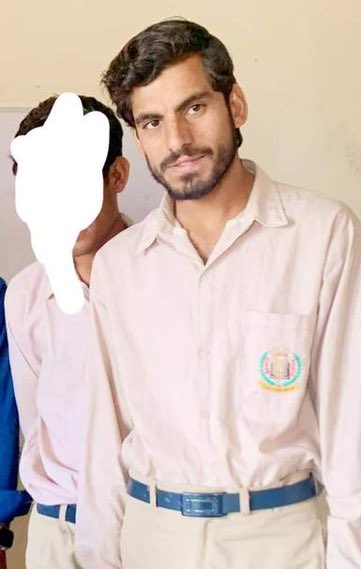
In a tragic incident in the Tehsil Bulaida of Kech district, a student was fatally shot by armed assailants on a motorcycle. The victim, identified as Rahim Jan, was attacked while working in his shop at Sahib Khan Bazaar.
Rahim Jan, who was enrolled at Sach School’s Abdul Rahman Bazaar Campus, was known for his active involvement in local social activities. The shooting has shocked the community and drawn widespread condemnation from local residents, who describe the incident as a distressing attack on innocent and impoverished individuals.
Rahim Jan Anwar, a student from Sach School Gilli,tragically lost his life when unknown assailants targeted him in Kochag Saheb Khan Bazaar before Isha prayers. He was in his shop with friends when the attackers arrived on a motorcycle.1/2 pic.twitter.com/rMeizh4XNN
— Baloch Yakjahti Committee – Kech (@BYCKech) August 16, 2024
Reportedly, the perpetrators are linked to a Pak Army-supported group, which has a troubling history of involvement in various criminal activities and violent incidents in the Bulaida region.
The local community has voiced concerns about the increasing violence and instability in the area, stressing that no one is safe from such acts of aggression.
A resident of the coastal city of Gwadar reported an alarming incident, revealing that he and his family came under gunfire while visiting Nagor Chab Rekani. The incident occurred as they were returning from their ancestral lands when their vehicle got stuck in the mud. Despite being heavily fired upon, the family was fortunate to escape unharmed.
The resident expressed frustration over the military’s occupation of their ancestral lands and orchards. “These lands have been in our family for generations, but now the military has taken over and established camps in our orchards,” he said.
He raised concerns about responsibility if any harm had come to his family, questioning, “If something had happened to me or my children, who would have been responsible?” The resident demanded that the military vacate their lands and orchards, asking, “Are the authorities now telling us that we can no longer visit our ancestral lands and orchards?”
Since the Pakistan Army occupied the region in 1948, Baloch residents have faced numerous challenges, including forced abductions, indiscriminate killings, and the annexation of their ancestral properties for military use.
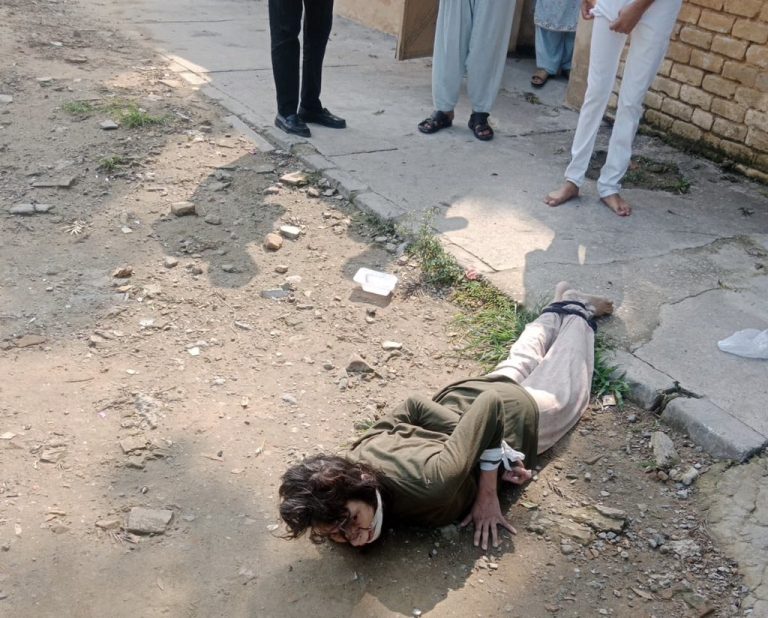
A Belgian woman was discovered tied up and abandoned in Islamabad’s G-6 district after reportedly enduring days of sexual assault. The woman, identified as 28-year-old Silvie Stina, was found with her wrists and legs bound, having been left by unidentified individuals. A local resident spotted her and immediately alerted the police, who rescued her from the scene.
The incident occurred on August 14, the same day Pakistan celebrates its Independence Day.
Stina was rushed to a hospital for a medical examination, where she reported being held and assaulted for over five days by several men. The police have since launched an investigation and arrested one suspect, identified as Tamizuddin, who is currently in police custody.
بیلجیم سے آئی خاتون کو ریپ کرنے کے بعد نامعلوم افراد پھینک کر فرار
سلوا نامی خاتون کو مقامی شہریوں نے گلی نمبر 33، جی سکس ون تھری میں صدر روڈ پر ہاتھ پاؤں بندھے حالت میں دیکھا۔ اور پولیس کو اطلاع دی۔ pic.twitter.com/gUKbeIvoRY
The victim confirmed Tamizuddin’s involvement in the crime. He was apprehended by Aabpara Police at his residence and taken to the same hospital as the victim for further medical evaluation. However, Tamizuddin denied the accusations, claiming the woman was mentally ill. He also alleged that she lacked proper identification and had entered Pakistan without valid documentation.
Authorities have launched a search of Tamizuddin’s apartment to locate any of the victim’s belongings and to uncover further evidence. The police are also exploring how the victim entered Pakistan, as both the Belgian embassy and the Federal Investigation Agency (FIA) reported having no record of a woman by her name traveling to the country. The Netherlands High Commission has also been contacted, as the victim mentioned a region near the Belgian-Dutch border as her place of origin.
There’s a lot of unanswered questions: How did the victim enter Pakistan without official records? Is this a case of illegal entry, or is there a more sinister angle yet to be uncovered? In light of rising Islamic radicalism and economic instability, Pakistan has become an unbearable place to visit.
I missed being a member of the exclusive club that author Salman Rushdie popularised as ‘Midnight Children’ in his novel with the same name by a decade but this had its own advantages. For example, with India having adopted the metric monetary system in 1955, one didn’t have to undergo the agony of memorising the complicated values of three pies making one pice, four pice making one Anna, and 16 Annas being equal to a Rupee.
While many in our age group fondly reminisce about what they jubilantly refer to as the ‘good old days’, I recall that life wasn’t as good as what some our age make it out to be. Though I can’t speak about what adults felt those days but at home and even outside, one often heard snatches of conversation between elders that certainly did not give an impression that those days were exceptionally good ones. I distinctly recall the shortage of essential commodities being a common topic of discussion and marveling at advertisements of electronic gadgets like transistors in foreign magazines like Life and Woman & Home- old copies of which sometimes came our way!
In those days every household had what was commonly referred to as a ration card that allowed you to buy rations from government run shops at subsidised rates, but since the amount of ration one could buy depended upon the number of family members, inflating the number of children and adding grandparents was commonplace.
Then there were permits– letters issued by the local authorities allowing those constructing houses to buy cement and other such commodities at what was referred to as government rates. Needless to say, getting a permit or padding the number of family members in ration cards was only possible through use of influence or the ubiquitous baksheesh [bribe].
The local administration did release an additional quota of sugar during festivals and marriages in the family which could be drawn by showing your ration card but the quantity [despite fudging the numbers of family members] was largely insufficient. However, one could buy any amount of sugar from the black-market. In fact, black marketing was a lucrative and thriving business where you could for a price pick up anything ranging from car tyres to cars itself!
In the summer months, power outages were frequent but didn’t cause us much discomfort because the common Indian household then had neither a fridge nor any coolers. But what upset us kids most was the ban on sale of milk-sourced sweetmeats by the district magistrate due to acute shortage of milk.
When the 1962 Sino-Indian conflict broke out, I was only six years old. Yet I vividly remember the frantic government appeals on radio and advertisements in news reels that preceded movie screening requesting people to donate gold jewellery, money and even woollens to help arm and clothe our soldiers fighting the Chinese.
So much for the good old days!
Things started improving significantly during the seventies and life became much easier and more comfortable. This inference is duly reflected in the World Bank’s data which shows India’s per capita income has risen from a modest $ 82 in 1960, jumped to a whopping $ 2,388 in 2022. This is indeed a remarkable achievement when viewed in isolation, but for accurately determining the precise degree of progress made over the years, a comparative analysis is essential.
As China’s per capita income in 1960 was $ 89 as against India’s $82, comparison between the two countries is fair. In 2022, however, while China’s per capita income swelled to $ 12, 720, India’s per capita income was only $2,388. So, while India has definitely done well over the years, it would not be inappropriate to say that we could have certainly done much better.
Hence, the centre’s decision to declare ‘Viksit Bharat’[Developing India] as the central theme of India’s 78th Independence Day celebrations is most appropriate as it gives a clarion call for the government’s vision of transforming India into a developed entity by the centenary of Independence in 2017. Thanks to well conceived and dynamically executed infrastructural development projects, adopting a ‘bottom-up’ approach and public participation to improve quality of life of the people through imaginative schemes as well as reducing foreign dependency by facilitating indigenisation through the ‘Make in India’ initiative, much lost ground has been covered.
Though the results achieved thus far are remarkable, there’s no room for complacency or negativity, as in this competitive world there’s no place for laggards. Simultaneously, since India’s continuing progress is bound to upset certain countries and entities whose captive market is under threat from India’s ‘Make in India’ programme, spreading negativity and creating a hostile working environment would only help inimical forces to exploit public emotions and impede progress.
India has all it takes to become a world leader provided we remain united and play our respective roles as its citizens in a responsible manner.
The East Turkistan National Movement (ETNM), a US-based organization dedicated to advocating for the rights of Uyghur Muslims in Xinjiang, has issued a strong statement condemning China for its systematic destruction of Uyghur culture and heritage. The organization is urging the international community, human rights authorities, and activists to take decisive action against Beijing’s oppressive policies.
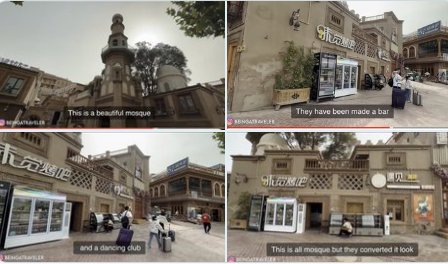
In a statement released on X (formerly Twitter), the ETNM accused the Chinese government of demolishing over 16,000 mosques and converting other religious sites into bars and clubs. “The Chinese government is executing a calculated strategy to annihilate the identity of the East Turkistan nation to ensure its occupation of East Turkistan continues. In a blatant attempt to erase our historical and cultural roots, Beijing has demolished over 16,000 mosques, desecrated religious sites by turning them into bars and clubs, and destroyed countless historic Uyghur neighborhoods,” the ETNM said. “These acts of cultural destruction are designed to break the spirit of our people and erase our Turkic and Islamic heritage from existence.”
Conversion of a Uyghur mosque in Kashgar into a bar & dance club is a stark symbol of CCP’s ruthless assault on Uyghur culture & religion.
This desecration of sacred spaces shows the extent of China's disregard for religious freedom and cultural preservation!#ChinaExposedpic.twitter.com/S1EksiQddP
The ETNM also criticized Muslim-majority countries, the Organisation of Islamic Cooperation (OIC), and Central Asian Republics for their silence in the face of China’s campaign against Uyghur Muslims. The organization accused these entities of turning a blind eye to the atrocities in Xinjiang and, in some cases, even supporting China’s actions.
A 2021 report by the Australian Strategic Policy Institute (ASPI) supported ETNM’s claims, revealing through satellite imagery that significant damage has been done to over 20 percent of the region’s mosques, with many being demolished or repurposed.
Xinjiang has become one of the most heavily monitored regions in the world, with extensive use of facial recognition technology and other surveillance methods. There is substantial evidence, including satellite imagery, of large-scale internment camps in the region. These facilities, described by the Chinese government as “re-education” camps, are considered by international observers and human rights organizations to be detention centers aimed at erasing the identity of East Turkistan and its people.
The ETNM’s call to action is a plea for the world to recognize and confront the ongoing cultural genocide in Xinjiang and to support the Uyghur people in their fight for survival and freedom.
The families of two young men who were forcibly disappeared by Pak forces in Kharan district are continuing their sit-in protest in the Red Zone. The protest, which has brought activity in the area to a standstill, began after the reported abduction of the youths earlier today.
The two men, Lakhmeer, son of Haji Saleh, and Khudadad, son of Musa, were taken into custody by Pakistan Army from Kharan Bazaar and subsequently moved to an undisclosed location. The exact circumstances of their detention remain unclear.
The sit-in has led to the complete closure of Kharan Secretariat Chowk and the surrounding Red Zone. Local authorities have attempted to negotiate with the protestors, but the talks have so far been unsuccessful, and the demonstration shows no signs of abating.
The families of the missing men vowed to continue their protest until their loved ones are safely recovered. “We will not end this sit-in until our loved ones are returned to us,” they said. This is not an isolated incident and has tragically become part of daily Baloch life since the Pak Army forcefully captured the region in 1948.
We use cookies on our website to give you the most relevant experience by remembering your preferences and repeat visits. By clicking “Accept All”, you consent to the use of ALL the cookies. However, you may visit "Cookie Settings" to provide a controlled consent.
This website uses cookies to improve your experience while you navigate through the website. Out of these, the cookies that are categorized as necessary are stored on your browser as they are essential for the working of basic functionalities of the website. We also use third-party cookies that help us analyze and understand how you use this website. These cookies will be stored in your browser only with your consent. You also have the option to opt-out of these cookies. But opting out of some of these cookies may affect your browsing experience.
Functional cookies help to perform certain functionalities like sharing the content of the website on social media platforms, collect feedbacks, and other third-party features.
Performance cookies are used to understand and analyze the key performance indexes of the website which helps in delivering a better user experience for the visitors.
Analytical cookies are used to understand how visitors interact with the website. These cookies help provide information on metrics the number of visitors, bounce rate, traffic source, etc.
Advertisement cookies are used to provide visitors with relevant ads and marketing campaigns. These cookies track visitors across websites and collect information to provide customized ads.
Necessary cookies are absolutely essential for the website to function properly. These cookies ensure basic functionalities and security features of the website, anonymously.
Cookie
Duration
Description
cookielawinfo-checkbox-analytics
11 months
This cookie is set by GDPR Cookie Consent plugin. The cookie is used to store the user consent for the cookies in the category "Analytics".
cookielawinfo-checkbox-functional
11 months
The cookie is set by GDPR cookie consent to record the user consent for the cookies in the category "Functional".
cookielawinfo-checkbox-necessary
11 months
This cookie is set by GDPR Cookie Consent plugin. The cookies is used to store the user consent for the cookies in the category "Necessary".
cookielawinfo-checkbox-others
11 months
This cookie is set by GDPR Cookie Consent plugin. The cookie is used to store the user consent for the cookies in the category "Other.
cookielawinfo-checkbox-performance
11 months
This cookie is set by GDPR Cookie Consent plugin. The cookie is used to store the user consent for the cookies in the category "Performance".
viewed_cookie_policy
11 months
The cookie is set by the GDPR Cookie Consent plugin and is used to store whether or not user has consented to the use of cookies. It does not store any personal data.