Home Blog Page 74

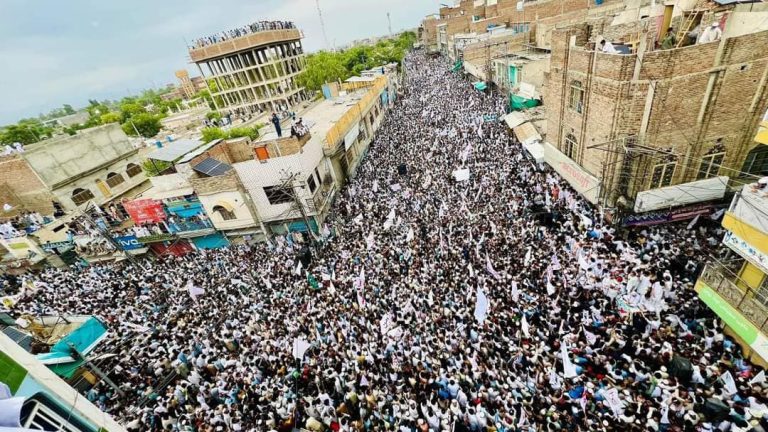
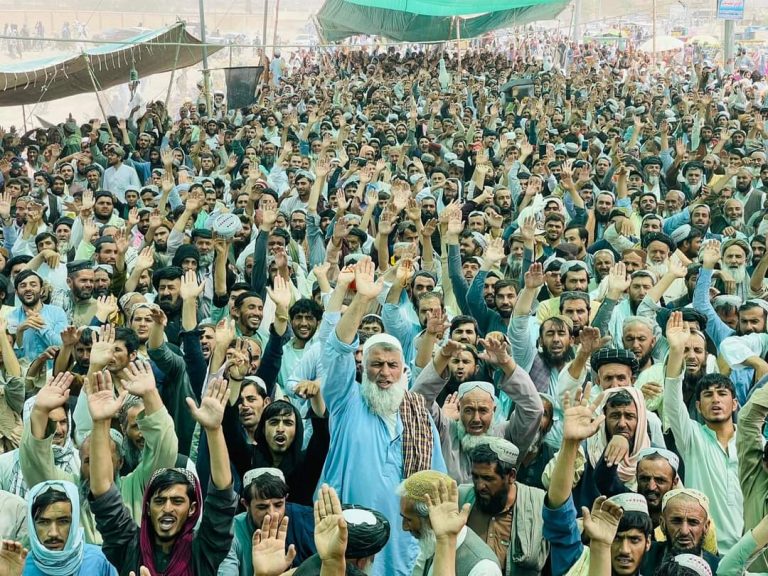
Chaman residents win back old border system after 273 days of protests

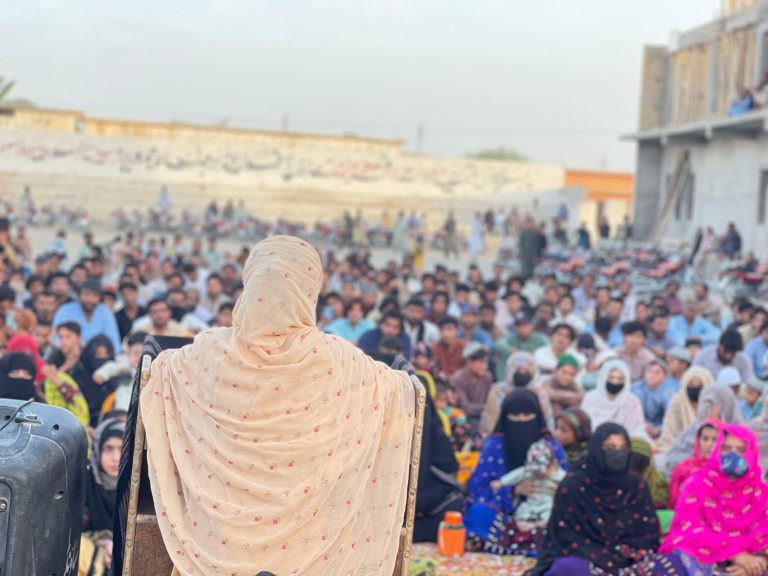
After 9 months sit-in protest, the demands of Chaman’s residents have been met, leading to the restoration of the old border system. This significant development comes amid ongoing discontent over new border regulations imposed by the Punjabi Pak establishment.

Inayat Kasi, who played a key role as a mediator between the protest leaders and the government, announced from the protest stage that cross-border movement using identity cards and passports would resume immediately. He confirmed that the demands of the protesters had been accepted, leading to the reimplementation of the previous border system.

Notably, lakhs of Pashtuns had been protesting at the Chaman border for over nine months. Their protest was driven by the Pak establishment’s imposition of a new one-document regime, which replaced the previously functional Tazkira system with mandatory passports for trade across the Durand Line. This major crossing in Pak-occupied Balochistan is vital for local traders who previously used Tazkira (a paper slip permission) for border crossing. Additionally, familial ties between communities on both sides of the border have been disrupted by the new regulations.

The protest highlighted the lack of measures taken to address these issues, with a significant portion of the Pakistan-controlled media neglecting the massive demonstration, seemingly waiting for it to subside. The situation escalated when the Pak Army and Frontier Corps (FC) forces launched crackdowns on peaceful Pashtun protesters. On June 6, these actions resulted in the deaths of many Pashtuns and the arrest and disappearance of dozens more.

With the successful conclusion of negotiations, protest leaders have announced the end of the sit-in, and border business activities are set to resume as before. The resolution marks a critical moment in addressing the grievances of the local Pashtun community and restoring their traditional cross-border practices.
J&K: Indian Army thwarts major Pak-backed terrorist attack in Rajouri

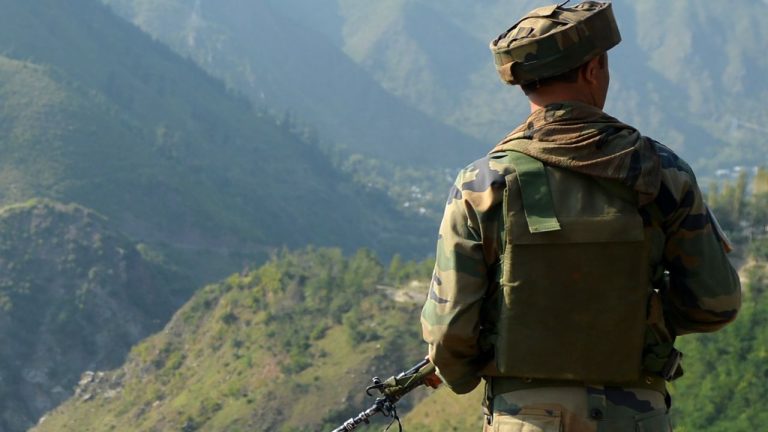
The Indian Army successfully repulsed a major attack early this morning in Jammu and Kashmir’s Rajouri district. Reportedly, a soldier sustained injuries during the predawn assault on an army camp. Following the attack, security forces launched a comprehensive search operation to locate and neutralize the terrorists involved.

This incident occurs amidst a surge of terror attacks in the Jammu region, escalating security concerns. The attack came less than 24 hours after Army Chief General Upendra Dwivedi’s visit to Jammu, where he discussed strategies to address the recent rise in terrorist activities in a region that had been relatively free of such violence until a few years ago.

A heavily armed group of terrorists targeted the army camp and also attacked the residence of Shaurya Chakra Awardee Parshotam Kumar in Gunda village. Kumar, a village Defense Guard recognized for his bravery in neutralizing two terrorists last August, was recently awarded the Shaurya Chakra by President Droupadi Murmu.

Another assault

Despite a robust counterattack by the army forcing the terrorists to flee, this marks yet another bold assault on military positions in the area. On Friday, a temporary army camp set up in a school in Doda district was hit with heavy gunfire and grenades. Last week, four soldiers, including a captain, were killed in the same area, following an earlier ambush in Kathua that resulted in the deaths of five soldiers.

In response to the escalating threat, the Army has deployed additional troops, including special forces commandos, to the Jammu region to combat the terrorists. Over the past 32 months, 48 army soldiers have been killed in terrorist attacks in Jammu, with terrorists frequently escaping without casualties.

The increase in attacks has prompted a recent cabinet committee meeting chaired by the Prime Minister, who has directed the army to utilize the full spectrum of its anti-terrorism capabilities to eliminate the threat from the region. Despite extensive cordon and search operations by security forces, the frequency of these attacks continues to challenge the region’s stability.

Pashtun protesters attack & vandalize Pakistani consulate in Germany

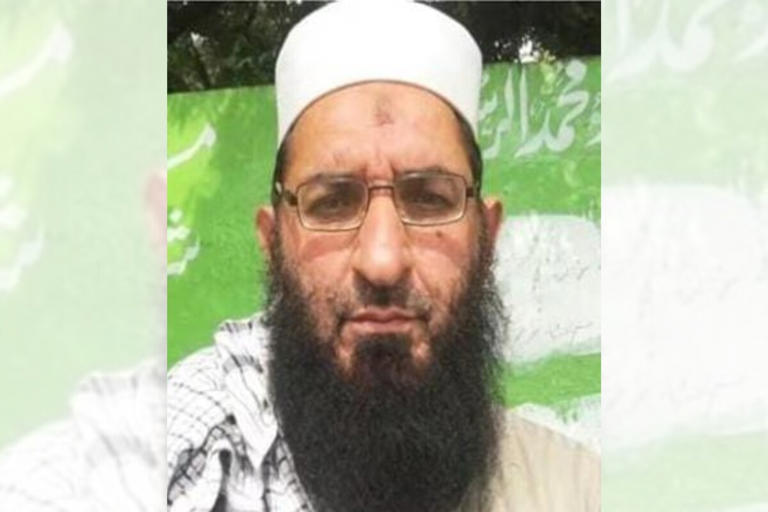
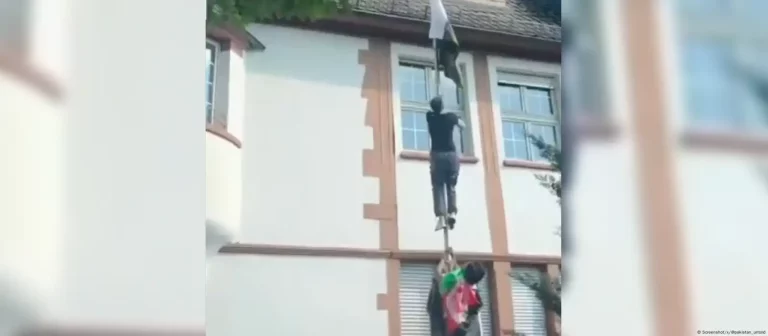
A group of Pashtun protesters attacked the Pakistani consulate in Frankfurt, Germany, on Sunday, throwing stones and temporarily replacing the Pakistani flag with an Afghan flag following the death of prominent Pashto poet and key figure in the Pashtun Tahafuz Movement (PTM) Gilaman Wazir. Wazir, whose real name was Hazrat Naeem, was attacked and repeatedly stabbed by Pak Army on July 7 in Islamabad and he succumbed to his injuries after 5 days.

Video footage circulating on social media shows a small number of demonstrators, some wearing Afghan flags, entering the consulate grounds. The protesters were seen throwing stones at the building and vandalizing the premises. They removed the Pakistani flag from outside the building and replaced it with Afghanistan’s flag. Some Pakistani media outlets reported attempts to burn the Pakistani flag, though this has not been independently verified.

On Sunday, PTM Germany held a large protest in Germany against the policies of the Pakistan Army, including its acts of terror, the genocide of Pashtuns, and the military attack on peaceful protests in Bannu.

It is no longer possible for the state to continue under such policies. On October 11, there will be a major judicial meeting of the Pashtuns to address decades of exploitation since 1947, when the region came under the control of the Pak Army. The Pashtuns have been exploited by the Army for its own agenda, only to later be labeled as terrorists and targeted.

PTM Germany

The rampant militarization of the region has led to numerous abductions, enforced disappearances, and extrajudicial killings of innocent Pashtun youths, many of whom are reportedly unconnected to any activist activities. Pashtuns around the world have expressed their frustration with the Pak Army’s brutality, and PTM’s movement in Germany is one such example.

In response to the attack, Pakistan’s Foreign Ministry issued a statement, demanding that Germany take action against what it called a “gang of extremists.” The ministry expressed concern over the safety of consulate staff and criticized German authorities for failing to protect the diplomatic premises as required under the Vienna Convention.

The Foreign Ministry called for the arrest and prosecution of those involved in the attack and demanded that German officials be held accountable for security lapses.

There was no immediate reaction from the German government to the attack and its denunciation by Pakistan. Taliban authorities in Afghanistan did not comment on the incident either.

POB: Protesters demand recovery of Mukhtiyar Mengal, criticize inaction by Pak authorities

For several days, the citizens of Kharan and relatives of Mukhtiyar Mengal have been staging protests, demanding his immediate recovery.

Protesters have expressed their frustration with the district administration, accusing them of disinterest and negligence in the case. They say that the Mengal has not been recovered due to the authorities’ lack of action. Moreover, no information has been provided to Mengal’s family regarding his recovery.

The protesters escalated their demonstration by ending their shutter-down strike and blocking the main Quetta-Karachi highway from Kharan. They set up a protest camp on the highway, bringing traffic to a standstill.

Deputy Commissioner said that the district administration is utilizing all available resources to recover Mukhtiyar Ahmed Mengal.

Since 1948, POB has been under Pak Army control and enforced disappearances, marginalization, and extrajudicial killings have been used as tools of oppression against the Baloch community.

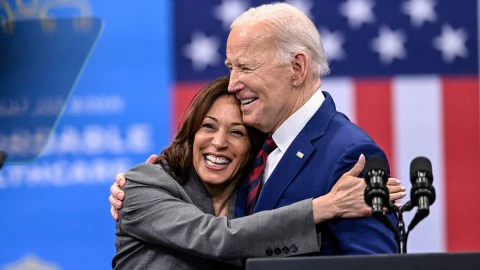
Kamala Harris secures democratic support after Biden’s exit from US presidential election 2024

The hustle and bustle of the presidential election in America continues. The US presidential election is scheduled for November 5 this year, but a big and shocking news has come out that President Joe Biden is withdrawing himself from the presidential race. He has dropped his candidacy himself and said that he has made this decision in the interest of the country and the party. With President Joe Biden stepping out of the race in this manner, the US presidential election has now become even more interesting.

At the end of June, President Biden had a ‘disappointing’ performance in a debate against former President and Republican Party candidate Donald Trump, after which Democratic leaders were pressurising him to withdraw his candidacy. 

After announcing his withdrawal on Sunday, Biden has expressed his support for Vice President Kamala Harris for the presidential position. In his post on X, Joe Biden expressed his support for current Vice President Kamala Harris for the presidential position. He wrote, “My fellow Democrats, I have decided to decline the nomination and focus all my energy on fulfilling my duties during the remainder of my term. In 2020, my very first decision as the party’s candidate was to choose Kamala Harris as Vice President, and it has proven to be an excellent decision.” “Today, I fully support Kamala Harris as the party’s candidate. Democrats, now is the time for us to unite and defeat Trump.”

The past month has been quite eventful in American politics leading up to the U.S. presidential election in November. First, President Joe Biden faced severe criticism for his performance in the first presidential debate. Recently, on July 13, 2024, a shot was fired at Republican presidential candidate Donald Trump during a rally in Pennsylvania. The former president survived the attack but sustained a minor injury to his ear. Another aspect of this election that deserves attention is its connection to India.

AMERICAN POLITICAL SYSTEM

Today, the American political system is dominated by just two parties, so in modern times, every president has belonged to one of them. The Democrats are a liberal political party whose agenda primarily focuses on civil rights, extensive social security, and measures to address climate change. This is the party of current President Joe Biden, who is attempting to secure a second term in office.

The Republicans are a conservative political party in America, also known as the GOP or Grand Old Party. They advocate for a smaller government, the right to bear arms, and strict restrictions on immigration and abortion. Former President Donald Trump is the last remaining Republican in the race and has garnered enough support to be nominated as the Republican candidate.

KAMALA HARRIS’S INDIA CONNECTION 

Kamala Harris is an American of Indian origin. She was born in 1964 in Oakland, California. Her mother, Shyamala Gopalan, was born in Chennai and was a cancer researcher. Her father, Donald Harris, was a Jamaican economist who settled in the United States. Kamala Harris is the first woman, the first Black, and the first Asian American to become Vice President.

Kamala Harris said in her statement on Sunday that she is honored to receive the president’s support. She intends to secure the Democratic presidential nomination and win the election.

BLF’s deadly IED attack on Pak Army convoy in Kech kills 8 Army soldiers

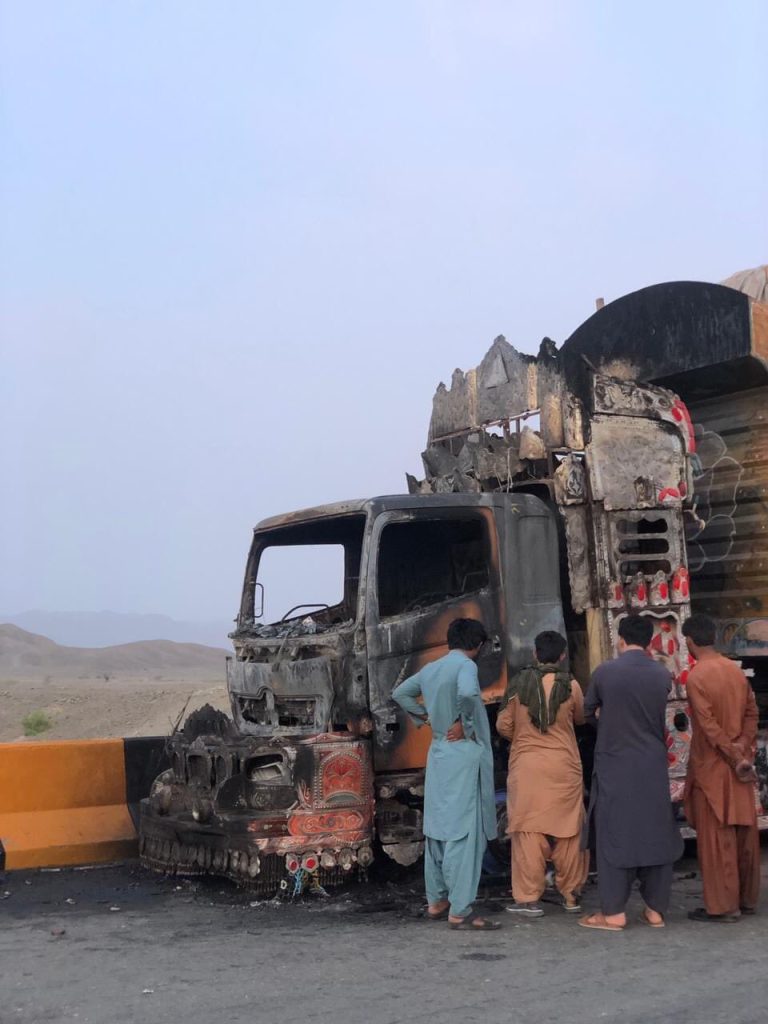
The Balochistan Liberation Front (BLF) has launched a deadly IED attack on a Pakistan Army convoy in the Baledah Gali area of Kech. According to BLF spokesperson Major Gwharam Baloch, the attack resulted in the complete destruction of one vehicle and the death of all personnel on board.

In a statement, Major Gwharam Baloch detailed the incident, stating that at 8:30 a.m, freedom fighters targeted a convoy of forty Pakistan military vehicles heading to Zamran for an operation. The attack resulted in the deaths of a junior military officer and eight soldiers: Junaid, Asif Rashid, Waheed, Usman Ghani, Asim, Nader, and Rahim.

The Balochistan Liberation Front’s fighters are targeting the Pak Army on military and intelligence bases throughout Pak-occupied-Balochistan, causing significant losses. The Pak Army has lost morale and senses due to our persistent attacks,” said Major Gwharam Baloch.

He said that the Pak military is committing raids, forced disappearances, and other crimes in civilian areas as a means to combat the independence movement, calling these actions failed attempts to boost their declining morale.

People’s War

The BLF spokesperson emphasized that the ongoing conflict in Balochistan is a people’s war. “The BLF is advancing this war with the help and cooperation of the Baloch people. We will intensify our attacks on the Army and its allies in the future,” he added.

In a strongly worded statement, the BLF also warned all traders aiding and abetting Pakistan’s projects to stay away or face serious consequences.

The Balochistan Liberation Front has taken full responsibility for the attack and reiterated its commitment to targeting Pakistan’s interests in the region until a free and prosperous Balochistan is achieved.

Since 1948, the Pak Army has brutally occupied the Balochistan region, wreaking havoc on the Baloch community. Tactics such as enforced disappearances, extrajudicial killings, raids, military operations, and the exploitation of mineral resources have been employed to suppress the local population. In response, pro-independence groups like the BLF have resisted the occupation through armed attacks on Pak establishment and continued resistance efforts.

Khyber-Pakhtunkhwa police officials speak up against Pak Army

Police officials from Khyber Pakhtunkhwa has publicly voiced frustration with the Punjabi Pakistan Army’s long-standing policies of violence, discrimination, and marginalization against the Pashtun people. The official said that local law enforcement would no longer comply with the “illegal orders” from the Punjabi military leadership against Pashtun civilians.

The statement highlights decades of exploitation since 1947, when the region came under the control of the Punjabi Pak Army. The Pashtuns are used by the Army for their own agenda, only to later label them as terrorists and target them.

This rare public criticism from within law enforcement circles comes amidst growing awareness and activism among Pashtuns regarding their treatment. The rampant militarization of the region has led to numerous abductions, enforced disappearances and extra judicial killing of innocent Pashtun youths, many reportedly unconnected to any activist activities.

The statement also touched on the dangers faced by journalists and members of the Pashtun Tahafuz Movement (PTM), a civil rights movement, who have reportedly been subjected to violence despite their commitment to peaceful protest.

Of particular concern is the military’s practice of laying landmines in residential areas. This has purportedly resulted in tragic incidents, with children often falling victim to unexploded ordnance and rarely a terrorist.

This bold statement from the local police force underscores the increasing willingness of Police officials to speak out against the long-standing injustices.

Pak-occupied Balochistan: BLA kills ISI operative in Turbat

In a daring attack, the Baloch Liberation Army (BLA) killed a Pak Army’s intelligence operative in Turbat, Pak-occupied-Balochistan.

According to a statement released by BLA spokesperson Jeeyand Baloch, the incident occurred on Saturday in Turbat city. The BLA said that its fighters targeted and killed an operative of Pakistan’s Inter-Services Intelligence (ISI) agency.

The statement identified the deceased as Arshad, son of Gul Muhammad, reportedly a resident of Sindh province. The attack took place in the Gwadar Stop area of Turbat.

Jeeyand Baloch said that the victim was working undercover as an informant for the ISI in Turbat city. The BLA spokesperson asserted that such attacks on Pak forces and their associates would continue.

Since 1948, Pak-occupied-Balochistan province has witnessed decades of unrest and a ruthless crackdown by Pak Army against the Baloch community. Therefore, pro-independence groups like BLA are engaged in armed struggle against the brutal occupation. 

Pak Army fire and kill several during peace rally in Bannu

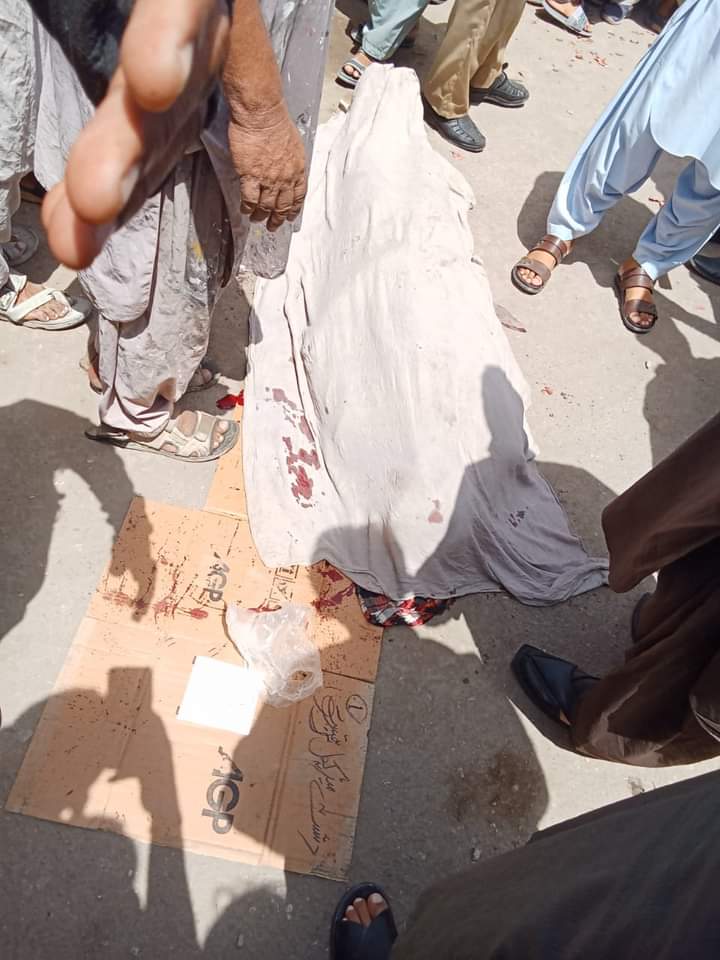
Thousands of protesters gathered in Bannu on Friday to demonstrate against ongoing violence in their region. The rally, dubbed a “Peace March,” turned tragic when Punjabi Pakistan Army reportedly opened fire on the crowd, resulting in multiple casualties.

At least five people were killed and dozens more were injured and the violence erupted when protestors approached a military installation, prompting the forces to open fire.

Provincial Minister of Public Health, Pakhtun Yar, confirmed the fatalities and called out the Pakistan forces of targeting protesters. “During the rally, direct shots were fired at me and the people standing near me. It wasn’t just aerial firing; the intention was to kill us,” he said.

The massive rally was organised by over ten thousands of locals Pashtuns protesting against the terrorism. The demonstrators observed a wheel jam strike, leading to the shutdown of all occupied-authorities offices as part of their protest against terrorism and the potential for a military operation in the area.

https://twitter.com/SaPashtun1/status/1814404297783947634

Manzoor Pashteen, leader of the Pashtun Tahafuz Movement (PTM), posted on social media platform X that Punjabi Pakistan Army had opened fire on the peaceful protest.

Prominent Baloch activist Dr. Mahrang Baloch also condemned the shooting. “The attack on the rally against terrorism in Bannu is a continuation of the Pashtun genocide that has been ongoing for several decades,” she said. “When people take to the streets to demand peace, the Army massacres them.”

This tragedy is a part of a broader pattern of exploitation of Pashtun lands and people by the Punjabi Paki establishment since 1947. This exploitation includes the extraction of mineral resources and the use of terrorism to justify military presence in Pashtun territories, resulting in security checkpoints, military camps, and forced evacuations.

The militarization has led to the abduction, enforced disappearance and extra judicial killings of many innocent youths, often unconnected to any activist activities. Journalists and PTM members face violence and death despite the movement’s peaceful stance. Furthermore, the military’s practice of laying landmines in residential areas has led to tragic incidents, with children frequently being maimed or killed by explosions.

CTD arrests senior Al-Qaeda leader Amin ul Haq in Punjab (Pak)

Pakistan Army’s counter-terrorism officials announced on Friday the arrest of Amin ul Haq, a senior Al-Qaeda leader and close associate of the late Osama bin Laden. Haq, who appears on a U.N. sanctions list, was apprehended in Punjab province, marking Pakistan’s first major Al-Qaeda arrest in several years.

The Counter-Terrorism Department (CTD) of Punjab Police registered a legal case against Haq, for planning to sabotage key installations in the province. Specific details of his plans or the targeted installations have not been disclosed.

The CTD described Haq’s arrest as a crucial development in ongoing counter-terrorism efforts. DIG Counter-Terrorism Department Usman Akram Gonadal said that Haq, designated as a global terrorist by the United Nations, was taken into custody from Sarai Alamgir, a town in the Gujrat district of Punjab province.

Haq was planning a “large-scale terrorism project” in Pakistan, according to the CTD. The department has registered a case against him and moved him to an undisclosed location for interrogation.

Violence in Khyber-Pakhtunkhwa

The United Nations Security Council’s sanctions panel identifies Haq as Amin Muhammad ul Haq Saam Khan, noting his role as a security coordinator for bin Laden. The panel listed him for his association with Al-Qaeda and the Taliban, citing activities such as “supplying, selling or transferring arms and related materiel” to these groups.

Bin Laden, the mastermind behind the 9/11 attacks on the U.S., was killed in 2011 during a U.S. raid on his hideout in Abbottabad, Khyber Pakhtunkhwa province.

Militancy and violence have surged along Khyber Pakhtunkhwa, with the Punjabi Army accusing Kabul of failing to root out groups taking shelter on Afghan soil. The Punjabi Pak Army is accusing the Taliban and its subsidiary, TTP, of violence and the recent attack on the Bannu cantonment.

Under the guise of uprooting extremist elements, the Punjabi Pak Army is conducting a sweeping new military campaign. This violence is inflicting damage on the Pashtuns, innocent youth, and peaceful activists. Pashtuns have been caught in the middle of the terrorism that the Army sowed in the region.