Home Blog Page 75

Armed men kill Pak Army personnel, injure 14 in IED attacks

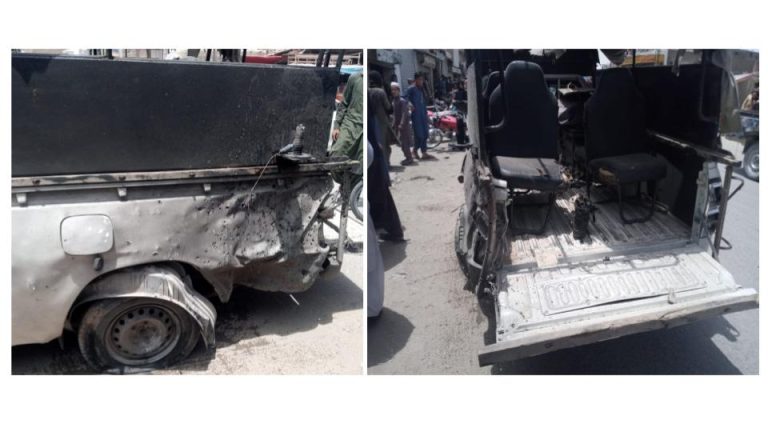
A Pakistan Army soldier was reportedly killed, and fourteen others were injured in two separate explosions targeting Pak forces’ vehicles in Buleda and Pishin towns of Pak-occupied-Balochistan on Friday.

In the Buleda area of Kech district, unidentified individuals targeted a vehicle of Pak Army with an improvised explosive device (IED). The explosion resulted in the death of paramilitary Naik Sher Khan and injured eight others, including Sepoy Junaid, Sepoy Asif Rashid, Sepoy Waheed, Sepoy Usman Ghani, Sepoy Asim, Sepoy Nadir, and Sepoy Rahim. And the condition of two of the injured is critical.

The deceased and injured were shifted to the Teaching Hospital in Turbat, and the Army cordoned off the area following the explosion.

Meanwhile in Pishin, a Pashtun-dominated area of Pak-occupied-Balochistan, a Counter-Terrorism Department (CTD) vehicle was bombed by unidentified individuals. The remote-controlled explosion on Bund Khushdal Khan Road injured six people, including three CTD personnel and three civilians. The injured were transported to Civil Hospital in Pishin for medical treatment.

Police and Frontier Corps (FC) sealed off the area and initiated an investigation following the Pishin explosion. No group has claimed responsibility for either of the bombings at the time of this report.

This attack highlights the ongoing security challenges faced by the Army in the region. Since 1948, the Pakistan Army has forcefully occupied the resource-rich region of Balochistan and, to exploit it indefinitely, has launched scathing attacks on the Baloch community. 

Bangladesh imposes curfew, disables internet amid violent students’ protest

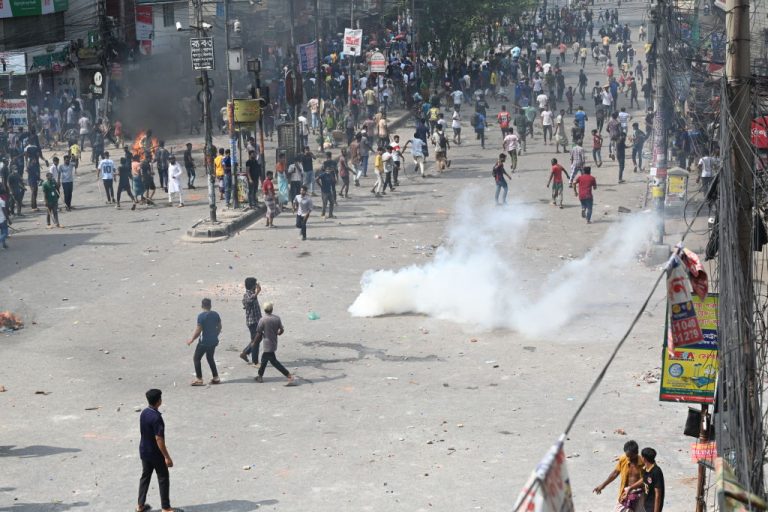
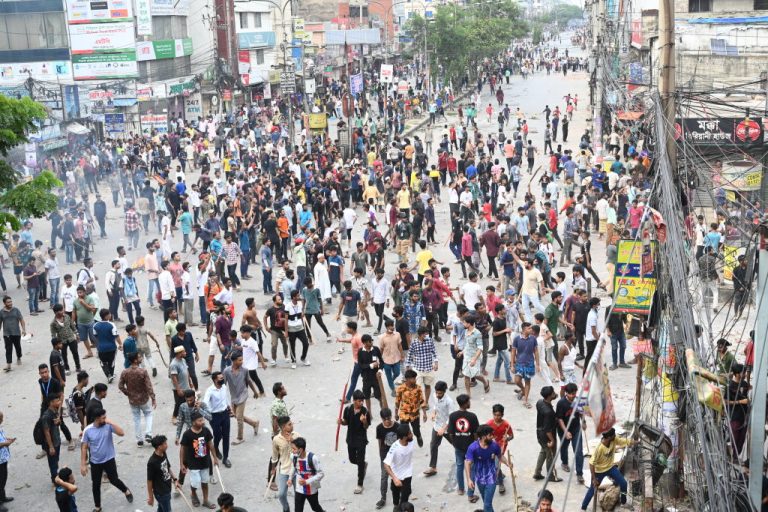
Amid escalating student-led anti-government protests, Bangladesh has imposed a nationwide curfew and disabled mobile internet services to curb disinformation. Following the curfew, authorities have shut down schools and universities indefinitely.

The nationwide protests, sparked by opposition to job quotas, have led to heightened security measures. The Border Security Forces (BSF) conducted security checks at the Indian Immigration check post in Fulbari, Jalpaiguri.

The curfew announcement on Friday evening came after clashes between police and student groups resulted in dozens of deaths, according to The Washington Post.

Violence on Thursday in 47 of Bangladesh’s 64 districts killed 27 and injured 1,500. By Friday night, the total number of those dead from the protests reached 105, AFP separately reported, citing hospitals. Reuters could not immediately verify the reports and police have not issued a casualty toll.

The U.S. Embassy in Dhaka said that reports indicated more than 40 deaths and “hundreds to possibly thousands” injured across Bangladesh. In a security alert, it said protests were spreading, with violent clashes being reported across Dhaka. The situation was “extremely volatile,” it said.

Student Protests

The unrest began with students protesting a new policy that reserves a portion of government jobs for descendants of the nation’s freedom fighters. The protesters attacked the state television headquarters in Dhaka and set fire to police booths on Thursday, calling for a “complete shutdown” of the country.

Street battles between security forces, who are using rubber bullets and tear gas, have brought life in several neighborhoods to a halt, as reported by Bangladeshi media.

Additionally, several leading Bangladeshi newspaper websites have not been updated since Thursday or are inaccessible, and television channels have been taken off the air.

The Indian High Commission in Dhaka is coordinating with local authorities to ensure the safety of students traveling to India. The Indian mission, in collaboration with BSF and the Bureau of Immigration, is facilitating the return of Indian students from Bangladesh. A total of 245 Indian nationals, including 125 Indian students and 13 Nepali students, arrived on Friday through the Gede border crossing in West Bengal.

The protests, initially driven by anger over job quotas, have also been fueled by high unemployment among young people, who make up nearly a fifth of Bangladesh’s 170 million population. Some analysts suggest that the violence is also being driven by wider economic woes, such as high inflation and shrinking foreign exchange reserves.

The protests have opened old and sensitive political fault lines between those who fought for Bangladesh’s independence from Pakistan in 1971 and those accused of collaborating with Islamabad. The former include the Awami League party of Prime Minister Sheikh Hasina, who branded the protesters “razakar,” a term used to describe independence-era collaborators.

Ending J&K’s ‘Armed Struggle’: A call for change

The Past

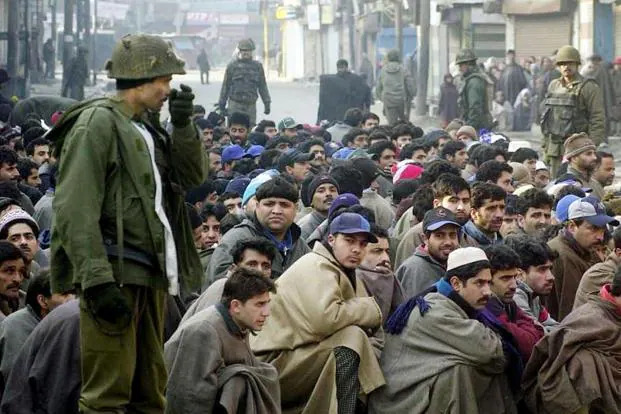
When terrorism first raised its ugly head in Kashmir Valley more than three decades ago, it was complemented with a craftily orchestrated campaign that was extraordinarily high in emotional content. Beguiled by promises that “azadi [freedom] was just around the corner”, the people of J&K heartily welcomed the armed Kashmiri youth [calling themselves ‘freedom fighters’] who had been trained and armed by Pakistan Army’s intelligence wing Inter Services Intelligence [ISI] and would ‘liberate’ Kashmir through an ‘armed struggle’.

So strong was the prevailing euphoria then that locals failed to see the ugly underbelly of the so-called ‘armed struggle’ and discern ISI’s sinister game-plan of turning J&K into a battleground for its proxy war against India as well as using its people as ‘cannon-fodder’. What followed was a tragedy of humongous proportions- unquestioningly obeying the diktat of their sponsors terrorists went on a killing spree, assassinating all those opposing Pakistani involvement in Kashmir and even those who questioned J&K’s accession to India and the ‘right to self determination’ supporters weren’t spared.

While ‘azadi’ is as elusive today as it was more than three decades ago, its connotation too has undergone a complete change. After enticing people of J&K with promises of freedom and a glorious future, ISI realised that similar emotions encouraging secessionist ideology could well find a place in the minds of those living in Pakistan occupied Jammu and Kashmir [PoJK], making Pakistan’s illegal occupation of this region difficult. So, without even consulting the people of J&K, the ISI replaced the very idea of ‘azadi’ by the “Kashmir banega Pakistan” [Kashmir will become part of Pakistan] slogan.

When its proxy Jammu and Kashmir Liberation Front [JKLF] refused to give up its demand for ‘freedom’, ISI created the Hizbul Mujahideen [HM] terrorist group to decimate JKLF and propagate Pakistan’s weird interpretation of ‘azadi’ making it synonymous to J&K’s merger with Pakistan. By professing jihadist ideology and indulging in widespread killings, HM shed all pretence of fighting for the people of J&K and instead unashamedly worked as ISI’s proxy in J&K. The fact that HM chief Syed Salahuddin himself admitted that “we are fighting Pakistan’s war in Kashmir,” clearly indicates this group’s absolute subservience to ISI!

The Present

Emotions have cost the people of Kashmir dear, and having been the hapless victims of terrorism for more than three decades, there’s a need for them to dispassionately reflect upon what they have gained and lost from this ongoing cycle of senseless violence. It needs to be remembered that there’s no family in Kashmir that hasn’t suffered directly or indirectly due to the adverse fallouts of terrorism. While thousands of innocents have been killed and maimed, several properties have been destroyed and with tourism and normal life coming to a halt, employment avenues are few.

Thankfully, things have now changed for the better and with locals becoming more discerning, few now believe in Pakistan’s web of lies aimed at surreptitiously furthering its self-serving interests in Kashmir at the cost of its people. With few takers for the hybrid ‘azadi’ promise, terrorist groups in J&K are now increasingly relying on jihadist ideology for recruiting gullible youth. Proudly accepting that “The Kashmiri movement was Islamised from day one,” Salahuddin reasons, “Why do you think an educated young man, who has a bright future otherwise, is willing to die? Is he mad? Azadi is not his objective. What will he do with azadi if he dies during the struggle? [Emphasis added].

The HM chief candidly admits that “He [the terrorist] is into militancy because he knows that if he dies for a noble cause, he would become a martyr, as per Islam. We tell him that he would get into the “real life” after this death and he would get peace. Khuda ussey raazi hoga. [Allah would be pleased with him]. [Emphasis added]. What needs to be noted here is that while Salahuddin is motivating young boys to join terrorist ranks by promising them salvation, he’s not been able to persuade even one out of his five sons to pick up the gun and enjoy “the real life” after death.

Similarly, though Hurriyat leaders too have been talking glibly of how terrorists killed in encounters are assured of a place in paradise, none of their own sons [save one] have availed this promised benefit despite all the worldly pleasures known to mankind that it supposedly provides. Junaid Ashraf Khan, son of former Tehreek-e-Hurriyat chairman Mohammad Ashraf Sehrai did join in 2018 and though appointed ‘Divisional Commander’ of HM, confined himself to Old Srinagar city as its labyrinth of narrow and interconnected alleys afforded natural protection till he ran out of luck two years later when he was tracked down and eliminated in his hideout in the old city’s Nawakadal area.

Statistics clearly indicate that terrorists have extremely short existence. Just two weeks before the Hurriyat leader’s son was killed, HM’s ‘Operational chief’ Riyaz Naikoo met the same fate. Naikoo had replaced Zakir Musa, who turned rogue and joined Al Qaeda affiliate Ansar Ghazwat-ul-Hind in 2017. Musa, who himself was gunned down in 2019, had replaced Burhan Wani after the latter was killed during an encounter in 2016. Burhan Wani’s case is tragic and it exposes how both the Hurriyat and HM used this young boy as the proverbial ‘sacrificial lamb’ for their own self-serving interests.

Burhan Wani was more of a publicity seeker than a terrorist and thoroughly enjoyed the attention his posts evoked on social media. Since security forces monitor social media, one had expected the Hurriyat and HM to advise this young boy against indiscreet use of internet as it could compromise his location and endanger his life. However, instead of doing so, they kept prodding him to continue posting on social media and thus pushed him to his death. After Wani’s death, Hurriyat organised prolonged protests with the generous supply of funds from across the Line of Control [LoC] through the hawala route, and on instructions of ISI organised a vicious campaign of torching educational institutions.

The Future

If we don’t learn from the three decades of Pakistan sponsored terrorism in Kashmir, then we will never be able to improve our lot. Pakistan’s claims on Kashmir have been outrightly rebuffed by the international community as they lack credibility. The UN’s refusal to entertain Islamabad’s request asking New Delhi to reverse its decision of abrogating Article 370 has completely demolished Pakistan’s farcical Kashmir narrative of it being “disputed,” and this reality cannot be wished away by rhetoric. The dividends of peace in J&K are now clearly visible and no one can deny that there’s been a marked improvement in both infrastructural development in this region and quality of life of its people.

Though Pakistan has not been able to realise its Kashmir dream even after using terrorism for more than three decades, Islamabad is not going to restrict, let alone eschew, disruptive activities in J&K. It may be debated that if the majority of the people in J&K are happy with their new found peace and prosperity, then why some local youth are still joining terrorism. The answer is simple-there are a group of people ranging from influencers, facilitators and even some leaders who are benefiting financially from ongoing terrorism in J&K, and they would go to any extent in ensuring the status quo. Then there is the gullible youth that can easily be brainwashed into believing that the killing of innocents has divine sanction and will earn them a place in paradise.

The adage ‘God helps those who help themselves’ has universal acceptability and as such the people of Kashmir need to understand that while support from other agencies is of great assistance, there can be no substitute for the inescapable requirement  of the people of J&K to play their due role in facilitating return of normalcy. Punjab too was once the victim of cross-border terrorism spurred by demands for creation of an independent entity by breaking away from India- just like what J&K is experiencing. But Pakistan’s sinister plan failed due to rejection of this secessionist ideology by the local population and their whole hearted cooperation with the administration and security forces.

It’s time the people of J&K belonging to all sections of society put aside their petty differences and work together for ensuring the return of enduring peace and prosperity to this region, by outrightly rejecting violence in the garb of a futile ‘armed struggle’. In 2007, senior Hurriyat leader Mirwaiz Umar Farook had admitted that military means [to resolve the Kashmir issue] have not achieved any results except creating more graveyards,” and even the most rabid supporters of the supposed ‘armed struggle’ can’t contradict this incisive observation.

So, instead of letting ongoing terrorism in J&K create more graveyards, isn’t it more prudent to bury the so-called ‘armed struggle’ itself?  

Violent students’ protest over job reservations in Bangladesh result in 39 deaths

Violent protests have erupted across Bangladesh regarding reservations. So far, 39 protesters have died. To control the violence, mobile internet has been shut down. The army has been deployed on the streets throughout the country.

Violence has erupted in Bangladesh, India’s neighboring country, against reservations in government jobs. Currently, students are out on the streets. This is the second major student movement against reservations since 2018.

The fire against reservations in Bangladesh has intensified. During violent student protests, buses and vehicles are being set on fire. Internet services have been shut down in the country. Buses, trains, and metros are all closed. The army is marching to control the situation. It is reported that at least 39 people have died and more than 2,500 people have been injured in these violent protests. According to local media reports, protesting students set fire to the Bangladesh TV Center in Rampura, South Dhaka.

These demonstrations highlight the growing frustration among Bangladesh’s youth, with nearly 32 million young people out of work or education in a population of 170 million.

Indian High Commission’s Advisory

The Indian High Commission has issued an advisory for Indians residing in Bangladesh. It states that given the current situation in Bangladesh, members of the Indian community and Indian students living in Bangladesh are advised to avoid travel. They should stay indoors unless absolutely necessary. The High Commission has also released some emergency contact numbers that are available 24 hours for assistance.

Reason Behind Ongoing Protest

Bangladesh was formed in 1971, and the 56% quota system was implemented that same year. Of the 56% reservation in government jobs, 30% is allocated to relatives of freedom fighters, 10% to women, 10% to people living in backward districts, 5% to indigenous people, and 1% to disabled individuals. Similar to India, government jobs in Bangladesh are considered a stable source of income. Approximately 400,000 graduates take exams each year for 3,000 government jobs.

In 2018, after four months of student protests, the Hasina government abolished the quota system. However, last month in June, the Supreme Court ordered the government to reinstate the reservations. The court directed that reservations be implemented in the same manner as before 2018. This has led to protests across the entire country.

Global disruption as Crowdstrike outage affects Microsoft system worldwide

A major technical malfunction in Microsoft’s servers on Friday led to widespread disruptions across various sectors globally, causing significant issues in aviation, banking, and media industries.

The glitch, which began early Friday, caused many Windows users worldwide to experience the dreaded “Blue Screen of Death” (BSOD) error on their computers. Microsoft in a message said that the error is being caused due to a recent CrowdStrike update. This widespread issue had far-reaching consequences, affecting airports, television news stations, and financial institutions.

In the aviation sector, the technical problems with Microsoft’s cloud services severely impacted flights worldwide, including in India. Frontier Airlines was the first to report issues, followed by various airlines globally encountering problems with web check-in. IndiGo, one of India’s largest carriers, reported system-wide impacts resulting in increased waiting times at contact centers and airports. Akasa Airlines and SpiceJet also reported technical difficulties, with some online services temporarily unavailable at major airports. Microsoft in a message said that the error is being caused due to a recent CrowdStrike update.

Cloudstrike

CrowdSrike is a cybersecurity platform that provides security solutions to users and businesses. Using a single sensor and unified threat interface with attack correlation across endpoints, workloads, and identity, Falcon Identity Threat Protection stops identity-driven breaches in real time.

It has been reported that the buggy update is caused by CrowdStrike’s Falcon Sensor to malfunction and conflict with the Windows system.

Microsoft Glitch

The banking sector was not spared, with operations halted in many countries due to the server issues. In the media world, the UK’s Sky News was forced off-air due to the technical glitch.

Microsoft Azure, the cloud computing platform at the center of the disruption, is widely used by individuals, companies, and governments for managing and developing applications. Microsoft acknowledged the issue, stating they were investigating problems affecting users’ access to various Microsoft 365 apps and services. The tech giant reported efforts to redirect affected traffic to alternative systems to mitigate the impact and assured that work to fix the servers was ongoing.

As the situation continues to unfold, passengers are advised to contact their respective airlines for up-to-date flight information. Microsoft has promised to provide regular updates as they work to resolve this major technical crisis that has highlighted the vulnerabilities in our increasingly interconnected digital world.

Pak Army stages encounter, kills victim of enforced disappearance in Bannu

Hafiz Fahad, a native of Bannu who was previously subjected to enforced disappearance, was reportedly killed during in a security operation in Bannu. Fahad was portrayed as one of the attackers in the incident by Pak Army.

The incident occurred on July 17, when a pre-dawn militant raid targeted a rural medical facility and a Punjabi Pak Army base in Bannu, a garrison town in northwestern Pakistan. Bannu and the surrounding districts of Khyber Pakhtunkhwa have experienced almost daily attacks by the Pak Army and Tehrik-i-Taliban Pakistan (TTP).

This event is part of a broader pattern of violence and exploitation that has plagued the region, particularly affecting the Pashtun community. The Punjabi Pakistan Army conducts numerous operations in the name of counter-terrorism, often resulting in the enforced disappearance of local residents. These actions have intensified in the former Federally Administered Tribal Areas (Ex-FATA) and Khyber Pakhtunkhwa.

Since 1947, the Pashtun lands and people have been subject to exploitation by the Punjabi Pak establishment. Pashtuns have been labeled as terrorists or TTP sympathizers, providing a pretext for military operations, abduction, extra-judicial killings and presence in their territories.

The recent killing of Hafiz Fahad is as another instance of this long-standing pattern of abuse and exploitation, highlighting the ongoing plight of the Pashtun people in the region.

Violence erupts in Leeds: Protesters overturn police car, torch bus in Harehills

A night of chaos unfolded in the Harehills area of Leeds late Thursday as a police car was overturned and a bus set on fire. Hundreds of people took to the streets, prompting the West Yorkshire Police to label the situation a “serious disorder incident” and urging residents to stay indoors.

Social media has been flooded with videos showing large crowds and scenes of unrest. The cause of the disturbance remains unclear.

In a statement released on Friday, the West Yorkshire Police confirmed that the situation is ongoing and a significant number of public order officers have been deployed to the area.

Initial reports indicate that the disturbance began around 5 p.m. BST on Luxor Street. According to The Guardian, the unrest may be linked to issues involving agency workers and children. A local restaurant owner reported that some community members responded to children being taken into care by setting fires and throwing stones.

Home Secretary and West Yorkshire MP Yvette Cooper expressed her shock at the events. “Disorder of this nature has no place in our society. My thanks go to West Yorkshire police for their response. I am being kept regularly updated,” Cooper wrote on X.

The West Yorkshire Police confirmed that no injuries have been reported so far. Detectives from Leeds CID and the force’s Homicide and Major Enquiry Team are investigating the criminal offences, including the damage to vehicles caused by the fire.

“We wish to reassure residents that we are responding to the disorder incidents which have taken place, and that appropriate specialist public order resources are attending,” the police statement read. “We want to make it very clear that the full weight of the law will be brought against those responsible.”

The police are treating the incident as a serious public order matter, with efforts ongoing to restore calm and order to the area.

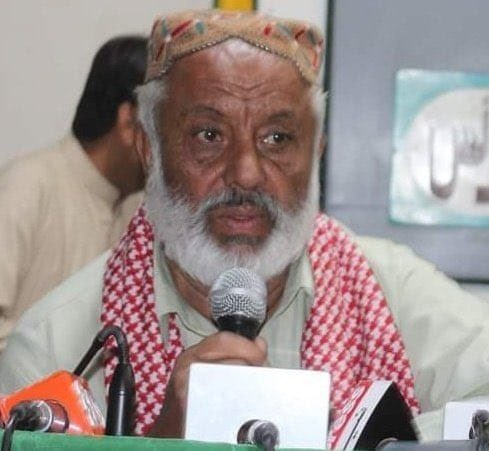
Quetta: Pak Army abducts elderly activist Rahumatullah Baloch

Rahmatullah Baloch, a well-known activist and elderly resident of Quetta, has reportedly been forcibly disappeared. The incident occurred late last night when Pak forces raided a house in the suburban area of Nawakali, Quetta, taking Baloch into custody and transferring him to an unknown location.

Rahmatullah, a prominent figure in recent protest movements, had been actively participating in a sit-in organized by the Baloch Yahkjehti Committee and the family of Zaheer Baloch. Baloch played a crucial role in arranging food and water for the demonstrators, including women, children, and fellow elderly participants.

The disappearance has sparked outrage demanding the immediate and safe release of Rahmatullah Baloch. This incident is part of a broader pattern of human rights violations.

Reportedly, Baloch had gained attention during recent protests when a video of him went viral on social media. The video reportedly showed police subjecting protesters to violence, highlighting the tense atmosphere surrounding the demonstrations.

The Baloch Yakjehti Committee has called for unity in the face of this latest disappearance. The entire Baloch nation must speak for the safe release of peaceful activists like Comrade Rahmatullah.

Pakistan People’s Party leader shoots at peaceful protesters seeking Zaheer Ahmed’s recovery

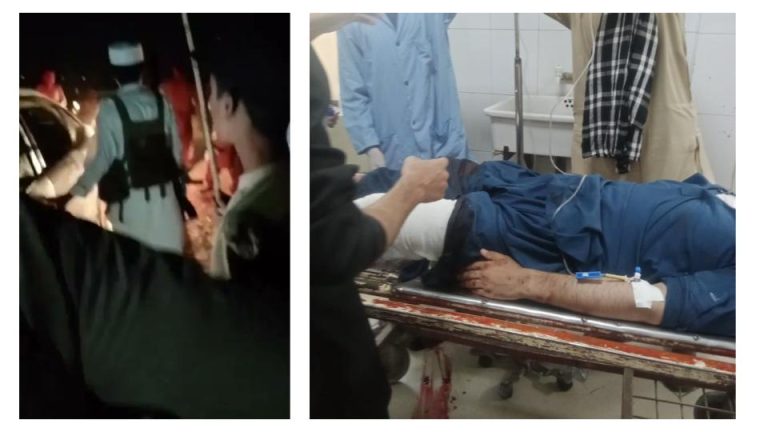
A peaceful sit-in protest in Khuzdar turned violent yesterday when armed men of Pakistan People’s Party (PPP) leader Sanaullah Zehri opened fire on demonstrators. Reportedly, a deputy and bodyguards of Zehri fired indiscriminately into the crowd, resulting in injuries to a number of protesters.

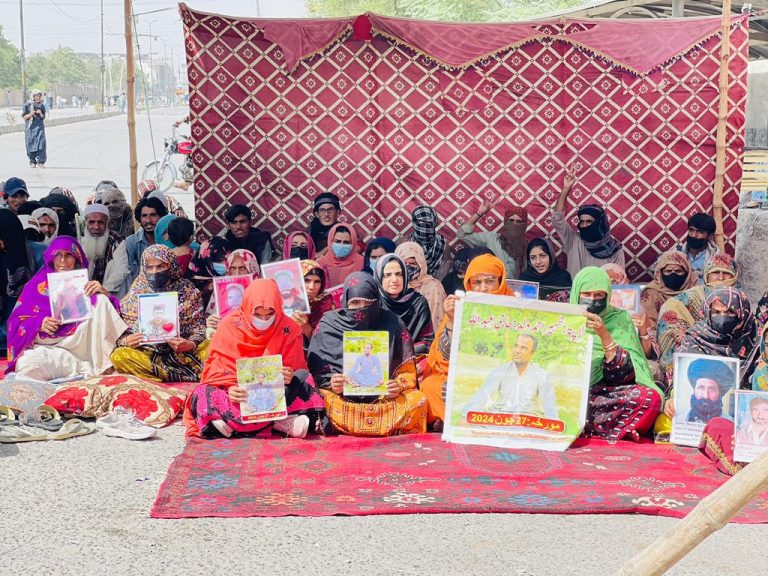
The sit-in, organized to demand the recovery of Zaheer Ahmed and the release of arrested protesters, was part of ongoing demonstrations in the region. Zaheer was reportedly taken into illegal custody in Quetta on June 27 and subsequently disappeared.

Video footage of the incident appears to show the vehicle and individuals involved in the shooting, inflicting violence and brutality on the peaceful protesters. This incident shows the complete breakdown of machinery of Pak-Occupied-Balochistan. The attack has been widely condemned as a violation of democratic principles and human rights.

Protesters at the sit-in, which included women, were calling for accountability regarding forced disappearances and human rights abuses by authorities, particularly the Counter-Terrorism Department (CTD). The CTD has been conducting numerous violations, including illegal raids, harassment of civilians, and extrajudicial killings.

This incident has reignited discussions about the long-standing tensions in Pak-occupied-Balochistan, with activists pointing to a history of violence against the Baloch community dating back to March 27, 1948.

Family of missing Zaheer Ahmed suspends protest, issues 15-day ultimatum for recovery

The family of Zaheer Ahmed, an occupied govt employee forcibly disappeared on June 27, 2024, has temporarily suspended their protest after receiving assurances from authorities. The family has given a 15-day deadline for filing an FIR against the Counter-Terrorism Department (CTD) and recovering their missing relative.

In a statement, the family warned of launching a widespread movement across Pak-occupied-Balochistan if Zaheer Ahmed is not recovered within the stipulated timeframe. “If Zaheer Ahmed is not found within fifteen days, we will initiate a large-scale movement not only in Quetta but throughout POB,” a family spokesperson said.

The family expressed gratitude to the Baloch community, particularly in Quetta, for their unwavering support during their ten-day sit-in on Saryab Road. They also acknowledged the backing of Baloch leaders who stood with them “day and night in this time of grief.”

The protest, which began with a sit-in and press conferences, escalated when demonstrators marched towards the Red Zone. The rally reportedly faced police violence at two locations, resulting in injuries and arrests of several protesters. In response, thousands gathered in the Red Zone to protest against police brutality and demand Zaheer’s recovery.

The sit-in in the Red Zone was eventually called off after successful negotiations between the family and officials, leading to the current 15-day suspension of protests.

Since 1948, POB has been under Pak Army control and enforced disappearances, marginalization, and extrajudicial killings have been used as tools of oppression against the Baloch community.