Home Blog Page 78

Sniper fires shots at Donald Trump during rally in Pennsylvania

A shooting incident at a Donald Trump rally in Butler, Pennsylvania has raised serious questions about security protocols and prompted calls for swift investigations from Republican lawmakers.

According to early reports, a sniper managed to evade Secret Service agents and climb onto the roof of a building near the rally venue. The shooter fired multiple shots before being killed. At least one attendee claims to have alerted police and Secret Service to the apparent sniper, but his warnings went unheeded.

The incident has drawn sharp criticism of the Secret Service, which is primarily responsible for protecting Trump as a former U.S. president. Elon Musk, a prominent Trump ally, called for the agency’s leadership to resign.

https://twitter.com/WatcherGuru/status/1812251989759418579?t=fCqH1iVspvL5YWQLnOSP5g&s=08

Republican House Speaker Mike Johnson announced plans for an immediate hearing, stating on social media that Secret Service Director Kimberly Cheatle and officials from the Department of Homeland Security and FBI will be called to testify before congressional committees.

The Secret Service has initiated an investigation and briefed President Biden on the situation. They also stated that additional protective resources had recently been allocated to Trump’s security detail, though specifics were not provided.

Security experts predict a thorough review of Trump’s protection protocols. Joseph LaSorsa, a former Secret Service agent, suggested that Trump may now receive security measures more akin to those of a sitting president.

The incident occurred despite typically stringent security measures at Trump rallies, which include metal detectors, bag searches, and a secured perimeter. Paul Eckloff, another former agent, noted that the shooter must have either concealed themselves until becoming a threat or only revealed their weapons at the last moment.

In the aftermath of the shooting, Secret Service agents quickly formed a human shield around Trump, while armed personnel secured the stage. The former president was swiftly evacuated to a local hospital.

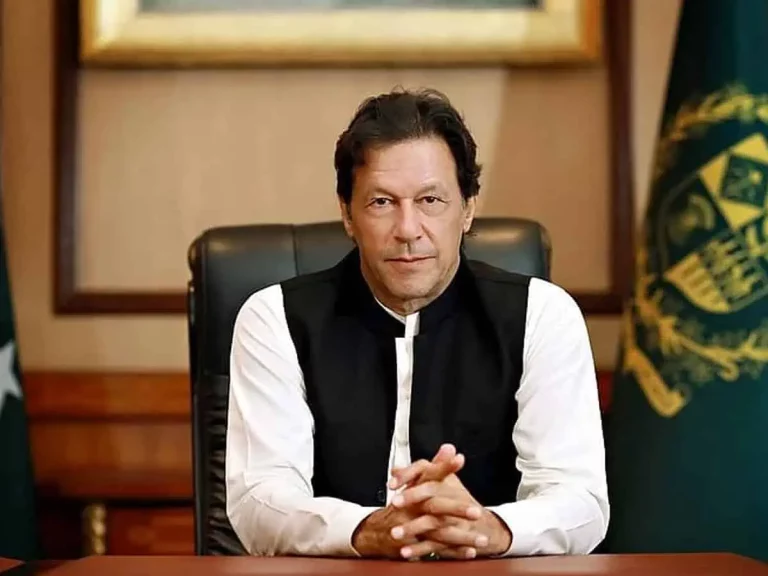
Imran Khan’s PTI set to emerge as single largest party in Pakistan

The Pakistan Tehreek-i-Insaf (PTI) is poised to become the single largest party in the National Assembly, while the ruling coalition appears likely to lose its two-thirds majority following the Supreme Court’s judgment declaring PTI eligible for reserved seats, according to a report by Pakistan-based daily, The Dawn.

The Supreme Court of Pakistan has ruled that PTI is entitled to a share of reserved seats in both national and provincial assemblies. This landmark judgment, delivered on Friday by a 13-member bench in an 8-5 ruling, represents a significant setback for the coalition government.

The case was initially filed by the Sunni Ittehad Council (SIC), a political party with PTI-backed candidates who joined after the February 8 general election, which they were compelled to contest as independents due to PTI being barred from using its electoral symbol, a cricket bat, because of alleged electoral law violations. Despite this, PTI candidates ran as independents and secured 93 seats in the National Assembly, surpassing all other parties.

The Pakistan Muslim League-Nawaz (PML-N) followed with 75 seats, while the Pakistan People’s Party (PPP) secured 54 seats. Imran Khan’s refusal to ally with any rival party led the PML-N and PPP to form a coalition government with smaller parties.

PTI

PTI-backed candidates, having won as independents, later aligned with SIC to form a coalition. The Supreme Court’s decision on Friday overturned the Peshawar High Court’s (PHC) ruling and nullified the Election Commission of Pakistan’s (ECP) decision, declaring it unconstitutional.

PTI members have praised the Supreme Court’s decision.

The issue of reserved seats gained prominence after over 80 PTI-backed independent candidates emerged victorious in the February 8 elections. The SIC then approached the ECP on February 21 seeking the allocation of reserved seats. However, the ECP, citing PTI’s failure to submit its list of candidates, denied the allocation of reserved seats to the SIC in a 4-1 majority verdict on March 4.

BNM Chairman condemns Pak Army brutality on protestors in Quetta

Dr. Naseem Baloch, Chairman of the Baloch National Movement, has issued a strong statement condemning escalating brutality by Pak Army forces across Pak-occupied-Balochistan. In his remarks, Dr. Baloch said that the Army is implementing a “terrible and horrific military strategy of collective punishment” against the Baloch people.

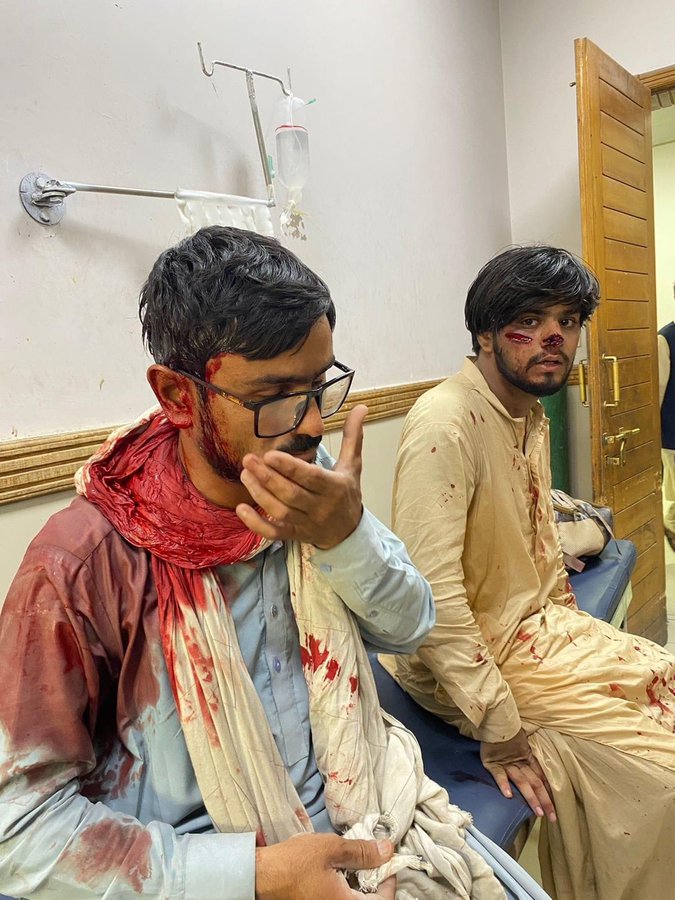
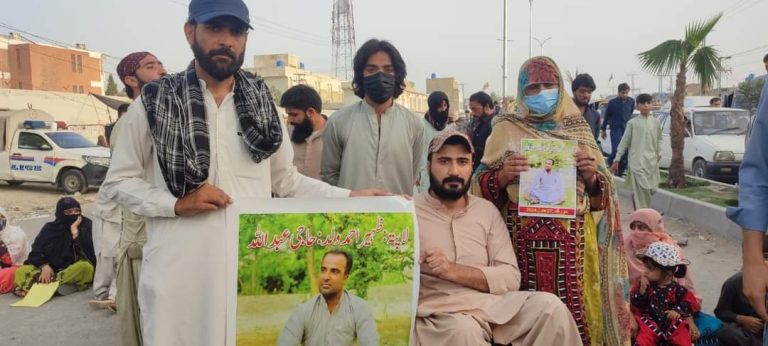
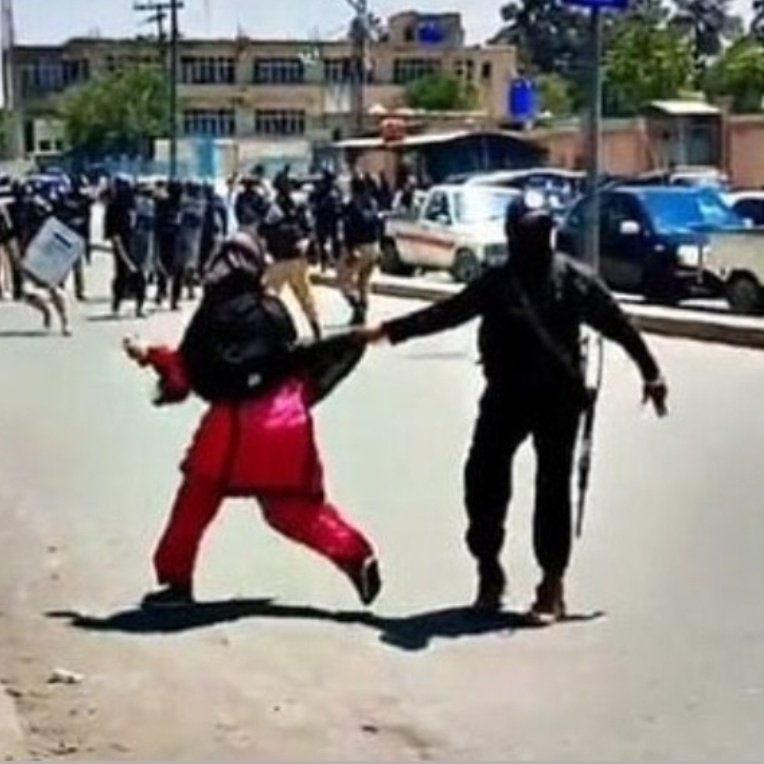
According to Dr. Baloch, the situation in POB has deteriorated to the point where forcible disappearances, extrajudicial killings, and violence against peaceful protesters have become commonplace. He specifically highlighted recent incidents in Quetta, where the protesters were met with gunfire, baton charges, and tear gas when demonstrating against the abduction of Zaheer Baloch.

The Baloch leader drew parallels between Pakistan’s actions and those of “uncivilized colonial powers,” asserting that the Army relies solely on military force to suppress dissent. However, he expressed confidence in the resilience of the Baloch movement, saying that “historical facts have repeatedly proven that no power in the world today can defeat any movement based on truth and rights.”

Dr. Baloch also criticized Pakistan’s approach to history, suggesting that the Army has failed to learn from past events, including the separation of Bangladesh. He emphasized the role of collective memory in shaping national character and warned that the Baloch people would not forget the violence inflicted upon them, particularly against women and elders.

The statement paid special tribute to Baloch women, describing them as “symbols of determination and courage” whose struggle has gained international recognition. In contrast, Dr. Baloch portrayed Pakistan as diplomatically isolated, relying on its “extremist jihadi Army and nuclear weapons” for leverage on the world stage.

Concluding his remarks, Dr. Baloch predicted the eventual success of the Baloch freedom movement, claiming that Pakistan’s fate has been “written on the wall based on historical truth.”

Pak police arrests Baloch activists amid protests in Quetta for recovery of Zaheer Baloch

Baloch Yakjehti Committee (BYC) member Bibgar Baloch and Faizan have been arrested by the police in Quetta. BYC condemned this arrest as an inhumane and illegal act by the police and administration. Bibgar Baloch and Faizan Baloch were apprehended by the police from the court and subsequently taken to the Civil Line Police Station.

The BYC emphasized that Bibgar Baloch is a dedicated worker of their organization and a courageous voice for all the missing persons, including Zaheer Baloch. They have called upon the Baloch nation, particularly the people of Shaal, to gather at the protest camp at Secretariat Chowk and raise their voices for the release of Bibgar Baloch and other comrades.

The protesters demand the recovery of Zaheer Baloch, who was abducted by the Pak Army. However, in its usual manner, the Pak Army not only exercised brutality on the peaceful protestors but also arrested them.

Yesterday, the police severely assaulted a rally held for the missing Zaheer Ahmed at two locations. The police used baton charges and tear gas shelling on the protesters, resulting in several injuries.

It is important to note that since 1948, the region has been under Pak Army control, with the military exploiting resources and committing human rights abuses. Enforced disappearances, marginalization, and extrajudicial killings have been used as tools of oppression against the Baloch community.

In solidarity with the Quetta protesters, the relatives of the missing persons have staged a protest sit-in on the main road in the Mangchar tehsil of Qalat.

Gilaman Wazir: The fallen hero of Pashtun rights

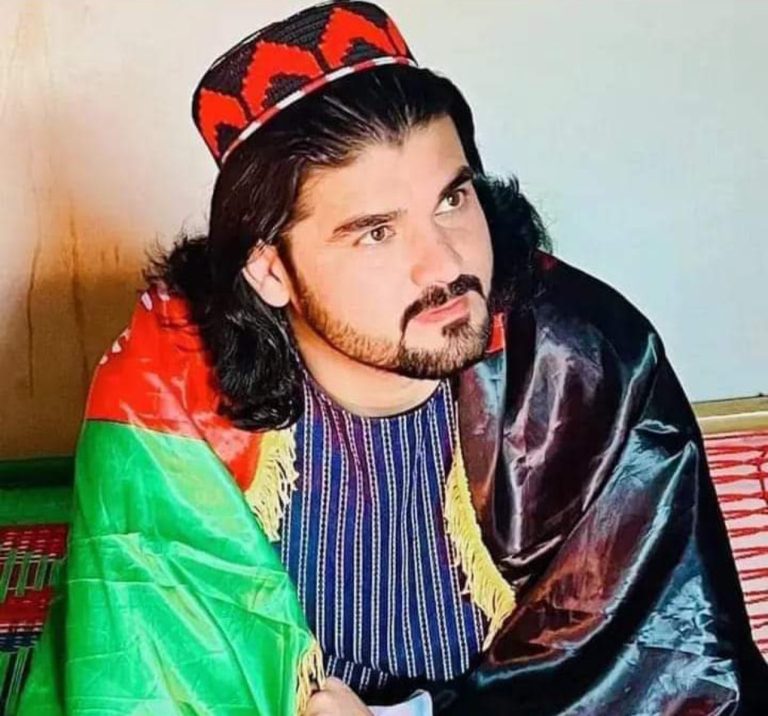
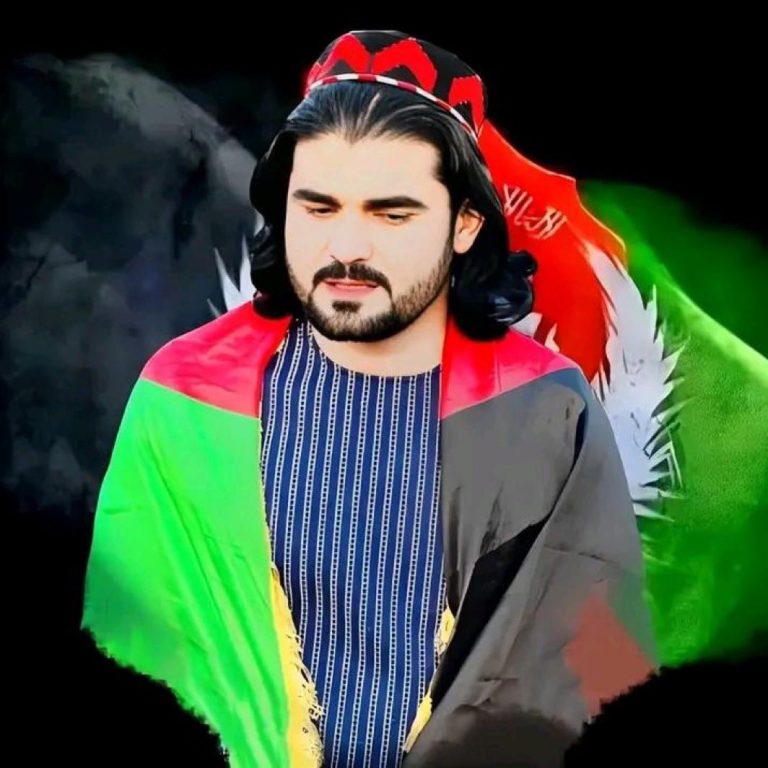
Gilaman Wazir, a prominent Pashto poet and key figure in the Pashtun Tahafuz Movement (PTM), succumbed to his injuries Wednesday night following a vicious assault in Pakistan’s capital. The 29-year-old activist’s death has ignited outrage and intensified tensions between the Pashtun community and Pak authorities.

Wazir, whose real name was Hazrat Naeem, was attacked and repeatedly stabbed on July 7 in Islamabad. Despite efforts to save him at the Pakistan Institute of Medical Sciences (PIMS) hospital, he passed away five days later, leaving behind a legacy of activism and five young children.

Manzoor Pashteen, founder of the PTM and his dear friend, confirmed Wazir’s death in an emotional address outside the hospital. “The closest, sweet, and loyal friend in my life, a strong fighter for independence and Afghanism, has accepted martyrdom in the struggle but did not bow down,” Pashteen said, his voice heavy with grief and anger.

The attack has been linked to Azad Dawar, a proxy of the Pak Army, and 10-12 accomplices. While a case has been registered at Sangjani Police Station, the suspects have reportedly fled the city. Reports even suggest that Azad Dawar has fled the country, showing the involvement of law enforcement in the attack.

Gilaman Wazir

Wazir’s death has reignited longstanding grievances within the Pashtun community. The PTM, known for its peaceful advocacy of Pashtun rights, has organized widespread protests, against the Pak Army of its targeted attacks against their community.

The poet-activist’s journey was marked by both creativity and conflict. A native of North Waziristan, Wazir was known for his revolutionary poems calling for Pashtun unity. Previously a worker in Bahrain, he was expelled in 2020 after accusations of funding the PTM and subsequently placed on Pakistan’s Exit Control List.

His outspoken criticism of the occupied Army, coupled with his public displays of the Afghan flag, made him a polarizing figure. Reports of his previous eight-month detention and torture by the Pakistan Army underscore the risks he faced for his activism.

Punjabi Pak Army

This tragedy is seen by many as part of a broader pattern of exploitation of Pashtun lands and people by the Punjabi Paki establishment since 1947. It raises urgent questions about the safety of activists and the future of Pashtuns in Pakistan. This exploitation includes the extraction of mineral resources and the use of terrorism to justify military presence in Pashtun territories, resulting in security checkpoints, military camps, and forced evacuations.

The militarization has led to the abduction and enforced disappearance of many innocent youths, often unconnected to any activist activities. Journalists and PTM members face violence and death despite the movement’s peaceful stance. Furthermore, the military’s practice of laying landmines in residential areas has led to tragic incidents, with children frequently being maimed or killed by explosions.

As Wazir’s body makes its final journey from Islamabad to North Waziristan, the thousands of Pashtuns and Pashtun community mourns not just a poet and activist, but a symbol of their struggle. His death raises urgent questions about the safety of activists in Pakistan and the future of Pashtun rights in the country.

Pak backed POGB occupying govt appoints unelected federal ministers

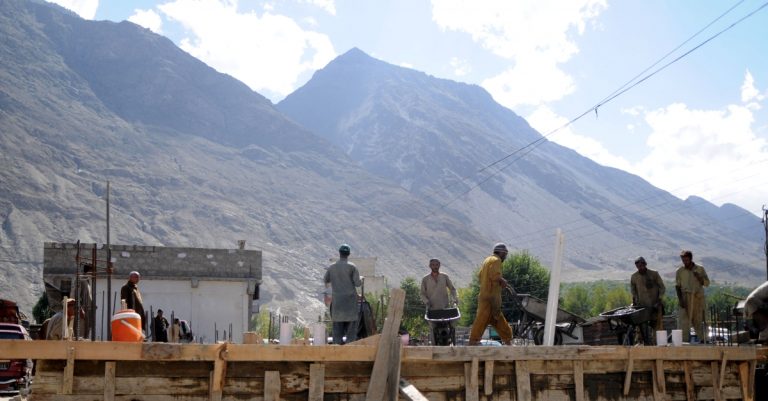
Pak-occupied-Gilgit-Baltistan is grappling with crisis as unelected federal ministers, have been appointed by the occupying government. These representatives, who wield significant decision-making power in the region, are corrupt and negligent of the region.

With reports of officials awarding tenders to contractors without following proper procedures has raised concerns about the efficiency and fairness of the occupying region’s development projects.

The area suffers from a severe lack of educational and medical infrastructure with significant difficulties in accessing basic education and healthcare services, particularly in emergency situations. The problem is exacerbated in rural areas, where villagers must travel to cities for essential supplies and services.

Transportation has become a critical issue due to deteriorating road conditions. In some cases, the poor state of roads has turned simple journeys into life-threatening ordeals for locals.

Moreover, the local administration has resorted to land grabbing and allocating large portions of forest land and several rest houses to private business owners from Punjab Province, bypassing legal procedures.

These issues are part of a broader pattern of keeping the people of POGB impoverished while exploiting their resources, a situation that has persisted for over 70 years.

Transforming defense: Giving AgniPath Scheme a fair chance

Though discovered and postulated as a physical law by Sir Isaac Newton in 1687, opposition to change is a law of nature that extends to human thinking too. The dilemma of handling powerful emotions associated with change has aptly been described by the following lines written by eminent American poet Robert Frost-“Ah, when to the heart of man/ Was it ever less than a treason/ To go with the drift of things/ To yield with a grace to reason.”

Having been subjected to unprovoked aggression by both its Eastern and Western neighbours, imperatives of ensuring territorial integrity makes maintaining a credible deterrent capability in the form of strong defence forces an inescapable requirement for India. However, maintaining a large standing defence force has its own problems, both at the national and service headquarters levels.

To ensure optimum operational efficiency, defence forces require maintaining a young age profile and this means that its rank and file superannuate early. At the same time, there’s also a need to reduce burden on the national exchequer and defence budget by lowering the pension bill so that requisite funds are available for government projects as well as capability enhancement and modernisation of the weapon and warlike equipment inventories.   

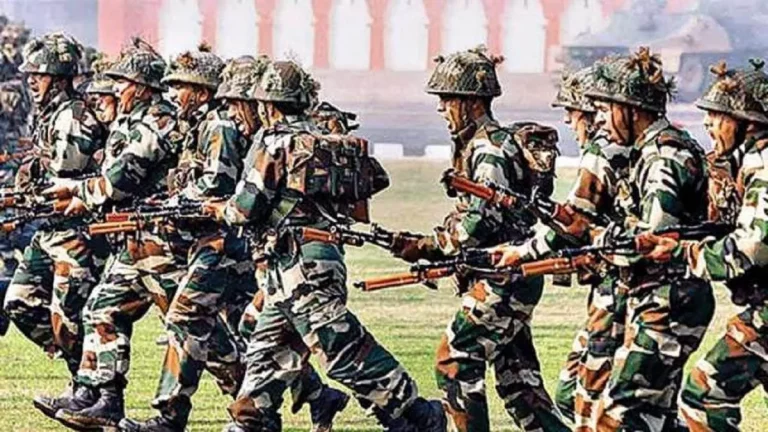
To address both these issues, the Government of India has introduced the Agnipath recruitment system. Under this scheme, the selected Agniveers will, after undergoing a somewhat abridged training regimen, serve for a period of four years, and on conclusion of this service period, only 25 percent of the enrolled Agniveers will be retained. This will ensure that while the armed forces have a young age profile, payment of a severance financial package in lieu of regular pension to those not retained would result in substantial savings.

Any initiative that is unique and has no previous precedent is bound to have rough edges and Agnipath scheme is no exception. Therefore, this little more than one-and-a- half year old initiative may be having its own set of teething problems. However, it wouldn’t be presumptuous to mention that a major part of the opposition to this new recruitment scheme can be attributed to instinctive human response to a quantum change of the status quo.

For example, the Agnipath scheme has drawn flak from many veterans, and the underlying reason for this is perceived dilution of regimentation, which is the cornerstone of motivation- the battle winning ‘weapon’ of the Indian armed forces. While this argument does have merit, the inference that motivation is solely dependent upon, and is proportional to the period of service may be a bit far-fetched. Similarly, the large number of applicants keen to be selected as Agniveers belies the view that this scheme is immensely unpopular due to its terms and conditions of truncated service.  

Politicking on Agnipath scheme has further vitiated the atmosphere since arousing public emotions through unsubstantiated allegations have banished reasoning to the backburner. It needs to be remembered that Indian armed forces are no monoliths but dynamic organisations in which detailed analysis, meticulous evaluation and midcourse corrections to enhance efficiency are regular features that play a very important role and are religiously followed.

A case in point is the five-year short service commission that was first extended to 10 years and then 14 years! Similarly, in 2017, the Indian army carried out the third cadre review of JCOs and NCOs that not made very material changes in functioning of units but also benefited more than 1.45 lac junior commissioned officers and other ranks.

So, it would be completely unfair to assume that the Angipath scheme would be excluded from internal scrutiny by the armed forces. In fact, there are credible reports that an impact assessment exercise of this scheme is already underway in which the key stakeholders- the Agniveers themselves, their trainers as well as commanding officers [Cos] and sub-unit commanders under whom Agniveers are physically serving.

While Agniveers will provide inputs regarding their personal aspirations and apprehensions, their trainers will furnish quantifiable data and broad-based assessment of the physical and mental standards achieved by Agnivers during training. Being the ones under whom Agniveers are directly functioning, COs and sub-unit commanders will be able to provide accurate details on the professional competence and motivation level of Agniveers based on their performance under trying conditions. All stake holders being in the loop will facilitate comprehensive analysis of the Agnipath scheme.

One of the points against Agnipath is that since the tenure of 75 percent of those recruited will only be four years, this scheme will adversely affect the already serious unemployment problem bedeviling India. Here it needs to be clarified that the defence forces are meant to preserve India’s sovereignty and territorial integrity not act as welfare oriented employment providing agencies and hence their organisational interests cannot be compromised on the altar of populism.

Furthermore, according to Global Firepower [GFP] Index 2024, India has the population of 139,17, 9585 while the strength of its armed forces is estimated to be 14,55,550. From this it emerges that the Indian defence forces are providing employment to a mere 0.1 percent of the country’s population, and this clearly indicates that portraying Agnipath as a scheme that will cause humongous unemployment is a misconception born out of ignorance.

Therefore, it’s necessary to give the Agnipath scheme reasonable time so that its efficacy can be accurately gauged through regular monitoring and after appropriate mid-course corrections have been instituted to enhance its effectiveness. Outrightly rejecting this scheme by letting emotions and apprehensions override rational thinking or for the purpose of scoring political brownie points is, to say the least, being very, very unfair! 

Quetta protests: Arrested women on hunger strike for Zaheer Baloch’s recovery

During the Quetta protest, arrested women, including Bibo Baloch, Fauzia, and others, started a hunger strike inside the police van. One of the women fainted. The arrested women shows that their hunger strike would continue until their demands are met.

The protesters demand the recovery of Zaheer Baloch, the release of all arrested protesters, and the return of the mobile phones seized from the women.

In Quetta, the family of forcibly disappeared Zaheer Baloch and Baloch political and social activists held a protest rally demanding his recovery and appearance. The police used violence at two locations, firing on the protesters, injuring several, and arresting numerous protesters, including women.

Police fired, baton-charged, and used tear gas against rally participants protesting the non-recovery of Zaheer Ahmed on Saryab Road in Quetta. Multiple protesters were arrested.

Mahrang Baloch During Quetta Protest

Dr. Mahrang Baloch, leader of the Baloch Yakjehti Committee, expressed her thoughts, saying that Zaheer Baloch’s family has been holding a sit-in for the past 11 days on Saryab Road, Quetta, for his recovery. A rally was held, but Quetta police violently treated peaceful protesters, including women and children, and arrested peaceful demonstrators.

Mahrang Baloch also said that the Pak Army fully believes that violence is the solution to every problem. First, it tramples its own constitution and laws to forcibly disappear citizens, while their families peacefully protest against these unconstitutional and illegal actions. When they raise their voices, instead of engaging in dialogue and solving the issue, the Army commits the worst violence against women and children and arrests them.

She said that if the Pak Army thinks it can suppress the public voice through coercion and barbarity, it stands at an extremely wrong place in history. She appealed to all to raise a strong voice against this violence and the arrests of Zaheer Baloch’s family and ordinary protesters and to stand shoulder to shoulder with them.

Iraqi court sentences wife of Abu Bakr al-Baghdadi, former ISIS leader, to death

An Iraqi court has handed down a death sentence to a wife of the late Islamic State (ISIS) leader, Abu Bakr al-Baghdadi, for her involvement with the terrorist group and the detention of Yazidi women. The Iraqi judiciary announced the verdict on Wednesday, although the woman’s name was not disclosed in the official statement.

According to the Supreme Judicial Council of Iraq, the convicted woman held Yazidi women captive in her Mosul home after they were kidnapped by ISIS forces from the Sinjar district in western Nineveh Governorate. The defendant is currently in Iraqi custody.

An official said that the ruling must be ratified by an Iraqi appeal court to become final and enforceable.

In response to the court’s decision, the Islamic State media front, Sawtul Zarqawi, identified the woman as Um-e-Huzaifa in a lengthy message threatening retaliation against the judicial order.

Abu Bakr al-Baghdadi, who was killed in November 2019 during a U.S. special forces raid in northwestern Syria, rose to notoriety as the leader of ISIS. He declared himself “caliph” of all Muslims and controlled vast territories across Iraq and Syria from 2014 to 2017 before the group’s power was dismantled by U.S.-led coalition forces.

PTM member & Pashto poet Gilaman Wazir dies from attack by Azad Dawar’s henchmen

Gilaman Wazir, a central council member of the Pashtun Tahafuz Movement (PTM) and an emerging Pashto poet, passed away on Thursday at Pakistan Institute of Medical Sciences (PIMS) Hospital in Islamabad.

PTM leader Manzoor Pashteen announced Wazir’s death outside PIMS Hospital, stating that despite exhaustive efforts to save him, Gilaman Wazir succumbed to his injuries.

Pashteen said several associates of Azad Dawar assaulted Wazir in Islamabad, beating him so severely that local doctors were unable to provide adequate treatment. Additionally, Wazir had been barred from traveling abroad for further medical assistance.

A case has been registered at Sangjani Police Station in Islamabad by Zameen Khan against Azad Dawar and 10-12 accomplices for their involvement in the attack on Wazir.

On July 10, SHO Ashiq Khan of Sangjani Police Station confirmed that the suspect had been identified and that CCTV footage of the incident had been obtained. However, the suspect’s location and office in Islamabad were found to be closed, and reports suggest he has left the city.

Efforts are being made to dispatch police to North Waziristan to apprehend the suspect and his accomplices. However, authorities have yet to grant permission for the operation in Waziristan.

Gilaman Wazir

Earlier, PTM UK protested and strongly condemned the attack. The organisation called on the United Nations to pressure Pakistan to cease the killing and torture of oppressed tribes and to ensure that Wazir’s attackers are punished according to law.

Since 1947, the Punjabi Pakistan Army has been exploiting Pashtun lands and people. Wazir’s case is not an isolated incident; the Pak establishment continuously inflicts violence on activists. Despite the Pashtun Tahafuz Movement (PTM) being predominantly peaceful, its members frequently face aggression from the Punjabi Pak Army.

Gilaman Wazir, born Hazrat Naeem, was a native of Asad Khel, Razmak, in North Waziristan. Wazir had previously worked as a laborer in Bahrain but was expelled in 2020 after the Pak Army accused him of sending funds to PTM. His name was subsequently placed on Pakistan’s Exit Control List.

Wazir hailed from Asad Khel village in Razmak Tehsil, North Waziristan. He is survived by two brothers, who work abroad, six sisters, and his mother. His father passed away some years ago.