Home Blog Page 96

Pashtuns resist Pak Army’s proxy war tactics in Khyber Pakhtunkhwa

Residents of Khyber Tirah are taking to the streets to protest Pak Army’s policies, which are designed to sow discord and facilitate proxy wars in their homeland. The demonstrations reflect growing frustration with strategies that has regrouped various interest groups under the guise of counter-terrorism operations.

“They create terrorism, force us from our homes, and then use our land for their mercenary wars”, says a local. Residents argue that Army’s tactic of pitting factions against each other in Terah has been employed without considering its devastating impact on the broader Pashtun population.

These operations, far from enhancing security, are causing innocent civilian deaths. The community’s message is clear: they refuse to let their region become another battleground for external interests. Pakistan has employed various tactics to oppress the Pashtun community, abductions, arrests, enforced disappearances and killing innocent people in the name of security has become too common.

Al-Qaeda In Subcontinent (AQIS) publishes its’s stance on “jihad in Kashmir”

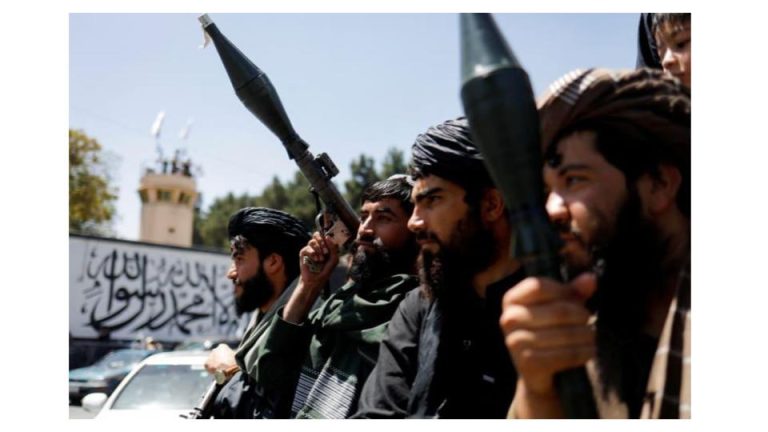
Al-Qaeda has released an official ‘Policy Statement’ outlining its stance on the “Jihad in Kashmir”. This move comes as the terrorist organization seeks to clarify its position and strategies in the region.

“Any movement engaged in battle against the enemies of religion faces attempts by the enemy’s intelligence agents to harm its jihad,” the statement reads. AQIS claims these tactics include imposing “non-Sharia actions” to discredit their efforts and infiltrating their ranks to arrest supporters.

The organization asserts that such strategies are not unique to Kashmir but have been observed in Pakistan, India, and other regions where they operate. “This is ongoing in every country where the mujahideen are engaged against the enemies of religion,” the document states.

AQIS outlines a three-point strategy:

1. Clearly define the jihadist group’s objectives and methods to prevent misattribution of “non-Sharia actions”.

2. Ensure group leaders and central institutions are well-known to help identify their “true position”.

3. Establish reliable channels for contacting “true representatives” for guidance on jihadist matters.

This policy statement marks a significant step in AQIS’s efforts to solidify its presence and clarify its role in the Kashmir conflict. It also provides insights into the organization’s perception and how it will not be deterred from continuing its efforts to keep the region in unrest. This message should act as a warning for the security forces to be alert.

IHC rejects Pak Army’s plea to close famous poet Farhad’s case

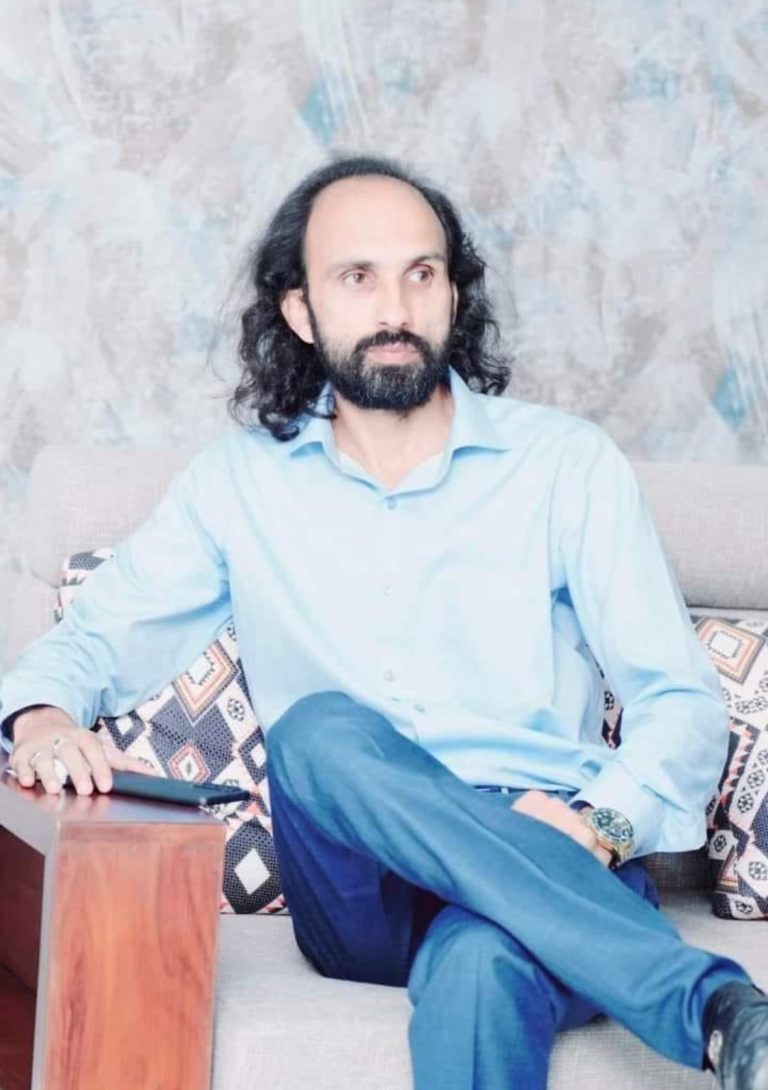
In a significant rebuke to Pak Army’s practice of enforced disappearances, the Islamabad High Court (IHC) on Friday flatly rejected the authorities’s attempt to close the case of Ahmed Farhad Shah, a poet whose enforced disappearance has drawn international attention.

Justice Mohsin Akhtar Kayani, presiding over the case, issued a clear and unequivocal response to the plea: the case will only conclude when Shah is physically produced before the court. This decision marks a striking departure from past instances where such cases have been quietly shelved.

The case, filed by Shah’s wife, Urooj Zainab, in the IHC on May 15, seeks not only her husband’s recovery but also demands the identification, investigation, and prosecution of those responsible for his disappearance. Her legal team, comprising human rights lawyers Imaan Mazari and Hadi Ali, has vigorously pursued the case.

During Friday’s hearing, Additional Attorney General Munawwar Iqbal, representing the federal government, informed the court that Farhad was in physical remand until June 2. He then brazenly requested the IHC to wrap up the illegal confinement case.

“This request epitomizes the state’s approach to enforced disappearances,” commented Mazari. “First, deny any knowledge. Then, when caught, admit to detention but ask for silence. It’s a chilling pattern.”

Mazari also revealed disturbing details about the family’s search for Shah. When they visited Dhirkot Police Station in Pakistan-Occupied Jammu Kashmir (PoJK), they couldn’t trace his whereabouts. Later, they discovered he had been transferred to Muzaffarabad under the Anti-Terrorism Act (ATA).

“Using anti-terror laws to silence poets—this is the reality of Pakistan’s ‘democracy,'” said Ali Dayan Hasan, South Asia director at Human Rights Watch. “It’s a tactic straight out of an authoritarian playbook.”

Farhad’s disappearance is linked to his recent reporting on the protests in POJK. His pursuit of justice for Kashmiris put him in harm’s way as Pakistan’s military has a troubling record of dehumanizing those who stand for rights and provide strength to social movements.

For now, Ahmed Farhad Shah’s voice remains silenced. But in the echoing halls of the Islamabad High Court has offered a glimmer of hope in landscape of enforced disappearances.

Buleda’s epic march for missing Baloch reaches Turbat

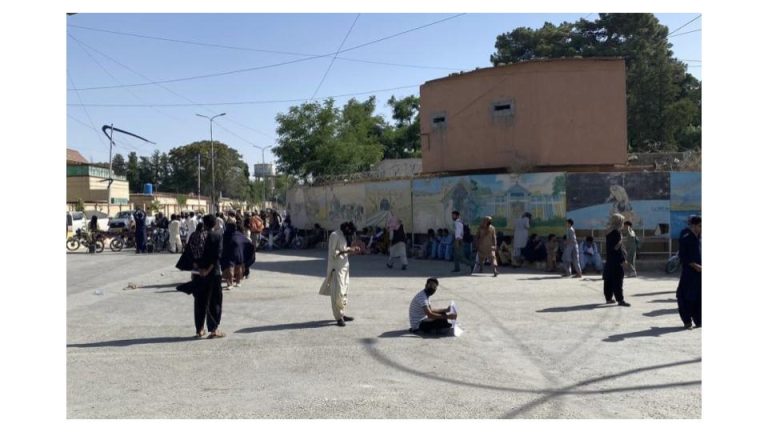
A large-scale protest demanding the return of missing persons culminated in Turbat as hundreds of demonstrators completed a grueling 40-kilometer long march from Buleda.

The march, which began in the remote town of Buleda, saw an impressive turnout with men, women, and children participating in substantial numbers. Upon reaching Turbat, the provincial capital, the protesters staged a sit-in outside the Deputy Commissioner’s (DC) office, turning the city center into a scene of peaceful yet determined protest.

Led by prominent figures such as Arif Baloch, father of missing activist Muslim Arif, and Haji Nasir, district president of the Haq Do Movement, the march wound its way through Turbat’s bustling bazaars. As they moved through the main thoroughfares, participants chanted slogans demanding the immediate recovery of their loved ones.

Other key organizers included Wasim Safar and several family members of the missing persons, each carrying stories of loss and a resolute demand for justice. The diverse leadership reflects the widespread impact of enforced disappearances in the region.

The issue of missing persons has long been a contentious one in Pak-occupied-Balochistan, with human rights organizations repeatedly calling on authorities to address the problem. This latest demonstration shows the growing frustration among affected families.

The Army now faces renewed pressure. With national and international media capturing images of elderly parents, young siblings, and determined community leaders who walked 40 kilometers for answers, the voices from Turbat are harder to ignore.

The Pak forces through such cowardly tactics of enforced disappearances, kill-and-dumps, and other brutalities are trying to suppress the Baloch community and their voice since it has occupied the region in 1948.

BLF frees 4 Punjab workers for work on military sites in Awaran

The Balochistan Liberation Front (BLF), a prominent Baloch freedom fighter group, has claimed responsibility for detaining four residents of Pakistan’s Punjab province, who were working on military installations in Awaran district of Pak-occupied-Balochistan.

In a statement, the BLF stated that their “Sarmachars” (freedom fighters) arrested the four workers on January 28, while they were engaged in construction activities on military sites in Awaran. However, the freedom fighter group announced that the detained workers were released on February 14, 2024, on humanitarian reasons.

The BLF said that they have repeatedly cautioned against the exploitation projects of the occupying Army and the mobile tower companies utilized by the Army, as they are the legitimate targets.

The freedom fighter group has long opposed development projects in Pak-occupied-Balochistan, as the Army is exploiting the region’s resources and using infrastructure initiatives as a means to strengthen its military presence and control over the territory.

Balochistan, Pakistan’s largest but least populated province, has grappled with a long-running freedom struggle. The BLF have waged an armed struggle against the Army, for subjugation of the Baloch people and exploitation of the resource-rich region’s natural resources.

Muslim landlord brutalizes Hindu woman in Bahwalpur Pak (Punjab)

In a shocking case highlighting the plight of minorities in Pakistan, a Hindu woman laborer was subjected to horrific brutality by her Muslim landlord and his accomplices in Bahwalpur city of Punjab province.

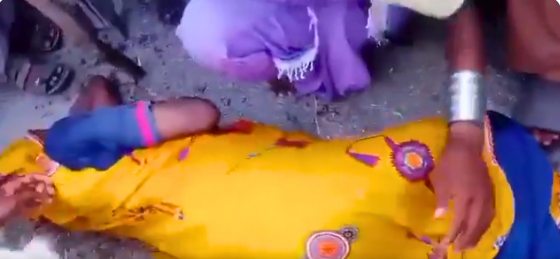
Reportedly, the woman had visited the landlord’s residence to request her pending wages. However, instead of receiving her salary, she was stripped naked, hung upside down, beaten, and gang-raped by the landlord and his henchmen.

This appalling incident is not an isolated case of violence against the Hindu community in Pakistan. Numerous cases have come to light where Hindu girls have been raped, abducted, killed, and forcibly converted to Islam. Minorities in the country face widespread marginalization, harassment, oppression, and threats, often being targeted with derogatory language and actions.

The systemic discrimination and lack of legal safeguards for minorities in Pakistan, where they often face violence, forced conversions, and lack of access to economic opportunities and social services.

As details of the Bahwalpur emerged, it has once again put a spotlight on the dire situation faced by religious minorities in Pakistan and the urgent need for reforms to ensure their safety and equal rights.

Students in occupied Gilgit-Baltistan protest over lack of education facilities

In a display of courage and determination, residents of the Thang village in District Astore of Pakistan-occupied Gilgit-Baltistan have taken to the streets, protesting the lack of school facilities and teachers in the region.

Similar protests have erupted in other parts of the occupied territory, with students and parents alike demanding a resolution to the dire shortage of school teachers, which has left the region’s education system in shambles. Earlier, student protests emerged in Dadimal and Nagar, with parents joining their children to voice their concerns.

Occupied Gilgit-Baltistan has been dealing with a lack of basic infrastructure for ages, with frequent protests erupting across the region due to the issue. The main reason behind the Pak Army’s refusal to provide basic rights is its perception of the land and its people as foreign, leading to oppression and exploitation as the sole agenda that prevails.

Protesters have called upon the authorities to prioritize the appointment of teachers and the establishment of adequate school facilities to ensure the right to education for the region’s youth.

Paki Minister calls missing victims ‘terrorists’ in Gwadar incident

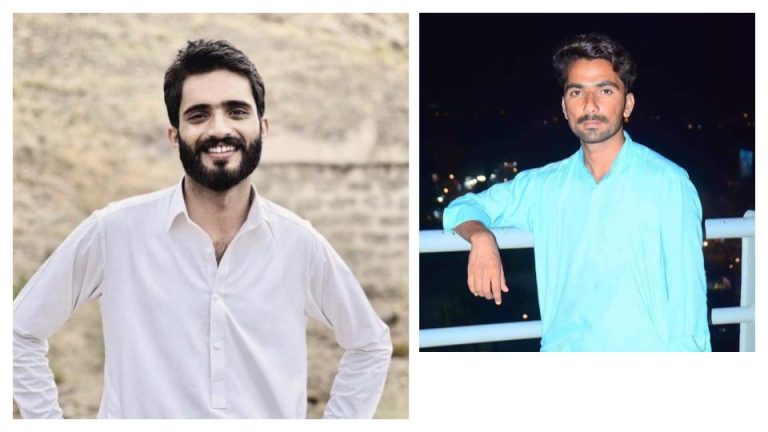
Pak-occupied-Balochistan’s Interior Minister Ziaullah Langove has revealed the arrests of two individuals, Niaz s/o Abdullah and Bashir s/o Abdul Ghani, who were subjected to enforced disappearance by Pakistan Army from the coastal city of Gwadar. The minister leveled serious allegations against them, accusing them of being responsible for the killing of non-locals in an attack in Gwadar earlier this month.

According to the puppet authorities, both men belong to the Baloch pro-independence organization, the Baloch Liberation Army, as stated in a statement issued by the Counter-Terrorism Department (CTD).

On the May 9, unidentified armed men attacked a residential quarter near the Fish Harbor Jetty in Gwadar, resulting in the deaths of 7 individuals on the spot and one person injured. The deceased and injured belonged to Khanewal district of Punjab province. No group had claimed responsibility for the attack.

In the aftermath of the attack, the Army launched a large-scale operation in Gwadar and surrounding areas, subjecting a large number of people to enforced disappearance and transferring them to unknown locations. It was during this crackdown that Niaz and Bashir were taken into custody from their homes on May 13 and transferred to an undisclosed location.

This latest incident has raised concerns among public circles regarding the fate of the two arrested youths. There are apprehensions that they might be killed in a fake encounter or subjected to enforced disappearance, a recurring issue in PoB.

Enforced Disappearance

In the past, after similar incidents in PoB, the Army have revealed the arrests of previously enforced disappeared persons, leveling serious allegations against them. Despite revealing arrests on multiple occasions, these individuals have often not been presented in courts or have been killed in custody.

Earlier this year, despite revealing the arrest of Balaach Moulabakhsh, who had previously been subjected to enforced disappearance by the forces in Turbat, he was killed in custody. In another case, on August 31, 2018, Aasif Baloch and Rashid Baloch were taken into custody from the famous picnic point Zangi Naur in Noshki and were later presented before the media in Quetta by the CTD, but they remain missing to date.

These statements show how shamelessly and audaciously these Army stooges frame the innocent Baloch individuals. The role and history of the CTD is laced with the blood of the Baloch community. They have enforced disappearances of victims, killed and dumped them, conducted raids, harassed and committed human rights violations anywhere and everywhere they can. They have inflicted all sorts of brutality known to humankind. Since the Pak Army forcefully occupied Balochistan in 1948, the resource-rich nation has gone to the dogs. The community is living in a nightmare that we can rarely imagine.