Home Blog Page 103

Enforced disappearance of six people by Pak Army sparks outcry in POB

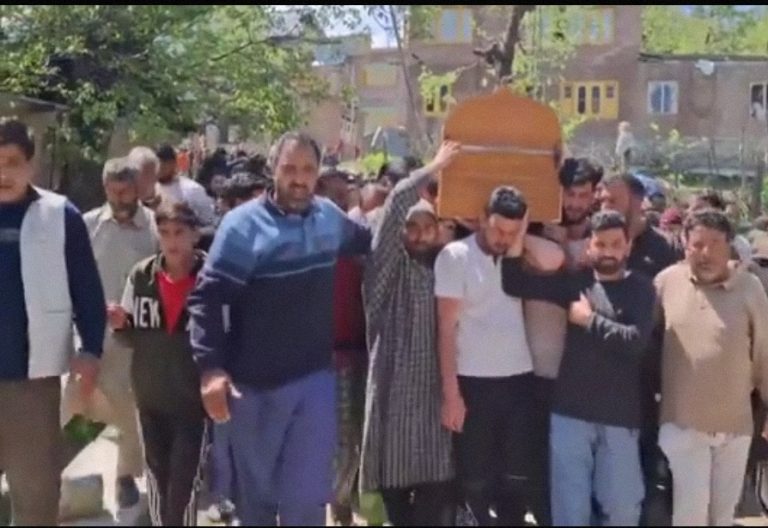
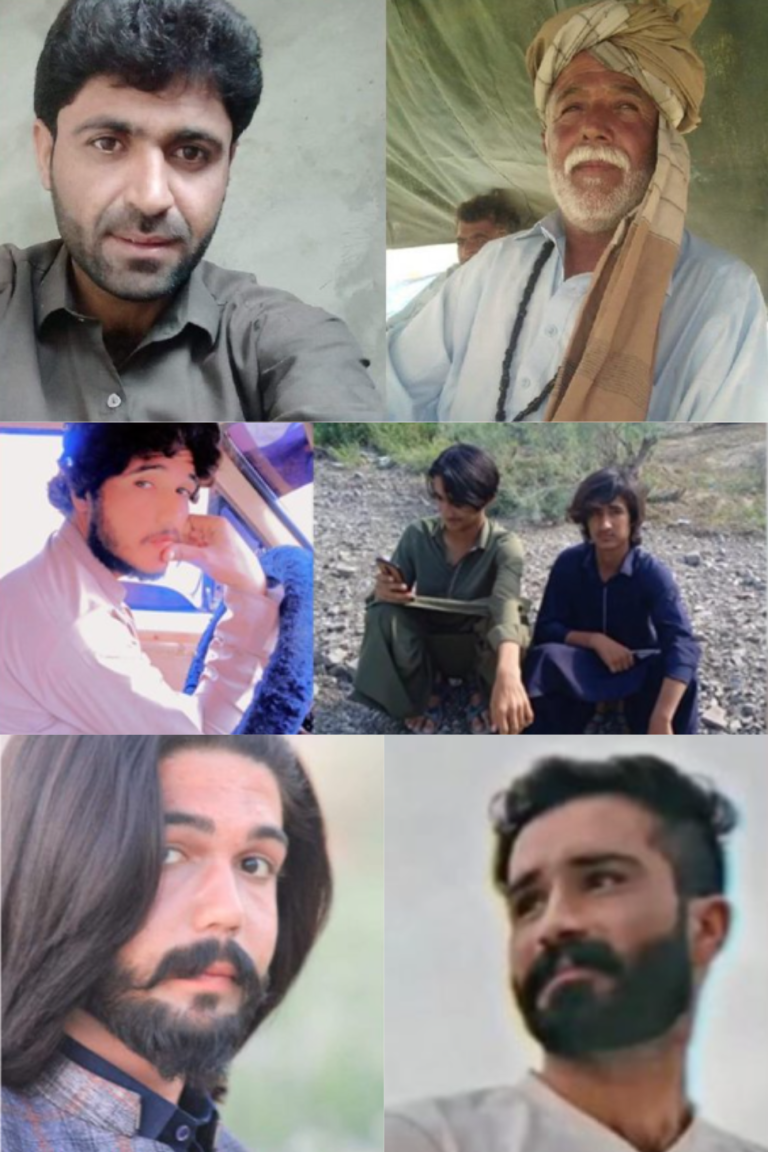
In a concerning incident in Mashkay tehsil of Awaran district of Pak-occupied Balochistan, six individuals including two brothers have reportedly disappeared since Thursday.

The victims have been identified as Amjad and Ali, sons of Deen Muhammad; Mehboob, son of Yar Jan; Taj Muhammad, son of Muhammad Ibrahim; Baloch, son of Dil Murad; and Abdullah, son of Abdul Qadir were detained by the Pak Army after participating in a protest rally against the forced disappearances.  

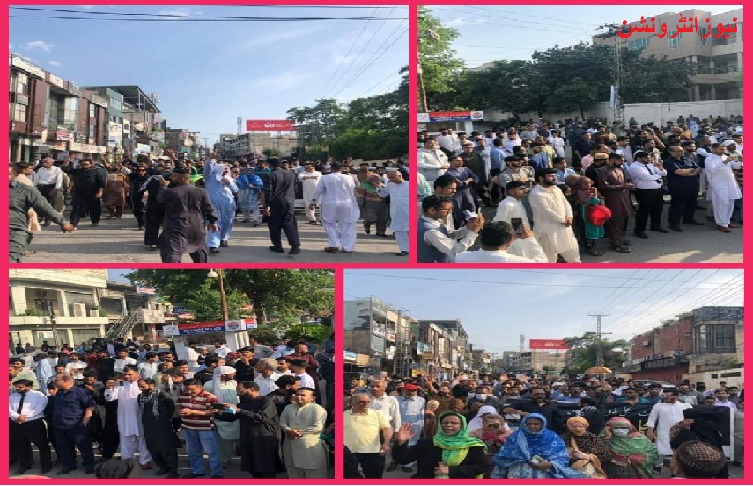
The rally was organized against the ongoing atrocities of enforced disappearances caused by the Pak Army and the rally spanned from Gorjak to Malash-band.

During the said incident of enforced disappearance, Abdullah, the son of Abdul Qadir was detained in custody and when Taj Muhammad approached the camp to inquire about Abdullah’s disappearance, he also went missing.

In 2017 Mehboob’s father Yar Muhammad was killed in the Gichk area of Panjgur district by the Pak Army-supported ‘death squad’ showcasing the surge in the cases of enforced disappearance in Pak-occupied Balochistan.

This is not an isolated incident but numerous cases are being reported from various districts yet alone in the first half of May.  

The Pak Army has relocated five individuals to an undisclosed location after their enforced disappearance from the districts of Kech and Bolan in Pak-occupied Balochistan. The victims are identified as Kamran son of Abdul Baqi, Saeed son of Musa, Farhad son of Abdul Ghaffar, and two brothers Sagheer Sajjad and Qadeer Sajjad. Both the brothers were taken into custody by the Pak Army from their residence in Miri Kalat yesterday at midnight.

As per the accounts of the family members, the Pak Army raided their house around midnight and took both the brothers into custody, but Qadeer was released shortly afterwards. No information was provided to the family by the Pak Army. The family has demanded the immediate safe recovery of Sagheer Sajjad from the local administration.

The Pak Army also detained a youth named Kamran from Bolan Mach yesterday, who is now missing. Similarly, two weeks ago, the Pak Army took two young men, Saad son of Musa and Farhad son of Ghaffar into custody from Tump Militant, after which both of them are missing.  

Recently, the body of Arsalan, son of Islam was recovered from Pasni. Arsalan who was a teacher at a private school was abducted from Panjgur on Tuesday night.

These stories provide a glimpse into the longstanding pattern of human rights abuses perpetrated by the Pak army against the innocent Baloch community, a struggle that has endured since March 27, 1948.

Pakistan: The ‘war’ within

In his November 2022 farewell address, outgoing Pakistan Army chief Gen Qamar Javed Bajwa conceded that the main reason for the Pakistan Army being “criticised from time to time,” was its unconstitutional “involvement in politics for the last 70 years” and claimed that “the army [had] decided after a lot of deliberation that it will not interfere in any political issue”.

Since this was for the first time in Pakistan’s history plagued by military rule that the country’s powerful Army chief had personally made such a candid public admission as well as given the assurance of Rawalpindi steering clear of politics, one had expected that these announcements would be widely welcomed by the people. However, they were received with indifference and there are reasons for this.

One, the people of Pakistan know very well that expecting the Army’s top brass to meekly surrender the wide-ranging extra-constitutional powers that it enjoys without any associated accountability is purely a delusional fantasy. Two, while Gen Bajwa glibly talked about the Army divorcing itself from politics, his speech itself was pregnant with political innuendoes that outrightly belied his promises. Lastly, assurances of non-interference in politics given by an Army chief who himself brazenly indulged in the same for the better part of his tenure and decided to turn a new leaf only at the fag- end of his tenure wasn’t very inspiring! 

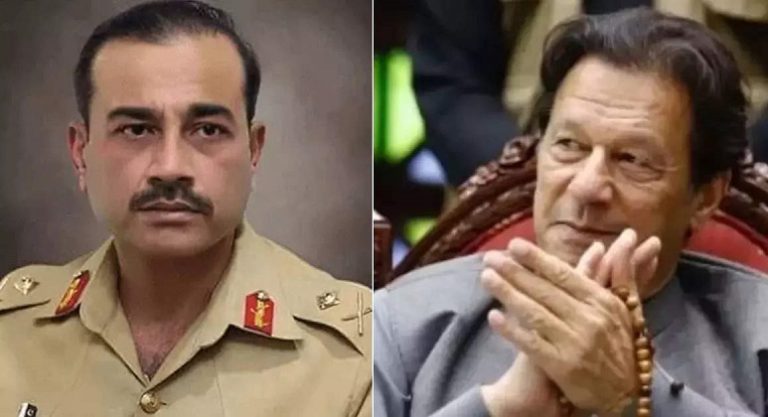
The people of Pakistan weren’t wrong. The current Pakistan Army chief, Gen Syed Asim Munir may have maintained a stoic silence on the issue of Rawalpindi’s involvement in political affairs of the country, but his actions left no doubt in anyone’s mind to the contrary. His barefaced attempts to ensure that former Prime Minister Imran Khan and his Pakistan Tehreek-e-Insaf [PTI] party are politically destroyed is an unambiguous signal that Rawalpindi has no intentions of forfeiting its role of playing king maker in Pakistani politics.

When PTI protesters attacked military assets on May 9, 2023, many saw this massive anti-Army outrage as the beginning of the end of Rawalpindi’s supremacy. However, they were wrong and The Friday Times Editor-at-Large Raza Rumi’s post-election prediction that the military establishment “may have lost in the short-term, but it has a history of rising like a phoenix”, came true. 

In less than a week after this incident, Gen Munir convened a special corps commanders’ conference. The Army press statement released thereafter stated, “The forum expressed firm resolve that those involved in these heinous crimes against the military installations and personal/equipment will be brought to justice through trials under relevant laws of Pakistan, including Pakistan Army Act and Official Secret Act.” [Emphasis added].

What needs to be noted here is that while on the one hand legislatures in Islamabad were still wondering what to do, the Pakistan Army had already decided to play the  lawmakers role by unilaterally ruling that those accused for the May 9 riots would be tried by the Army in military courts. Even though it had had no constitutional sanction to adjudicate on this issue, neither the legislature nor the judiciary opposed Rawalpindi’s diktat. No prizes for guessing what this indicates.

All-out efforts were made by the forums and agencies concerned to legalise the military’s arbitrary decision. The very next day after the special corps commanders’ conference, Pakistan’s National Security Committee [NSC] in a hurriedly convened meeting expectedly recommended exactly what Rawalpindi had decreed during the special corps commanders’ conference, and the Federal Cabinet approved the NSC recommendations without any changes the following day. With the army being able to legalise its decision within a matter of three days, it’s abundantly clear that in Pakistan, the army continues to enjoy absolute power.

Just last week, Director General [DG] of Pakistan Army’s media wing Inter Services Public Relations [ISPR] Maj Gen Ahmed Sharif once again reaffirmed Rawalpindi’s pre-eminence in Pakistan by saying that “There is only one way back for such political anarchists, that it [PTI] asks for an earnest apology in front of the nation and promises that it will forgo politics of hate and adopt [a] constructive [style of] politics.” [Emphasis added].

This statement sets specific preconditions that Rawalpindi wants the PTI to fulfil before its political rehabilitation can be considered, and this leaves no room for any doubt that PTI’s political future is in the hands of the Pakistan Army.  And by adding that “In any case, such dialogue should take place between political parties [as] it is not appropriate for the army to be involved,” DG ISPR has willy-nilly accepted that Rawalpindi is well aware of exceeding its brief.

After PTI chief Imran Khan outrightly rejected the DG ISPR’s offer by making it clear that if the “establishment” [army] was not interested in dialogue, the PTI would not pursue it either, a peeved Gen Munir quickly changed track and to save face announced that there would be “no deal with the architects and plotters of the violent protests.” As things stand today, it would not be an exaggeration to say that Pakistan is being held hostage to what’s unfortunately an ego driven confrontation between Gen Munir and Imran Khan and this is not an exaggeration!

Pakistan’s Dawn in its editorial of May 9 has assiduously observed that“the PTI-military stand-off has been the root cause of Pakistan’s political instability.”[Emphasis added].It has also revealed the harsh reality that “neither side seems interested in a resolution” and hence has suggested government intervention to break this deadlock, which is indeed a good suggestion.

But with Gen Munir despite saying that the Pakistan Army knows its “constitutional limits” while simultaneously crossing swords with PTI, the likelihood of his smoking the peace pipe with Khan, to say the least, is unlikely. Similarly, despite Rawalpindi’s devious machinations that have reduced the status of PTI to virtually a political non-entity, Khan seems to be in no mood of entering into a compromise with the Army which he rightly refers to as the “establishment.”  

Most importantly, Prime Minister Shehbaz Sharif’s ability to broker peace is suspect. By declaring that “The impure plan of May 9 was not just a rebellion against Pakistan but against the state, the Pakistan Army and army chief Gen Asim Munir,” [Emphasis added], he’s made his absolute subservience to the Pakistan Army chief more than evident.

So how on earth can Khan [or for that matter anyone else] ever expect Sharif to be an impartial intermediary capable of amicably resolving the Rawalpindi-PTI impasse?

Pak Army attacks prominent Pashtun activist’s house in Khyber-Pakhtunkhwa

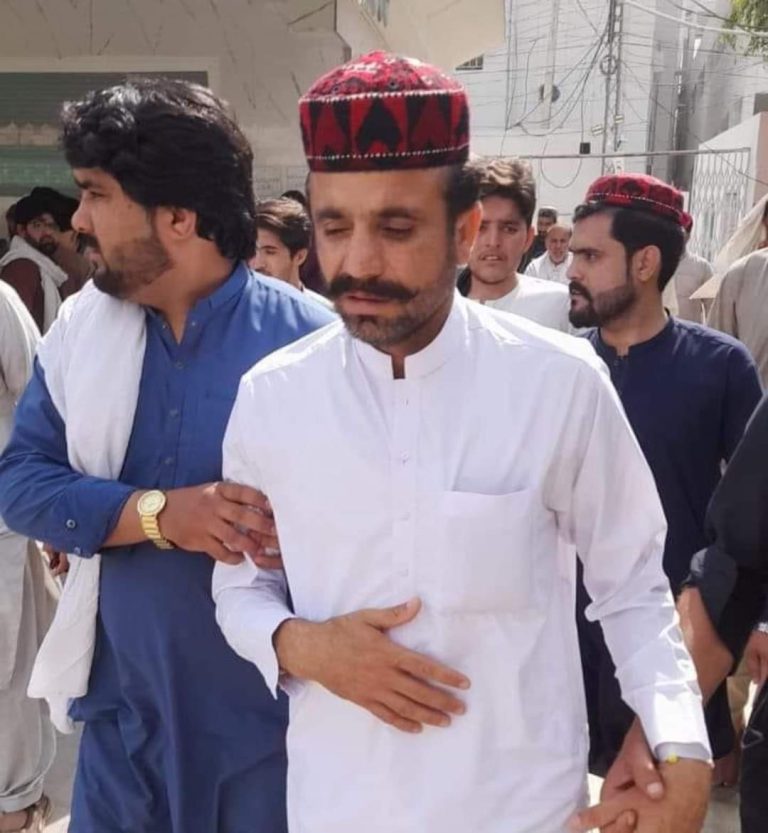
On the night of May 15, unidentified attackers stormed the home of Nazir Afghan, a prominent member of the Pashtoon Tahafuz Movement (PTM) in Dera Ismail Khan district, Khyber-Pakhtunkhwa. The assault, involving heavy weapons, left four people injured, including Nazir Afghan, his cousin, and his uncle.

The attackers used heavy ammunition during the attack, causing significant property damage. They managed to escape the scene.

This incident is the latest in a series of attacks on PTM members, who have been vocal about the Pakistan Army’s human rights abuses in Pashtun regions. PTM activists have frequently been targeted by the Pakistan military to silence dissent.

In the aftermath of the attack, PTM leaders condemned the violence and accused the Pakistan Army of being behind the assault.

The attack on Nazir Afghan’s home underscores the ongoing struggle and violence faced by PTM members as they continue to raise their voices against oppression and demand justice for the Pashtun community.

NIA seizes seven properties of Pak backed JeM terrorist in Jammu and Kashmir

In a significant move against terrorism, the National Investigation Agency (NIA) has attached seven immovable properties belonging to Sartaj Ahmed Mantoo, a prominent terrorist of the banned Pakistan-based Jaish-e-Mohammed (JeM) organisation. The properties, including land measuring 19 Marlas and 84 square feet in Kisarigam, Pulwama district, were attached on Wednesday under Section 33(1) of the Unlawful Activities (Prevention) Act, 1967, following orders from the NIA Special Court in Jammu.

Details of the Case

Sartaj Ahmed Mantoo was arrested on January 31, 2020, with a substantial cache of arms, ammunition, and explosives. Later, he was charge-sheeted on July 27, 2020, and is currently undergoing trial under various sections of the Arms Act, the Indian Penal Code (IPC), the Explosive Substances Act, the Unlawful Activities (Prevention) Act (UA(P) Act), and the Indian Wireless Telegraphy Act, 1933.

Mantoo, along with five co-accused members of JeM, played a crucial role in transporting freshly infiltrated terrorists into the Kashmir valley. This led to a significant encounter in which three terrorists were killed, and numerous arms, ammunition, and explosives were seized. The case (RC-02/2020/NIA/JMU) involves a conspiracy to launch terror attacks on security forces and infrastructure as part of an anti-India agenda.

Background of JeM

Formed in 2000 by Maulana Masood Azhar, JeM has orchestrated numerous terrorist attacks in India, particularly in Jammu and Kashmir. The organization is recognized globally as a major terrorist threat. In 2019, the United Nations Security Council (UNSC) designated JeM as a “Designated Foreign Terrorist Organization” under Resolution 1267. Additionally, Maulana Masood Azhar was declared a “Global Terrorist” by the UNSC.

Recent Crackdown

This action follows the NIA’s recent attachment of six immovable properties belonging to another top JeM terrorist in Kashmir, signaling an intensified crackdown on terror operatives in the region.The NIA’s continued efforts to dismantle terrorist networks and their assets underscore the agency’s commitment to countering terrorism and ensuring the security of the nation. The attachment of Mantoo’s properties is a part of broader efforts to disrupt and disable the financial and operational capabilities of terrorist organizations operating in India.

Our children die in open gutters while India has reached the moon: Pakistani leader Syed M. Kamal

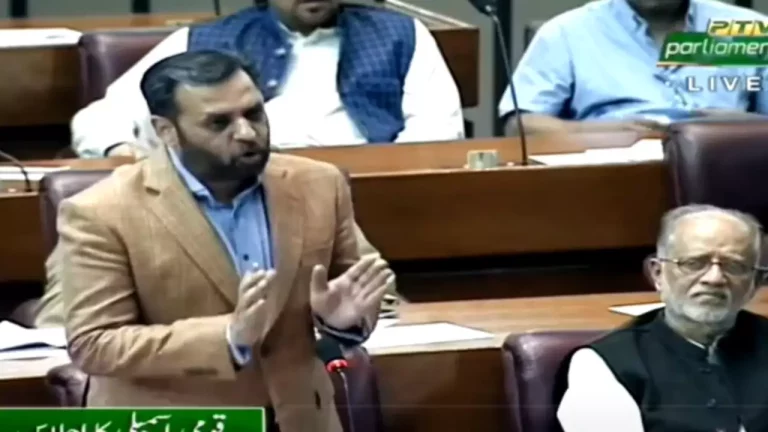
A Pakistani lawmaker’s scathing speech drawing a stark contrast between India and Pakistan’s education systems has gone viral on social media. During his address in the National Assembly on Wednesday, Muttahida Qaumi Movement Pakistan (MQM-P) party and member of the National Assembly of Pakistan, Syed Mustafa Kamal lamented the dire state of education in Pakistan, especially in Karachi.

Kamal said, “Whenever we have talked to Asif Ali Zardari sahab, we have found him positive, receptive and interested in solving the problems. I want to inform him that the world is going to the moon, while in Karachi, a child is dying after falling into an open gutter. On the same screen, on one hand, while there were news about India landing on the moon, on the other, there were news about a child dying after falling in an open gutter in Karachi. This is the news every third day. I am requesting this to the head of Pakistan, to the party’s chairman…”

Kamal bemoaned that while India’s IT exports stand at a staggering $270 billion, Pakistan’s IT exports amount to a mere $7 billion. “Today, if India is booming, it is because they taught what was needed to be taught,” he said.

https://twitter.com/AdityaRajKaul/status/1790730606705344714?t=gphdk_KVg7IqcbRvW5m1uQ&s=08

Highlighting the alarming levels of illiteracy in Pakistan, the lawmaker said there are 70 lakh children in Karachi and over 2.6 crore children across the country who are unable to attend school. “If we just focus on this (lack of education), the leaders of the country shouldn’t get any sleep,” he added.

“We have a total of 48,000 schools, but a new report says that out of these, 11,000 are ‘ghost schools.’ As many as 70 lakh children in Sindh and 2.62 crore in the country are not going to school. That should not let our leaders get proper sleep,” Kamal said.

The MQM-P leader contrasted this with India’s progress, stating, “Our neighboring India – 30 years ago, it taught its citizens those things which the world needed. Today, Indians are CEOs of 25 top Global Companies…Today, there are loads of global investments in India.”

Kamal also took a swipe at the Pakistan’s dwindling foreign reserves, saying, “We have total reserves, which we can’t even spend because we have taken loans, at $8-9 billion…sometimes it is $6 billion. India’s reserve is $607 billion…”

He was referring to the successful touchdown of the Chandrayaan-3 Lander Module near the south pole of the Moon on August 23, 2023, juxtaposed with Pakistan’s lack of basic amenities.

Kamal’s remarks come days after senior politician Maulana Fazlur Rehman, pointed out the economic disparities between India and Pakistan, saying that “India is dreaming of becoming a superpower, and we are begging to avoid bankruptcy.”

Pak Army abducts Kashmiri poet & journalist Ahmad Farhad for condemning Army’s violence in POJK

Ahmad Farhad, a poet and journalist from Pakistan-occupied Jammu and Kashmir (POJK) has been abducted by Pak Army from his house.

According to his wife, the abductors broke into their home, disconnected the CCTV, and forcibly dragged Ahmed Farhad outside.

The abduction of Ahmad Farhad by Pak Army has drawn significant attention from the journalistic and political activist communities.

Pashtun Tahafuz Movement (PTM) leader Manzoor Pashteen called him as the chosen voice of Kashmir and demanded his immediate release.

Similarly, prominent Baloch missing persons activist and BYC leader, Dr. Mahrang Baloch condemned tha abduction and said that “Violence cannot suppress movements led by those most affected, and genuine voices daring to expose lies will continue to speak out against the state’s barbarism.”

Sources suggest that Farhad’s disappearance is linked to his recent reporting on the protests in POJK. His pursuit of justice for Kashmiris put him in harm’s way as Pakistan Army has a record of dehumanising them who stand for the rights and provide strength to the rights movements.

Pak FC forces attack civilian vehicle in Waziristan killing 1 & injuring 3

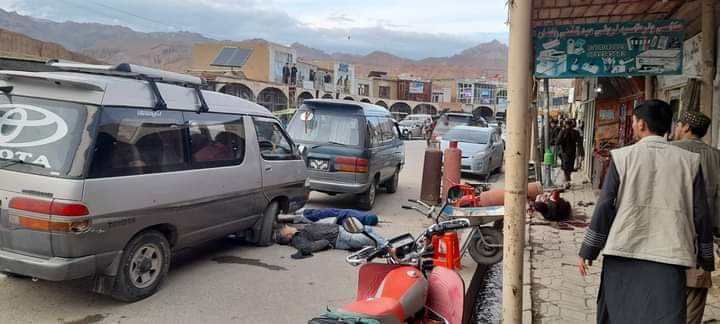
In a violent incident, Pakistan Frontier Corps (FC) attacked a passenger car in the metals and minerals-rich region of North Waziristan, resulting in the death of a local man named Farhad and injuring three others. This attack is part of a series of frequent assaults by FC and military forces aimed at instilling fear and insecurity among the native population, reportedly to facilitate their mass eviction and seize control of the mineral-rich lands predominantly owned by Pashtuns.

This incident occurred just two days after a Pakistani drone strike in Upper Waziristan killed five people of a family, including two women and two children in Tangi Badinzai Village on the night of May 13.

Notably, the family lived in Tank and recently came back to their native land in Waziristan.

The Pakistan Army initially claimed that the attack on the passenger car was triggered by a landmine intended for infiltrators. However, local Pashtuns released pictures of parts of the explosives dropped from the drone, exposing the Pakistan Army’s involvement and undermining their narrative.

This is not an isolated incident. Similar attacks have been reported, including one in last month that also resulted in the deaths of children.

Earlier in April, four Pashtuns, including two children were killed by Pak Army in a mortar shelling after the children went to collect mushrooms near the heavily guarded Pak Army camp.

Pak Army had then also called the death as an outcome of landmine explosion. However, the Pashtun organisation recovered mortar shells from the site exposing the Pak Army’s notoriety.

Astore (POGB) residents threaten Muzaffarabad style agitation over Pakistan’s land grabbing

The people of Ashtore district in Pakistan-occupied Gilgit Baltistan (POGB) have issued a stern warning to the Pakistani establishment and occupying government against land grabbing under the guise of tourism. They have threatened to launch a mass protest akin to the recent demonstrations in Muzaffarabad, POJK, if their concerns are ignored.

Leaders of the Daskhiram Deosai Supreme Council, related to Deosai National Park, held a press conference at the Gilgit Press Club on Wednesday (May 15), drawing attention to the ongoing issue of land grabbing under the pretext of tourism development.

One of the leaders pointed out the legal vacuum in the region, stating that POGB lacks its own constitution, and the Pakistani constitution does not apply there. “The whole region is being ruled based on orders from Islamabad,” he said.

POGB deprived of its 80 per cent share

He further criticized the land grabbing practices, noting that 80% of the revenue from these tourist projects should have been allocated to POGB but has not been distributed. Despite a complete ban on the lease system, powerful individuals, including those from the Pakistan Army and the Pakistani establishment, continue to confiscate POGB land.

Hence, the leaders issued a warning that these actions must stop immediately, or they will initiate a mass protest against these policies. They also demanded that any tenders should be issued by the Daskhiram Deosai Supreme Council and follow proper procedures. They expressed frustration that the council is being bypassed, with Islamabad and the occupying government acting unilaterally.

This warning comes just days after various lands were allocated to the Pakistan Army by the occupying government.

Land grabbing by Pak Army

In an order passed by the Secretary of Tourism, Sports and Culture, Youth Affairs Department of the occupying government recently, as many as 20 rest houses and 16 forest nurseries of POGB are handed over to Pakistan Army. But Pak Army uses these land with an intention of penetrating deeply into the region and controlling the people.

Order of Renting houses and nurseries’ land to Pak Army (Photo: X)

The move is a larger conspiracy to instigate changes in the region’s demography and culture by installing people of Pakistani origin into the leased land while gradually making the native population minority.

Media’s crucial role in reporting terrorist incidents needs responsibility

0

A lot has been spoken and written about the recent ambush of an Indian Air Force [IAF] convoy in the Poonch district of J&K that left one air warrior dead and four others injured. Given the seriousness of the incident, the interest generated is a positive sign as it indicates the high degree of public concern on Pakistan’s continuing proxy war against India. Moreover, despite heightened emotions, discussions and debates on this incident have largely been constructive in nature, which is a positive.

 Almost all news channels and media houses initially reported one fatal and five non-fatal casualties but after release of the official press statement, they amended the casualty figures to one dead and four injured and such a minor variation in casualty figures is understandable.

However, a news report claimed that 12 soldiers had been injured in this attack and that the terrorists had managed to take away an unspecified number of weapons. Despite being completely at variance with other reports on the incidents, it nevertheless gained traction because it was posted on the website of a leading India business and financial media house. It was even quoted by some very reputed analysts to project a pessimistic outlook.

While the concerned media house quietly removed this news report from its website without issuing any corrigendum, incorrect reporting created an impression in the minds of many that the security forces were trying to conceal casualty figures. It also painted a distorted picture of the incident by implying that just 4 to 5 terrorists were able to completely overawe more than a dozen armed IAF soldiers and after injuring them, successfully decamped with their weapons without suffering any casualties.

It has since emerged that the air warriors suffered one fatal and four non-fatal casualties and that no weapons were taken away by the terrorists, and these inputs completely change the perceived complexion of the incident.

The fact that despite having successfully ambushed the IAF convey at a place and time of their own choosing, as well as being armed with sophisticated weapons including state-of-art American M4 rifles, the terrorists were still not able to inflict extensive casualties on the IAF soldiers, and nor were they able to snatch any weapons clearly indicates that it was the fierce and effective response of the air warriors that compelled the terrorists to beat a hasty retreat.

Regrettably, the inaccurate news report of a dozen casualties and weapon snatching made terrorists appear to be ‘supermen’ and portrayed the IAF soldiers as easy pushovers who allowed their weapons to be snatched. However, it’s abundantly clear that there was no malafide intention on anyone’s part and it was only the inclusion of inaccurate details in the news report that gave critics a stick to beat the government and defence forces.  

The media is often accused of falling prey to ‘breaking news syndrome’ and end up showing undue haste in publishing news on incidents of terrorism. Highlighting the right of people to know what’s happening in real time, the media stoutly justifies the publication of uncorroborated reports by citing official tardiness in announcing details of casualties. However, blaming security forces for undue delay in furnishing details about casualties for factual inaccuracies in a news report is being rather unfair.

It needs to be appreciated that when there’s a terrorist attack that results in casualties, sensitivity demands that the tragic news to the near and dear ones of those who have made the supreme sacrifice comes as a personal message from the commanding officer of the unit to which the deceased belonged and not through a perfunctory media announcement. As the next of kin [NoK] of those martyred rightly want to know more details of the incident, facts have to be ascertained which though a time consuming exercise cannot be dispensed with.

It is neither intended to target the media house that published the news report being discussed as this isn’t the first time that an inaccurate report on terrorism related incident has been published. In fact there have been numerous such cases and why go far? The writer can quote his own example- though only injured during an anti-terrorist operation in J&K, he was promptly declared ‘dead’ by the local print media. This happened in the mid 90s when there was no social media, yet the speed with which this ‘news’ reached home was amazing and he alone knows what his family went through due to this untrue report!

Since misreporting of terrorism related incidents has become a common occurrence, there’s a crying need for the media to introspect and institute appropriate measures to avoid inaccurate reporting. 

The first thing the media needs to do is to overcome the temptation to get into the ‘breaking news’ rat-race and curb its craving for proudly announcing for using the  “you heard it first on this channel”catch-phrase. Accordingly, reporters covering any terrorist related incident need to be more cautious and beware of blindly accepting patently questionable inputs coming from officials and sources “speaking on the condition of anonymity”.

Furthermore, even though the initial news report about an incident may have been compiled by local scribe having considerable experience of reporting on terrorist related incidents, there’s a definite need for media houses to analytically peruse the contents of the news report before its publication.

Any unprecedented input definitely needs corroboration. In the instant case, the news report mentioned terrorists snatching weapons from injured soldiers and this is something that has  never ever happened before in more than three decade old ongoing proxy war in J&K.

Terrorists have never ever been able to snatch a weapon from any soldier who’s alive because for an Indian soldier, allowing an adversary to take away his personal weapon while he has life still left in him is not only unthinkable and most disgraceful but also sacrilegious. This explains why the dead bodies of so many Indian soldiers killed in combat are found tightly clutching their weapons!

Most importantly, the media in India needs to realise that unlike Rawalpindi which conceals its military casualties to the extent of even refusing to accept the mortal remains of its dead soldiers, the Indian defence forces proudly honour its fallen rank and file by publicly accepting and saluting their supreme sacrifice.

As explained earlier, the perceived ‘delay’ in disseminating casualty data isn’t an attempt at concealment by the defence forces but out of sheer respect for human sensitivities. However, it’s also a fact that this does create a paradoxical situation- while the defence forces need time to confirm facts and intimate the NoK of the deceased before releasing information of casualties to the press, the media needs to keep its subscribers updated on the incident.

Hence there’s definitely a need for better coordination and mutual understanding between the defence forces and a media so that both can fulfil their onerous responsibilities.

Centre issues first Indian citizenship certificates under CAA to 14 individuals

Over two months after notifying rules for the Citizenship Amendment Act (CAA), the Ministry of Home Affairs on Wednesday issued the first set of citizenship certificates under the law to 14 individuals.

Union Home Secretary Ajay Kumar Bhalla personally handed over the certificates to the applicants in New Delhi.

“The Empowered Committee, Delhi headed by Director (Census Operation), Delhi, after due scrutiny, have decided to grant citizenship to 14 applicants. Accordingly, Director (Census operation) granted certificates to these applicants,” MHA spokesperson said.

“Bhalla handed over citizenship certificates to some applicants and also congratulated them, highlighting salient features of the Citizenship (Amendment) Rules, 2024,” the spokesperson added.

The Centre had notified the rules for the CAA on March 11, paving the way for implementation of the law over four years after it was passed by Parliament in December 2019.

Over the past two months, the Ministry of Home Affairs (MHA) has received several applications from individuals belonging to Hindu, Sikh, Jain, Buddhist, Parsi, and Christian communities who entered India from Pakistan, Bangladesh, and Afghanistan on or before December 31, 2014, due to religious persecution or fear of such persecution.

Citizenship Amendment Act (CAA)

The Citizenship Amendment Act (CAA) was enacted in December 2019, but the implementation rules were not framed until recently. The law’s passage sparked protests, which subsided only with the onset of the COVID-19 pandemic and a series of petitions that remain pending before the Supreme Court.

West Bengal Chief Minister Mamata Banerjee has stated her opposition to the CAA if it curtails existing rights of Indian citizens in any manner.

The CAA rules include a provision that refugees from the six minority communities from the three countries applying for citizenship by registration or naturalization must submit an application, an affidavit verifying the statements made, another affidavit from an Indian citizen testifying to their character, and a declaration of familiarity with one of the languages specified in the Eighth Schedule of the Constitution of India.

The application must be submitted electronically to an empowered committee through a district-level committee notified by the central government and supported by documents such as a copy of a passport issued by the government of Pakistan, Afghanistan, or Bangladesh, birth certificate, any other identity document, land or tenancy records, or any document showing that either of the applicant’s parents, grandparents, or great-grandparents were citizens of one of the three countries.

The rules state that these documents will be admissible even beyond their validity period.

Applicants must also provide proof of entry into India before December 31, 2014, which can be in the form of a visa and immigration stamp, registration certificate from the Foreigners Regional Registration Officer (FRRO), a slip issued by Census enumerators in India, a government-issued license, certificate, permit in India (including a driving license, Aadhaar number, ration card, or marriage certificate issued in India, etc.).