Home Blog Page 104

Sarfaraz Bugti’s close ally fatally shot in Dera Bugti

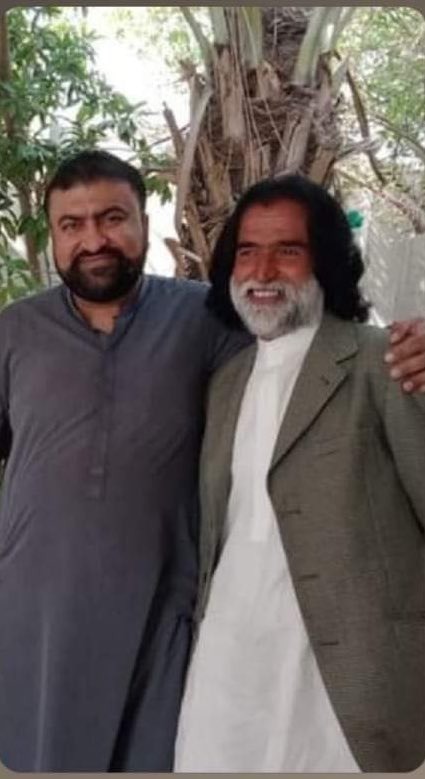
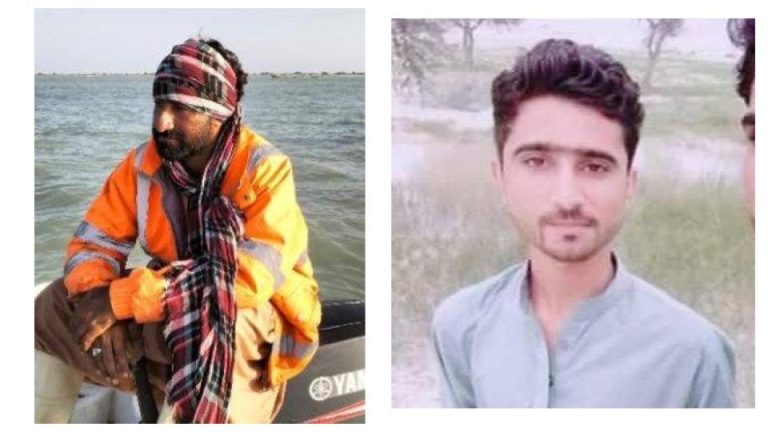
Recently, Rakhia Bugti, a close friend and ally of Sarfaraz Bugti, the puppet chief minister of Pak-occupied Balochistan, was shot and killed by an unidentified assailant in the Sui area of Dera Bugti district of Pak-occupied Balochistan.

Sarfaraz Bugti confirmed the news on his social media platform “X” that his close friend Rakhia Bugti had been killed by unidentified armed men.

It’s important to note that the Pak Army’s puppet Sarfraz Bugti is the notorious founder and leader of the brutal private armed group, infamously known as the “death squad”, operating in Girdonhwa and Dera Bugti areas. This group is involved in committing brutality and applying oppressive tactics on the innocent Baloch society. Death Squad is involved in enforced disappearances, extrajudicial killings, and other nefarious activities.

The purpose of these ‘death squads’ is to spy on the Baloch nationalist and pro-independence groups along with their supporters, with the squads being financially incentivized and given full authority in exchange for such services. Puppets like Sarfaraz Bugti and others consolidated their power by demonstrating allegiance to the Pak establishment through the formation and command of these ‘death squads’.

Therefore, it is safe to conclude that the close ally was also a culprit and must have committed atrocities on the Baloch community, and must have been taken down by the nationalists who are working for the liberation of Balochistan.

POJK: Muzaffarabad rights protest halts as Pak yields to demands

The complete shutdown protest called by the Joint Awami Action Committee in Pakistani-Occupied Kashmir (POJK) has ended on the fifth day. The committee called off the strike after demanding the immediate release of all arrested individuals and the formation of a judicial commission to investigate the brutal killings during the protests and to punish those responsible.

During the end of the strike, solidarity was expressed with the families of the martyrs, and prayers were offered for the departed souls.

Five days of intense protests

For the past five days, businesses and transportation across POJK had come to a standstill in response to the strike against high electricity and flour prices. The situation turned tense when protest caravans from different areas converged on Muzaffarabad, leading to clashes between protesters and police as well as Rangers.

Following these events, the Pakistani establishment, convinced of its defeat, approved a relief package of 23 billion Pakistani rupees for POJK to address the issues, resulting in reduced electricity and wheat flour prices.

A high-level meeting chaired by Imperial Prime Minister Shehbaz Sharif was held at the Prime Minister’s House to address the situation in POJK. The meeting, attended by representatives of the occupying POJK government and its Ministry of Interior, along with other key officials, approved the 23 billion Pakistani rupee relief package.

Following the approval of their demands, the Joint Action Committee officially announced the end of the protest. Over the past five days, the strike for affordable electricity and flour led to intense clashes between protesters and police. The use of tear gas, batons, and live fire by the police resulted in at least five deaths and 90 severe injuries among the protesters.

Rights protests across POJK

The strike was initially announced by the Jammu Kashmir Joint Action Committee following the arrest of at least 70 individuals during raids last Thursday. As a result of the protests and strikes, all businesses, offices, and educational institutions across POJK were closed.

The latest development comes after almost an year of protests and civilians raising demands. At first, the protest were completely ignored and the tariffs on electricity were increased unprecedentedly. But after the Awami Action Committee announced mass movement towards Muzaffarabad and their demands escalated to ‘either rights or no rule’, Islamabad took cognisance of the matter, only to conduct a merciless suppression of the protest, killing five individuals. But due to unwavering courage and determination of the enslaved Kashmiris, Islamabad eventually succumbed to their demands.

Pakistan gas a record of making false promises

Nonetheless, approval of the package doesn’t means that the problems of Kashmiris have been solved as the control of the fund would be directly in the hand of occupying government, which is a puppet at the hands lf Pakistan Army.

Moreover, similar protests in Pakistan-occupied Gilgit Baltistan which resulted into the occupying government’s assurance clearly show that these announcement are only made to diffuse the intensity and fervour of protests and they never fructify in favour of native population.

Pak Army continues forced disappearances of several persons in Dera Bugti

The Pak Army has taken several individuals into custody and transferred them to undisclosed locations. 

Reportedly, during a search operation conducted by the Pak Army in various areas of Sui in Dera Bugti district Pak-occupied Balochistan, the oppressive Pak Army detained several individuals and transferred them to an unknown location, after which they were unreachable.  

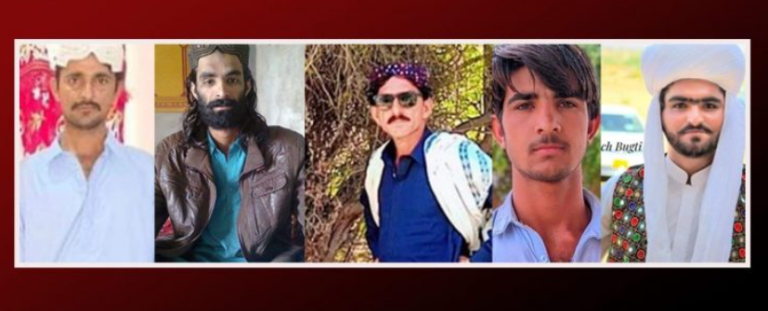
The victims of enforced disappearances are identified as Dost Ali son of Dosteen Bugti, Balach son of Shah Mur Bugti, Dilshad son of Abid Hussain, Yaseen son of Ghulam Mustafa Bugti, Saleh son of Hazar Khan Bugti, Yousuf son of Zahoor and Pupal son of Lal Bakhsh Bugti.

During this so-called search operation, the Pak Army broke into their houses and subjected the residents to violence.

In addition to the above list of victims of enforced disappearance, there are several other individuals whose identities have not been ascertained yet but have fallen victim to enforced disappearance.

For the past five days, Surbandhar an area of Gwadar has also been under military siege. Reportedly, every night at 11 p.m., forces encircle the entire area and conduct search operations, intimidate and torture the residents. Around 25 Surbandhar residents have been forcibly disappeared, with some subjected to torture and later released, while the whereabouts of seven locals—Sameer Hamza, Dur Mohammad, Umair Aslam, Mohsin Raheem Baksh, Niaz, Nizam Mohammad Jan, Bilal Raza Mohammad remain unknown.

This incident is not uncommon, since Pakistan’s forceful occupation of Balochistan in 1948 the region has been subjected to exploitation of its resources and systematic oppression of its people by the Pak Army. The enforced disappearances, perpetrated by the Pak Army, have become alarmingly frequent, with reports emerging regularly of individuals vanishing without a trace. The discovery of bodies, often bearing signs of torture, further underscores the severity of the situation. Balochistan remains embroiled in a struggle for justice and recognition of its people’s rights, as enforced disappearances continue to plague the region.

Abduction and conversion of another Hindu minor girl to Islam in Sindh

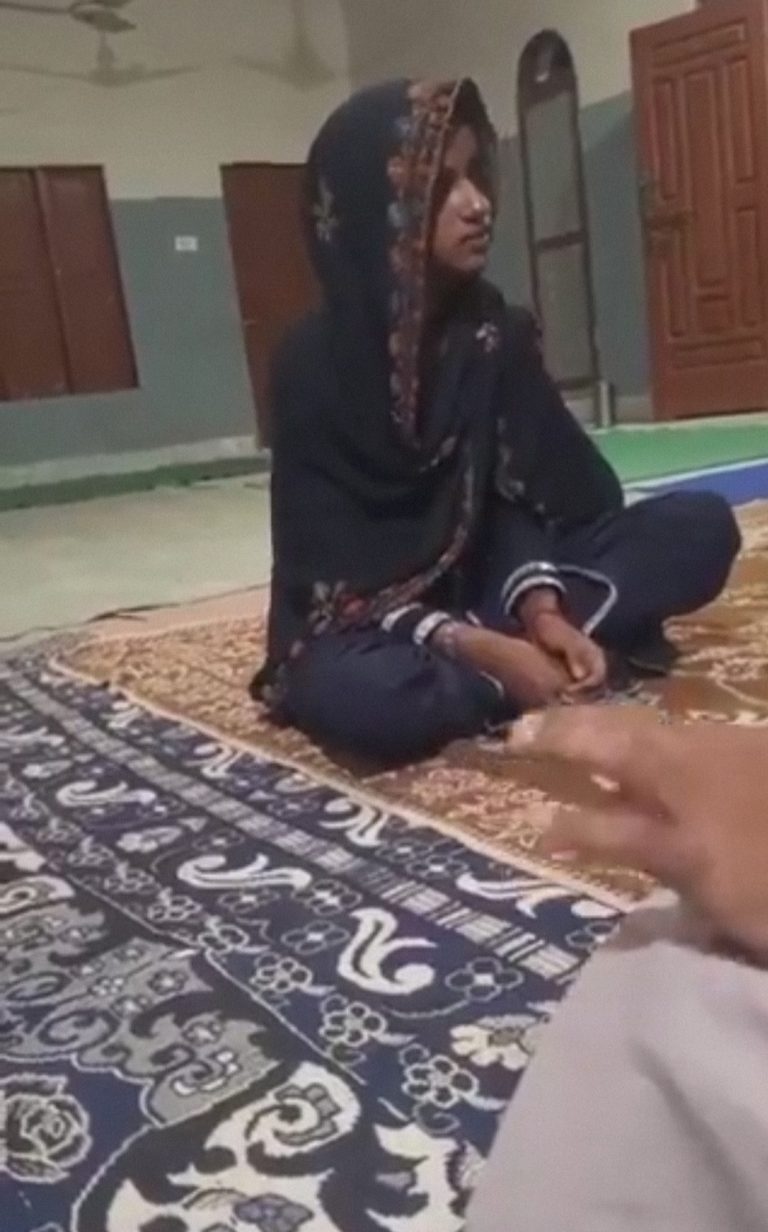
In a disturbing incident, a minor Hindu girl named Maya, a resident of Bagho Kohli, Sindh, has been abducted and forcibly converted to Islam.

The conversion took place at the hands of Peer Agha Jaan Sarhandi at the Dargah Gulzar-e-Khalil in Samaro.Following her conversion, Maya was married off to a Muslim man named Muhammad Ramzan. The incident has sparked outrage among the local Hindu community and human rights activists, who are demanding immediate action and justice for the victim.

Notably, Sindh has the highest population of Hindus in Pakistan and therefore witnesses most cases of forced conversion. The forced Islamisation of religious minorities has led to the steep decline in their population in the Islamic Republic.

Pak Army continues enforced disappearances in Pak-occupied-Balochistan

The grim practice of enforced disappearances continues unabated in Pak-occupied-Balochistan. Two more young men reportedly went missing from the Kech and Gwadar districts over the weekend amid raids and detentions by security forces. 

Nizam Baloch, who was detained on May 9 from Gwadar district, was freed on Monday after four days in custody. However, this respite was overshadowed by fresh reports of enforced disappearances in the region.

Pak forces conducted a raid in the Surbandan area of Gwadar district and forcibly arrested a young man identified as Mohsin Baloch, son of Raheem Baksh, a young fisherman from Surbandan. His whereabouts remain unknown after being moved to an undisclosed location.

Another Baloch student Niyaz Abdul was forcibly disappeared by Pak forces on Monday.

Gwadar has witnessed an intense search operation by Pak Army over the past week, resulting in several detentions. Five of the missing persons from this operation have been identified as Sameer, son of Hamza; Bilal, son of Raza Muhammad; Dur Muhammad, son of Kareem Baksh; Ameer, son of Aslam; and Amaan, son of Jamadar.

Moreover, on Sunday around 7 p.m. in Kech district, forces forcibly arrested Adam, son of Soomar, a resident of Balgatar Lop area. Adam was the sole breadwinner for his family engaged in the oil import business from Iran. The day before his abduction, upon returning from the border, he was detained by Army-sponsored armed groups, commonly referred to as “Death Squads.”  

Pak Army and intelligence agencies are forming these “Death Squads” and granting them impunity to perpetrate crimes like enforced disappearances across the region.

Pakistan’s military and intelligence agencies are solely complicit in the enforced disappearances of Baloch citizens. Families have led numerous protests demanding the recovery of their missing loved ones. However, since Pakistan has forcefully occupied Balochistan since 1948, it is exploiting its resources while oppressing Baloch community.

BLF leader Dr Allah Nazar urges international support for Baloch freedom from Pakistan

In a recent statement released by Dr. Allah Nazar Baloch, a prominent leader of the Balochistan Liberation Front (BLF), reiterated the urgent call of the Baloch nation for support in their decades-long struggle for self-determination against the forcible and oppressive Pakistan occupation.

He emphasized the grave human rights abuses and systematic oppression suffered by the Baloch people at the hands of the Pak establishment. He urged nations and organizations worldwide, including neighbouring countries like Afghanistan, India, Iran, and the wider Middle East, as well as the European Union, United States, United Nations, and international human rights groups, to acknowledge the ongoing atrocities against the Baloch community committed by the Pak Army and aid the Baloch cause.

He further underscores the Baloch people’s rich cultural and historical heritage and their longstanding ties with the Arab world. He points out that although the Baloch have preserved their unique culture for millennia, they have been the victims of systematic violence and oppression due to Pakistan’s over 76-year occupation of Balochistan.

He highlighted the historical links between the Baloch and Arab countries in his significant speech to UAE President Mohammed Bin Zayed al Nahyan and Saudi Crown Prince Mohammed Bin Salman, urging recognition of the Baloch struggle against Pakistan.

“We condemn the recent killings of innocent Baloch civilians in Mashkay, Awaran and Gwadar by Pak Army-sponsored death squads. These atrocities are a continuation of the Pak Army’s brutal campaign to suppress the Baloch freedom movement, which is increasingly gaining popular support.” He stated in his statement.

He said that the Baloch struggle is secular, and they are fighting for liberation from an occupying power rather than against any specific ethnicity or religion.

Drawing parallel to China’s struggle for independence, Dr Baloch called on China to reconsider its economic and military support for Pakistan, arguing that such support comes at the expense of the lives of Balochs.

Following that, Dr. Baloch called on the international community to support the Baloch nation’s cause by highlighting their desire for justice, peace, and the basic right to self-determination.

Pak-occupied J&K: Angry Kashmiris destroy mobile towers as Pak establishment suspends internet

Amid escalating tensions in Pakistan-Occupied Jammu and Kashmir (POJK), service of internet have been suspended. Reports from Mirpur indicate that the occupying Pak government has halted internet services across the entire region.

In response to the suspension, protesters have begun dismantling various mobile network towers in cities like Mirpur and Muzaffarabad. The protesters assert that POJK is experiencing its worst period, with Pakistan forces using excessive force. They claim that the suspension of internet services is a failed attempt to silence the voices of the region’s residents, providing cover for Pakistan to deploy its forces throughout Kashmir.

Sources report that both Rangers and Pakistan Army units have already entered POJK. There are also concerns about Pakistan forces establishing regular positions in nearby forests, a development deemed alarming by local observers.

The situation remains highly volatile, with the internet blackout contributing to the unrest. The protesters’ actions and the increased military presence underline the severe and deteriorating conditions in the region.

India, Iran sign 10-year pact for operation of Indain company at Chabahar port terminal

India and Iran on Monday signed a key 10-year contract that will allow an Indian company to take over operations at Shahid Beheshti terminal of the strategic Chabahar port in Iran, in a move aimed at boosting regional maritime trade connectivity. 

The agreement was signed between India Ports Global Limited (IPGL) and Iran’s Ports and Maritime Organization (PMO) in the presence of India’s Ports, Shipping and Waterways Minister Sarbananda Sonowal, who is on a visit to Tehran.

As per the pact, IPGL’s subsidiary India Ports Global Chabahar Free Zone (IPGCFZ) will operate the Chabahar terminal for 10 years. India plans to invest $120 million in equipping the terminal, while also offering a $250 million credit line for developing associated infrastructure.

This marks the first time an Indian company will operate a terminal at an overseas port, a strategic move that will boost trade ties between India, Iran and Afghanistan while allowing greater access to landlocked Central Asian nations.

“This agreement aims to enhance regional connectivity and facilitate trade, particularly between India, Iran and Afghanistan”, an official statement said.

Sonowal termed it a foundation for “India’s long-term involvement at Chabahar” with a “multiplier effect” on the port’s viability. He highlighted Chabahar’s potential as a hub for the International North-South Transport Corridor for linking India with Central Asia.

The U.S. had previously granted a sanctions exemption for Chabahar to facilitate Afghanistan’s trade and development. However, the State Department indicated the latest deal may not have a similar carve-out.

While calling sanctions on Iran “in place”, a spokesperson said any entity doing business with Iran risked potential sanctions exposure, without directly commenting on the Chabahar pact.

Iran has termed Chabahar a key maritime enabler for boosting trade connectivity to Central Asia, bypassing Pakistan. The port has handled over 8 million tons of cargo since India began operations there in 2019.

POJK: Pak Army fires indiscriminately on Kashmiris; 3 killed, over 30 injured

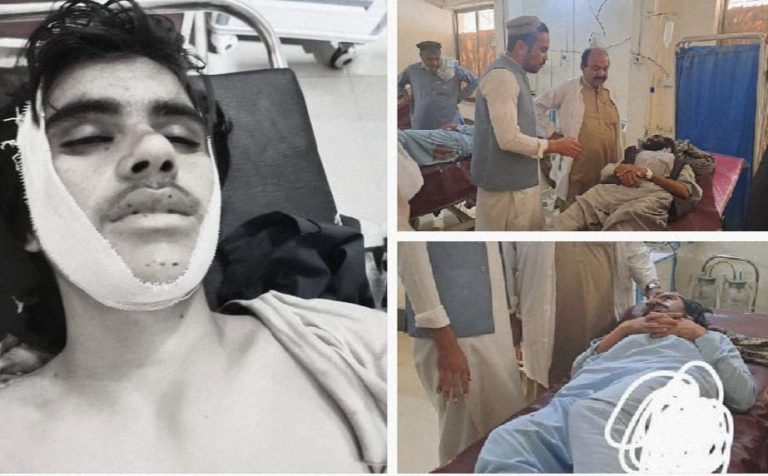
The situation in Muzaffarabad has escalated dramatically as Pak Army began firing live rounds at protesters, killing 3 Kashmiris on Monday. More than 30 people have also been injured.

The unrest in Muzaffarabad intensified as protesters set Ranger vehicles on fire. In response, Rangers opened fire on the crowd, leaving at least 30 people injured and resulting in the deaths of three protesters. The atmosphere in the city has become highly volatile, with fears of further violence looming.

This came after Pakistan announced a multi-million dollar grant to provide urgent economic relief to the Kashmiris on Monday. The incident clearly shows that while Pakistan government seemed kneeling down in front of the demands of POJK Joint Awami Action Committee, the real controller of Pakistan, the Pak Army took revenge on people for their loss.

Adding to the tension, four helicopters carrying Pakistan Army commandos arrived in Muzaffarabad. Local sources confirm that Special Services Group (SSG) personnel were on the scene, further heightening the sense of urgency and danger.

The situation remains fluid, with ongoing reports of clashes and a heavy military presence in the city. The protests, which began as a peaceful demonstration for basic rights, have now turned into a deadly confrontation, marking a significant escalation in the region’s unrest.

Meanwhile, the Kashmiris living in Britain also started to protest against Pakistani establishment outside its assembly in London.

Multiple processions head to Muzaffarabad demanding basic rights in Pak-occupied J&K

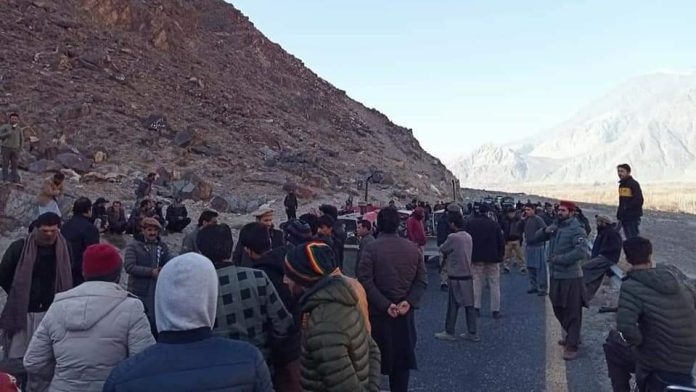
After the initial hurdles due to Pakistani FC forces’ crackdown on peaceful civilians protesting for basic rights, multiple processions from across Pakistan-occupied Jammu and Kashmir (POJK) are converging towards Muzaffarabad.

The processions are reaching Muzaffarabad from various regions, including Kotli, Poonch, Dadyal, Rawalkot, Mirpur, Tattapani, Bagh, and Hajira.

As protesters marching towards Muzaffarabad reached Rawlakot on May 12, the Pakistani Establishment extended an invitation to the POJK Joint Awami Action Committee leadership for a dialogue. The dialogue, which took place in Rawlakot, saw representation from the Establishment, including the GOC Murree, some Pakistan Army Officers stationed in Pakistani Occupied Jammu Kashmir (POJK), and the Chief Secretary of Pakistani Occupied Jammu Kashmir.

Despite the dialogue, the POJK AAC’s demands were not accepted by the Establishment, resulting in the failure of the negotiations. Consequently, the committee decided to persist with their Long March.

As the protesters arrived in Dhirkot, they took a moment to rest before setting off once again towards Muzaffarabad today, continuing their journey and their pursuit of their demands.

Additionally, a procession from Bagh is also on its way to reach Muzaffarabad, where the marchers have shown great resilience and remained undeterred by bad weather and rains.

https://twitter.com/SamRaja21700228/status/1789774374972661863?t=zaUHDTbBKigsdkEzu6mMjw&s=19

In an address to the public, Awami Action Committee leader Shaukat Mir emphasized that the movement is about rights, attributing credit to the people of Poonch who initiated the demand in the early days. He stressed that the fight for rights should continue and that the rights of the people remain paramount and cannot be compromised for personal gains.