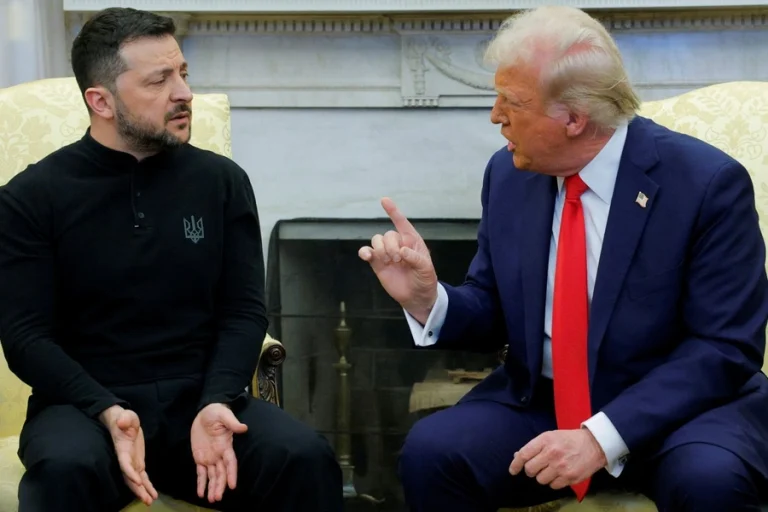
A highly anticipated meeting between Ukrainian President Volodymyr Zelensky and U.S. President Donald Trump ended in a dramatic confrontation at the White House on Friday, exposing deep divisions over the ongoing war with Russia.
Intended as an opportunity for Kyiv to secure continued U.S. backing against Russian President Vladimir Putin’s aggression, the meeting quickly spiraled into a public dispute. Trump, alongside Vice President JD Vance, emphasized the need for diplomacy, while Zelenskiy countered that Putin could not be trusted in any negotiations. The disagreement underscored how the shift in Washington’s leadership has complicated Ukraine’s efforts to sustain Western support.
Trump, taking to his social media platform Truth Social after the meeting, accused Zelensky of lacking gratitude and dismissed him as unprepared for peace. “I have determined that President Zelenskyy is not ready for Peace if America is involved,” Trump wrote. “He can come back when he is ready for Peace.”
Following the tense exchange, Zelensky abruptly left the White House, abandoning a widely anticipated agreement between the U.S. and Ukraine on joint natural resource development. The breakdown of the talks also cast doubt on recent European efforts to secure U.S. security guarantees for Ukraine, which are considered crucial in deterring further Russian aggression.
During their heated discussion in the Oval Office, Trump bluntly warned Zelensky that U.S. support was not guaranteed. “You’re either going to make a deal, or we’re out, and if we’re out, you’ll fight it out. I don’t think it’s going to be pretty,” Trump said.
Zelensky pushed back against Trump’s softer stance on Putin, insisting, “Make no compromises with a killer.” Trump responded by arguing that Putin was willing to negotiate. “You are gambling with World War Three,” he warned the Ukrainian leader.
Vance also rebuked Zelensky, stating it was “disrespectful” to press the U.S. for more support while inside the Oval Office. Trump agreed, adding, “You didn’t say thank you.” Zelenskiy, raising his voice, countered: “I said a lot of times thank you to the American people.”
The Biden administration had previously provided Ukraine with billions of dollars in military aid, but Trump has signaled a major policy shift, seeking to reduce U.S. involvement, improve relations with Russia, and recoup financial investments in Ukraine. “I hope I’m going to be remembered as a peacemaker,” Trump said.
No Security Guarantees in Resource Deal
The proposed agreement between the U.S. and Ukraine would grant American companies access to Ukraine’s mineral and energy resources but lacks explicit security commitments from Washington. Trump argued that American business investments would serve as a form of security assurance.
The deal, which remains unsigned, would allocate 50% of revenues from Ukrainian government-owned natural resource assets to a reconstruction fund managed by both nations. However, details on how the funds would be used or which assets were included—ranging from minerals to oil, gas, and port infrastructure—remain unclear. Zelensky has expressed concerns over the long-term financial implications for Ukraine.
Kyiv had hoped the deal would encourage Trump to renew U.S. military aid and potentially rally Republican support in Congress. However, the meeting’s outcome has heightened uncertainty for Ukraine, which remains dependent on foreign assistance amid mounting battlefield losses and an urgent need to replenish troops and weapons.
In another horrifying case of religious persecution in Pakistan, a mere 13 year old young Hindu girl, Meena Maheshwari, has been abducted from Jhok Sharif, Badin, raped, and forcibly converted to Islam. Her devastated relatives have made a desperate appeal for justice, crying, “She’s just a child; please have mercy and ensure her safe return!” But in Pakistan, where Hindus live as second-class citizens, justice remains a distant dream.
Sindh, once home to a flourishing Hindu population, has become a hunting ground for radical Islamists who prey on young Hindu girls with impunity. The pattern is always the same: a girl disappears, her family begs for her return, and soon after, she is paraded as a “willing convert” under the protection of religious extremists and the judiciary. Forced conversions and child marriages are endorsed by a corrupt system that actively enables this oppression.
Hindu girls, often minors, are targeted, kidnapped, raped, and forcibly married to men old enough to be their grandfathers. These crimes are not acts of random violence—they are part of a systematic campaign to erase Sindh’s indigenous Hindu community. The perpetrators operate with Paki establishment’s support, while Pakistan’s judiciary shields rapists under the guise of religious conversion.
The Hindu community in Pakistan is being slowly wiped out, and without international intervention, these horrors will continue unchecked.
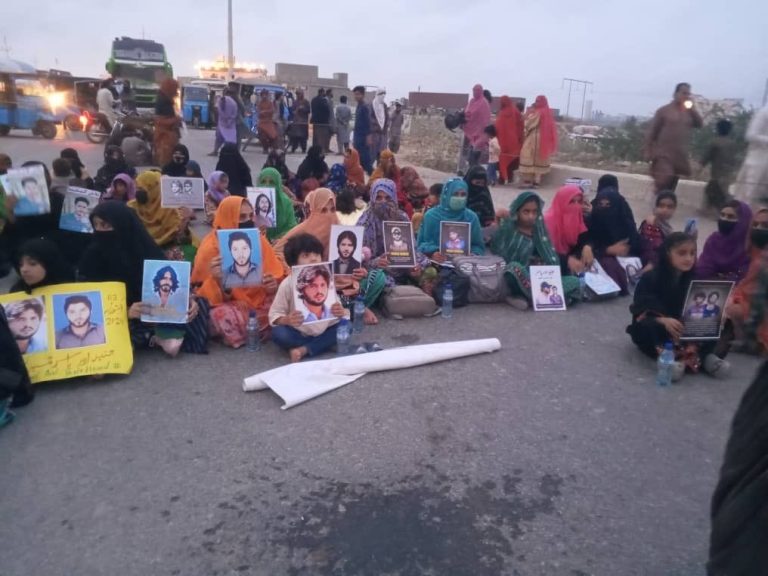
Families of forcibly disappeared Baloch individuals have once again blocked the Quetta-Karachi National Highway near Hub Bhawani, demanding the return of their loved ones. The protest has severely disrupted traffic, as grieving relatives refuse to back down against the Pakistan Army’s systematic abductions and enforced disappearances.
The protesters say they are resuming their sit-in after the Pak authorities failed to keep their promise of recovering the missing individuals. Last month, local officials had assured the families that their loved ones would be returned within 20 days. However, with no progress and yet another betrayal by the Paki establishment, the families have been forced to return to the streets in protest.
The number of protesting families has now risen to six, as more victims of enforced disappearances join the movement. The Pakistan Army’s kill-and-dump policy, which has long terrorized Pak-occupied-Balochistan, continues unchecked, with the military abducting civilians at will and leaving families in endless agony.
The same group of families had staged a similar protest last month at the same location, where they were given hollow assurances by the Deputy Commissioner’s representative. But the occupying-state’s complete indifference to their plight has only reinforced what Baloch activists have been saying for decades – that Pakistan treats POB as an occupied colony, using terror and abductions to silence voices demanding basic human rights.
The protesters have made it clear that they will not call off their sit-in until their loved ones are returned. They have accused the Pakistan Army and intelligence agencies of orchestrating enforced disappearances and condemned the Paki establishment’s brutal suppression of Baloch voices.
Pakistan’s colonial exploitation of Pakistan-occupied Gilgit-Baltistan (PoGB) continues to fuel unrest as protests escalate in the Diamer District against the Water and Power Development Authority (WAPDA). The people, who have long suffered from Islamabad’s systemic neglect, are demanding justice over the unfulfilled promises linked to the Diamer-Bhasha Dam project. Decades of deceit, inadequate compensation, and forced displacements have left locals enraged, exposing yet another chapter of Pakistan’s exploitation of the occupied region.
A key grievance is WAPDA’s failure to provide the six kanals of agricultural land promised to families displaced by the dam project. Protesters, pushed to their limits by Pakistan’s deceit, have warned that the injustices brewing in Diamer are on the verge of an explosion. Despite their anger, demonstrators have maintained a peaceful stance, staging a sit-in along the Karakoram Highway (KKH), a crucial trade route between Pakistan and China.
The people of PoGB, treated as second-class citizens by Islamabad, have historically faced political and economic marginalization. Their voices are deliberately silenced, with no representation in Pakistan’s legislature, no constitutional rights, and no say in decisions that uproot their lives. The Diamer-Bhasha Dam project is yet another example of how Islamabad and its military-controlled institutions extract resources while leaving locals landless, jobless, and without basic rights.
Further proving Pakistan’s iron-fisted rule, the establishment has now turned to repression to crush dissent. Ahead of a planned public sit-in by Diamer-Bhasha Dam affectees, nationalist leader Shabbir Mayar, Chief Organizer of GB United Movement, was detained and forcibly expelled to Kharmang. He was arrested under a fabricated two-year-old case—an all-too-common tactic used by the Paki establishment to silence voices of resistance.
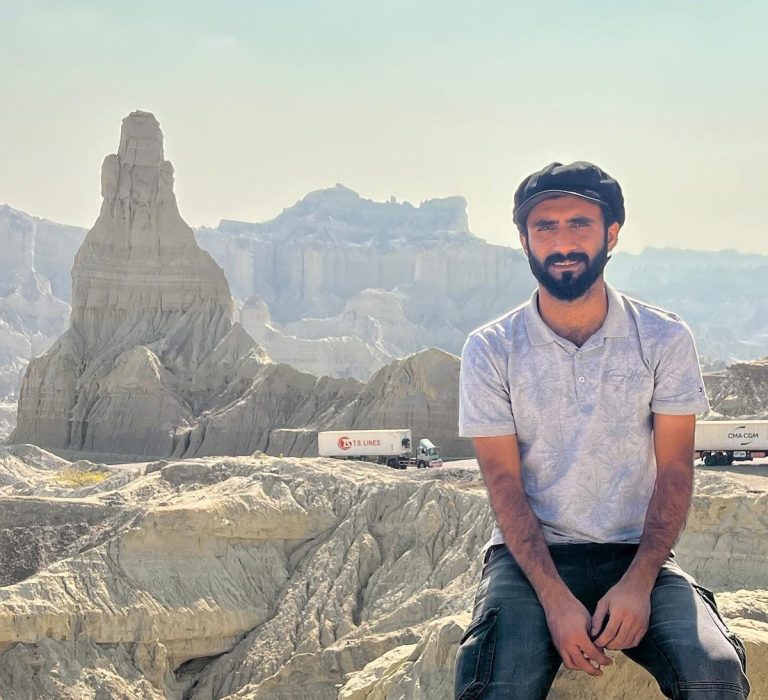
The Paki establishment’s brutal crackdown on Baloch youth continues, as yet another student, Yasir Baloch, has gone missing under suspicious circumstances in Karachi. Yasir, a resident of Malir, disappeared on the night of February 24-25 while returning home from Gulshan-e-Iqbal after meeting his friends. His family and friends have been unable to contact him since.
Yasir Ali, son of Sabzal Ali, was a Media Sciences student at Shaheed Benazir Bhutto University. He left Gulshan-e-Iqbal around 10:30 PM for his home in Juma Malir Goth but never made it back. His disappearance follows the same disturbing pattern of enforced disappearances targeting Baloch students, activists, and intellectuals across Pakistan.
His family fears that Yasir has been abducted by Army-backed agencies, just like countless other Baloch students who have been forcibly disappeared for daring to belong to a community that the Paki establishment has long sought to silence. They have made a desperate appeal for his immediate release, demanding to know his whereabouts.
Earlier on Thursday, Pak forces abducted another young Baloch, Sabir, son of Ali Dost, from Karachi’s Lyari area. Sabir, originally from Gresha, Khuzdar, was taken into custody by Pak security forces and shifted to an undisclosed location. Reportedly, he was detained without justification, and his whereabouts remain unknown.
The systematic abduction of Baloch youth exposes the true face of Pakistan’s military-controlled regime, which continues to treat POB and its people as colonial subjects. Enforced disappearances have become a weapon of terror wielded by Punjabi Paki establishment agencies, who operate with absolute impunity.
Russia says ‘Enough is Enough’ and Invades Ukraine.On 24 Feb 2022 exactly three years back, Russia invaded Ukraine as a Special Operation, along the entire Ukrainian front. The attack though expected, caused outrage and wasuniversally condemned including by the United Nations. However, one cannot but note that out of 181 nations that voted for, 5 voted against, and 35 abstained on the resolution condemning Russia. India abstained but concurrently stated that attacking the sovereignty of another nation is not acceptable. The world appreciated PM Modi’s advice to Putin on the sidelines of the Tashkent SCO Summit saying, “I know that today’s era is not an era of war …..”.
Breaking News on Ukraine. On 19 Feb 2025 US President Donald Trump denounced Ukrainian President Volodymyr Zelenskiy as a “dictator”, and blamed him for attacking Russia, and warned he had to move quickly to secure peace or risk losing his country. US special envoy to the Middle East (now expanded to Ukraine) Steve Witkofftold CNN’s ‘State of the Union’ on Sunday 23 Feb 2025 that, “The war didn’t need to happen. It was provoked. It doesn’t necessarily mean it was provoked by the Russians.” He reiterated, “There were all kinds of conversations back then about Ukraine joining NATO. That didn’t need to happen. It basically became a threat to the Russians”. Thesame day, Defence Secretary Pete Hegseth said it was “fair to say it’s a very complicated situation”, and Trump officials publicly declined to characterize Russia as the provocateur in its war against Ukraine. Jeffrey Sachs (an internationally renowned American economist and public policy analyst) has been saying it all along, and shocked the EU Parliament on 23 Feb by blaming USA squarely for the events leading to Ukraine War, and the EU for tamely following the US lead. Negotiations between USA and Russia to end the war; without Ukraine and EU participation, are ongoing in Riyadh, and both have expressed satisfaction on the direction of the talks.
European Geo-Politics Upended.It has been known to the rest of the World except Western Europe that Europe was no longer the centre of the World. The USA has been signaling that for some time, but Trump 2.0 has officially confirmed it. The pivot to Asia has been concretised by USA throwing NATO and Ukraine under the bus. It is especially ironic, because as early as mid 1990s when NATO started its Eastwards expansion, it was USA which started the bipolar great game of subduing/neutralizing Russia after the collapse of the Soviet Union. US wassecure in their cocoon of being a unipolar hegemonic power; and Europe played along. It is a well-documented fact that EU and USA had categorically stated that they will NOT expand NATO Eastwards; but instead kept creeping East and signaled the distinct possibility of Ukraine joining NATO. President Zelensky of Ukraine became the puppet dancing to their tune, and for mainly personal aggrandisement encouraged the move and took concrete steps towards it.
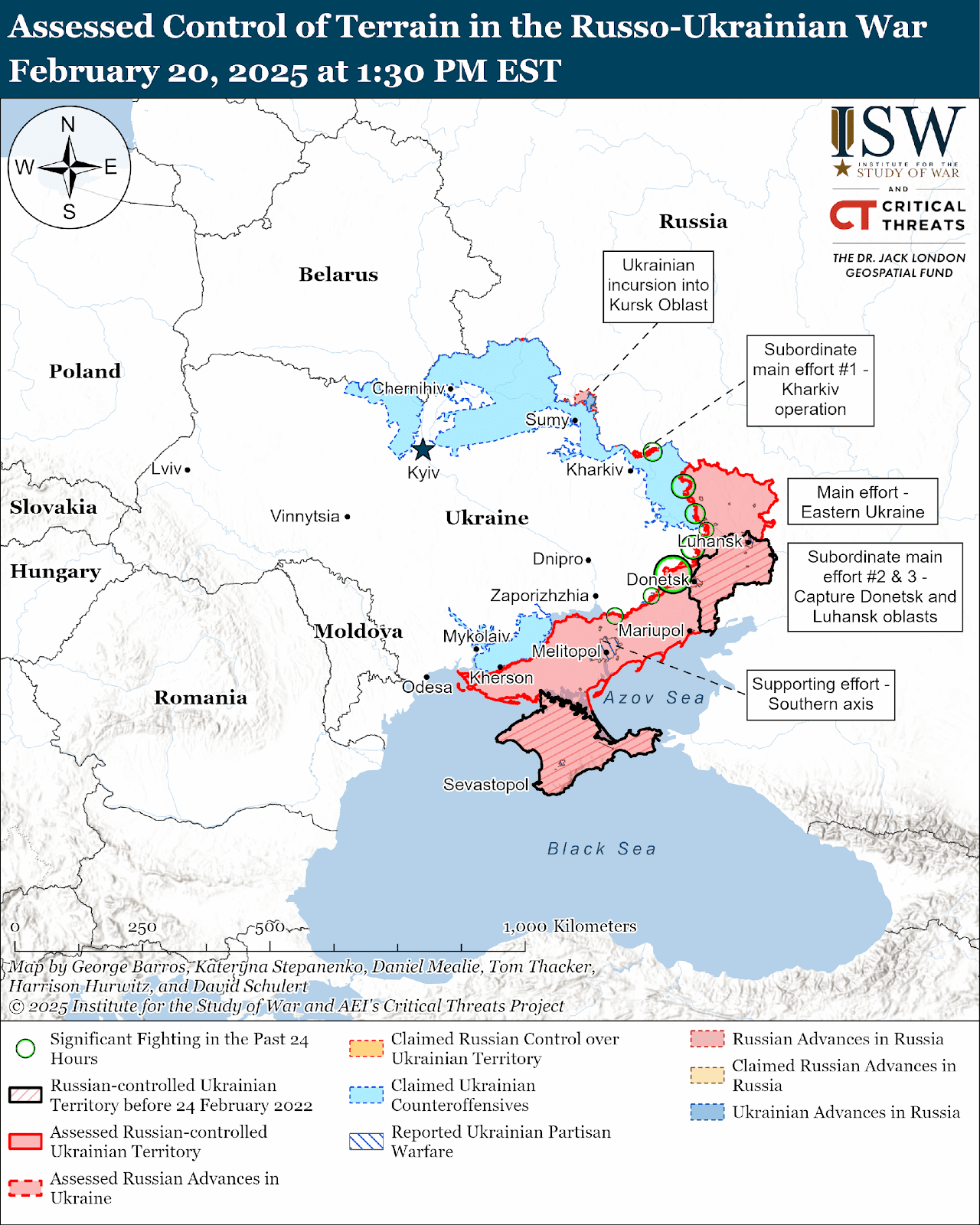
Current Operational Situation of the War
Source: Institute for the Study of War
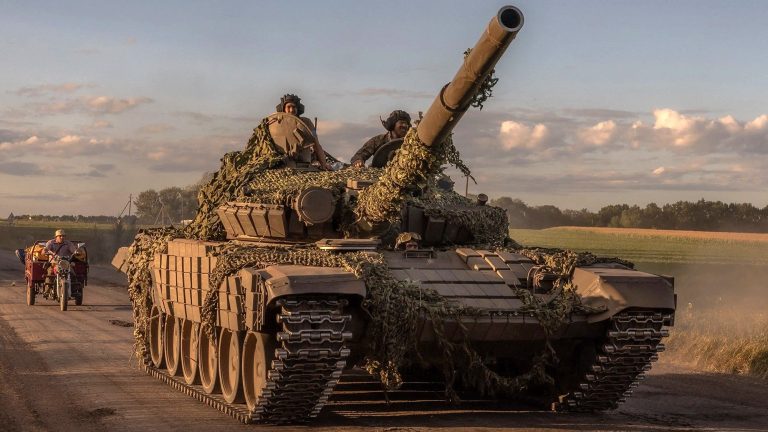
A Strategic Military Overview of the War.Three years since Russia’s February 2022 full-scale invasion of Ukraine, Russia occupies roughly 20 percent of the country after gaining approximately 112250 Sq kms of territory till end 2024; mainly East of Dniper River, Donetsk, Luhansk, and Mariupol Oblasts/Provinces. Ukraine in a bold, surprising counter-offensive, has occupied roughly 1000 Sq kms of Russian territory in the Kurksk oblast. These Ukrainian troops, remain surrounded by Russian forces; privately Ukraine commanders admit that this manoeuvre is a strategic failure, and has proved costly in men and material. Russia continues to bombard Ukrainian cities, while Ukraine maintains drone attacks on Russian ships and military vehicles. Since January 2022, Ukraine has received about $407 billion in aid, including over $118 billion from the USA, with clear indications of donor fatigue. Fighting and air strikes have inflicted over 40,000 civilian Ukrainian casualties, while 4 million people are internally displaced, and 6.8 million have fled Ukraine. 14.6 million people need humanitarian assistance.Ukrainian military casualty figures vary wildly, and are expected to be as much as Russia. Russian casualties are estimated to be 160,000–165,000 Russian soldiers, officers, contract troops, mobilized personnel, and other fighters have been killed since February 2022.
While the Russian economy is under severe strain, they have surprised the West by their resilience, and its war ‘economic and industrial’ machine is at full momentum compared to the entire NATO countries combined, in terms of armaments, munitions, and war like stores production.
EU and NATOs Response.The Europeans are outraged and caught totally off guard. They are scrambling to decide ‘how to respond and what to do’. Hectic meetings and parleys between European leaders and with Trump administration including President Trump are ongoing. For too long they have sailed under the US security umbrella, and are neither prepared militarily, logistically and even economically to join combat against Russia directly; however, there is fair amount of grandstanding going on. They feel that USA is pre-emptively ceding fundamental and long-held positions to Russia in the hope of ending a war it is not fighting; making the situation more untenable and unstable for them. They believe that this will be the green signal for Russian hegemony and expansionism into Europe, sooner rather than later. IISS in their referenced paper call it a ‘strategic surrender’, and an ‘orderly capitulation … to obtain some political concession’. Currently, EU and NATO are at their wits end trying to evaluate their options and response both diplomatically, geo-politically and most vitally militarily.
Transactional Trump.It is vintage transactional Trump at his best; keep his campaigning promise of resolving the Ukraine and Gaza Wars as also transact the optimal deal for USA as part of MAGA (Make America Great Again). Not only will he negotiate a grand rapprochement with Russia, force Europe to take care of its own security, thus saving on military involvement (pull out US troops) and security guarantees saving billions of dollars. By extending friendly overtures to Putin, Trump hopes to drive a wedge in well cemented Russia-China ties, and creates wherewithal and opportunity to pivot to Asia and specifically China. It also provides him an opportunity to explore new trade and investment opportunities globally. With Ukraine, Trump has announced the end of aid, and reportedly threatened to cut the essential Starlink satellite link while demanding access to mineral wealth on onerous terms. To the utter dismay of EU leaders, Trump has announced the second round of talks with Russia starting 25 Feb at Riyadh. US Secretary of State Marco Rubio said the two sides have broadly agreed to pursue three goals: to restore staffing at their respective embassies in Washington and Moscow; to create a high-level team to support Ukraine peace talks; and to explore closer relations and economic cooperation.
Putin the Grand Strategist.Amidst all this, Putin it seems ‘is laughing all the way to the bank and geo-strategic victory’. To be sure, this is just the beginning of fairly long drawn out negotiations. However, Russia would be happy if it retains the land East of River Dneiper (specifically Luhansk and Donetsk oblast), gets a formal guarantee that Ukraine will not join NATO, and no European peacekeepers will be deployed in Ukraine(Putin has categorically refused European presence in Ukraine). Officially a Russian diplomat told the RIA news agency that “Russia wants a long-term peace deal over Ukraine that tackles what it regards as the root causes of the conflict and not a quick US backed ceasefire”. This would also create opportunities for geo-political and economic domination of Europe, and resurgence of Russian power.
An Uncertain Global Re-alignment.In an interesting ironical twist, the oft quoted statement by Kissinger about America that “It may be dangerous to be America’s enemy, but to be America’s friend is fatal”, holds even more true for President Trump. However, one feels that both in the case of the Gaza and Ukraine war, he has given them a lot of thought, and beyond the brinkmanship and grandstanding lies a global strategic vision; which will enrich USA geo-politically and economically, and will also extend American hegemony globally. In this transactional blitzkrieg, Trump hopes to shake up the world to USA’s advantage, and if in the process it stops ongoing wars and conflicts; it will leave a Trumpian stamp on the world stage. Trump 2.0 has unleashed a barrage of actions, tariffs, aspirations and announcements including hegemonic (Canada, Greenland, Panama Canal), which will certainly accelerate the ongoing geo-political flux globally. Only time will tell what actually transpires, specifically the Ukraine war. India a growing balancing power, can find many opportunities to develop and grow into a confident middle power, in this world of Trumpian flux.
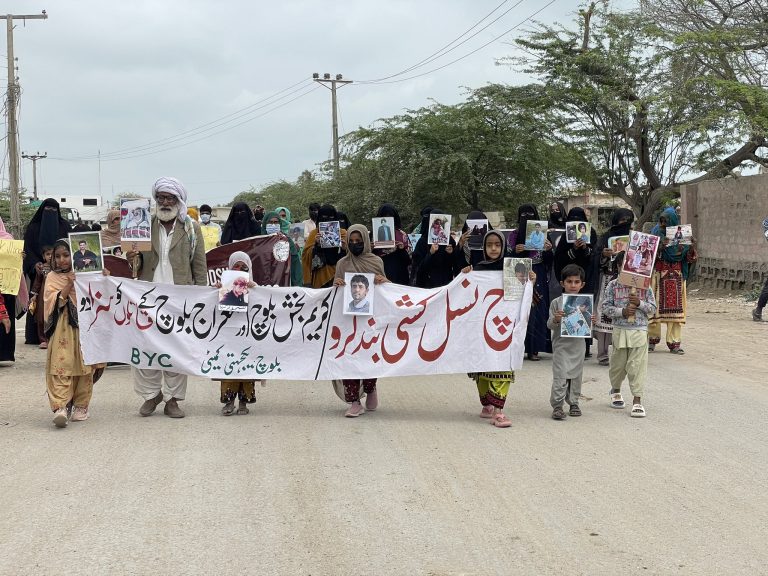
Protests against enforced disappearances, targeted killings, and fake encounters orchestrated by the Pakistan Army continue to sweep across Pak-occupied-Balochistan, with rallies held in Quetta, Pasni, and Naseerabad. Hundreds of protesters, including women and children, took to the streets, demanding justice and accountability for the Army’s crimes.
In Quetta, a massive rally started from Sariab Link Road and concluded at Kambaran Road, where demonstrators raised slogans against the Pakistan Army’s brutal tactics. Protesters accused security forces of accelerating their campaign of abductions and extrajudicial killings to silence Baloch dissent.
Leaders of the Baloch Yakjehti Committee, addressing the gathering, condemned the growing number of enforced disappearances and fake encounters, stating that the Paki establishment has turned POB into a military-occupied territory where the Army and its intelligence agencies operate with impunity. “If anyone is guilty, let the courts decide. Why is the Army acting as judge, jury, and executioner?” they questioned.
Meanwhile, a similar protest erupted in Murad Jamali, where demonstrators chanted slogans against Army-backed death squads responsible for eliminating Baloch activists and intellectuals. The protesters also condemned the recent killings of Baloch youth Kareem Dad and Miraj Baloch in Turbat-Kech, calling their deaths part of the military’s systematic campaign to wipe out Baloch identity. Additionally, the Pakistan Army’s latest search operation in the Chattar area of Naseerabad, which resulted in the abduction of several individuals, was strongly denounced.
The Baloch Yakjehti Committee has vowed to continue protests across POB, asserting that the occupying-state has intensified its crackdown against the Baloch people. “The surge in targeted killings and enforced disappearances is not a coincidence but a deliberate policy to crush Baloch aspirations for freedom,” the committee stated. It further said that the Pakistan Army and intelligence agencies of using death squads and proxy militias to terrorize the population, calling it a war against an entire nation.
In the coastal town of Pasni in Gwadar, another rally saw families of disappeared persons carrying pictures of their missing loved ones, pleading for their safe return. Speakers at the event condemned the Pak Army’s crimes, labeling them as part of an ongoing Baloch genocide. They demanded international intervention to hold the Pakistan Army accountable for its war crimes and called on human rights organizations to break their silence on Balochistan’s plight.
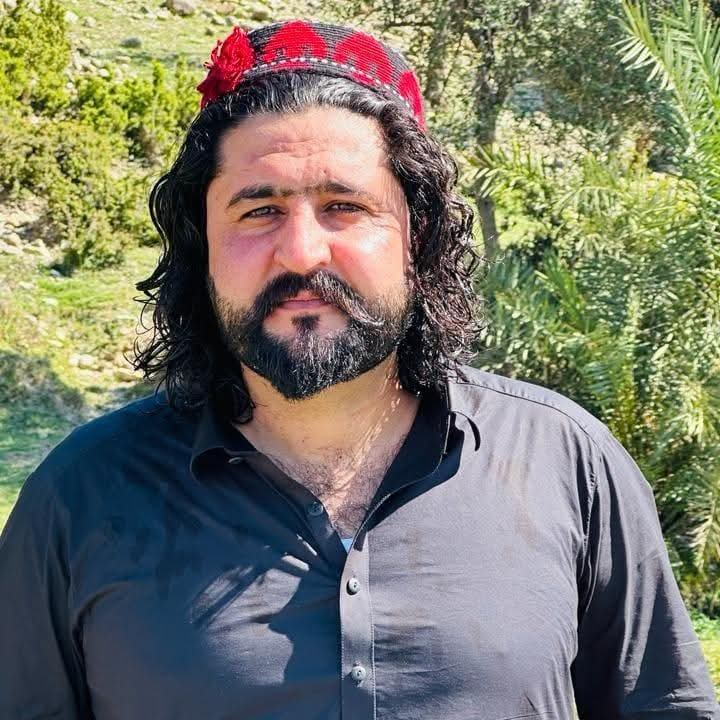
Islamabad once again stands exposed for its brutal suppression of the Pashtun Tahafuz Movement (PTM), as Pak security forces launched yet another crackdown on peaceful activists. In a brazen display of Army terrorism, Bannu police raided the residence of PTM activist Hanif Pashteen early this morning, arresting his father and brutally torturing his brother, Hidayatullah.
The sheer desperation of the Paki establishment is evident—it has now resorted to abducting and brutalizing family members of those who dare to speak out. Arresting the elderly and inflicting violence on innocent civilians underscores the colonial mindset with which the Paki establishment views Pashtuns—an indigenous people who have suffered decades of Army oppression, enforced disappearances, and extrajudicial killings.
This is not law enforcement; this is terrorism by the occupying state against its own citizens. The PTM, which has been at the forefront of demanding justice for thousands of disappeared Pashtuns, has long been subjected to harassment by the Punjabi Pak Army-government. With its calls for accountability over enforced disappearances and military excesses in Khyber Pakhtunkhwa, the PTM has become a prime target of the establishment.
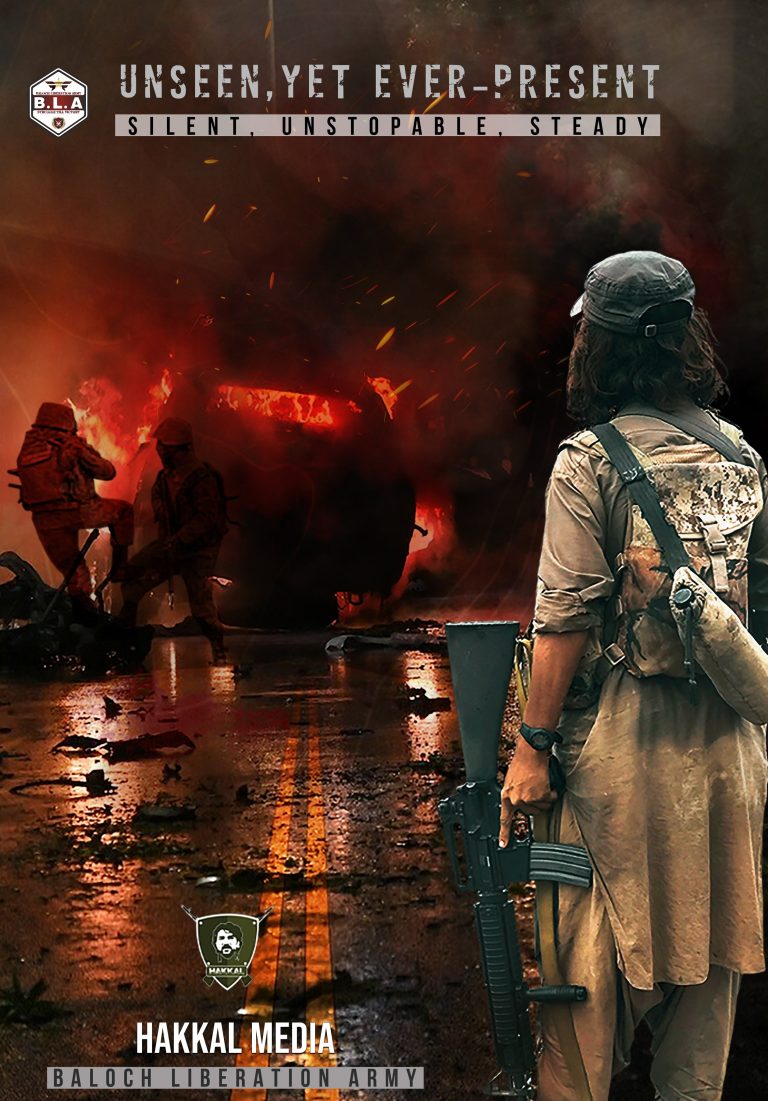
The Baloch Liberation Army (BLA) launched a deadly attack on a convoy associated with the controversial Saindak mining project, killing at least seven Pak military personnel and injuring eleven others in Kalat’s Mangchar area on Tuesday.
The attack, which took place in the evening near Mangchar Bazaar, directly targeted the military escort protecting the convoy of thirty vehicles linked to a Chinese company operating in Pak-occupied-Balochistan. According to the BLA, the operation was carried out in a well-coordinated manner, beginning with a remote-controlled IED that completely destroyed a military vehicle. This was followed by a barrage of heavy weaponry, inflicting severe casualties on Pak forces.
The second phase of the attack saw BLA sarmachars targeting vehicles in the Saindak Project convoy with grenade launchers and heavy arms, leading to the disabling of eleven vehicles. A driver was briefly detained but later released unharmed, as he was a Baloch.
The BLA, in its statement, reiterated its firm stance against the “exploitative projects” imposed on POB by the occupying Pak Army and foreign entities. It warned that companies involved in the plunder of POB’s rich natural resources would face severe consequences if they did not immediately cease operations and leave the region. The group specifically named Saindak, Reko Diq, and other mineral extraction ventures as illegitimate projects imposed without the consent of the Baloch people.
Deadly BLA Ambush
This latest attack underscores the deep-rooted resentment and resistance of Baloch nationalists against Pakistan’s brutal colonial policies in POB. For decades, Islamabad has treated the resource-rich province as an economic colony, extracting its wealth while subjecting its people to military atrocities, enforced disappearances, and systematic repression. The heavy presence of the Pak military, acting as a security force for foreign investors rather than protectors of the local population, has only fueled greater hostility.
Baloch pro-independence groups have consistently warned foreign investors and their local collaborators to refrain from entering into any economic or trade agreements with the Paki establishment, which are an occupying force. Tuesday’s attack sends a clear message—those who aid in the exploitation of POB’s resources will be treated as enemies of the Baloch people.
The Paki establishment’s reliance on brute force to suppress the Baloch freedom movement has done little to quell the resistance. If anything, such attacks demonstrate that the struggle for Balochistan’s liberation remains far from over, and as long as Pakistan continues its exploitative and oppressive policies, it will face unrelenting resistance.
Baloch sarmachars have launched a large-scale ambush against Pakistan Army in Bolan on Sunday, setting up blockades at multiple locations and engaging in intense firefights with the Pak military. The operation resulted in severe losses for the Pakistan Army, with one of its armored vehicles coming under heavy fire.
Baloch fighters intercepted PPP MPA Liaquat Lehri during the blockade, surrounded his convoy, and disarmed his security personnel. After issuing a warning, they allowed him to leave unharmed along with his guards. The incident underscores the growing influence of Baloch resistance groups, who continue to challenge Pakistan’s oppressive grip over the region.
Meanwhile, the Pak military’s media wing, ISPR, predictably attempted to downplay the losses, claiming that the ambush was an “attempted trap” against the forces and that four fighters were killed during clashes with the Frontier Corps (FC). However, independent sources have not verified these claims, and ISPR has a long history of fabricating casualty figures to mask its failures.
The attack in Bolan is yet another reminder of the Paki establishment’s failed policies in Balochistan, where its colonial-style occupation has only fueled the armed resistance. While the military continues to unleash terror through enforced disappearances and extrajudicial killings, the growing boldness of Baloch fighters signals that Islamabad’s control over the region is slipping.
We use cookies on our website to give you the most relevant experience by remembering your preferences and repeat visits. By clicking “Accept All”, you consent to the use of ALL the cookies. However, you may visit "Cookie Settings" to provide a controlled consent.
This website uses cookies to improve your experience while you navigate through the website. Out of these, the cookies that are categorized as necessary are stored on your browser as they are essential for the working of basic functionalities of the website. We also use third-party cookies that help us analyze and understand how you use this website. These cookies will be stored in your browser only with your consent. You also have the option to opt-out of these cookies. But opting out of some of these cookies may affect your browsing experience.
Functional cookies help to perform certain functionalities like sharing the content of the website on social media platforms, collect feedbacks, and other third-party features.
Performance cookies are used to understand and analyze the key performance indexes of the website which helps in delivering a better user experience for the visitors.
Analytical cookies are used to understand how visitors interact with the website. These cookies help provide information on metrics the number of visitors, bounce rate, traffic source, etc.
Advertisement cookies are used to provide visitors with relevant ads and marketing campaigns. These cookies track visitors across websites and collect information to provide customized ads.
Necessary cookies are absolutely essential for the website to function properly. These cookies ensure basic functionalities and security features of the website, anonymously.
Cookie
Duration
Description
cookielawinfo-checkbox-analytics
11 months
This cookie is set by GDPR Cookie Consent plugin. The cookie is used to store the user consent for the cookies in the category "Analytics".
cookielawinfo-checkbox-functional
11 months
The cookie is set by GDPR cookie consent to record the user consent for the cookies in the category "Functional".
cookielawinfo-checkbox-necessary
11 months
This cookie is set by GDPR Cookie Consent plugin. The cookies is used to store the user consent for the cookies in the category "Necessary".
cookielawinfo-checkbox-others
11 months
This cookie is set by GDPR Cookie Consent plugin. The cookie is used to store the user consent for the cookies in the category "Other.
cookielawinfo-checkbox-performance
11 months
This cookie is set by GDPR Cookie Consent plugin. The cookie is used to store the user consent for the cookies in the category "Performance".
viewed_cookie_policy
11 months
The cookie is set by the GDPR Cookie Consent plugin and is used to store whether or not user has consented to the use of cookies. It does not store any personal data.