Home Blog Page 11

BLA attacks China project convoy, kills 7 Pak Army soldiers in Kalat

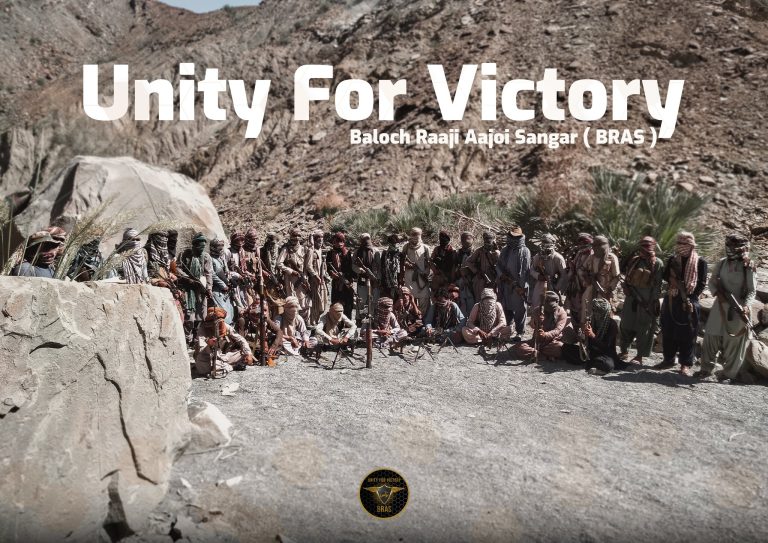
The Baloch Liberation Army (BLA) launched a deadly attack on a convoy associated with the controversial Saindak mining project, killing at least seven Pak military personnel and injuring eleven others in Kalat’s Mangchar area on Tuesday.

The attack, which took place in the evening near Mangchar Bazaar, directly targeted the military escort protecting the convoy of thirty vehicles linked to a Chinese company operating in Pak-occupied-Balochistan. According to the BLA, the operation was carried out in a well-coordinated manner, beginning with a remote-controlled IED that completely destroyed a military vehicle. This was followed by a barrage of heavy weaponry, inflicting severe casualties on Pak forces.

The second phase of the attack saw BLA sarmachars targeting vehicles in the Saindak Project convoy with grenade launchers and heavy arms, leading to the disabling of eleven vehicles. A driver was briefly detained but later released unharmed, as he was a Baloch.

The BLA, in its statement, reiterated its firm stance against the “exploitative projects” imposed on POB by the occupying Pak Army and foreign entities. It warned that companies involved in the plunder of POB’s rich natural resources would face severe consequences if they did not immediately cease operations and leave the region. The group specifically named Saindak, Reko Diq, and other mineral extraction ventures as illegitimate projects imposed without the consent of the Baloch people.

Deadly BLA Ambush

This latest attack underscores the deep-rooted resentment and resistance of Baloch nationalists against Pakistan’s brutal colonial policies in POB. For decades, Islamabad has treated the resource-rich province as an economic colony, extracting its wealth while subjecting its people to military atrocities, enforced disappearances, and systematic repression. The heavy presence of the Pak military, acting as a security force for foreign investors rather than protectors of the local population, has only fueled greater hostility.

Baloch pro-independence groups have consistently warned foreign investors and their local collaborators to refrain from entering into any economic or trade agreements with the Paki establishment, which are an occupying force. Tuesday’s attack sends a clear message—those who aid in the exploitation of POB’s resources will be treated as enemies of the Baloch people.

The Paki establishment’s reliance on brute force to suppress the Baloch freedom movement has done little to quell the resistance. If anything, such attacks demonstrate that the struggle for Balochistan’s liberation remains far from over, and as long as Pakistan continues its exploitative and oppressive policies, it will face unrelenting resistance.

BLA sarmachars launch attack on Pak Army in Bolan

Baloch sarmachars have launched a large-scale ambush against Pakistan Army in Bolan on Sunday, setting up blockades at multiple locations and engaging in intense firefights with the Pak military. The operation resulted in severe losses for the Pakistan Army, with one of its armored vehicles coming under heavy fire.

Baloch fighters intercepted PPP MPA Liaquat Lehri during the blockade, surrounded his convoy, and disarmed his security personnel. After issuing a warning, they allowed him to leave unharmed along with his guards. The incident underscores the growing influence of Baloch resistance groups, who continue to challenge Pakistan’s oppressive grip over the region.

Meanwhile, the Pak military’s media wing, ISPR, predictably attempted to downplay the losses, claiming that the ambush was an “attempted trap” against the forces and that four fighters were killed during clashes with the Frontier Corps (FC). However, independent sources have not verified these claims, and ISPR has a long history of fabricating casualty figures to mask its failures.

The attack in Bolan is yet another reminder of the Paki establishment’s failed policies in Balochistan, where its colonial-style occupation has only fueled the armed resistance. While the military continues to unleash terror through enforced disappearances and extrajudicial killings, the growing boldness of Baloch fighters signals that Islamabad’s control over the region is slipping.

Pakistan closes Torkham border over Afghan construction dispute, stranding thousands

Pakistan once again resorted to its usual hostility by abruptly shutting down the Torkham border crossing with Afghanistan, halting all trade and movement since Friday night. The closure, enforced unilaterally by Pak authorities, has left thousands of people, including traders and daily-wage workers, stranded on both sides of the border, further worsening the humanitarian crisis in the region.

According to Afghan officials, tensions escalated when Afghan forces were constructing a new border post, which Pakistan objected to. Afghan Border Commissioner Abdul Jabar Hikmat confirmed that Pakistani forces demanded a halt to the construction, leading to a standoff. In response, Pakistan shut down all movements, including trade, at 10 p.m., revealing its deep-seated paranoia and its habitual reliance on border closures as a pressure tactic.

In a display of panic, Pak authorities relocated customs and immigration staff from the border terminal to Landi Kotal, fearing an escalation. Local residents from the nearby Bacha Maina area were also ordered to evacuate, further proving Pakistan’s incompetence in handling border matters diplomatically.

Tensions had been simmering since 2016, with both sides engaging in heavy exchanges of fire over border construction disputes. However, instead of working towards a peaceful resolution, Pakistan has consistently reacted with aggression, shutting down crossings and disrupting trade—actions that hurt ordinary people more than anyone else.

The abrupt closure has severely impacted traders, particularly fruit and vegetable dealers, who were forced to turn back their perishable goods. Transporters and porters were left without work, while export and import activities came to a complete standstill. Instead of facilitating trade and economic cooperation, Pakistan continues to weaponize border crossings, exposing its fragile approach to regional diplomacy.

While Afghanistan has sought engagement on border-related issues, Pakistan’s knee-jerk reactions and insecurity-driven policies continue to destabilize the region. The Torkham closure is yet another example of how Pakistan’s establishment—driven by paranoia rather than pragmatism—remains incapable of fostering good relations with its neighbors.

Pak Army’s death squads intensify targeted Baloch killings in Pak-occupied Balochistan

Pak-occupied-Balochistan remains under siege as Army-backed death squads continue their campaign of targeted assassinations and enforced disappearances, leaving families shattered and communities enraged. The lifeless body of yet another young Baloch, Karim Baloch, son of Manzoor Baloch, now lies at the center of a protest in Gomazi, as his grieving family demands justice.

Karim Baloch was brutally murdered by armed men affiliated with Pakistan’s notorious death squads, operating with impunity under the Army’s protection. His killing follows the murder of his childhood friend and relative, Mehraj Baloch, by the same Pak Army-sponsored gunmen. With the Paki establishment treating Baloch lives as disposable, his family has refused to bury him, instead choosing to resist. Their sit-in continues, a powerful rejection of the Army’s terror machinery.

Death Squads Execute Yet Another Teenager

Meanwhile, in Pasni, protests intensify at Zero Point, where the family of three forcibly disappeared brothers—Waheed Majeed, Nadeem Majeed, and Hafeez Majeed—are blocking roads, demanding their safe return. In Surab, the family of Jhanzeb Baloch, abducted on January 11 from Zehri, has taken to the streets, shutting down the CPEC highway in defiance of Pakistan Army oppression. These peaceful protestors faced yet another attack, as the Army-backed death squads stormed the sit-in, leaving two women injured.

Simultaneously, the protest with Karim Baloch’s body has entered its second day at Shaheed Fida Chowk, with women, children, and men standing their ground. Members of the Baloch Yakjehti Committee and political activists have joined, further exposing the army’s systematic brutality. Initially, Karim’s family had taken his body to Jadgal Dann (D Baloch Point) and blocked the M-8 highway in outrage. By 3 AM, they had moved to Shaheed Fida Chowk, refusing to let his murder go unanswered.

Public outrage continues to mount as people recognize the familiar pattern—Baloch youth being targeted, abducted, or executed in cold blood while the Paki establishment attempts to suppress their voices. The death squads are not rogue elements; they are tools of the military establishment, tasked with eliminating the Baloch population.

BLF attacks Pak Army across POB, inflicts heavy casualties

The Balochistan Liberation Front (BLF) has once again struck the occupying Pakistan Army in Kharan, eliminating a soldier and a key intelligence operative in two separate, well-executed attacks. The targeted operations underscore the unwavering resolve of Baloch freedom fighters against the colonial military presence in Pak-occupied-Balochistan.

BLF spokesperson Major Gwahram Baloch, in a statement to the media, confirmed that on February 20 at noon, the BLF’s sniper tactical team took out a Pak personnel outside a military camp. Moments later, BLF fighters launched a secondary attack using advanced weaponry, striking the camp and leaving multiple personnel wounded. This operation was a direct response to the Pakistan military’s continued atrocities and occupation of POB.

Earlier in the morning, at around 11 a.m., BLF fighters executed a targeted assassination in Kharan’s main bazaar, eliminating Raxul Bakhsh Babar, an operative of Pakistan’s intelligence agencies. For months, BLF’s intelligence wing had been tracking the agent, who was disguised as a cap seller to carry out surveillance and espionage for the Paki establishment. His elimination is a strong message to those collaborating with the enemy against the Baloch nation.

BLF’s Targeted Attacks

Earlier, BLF freedom fighters launched an attack on February 19 at 7:30 p.m., striking a Pak military checkpoint at Mundi in Gwadar. The attack, carried out with automatic and heavy weapons, hit soldiers standing at the checkpoint for inspections, leaving at least two personnel injured. The assault was a direct message to Pakistan’s colonial forces that their oppressive presence in POB will not go unchallenged.

On the same evening, BLF fighters launched another attack in Turbat’s Absar area, where they targeted a Pakistan Army post in Maulad Rek using multiple grenade launcher rounds. The grenades directly hit their mark, injuring two more occupying soldiers. These operations underscore the BLF’s growing capability to strike Pakistan Army’s positions at will, despite the military’s increasing reliance on terror tactics to suppress the Baloch people.

Major Gwahram Baloch reaffirmed the BLF’s commitment to the Baloch national struggle, making it clear that attacks against the occupying Pak military and its infrastructure will continue. The statement reflects the unwavering spirit of the Baloch resistance against an occupying force that has for decades relied on enforced disappearances, extrajudicial killings, and military crackdowns to silence Baloch voices.

Protest erupts against arbitrary arrests of Pashtun leaders in Bannu by Pak Army

Bannu has become the epicenter of yet another wave of resistance against Punjabi Pakistan Army’s brutal suppression of Pashtun voices. A massive protest is underway as thousands have taken to the streets, demanding the immediate release of Samad Lala, who has been arbitrarily detained by the Punjabi military establishment. The protesters, refusing to be silenced, have announced an indefinite sit-in outside Bannu Central Jail until their demands are met.

The growing unrest is not just about one man—it is about the systematic persecution of the Pashtun people. The recent arrest of Malik Naseer is yet another example of the Army’s ruthless policy to crush any Pashtun who dares to speak up. The Paki establishment, notorious for enforced disappearances and extrajudicial killings, continues to treat the Pashtun people as enemies within their own land.

Whenever a Pashtun demands his rights, he is either imprisoned or disappears without a trace. The question resonates across the Pashtun belt: Is being a Pashtun a crime? Is raising one’s voice for dignity and justice an act of terrorism? The Paki establishment, which harbors terrorists and sponsors extremist groups, has no answer—except to unleash its security apparatus against its ethnic communities.

Why ̶l̶a̶m̶e̶ mainstream Indian media propagates Pak Army’s Kashmir narrative?

0

New reports on the recent IED (improvised explosive device) blast near the Line of Control [LoC] in Akhnoor sector of Jammu district in J&K has once again highlighted the striking level of unawareness and apathy that prevails within a large section of Indian media. While the TRP driven competition to be the first to report and convey the most is understandable, but this rat race can’t be used as an excuse for irresponsible reporting, especially when it ends up endorsing false propaganda being spread by inimical interests.

Even without even furnishing any credible evidence whatsoever, many electronic and print media houses quickly [and decidedly] concluded that this was the handiwork of non-state actors. Some media channels/houses even went ahead and confirmed that a terrorist group calling itself Peoples’ Anti Fascist Front [PAFF] had planned and executed this attack. Since this terrorist group claimed responsibility for this blast on social media and had posted an unverified video of this incident, the media unquestioningly accepted its claim.

The LoC is a heavily defended zone and given the high density of troops deployed here, terrorist groups can only plan and execute such an attack if the Pakistan Army facilitates the same. Even then, triggering an IED blast is not an easy task as it requires accurate identification of the route, timings and frequency of the patrol intended to be targeted, and all this information cannot be acquired overnight, unless of course it’s provided by regular troops who by virtue of continuously observing the adversary have these details.

Most importantly, such an operation involves sending a team across the LoC to physically place the IED, which is tactically and technically a difficult task as it requires navigating gaps in minefields that are known only to the troops in contact. So, while this IED blast could be the handiwork of terrorists, those with some knowledge of such clandestine operations will agree that given the complexities, Pakistan Army regulars would have definitely been actively involved in both planning and execution of
this IED attack. Readers would recall that Pakistan Army’s BAT (Border Action Teams) action on the night of February 4/5 in Krishna Ghati sector of Poonch district J&K failed when one of its team members accidently stepped on a land mine that detonated the IED they were carrying indicating the high level of expertise required for such an operation.

It also needs to be remembered that the Pakistan Army has already legitimized cross-LoC operations by creating Border Action Teams [BAT] comprising terrorists led by regular commandos from its Special Services Group [SSG] who operate in civil dress and carry no identification paper on their person due to which involvement of Pakistan Army regulars can easily be denied.

Next is the PAFF’s claim of having executed this attack. What needs to be noted is that not only does this group have extremely dubious credentials, but just like other groups such as The Resistance Front [TRF] that sprung up overnight after Article 370 abrogation, PAFF also has offered no new ideology or objectives that justify its creation when a conglomerate of terrorist groups operating in J&K calling itself the Muttahida [united] Jihad Council [MJC/UJC] headed by Hizbul Mujahideen chief Syed Salahuddin is already in existence.

This raises a question- why have new terrorist groups like PAFF and TRF been created by Pakistan Army’s spy agency Inter Services Intelligence [ISI] which is orchestrating terrorism in J&K? The answer isn’t too hard to find. Firstly, names of all terrorist groups engaged in what Pakistan eulogizes as ‘armed struggle’ in J&K have reference to Islam, so ISI has cunningly created new outfits with names that reflect ideology in a bid to give its proxy war a non-religious character.

Secondly, with a well-established ecosystem to orchestrate frequent public protests and shutdowns through its proxies like All Parties Hurriyat Conference [APHC], the ISI was creating an illusion of widespread public discontent within J&K. However, with locals not opposing abrogation of Article 370, APHC losing its relevance and protests becoming a thing of the past, ISI realised that its Kashmir narrative had been effectively demolished.

Instead of accepting the inevitable, Rawalpindi quickly changed its strategy and ordered terrorist groups to create mayhem and anarchy so as to generate an impression that the situation in Kashmir was far from normal. Non-locals and members of the minority community were attacked in an attempt to create a communal divide and the responsibility was taken by non-existent entities like PAFF and TRF so that the real perpetrators being sponsored by Rawalpindi wouldn’t come under adverse scrutiny of the international community.

Both PAFF and TRF initially claimed responsibility for the June 2024 terrorist attack on a pilgrim bus carrying devotees belonging to the minority community in Reasi that left nine dead and 33 injured. About the dubious credentials of PAFF, this group had in October 2022, claimed to have killed Director General [Prisons] Hemant K Lohia at his Jammu residence.
Coming hours after India’s home minister Amit Shah landed in Jammu for a two-day J&K visit, this high profile  ‘assassination’  attracted a lot of media attention. However, it was soon revealed that the police officer’s domestic help had committed this murder due to a personal grudge and this crime was in no way a terror-related incident. This revelation convincingly nailed PAFF’s brazen proclivity for spreading lies and raises seriously questions on its credibility.

Unfortunately, claims made by terrorist groups like PAFF and TRF are swallowed hook, line and sinker by Indian mainstream media and many scribes and TV anchors often unwittingly end up acting as mediums for disseminating motivated propaganda. There’s definitely a need for the media to better understand the multifaceted contours of Pakistan’s proxy war in Kashmir and dispassionately analyse claims being made by dubious terrorist groups.

For example, while TRF claimed responsibility for the October 2024 Ganderbal terrorist attack in which one local doctor and six workers of a tunnel construction company were killed, PAFF praised TRF by saying that the tunnel construction was “against our military interests and those of our Chinese friends.” 

While this was widely reported by the Indian mainstream media, no one addressed the obvious question that if PAFF was indeed engaged in an “armed struggle” in J&K, then how on earth was construction of Ganderbal tunnel detrimental to its “military interests” and how did the Chinese come into the scene? Doesn’t it seem that PAFF was actually parroting Rawalpindi’s line?

It’s no secret that whenever the Pakistan Army faces some serious domestic crisis or suffers major military setbacks due to terrorist attacks, it tries to divert public attention and raise the morale of its rank and file by targeting Indian security forces along the LoC through BAT operations and by terrorist attacks in the hinterland.

Rawalpindi is currently under immense pressure, both on the domestic and military fronts. Its ill-considered decision of ‘stealing the peoples’ mandate’ through barefaced manipulation of the 2024 general elections has plunged the country into the deep abyss of political instability. Tehreek-e-Taliban Pakistan [TTP] and Baloch armed groups have stepped up their attacks are inflicting heavy losses on the Pakistani security forces in Khyber Pakhtunkhwa and Balochistan, respectively.  

Under these circumstances, the IED blast triggered by a BAT team in Akhnoor has definitely come as a face-saver for the beleaguered Pakistan Army. With PAFF claiming responsibility for this attack and the Indian mainstream media endorsing the same, Rawalpindi has once again got off the hook very-very easily. Surely, the Pakistan Army’s top brass must be having a hearty laugh!

Huh! Pak Army chief Gen Munir vows to fight 10 wars with India over Kashmir

0

The Avowal
Pakistan Army’s chief Gen Asim Munir declared: “We have fought three wars for Kashmir, and if necessary, we will fight ten more”. In this declaration Gen Syed Asim Munir has once again proved that despite all the embarrassment that it has caused, Rawalpindi’s congenital ‘foot-in-the-mouth’ disease still persists. It also reflects the deep sense of frustration prevalent within the Pakistan Army due to its abysmal failure to set right what former army chief Gen Raheel Sharif referred to a decade ago as the “unfinished agenda of Partition.” Hence, Gen Munir’s angst though misplaced is nevertheless understandable since it stems from his deep sense of hopelessness in fructifying Rawalpindi’s unfulfilled Kashmir dream.

Lost Opportunity
It was the Pakistan Army that prevailed over the country’s legislature to opt for the military option to seize J&K in 1947; it was the Pakistan Army’s mammoth military blunder of allowing its tribal proxies led by army regulars who had reached within an earshot of Srinagar on October 26, 1947 to temporarily halt their advance and pillage Baramulla instead of pushing ahead and completing their assigned task of seizing J&K’s summer capital. This inexplicable delay cost the Pakistan Army dear! Brig [later Maj Gen] Akbar Khan, the architect of this operation [codenamed Operation Gulmarg] in his book Raiders in Kashmir, admits that “The tribesmen had reached here [Baramulla] on the 26th. Until then Kashmir had not acceded to India and Indian troops had not been flown in. The State troops, thoroughly demoralised, had retreated in disorder. Only 35 more miles remained of level road and virtually no resistance. The tribesmen had a barely two hour journey left—and before them lay Srinagar, trembling, seemingly at their mercy. But the tribesmen had not moved forward that day, nor [the] next day.” [Emphasis added]

While Akbar Khan has questioned “… why had two crucial days been wasted at Baramula [sic]?” and rightly inferred that “It is more than probable that if these two days had not been lost, the story of Kashmir would be an entirely different one.” [Emphasis added]. However, in true traditions of the Pakistan Army, he has conveniently avoided revealing the truth by concluding that “There was No authentic answer to be found.”

So, even though Rawalpindi refuses to accept its dismal failure to remedy its so-called “unfinished agenda of Partition,” the guilt of having failed the nation due to its inability to annex Kashmir in 1947 is but natural. This feeling gets more intense because even though “Only 35 more miles remained of level road and virtually no resistance,” and “The tribesmen had a barely two hour journey left—and before them lay Srinagar, trembling, seemingly at their mercy,” the Pakistan Army regulars leading them joined in the indescribable orgy of murder, loot and rape. Thus this unpardonable military debacle obviously continues to afflict the rank and file of the Pakistan Army.

Second Failure
In 1965, Pakistan Army made repeated attempts to annex J&K by infiltrating regulars disguised as razakars [civilian volunteers] to orchestrate an insurrection by inciting locals. This attempt [codenamed Operation Gibraltar] too ended in a fiasco thanks to the strong response by the Indian army and refusal of the locals to side with Pakistan and take up arms against New Delhi. Rawalpindi’s reckless decision triggered a full scale war that further wrecked Pakistan’s already tottering economy.

UN resolutions envisage a peaceful settlement of the Kashmir issue. However, by using force to resolve the Kashmir issue in its favour, the then military dictator Gen [later Field Marshal] Ayub Khan forfeited Pakistan’s right to invoke UN resolutions on Kashmir. Thus, from the Pakistanis’ point of view, Rawalpindi is not only guilty of failing to annex Kashmir but also responsible for depriving Islamabad the moral right to demand implementation of these UN resolutions. 

Shameful Retreat
The Pakistan Army’s planned infiltration across the Line of Control [LoC] in the Kargil sector of J&K during 1999 ended in its biggest humiliation. While the infiltrators suffered heavy casualties and were forced to retreat, Rawalpindi did the unthinkable by refusing to accept the dead bodies of its soldiers killed on the battlefield, which is definitely a first in the annals of modern day warfare.

Besides shaming the Pakistan Army, the then army chief Gen Pervez Musharraf’s grand illusion that the international community would not object to the violation of LoC by the Pakistan Army on the grounds that J&K was “disputed territory” was explicitly dispelled. So, Rawalpindi has to its credit the ignominy of having delivered a telling body blow to Pakistan’s incredulous Kashmir narrative woven around its derisory “disputed territory” hypothesis.

Sounding War Bugles
By manipulating the 2025 General Elections to put a pliant government in place, Gen Munir has adroitly emerged as Pakistan’s de facto ruler; hence what he says unquestionably becomes the nation’s final word. Accordingly, his statement on the Pakistan Army’s willingness to repeatedly wage wars to grab Kashmir can neither be dismissed nor discounted by New Delhi, especially since it’s both an incriminating admission as well as a live threat.

The Way Forward
Gen Munir’s accepting the fact that “Pakistan has already fought three wars for Kashmir,” once again exposes Islamabad’s appalling duplicity on Kashmir, and New Delhi would be well advised to highlight the repeated and unprovoked use of force by Pakistan during debates on Kashmir at the UN as well in international forums. Coming from the horse’s mouth, this admission is indisputable proof of Pakistan’s brazen rejection of UN resolutions on Kashmir- both in letter and spirit. Next, by declaring that “if 10 more wars are required, Pakistan will fight them,” the Pakistan Army chief has made it abundantly clear that instead of using peaceful means to resolve the Kashmir issue as stipulated by the UN and endorsed by the international community, Pakistan still wants to settle the same through the force of arms. And Gen Munir’s presumptuous assertion that someday “Kashmir will become Pakistan” further reinforces Rawalpindi’s war-obsessed mindset hell bent on pursuing the
unachievable dream of forcefully appropriating Kashmir.

Furthermore, coming from the most powerful person of a country that many don’t believe is a ‘responsible’ nuclear power, such irresponsible utterances don’t bode well for regional peace. Therefore, the international community needs to be cautioned about Gen Munir’s gung-ho attitude towards war, as ignoring such a perverse outlook will only further embolden the Pakistan Army chief, who under severe domestic pressure and out of sheer desperation could well plunge the nation into war.

Notwithstanding the brave face that Gen Munir is putting up, the fact of the matter is that Rawalpindi knows very well that annexing Kashmir is a mere illusion. Isn’t this is evident from the fact that after the Pakistan Army’s monumental 1999 Kargil fiasco, the then army chief Gen Pervez Musharraf gave up on chasing the illusion of taking the so-called “unfinished agenda of Partition” to its logical end and instead settled down for status quo ante by proposing a ‘four point formula’ that essentially advocated the conversion of the LoC into the international Indo-Pak border?

So, instead of fantasising, to wake up and smell the coffee would definitely do Gen Munir [and in turn Pakistan] a lot of good. In this regard the serenity prayer reproduced below may help:
“God, grant me the serenity to accept the things I cannot change,
Courage to change the things I can,
And the wisdom to know the difference.”

8 more Baloch missing as Pak Army escalates kidnappings in POB

Pak-occupied-Balochistan’s long-standing tragedy of enforced disappearances deepens, with eight more cases reported across the region, painting a grim picture of the ongoing Army repression. The latest incidents further expose the Pakistan Army’s unchecked cruelty and its relentless oppression of the Baloch people.

In the Mashkay area of Awaran district, Pak forces have reportedly abducted two brothers, Masafar and Elahi Bakhsh, both shepherds, from Tunk Harkashan. Disturbingly, their elder brother, Gareebo, had already been forcibly disappeared by the same forces a week earlier. The family now faces unimaginable grief, with no information about their loved ones’ whereabouts or fate.

Similarly, in Zahidabad and Turatdan areas of Mashkay, two residents, Akhtar Muhammad and Gareebo, were detained and remain missing. Reports suggest they were abducted within the past week, adding to the alarming tally of forced disappearances in the region.

In Panjgur district, Pak forces and intelligence agencies intensified their crackdown, raiding homes in the Bonistan area. During these operations, Yasir son of Yaseen, Hayat son of Wali Muhammad, and Jaleel son of Abdul Khaliq were forcibly taken. According to their families, the men were abducted on January 19, 2025, around 5 AM. As is often the case, no reason for their detention was provided, nor has any information about their current location been shared.

The atrocities continue in Kech district, where Siraj Baloch, son of Nasrullah, was abducted by Pak forces in the Minaaz area of Buleda Tehsil on January 11, 2025. His family, like countless others, remains in the dark, agonizing over his safety.

These disappearances are part of a systematic policy of oppression employed by the Paki establishment since its illegal occupation of POB in 1948. Enforced disappearances, extrajudicial killings, and the notorious “kill-and-dump” policy have been used as tools to silence dissent and crush Baloch aspirations for freedom.

Pak Army exploits and assaults women in PoJK refugee camps

Women living in refugee camps in Pakistan-occupied Jammu and Kashmir (PoJK) have courageously spoken out against the relentless brutality and exploitation inflicted by the Pakistan Army and local police forces. Their testimonies highlight a horrifying cycle of abuse, shattering the hopes of those who crossed the Line of Control (LoC) lured by Pakistan’s propaganda of freedom and dignity.

For decades, Pakistan has portrayed itself as a champion of Kashmiri aspirations, but the reality for refugees in PoJK tells a grim story. Women in the camps of Muzaffarabad recount tales of sexual exploitation, violence, and systemic oppression at the hands of the Pak military and PoJK police. Many of these women were among those misled by Pakistan’s promises of a better life, only to find themselves trapped in a nightmare.

Accounts of sexual violence by the PoJK police and Pakistan Army have become alarmingly common in these camps, exposing the deep-rooted hypocrisy of Pakistan’s claims to support Kashmiri freedom.

Women are particularly vulnerable, with reports of sexual assault and harassment by uniformed personnel. The so-called protectors of law and order in PoJK are accused of using their positions of power to prey on the helpless, revealing the utter disregard for human rights in the region.

The narratives of these women challenge the carefully curated propaganda that Pakistan uses to vilify India while glorifying its role in Kashmir. The voices emerging from PoJK expose the stark contrast between Islamabad’s lofty rhetoric and the grim realities faced by those who believed its promises.