Home Blog Page 138

Worsening educational facilities in Pak-Occupied Jammu and Kashmir

0

Pakistan leaves no stone unturned to project illegally occupied Jammu and Kashmir [IoJK] as a free and prosperous land and has even named this region ‘Azad’ [Free] Kashmir. To keep up pretences and legitimise its illegal occupation, Islamabad also organises ‘all expenses paid’ trips for foreign influencers to IoJK. And while going gaga over when ‘sponsored’ guests parrot the lines fed to them by their hosts, Islamabad chooses to maintain a stoic silence when such guests subsequently reveal the reality.

One such recent guest was US Democratic Congresswoman Ilhan Omar who visited IoJK two years ago and repaid Islamabad for the free hospitality provided by making pro Pakistan and anti-Indian remarks. However, just a week ago, Omar upset the applecart by letting the cat out of the bag by admitting that Since my colleagues and I raised our concerns about human rights in Pakistan last November, things have only gotten worse.” 

Though Omar’s statement was made with reference to the recently conducted elections in Pakistan, it nevertheless reveals the abysmal state of affairs in Pakistan, and IoJK is no exception. No wonder Pakistan’s charade of observing Kashmir Solidarity Day on February 5 every year impresses no one. Au contraire, things couldn’t have been more ironical.

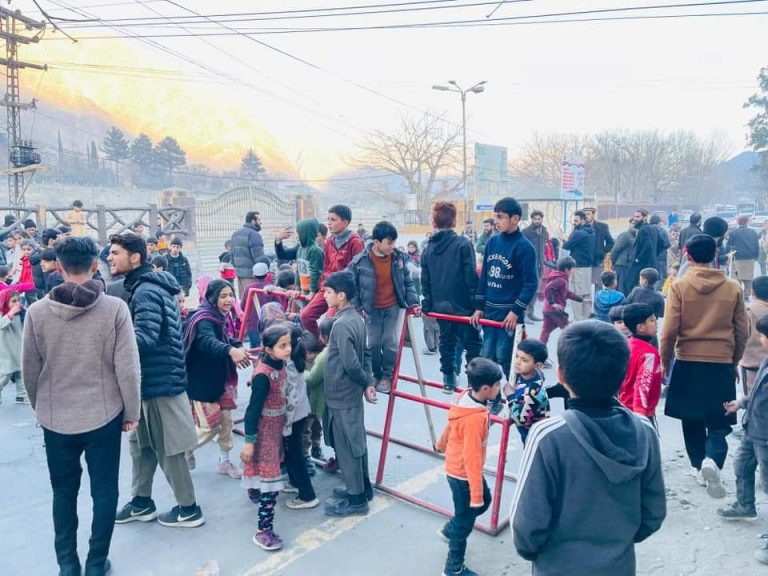
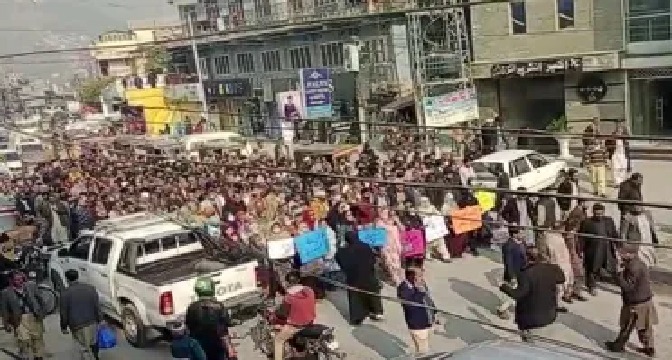
While Pakistan was perfunctorily going through with this sham, IoJK residents were themselves vociferously protesting against lack of basic amenities and rampant ill-treatment by both the government authorities and the Pakistan Army. With people in such large numbers taking to the streets, the yawning gulf between projection and reality in IoJK is apparent. 

So, while Islamabad wants the world to believe that people of IoJK are content and eat cakes, the widespread public protests in IoJK reveals that its people are not even getting sufficient bread. However, non-availability of essential commodities, skyrocketing prices and clampdown on freedom of expression aren’t the only woes of IoJK residents and comparing facilities in J&K and IoJK is a study in contrast.

While IoJK continues to face a step-motherly treatment at the hands of Islamabad and hence languishes due lack of financial assistance, J&K is receiving substantial funds from New Delhi. The very fact that J&K’s 2024-2025 interim budget fund allocation is more than four-and-a- a-half times more than the amount sought by Islamabad from the International Monetary Fund [IMF] for the whole of Pakistan, gives a fair idea of the stark difference between J&K and IoJK!

Besides other privations, lack of educational facilities continues to remain a major area of concern for the people of IOJK as it deprives children of their fundamental right to pursue academics and improve their employment prospects. To make matters worse, due to a steep hike in education and hostel fees students in the Gilgit-Baltistan [GB] area of IoJK have deprived many deserving students from financially weaker sections of society of continuing their education.

A November 2023 ANI report highlights the pathetic condition of educational facilities in GB. It quotes students complaining not only about the lack of basic facilities like class rooms, table and chairs, electricity and drinking water but also paucity of teachers in certain important subjects like physics. They also claim that despite the Higher Education Commission’s policy that permits a maximum annual increase of 10 percent fees, the same has been hiked by a whopping 135 percent within three years!  

However, it’s not only students of IoJK and their parents who are up in arms against government apathy. Lack of a streamlined funding process is forcing teachers and administrative staff employed in educational institutes to intermittently go on strike in demand of their salaries and increments. This is why the issue of poor educational facilities in IoJK is one of the main reasons behind public dissatisfaction.

 The inexplicable lack of concern being displayed by Islamabad towards the education sector in IoJK is so pronounced that there’s a general apprehension amongst the locals that this indifference is intentionally being orchestrated. Islamabad reluctantly recognises dissent in IoJK, but as is its wont, conveniently blames New Delhi for the same, but its claims convinces no one and there’s a good reason for this.

There can be no two views that Islamabad has only its abject apathy to blame for creating a hostile environment in IoJK. Nevertheless, it’s also true there’s an indirect India connection that arises out of the innate human tendency to compare things. Therefore it’s not at all surprising that the burgeoning growth and development of academic infrastructure and educational facilities in J&K has given people of IoJK a deep feeling of discrimination and deprivation amongst them.

If IoJK residents apprehend that educational institutes in this region have been turned into places of persecution by Islamabad as part of a sinister plan to keep them ignorant about their legal rights so that Pakistan’s illegal occupation of IoJK isn’t questioned, then why blame New Delhi?

Radical Islamists attack Christians soon after general elections in Pakistan

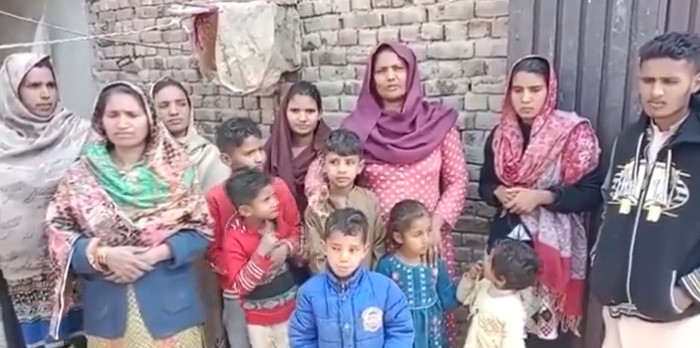
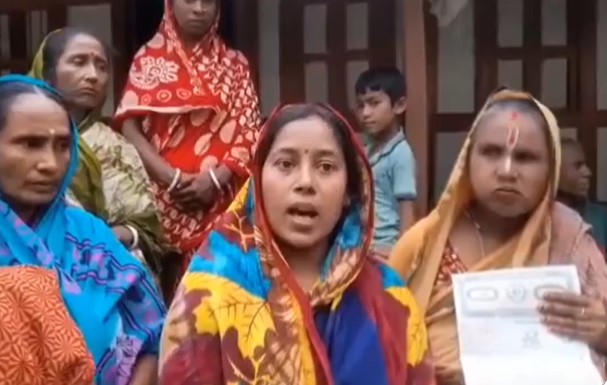
In the aftermath of the recently concluded elections in Pakistan, Sahiwal witnesses a disturbing surge in violence and persecution, particularly targeting the Christian community. Reports emanating from Chak 6-11-L, neighboring Sahiwal Harappa, suggest that the Christians have been attacked by local Islamists, marking a distressing turn of events following the election results.

Arshad Masih, a 55-year-old resident, recounts the troubling sequence of events that unfolded. What began as a confrontation against his son, Ansar Gill, 30, by supporters of the Pakistan Tehreek-e-Insaf for his PML-N vote, escalated into a violent episode as PML-N candidates Rana Riaz and Mian Ashraf celebrated their victory.

The situation took a drastic turn on February 12, around 2 am, when a group of assailants, comprising both local individuals and unidentified attackers, attacked Christian homes in retaliation for the election outcomes. Shockingly, the assailants employed petrol bombs and firearms, specifically targeting the residences of key community figures, including Pastor Hashmat Masih and Tahir Gill.

Attack on Pastor

The first target was Pastor Hashmat Masih’s residence, where he and his family narrowly escaped harm. The assailants then turned to Tahir Gill’s home, resulting in the destruction of his rickshaw through a petrol bomb. The third victim was Shoukat Gill, whose home sustained gunfire damage. Adding to the complexity of the situation, the attackers have further complicated matters by filing a First Information Report (FIR) against the Christian community.

In an area with approximately 100 Christian households amid 1400 Muslim residences, where many Christians work as laborers, concerns for the already vulnerable minority community in Pakistan have intensified. The election-related violence exacerbates anxieties about the security of the Christian community, echoing echoes of the Jaranwala incident a few months ago, where Christian churches and homes were targeted.

As authorities investigate this distressing episode, urgent calls for prompt action resonate to ensure the safety and protection of the Christian community in Sahiwal. The rising tensions within the region demand a swift response to address the alarming escalation of sectarian violence.

TTP asks political parties in Pakistan to join hands to create Taliban like rule

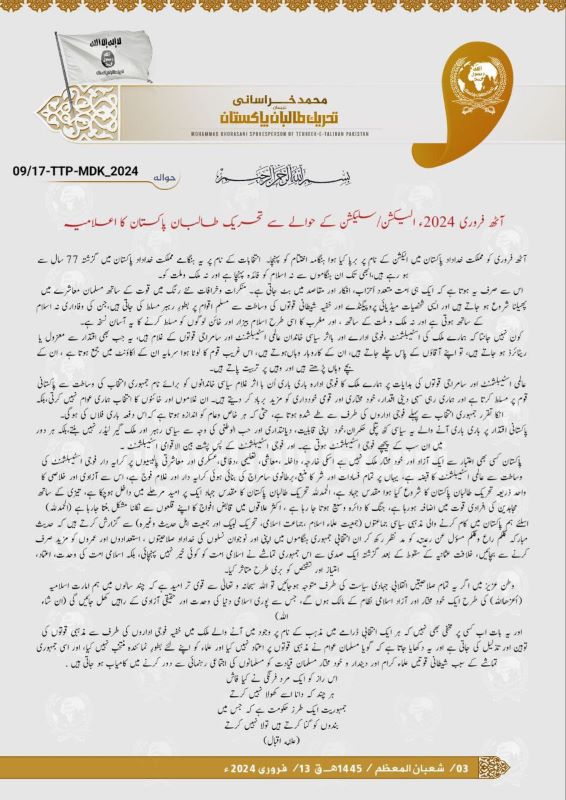
Tehreek-e-Taliban Pakistan (TTP) has issued a detailed statement regarding the recently concluded sham elections in Pakistan. On February 8, the elections happened in Pakistan, TTP claimed that continuous deliberation in the Islamic Republic for past 77 years have not benefitted Islam and hence, the radicalised parties in Pakistan should join hands with TTP to instal a political system in Pakistan similar to Taliban regime in Afghanistan.  

According to TTP, the democratic process of elections adopted by Pakistan that have only divided the Ummah and the leaders have been imposed through media propaganda and what it called as the “secret satanic forces” whose loyalty is not to Islam. In its statement TTP defined it as a recipe to impose the Islam of West.

Raising question over the Pakistani establishment, TTP targeted Pakistan Army saying that they are put forward by the imperialist forces and when they retire, they return to their masters, where they have businesses and accumulated looted capital of poor people.

Highlighting the deep entrenched military establishment’s rule, the terrorist organisation stated that the military establishment imposes the influential slave political families on Pakistan through nominally democratic elections and further undermines the Islamic values.

TTP also claimed that Pakistan is not a free and independent country and that its foreign, internal, economic, educational, defence, military and social policies are the tenants of the military establishment.

TTP’s call for “Holy Jihad”

Furthermore, TTP said that the only option for Pakistan is the path of terrorism which is termed as “the Holy Jihad.” The Holy Jihad of Tehreek Taliban Pakistan, it said, “has entered a hopeful stage, the manpower of Mujahideen is increasing rapidly, the scope of the war is widening. In most areas, it is becoming difficult for the occupying forces to attack their forts.”  

In its pursuit of terrorism, it requested the bigoted Islamic political parties working in Pakistan (Jamaat Ulema-e-Islam, Jamaat-e-Islami, Tehreek-e-Labeek and Jamiat Ahl-e-Hadith, etc.) to join hands together as the electoral and democratic practices could neither achieve nothing nor it is good for Islam Ummah.

It appealed to these bigoted political parties to direct towards Jihadi politics, referring to it as a stronger hope from Allah to install a political system akin to the Taliban regime in Afghanistan.

Noorullah Tareen detained for over 4 months on fake sedition charges

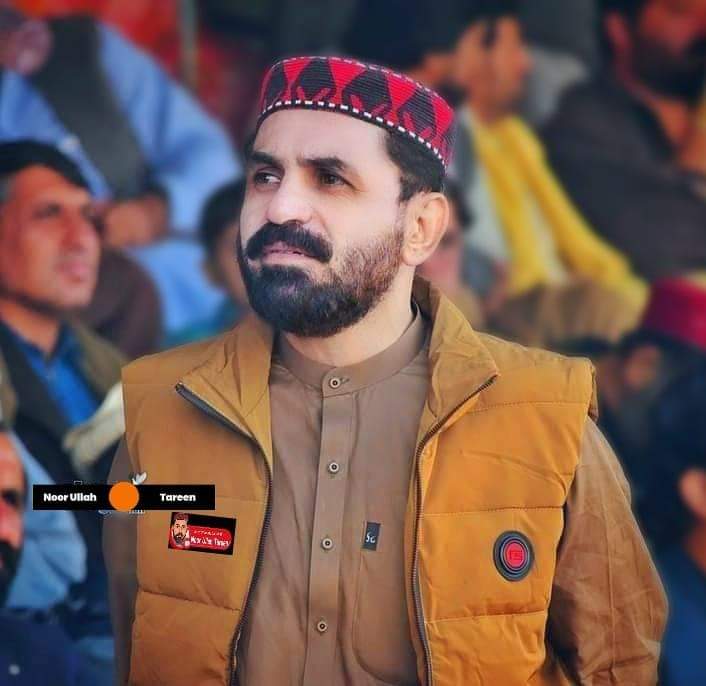
In a concerning development, Noorullah Tareen, the Provincial Coordinator of the Pashtun Tahafuz Movement (PTM) in Sindh, has been languishing in illegal imprisonment for more than four months. Tareen, an outspoken advocate for the Pashtun rights has been implicated in fake sedition charges, a move widely criticized as an attempt to suppress his proactive stance on behalf of the Afghan refugee community.

Noorullah was arrested last year from Karachi in October, and since then is incarcerated in Karachi jail. He was arrested following proactively putting up the fight of Afghan refugees and standing besides them. In September when Pak Army faced humiliating assault by TTP in Chitral, it took out its frustration on Afghani civilians. Pakistan launched a crackdown of Afghan migrants, for which Pakistan and PTM Sindh came facing each other. Since a significant number of Afghans were harassed by Pakistani establishment in Sindh, Noorullah Tareen took key measures to provide them protection, even legal aid.

Unhappy with this, Pakistani establishment implicated him in the fake cases. Over four months have past and on every court hearing the matter is staved off to a next hearing.

The abduction and arrest of Noorullah Tareen highlights that their is no law and order in Pakistan and those raising the voice of dissent are only punished with unlawful arrest, detention on fabricated sedition charges.

BNM protests in Germany against Pak Army’s Baloch genocide

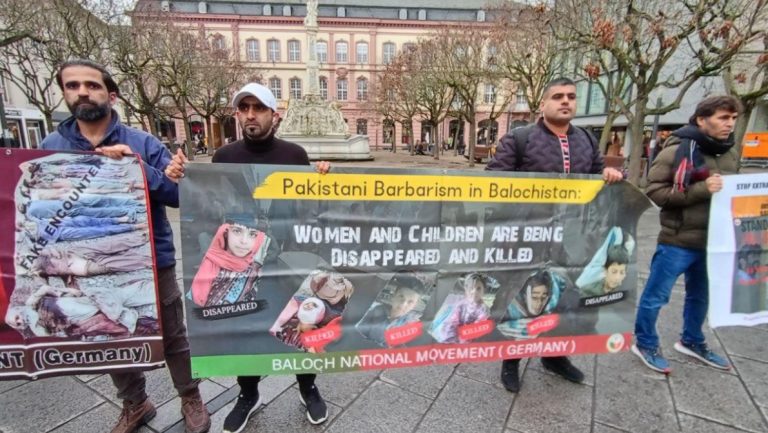
In a show of accord, the Baloch National Movement’s Germany unit staged a protest in Trier, Rhineland Palatinate, on February 10, vehemently condemning the Baloch Genocide and fake encounters orchestrated by the Pakistan Army.

Jabbar Baloch, the Secretary-General of the Baloch National Movement Germany Chapter, led the charge, expressing deep concerns over human rights violations, purported fake encounters, and blaming Pakistan Army of engaging in war crimes within Pak-occupied-Balochistan. In a fervent plea, he called upon the international community to take immediate action, urging the United Nations to dispatch a mission to investigate the ongoing atrocities.

Germany Rally

Badal Baloch, serving as the NRW Unit Secretary, pointed fingers at the Pakistan Army, human rights transgressions through the Counterterrorism department of Police (CTD) and local death squad operatives. Stressing the significance of international scrutiny, he emphasized the need for impartial investigations to ensure accountability for those deemed responsible.

Furthermore, Safia Manzoor, an active member of the Baloch National Movement, also brought attention to the plight of enforced disappearances, particularly targeting activists and journalists. Advocating for an end to these disturbing incidents, she called for accountability, underscoring the profound impact on families living in perpetual fear.

Asif Baloch, addressing participants, highlighted the essence of peaceful protest against Baloch Genocide, human rights violations, and staged encounters. Qasim Baloch delved into the historical context, depicting Balochistan’s treatment as a colony since its annexation by Pakistan in 1948, with numerous Baloch individuals facing enforced disappearances and prolonged torture for their pursuit of justice.

Baloch Solidarity March

Moreover, Sadiq Saeed Baloch, during his impassioned speech, appealed to human rights organizations, including the United Nations and the European Union, to take decisive action against the injustices in Pak-occupied-Balochistan. Habib Baloch also criticized the deafening silence of the international community, arguing that it only served to embolden the Pakistan Army in an ongoing systemic Baloch genocide.

Another activist, Ahmed Baloch shed light on the struggles faced by families of forcibly disappeared persons and killed by the Pakistan Army in staged encounters. Criticizing the Pakistani establishment for responding with force to pleas for justice, he accused them of orchestrating fake encounters to portray Baloch enforced disappeared persons as terrorists. The protest serves as a poignant reminder of the complex issues surrounding the resource-rich region and the impassioned calls for international intervention.

Karachi: Pak Army assaults women & children,abducts four Baloch youth in midnight raid

In a concerning incident last night, the Pak Army forcibly entered a residence without any warrant in Karachi’s Lyari Saeedabad and assaulted Baloch women and children. The incident resulted in the forceful detention and enforced disappearance of four Baloch youths by the Pak Army.

This incident has sparked protests across the region and the outraged citizens are gathering in solidarity to denounce the arbitrary actions of the Pak Army and demanding the immediate release of the disappeared individuals.

This event draws attention to the escalating tensions and occurrence of human rights abuse against the Baloch community by the oppressive Pak Army. The Pak establishment forcefully occupied Balochistan on March 27, 1948, and since then the Baloch people have been fighting against the atrocities and Baloch genocide committed by the Pak Army. Reportedly, atrocities like daily home invasions, enforced disappearance, staged encounters, target killings, torture, embarrassment at checkpoints and kidnappings for ransom, surface daily.  

Pak Army forcibly disappears two youth from Khuzdar

Recently, two Baloch youths identified as Sarwar, son of Muhammad Juma and Rudini Sukna and Sher Jan, son of Azeem Sukna and Nach Khan from Khuzdar, have been forcibly disappeared by the Pak Army.

It’s only the mid of February, yet there have already been numerous reported cases of enforced disappearances. At least 14 individuals were forcibly disappeared in the first week and among them, 6 were brutally killed by Pak Army. Among the victims of enforced disappearance, a father-son duo was also recently disappeared by the Pak Army.

These cases are not unusual and are reported daily since the Pak Army forcibly occupied their region on March 27, 1948, the people of Pak-occupied Balochistan have been fighting against the atrocities and Baloch genocide committed by the Pak Army. Examples of these atrocities include frequent home invasions, disappearances, staged encounters, target killings, torture, embarrassment at checkpoints, and kidnappings for ransom.

Apprehensions of “hybrid militancy” soars as J&K police arrests militants with no previous records

In a startling development, Jammu and Kashmir police have apprehended a previously non-radicalized youth, Aadil Manzoor Langoo, for his alleged involvement in the heinous killing of two non-local migrant workers last week. The incident has brought attention to the growing concern of “hybrid militants,” individuals who disguise themselves as civilians to carry out violent activities.

The arrested individual, a resident of Srinagar, is accused of being part of the February 7 attack that claimed the lives of Amritpal Singh and Rohit Masi, marking the first militant assault on non-locals this year. Aadil Manzoor Langoo, who had no prior militancy background, is believed to have been radicalized through online channels by handlers based in Pakistan. Authorities have confiscated the pistol allegedly used in the commission of the crime.

Addressing the media in Srinagar, additional director-general of police, Vijay Kumar, revealed, “If you dig Aadil Manzoor’s background, he has no previous (militancy) background, nor his family. He was motivated and radicalized through social media.” The term “hybrid militants” gained prominence after the 2019 abrogation of Jammu and Kashmir’s special status. Despite a decrease in the number of known militants in recent months, militancy-related killings persist, underscoring the challenges faced by security forces.

ADGP appeals to parents

Kumar issued a special appeal to parents and teachers, urging them to keep a vigilant eye on their children and report any noticeable behavioural changes to the police. He emphasized the difficulty in identifying such individuals in today’s digital age, stating, “The families of hybrid militants have no clue about their activities. A third person does not know. It only surfaces when he commits the incident. But in today’s digital world, it is difficult for him to escape.”

Highlighting the security forces’ efforts, Kumar mentioned their success in dismantling the majority of such modules, although a few manage to evade capture. In December, authorities revealed a plot involving “hybrid militants” targeting off-duty policemen in Srinagar, following a series of attacks on police personnel enjoying leisure time with family and friends.

The recent arrest of Aadil Manzoor Langoo underscores the evolving nature of militancy in the region, prompting heightened vigilance and collaborative efforts to address the growing challenge of “hybrid militants.”

Former PTI member shot dead in Rawalpindi

Rawalpindi, Pakistan: Chaudhry Muhammad Adnan, a former Member of the Provincial Assembly (MPA) for Punjab and ex-member of the Pakistan Tehreek-e-Insaf (PTI) party, was shot and killed by unknown assailants in Rawalpindi on Monday, February 12.

Adnan, who had contested the recent general elections as an independent candidate, was reportedly gunned down in the Civil Lines area, near the city police officer’s office. The motive behind the attack remains unclear, with initial investigations suggesting personal enmity as a possibility.

Police responded by cordoning off the crime scene and launching a manhunt for the perpetrators. Senior officers are actively involved in the investigation, collecting evidence and forming teams to apprehend the suspects.

Adnan, born in 1976, served as an MPA from 2018 to 2023, holding positions as parliamentary secretary for social welfare and revenue during his tenure.

This incident comes amidst heightened tensions in Pakistan following the recent general elections, which saw incidents of violence, manipulation, election rigging and protests. Notably, two PTI workers were killed and several injured in a separate incident last week during a demonstration against electoral fraud.

Protests erupt in Pak-occupied Balochistan over electoral interference by Pakistan Army

Protests have erupted throughout Pak-occupied Balochistan following Pakistan’s general elections, where widespread electoral interference has favored political parties backed by the Pakistan Army.

The recent victory of the Pakistan Peoples Party (PPP) and the Pakistan Muslim League Nawaz (PML-N) in Pak-occupied-Balochistan has raised concerns about electoral interferences, with manipulation by the Army in areas characterized by lower voter turnout or the absence of polling stations.

Several political parties, including the Balochistan National Party (Mengal), National Party, Pakhtunkhwa Milli Awami Party, Hazara Democratic Party, and religious parties, initiated protests against alleged vote rigging. The demonstrations, ranging from highway blockades to sit-ins, aim to draw attention to their grievances.

https://twitter.com/LoveBizenjo143/status/1756972392566452489

The protests have gained momentum, with thousands gathering outside election commission offices, effectively shutting down large parts of the region. The demonstrations have spread to major and minor cities, including Gwadar, Turbat, Chaghi, Dalbandin, Ziarat, Muslim Bagh, and Loralai.

Emergency all-party meeting against electoral interference

An emergency meeting held in Quetta saw these parties discussing grievances, their refusal to accept the election results, and a decision to launch a joint protest movement in Pak-occupied Balochistan against the election outcomes. The parties also resolved to prevent newly elected candidates from entering the Balochistan Assembly and initiate a public movement against the Pak ‘establishment’s interference in Pak-occupied Balochistan’s political affairs.

The situation took a more complicated turn when Jan Muhammad Buledi, the National Party’s General Secretary and a candidate for PB-25 Kech 1, claimed to have received death threats from an Army officer after accusing the Army of ballot stuffing in his constituency.

Various reports and videos have emerged on social media that showcased the malpractices that occurred during and after the election. Booth rigging, and tampering with ballot boxes, as bags full of stamped ballot papers were found in the Mand area. Furthermore, in Pak-occupied Balochistan, the people refused to vote and asked the polling officials to get away from their area.

These events revealed the true nature of the Pak Army and their intention for the resource-rich province. Not only do they commit electoral fraud but they also have continuously committed human rights violations, Baloch genocide and numerous barbaric acts. These events have prompted the Baloch Raji Aajoi Sangar (BRAS), an alliance of armed pro-independence groups, to launch 161 attacks in the 11 days leading up to the election.