Home Blog Page 14

Protests in PoGB halt key Pakistan-China trade route for fifth day

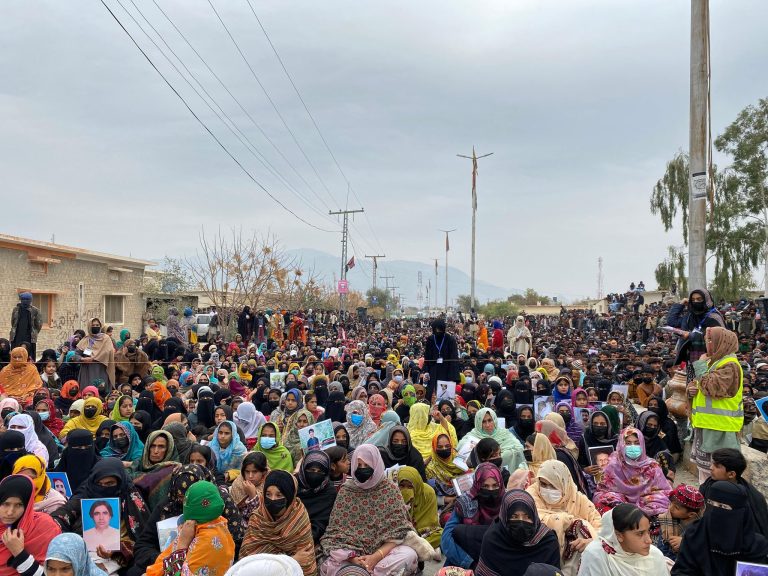
Pakistan’s critical trade route with China, the Karakoram Highway, has remained blocked for five consecutive days as massive protests erupt in Hunza, Pakistan-occupied Gilgit-Baltistan (PoGB). Thousands of residents have taken to the streets, braving sub-zero temperatures, to demand an end to prolonged power outages that have left the region in darkness for up to 23 hours a day during the harsh winter.

The protest, which has drawn significant participation from women, political representatives, and local business associations, reflects the growing resentment against Islamabad’s neglect of the region. The demonstrators have vowed to continue their sit-in until their demands are addressed, paralyzing trade along the vital route connecting Pakistan and China.

The crisis highlights the exploitative policies of the Pakistan Army and establishment in PoGB, a region treated as a colony rather than an integral part of the country. Despite being home to critical trade routes and serving as a gateway for the China-Pakistan Economic Corridor (CPEC), the residents of PoGB continue to endure abject neglect.

The Pakistan Army, which exercises de facto control over the region, has prioritized its own profits from CPEC while ignoring the basic needs of the local population. The promises of development made under CPEC have turned out to be hollow, as infrastructure projects benefit Chinese and Punjabi Pak Army elites while locals are left with crumbling power systems, environmental degradation, and an eroding quality of life.

Hunza Uprising

Protesters have accused the occupying authorities of failing to provide adequate electricity, even as temperatures plunge to -10°C at night. The reliance on hydropower, which becomes almost non-functional during winter when rivers freeze, has exacerbated the crisis. Residents are forced to rely on expensive thermal generators, further straining household incomes in an already impoverished region.

The sit-in has also brought attention to the environmental damage caused by the increased use of generators, particularly by hotels and commercial entities, which adds to the worsening air quality in the pristine mountainous region.

Local authorities have made feeble attempts to negotiate with the protesters, but they have been unable to provide concrete solutions or restore traffic along the Karakoram Highway. Containers carrying goods between Pakistan and China remain stuck, disrupting trade and exposing the fragility of the so-called “all-weather friendship” between the two countries.

The protests in Hunza erupted barely a month after Pakistan and China announced plans to keep the Khunjerab Pass operational year-round to boost trade connectivity. The announcement, however, has done little to address the grievances of the people in PoGB, who see CPEC as a project designed to exploit their resources while offering no tangible benefits to the local population.

The region’s strategic importance to Pakistan is undeniable, yet its people are treated as second-class citizens. The Pakistan Army, notorious for its colonial mindset, has used PoGB as a revenue-generating outpost, while its residents are left to suffer power shortages, poverty, and environmental degradation.

Pak Army exploits Afghan refugees; arrests women & children in Islamabad

Recently, reports from Islamabad reveal the alarming arrest of Afghan refugees, including women and children. Shockingly, many of the detained refugees possess valid legal documents issued by the United Nations and SHARP (Society for Human Rights and Prisoners’ Aid). Despite this, they are rounded up arbitrarily, illustrating the Paki establishment’s deep-rooted contempt for humanitarian obligations.

This crackdown is a cruel extension of Pakistan’s notorious “strategic depth” policy, which has destabilized Afghanistan for decades. By meddling in Afghan politics, orchestrating coups in Kabul, and fuelling wars, the Paki establishment has systematically uprooted countless Afghans, rendering them homeless and vulnerable. Punjabi Pak Army elite, notorious for profiteering from human misery, continues to exploit these displaced communities. Refugees who escape the horrors of war are arrested without cause and subjected to extortion, only to secure their release through bribes.

Such actions reveal the Punjabi Pak Army’s exploitative motives—wars are engineered to displace millions to fill the coffers of the military-industrial complex. Afghan refugees bear the brunt of this vicious cycle. Displaced from their homeland due to Pakistan’s interference, they are further humiliated and persecuted upon seeking refuge across the border. It is time the world holds Pakistan accountable for its war crimes and the perpetual misery it inflicts on vulnerable communities for its own gain.

Islamabad: Radical Islamists kill Christian mother, injure daughter in Gujranwala attack

Pakistan’s descent into radicalism has reached a horrifying new low, as a Christian mother was killed and her daughter critically injured in a brutal attack in Gujranwala on January 6, 2025.

The rise of such heinous crimes stems directly from a Pak Army apparatus that has systematically allowed radical Islamists to wreak havoc on vulnerable communities. Paki establishment has created a nation where the rights of minorities are trampled upon with alarming regularity. By empowering hardline groups and allowing them free rein, the Army has nurtured a culture of extremism that targets Christians, Hindus, Ahmadis, and other minorities with brutal precision.

The systemic failures of law enforcement and the judiciary further amplify the plight of minorities. Police rarely act to protect victims, while legal loopholes and vague religious laws, such as the infamous blasphemy law, are weaponized against them. These tools of oppression serve not only to silence dissent but also to provide cover for the perpetrators of violence. In the case of minority girls, the judicial system often works to retain victims against their will, legitimizing forced conversions and marriages under the pretext of religious freedom.

This legal framework is no accident—it is the product of an establishment that has long relied on radical Islamists as a tool of power. These alliances have turned Pakistan into a hotbed of extremism, destabilizing not just its internal fabric but the entire region. The unchecked violence against minorities is not an aberration but the inevitable outcome of decades of Army-sponsored radicalization.

Pak Army fire on civilians in Chagai’s Nokundi; kills young girl

In yet another example of Pakistan Army’s oppressive tactics in POB, Pak Army opened fire in the Duk Nokundi area of Chagai, injuring several individuals, including Afghan nationals and local residents. A young girl tragically lost her life in the unprovoked attack, adding to the growing list of human rights violations perpetrated by the Army in the region.

The incident occurred early Monday morning when Pak forces targeted travelers in the area. Among the injured is Maulvi Ahmed, a resident of Chagai Sheslar, along with several other Afghan and local civilians who were simply passing through the area. The young girl’s death has sparked outrage among locals, as the Pakistan Army is perpetuating a reign of terror in POB.

For the past 20 days, Pak forces have reportedly imposed draconian restrictions on Afghan travelers in the Duk area. Multiple drivers have been detained in military camps, and their vehicles have been confiscated without any justification. The Army’s high-handedness has left many stranded, further fueling resentment among the local population.

This incident is yet another reflection of the Pakistan Army’s colonial mindset in POB, where they have consistently sought to silence and oppress the region’s residents. By targeting innocent civilians and creating a climate of fear, the military is attempting to suppress both Baloch nationalist movements and the flow of information about their atrocities.

BLA strikes Pak Army convoy in POB, kills 47 Paki soldiers

In a major assault that underscores the growing resistance against Pakistan Army occupation in POB, the Baloch Liberation Army (BLA) launched a devastating attack on a Pakistan Army convoy near the town of Bahman, situated just eight kilometers from Turbat. The attack took place at 5:45 p.m. on January 5, when a suicide bomber from the elite Mujahid Brigade rammed an explosives-laden vehicle into the convoy, inflicting heavy casualties on the Pak Army forces.

According to a statement by the BLA’s spokesperson, Jiand Baloch, 47 Pak Army personnel were killed, and more than 30 were wounded in the blast. The convoy, which included five buses and seven military vehicles, was traveling from Karachi to the FC headquarters in Turbat. The operation caused extensive damage, with one bus destroyed, another partially damaged, and one military vehicle completely incinerated.

This daring attack, which is part of the BLA’s ongoing campaign to drive out the occupying Pak military forces from POB, was carried out with precise intelligence provided by the BLA’s intelligence wing, “Zarab.” The intelligence indicated the presence of high-ranking military personnel within the convoy, which was en route to reinforce Pakistan’s colonial grip on POB.

The BLA’s statement also emphasized that the assault was part of a broader strategy to disrupt the Pak military’s operations and make the region unsafe for occupation forces, collaborators, and those exploiting Baloch resources. The attack sent a strong message to the Paki establishment.

BLA Attack

In a direct challenge to Pakistan’s brutal tactics, the BLA criticized the Pakistan Army’s ongoing campaign of repression in POB. Despite repeated calls for peace and autonomy, the Pakistan Army continues its oppressive actions against Baloch civilians, including extrajudicial killings, disappearances, and widespread violence against peaceful protesters. The Pak Army’s continued disregard for Baloch rights and the militarization of the region further underscores the need for armed resistance and the importance of the BLA’s operations.

The spokesperson also added that the convoy included personnel from various Pak Army units, such as the MI 309, FC Special Investigation Unit, and other specialized wings, which are involved in the violent suppression of POB’s struggle for independence. Furthermore, the convoy contained the vehicle of retired military officer Zohaib Mohsin, a clear indication of the deep-rooted military involvement in the region’s ongoing conflict.

In the aftermath of the attack, Pak forces reportedly escalated their violent crackdown on the Baloch population, including random shootings, arbitrary arrests, and the forced disappearance of civilians. This vicious cycle of violence by the Pak Army only strengthens the resolve of the BLA and the Baloch people in their fight for freedom.

The BLA’s actions in targeting military convoys and supply lines are a strategic response to the occupation, aimed at destabilizing the Pak military’s operations and highlighting the vulnerability of the occupying forces. The BLA’s intelligence network, “Zarab,” has proven to be effective in pinpointing key military targets, ensuring that such operations inflict maximum damage on the enemy.

BLA’s strategic assault 

The BLA’s spokesman further clarified that the attack was carried out by BLA fighter Bahar Ali, a dedicated member of the Mujahid Brigade who sacrificed his life for the cause of Baloch liberation. Bahar Ali, hailing from Turbat, had joined the Baloch nationalist movement in 2017, and his bravery and commitment to the cause of Baloch freedom exemplify the spirit of resistance that continues to define the Baloch struggle.

In a final note, the BLA has issued a stern warning to transporters and resource exploiters in POB, urging them to cease all cooperation with the Pak military. Those involved in facilitating the military’s operations or participating in the plunder of Baloch resources will face severe consequences, including the destruction of their vehicles. The BLA has made it clear that anyone aiding the enemy will be held accountable for their actions.

The BLA’s attack is a powerful reminder that the struggle for POB’s independence is not only ongoing but intensifying. With the continued violence and oppression perpetrated by the Pak military, the BLA remains steadfast in its commitment to liberating POB.

Pak Army blames Pashtun Jirga to deflect blame for Kurram failures

In Kurram district, Khyber Pakhtunkhwa, the imposition of Section 144 and curfew in specific locations is being seen as the latest in a series of desperate attempts by the Paki establishment to impose control over a region it has long failed to govern effectively. The measures, announced following a security meeting, have sparked widespread criticism, particularly regarding the decision to hold Pashtun elders responsible for the recent unrest— a diversion to obscure the ineffectiveness of the Punjabi-Pak Army in the region.

The Kurram district, plagued by sectarian violence and deep mistrust between communities, recently saw a breakthrough in peace efforts, not by the Army, but through the age-old Pashtun tradition of the jirga. When the Punjabi Pakistan Army repeatedly failed to establish order after clashes erupted, it was the Pashtun tribal elders who took the initiative. Their peace accord brought a semblance of stability to the area, showcasing the resilience and leadership of the local Pashtun community in contrast to the Army’s incompetence.

However, the situation took a darker turn after the January 4 attack on the Deputy Commissioner of Kurram. Instead of addressing its own failure to maintain security, the Pak Army has now shifted the blame onto the very elders who brokered peace. The Counter-Terrorism Department has named five individuals in connection with the attack and announced a series of draconian steps. These include threatening the elders with legal action, halting compensation in the area, and even forcibly relocating populations if cooperation is not forthcoming—moves that have been condemned as heavy-handed and unjust.

The narrative being pushed by the Paki establishment is an attempt to portray the local Pashtun leadership as complicit in the unrest, deflecting attention from the Army’s failure to prevent such incidents. This tactic is aimed at undermining the credibility of the Pashtun jirga system, a cornerstone of tribal governance that has succeeded where the Army and establishment’s apparatus have failed.

The measures outlined include a series of punitive actions:

  • Elders who signed the peace accord are being held responsible for its implementation and threatened with legal consequences if they fail to deliver.
  • Anti-terrorism cases are being registered against individuals allegedly involved in the January 4 attack, with threats of arrests and inclusion in Schedule-IV.
  • Compensation and assistance in the affected areas have been suspended until the perpetrators are handed over.
  • The imposition of curfews, confiscation of weapons, and even forced displacement of populations have been proposed as part of a “clearance operation.”

These steps reflect the Punjabi Pak Army’s heavy reliance on coercion. The deployment of additional police and paramilitary forces to secure key roads, such as the Thall-Parachinar Road, further underscores the Pak Army’s inability to maintain peace without resorting to militarization.

The growing discontent among the Pashtun population adds to the already volatile situation in Kurram and the broader Khyber Pakhtunkhwa region. For years, the Pashtun people have borne the brunt of Pakistan’s militarized approach to governance, with the Army prioritizing its own narrative of control over the well-being of local communities.

Protest erupts in Gwadar over kidnapping of Nauman Ishaq by Pak Army

A protest rally was held in Gwadar against the enforced disappearance of Nauman Ishaq, adding to the growing anger over the oppressive tactics employed by Paki establishment in POB. The rally saw a large turnout, including women and children, as protesters chanted slogans condemning enforced disappearances, a tactic that has become synonymous with Pak Army-backed repression in the region.

Nauman Ishaq’s brother, speaking at the protest, revealed that Nauman was abducted on the evening of November 7, 2024, from Dhoria, Gwadar. “To this day, we have no information about him,” he said, his voice filled with frustration and despair. He condemned the lack of accountability, saying, “We have knocked on every door and repeatedly asked the authorities one question: What crime has my brother committed? If he has done anything wrong, why is he not presented before your courts? These courts, which conveniently open for the elite even in the dead of night, remain inaccessible to ordinary citizens like us.”

The brother’s remarks underline the hypocrisy of Pakistan’s judiciary, which is complicit in shielding the Army’s brazen violations of human rights. The protesters also issued a warning to the establishment, demanding the release of Nauman by Tuesday. “If my brother is not released, we will take to the streets and launch a protest movement that you will find hard to suppress,” he added, addressing the Pak Army and its intelligence agencies directly.

Negotiations between the aggrieved family and the local administration failed during the sit-in, further intensifying the tension. The family announced their decision to hold a sit-in at the GT Gate and march toward the CPEC road if their demands are not met.

This incident is yet another grim reminder of the Pakistan Army’s brutal tactics in POB, where enforced disappearances, extrajudicial killings, and harassment of civilians have become the norm. Since its illegal occupation of POB in 1948, the Pakistan Army has systematically silenced dissenting voices through violence and fear. The ‘kill and dump’ policy, where abducted individuals are later found dead, has left thousands of families mourning loved ones who vanished without a trace.

PoJK civilians to hold major protest on January 6 against severe neglect by Paki establishment

A civil society coalition in Pakistan-occupied Jammu and Kashmir (PoJK) has issued a stern ultimatum to authorities, demanding the fulfillment of long-standing commitments within six months or face major public backlash. The Jammu Kashmir Joint Action Committee (JKJAAC) announced its resolve during a core committee meeting in Chakswari, Mirpur district, warning of intensified protests if the occupying government fails to act. A major demonstration has already been scheduled for January 6 over the non-rehabilitation of plots in Mirpur.

The role of Paki establishment looms large in perpetuating these crises. Despite controlling PoJK for decades, the Pak Army has shown little interest in addressing the region’s chronic underdevelopment and hardships, instead exploiting it as a pawn in its geopolitical agenda.

The JKJAAC reminded authorities of a six-month timeline agreed upon in discussions on December 8, which aimed at implementing the Charter of Demands outlined in a February 4 notification. The group warned that if the occupying-authority continues its pattern of unfulfilled promises, it will bear full responsibility for the fallout. The demands include the completion of critical infrastructure projects such as the Rathoa-Haryam Bridge, reduction of exorbitant property transfer taxes, resolution of power crises, and improvements in wheat flour supply and quality.

Protests in PoJK 

The persistent power outages and low voltage issues in PoJK stand as glaring examples of the Punjabi Pak establishment’s neglect. Despite the region’s significant contribution to Pakistan’s hydropower generation, locals face daily blackouts and inadequate electricity—a stark contradiction that exposes Islamabad’s exploitative approach. The military establishment, which exercises overwhelming control over resource distribution, has consistently prioritized its own interests over the welfare of PoJK residents, leaving them to languish in poverty and deprivation.

Delays in infrastructure projects like the Rathoa-Haryam Bridge further underline this neglect. While the military make lofty promises, these projects remain incomplete, disrupting daily life and economic activity. Similarly, issues like the unregulated wheat flour supply reflect a pattern of administrative failure under the Army’s overarching control, which leaves civilians bearing the brunt of mismanagement and corruption.

The JKJAAC’s meeting also criticized the lack of accountability within the system, making it clear that the coalition will not back down until the region’s demands are met. The group emphasized unity within its ranks and barred its members from engaging with external groups to maintain focus on their objectives.

POGB residents block Karakoram highway over power crisis neglect by Paki regime

Tensions escalated in Hunza, Pakistan-occupied Gilgit-Baltistan (PoGB), as frustrated residents took to the streets in Gulmit on Thursday, decrying prolonged power outages and poor governance. Protesters blocked the strategic Karakoram Highway (KKH), a vital trade route linking Pakistan to China, to demand immediate action from authorities over the power crisis that has left the district in darkness for days.

The demonstration, which saw people from various backgrounds joining hands, highlighted widespread anger against the occupying administration. Protesters accused officials of deliberately depriving Hunza of its rightful share of electricity, exacerbating hardships for homes, businesses, and essential services. Speaking at the protest, Irfan Azad, President of the Balawaristan National Front for District Gilgit, urged unity between the people of POGB and POJK, calling for collective advocacy to amplify their voices against systemic neglect.

“This is not the first time we’ve protested against load shedding. Every time we take to the streets, we get temporary relief, but the problem always resurfaces,” said a protester. “It’s shameful that in the 21st century, we still fight for basic rights like electricity while facing exorbitant bills for a service we hardly receive.”

Despite Hunza’s significance as a major tourist destination and its strategic location, locals allege it has been routinely ignored in power distribution. The region’s infrastructure remains woefully inadequate to meet rising electricity demand, with little integration into the national grid. Protesters argue that this neglect reflects a broader pattern of marginalization by both federal and regional authorities.

The blockage of the Karakoram Highway disrupted traffic and trade, with vehicles stranded as demonstrators refused to clear the road. Some vehicles were permitted to pass through, but the disruption underscored the urgency of the crisis.

Mahrang Baloch condemns ongoing Pashtun & Baloch genocide in Pakistan at PTM Germany jirga

Dr. Mahrang Baloch, addressing the Pashtun National Jirga in Germany, delivered a scathing critique of Pakistan’s systematic oppression of Pashtuns and Balochs. Calling it an ongoing genocide, she called out the Paki establishment against waging a campaign of brutal suppression against ethnic communities, targeting their identity, culture, and existence.

While highlighting the dire state of affairs, Dr. Baloch expressed hope in the rise of grassroots movements like the Pashtun Tahafuz Movement (PTM) and the Baloch Unity Council. She described these organizations as critical forces in resisting Pakistan’s oppressive tactics, ensuring the survival and dignity of marginalized communities. “These movements are beacons of hope that will save their people from the clutches of this fascist Army,” she said.

Dr. Baloch also drew attention to the unjust detention of Pashtun leader Ali Wazir, a former member of Pakistan’s National Assembly, who has been repeatedly targeted for his vocal criticism of the Pak military’s heavy-handed policies in Pashtun and Baloch territories. “Ali Wazir is not just a role model for Pashtuns; he is an inspiration for all oppressed communities,” she remarked, urging international attention to her plight and the broader systemic injustices in Pakistan.

Her remarks reflect growing unity among Pashtuns and Balochs, who have long faced enforced disappearances, extrajudicial killings, and cultural erasure at the hands of the Paki establishment. The Pashtun National Jirga itself stands as a testament to this emerging solidarity, amplifying voices that challenge the Pak Army narrative and demand justice for decades of oppression.