Home Blog Page 21

Pak Army abducts eight more Baloch students

The Pak Army has abducted eight individuals from Uthal, Jiwani, and Karachi, intensifying fears among the already oppressed Baloch population.

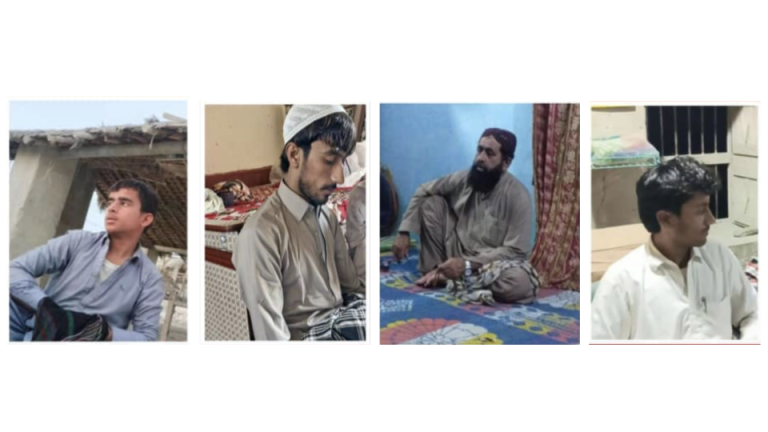
In Uthal, four students from Agricultural University Uthal—identified as Gulab, Balach, Bayan, and Nasir—were reportedly detained by Pak Army from the Uthal Bazaar. Their classmates confirm that these young students were taken into custody without any justification, and their whereabouts remain unknown. This targeted action against students highlights the military’s deliberate efforts to suppress Baloch youth and intellectuals, viewing them as potential threats to their oppressive regime.

In the coastal district of Gwadar, three individuals—Faqir Muhammad, his son Dad Muhammad, and another man named Darjan—were abducted by Pak forces in Jiwani. This is yet another example of the military’s attempt to disrupt and intimidate Baloch families in their own homeland.

In Karachi’s Lea Market, a rickshaw driver, Sadiq Ahmed, son of Dil Murad and a resident of Kahn Gichk, was also forcibly disappeared. The extension of enforced disappearances to urban centers like Karachi shows the military’s unchecked authority and its systematic targeting of Baloch individuals, even outside POB.

The Pak Army’s strategy of enforced disappearances is not a matter of isolated incidents but a systematic policy to crush dissent in POB. By targeting students, families, and ordinary civilians, the Army continues to undermine the region’s stability while exploiting its resources. The international community’s silence and failure to hold Pakistan accountable have emboldened its military to escalate these human rights violations, leaving the Baloch people trapped in a cycle of oppression and injustice.

POJK: All Parties Committee issue charter of demands, plans intense protests against Paki regime

The All Parties Coordination Committee Rawalakot has issued a bold 16-point Charter of Demands, setting a deadline of December 9 for the occupied-government to address their concerns. In defiance of the Paki establishment’s authoritarian policies in Pakistan-occupied Jammu and Kashmir (PoJK), the committee has called for region-wide protests on December 10, International Human Rights Day, and announced plans to mobilize demonstrations abroad. The demands underscore growing public anger against the Paki establishment’s exploitative control over the region and its repressive governance.

At the forefront of the demands is the immediate dissolution of the puppet assembly by Prime Minister Chaudhry Anwar Haq and his resignation to pave the way for democratic reforms. The committee has called for the establishment of an independent and impartial Election Commission to conduct elections for a truly representative and empowered Constituent Assembly, seeking to replace the current colonial governance model imposed by Islamabad.

Abolishing the draconian Peaceful Assembly and Public Order Ordinance 2024 has been prioritized, branding it a “black law” designed to stifle dissent and silence the people’s voice. The committee has also demanded swift action against religious extremist groups, including filing FIRs against those who brandished weapons in Rawalakot on September 13, 2024, terrorizing the public under the Pak Army’s watch.

PoJK Uprising

In a scathing indictment of the Paki security apparatus, the charter calls for legal action against ISI sector commanders, Rangers officials, and key figures for their role in the brutal killing of three young men on May 13, 2024. The bloodshed, perpetrated to suppress voices advocating for basic rights, remains a dark stain on Islamabad’s reign over PoJK.

The demands also address systemic issues of resource exploitation and economic disenfranchisement. The committee has urged the repeal of the exploitative Karachi Agreement and Act 1974, demanding the return of Lent officers who represent Islamabad’s chokehold over PoJK’s administration. It has also called for the abolition of 12 legislative seats reserved for refugees from POJK in Pakistan, terming them a “robbery” on the region’s representation and economy, used to manipulate governance at Pakistan’s imperial will.

On economic fronts, the committee has demanded the establishment of a national grid station to prioritize local energy needs, with any surplus electricity to be exported only with agreements favoring the local population. Flour mills and wheat distribution systems must be placed under state control to combat corruption, ensuring affordable food access for all. Furthermore, PoJK-based banks must reinvest a quarter of their deposits locally to foster agriculture, tourism, and industry development.

Rawalakot Demands Justice

The charter also opposes the Army’s plan to seize lands in the name of “green tourism,” calling it a blatant ploy to expand military dominance in civilian areas. Instead, the committee insists on developing infrastructure to facilitate foreign tourism, including activating airports at divisional headquarters and prioritizing local industries and employment creation using remittances from the Kashmiri diaspora.

The final points call for the reinstatement of democratic rights, including elections for student unions and the right for workers across all departments to form trade unions.

These demands highlight the widespread discontent in PoJK, where the Paki establishment’s exploitative policies have systematically stripped the region of its resources, autonomy, and identity. The introduction of oppressive ordinances and the suppression of dissent through violence reflect Islamabad’s colonial mindset, seeking to tighten its grip over PoJK while ignoring the fundamental rights of its people.

Punjabi Pak Army drone strike kills Pashtun child in Khyber-Pakhtunkhwa

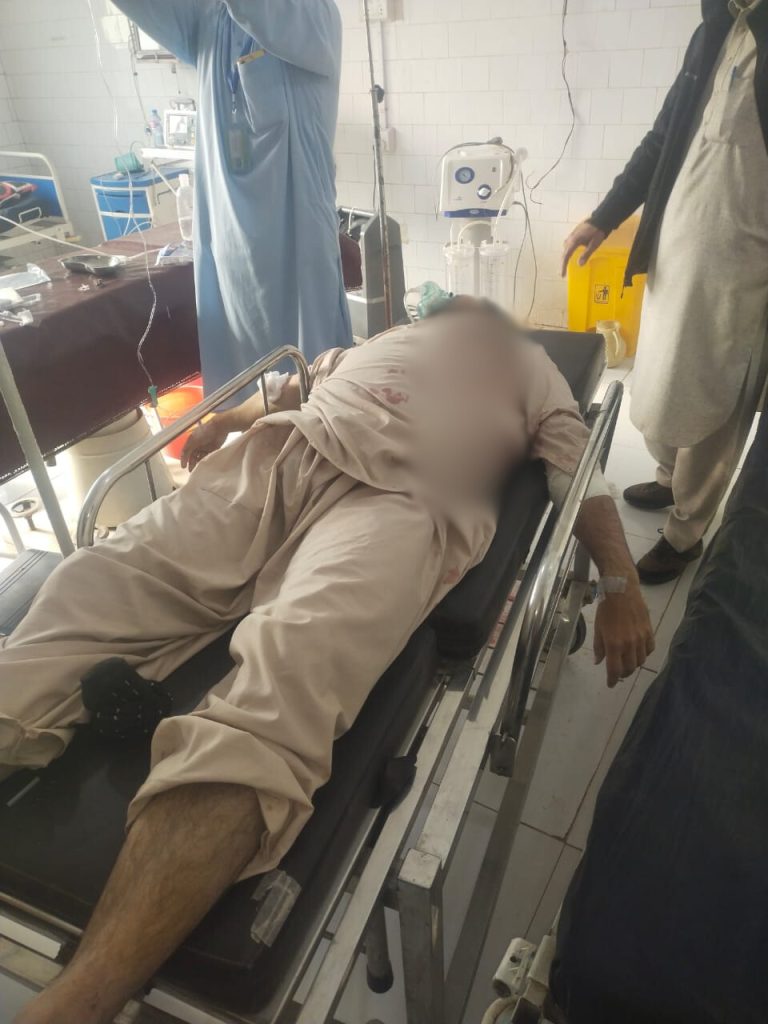
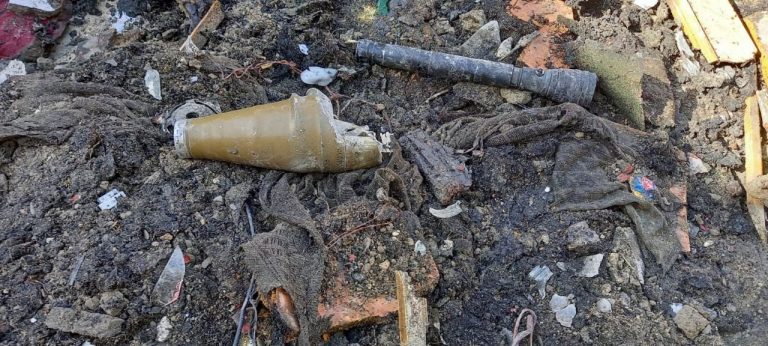
In a harrowing event, Anwar Shah Bora, a grieving father from Mohmand Tehsil in the Ambar district (Khyber-Pakthunkhwa), recounted the brutal attack on his home by a drone. Speaking at the funeral prayer of his baby was martyred in the devastating incident.

Bora revealed that the mortar fire, which rained down on his village, was deliberately aimed at the civilian population, not at any alleged militants or Army personnel. The consistent targets are children, civilians and livestock in these attacks. These strikes, which have become a disturbing pattern in the region, are not aimed at combatants but at the innocent civilians who have already been suffering under the weight of decades of Punjabi Pak Army’s oppression.

In November alone, Punjabi Pak Army’s shelling and mortar fire has claimed the lives of over 10 innocent Pashtun children. These children, the most vulnerable among the population, are repeatedly targeted in these brutal assaults.

The targeted attacks on civilian areas in Pashtun-majority regions like Mohmand are to maintain control over the region through violence and intimidation. The Pashtun population, long subjected to military operations, enforced disappearances, and human rights abuses, finds itself under siege once again as these assaults continue to devastate communities and claim innocent lives.

For the Pashtuns, these attacks are not just acts of war—they are an ongoing struggle for survival in a region where they are treated as collateral damage in a larger geopolitical game.

Miscreants vandalize Hanuman temple in West Bengal amid Bangladesh unrest

The ongoing crisis against the Hindu community in Bangladesh is no longer confined to its borders, as the alarming wave of religious intolerance appears to be spilling over into India. In a troubling development, miscreants attacked a Sri Hanuman temple in the Siuri area of Birbhum district, West Bengal, vandalizing the sacred Murti. The incident took place in the Indragachha locality, sending shockwaves through the local Hindu community.

Over the past few months, violence against Hindus in Bangladesh has been escalating, marked by attacks on temples, arson, and the targeting of religious minorities. While the Bangladeshi Hindu community faces unrelenting hostility, similar acts of aggression are now being reported across the border in India. These coordinated attacks indicate a growing network of Islamist extremists and miscreants emboldened by the lack of stringent action by authorities.

West Bengal, which has witnessed rising communal tensions in recent years, is increasingly becoming a hotbed for such incidents, as unchecked Islamist elements target Hindu symbols, places of worship, and communities with impunity.

Pak Army raid Turbat, kidnap several Baloch civilians

In yet another oppressive operation, Pak Army carried out a raid in Turbat early Thursday morning, detaining multiple individuals who have since been forcibly disappeared. This incident adds to the long list of enforced disappearances in the region, a grim hallmark of the Pakistan Army’s systematic campaign to crush Baloch community.

Among the missing are Dr. Zafar, son of Mohammad Raheem; Raheem Jan, son of Dr. Zafar; and Dr. Mohammad Kareem, son of Bahram. The raid also targeted Dr. Zafar’s guesthouse, where five of his guests were taken into custody. While one of the detained guests has been identified as Jabbar, the identities of the remaining individuals remain unclear.

Reportedly, the forces have abducted more individuals from the area, but detailed information regarding their identities or whereabouts has not yet surfaced. This brazen act of Army-sponsored terror underscores the Pakistan Army’s colonial mindset and its reliance on enforced disappearances to quash Baloch people.

Such operations are a strategy by Paki establishment to maintain its control over Balochistan through fear and violence. The Baloch people have long been subjected to a campaign of extrajudicial killings, abductions, and a ‘kill and dump’ policy—a horrifying reality that has persisted since the region was forcibly annexed in 1948.

Pak Army in abduction spree, kidnaps Baloch policeman and Baloch student

A police officer and a law student have become the latest victims of Pakistan’s increasing trend of enforced disappearances, with both individuals taken from Karachi’s Gulshan-e-Iqbal area by unidentified personnel. The incident has sparked alarm, adding to the growing concerns over the systematic abduction of civilians, particularly in POB, amidst heightened military activity.

The missing individuals are identified as Hatem Baloch, a student at SM Law College, and ASI Dilwash Baloch, a member of the Airport Security Force. Reportedly, both were abducted from a residence in Gulshan-e-Iqbal late at night by plainclothes men, without any explanation or formal charges.

Despite the family’s desperate calls for help, local authorities have refused to file a First Information Report (FIR), further frustrating efforts for accountability. The families of the missing men are now demanding their immediate release and justice for their unlawful abduction.

Over the past several months, Pakistan has witnessed an alarming rise in forced disappearances, with more than 110 people reported missing in October alone, and over 90 in November. The surge in disappearances comes amid the Pak Army’s ongoing crackdown in POB, as it intensifies operations against Baloch indepedent groups like the Baloch Liberation Army (BLA), particularly after last month’s deadly suicide bombing targeting Chinese nationals in Karachi.

The increase in disappearances is linked directly to the brutal tactics used by the military, particularly in regions like POB, where enforced disappearances, torture, and extrajudicial killings have been part of the ongoing struggle between the Baloch nationalist movements and the Paki establishment. As the military operation escalates, civilians are being abducted under the pretext of counterterrorism efforts, with many not resurfacing for months, if ever.

Human rights organizations and political leaders have condemned these actions, pointing to the ongoing pattern of military oppression and the silencing of dissent in POB. The abduction of students, journalists, and activists—such as Hatem Baloch and Dilwash Baloch—reflects a broader crackdown on individuals demanding justice and an end to the persecution of marginalized communities. The Paki establishment’s brutal suppression of the Baloch population only further emphasizes its colonial mindset, aiming to silence dissent through force.

Pak Army plunge to new lows in Balochistan

When Chinese ambassador Jiang Zaidong publicly declared that its citizens being attacked twice in only six months,” was “unacceptable,” Pakistan’s Foreign Office reacted by calling this statement “perplexing.” However, it was abundantly clear that Islamabad had sensed the full import of this not-so-discreet warning from its ‘iron brother.” So, Islamabad’s recent announcement regarding a comprehensive military operation against terrorist organisations operating in Balochistan,” comes as no big surprise.

There’s no doubt that terrorism needs to be dealt with firmly. However, it’s equally important that troops involved in counter-terrorist operations don’t go overboard and act with hatred or vengeance because those who have picked up guns against the state are the soldiers’ countrymen. That’s why professional armies in the world have evolved a code of conduct for their rank and file, and soldiers are psychologically conditioned to discharge their duties impartially and without prejudice. 

The human rights record of the Pakistan Army and other security forces under its command however doesn’t quite measure up to expected standards and the reason for this serious shortcoming isn’t too hard to find. Instead of sensitising its rank and file on this issue, the Army hierarchy in Pakistan has instead encouraged creation of an environment that encourages animosity towards their countrymen who have for ideological, political or other reasons picked up the gun.

A Prelude to Atrocity

To further motivate its soldiers, Rawalpindi has even fallen back on Islamic history. In an attempt to downplay popularity of Tehreek-e-Taliban Pakistan [TTP] terrorist group in Khyber Pakhtunkhwa [KP], Pakistan Army chief Gen Syed Asim Munir has given it the moniker “Fitnaal-Khawarij,” a name drawn from an early Muslim group that broke away from mainstream Islam. The idea of portraying TTP as a terrorist group that misuses religion to justify the violence it perpetuates and champions objectives that are un-Islamic is laudable. 

Whereas such a depiction can well arouse religious emotions amongst soldiers and make them feel that they are not professional soldiers but ‘Ghazis’ [defenders of the Faith] and thus sanctify excesses against these so-called ‘enemies of Islam’. Similarly, using the phrase “sent to Hell”while referring to terrorists killed is in bad taste for many reasons, especially when it comes from an Army that prides itself for professionalism and military ethics. 

First, it’s not humans but our creator who decides the final destination of the deceased and so, the pompous declaration that someone has been ‘sent to Hell’, smacks of arrogance and borders on sacrilege. Secondly, it is universally expected that death should have a very sobering effect on the living and so, even though we may harbour intense hostility towards someone, but once he’s no more, to brag about having sent him to Hell is something that’s downright pathetic!

Enforced Disappearances and Body Bags

Human Rights Watch [HRW] 2011 report contains an interesting revelation that clearly reveals the sordid side of Pakistan Army’s counter-terrorism campaigns. Bashir Azeem, the 76-year old secretary general of Baloch Republican Party [BRP] told HRW investigators that during his “unacknowledged detention” in 2010, a Pakistani official had told him that “Even if the president or chief justice tells us to release you, we won’t. We can torture you, or kill you, or keep you for years at our will. It is only the Army chief and the [ISI] chief that we obey.” [Emphasis added].

Even though HRW is a reputed global human rights watch dog and has no axe to grind with Pakistan yet Rawalpindi will undoubtedly rubbish the God-fearing septuagenarian BRP general secretary’s testimony ibid, so purely for the sake of discussion let’s give Pakistan Army the benefit of doubt and take its denial at face value. However, will Rawalpindi care to explain what exactly its media chief implied in 2019 when while replying a question on enforced disappearances in Balochistan by saying, “We don’t want anyone to be missing, but war is ruthless-everything is fair in love and war”? [Emphasis added].

It’s not only rights groups and activists who are critical of the cavalier ways of the Pakistan Army and its utter disregard for human right violations in Balochistan as facts speak for themselves. If enforced disappearances in Balochistan are merely a myth [as Rawalpindi maintains], then what impelled Baloch women who traditionally remained within the four walls of their houses to come out and undertake a 1,800 kilometer long March from Turbat near the Iran border to the Pakistani capital followed by a sit-in in peak winter?

Defence of Human Rights Pakistan [DHRP] is an independent organisation working for release of illegally detained Pakistani citizens headed by Amina Janjua, a half-widow whose husband was forcibly disappeared in 2005. When all efforts to trace him proved futile, instead of approaching the police or judiciary, Ms Janjua ultimately sought the help of Pakistan Army’s media chief in 2019. If the Pakistan Army isn’t complicit in orchestrating enforced disappearances in Balochistan, then why did the knowledgeable DHRP chairperson choose to specifically approach a Pakistan Army General for help?

Balochistan Burns Again

Pakistan Army’s impending campaign in Balochistan will be a bloody one. While on the one hand Baloch fighters are a determined lot and will fight till the end, the Pakistan Army on the other hand will use every ground based and aerial weapon platform at its disposal to pulverise what it believes are terrorist hideouts. Since it’s not accountable to anyone, Rawalpindi will not hesitate in targeting areas inhabited by innocent civilians. Furthermore, imposition of media censorship purportedly for ‘operational reasons’ will ensure that [like always] news of atrocities committed by the Pakistan Army remain unreported.

How will things pan out in Balochistan once the military campaign commences isn’t very difficult to prognose. Pakistan Army will definitely suffer casualties and in order to keep up its own image as well as assuage public anger it will have to produce dead bodies of the attackers, ensuring that they exceed the number of soldiers killed. 

Rawalpindi is also under severe pressure to do something that would placate Beijing, which is enraged by attacks on Chinese citizens by Baloch fighters. The Pakistan Army knows that the easiest way to do this is to create the illusion of having decisively crushed the Baloch separatist movement by producing a surfeit of body bags containing mortal remains of sarmachars [Baloch insurgents] as evidence thereof. 

The only problem is that abducting innocent Baloch youth, murdering them in cold blood and then presenting them as Baloch fighters could lead to widespread public unrest but with years of experience, Rawalpindi has already worked out an alternative. More than 2,500 Baloch men have been forcibly disappeared by the Pakistan Army and its intelligence agencies and even we assume that 50 percentage have been secretly murdered, there are still enough Baloch people lodged in secret jails to cater for the requisite number of corpses to cool down Beijing’s frayed temper and public outrage would be an easy job. As such,  resorting to rampant abductions and producing their corpses for ‘pushing up’ the number of casualties inflicted by the Army won’t be necessary.

“Dead Men Tell No Tales”

Though repugnant, this endeavour is a win-win situation for the Pakistan Army because dead men tell no tales!

Postscript: Excesses committed by the Pakistan Army against the Baloch people would even make the most stone-hearted squirm with horror and revulsion. In an undated video that definitely predates his short lived honeymoon with Rawalpindi, PTI chief Imran Khan can be heard saying, Our Army [is] bombing people in Balochistan, how can we bomb our own people, is there any Army [there that] you are bombing? It is our own people with their children, but it is important to understand are we just bombing our people, just think about the sin of bombing villages with the women and children…You are talking about six million people in the tribal areas that are being bombed, their economy has been shattered, they are living in refugee camps, how are they sustaining, and what about the extra-judicial killing that is going on”?[Emphasis added].

This is unfortunately the raw reality of Pakistan Army military campaigns in POB!

Abduction of anti-Paki regime journalist Matiullah Jan from Islamabad

In a shocking development, renowned journalist and New News YouTube anchor, Matiullah Jan, was abducted late last night from the parking lot of PIMS Hospital in Islamabad. The abduction occurred around 11 p.m, when Jan, who was accompanied by fellow journalist Saqib Bashir, was seized by unknown assailants. Bashir, however, was released later in the I-9 sector. He recounted that both journalists were blindfolded and transported in a van-like vehicle before being separated.

Reportedly, the last known communication with him was at 11 PM on Wednesday night. Since then, all attempts to reach him have been unsuccessful. This marks the second time the veteran journalist has been abducted, with a similar incident occurring in July 2020 when he was taken in broad daylight from the G-6 area of Islamabad and released after 12 hours. That abduction had sparked national and international outcry, drawing attention to the growing climate of fear surrounding journalists in POB.

Matiullah Jan, known for his bold reporting and critical stance, has been a frequent target in the past, with his work on sensitive topics such as military actions and forced disappearances in POB making him a target for the Paki establishment. The latest abduction raises serious concerns about the deteriorating state of press freedom in Pakistan. Journalists in the country have long faced threats ranging from harassment to violent retribution, particularly when covering issues deemed sensitive by the military establishment, such as the ongoing conflict in Balochistan and the growing criticism of the Pak Army’s actions.

Pakistan’s Military Crackdown

Pakistan’s military, which has long been silencing dissent and stifling opposition, appears to have ramped up its intimidation tactics against journalists who dare to report the truth. The growing influence of the Army over media outlets has led to widespread censorship, particularly concerning issues like military operations, forced disappearances, and the persecution of Baloch community. This abduction further underscores the increasingly repressive environment in which journalists are forced to work.

Human rights groups and press freedom organizations have condemned the abduction, demanding the immediate release of Matiullah Jan. Pak journalists’ unions have echoed these calls, stressing the urgent need to safeguard the safety and independence of the media. The growing repression of the press in Pakistan has led to serious concerns about the future of free speech in the country.

Pakistan ranks 150th out of 180 countries in the 2024 World Press Freedom Index by Reporters Without Borders, a stark reminder of the difficult conditions faced by journalists in the country. Journalists are routinely subjected to harassment, abduction, and even murder, while censorship and restrictions on reporting continue to rise, particularly on topics relating to the military and the POB conflict.

Indian security forces nab ten Pak terror operatives in major J&K crackdown

In Jammu and Kashmir’s Kathua district, security forces on Wednesday arrested ten overground workers (OGWs) associated with Pak terror groups, police said.

The large-scale crackdown, jointly carried out by the police and CRPF, targeted 17 locations across Malhar, Bani, and the upper reaches of Billawar, as well as border areas including Kana Chack, Haria Chack, Spral Pain, and Chack Wajir Lahbju. According to a police spokesperson, the operation focused on uncovering networks providing logistical and financial assistance to terrorists operating in the region.

The raids were conducted as part of investigations into three separate FIRs linked to terror-related incidents registered at police stations in Malhar, Billawar, and Bani. These meticulously planned operations led to the identification and subsequent arrest of 10 individuals, who are suspected of being OGWs or linked to terror activities.

This comes shortly after security forces eliminated three foreign terrorists affiliated with the Jaish-e-Mohammad (JeM) in two encounters in the upper reaches of Kathua district and its fringe area with Basantgarh in Udhampur district. The killings dealt a serious blow to terror groups, which have intensified their activities in the region this year.

Over the past few days, police in the Jammu region have ramped up their crackdown on terror networks associated with JeM and Lashkar-e-Taiba (LeT), conducting over 56 raids across districts including Rajouri, Poonch, Udhampur, and Reasi. These operations resulted in the arrest of several OGWs and terror suspects, as well as the recovery of incriminating materials such as electronic devices, documents, unaccounted cash, weapons, and ammunition.

Syrian rebels attack Army, seize territory under President Assad in northern Syria

Syrian rebels in the last opposition-held enclave in northern Syria launched a large-scale military offensive against government forces on Wednesday, marking the first major territorial gains in years. The assault, led by the militant group Hayat Tahrir al-Sham (HTS), overran at least ten areas in northwestern Aleppo province.

The rebel forces advanced nearly 10 k.m. (6 miles) from the outskirts of Aleppo city, reaching within a few kilometers of Nubl and Zahra, two Shi’ite towns with a strong militia presence from Lebanon’s Iran-backed Hezbollah. They also attacked Al-Nayrab airport, located east of Aleppo, where pro-Iranian militias maintain significant outposts, an army source reported.

This offensive marks the first substantial territorial advance since March 2020, when a ceasefire brokered by Russia and Turkey temporarily halted large-scale military action in Syria’s northwest. The ceasefire had previously frozen conflict lines in the region, which remains the last major stronghold of opposition forces in the country.

Rebel Gains

The rebels captured several towns in northwestern Aleppo, including Qabtan al-Jabal, Urma al-Sughra, Anjarah, Bala, Jamiyat al-Maari, al-Salloum, and Hawar. However, fierce clashes continue in other areas. Kfar Bissin and Al-Shaykh Aqil remain contested, with heavy resistance reported on the outskirts of Urma al-Sughra. The advance has stalled at Anadan, where Iranian-led units of the Syrian Arab Army (SAA) have fortified positions in strategic hills northwest of Jamiat Nur. In Kafr Naha, the Assad regime retains control of the southern part of the city, resisting rebel incursions.

Notably, Abu Obeida, the military chief of HTS’s Northern Storm Brigade, was killed in intense fighting with soldiers from the SAA’s 46th Regiment in western Aleppo. His death marks a significant blow to the HTS offensive, which appears to be encountering increasing resistance.

Rebel Motivations

Rebel leaders have stated that the operation is a response to intensified airstrikes by Syrian and Russian forces in southern Idlib, which have targeted civilian areas in recent weeks. The campaign is also seen as a preemptive measure against a suspected Syrian army offensive, as government troops have been amassing near rebel frontlines.

In retaliation, the Syrian army has launched heavy bombardments on rebel-held areas, including Idlib city, Ariha, Sarmada, and other towns in southern Idlib province. Pro-government media claimed that dozens of HTS fighters were killed in these counterattacks.

The renewed violence has triggered a fresh wave of civilian displacement. Witnesses reported hundreds of families fleeing to safer areas near the Turkish border, seeking refuge from the escalating conflict.

Hayat Tahrir al-Sham, classified as a terrorist organisation by the United States, remains a dominant force in Syria’s northwest, competing with Turkey-backed rebel groups that control areas along the Turkish border. The group has long been a target of Syrian government and Russian forces.