Home Blog Page 227

Pakistan’s ‘azadi’ [independence] stratagem backfires

All said and done, the Jammu and Kashmir Liberation Front [JKLF] did an excellent job in giving a head start to Rawalpindi’s plan of ‘bleeding India through a thousand cuts’. However, despite being an obedient minion, this group soon fell out of favour with Pakistan Army’s notorious spy agency Inter-Services Intelligence [ISI] – the nodal agency responsible for planning and executing a shadow war in J&K.

The way JKLF was initially pampered and treated as an esteemed ally, and then brusquely dumped as if it was a dispensable commodity that had outlived its utility, should have raised eyebrows. After all, wasn’t this a clear indication that the so called ‘armed struggle’ in Kashmir was not at all about emancipating the people of Kashmir, but patently the Pakistan Army’s self-serving covert military operation against India. 

However, as ISI and its proxies had created an atmosphere of unbounded optimism in Kashmir Valley through a well-planned and concerted propaganda, no one seems to have noticed Pakistan’s brazen perfidy. Public apathy allowed ISI to convert Kashmir into a battleground for its proxy war in which human lives are being consumed even today!

JKLF had danced to the tune of its masters sitting across the Line of Control [LoC] with such servility that it even abandoned its pretense of being a secular group championing Kashmir nationhood. This is evident from its willingness to further ISI’s nefarious design of communalising the so called ‘Kashmir struggle’ by indulging in a killing spree targeting Kashmir’s minority pandit community to precipitate their mass exodus.

JKLF’s implicit subservience can be gauged by the fact that it didn’t even object to the killing of its own members by rival terrorist groups created by ISI! So, the obvious question that arises is, why did the wonderful ISI-JKLF ‘honeymoon’ end so abruptly? The answer lies in JKLF’s position as regards the so-called ‘armed struggle’ was concerned.

JKLF owed its immense popularity to the dreams of ‘azadi’ [independence] that it peddled and the practically unachievable assurance to gullible Kashmiris that “azadi was just around the corner.” Due to this, any compromise on the issue of ‘independence’ was fraught with the danger of public disillusionment, which was something JKLF didn’t want to risk.

Conversely, the idea of making J&K’s ‘independence’ the rallying cry for the so called ‘freedom struggle’ was not agreeable to ISI, since this could arouse similar sentiments in Pakistan occupied Jammu Kashmir [PoJK]. Resultantly, there was a serious conflict of interests, and ISI’s attempts at convincing JKLF to change the objective of the proxy war in J&K from ‘independence’ to ‘merger with Pakistan’ failed.

Having foreseen this possibility, ISI had already created an alternative proxy called Hizbul Mujahideen [HM] to replace JKLF. Led by a Kashmiri named Syed Salahuddin, this terrorist group univocally propagated J&K’s merger with Pakistan.  With ISI cutting off military hardware supply and finances to it, JKLF’s armed wing soon became defunct.

On the orders of ISI, HM virtually wiped out JKLF in a bloody purge in which Kashmiris killed Kashmiris. JKLF founder Amanullah Khan himself admitted that HM had killed more JKLF cadres than the Indian security forces. To save face, its wily chief Yasin Malik announced the end of JKLF’s ‘armed struggle’ and opted for following a peaceful approach to achieve its objectives.

Pakistan has introduced a slew of repressive measures to subjugate the people of POJK. Section 7[3] of AJ&K [PoK] Interim Constitution, 1974, states that “No person or political party in Azad Jammu and Kashmir shall be permitted to propagate against, or take part in activities prejudicial or detrimental to, the ideology of the State’s accession to Pakistan.”

In his 2016 interview with DW,noted Pakistan born US based terrorism and Kashmir expert Arif Jamal accurately sums the prevailing situation noting that “although Pakistan claims there is an “azad” [free] government in its part of Kashmir [PoK], in reality it is pretty much a territory occupied by the Pakistani military.”

Jamal’s assessment is endorsed by the observation of Brad Adams, executive director of the Asian Division of Human Rights Watch that “Although ‘azad’ means ‘free,’ the residents of Azad Kashmir are anything but free,” and that “the Pakistani authorities govern Azad Kashmir [PoK] with strict controls on basic freedoms.”

Rawalpindi’s attempts to intimidate PoK residents through draconian laws and by arm twisting have proved unsuccessful. Earlier, ‘azadi’ calls in PoJK were an adjunct to protests against highhandedness of the authorities and various deficiencies in basic services. However, clamour for ‘azadi’ has now become more nuanced and the central theme for protests.

In 2019, a case was filed against 19 JKLF leaders and activists of its students’ wing in PoJK for raising slogans fermenting “hatred against the state and the Pakistan Army” during the annual convention of JKLF.

On October 23 last year, political activists belonging to Jammu Kashmir National Awami Party [JKNAP] alongwith other regional parties’ organised demonstrations in Bagh, Ajira, Rawalakot, and Pindi to protest the Pakistan Army orchestrated tribal invasion in 1947.

According to a media report on this incident, “The protesters raised anti-Pakistan and anti-army slogans while calling out the lies and duplicity of Pakistan on the Kashmir issue. The protesters held black flags and anti-Pakistan banners with “Black Day” written on them.”

And just the other day, videos of a discussion being disrupted by the audience collectively chanting ‘azadi’ slogans during the recent Pakistan Literature Festival in Muzaffarabad [PoK] have emerged. Is it mere coincidence that the tone, tenor as well as the content of these slogans bears a striking similarity with the ones heard on the Jawaharlal Nehru University campus in New Delhi? Or is it a manifestation of the what goes around comes around syndrome?

The irony is that the ‘azadi’ myth created for beguiling the people of J&K has lost its charm thanks to the ISI’s absurd diktat that ‘independence’ for Kashmiris implies ‘merger’ of J&K with Pakistan. However, this ‘azadi’ Frankenstein seems to have found favour with residents of PoK as they rightly feel closeted by unnecessary restrictions imposed on them and want to get rid of their shackles.

 So, the spectre of ‘azadi’ has ultimately come to haunt Pakistan. Though Islamabad may try to portray burgeoning public opposition to Pakistan’s illegal occupation of Kashmir as a conspiracy hatched by New Delhi, the world knows better.

And in a land where one is constitutionally debarred from questioning its accession that has been enforced through the force of arms without seeking the free choice of its people, the demand for ‘azadi’ by the impoverished residents of PoK is bound to increase- both in frequency and intensity!

Hindu refugees made to suffer but illegal Muslim refugees get aadhar card in a week

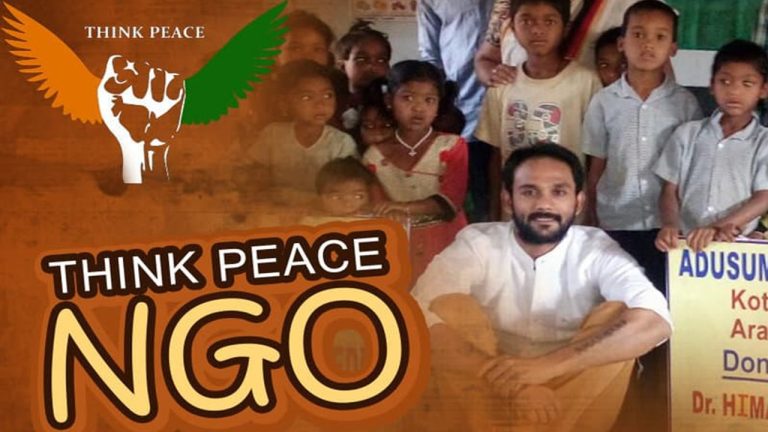
The persecuted Hindu refugee faces obstacle at every step in Bharat (India) while the illegal Muslim refugees ‘manage’ to get aadhar cards and other government identity cards that helps them easily settle anywhere across India. Kiran Chukkapali, Founder of Think Peace explains News Intervention’s Sabita Mishra how confused secularists and leftist ecosystem has made survival difficult for Hindu refugees.

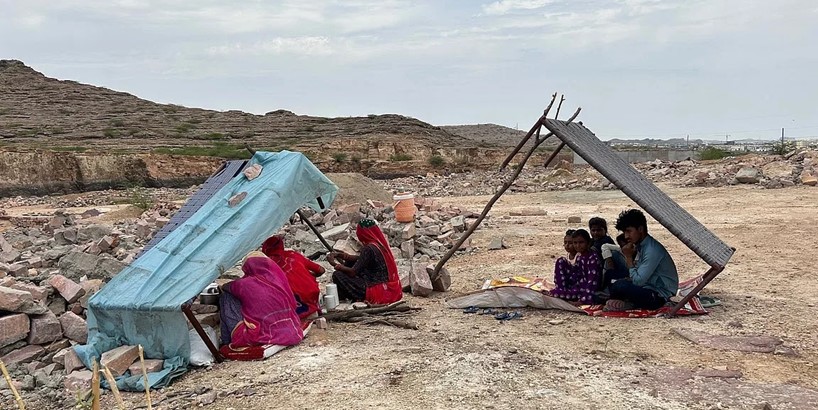
Sabita Mishra: A few days ago, the local administration in Jaisalmer, Rajasthan, bulldozed the refugee camps of Pakistani Hindus. The pictures and videos were heartbreaking. What do you think we, as civilians, can do?

Kiran Chukkapali: It is indeed heartbreaking to see women, children and men becoming homeless in a matter of hours. The government did not even think for a moment on what would happen to them if the houses are bulldozed in peak desert summers. A couple of days back I was at the new land allotted to them and there were hail storms at 2 AM. The kids exposed to the storm were hidden under cots and parents clutching them to safeguard like hens safeguarding their chickens under their wings. As civilians, the first time we did what we should have done long back, we as Hindus cried with them and raised voices for them, hence a land was allotted in record time. As an organisation, we have already given them water facilities, food supplies for weeks and started rebuilding roofs which shall be complete in a month. In a month they will be looking forward to a brighter future. This again shows the importance of the street power and online power we as Indic people need to develop in order to safeguard other Hindus. But the most important thing, we as civilians must do is have the discernment to see who is creating policies for national interest and who is creating them for vote banks and politics. If we become aware of this, we can greatly reduce human suffering by supporting the right campaigns at the right time.

Sabita Mishra: Even though India is the birthplace of Hinduism, why do you think there is no place for Hindu refugees from Pakistan and Bangladesh in India?

Kiran Chukkapali: It is unfortunate that even though we have this large sense of humanity as a nation who has provided refuge to many communities over the years, including Tibetan Buddhists, Sri Lankan Tamils, Afghans and Rohingyas, among others, our political critics argue that selective acceptance of refugees based on religion could undermine the secular fabric of the country. Political opposition and public protests against Indian refugee policies have added to the political challenges faced by the government. This leads us down an ironic self-discriminatory path where we start to identify every human based on their religion or ethnic roots, before we can fulfil our fundamental responsibility to provide refuge to humans escaping persecution.

In the early 1990s, when the Bhutanese government adopted the ‘one nation, one people’ policy to protect their political interests, several thousands of Bhutanese residents of Indic ethnicity were robbed off their citizenship by the authorities in order to protect Bhutan’s political interests. Over 1,00,000 Hindus were forced out of their homes in 1992 and were resettled to the US, Australia, Canada, Finland and other European countries, but India could not open its arms to embrace these people. Churches made use of this opportunity and supported UNHCR to help them rehabilitate these people and as a result, as per a research about 80% of these Hindus have been converted to Christianity. SEWA International is the only noted organisation from Indic roots who helped rehabilitate a few of those people. Whereas, in India we kept fighting this debate on secularism and lost sight of the human suffering of people within our own ethnic roots. Simply put, in India, we get validation only when we open our hearts to embrace non-Indic cultures, but when we try to do the same for Indic people, the left liberals  goes up in arms with the weapon of secularism. Whose vested interests are these parties serving, we must ask!

Hindu Refugees forced to use charpoys as shelter after the Rajasthan administration demolished their homes in Jaisalmer.

Sabita Mishra: What are the reasons for the lack of solidarity? Have Pakistani Hindus ever faced racism?

Kiran Chukkapali: When Pakistani Hindus come into India they come with a Pakistani passport, which is the root cause of their difficulties. They find it challenging to integrate into the Indian community on a Pakistani Identity in spite of being of Hindu ethnic background. They are able to integrate by joining their own family or community and choose to resettle with their own cultural areas, for example, Gujaratis prefer Rajkot, Morbi, Mehsana. Bhil community etc. prefer Rajasthan. But the issues they face are mostly in bigger towns as their Pakistani passport is feared by people and are denied rental homes etc. Hence we propose an identity card in our policy. Also another issue is Indian Hindus and Hindus worldwide see this as a Pakistani Hindu or Sindhi Hindu problem and the problems are known limitedly only in two or three states of India. Rest of India doesn’t even know that this problem exists and that this refugee migration still happens. A lot of people are shocked when I say 4,300 Hindu families crossed the border legally into India in the last year alone. They are being persecuted in Pakistan because they are Hindu. Over 6.9 crore Hindus disappeared, converted, sold through human trafficking in the last 7 decades which is 10 times bigger than the holocaust and a population more than many countries on the planet. Imagine wiping out a population of a country or a state in South India, what level of outrage will that bring, then why is this silent? Let this pain be owned by every Hindu and humanitarian as their own. Only then will the government be able to ride that wave without much obstruction from leftist chaos agenda. We need to question ourselves, what are we trying to safeguard by being silent? Is it worth it?

Sabita Mishra: Why is India accepting Rohingyas and Bangladeshi Muslims but not Hindu refugees?

Kiran Chukkapali: India is accepting or denying everyone on equal note. But it is the people of India that have confused the definition of secularism to mean support and speaking out for Rohingyas but not for Hindus. If you look at Muslims crossing the border into India, most of them have aadhar cards and other IDs within a week after they come here. The Muslim community supports Muslims lobby in such a strong way and arranges everything for their own people. So with the right documentation in place, they are easily accepted by the authorities. Whereas, the Hindus that escape Pakistan, need to have a passport extension, before proceeding with getting an Indian identity. Our cooperation with the Pakistani Embassy cannot be relied upon to make things easy for these refugees, and internally the debate of secularism with the opposition doesn’t allow us to put systems in place to make integration easy for the Hindu refugees.

Sabita Mishra: Why are certain groups against the human rights of Hindus in India?

Kiran Chukkapali: I don’t think they are trying to be against anybody’s human rights, but they are unfortunately limited by selective outrage, instigated by the liberal left, we end up polarising ourselves in the guise of creating equality. I think the youth today is becoming more aware of which campaigns are of political interests and which ones actually serve the national interest. This is a very important distinction for us as citizens to know where to put our support.

Sabita Mishra: What is your opinion on the Citizenship Amendment Act (CAA)?

Kiran Chukkapali: The Citizenship Amendment Act (CAA) is not an entirely new law but an amendment to an existing one. Its primary purpose is to address the hardships faced by persecuted Indic people by reducing the residency requirement from 11 years to 6 years in a systematic manner. If effectively implemented at the district level, it has the potential to bring about significant positive change in enabling Indic refugees to live dignified lives in India. Even though it is only applicable to the people who arrived in India before December 2014, which is less than one lakh people, the amendment represents a crucial step in dismantling the barriers and conditions that we have imposed upon ourselves in the name of secularism.

I see the amendment as a tool for restoring equity, in a world where India is surrounded by hostile neighbours. This debate on maintaining a secular social fabric at the cost of the suffering of these Hindu Refugees almost seems like a crime against humanity. I think we all need to take a hard look at the ground realities.

Sabita Mishra: Why do Muslim refugees from Bangladesh get much better facilities than Pakistani Hindus?

Kiran Chukkapali: The government in West Bengal supports the Muslim lobby who help Muslim migrants to resettle and change the vote bank dynamics of sensitive areas in the border of India and Bangladesh in West Bengal.

Sabita Mishra: India has mostly adopted a non-refoulement policy. What are your views on it? Is this enough, or do we need to change it?

Kiran Chukkapali: India is not party to the 1951 Refugee Convention or its 1967 Protocol, which provides the definitions and obligations of host countries towards those facing persecution, yet India has a stellar record when it comes to refugee protection. While Article 21 of the Constitution of India which encompasses within its scope the principle of ‘non-refoulement’. ‘Non-refoulement’ is a principle of international law that forbids a country receiving asylum seekers from returning them to a country in which they would be in danger of persecution. The policy itself is commendable had it been clearly defined in a few terms, such as legal entry vs illegal entry, migrant – an individual seeking to be in a host country for a better life vs refugee – a person who is forced off their country because of persecution. Both need two different laws and processes to assimilate them into the nation’s policy, so that illegal immigrants who pose a security threat to the nation can be tracked with a lot more accuracy. These definitions would provide further clarity on who should receive humanitarian aid without jeopardising our national security considering we are surrounded by volatile borders and ideologies within and around us.

Sabita Mishra: What is the Bharat Refugee Yatra?

Kiran Chukkapali: I took up a 10,000 km plus yatra through the length and breath of Bharat from Kanyakumari, Jaisalmer, Delhi, Arunachal, Silchar and back to Kanyakumari. I lived in the camps, researched and documented the plight of Indian refugees from over 92 camps. These camps were not part of any study before, they had no systems in place and were mostly in the dark. This Bharat refugee yatra opened my eyes to the silent refugee crisis in India. When I started in 2019, I knew we had a lot of Indic refugees but there was no documentation on from where and in how many numbers they come and the problems they face. After the yatra, we have released two action plans in the last three years and supported over 2,80,000 Hindus and Buddhists through various socio-economic development projects ranging from solar lights, schools, health care initiatives, toilets, smokeless stoves, etc.. The yatra also laid the foundation to come out with comprehensive rehabilitation policy suggestions for Pakistani Hindus, which we are hoping to take up majorly in the next few months.

Sabita Mishra: Why are Chakmas stateless, despite the Supreme Court directing that they be granted citizenship?

Kiran Chukkapali: It is a matter of political power play. The political party that has AAPSU (student body of Arunachal Pradesh) support wins elections. AAPSU have been wanting to drive away Chakma and Hajong community out of their land because of internal conflicts and claim that they are non-natives despite the fact that Chakmas (Buddhist) and Hajongs (Hindu) have been settled in the Napha area even before Arunachal was formed in 1976. No party is ready to dare to apply the law of the Supreme Court at the expense of losing their majority vote bank. The 70,000 strong Chakma and Hajong communities have suffered for over six decades and they deserve to live in peace and dignity. They are a strong community and their assimilation into India will strengthen our borders in Arunachal especially they being tribes and very well know how to survive in the difficult terrain, they can guard us from Chinese aggression. But this is one good example of how justice and humanity fails in the face of politics.

Sabita Mishra: What is the silent refugee crisis?

Kiran Chukkapali: For some reason, the international or local voices for Hindus facing harassment, violence & persecution are not present. In the case of Hindus from Pakistan, over 1000 Hindu girls between the age of 11-16 go missing in Sindh province alone, women are being used as commodities for conversion and carnal pressures, today they are escaping that and coming to Bharat. But in India too, we don’t hear any feminist voice supporting them! Most Hindus coming Pakistan are Scheduled Caste and Scheduled Tribe, so where are all the Dalit organisations in India? Are the Hindus of Pakistan left out because they are proud Hindus and don’t call themselves in caste sections? Where is the good secular Muslim? What is the use of good Muslims if they are not standing up against the atrocities from within their community? International human rights organisations thrive on heavy funding from few countries and only work for whom the West and Middle East voice out to safeguard their interests. But we do not have systems, lobbying or money to give them, so they leave Pakistani Hindus mostly in the dark. It’s a web they are not able to break because of which the Hindu population in Pakistan came down from 22% to 1% and yet there are no genocide museums, no outrage heroes born from them. We, at the Refugee Aid Project, are doing our best to fill that vacuum and build systems for displaced Indic people in India and across the world. We will ensure that we have systems in place soon.

Afghanistan : The challenges ahead

Part II: Afghanistan: The Challenges Ahead (Link for Part I: Afghanistan: An anguished nation is https://newsintervention.com/afghanistan-an-anguished-nation/)

Early Days of Taliban post Withdrawal

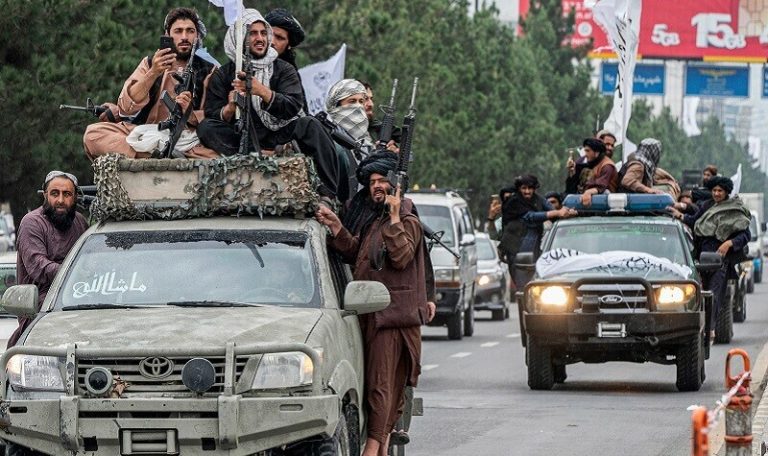
            The Taliban 2.0 (Islamic Emirate of Afghanistan) took over the reins of Afghanistan on 15 Aug 2021, and assured the international community that they intend to stick to the terms of the Doha Agreement[i]. The Agreement calls on Taliban not to allow any “international terrorist groups or individuals,” including the Islamic State of Khorasan (ISKP) and al-Qaeda, to use Afghan soil against the US, its NATO allies, and other countries. The same assurances were given to the neighbouring countries individually through bilateral meetings and agreements. However, a May 2022 letter by the Chair of the Security Council Committee Established pursuant to Resolution 1988 (2011) addressed to the President of the UN Security Council highlighted the contradictions in the Taliban’s assurances and actions. The Report reiterates that links between al-Qaeda and the Taliban are either intact or have deepened over the last 20 years. In fact, the al-Qaeda is operating more freely than ever before as it believes that under Taliban rule Afghanistan is a safe haven. Unfortunately, the ISKP too, ever since August 2021, has grown in strength, increased its activities and pro-active operations against the Taliban and the Afghan people. There are credible and disturbing reports of Islamic fundamentalists and terror groups from outside relocating to Afghanistan, with obvious adverse global implications, specially to India; ironically, Russia, CAR, China, Pakistan and the West are themselves feeling the heat.  To exacerbate matters, internal dissensions between leaders at the seat of power in Kabul, as also within Taliban and its various factions are getting more frequent.

An Inauspicious Start for Governance

            The very start could be considered inauspicious, when the Taliban instead of being inclusive, established a Pashtun centric/heavy government. Haibatullah Akhundzada who was chosen as the supreme leader as a compromise candidate in 2016 (perceived as weak), for his religious credentials has consolidated his position, retains an overwhelming grip on decision making, which is a sure sign of internal political rivalry and jostling. Haibatullah is an Afghan Deobandi, Islamic scholar, cleric, and jurist. A highly reclusive figure, he has almost no digital footprint except for an unverified photograph and several audio recordings of speeches. He is well known for his fatwas on Taliban matters. Surprisingly, unlike most Taliban leaders, he is not of a militant background. Today, he remains the pivotal figure around whom the future of Afghanistan will be shaped; can he retain his grip over power, and could internal power struggle lead to his usurpation? The second aspect which will determine Afghanistan’s course in coming years will be state of terrorism and militancy within. Experts feel that with the current state of affairs (political, economic, social, diplomatic) the Taliban may not be able to reduce the impact of ISKP; in fact, their influence and control of territory may grow. After a rather well publicised start the National Resistance Front (NRF- also referred to as Second Resistance) who are basically anti-Taliban fighters led by Ahmad Masood and former Vice President Amrullah Saleh has been showing their presence in fits and starts. Currently it is considered too weak to pose any significant challenge to the Taliban. To prevent physical external intervention into Afghanistan, the Taliban must ensure that no acts of terrorism globally is attributed to it (or to terror groups operating from within), which will encourage intervention. Secondly, it is imperative that it keeps its own flock together, as it is well known that Taliban was initially a movement, was never a single homogenous group but a loose confederation of disparate groups/clans which have come together, with their personal agendas and aims intact.

The Internal Dynamics        

            Has the Inevitable Power Struggle Commenced? The other Taliban leaders, even those who form part of the high table, aspire for power and holding onto it for a long time, either as part of Taliban or otherwise. They are conscious of the fact that they cannot retain control forever, specially when the economy buckles, mainly due to drying up of foreign aid. They have no real source of generating money internally except through drug money which the Supreme Leader has decried and banned. The second reason is social disharmony which is fast spreading due to poor governance, unpopular policies, corruption, social and economic inequity and clan disputes and clashes for supremacy. These leaders include the more internationally-visible segments of the Taliban; the faces of Taliban diplomacy such as Acting First Deputy Prime Minister Mullah Abdul Ghani Baradar, Acting Minister of Defense Mullah Yaqub, son of the Taliban 1990s leader Mullah Omar, and Acting Minister of Interior Sirajuddin Haqqani, and some very powerful military commanders with potent networks and influence. It is public knowledge that despite trying to convince Haibatullah repeatedly about the consequences of banning girls’ education and women’s employment, Haibuttulah has stood rigid and firm in not rescinding the order, much to private frustration of other leaders. After the ban, major international NGOs suspended all their operations, both because their operational capacity was critically hampered and because they hoped the suspension would force the Taliban to reverse the decision.

These difference of opinion, is the grist for internal power struggles which could very soon come out in the open. A coup which is risky, as it would require coming together of the other main power centres of Baradar, Siraj and Yaqub, currently appears unlikely, and historically too has little precedent. An alternative doing the rounds is reversion to the old practice of Rahbari Shura (the leadership council arrangement), where a consensus is presented to the Emir to decide. But Haibatullah, shows no inclination to disempower himself, and is in fact consolidating his power. Neutralising or elimination of Haibutullah by external powers may prove counter-productive with Afghan leaders closing ranks to show loyalty; as happened when former leader Mullah Mansour was assassinated in 2016 by a US drone strike in Central Kabul, and thrust Haibatullah to power. The succession scenario looks even more opaque, with none of the three willing to accommodate the other.

Terrorists Haven

            There are confirmed reports by UN, US intelligence agencies of large number of terrorists from Middle East, Central Asia and Pakistan flocking to Afghanistan since Taliban’s return to power[ii]. Incredibly some have been paid by regional governments! This is hardly surprising given the jihadi credentials, past political and military debts, and desperate need for funds. Apart from housing TTP and allowing it free rein within Pakistan (not overtly, but deep relationship including social between them go back many decades), there have been no reports so far of terror groups using Afghanistan as a base to launch attacks outside its borders. An interesting aspect for this non-action against foreign groups or fighters is the existence of deep personal networks. Many foreign fighters who have been fighting in Afghanistan for decades have intermarried with Taliban and local families, and bonds of camaraderie and jihadi kinship have been forged. One manifestation: Uyghur commanders in Northern Afghanistan are commanding Taliban non-Uyghur units[iii]. The Chinese position is unique, as they are very keen to exploit the mineral and other resources in Afghanistan apart from keeping Uighur terrorists at bay. While the Afghans have desisted from condemning Chinese behaviour against Uighur Muslims, they have not pro-actively acted against them within Afghanistan (they did promise to re-locate them from China border), something which China wants. ISKP is a different matter; Taliban has been struggling to contain them, specially since they appear to ignite sectarian internal conflict, with the aim of splitting both the Taliban and Afghanistan. This is borne out by ISKP focus on attacking Chinese, Russian and foreign assets inside. A civil war at this stage will have unimaginable adverse consequences for Afghanistan and the world. The ISKP has claimed responsibility for numerous bombings and armed attacks against Hazaras in 2022, which killed and injured at least 700 people.

A Peep into Afghanistans Security Environment

The marginalisation of different ethnic groups has remained a source of dismay for many Afghans. The increased attacks on non-Pashtun ethnic communities by the ISKP, raids by the Taliban on Tajik communities, and extrajudicial killings have also aggravated the situation. Drawing largely from UN reports [UNSC, UNDP, UN General Assembly, The United Nations Assistance Mission in Afghanistan (UNOMA)] on the situation in Afghanistan and its implications for international peace and security, find excerpts only on the security domain, to give you a flavour of happenings during the period from 14 Nov 22 to 31 Jan 2023.

  • An increase in the overall number of conflict-related security incidents and civilian casualties compared with the same period in 2021–2022. The United Nations recorded 1,201 security-related incidents, a 10 per cent increase from the 1,088 incidents recorded during the same period in 2021–2022.
  • Detonations from improvised explosive devices had increased by 7 per cent, from 52 to 56; and assassinations had decreased by 24 per cent, from 77 to 58.
  • The economic and humanitarian situation continued to deteriorate, resulting in an increase in crime – related security incidents. The Western, Southern and Eastern regions accounted for 58 per cent of all recorded incidents, with Helmand, Herat, Kandahar, Kabul and Nangarhar being the most affected provinces.
  • Armed opposition attacks and armed clashes with the Taliban continued to decline. UNAMA recorded 23 armed groups claiming to operate in Afghanistan. The National Resistance Front, the Afghanistan Freedom Front and the Afghanistan Liberation Movement (formerly the Afghanistan Liberation Front) claimed responsibility for attacks in Helmand, Kabul, Kandahar, Kapisa, Nangarhar, Nuristan and Panjshir Provinces. De facto security forces carried out operations targeting National Resistance Front fighters,
  • The UN recorded 16 attacks by the ISKP in four provinces, compared with 53 attacks in seven provinces during the same period in 2021–2022.
  • Border tensions endured. A total of 17 of 19 incidents occurred along the border between Afghanistan and Pakistan,
  • On 28 November, Tehreek-e-Taliban, Pakistan (TTP) announced an end to the May 2022 ceasefire with the Government of Pakistan and ordered its fighters to resume attacks against Pakistani security forces. Pakistan repeatedly expressed concern over the threat posed by terrorist groups operating from Afghan territory, especially by TTP.
  • Following the de facto authorities’ order of 24 December suspending women’s employment with NGOs, female national staff employed by the United Nations received threatening calls and warnings for not traveling with a mahram (a male relative). The de facto authorities also attempted to inspect United Nations compounds in Herat, Kabul, Kunduz and Nangarhar Provinces.

The Current Socio-Economic Environment: A Humanitarian Crisis.

The Quick return to Autocracy despite promises

            The Taliban, since August 2021, continues to impose numerous rules and policies violating a wide range of fundamental rights of women and girls, including freedom of movement, right to work and a livelihood, and access to education and health care.Authorities also repressed or threatened the media and critics of Taliban rule, forced the closure of civil society organizations, and dismantled government offices meant to promote or uphold human rights. Taliban security forces throughout the year carried out arbitrary detentions, torture, and summary executions of former security officers and perceived enemies, including security personnel in the former government or alleged members or supporters of the armed group ISKP. ISKP on its part, increased its attacks on schools and mosques, mostly targeting ethnic Hazara Shia Muslims. Afghanistan’s criminal code makes same-sex conduct a criminal offense, and the Taliban have echoed the previous government’s support for the criminalisation of same-sex relations [iv].

Women Disempowerment in Power Sharing

The Taliban’s leadership, which is entirely comprised of men, has not permitted women to participate in governance at any level or hold any senior positions in the civil service, including as judges. Authorities announced and frequently enforced rules prohibiting women from traveling or leaving their homes, including to go to the workplace without a male family member accompanying them, an impossible requirement for almost all families, and barred women from holding most types of jobs. Authorities also announced rules requiring women’s faces be covered in public, including women TV newscasters, and stipulated that male family members will be punished when women violate rules regarding movement and dress. Taliban forces in several instances used excessive force to disperse women

Current Socio-economic Outlook

            The “Afghanistan Socio-Economic Outlook 2023[v]” details how the country’s economic output collapsed by 20.7% in 2021. We all know that Afghanistan was already amongst the poorest countries in the world. Despite tentative signs of recovery, such as a relatively stable exchange rate, an increase in exports, growing demand for labour, and muted inflation, GDP is estimated to have further declined by 3.6% in 2022. In 2022, 24.4 million people in Afghanistan are in humanitarian need. Almost 23 million people face acute food insecurity, and over one million children risk dying from severe acute malnutrition. Poverty has become nearly universal affecting 95-97 percent of the population[vi]. Restrictions on women further threaten aid flows and growth and could have disastrous economic consequences. A UN report on Afghanistan’s economy states that without continuity for girls’ education and women’s ability to work, prospects for the country’s recovery will remain grim.

Freezing of Central Bank of Afghanistan Assets

            Undeniably, one of the root causes for Afghanistan going further into a morass, is the US restrictions on the Central Bank of Afghanistan from using its assets (approximately $9 billion), from carrying out essential central banking services, keeping the entire economy in a state of collapse. The Bank’s incapacities have caused a massive and enduring liquidity crisis, as well as shortages of banknotes in both US dollars and Afghan currency, severely restricting legitimate financial activities by businesses, humanitarian agencies, and ordinary Afghans.                                     

Response from the International Community including UN

            Justifiably, the world is tired of managing strife specially in Afghanistan, and ironically the instability caused is mainly due to power play between the global and regional powers. Afghanistan has had periods of intense intervention including armed, and periods of neglect. There is an urgent need for a focussed, special strategy to be executed by the UN for alleviating the unprecedented humanitarian crises with a real risk of systemic collapse and catastrophe[vii]. The UNSC has adopted Resolution 2681 condemning the decision of the Taliban to ban Afghan women from working for the United Nations in Afghanistan, saying that it undermines human rights and humanitarian principles[viii]. The prosecutor of the International Criminal Court (ICC) continues to request permission from the court’s judges to resume an investigation into war crimes and crimes against humanity, following a 2020 request from the former Afghan government to defer to their own investigations.

UN said last week it requires $4.6 billion this year to help more than two-thirds of the country’s 40 million population who’re living in extreme poverty. Key donors, including the United States, European Union, United Kingdom, and Japan, however, continue to maintain restrictions on donor assistance; but they must ensure that legitimate banking transactions involving Afghanistan are not restricted by UN or bilateral sanctions on Taliban officials. China, Russia, and Iran are among a handful of countries that maintain warm ties with the Taliban. They have provided substantial aid to the Taliban, but have stopped short of formally recognizing the government. The US remains the single largest donor to the humanitarian response by global agencies, having provided more than $2.1 billion since the Taliban retook power.

The China Effect

            Very recently in May 2023, the Taliban agreed with China and Pakistan to extend the Belt and Road Initiative (BRI) to Afghanistan, potentially drawing in billions of dollars to fund infrastructure projects in the sanctions-hit country[ix]. Chinese Foreign Minister Qin Gang and his Pakistani counterpart Bilawal Bhutto Zardari met in Islamabad on 06 May 23, and pledged to work together on Afghanistan’s reconstruction process including taking the $60 billion China-Pakistan Economic Corridor to the Taliban-ruled nation. The Taliban have also harboured hopes for China to boost investments in the country’s rich resources, estimated to be $1 trillion. The government inked its first contract in January 2023 with a subsidiary of China National Petroleum Corporation to extract oil from the northern Amu Darya basin. The Chinese and Pakistani ministers also stressed on the need to unfreeze Afghanistan’s overseas financial assets.

The India Factor and her Current Options     

India can no longer keep harping on her tried and tested historical linkages with Afghanistan. India’s almost altruistic aid to Afghanistan both for infrastructure development and humanitarian considerations has been appreciated by the people and previous government. Taliban has also made the right noises of assurance, that no anti-India activities will be perpetuated from Afghan soil. Frankly, India’s post-2021 strategy on Afghanistan has been reactionary. Pakistan has always blockaded  India’s direct access and connectivity with Afghanistan (except for some token humanitarian aid recently). India sought to circumvent that by participating in the development of Chabahar port in Sistan-Baluchistan province of Iran (there are some issues there too, but not being debated here). India has always seen this port as a game changer for connectivity with Iran, CAR and Afghanistan.

The presence of terror outfits in Afghanistan specially ISKP and al-Qaeda is a grave threat to India. Both are increasingly using social media to recruit as also sow anti-India propaganda, and have visibly broadened their campaign against India. The cover of the July 2022 edition of the ISKP’s ‘Voice of Khorasan’ magazine was blatantly anti-India. The group also issued death threats against former BJP spokesperson Nupur Sharma for her remarks on the Prophet; criticised the Taliban and its leaders for meeting with Ministry of External Affairs Joint Secretary JP Singh in June 2022; and threatened to carry out attacks against Sikhs and claimed responsibility for the attack on a gurdwara in Kabul in June 2022.

There is a lack of cohesion in South Asia on Afghanistan. Even most multi-lateral regional organisations like The Shanghai Cooperation Organisation (SCO), SAARC, ASEAN have failed to form a joint mechanism on Afghanistan and the new terror threats emanating from Kabul. There is obviously a trust deficit, due to many geo-political events globally between nations. For example, both China and Pakistan did not attend the regional summit on Afghanistan hosted by India[x], and instead held a “Troika plus” meeting in Islamabad with Russia and the US. Herein lies a paradox, leaders in Afghanistan understand that they need to make some concessions especially ideological one (like empowering women, stance on women and children’s education) to get international assistance, but the Supreme Leader remains inflexible and unmoved. It appears that the power vacuum due to exit of ISAF has been quickly filled by China, Iran and Russia. One common coalescing factor remains preventing any Western presence in this part of the world. Russia has surprisingly taken the lead and has been the most vocal proponent for the Taliban in the international arena. Most of the regional forums where Afghanistan remains a core concern are orchestrated under the Russian umbrella. These include the Moscow Format Consultations, the Tunxi Initiative of the Neighbouring Countries of Afghanistan, the Tashkent International Conference, among other smaller regional initiatives[xi]. India must endeavour to exploit her long-term relations with Russia, specially since there is commonality of approach. Pakistan-Afghanistan relations are like the proverbial yo-yo, and certainly not going the way Pakistan exulted and expected on 15 Aug 2021.

A New Pro-active Approach

            We took a step forward by opening a “technical office” in Afghanistan in June 2022 and delivered a consignment of wheat for the World Food Program, which was accepted warmly by the Taliban in Jalalabad with Indian and Taliban flags flying together. The Indian Budget 2023-24, has made a special provision of US$ 25 million development aid package for Afghanistan as announced by Finance Minister Nirmala Sitharaman[xii]. Taliban has welcomed this step stating that this will go a long way in improving Afghan-India ties. India is also conducting a course for Taliban staff by our MEA. While not recognizing the Taliban government, India has sought to maintain contact by proving humanitarian and other assistance. With her new-found confidence and status amongst the international community, unlike 2001, India has every intention to actively stay in the loop, in all plans and structures for Afghanistan.

Conclusion

            How does one deal with the Taliban and the people of Afghanistan separately? as no one wishes that the people should continue suffering this human tragedy. Afghanistan people in some issues may have reached a point of no return after getting a taste of moderate ideologies and progressive societies; hopefully, this reality cannot be wished away using the barrel of a gun. India has virtually been the lone power, which has always advocated that the Afghanistan people should themselves decide on their future; their governance, social and political choices. After all, decades of great games, intervention of outside powers has only brought misery, destruction, lawlessness, poverty and negligible infrastructure to this benighted land. I cannot but repeat what I stated in Part I, that if the international community does not act fast in providing humanitarian assistance (note, only humanitarian), Afghanistan’s history over the past half a century suggests that alternative fronts resisting the regime in power do not take long to emerge. It also demonstrates a tendency for external actors to support their proxies in Afghanistan. The day Afghanistan establishes internal political and economic stability on her own, may beckon the start of the long road to stability and prosperity, and an end to external intervention.

(The two part articles on Afghanistan was earlier published in www.cenjows.in)


[i] ‘Joint Declaration between the Islamic Republic of Afghanistan and the United States of America  for Bringing Peace to Afghanistan’, US State Department, available at chrome-extension://efaidnbmnnnibpcajpcglclefindmkaj/https://www.state.gov/wp-content/uploads/2020/02/02.29.20-US-Afghanistan-Joint-Declaration.pdf. accessed on 17 Apr 23.

[ii]What Ayman al-Zawahri’s death says about terrorism in Taliban-run Afghanistan’, by Venda Felbab-Brown, August 2, 2022, Brooking Institute, available at https://www.brookings.edu/blog/order-from-chaos/2022/08/02/what-ayman-al-zawahris-death-says-about-terrorism-in-taliban-run-afghanistan/. Accessed on 27 May 23.

[iii] Ibid.

[iv] Numerous online articles, but also read ‘Afghanistan Events of 2022’, Human Rights Watch, available at https://www.hrw.org/world-report/2023/country-chapters/afghanistan. Accessed on 27 May 2023

[v] ‘Afghanistan Socio-Economic Outlook: 2023’, UNDP Report, available at https://www.undp.org/afghanistan/publications/afghanistan-socio-economic-outlook-2023. Accessed on 27 May 2023.

[vi] ‘UN Transitional Engagement Framework (TEF) for Afghanistan’, 26 Jann 2022, UN Afghanistan, https://afghanistan.un.org/en/169578-united-nations-transitional-engagement-framework-tef-afghanistan. Accessed on 27 May 2023

[vii] ‘UN Transitional Engagement Framework (TEF) for Afghanistan’, 26 Jan 2022, UN Afghanistan, https://afghanistan.un.org/en/169578-united-nations-transitional-engagement-framework-tef-afghanistan. Accessed on 27 May 2023)

[viii]  UN Meetings Coverage, Security Council, 27 Apr 2023, available at https://press.un.org/en/2023/sc15271.doc.htm. Accessed on 27 May 2023

[ix] China’s Belt and Road to enter Afghanistan in Taliban’s victory’, Economic Times, 07 May 2023 available at https://economictimes.indiatimes.com/news/international/business/chinas-belt-and-road-to-enter-afghanistan-in-talibans-victory/articleshow/100050983.cms?utm_source=contentofinterest&utm_medium=text&utm_campaign=cppst. Accessed on 20 May 23.

[x]India hosts NSA-level summit on Afghanistan; 7 nations in attendance,” Hindustan Times, November 10, 2021.

[xi] ‘India’s Taliban dilemma: Diplomatic engagement and moral disquietness’, Shivam Shekhawat, March 24, 2023, ORF>Expert Speak, available at https://www.orfonline.org/expert-speak/indias-taliban-dilemma/. Accessed on 23May 23.

[xii] ‘Taliban welcomes Indian Budget 2023-24, says will help improve ties between nations’

Read more at https://www.aninews.in/news/world/asia/taliban-welcomes-indian-budget-2023-24-says-will-help-improve-ties-between-nations20230202215238/. Accessed on 27 May 23.

Afghanistan : An anguished nation

(Link for Part II: Afghanistan: The Challenges Ahead is https://newsintervention.com/afghanistan-an-anguished-nation-tormented/)

Prologue

            While the world is focussed on numerous tumultuous geo-political events and fires/wars like belligerent China, Ukraine, Syria, Middle-East, Pakistan, and Africa, it has once again forgotten Afghanistan and left it to its misery. The losers as usual are the people of Afghanistan specially the women and children. Whatever democratic and developmental progress was made, is being steadily eroded by the Taliban, which cannot change like the proverbial tail of a dog. History is a witness that Afghanistan is likely to erupt again, in the not so distant future, in case palliative multi-domain treatment is not urgently provided. This two-part article examines why the abrupt, chaotic withdrawal of ISAF happened, and in Part II, the prevailing situation in Afghanistan, with few recommendations to arrest the slide are laid out.

A Dark Spot in Modern Geo-Political and Military History

     The US and its allies’ involvement in Afghanistan for over 20 years has seen a historic nadir, rarely witnessed geo-politically. From a trillion-dollar surge, coupled with over 130000 troops of different nationalities (at its height, the force was more than 130,000 strong with troops from 50 NATO and partner countries), to being forgotten by the West, re-engaging strongly, but gradually declining to a barely functioning figure of 2500 troops, and finally culminating in an abrupt chaotic desertion. It concluded with the re-establishment of the Taliban government with the active support of USA, which during that period had continued to classify the Taliban as a terrorist organisation. They not only negotiated with officially designated terrorists, but agreed to them governing the country; ironically without allowing the government in place supported by USA, to even participate in the negotiations. If this is not the most disturbing and surreal episode in the history of geo-politics, and modern military history and intervention, one will be hard put to find any. Incredulously, we have managed to match it with events in Syria, Ethiopia, even Ukraine. The human and budgetary costs are $2.313 trillion, and 243000 fatal casualties[i]. This does not include indirect costs such as medical care for veterans, and humanitarian aid, which will raise the costs substantially.

Everchanging Afghanistan Action Plan: Strategic Plans were Event and Personality based

            Who would believe that the development strategy in 2002, described the Afghans as committed to “an accountable, broad-based, multi-ethnic, representative government” based on “respect for human rights”. Condoleezza Rice did a volte face very shortly stating that terrorism from Afghanistan posed “an existential threat to our security[ii]”. It has been a classic case of ‘fitting the logic to a predetermined conclusion’! Every event or recommendation appeared to be in hyperbole, with a common theme of terrible implications of failure and strategic necessity of success at all costs. As more troops got deployed, more died, and more billions got spent, which made extreme justifications ‘routine’. The situation worsened, more so because the West led by USA, were addressing the wrong issues from their perspective, and not through a localised prism. So, called military and geo-political experts even forecasted that Pakistan would fall to extremist hands if Taliban succeeded. Osama Bin Laden became an obsession, winning the fight against terrorism and Taliban was considered an imperative, with President Obama stating that ‘Failure was not an option’[iii]. Cut to the adversary, for the local warlords and Taliban, the more visible and kinetic power deployed by IASF, the more effective their message of leading a jihad for Islam and Afghanistan, urging fence-sitters to join them.

Why did the Chaotic Withdrawal Happen?    

This story starts with President Trump signing an ‘Agreement for Bringing Peace to Afghanistan’, commonly known as the US-Taliban deal or the Doha Agreement, between the United States and the Taliban on February 29, 2020. It did not involve the Afghan government. While there are other conditions to the Deal, the most important commitment was withdrawal of Coalition Forces completely within 14 months following the announcement of this joint declaration. The US/ISAF completed its full evacuation on August 30, 2021, as the Taliban took control of the country by force. President Biden could have exercised flexibility in actual execution of the withdrawal plan.Two vital aspects stand out; first, due to unstable, and fragile environment, despite all the assistance (weapons, training, military support, intelligence, air support, commando training and supervision, high technology equipment like night fighting devices etc) provided to the Afghan National Army (ANA) and Police (ANP) forces, whether the fall of the government was inevitable; second, was there an appreciation of the high probability of ANA immediately collapsing on US withdrawing? As events panned out, it appears that for both aspects, the senior military commanders on ground, and political and policy makers in USA and the Coalition force members, were certainly taken by surprise. They had appreciated till the end that the running government with a vastly superior ANA with ANP, will be able to maintain law and order, and control of territory for a much longer period of time (some estimated up to two years), once they started gradually thinning out after reaching the agreement with the Taliban.

Analysis of Senate Armed Forces Committee Hearings

      Secretary of Defence Lloyd Austin, Chairman of the Joint Chiefs of Staff Gen Mark Milley and Commander of U.S. Central Command Gen Kenneth McKenzie, all spoke during the subsequent Senate Armed Services Committee Hearings[iv], with Austin commenting that, “we did not anticipate the snowball effect caused by the deals that the Taliban commanders struck with local leaders.[v]” Some of the deals themselves could have been known, but the snowball effect, part of that complex interaction of the emotions of many different individuals, locals (rural and urban) and on the ground soldiers and policemen was not fathomed, or imagined at all. It is revealing that when the Taliban were in the strongest military position in 2001, controlling or contesting nearly half of the country, the USA had only 2,500 troops on the ground, the lowest number of troops in Afghanistan, and facing the deadline of May 2021 of withdrawing ALL US and allied troops. The hearings are actually even more damning because both the policy maker (Minister of Defence) and senior military leadership (Gen Miley and other ground commanders) recommended retaining a meagre 2500 personnel on ground; which in NO way would have made a difference to the outcome of a disastrous exit. In fact, it could well have resulted in a case of déjà vu; with additional troops, equipment and money poured in just for the withdrawal. The speed with which the Taliban overran the country clearly indicates that last minute reinforcements would not have altered the story. Astonishingly, the hearings also reveal that the outgoing Administration provided no plans for how to conduct the final withdrawal or to evacuate Americans and Afghan allies. There is a typical double speak on force levels, withdrawal plans, consultative mechanisms adopted, with a variance of views emerging from the White House, DOD and military. Gen Milley went so far as to give two important statements; first he said “but I firmly believe in civilian control of the military, and I am required and the military commanders are required to give our best military advice, but the decision makers are not required in any manner, shape or form to follow that advice.”, and second “that the withdrawal was a strategic failure”[vi]. They are very strong statements, which actually accepted that the withdrawal, force levels, chaotic end could not be foreseen/anticipated and there was a command failure. Regarding military advice, events clearly indicate that the overall commander, in this case President Biden had to take a holistic decision taking all domain advice available, and depending on only one domain advice be it political, diplomatic or military would be strategically unwise, and lead to damaging consequences as transpired.

Incorrect Assessment of ANDF by USA Intelligence Agencies

             There was consensus between the intelligence assessment and the military appraisal, that the ANDSF would be able to effectively fight to defend their country and their capital, Kabul. The ANDSF had significant advantages; larger and superior numbers and equipment: 300,000 troops compared to 80,000 Taliban fighters, an air force, and two decades of training and support. Their assessment in early 2021 was that aftera complete military withdrawal, the Taliban will speed up operations to capture Kabul within a year or two. Even during May 2021, the assessment did not materially change!

Strategic Decision Making is always Multi-Domain. There are divergent reports on strategic decision making within the US civilian and military community. Both sides feel that the views of the other was given overwhelming weightage, and some of the actors involved even go as far as to say that they (military and civil administration) were not even consulted before executive orders for withdrawal were given. To be fair to President Biden, the die was cast even before his arrival, as President Trump had already entered into an agreement with the Taliban (without involving the Afghan government in direct talks). Military leaders must obviously provide the best advise at the strategic and operational level as per their understanding of the ground and region, but this will form one part of the incomplete story which needs to be filled by the diplomats, economic and political advisors[vii]. While Afghanistan (and even Iraq and Syria) may appear more of a military intervention, they have resoundingly confirmed that it is just the beginning of securing and bringing stability to an unstable nation/region. Human and material costs, primacy of national interests, and whether it is worth it ‘to weather the storm’ needs constant review by the Executive Head, in this case the President of the USA. A lesson here for the Indian military is that senior military commanders at CDS and Chief level, and field commanders, must today get used to multi-domain operations and rendering advice accordingly.

The Self-Indulgent West Never Learns

            In all conflict zones where the West led by USA has intervened, the planners were confident when they set out, of total success, due to a ‘clearly defined mission,’ and an ‘exit strategy,’” writes Rory Stewart[viii]. “From the very beginning, the international plans were surreally detached from the local reality.” The delusion proved fatal in Afghanistan. Faltering in planning and execution, Western policymakers invariably overstated their case and once they realised their faulty judgement, they would not retreat, and instead of flexibly switching to a moderate position of a light footprint, instead lurched from extreme overreach to denial, isolationism, and withdrawal. “In the end, they walked out, blaming the chaos that followed on the corruption, ingratitude, and the supposed cowardice of their former partners[ix].” It appears that the West has still not learnt their lessons, be it Afghanistan, Syria, Libya, Iraq, Somalia, and even in Ukraine; being tragically visualised of NATO continuing to fight till the last Ukrainian !: only the future will predict the folly once again being committed. In Afghanistan, they found it impossible to believe that with their hi-tech, disruptive kinetic and non-kinetic multi-domain systems (attack helicopters, drones, night fighting capabilities, precision munitions, cyber and information warfare capabilities) and deeply researched well thought out counter-insurgency campaigns/operations, they could not make a dent on a medieval, loosely controlled and commanded, disparate, porly equipped and trained Taliban, who live in mud houses in hardy, barren, mountainous terrain. They clung to the narrative that they are the true knights in shining armour to create/spread/enforce democracy, harmony, freedom, and capital market practices in the world; it is an irony that they are increasingly being seen as a group of hypocrites who have different rules/templates for themselves, and for other nation states, specially those who prefer neutrality or follow a different ideology.

Afghanistan: Always Fair Game for the Great Game

            Afghanistan historically and for geo-strategic reasons has always been an epicentre for the great game between global powers; be it Great Britain and USSR in the 20th century, or USA and Russia in the 21st. Whatever be its status in terms of stability, prosperity, development; intervention has been the name of the game. The main players while the withdrawal and drawdown of forces occurred were USA, Russia, NATO, Pakistan, China, Iran, CAR and India. Each was constantly jockeying for influence and geo-strategic space, mostly at cross-roads to each other; sadly, this will continue as they all would like to have influence in Afghanistan. Some for geo-political reasons like USA for global domination, Pakistan for its strategic space, Russia and China to ensure stability in their neighbourhood (Russia in CAR and far East, China in Xinjiang region), and India wanting to ensure that Afghanistan is not used by Pakistan against her, along with the traditional, and historical linkages. Recently, discovery of rare earth, minerals and metals have added to the lure. Most nations while wanting to exploit, have never or rarely contributed towards the stability of Afghanistan. The very fact that this article on Afghanistan, is primarily focussing on other nations/powers, speaks volumes of the game’s nations are playing in this benighted land.

Post Script to Afghanistan Withdrawal

            With more than two decades involvement, over $3 tn spent and over 200000 lives lost, raising equipping and training an Afghan army of 300000 soldiers, the rapidity with which Taliban rolled up Afghanistan under their control is a lesson for the international community specially the USA to study in detail. It is now obvious that only a significant, continued US and allies’ military presence would have delayed/stopped the ‘rout’; which would have defeated the very purpose of reducing interference/decoupling from Afghanistan. Secretary of State Austin may feel satisfied when stating that “Ultimately, President Biden refused to send another generation of Americans to fight a war that should have ended for the United States long ago”, while President Biden summed it up nicely on August 31, 2021,  “…There is nothing low-grade or low-risk or low-cost about any war.” Look where this intervention has landed Afghanistan, despite all the lofty dreams.

Conclusion

            The abrupt chaotic withdrawal of ISAF was certainly a strategic failure. However, judgement on whether it was catastrophic, or has inadvertently allowed Afghanistan space and allowed Afghanistan to chart its own destiny (for good or for worse), can only be passed after a reasonable time has elapsed. A report card on where Afghanistan stands today is presented in Part II. One ends this part by stating that ‘Afghanistan’s history over the past century indicates that alternative forces/fronts resisting the current ruling regime, do not take long to emerge; and unfortunately, Afghanistan always beckons external actors to intervene, who use proxies to act, according to their national interest, which invariably are not aligned with Afghanistan interests. The day Afghanistan establishes internal political and economic stability on her own, may beckon the start of the long road to stability and prosperity, and an end to external intervention.

(The two part articles on Afghanistan was published in www.cenjows.in)


[i]Human and Budgetary Costs to date of The US War in Afghanistan, 2001-2022’, Watsons Institute of International and Public Affairs, Brown University, provides a detailed breakdown, available at https://watson.brown.edu/costsofwar/figures/2021/human-and-budgetary-costs-date-us-war-afghanistan-2001-2022. Accessed on 24 May 2023.

[ii] ‘The Unfinished War in Afghanistan -2001-2014, by Vishal Chandra, Institute of Defence Studies and Analysis (IDSA), Pentagon Press, available at  https://idsa.in/system/files/book/book_warinafghanistan.pdf’. Accessed on 05 May 2023.

[iii] ‘Remarks by the President on a New Strategy for Afghanistan and Pakistan’, March 27, 2009, The White House, available at https://obamawhitehouse.archives.gov/the-press-office/remarks-president-a-new-strategy-afghanistan-and-pakistan. Accessed on 24 May 2023.

[iv] Stenographic Transcript before the ‘COMMITTEE ON ARMED SERVICES UNITED STATES SENATE

HEARING’ TO RECEIVE TESTIMONY ON THE CONCLUSION OF MILITARY OPERATIONS IN AFGHANISTAN AND PLANS FOR FUTURE COUNTERTERRORISM OPERATIONS, Tuesday, September 28, 2021, available at https://www.armed-services.senate.gov/imo/media/doc/21-73_09-28-2021.pdf. First accessed on 01 May 2023.

[v]Top defense officials acknowledge they advised against withdrawing all troops from Afghanistan’, New York Times, by Eric Schmitt and Helene Cooper, September 28, 2021, available at https://www.nytimes.com/2021/09/28/us/politics/milley-austin-afghanistan-war.html

AND ‘Generals Say They Recommended Keeping U.S. Troops In Afghanistan’, by Barbara Sprunt, npr, available at https://www.npr.org/2021/09/28/1040877300/austin-milley-mckenzie-senate-hearing-afghanistan. Both accessed on 24 May 23.

[vi] (‘U.S. Withdrawal from Afghanistan’, The White House, available at  https://www.whitehouse.gov/wp-content/uploads/2023/04/US-Withdrawal-from-Afghanistan.pdf. Accessed on 18 May 2023.

[vii]Afghanistan Laid Bare the Value of Military Judgments’, Paul R. Pillar, National Interest, available at https://nationalinterest.org/blog/paul-pillar/afghanistan-laid-bare-value-military-judgments-194911. Accessed on 18 May 2023.

[viii] Rory Stewart, The Last Days of Intervention: Afghanistan and the Delusions of Maximalism’, Nov/Dec 2021, Foreign Affairs, available at https://www.foreignaffairs.com/articles/afghanistan/2021-10-08/last-days-intervention?utm_medium=newsletters&utm_source=fatoday&utm_campaign=The%20Last%20Days%20of%20Intervention&utm_content=20211008&utm_term=FA%20Today%20-%20112017. Accessed on 09 Oct 22.

[ix] Ibid.

Rahul Gandhi’s vicious ideas to subvert Indian democracy to establish ‘democracy’

Despite many court cases pending against him, including the multi-crore National Herald, Rahul Gandhi was allowed to travel abroad without imposing genuine restrictions on him. It is said that he holds three passports, one each from India, UK and Italy, obviously under different names. According to Indian law, an Indian citizen cannot hold more than one passport.  The immigration office knows he holds three passports. Despite violating the rules, he was allowed to travel abroad.

The government emphatically says that all citizens are equal before the law. But Rahul Gandhi has not been treated under the law of the land. It means that the government concedes that Rahul is above the law, and has to be given a treatment different from ordinary citizens of India. What could be the reason for that? First, he is descended from a historic family that has a long history of service to the nation first as freedom fighters and next as administrators. In addition to it, the house has made two major sacrifices in the shape of the assassination of its two prime ministers.

This is a fairly strong claim based on which Rahul Gandhi can ask and get concessions. But the point is that his father and grandmother died protecting the interests of the country. They made the sacrifice of their lives to protect India’s sovereignty and solidarity, to protect Indian civilization and democratic traditions as they embodied all that India boasts about. They are martyrs.

These and other martyrs would find peace in their souls if their scion could understand the greatness of Indian civilization and its values and contribute to the golden fund of her history. The foremost of all the good things which his ancestors upheld at the cost of their lives was the democratic system of India, something which Rahul Gandhi has been trying to demolish.

At least five states of India are ruled by Congress, the party to which Rahul belongs, and still he says that democracy is dead in India. In his speeches, he very confidently says that his party will emerge victorious in the 2024 parliamentary elections in India. This is a contradiction in terms. If in his opinion democracy is dead, how does he expect his party to emerge victorious in the impending election? It simply means he wants to degrade and disparage the roots of democracy that were laboriously nourished by his ancestors. To them, he is a pariah. One who disgraces and undermines the contribution of his ancestors does not enjoy any respect from the Indian nation.

The worst is that he chooses to defame and denigrate his native country not only on its soil but also in foreign countries also while on a visit. In London, he said that he was not allowed to speak in the parliament and that his microphone was blocked. But he forgets that on his behest other parties on the opposition benches disrupted scores of Lok Sabha and Rajya Sabha sessions umpteenth times by creating a ruckus in the house or proceeding on strikes and boycotts. He was instrumental in dissuading the opposition parties to reject the Prime Minister’s invitation to attend the function of the opening ceremony of the new building for the Indian parliament.  Imagine the level of hatred Rahul Gandhi carries in his heart against Prime Minister Modi that he does not even have an iota of respect for the nation that joyously celebrated a great occasion of throwing open a new parliament house with all ultra-modern facilities and accessories.

In London, he lamented the “death of Indian democracy” and in the USA he accepted the hospitality of at least nine Muslim organizations with members and functionaries connected closely with terrorist groups in Pakistan. Among his audience at various places in the US, mostly anti-India American Muslims were the participants. The American Muslims are the Muslims from Pakistan and Kashmir who have earned American citizenship and have been taking an active part in collecting huge funds for transfer to such terrorist organizations in Kashmir as are training terrorists for operations in the Indian part of Kashmir. The agenda for Rahul’s foreign trips, including that of the USA, is drawn by ISI and operated by the Pakistani Americans active in the US.

Compare the role of Rahul’s grandmother Indira Gandhi and his own vis-a-vis Pakistan and you will find that Rahul is the antithesis of Indira Gandhi. He should have read the biography of Indira Gandhi and understood where our national interests lie.

Secrecy and non-transparency have been the hallmark of the Nehru dynasty. Nehru secretly added Article 35-A to the Indian Constitution. Indira Gandhi hid her infatuation with the Mughal rulers of India. Rahul Gandhi usually never discloses any information about his trips abroad; when and where he goes, whom he meets, what transpires between him and his hosts or the itinerary of his travels abroad. He said he was going on a pilgrimage to Mansarovar but he crossed over and went to China and had secret meetings with the Chinese intelligence sleuths and leaders. As an outstanding leader of an important political party of which he was the president also for some time, it behoves his dignity to tell his nation where he goes and whom he meets and what transpires.

For example, news published in an American newspaper with a Washington date line says that Rahul had met with some officials at the State Department. At least the name of one Mir Lu, the Assistant Secretary of State was mentioned by the paper with whom Rahul met. We fully know the antecedents of this official. However, meeting with officials, whether on his request or the invitation by the official, is not any serious matter but the dignity and decency are that he should tweet about it and tell his countrymen, or at least his party men, about his activities. He cannot hide it because the nation needs to be informed of what its leaders are doing. The paper has further informed that Rahul had gone to the White House also. Even the White House did not make any mention of it which is very strange and suspicion-evoking.

We know that the US pretends it is a democratic country and that it cannot stop people from expressing their views. But the US has to understand that it has close relations with India in crucial fields and sensitive matters and that it should politely caution anybody speaking in a manner that would harm good relations between the two countries. It did not. Democrats have a history of having no friendly impression of India and the Biden administration is not different.

Modi government has given full freedom to Rahul Gandhi in using all the filthy language he commands to denigrate the Prime Minister because he cannot digest sitting on the opposition benches. But now is the time that PM Modi should shun all hesitation and cancel his impending visit to Washington arguing that an administration that turns away from stopping his detractors from spreading a false propaganda to undermine his visit must understand the norms of protocol and its moral responsibility. What Rahul wants to do is to destroy Indian democracy and impose a prototype of Mussolini’s regime.

Biden received $5 million from Ukrainian gas firm executive

In a stunning revelation ahead of the upcoming US presidential elections, a media outlet has obtained information from sources familiar with the matter, indicating that President Joe Biden purportedly received a substantial payment of $5 million from an executive at Burisma Holdings, a Ukrainian gas company. Notably, Biden’s son, Hunter Biden, served on the board of this company.

The disclosed information relates to the challenges faced by the gas company executive in accessing the US oil market due to an ongoing corruption investigation led by Ukrainian prosecutor Viktor Shokin. In an attempt to seek favor from the Bidens, the executive allegedly made the substantial payment.

According to sources, the Federal Bureau of Investigation (FBI) became aware of these allegations during an interview in June 2020 with a confidential human source. The source indicated that then-Vice President Biden, along with a foreign individual, were purportedly involved in a criminal bribery scheme, which potentially influenced US policy decisions.

The report refers to an FBI FD-1023 form, used by FBI agents to document unverified information provided by confidential human sources. Dated June 30, 2020, the form describes the interviewed source as “highly credible”. According to the form, the source discussed multiple meetings held with a senior executive from Burisma, spanning from 2015 to subsequent years.

During these meetings, the Burisma executive sought guidance from the confidential source, who was a business professional, regarding obtaining oil rights in the US and establishing connections with a US oil company. The executive sought advice on the best course of action during the years 2015 and 2016.

The confidential source revealed that the Burisma executive discussed Hunter Biden’s position on the board, referring to him as “dumb.” The executive explained to the confidential source that payments were made to the Bidens due to the ongoing investigation by Ukrainian prosecutor Viktor Shokin. The executive emphasized the challenges Burisma would face in entering the US market amidst this investigation.

Further details from the conversation indicate that the confidential source suggested a payment of $50,000 to the Bidens. However, the executive corrected the source, stating that the intended payment was not $50,000 but rather $5 million for each Biden.

According to a source familiar with the document, the Burisma executive allegedly informed the confidential human source that payments of $5 million were made to both Joe Biden and Hunter Biden. Sources sharing this information with Fox News Digital claim that the confidential human source believes these payments occurred based on their conversations with the Burisma executive.

The confidential source mentioned that the Burisma executive discussed making the payments through multiple bank accounts, intending to complicate investigators’ efforts to uncover the truth for at least a decade. Moreover, the document makes reference to “the Big Guy,” believed to be a mention of Joe Biden.

Massive rally in Sindh against Pak atrocities

The caravan of JSM (Jeay Sindh Muttahida Mahaz), breaking through all state barriers, arrived in the birth city of Saien G.M. Syed, Sann. On the occasion of his 28th death anniversary, they chanted slogans of “Labbaik.” The central committee of the Jeay Sindh Freedom Movement, along with thousands of Sindhi families also joined the caravans from various cities of Sindh through trains and buses, accompanied by their innocent children.

Slogans raised against forced conversion and CPEC

The cars were adorned with banners and placards against Pakistani atrocities and CPEC. These banners and placards bore slogans such as “Put an end to the forced conversion of Sindhi girls” and “Stop the disappearances and ethnic cleansing of Sindhi and Baloch political workers.” Moreover, they also displayed messages like “Sindh rejects CPEC corridor project with China” and “Expel foreigners from Sindh.” Chants were written, including “Free Sindhi and Baloch nationalist workers” and “Put an end to the forced conversion of Sindhi Hindu girls.”

Additionally, young activists of the JSFM overcame hurdles set by Pakistan and traveled across Sindh to reach Jamshoro. After reaching there, they paid homage to their beloved leader at his mausoleum, along with their innocent children. They laid floral wreaths and recited Fateha (prayer) at his grave, accompanied by the national anthem.

Mian Mithoo, a symbol of evil and crime against Sindhi girls

The central leadership of JSFM including Chairman Sohail Abro, Vice-Chairman Zaheer Sindhi, General Secretary Ghulam Hussain Shabirani, among others jointly released a press statement.  The Press release stated that Mian Mithoo and the establishment agents from Bharchundi Sharif are harassing the Sindhi nation and dividing them based on their beliefs and religion.

Moreover, Mian Mithoo symbolizes evil and provides an easy path for criminals to forcefully convert underage Sindhi girls to Islam. Accordingly, he encourages them to violate the honor and gang-rape these innocent Sindhi girls. The JSFM strongly condemns all such condemnable efforts and their abhorrent faces.

Time for Unification

The party leaders of the SHAP (Sindh Hari Porhiyat) Party stated that it is time to unite. And so all groups affiliated with the Jeay Sindh movement should come together for the struggle of freedom.

They regarded Saien GM Syed as a symbol of their struggle. They also emphasized the need to sit together and unite for the upcoming challenging days. While speaking to the international media, they stated that they will face a critical situation in the near future. As the Punjab rule is nearing its end, the Punjab Army will come forward with its oppressive and fascist face. It will be a significant issue if Sindhis  do not unite.

13 Hindus severely injured while praying in Sindh

13 Hindus have been brutally injured in an attack in Hyderabad, Sindh.

In Roshki area of district Hyderabad, Sindh, some local minority Hindus of Bagri community had organized a satsang function. A group of people belonging to machhi community disliked the happening of such religious events by Hindus. Consequently they attacked the praying Hindus and brutally assaulted them. As per reports, 13 Hindus including men, women and even children were severely injured.

Hindus in Sindh, being minority, are under constant threat. They have long been subjugated and tortured so as to suppress their religious beliefs and civilization values.  

Is Germany’s increasing labour crisis the biggest threat to economic growth?

After three years of pandemic shutdowns, supply chain chaos, inflation, the shock of the Russia-Ukraine crisis and the energy crisis, 2023 didn’t seem like a good year for the old continent. Europe’s economy is not just declining; it’s downright uglier than expected. Multiple developed economies are facing crises, and the case in point is Germany. With the shrinking of the labour force, Germany is dealing with the potential consequences for economic growth. What are the causes behind this demographic decline ? Its impact on various sectors, and presents potential solutions to mitigate the adverse effects.

  • Labor Shortage and Bottlenecks

As his workers raced to meet a recent deadline, Andre Schulte-Suedhoff, the executive of Schuko, joined the production line due to a shortage of staff. Labor shortages and bottlenecks have become increasingly common in Germany, hindering companies’ ability to meet demand and resulting in financial penalties for failure to deliver.

  • The End of an Economic Super Cycle

Germany’s economic growth has historically relied on the expansion of its workforce. However, this era of continuous growth is reaching its high-water mark, marking a transformative cycle that elevated Germany from a war-torn nation to a manufacturing powerhouse and one of the world’s wealthiest countries. The steady expansion of the workforce, which contributed to improved living standards, is drawing to a close.

  • The Looming Demographic Drag

Germany’s labor force is projected to shrink dramatically in the coming years, posing challenges to economic growth, inflation pressures, and manufacturing firms like Schuko. Without a significant influx of migrants to replace retiring Germans, the labor supply will decline by 3 million people, or 7%, over the next decade. Attracting 400,000 newcomers annually is necessary to maintain a stable workforce, but public skepticism towards migration remains high.

  • Inadequate Attention to the Demographic Crisis

The impending demographic crisis in Germany has been likened to climate change—an abstract disaster policymakers have seen coming for years. However, proposed solutions have been deemed inadequate, and insufficient attention has been given to addressing the issue effectively. The priorities and actions taken thus far have fallen short in tackling the root problems.

  • Policymaking and Potential Solutions

To mitigate the labor shortage, Germany must pursue comprehensive immigration policies to attract skilled workers. However, political sensitivities surrounding immigration, as well as challenges in integrating recent Ukrainian immigrants, pose obstacles. Additionally, efforts must be made to encourage the active participation of underrepresented groups, such as working-age women and retirees, in the labor market.

  • Tapping into Skilled Workers and Increasing Productivity

Germany’s future growth heavily relies on increasing productivity per worker due to the shrinking labor force. However, the country’s transition to the digital age has been slower than in other nations, impacting labor productivity. While artificial intelligence and robotics hold potential for increasing productivity, skilled workers are still required to service these technologies and establish the necessary digital infrastructure.

  • Decline in Vocational Skills and Apprenticeship Schemes

Germany’s competitive advantage has long been rooted in its skilled workforce, nurtured through vocational schools and apprenticeship programs. However, there has been a decline in interest among young Germans in acquiring these skills. This poses a significant challenge for the future labor market and requires renewed efforts to promote vocational education.

Germany’s demographic challenge demands immediate action. Comprehensive immigration policies, along with efforts to encourage the participation of underrepresented groups, are necessary to address the labor shortage. Enhancing labor productivity and embracing the digital age are crucial for sustained economic growth. Neglecting these challenges risks limited growth and the erosion of Germany’s competitive edge.

Women protest in Pak-occupied Gilgit Baltistan over lack of basic amenities in the region

Two days ago, women in Aliabad, Hunza district of Pak-occupied Gilgit Baltistan, took to the streets to protest against the lack of basic amenities such as wheat flour, water, and electricity. The women gathered at Haspatal Chowk in Hunza and raised slogans against the Pakistani authorities.

One of the protesting women claimed that the rights of the native people of Gilgit Baltistan have always been subjugated, whether it is by the PTI, PML-N, or any other political party. She expressed dissatisfaction with the quality of flour being provided, stating that it is only suitable for monsters. She went on to say that 40kg bags of wheat flour are filled with a significant amount of wastage. She urged the people to wake up, unite, and stand against the atrocities of the occupying government, warning that otherwise, they would be strangled and their land will be confiscated.

Similarly, women from Ganish valley in Hunza district also staged a protest at Amir Hayat Chowk in Hunza, blocking the Karakoram Highway to highlight the unavailability of wheat flour.

It is worth noting that women in Gilgit Baltistan have been protesting against the lack of wheat flour in the region recently. Last month, a similar protest was staged. Pakistan has been illegally occupying Gilgit Baltistan for over 75 years, and unfortunately, it has only brought pain and misery to the people