Home Blog Page 226

Minor Hindu girls’ abductors get Court’s patronage in Sindh

Minor Hindu girls are under continuous threats of abduction, religious conversion and marriage to the abductor in Sindh.

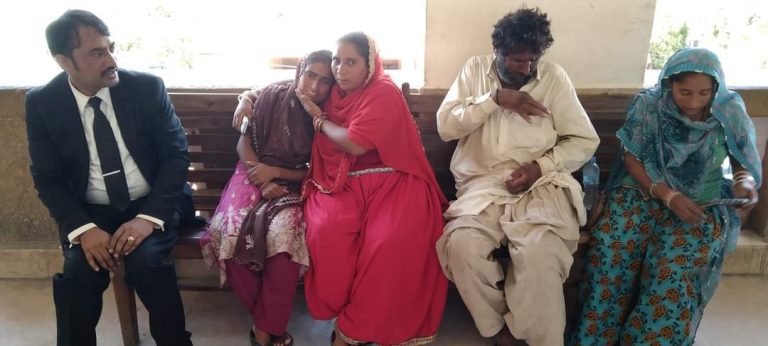
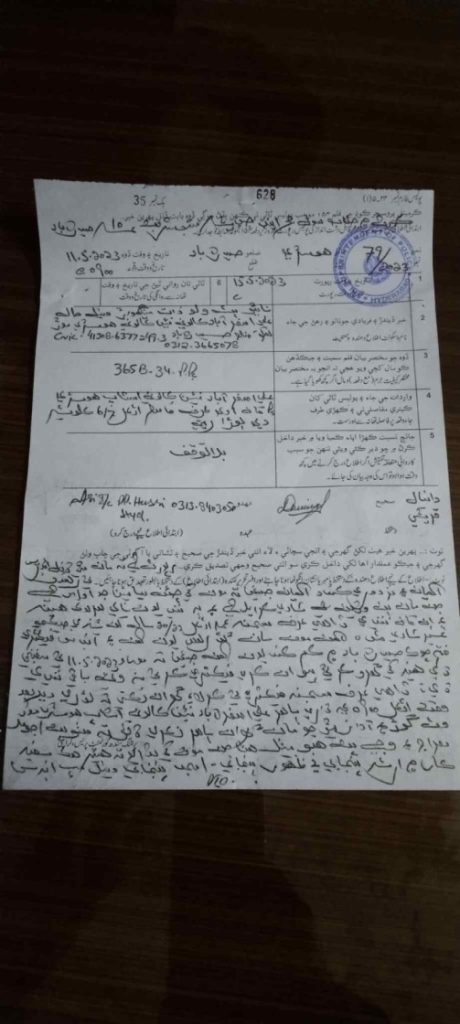
On 11 June, a minor Hindu girl named Sanjana Meghwar was abducted from Hyderabad, Sindh by Arshad Punjabi. He forcefully converted her to Islam and married her. Seeking justice parents moved to the court.

However, yesterday court rejected their plea and handed Sanjana over to Arshad. On similar lines, another Hindu minor girl, Raveena Meghwar was abducted few days ago. Now she too has been converted to Islam and married to abductor. The court even gave her custody to the same abductor.

It is unfortunate to see that law adjudicating courts have turned into an instrument of religious fanaticism ignoring juvenile and minority rights.

Pak Army abducts Sindh freedom movement leader

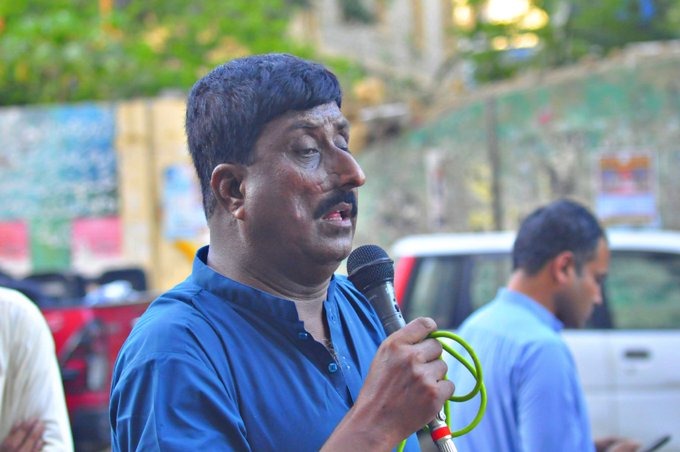
In a disturbing turn of events, the Chairman of Jeay Sindh Tehreek (JST), Soriah Sindhi, was abducted by the Pakistani Army on June 13 from a town near Jamshoro in the Sindh province. This shocking incident took place merely two days after he organized a peaceful protest against the escalating atrocities committed by Pakistan.

On 11 June, Sindhi had led a peaceful demonstration outside the Press Club in Karachi, where he voiced his concerns regarding the pressing issues faced by the people of Sindh. His unwavering commitment to the cause of Sindh activism earned him respect and admiration among the local community.

The abduction of Soriah Sindhi, a prominent figure in the Sindh Freedom Movement, has sparked outrage and concern among activists and supporters. Calls for his immediate and safe release have intensified, and strong protests are being threatened if his release is not ensured promptly.

EU set to confront Google’s most successful ads model

In a striking blow to US technology giant Google, the European Union (EU) is gearing up to deliver another substantial blow by lodging a formal antitrust complaint. According to Bloomberg, the charge sheet against Google is expected to be unveiled as early as Wednesday, potentially leading to additional fines imposed by the EU and the targeting of its highly successful ad tech model.

It is crucial to note that approximately 80 percent of Google’s total revenue stems from its advertising business. Hence, any EU regulations aimed at its ads model could significantly impact the company’s performance.

The EU’s watchdog is deploying its most robust action to date against Google, showcasing the severity of the measures taken. In 2021, the EU initiated an investigation into Google, primarily focusing on whether the company impeded rivals’ access to user data for online advertising and engaged in unfair ring-fencing practices regarding data usage.

Under EU regulations, antitrust fines can reach up to 10 percent of a company’s global sales. However, it is relatively uncommon for penalties to escalate to such levels, and companies are given the opportunity to defend themselves both before and after the imposition of fines.

Google has long maintained a dominant position in the industry, leveraging its market presence to collect data that fuels targeted advertising, facilitate ad space sales, and provide the technology connecting advertisers with publishers.

The troubles for Google extend beyond the EU, with the United Kingdom’s competition authority also scrutinizing the company’s ad tech practices. Meanwhile, ongoing legal proceedings are unfolding in the United States, challenging Google’s conduct.

Concurrently, Google is actively contesting antitrust fines imposed by the EU in court, including a landmark penalty of €4.34 billion for its management of the Android mobile operating system. Although EU judges reduced the fine to €4.125 billion last year, Google is presently challenging the case at the highest court within the EU.

The outcome of the EU’s investigation into Google’s ad tech practices carries far-reaching implications for the tech giant, potentially leading to substantial fines and regulatory actions that could reshape the industry landscape.

PTM Chief Manzoor Pashteen calls for unity against Paki oppression

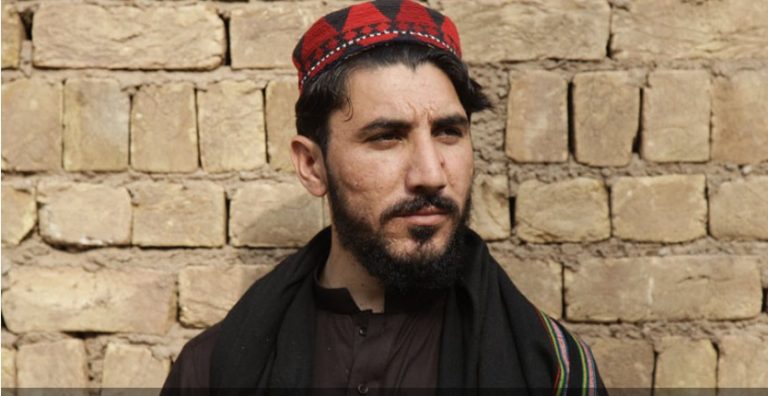
PTM (Pashtun Tahafuz Movement) leader Manzoor Ahmad Pashteen arrived at the residence of Jalila Haider, situated in Hazara Town, where he delivered a concise speech to the women of the locality.

According to sources, when Manzoor Ahmad Pashteen reached the FC check post in Hazara Town, the FC attempted to prevent his entry. In response, Jalila Haider fearlessly protested and confronted the SHO of Hazara Town, stating that Manzoor Ahmad Pashteen was her esteemed guest. She questioned the authorities, asking if they intended to obstruct the arrival of her guest at her own house. Following strong criticism for their actions, Manzoor Ahmad Pashteen was promptly permitted to enter Hazara Town.

During his address, Manzoor Ahmad Pashteen highlighted that a visit to the cemetery in Hazara Town would reveal that the martyrs did not perish of their own accord but were victims of oppression and brutality. He cited the tragic incident in which seven teachers were ruthlessly murdered solely because of their Shia faith.

Manzoor Ahmad Pashteen emphasized the need for oppressed and marginalized communities to unite, recognizing their shared adversary, and stand up for their rights. It is a crucial moment for these communities to come together and defend themselves against the forces of oppression.

BLF freedom fighters attack a Pak Army camp in Sahaki

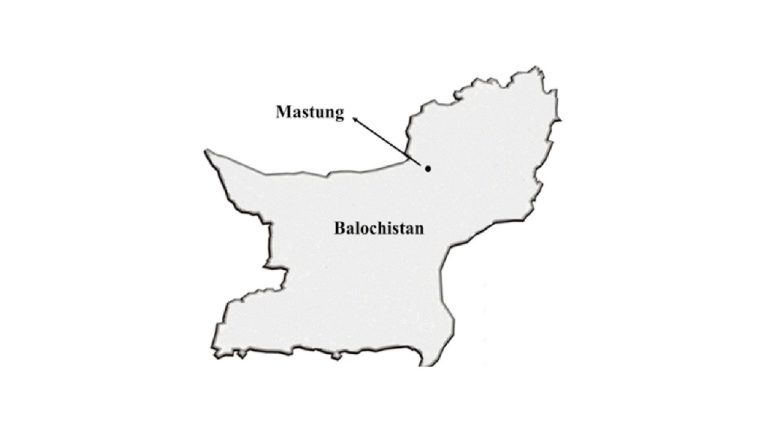
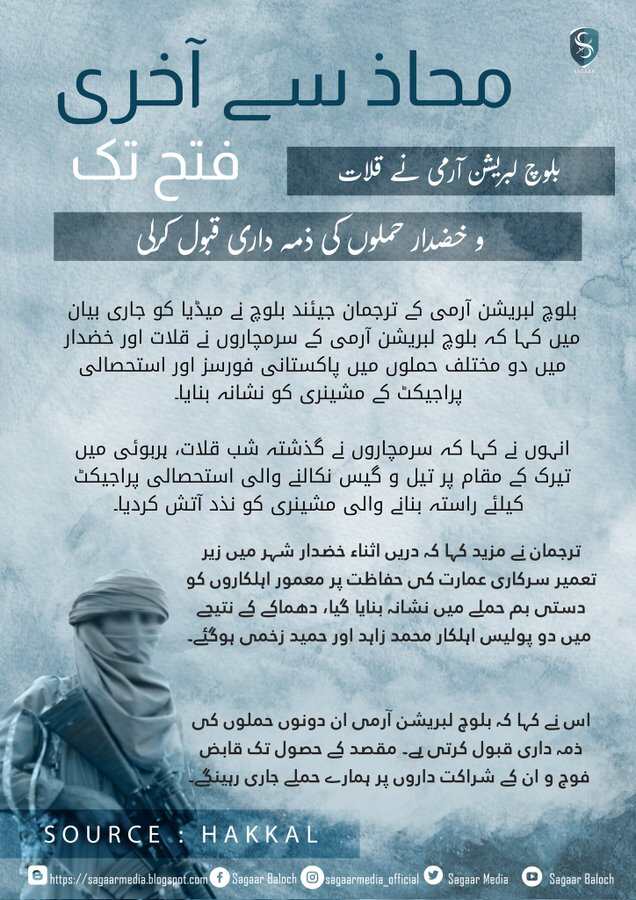
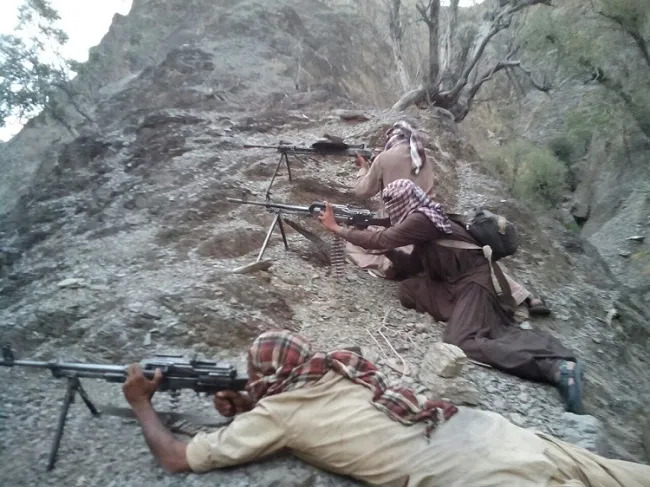
The Balochistan Liberation Front has attacked a Pakistan Army camp in Sahaki, which has resulted in heavy losses.

On 11 June, armed BLF fighters attacked a Pakistan Army checkpoint in Shashaki, a remote area in the Balgatar tehsil of Panjgur district in Balochistan. BLF sarmachars used A1 Shells to target the occupying forces, resulting in significant casualties among the occupying Paki forces.BLF is committed to carry out attacks whenever people of occupied Balochistan come under attack and till occupied Balochistan attains independence from Pakistan.

The Muzaffarabad Literature Festival fiasco

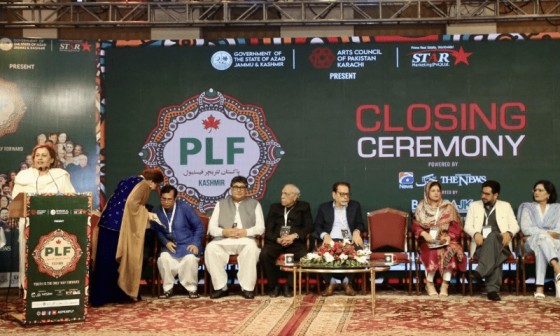
Though not publicised as such, organising the Pakistan Literature Festival [PLF] at Muzaffarabad in Pakistan occupied Jammu & Kashmir [PoJK] on June 2-3 was Islamabad’s riposte to New Delhi’s holding the G20 Tourism Working Group [TWG] meet in Srinagar, Kashmir. While New Delhi used this event to showcase the exceptional tourism potential of Kashmir, Islamabad decided to use the Muzaffarabad Literature Festival to peddle its Kashmir narrative in a desperate attempt to woo the international community.

This was admitted by none other than President of Pakistan Art Council, Karachi and PLF organiser Ahmad Shah himself. In an interview with Geo TV, he disclosed that besides discussions on cultural and literary subjects, this event would have a “full-fledged session on the Kashmir issue, on 35-A and 370” to apprise the whole world about “what India is doing in Kashmir.” Though this involved navigating uncharted waters, yet it was definitely a novel attempt to resurrect a dead issue.

Those strategising Pakistan’s diplomatic Kashmir offensive must have assumed that raking up the Kashmir issue in PoK’s capital town would evince a massive emotional response from locals and thereby help reinvigorate Islamabad’s floundering Kashmir story. Alas! This was not to be, and Islamabad’s grand plans to revive the ‘K’ issue not only failed but once again ended in a humongous  embarrassment.

Prominent Pakistani journalist Wusatullah Khan was chosen to speak and share his views on “out of box solution of the Kashmir issue”, and he did due justice to this subject by deviating from the trodden path to nowhere that Pakistani speakers have been assiduously plodding along for more than seven decades. Instead, he expressed some harsh truths and raised a few basic questions, exposing fundamental flaws in Pakistan’s motivated Kashmir agenda.

Khan’s incisive observation that Kashmir “was not an issue but an industry” [emphasis added] drew a heavy round of applause from the audience. Elaborating on his issue, he went on say that “The livelihood of [Pakistan’s] Kashmir Committee is tied to this industry [and] the livelihood of Farooq Abdullah, Mehbooba Mufti and that of the entire political class of Azad Kashmir [PoK] is associated with this industry.” With so much at stake, he convincingly argued as to “why should I kick my own stomach [terminate my own livelihood] by looking for an out of box solution?” 

He went on to expose how “Because of this [the lingering Kashmir issue] industry, we get fleets of vehicles, hefty allowances and 90 per cent of our budget from the Centre [Islamabad]. And the Centre gets the business of enlightening Kashmiris in Bradford [UK} on the Kashmir issue.” The locals of PoJK applauded his honest exposé of the bitter ground realities that are preventing resolution of the Kashmir issue and the air was rent with slogans of “yeh watan hamara hai, iska faisla hum karenge” and “Chheen ke lenge azadi” [‘This [PoK] is our country and we will decide its fate’ and ‘we will snatch independence’].

That Khan was dealing with the subject under discussion in a purely professional manner and without any bias became evident when he admonished sloganeers, saying that “If you people have come here with a pre-determined agenda and you don’t want to hear us, we are going back.” He even got up to leave but was persuaded by the anchor not to do so; but he nevertheless admonished the sloganeers by saying, “You have been shouting slogans for 75 years. If you think that your slogans will free Kashmir, go on with your slogans”.

One had expected that as is its wont, Islamabad would dismiss Khan’s embarrassing observations as motivated ramblings but it didn’t, and there’s a reason for the same. While the distinguished journalist openly pilloried Islamabad for turning the Kashmir issue into an industry, by his “pre-determined agenda” rebuke on sloganeering by the audience, Khan exhibited his non-partisan approach to the Kashmir issue. Hence, any attempts by Islamabad to portray him as Indian ‘sympathiser’ or a ‘RAW agent’ would have boomeranged.

The Muzaffarabad Literature Festival has hit Islamabad with a double whammy. Firstly, instead of resuscitating the Kashmir issue as its planners had expected, this event has once again exposed how vested interests in Pakistan are surreptitiously ensuring that the Kashmir issue remains in a state of suspended animation. Secondly, the audacity with which locals defiantly aired anti-Pakistan and pro-independence slogans outrightly trashes Islamabad’s claim that people of PoJK are extremely happy and content, even though they are treated as second class citizens in their own land.

Politics aside, Khan’s plain-speak has raised some pertinent issues highlighting Islamabad’s inept handling of the Kashmir issue and as such one had expected that the same would be extensively discussed and debated. Surprisingly, there’s been a near complete blackout of this incident in Pakistan-both in the electronic and print media which only goes on to confirm the veracity of the worrisome observations made by Khan.

Islamabad may lose nothing by sweeping the embarrassing reality of Kashmir being ‘an industry and not an issue’ under the carpet. But the abject apathy of the media, civil society and activists on this disconcerting observation doesn’t bode well for the hapless people of PoJK, who by their constitution are unfortunately debarred from questioning PoJK’s so-called ‘accession’ with Pakistan! 

Bringing Kashmir to the world tourism map

Pakistan tried its utmost to scuttle the holding of the G-20 Tourism session in Kashmir from 22 – 24 May. Islamabad sent letters to several member countries of G-20 to advise their representatives to abstain from the Kashmir tourism meet. Pakistani embassies abroad frantically tried to dissuade the member states from participating. Three member countries, namely China, Turkey, and  Saudi Arabia decided not to participate.

The refusal of China and Turkey was expected but not that of Saudi Arabia. Looking closely at the history of Sino-Indian strained relations, we can say that China declined to participate not to appease Pakistan but to avoid the embarrassment it would have to face if somehow the illegal occupation of  China of large chunks of the territories of the original State of Jammu and Kashmir were mentioned. Additionally, it is reported by dependable sources that under the pretext of building the Karakorum Highway a sizeable force of PLA in the garb of engineers and labourers are stationed in and around Gilgit.

Turkey had a reason to decline participation. Erdogan is pandering to pan-Islamism to be in the seat of power for the third time. For quite some time he has been trying to project the historic Ottoman power not by reviving the memory of Kemal Ataturk and his secularist disposition but by pandering to Islamism that easily sells in the radicalised segments at home and abroad.

This said the question that Pakistan and Turkey should answer is this. Kashmir is a world-renowned tourist destination. Tourism is an important mainstay of the Kashmir economy and thousands of families are directly or indirectly connected with the industry. The government did not arrange the meeting of the G-20 tourism in Kashmir to politicise the Kashmir issue and win the approval of the G-20 members that they endorse Kashmir’s accession to the Indian Union as has been vehemently propagated by Pakistan. The main motivation of the government was to bring Kashmir onto the global tourism map so that a big boost is given to the industry. It was aimed at bringing more prosperity to the people of the valley.

So far Kashmir tourism prospers domestically. It is reported that nearly 1.5 crore people from within the country came as tourists during 2022. But the number of foreign tourists is not more than a few hundred. The government is interested in encouraging world tourism in Kashmir because that would give a new and healthy turn to the entire industry which, otherwise, is mired in outdated patterns of entertaining the tourists. With a promise of international tourism, there would be numerous activities taken for raising the standard to compete with world-class tourism. Infrastructure, roads, tourist huts, new destinations, hotels, private accommodation, recreational facilities like hiking, skiing, golf, research in flora and fauna, handicrafts and art manufacturing,  etc., so many areas would receive a great fillip. Kashmir lakes and springs, meadows and parks would get a new shape. Kashmir culture, lifestyle and social interaction would have come closer to modern trends without losing originality. In short, it would help Kashmir step into the modernity of this century.

All this was meant for the people, society and environment of Kashmir. Now if countries like Pakistan and Turkey hold the Islamic cause close to their heart, should they have supported or opposed a phenomenon that was bound to bring immense prosperity to Kashmir Valley which has a hundred per cent population of the Muslim community? If these countries were sincere in their concerns for the Muslims they would not have opposed the holding of the G-20 meeting in Kashmir but supported it and suggested measures that would ensure full support to the tourism industry in Kashmir. Alas, they only betrayed their anger against and hatred for India which was doing a good job in lifting the people of Kashmir to economic emancipation.

For the last two years, Turkey has openly adopted an anti-India attitude toward Kashmir. Erdogan has been maligning India in his addresses to the UN. He has political aggrandizement in taking an anti-India stance on Kashmir. It is less to appease Pakistan and more to win status as a staunch Pan-Islamist in the Islamic World. He is eager to take precedence as an Islamic icon over the Saudis. India is a soft corner and Kashmir is an issue on the agenda of the UNSC. We have nothing to say about why Erdogan is pandering to Pan-Islamism. It is his discretion. But we would have liked it very much if he had read the true story of the Kashmir dispute which began on 22 October 1947 with Pakistan’s incursion on Kashmir. As a politician dabbling in international affairs, it is expected of him to know the true history and then frame the outlines of his foreign policy.

For example, we fully know the history of Turkey under Kemal Ataturk and we feel proud that a great Asian leader represented very amply the aspirations of all communities in his country and the Islamic world. We would remind President Erdogan that when the Khilafat Movement was underway at the beginning of the 20th century, Gandhiji gave a call for support to the movement as he thought Turkey was fighting for the right cause. Similarly, we expect President Erdogan to rise above sectarian or factional politics and look at things from the glasses of a seasoned statesman.

G20 meeting in Varanasi: Advancing global South agenda

0

The G20 Development Minister’s Meeting is being held between 11-13 June 2023 in Varanasi, India. The meeting is chaired by Dr. S. Jaishankar, the Union Minister of External Affairs. The gathering brings together approximately 200 G20 delegates from Brazil, Germany, Japan, Indonesia, and China.

Advocating for the Global South Prime Minister Narendra Modi virtually addressed the meeting, continuing his advocacy for the Global South. He highlighted the dire need for development in the Global South, particularly during the COVID-19 pandemic, energy crisis, and geopolitical tensions impacting food and fertilizer supplies.

PM Modi’s Key Points

PM Modi stressed the importance of development for the Global South and urged collective responsibility in achieving the sustainable development goals. He emphasized the need for comprehensive, inclusive, fair, and sustainable efforts.

PM Modi stated, “Development is a core issue for the global south… I strongly believe that it is our collective responsibility not to let the sustainable development goals fall behind. We must ensure that no one is left behind. Our efforts must be comprehensive, inclusive, fair and sustainable.”

PM Modi highlighted how the Global South has been severely impacted by the disruptions caused by the COVID-19 pandemic. He also mentioned the additional challenges posed by the food, fuel, and fertilizer crises due to geopolitical tensions.

External Affairs Minister’s Key Points

External Affairs Minister S. Jaishankar acknowledged the world’s unprecedented challenges, including conflict, the pandemic, climate change, and inflation. He emphasized that the weak and vulnerable bear the brunt of these challenges.

S. Jaishankar called upon the G20 nations to come together as one family to address the crises. He emphasized the need to break down silos, destroy fragmentation, and ensure a unified international community that speaks up for those in need.

He added, “Prospects for a global economic recovery remain dim amid supply-chain disruptions, prolonged debt crisis and pressures on energy, food and fertilisers, the world is facing multiple-interlinked crises”.

Varanasi’s Significance

PM Modi welcomed the delegates to Varanasi, his parliamentary constituency, and highlighted its status as the oldest living city and the mother of democracy. He emphasized Varanasi’s historical importance as a center of knowledge, discussion, debate, culture, and spirituality.

PM Modi’s Calls for Action

PM Modi called for reforms in multilateral financial institutions to ensure finance accessibility for those in need. He cited India’s Aspirational Districts program as an example of successful development and urged G20 Development Ministers to study this model.

PM Modi highlighted the growing data divide and stressed the importance of high-quality data for effective policy-making, resource allocation, and public service delivery. He emphasized the democratization of technology as a crucial tool in bridging this divide.

PM Modi recalled the launch of Mission LiFE in 2022 and emphasized the significance of adopting a pro-planet lifestyle. He also underscored the importance of gender equality and women’s empowerment in achieving the SDGs.

The G20 Development Minister’s Meeting in Varanasi serves as a platform to advance the Global South agenda. Prime Minister Modi and External Affairs Minister Jaishankar highlighted the challenges faced by the Global South and called for collective action, unity, and comprehensive reforms to address the crises and achieve sustainable development goals.

Manzoor Pashteen visits Voice for Missing Baloch Persons camp

PTM leader Manzoor Pashteen and Ali Wazir visited the Voice for Baloch Missing Person (VFBMP) camp outside Press club Quetta and extended their support to the protest.

The peaceful protest against the state-sponsored persecution of Balochs has completed more than 5080 days. Enforced disappearance is the harsh reality of Balochistan. Since 2001, more than 8,000 Balochs have been forcefully abducted and disappeared.

Both Pashtoon leaders agreed to continue a joint struggle against Pakistan’s tyranny and oppression. Apparently, Waziristan is also facing the wrath of enforced disappearances along with inhumane subversion. It has been more than ten days that a sit-in protest is going on in North Waziristan against abduction of three PTM activists by the Pakistan Army.  

While addressing the protestors, Manzoor Pashteen hailed VFBMP for its efforts and fight against Pak atrocities. On the other hand, Ali Wazir praised the Baloch women for their unparalleled courage. He said that Pakistan has subverted the freedom of Balochistan after its emancipation from the British. Furthermore, he drew inferences between the conditions of Baloch, Pahtoons, Sindhis, Kashimiris and people of Pak occupied Gilgit Baltistan, all of whom are witnessing the tyranny and oppression of authoritarian regime of Pakistan.

Illicit abduction and subjugation by Pakistan has created resentment in the people and Pashtoons joining Balochs is an optimistic sign for their struggle against their human rights violations.    

Pakistan’s ‘tragedy of errors’

Clash of Titans

Ousted from power through what he claims was a conspiracy orchestrated by the then Pakistan Army chief Gen Qamar Javed Bajwa, it’s but natural for one to sympathise with PTI chief and former Prime Minister Imran Khan for having been backstabbed in the most treacherous manner by an ambitious Army chief pursuing a motivated agenda. Khan’s uncharitable comments regarding the professional conduct of former Army chief also stokes outrage against Gen Bajwa and paints him as the devil incarnate driven solely by his self-serving interests.  

However, the flip side is that Khan owed his premiership to Gen Bajwa’s deft manipulation.  It’s no secret that Rawalpindi was instrumental in Prime Minister Nawaz Sharif’s removal through a judicial ‘coup’ in the ‘Panama Gate’ scandal. It’s also evident that PTI victory in the subsequent elections was well the result of Pakistan Army’s covert indulgence and that’s why Khan could never live down the moniker of being Pakistan’s ‘selected’ Prime Minister. This gives Khan’s unending vitriolic outbursts against his one-time benefactor the distinct flavour of ingratitude.

So, while there may be differing opinions on Gen Bajwa and Khan, the one thing certain is that both are guilty of making very serious errors of judgment.

When Rawalpindi Erred

Khan’s soft corner for terrorists threatening Pakistan was well known all along. In fact, detractors nicknamed him ‘Taliban Khan’ after he called Al Qaida founder and 9/11 mastermind Osama bin Laden a martyr. In a piece carried by Al Jazeera, Ahsan Butt, an Associate Professor at the Schar School of Policy and Government at George Mason University, mentions that “[Imran] Khan was the avatar for a deeply sympathetic position towards the Taliban. Not for nothing did he earn the moniker “Taliban Khan”.”

Butt notes that “While the elected government and even the military favoured a more assertive approach, realising the mortal threat the TTP posed to Pakistan, Khan hemmed and hawed. He made excuses for the Taliban; they were only incensed by foreign occupation, he claimed and had no ideological agenda. The real problem, he thundered, was not the Taliban but the government itself.” [Emphasis added]. So, for Rawalpindi to still choose the PTI chief as its ‘selected’ prime minister was undoubtedly a grave mistake.

However, things don’t end here. Khan has also been a vocal critic of Pakistan army’s cavalier ways. In an undated video, he can be heard saying, “Our army [is] bombing people in Balochistan, how can we bomb our own people, is there any army [present there that] you are bombing? It is our own people with their children, but it is important to understand are we just bombing our people, just think about the immorality of bombing villages with the women and children.[Emphasis added].

The PTI chief even  called out Pakistan Army’s pathetic human rights record by saying, “You are talking about six million people in the tribal areas that are being bombed, their economy has been destroyed, they are living in refugee camps, how are they surviving, and what about the extra-judicial killing that is going on?” [Emphasis added]. Not only this, Khan even lashed out at the Pakistan Army for the horrendous atrocities that it committed on the hapless civilians of erstwhile East Pakistan in 1971.

Misreading Rawalpindi’s Overture

On his part, Khan made the cardinal mistake in forgetting that he was a mere puppet installed by the Army to unquestioningly run Pakistan exactly in the way that Rawalpindi wanted. Being witness to the fate of his predecessors who dared to cross swords with the Army and  either ended up on the gallows, faced banishment or incarceration, the PTI chief should have realised that prime ministers of Pakistan serve purely at the pleasure of Rawalpindi. So, his decision to take on the Army chief by trying to block the transfer of his own favoured DG ISI was a grievous self-inflicted injury for which he has no one else but himself to blame.

The second monumental mistake made by Khan was underestimating the Army’s uncompromising resolve while defending its own supremacy. So, to have expected that Gen Bajwa’s successor Gen Asim Munir would overlook the PTI chief’s criticism of the Pakistan Army was obviously a case of great expectations. Moreover, since Khan was instrumental in the brusque removal of Lt Gen Munir from his appointment as DG ISI in 2019 to make way for the PTI chief’s favourite Lt Gen Faiz Hameed as chief of Pakistan Army’s spy agency, Khan should have known that Gen Munir had this score to settle with him.

Dawn’s recent news report stating that “The top brass of Pakistan’s military on Wednesday vowed to tighten the “noose of law” around “planners and masterminds who mounted a hate-ripened and politically-driven rebellion against the state and state institutions” clearly indicates that neither has Gen Munir forgotten his unceremonious removal as DG ISI, and nor is he willing to forgive Khan. And needless to say, Rawalpindi, which the PTI sarcastically refers to as the ‘establishment’ had with military precision, already drawn out its plans for defanging Khan .

The ‘Establishment’ Strikes Back

The Army’s first move was to set an elaborate trap with the aim of demonising PTI and simultaneously portraying itself as a virtuous ‘victim’ that displayed exemplary restraint by not using force against the marauding mobs who ransacked military assets. Readers would have observed that while there are videos galore showing protesters attacking and destroying military facilities, the absence of soldiers at the sites being attacked raises an obvious question-did the soldiers on duty just abandon their posts when confronted by the mobs on May 9, or were they ordered to do so to allow protesters a free-for-all?

In a bid to solicit public support by appealing to their sentiments, Rawalpindi declared that “May 9 will be a black day and dark chapter in the country’s history.” The Pakistan Army convened a “special corps commanders’ conference” in which it was decided that “those involved in these heinous crimes against the military installations and personal/equipment will be brought to justice through trials under relevant laws of Pakistan, including Pakistan Army Act and Official Secret Act.”

That the extraordinary decision to try civilian protesters under Army Act was taken by the Army without reference to the legislature or judiciary may scandalise the uninitiated but not those aware of Pakistan Army’s absolute supremacy and domination over the legislature and judiciary.

Lastly, with Dawn reporting that Gen Munir and his cabal had decided that “it is time that noose of law is also tightened around the planners and masterminds who mounted the hate ripened and politically driven rebellion against the state and state institutions to achieve their nefarious design of creating chaos in the country,” [Emphasis added], little is left to imagination. It’s clear that this excellently worded statement invoking lofty ideals is nothing but an excuse to target and ‘neutralise’ the PTI chief by throwing the book at him.

It’s thus abundantly clear that the highly provocative act of using Rangers [a para-military force led by army officers] for arresting Khan when he was already appearing before Islamabad High Court in connection with hearing of another case was part of Rawalpindi’s plan to instigate PTI supporters into targeting military assets.  And by quietly withdrawing security details guarding military installations and official residence of senior officers, Rawalpindi not only allowed unhindered access into the otherwise well-fortified cantonments and military facilities therein, but also gave protesters an opportunity to run riot.

Status Report

By raising several valid questions regarding Pakistan Army’s extra constitutional powers, Khan has severely dented Pakistan Army’s ‘Holy Cow’ image and as such is perceived by the military leadership as a high level threat to its dominance. Hence, it appears that Rawalpindi has decided to remedy the damage caused by its wrong selection of Khan as prime minister and is determined that come what may, the PTI chief’s political career has to be terminated, and action in this regard has already commenced.

Adept in using the carrot and stick, Rawalpindi has been able to not only devise resignations of several senior PTI leaders but also stage managed  creation of a new political party by these ‘conscious stricken’ politicians who apparently worship the Army. The sudden spike in brazen abductions of media persons too raises strong suspicions that Rawalpindi is once again terrorising media to curb it from broadcasting or publishing news reports that are critical of the Army.

Rawalpindi realised in good time that it needed to stop giving any further long rope to Khan. Unfortunately, the PTI chief became too cocksure and declared an all-out ‘war’ against the Army and is now trapped between the devil and deep sea. Offering to resolve the political deadlock, a hitherto unyielding Khan is now desperately seeking talks with Gen Munir and Prime Minister Shehbaz Sharif, but both don’t want to do so. Could this development be an indication that the Sharif-Gen Munir duo is confident that their strategy of using military courts and the Army/ Official Secret Acts to permanently terminate Khan’s political career will succeed?

Rawalpindi’s Duplicity

In 2017, Tehreek-e-Labbaik Pakistan [TLP], a far-right Islamic extremist political party blocked the main routes into Pakistan’s capital city Islamabad. This gruelling 20 day long blockade [commonly referred to as the Faizabad sit-in] ended after an agreement was reached between the government and TLP. The Pakistan Army’s role in this crisis was indeed appalling-instead of taking action to uphold government writ, Rawalpindi meekly surrendered to the protesters.

Director-General of Punjab Rangers Maj-Gen Azhar Navid Hayat was caught on camera not only dishing out cash in envelopes to TLP protesters but could be clearly heard making unsoldierly statements  like, “Aren’t we with you too?” and “God willing, we’ll get all of them [arrested protesters] released” [Emphasis added].But the most shameful part was that  in this official agreement between the government and TLP, a two star General of ISI acted as the ‘guarantor’ and endorsed his signatures on it in this capacity!

Isn’t it strange that the same Army that had pandered to the whims and fancy of a far-right Islamic extremist political party in 2017, now wants to try Pakistan’s former prime minister under the Army Act? But who dares question Rawalpindi!

Postscript

It could well be possible that Khan may have reckoned that just like in the case of the Faizabad sit-in, Rawalpindi would broker an agreement between the government and PTI. While his expectations weren’t entirely misplaced, what the PTI chief failed to appreciate is the fact that unlike PTI which is now considered an ‘enemy’ by Rawalpindi, TLP is the Army’s proxy and was used to generate public animosity against the PML [N] government and thereby pave the way for Imran Khan’s elevation to the post of Pakistan’s ‘selected’ prime minister!