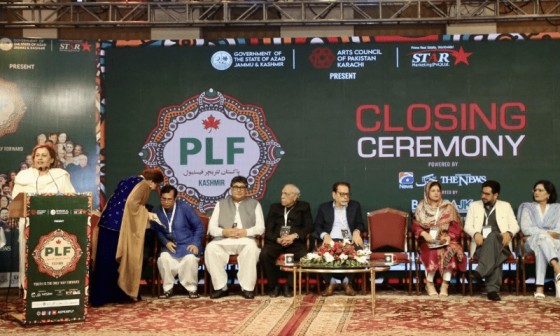
During the ongoing Pakistan Literature Festival at the five-star Hotel Pearl Continental (PC) Hotel Muzaffarabad in Pakistani-occupied Jammu Kashmir (POJK), prominent Pakistani journalists Hamid Mir and Wasatullah engaged in a discussion about the Kashmir issue. Among the attendees were students from Jamia Kashmir, who passionately expressed their views. The venue reverberated with slogans like “Kashmir will attain independence, this country belongs to us, we will govern it, and we will determine its future”.
Observing the atmosphere following the slogans, Hamid Mir and Vasatullah decided to step down from the stage at the Pakistan Literature Festival. Hamid Mir stated that if the youth chanting slogans had a specific agenda, then they would leave. He further questioned why the Kashmir issue had not been resolved in the past 75 years if emotional slogans alone were sufficient to free Kashmir. In response, the youths asserted that no Pakistani should visit their homeland and speak in favor of Pakistan. They vowed to respond strongly if anyone dared to do so. Subsequently, Muzaffarabad journalists Wahid Iqbal Butt and Tariq Naqash acted as mediators and facilitated a resolution, allowing the two Pakistani journalists to resume their conversation.
On the other hand, the students who raised slogans expressed their belief that the Kashmiris themselves are the true stakeholders in the Kashmir issue. They expressed frustration over their repeated unanswered questions and the lack of opportunity to voice their opinions. However, as soon as some of the youths began discussing the possibility of Kashmir’s accession to Pakistan within a pro-Pakistan narrative, they were met with slogans against Pakistan and in support of the freedom of Jammu and Kashmir. This disrupted the event, and the youths chanting slogans made it clear that Pakistan was not their friend but their enemy, and they desired immediate independence from Pakistan. The passionate slogans deeply shocked Pakistani intellectuals and those who supported Pakistan, as the sloganeers openly expressed their strong resentment and hostility towards Pakistan.
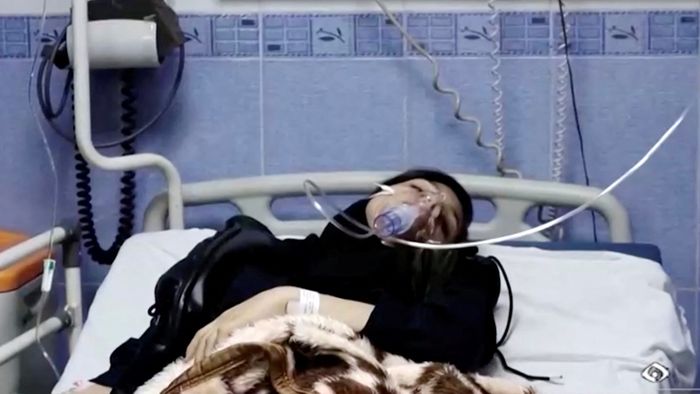
In a shocking incident in northern Afghanistan, approximately 80 school girls were poisoned and subsequently hospitalized. This unfortunate event marks the first reported case of poisoning since the Taliban takeover in August 2021, which has resulted in severe restrictions on the rights and freedoms of Afghan women and girls. The incident occurred in Sar-e-Pul province over the course of the weekend, raising concerns about the safety and well-being of female students in the region.
Incident:
According to Mohammad Rahmani, the head of the provincial education department, nearly 60 students from Naswan-e-Kabod Aab School and 17 students from Naswan-e-Faizabad School were affected by the poisoning. The two primary schools are located in close proximity to each other and were targeted successively. The motive behind the attacks was revealed to be a personal grudge, although no further details were provided by the education official.
Following the incident, all affected students were promptly transferred to hospitals for treatment. Mohammad Rahmani reassured the public that the girls’ health condition has stabilized, and they are currently recovering. While the specific nature of the poisoning and the exact injuries sustained by the girls were not disclosed, ongoing investigations by the provincial education department aim to uncover more information about the incident. Though Rahmani did not disclose the specific ages of the affected students, he said they were in grades 1 to 6.
Similar Incidents:
The poisoning incident in Afghanistan bears some resemblance to a series of poisonings that occurred in neighboring Iran, predominantly targeting girls’ schools. Since November of the previous year, thousands of students in Iran reported falling ill due to exposure to noxious fumes. However, the responsible parties behind these incidents in Iran have yet to be identified, and the exact substances used in the poisonings remain unknown.
The poisoning of school girls in northern Afghanistan highlights the dire situation faced by Afghan women and girls in the aftermath of the Taliban’s takeover. With the severe restrictions imposed on female education and employment, incidents such as these only serve to further marginalize and endanger the lives of Afghan girls seeking an education. The international community should raise its voice against such atrocities and provide support to promote a safe and inclusive environment for Afghan women and girls.
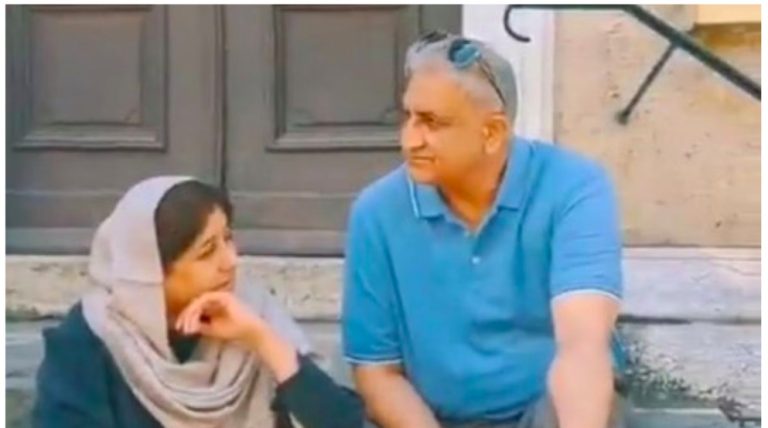
Pakistan Army’s former chief was confronted and abused by a Pashtun man in France over his role in destabilizing Afghanistan.
In a viral video, a Pashtun origin man abuses Qamar Javed Bajwa in extreme anger for veiled support of Taliban in disturbing political stability in Afghanistan which ultimately led to Taliban’s takeover.
The Army’s role in running Pakistan and it’s nexus with Taliban is not a hidden fact. Taliban take over of Afghanistan is attributed to the culpability of Bajwa.
The only thing that Bajwa said was that he is no longer the Army Chief. He threatened the man by saying, ‘Do not make my video or else I will call the police.’
It is worth noting that the incident occurred in France where the retired Chief of Army is on a visit to France’s Annecy, a tourist destination city, with his wife.
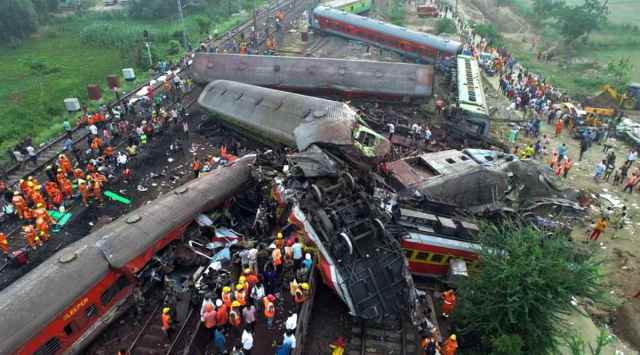
In a heart-wrenching incident yesterday, two passenger and one goods train collided near Bahanaga Railway Station in Odisha.
Reportedly, Coromandel Express running between Shalimar Station and Chennai collided with Bengaluru-Howrah Superfast Express, which led to a significant number of casualties. According to Pradeep Jena, Chief Secretary of Odisha, a goods train was also involved in the dreaded accident. So far, the death toll has reached 280, while more than 900 are injured and rescued.
While the rescue operation has now concluded, the restoration operation is ongoing. The Prime Minister has called a high-level meeting to review the situation. He himself is reported to reach Odisha and visit Balasore and Cuttack today.
Prevailing Unstable Environment in Pakistan: If events were not so tragic, the fast moving violent, dynamic, unpredictable politico-social drama being enacted in Pakistan would appear to be ‘comic-action film’ on TV. Nevertheless, being a transactional, impersonal world, people are watching with great interest and unfortunately great amusement. But, a nuclear crisis is certainly no laughing matter, and powers that be will do well to plan and be ready for all contingencies.
The situation is exacerbated by the rivalry and obvious power games between the military, judiciary and executive, with Imran Khan as the ‘invincible, highly popular action hero’. Lost in the turmoil and violence, is the constant fear about the safety and security of Pakistan’s nuclear weapons ecosystem – the warheads, the missiles, delivery vehicles (land, air, sea, undersea), the readymade, high grade, unused fissile material, communication systems and aspects like security of the launch codes. I am quite sure that the heads of governments of specifically USA, China and India and their national security advisors (NSAs), and intelligence agencies must be having sleepless nights. The contingency plans to be put into operation for securing the nuclear assets must be getting finetuned. Why specially these three; USA the superpower still fighting global war on terrorism (GWOT) and wants to keep the nuclear club exclusive with no additions, China with her Xinjiang and fundamentalist elements despite Pakistan being her client state (like North Korea), and India, Pakistan’s arch rival for eternity. At the outset it is important to highlight that the two most relevant but worrying aspects are, whether effective state control would be asserted at all times, and whether there are conditions where weapons could be used without due authorisation?; secondly, how to prevent subversion and theft both of physical nuclear assets and technical and communication details, including launch codes, by the very people who are guarding/protecting it. Pakistan’s capability and capacity to protect their nuclear assets along with a historical perspective, followed by contingencies in case the international powers need to intervene has been analysed. This article has used credible open source material [i].
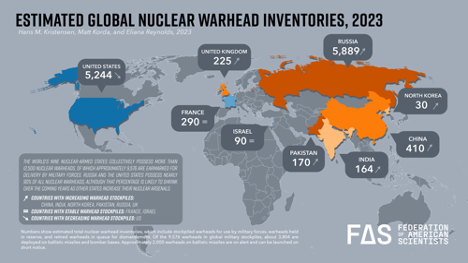
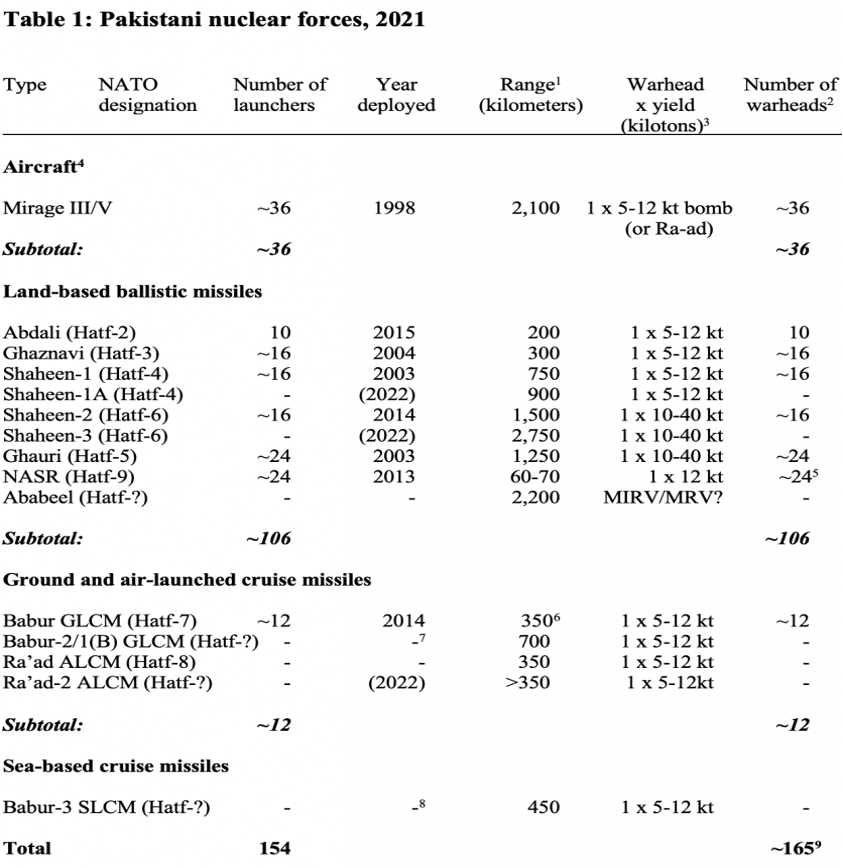
Pakistan’s Nuclear Arsenal:Pakistan currently has 170 nuclear warheads, and claims a triad status which indicates the capacity to launch from land, air and sea. Details of her assets are listed below:
Source: Bulletin of Atomic Scientists
Notes:
Experts believe that Pakistan could well be the world’s fourth-largest nuclear weapon state; with a stockpile of some 350 warheads in a decade (2030).
Air: Apart from Mirage III and V, Pakistan can also deploy F-16s (24) and Chinese J 17s (186 in pipeline) for nuclear delivery.
Sea: abur III, range 470 kms; deployed on the air-independent-diesel-electric Agosta class submarines (ordered 8; deployed 4?); some Babur IIIs are pre-mated for second strike capability.
Tactical Nuclear Weapon (TNW):NASR/HATF 9 has a range of 60 k.m. only, most probably pre-mated, some deployed with forward troops, and possibly under command and control of HQs at operational level (Corps HQ); raising the probability and its vulnerability of misuse/rogue use/panic use, and finding its way in wrong hands including terrorist organisations; and starting a nuclear Armageddon. In 2016 Obama said, “Battlefield nuclear weapons, by their very nature, pose [a] security threat because you’re taking battlefield nuclear weapons to the field where, as you know, as a necessity, they cannot be made as secure”.
Pak does not possess enough launchers compared to the warheads it holds; and
all launchers are dual capable!
Nuclear Policy: Pakistan boasts of ‘full spectrum deterrence capability’. Policy similar to NATOs ‘flexible response strategy’, with threat of use when her red lines/threshold will be crossed without explicitly spelling it out. Pakistan claims that she has a formal policy which is classified, and believes that ambiguity adds to the value of deterrence.
Source: Taylor and Francis Online (https://www.tandfonline.com/doi/full/10.1080/14751798.2023.2178069)
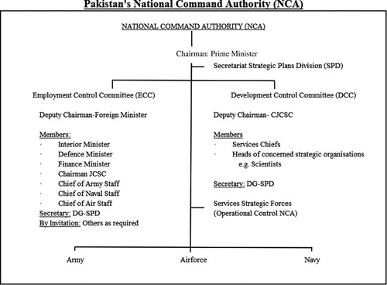
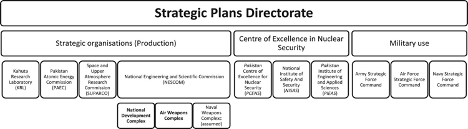
Command and Control of Nuclear Assets: The apex body which exercises command and control is the Nuclear Command Authority (NCA) headed by the PM, with the Strategic Plans Division (SPD) under a three-star army general, which is responsible for the protection of its tactical and strategic nuclear weapons stockpile, and the strategic assets. Special Response Force (SRF) is the special forces unitof SPD Force with the strength of 25 to 28000 personnel which secures the assets. The selection standards in terms of intelligence and physical standards for the force are even higher than army due to very sensitive nature of their duty. After initial training in army training establishments, they are now trained in Pakistan’s Centre of Excellence for Nuclear Security (PCENS), located in Chakri near Rawalpindi. Training is modelled on US National Nuclear Security academy.
Regarding Pakistan, it will be fair and reasonable to assume, that the military (COAS) would have the final and decisive vote for exercising the nuclear option.
International Opinion and Observations on Nuclear Weapon State (NWS) Pakistan : Ashley J. Tellis in his book (Striking Assymetries: Nuc Transitions in Southern Asia) says Pakistan is building “the largest, most diversified, and most capable nuclear arsenal possible”, which is endorsed by Peter Lavoy, a US intelligence officer. The Trump administration’s South Asia strategy in 2017 urged Pakistan to stop sheltering terrorist organizations, and noted the need to “prevent nuclear weapons and materials from coming into the hands of terrorists”. President Biden in Oct 2022 said ““Pakistan “may be one of the most dangerous” countries in the world having “nuclear weapons without any cohesion”.
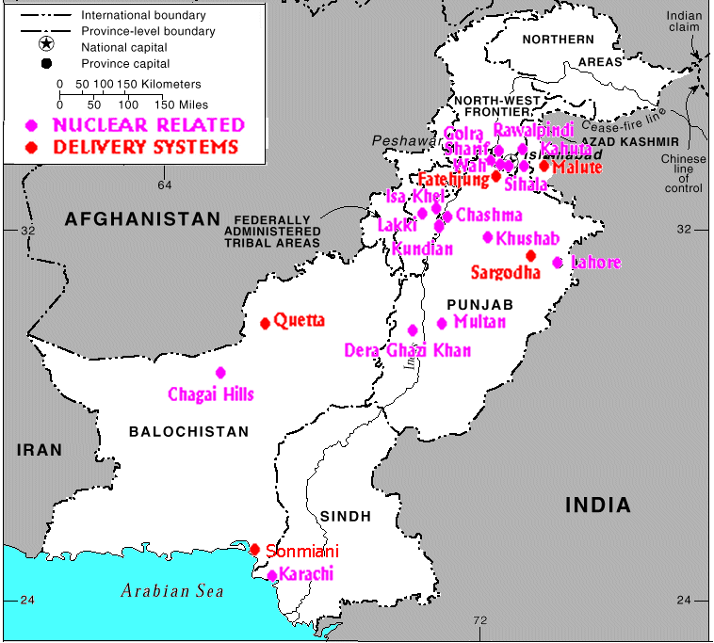
Deployment/Location of Nuclear Assets:
Note: Areas shown as Azad Kashmir and Northern Areas are an integral part of India (map not to scale)
Even when nations proclaim transparency, as exists(ed) between USA and Russia, regarding holdings and deployment of nuclear assets, in terms of agreements (SALT II, which now stands abrogated/suspended), there is always uncertainty and ambiguity regarding accuracy of details, especially when most delivery mechanisms are dual-capable (can fire both conventional and nuclear warheads) and also co-located which is a new dangerous trend followed specially by China and Pakistan. US aggressive anti-nuclear stance against North Korea is mainly because she can never be 100% sure of deployment of nuclear assets, thus not confident of knocking them out in a ‘first strike’ if ever the need arises. However, Pakistan nuclear assets locations are known to a fair degree of certainty, both due to diligence and ISR by the big powers, specially USA, as also with an existing agreement between India and Pakistan[ii] to notify each other. Details of known locations are placed below:
Fissile Mtrl Production Complex – Pakistan has a well-established and diverse fissile material production complex that is expanding at Kahuta, enrichment plant at Gadwal North of Islamabad. Four heavy water plutonium reactors in Khushab and thermal power plant (helps in estimation of production of fissile material). A new Reprocessing plant at Nilore, E of Islamabad, and second at Chatham in NW Punjab processing spent fuel and extracts plutonium.
Fissile Mtrl – In 2020, the International Panel on Fissile Materials estimated that Pakistan had an inventory of approximately 3,900 kilograms of weapon-grade (90 percent enriched) highly enriched uranium (HEU), and about 410 kg of weapon-grade plutonium. This material is theoretically enough to produce between 285 and 342 warheads.Pakistan uses tritium to boost fission process and reduce size of warhead. Possesses 690 gms, enough to boost over 100 weapons. Most short range missiles like NASR, Abdali, Babur, Ra-‘ad will need small, lightweight tritium boosted fission warhead.
Production of Msl and Mob Lrs –National Defence Complex at Kala Chitta Dahr mountain range West of Islamabad with two sections;
West – development, production, test launching of missiles and rocket engines;
East – production and assembly of road mobile transporter erector launchers (TELs)
Some launcher and missile-related production and maintenance facilities may be located near Tarnawa and Taxila.
Warhead Production-Pak Ord Factories near Wah, NW of Islamabad.
Safety and Security of Nuclear Assets
Pakistan has put in place all safeguards expected from an NWS and as per international norms of IAEA’s Nuclear Security Strategy (NSS)[iii]. During late 2000 a US report stated “we’re, I think, fairly confident that they have the proper structures and safeguards in place to maintain the integrity of their nuclear forces and not to allow any compromise”. The SPD is the institutional link between civilian and military facilities. Pakistani sites have three “rings” of security. The first is within each facility itself with SPD personnel responsible for physical searches, Nuclear Media Acess Control (NMAC)[iv] protocols; while the second ring is formed of physical means (limited Access Areas, physical barriers). Outside of each site, the third ring of security is provided by a wider counter intelligence effort. Being aware of the dangers of subversion, NCA has put in place a very rigid system of vetting regularly; different for scientists, civilian staff and military personnel. Screening involves four of Pakistan’s intelligence agencies. Some important measures incorporated are:
The National Institute of Safety and Security (NISAS) of the Pakistan Nuclear Regulatory Authority (PNRA) has become an IAEA collaborating centre for Nuclear Security Education, Training and Technical Support in Oct 2022.
Working with the Global Initiative to Combat Nuclear Terrorism (GICNT) in different areas. The GICNT is an international partnership intended to improve international capacity for prevention, detection, and response to nuclear terrorism, particularly the acquisition, transport, or use of nuclear and radiological materials.
Advanced-level training in American National Laboratories and applied it to improve the overall security practices in the country.
Additional measures in terms of equipment enhancement are:
Specially trained – as per IAEA and Nuclear Security Series.
Special theft and tamper-proof vehicles and containers are also used.
SPD and PNRA operate radiational detection portal monitors at nuclear sites.
Contingency planning.
All round and fool proof communications.
Nuclear Security Emergency Coordination Centre (NuSECC) in Islamabad.
Mobile Radiological Monitoring Laboratory (MRML) established.
Historical Statistics and Vulnerabilities:But impressions, reputation and opinions has gone steadily downhill in the last decade, more due to the socio-politico-unstable internal security situation, rise of political Islam and fundamentalism, Pakistan’s unrelenting dalliance with terrorist organisations, which has come back to bite them like the proverbial snake. There are credible intelligence reports that Al Qaeda, IS, TTP have shown renewed interest in acquiring both warhead, fissile material and technology. The two main constant and real worries are theft (material and intellectual) as also ‘insider operations.
The latest mob violence on Imran Khans arrest, has ignited violence and instability, and specter of even civil war. There are worrying reports of dissension within the Army ranks, both within the highest (rift between COAS, CJSC, Corps Commanders), middle and lower echelons; reports of mutinies in old established army units; soldiers abandoning their posts and duties, increasing insubordination which should cause grave apprehension regarding the safety and security of nuclear assets. If the most disciplined force can be beset with insubordination and desertion, the paramilitary, intelligence agencies and most importantly the personnel manning the security protocol of nuclear assets are equally susceptible. The vulnerability is not only physical theft of warheads and fissile material, but technical data and electronic codes which can operationalize the weapons and missile systems. In the current unrest and fragile security environment ‘when it is time to implement the harshest security measures, is ironically the time when it is at its most vulnerable to subversion and theft. Some historical lapses concerning security of nuclear assets are listed below: –
In November 2007, suicide attack killed seven PAF staff travelling between Mushaf Mir Airbase and the Central Ammunition Depot, Sargodha. Both sites have been associated with Pakistan’s nuclear programme.
A double bombing in August 2008 killed 64 people in Wah Cantt. One explosion took place outside the Pakistan Ordnance Factories (POF), which is believed to house the Gadwal Enrichment Plant.
In July 2009, a bus carrying KRL workers was attacked by a suicide bomber at Chor Chowk, Peshawar Road.
In October 2009, the Minhas air force base in Kamra was attacked. The site is widely assessed to host Pakistani nuclear weapons, although the attacker is reported to have detonated a bomb at “a checkpoint on a road leading to the complex,” rather than the base itself.
The biggest of them all; AQ Khan both stealing sensitive information from the Physical Dynamics Research Laboratory, a subcontractor to the URENCO enrichment consortium, and then going on to sell indigenised versions of that technology to North Korea, Iran, and Libya.
Subversion at the highest level revealed when Lieutenant General (retired) Javed Iqbal and Brigadier (retired) Raja Rizwan who received 14 years’ imprisonment and the death penalty, respectively for nuclear espionage.
Note: – If staff can be identified for attack, they may also be coerced into becoming “insiders. Insiders have been a real concern to Pakistani authorities.
Scenario Building and Recommendations.
Pakistan will obviously remain the first responder for most contingencies, and is expected to act immediately and decisively in case of theft of warhead or fissile material, or loss of critical technological information; assuming the command and control of nuclear assets is still intact and not broken (contingencies like civilian and/or military control, or break up of both is a realistic probability). They are expected to act responsibly and alert the international community immediately specially the ‘Three’ (USA, China and India the immediate neighbour), and United Nations Security Council (UNSC).
In case, the UN and world body led by USA and China feel that there exists conditions where the nuclear assets are NOT under the command and control of any responsible body, be it the civil or military, and safety and security of the assets are compromised, and real and present threat to them exists (terrorists, breakaway military leader/group(s) and rogue elements); there is a need for physical intervention to secure them, with or without the sanction/permission of Pakistan authorities. The current scenario does warrant planning and coordinating for such a contingency specially by the ‘Three’.
In the eventuality of the above, and if the unstable situation of a civil war like situation persists, there is a case of following a variation of the Ukraine model* with Pakistan. Pakistan naturally will be loath to give up her nuclear assets. The process will take time, but the world cannot afford to have the spectre of a Nuclear Armageddon hanging over its head all the time.
*Note: When the Soviet Union broke up in 1991, there were thousands of former Soviet nuclear warheads, as well as hundreds of intercontinental ballistic missiles and bombers, left on Ukraine’s territory (some in Belarus and Kazakhstan too), which they decided to transfer to Russia. Ukraine never had an independent nuclear weapons arsenal, or control over these weapons, but agreed to remove former Soviet weapons stationed on its territory. In 1992, Ukraine with the other two, signed the Lisbon Protocol[vi] and joined the Nuclear Non-Proliferation Treaty (NPT) as a non-nuclear weapon state in 1994. The transfer of all nuclear material took some time, but by 2001, all nuclear weapons had been transferred to Russia to be dismantled and all launch silos decommissioned. Interestingly, the Protocol in itself does not talk of any security guantantees by either USA or Russian Federation. However, The Budapest Memorandum on Security Assurances comprises three substantially identical political agreements signed at the OSCE conference in Budapest, Hungary, on 5 December 1994, to provide security assurances by its signatories. The three memoranda were originally signed by three nuclear powers: the Russian Federation, the UK and the USA. China and France too gave somewhat individual assurances in separate documents.
The memoranda, prohibited the Russian Federation, the United Kingdom and the United States from threatening or using military force or economic coercion against Ukraine, Belarus, and Kazakhstan, “except in self-defence or otherwise in accordance with the Charter of the United Nations”. The memorandum did accelerate the handing over of nuclear weapons.
Conclusion: Pakistan has always led a rather unstable existence ever since its independence. Its nuclear weapon status provides the proverbial edge, which does keep world powers and India on their toes. Pakistan has institutionalised systems in place to secure the nuclear assets. However, given the unstable internal security situation, which can deteriorate in an accelerated manner, and possibly weaken the command and control chain, and security of nuclear assets, it makes eminent sense to plan and put procedures in place to secure the nuclear assets by external agencies led by the ‘Three’. India must make it her business to ensure the safety of Pakistan’s nuclear business.
(This article was earlier published in bharatshakti.in)
[i] Current geo-polical-social situation in Pakistan is being widely covered in the internet and other media sources. Nuclear aspects have been covered by sourcing the following articles online: –
‘Pakistani nuclear forces, 2018’, Hans M. Kristensen, Robert S. Norris & Julia Diamond, 31 Aug 2018, Bulletin of Atomic Scientist, available at https://www.tandfonline.com/doi/full/10.1080/00963402.2018.1507796.
‘Pakistan’, ResearchStockholm International Peace Research Institute (SIPRI)>Research>Armament and disarmament>weapons of mass destruction>world nuclear forces, available at https://www.sipri.org/research/armaments-and-disarmament/nuclear-weapons/world-nuclear-forces/pakistan.
[ii]‘Non-Nuclear Attack Agreement’, signed between Prime Minister Benazir Bhutto and Prime minister Rajiv Gandhi on 21 December 1988 in Islamabad (ratified 1991), according to which, both countries have to inform each other of the nuclear facilities. Accessed on 12 May 2023.
[iii] ‘Assessing the security of Pakistan’s nuclear weapon programme’, by Tahir Moahmood Azad, and Karl Dewey, 27 Feb 2023, Taylor & Francis Online>Defence and Security Analysis, available at https://www.tandfonline.com/doi/full/10.1080/14751798.2023.2178069. Accessed on 13 May 2023.
[v]Permissive Action Links (PALs) – ensures that even if an unauthorized person gets hold of a weapon, he cannot activate it unless he also has access to electronic codes.
[vi] ‘Protocol to the Treaty between the United States of America and the Union of Soviet Socialist Republics on the Reduction and Limitation Of Strategic Offensive Arms’, signed on May 23, 1992, between representatives of USA, Russian Federation, Republics of Ukraine, Byelarus and Kazakhstan; available at https://2009-2017.state.gov/documents/organization/27389.pdf. Accessed on 17 May 2023.
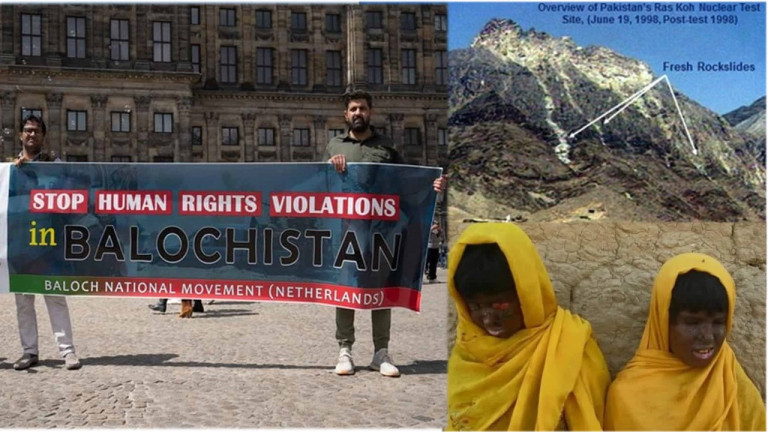
It was on 28 and 30 May 1998, during the peak of summer, when Pakistan conducted its nuclear tests in the Chagai Hills of occupied Balochistan. These tests were a response to India’s recent nuclear tests and aimed to showcase Pakistan’s nuclear capabilities. However, the cost of these tests was immense. Let’s delve into why and how this event from 25 years ago is still fresh in the memory.
The History
Since the occupation of Balochistan by Pakistan, the Baloch revolutionaries have continuously challenged their control. Pakistan saw an opportunity to assert its dominance and conducted the nuclear tests in the region without any evaluation, security protocol, or consideration for the inhabitants. The Rawalpindi Generals strategically chose the Ras-Koh Mountain range in the Chagai district of Balochistan.
In 1998, Pakistan conducted five consecutive nuclear blasts, resulting in immediate devastation. The nuclear radiation caused the black mountain to turn white within seconds, wiping out all life forms in the area. Experts later emphasized the need for clear boundaries to prevent the entry of contaminated organisms into the food chain.
The deliberate attempt by Pakistan to spread death through lethal nuclear radiation had tragic consequences for the Baloch people. They suffered from life-threatening diseases such as cancer, tumors, respiratory diseases, and long-lasting disorders caused by birth defects, miscarriages, and infertility. Shockingly, neither the Pak Army nor the government made any effort to warn or relocate the residents, nor did they provide medical aid to mitigate the impact of radiation.
The Impact
Balochistan experienced seven consecutive years of drought. Cattle and livestock perished, and the contaminated water bodies poisoned or killed aquatic life. Moreover, the Baloch people developed radiation-related diseases and life-altering disorders. The remaining livestock became incapable of breeding, leading to the loss of income and pushing the Baloch people into abject poverty. While some migrated to neighboring areas, their living conditions remained dire, with no support from the government.
The question arises: why have international health and human rights organizations remained silent about these violations? This crisis has been swept under the rug and remains a lesser-known topic in public discussions.
Current Event
Despite the atrocities committed against them, the Baloch people have not forgotten their suffering. They are raising their voices to make the world aware of their plight. Balochs around the world are organizing rallies and protests.
In London, the Baloch National Movement UK organized a protest at Trafalgar Square, condemning Pakistan’s nuclear bomb tests conducted on 28 May 1998, in the Chagai area of Balochistan. The demonstration included an awareness campaign conducted by the participants, including members and leaders of the Baloch National Movement (BNM) and prominent figures from the World Sindhi Congress, Lakho Lohana, Hidayat Bhutto, and Abdullah Baloch, the leader of Baloch Raji Zrumbesh (BRZ). Banners and placards were displayed, highlighting the impact of Pakistan’s nuclear tests on Balochistan, and a pamphlet titled “Destructive Continuation of Pakistan’s Nuclear Tests and its Effects on the People of Balochistan” was distributed, providing details about the adverse effects of nuclear explosions on the region’s inhabitants and Pakistan’s intentions.
In South Korea, the BNM-SK Chapter organized a demonstration in the city of Busan on 28 May 2021, to commemorate the 23rd anniversary of Pakistan’s nuclear tests on Baloch land in the Chagai region. The protest aimed to raise awareness about the long-term consequences and impact of these tests on the local population and the environment. Participants distributed pamphlets in both Korean and English, informing the public about the effects of nuclear tests and condemning Pakistan.
In Germany, the Baloch National Movement organized a protest in Göttingen against Pakistan’s nuclear tests in Balochistan. Asghar Ali, the President of BNM Germany, stressed the need for international organizations, including the International Atomic Energy Agency, to assess the aftermath of Pakistan’s nuclear tests in Balochistan. Samul Baloch, the Vice President of BNM Germany Chapter, highlighted the global concerns regarding nuclear testing, its impact on the environment, and human lives. She called for transparency, accountability, and disarmament to ensure a safer world.
In Amsterdam, BNM activists staged a rally and demonstration to observe the 23rd anniversary of Pakistan’s nuclear tests in Balochistan as a Black Day. The protesters held banners and placards denouncing Pakistan’s nuclear weapons and highlighting the catastrophic effects of the tests on the Baloch people and the environment. They also condemned the human rights abuses committed by the Paki Army in Balochistan. Jamal Baloch, the Media Coordinator of BNM’s Human Rights Department, addressed the demonstrators, emphasizing that Pakistan’s nuclear weapons pose a threat to global peace and stability. He urged the international community to speak out against Pakistan’s nuclear program and work towards its dismantlement, bringing an end to the conflict and suffering in Balochistan and the surrounding region.
Another participant, Nabeel Baloch, spoke about the devastating impact of the nuclear tests on millions of people in Balochistan. He highlighted the alarming rate of deformities, disabilities, and cancer cases among children, with many not surviving beyond a few years of age. Nabeel stressed that Balochistan should not serve as a testing ground for Pakistan’s chemical weapons.
Aalia Baloch discussed the consequences of radiation on the health and environment of the Chagai district. She expressed concern over the contamination of soil, water, and the ecosystem due to radioactive materials. Aalia mentioned the prevalence of skin diseases and hepatitis among the affected population. She demanded concrete actions from the United Nations to restrain Pakistan’s nuclear weapons and impose strict sanctions against them. The protesters regarded 28 May as a black day, symbolizing the tragic events associated with Pakistan’s nuclear tests in Balochistan.
Despite the immense suffering endured by the Baloch people, the international community has largely remained silent on this human rights violation. However, the Balochi themselves have not forgotten the atrocities committed against them. They have used their voices to raise awareness and demand justice.
Protests and demonstrations organized by the Baloch National Movement in London, South Korea, Germany, and Amsterdam have highlighted the detrimental effects of Pakistan’s nuclear tests. These events have brought attention to the ongoing struggle of the Baloch people and their demand for accountability, transparency, and disarmament.
It is crucial for international organizations, such as the International Atomic Energy Agency, to investigate the aftermath of these nuclear tests and support the Baloch people in their fight for justice. The United Nations should take concrete steps to address the issue, impose strict sanctions on Pakistan’s nuclear weapons, and work towards dismantling its nuclear program to ensure global peace and stability.
May 28 will forever be remembered as a black day for the Baloch people, symbolizing their resilience in the face of adversity and their determination to seek justice for the grave injustices committed against them. It is our collective responsibility to stand in solidarity with the Baloch people, amplify their voices, and work towards a world free from the devastating impacts of nuclear weapons. Only then can we strive for a future where such atrocities are not repeated, and every individual’s right to life and dignity is respected.
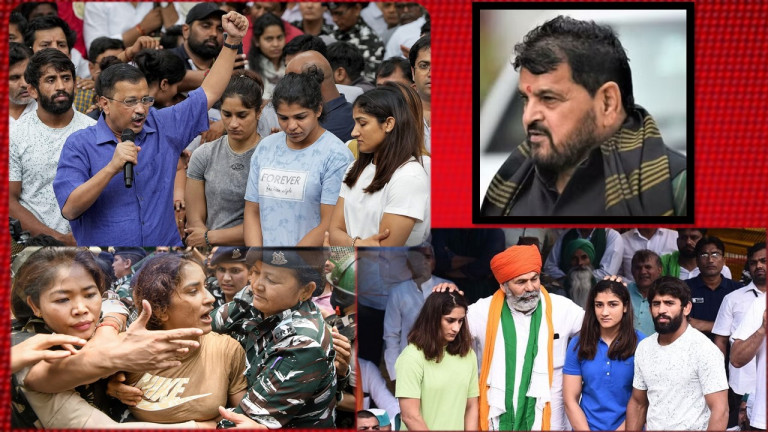
What started as a genuine grievance to draw the attention of the government is now taking the wrong turn, casting doubt on their cause. Why are these renowned wrestlers protesting? They have accused Brij Bhushan Sharan Singh, the chief of the Wrestling Federation of India, of sexual harassment. However, the chief has denied the allegations. The wrestlers are demanding that Bhushan step down from his position and that the law enforcement agencies investigate the accusations.
Initial Event
On 23 April, wrestlers Bajrang Punia, Vinesh Phogat, Sakshi Mallik, and their supporters staged a sit-in at Jantar Mantar, which was later called off. The Supreme Court intervened, leading the Delhi police to lodge an FIR against the chief and initiate an investigation. Last week marked the first month of the protest.
Following the initial protest, the Sports Ministry formed a 5-member panel on 23 January 2023, with legendary boxer MC Mary Kom as the head. The panel was given one month to submit its findings. The deadline to submit the report was extended by two weeks, and later, a sixth member, Babita Phogat, was added to the panel. In the first week of April, the panel submitted its report.
Allegations and Contradictions
However, there is more to the situation than meets the eye. Let’s start with some. First of all, some wrestlers were seen backtracking from their allegations. One female physio accused the WFI Chief of treating her badly in Bulgaria, but during the hearing, she denied it. Vinesh Phogat filed an affidavit before the IOA probing panel in which she claimed that in 2015, in Turkey, the WFI Chief touched her inappropriately. However, the findings revealed that Vinesh did not compete in Turkey. Later, she said it was in 2016 in Mongolia. Sakshi Malik, another wrestler, claimed that the WFI Chief hugged her in 2015. However, she invited the WFI Chief to her wedding in 2017. This raises the question: Would anyone invite their abuser to their wedding? Highly unlikely.
Later, the wrestlers approached the Supreme Court to file FIRs, and on 28 April 2023, the Delhi Police registered two FIRs against the WFI Chief. During the hearing of the petition filed by the wrestlers on 4 May 2023, the Supreme Court ordered that the petition be disposed off. Furthermore, the Supreme Court asked the wrestlers to approach the High Court and other authorities for further investigation and remedies. The WFI Chief engaged Senior Advocate Harish Salve to represent him. These events highlight the involvement of legal proceedings in this scenario. Initially, the wrestlers demanded FIRs, which were registered, and now they are demanding the chief’s arrest without waiting for the completion of the investigation.
Political Dimensions and Support
Now, the major question arises: Isn’t the wrestlers’ protest turning political? The answer is yes. Following the protest, opposition parties have shown relentless support for the wrestlers. West Bengal Chief Minister Mamata Banerjee spoke to the wrestlers, vowing to hold a rally in Kolkata in support of the sportspersons. Delhi Cabinet Minister and AAP leader Saurabh Bharadwaj criticised Lieutenant General Vinai Kumar Saxena, and Mr. Tikait, the president of the Bharatiya Kisan Union (BKU), also joined in. Two days after the wrestlers were evicted from Jantar Mantar, they went to Haridwar to immerse their medals in the Ganga as an act of protest. Their attempt was halted after Mr. Tikait, who stated to the media, “What will these daughters be going through while thinking of throwing their medals to protect their honour?” I am taking their medals, but we will continue our fight.”
On 28 May 2023, as security was heightened around the new Parliament Building, the wrestlers intentionally marched towards it. This feels like déjà vu, with a willingness to create unrest on a historic day. Inviting the farmer association to come with tractors to support them doesn’t seem peaceful.
Days after the wrestlers resumed their protest, wrestler Bajrang Punia’s wife, Sangeet Phogat, shared a tagged Instagram story with a derogatory comment about PM Modi. The wrestlers also stated, “We won’t play national-level games, only in the Olympics.” This statement was also confirmed by the WFI Chief. The protest site was filled with derogatory slogans about the Prime Minister of India, saying, “Modi Teri Kabar Khudegi” (Modi, your grave will be dug).
These events seem somewhat coincidental when the national election is just around the corner. When the sensible voice, IOA Chief and athlete PT Usha, went to visit the wrestlers, she was heckled by the protesting group. She said the wrestlers were tarnishing the image of the country, and they should have approached the appropriate body instead of taking their grievances to the streets. Furthermore, if the WFI Chief is ready for a narco test, what’s the purpose of creating a scene? With the opposition’s backing, the involvement of the farmers’ association, and protests over mere allegations, aren’t these ingredients similar to the recipe of the Farmer’s Protest? These situations seem staged and against the ruling government. The wrestlers have issued a statement regarding their plans to begin an amaran anshan (indefinite hunger strike) at Delhi’s India Gate. Time will tell how it unfolds.
British biologist Richard Dawkins has made a highly contentious tweet on Hinduism and PM Modi, following the decision by NCERT to remove the periodic table from the syllabus of class 10.
Recently, NCERT had altered syllabus for all classes and subjects based on recommendations from an expert committee. As part of that, chapters pertaining to the periodic table and the theory of evolution were omitted for class X.
Richard quoted a news article of ‘Why Evolution is True’ in his tweet, stating, “Modi’s BJP is a tragic affront to India’s secular origins. Hinduism is at least as ridiculous as Islam. Between them, these two idiotic religions have betrayed the ideals of Nehru and Gandhi.”
His statement exemplifies his intense aversion towards PM Modi and Hinduism. It disparages Hindus and their beliefs, blatantly infringing upon their inviolable fundamental rights.
Furthermore, the statement showcases a lack of factual comprehension, which is unexpected from a knowledgeable biologist. It should be duly noted that NCERT has not completely removed the topics from the curriculum; instead, the topics has been relocated to the class XI and XII syllabus.
In an attempted target killing, a Hindu man has been killed by the terrorists in Anantnag. Terrorist organisation Kashmir Freedom Fighter, a cover of Pakistan based Lashkar-e-Tayyaba brutally shot Deepak Kumar, also known as Deepu while he was going to fetch water. Deepu hailed from Udhampur district in Jammu region.
As a solitary breadwinner, he came to Anantnag to earn livelihood for his impoverished family. He used to work at an amusement park in Anantnag.The terrorist organisation claimed that he was killed because he was an infidel and outsider. However, Deepu was not any outsider and was a resident of Jammu and Kashmir only. The residents of Anantnag even took out rallies and candle light vigils to protest against the killing.
This is second incident of targeted killings of Hindus this year. Earlier in February, Sanjay Sharma from Pulwana was shot dead by the terrorists while he was returning from his job.
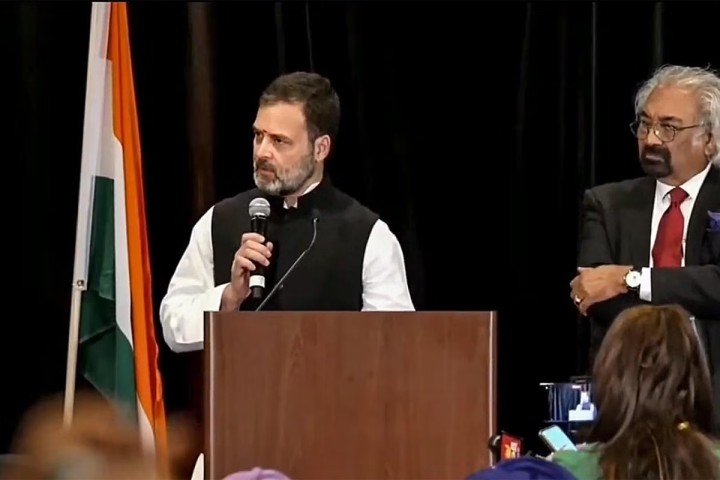
In a surprising news, Rahul Gandhi’s New York event is to be hosted by some radical Islamists having connections with Muslim brotherhood and Jamaat-e-Islami.
Rahul Gandhi’s event and Jamaat-e-Islami connection
Although the event focuses on Indians abroad, it’s organiser list contains names who are extremist and have anti-India links. One of the organisers, named Tanzeem Ansari, is Amir of the Outreach Committee of Muslim Community of New Jersey (MCNJ).
On the part of MCNJ, it is led by Pakistan origin Imam Jawad Ahmed. He is also the Project Director of Islamoc Circle of North America (ICNA). ICNA is a radical Islamist organization, associated with Pakistan’s Jamaat-e-Islami.This is the same Jamaat-e-Islami that expresses antagonism against India and aligns with Pakistan’s line. It also has linkages with radical and terrorist organisations.
Another coordinator is Mohammad Aslam, a member of ICNA’s close partner organization, Muslims Centre of Greater Princeton. Even the founder of banned terrorist outfit SIMI is an ICNA member.
Anti-India nexus behind Rahul’s event
Minhaj Khan, alongside another self-appointed coordinator for the Rahul Gandhi event, has been associated with the Indian American Muslim Council (IAMC), an anti-India lobbying group. IAMC consistently focuses its efforts on criticizing India, using the pretext of human rights and religious freedom. The Disinfo Lab’s research findings indicate that IAMC engages in the dissemination of fake news, intentionally aiming to provoke communal tensions within India.
During the period of Dr. Manmohan Singh government in 2013-14, the Indian American Muslim Council (IAMC) employed the services of a US lobby firm, remunerating them with a sum of USD 55,000. The purpose behind this engagement was to lobby against India at the U.S. Commission on International Religious Freedom (USCIRF).
Rasheed Ahmed, the Executive Director of IAMC, also holds the same position in the Islamic Medical Association of North America (IMANA), a ‘charity’ organization linked to Jamaat. IMANA took advantage of India’s goodwill during the peak of the covid pandemic by raising millions of dollars in the name of aiding India, but siphoned off all the money.
Reason behind Rahul Gandhi’s hate speech against India
The thread completely exposes the reality of the event and gives a clear idea of the impetus behind such an event.Neither Rahul Gandhi nor Sam Pitroda, can claim ignorance on this. It is a blatant violation of Indian integrity and reveals why each time Rahul Gandhi uses foreign land to target PM Modi and India.
Prominent Indian politician Shri Rahul Gandhi, during his proposed #RahulInUSA tour,would attend several public events. He may not know, but some ‘coordinators’ who are claiming to be associated with events are Pak Jamaat-e-Islami & Muslim Brotherhood-linked fronts
We use cookies on our website to give you the most relevant experience by remembering your preferences and repeat visits. By clicking “Accept All”, you consent to the use of ALL the cookies. However, you may visit "Cookie Settings" to provide a controlled consent.
This website uses cookies to improve your experience while you navigate through the website. Out of these, the cookies that are categorized as necessary are stored on your browser as they are essential for the working of basic functionalities of the website. We also use third-party cookies that help us analyze and understand how you use this website. These cookies will be stored in your browser only with your consent. You also have the option to opt-out of these cookies. But opting out of some of these cookies may affect your browsing experience.
Functional cookies help to perform certain functionalities like sharing the content of the website on social media platforms, collect feedbacks, and other third-party features.
Performance cookies are used to understand and analyze the key performance indexes of the website which helps in delivering a better user experience for the visitors.
Analytical cookies are used to understand how visitors interact with the website. These cookies help provide information on metrics the number of visitors, bounce rate, traffic source, etc.
Advertisement cookies are used to provide visitors with relevant ads and marketing campaigns. These cookies track visitors across websites and collect information to provide customized ads.
Necessary cookies are absolutely essential for the website to function properly. These cookies ensure basic functionalities and security features of the website, anonymously.
Cookie
Duration
Description
cookielawinfo-checkbox-analytics
11 months
This cookie is set by GDPR Cookie Consent plugin. The cookie is used to store the user consent for the cookies in the category "Analytics".
cookielawinfo-checkbox-functional
11 months
The cookie is set by GDPR cookie consent to record the user consent for the cookies in the category "Functional".
cookielawinfo-checkbox-necessary
11 months
This cookie is set by GDPR Cookie Consent plugin. The cookies is used to store the user consent for the cookies in the category "Necessary".
cookielawinfo-checkbox-others
11 months
This cookie is set by GDPR Cookie Consent plugin. The cookie is used to store the user consent for the cookies in the category "Other.
cookielawinfo-checkbox-performance
11 months
This cookie is set by GDPR Cookie Consent plugin. The cookie is used to store the user consent for the cookies in the category "Performance".
viewed_cookie_policy
11 months
The cookie is set by the GDPR Cookie Consent plugin and is used to store whether or not user has consented to the use of cookies. It does not store any personal data.