Home Blog Page 252

Siamese Twins – Afghanistan and Pakistan: Implications for India

Turning to Parasitic Twin[i] Actions between Pakistan and Afghanistan
On 16 April 2022, the Pakistan Air Force conducted predawn airstrikes using jets and drones on multiple targets in Afghanistan’s Khost and Kunar province. Afghan officials reported that the attacks killed at least 47 civilians (UN confirms over 20 children killed and injured 23 others), mostly women and children. After initial denial Pakistan vacuously stated that the airstrikes involved drone strikes from inside Pakistani airspace, and that no aircraft were deployed. It was apparently a retaliation to an attack on a Pakistani military convoy in North Waziristan on 14 April, which had killed seven Pakistani soldiers, allegedly by militants belonging to Tehreek-e-Taliban (TTP)[ii], and was apparently the last straw on the ever increasing and bolder terrorist actions perpetrated by TTP against Pakistan (in Afghanistan territory too). This impasse continues as of date.

Pakistan staring at a precipice or stairway to heaven?
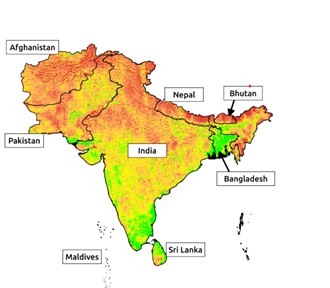
Ironically the absolute chaotic situation staring at Pakistan today (attempted killing of Imran Khan, Army at the crossroads, uncertain stance of jehadis and opposition parties to Imran Khan, wavering judiciary, unstable government, economic and social doldrums), also provides it with an opportunity to either remain a nation ruled by the Army, or begin the transition for normalcy albeit a road fraught with potholes of a dangerous Army whose existence is at stake, IEDs, terrorist organisations and jihadis, feudal lords and greedy unscrupulous politicians. Only time will tell. One thing is clear, that the strategic nature of Pakistan’s dealings both with India and Afghanistan is unlikely to change in the foreseeable future. Hence, the focus of this article is to untangle the Pakistan – Afghanistan conundrum and weigh what options India has in order to ensure her national interests are not compromised.

As you sow, so you reap
Islamabad, operated on the assumption that the Taliban would be beholden to Pakistan out of gratitude for years of support. But Taliban has stunned them by challenging the Durand Line, and providing a haven to the anti-Pakistan insurgent group TTP, known as the Pakistani Taliban, which has killed thousands of Pakistanis and seeks to establish a Taliban-style, Shariah-compliant state in Pakistan. Pakistan’s use of cross-border strikes is tied to the trajectory of the TTP and her unstated steadfast relations with the Taliban, and Pakistani leadership’s growing frustration with the Taliban’s failure to restrain the TTP. The growing clout of Taliban resulting in governing Afghanistan is directly proportional to the resurgence of TTP, which has strengthened its bases in Afghanistan to attack Pakistan; especially in areas where the Taliban’s territorial influence as an insurgency was significant. It would not be out of place to say that the Taliban has given the TTP de-facto political asylum.

Tough to fight your own child
Pakistan has been repeatedly urging/warning Kabul “to secure Pak-Afghan Border region and take stern actions against the individuals involved in terrorist activities in Pakistan”. The strikes had at least two coercive goals. First, Pakistan probably used the bombing to send a message to the TTP that its cross-border haven is not as safe as it assumes, in the hope of deterring it from further cross-border action. And second, Pakistan wanted to give a shock treatment to the Taliban to get them to reconsider their approach to the TTP. Pakistani military leaders are aware that their military action on Afghan territory is unpopular with Afghans. So, they may have hoped that the strikes will bring pressure on the Taliban to reverse policies that create grounds for Pakistan to undermine their domestic political standing, or at the least, the strikes will drive a wedge in TTP-Taliban ties and compel Taliban pragmatists to consider the cost of their support to the TTP.

But Pakistan may have overplayed its hand (large civilian specially children causalities), as the TTP’s status and activities from Afghanistan remain unchanged. At the same time, anti-Pakistan sentiment within the Taliban appears to have surged, shoring up support for the TTP within the Taliban. Pakistani strikes have also reinvigorated anti-Pakistan sentiment across Afghanistan’s political spectrum, who see them as a violation of Afghan sovereignty. Standing up to Pakistan or even militarily responding has the potential to shore up the Taliban’s domestic political standing[iii]. Despite all the aggravations there is no strong indication that Pakistan is ready to turn against the Taliban, as it views them as the safest force to counter Indian influence in Afghanistan. Recent trends may buck this logic too. (more about it later).

The Taliban-TTP Calculus
The US State Department estimates that fluctuating figure of approximately 10,000 TTP militants are hiding in Afghanistan. The mantra for the relationship remains a mystery. Some argue that at the heart of the Taliban-TTP relationship is an ideological alignment on a jihadist project seeking to implement a Shariah-compliant political order through force. The TTP has genuinely or cleverly pledged allegiance to Taliban chief adding to the alignment. Others point to history: many in the TTP supported the Taliban in its nascence, including by providing suicide bombers. The Taliban and the TTP also share al-Qaida as an ally. There are strong interpersonal, war-time bonds between the influential Haqqani family and the TTP, and between some Southern Taliban leaders and TTP’s political leadership.

There is abundant ethnic amity, built around tribal ties and disdain of the Pakistani state; at least in the rank-and-file and middle tier of the Taliban. One explanation for the Taliban’s post-takeover position is that they want to use the TTP as bargaining leverage with Pakistan. A competing perspective is that the Taliban want a like-minded political actor such as the TTP to ultimately rise to power in Islamabad. It is possible that given the deep support the TTP enjoys in the Taliban rank-and-file, as well as the size of the TTP in Afghanistan, the Taliban face capacity constraints to act against the TTP, partly due to ISKP’s (Islamic State Khorasan Province) growing threat. Ironically, some Afghan opposition leaders see the Taliban’s position and the TTP violence as an elaborate ruse by Pakistan’s powerful intelligence agency, the ISI, to absolve itself of supporting the Taliban over the last many years. Whatever the motive, the bottom line is that the Taliban are unwilling to act against the TTP in any meaningful way[iv]. Increasing Pakistan’s discomfiture and alarm are credible inputs that TTP and Pakistani Baloch secessionists have established several safe houses in Afghanistan and Balochistan possibly before the Taliban takeover, but which continue to function.

Pakistan-Afghanistan Prognosis
Uncertain Future          
Taliban will continue to provide sanctuary to TTP, and attacks will continue, and with Imran Khan out and Pakistan military in charge, one can expect an inclination to use military force. The Taliban too has warned Pakistan against further military action, threatening retaliation. Pakistan stands at a cross-road facing an uncertain relationship with its North-Western neighbour. Has the Pashtun linkage between Taliban and TTP taken precedence specially with regards to stance on the Durand Line[v]? Does it imply that Pakistan’s decades-long interventionist policy on Afghanistan has failed? Has the ruling Taliban, instead of providing any strategic advantage or contributing to Pakistan’s security, become a worrisome thorn in Islamabad’s side. Does Pakistan need to relook its Afghan policy? Most importantly and worryingly; is the Taliban showing more openness to talk with India, do business with India. Training of Afghan National Army personnel in India is continuing with full gusto, even under this regime.

Options for Pakistan          
In the near term, Pakistan is likely to search for more coercive leverage against the Taliban. Along the escalatory ladder, Pakistan may—

  • Seek to manipulate the Taliban’s internal politics by trying to marginalize Taliban leadership more supportive of the TTP. Crackdown against families of Taliban leadership as well as assets of the Taliban leadership that remain in Pakistan.
  • Get Pakistani religious clerics whom the Taliban are responsive to, to condemn their behaviour.
  • Use economic coercion like closing the border crossings; which, given their limited revenues, will bring enormous pressure on the Taliban and aggravate the country’s humanitarian crisis.
  • Fence the border. Strengthen border fencing and surveillance mechanisms so that the cross-border movement of terrorists, particularly the TTP as well as the proliferation of leftover weapons in Afghanistan into Pakistani territory be stopped.
  • Negotiate with the TTP without the Afghan Taliban. Prevent Taliban leverage which currently enables the TTP and its operations in Pakistan. Stop appeasement tactics and present the TTP with an ultimatum: Lay down arms or otherwise face military action. Once deprived of Taliban support, the TTP would have no other option but to negotiate with Pakistani authorities on the latter’s terms. 
  • Address the grievances of Pakistani Pashtuns. Pakistan’s war on terror has been entirely fought on Pashtun-inhabited regions, including Khyber Pakhtunkhwa province (KP- FATA region merged on 21 May 2018), and upper Balochistan, resulting in large-scale death, destruction, and displacement of millions of people. It contributed to large-scale disaffection and anger among Pashtuns who consider themselves to have been victims of the war. Pakistan must put an end to discrimination and deprivation among its Pashtun population, dedicating funds for development, reviving livelihoods, and providing education. One option is for demerger of FATA and make it a separate province. Separation and localization of FATA and KP’s governance would be instrumental in establishing industries, extending loans to enable young people to set-up small businesses including privately run schools and workshops, and generally enable a better social-political-economic milieu. Revocation of the merger and making FATA a province would enable inhabitants of the tribal borderlands to have their own elected legislative assembly that could formulate laws in accordance with local customs and traditions[vi].
  • Open a dialogue with arch-rival India! Farfetched indeed, but both nations agree on non-interference in Afghanistan with the rationale that worsening security situation in Afghanistan would directly impact both countries adversely.
  • Accept Regional Economic Integration between the Three nations. Create win-win situation by formalising economic interdependence among regional countries. This would also showcase Pakistan’s genuineness to follow its avowed paradigm shift in foreign policy focus from geo-strategic to geo-economic. This action would facilitate neutralisation of non-state terrorist groups like the TTP and compel the Taliban to reform and focus on economic rehabilitation of their country instead of engaging in destructive and destabilizing activity for the broader region. It would also go a long way in promoting India-Pakistan goodwill.

With Strategic Implications India needs to be Nimble, Proactive and Bold
To begin with, India and Pakistan pursue different objectives in Afghanistan and leverage different mechanisms to achieve their respective goals. Pakistan utilizes militant groups, including the Afghan Taliban, as strategic proxies, while India places considerable weight on the moral compass and soft power influence among Afghans. India has been the region’s largest provider of development assistance to Afghanistan since 2001, having invested US$3 billion in infrastructure projects spanning schools, roads, dams and hospital; all of which increase their leverage over the Taliban.

The collapse of the Ashraf Ghani government coupled with the tragic, desperate withdrawal of US and allies from Afghanistan left India reeling, not holding any strategic card, but with very serious and dangerous implications if she does not improvise and manage the situation. To India’s credit, we did some adroit manoeuvres. In early June 2022, a group led by JP Singh, the Joint Secretary heading the Pakistan-Afghanistan–Iran desk at the Indian Ministry of External Affairs, visited Kabul and met with senior Taliban ministers. At no time India indicated recognition of the Taliban government, but understanding the significant role played by India in stabilising the country and providing generous multi-domain assistance with no strings attached, the Taliban too cautiously welcomed the delegation. 

Additionally, India was in close liaison with USA, who indicated that they prefer a major role for/by India. Aim is to stabilise the country, promote an inclusive government and deny the space to militant groups. India opening a line of communication with the Taliban marks a significant change of policy. New Delhi had long been staunchly anti-Taliban, deeming the group to be Pakistan’s proxy.

Historically, the Taliban by itself has not acted against India’s security interests, but its ties with Pakistan and jihadi groups such as Lashkar-e-Tayyiba and Jaish-e-Mohammad are worrisome. Afghanistan is important to India’s continental economic aspirations, including closer ties with Central Asian Republics and Iran. These goals are currently hampered by Pakistan’s blockade of Indian access to the region. India has always wanted non-interference in Afghan affairs, with Afghan people resolving the situation internally. India has fortunately woken up from its slumber and taken some significant steps, like considering permitting Afghanistan’s national carrier to resume flights to India: posted ‘technical team’ in Kabul to provide consular services to Afghans apart from the delegation visiting Kabul, which in itself is a remarkable development. Engaging India could be a sign to indicate that Pakistan no longer wields a preponderant influence in Taliban-led Afghanistan. India is hoping that the Taliban will provide security cover to Indian projects, infrastructure and nationals as hitherto fore by the previous Ghani government, which they have promised from the beginning. The Taliban gains on multiple fronts with India willing to talk and assist them; it adds to their legitimacy, puts pressure on Pakistan using the ‘India card’ specially when their relations have hit a trough[vii].

Conclusion
Pakistan-Afghanistan relations have always been complex due to regional historical events in South Asia, the great games played by the major powers USA, Russia and UK, and the geo-political role played by Pakistan to ensure Pakistan friendly Afghanistan. The current nature of the trilateral equation does not ensure better India-Pakistan ties, especially if India-Afghanistan ties broaden.

Nevertheless, an inclusive Afghan settlement would reduce prospects of Afghan insurgents finding newer pastures in India, as also for proxy games between India and Pakistan in Afghanistan. However, Pakistan’s permanent trend of waging a proxy war against India would continue, which requires an entirely different approach focussing on the people of Pakistan. Many Indian citizens on the emotional plane, and even some geo-political analysts/observers desire an unstable or even imploding Pakistan, and increasing adversarial mode between Pakistan and Afghanistan, but a rational analysis including the official Indian stance is to work towards a stable Afghanistan and Pakistan. A mature, working relationship between Pakistan, Afghanistan and India might currently seem illusory, but should be the goal. India has the capability and capacity to ensure her national interests are not compromised for which India needs to be proactive, think and implement ‘out of the box’ and leverage all domains and opportunities to first persuade Taliban to follow international norms and reboot the friendly relationship, which the two nations have always enjoyed.
(This article has been previously published by www.cenjows.in)


[i] A parasitic twin is a type of conjoined twin where one fetus stops developing but remains attached to its twin; definition in mayo clinic online

[ii] Wikipedia and most national and international news media platforms and ‘‘I Lost Everything’: Pakistani Airstrikes Escalate Conflict on Afghan Border’, by Christina Golbaum and Safiullah Padshah, New York Times, 06 Jun 2022, https://www.nytimes.com/2022/04/30/world/asia/pakistan-airstrikes-afghanistan-taliban.html

[iii] Pakistan’s Relations With Taliban Regime Worsen: The Afghan Taliban prefer to broker peace rather than crack the whip on the Tehreek-e-Taliban Pakistan’; by Kathy Gannon, May 19, 2022 https://thediplomat.com/2022/05/pakistans-relations-with-taliban-regime-worsen/

[iv] ‘Pakistan’s Twin Taliban Problem: Tehreek-e-Taliban Pakistan attacks lead to growing tension between the Afghan Taliban and Pakistan. What’s at stake?’, by Asfandyar Mir, 04 May 2022, United States Institute for Peace (USIP), https://www.usip.org/publications/2022/05/pakistans-twin-taliban-problem

[v] (As Pakistan’s Afghanistan policy fails, the Afghan Taliban moves against Islamabad By Raza Khan Qazi, September 06, 2022, Atlantic Council https://www.atlanticcouncil.org/blogs/southasiasource/as-pakistans-afghanistan-policy-fails-the-afghan-taliban-move-against-islamabad/

[vi]India’s cautious return to Afghanistan’, 21 Jul 22, by Manoj Joshi, ORF, https://www.orfonline.org/research/indias-cautious-return-to-afghanistan/

[vii] ‘India-Pakistan: regional rivalries still rule in Afghanistan’ by Syed Fazl-e-Haider, 22 Jun 22, Lowy Institute, Australia https://www.lowyinstitute.org/the-interpreter/india-pakistan-regional-rivalries-still-rule-afghanistan

Why Pakistan Army’s change of guard means nothing

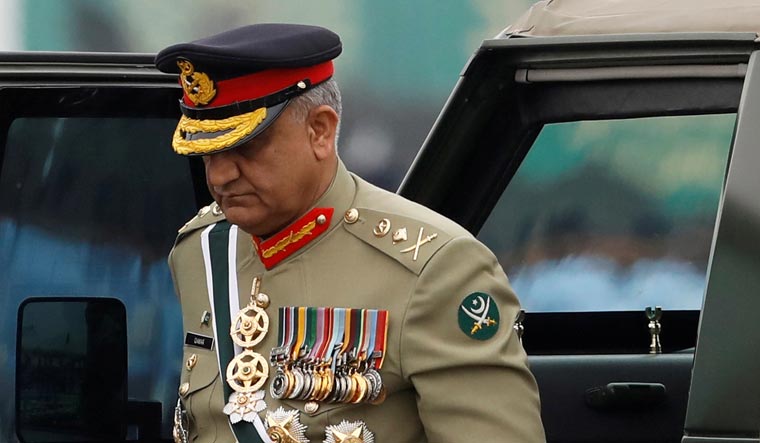
Superannuation is inevitable in all government organisations, and the armed forces are no exception. Yet, the impending retirement of a Pakistan Army chief invariably becomes a major discussion point for the media with endless debates on who is likely to emerge as the next top man of the army. And when the name of the new incumbent is announced, the media swiftly shifts its focus to prognosing on what Pakistan, in particular, and the world, in general, can expect from the new incumbent.

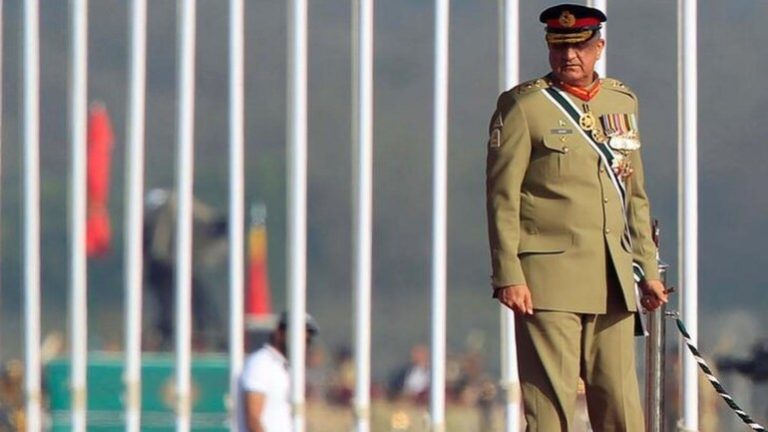
So, why does a scheduled change of Pakistan Army chief become such a fiery topic of discussion? The answer is simple- though it calls itself a democracy, Pakistan has the dubious distinction of being referred to not as a country with an army but an army with a country! No wonder Forbes magazine had ranked Gen Bajwa as the world’s 68th most powerful person in 2018, and mentioning that “Although the president [of Pakistan] is his boss on paper, Pakistan’s chief of army staff is de facto the most powerful person in the nuclear armed state.”  

As such, deliberations on ‘Who After Gen Bajwa’ were expected. However, this routine affair became contentious, thanks to the unprecedented approach adopted by the key players. Normally Islamabad announces the name of the new chief a month or more before the current army chief is due to retire, but it didn’t happen this time, and this gave rise to wild speculation and sent the rumour mill into an overdrive.

A fortnight before Gen Bajwa was due to retire, Pakistani media reported that Prime Minister Shehbaz Sharif was seeking an amendment to Pakistan Army Act [PAA] 1952, which would give him the authority to retain any serving army officer through a simple notification.

With ousted Prime Minister Imran Khan having crossed swords with the army and using uncharitable sobriquets such as the ‘establishment’ and ‘the neutrals’ in a derogatory sense, Sharif’s bid to get PAA amended was seen as a move for exploiting the Khan-Bajwa rift to his own advantage. And with Gen Bajwa publicly denouncing Khan’s political manoeuvres (albeit without naming him), speculations of Gen Bajwa’s service being extended gained more strength.

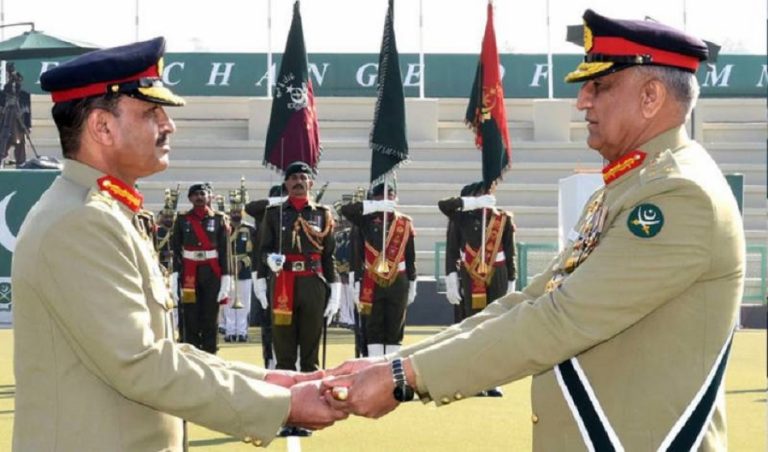
Now that Lt Gen Asim Munir has been named as Gen Bajwa’s successor, media focus shifted on how he will discharge his duties as the ‘uncrowned’ King of Pakistan. This again has become a contentious issue-thanks to Gen Bajwa’s farewell speech on ‘Martyrs Day’, in which he admitted that the Pakistan Army is “often made the subject of criticism [and] a major reason for this is the army’s interference in politics for the last 70 years, which is unconstitutional.”

Gen Bajwa also went on to disclose that “… the army, after great deliberation, [has] decided that it would never interfere in any political matter,” and went on to say, “I assure you we are strictly adamant on this and will remain so.” Since the Pakistan Army has (by Gen Bajwa’s own admission) been unconstitutionally interfering in politics for seven decades, whether or not Gen Munir will walk Gen Bajwa’s talk has naturally become an issue of intense debate.

Some analysts opine that the herculean task of restoring Pakistan Army’s plummeting image will compel Gen Munir to ensure that the army stops interfering in politics, and this is certainly the most logical option. However, there’s a catch- once Rawalpindi loosens its grip over politicians and political parties, there’s no way it can re-establish its extra-constitutional control over the legislature and other organs of the state.

That’s why despite Gen Bajwa waxing eloquent on how Pakistan Army is “strictly adamant” about remaining apolitical in future, Gen Munir is unlikely to walk his predecessor’s talk simply because abandoning the domestic political arena would make things very-very difficult for Rawalpindi. Let’s not forget that even though the Pakistan Army enjoys unbridled power in the country, its highhandedness during Gen Bajwa’s tenure came under severe criticism from several quarters, be it civil society, rights groups, media and even the judiciary!

It’s no secret that Rawalpindi is Pakistan’s ultimate judge, jury and executioner. Its ‘kill and dump’ policy in Balochistan has attracted widespread criticism worldwide, while international rights groups like UN Human Rights Commission, Amnesty International and ‘Reporters Sans Frontières’ [an international non-governmental organisation safeguarding the right to freedom of expression] has repeatedly condemned Pakistan Army’s intelligence agencies for the rampant abductions and physical abuse of media persons who are critical of the army.

Accusing the army of being the biggest “land grabber” in Pakistan, the judiciary has gone to the extent of sarcastically stating that the Pakistan army controlled “DHA [Defence Housing Agency] of Karachi have encroached so far into the sea. If they had their way, they would build a city on the sea. The owners of DHA [Pakistan Army] would encroach on the entire sea all the way to America and then plant their flags there. The owners of DHA are wondering how they can make inroads into India!”

Besides the “land grabber” observation, the judiciary has also gone on record to remind Rawalpindi that “The uniform of the army is for service and not to rule as a king.” In this regard, the Supreme Court of Pakistan pointed out that even though members of the armed forces aren’t entitled the grant of residential plots, “Nevertheless, senior members of the armed forces get plots and agricultural lands and continue to be given additional plots and agricultural lands as they rise up the ranks.” 

Lastly, by contending that “1971 [Indo-Pak war that resulted in the creation of Bangladesh] was not a military, but a political failure,” Gen Bajwa has once again rekindled unpleasant memories of Pakistan Army’s dismal war performance record. To make matters worse Pakistan Army’s inability to Baloch freedom fighters and terrorist groups like TTP has left the people of Pakistan disillusioned. They are questioning as to why despite apportioning a major chunk of the national budget and indiscriminately using draconian laws to brutally crush opposition, Rawalpindi still hasn’t been able to combat home grown terror or subdue secessionist groups.   

So, it’s amply clear that by allowing other state institutions to exercise their constitutional authority Pakistan Army would come under the legal ambit of accountability and give up the numerous illegitimate perks and privileges senior army officers enjoy as well as surrender its illegal commercial assets created on defence land. For ensuring uninterrupted good health and prosperity of senior officers, it’s essential that Rawalpindi remains at the helm of affairs.

Pakistan Army chiefs may come and go and while doing so, make several impressive promises. However, at the end of the day, it’s ultimately the strong instinct of organisational preservation that prevails and thus for any army chief, scaling down Rawalpindi’s authority over other state institutions is nothing less than sacrilege. That’s why the chances of the Pakistan Army keeping away from politics is as remote as the probability of the sun rising from the West.

Why is Pak govt not nominating the next Pakistan Army chief?

The normal practice is that the name of the Commander of Armed Services (COAS) who is supposed to step in the shoes of the outgoing COAS is announced by Pakistan government in good advance. This has been the practice followed in Pakistan ever since the creation of the State of Pakistan for the Muslims of India in 1947.

Gen Qamar Bajwa the in service COAS of Pakistan will hang his boots on 29 November after completing the term of his extended services. Only a few days are left for the event and still the Prime Minister’s office is grappling with the issue of a replacement.

Pakistan constitution entitles the Prime Minister to take a decision about who among the three senior-most three star Generals is chosen to be the next army chief.

The difficulties for Prime Minister Shahbaz Sharif are more than one, complicated as well as sequential. He enjoys access to power through a controversial no-confidence vote in the Pakistani General Assembly in which members continued to change floors till the last moment creating a confusing and dubious situation for the treasury as well as the opposition benches. Shahbaz Sharif was the chief minister of Punjab province where ML(N) was in majority. He did not come through general election and that is his weakness.

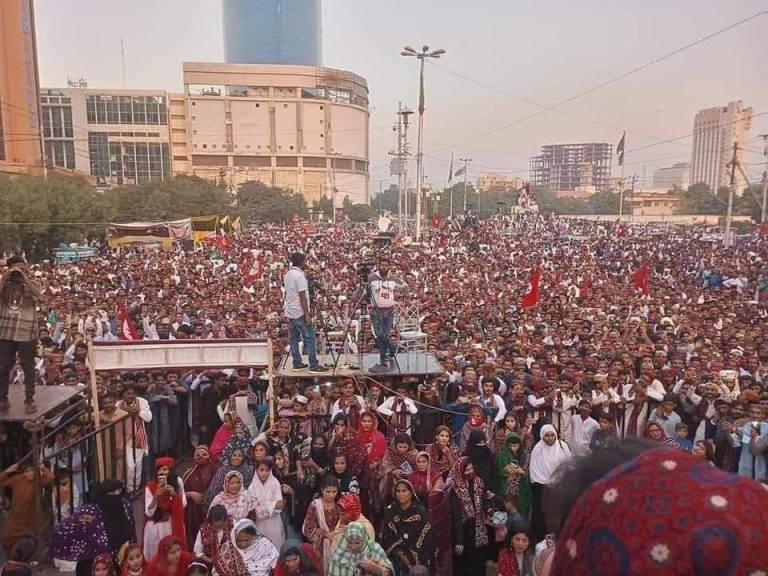
The ousted prime minister Imran Khan did not accept his defeat. He alleged that the entire non-confidence process was irregular and illegal, and an illegitimate government was put in place. He regrouped his supporters in hundreds of thousands, brought out protest rallies, hurled allegations on the ruling group, charged them with horrendous corruption and mismanagement and laid stress on holding general elections without delay.

Perhaps Shabaz Sharif government would not be deterred by these gimmicks of the former prime minister, but two things seriously crippled his initiative of naming the next COAS in proper time. The first was that Imran Khan accused the US of interfering with the internal matters of Pakistan and subscribing to his ouster covertly. The second was charging the top military generals of unimaginable corruption and loot of public exchequer.

Pakistanis are already nursing anger and hatred for the US and the army both. It is a different thing that under the steel arm of dictators, the masses of people never mustered courage to raise their voice against either of the two. But Imran Khan’s bold and scathing criticism of both had an immense impact on the general public. The numbers that followed Maulana Fazlur Rahman in rallies against the government of Imran Khan paled into insignificance in comparison to the numbers that swelled the ranks of Imran’s followers.

The ruling party could not ignore the new development in which its credibility and acceptance by the people was on the downward graph. This entire scenario has been weighing heavy with the Prime Minister.

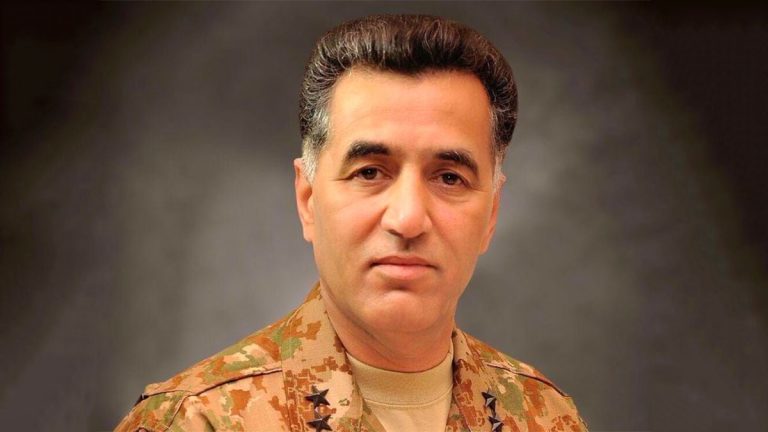
To make things worse for the government, the rumours have been making the rounds that there are differences among the senior officers of the Pakistan Army which became deeper and more irritating when Imran Khan as Prime Minister was unwilling to endorse the recommendation of the COAS (Gen Bajwa) to change the DG of ISI. The acting DG Lt. Gen Faiz Hameed, known to be close to Imran Khan, was to be replaced with Lt Gen Nadeem Anjum. The tussle between the PM and the COAS continued for many weeks and finally the PM had to give in. Lt Gen Faiz Hameed was sent to Karachi as Corps Commander. But he activated his sympathisers in both higher and lower ranks, and posed a challenge to Gen Bajwa. Imran Khan drew his strength from the pro-Faiz Hamid group. The fear is that Lt Gen Faiz Hamid may adopt very hostile attitude if he was nominated as the next COAS to replace Gen Bajwa could lead to a mutiny by the army. The weakling Prime Minister is unable to overcome the dilemma.

Lt Gen Faiz Hameed has been removed as the ISI chief by Gen Qamar Javed Bajwa.
Lt Gen Faiz Hameed was removed as the ISI chief by Gen Qamar Javed Bajwa.

An open split in the army will damage its profile as a dedicated and duty-bound army of a country with a nuclear bomb. The lofty claim of Pakistan that it is the only Islamic country with a nuclear bomb will crumble down and the prestige which Pakistan has been enjoying among some of its allies like Turkey, Malaysia and the US will disappear.

In the meanwhile General Bajwa has started his farewell rounds beginning with Sialkot army headquarter. This stands in contrast to yet another rumour that he is eyeing for the position of the President of Pakistan. Confirmation of this rumour has not come from any quarter but it is presumed that making him the President of Pakistan could be a safety measure against the dissident sections in the army tuning down their hostility to Nawaz Sharif government.

Hindsight shows that the Pak Army has been all powerful in Pakistan ever since the state came into existence in 1947. “The power of the Army chief flows not from the canon of any statute book but from the cannons of steel and fire; this power is historical and not constitutional. Still, it is a real hard power,” wrote a columnist of the Economic Times of 18 November.

The powerful Army, which has ruled the country for more than half of its 75-plus years of existence, has hitherto wielded considerable power in matters of security and foreign policy.

Since its founding in 1947, Pakistan saw seven prime ministers in quick succession in the decade. General Ayub Khan grabbed power in 1958. He “ruled with an iron fist until becoming unpopular and was forced to resign in 1969.” But he handed over power to another military man, General Yahya Khan, who ruled till 1971 and was kicked out when Pakistan was dismantled in the war of 1971. Two more military dictators followed General Yahya, namely Gen Zia (1977 – 1988) and Gen Musharraf (1991 – 2008). Both left bitter memories of internal discord. Army ruled for about one-half of the history of Pakistan directly and the other half indirectly of by proxy. None of the 19 prime ministers completed their allotted five years constitutional term. Another 11 prime ministers were appointed for a short term to oversee the elections or as a stop-gap arrangement. General Bajwa worked with 4 prime ministers and two of them, Mian Nawaz Sharif and Imran Khan, were removed prematurely.

Balochistan’s ‘Enforced Disappearance’ in spotlight after Enquiry Commission’s VBMP camp visit

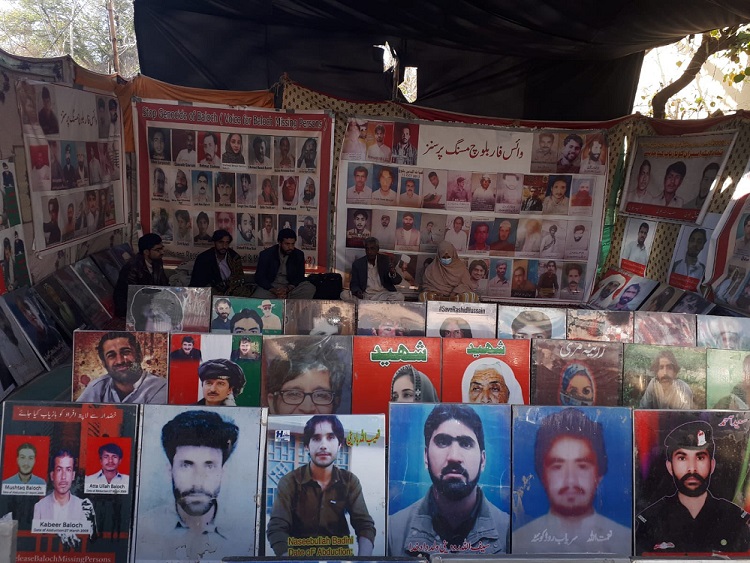
An Enquiry Commission visited the camp of the Voice for Baloch Missing Persons (VBMP) at Quetta on November 15, 2022. VBMP is a human rights organization which is campaigning against the Pakistan Army’s policy of enforced disappearances of the Baloch people. The delegation of the Enquiry Commission met the family members of the victims of enforced disappearances who have been continuously protesting for more than a decade against the enforced disappearances of their loved ones whom the Pakistan Army, intelligence services and other law enforcement agencies arrest or abduct, then detains them in the military dungeons for an undefined period without any trial. The commission is headed by the MNA Sardar Akhtar Jan Mengal, the President of Balochistan National Party (BNP). It’s noteworthy that the BNP is part of the PDM and coalition government of the premier Mian Shahbaz Sharif.

This Enquiry Commission was formed on the directions of the Islamabad High Court in April 2022 while hearing the petition number 794/2022 filed before the court in February 2022 by the renowned lawyer and human rights activist Ms. Imaan Zainab Hazir Mazari. It has been alleged by the petitioner that the Baloch students from Balochistan, who study in the various educational institutions of Islamabad and other cities of Punjab, are being subject to harassment, enforced disappearance and racial profiling by the security agencies in the campuses as well as in their home towns when they go there to visit their families.

The Enquiry Commission’s visiting delegation is comprised of the senator Kamram Murtaza advocate, senior advocate Mir Ali Ahmed Kurd, former senator Afrasyab Khattak and others.

Though the Commission has been formed to enquire the complaints of Baloch students from occupied Balochistan who are seeking education in Islamabad and other cities of Punjab, but the issues complained in the petition are not confined only to the Baloch students seeking education in Punjab but the Baloch youth, particularly students, in the entire Balochistan. Even though the enforced disappearances, harassment and racial profiling of only Baloch students have been complained in the petition but in reality the Baloch from all walks of life across occupied Balochistan are facing the same crimes that have been enumerated in the petition.

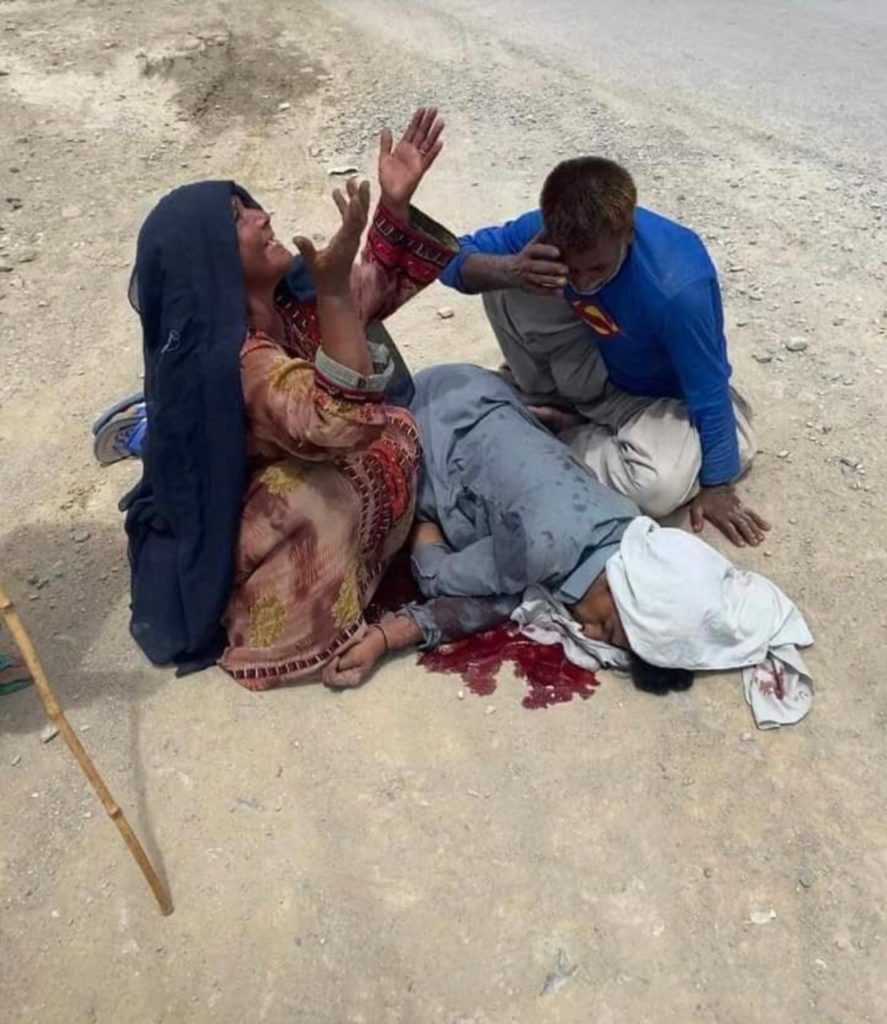
Mother and Father of Hayat Baloch crying over the body of their son. Hayat Baloch was a student and was murdered in cold blood by the Pakistani security forces in occupied Balochistan. (Photo: News Intervention)

The enforced disappearance, racial discrimination and extrajudicial killings of the Baloch youth, especially of the students have been adopted as policy tools by the Pakistan Army and intelligence agencies from the very inception of the current century to suppress the Balochistan’s independence struggle. The military and intelligence agencies, despite the court’s formation of the under discussion Enquiry commission, still continues the operations of enforced disappearances because they don’t deem themselves bound by law, courts, commissions or parliament. They firmly believe in the effectiveness of their savage policy and tactics of forced disappearance of the Baloch patriots.

Interestingly, all the members of the commission including Sardar Mengal, very well know the limited scope and powerlessness of this commission and of the court that’s why they have offered no assurances about their ability to make the culprits accountable or stopping the Pakistan Army and intelligence agencies from committing the crimes which have been complained in the petition. They have only promised to prepare and submit a report that will truly reflect the reality of the situation and the pains and sufferings of the victim families. The delegation was scheduled to meet various authorities including the Corps Commander of the 12th Corps in Quetta, occupied Balochistan.

It’s known to everyone that military is the most powerful institution in Pakistan. The parliament, the executive, the judiciary and media are functioning within the limits set by the Pakistan Army and its intelligence. So called civilians very well know their limits and redlines of the army. It’s not the first commission to address the issues stated in the petition, particularly of the enforced disappearances. Long before this enquiry commission, a Commission of Inquiry on the Enforced Disappearance was established in 2011 by the Pakistan People’s Party’s government to enquire into the complaints of enforced disappearances and hold the perpetrators accountable. A notorious Judge, justice retired Javaid Iqbal was appointed as president/chairman of that commission who still holds the position with zero relief to the victims.

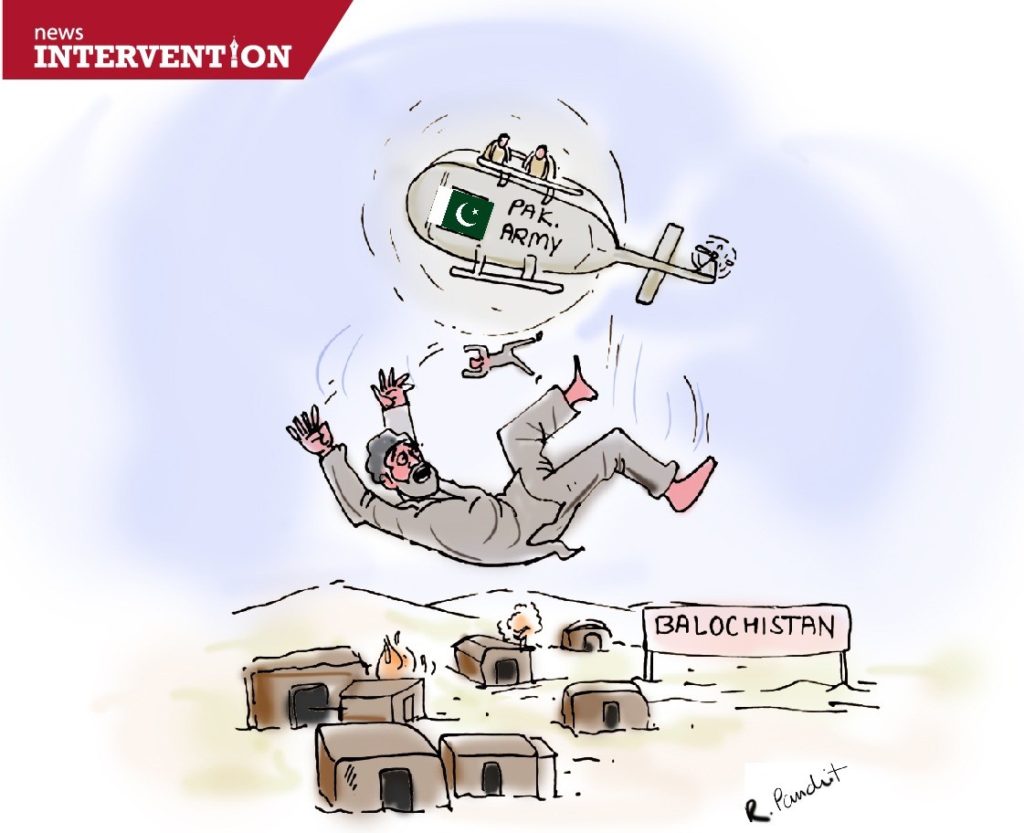
An illustration depicting Baloch people being thrown down form Pakistan Army helicopters in occupied Balochistan.

The UN Working Group on Enforced and Involuntary Disappearances, in its annual report of 2021, had termed the Justice Javaid Iqbal’s Commission of Inquiry on the Enforced Disappearance a failed body with zero credibility and had urged for its dissolution. However, equating this newly created (under discussion) commission to that of Justice Javaid Iqbal will be wrong, because the scope and the assignment of both the commissions are different. It’s also important that contrary to Justice Javaid Iqbal, Sardar Akhtar Jan and most of the members of his Commission, irrespective of their political views and party affiliation, have always been criticizing the use of enforced disappearances by the Pakistan’s military and intelligence agencies. So their position as enquiry commission affords them, along with victim families, a good opportunity and a suitable platform to highlight the crimes of Pakistan Army and intelligence.

Factually the puppet civilian governments, before being sworn into office, enter into an agreement with the military and agree on renunciation of their powers and obligations in favor of the military and intelligence services regarding the affairs of the occupied Balochistan and foreign policy particularly in relation to India and Afghanistan. Such spineless committees and commissions are established by the governments just to defer the issue and buy time. Such commissions are also meant to defraud the world community, international human rights institutions and the people at home by giving false impression of addressing the human rights issues through the legal process.

Same is the position of the apex courts. They deliberately avoid summoning the military and intelligence officers who are responsible for enforced disappearances, harassment, racial profiling and extrajudicial executions of the oppressed Baloch people. They do so to avoid the wrath of the military and intelligence. Because once the Supreme Court of Pakistan under the chiefship of Justice Mr Iftekhar Muhammad Chaudhry attempted to assert its constitutional position by making army and intelligence officials accountable for their crimes against humanity in the occupied Balochistan and elsewhere in Pakistan in 2007. That attempt of the Supreme Court badly annoyed the military. Consequently the military dictator General Pervez Musharraf abolished the constitution, arrested the judges and imposed emergency rule in 2007. That’s the reason the courts refrain from issuing orders against military personnel and prefer to issue directives to the powerless puppet executive. Such directives of the courts are aimed at shifting the burden on other state organs instead of screwing the culprits- the mighty army and intelligence agencies. Such practice of apex courts is nothing but a face saving.

In view of the above mentioned facts, a logical question arises whether the formation of the said commission and its proceedings are a futile exercise or are helpful in advancing the case of the victims of enforced disappearances?

A brief analysis of the question shows that proceedings of the courts and such commissions are not a futile exercise. Though referring the issue to the enquiry commissions or committees is aimed at shifting the burden and for deferring the matter for buying time or a face saving by the courts and executive. Furthermore it helps Pakistan to give a false impression of the rule of law in the occupied Balochistan. Besides, it may also promote a temporary belief in the legal system of occupier — Pakistan. Despite of the above mentioned all demerits, the proceedings before Kangaroo Courts and spineless enquiry Commissions and committees are helpful in keeping the agitation alive on enforced disappearances and other human rights violations, drawing the attention of the human rights groups, media and people. It’s also helpful in mobilizing the masses and exposing the Human Rights Abuses and War Crimes of Pakistan.

Proceedings of such platforms are a good source for exposing the savagery of Pakistan Army and intelligence services, their crimes against humanity, War Crimes and Pakistan’s colonial rule in Balochistan. Establishment of such committees and commissions amount to a confession of Pakistan’s use of enforced disappearances of Baloch youths, students and intellectuals as a weapon against the Baloch independence movement. Such platforms and their proceedings may serve as an effective means for the components of the Balochistan’s independence movement to highlight the gross human rights violations such as enforced disappearances and extrajudicial killings of the Baloch patriots.

The concluding point of this article is that the formation of such commissions on the issues of enforced disappearances, harassment, racial profiling and extrajudicial executions of the Baloch people, particularly the youth and students is an acknowledgment of the fact that Pakistan has lost its status as a legal entity in countering the Balochistan’s freedom struggle. The Liberation Movement of the occupied Balochistan has paralyzed the Pakistan’s colonial establishment in the region. Pakistan’s military has lost its capacity to combat Balochistan’s freedom forces and people’s long cherished aspirations for independence through international legal standards.

Though sometimes foreign analysts describe the Baloch freedom movement a low-level insurgency but were it true then Pakistan must have dealt with it within its constitutional and legal framework. Pakistan’s use of Enforced Disappearances, Fake Encounters, Kill and Dump etc. and its war crimes in occupied Balochistan indicate a different reality.

BLF attacks Pak Army in Balochistan

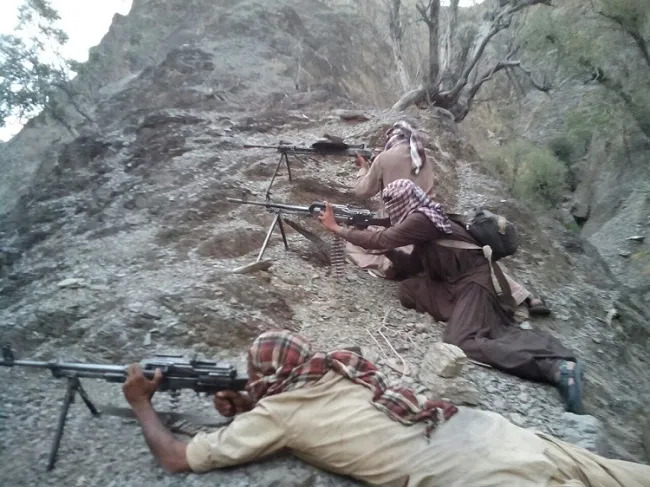
The Balochistan Liberation Front claimed responsibility for the attack on the camp of Pakistani army at Jebri in Mashkay.BLF freedom fighters targeted the main camp of the Pakistani army at Jebri in Awaran with rockets and heavy automatic weapons.

As a result of the attack, the occupying army faced loss of life and property. It was reported that the enemy army fired mortar shells in several directions, but the fighters reached their safe places after the successful attack. In another incident the freedom fighters of Baloch Liberation Army targeted a personnel carrier vehicle of Pakistani military forces with an IED in Hoshaap, Kech. In the attack an enemy personnel was eliminated and two were injured, whereas, the vehicle was destroyed. The BLF spokesperson said that the attacks on the enemy forces would continue until the independence of occupied Balochistan.

Pakistan is mired in a multi-cornered political disorder

Imran Khan’s Assassination Attempt
The Supreme Court of Pakistan has ordered that an FIR be lodged on the attempted assassination of the former Prime Minister, Imran Khan during his party’s long march. But the Punjab government is hesitant to do so. The reason is that while it agrees to name the Prime Minister and the Home Minister as the conspirators of the assassination attack, it would not want to include the name of Maj Gen Faisal of ISI among the handlers. Imran Khan categorically mentioned the three names responsible for open gunfire on the protesters in which 12 persons were wounded and one was killed on November 3 at Wazirabad in Punjab.

Pakistan Supreme Court has not mentioned any name in its order but Imran Khan is insisting on the inclusion of the ISI officer. He knows naming the ISI officer means dealing a blow to the integrity of the ISI which the establishment would not allow to happen in any case.

Stubborn opposition to interference by the army and its powerful wing ISI in the administration of an elected government of the people is the primary stake of the Tehreek-e-Insaf Party of the former prime minister. 

How Imran Khan became PM and Why was he ousted?
Imran Khan enjoyed the support of Gen Bajwa and the establishment to become Prime Minister. Gen Bajwa wanted to make the Sharifs and Bhutto irrelevant in Pakistan politics and was fascinated by Imran Khan’s strong ideas of eradicating corruption. He was also a former cricketer like Imran Khan and the equation between the two was in place.

But the bonhomie did not last long and the case of replacement of Lt Gen Faiz Hameed by Gen Bajwa became the catalyst for the inevitable fracture between Imran Khan the prime minister and the establishment.

As PM Imran Khan found that the Pakistan Army and ISI both had developed strong clout in the Pentagon. He was convinced that the Pak Army and ISI both owed their power and influence to the Pentagon. Therefore the real challenge to his authority and the bravado of the establishment surfaced from the US. Consequently, he fed his party men and the Pakistani youth in particular with an anti-American wavelength.  

Now the ISI began contriving his ouster; a vote of no-confidence in the national assembly was the way to a successful mission. A letter claimed by Imran Khan to have been allegedly written by a senior functionary in the US State Department was brandished by Khan during the markedly turbulent non-confidence vote debate in the National Assembly. The government quarters considered the letter a fake one and the State Department disowned any document that reflected its involvement.

Imran Khan was removed but his anti-America narrative dovetailed into the ISI-Pentagon connection and worked well with his fiery and youthful followers in the party. He projected himself as the victim of the Pak Army, ISI, opposition parties and the US. This multi-cornered political disorder and rivalry spelt disaster for the nation. Political storm raged in full fury.

Maulana Fazlu’r Rahman of Jamiat’l-Ulema-e Pakistan, the coalition party in the Shahbaz Sharif government, chaffed the assassination attempt. He called its dramatics more fascinating than what famous Bollywood actors like Salman Khan and Shah Rukh Khan stage manage. He asked amusing questions like how many bullets were fired; was only one leg wounded or both; how Imran withstood a long journey of more than 150 miles to reach the hospital where he was admitted etc. This indicates that the opposition is taking the event lightly and rather cynically.

In the meanwhile, Prime Minister Shahbaz Sharif has ordered the constitution of an inquiry committee into the case of firing at the mass rally of the PTI party on 3 November in Wazirabad. Imran Khan has welcomed the action of the Prime Minister but has also expressed his diffidence in the inquiry commission.

There are conflicting reports about the resumption of the long march of PTI. Imran Khan has nominated Shah Mahmud Qurush, the then foreign minister of Imran Khan, to lead the resumed march till the crowds reach Islamabad. By that time he would recover and be able to join the rally in Islamabad.

What do the Pakistanis think?
Imran Khan seems to have won public sympathy for his cause whatever it is. A stir is witnessed almost in all major cities and towns of Pakistan. His sympathisers are raising provocative slogans like remove the Sharif government, down with the establishment and even shouting slogans asking for the removal of Pak Army chief. These yelling crowds can go out of control. Even the women’s wing of PTI has come to the streets in strong protest against the government.

Gen Bajwa will be retiring by the end of this month. The government has not so far nominated his successor. Imran Khan has suggested that Gen Bajwa should continue till elections are held and the new government will nominate the next Pak Army chief. Believing that he will win the elections and become Prime Minister, he will appoint his confidante Lt. Gen Faiz Hameed as the army chief so that he can have one or two more terms in office without hassles.

This being the story of competitive rivalry and domestic squabbles in Pakistan, there remain fundamental issues which all political parties are loath to grapple with. Most of these debilitating issues emanate from the diseased mentality of Pakistani ruling circles. It is the inherent hatred and animus against India and the Hindus. From this deep-seated malaise has originated the intransigent concept of Islamic terrorism and the formation of state-sponsored terrorist outfits categorized as the frontline defence against the alleged Indian incursion. First religious minorities like the Hindus, Shia, Ahmadis, Parsees, and Christians became the victims of these barbaric groups and later on ethnic groups were added to the list of identified victims. In this way, the entire Pakistani society was militarized as full state patronage flowed without any reservation.

Amusingly, while media persons and political dissenters generally accuse the Pakistan Army of using illegal means of amassing wealth and dumping it in foreign countries, nobody in Pakistan has been demanding a thorough probe into the origin, growth and activities of scores of terrorist organizations. The state says that these groups receive funding from donors within and outside the country but the history of hawala transactions in Kashmir has revealed that the primary and most frugal donor of these terrorist organizations is the State of Pakistan. That is why the FATF had been placing Pakistan on its grey list until recent weeks. The FATF knew the sources of funding.

Apart from domestic uncertainties and divisive forces, Pakistan has to rebuild its clean profile in the eyes of the international community. It has to wash away the stigma of the “mother of international terrorism”. That cannot happen by gimmicks, tricks and denials.

Who will replace Gen Qamar Javed Bajwa as Pak Army chief?
General Bajwa will retire on 29 November. There is no indication in official and army circles that he will be given an extension. Therefore, the possibility of a military takeover is out of the question. But the government has not announced the name of his successor and that can lead to various guesses. Also, the Pakistani government is not in the mood of announcing general elections shortly. Shahbaz Sharif’s government does not foresee any serious eventuality to decide on early elections. The so-called Long March is likely to come to a clueless end.   

Recently sections of international media carried the story that Pakistan has been thinking positively about providing Ukraine with the technology of nuclear-powered ballistic missiles. It is difficult to verify this news but we know that delegations between Pakistan and Ukraine have been exchanging visits. Pakistan is in dire need of foreign exchange and she would not share any nuclear secrets without receiving adequate cost or compensation. Ukraine is not in a position to pay a hefty amount for the guided missiles. Naturally, she will approach her benefactor to bail her out. The question is whether this is a bilateral or trilateral transaction if it matures.

Lastly, Pakistan and its economic woes form a separate subject. We may do it next time.

Why China blocks India’s bid to blacklist global terrorists

The Context

On 19 October 2022, in yet another brazen and misused display of its veto power, China blocked a joint resolution backed by India and the United States to designate LET leader Shahid Mahmood as a global terrorist under UNSC 1267 AL Qaeda Sanctions Committee regime. This thwarting attempt is the fourth in a row this year. A broad realist theoretical framework highlights China’s more comprehensive policy of pursuing its parochial, selfish national interests without paying heed to global sensitivities. Paying lip service to the Purity of means, the Chinese have epitomized the dictum of Purity of ends over Means in the past couple of decades. China has no scruples in deploying the utmost irrational, illogical and immoral rationale behind its moves to achieve its sacrosanct foreign policy goals.

The Timeline

In the past five years, China has foiled India’s bid to blacklist terrorists of already proscribed organizations on multiple occasions. In 2016, seven years after the dreadful Mumbai terror attacks, India proposed the designation of Masood Azhar, the head of already proscribed Lashkar e Taiba, as a global terrorist. This proposal, backed by three of the five P5 of the UNSC, the UK, France and the USA, was blocked by China, citing flimsy technical grounds. It was followed by the trio moving a proposal again in 2017, only to be blocked by China again. It was only in 2019, after severe backlash and criticism faced by China in the aftermath of the Pulwama attacks, that China lifted its technical hold, paving the way for putting Masood Azhar on the global terrorist list of the UNSC 1267 Sanctions Committee Regime.

Interestingly India is also currently serving as chair of the UNSC Counter-Terrorism Committee for the year 2022. While India has called for a sustained and coordinated approach to fight the menace of global terrorism, China, on the other hand, has repeatedly blocked India’s efforts in this direction. Firstly, in June 2022, China blocked a joint India US proposal for blacklisting LeT deputy chief Abdul Rahman Makki. This was followed quickly by the second attempt to block the designation of Sajid Mir, the mastermind of the 26/11 Mumbai terror attacks. The third attempt was in August this year when China foiled an Indian bid to designate Abdul Rauf Ashgar, one of India’s most wanted masterminds of the IC814 hijacking. The fourth and latest attempt was to block the designation of Hafiz Saeed’s son Talha Saeed and LeT deputy chief Shahid Mahmood as a global terrorist on vague technical grounds.

The Chinese Motive

Eminent geoeconomic, geopolitical and strategic rationale underpins China’s repeated attempts to block Indian bids to proscribe specific individuals as global terrorists as part of its war on terror. The all-weather and iron-brother friendship between China and Pakistan is an overarching thread that runs through all of these logics. Hailed as “higher than mountains, deeper than oceans, stronger than steel and sweeter than honey”, this friendship has belied the famous dictum of “No permanent friends and foes in international relations”.

A sound economic logic informs China’s repeated attempts to foil India’s bid. The China-Pakistan Economic Corridor (CPEC), which forms part of President Xi Jinping’s pet project, the Belt and Road initiative (BRI), is critical to the Chinese agenda of putting forward an alternative plan for infrastructure development and connectivity. In a larger sense, it holds the key to what China has triumphantly touted as a “Beijing Consensus” model as opposed to the US-dominated neoliberal “Washington Consensus”. China has invested heavily in infrastructure development and connectivity projects to the tune of $62 US billion. The Gwadar port, which constitutes the heart of CPEC, holds a lot of economic and strategic significance for China and has been widely touted as a viable alternative to the Chinese “Malacca Dilemma” in the Indian Ocean region.

Multiple reports have suggested that CPEC has run into trouble owing to protests by Baloch nationalist elements and attacks on crucial projects. The massive influx of the Chinese population has led to severe demographic alteration and reports of violence against Chinese nationals and workers. A palpable sense among many of these protesting sections has been that China has essentially turned Pakistan into a colony and is imposing a debilitating impact on it in terms of both resource crunch and no tangible economic benefits for Pakistan. Debt trap diplomacy of China, especially in the case of Hambantota in Sri Lanka and its financial collapse, has further alarmed the people of Pakistan of it also falling into a similar kind of debt trap in future. It has exposed the land-grabbing nature of China, leading to protests and attacks. Masood Azhar, whose blacklisting China blocked multiple times, has been a go-to man for them. China has been paying its organization and goons to protect Chinese economic interests in protest-hit regions.

At the strategic level, competition with India has been a critical factor behind China’s move. China which seeks to build hierarchical world order, wants India not only to play second fiddle but also to box in India in South Asia. At the broader level, Pakistan has been pursuing a policy of “bleeding India by thousand cuts” and invocation to “thousand years of war”, with India couched as a low-intensity covert war through militancy and infiltration. In the broader scheme of things and to put India down, China uses Pakistan as a strategic ally and exploits hostility against India, the raison d’etre for Pakistan. China has cultivated the vicious China-Pakistan nexus in India’s neighbourhood to stoke extremism and terrorism on its eastern and western borders to keep them unstable, hampering India’s growth prospects. China’s logic to put a technical hold doesn’t hold water as LeT and Jaish e Mohammad has already been proscribed under UNSC 1267 sanctions committee regime. China’s attempts have been primarily to buy time by citing vague grounds such as that sufficient linkages do not exist between 1267, a specific clause dealing with Al Qaeda and Islamic State and these individual terrorists.

At the political level, China has tried to build a narrative in its favour through institutions like SCO, which includes a Regional Anti-Terrorist Structure (RATS) specifically dedicated to combating the menace of global terrorism. However, China’s double standard and double-speak are quite evident given its track record at blocking Indian bids to sanction international terrorists. 

Another critical factor for China’s non-recognition of threats of terrorism, which it actively abets and finances in its backyard, can be attributed to a lack of proper and complete understanding on the part of the Chinese Communist Party of the debilitating impacts of terrorism. CCP and China’s leadership which has embraced Communism as the party ideology for the past seven decades, has always responded to religion-based terrorism in a knee-jerk manner. The immaturity of Chinese understanding is quite apparent, whether in the Falun gong, Xinxiang Uighur Muslim issue, its attempts against the Christian church, and specific advisories against Indian cults.

Pak army’s aggression is driving Baloch to suicide: BNM

The spokesperson of the Baloch National Movement in his recent statement stated  people in Balochistan were being forced to commit suicide because of the aggression of the Pak army.State repression had led to the suicide of Ajaab Yelanzhai’s brother Lutfullah Yelanzhai and his wife. He added, “ these are not suicides but murders”. He said that the Pak army continuously kept raiding Ajaab’s house even after he was harassed physically and mentally  which led to Yelanzhai’s wife to commit suicide which was followed by the suicide of her grieving husband.

He said that suicides in Balochistan has become a social problem and has escalated to another level. People in Balochistan have become frustrated with the repression of the Pak army and the puppet government not doing anything. Majority of the suicide victims are a younger lot while women are also committing suicide in large numbers.

Who could’ve planned Imran Khan’s assassination

Spontaneous or premeditated?
With contradictory claims being made by the assailant responsible for the murderous attack on former Pakistan Prime Minster Imran Khan, and what his own party members are saying, the ‘who and why’ behind this shooting is certainly bound to create much debate. If what the alleged shooter is stating in a video leaked by the police is to be believed, then it’s clearly a personal and individual act. However, if one goes by what senior Pakistan Tehreek-i-Insaf [PTI] leader Fawad Chaudhry is claiming then it is “a planned assassination attempt.”

Questionable motives
In what appears to be confessional video recorded by law enforcing agencies after his apprehension, the assailant says, “I wanted to eliminate him because he [Imran Khan] was misleading the people. I tried to shoot him and nobody else….” While what he has said may well be true, certain issues related to this incident do cast a shadow of doubt.

One, attempting to close-in and assassinate an eminent personality in broad daylight and that too when he’s surrounded by several security personnel and a sea of supporters, making a getaway is near impossible. Accordingly, anyone embarking on such a suicidal mission would have reconcile with the fact that he could be either shot by the security detail or even lynched by the irate crowd. This requires extraordinary motivation.

Two, there’s no doubt that radical political, ideological or religious beliefs can cause momentary loss of rationality and make one act in a bizarre manner. However, in the video, the assailant has specifically said that I acted alone, nobody else is involved.” This claim as well as his “misleading the people” reasoning for the attack doesn’t sound very convincing, especially since misleading people is a common trait in all politicians, that all of us have learned to live with.

Similarly, PTI’s claim of it being “a planned assassination attempt” too is hard to believe for a host of reasons. Senior PTI members Asad Umar and Mian Aslam Iqbal have stated that “He [Imran Khan] believes there are three people on whose behest this was done – Shehbaz Sharif, Rana Sanaullah and Maj Gen Faisal [Naseer].” This allegation has substance, especially since the ISI has long been suspected of orchestrating targeted extra-judicial killings.

Having mastered the art of covering its tracks, the ISI has never been indicted on this account. So, seeing the clumsy manner in which the ‘hitman’ went about trying to kill Khan and allowed himself to be apprehended lacks the characteristic finesse of ISI’s covert operations. So, ISI’s involvement in this assassination attempt appears unlikely.

One or more attackers?
As per media reports, only one assailant armed with a pistol was involved in the assassination bid. According to media reports, he had emptied a complete magazine and besides Khan sustaining “multiple bullet injuries” in his leg, the attacker managed to kill one person and injure another 14. He was in the process of replacing the empty magazine when he was apprehended.

Even a pistol with a high-capacity magazine can house a maximum of 14 bullets. Since the attacker had fired only a magazine which caused a total of 16 fatal and non-fatal casualties, it emerges that not only every bullet fired by him hit someone, but at least two bullets had injured more than one person. Though theoretically possible, such accuracy with a pistol in a melee is well nigh very difficult to achieve.

PTI leader Chaudhary has however alleged that “It was not 9MM [pistol], it was a burst from [an] automatic weapon,” and speaking to Bol TV, PTI leader Imran Ismail said that the attacker who fired at Khan was wielding an AK 47. Surprisingly, there has been no subsequent mention of an AK 47 rifle being used in the assassination bid, but since its magazine holds 30 bullets, there being 16 casualties lends weight to the claim of an AK 47 being used. So, could it be that besides the apprehended pistol wielding man, there was another assassin with an AK 47, who managed to escape? Could the man apprehended be a gullible person intentionally planted to act as a decoy?

Who benefits?
Since Khan has been critical of both the government and Pakistan Army, the finger of suspicion does point at them. However, both know that any attempt to physically harm Khan would be tantamount to making him a ‘martyr’ and only further enhance the PTI chief’s popularity. So, who would really benefit from a murderous attack on Khan?

For one, it could be PTI itself as an assassination attempt would earn it public sympathy as well as further demonise the government and Rawalpindi. However, since it involved putting the PTI chief’s life in danger, using this perilous ploy merely to earn goodwill and put down the PML-N government and the Pakistan Army doesn’t make any sense. Yet, let’s not forget that when it comes to politics, anything is possible.

Next, we have the political parties. There’s no doubt that Khan has emerged as the ‘hero’ of the masses and the opposition knows that he can effectively use agitation as a tool for arm-twisting Rawalpindi into agreeing to his demand for early elections. Should this happen, then Khan’s electoral victory is assured, yet while opposition parties would theoretically have an interest in his extinction, the humongous negative backlash would act as a deterrent. Conversely, with the ‘desperate times call for desperate measures’ approach being the hallmark of politicians, for them to play with fire is no big deal!

Lastly, we come to Rawalpindi and ISI. Beleaguered by public anger against its highhandedness and exercising power without responsibility, Pakistan Army has everything to lose by orchestrating the assassination of Imran Khan. So, it’s unlikely that the assassination could have been explicitly ‘sanctioned’ by it. However, it’s no secret that under the veneer of professional integrity and unity, the Pakistan Army is plagued by internal divisions driven by the lust for power and commercial interests.

So, could it be possible that Khan’s unconcealed preferences for some Generals as well as disdain for others may have been perceived by some ‘power centre’ as a threat to its fiefdom? Accordingly, could such a rogue group within ISI have considered it expedient to remove Khan from the scene to preserve its turf? Though this course of action would have its adverse implications at the national level, it wouldn’t directly impact the perpetrators and hence has a reasonable degree of plausibility.

But there is one thing about this option that somehow doesn’t gel. If some coterie within the ISI is involved, then why did it employ a greenhorn for this ‘hit’ in the first place and arm him with just a pistol, which is a weapon that can only fire single shots and not an AK rifle which can fire rapid bursts? Secondly, why didn’t the masterminds incorporate a backup plan of silencing the assassin to avoid his apprehension and subsequently spilling the beans.

Or was it just meant to be a mafia-type warning for Khan?     

BLM condemns military aggression in Bolan

The spokesperson of the Baloch National Movement condemned the military aggression in different areas of Bolan and said that Pakistan was taking the Baloch genocide to a new level. The killing of people had been continuing unabatedly in the length and breadth of Balochistan. Human rights were brazenly flaunted in those military operations.

The spokesperson confirmed that dozens of men, women and children had been detained and forcibly disappeared in an ongoing military operation in Bolan.

Zargul Marri, Hanifa Marri, Dur Khatun Marri, Mahsu Samalani, Gul Bibi Samalani, Samu Samalani, Zarbakht Samalani, Bani Samalani, Sameeda Samalani, Farida Samalani, Raji Samalani had for four years been forcibly disappeared. Rakhia Samalani’s wife Mhana Samalani and their Son Kalim Samalani were among those who had been forcibly disappeared in the recent operation.

He said that “During this military aggression, the mutilated body of ‘Mohammed Ghaus Marri’ was found at Saffari near Sangan on November 4, who had been forcibly missing and was in the custody of the Pakistan army since September last year (2021).”  

He said that the Bolan operation is part of the ongoing collective punishment against the Baloch nation. Pakistan army has turned the Baloch homeland into a Nazi-style concentration camp and is clearly violating the laws of war. In the ongoing operations, women and children are being brutalized collectively. Prior to the Bolan operation, the Ghichk area of Panjgur was completely converted into a concentration camp by the Pakistan Army where it has been made mandatory to take permission from the army for normal transportation and by limiting the ration of the residents, they had been banned from buying more than the prescribed limit.

The spokesperson said that collective punishment shows the failure and cowardice of Pakistan against Baloch Freedom fighters and that whenever the Pakistan army is defeated on every front, it takes revenge from the unarmed people.