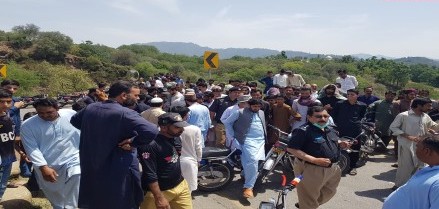
Public Action Committee Gilgit Baltistan protested in Pakistan occupied Kashmir against inflation,anti-poor policies of the government and the luxuries of bureaucracy in Diniur Gilgit.The meeting was attended by central leaders of the People’s Action Committee, leaders of youth and civil society constituencies, Chairman Public Action Committee Fida Hussain, Vice Chairman Syed Yasab-ud-Din, General Secretary Maulana Tanveer Haideri, Senior Leader Comrade Shabir Mayar, Chairman KNM Mumtaz Nagri, Young Leader Sher Nadir, Chairman Civil Society Maulana Akbar Wazir, Leader Civil Society Abrar Baguro , Civil Society Leader Akbar Shah and a large number of people.The resolution was unanimously adopted with the support of all participants at the meeting.The poor people of Gilgit-Baltistan have fallen into the mill of inflation due to the dismal policies of the government. They demanded that the government needs to immediately restore the subsidy on all goods keeping in view the controversial status of Gilgit-Baltistan.They further said that the puppet government should eliminate the royal expenses and incentives of all government officials, bureaucrats and ministers and advisors of Gilgit-Baltistan to provide relief to the poor people.The government should stop providing 1300 cc to 1600 cc vehicles to all government officials, secretaries and ministers and ban private use of government vehicles.
They urged the government to set up utility stores across Gilgit-Baltistan at the local level and provide the subsidized items to the public under the list available with flour dealers so that it is easily possible to supply affordable items to every household.The Committee warned that the government should seriously consider these demands and ensure implementation or else the Public Action Committee would spread its protest movement and grievances across Gilgit-Baltistan.
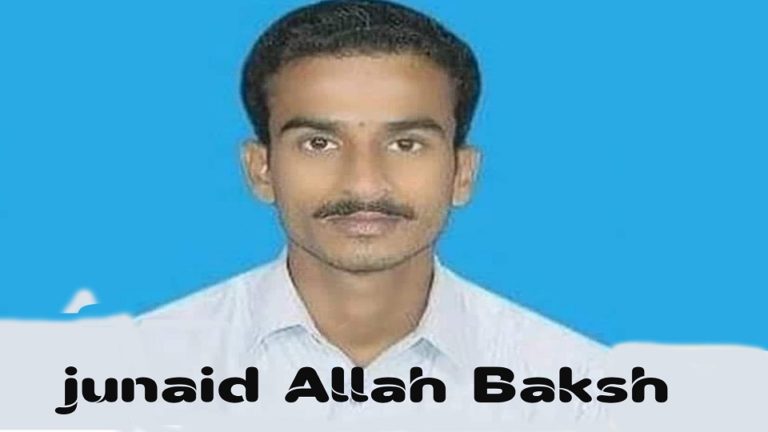
Maulana Hidayat-ur-Rehman, head of Haq Do Tehreek, has claimed that the forcibly disappeared Junaid, son of Allah Bakhsh, a resident of Gwadar, was killed by Pakistani forces while in custody and that his body has not been handed over to his family.
Junaid Baloch, son of Allah Bakhsh, a resident of Gwadar, a coastal city in Balochistan, was forcibly disappeared from Othello Zero Point on 12 October, 2012.
Maulana Hidayat-ur-Rehman said this while talking to media persons on the occasion of the visit of Pakistani Prime Minister Shahbaz Sharif to Gwadar today. “We have learned from internal sources that the forcibly disappeared Junaid son of Allah Bakhsh, who has been missing since now , will not be handed over to his family after being killed in custody”,he said.
It may be recalled that Pakistani Prime Minister Shahbaz Sharif was scheduled to visit Gwadar while the people of Gwadar were sitting on his way in support of their demands.
He said that Balochistan was being neglected by the federal and provincial governments. The problems of Gwadar and Makuran are not being solved and he added, “Top officials only meet certain sections of the population during their visits, that’s why the legitimate basic issues of the people are being ignored. The policy of keeping the marginalized happy will no longer work”.
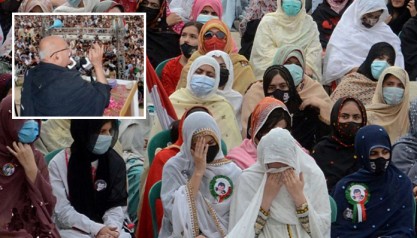
A grand meeting was held on the first anniversary of the martyrdom of Milli Atal Milli Usman Khan Kakar, the leader of the Pashtun national political movement organized by Pashtunkhwamap at the Hockey Ground in Quetta, capital of occupied Balochistan.The meeting was presided over by party chairman Mahmood Kan Achakzai.Party Central Secretary General Mukhtiar Khan Yousafzai, Senior Deputy Chairman Abdul Rahim Ziaratwal, Central Secretary Information Raza Muhammad Raza, Central Secretary Obaidullah Jan Babat, Waranga Loni, Provincial Vice President Yousuf Khan Kakar, Provincial Secretary Information Khushal Khan Kakar, District Secretary Qila Saifullah Chairman Allah Noor Khan addressed the meeting.Mahmood Khan Achakzai congratulated all party workers and officials of party agencies for organizing a grand public meeting on the first death anniversary of Milli Usman Kakar and said that party workers and officials paid rich tributes to party leader Usman Khan Kakar for his great national service and sacrifices through his hard work.He said,”We are celebrating the first anniversary of Usman Khan Kakar in such a situation that the region is facing a worrying situation as a result of the policies adopted by Pakistan and Iran with regards to Afghanistan”.He further said, “I want to discuss the establishment of Pakistan on the death anniversary of Usman Khan and the disastrous consequences of the policies adopted by the rulers of Pakistan and Iran on Afghanistan,and I want to make it clear to the rulers of our country that Afghanistan has not accepted slavery to anyone in its history.When the colonial forces ruled all the Islamic world except Turkey, the proud Afghans still kept their flag of stability and freedom high.Afghanistan is building a graveyard of world’s large global colonial empires.Nations and areas whose people have lived in long slavery have no idea of the value of freedom.The Afghan people have always defended the stability and freedom of their beloved country at the cost of their lives”.
He said that the Ukraine war has put the region in a dangerous situation and as a result of the wrong policies of the country, the economic crisis of the country has taken a disastrous turn.He claimed “If anyone loves Pakistan’s defence, they have to defend Afghanistan’s stability and independence because Pakistan’s defence is subject to Afghanistan’s defence.If the stability and independence of Afghanistan is ended, it will be impossible for Pakistan and Iran to maintain their independence”.He said that the policy of making Afghanistan the fifth province of Pakistan during the reign of President Ghulam Ishaq Khan and the strategic death policy of our generals would be disastrous.Our establishment has to withdraw from this anti-Afghan policy.They must wholeheartedly recognize the stability, independence and sovereignty of Afghanistan.He said Pashtun Afghans in the Federation of Pakistan have found their own defense of Afghanistan’s stability and independence and consider it a religious duty.
He said that in the Pakistan-India war of 1965 and 1971, Zahir Shah of Afghanistan remained neutral and said that even though we have problems with Pakistan, we will not create a problem for the Muslim country.He said Pakistan’s current serious economic crisis was the result of anti-people policies of establishment.“Our poor people do not even have two meals a day.We want to make it clear to Shahbaz Sharif and Maulana Fazal Rehman Sahib that our people are not able to bear this economic crisis.Even after holding new elections, the solution to this serious economic crisis is not such an easy task.To solve this serious economic crisis of Pakistan, fundamental changes are needed in the economic system of the country.If Pakistan’s parliament is not recognized as a source of power and the Senate does not get the same powers as the National Assembly, it is not possible to solve our problems”, he said.
On the completion of three years of the extradition and abduction of missing Baloch activist Rashid Hussain to Pakistan, a protest was staged in Quetta, capital of occupied Balochistan.
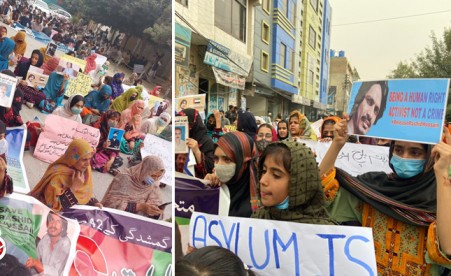
The demonstration was attended by members of student organisations including political activists and relatives of the missing persons.Rashid Hussain was detained and transferred to an undisclosed location by Pakistan’s intelligence agencies from Sharjah in the UAE on 26 December 2018, where the Baloch activist was later brought to Pakistan on 22 June 2019.According to Rashid Hussain’s family, Rashid has been illegally transferred to Pakistan by the Emirates authorities at the behest of Pakistan while Rashid Hussain’s life is in danger in Pakistan and he was living in exile.It may be recalled that Rashid Hussain’s transfer to Pakistan was confirmed by Abdullah Sheikh, in charge of Counter Terrorism Department (CTD), Karachi, through a TV Interview on 3 July.According to Abdullah Sheikh, Rashid Hussain has been brought to Pakistan through interpol.Addressing the demonstration, Rashid Hussain’s mother said that her son has not been seen since his abduction in the Emirates.According to Rashid’s mother, her son was missing on a tip off over the ongoing atrocities in Balochistan.Addressing the demonstration, Voice for Baloch Missing Persons Chairman Nasrullah Baloch said that cases of forced disappearances in Balochistan are increasing day by day. People are being subjected to abduction instead of being rescued. When the Prime Minister came to Blaochistan, he had said that he would talk to the powerful circles to recover the missing persons.Nasrullah Baloch said that the relatives of the missing people record their protest day in and day out so that they can convey their grievances to the authorities but there is no to hear these relatives.
Female human rights activists and members of Karachi civil society, Sheema Kirmani, Uzma Noorani, Mehnaz Rehman, Sara Zaman, Sajida Baloch and Naghma Sheikh held a joint press conference at Karachi Press Club on Monday.
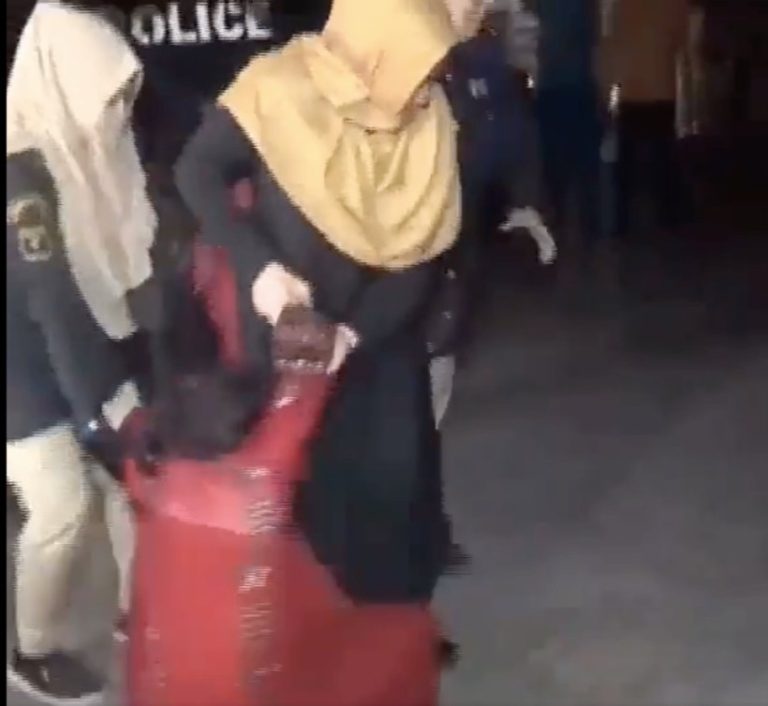
While addressing the press conference, they expressed concerns over the police brutality against the families of Baloch missing persons in front of the Sindh Assembly in the past week. They termed this act as dictatorial and said that Shaheed Benazir Bhutto always gave top priority to women’s rights but today, under the PPP government, such violence against women contradicts Benazir’s political ideology.
During the press conference, the activists said that protest was a democratic right of every citizen. The relentless use of force by the police is an obstacle to fundamental democratic rights. Expressing concern over police misconduct, they said that they believed that Sindh Chief Minister Syed Murad Ali Shah could not be absolved of his responsibility just by forming an inquiry committee.
New frameworks for Secular Humanism will be required when pillars of the international community continue to enter a renewed era of besiegement. Not even necessarily directly as a consequent of the comprehension of the philosophical lifestance of Secular Humanism or of the associated philosophies related to them, where many philosophies crosslink with it, including non-theist religious.
It’s a natural outgrowth or organic consequent of neglect from monocultural views of social ideologies and religious frameworks as political tools. Think of a local context news item, you will find attempts at ‘regression’ inasmuch as history as a directionality outside of human affair vis-à-vis human affairs.
Any net vector of human history amounts to an in-practice sum over all human choices in a manner of speaking. Which seems, on first principles, the primary summation of secular humanist, eupraxsophist, philosophy, then every other empirical fact and scientific theory become the inventory of other principles taken into account, naturalistically.
The humanist manifestos and declarations for a century or so have proclaimed issues of their generations with a sense of urgency followed by a restatement – with future adaptations – of the philosophical premises, becoming less parochial, more inclusive, and more refined.
No comprehensive analysis of the humanist manifestos seems to exist, so a conversation or a series of educational conversations seemed apt with regards to Secular Humanism. A recent text with Dr. Herb Silverman was produced with this in mind entitled Free of Charge.
The attempts at aforementioned regression are not new. They represent a continuance of historical inertia with increased fervour based on changes in fundamental demographics, nationally and internationally.
The observation of legislative siege against international secular human rights and scientific frameworks based on the premises of singular transcendentalist moral frameworks comes an observation of functioning on the defensive – an accurate observation.
Individual religious hierarchs observe a retreat of the laity from faiths on most levels of devotion and continue a longstanding work of putting forth a counter-wave in legislation against the desires of the majority of the population in many cases. Nothing new under the Sun, or the Moon, here.
The only novelty is the degree to which anti-dogmatic processes have freed women and the historical underclasses while buttressing notions of equality for all under a common law and representative government.
The “counter-wave” merely reflects a state of fear, not panic, on behalf of hierarchs who, in prior moments, could rely on utter lifetime devotion – from womb to tomb – to a monocultural religious or political lens.
Future adaptations of Secular Humanism and philosophies in the same epistemic and ontic relational net will merely need to envelop these counter-waves with the long view in sight, as the scientific referents and universalist ethics seem to appeal to more of the global population than not. Otherwise, or if there wasn’t, there wouldn’t be such strident international revolt against repression.
On 12 April 22, when Shari Baloch, regardless of her young children, stumbled upon all her luxurious and prosperous lives, attacking Chinese teachers at Karachi University only for the freedom of the Baloch nation and Baloch land. This incident has coerced the state of Pakistan to think that now the Balochs’ struggle for freedom has come a long way and if the Baloch struggle is not stopped now, then they will never be able to stop.
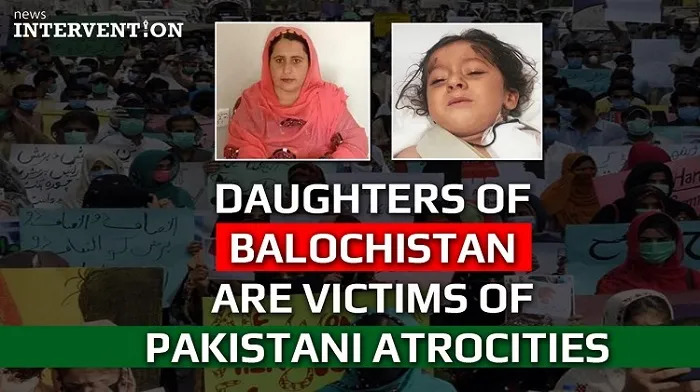
According to insiders in Pakistan’s security agencies, a policy of forced disappearance of Baloch women has been formulated by the state to end the Baloch National Freedom Movement by misleading the international community. The Baloch independence movement will be presented as a sleeper cell against international law and against women and children. Hence on this basis, the Baloch women have been closely monitored and their activities, including their forced abductions, have been initiated. On the other hand, the present Baloch freedom movement has been moving towards its destination without any closure for the last two decades. Although it has fluctuated, it has seen immense growth rather than a decline in popularity and power. The alliance of all armed organizations and the martyr consignment of the Majeed Brigade have hit the interests of the enemy and his disciples, inflicting heavy damage on them and shouting at them to strengthen their strength.
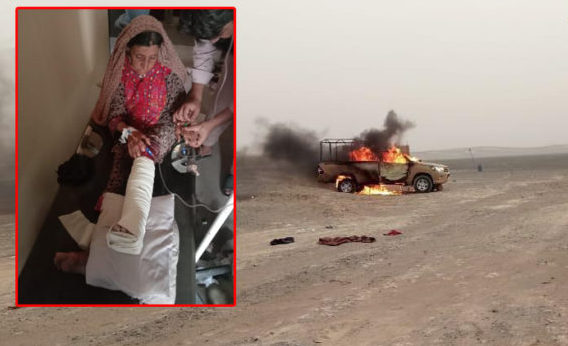
In the meantime, Pakistan’s state policy makers and security agencies tried all their inhuman and illegal tactics to bring the Baloch National Freedom Movement to a halt. Forcibly abducting thousands of Balochs and keeping them in captivity, killing them in custody, extermination of human populations in the name of military operations, evicting people from their areas, eliminating means of livelihood, abduction of women and children through local death squads for ransom and despite the burning of the village after village, including sexual abuse, and the bloody and naked dance of brutality, they failed to push back the freedom movement by even an inch. Now the State of Pakistan is determined to bury the Baloch National Freedom Movement forever by formulating another heinous and new policy of war crimes in the form of forced abduction of Baloch women but on the other hand, the new policy of the state in Balochistan is being seen to be an impression of fear among the people. Although there is a complete crackdown and media blackout on nationalist politics in Balochistan but when the actions of the forced abduction of the people come to light the people protest on national highways sans any party affiliation. It is also leading to forced release of those forcibly missing by state agencies and security forces due to public pressure which is also considered to be a step forward for the success of freedom, including failure of state institutions and public outrage. Terming the impression of the forced abduction of Baloch women in Pakistan’s state institutions as wrong, Baloch freedom fighters leader Dr. Allah Nazar Baloch said that the forced abduction of Baloch women has led the enemy Pakistani army to think that it could harm the Baloch freedom movement but it is wrong.
Today, the way Baloch women, mothers are protesting against the tyrannical army of Pakistan is the period of revolution whose aim is only freedom. Of course, Pakistan has realized this, so with all its aggression, it has taken the path of collective violence, including the mass genocide of the Baloch people but the courage of the Baloch mothers has tunnelled the occupied state, and this is the call for the independence of Balochistan.
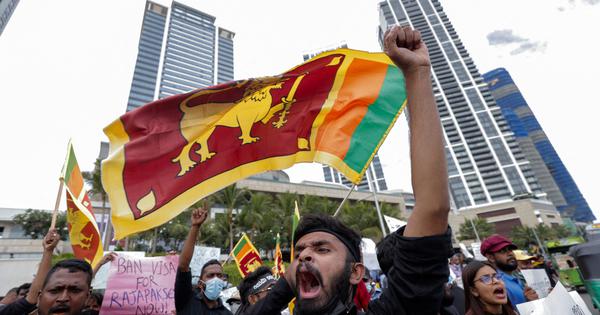
Sri Lanka has plunged into a deep economic crisis due to decades of economic mismanagement. The island nation is facing severe shortage of basic resources, including food grains that has led to widespread violent protests. Prof. Adluri Subramanyam Raju, Dean-International Relations, Pondicherry Universitytells Sadiksha Waiba Sub-Editor News Intervention that borrowing money from China at high interest rates and the lack of transparency and corruption in awarding mega projects should have been avoided.
Sadiksha Waiba: Sri Lanka, though having a small economy, has a per capita income which is higher than that of India and the human development index too was apparently better. What then led to such a massive crisis in Sri Lanka? Adluri Subramanyam Raju: There are several factors that led to crisis in Sri Lanka: impact of Covid-19 pandemic, misgovernance, debt mismanagement, foreign exchange crisis, lack of transparency, family government instead of the Sri Lankan government introduced populist schemes such as tax cuts (that were) implemented in 2019, removal of capital gains tax, external crisis (Russia-Ukraine war), etc. These factors had an impact on the tourism industry, energy and food crisis and reduction of foreign remittance drastically.
Sadiksha Waiba: Sri Lanka has had a history of being run by members of the same family, whether it is President Gotabaya Rajapaksa, ex Prime Minister Mahinda Rajapaksa who is elder brother to the President and other ministers in the government who are all from the same family. They have even been imprisoned on charges of corruption in the past and it is said that the power was concentrated in the hands of a single family which also led to the failure of the government. Why is it then that the people still vote for the Rajapaksa family? Adluri Subramanyam Raju: In developing countries, people are largely influenced by popular schemes and Sri Lanka is no exception. People were being attracted by the popular schemes, hyper nationalism, etc. Majority people, being Buddhists, are happy with the Rajapakse government’s actions against the Tamils, which led the majority people (Sinhalese) to support the Rajapaksa family
Sadiksha Waiba: What government policies do you think could have been changed to avert such a crisis?Adluri Subramanyam Raju: Policies such as avoiding borrowing money from China with a high interest, anticipating the future challenges; transparency; forcing the farmers to depend on organic cultivation; tax to be collected from the employees, ethnic harmony; an alternative vision for development; accommodating minority groups into mainstream; freedom of expression etc. Further, the Sri Lankan government forgot the fact that the northern and eastern parts of Sri Lanka are parts of Sri Lanka only and development of these areas reflects on the country’s growth. Most of these areas are still under the control of security forces and bunkers are yet to be removed.
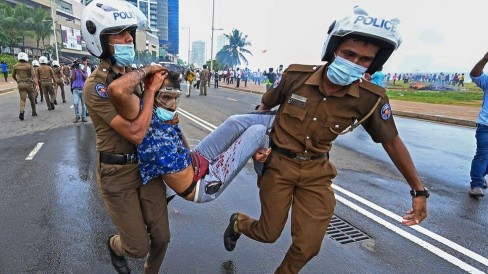
Police take away an injured man during protests outside the president’s office in Colombo (Photo: AFP)
Sadiksha Waiba:In 2008, Sri Lankan ministers decided to invest in Hambantota for revenue generation by building a port similar to the Colombo business port and that’s when they loaned money from China. However, the project was not successful. Why did the project fail? Did it lead to a debt trap? Adluri Subramanyam Raju: Construction of Hambantota port was taken as a prestigious project by the then President Mahinda Rajapaksa. However, the government did not look at the cost and benefit before having an agreement with China to construct the port in Hambantota. The port does not generate revenue, like Colombo Port. It is largely used by India while exporting its goods to abroad. It was reported that rampant corruption was involved in the project while obtaining funds from China. Neither the people of Sri Lanka in general nor people of Hambantota were/are benefitted through the Port.
Sadiksha Waiba:It’s being said that China and it’s high interest loans are responsible for the crisis in Sri Lanka. Your views. Adluri Subramanyam Raju: Sri Lankan government gave various projects to Chinese companies without any bidding, which had given space for rampant corruption. Apart from loans taken from China, other policies are coupled for the present situation.
Sadiksha Waiba: Do you see more economies (Pakistan, Africa, etc) crashing wherever China is involved?Adluri Subramanyam Raju: As long as the aid is given by China without transparency, the respective governments tend to involve in corruption, which leads to mis-governance. Further, as said earlier, most of the aid was taken away by China through salaries of its own people who are employed and for supply of its own material in the projects. This is against the international norms.
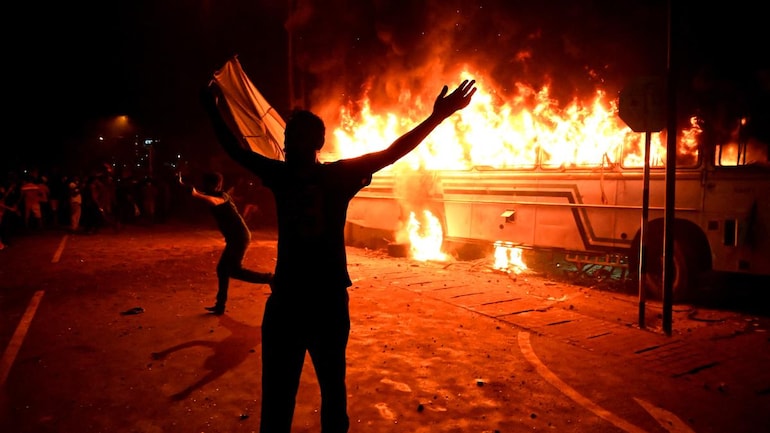
Protesters shout slogans after setting a bus on fire during a demonstration outside the Sri Lankan President Rajapaksa Gotabaya’s residence in Colombo. (Photo: AFP)
Sadiksha Waiba:Sri Lanka is a tourism based economy.12.6% of Sri Lanka’s GDP is from tourism. In 2019 there were attacks on the tourism sector, the primary source of income, which led to a fiscal deficit in the country. Does that mean that the Sri Lankan economy was already crumbling before the onset of Covid or is Covid responsible for the current state of affairs as is being projected? Adluri Subramanyam Raju: One cannot ignore that the Covid pandemic as one of the factors that caused the present crisis in Sri Lanka.
Sadiksha Waiba: How did an agricultural policy cause a food shortage in Sri Lanka? Adluri Subramanyam Raju: Rajapaksa government banned the import of fertilizers and insisted the farmers to depend on organic farming. This decision was taken to reduce the Sri Lankan foreign debt. However, that decision caused food crisis in Sri Lanka.
Sadiksha Waiba:How long do you think it will take for course correction? Adluri Subramanyam Raju: Until Sri Lanka looks for an alternative vision, apart from correcting its previous policies.
Sadiksha Waiba:Do you think the appointment of the new Prime Minister Ranil Wickremesinghe will be able to change the game and elevate the country from the crisis that they are in? Adluri Subramanyam Raju: Ranil Wickremesinghe was defeated in the previous elections and he was elected as a Member of Parliament based on the principle of representation in proportion to the total votes his party had received across the country. In other words, people had not accepted him in the previous election but circumstances made him as the Prime Minister. His appointment cannot provide solution that the protestors want. Ranil, seen as a pro-west, he would play a role in reducing the economic crisis. However, as long as sentiments of the people are not honoured, it would be difficult to see the normalcy in the island-state.
We use cookies on our website to give you the most relevant experience by remembering your preferences and repeat visits. By clicking “Accept All”, you consent to the use of ALL the cookies. However, you may visit "Cookie Settings" to provide a controlled consent.
This website uses cookies to improve your experience while you navigate through the website. Out of these, the cookies that are categorized as necessary are stored on your browser as they are essential for the working of basic functionalities of the website. We also use third-party cookies that help us analyze and understand how you use this website. These cookies will be stored in your browser only with your consent. You also have the option to opt-out of these cookies. But opting out of some of these cookies may affect your browsing experience.
Functional cookies help to perform certain functionalities like sharing the content of the website on social media platforms, collect feedbacks, and other third-party features.
Performance cookies are used to understand and analyze the key performance indexes of the website which helps in delivering a better user experience for the visitors.
Analytical cookies are used to understand how visitors interact with the website. These cookies help provide information on metrics the number of visitors, bounce rate, traffic source, etc.
Advertisement cookies are used to provide visitors with relevant ads and marketing campaigns. These cookies track visitors across websites and collect information to provide customized ads.
Necessary cookies are absolutely essential for the website to function properly. These cookies ensure basic functionalities and security features of the website, anonymously.
Cookie
Duration
Description
cookielawinfo-checkbox-analytics
11 months
This cookie is set by GDPR Cookie Consent plugin. The cookie is used to store the user consent for the cookies in the category "Analytics".
cookielawinfo-checkbox-functional
11 months
The cookie is set by GDPR cookie consent to record the user consent for the cookies in the category "Functional".
cookielawinfo-checkbox-necessary
11 months
This cookie is set by GDPR Cookie Consent plugin. The cookies is used to store the user consent for the cookies in the category "Necessary".
cookielawinfo-checkbox-others
11 months
This cookie is set by GDPR Cookie Consent plugin. The cookie is used to store the user consent for the cookies in the category "Other.
cookielawinfo-checkbox-performance
11 months
This cookie is set by GDPR Cookie Consent plugin. The cookie is used to store the user consent for the cookies in the category "Performance".
viewed_cookie_policy
11 months
The cookie is set by the GDPR Cookie Consent plugin and is used to store whether or not user has consented to the use of cookies. It does not store any personal data.