
Sindhi nationalists condemn Udaipur murder by radical Islamists

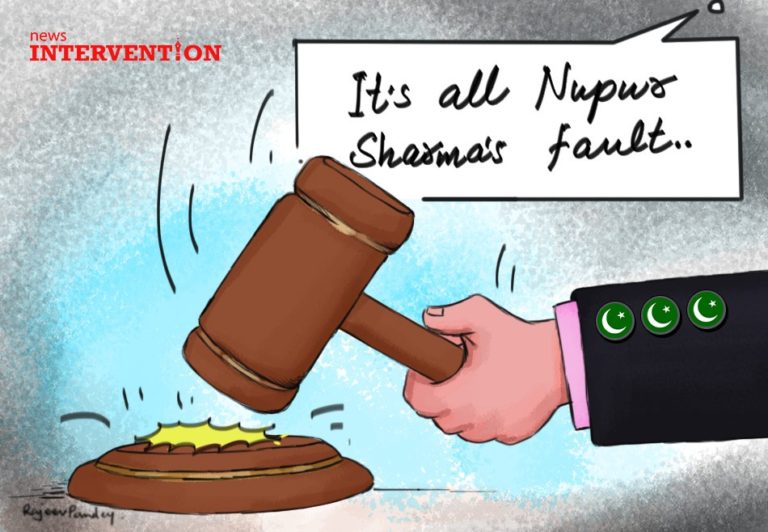
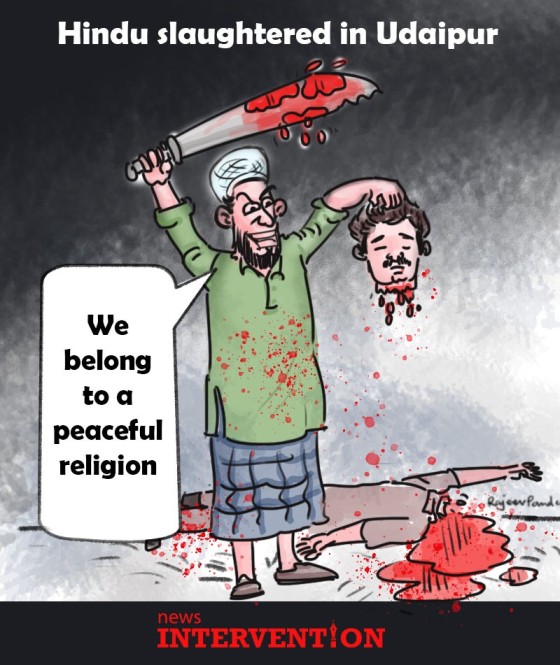
The gruesome murder of Kanhaiya Lal Teli in Udaipur by radical Islamists on video is a wake up call for the entire world to the danger posed by radical Islamist terrorists towards peace loving citizens of this world.
This incident has come under heavy criticism from all corners of the world and the Jeay Sindh Freedom Movement (JSFM) too has condemned it. However, they were of the opinion that such killings have been going on since the last 1400 years and that the people of Sindhudesh have been the first victim of Islamic Jihad.
The JSFM said “We stand with our Hindu brothers in time of their grief and would like to remind them that we the people of Sindhudesh are also fighting against this same mindset of Islamic terrorism.We believe that Shri Kanhaiya Lal ji is the first martyr for reconstruction of Hindu temple at Gyanvapi in Varanasi, Jeay Sindh freedom movement would like to remind our Hindu friends that the purpose of Islamic terrorism is to occupy land belonging to non-muslims and eradicate the native culture. Sindh is a glaring example of how Jihadists not only occupy but also commit cultural genocide of the land they occupy”.
They said that these Jihadists were no match to resolve the Sindhi people who continue to not only resist by also counter the cultural invasion of Jihadists even after 1400 years. They further stated that the permanent solution to the problem of Islamic terrorism is liberation of Sindhudesh on the basis of its culture and historical identity, thereby giving a blow to Jihadists agenda of occupying non muslims and converting it into a terror factory.
What went wrong in Maharashtra?
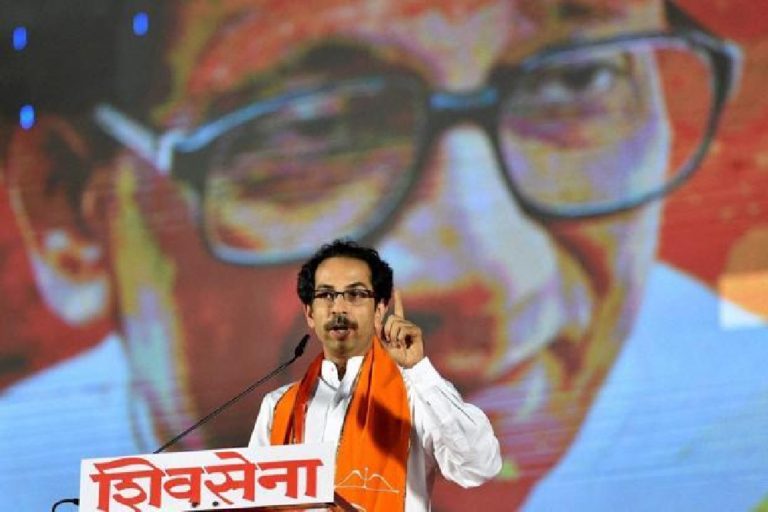
Millions of Indians kept watching the two-week-long political melodrama of Maharashtra at not one but three places, viz., Mumbai, Surat and Guwahati. Maharashtra is an important state and its capital Mumbai is the financial hub of the country.
The narrative is bizarre as well as educative if one wants to know the nitty-gritty of Indian politics. The foundation of the Maharashtra Vikas Aghadi (English: Maharashtra Development Front), abbreviated as MVA, was on sand, and its collapse was inevitable. However, what kept the partners together for more than two years was primarily their lust for power and secondarily the general loot of the public money through pseudo-legal corruption.
The one thing that glaringly stuck its head out was non-seriousness on the part of the actors towards the fundamental duty of serving the people. Instead, they thought of serving themselves or their party which catapults politicians to the seat of power.
We said the foundation stone of the MVA was slippery and unstable. This alliance was forged out of lust for power and not conviction of service to the people. Shiv Sena directly or indirectly accepted the support of the BJP to win 56 seats in the previous election. The history and ideological similarity between the Shiv Sena and BJP demanded that egos and ambitions had to be made subservient to national interests and for the stability of the upcoming political structure. The logjam between the BJP and Shiv Sena was about who would hold the chair of the chief minister of the state. The BJP refused to demonstrate large-heartedness and prudence by giving a local jingoistic political party a chance of leading the government. Did not the BJP succumb in J&K and allowed the PDP to lead the coalition government knowing very well that the PDP was born from the womb of terrorism and fundamentalism?
On the other hand, Shiv Sena’s leadership was intransigent to underestimate the national-level strong party like BJP. Its assertion on the count of influencing the local jingoistic party was ill-founded. Out of lust for power, it refused to play the second fiddle. What is worse, it hobnobbed with two other parties namely Congress and NCP, both of which were ideologically miles apart from it. The Congress, as everybody knew, was the other name of the Indian Muslim League and the NCP was perhaps the most opportunist party always trying to be on the side of the winner with no political ideology or destination. The Mumbaikars knew very well to what extent the NCP leadership had been enjoying bonhomie with the Mumbai underworld. Nobody knew it better than Shiv Sena. Yet it decided to be on the wrong side because Congress and NCP, both knew that by putting the crown on the head of Shiv Sena they were jointly contriving the ultimate destruction of Shiv Sena in Mumbai as it posed the most potent threat to their existence in the financial metropolis of India.
Those fifty-odd Shiv Sena rebels who staged a rebellion against their leader shall have to answer one important question. What they did now is what they ought to have done when their chief was negotiating power-sharing with the other two opposed parties. Why did they seal their lips then and waited for two years and a half to come out in open? They cannot sell the argument that they waited and watched things might turn the right way. This is a spurious argument. A wolf may lose its teeth but not its nature goes the old saying. They were no less covetous and power-hungry than the rest of them. The real reason why they finally rebelled is not their deepening differences with the Sena supremo but the fact that the two coalition partners had reduced them to almost anything like zero. They saw through the subtle mechanism of the two veteran and experienced parties dominating the political scenario in the State. It can be presumed that they might have taken up the matter of their degraded status in the administrative and juridical areas of the State with the top leadership of their group and to their consternation found him more loyal to the coalition partners than to his party men.
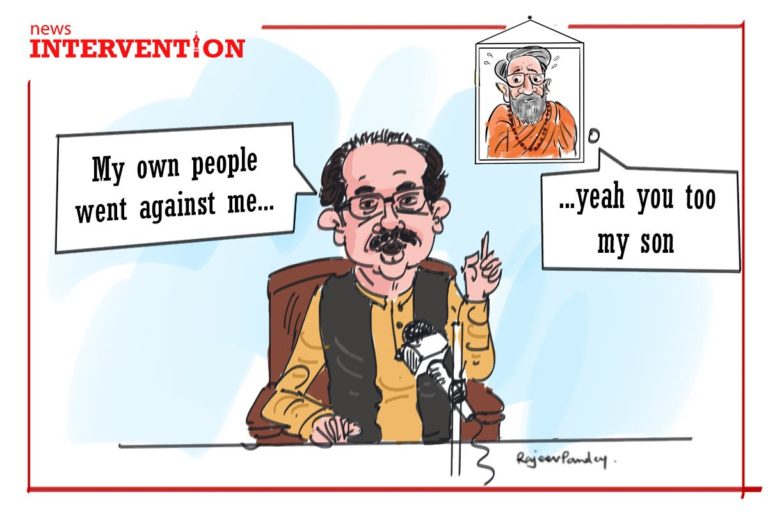
Some observers ask why did not the Shiv Sena supremo gauge the rising current of opposition within his fold and why did he not take a political and structural decision? The answer to this question indirectly suggests that the leadership was haughty and arrogant to assume that it commanded the final word. The parting radio speech of the outgoing Chief Minister should be read between the lines. It smacks of old and traditional clan leadership arrogantly assuming that the fifty and odd members who turned rebellious owed their political career to him and Shiv Sena alone. In other words, he was advocating for dynastic rule and authority, a phenomenon for the demolition of which the new political set-up in the country had taken a decisive and irrevocable position. The dynastic rule of the Sheikhs in Kashmir, Yadavs in Bihar and UP, Badals in Punjab, and Gandhis in Delhi had collapsed one by one. How could the Thakre house consider itself an exception?
Out of a false sense of pride and domination, Uddhav Thakre became a victim of the perversion of a couple of his close associates – the Chanakya’s – who misguided him and machinated his disaster. He is not the first VIP to have become a target of the cronies he had gathered together around him. In sheer naïveté, he could not understand how these cronies were undermining the fundamental philosophy of Shiv Sena — the Hindutava.
He is so immature in political stratagems that when fifty-odd MLAs or MPs or Private Members revolted against him, he went on beseeching them to return to Mumbai and talk to them. What had they to talk about, nothing, absolutely nothing? They had done their talk. Had he been a shrewd politician and had the real motivation of doing good to the people of his state and the country and his party and above all his person, he should have taken a flight without a single hour’s delay landed at Guwahati and marched straight to the den where the rebels were staying. He would have caught the bull by the horn and told them to do whatever they want I, as the leader of the party and the government, am with you and will do together what you want to do because this is democracy and we go by the will of the people. He could have saved his position, and above all his party from sinking deep into disaster. Only a leader with integrity, moral courage and public good could do that.
Shiv Sena as the symbol of Bala Sahib Thackeray’s supreme Maharashtra identity has suffered a setback owing to an assessment error of the scion of his house. The divided Shiv Sena may get sucked into the vortex of mutual acrimony unless a good sense prevails on the new incumbent Eknath Shinde to rise above ego and self esteem and show due respect to his ousted leader. However he has to remember that even if he succeeds in restoring unity among all sections of the party yet it must be clear to one and all that the united Shiv Sena has to be on the same page with BJP. The rebels have no way but to imbibe the nationalist frame of BJP and not the jingoist frame. Political wisdom and sagacity say that the government led by Eknath Shinde strives every nerve to restore the dignity and outreach of Mato Shri as it enjoyed during the heyday of Bala Sahib. That is what should happen. Shiv Sena should not remain restricted to Mato Shri and those who are the beneficiaries of its largesse. As a regional party, its strength and thrust will find curtailment no doubt. The truth is that Shiv Sena was finished the day Uddhav Thackeray had agreed to form a coalition government with Congress and NCP. One will have kudos for the manoeuvrability of both of these parties in seeing the Shiv Sena pilot dropped and his ship left to be lost on the high and tumultuous ocean of Indian politics. The role of Eknath Shinde is to recover the floating ship and bring it back to the harbour.
Pak minister Riaz Pirzada admits murder of ‘Missing Persons’
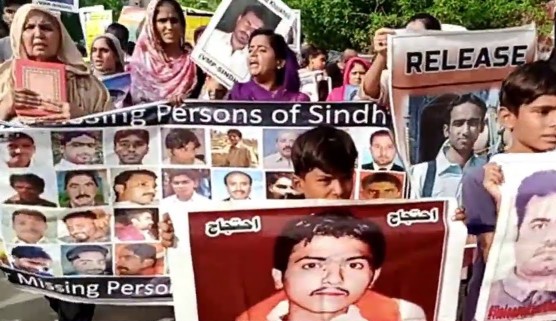
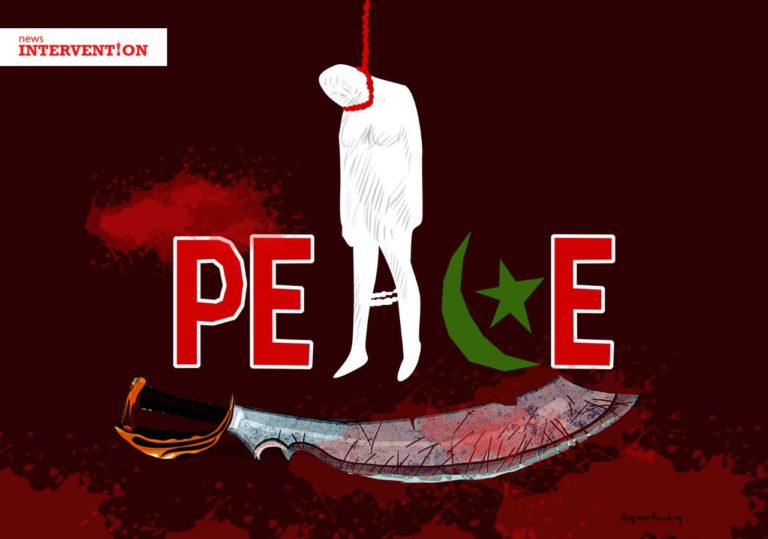
Surat Lohar, Chairperson, Voice for Missing Persons of Sindh from Karachi, Pakistan said that Pakistan’s federal minister for Human Rights, Riaz Pirzada has claimed for the first time on behalf of the state that “many missing persons have been killed”.He accused the missing persons of being in touch with neighbouring countries and Kulbhushan Jadav and being involved in terrorist activities in other areas, including Quetta.He said that all of them have been killed by the Pakistani forces.He defended the state forces and the missing agencies ISI and MI, saying that instead of the Missing Persons Commission, ISI and MI should see the problem of missing persons.”To this day, representatives of the Pakistani state in every international institutions and courts have been showing disinterest and ignorance on the issue of missing persons.But this is the first time that Pakistan’s Minister for Human Rights Riaz Pirzada has claimed that the missing persons were killed by state forces in response to a question from journalist yesterday.”Surat Lohar, chairperson of Voice for Missing Persons of Sindh, an organization working on human rights and missing persons in Sindh, reacted strongly to the statement federal minister Riaz Pirzada has made .All these missing persons are being claimed to have been killed without conviction or for judicial proceedings or for exercising the legal and human right to defend themselves. Lohar further questioned, “What more hope do we have for the recovery and justice of those missing from such state institutions? She added, “now the Pakistani state is openly declaring that we have killed missing persons.We now appeal to all international organizations and human rights organizations, including the United Nations, Amnesty International, Red Cross, Asian Human Rights Commission, thousands of political, social and nationalist activists from Sindh and Balochistan who have been forcibly abducted by Pak forces for many years.International organizations should make Pakistan accountable to the global conscience by forming their own commissions and special task forces on this issue on the basis of human rights and play their global, political and diplomatic role on forced abductions and gross human rights violation in Sindh and Balochistan.All human rights organizations around the world, including the United Nations, Amnesty International, the Red Cross and the Asian Human Rights Commission, should take note”.
Protest breaks out in Karachi against prolonged load shedding
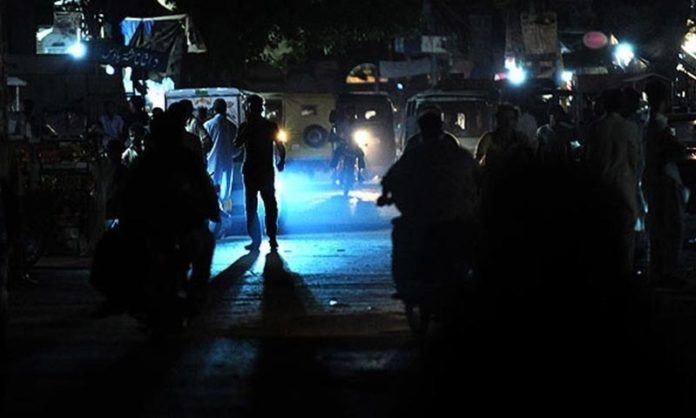
Unannounced load shedding in different parts of Karachi, the capital of Pakistan Sindh Province has tested the patience of the people.Roads were blocked for 20 long hours of protest on Maripur Road.There were long queues of vehicles on the ICI Bridge, Jinnah Bridge Netty Jetty.With the increase in heat intensity in Karachi, the humidity in the air also reached 65%.Long hours of load shedding in many areas have overwhelmed the patience of citizens.Traffic flow was severely affected due to this protests at Madi Pod Road, ICI Bridge, MT Khan road and Nishtar road among others.The protesters also carried placards against Karachi Electric in their hands.Protesters said Karachi Electric did not listen despite making complaints.Police tried to negotiate with protesters but failed.Police gave time to the protesters to open the highway but the protestors said that the demonstration would not end till talks with Karachi Electric officials or the Chief Minister was not conducted.
Pakistan, where terrorists ‘disappear’ but ‘reappear’ when needed
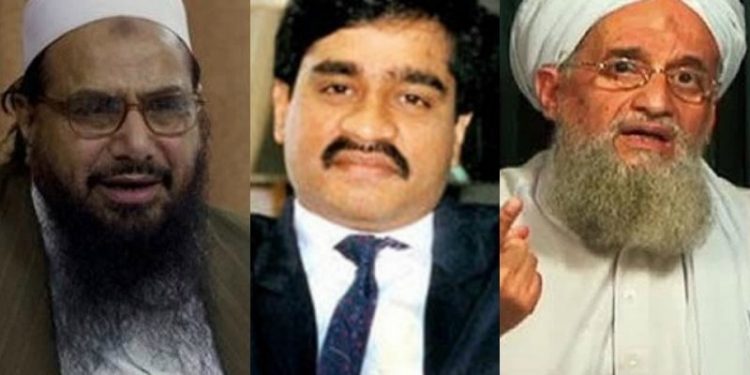
Pakistan is a strange land where people seem to be ‘appearing’, ‘disappearing’ and ‘reappearing’ all the time. While this strange occurrence follows no discernible pattern, but it does appear to have a definite link to sensitive issues, mostly those related to terrorism. For example, despite New Delhi providing Islamabad with his exact whereabouts in Karachi, Islamabad kept denying that 1993 Mumbai serial bomb blast mastermind Dawood Ibrahim was living in the country.
A decade after the Mumbai serial blasts, the then Pakistani Prime Minister Nawaz Sharif’s special envoy Shahryar Khan admitted that “Dawood [Ibrahim] was in Pakistan.” However, he quickly went on to add that “…I believe he was chased out of Pakistan”. However, in keeping with Islamabad’s unmatched ability to issue open-ended statements that provide an immense scope of deniability, Khan said that “If he is in Pakistan, he should be hounded and arrested”. Since this didn’t happen, it would be fair to assume that Ibrahim had indeed fled Pakistan.
The same Dawood Ibrahim who was purportedly “chased out of Pakistan” had ‘disappeared’, suddenly ‘reappeared’ in 2020 when an official Pakistani notification that sanctioned 89 key terrorists under provisions of “Security Council resolution 2368 (2018) adopted under Chapter VII of the Charter of the United Nations”, mentioned him as being a resident of Karachi and owning three properties here.
That this miraculous ‘reappearance’ happened precisely a month before the plenary meeting of global money laundering and terrorism financing watchdog Financial Action Task Force [FATF] was due to meet to decide on Pakistan’s retention or removal from grey list, is obviously no mere coincidence. Unfortunately, this ‘reappearance’ was short-lived.
When Indian authorities demanded that being an Indian national, Ibrahim, who is currently a resident of Karachi should be handed over to New Delhi so that he could be tried and punished for his criminal and terrorist activities, he once again ‘disappeared’ and since then, he’s not been heard of. On its part, Pakistani authorities maintain that mention of Ibrahim’s name in the notification and listing out the three homes he owned in Karachi wasn’t an admission of his presence in the country. Strange but true!
On February 14, 2019, a suicide car bomb attack on a Central Reserve Police Force bus in Pulwama [J&K] killed 40 policemen and proscribed Pakistan based terrorist group Jaish-e-Mohammad [JeM] took responsibility for this attack. Realising that this horrific act would enrage the international community, the then Pakistan Foreign Minister Shah Mehmood Qureshi immediately played the sympathy card to save JeM founder Masood Azhar.
A distressed Qureshi told the media that “He [Masood Azhar] is in Pakistan, according to my information. He is very unwell. He is unwell to the extent that he cannot leave his house because he is really unwell,” and use of the word ‘unwell’ thrice in such quick repetition says it all. However, even though Qureshi had confirmed Azar’s presence in Pakistan after the Pulwama attack, DG ISPR conveniently “disappeared” him by saying, “Jaish-e-Mohammed does not exist in Pakistan. It has been proscribed by the United Nations and Pakistan also”.
Barely two weeks after Azhar’s ‘disappearance’, there was another case wherein an unnamed Indian suddenly ‘appeared’ on a bright winter morning- only to ‘disappear’ into thin air the same evening. It was February 27, 2019, and Indian Air force [IAF] fighter pilot Wg Cdr Abhinandan Varthaman was apprehended by Pakistan army after his MIG 21 was shot down. DGISPR claimed that two IAF fighter jets had been downed and while one IAF pilot [Wg Cdr Varthaman] had been apprehended, two others were in “the area”.
Around midday, while talking to the media, DGISPR claimed that “Our ground forces arrested two pilots; one of them was injured and has been shifted to CMH [Combined Military Hospital] and, God-willing, he will be taken care of.” But by evening, DGISPR “disappeared” the hospitalised IAF pilot he had claimed was in Pakistan army’s custody by tweeting that “There is only one pilot under Pakistan army’s custody.” So, doesn’t this strange turn of events make this incident one of the most intriguing cases of a sudden “appearance” followed by an equally quick “disappearance”?
Fast forward to the present and one finds that after a two-year hiatus, another unbelievable ‘reappearance’ has hit Pakistan. This time, it’s a Lashkar-e-Taiba [LeT] terrorist named Sajid Mir, who as the ‘operational commander’, played an important role in planning and conduct of the 2008 Mumbai attacks. Despite a USD $5 million bounty announced by the FBI, has been evading the law, thanks to protection provided by Pakistan’s military establishment.
Not only has Islamabad denied Mir’s presence in Pakistan but portraying him as a God-fearing preacher tried to protect him from possible persecution, by going to the extent of suggesting that he was dead. This is why Mir’s sudden and completely unexpected ‘reappearance’ is in itself nothing less than a miracle.
While Islamabad may deny it, but with a long ‘disappeared’ Mir not only suddenly ‘reappearing’, but also being secretly tried and swiftly sentenced just days before FATF was to decide on Pakistan’s grey listing status, there’s no doubt that this is what has compelled Islamabad to act against the LeT terrorist. That’s why one can say with complete conviction that should FATF continue maintaining pressure on Pakistan to end providing support to terrorist groups, then, be rest assured that even the JeM chief Masood Azhar who suddenly ‘disappeared’ after the Pulwama terrorist attack too, will unexpectedly ‘reappear’!
Pakistan Army has ‘links’ to terror groups: Canadian MP Tom Kmiec

After it successfully extracted an ‘unconditional’ apology from advocate and rights activist Imaan Zainab Mazari-Hazir, who had [as per the military’s FIR] had “abused the senior military leadership [army chief Gen Qamar Javed Bajwa] of the Pakistan Army,” the Pakistan army must certainly be rejoicing its ‘victory’. Rawalpindi may be able to silence domestic criticism through a wide-ranging array of novel methods that make any person criticising Pakistan army quickly realise his [or her] mistake, and make amends through ‘unconditional apologies’. However, its track record of human rights abuses has peaked to a level that it’s drawing global attention and the latest such attack comes from a Canadian lawmaker.
While questioning the appropriateness of the Canadian Defence Ministry’s decision of releasing $ 50,000 for the visit of Gen Bajwa to Canada in 2020 [which was subsequently cancelled due to covid pandemic], Canadian Member of Parliament [MP] Tom Kmiec exposed the host of illegal activities committed under his watch by the Pakistan army. Speaking in the House of Commons, he mentioned that Gen Bajwa stands “accused of two toppling two governments of Pakistan, [and] the military under his command has been involved in human rights abuses, extrajudicial killings and has links to terror groups.”
While Islamabad has served a démarche to the Canadian High Commissioner to Pakistan as it considers that the Canadian lawmakers remarks are “against diplomatic norms and highly irresponsible”, even thoughwhat Kmeic has stated aren’t unsubstantiated allegations or mere hearsay. Au contraire, what he has said is already recorded in various reports prepared by both UN and other internationally recognised autonomous global watchdogs on human rights like UN Human rights commission, Human Rights Watch and Amnesty International, as well as influential organisations like the European Union and Financial Action Task Force [FATF].
Consequently, by remaining in a state of perpetual denial on human right violations, extrajudicial killings by Pakistan army as well as its links to terror groups, Islamabad has abdicated its constitutional responsibility of protecting its minority communities. So, just like Rawalpindi in Mazari-Hazir case, while Islamabad too must be complimenting itself for having ‘killed’ the serious charges of human rights Canadian lawmaker with a démarche, such puerile attitude is only damaging Pakistan’s international image and the fact that it has been languishing in the FATF grey list since June 2018, is proof of this!
Some very prominent personalities who have held the most responsible positions in the government and military have themselves admitted Pakistan’s institutionalised support of terrorism, and a few enumerated are just a few examples of such damning revelations:
- In 2009, the then Pakistani President Asif Ali Zardari frankly confessed that “militants and extremists emerged on the national scene and challenged the state not because the civil bureaucracy was weakened and demoralized but because they were deliberately created and nurtured as a policy to achieve short-term tactical objectives. Let’s be truthful and make a candid admission of the reality [Emphasis added].
- Just a year later, in an interview given to ‘Der Spiegel’, Pakistan’s ex-President and former army chief Gen Pervez Musharraf proudly stated that “We poisoned Pakistani civil society for 10 years when we fought the Soviets in Afghanistan in the 1980s. It was jihad and we brought in militants from all over the world, with the West and Pakistan together in the lead role.” [Emphasis added].
- In 2017, retired Maj Gen Mahmud Ali Durrani [who was Pakistan’s National Security Adviser [NSA] when the 2008 Mumbai terrorist attack took place] disclosed that “26/11 Mumbai strikes, carried out by a terror group based in Pakistan [Lashkar e Taiba], was a classic trans-border terrorist event” [Emphasis added].
- As late as 2019, while on a visit to the US, the then Prime Minister Imran Khan, revealed that “we still have about 30,000-40,000-armed people who have been trained and fought in some part of Afghanistan or Kashmir.” [Emphasis added].
- In the very same year, DGISPR Maj Gen Asif Ghafoor admitted that Pakistan army was committing gross human rights violations when said during a media interaction session that “We don’t want any person to go missing but where there is a war, you have to do a number of [undesirable] things” and then having the cheek to defend human rights violations by saying, “It is said that everything is fair in love and war. War occurs to be ruthless! [Emphasis added].
Two former presidents [including an ex-army chief, one prime minister and two Generals [including one who was Pakistan’s NSA during the Mumbai attacks] openly accepting that terrorists enjoy state patronage and that the Pakistan army is indulging in enforced disappearances. Therefore, isn’t serving a démarche to the Canadian High Commissioner to Pakistan since its MP has highlighted these very issues reek of moral depravity? While diplomacy may demand overlooking minor demeanours but for how long will nations who claim to have zero-tolerance for rights violations by states be mute spectators to institutionalised persecution of minorities in Pakistan?
Let’s not forget that it’s abject apathy of the international community that has convinced both Islamabad and Rawalpindi that they can [literally] get away with murder. So, as long as concrete steps to compel Pakistan end organised human rights violations are not taken, we by our stoic silence are complicit in these grave crimes against humanity and hence have no moral right to wax eloquent on this issue!